
Former 5-Star Recruits Who'll Impact 2014-15 CBB Season After Gaining Experience
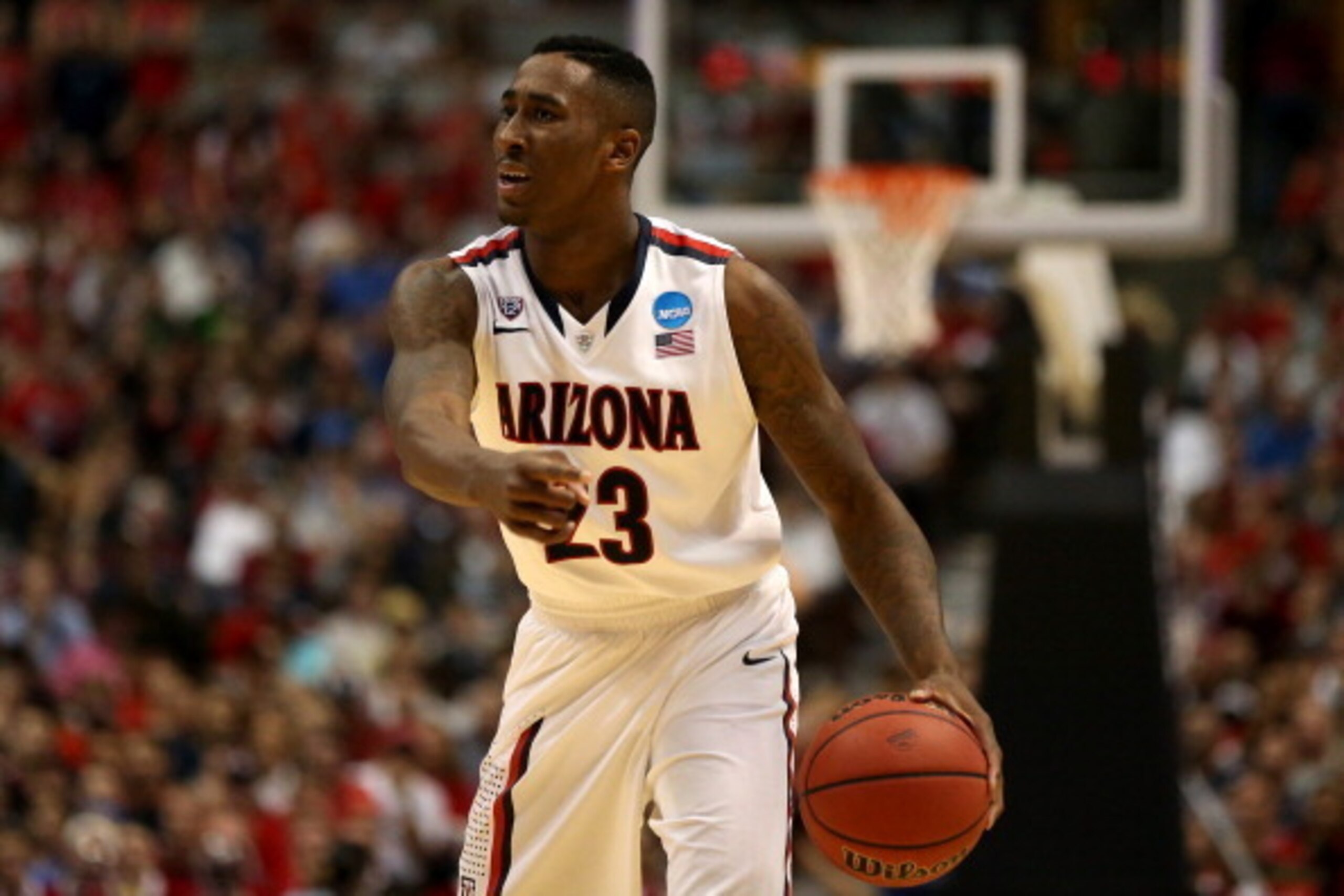
Much has been written about the 5-star college basketball recruits in the 2014 and 2015 classes, but it's the former 5-star talents like Sam Dekker and Rondae Hollis-Jefferson who will have the biggest impact on the 2014-15 season.
Jahlil Okafor may be the top player in this year's class of freshmen, but where would Duke be this season without Rasheed Sulaimon? Kentucky is adding four 5-star players to this year's roster, but is the veteran leadership of Alex Poythress and Aaron Harrison even more important?
There are a total of 33 players still on college basketball rosters who were classified as 5-star recruits between 2010 and 2013. The top 20 are ranked by considering how much their team's national championship hopes would be negatively impacted if news suddenly broke that the player was unable to compete this season.
Before getting into the top 20, though, we've also outlined why the other 13 former 5-star players didn't make the cut.
Thirteen is a lot of honorable mentions, but it would hardly be fair to ignore anyone who qualified as a candidate.
Recruiting information on the following slides courtesy of 247Sports.com. Other statistics courtesy of Sports-Reference.com and KenPom.com (subscription required).
Honorable Mentions (1 of 2)
1 of 22
Kris Dunn (No. 17 in 2012; Providence)
Robert Hubbs III (No. 19 in 2013; Tennessee)
Both Kris Dunn and Robert Hubbs III played a limited number of games last year after preexisting shoulder injuries resulted in season-ending surgeries.
But even if they're both fully healthy for the 2014-15 season, it's hard to see either Providence or Tennessee making the tournament this year. Missing the tournament doesn't necessarily disqualify a player from consideration, but it just so happens that every team represented in the top 20 is far more likely to be announced on Selection Sunday.
Isaiah Hicks (No. 16 in 2013; North Carolina)
Isaiah Hicks is the only former 5-star recruit who missed the cut simply because of playing time.
He'll get more minutes than last year with James Michael McAdoo out of the picture, but the Tar Heels sure do have a lot of forwards who deserve to be on the court on a regular basis.
Le'Bryan Nash (No. 8 in 2011; Oklahoma State)
Seven players scored at least 60 points last season for Oklahoma State. Le'Bryan Nash and Phil Forte are the only ones returning in 2014-15.
Nash is a good scorer and better-than-average rebounder, but it would take some serious magic for him or the Cowboys to make a real impact this season.
Rakeem Christmas (No. 22 in 2011; Syracuse)
Rakeem Christmas blocks shots better than the vast majority of players in the country, but a three-year average of 9.8 points and 9.0 rebounds per 40 minutes is laughable compared to most of the names in the top 20.
He almost made the list due to the fact that Syracuse might not have any other real options at center, but he was excluded in favor of another big man for the Orange.
Tony Parker (No. 24 in 2012; UCLA)
Let's just say there's a reason Steve Alford added two power forwards and two centers in the class of 2014.
Jonah Bolden has been ruled ineligible to play this season, but Kevon Looney and Thomas Welsh will likely make a bigger impact as freshmen than Tony Parker will as a junior.
Honorable Mentions (2 of 2)
2 of 22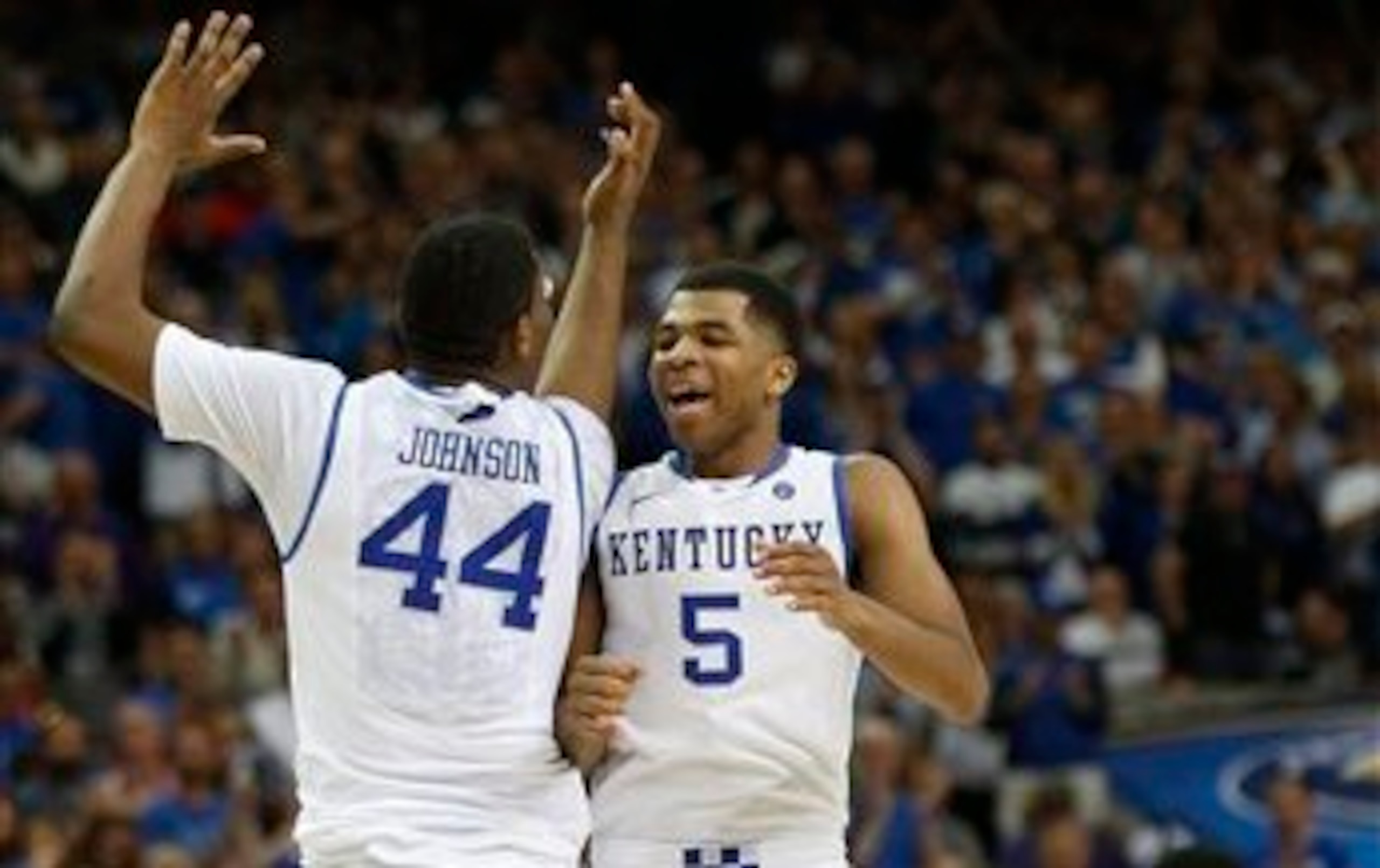
Brandon Ashley (No. 18 in 2012; Arizona)
Dorian Finney-Smith (No. 24 in 2011; Florida)
Andrew Harrison (No. 5 in 2013; Kentucky)
Dakari Johnson (No. 10 in 2013; Kentucky)
Marcus Lee (No. 18 in 2013; Kentucky)
All five of these players were left off the list because we decided to impose a limit of two players per school.
Arizona wasn't quite as good last year after Brandon Ashley's season-ending injury, but the Wildcats survived without him—arguably better than they would have without Kaleb Tarczewski.
Dorian Finney-Smith is too erratic to be ranked ahead of Kasey Hill or Chris Walker.
Andrew Harrison, Dakari Johnson and Marcus Lee could each have monster seasons, but they could also each suffer season-ending injuries today without causing Kentucky to drop out of the Top 5. The same cannot be said for Aaron Harrison and Alex Poythress.
Jabari Bird (No. 21 in 2013; California)
Jabari Bird was the fifth highest-rated shooting guard in last year's class, but you wouldn't know it from his 42.5 field-goal percentage or 32.3 three-point field-goal percentage. Rather than improving as the season progressed, he shot 46.7 percent from downtown in November and 25.4 percent the rest of the year.
To be fair, the other 2013 5-star shooting guards (Aaron Harrison, Wayne Selden, Robert Hubbs III and Isaac Hamilton) weren't exactly Stephen Curry clones, either. But we don't have high expectations for the Golden Bears this year.
Bird should do better than the 8.3 PPG he averaged last year, but it won't be enough to make a huge impact.
Danuel House (No. 26 in 2012; Texas A&M)
Devonta Pollard (No. 25 in 2012; Houston)
House is transferring from Houston to Texas A&M, but no word yet on whether he'll be eligible to play this year.
Pollard is transferring to Houston from JUCO. He was a 5-star recruit at Alabama two summers ago, but vanished from the D-I ranks amid charges of conspiracy to commit kidnapping. His second chance ought to go better than the first, but it's not nearly enough to rank him in the top 20.
20. Joshua Smith, Georgetown
3 of 22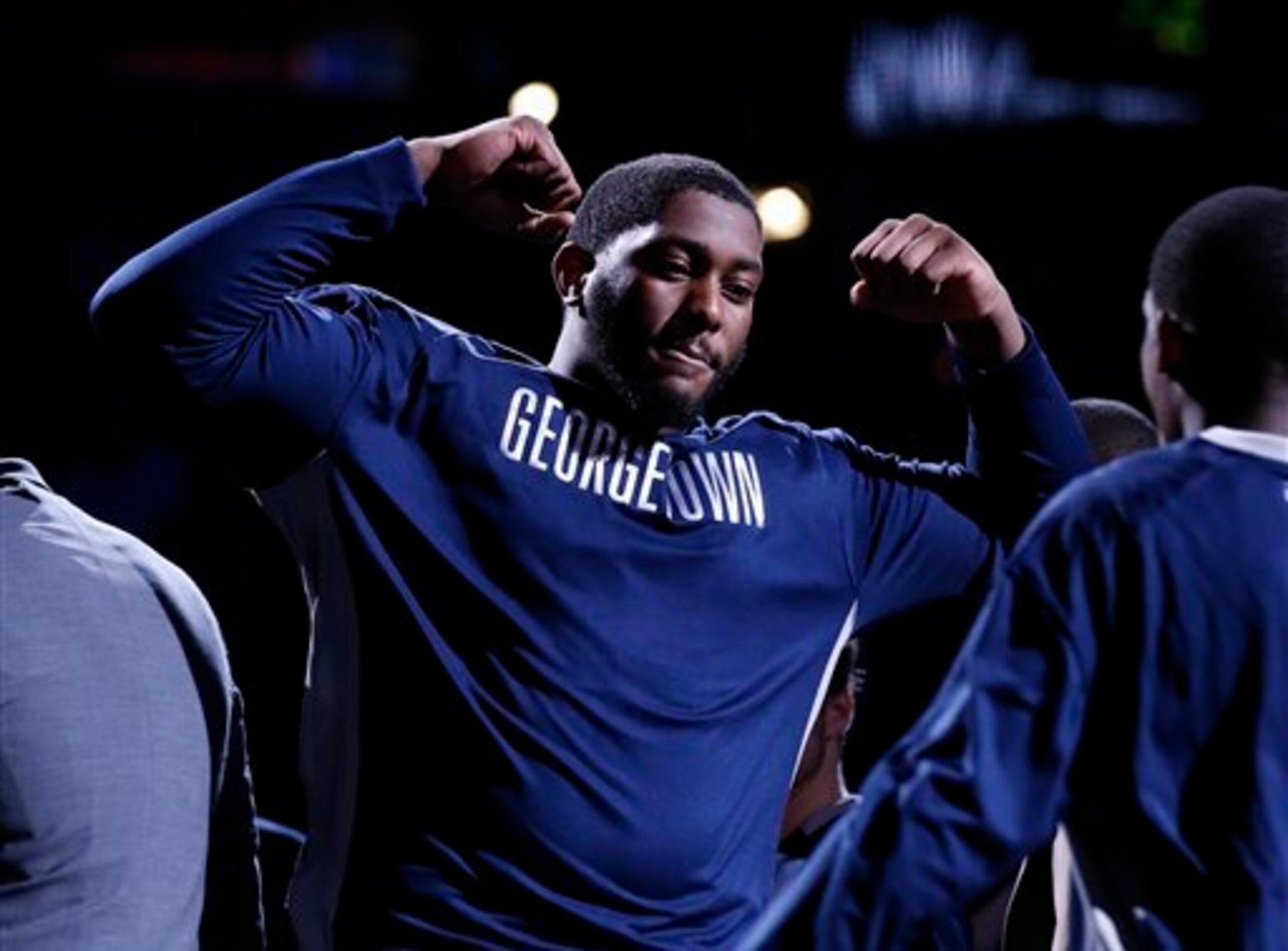
Recruiting Rank: No. 18 (2010)
2013-14 Stats (per 40 minutes): 13 games, 23.2 points, 6.8 rebounds, 2.0 steals, 1.2 blocks, 7.1 personal fouls
Between weight issues at UCLA and academic issues at Georgetown, we have yet to really see what Joshua Smith is capable of doing on the court. His freshman season with the Bruins (10.9 PPG, 6.3 RPG, 21.7 MPG) still stands as his most productive.
But that hardly means the only remaining 5-star recruit from the class of 2010 will be an afterthought this year.
Georgetown missed the NCAA tournament last year for the first time since 2009, but the Hoyas are in great shape to get back there this season thanks in part to Smith. Before being ruled ineligible and getting permanently attached to the bench, Smith scored at least 11 points in seven of Georgetown's first nine games last year.
If he is both physically and academically eligible to play at least 20 minutes per game for at least 30 games, he'll team with Mikael Hopkins and Isaac Copeland to form the most dominant frontcourt in the Big East.

.jpg?w=2560 "Commanders Eagles Football")
19. DaJuan Coleman, Syracuse
4 of 22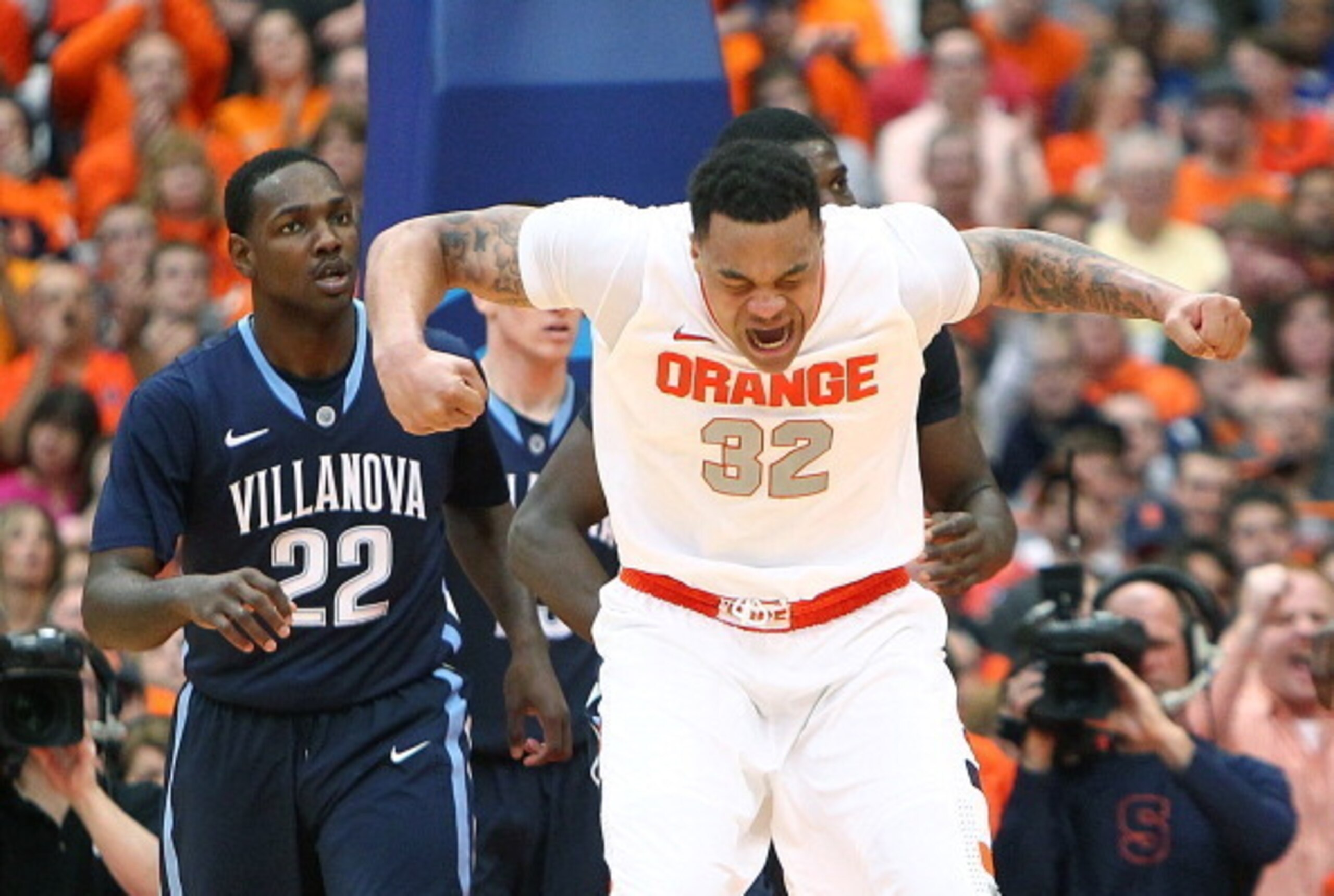
Recruiting Rank: No. 22 (2012)
2013-14 Stats (per 40 minutes): 13 games, 13.3 points, 12.8 rebounds, 1.7 blocks, 5.4 personal fouls
As is the case with Joshua Smith, we're still waiting to find out what DaJuan Coleman can do with a full season.
Rather than difficulty passing classes or staying in shape, though, Coleman has been tragically unable to avoid injuries. He missed 16 games during the 2012-13 season with meniscus problems and played just 13 games last year before having leg surgery.
Will he ever be able to play like he did during the first two months of his career? At the end of the 2012 calendar year, he was averaging 15.7 points and 14.5 rebounds per 40 minutes while playing over 17 minutes per game.
If he can put up numbers like that this season, Syracuse won't regress anywhere near as much as some people want to believe.
18. Isaac Hamilton, UCLA
5 of 22
Recruiting Rank: No. 20 (2013)
2013-14 Stats (per 40 minutes): DNP (Ineligible)
If we don't know what to expect from Joshua Smith and DaJuan Coleman after a couple of abridged seasons, then we certainly have some questions about Isaac Hamilton.
Hamilton has yet to appear in a collegiate game. He was forced to sit out his entire freshman season after breaking his signed letter of intent with UTEP to instead attend UCLA.
Though we're completely lacking in college stats for Hamilton, we're pretty confident that he'll be the most important piece in the 2014-15 UCLA puzzle.
With Kyle Anderson, Jordan Adams and Zach LaVine all bolting for the NBA and nothing but power forwards and centers in this year's recruiting class, the Bruins aren't exactly brimming with options at the guard positions. Bryce Alford (47) and Norman Powell (20) are the only returning players who even made a three-pointer last season—and they fit better at point guard and small forward, respectively.
Tied with Tennessee's Robert Hubbs III for the third-highest rating among 2013 shooting guards, Hamilton should immediately become UCLA's best long-range threat and could average upwards of 15.0 PPG in the process.
17. Austin Nichols, Memphis
6 of 22
Recruiting Rank: No. 22 (2013)
2013-14 Stats (per 40 minutes): 16.3 points, 7.5 rebounds, 2.2 blocks
Most impressive about Austin Nichols' 2013-14 numbers is that he was one of the least frequently used players on the team as a freshman.
While Michael Dixon was used on 23.4 percent of possessions on the court, Nichols' usage rating was just 17.7 percent. And a good number of those possessions came in conference play against some of the best interior players in the country in Montrezl Harrell, Markus Kennedy, DeAndre Daniels, Justin Jackson and Amida Brimah.
How much more might he be able to do this season as one of the focal points of an offense playing in a much weaker conference?
Nichols definitely won't be filling the stat sheets with assists or steals, but he should be good for the occasional 20-point game for the Tigers.
16. Rodney Purvis, Connecticut
7 of 22
Recruiting Rank: No. 14 (2012)
2013-14 Stats (per 40 minutes): DNP (transfer)
Rodney Purvis was a starter from Day 1 at North Carolina State, but he played his way out of favor with Mark Gottfried while it became simultaneously self-evident that T.J. Warren belonged in the starting lineup.
Purvis started 23 of the first 25 games with the Wolfpack but came off the bench for the final 10 games of the season. He played sparingly in the ACC and NCAA tournaments before deciding to transfer to Connecticut.
He'll be looking to make a fresh start at a school that could desperately use some backcourt help after losing Shabazz Napier, Niels Giffey and Lasan Kromah.
Alongside Ryan Boatright, Purvis should once again be a starter when the season begins. This time, however, he'll be expected to be a primary contributor for a team looking to further build upon what has already been an incredible decade of hoops.
15. Alex Poythress, Kentucky
8 of 22
Recruiting Rank: No. 8 (2012)
2013-14 Stats (per 40 minutes): 12.8 points, 9.9 rebounds, 1.6 blocks
Alex Poythress scored at least 20 points in four of the first five games of his NCAA career.
Last year, he was lucky if he even played 20 minutes in a given game. Stuck behind James Young on the depth chart, Poythress went from 31 games started as a freshman to zero starts as a sophomore. He scored more than 12 points in a game just once last season.
But we think he's headed for a re-breakout season as a junior reinserted into the starting lineup.
He was arguably the most impressive player during Kentucky's Bahamas Tour in mid-August and will be a matchup nightmare for every coach in the country who tries to figure out how to defend him without simultaneously allowing the power forwards and centers to run wild in the paint.
14. Kaleb Tarczewski, Arizona
9 of 22
Recruiting Rank: No. 7 (2012)
2013-14 Stats (per 40 minutes): 14.0 points, 8.9 rebounds, 1.4 blocks
In many ways, Kaleb Tarczewski reminds me of Mason Plumlee—minus the fact that Tarczewski can shoot free throws without making you cringe.
For the first two years of each player's career, his usage rating was nowhere near what it should have been.
As a sophomore, Plumlee made 59.9 percent of his two-point attempts, but took just 13.4 percent of the shots when he was on the court and played just 64 percent of Duke's minutes. Similarly, Tarczewski shot 58.4 percent last year as a sophomore, taking 15.6 percent of the shots and playing 66 percent of Arizona's minutes.
But as a junior, Plumlee really started to blossom and assert himself more in the offense. He took a much higher percentage of the team's shots and drew substantially more fouls per 40 minutes, increasing his offensive efficiency despite making a slightly lower percentage of his field-goal attempts.
We're hoping that isn't where the similarities end, and that Tarczewski becomes more of a force in the paint for the Wildcats in his junior year.
13. Jarell Martin, LSU
10 of 22
Recruiting Rank: No. 12 (2013)
2013-14 Stats (per 40 minutes): 15.8 points, 7.0 rebounds, 1.4 assists, 1.3 steals, 1.1 blocks
While ranking fourth in scoring for a team that missed the NCAA tournament, Jarell Martin flew pretty well under the radar last season.
The combo forward improved as the season progressed, scoring at least nine points in 14 of his last 16 games while starting in all but one of those games.
Other SEC big men like Julius Randle, Bobby Portis and Jeronne Maymon experienced a slight reduction in output during the conference portion of the season, but Martin bucked the trend by actually becoming more valuable over the final two months of the year.
With Shavon Coleman, Anthony Hickey, Johnny O'Bryant and Andre Stringer out of the picture, Martin will need to be a driving force of this offense if the Tigers are to have any hope of breaking their five-year tournament drought.
12. Kasey Hill, Florida
11 of 22
Recruiting Rank: No. 8 (2013)
2013-14 Stats (per 40 minutes): 10.1 points, 5.7 assists, 3.5 rebounds, 2.1 steals
There were better freshman point guards than Kasey Hill last season—Tyler Ennis, Monte Morris, London Perrantes and Nigel Williams-Goss to name a few—but Hill wasn't afforded the same luxury as those guys.
Instead of instantly becoming a starter, Hill joined a club with Terry Rozier and Derrick Walton that was forced to wait until established veterans rode off into the sunset. And now that Scottie Wilbekin has done so, Hill is in line to become one of the most valuable players in the country.
He has certainly already shown flashes of brilliance. He led the Gators in both assist rate and steal percentage last season, even though it was Wilbekin who got all the glory for being a defensive-minded game manager. In the Sweet 16 against UCLA, Hill set career highs in both assists and rebounds, recording 10 and six, respectively.
Florida lost a ton of veteran leadership this summer when four seniors graduated, but the Gators should be just fine between Hill and Billy Donovan.
11. Cameron Ridley, Texas
12 of 22
Recruiting Rank: No. 20 (2012)
2013-14 Stats (per 40 minutes): 17.5 points, 12.8 rebounds, 3.4 blocks
Texas has a multitude of options at every position this season. It's hard to argue that any individual Longhorn is irreplaceable.
But that won't stop us from trying to make that exact case for Cameron Ridley.
The round mound of drawn fouls led the team in rebounds, blocked shots and fouls drawn per 40 minutes. He finished within four free-throw attempts of the team lead in that category, too, despite playing 159 fewer minutes than Isaiah Taylor.
Because of Ridley, Texas ranked sixth in the nation in offensive rebounding percentage and 11th in opponents' two-point field-goal percentage.
Ridley only averaged 11.2 points per game last year, but few players in the country affect as many facets of the game as effectively as Ridley.
10. Kyle Wiltjer, Gonzaga
13 of 22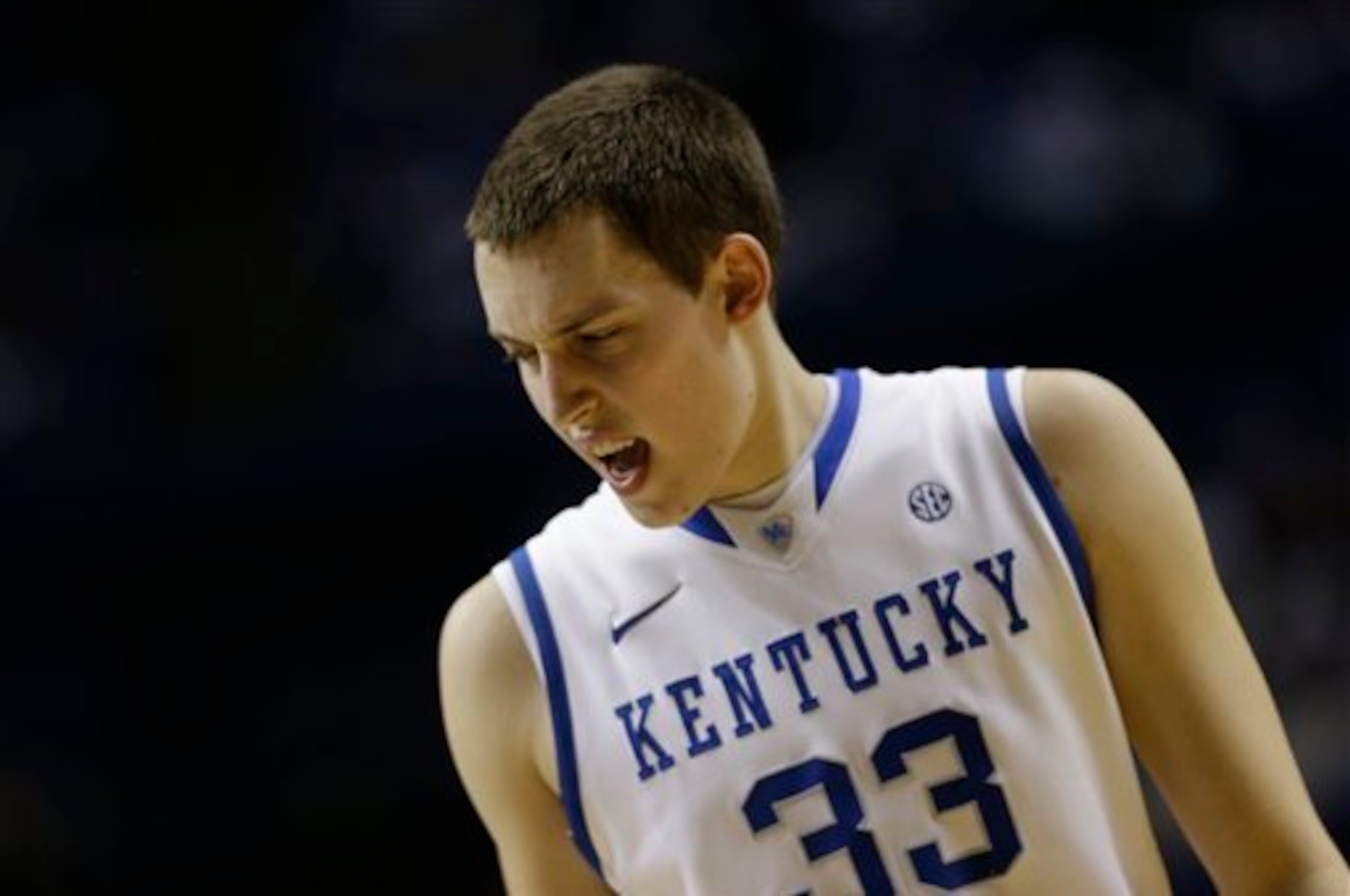
Recruiting Rank: No. 20 (2011)
2013-14 Stats (per 40 minutes): DNP (transfer)
In each of his two seasons at Kentucky, Kyle Wiltjer averaged just over 17.0 points per 40 minutes. He shot 81.2 percent from the free-throw line, 39.0 percent from three-point range and used his 6'10" stature to grab some rebounds here and there.
But now, instead of battling against equally great players in the SEC, Wiltjer joins a West Coast Conference that hasn't signed a 5-star recruit out of high school in more than a decade—if ever.
Wiltjer had the skills to succeed at Kentucky. He just had the misfortune of trying to battle for playing time with Anthony Davis, Nerlens Noel and Willie Cauley-Stein.
Not only will he start at Gonzaga, but Wiltjer has to be considered an early candidate for WCC Player of the Year.
9. Aaron Harrison, Kentucky
14 of 22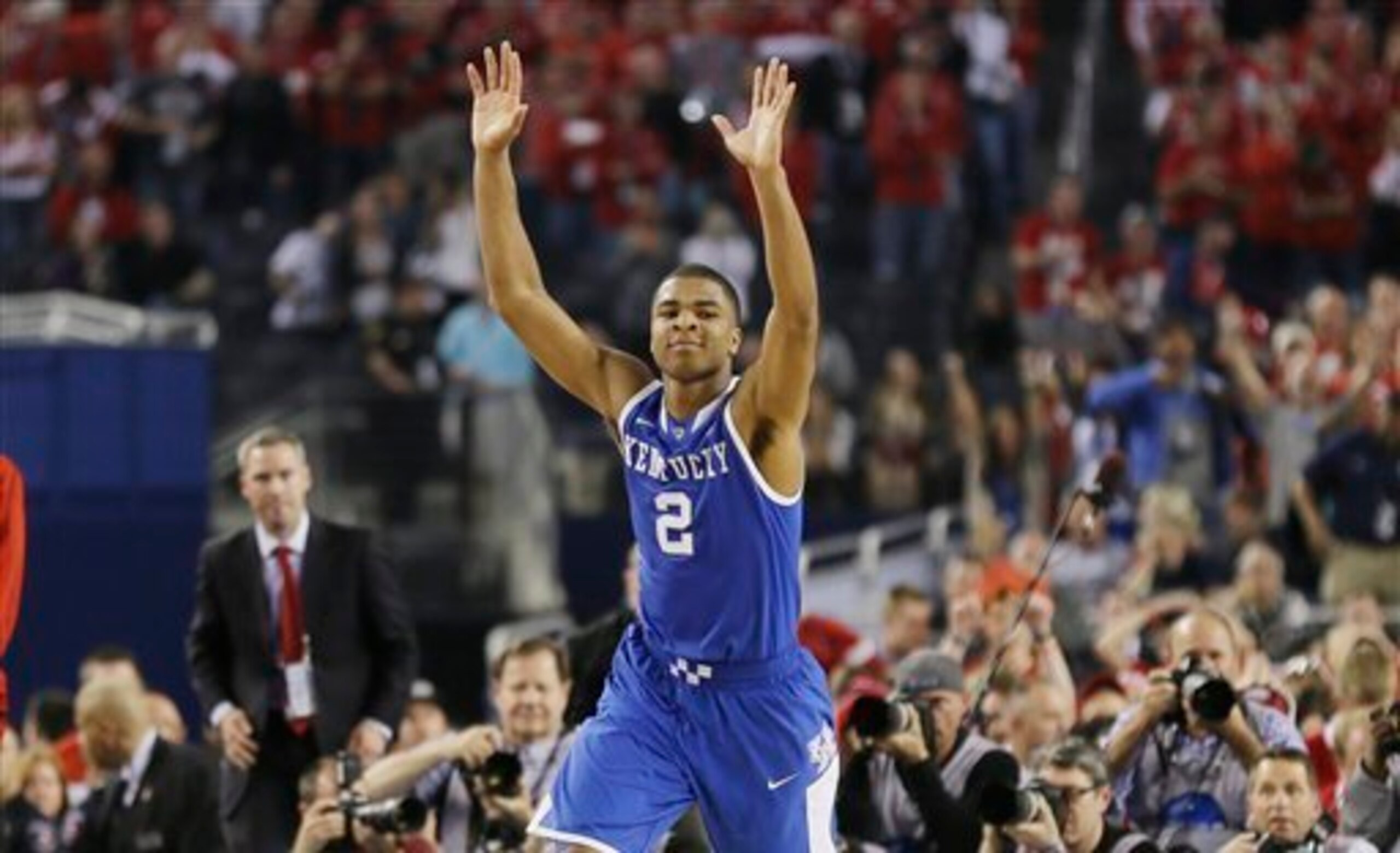
Recruiting Rank: No. 6 (2013)
2013-14 Stats (per 40 minutes): 16.9 points, 3.6 rebounds, 2.3 assists, 1.3 steals
Kentucky has two excellent players to choose from at point guard and about as many quality big men as the 24 schools in California have combined.
The only position on the court that isn't up for debate is the one belonging to Aaron Harrison.
John Calipari's primary shooting guard will lead the team in minutes played and points scored as the one player the Wildcats cannot afford to live without.
Whether you believe in a "clutch gene" or not, there's no denying that Harrison was the one they wanted with the ball in his hands when it mattered the most—even though they had what would eventually be the 7th and 17th overall draft picks at their disposal.
Expect more of the same this year as Harrison plays his way from borderline first-round pick to surefire lottery talent.
8. Yogi Ferrell, Indiana
15 of 22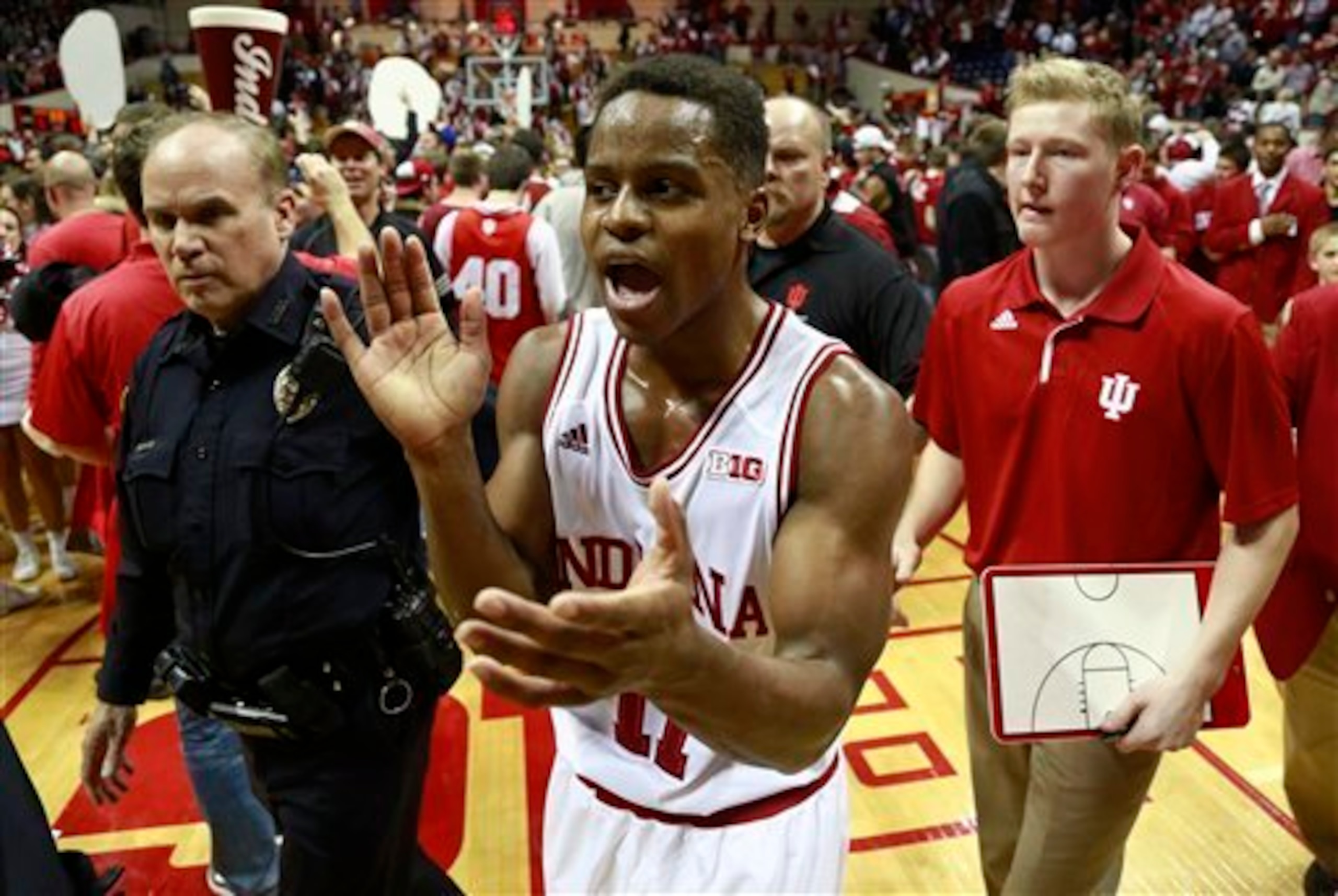
Recruiting Rank: No. 21 (2012)
2013-14 Stats (per 40 minutes): 20.4 points, 4.6 assists, 3.5 rebounds
Yogi Ferrell was one of the only bright spots in an otherwise disappointing season for Indiana.
One year removed from spending more than half of the season ranked No. 1 in the nation, the Hoosiers suffered 15 losses and missed the tournament.
Their top recruit (Noah Vonleh) bolted for the NBA after one year. Four players (Austin Etherington, Luke Fischer, Jeremy Hollowell and Peter Jurkin) transferred away from Bloomington while two other key players (Will Sheehey and Evan Gordon) graduated.
Just about the only constant on the team is Ferrell, but he's a great returning player to have.
Ferrell was fairly average as a freshman but more than doubled his scoring average as a sophomore after being thrust into the roles previously occupied by Victor Oladipo and Jordan Hulls. He was a one-man wrecking crew in the backcourt, and he could become even more valuable with some help from freshmen James Blackmon Jr. and Robert Johnson.
7. Rasheed Sulaimon, Duke
16 of 22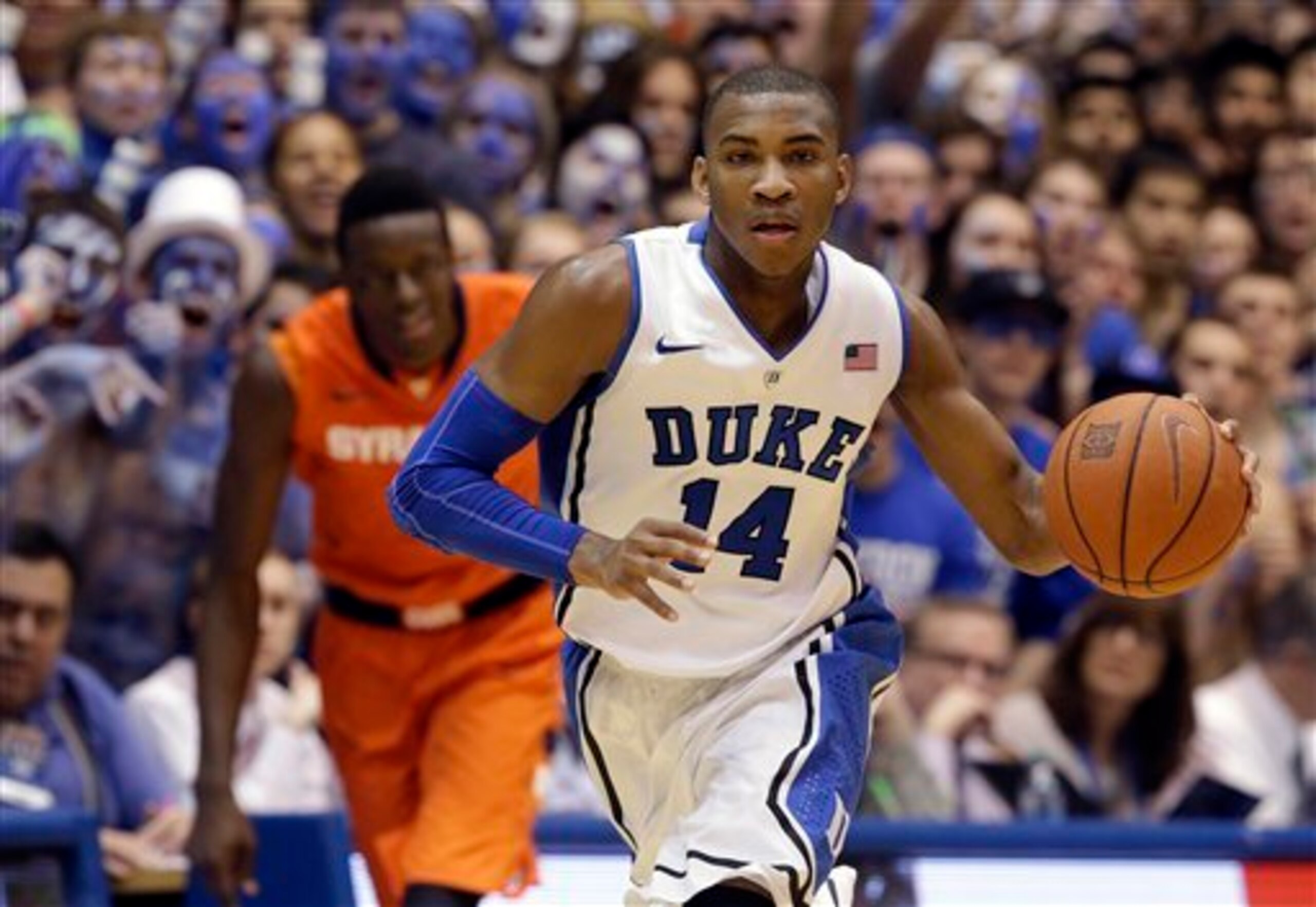
Recruiting Rank: No. 13 (2012)
2013-14 Stats (per 40 minutes): 15.5 points, 3.8 rebounds, 3.7 assists, 1.2 steals
Rasheed Sulaimon averaged 11.6 points per game as a freshman, leading us all to assume he was headed for a monster season after supplanting Seth Curry on the three-point depth chart.
Instead, his scoring average decreased and he quickly fell out of favor with Mike Krzyzewski.
He bounced back nicely, though. Sulaimon averaged 12.3 PPG over the final 14 games last year, including serving as virtually the only player on the team who showed up for the loss to Mercer.
If he can avoid an early-season swoon this year, he could be one of the top scorers in the ACC. But if he plays as poorly in November 2014 as he did in November 2013, at least we'll be able to stop debating whether Quinn Cook or Tyus Jones belongs in the starting lineup.
6. Bobby Portis, Arkansas
17 of 22
Recruiting Rank: No. 17 (2013)
2013-14 Stats (per 40 minutes): 18.2 points, 10.0 rebounds, 2.4 blocks, 2.2 assists, 1.5 steals
Bobby Portis absolutely could have packed up his things and left for the NBA after one season.
As a freshman, Portis led the Razorbacks in rebounds and blocks while ranking second on the team in points and steals. Without question, he was their most important player on both ends of the court.
But a couple of disastrous losses to Alabama and South Carolina at the end of the year kept Arkansas out of the tournament for a sixth straight season, and might have been enough of a motivating factor to keep Portis from being another one-and-done phenomenon.
It would take a minor miracle for him to lead Arkansas to a spot in the top two in the SEC, but third place is very much there for the taking.
5. Chris Walker, Florida
18 of 22
Recruiting Rank: No. 7 (2013)
2013-14 Stats (per 40 minutes): 18 games, 15.6 points, 11.0 rebounds, 3.7 blocks
In case you haven't noticed, 247Sports doesn't have 5-star duds.
Most of its top players of the past few seasons have already found their way to the NBA. Maybe a couple of players ranked in the back end of the teens or the early 20s have failed to really make their mark, but you have to go back to the eligibility issues of Josh Selby and Enes Kanter in 2010 to find the last time a top-10 recruit didn't deliver in college.
So why are there so many Chris Walker naysayers out there?
Julius Randle was the only power forward to receive a better rating than Walker in the class of 2013.
What little we did see of Walker was unpolished but anything other than unimpressive. With his eligibility issues now behind him, Walker could become the most dominant player in the entire country.
4. Wayne Selden, Kansas
19 of 22
Recruiting Rank: No. 13 (2013)
2013-14 Stats (per 40 minutes): 13.3 points, 3.6 rebounds, 3.4 assists
Per 40 minutes, Wayne Selden had the worst numbers in 2013-14 of any player on this list. Of the nine Jayhawks who logged at least 200 minutes last season, he had the worst O-rating.
However, we're cutting him a ton of slack for toughing out a knee injury that required offseason arthroscopic surgery.
Before tweaking that knee, he was rated as the second-best shooting guard in the class of 2013. And after Naadir Tharpe's decision to transfer away from Lawrence this summer, Selden is pretty much the most experienced player left in Kansas' backcourt.
Ben McLemore was ineligible to play for the entire 2011-12 season, but was a consensus second-team All-American the following year. So imagine what Selden can do after gaining that experience last year.
3. Branden Dawson, Michigan State
20 of 22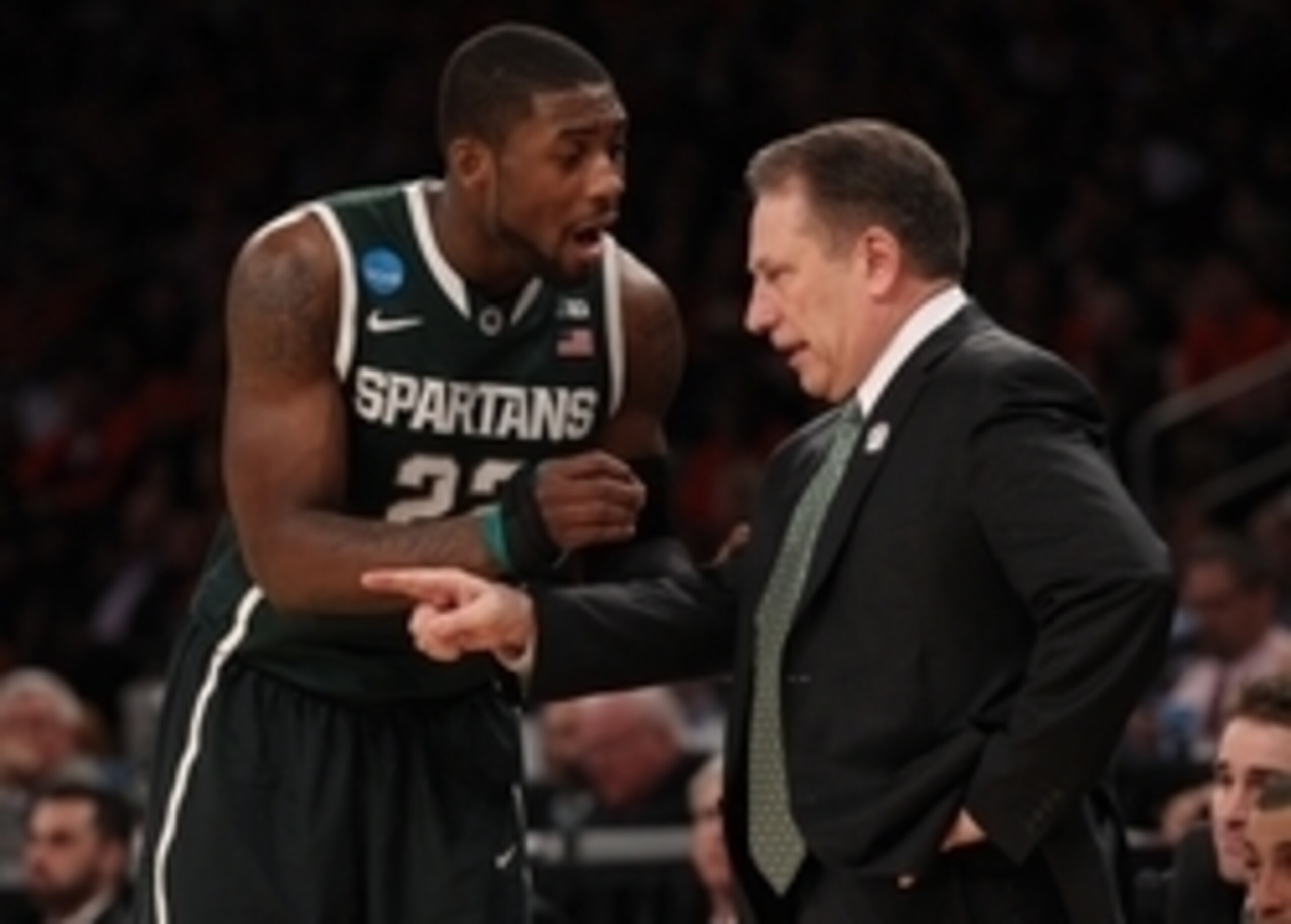
Recruiting Rank: No. 17 (2011)
2013-14 Stats (per 40 minutes): 15.9 points, 11.8 rebounds, 2.3 assists, 1.8 steals, 1.3 blocks
When he wasn't breaking bones in film sessions, Branden Dawson was the most valuable player Michigan State had last season.
In games where Dawson played at least 20 minutes, the Spartans were 24-2. In the other 12 games, they went 5-7.
Dawson led the team in win shares per 40 minutes. Not only was his .209 mark good enough to finish ahead of both Adreian Payne (.200) and Gary Harris (.188), but it would have been good for second overall in the Big Ten if he had played enough minutes to qualify.
Like Delon Wright at Utah, he doesn't shoot three-pointers well at all, but he does enough of everything else on the court to be worth more than the greatest three-point shooter money can buy.
Players more important than a healthy Dawson are beyond hard to find.
2. Rondae Hollis-Jefferson, Arizona
21 of 22
Recruiting Rank: No. 15 (2013)
2013-14 Stats (per 40 minutes): 14.5 points, 9.0 rebounds, 2.3 assists, 1.7 blocks, 1.2 steals
Rondae Hollis-Jefferson has been working hard on his jump shot all summer.
Fantastic news for Arizona fans, because a mid-range game on offense is the only thing standing between Hollis-Jefferson and a top-five draft pick in June.
Hollis-Jefferson ranked second in the Pac-12 in defensive rating, fifth in offensive rebounding percentage and ninth in block percentage. Despite shooting less than 50 percent from the field, he was fifth in the conference in win shares per 40 minutes.
Not too shabby for someone who started only six games while backing up the fourth overall pick in the 2014 draft.
Hollis-Jefferson averaged 25.3 minutes per game and was responsible for just 18.7 percent of the field goals attempted while he was in the game. Expect a significant increase in both this season as he becomes a go-to scorer for one of the best teams in the nation.
1. Sam Dekker, Wisconsin
22 of 22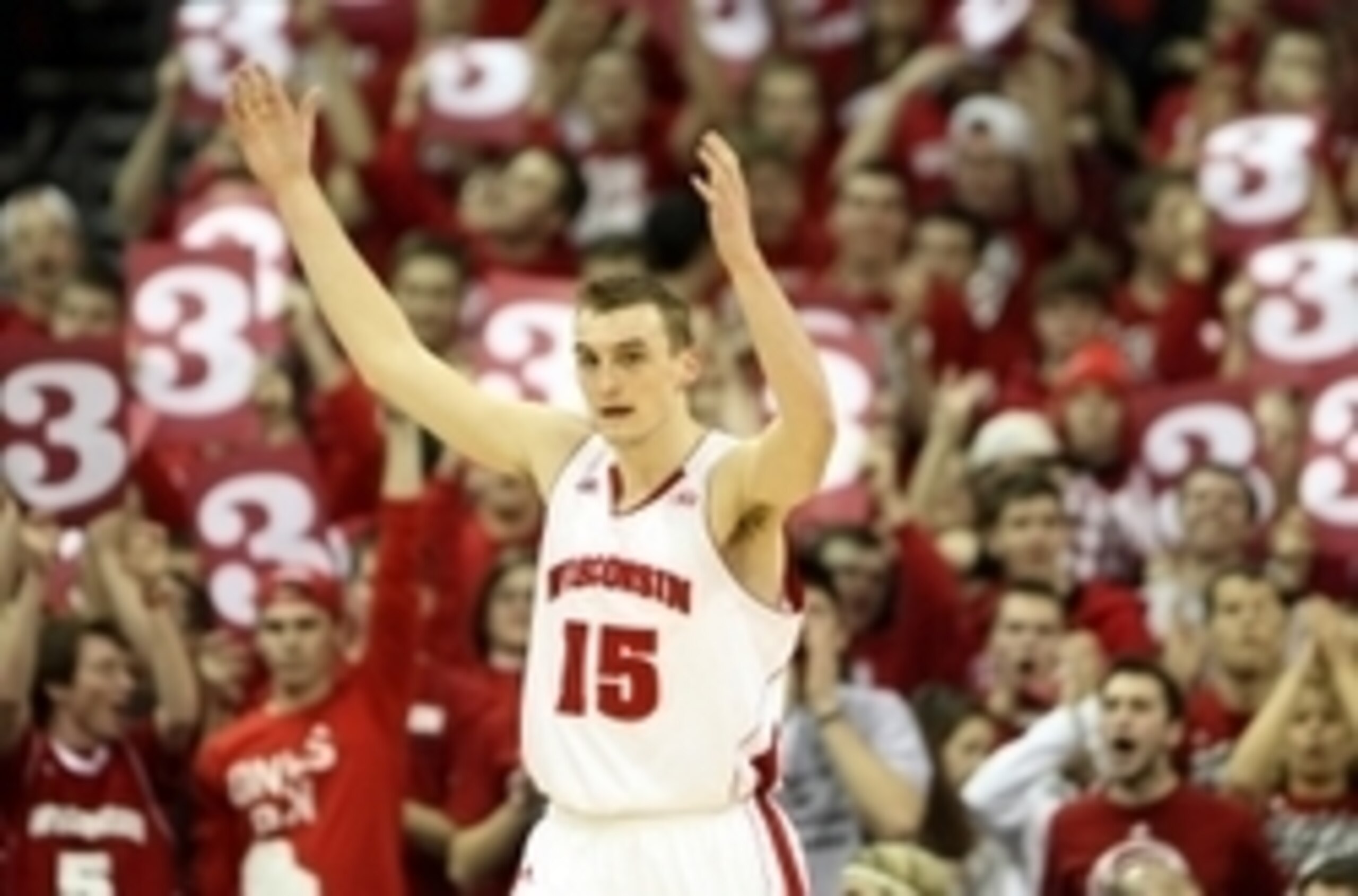
Recruiting Rank: No. 12 (2012)
2013-14 Stats (per 40 minutes): 16.6 points, 8.1 rebounds, 1.8 assists, 1.0 steals
Sam Dekker is one year wiser and two inches taller than the player whom many were expecting to be a lock for Big Ten first team all-conference at this time last offseason.
The height increase was part of what had everyone raving about him during the LeBron James Skills Academy back in June. By all accounts, he has grown as a player. Not just in stature, but in confidence, assertiveness and strength to be "Sam the Man" for a Wisconsin team that already has "Frank the Tank."
Really, all Dekker needed to do to be one of the best players in the country was find the three-point stroke from his freshman season. But if it doesn't resurface, at least now he has a "Plan B" of going to work in the post to get the job done.
Frank Kaminsky received all the accolades for Wisconsin's success last season, but it's Dekker at his best that could push Wisconsin over the top to its first national championship since 1941.
Kerry Miller covers college basketball for Bleacher Report. You should follow him on Twitter @kerrancejames.


.jpg?w=2560 "Mahomes' Wife Trolls Kubiak 💀")

.jpg?w=2560 "Love's Body Already 'Tired'")