
College Basketball 2014-15: Each Major Conference's All-Senior All-League Team
In the one-and-done era of college basketball, seniors are usually yesterday's news. They weren't productive enough or in the right situation to come out after one or two seasons, and the NBA looks at a 22-year-old very differently from a 19-year-old. The four-year player can often be taken for granted.
Last year, though, the senior class was dominant. All-American candidates like Doug McDermott, Russ Smith, Shabazz Napier, Sean Kilpatrick, Cleanthony Early and Xavier Thames struck blows for the old guys. In fact, of the 11 players named to the consensus All-America team, six were among the "elderly," while only two freshmen—Andrew Wiggins and Jabari Parker—garnered similar honors.
Each major conference has senior talent who can set the pace for its championship race or at the very least entertain the fans. These five-man teams are what each league would likely select if the all-conference teams were comprised exclusively of seniors.
American
1 of 9
G Ryan Boatright, UConn
Boatright finally gets his chance to prove he's more than Robin to Shabazz Napier's Batman. (Or should that be Bazzman?) Boatright has plenty of weapons surrounding him should he choose to adopt more of a distributor role. After all, he can get plenty of points by springing the ball loose and charging in for layups (fourth in the American with 61 steals last year).
G Will Cummings, Temple
I tapped Cummings as a favorite to lead the league in scoring, so he'd better be on a list like this. He and Quenton DeCosey could be the AAC's best backcourt duo outside of UConn or SMU. They'll have to be if Temple's going to make an NCAA tournament return. Cummings is one of the American's top passers and a solid foul shooter, so expect to see him with the ball in his hands at all times.
G Jay Hook, Tulane
Hook blossomed as a junior, leading Conference USA in three-point percentage and ranking fifth from the foul line. His .634 true shooting percentage led the league, according to Sports-Reference.com. Before you scoff at the competition level, stop and ask yourself: "Self, how many of the American's other 10 teams were in Conference USA at some point in the last three years?" (Six for the record.)
F Justin Martin, SMU
The graduate transfer from Xavier posted a solid .541 effective field-goal percentage last season. He averaged 14.2 points and 5.9 rebounds in Big East play, solid work in a conference that was, top to bottom, stronger than the AAC. He won't need to crash the boards so much as a Mustang, but he should find lots of open shots with defenses keyed on inside-out aces Markus Kennedy and Nic Moore.
G Jermaine Sanders, Cincinnati
The 6'5" Sanders is a skilled shooter (37.6 percent from deep) who's big enough to get his jumper off over nearly anyone. Now, he'll get the looks he needs with All-American Sean Kilpatrick gone. Sanders only broke double figures four times in conference play (regular season and tournament), but two were against SMU and UConn.
Atlantic 10
2 of 9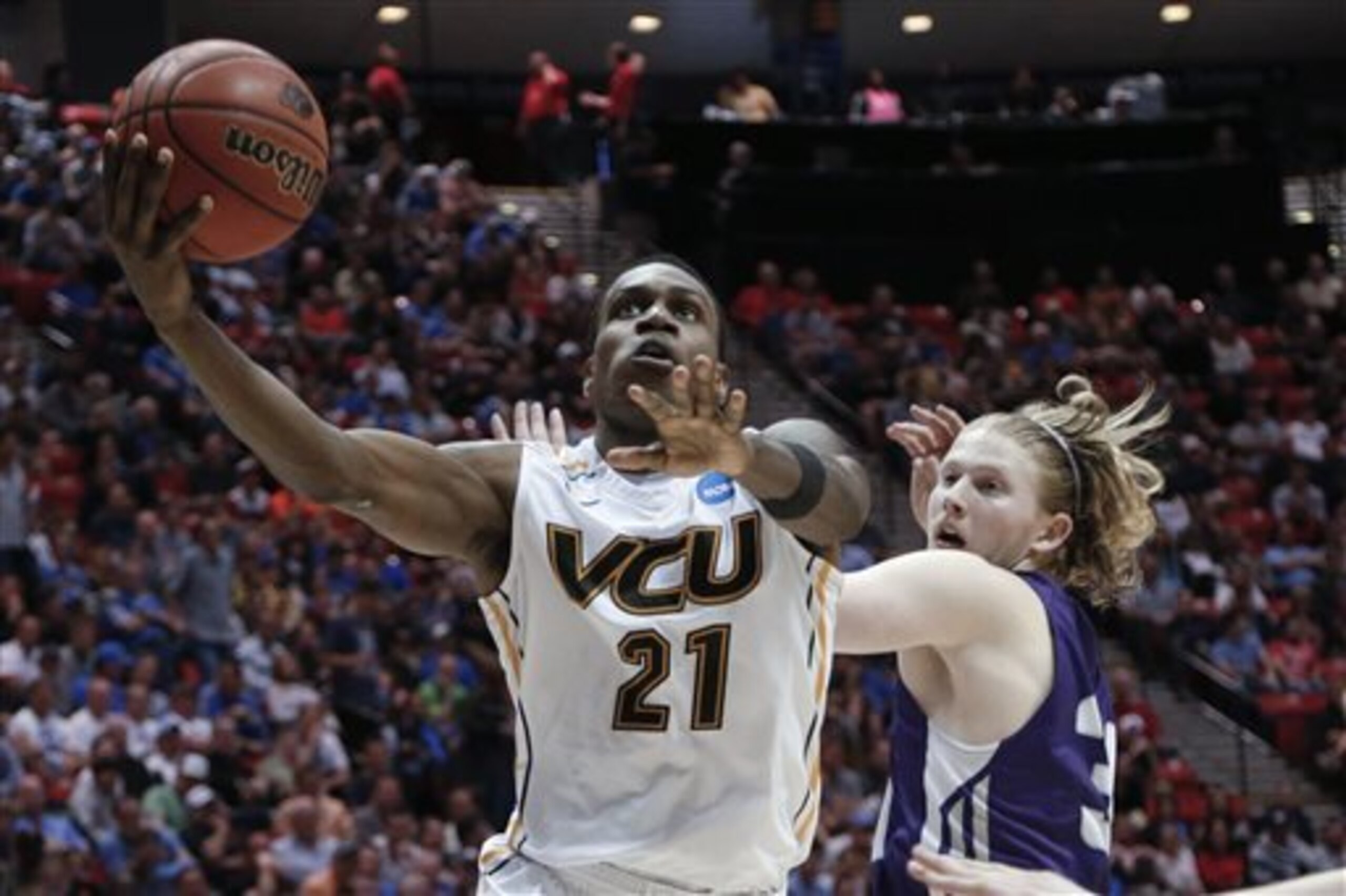
G Kendall Anthony, Richmond
At 5'8" and 140 pounds, Anthony looks like someone's little brother who decided to crash the court. He can push the ball faster than nearly anyone in the country, though. Anthony's a potent scorer—15.9 PPG last season—but sometimes gets too excited about shooting. He'll need to become more efficient if the Spiders are going to make the NCAA tournament.
F Treveon Graham, VCU
Graham and departed Duquesne star Ovie Soko were the only A-10 players to rank in the league's top 10 in both scoring and rebounding. Without banger Juvonte Reddic on hand, look for Graham to assert himself on the glass even more. Graham crushed La Salle to the tune of 34 points and 12 boards last January, and similar games could become more common this year.
F/C Cady Lalanne, UMass
With Reddic gone, Lalanne could be the A-10's premier big man. The main thing that may hold him back is working with a new point guard. Junior Trey Davis should take over the playmaking chores from the departed Chaz Williams. If Davis is more of a distributor than the scoring-conscious Williams, Lalanne's numbers could spike.
G Jordan Sibert, Dayton
With three starters gone, Dayton will lean on Sibert and junior Dyshawn Pierre to keep it among the A-10's contenders. Sibert led the balanced Flyers in scoring at 12.2 PPG and also ranked second in the conference with 83 made three-pointers. Sibert's capable of getting his points wherever he wants them, and he'll probably need to get a few more this year.
G Briante Weber, VCU
By the time Weber leaves, he may be the all-time Division I leader in steals, but we all know Weber's a defensive menace. As quiet as it's kept, he also flashed a little scoring acumen last season. Weber scored in double figures eight times in 16 conference games, twice in the conference tournament and set a season high with 22 against Georgetown in the Puerto Rico Tip-Off.
ACC
3 of 9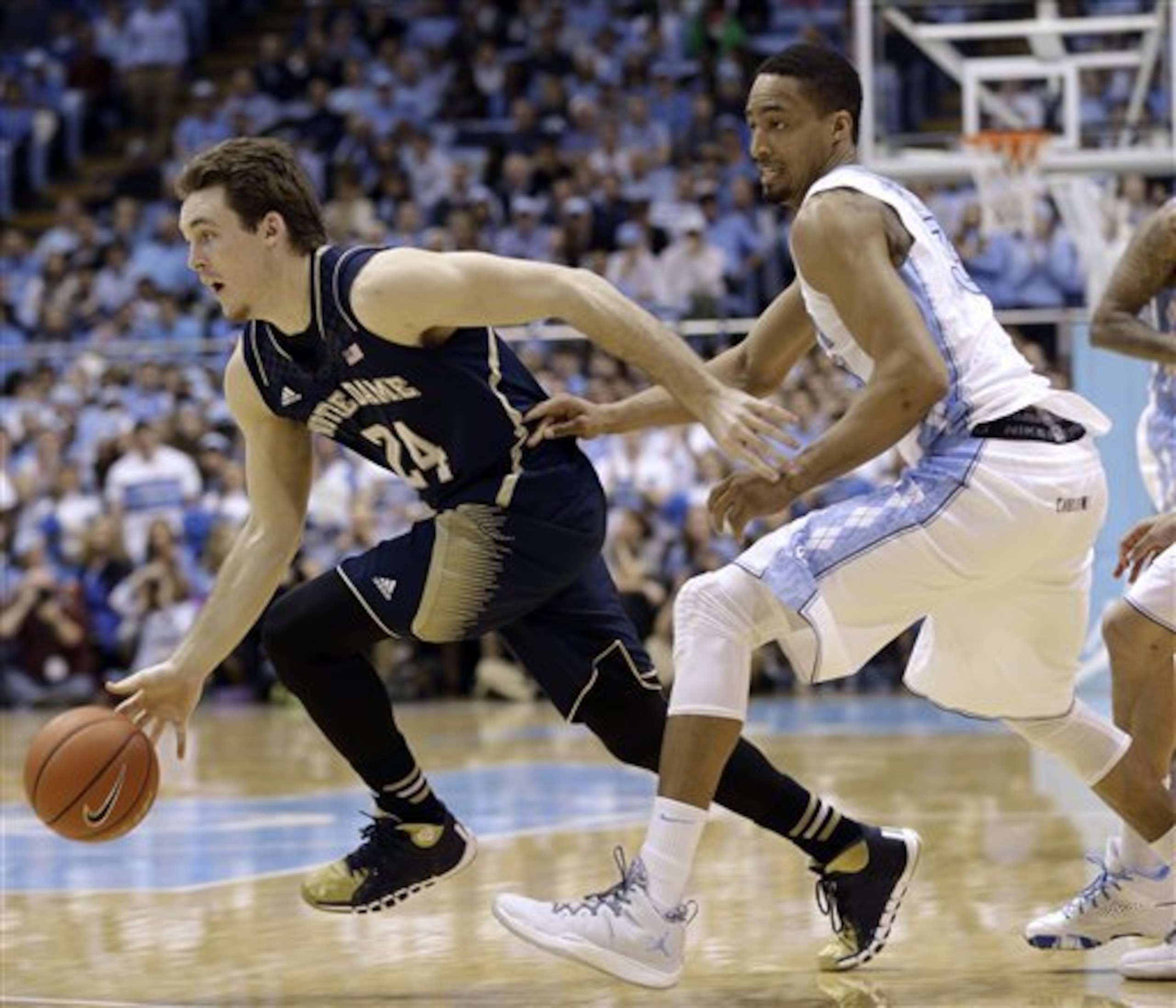
F Pat Connaughton, Notre Dame
Connaughton may be the most versatile player in the entire conference. That statement's a mouthful, considering the sort of talent that enters the ACC annually. Still, it's hard to argue with a stat line like 13.8 points, 7.1 rebounds, 3.0 assists and 37.8 percent from beyond the arc. He has a heck of a fastball too.
F/C Rakeem Christmas, Syracuse
Christmas can score when needed—see his 14 points in the Cuse's squeaker win over NC State. More often, though, he concerns himself with the dirty work of pulling rebounds and blocking shots—see his 12 rebounds and seven swats in that very same game. Christmas finished fourth in the ACC at 1.9 blocks per game.
G Quinn Cook, Duke
If Cook becomes a sixth man behind hyped freshman Tyus Jones, he'll be easily the best backup point guard in America. He's finished fourth or better in the ACC in assists and top 10 in steals in each of the last two years while averaging around 11 PPG. On a lesser team he'd probably put up Marcus Paige-type numbers, but he'd toil in relative obscurity a la Boston College's Olivier Hanlan.
G Jerian Grant, Notre Dame
Grant's not a true point guard, but most "true" point guards haven't averaged 5.3 assists per game in their careers either. Grant also dropped 19.0 PPG last year, but he did it against a fairly rickety nonconference schedule. He still hasn't played an ACC conference game, but don't expect a huge drop in production once he gets there.
G Chris Jones, Louisville
Jones hasn't played an ACC conference game either. Still, he led the American in steals per game playing alongside the always-handsy Russ Smith. That's an accomplishment. This season, Jones gets to take on more of a scoring load.


Big 12
4 of 9
G Kyan Anderson, TCU
Sometimes, putting up points on a bad team is easy. Getting assists can be hard, though. Anderson managed both for TCU last season, even when talented forward Amric Fields missed time with knee issues. Anderson is the Big 12's No. 2 returning scorer at 17.0 PPG and fourth in assists at 4.5 per game. Those are solid figures no matter how bad your team is since he's still battling Big 12 defenses.
F Dustin Hogue, Iowa State
Hogue is the only Iowa State player who started every game last season. While Georges Niang gets the hype, Hogue was the one dominating in the postseason. He averaged a superb 17.7 points and 7.3 rebounds in ISU's six postseason games, including 34 and six in the loss to UConn. He'll slot nicely into Melvin Ejim's role as the floor-spreading, glass-eating power forward.
F Jonathan Holmes, Texas
Holmes has mostly been a power forward throughout his career, and it's far from a given that he'll have to move over for elite big man Myles Turner. As I've argued in the past, the 7'0" Turner is better suited for perimeter work than Holmes. Holmes isn't a complete stranger to the three-point arc, but he's more dangerous as a rebounder and shot-blocker, both disciplines in which he ranks among the Big 12's best.
F Le'Bryan Nash, Oklahoma State
Nash takes over as the lead Cowboy with the departure of guards Marcus Smart and Markel Brown. The cupboard isn't bare in Stillwater, but Nash will still have a lot of the heavy lifting to do as senior Mike Cobbins returns from a torn Achilles and newcomers Anthony Allen and Mitchell Solomon adapt to the Division I game.
G Juwan Staten, West Virginia
Staten should contend for his second straight Big 12 scoring title in the absence of supporting scorers Eron Harris and Terry Henderson. Adding a three-point shot to his repertoire could make him nearly impossible to stop unless his teammates allow defenses to resort to double- and triple-teams.
Big East
5 of 9
G D'Angelo Harrison, St. John's
The conference's No. 2 returning scorer, Harrison can score at will from any spot on the court. Unfortunately, he's sometimes too willing to try, as he's never shot even 40 percent from the floor in any season. More efficient shooting from Harrison would ease the rebounding burden on an inexperienced frontcourt and could push the Johnnies back into the Big Dance.
F LaDontae Henton, Providence
Henton is another consistent scorer who's also one of the Big East's best rebounders (third and second the past two years). He'll be counted on for more points without iron man Bryce Cotton on hand this year.
G/F Darrun Hilliard, Villanova
Hilliard was supremely efficient as a junior, recording a .594 effective field-goal percentage. If he can remain so while defenses focus on him above all others, he could generate support for Big East Player of the Year. It also helps that he's a solid handler who's willing to get his hands dirty on defense.
F JayVaughn Pinkston, Villanova
Pinkston embraced the post last season and was rewarded with a career-best .551 two-point shooting percentage. He's rugged defensively, but there's still a sense that he could be more of a beast on the boards.
C Matt Stainbrook, Xavier
Speaking of rebounding, Stainbrook did it better than he ever has before in his Big East debut. The former Western Michigan Bronco ripped 7.4 boards per game, third among conference returnees. His 10.6 PPG should rise as Xavier looks to replace its top two scorers.
Big Ten
6 of 9
F Branden Dawson, Michigan State
A potent inside scorer, rebounder and defender, Dawson should be a top candidate for the real All-Big Ten team now that he's one of the Spartans' undisputed leaders. With that status comes new responsibility, so he has to curb behavior like breaking hands on tables. If he were three inches taller, he'd probably be in the NBA right now.
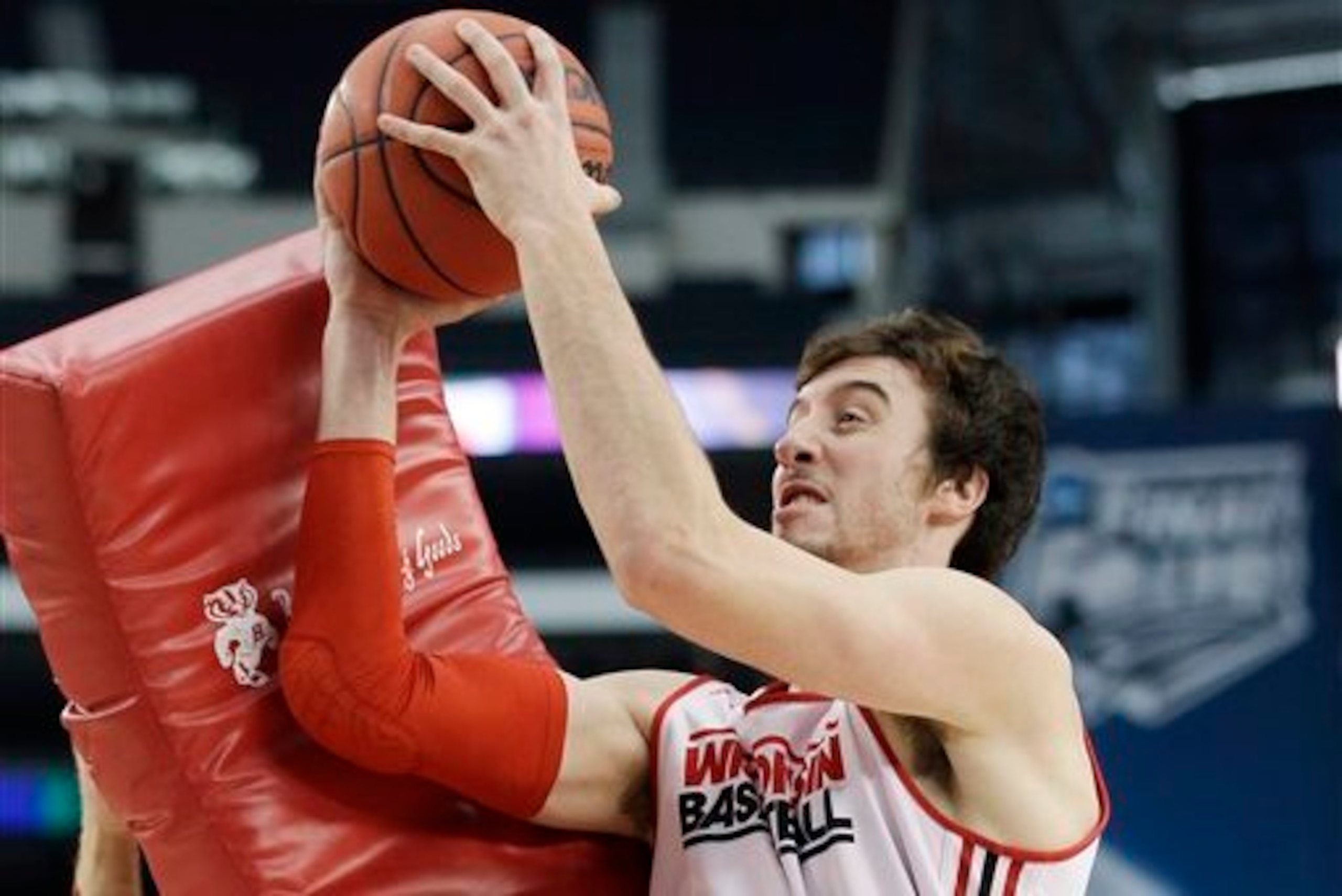
C Frank Kaminsky, Wisconsin
Kaminsky broke out in a big way as a junior, flexing his ability to shoot, rebound and defend with equal aplomb. A school-record 43 points against North Dakota may have put him on the map, but his 28 points and 11 boards against Arizona in the Elite Eight were even more impressive.
G/F Rayvonte Rice, Illinois
Rice, Kaminsky and Rutgers' Kadeem Jack are the only players among both the Big Ten's top 10 returning scorers and rebounders. (And does Jack really count?) There are usually plenty of shots to go around in a John Groce offense—last season's plodding outfit aside—so don't expect a huge drop-off from Rice just because a couple of transfers with range have arrived in Champaign.
G/F Dez Wells, Maryland
Wells can play any of three positions, but he shouldn't have to worry about point guard duties with freshman stud Melo Trimble running alongside. It would help the Terps if he rediscovered his shooting touch, as his three-point percentage has dropped every season, and last year was his least efficient shooting season overall (.508 effective FG percentage, a career low).
F Aaron White, Iowa
White's been a reliable hand for three years, but now it's time he became a star. He doesn't have to go bananas on everyone like he did against Iowa State at Hilton Coliseum last December (25 points, 17 rebounds), but it certainly would help if he did so occasionally.
Mountain West
7 of 9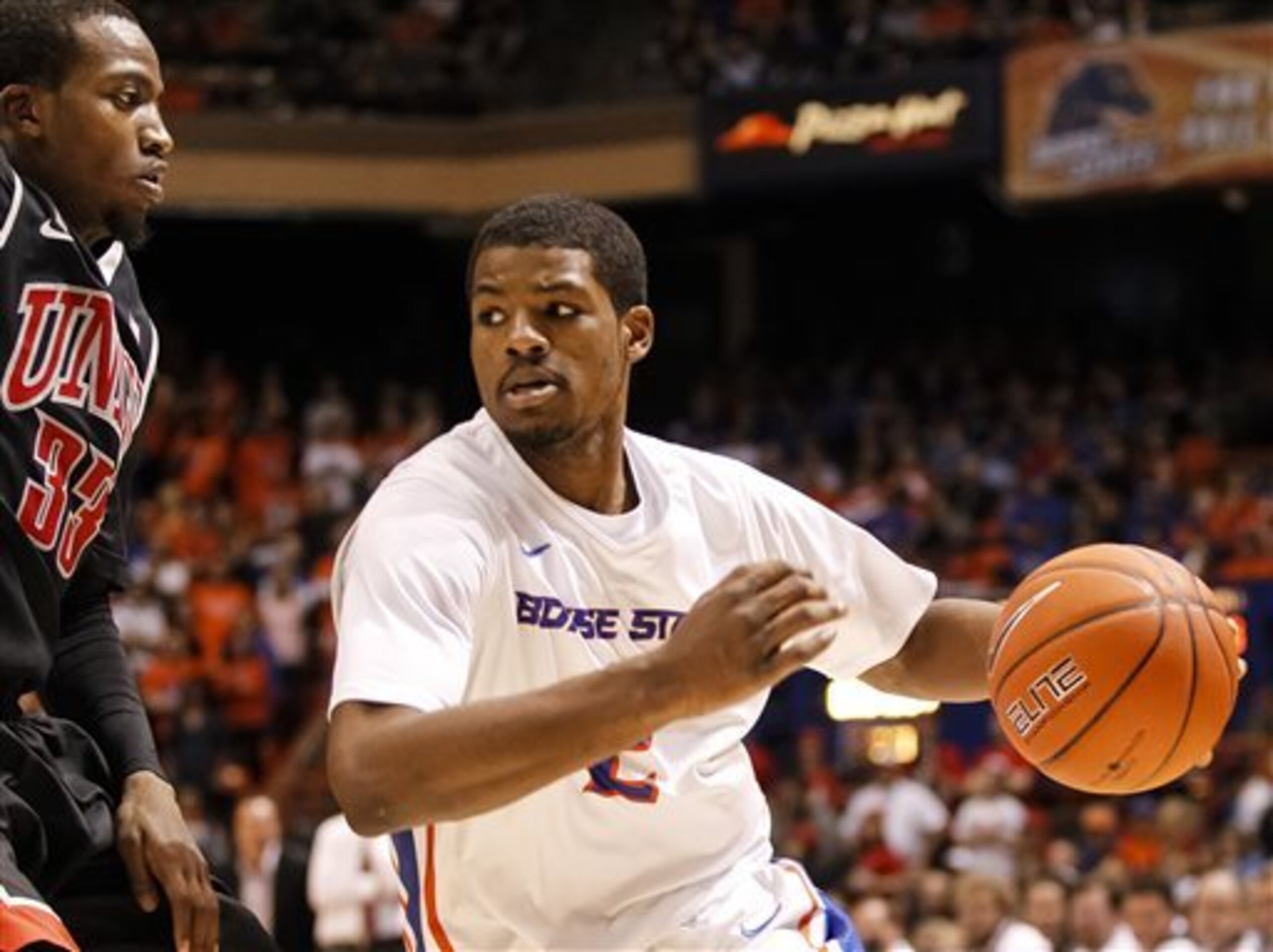
F J.J. Avila, Colorado State
Avila is the Mountain West's top returning scorer, No. 2 in assists and No. 3 in rebounds. If he can score more efficiently against some of the MWC's more rugged defenses, Avila could push the Rams back into the NCAA tournament.
F Anthony Drmic, Boise State
Drmic needs only 521 points to become Boise State's all-time scoring leader. Foot problems interfered with his shot last season, but a healthy Drmic could easily get back toward the top of the league scoring chart.
G Derrick Marks, Boise State
Marks is no slouch himself when it comes to getting buckets. He scored 19 or more on 11 occasions last year, including games against Iowa State, San Diego State and twice against New Mexico. He could be one of the league's most efficient scorers if he can rediscover his three-point stroke (42.3 percent as a sophomore, 28.8 last year).
F Larry Nance Jr., Wyoming
According to numbers compiled by RealGM.com's Dan Hanner, Wyoming's defense was more than 12 points per 100 possessions worse after Nance suffered his season-ending ACL injury. If he returns to full strength, he's a conference Player of the Year candidate and Wyoming's an NCAA tournament dark horse.
F Dwayne Polee II, San Diego State
Polee averaged 14.0 PPG and shot 54.2 percent from the arc over the Aztecs' six postseason games. Similar production this season will help make up for the scoring lost with graduated point guard Xavier Thames.
Pac-12
8 of 9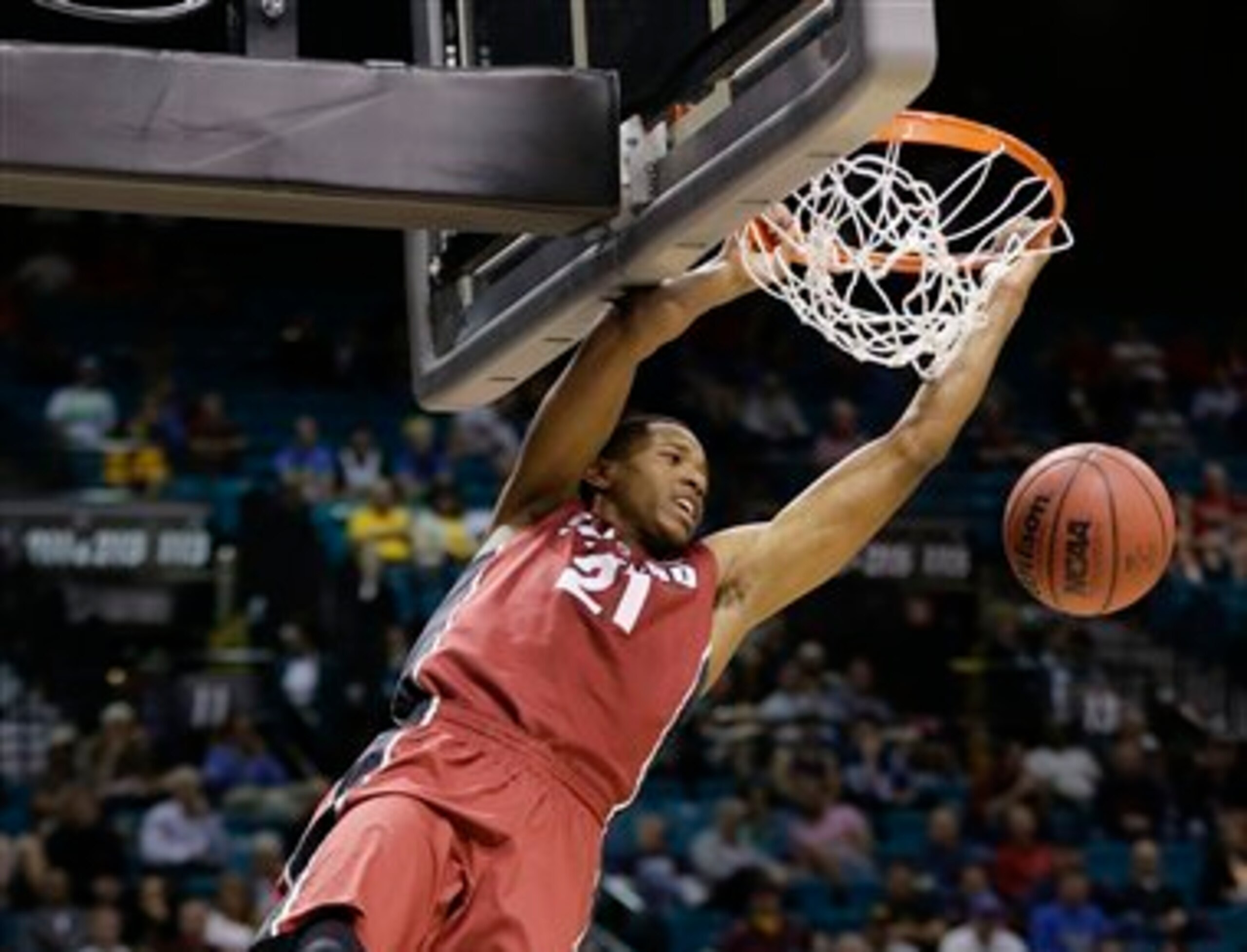
F Anthony Brown, Stanford
Brown set new career highs in all of his shooting percentages, including making 45.3 percent from the arc, the best rate of any Pac-12 returnee. He's one of the conference's top defenders to boot.
G T.J. McConnell, Arizona
Another one of the conference's best defensive stoppers, McConnell's reputation would be every bit as tiresome to non-Wildcat fans as Aaron Craft's was to Ohio State haters if Arizona was in the Eastern time zone. The unflappable guard finished third in the league in assists, fourth in steals and added a 36 percent success rate from three-point land.
G Chasson Randle, Stanford
Randle's too good a scorer to be forced into a typical point guard role, which is why it's a great thing for the Cardinal that coach Johnny Dawkins doesn't use him as such. If not for the presence of Joseph Young at Oregon, Randle would be the favorite to lead the conference in scoring.
G Delon Wright, Utah
Wright finished in the Pac-12's top 13 in virtually every major category except three-point shooting. Yes, that includes rebounding, blocks and field-goal percentage. Yes, he's 6'5", not 6'10". Yes, he has every chance of being an All-American. And yes, we fully expect to see him in the NCAA tournament.
G Joseph Young, Oregon
Young will need help to carry the load for the Ducks, but it'll likely have to come from someone with no D-I experience. Asking him to equal last season's efficiency (62.7 true shooting percentage) is a major request, but don't be surprised if he pushes 20.0 PPG on volume alone.
SEC
9 of 9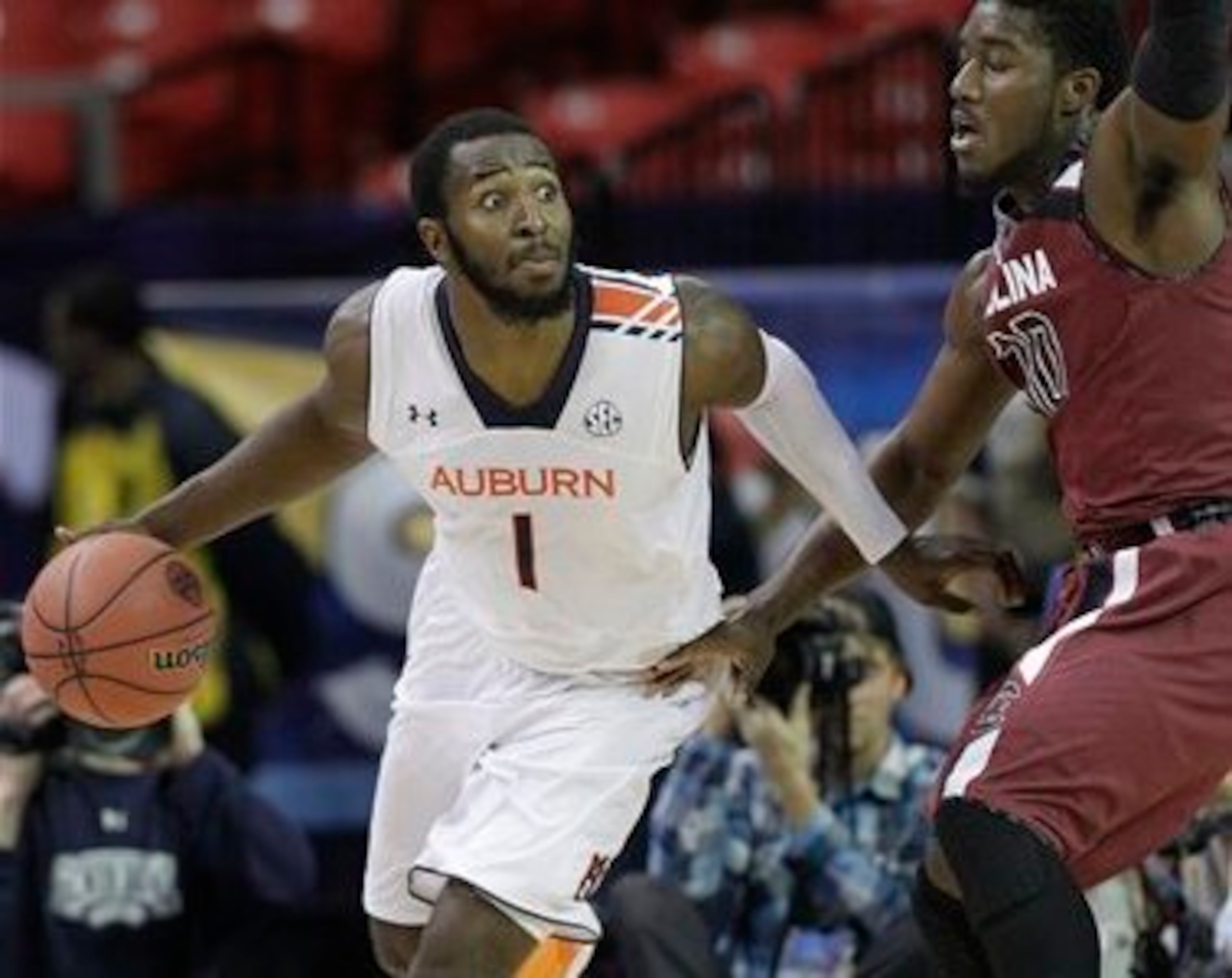
G K.T. Harrell, Auburn
The SEC's top returning scorer can light the board from nearly anywhere. He should still get his looks, even with all the talent new coach Bruce Pearl has vacuumed in seemingly overnight. With some support, look for Harrell to get more open shots even if his total number of attempts drops. A return to his 42 percent long-range shooting from his freshman season at Virginia isn't out of the question.
G Ky Madden, Arkansas
Madden shot 50 percent on two-pointers, 40 percent on threes and 82.1 percent from the foul line. With most of the Hogs' primary weapons returning, it shouldn't surprise anyone if Madden has a similar year this time around.
F/G Josh Richardson, Tennessee
Richardson has been UT's defensive ace for three seasons, but this year he needs to lead on offense as well. His 20 points against Virginia and 19.3 PPG in the NCAA tournament suggest that he can do just that, but the sledding will be harder with no Jordan McRae or Jarnell Stokes around.
F Kourtney Roberson, Texas A&M
Roberson has blossomed since the Aggies moved to the SEC, averaging 6.7 rebounds per game over the past two seasons. Look for him to surpass last season's five double-doubles, perhaps by Christmas.
G Jarvis Summers, Ole Miss
Summers is the SEC's active career leader in both points and assists. Don't expect anyone to catch him in either category this year. He may actually surpass both 20 points and five assists per game now that he's free from Marshall Henderson's mindless shot selection.
.jpg?w=2560 "Rams Eagles Football")
.jpg?w=2560 "Texans-Mixon Released Football")
.jpg?w=2560 "2 NFL Officials Suspended")


.jpg?w=2560 "Mahomes' Wife Trolls Kubiak 💀")

.jpg?w=2560 "Grading WWE Raw 🔠")