

Tale of the Tape for NFL Week 3
Throughout the 2014 regular season, former defensive back Matt Bowen will bring you an X's and O's look at the pro game. Here are his five key plays from the Week 3 Sunday NFL schedule.
Kam Chancellor Closes the Throwing Window vs. Peyton Manning
Before Russell Wilson and the Seattle Seahawks put together an impressive game-winning drive in overtime to beat the Denver Broncos, there were two keys plays (on both sides) that will allow us to focus on Seattle's three-deep shell (3 Buzz) from a scheme/concept perspective.
TOP NEWS
.jpg?w=2560 "Chiefs Giants Football")
Mahomes Told Teammate to Leave Meeting

Geno Explains Wilson Exchange

McCarthy Wins 1st Giants Start
Let’s start with Chancellor’s interception late in the fourth quarter versus Manning and the Broncos' “999” route (four verticals from a 3x1 alignment). It's a good opportunity to talk about the strong safety’s role as the “buzz” defender against the inside-seam route.
Personnel: Posse/11 (3WR-1TE-1RB)
Formation: Doubles Slot “Orange” Gun Far
Offensive Concept: 999 Route
Defensive Scheme: Cover 3 Buzz
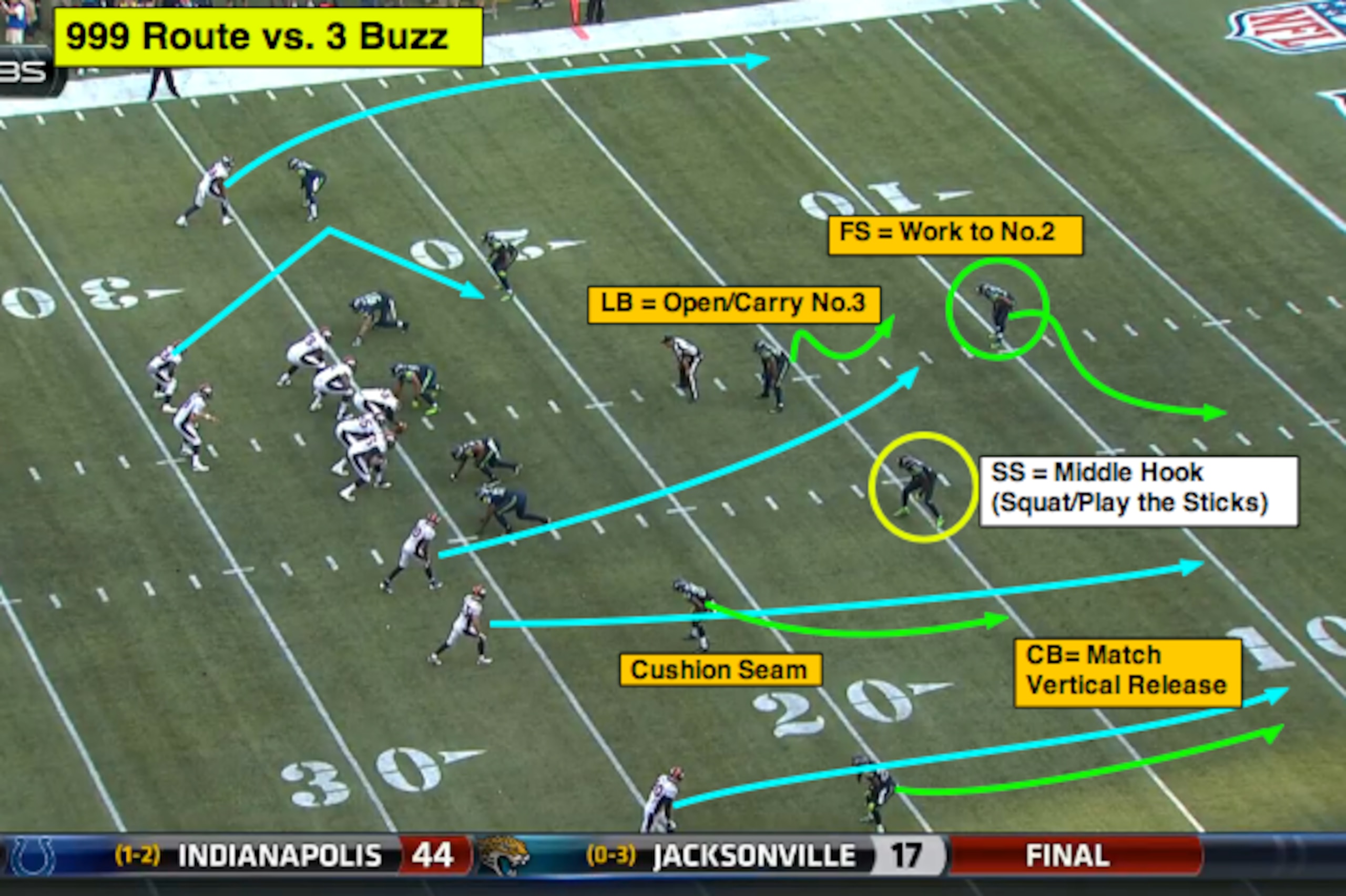
In the Seahawks' 3 Buzz coverage, the safety (free or strong) drops down as a middle hook defender with the depth determined by the down-and-distance situation.
Here, with the Broncos in a 3rd-and-long situation, Chancellor doesn’t have to sink or attack downhill. Instead, the Seahawks safety squats at the snap (flat-foot read) and plays the sticks to close the inside throwing window to the seam route (between the numbers and the hash).
This puts the safety in a position to play Wes Welker (No. 2) on the seam, while the “Mike” linebacker stacks on No. 3 and cornerback Richard Sherman matches to No. 1 outside of the numbers (pattern-match vertical stem).

At the release point, Manning is looking to target Welker on the inside seam, with the nickelback cushioning the route (trail) and the free safety, Earl Thomas, in a position to drive downhill on the throw.
However, check out Chancellor as the middle hook defender.
The strong safety splits No. 2 and No. 3 by his alignment with his eyes inside on the quarterback. This gives Chancellor the opportunity to close the throwing window to the seam (and track the ball) once Manning identifies his primary target within the route scheme.
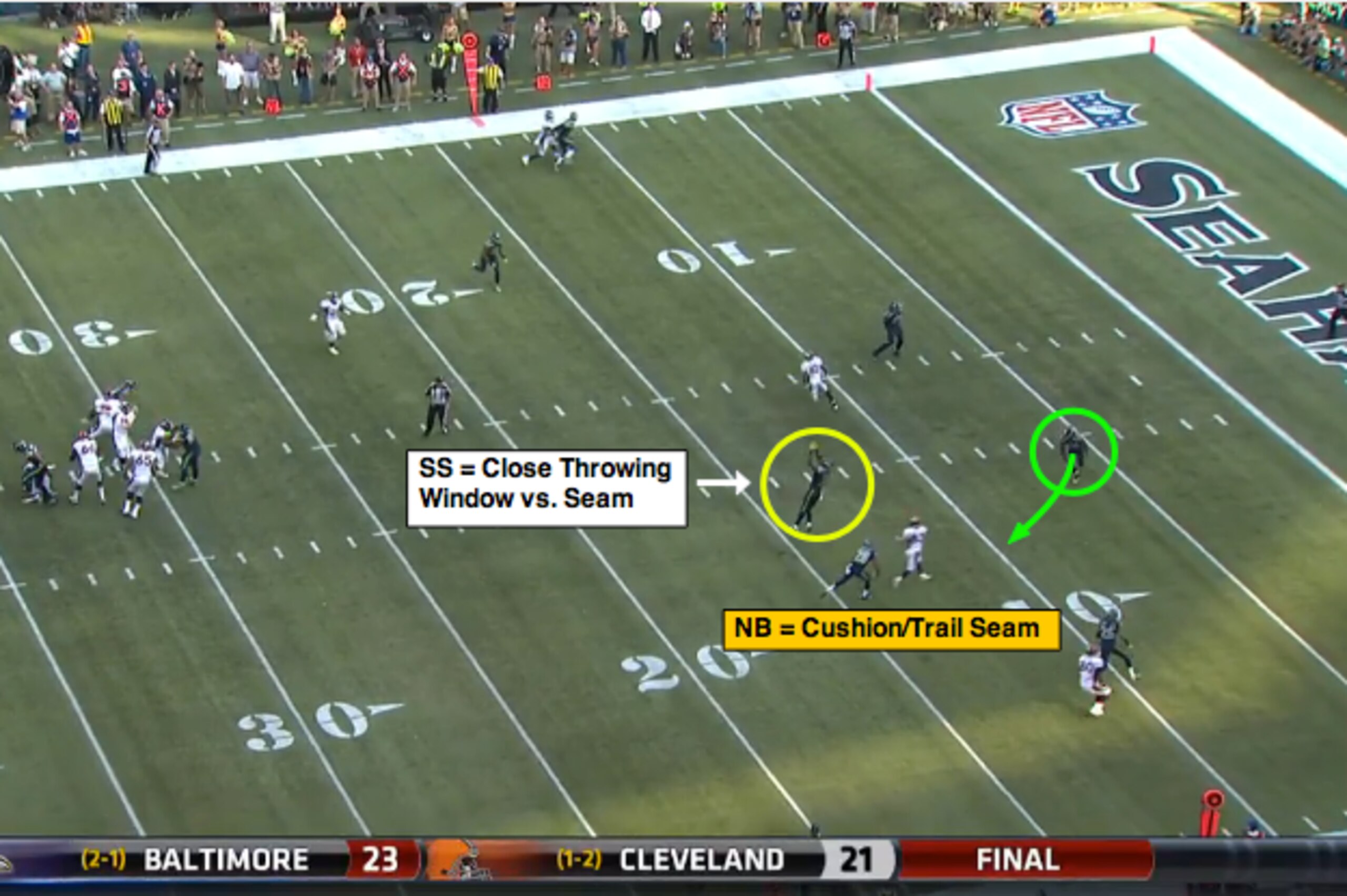
This is a poor read from Manning given the game situation and the Seahawks' defensive tendency to play Cover 3/3 Buzz versus the Denver offense.
However, I want to keep the focus on Chancellor and the defensive scheme. The Seahawks strong safety played this route like a vet with his ability to flat-foot read through the release and close the inside throwing window versus the seam route.
Chancellor was patient, understood where Manning wanted to go with the ball and made the play when given the opportunity.
Broncos Expose Seahawks' Cover 3 Defense on the Wheel Route
During Manning’s final drive to send this game into overtime, the Broncos ran a classic Cover 3 beater that puts stress on the underneath curl/flat defender versus the wheel route.
Let’s break down how the Broncos created a one-on-one matchup against a zone defense by clearing out the cornerback and targeting tight end Jacob Tamme versus linebacker K.J. Wright.
Personnel: Kings/01 (4WR-1TE)
Formation: Empty
Offensive Concept: Wheel Route
Defensive Scheme: Cover 3 Buzz
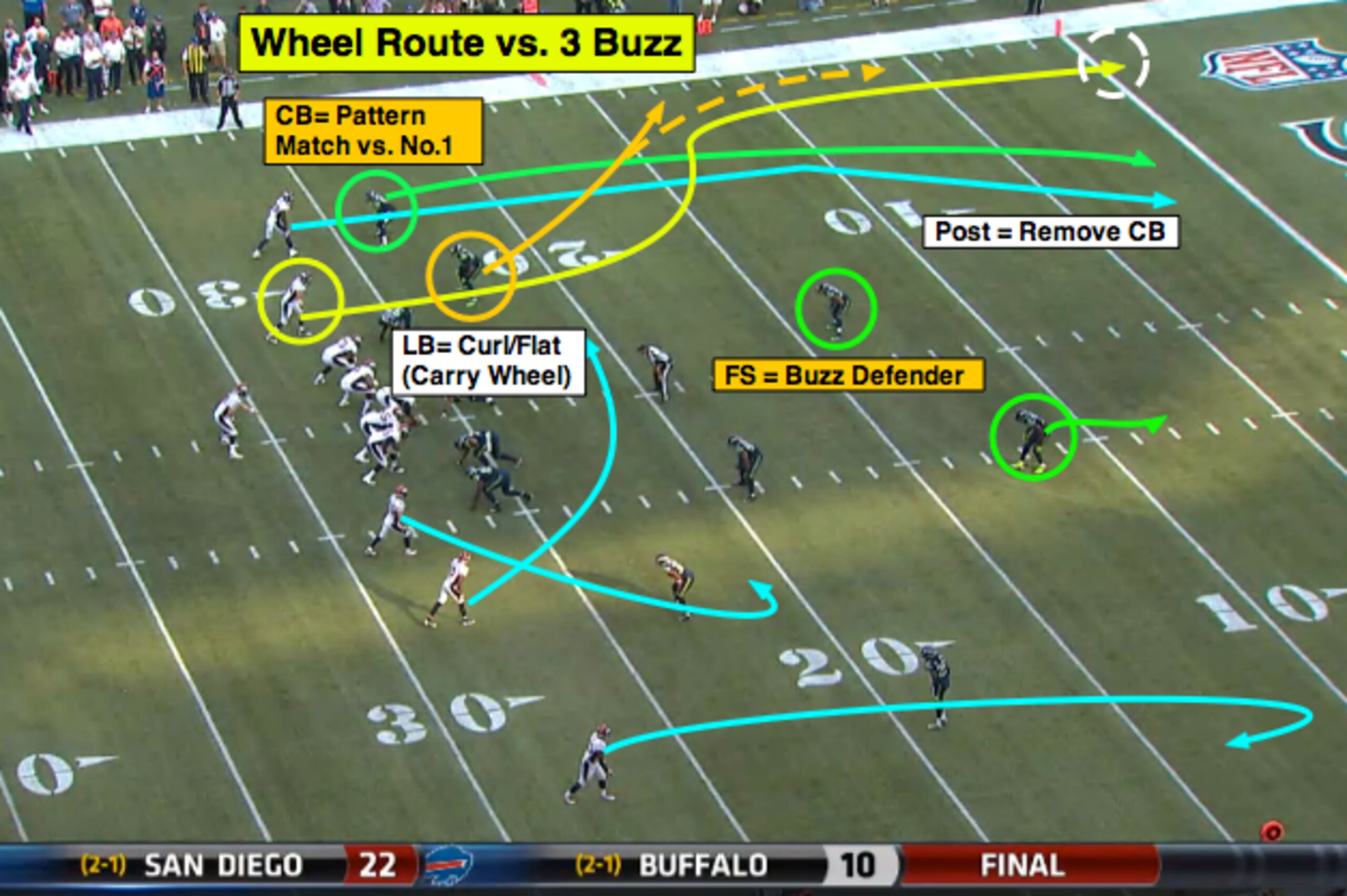
The Seahawks cornerbacks are in Cover 3 play with man-technique (pattern match) versus a vertical release outside of the numbers.
That forces the corners to carry No. 1 and funnel any inside breaking route (post, dig) to their safety help in the middle of the field while playing from an outside-leverage position.
However, because of this technique, the underneath curl/flat defender (drop to the top of the numbers) has to carry the wheel concept up the field to protect the outside third in the zone defense.
This is exactly how the Broncos targeted Tamme with the No. 1 receiver running the post and the tight end breaking the wheel route up the sideline.
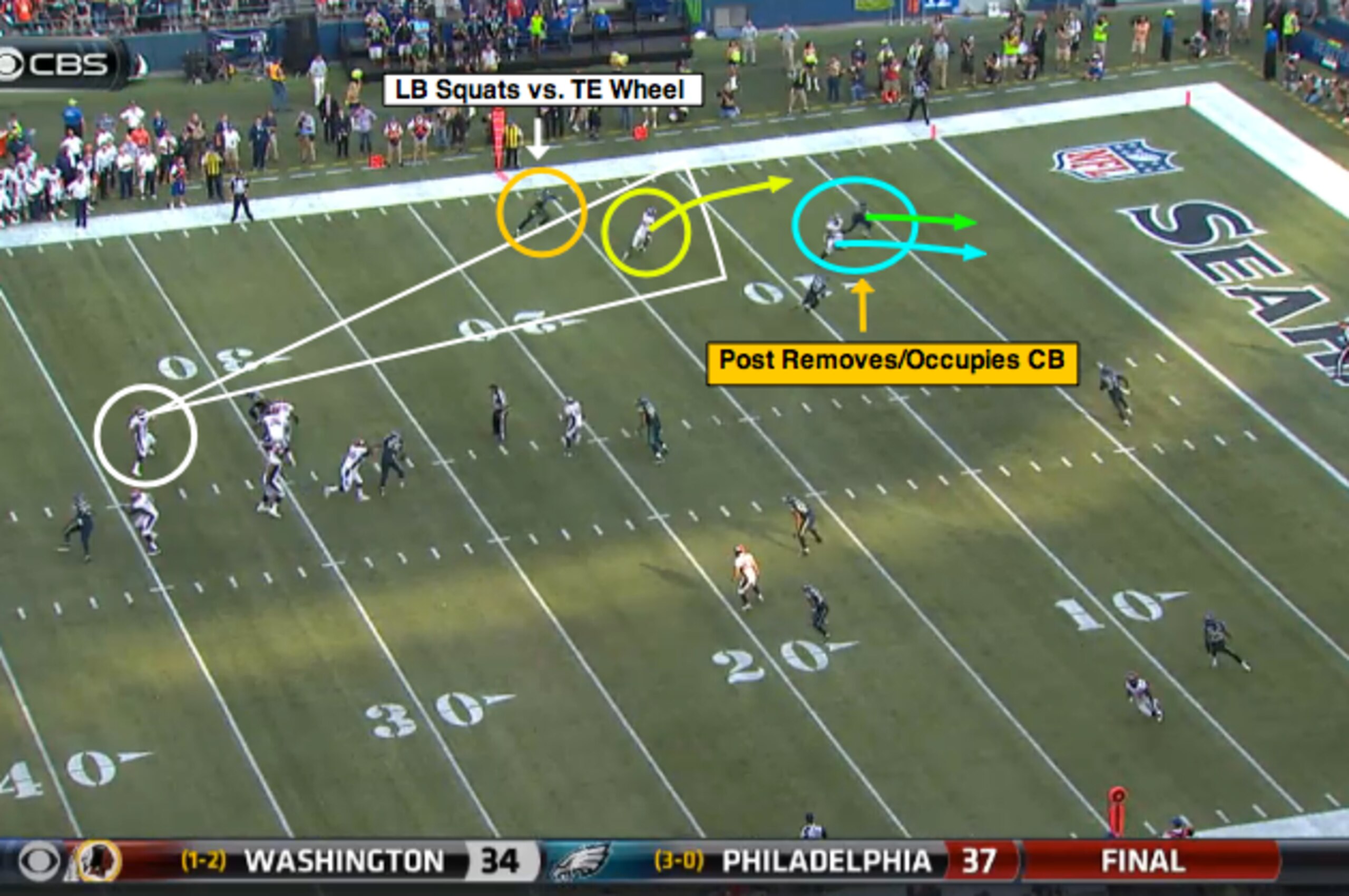
The outside post removes cornerback Byron Maxwell (pattern match) and forces the curl/flat defender (Wright) to sink versus the tight end.
As you can see here, Maxwell plays to the upfield shoulder of the post (man-technique) and funnels the route inside to his safety help.
This removes the outside third of the defense and clears out a throwing window for Manning.
Underneath, Wright squats versus the initial stem of Tamme (outside breaking cut) as a curl/flat defender. This allows the Broncos tight end to carry the route up the field and attack the now-vacated zone.

With Maxwell overlapping late on the throw (passing off the post to the safety) and Wright stuck in a trail position as he works to recover versus the wheel route, Manning drops this ball into the vacated outside third for six points.
Great call from the Broncos on the three-deep beater to get the one-on-one matchup versus a linebacker by occupying the top of the defense.
Cowboys, Tony Romo Execute the “Rub” Route vs. Rams' Cover 7
After throwing a pick-six in the first half Sunday, Romo responded with two second-half touchdowns as the Cowboys came back from a 21-0 hole on the road to beat the St. Louis Rams.
Here’s a look at Romo’s touchdown pass to Terrance Williams on the shallow drive route versus the Rams' Cover 7 defense (combination man). This is a good example of how to create inside traffic off the shallow drive route.
Personnel: Posse/11 (3WR-1TE-1RB)
Formation: Doubles Slot Gun Far
Offensive Concept: Flat-7/Shallow Drive Route (Rub)
Defensive Scheme: Cover 7
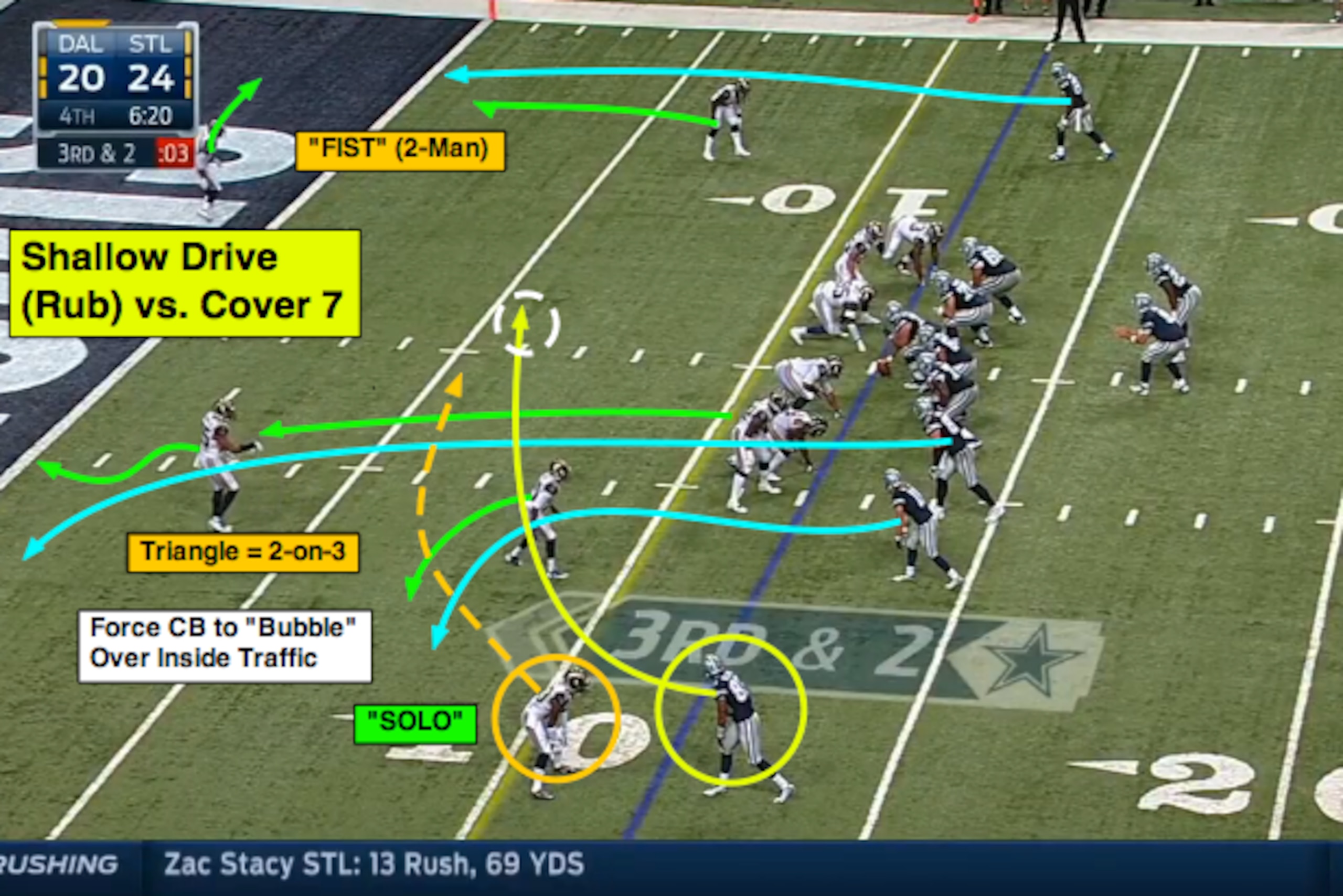
Cover 7 is a combo-man defense with the secondary making pre-snap calls to bracket or take away specific receivers in the route concept.
In this situation, the Rams are playing a “fist” call (2-Man) to the open side of the formation versus Dez Bryant (take away the fade with a safety rolled over the top).
To the closed side versus No. 2 and No. 3 (inside stack), the Rams are showing a “triangle” call (three-on-two). This allows the underneath defenders to play man coverage with the strong safety in a position to drive top-down at the break.
However, that leaves rookie cornerback E.J. Gaines in a “solo” call (man coverage with no immediate help) versus Williams.
And because of the inside Flat-7 (corner) combination, Gaines has to win on the release and avoid the two outside breaking routes to stay in-phase versus the receiver (instead of “bubbling” over the top).

Williams uses a quick outside stem on the release. That forces Gaines to widen and “open” immediately—creating inside leverage and separation for the receiver.
With Gaines now stuck in a trail position (because of his poor technique on the release), the cornerback has to fight over the top of the inside traffic and can’t drive to the hip of Williams.
This allows Romo to look up the wide receiver on the underneath read in the middle of the field with no inside help for the defense.
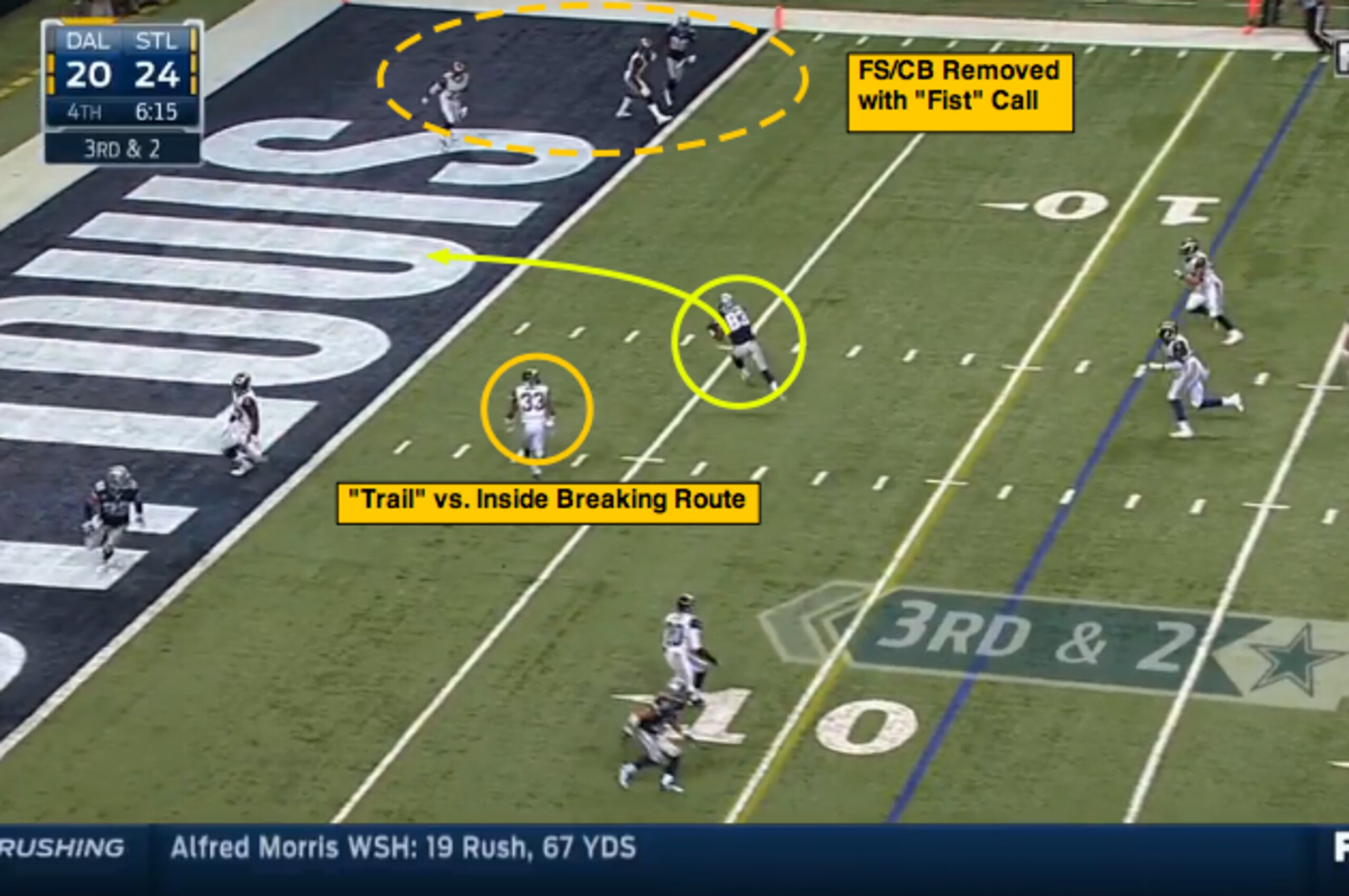
I like Cover 7 in the red zone because it creates opportunities for the defense to limit key offensive targets in the game plan. However, when you don’t play with technique outside of the numbers, it can lead to trouble in pick/rub situations.
That’s what we see here as Gaines can’t get through the traffic to match to Williams after losing on the release.
Eagles, Nick Foles Target the Inside Seam vs. Redskins Defense
Nick Foles threw three touchdown passes in the Eagles' 37-34 win over the Redskins as Chip Kelly’s offense worked the inside seam repeatedly out of the Slot Open formation to target the middle of the field.
Let’s go back to Foles’ third touchdown pass to break down how the Eagles created an opportunity for Jeremy Maclin to run the seam route by occupying both the free safety and cornerback in three-deep coverage.
Personnel: Posse/11 (3WR-1TE-1RB)
Formation: Slot Open Gun Near
Offensive Concept: Inside Seam
Defensive Scheme: Cover 3
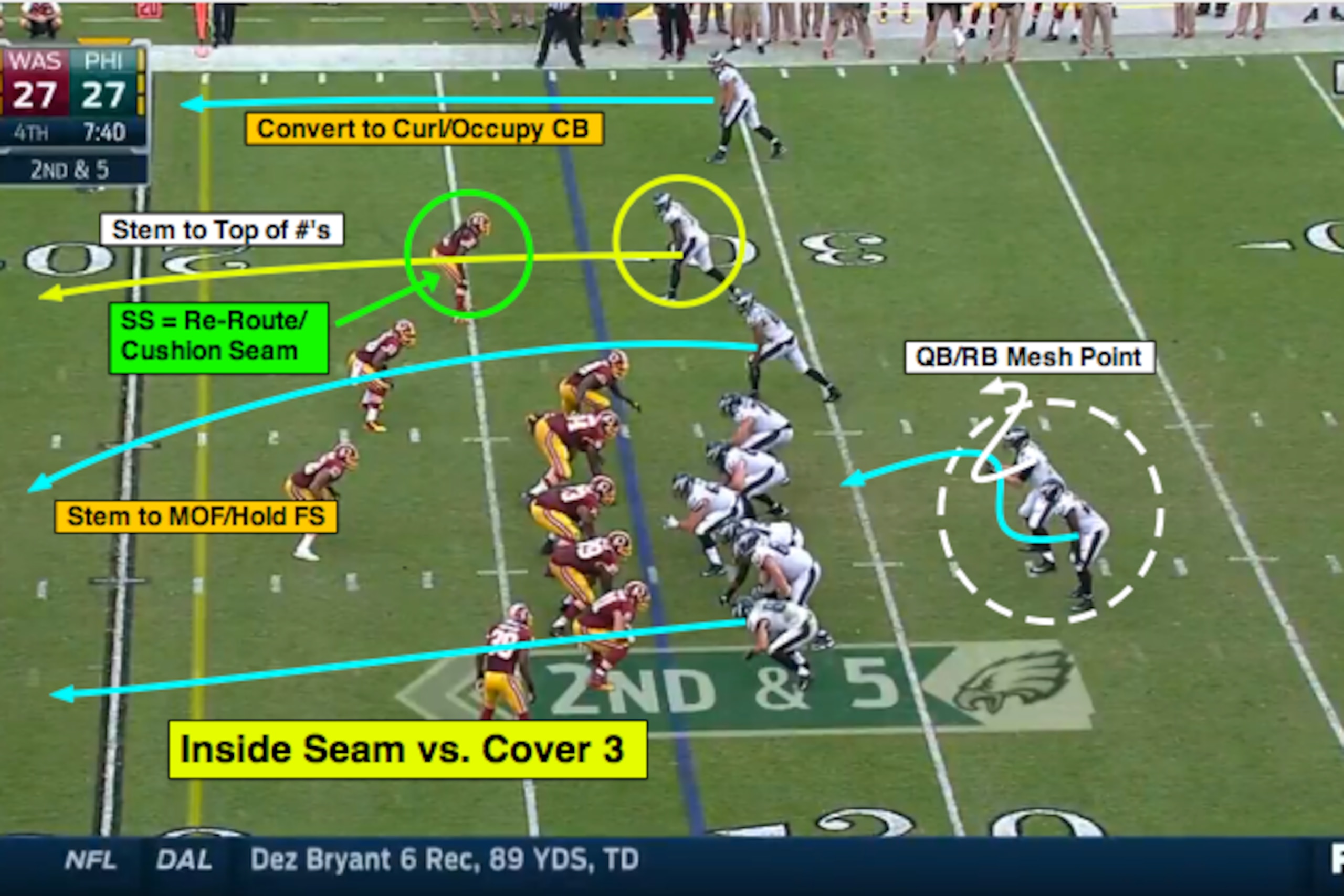
This route should look familiar if you study Kelly’s offense with Foles riding running back LeSean McCoy through the mesh point and the Eagles using vertical releases from a Slot Open formation (trips to the open side of the formation).
This creates stress for the free safety (run No. 3 to the middle of the field) and puts pressure on the underneath defender (strong safety) to cushion the seam route from No. 2 (Maclin).
And with the No. 1 receiver to the open side (Riley Cooper) converting the vertical to a curl route versus three-deep coverage, the Eagles can occupy the cornerback while removing him from the top of the defense.
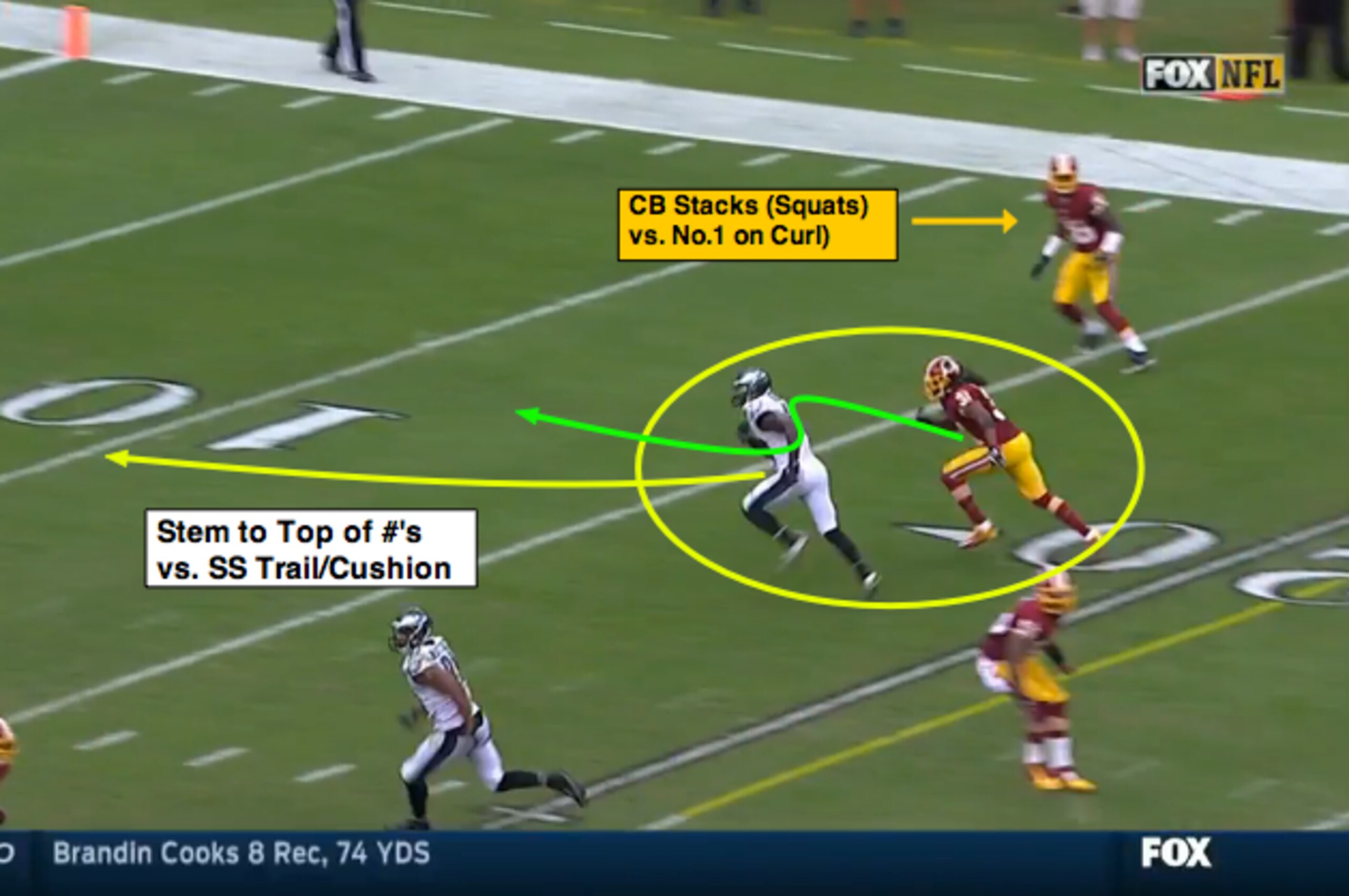
There's a quick look to the open side of the formation with the cornerback stacking over the top of the curl route and the strong safety carrying Maclin on the seam from a trail position.
This removes the cornerback and opens up the seam as there is no overlap from the outside third. And that forces the underneath safety to run with the seam.
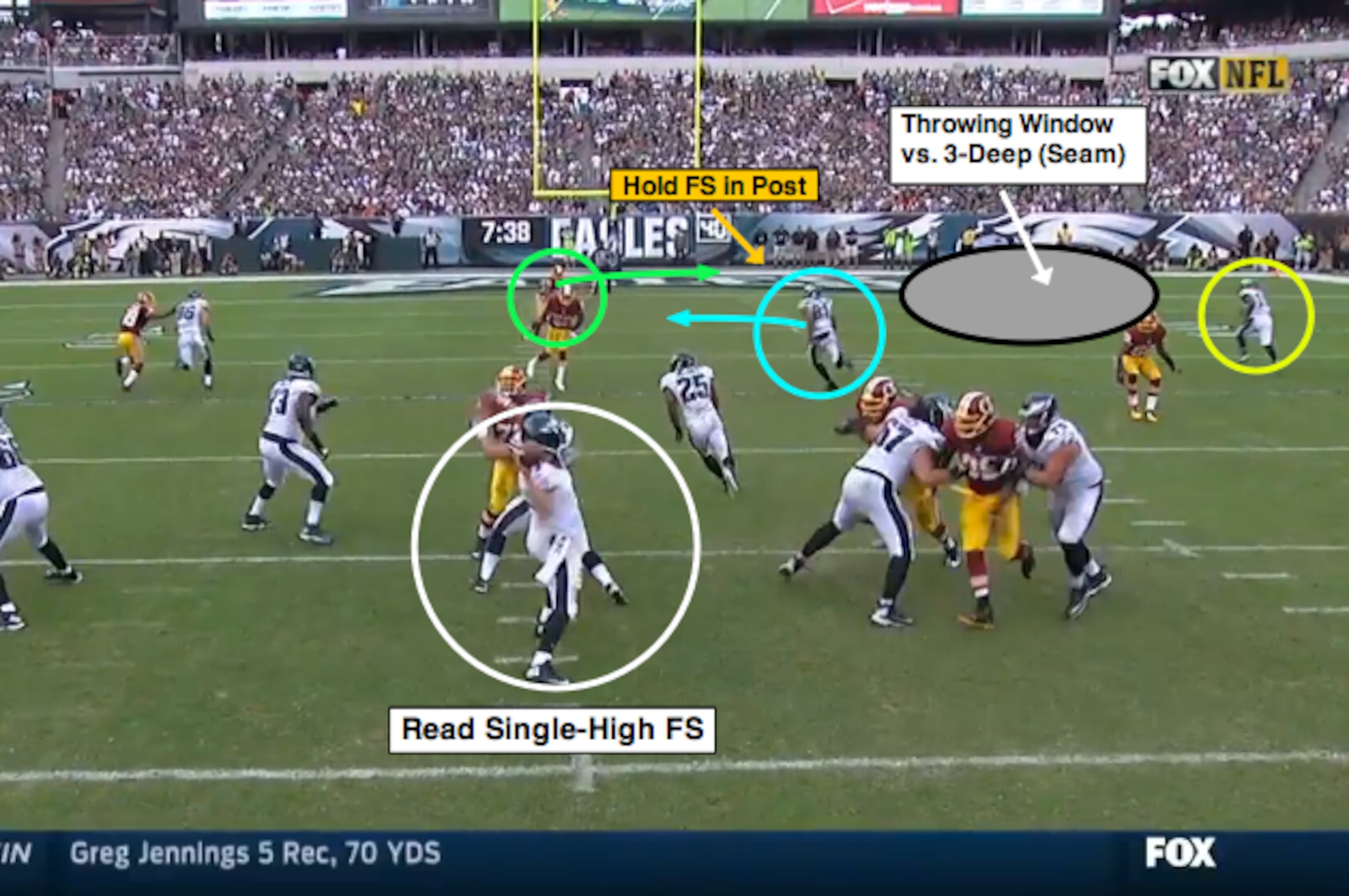
I like this angle as it shows the free safety in the deep middle of the field versus the Slot Open formation.
Here, Ryan Clark can’t leave the post with No. 3 pushing up the field (breaks to a dig route). This gives Foles a clear read versus a single-high safety defense to turn his shoulders and target Maclin as there is no immediate help from the middle of the field.
Think of a one-on-one matchup in the seam with the underneath defender now trailing the play.
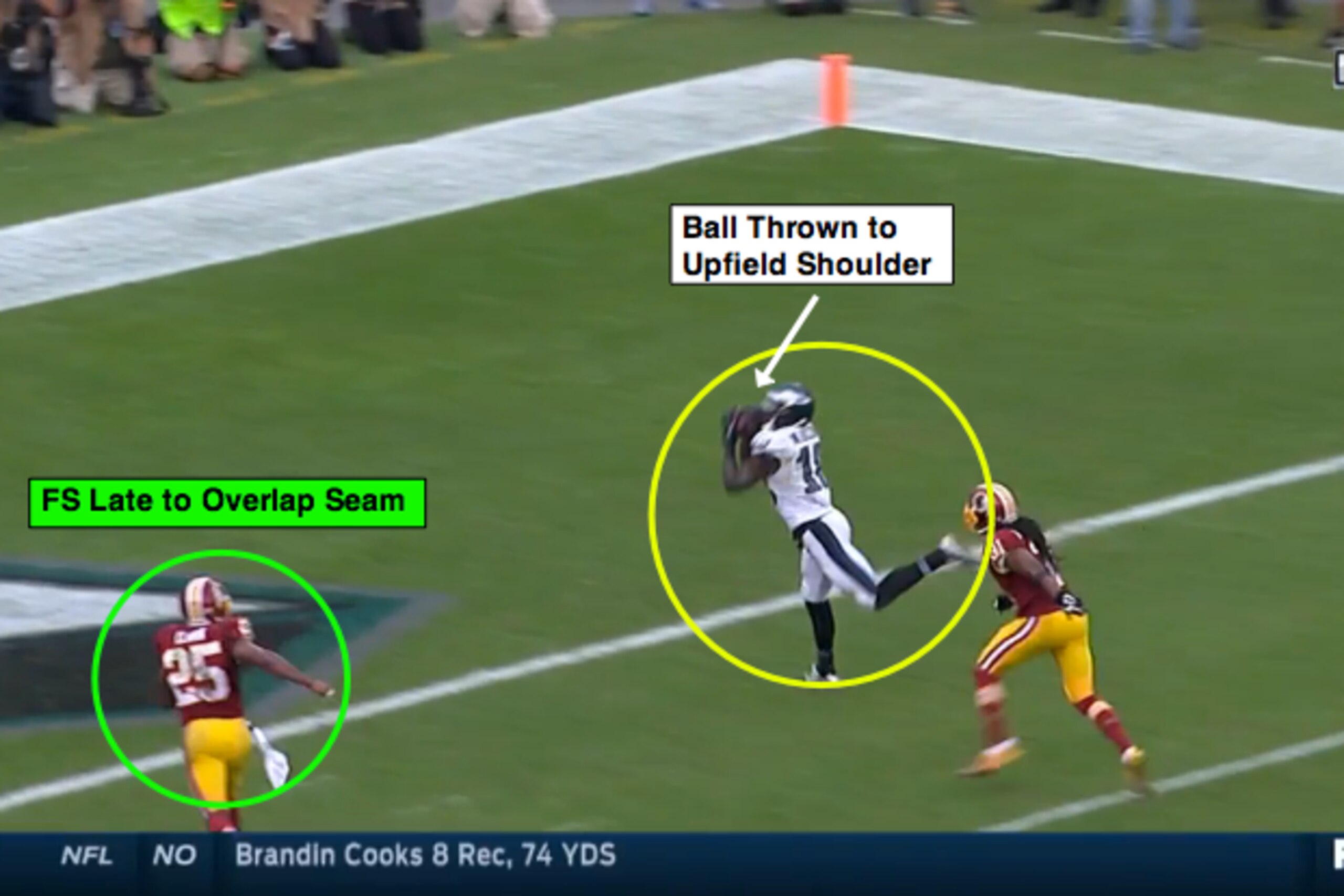
By holding the free safety in the middle of the field—and removing the cornerback—Foles can drop this throw over the top of the strong safety carrying the seam up the numbers.
Foles puts this ball on the upfield shoulder and gives Maclin the opportunity to finish as the Eagles record yet another touchdown on the inside-seam route from the trips look.
Chiefs Dress Up the FB Power with Knile Davis
With Jamaal Charles out with an injury, the Kansas City Chiefs leaned on running back Knile Davis (32 carries, 132 yards, one touchdown) to get their first win of the season over the Dolphins down in Miami.
Let’s break down how Andy Reid dressed up a power running scheme using personnel and alignment to kick out the edge defender, while creating confusion for the Dolphins defense.
Personnel: Posse/11 (3WR-1TE-1RB)
Formation: Pro Strong I
Offensive Concept: FB Power
Defensive Scheme: Cover 1

With Posse/11 personnel on the field, the Chiefs align in a Pro Strong I by shifting wide receiver A.J. Jenkins to the backfield (tailback) and moving Davis up in a offset look (fullback).
At the snap, Jenkins shows the toss action with quarterback Alex Smith opening to the play side. This is done to force second-level flow to the closed side of formation (misdirection), while the Chiefs pull left tackle Eric Fisher to kick out the open-side edge defender.
Inside, this is nothing more than a power scheme (block down/pull) with Davis showing a counter step (or slide step) to the closed side before taking the underneath handoff from Smith.
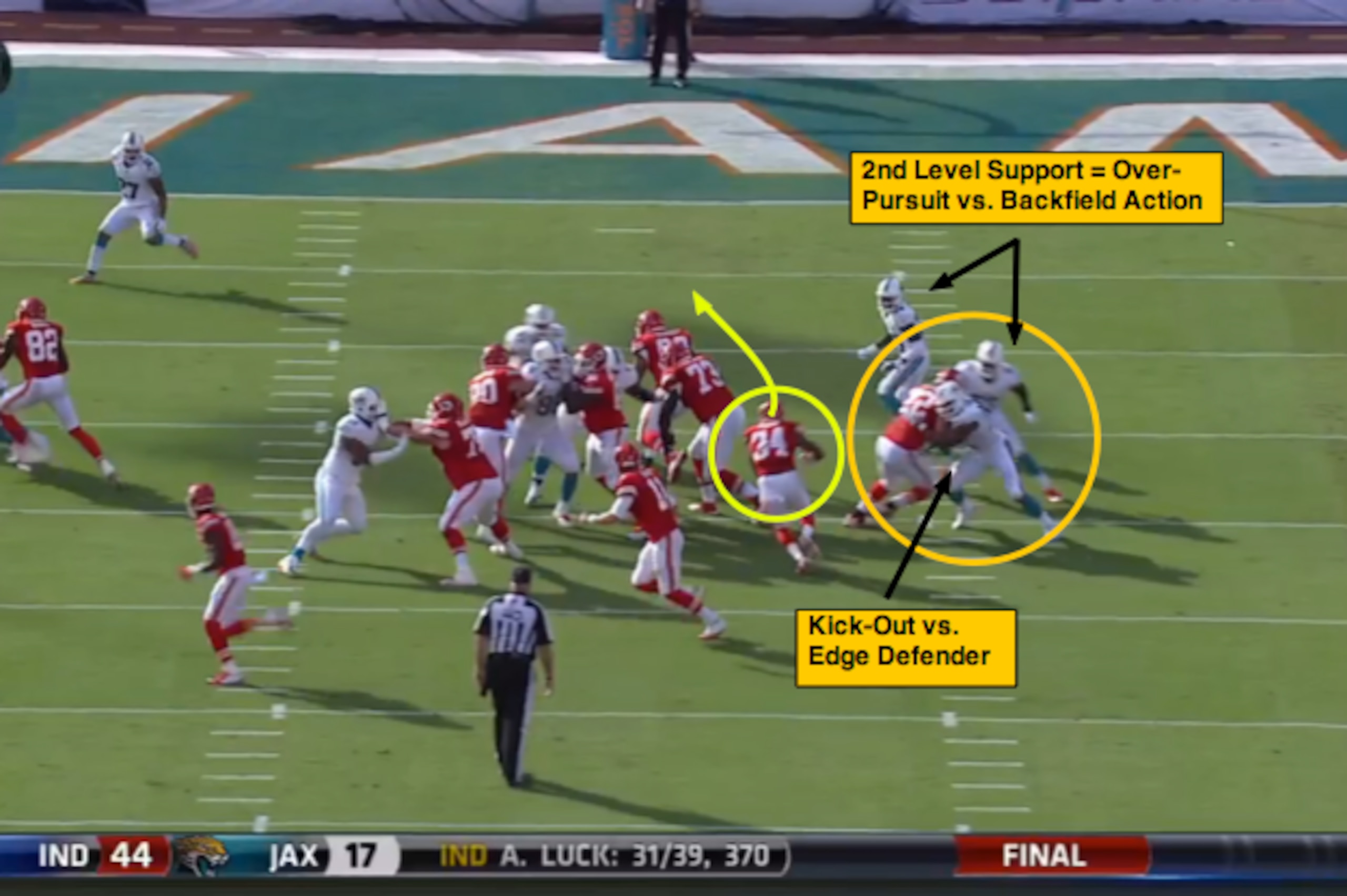
At the point of attack, Fisher kicks out the edge defender (creates a running lane) with the right tackle blocking down to pick up the closed-side linebacker scraping to the ball.
However, look at the pursuit angles from the second level of the Dolphins defense versus the counter or misdirection. This allows Davis to attack the hole and push the ball up the field as the Dolphins fail to fit up the run.
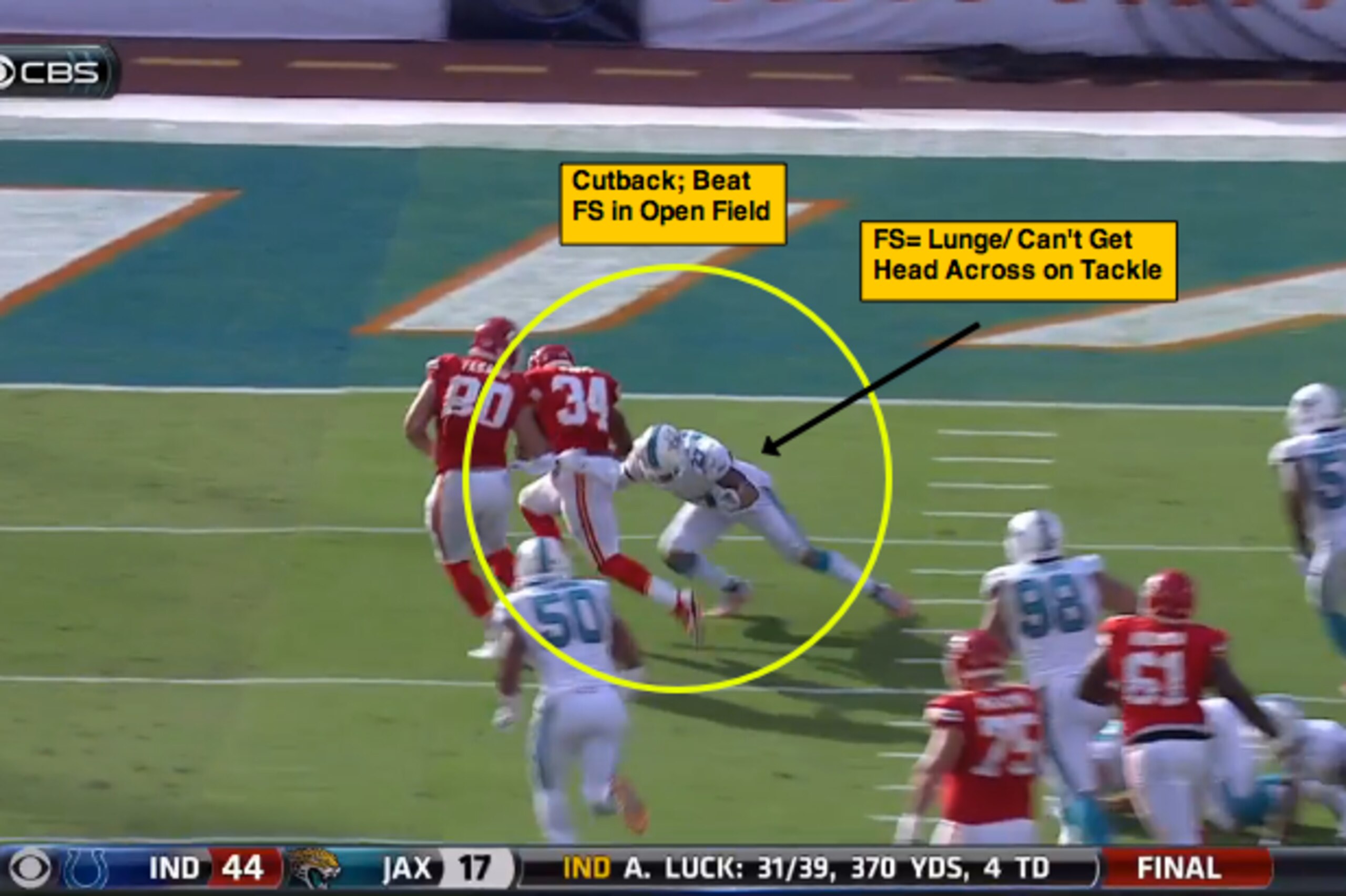
Even with the poor run fits from the second level of the Miami defense, the Dolphins still have a chance to get Davis on the ground. Instead, the safety stops his feet in the open field, lunges on the tackle attempt and fails to get his head across on the tackle.
It was poor technique across the board from the Dolphins defense versus a standard power scheme that was dressed up by Reid and the Chiefs.
Seven-year NFL veteran Matt Bowen is an NFL National Lead Writer for Bleacher Report.
.jpg?w=2560 "🚨 Week 8 AP Top 25 Poll")


.jpg?w=2560 "Updates from EVERY NFL Game 🏈")
.jpg?w=2560 "Baker Gets Glove From Rays 🧤")