

Predicting the 10 Best Defensive Teams in College Basketball in 2014-15
Defense wins championships, and that makes Arizona, Kansas and Louisville three of the biggest favorites to make deep runs in the 2015 NCAA tournament.
Each of the last 13 national champions has ranked in the top 21 in the nation in adjusted defensive efficiency, according to KenPom.com.
As such, we're forecasting which 10 teams will finish atop that metric for the 2014-15 season.
To do so, we focused solely on teams that have been ranked in the top 100 in ADE in each of the past four years. That only narrowed the field to 39 teams, so we further reduced consideration to teams with an average score of 94.0 or better—which roughly equates to 0.94 points per possession or fewer.
From that field of 19 teams, we ranked teams based on returning players and coaching systems.
Statistics on the following slides are courtesy of KenPom.com (subscription required) and Sports-Reference.com.
Honorable Mentions
1 of 11
Cincinnati, Florida and Saint Louis
As far as adjusted defensive efficiency is concerned, all three of these teams rank in the top 10 over the past four seasons. However, they each lost a ton of seniors this summer.
It's more than reasonable to have plenty of faith in the defensive systems of Mick Cronin, Billy Donovan and Jim Crews, but let's wait and see what their new rosters can do before we go saving them a spot in the top 10.
Wichita State
The Shockers earned their No. 1 seed last year. Let's not start that debate again. But there's a fine line between defending Missouri Valley teams and having to keep power-conference teams in check game after game.
If the Shockers statistically had one of the five best defenses over the past four years, we'd find a way to look past their level of competition and put them on the list. Since they are on the fringe, though, we're directing our attention to the power-conference teams.
Connecticut
The Huskies ranked 10th in the nation last year in ADE, but they lost three of their best defenders in Shabazz Napier, Lasan Kromah and DeAndre Daniels.
Among the players attempting to replace them in the roster, neither Rodney Purvis nor Daniel Hamilton is exactly lauded for defensive intensity.
Alabama
From 2010-13, Alabama had just about the most efficient defense in the country. But the Crimson Tide took a pretty big step back this past season and may continue to struggle while adjusting to life without Trevor Releford.
San Diego State
The Aztecs have ranked in the top 50 in ADE for eight consecutive seasons. Their ability to consistently win ugly is more of a testament to their defense than a slight to their offense.
Losing Xavier Thames' on-ball defense and Josh Davis' outstanding rebounding, though, could be enough to keep them from being one of this season's elite defenses.
Illinois
Like San Diego State, Illinois has consistently had one of the best defenses in the country over the past decade.
However, the season-ending torn ACL that Tracy Abrams suffered last week could be just enough of a blow to keep the Illini out of the top 10. According to Sports-Reference.com, Abrams ranked 16th in the Big Ten in defensive win shares last season.
10. Syracuse Orange
2 of 11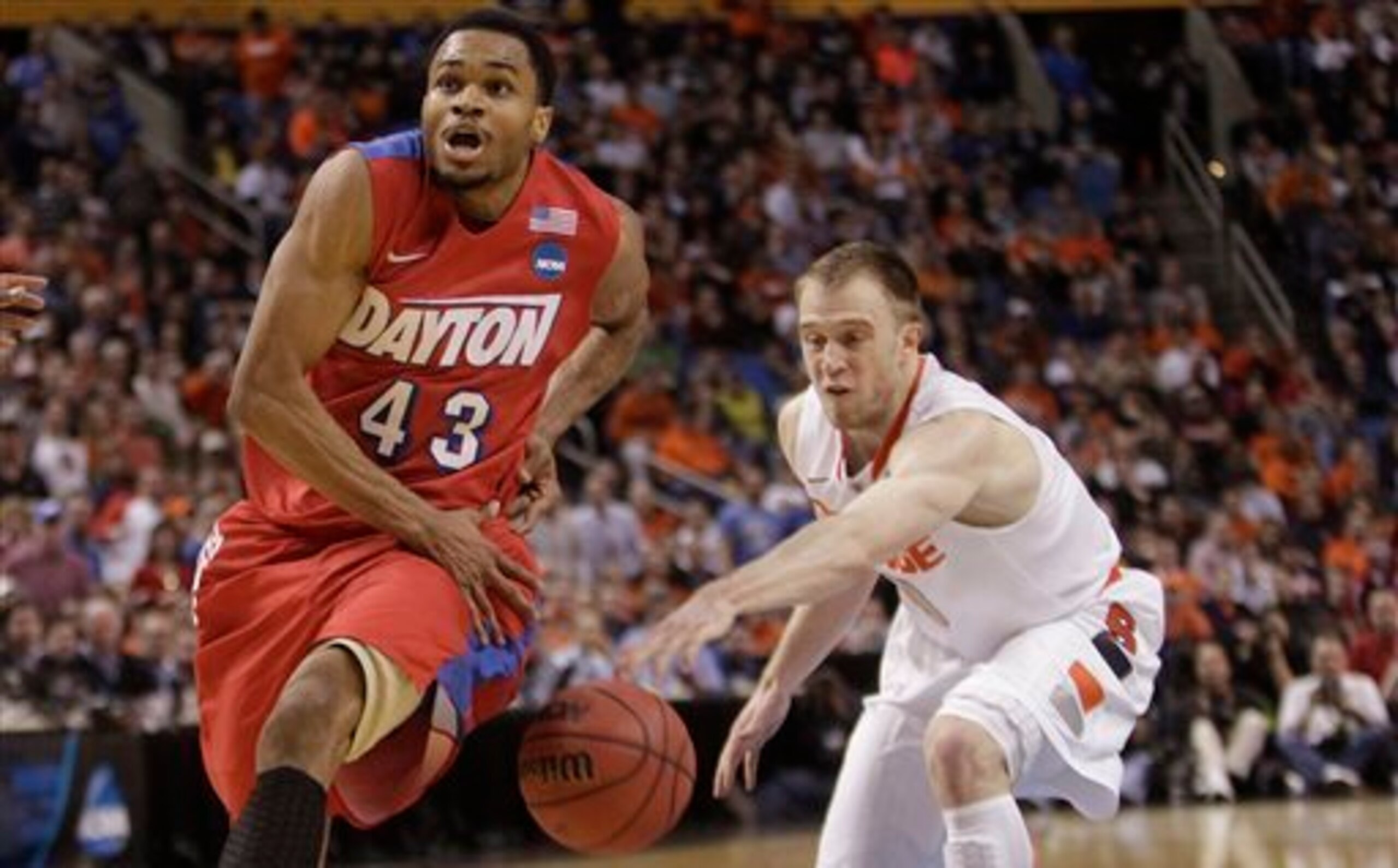
Average Adjusted Defensive Efficiency (2010-14): 91.7
The Jim Boeheim 2-3 zone is annually praised as one of the most difficult puzzles for opposing offenses to solve, but it hasn't actually been that efficient.
Syracuse's adjusted defensive efficiency almost always ranks in the top 50, but the eighth-place finish during the 2012-13 season was the only time in the past 13 years the Orange finished the year ranked in the top 10.
And now the "whole is greater than the sum of its parts" argument for Syracuse's zone defense will have to be more pronounced than ever after the Orange lost C.J. Fair, Jerami Grant and Tyler Ennis.
Rakeem Christmas is a great shot-blocker, and Trevor Cooney forces a good number of steals on the perimeter, but we're putting a lot of faith in Michael Gbinije, Kaleb Joseph, Chris McCullough and the health of DaJuan Coleman in letting the Orange snag the final spot in the top 10.
9. Michigan State Spartans
3 of 11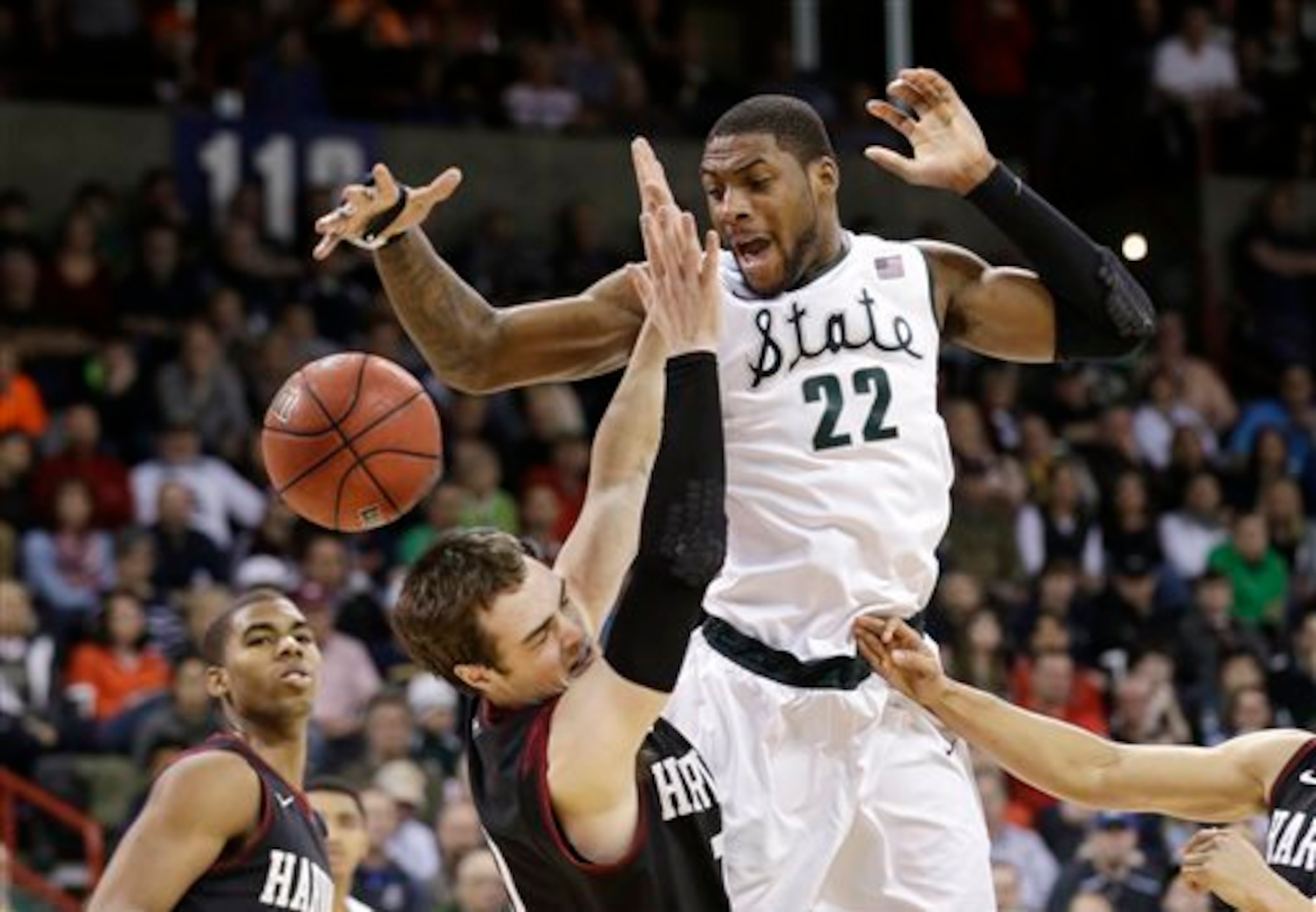
Average Adjusted Defensive Efficiency (2010-14): 91.4
From 2011-13, the Spartans posted an average ADE of 87.8. Only Louisville (86.0) and Kansas (87.5) were better during that two-year stretch.
This past season, though, MSU ranked 28th in the nation at 96.2.
If you want to argue it's because the Spartans played so many games without Gary Harris, Adreian Payne or Keith Appling, then thank you for helping us make our point.
If the Spartans "struggled" on defense while getting only 31-35 games out of each of those players, how are they going to do this season with zero games from all three?
Tom Izzo has led Michigan State to a top-32 ranking in adjusted defensive efficiency in eight consecutive seasons. He still has plus defenders in Branden Dawson and Travis Trice and a good shot-blocker in Matt Costello, but the Spartans sure are replacing a lot of pieces this year.
That rationale was enough to keep Cincinnati, Florida and Saint Louis out of the top 10, and it put Michigan State in jeopardy of missing the cut as well.


8. North Carolina Tar Heels
4 of 11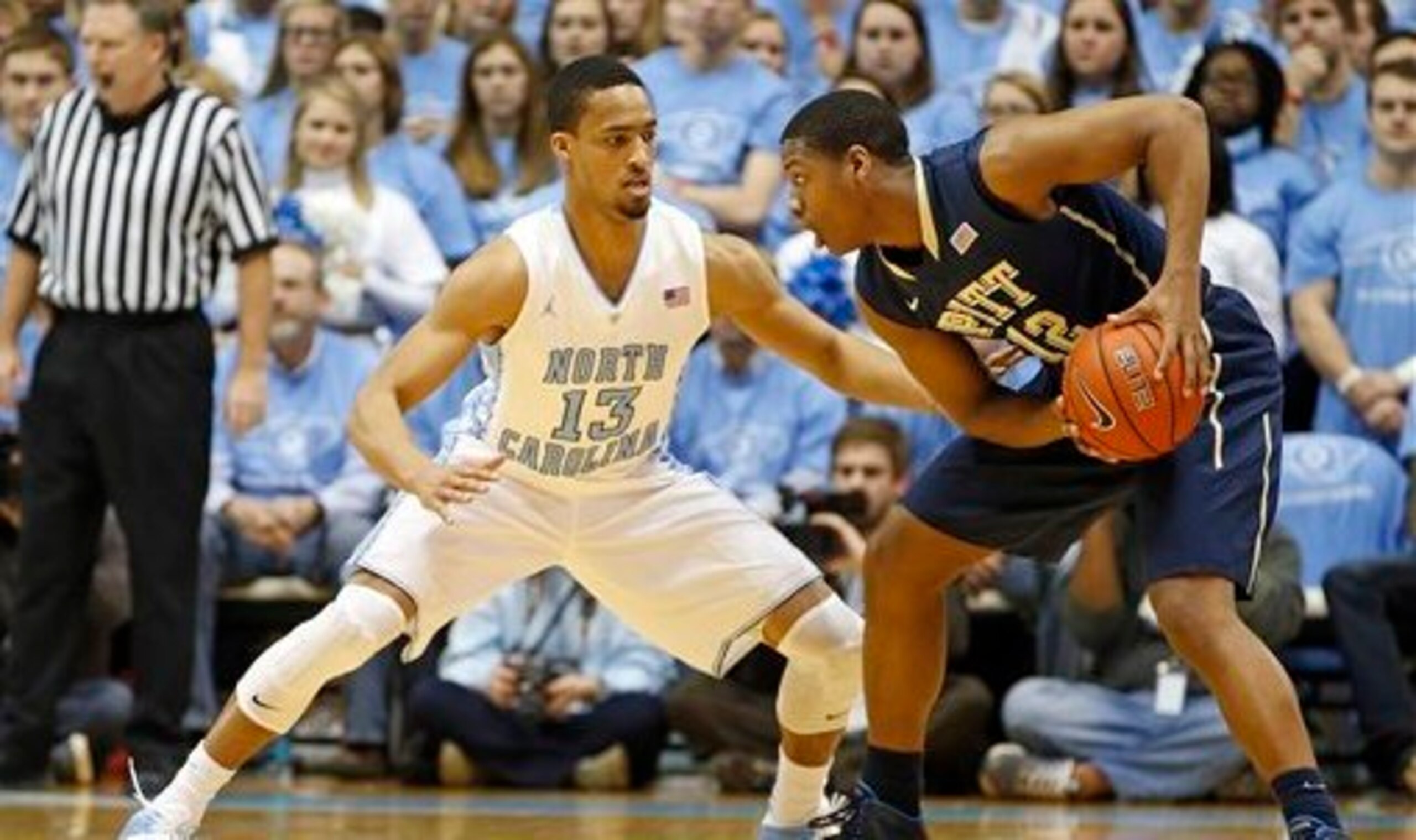
Average Adjusted Defensive Efficiency (2010-14): 93.0
"North Carolina" and "defense" haven't exactly been nationally recognized as synonyms. The Tar Heels have allowed opponents to average 68.7 PPG over the past four seasons—marginally above the national scoring average of 68.5 PPG during that stretch.
Giving up 80 or more points in a game is hardly as uncommon for North Carolina as it is for any other team in the top 10.
However, the Tar Heels have played at one of the faster tempos in the country since Roy Williams became the head coach 11 years ago.
It simply isn't fair to judge them on points per game.
On a points per possession basis, they've been pretty darn good.
They did lose a strong defender in James Michael McAdoo, but JMM's departure only means more minutes for even better defenders like Brice Johnson, Kennedy Meeks and J.P. Tokoto.
Don't expect the Tar Heels to hold many opponents to 60 or fewer points, but they just might finish the season with the largest differential between points scored per possession and points allowed per possession.
7. Wisconsin Badgers
5 of 11
Average Adjusted Defensive Efficiency (2010-14): 92.5
Where North Carolina is virtually never mentioned as a defensive stalwart, it's impossible not to include Wisconsin in any conversation about great defensive college basketball teams.
In fact, having the Badgers this low on the list will probably be one of the biggest points of contention in the comments section.
However, it should be pointed out that they didn't have an elite defense last season. They ranked 49th in ADE and gave up at least 70 points in 14 different non-overtime games.
Were it not for their No. 1-ranked defense in 2012-13, they might not have had a good enough average ADE score to rank in the top 10 on this list.
What's more, Wisconsin has never had the type of intense defense that a Louisville or a VCU can claim.
The Badgers rarely force turnovers. Rather, they have mastered the art of limiting three-point attempts, forcing contested two-point attempts and dominating the defensive glass.
Their plodding pace on offense and ability to always be one of the most turnover-free teams further keeps the opposition from ever getting into any sort of offensive rhythm.
Wisconsin doesn't have the most aggressive or physically intimidating defense in the country, but there might not be a more frustrating team to try to score against.
6. VCU Rams
6 of 11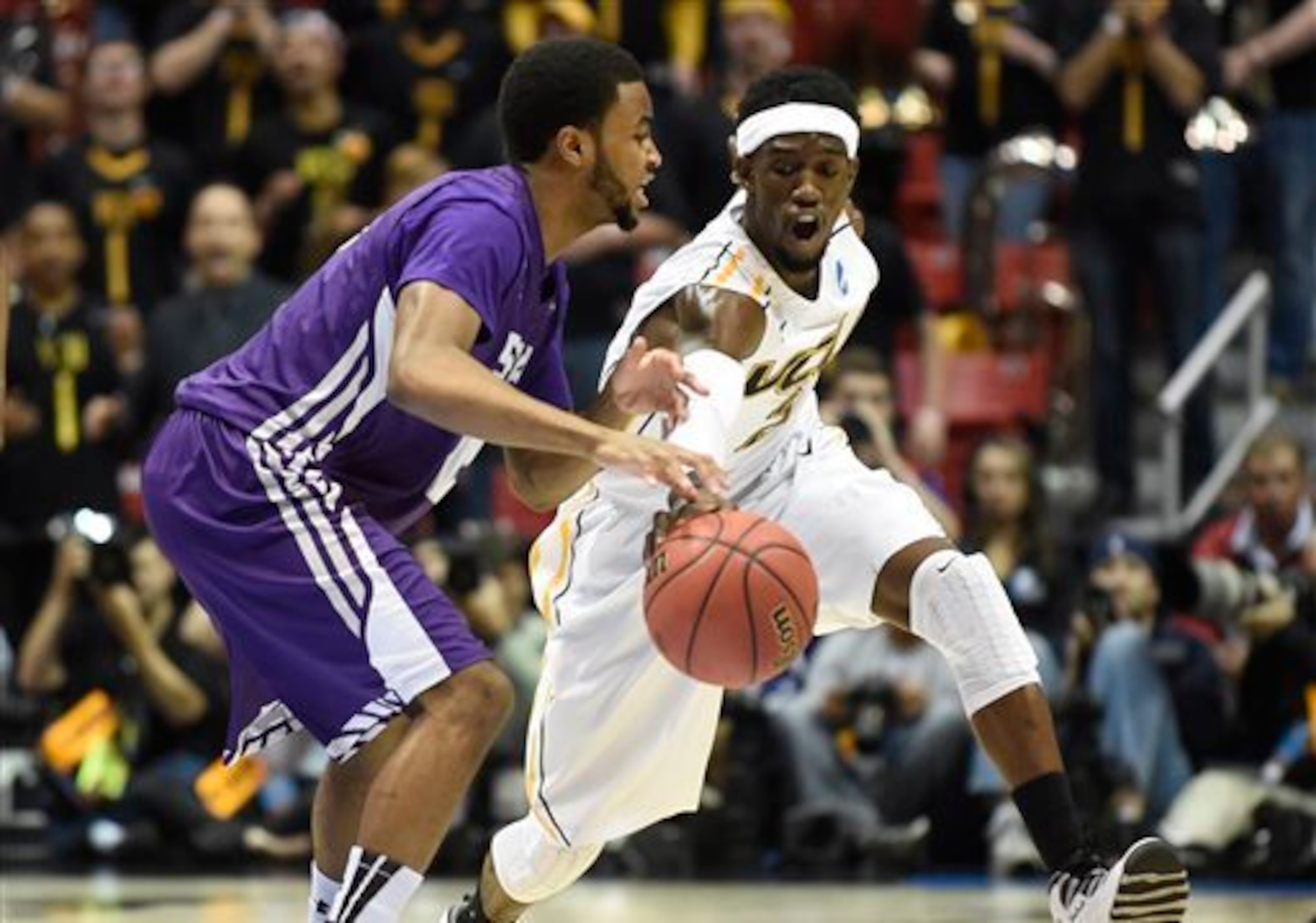
Average Adjusted Defensive Efficiency (2010-14): 93.6
We all fell in love with "HAVOC" four years ago when the uptempo, smothering defensive scheme of Shaka Smart led the Rams to the Final Four.
And that was before they even acquired the best defender of the past decade.
Briante Weber has led the nation in steal percentage in each of the past three seasons, tallying a mind-boggling 296 steals, including 121 last year. He's well on pace to break the all-time steals record of 385 set by Providence's John Linehan from 1997-2002.
But while they will likely force turnovers at a higher rate than any other team for a fourth consecutive season, the Rams also lose enough of those gambles to keep them from being one of the most efficient defenses.
The Rams also lost a pretty huge piece of their defense with the graduation of Juvonte Reddic—47 steals, 41 blocks in 2013-14.
They should still have an excellent defense in an A-10 that is weaker than yesteryear, but it would be slightly irresponsible and overly nostalgic to put the Rams in the top five.
5. Virginia Cavaliers
7 of 11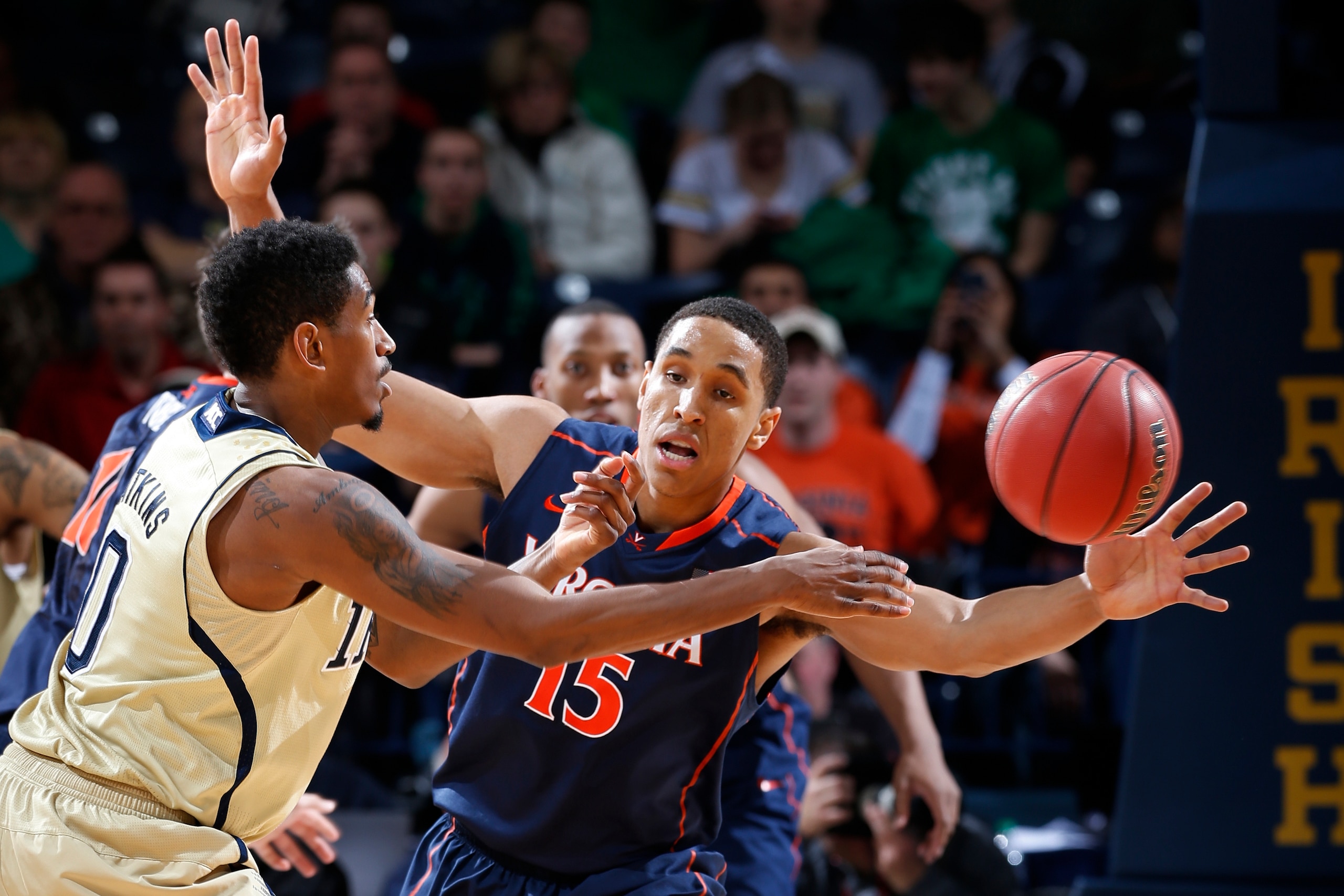
Average Adjusted Defensive Efficiency (2010-14): 91.8
Virginia and Wisconsin have very similar defensive schemes.
And why not? Bo Ryan and Tony Bennett both inherited teams directly from Dick Bennett, and Tony served as Ryan's assistant at Wisconsin for two years before rejoining his father at Washington State.
The Badgers and Cavaliers have played each other in each of the past two seasons. Last year's 48-38 outcome was neither pretty nor surprising.
But even though their plans are virtually identical, we're ranking Virginia a couple spots ahead of Wisconsin simply because the Cavaliers (fifth) finished well ahead of the Badgers (49th) last season.
The Hoos lose two key seniors in Akil Mitchell (2.7 defensive win shares in 2013-14) and Joe Harris (2.4), but they still have outstanding defenders in Malcolm Brogdon, London Perrantes, Justin Anderson, Anthony Gill and Mike Tobey.
They might suffer from a more difficult schedule than last year, but Bennett's defensive scheme hasn't changed. His teams have ranked in the top 12 in the country in adjusted defensive efficiency in five of his eight years as a head coach.
4. Ohio State Buckeyes
8 of 11
Average Adjusted Defensive Efficiency (2010-14): 90.3
How much should we penalize the Buckeyes for losing Aaron Craft?
On the one hand, Craft finished his four-year career with 11.5 defensive win shares, ranking third in the Big Ten as a freshman, second in his sophomore and junior years and first last year as a senior.
No other player who started his college career since 2009 has acquired more defensive win shares than Craft.
But on the other hand, the Buckeyes had five players rank in the top 10 in the Big Ten in defensive win shares in three of Craft's four seasons. Craft led the way on defense, but it's not like he was Gary Payton and everyone else on the court was a pylon.
Craft tallied 0.1063 defensive win shares per 40 minutes last year, but Shannon Scott's figure was marginally higher at 0.1064. Even Amir Williams finished the year at 0.1038.
The Buckeyes will miss Craft, but they'll get by just fine without him.
After all, Thad Matta has a pretty good track record when it comes to defense.
Dating back to his years with Xavier, Matta's teams have ranked in the top 22 in the nation in adjusted defensive efficiency 10 of 13 times. Matta has only finished outside of the top 36 once, and that 64th-place finish in 2008-09 is hardly cause for concern.
Matta gets the most out of his players on defense every year, and that won't be any different without Craft.
3. Kansas Jayhawks
9 of 11
Average Adjusted Defensive Efficiency (2010-14): 90.6
Extremely similar to Michigan State, Kansas had an elite defense from 2011-13 before taking a step back this past season thanks in large part to a very difficult schedule and less than 100 percent health in the starting lineup.
Also similar to Michigan State, the Jayhawks lost three of their best defenders this summer in Joel Embiid, Andrew Wiggins and Naadir Tharpe.
Unlike the Spartans, though, Kansas has one of the best recruiting classes in the country. Where Tom Izzo is hoping for answers in Gavin Schilling, Alvin Ellis and Lourawls Nairn Jr., Bill Self has the luxury of adding Cliff Alexander, Kelly Oubre and Devonte Graham.
This past season was actually Kansas' worst defensive year in more than a decade. By ranking 31st, the Jayhawks ended a streak of eight consecutive years ranked in the top nine in the country in adjusted defensive efficiency. They were in the top 25 every year from 2001-13.
Expect the Jayhawks to return to defensive dominance this year, led by Perry Ellis, Jamari Traylor and Alexander in the post.
2. Arizona Wildcats
10 of 11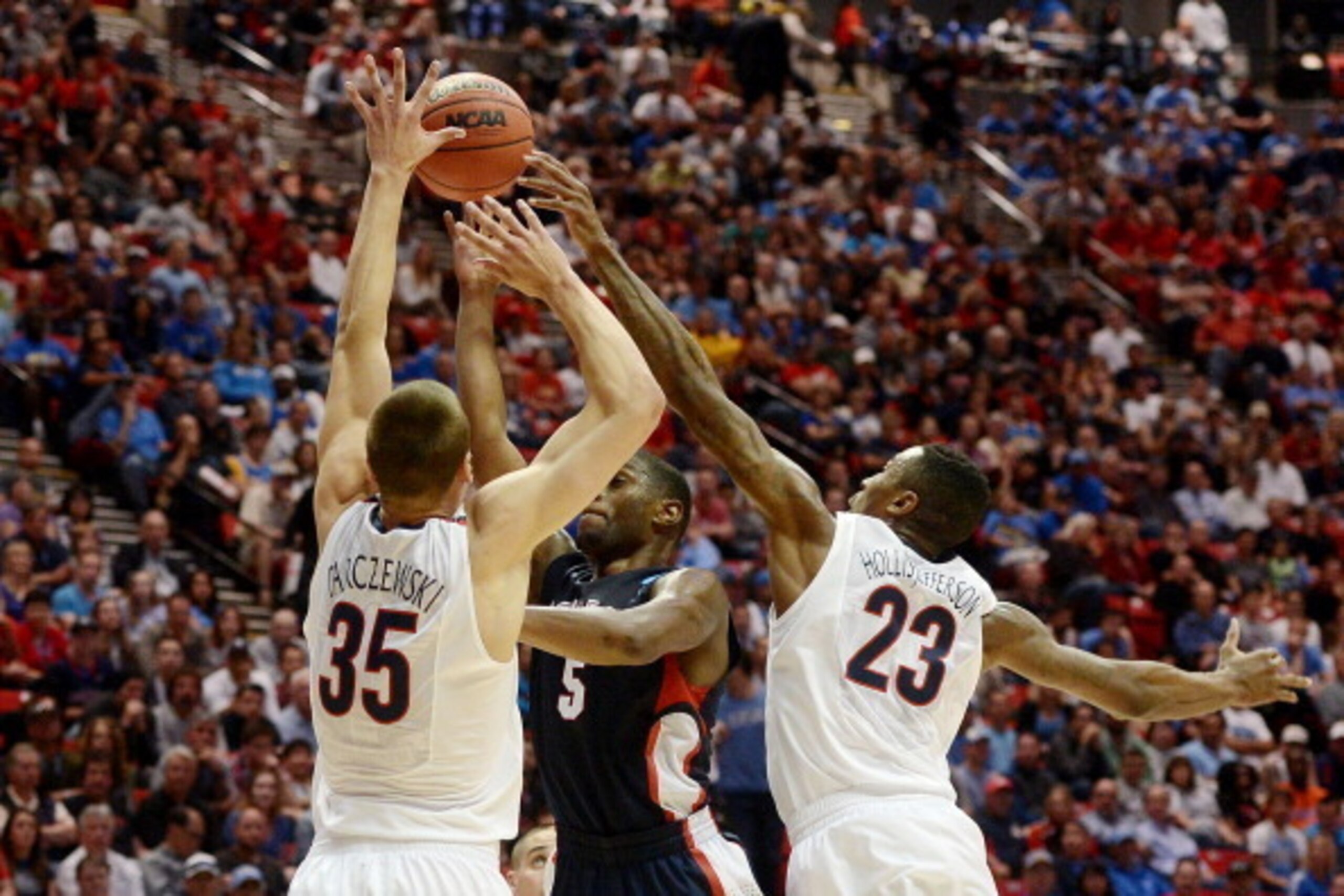
Average Adjusted Defensive Efficiency (2010-14): 93.8
Arizona has the lowest four-year ADE score of any team in the top 10, but that's just because it took a few years for Sean Miller's recruiting to kick in.
We saw a similar thing during his time with Xavier. In his first season, the Musketeers ranked 163rd in the nation in ADE, but they steadily improved to rank 12th in his fifth and final year there.
Likewise, Arizona was nothing special during Miller's inaugural 2009-10 season, missing the NCAA tournament and ranking 122nd in ADE. But last year, the Wildcats had the most efficient defense in the nation.
Much of that was due to the excellent play of Aaron Gordon and Nick Johnson, but only a fool would expect the Wildcats to regress without those two players.
T.J. McConnell and Rondae Hollis-Jefferson will both contend for Pac-12 Defensive Player of the Year.
Kaleb Tarczewski is an imposing presence in the paint as both a shot-blocker and rebounder. Ditto for Brandon Ashley. And Stanley Johnson might be the best, most physical defender of the entire incoming class of freshmen.
The Wildcats held opponents to just 58.6 points per game on average last season—a number that might even improve with so many teams in the Pac-12 potentially being worse for wear after losing multiple starters for one reason or another.
1. Louisville Cardinals
11 of 11
Average Adjusted Defensive Efficiency (2010-14): 87.8
If we're not worried about Ohio State without Aaron Craft or Arizona without Aaron Gordon, then we certainly aren't worried about Louisville's defense without Russ Smith.
Praised for his defensive prowess over the past several years, Smith was actually one of Louisville's least valuable defenders last year.
He averaged .107 defensive win shares per 40 minutes. Montrezl Harrell (.118), Mangok Mathiang (.110), Chris Jones (.109), Terry Rozier (.109) and Wayne Blackshear (.1074) all finished ahead of Smith.
And they will all be back this year for a Louisville team that has ranked in the top four in the nation in adjusted defensive efficiency in six of the past seven seasons.
Making the transition from the AAC to the ACC could be a slight challenge, but the Cardinals excelled defensively in the Big East back when that conference struck fear in the hearts of men.
Defense wins championships, and Louisville has to be considered one of the early favorites for a very deep run in March 2015.
Kerry Miller covers college basketball for Bleacher Report. You can follow him on Twitter @kerrancejames.
.jpg?w=2560)
.jpg?w=2560 "Rams Eagles Football")
.jpg?w=2560 "Injury-stricken Seahawks signing veteran RB")

.jpg?w=2560 "2 NFL Officials Suspended")

.jpg?w=2560 "Mahomes' Wife Trolls Kubiak 💀")
