

2014 NCAA Tournament Teams from Each Major Conference Least Likely to Return
Some years, a college basketball program puts it all together and secures an elusive NCAA tournament berth. Other schools boast much prouder traditions but get in by the skin of their teeth to continue a recent string.
Every year, however, change is the only constant, and several members of the field of 68 must return to the drawing board to plot another run to the Big Dance.
The ones with difficulties to overcome aren't your Dukes, North Carolinas or Kentuckys that lose multiple players to the NBA draft early.
They're the major-conference brethren of those elite programs, the ones that nurture a player through four years of development and simply see his hourglass run out of sand. Or the ones who took a chance on a talented character risk who decided he was pro-ready before anyone else had.
This piece doesn't attempt to claim that any of the teams profiled therein cannot possibly return to the NCAA tournament. These are, however, the 2014 tournament teams from the game's nine most renowned conferences that have the most questions to answer before they should be automatically penciled into your bracket.
You'll also find here each conference's "next man up," so to speak—the program that is ready to take the bid that a league rival must fight to avoid giving away.
All KenPom.com links should be assumed to require subscription.
ACC: Pitt
1 of 9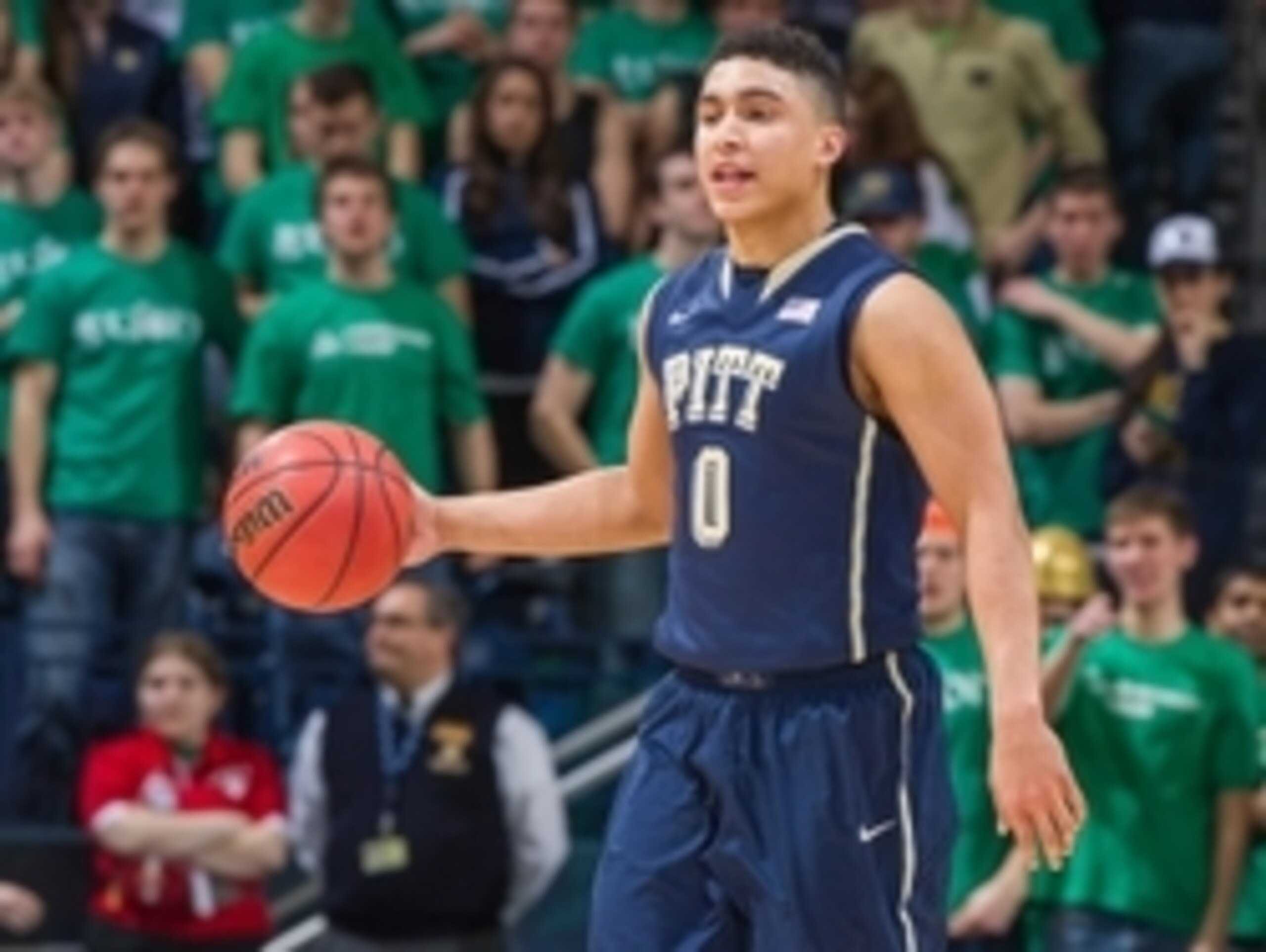
As the ACC keeps upgrading its parts, shuffling out muddling programs (goodbye, Maryland) and adding teams with recent Final Four pedigrees (hello, Louisville), the top of the league becomes that much more difficult to reach. Middle-of-the-pack programs have one more mountain to climb, with the Cards joining Duke, North Carolina and a resurgent Virginia in Bleacher Report's preseason top 10.
Pitt is one of those programs that needs to continue upgrading its talent level, but that would be hard to do in the wake of losing All-ACC wing Lamar Patterson and power forward Talib Zanna. While the Panthers still have a surplus of solid perimeter players, Zanna may prove much harder to replace.
Sophomore Michael Young showed signs of being a rebounding force last season, but he struggled offensively. The Panthers may have to turn to junior college transfer Tyrone Haughton to start next to Young in the post, as senior Derrick Randall and junior Joseph Uchebo have struggled in multiple chances.
Without Patterson and Zanna, guard Josh Newkirk is the only returning player who played more than 400 minutes and carded an effective field-goal percentage above .500. Other reliable scoring options have to be found if Pitt is to operate at anything close to last season's efficiency.
Potential Replacement: Florida State
The Seminoles still have three seven-footers on the roster and an array of talented athletes in the backcourt. Two keys to FSU making the Big Dance are whether those centers can replace Okaro White's production on the glass and whether redshirt freshman Xavier Rathan-Mayes can make up for Ian Miller's shooting.
Add in a potential All-ACC selection in wing Aaron Thomas and a resurgence of coach Leonard Hamilton's usual sticky defense, and the Noles have everything they need to make a push for the tournament.
American: Cincinnati
2 of 9
Without All-American Sean Kilpatrick, defensive stud Justin Jackson and consummate sidekick Titus Rubles, the Cincinnati Bearcats have to find leading men in a cast full of role players.
UC's defense should still be rugged as usual, but it's anyone's guess where the scoring will come from. There are no shooters returning who sank even 50 percent of their two-point shots, and only senior Jermaine Sanders hit more than 33 percent from three.
Sanders may be the best bet, since he was the only Bearcat regular to better Kilpatrick in offensive rating, according to Sports-Reference.com. He's steadily improved his shooting each year but has still always been a complementary piece.
If he, Shaquille Thomas, sophomore Kevin Johnson or junior college transfer Coreontae DeBerry can't overcome their limited credentials and take control of the offense, Cincinnati will play a bunch of low-scoring games—and may not come out on top in many of them.
Potential Replacement: Temple
The Owls lost 22 games and watched two of their top four scorers walk away. However, if anyone can spark a quick turnaround, it's Fran Dunphy. Dunphy has never had a season quite as brutal as last year, so a bit of regression to the mean should be expected, as long as everyone stays healthy this time.
Temple's starting backcourt of Quenton DeCosey and Will Cummings may be the American's most underrated. Improved health from forward Daniel Dingle and improved shot selection from burly sophomore Mark Williams will vastly aid the offense.
The addition of transfers Devin Coleman (Clemson) and Jaylen Bond (Texas) will help the depth, allowing the team enough bodies to do wild and crazy things like—oh, play defense, perhaps.
Atlantic 10: Saint Louis
3 of 9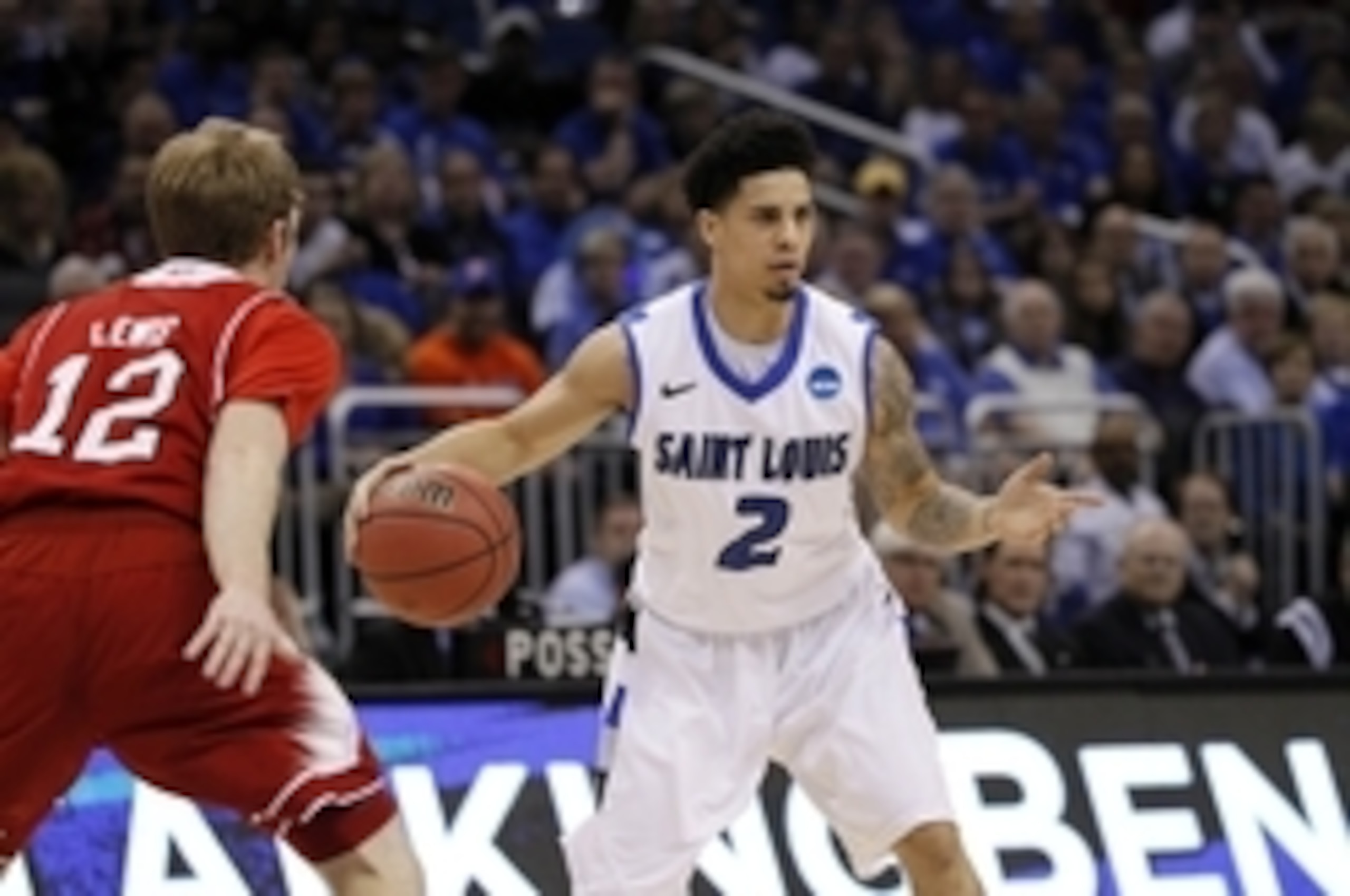
Saint Louis coach Jim Crews enters this season seeking replacements for his top five minute earners. Program icons like Dwayne Evans and Jordair Jett are supremely difficult to replace overnight unless you're able to pick and choose from the Rivals 150, and the Billikens simply aren't.
Solid shooter Austin McBroom (pictured) is expected to hold down a guard spot, while Villanova transfer Achraf Yacoubou may get first crack at the other. Yacoubou racked up more fouls than baskets off the bench for the Wildcats, so don't expect a Larry Hughes (remember him?) level of production.
There's still good size up front, with three returnees going at least 6'8" and 225 pounds, plus 6'6" rebounding dynamo Grandy Glaze (13.9 boards per 40 minutes) will try to outperform his stature the same way Roscoe Smith did at UNLV.
In the end, though, many of the biggest concerns about the Billikens center around Crews himself. He sustained some decent success at Evansville in the late '80s and early '90s, racking up five 20-win seasons and three NCAA tournament bids in a seven-year span. But that was in the Midwestern Collegiate Conference, not the Atlantic 10.
The late Rick Majerus' recruits are dwindling to a precious few. Can Crews' huge six-man recruiting class produce at least some solid role players immediately?
Potential Replacement: Rhode Island
Unlike the Billikens, coach Dan Hurley's Rams were able to bring in a freshman of some stature, landing 247 Sports top-65 shooting guard Jared Terrell, a former Oklahoma State commit. Terrell can be part of a solid nucleus that also includes A-10 co-Freshman of the Year E.C. Matthews and ex-Rutgers big man Gilvydas Biruta.
A sensational perimeter defensive team last season (28.7 percent allowed from three, third in America per S-R), Rhody needs to make its own shots to have a chance this year. Terrell will help in that regard, and Hurley hopes for some improvement on Matthews' 34.8-percent mark from deep. The looming question of who plays point guard remains.


Big East: Creighton
4 of 9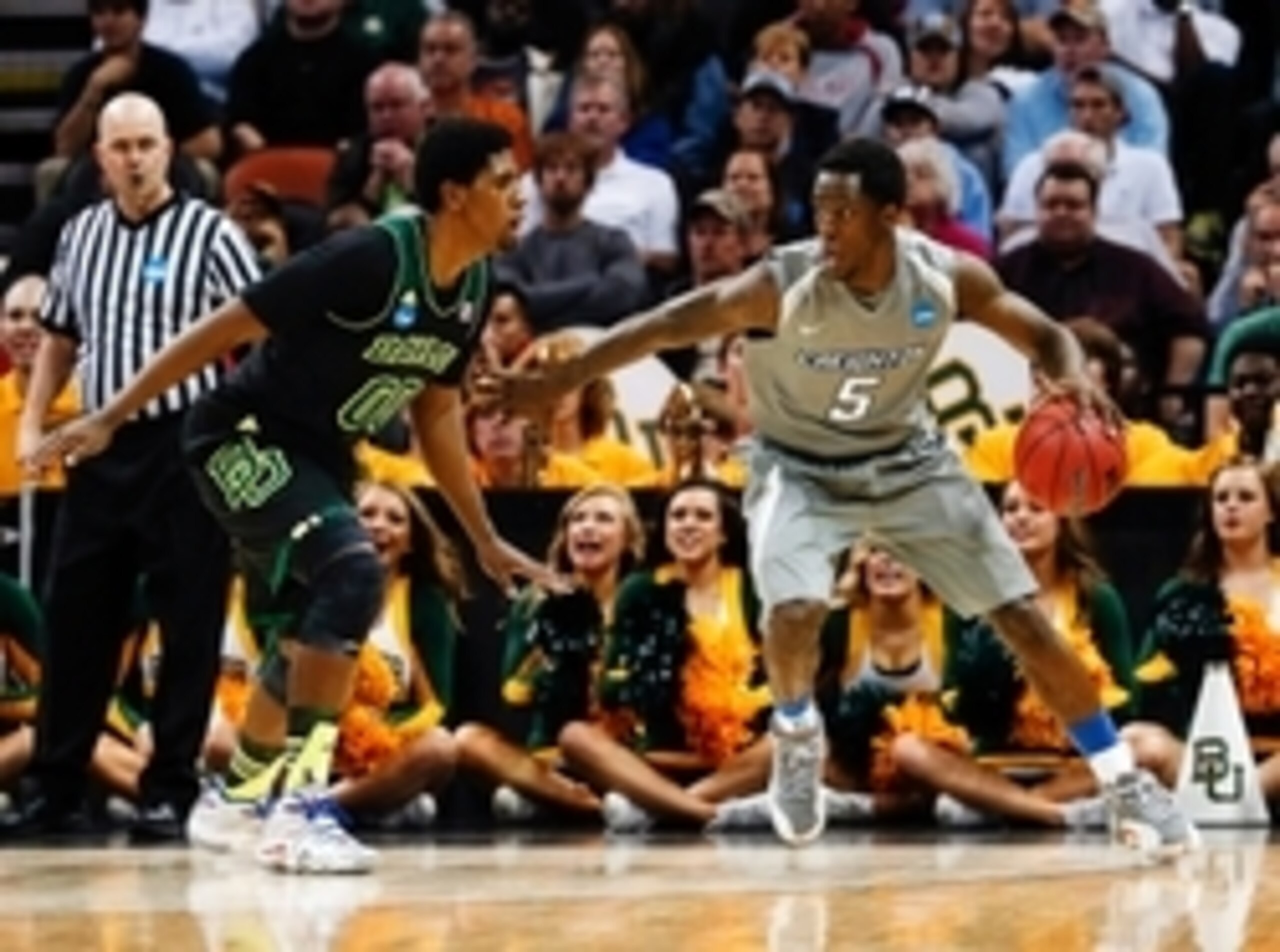
First, the good news: Creighton coach Greg McDermott has some experienced hands coming next year after landing transfers Maurice Watson from Boston University and Cole Huff from Nevada.
The bad news: That's next year. This year looks a bit scary in Omaha.
The backcourt combination of Austin Chatman and Devin Brooks should pace the team in scoring, but both were shaky shooters even with Doug McDermott distracting every defense the Bluejays faced. JUCO product James Milliken could see plenty of minutes if his shots are falling early.
Will Artino was the only true big man to play double-digit minutes, but McDermott the coach often left him aside in favor of an undersized lineup featuring McDermott the player as an undersized "center." Can Artino hold the post for 25 minutes per game? Certainly, seeing a traditional low-post big man will be a different look for fans accustomed to big shooters like Doug McDermott and Ethan Wragge.
The Jays are still a veteran outfit, but all must now come to grips with playing outside Dougie McBuckets' voluminous shadow. Shooter Wragge and playmaker Grant Gibbs will also be missed, and if there are any perfect replacements, they've yet to show themselves.
Potential Replacement: Georgetown
This one may be the easiest call on the entire list. The Hoyas may have added by subtracting in replacing mad gunner Markel Starks with the more efficient D'Vauntes Smith-Rivera at the point. DSR and slasher Jabril Trawick should form a fine backcourt to pace the team while the new frontcourt pieces mesh.
Freshmen Isaac Copeland, Paul White and L.J. Peak will all see solid minutes alongside senior Mikael Hopkins. The giant wild card, however, is the preparation of senior center Joshua Smith. If it's not Smith's conditioning, it's academics derailing what was supposed to be a dominant career, but reports claim that Smith has both issues under control.
If this is true, and Smith can give Georgetown a full season of 25 minutes per game, the Hoyas' frontcourt becomes one of the deepest in America and Villanova has a serious fight on its hands for the Big East title.
Big Ten: Nebraska
5 of 9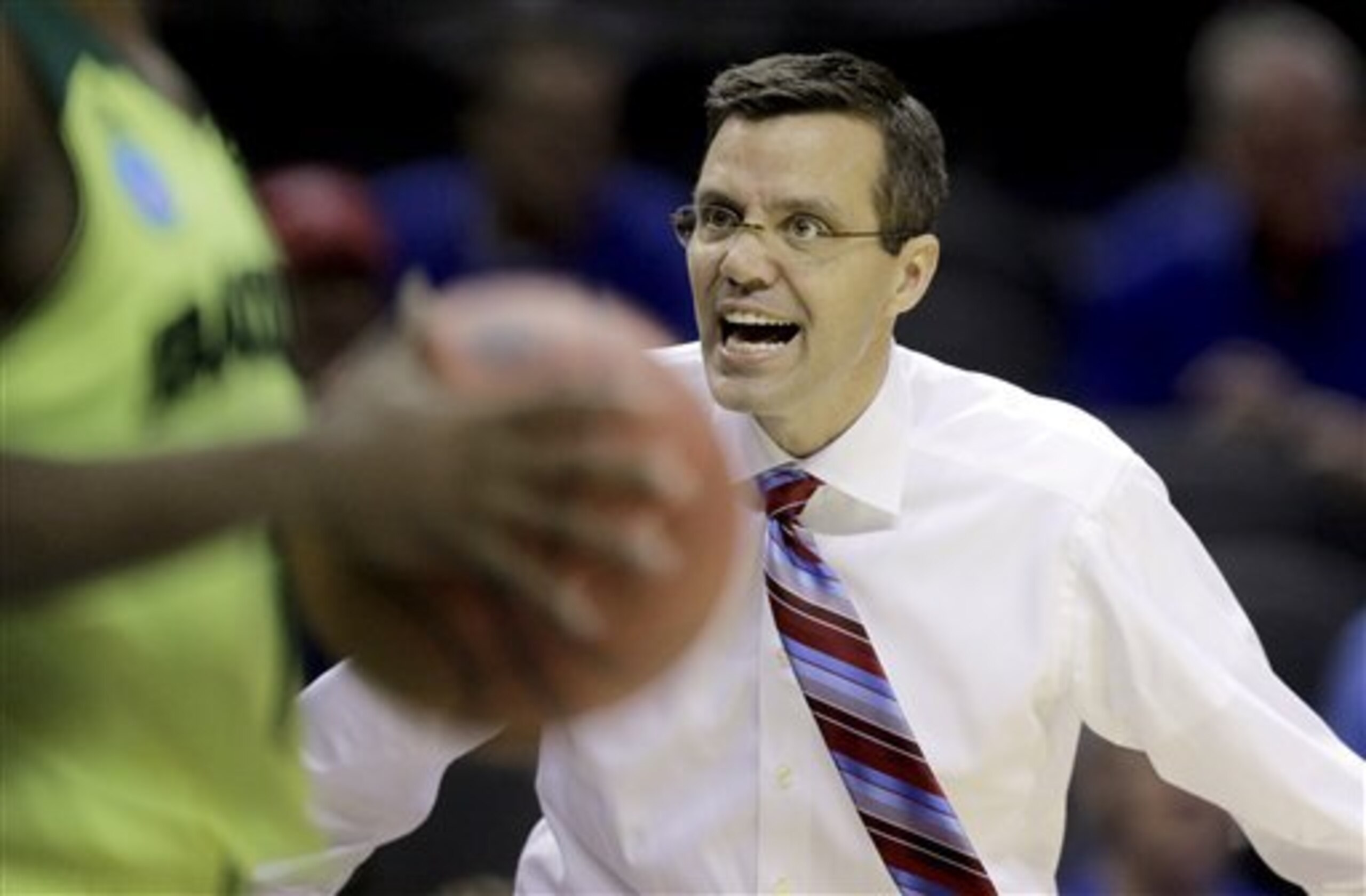
Was Nebrasketball 2013-14 a miracle? And can miracles happen twice?
Nearly every Cornhusker of consequence returns, with the exception of three-point specialist Ray Gallegos. Junior guard Terran Petteway is set to follow up last season's Big Ten scoring title with a run at league Player of the Year honors. Shavon Shields is still one of the conference's unsung hustlers.
So why so bearish on Nebraska's chances of a repeat tourney run? It boils down to one highly underplayed injury—the torn ACL of power forward Leslee Smith.
Smith was set to assume a major role in the frontcourt after a good first year in Lincoln (12.8 points, 11.5 rebounds and 2.2 steals per 40 minutes). The injury, however, leaves the Huskers very thin in the post. Stretch-5 Walter Pitchford, Georgetown transfer Moses Ayegba and freshman Jake Hammond—once a redshirt candidate—are now the only players of size on hand.
Coach Tim Miles could get some—ahem—mileage out of a smaller lineup using Shields as the primary rebounding threat, but how well would such a team perform in the post on either end? The Huskers will be dueling with teams such as Minnesota, Purdue and Iowa in the Big Ten's middle tier, and all have large, productive post players.
Losses like those would seriously damage the postseason resume of a team that didn't appreciably improve on last year's roster.
Potential Replacement: Illinois
The Illini couldn't shoot their way out of a phone booth last season. Ken Pomeroy shows Illinois at 292nd nationally from three-point range and 276th from two (subscription required).
Coach John Groce's intention is to remedy the problem by adding three-point snipers Ahmad Starks (ex-Oregon State) and Aaron Cosby (previously of Seton Hall). The two shooters can hopefully give Groce a hammer to wield over incumbent point guard Tracy Abrams, whose shooting has largely been atrocious since he arrived in Champaign.
Additionally, the more shooters to spread the floor, the more space for All-Big Ten selection Rayvonte (please don't call him Ray anymore) Rice to attack the rim. He and sophomore Kendrick Nunn (freshman Leron Black as well, perhaps?) can provide much better finishing at the rack if defenses aren't collapsed and daring the Illini to shoot from deep.
Big 12: Oklahoma State
6 of 9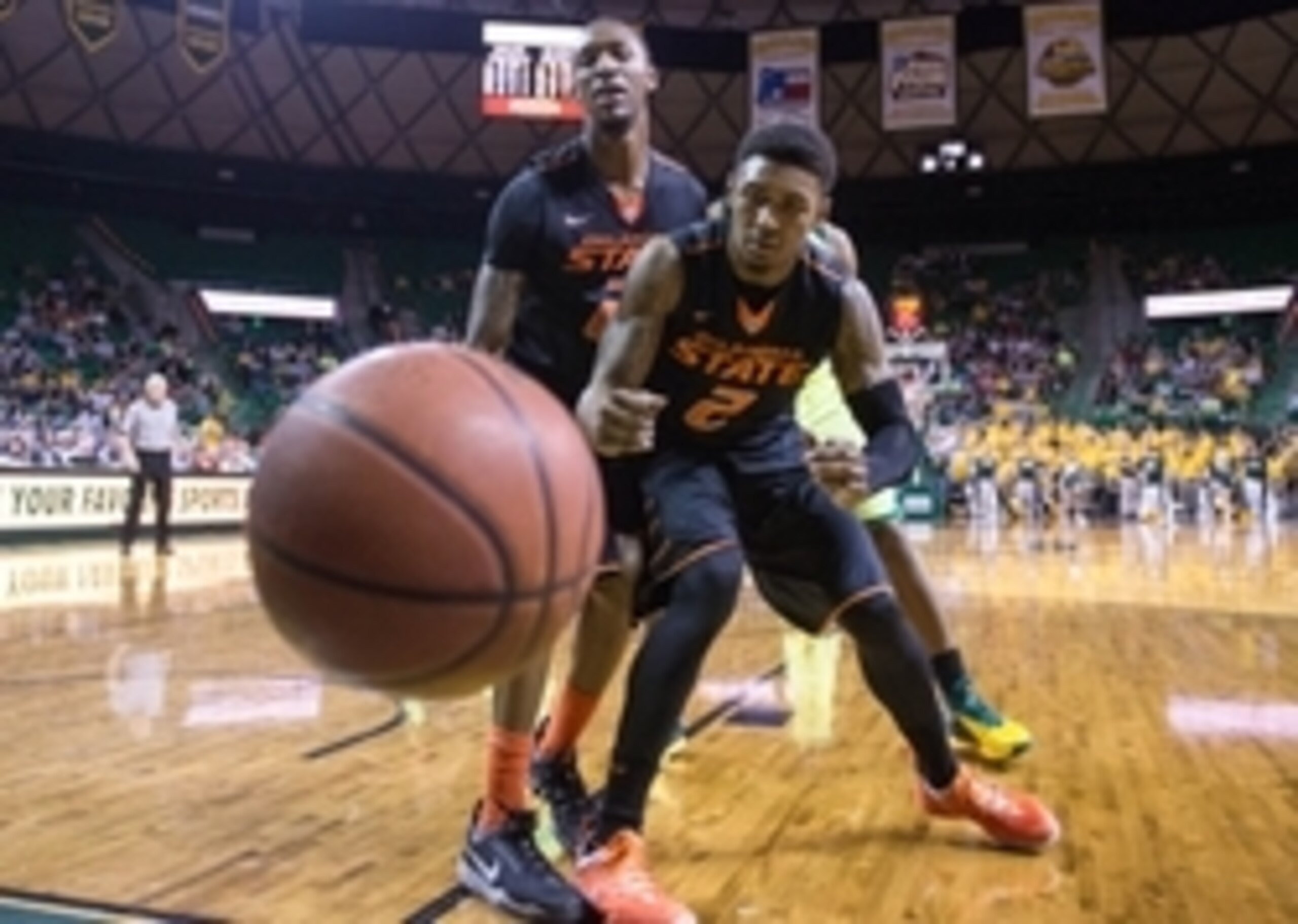
When Le'Bryan Nash arrived in Stillwater in 2011, he thought he was a wing player. One season of terrible shooting and one of mediocrity finally convinced him otherwise, and now he'll be forced to carry a large portion of Oklahoma State's burden in the low post. That's heady stuff for a guy who barely outrebounded his team's guards.
Nash is to post scoring what Phil Forte is to the perimeter game. He made over 40 percent of the Cowboys' triples last year, and he's responsible for 100 of the 114 threes that return.
Michael Cobbins returns from one of the nation's most underappreciated injuries, but how effective will he be? Are JUCO center Anthony Allen and freshman Mitch Solomon ready to bang with Big 12 post players on a nightly basis?
In the backcourt, can LSU transfer Anthony Hickey provide a veteran presence on both ends? Is freshman wing Joe Burton ready to replace some of the scoring punch Marcus Smart and Markel Brown provided?
That's a lot of questions. And OSU fans are beginning to wonder if coach Travis Ford can come up with any answers.
Potential Replacement: West Virginia
All I can say is that I'm glad WVU missed last season's tournament, because otherwise I'd be deciding whether or not I could possibly sell Texas Tech or TCU as a postseason team. (SPOILER ALERT: I can't.)
Mountaineers guard Juwan Staten is a potential All-American, and if he leads this patched-up team to the Dance, he needs to appear on every ballot. Losing his double-figure scoring sidekicks Eron Harris and Terry Henderson hurts, but look for more of an inside-out game with forwards Devin Williams, Nathan Adrian and Elijah Macon.
There's very little experienced backcourt depth behind Staten and senior Gary Browne, but three JUCO imports and a pair of talented freshmen provide a multitude of options for coach Bob Huggins to sift through.
If he hits on even a couple, WVU could be capable of a much more consistent year than last year (wins over Baylor, Iowa State, Oklahoma and the Kansas schools offset by losses to Virginia Tech, Purdue and Missouri).
Mountain West: New Mexico
7 of 9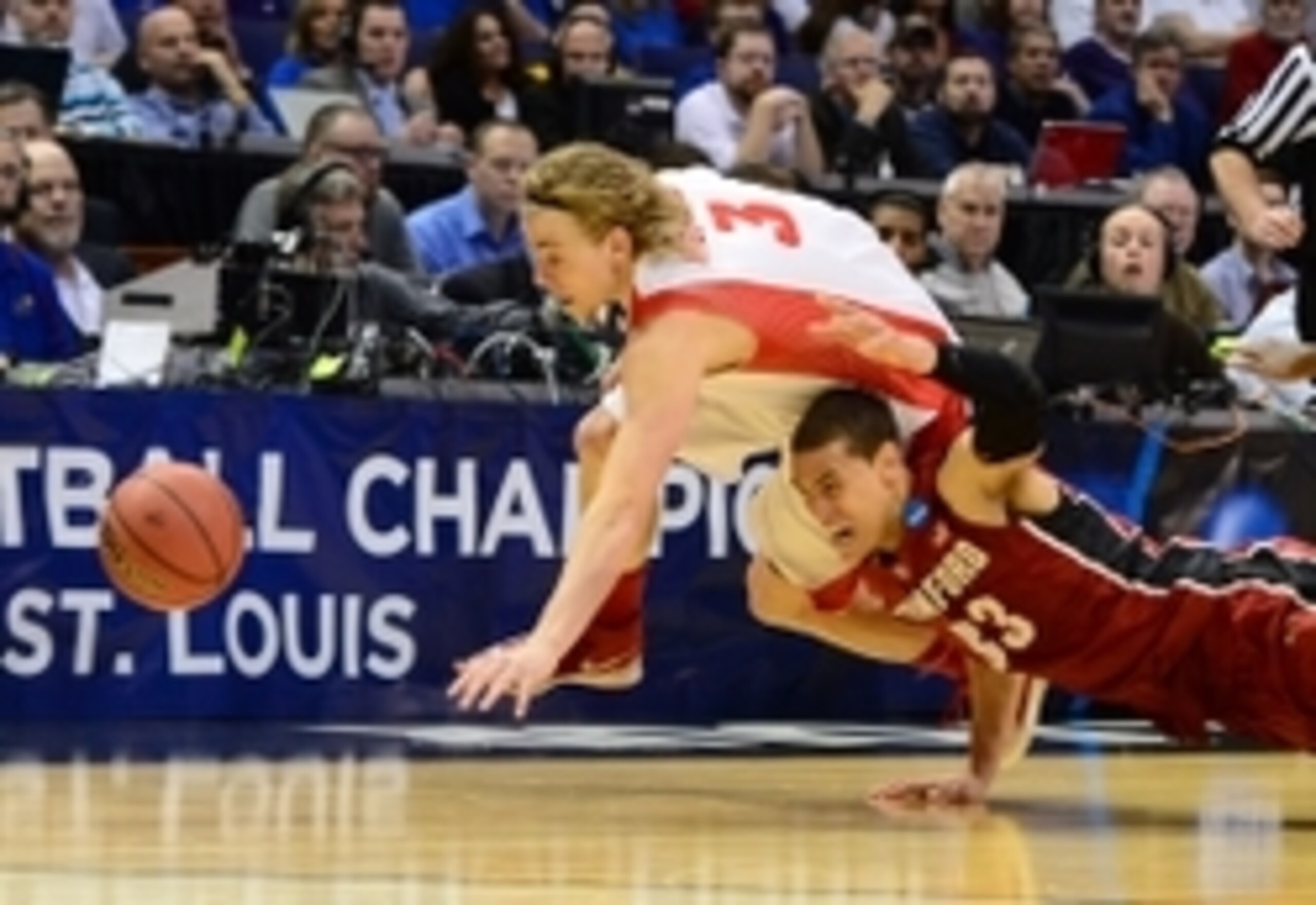
With the MWC only drawing two bids last season, it's a 50-50 tossup, and I know I'm not throwing San Diego State out of contention for anything.
New Mexico, though, truly has some questions to answer. Graduations (Cameron Bairstow, Kendall Williams), an early draft entry (Alex Kirk) and transfers (Nick Banyard, Cleveland Thomas) have combined to leave only four returnees with substantial experience.
Structuring a team around guards Hugh Greenwood and Cullen Neal—both of whom struggled with their shots for much of last season—forward DeShawn Delaney and junior college product Jordan Goodman—who's backed out of more commitments than a runaway bride, as NBC Sports' Scott Phillips reported—will be a tremendous test of coach Craig Neal's acumen.
Consensus 3-star prospects Xavier Adams and Joe Furstinger (h/t Verbal Commits) are the only incoming freshmen. Both have the potential to be impact players in the Mountain West, but will the Lobos have enough depth to survive the occasional injury or bout of foul trouble?
Potential Replacement: UNLV
Coach Dave Rice has continually stacked up top-100 recruits since taking over at his alma mater, but there hasn't been the postseason success to show for it. This year's class, however, is seriously next-level for the Runnin' Rebels, as Rice brings in three of 247 Sports' top 28 prospects.
Guard Rashad Vaughn is the scorer, wing Dwayne Morgan is a defensive ace and center Goodluck Okonoboh should be an effective rim protector. Add them to sophomore forward Christian Wood, and there is some star power in the desert.
The questions are overall depth and the identity of this season's point guard. San Francisco transfer Cody Doolin and Jerome Seagears, formerly of Rutgers, are both still waiting on immediate eligibility waivers from the NCAA. If both are eligible, the Rebels' backcourt depth is helped immensely.
Pac-12: Arizona State
8 of 9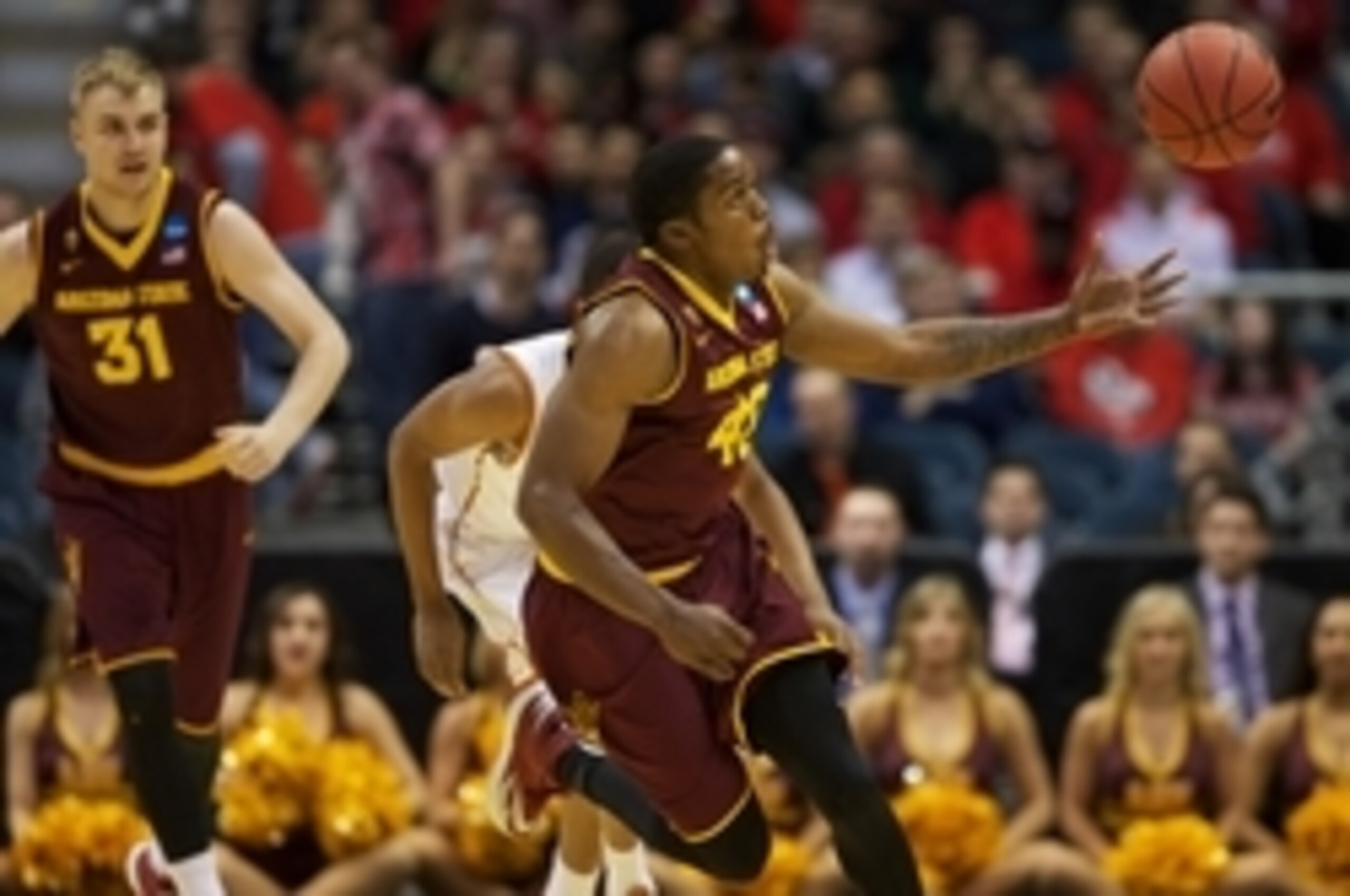
Approximately 45 points and 15 rebounds walked out the door with Arizona State graduates Jordan Bachynski and Jermaine Marshall, along with All-Pac-12 point guard Jahii Carson. Coach Herb Sendek has attempted to plug the dike with junior college transfers, but he may still have a rough time replacing the rock of his team.
And by that, I mean Bachynski, not Carson.
Even with Bachynski swatting everything in sight—his 4.0 blocks per game led the nation—the Sun Devils were barely a top-50 defense, according to Pomeroy. His size and instincts on the defensive end will be much harder to replace than Carson's highly inefficient offense.
Sniper Jonathan Gilling and slasher Shaquielle McKissic can certainly score without Carson monopolizing the ball, and there should be good backcourt talent in the form of JUCO guards Gerry Blakes, Roosevelt Scott and freshman Tra Holder. Up front, though, junior Eric Jacobsen has to prove he can stay out of foul trouble, and wings Savon Goodman and Willie Atwell have to produce immediately.
Either way, the Sun Devils will have to get a lot of baskets, because without Bachynski, it's not unreasonable to expect that they'll surrender a ton.
Potential Replacement: Utah
Had Utah even attempted to challenge itself in the nonconference schedule last season, the Utes would already be coming off a tournament appearance.
The trio of Delon Wright, Jordan Loveridge and Brandon Taylor may be the most productive threesome in the entire Pac-12—and yes, that's including whatever three studs you want to slap together at Arizona. The three racked up approximately 40 points, 16 rebounds and 11 assists last season, and it wasn't as if there was no help.
Nearly every Ute of significance returns, and coach Larry Krystkowiak gets to unveil touted in-state freshman Brekkott Chapman and redshirt Kyle Kuzma. Never mind a tournament bid, Utah may bound all the way into the Pac-12 title picture if Arizona stumbles.
SEC: Tennessee
9 of 9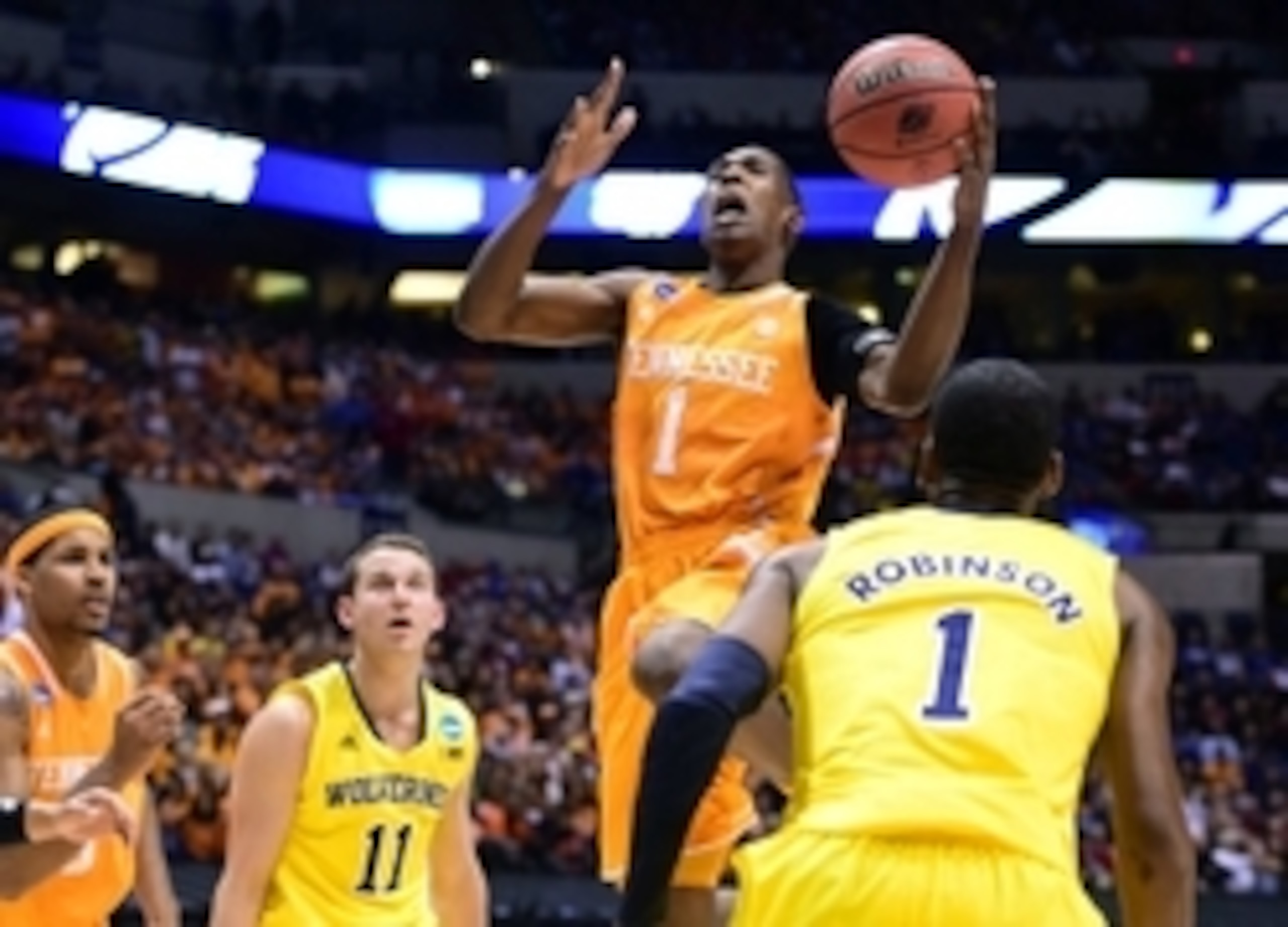
Much like the Mountain West, there's no way to project Kentucky and Florida to miss the Big Dance, so Tennessee it is. (Of course, UK wasn't supposed to fall flat in 2013, either, but—wait, where were we?)
The Vols are unrecognizable from last season, as stars Jeronne Maymon, Jarnell Stokes and Jordan McRae all left. Exacerbating the problem is the loss of role players like A.J. Davis and Darius Thompson, moves which forced new coach Donnie Tyndall to rebuild nearly from scratch with a late start.
Wing Josh Richardson can contend for All-SEC honors if the two-way ace can get some support. The point guard position is still up in the air, as former IUPUI shooting guard Ian Chiles and JUCO combo guard Kevin Punter will likely duel up until the exhibition games begin.
Shooter Robert Hubbs expects to be healthy after struggling with a shoulder injury, and ex-Pitt/Oklahoma State commit Detrick Mostella should add serious athleticism to the backcourt.
Size is a major problem for Tennessee, however, with freshman Tariq Owens likely the team's best hope for a defensive and rebounding presence inside. That's 6'10", 205-pound freshman Tariq Owens. SEC bigs like Dakari Johnson of Kentucky and Elbert Robinson of LSU will look forward to flossing their teeth with Owens.
Three-hundred-pound Memphis transfer Dominic Woodson would help the size question, but what kind of workload can he handle?
Potential Replacement: Arkansas
The Hogs stumbled down the stretch, otherwise they would have likely knocked the Vols off the bubble last season. With the exception of forward Coty Clarke and reserve guards Fred Gulley and Kikko Haydar, all the key pieces are back in Fayetteville, including potential All-SEC stud Bobby Portis.
Junior college transfer Jabril Durham and freshman Anton Beard will try to solidify the point, and if one can become a solid distributor, he'll have plenty of pieces to work with. Aside from Portis, four other returning Razorbacks averaged at least 7.2 PPG last season.
Last year's Hogs beat Kentucky twice in overtime and were one of only two SEC opponents to play Florida within one possession, taking the Gators to overtime, to boot. With another year of experience behind most of coach Mike Anderson's pieces, Arkansas should be ready to avoid most of last year's head-scratching losses (Texas A&M, Missouri twice, Alabama, South Carolina).
.jpg?w=2560 "Rams Eagles Football")
.jpg?w=2560)
.jpg?w=2560 "Injury-stricken Seahawks signing veteran RB")

.jpg?w=2560 "2 NFL Officials Suspended")
.jpg?w=2560 "Mahomes' Wife Trolls Kubiak 💀")

