

Why the Oddsmakers and Pundits Are Wrong About the USMNT's World Cup Chances
Most of the American soccer literati believe that the United States men's national team will not qualify from Group G and into the knockout round of the World Cup.
Fair enough. Even if every game was a coin toss, it would be reasonable if half of the analysts predicted defeat and half predicted victory.
But, when it comes to media predictions of the Nats' Group G performance, you can't swing a pair of cleats without hitting a soccer writer or studio host that predicts a first-round exit.
Outside the media bubble, the market gives the United State's men's national team about a one-in-four chance of advancing according to Oddschecker.
On the analytical side, predictive modeling guru Nate Silver puts the odds at about one in three.
Of all the teams in the World Cup, the Americans are tied for third as the most underestimated team in the tournament (where underestimation is the difference between computer modeling and the market).
| Team | SPI | Oddschecker | Difference |
| CRI | 26.7% | 8.30% | 18.4% |
| CHL | 69.8% | 54.5% | 15.3% |
| HND | 19.6% | 11.8% | 7.8% |
| USA | 34.5% | 26.7% | 7.8% |
| ECU | 55.4% | 47.6% | 7.8% |
| GHA | 32.9% | 26.3% | 6.6% |
| GRC | 38.4% | 33.3% | 5.1% |
| CIV | 53.7% | 50.0% | 3.7% |
| DEU | 88.9% | 85.7% | 3.2% |
| ENG | 63.1% | 60.0% | 3.1% |
Interestingly, three of four Group G teams are underestimated by the market. Only Portugal is overestimated, and is in fact the most overestimated team in the tournament (SPI odds=43.7%, market odds=68%).
Part of the reason for the discrepancy between the market and the model is the fact that human decisions determine the market and those decisions are invariably biased. With the betting market the presumption is that millions of decision makers will cancel out individual biases.
The computer model, however, cannot be biased by human perceptions of tough groups or inferior soccer cultures. Modeling is only as good as the data and the factors included within.
All three sources of prediction—writers/reporters, markets, models—have flaws, but all three are predicting first-round failure.
USMNT fans should take heart, however, because the U.S. odds go up as the prediction method becomes more reliable.
Media predictions are the most subjective and thus the least reliable. The market aggregates millions of subjective decisions and subsequently eliminates some of the biases, but it cannot be free of them. The computer models are the least biased and most reliable, and the models give the U.S. the best chance of first-round success.
If the odds go up with better methods, would the odds go higher still if we consider factors not accounted for in the latest predictive models? What about factors that are difficult to measure?
Let's explore some of the reasons why the U.S. odds of advancing to the second round may be better than even the computers suspect.
The U.S. Is Not in the Group of Death
1 of 9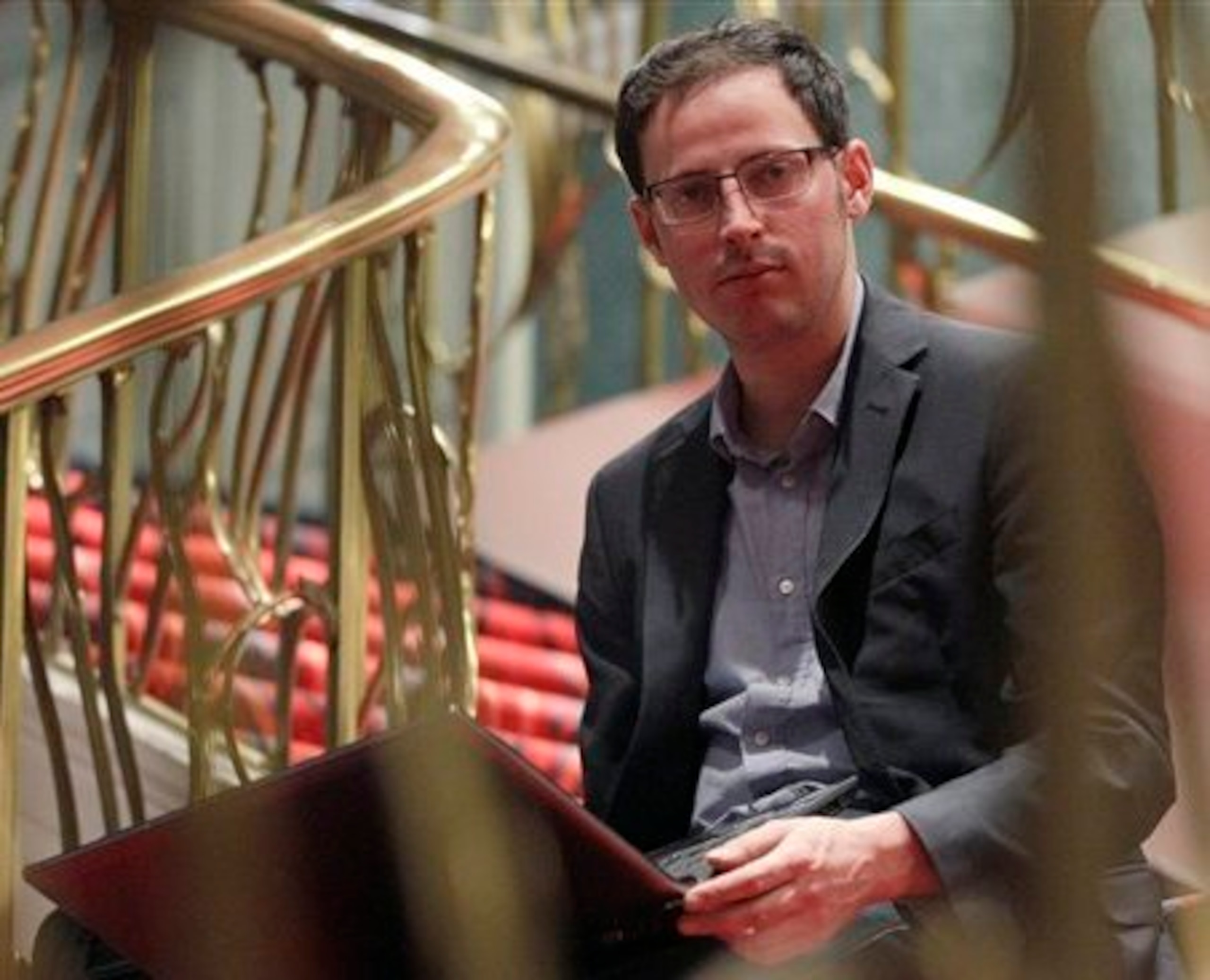
That's right, you read that correctly. The Group of Death moniker that has populated the sports airwaves since the World Cup draw has a certain dramatic flair and plays into the narrative of Americans fighting against long odds.
But FiveThirtyEight's Nate Silver should end this argument once and for all: "[Group B]—not the one the United States is in—is the “Group of Death,” with three teams ranked in the SPI Top 10."
Using Silver's Soccer Power Index, Group G is either the third- or fourth-most difficult group, depending on whether or not you use the team's SPI ratings or the relative rankings among World Cup teams.
Sure, this isn't the easiest draw for the United States, but in a tournament format you have to beat the best eventually if you want to progress.
Americans Love Being the Underdog
2 of 9It certainly seems strange that the denizens of a nation as large, wealthy and powerful as the United States would be so enamored with the underdog role. From March Madness to the Chicago Cubs, from Rudy to Rocky, Americans love themselves an underdog (with mustard).
Even six-time NBA champion Michael Jordan would go to seemingly bizarre lengths to create a narrative where he and his Jordanaires were somehow the underdogs. From a performance perspective it makes sense to create a feeling of "us against the world" if it can pull one more joule of energy from a team late in the game.
The question of whether or not the U.S. is an underdog or a contender has been put under much scrutiny by Jurgen Klinsmann himself. On the one hand he insists that the U.S. is not an underdog, that Americans lead from the front; on the other he has reiterated that it is not "realistic" to expect the Nats to win the World Cup.
The American sports literati has tied itself in knots trying to decipher these seemingly contradictory perspectives.
A more useful approach might be to think of the coach's comments as coming from someone who speaks English as a second language.
It is, indeed, "unrealistic" to think of the U.S. as World Cup contenders when they've never made it beyond the quarterfinals since finishing third in 1930 and are 100-to-1 long shots. In the literal sense of the word, "unrealistic" is exactly how anyone with two brain cells to rub together should think of the Americans' chances of winning the tournament.
Similarly, Americans' conceptions of "underdog" may be very different than how other cultures view it. To Americans, the underdog isn't some feckless loser destined to finish at the bottom.
On the contrary, the underdog is the critter that finds itself cornered and fights to its dying breath. The underdog is the character that no one—particularly the underdog's opponent—believes can possibly win, but the underdog fights on anyway. The underdog does not himself believe he cannot win, that is something that others believe, instead the underdog knows that anything is possible.
When you read Klinsmann's quotes about the underdog it seems clear that his conception of the underdog is the hopeless loser destined to fail, which is not at all the American perception.
Consider these comments as reported by ESPNFC's Jeff Carlisle:
Jurgen Klinsmann: "We don't look at ourselves as underdogs. We are not. We are going to take the game to Ghana and they will take it to us and it will be an exciting game and then we go from there. For us now talking about winning a World Cup, it is just not realistic. If it is American or not, you can correct me."
Geoff Cameron: "Let the doubters doubt. That's why Americans are Americans. We like to be the underdogs and challenge big things."
It seems obvious that the entirely realistic/underdog kerfuffle is simply something that is lost in translation.
Now, U.S. fans, sing it with me: "Speed of lightening, roar of thunder...Underdog. Underdog!"
Balanced Roster
3 of 9
Next to the Group of Death and Klinsmann-the-pessimist memes currently populating cyberspace, the Klinsmann-is-planning-for-2018 meme stands right there as absurdly palling pablum.
And this is not, as one of my BR colleagues suggests, "a completely new team." The players who will see the most minutes in Brazil are very familiar to Nats fans.
Consider the actual age distribution of the current 23-man roster:
- Eight players 30 years or older.
- Eight players 25-29 years of age.
- Seven players 19-24 years of age.
Two of the eight thirty-somethings are goalkeepers and four others will start against Ghana if Klinsmann replicates his Nigerian lineup. That means that five of the American's starting XI will be over-30.
Five more starters will likely come from the middle age group, including superstar-in-waiting Michael Bradley, who could earn MLS and Toronto FC a tidy pile of transfer cash with a good World Cup. Three other starters are highly-rated European players while the fifth, MLS-star Matt Besler, could also be a transfer target with a good performance.
Of the seven players under 25, only one is considered an integral starter: Jozy Altidore. Two more players—Aron Johannsson and Mix Diskerud—have been at the top of everyone's World Cup list for at least the last six months and are expected to make significant contributions in this tournament.
That leaves four young players who, based on their national team contributions to date, could even remotely be considered as players tagging along simply for the experience. Even then, two are superbly athletic full backs providing depth against a group stacked with fast wingers: Tim Chandler and DeAndre Yedlin. The same could be argued for John Brooks at center back.
That leaves only the 19-year-old kid Julian Green as the one player who everyone is still scratching their head about, and one has to suspect that much of that consternation is due primarily to the player everyone believes he replaced.
Which brings us to the other way in which this roster is supremely balanced: skill sets. With only three subs and only three games guaranteed, a World Cup tournament coach needs as many options as he can fit on the bench.
There are only two occasions, injuries or fatigue, where a like-for-like sub is the best strategy at a tournament. Unlike a club season, where other factors such as player development, a heavy game schedule, or a training reward might influence a like-for-like substitution, there is no time for such niceties at the World Cup. The tournament manager has to get results in three games before he faces the knockout round.
So it behooves the World Cup manager to select a roster that can deploy as many different tactics as possible while providing solid depth in case of injury. The coach needs options, which should be based on the team's opponents, the team's preferred tactics and to compensate for any shortcomings there might be in the team's starting XI.
Klinsmann's roster features four forwards with very different abilities and playing styles. On the wings he has right- and left-footed players with great accuracy and big motors, plus the kid who has great pace and the moxie to drive right at defenses. The central midfield is stocked with three nominal holding midfielders with different attributes plus a young gun in the classic attacking-midfield mold who can also play outside. He also has four very athletic full backs who are as comfortable playing physically as they are bombing forward. Even the four center backs bring different strengths to the team.
It is clear that Klinsmann picked this team to cover as many options as possible, and any objective assessment would understand why he left certain players at home.
Tactical Flexibility
4 of 9The balanced roster provides some of the tactical flexibility available to Jurgen Klinsmann, but don't forget that the coach has shown his own flexibility when it comes to how he deploys his base 4-2-3-1 system.
The unbalanced formation used against Nigeria was just the latest tweak. Klinsmann has also tried different versions of the 4-4-2. We've even seen second-half shifts to a 4-1-3-2.
In practical terms, tactical formations are really nothing more than an easy way for soccer fans to understand the points of emphasis for the team in a particular game.
More important is the style of play that Klinsmann has worked to instill in his team. The important factor for Klinsmann is how his players connect on the field, which is why the dynamic triangles of the 4-2-3-1 are currently in vogue.
Many took Klinsmann's pledge to play a more attacking, possession-oriented style of play as some kind of commitment to the "tiki-taka" style employed by the Spanish national side and FC Barcelona. But the U.S. system is actually more reminiscent of what we see from the German national side and clubs like Bayern Munich and Real Madrid.
These systems value possession, but not for its own sake. The value of possession in these systems is to move the defense around and create passing angles and open space for attacking.
The attack can come from a deep ball over the top, build-up through the midfield, wide play to the wings or counterattacks. Opportunities can come from any angle and take advantage of every offensive pattern known to modern soccer.
Defensively, the emphasis is on squeezing the ball and trying to turn it over as quickly as possible, but because direct play and counterattacks are part of the offensive repertoire, there is no issue with falling back into organized lines in the defensive third.
Obviously this is not an easy system to play and requires intelligent players with a high degree of fitness, something the Nats have in spades.
The chink in the U.S. armor is their ability to possess the ball when the other team raises their defensive tempo and presses hard. Breaking out of such pressure requires better technical skills than the Americans have had in the past. This is one of the many aspects of the national team that Klinsmann has worked hard to upgrade.
Another component of Klinsmann's tactical flexibility is his willingness to ignore a player's normal position. He uses midfielders as full backs, forwards as wingers and holding midfielders as attacking midfielders. If a player can contribute to the system, Klinsmann finds a place for them on the field.
En Fuego!
5 of 9
Jurgen Klinsmann's team has put up an impressive set of results in the last year, bookended by two wins against World Cup teams Germany and Nigeria.
The U.S. put up the world's fifth longest all-time win streak at 12 games. You can say all you want about the competition they faced, but even Spain beat up on some minnows en route to their record 15-game streak.
As part of that streak they won the CONCACAF Gold Cup and three World Cup qualifiers. The U.S. qualified with two games to spare, and kept their foot on the gas to finish qualifying with three straight wins.
Earlier this month, the Nats started another win streak in their three World Cup preparation matches.
The Nats are red hot.
I normally eschew the hot-team principle as nothing more than fans' selective memories supported by circular reasoning that says that hot teams win games and the teams that win games are hot.
There is, however, a telling component of teams that win games and thus appear to be "hot" and that is the simple fact that good teams go on win streaks.
In this case, I submit to you that what the U.S. record really tells us is that this is actually the best U.S. national soccer team, ever.
Fitness
6 of 9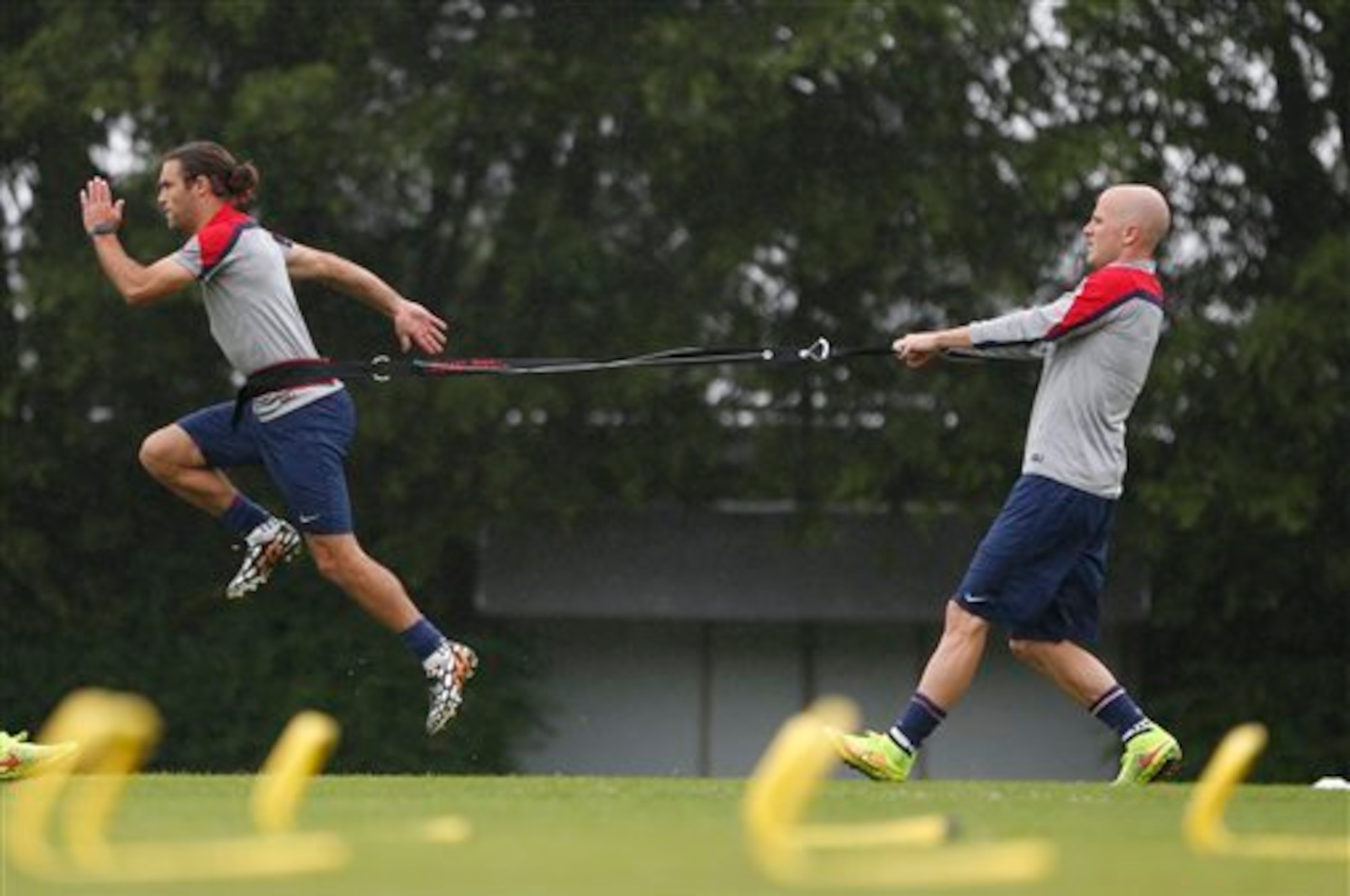
The USMNT has a longstanding reputation for sending highly fit teams to the World Cup. The Americans may not be the world's best players, but they are always ready to run.
Head coach Jurgen Klinsmann has taken the U.S. fitness regime to the next level. In 2006, he scandalously imported American trainers and high-tech training methods to take his underdog German team to the World Cup semifinals.
The coach and members of his squad repeatedly refer to the high fitness levels they've achieved. Video and pictures from U.S. training show the team using the latest training tools and techniques.
Nike has supplied the team with their latest Gold Nike+ FuelBand SEs to help monitor the players vital statistics, movement and even their diets. Fatigue Science has been brought in to help monitor and manage the players' sleep cycles.
In addition to their fitness preparations, the American team comes into the tournament with fewer games in their legs than their higher-rated counterparts. Rather than being completely worn out and carrying injuries from the long European league seasons, cup competitions and UEFA tournaments, the Americans are healthy and well rested.
In sports where the athlete is not expected to perform at their highest level every week, the elite competitors train on a timetable that has them peaking for the most important events—even if it means sacrificing results in lesser events.
No athlete can expect to train up to a peak level and hold that level for months on end. The human body simply doesn't work that way.
It is therefore reasonable to deduce that most of the athletes the U.S. will face in the World Cup will be coming down from their peak fitness levels, while the American athletes will just be reaching theirs.
Update: Italy and England played in Maneus on a typical hot, muggy day. Both sides were totally blown late in the game, and this after both teams fell in deep on defense and did very little energy-sapping pressing.
If the Americans can take advantage of their fitness advantage, Portugal is meat in Maneus.
Travel
7 of 9
The U.S. has the longest actual road to travel in this World Cup. At 8,866 miles, the Nats top the frequent-flyer list.
Normally, a travel schedule this brutal would be considered a disadvantage. The Americans, however, regularly travel long distances while their opponents are all traveling much further than they are used to.
Portugal is travelling 6,228 miles, which is farther than any of their key players travel in an entire regular season. Cristiano Ronaldo, for example, made only one 1,000-mile game trip this season for Real Madrid (away to Galatasaray in Istanbul). Most of his away games were less than 100 miles.
Compare that to Major League Soccer players who make 3,000-mile cross country trips a couple of times each season and regularly make 1,000+ mile trips. Add in the long treks the European-based players made to the Americas for World Cup qualifiers and the U.S. has a definite advantage in travel experience.
Weather
8 of 9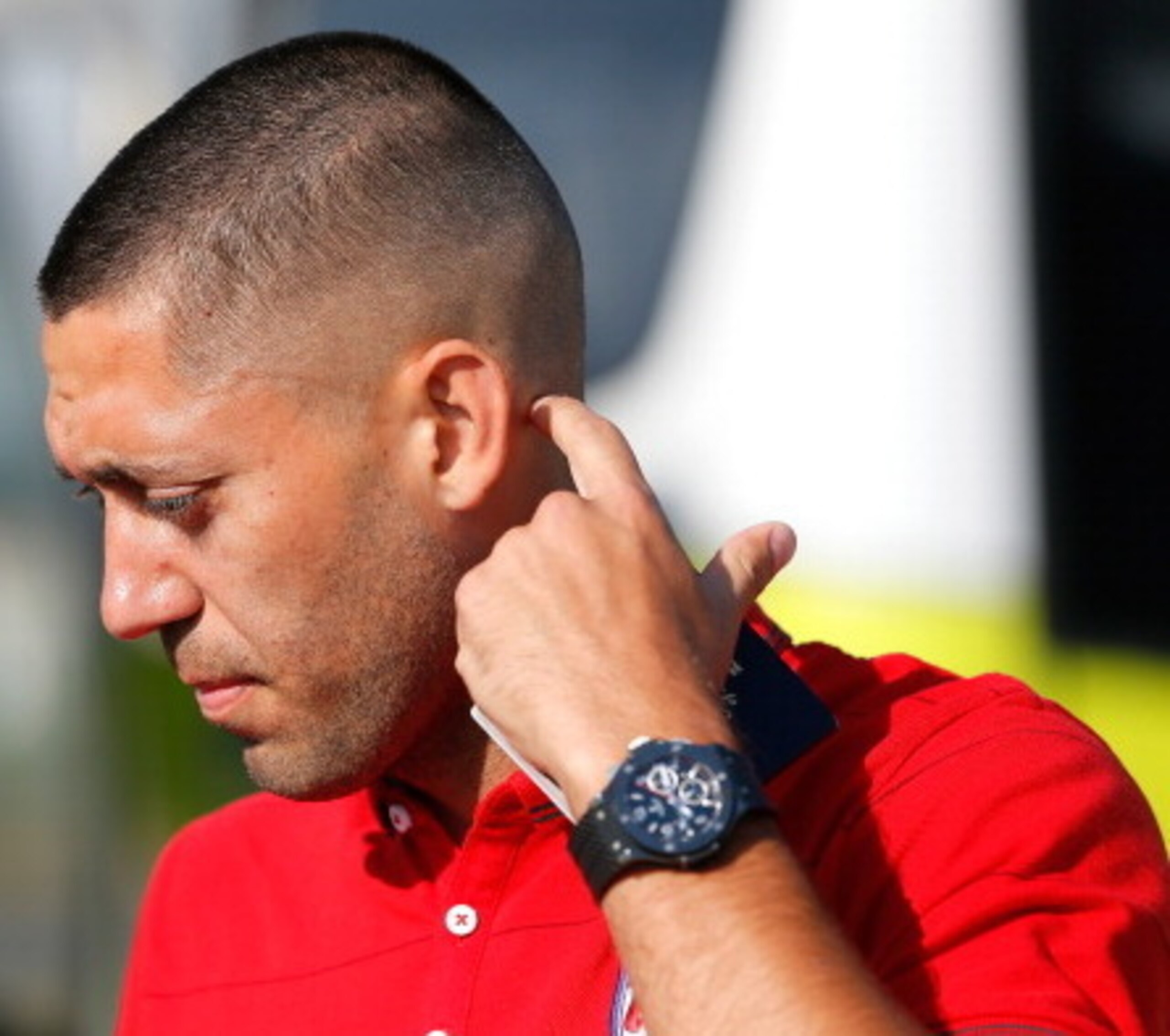
According to an analysis by Bloomberg, the U.S. is facing the fourth highest "discomfort score," 76.4, of the 32 World Cup teams. The discomfort score factors in temperature, humidity and the angle of the sun during a team's games.
Fortunately for the U.S., the Germans have an even higher score (84.3) and the Portuguese (69.3) and Ghana (60.3) are not far behind. All four Group G teams are among the top nine.
Much like with their travel experience, most of the U.S. team has experience playing in hot and humid conditions. Major League Soccer plays a summer season in some of North America's most sweltering cities and most of its European-based players either grew up or played professionally in places like Houston, Dallas, Chicago, Kansas City and New Jersey, which are all famous for oppressive weather.
As Geoff Cameron told AP's Ronald Blum, “I lived four-and-a-half years in Houston, and that’s 100 degrees plus every single day with humidity, so if you can survive that, you can survive anything.”
Of the Nats' Group G opponents, only Ghana has players with experience in the kinds of temperatures and humidity the teams will face in Brazil. Add the oppressive conditions to long distance travel and tired legs and the effects upon Portugal and Germany will be significant.
Coda
9 of 9
I'm no Pollyanna, I realize the road to the second round for the U.S. is tough. Even with the positive factors cited here, I still put USMNT's chances of advancing as no better than a coin flip.
I also realize that the commentators who say the U.S. will not advance are paid to make a judgment call, so why wouldn't they go with the published odds?
I do think, however, that the Nats are grossly underestimated in Group G.
Sure, we'll need some good breaks to advance—or at least avoid the bad ones. As we've already seen in the opening games, any team is one poor decision by the officials away from finding themselves in a very deep hole.
I also think that the pivotal game is not Ghana, but Portugal. Sure, we need to beat Ghana—for national pride, if nothing else. But with that win under our belts the Portugal game is critical because we cannot go into the Germany game needing a win to advance.
I am convinced that this is the best team the U.S. has ever sent to a World Cup and that if any team has a chance to make the Cinderella run it's the Nats.
Call me biased, call me an idiot, just don't call me late for the game.




.jpg?w=2560 "Dak to Stroud: Get Some Wins 💯")
.jpg?w=2560 "Vikings HC Called OBJ Before Release ☎️")
.jpg?w=2560 "5 NFL Players Getting Trade Buzz")


.jpg?w=2560 "NFL Won't Fine 'Beverage' Celebrations 🍻")