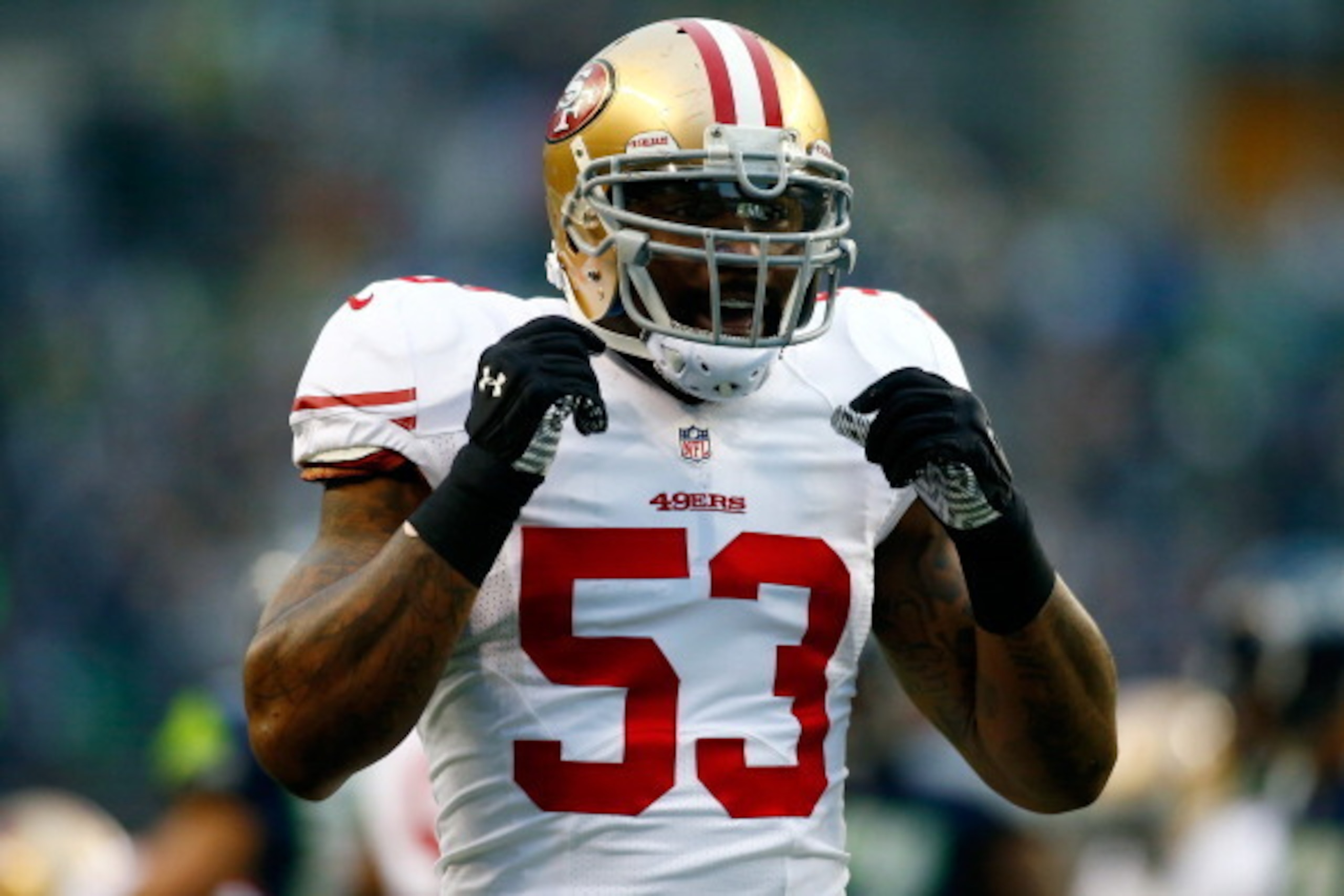

B/R NFL 1000: Top 60 Inside Linebackers
Editor's note: This is the 15th installment in Bleacher Report's NFL 1000 for the 2013 season. This signature series runs through April 24, with NFL Draft Lead Writer Matt Miller ranking the best players at every position. You can read more about the series in this introductory article. See the NFL 1000 page for more rankings.
Determining the best inside linebacker in the NFL might be a tougher decision than you think. The NFL voted Luke Kuechly the Defensive Player of the Year, but was that backed up on film? How about the two studs in San Francisco? Or even Derrick Johnson?
There are a lot of very good inside linebackers in the NFL, but who is the best?
That’s what the NFL 1000 aims to identify. Throw out the narratives and the fantasy football stats, and dig into the film. Then we’ll see who is the best.
The B/R 1000 metric is based on scouting each player and grading the key criteria for each position. The criteria are weighted according to importance on a 100-point scale.
Potential is not taken into consideration, nor are career accomplishments.
Inside linebackers are judged on run defense (30 points), pass-rush skills (10), coverage (20), tackling (40) and all of the technique, athletic ability and football intelligence needed to play the position.
In the case of ties, our team asked, "Which player would I rather have on my team?" and set the rankings accordingly.
Subjective? Yes. But ties are no fun.
Each player was scouted by me and a team of experienced evaluators with these key criteria in mind. The following scouting reports and grades are the work of months of film study from our team.
All statistics from Pro Football Focus (subscription required). Players' heights, weights and seasons from NFL.com.
60-56: Lenon, Fletcher, Hawthorne, Mays, Butler
1 of 52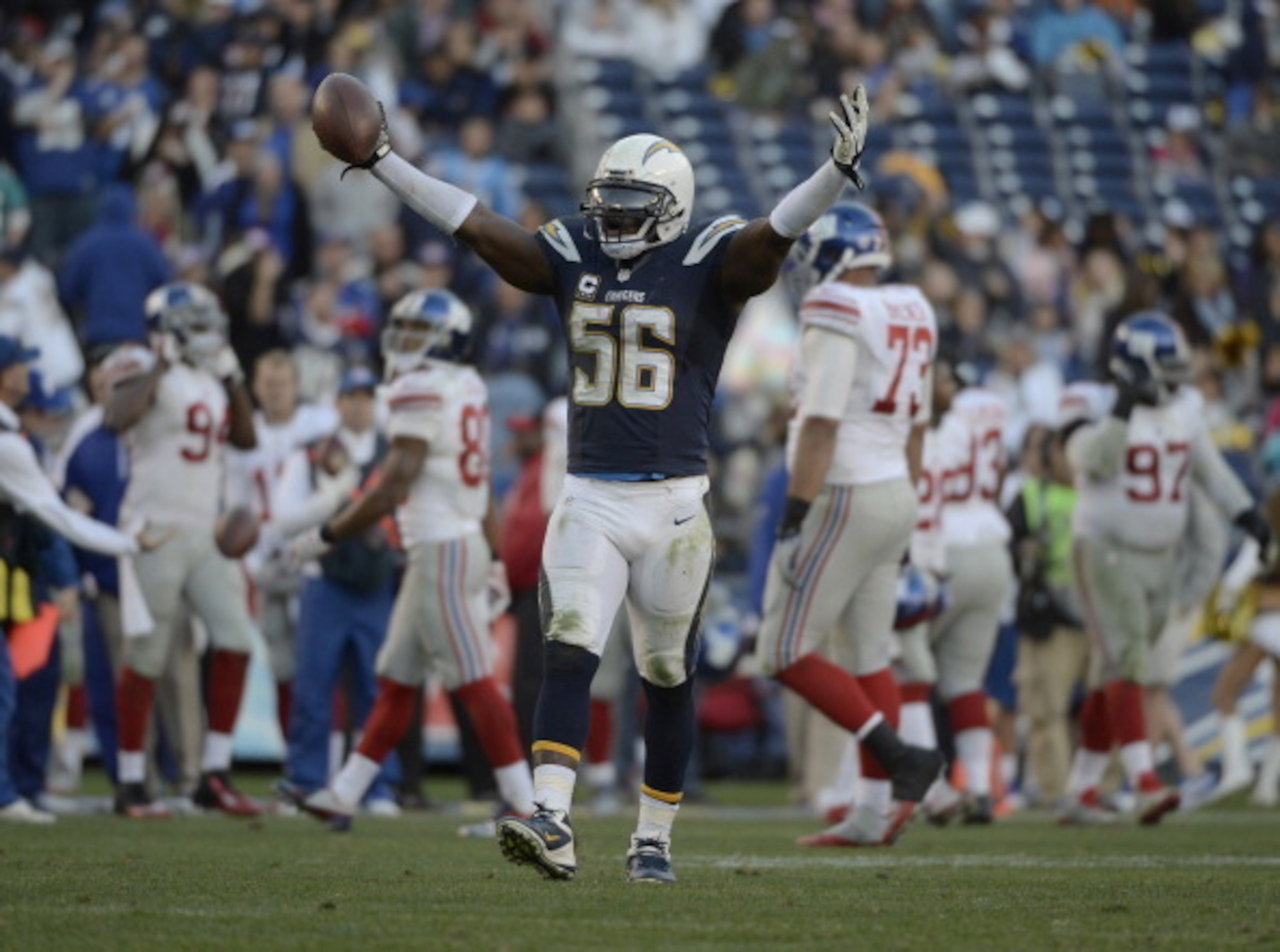
60. Paris Lenon, Broncos
At 35 years of age entering the 2013 season, Paris Lenon (6'2", 240 lbs, 12 seasons) understood that he was no longer an every-down linebacker. In his part-time role for the Denver Broncos, Lenon proved to be a capable run defender but a liability in pass coverage. He wasn’t a dominant run defender because he played too high when trying to take on blockers. He clearly didn’t have the legs to play in space anymore, so it’s no surprise that he was used so sparingly.
59. London Fletcher, Redskins
London Fletcher (5'10", 242 lbs, 16 seasons), who is nearly certain to retire, had a sterling career in the NFL. In his prime, the undersized linebacker relied on his intelligence, awareness and consistent technique to be effective. Those traits never left him, but at 38 years of age, he no longer had the physical ability to be effective in 2013. Fletcher was picked on in coverage and missed too many tackles both in space and in tight.
58. David Hawthorne, Saints
David Hawthorne (6'0", 246 lbs, six seasons) was primarily a run-stopping linebacker for the New Orleans Saints. He proved to have all the ability to be one of the best run-stopping linebackers in the NFL, but his consistency from snap to snap wasn’t impressive. When his hand usage and leverage were good, he was able to ride blockers toward the football. However, too often he was too slow to locate the football, which allowed offensive linemen to get position on him. Hawthorne is a liability in pass coverage.
57. Joe Mays, Texans
Joe Mays’ (5'11", 244 lbs, six seasons) range as a run defender doesn’t stretch from sideline to sideline. But when he reads the play well, he can be effective between the numbers. Mays missed too many tackles and isn’t exceptionally strong when working through contact to find the football. He shows good awareness and can be relied upon when given relatively simple assignments in pass coverage. Mays needs to be a more consistent tackler to have real value as a two-down linebacker.
56. Donald Butler, Chargers
Donald Butler (6'1", 242 lbs, four seasons) endured a rough season in 2013, but it should also be noted that he wasn’t always put in the best position to succeed. Butler is an ineffective pass-rusher, yet he was asked to blitz on 17.2 percent of his team’s snaps against passing plays. Outside of his usage, Butler is an outstanding athlete who must improve his technique both in coverage and against running plays. The talent is clearly there, but he needs to be more consistent.
55-51: Davis, Dent, Robertson, Maualuga, Bostic
2 of 52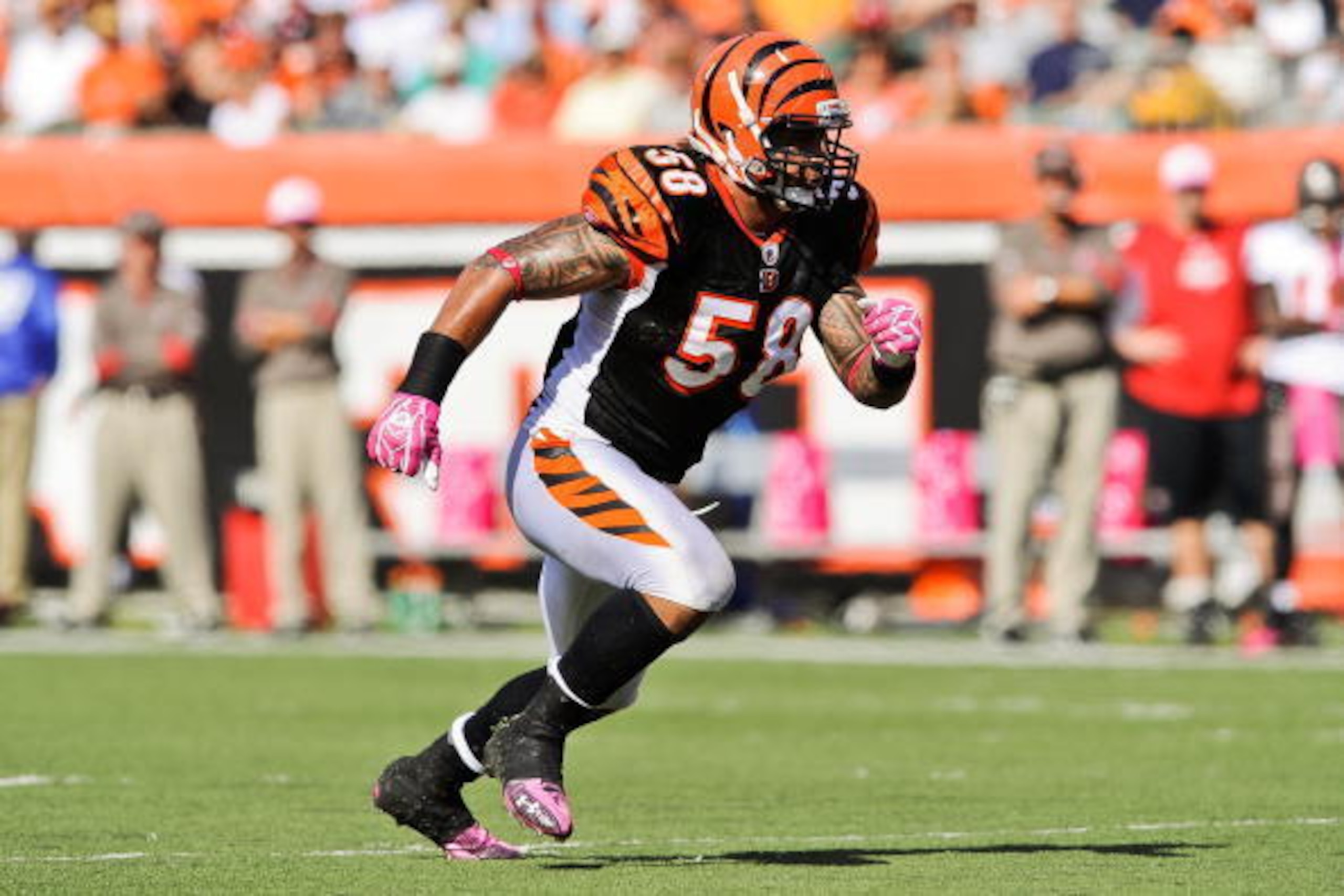
55. DeMario Davis, Jets
As you’d expect with any Rex Ryan linebacker, DeMario Davis (6'2", 239 lbs, two seasons) is a hard-nosed, aggressive football player. When coming forward, Davis is good at getting through blocks and locating the football. However, when engaged quickly, he struggled to get off blocks and missed too many tackles. As a two-down linebacker, Davis isn’t dominant enough to mask his limitations in coverage. He lacks the agility or awareness to be consistently effective in space.
54. Akeem Dent, Falcons
The most impressive aspect of Akeem Dent’s (6'1", 239 lbs, three seasons) skill set is his hand usage against blockers. He is quick to engage blockers and places his hands well to gain leverage. However, his most impressive trait also shows off his least because he doesn’t have the strength to create clean avenues to the ball-carrier. In coverage, Dent has enough awareness and agility to be effective in tight spaces, but he will be exposed when asked to cover in the flat or alone in the middle of the field.
53. Craig Robertson, Browns
In theory, Craig Robertson (6'1", 234 lbs, two seasons) should have been a good fit with Browns defensive coordinator Ray Horton. Robertson is able to turn and run in space—something Horton’s linebackers need to be able to do. However, Robertson’s body control and awareness exposed him in coverage, while he offered little as a pass-rusher. Robertson is quick to close to the line of scrimmage on run plays, but that aggressiveness sometimes exposes him to play-action. He lacks the ideal size to consistently take on blockers, but he gets the most out of his physical prowess more often than not.
52. Rey Maualuga, Bengals
Rey Maualuga (6'2", 255 lbs, five seasons) clearly improved in 2013 after a disastrous 2012 campaign. He didn’t turn into a superstar player, but that says more about where he was in 2012. Maualuga was quicker (and seemingly lighter) in 2013, which allowed him to be effective at times in pass coverage. He went from being a complete liability to being an inconsistent, limited player in coverage. As a run defender, Maualuga missed too many tackles to be considered a valuable two-down linebacker.
51. Jon Bostic, Bears
It’s unlikely that the Chicago Bears drafted Jon Bostic (6'1", 245 lbs, one season) because of his ability to shut down running backs. With that in mind, the Bears would have expected some growing pains with the young linebacker during his rookie season. They likely didn’t expect him to be as bad as he was, though. Bostic plays with his head down and is too aggressive when attacking contact. He doesn’t locate the running back because his technique and awareness are so bad. In coverage, Bostic showed off all the physical talent of a player who could develop into one of the best cover linebackers in the NFL.
50. Lawrence Timmons, Pittsburgh Steelers
3 of 52
Run Defense
For the first time in his career, Lawrence Timmons (6'1", 234 lbs, seven seasons) played behind a defensive line that didn’t have a space-eating nose tackle. That meant he spent more time battling guards and centers away from the line of scrimmage. Too often Timmons struggled to get off those blocks. His speed in space is valuable, but he needs to use his hands and leverage to be more effective in tight.
Pass Rush
The veteran linebacker is powerful and difficult to stop when he has space to accelerate into blockers. However, he doesn’t adjust well when his bull-rush attempts fail.
Coverage
A much better straight-line, downhill runner than an agile or instinctive player in space, Timmons has the athleticism to run with backs into the flat or battle tight ends over the middle. But he won’t shut them down throughout four quarters.
Tackle
Timmons is a violent, powerful hitter who can knock runners backward and jar the ball loose from receivers. He missed a few tackles in 2013, but he also played a huge number of snaps, so his ratio wasn’t that bad.
Overall
It wasn’t a good season for the Steelers’ most experienced linebacker. He wasn’t so bad that he was released, like compatriot LaMarr Woodley, but more will be expected of him in 2014.
.jpg?w=2560 "49ers Giants Football")
.jpg?w=2560 "Giants Rams Football")
49. Mychal Kendricks, Philadelphia Eagles
4 of 52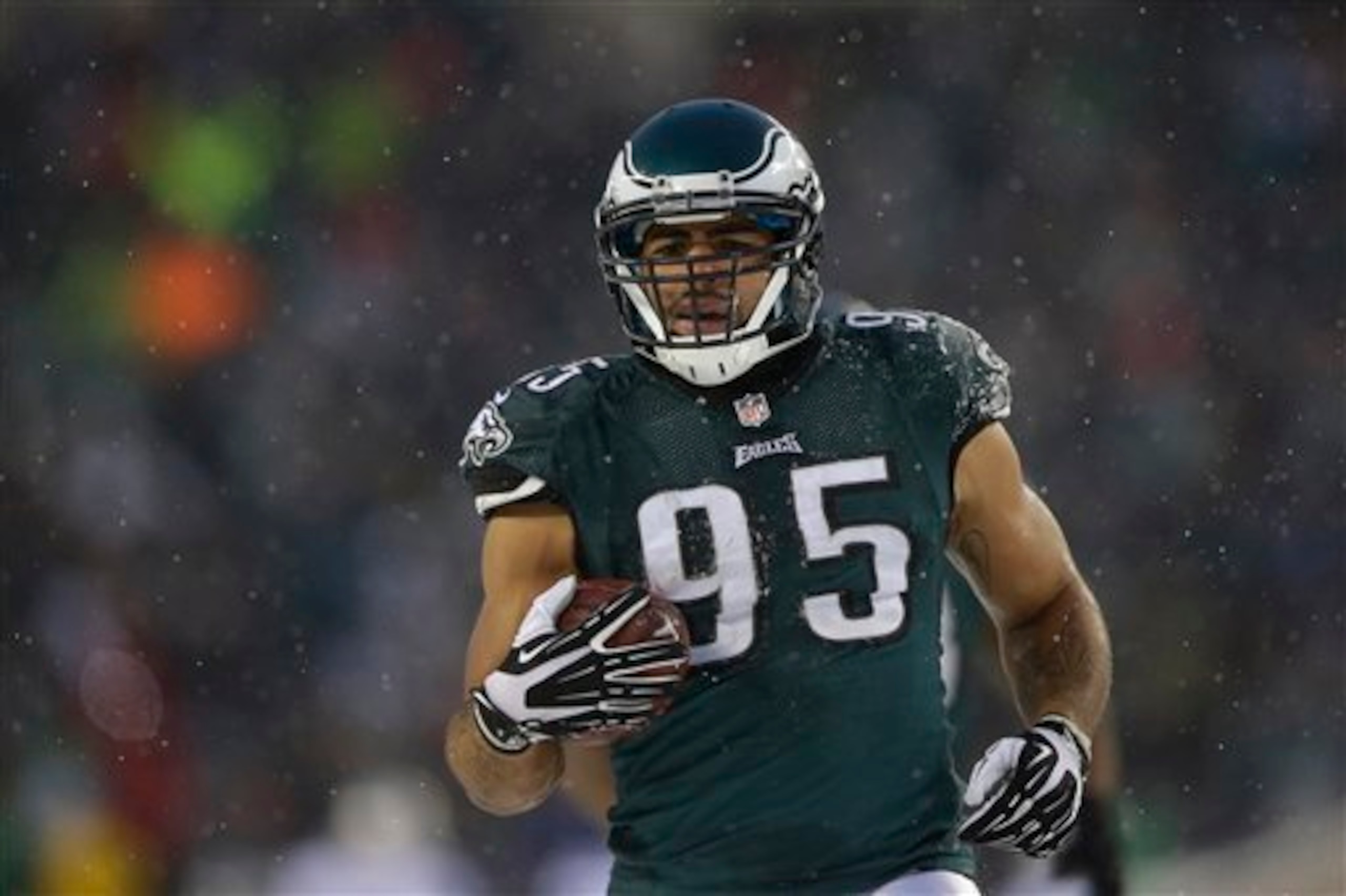
Run Defense
Mychal Kendricks (6'0", 240 lbs, two seasons) shows good awareness and an understanding of where he needs to be as running plays develop in front of him. He has the athleticism to make plays in tight or in space, but to be rated even higher he needs to show more strength when fending off offensive linemen.
Pass Rush
Kendricks rushed the passer on more than 20 percent of pass-defense snaps. Yet in spite of that volume of attempts, he had little production. This is because Kendricks isn’t an overly explosive athlete through contact. He has straight-line speed and is relatively quick, but that is less valuable when working against bigger offensive linemen in tight situations between the tackles.
Coverage
In spite of his athletic ability, Kendricks was a problem in coverage in 2013. He seemed to guess quite a bit and was too aggressive when he was playing the initial receiver in zone coverage. Kendricks has too much physical talent to allow his performance to be dragged down by his mental errors.
Tackle
A lot of tackles were missed in 2013—23 to be exact—but Kendricks also frequently played in space and had a huge number of snaps relative to his sample size. He can be a powerful hitter at times, and he still plays with relatively consistent technique.
Overall
Kendricks endured a very rough start to the season, but he appeared to calm the storm around midseason and gave Eagles fans reasons for renewed optimism about his future.
48. Perry Riley, Washington Redskins
5 of 52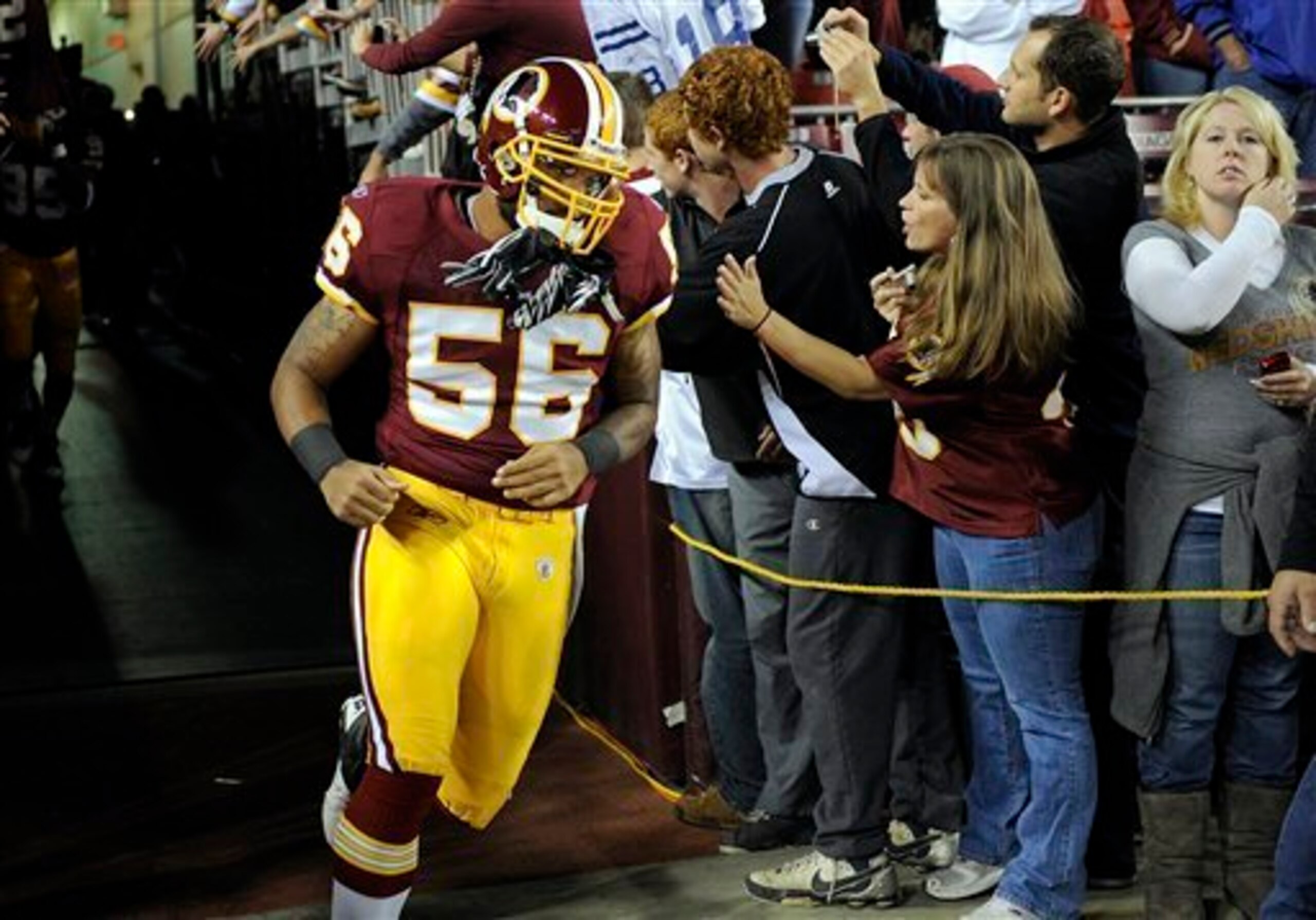
Run Defense
Perry Riley (6'0", 238 lbs, four seasons) is a disciplined run defender who lacks the elite physical traits to dominate that aspect of the game. He is patient when backs attack the outside without being too slow to attack the line of scrimmage when the offense runs between the tackles.
Pass Rush
Riley has the burst to close on the quarterback quickly when given a free route into the pocket, but he isn’t adept at beating offensive linemen.
Coverage
With good awareness and discipline to go with relatively impressive quickness, Riley can be effective in zone coverage. He isn’t overly impressive in man coverage, and he needs to be given relatively easy assignments to thrive.
Tackle
Although he is not an impact hitter, Riley is a consistent tackler who relies on his technique to bring down opposing players.
Overall
Riley was a decent starter on a less than stellar defense. Even though London Fletcher wasn’t playing well during what was likely his final season in the league, Riley will feel added pressure in Washington next year without him.
47. Manti Te'o, San Diego Chargers
6 of 52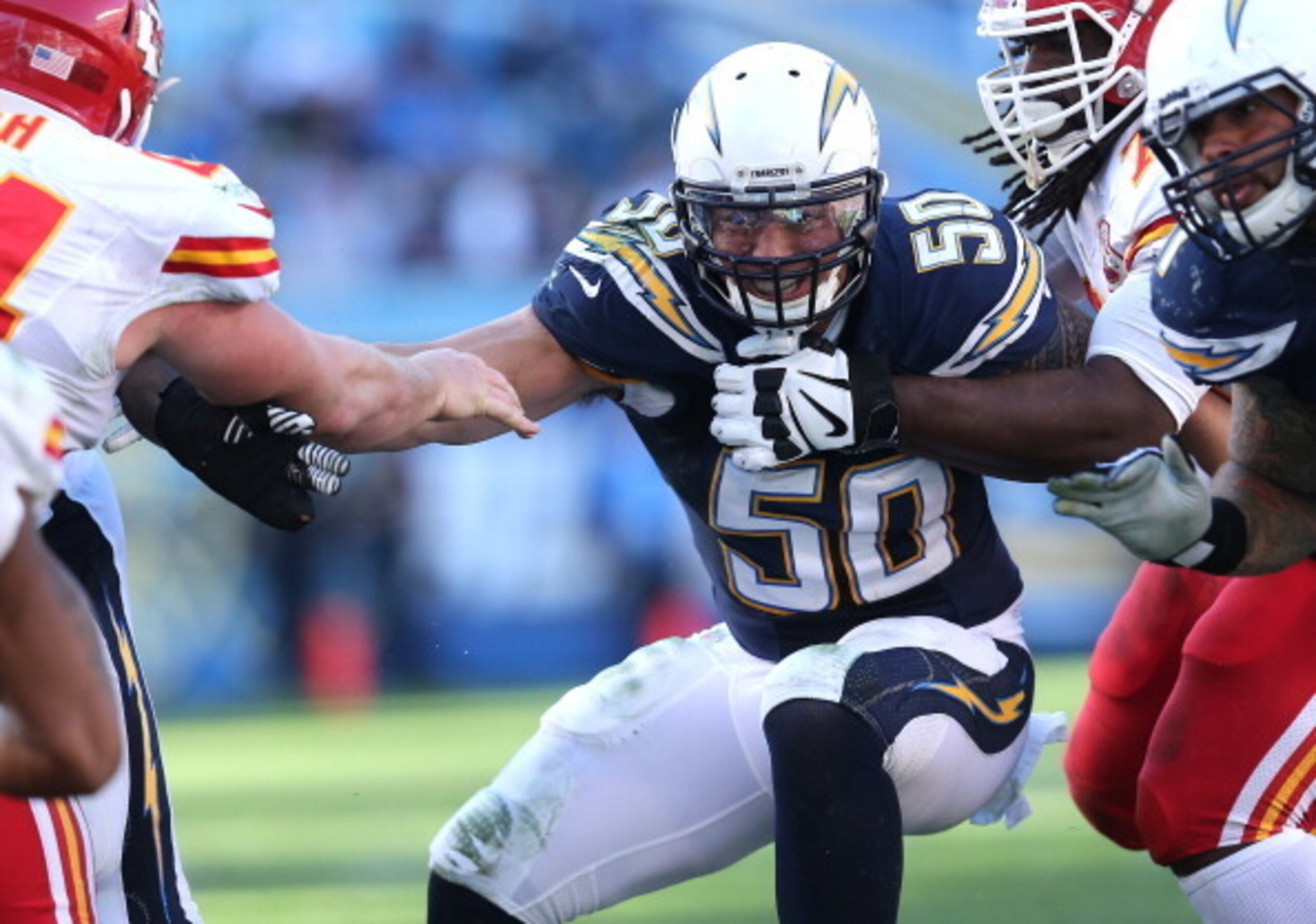
Run Defense
It was a relatively quiet first season for Manti Te’o (6'1", 241 lbs, one season) in terms of media attention, but that was also the way he played on the field. Te’o is an intelligent player, but he lacks the aggressive streak that would allow him to be more of an impact player against the run. Te’o needs to be a tougher tackler and fight through blockers with more intensity.
Pass Rush
Te’o is a coverage linebacker who should be used sparingly as a pass-rusher.
Coverage
If Te’o has a long, successful career, it will be because of his ability in coverage. He is a smart player who reads the game well and plays with discipline. He keeps his balance and is quick to change direction. Te’o doesn’t have the ability to blow up receivers with his physicality and is much better in zone coverage as opposed to man.
Tackle
Despite being consistent with his technique, Te’o’s tentativeness as a tackler caused him to miss a few too many tackles in 2013.
Overall
Bringing a more aggressive approach to his play on the field could make a massive difference for Te’o. It’s clear that he has the talent to be a high-quality starter at this level, but he needs to adjust.
46. Kelvin Sheppard, Indianapolis Colts
7 of 52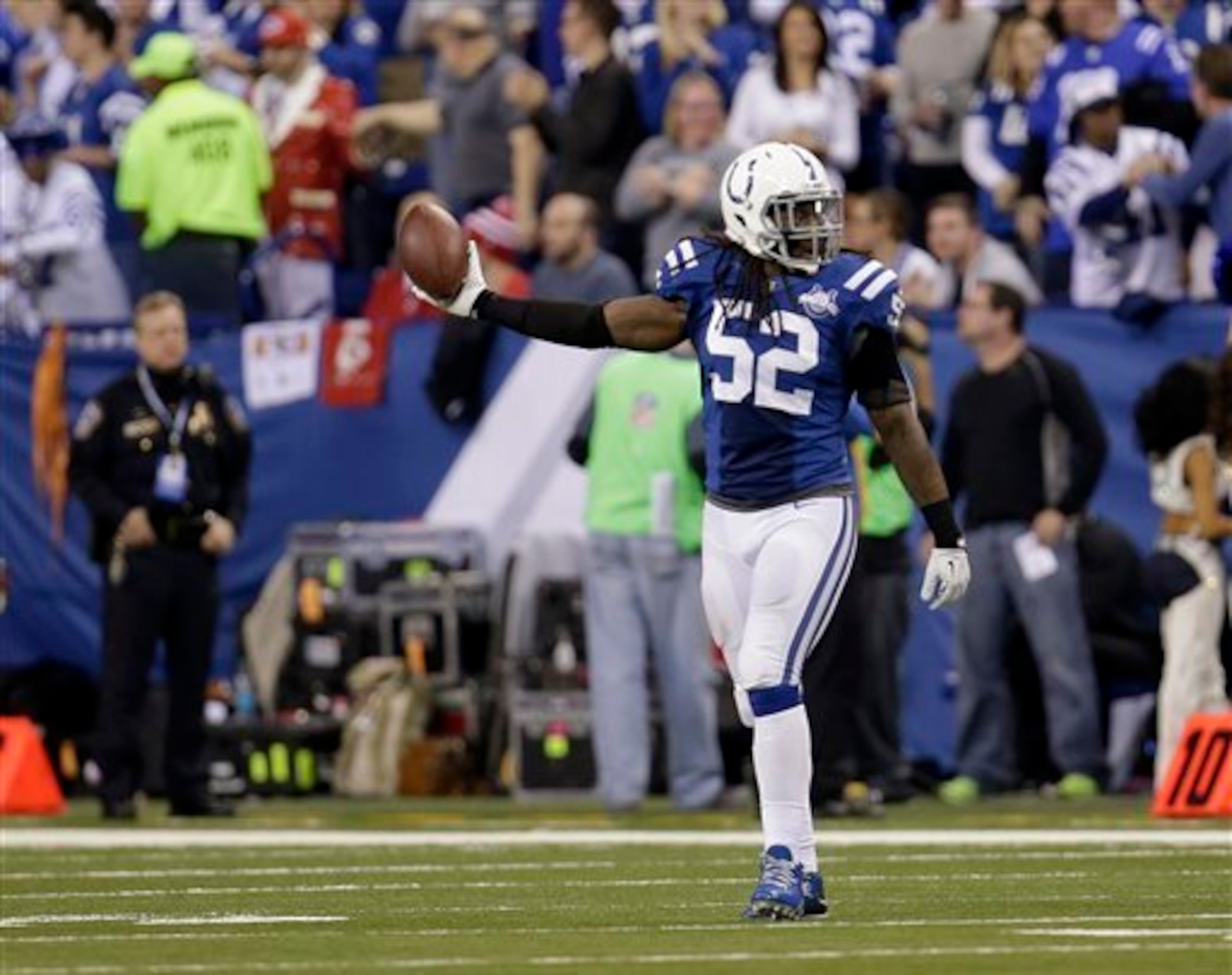
Run Defense
Kelvin Sheppard (6'2", 256 lbs, three seasons) isn’t a linebacker who excels working through traffic and attacking the line of scrimmage. He is a decent athlete, but he's not good enough to play sideline to sideline with any sustained success. That limits him to being a cleanup tackler who primarily makes plays after the running back has already gained yardage.
Pass Rush
Sheppard was used sparingly as a pass-rusher and showed little explosion or creativity to suggest that he should be used more.
Coverage
A lack of elite athleticism and an inability to consistently read plays as they develop make Sheppard a limited cover linebacker.
Tackle
Despite his limitations getting to the football, Sheppard shows good strength and consistent technique as a tackler.
Overall
Sheppard is a limited linebacker who is unlikely to ever fill a greater role. He is best suited to be a backup with limited situational value.
45. Paul Worrilow, Atlanta Falcons
8 of 52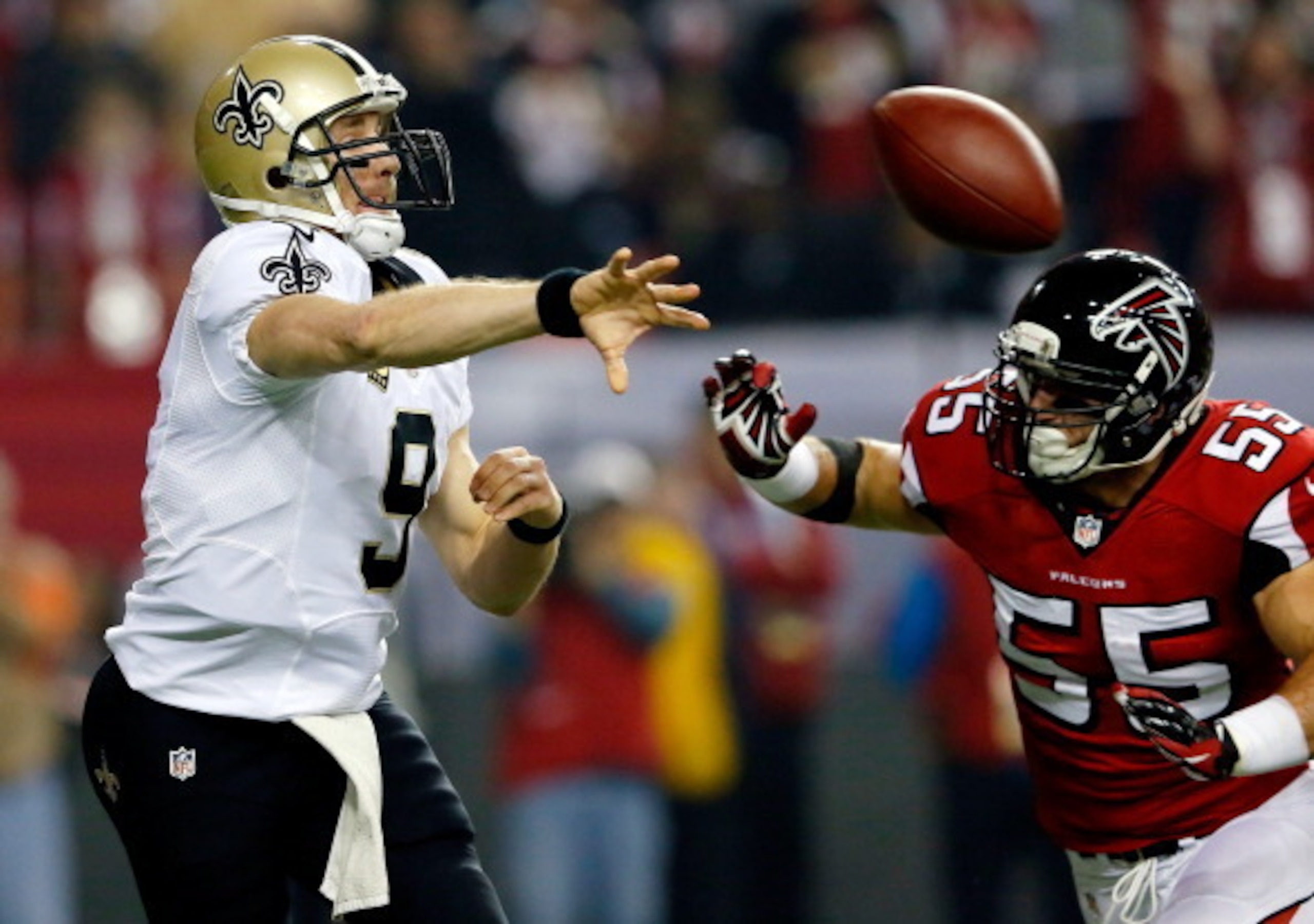
Run Defense
It’s clear that Paul Worrilow (6'0", 230 lbs, one season) is a smart defender. He keeps his head up throughout running plays to locate the football, regardless of whether he is accelerating to space or already engaged with a blocker. He understands how to use his leverage to fill a running lane and won’t overcommit too often. However, Worrilow lacks the arm strength to show off his good hand usage against blockers, and his athleticism as a whole is only average.
Pass Rush
Because of his compact frame and impressive burst of acceleration over the first five yards, Worrilow can be an effective pass-rusher in the right situations.
Coverage
Worrilow is slow to turn and drop into zone coverage. He doesn’t have the size or all-around athleticism to match up to tight ends in man coverage either. When the play is in front of him, he can be effective, but overall he is a limited cover linebacker.
Tackle
Because of his intelligence and awareness against the run, Worrilow was able to finish the 2013 season with 127 tackles. He isn’t a big hitter, but he is consistent with his technique and can be effective in space or in tight.
Overall
For an undrafted free agent, Worrilow had an outstanding season. He needs to develop greater upper-body strength to establish himself as a viable starter. The main concern for Worrilow is his lack of fluidity in coverage. That will likely limit him to being a two-down linebacker at best, no matter how much upper-body strength he can build.
44. Arthur Moats, Buffalo Bills
9 of 52
Run Defense
Sample size is the main problem with evaluating Arthur Moats (6'2", 250 lbs, four seasons). He was just a bit player for the Bills in 2013, but those around him felt his presence when he was on the field. Moats showed an understanding of when to be aggressive in taking on blockers and attacking the line of scrimmage and when to play with his head up and slide into space to find the running back. Moats is an excellent all-around athlete against the run.
Pass Rush
Although he was a linebacker who lined up in a few different spots for the Bills, Moats wasn’t a pass-rushing threat. He is a run-stopper who lacks the creativity or explosion in space to get to the quarterback consistently.
Coverage
Moats has the fluidity, body control and awareness to be effective in space. However, he can be overextended in coverage and shouldn’t be asked to do anything too complex or stressful.
Tackle
He is a consistent tackler who didn’t really punish backs with big hits. He didn’t miss a single tackle in 2013, but a limited sample size and a role that kept him fresh can’t be ignored.
Overall
Moats showed a lot of potential in 2013. The Steelers signed him seemingly to be an outside linebacker, but it wouldn’t be a surprise if he pushed Vince Williams for the starting inside linebacker spot alongside Lawrence Timmons. Moats is not young, though. He is already 26 years old and has just 20 career starts.
43. James Laurinaitis, St. Louis Rams
10 of 52
Run Defense
James Laurinaitis (6'2", 248 lbs, five seasons) is an active inside linebacker for the Rams. He has impressive range that allows him to make plays in the flat and the acceleration to close down outside runs before they cross the line of scrimmage. However, Laurinaitis often struggles to get off blocks and can lack discipline. Too many of his tackles come away from the line of scrimmage.
Pass Rush
Laurinaitis is a cover-and-tackle linebacker. He is not a pass-rushing threat unless he has a clean route to the quarterback. His effort and athleticism make him effective as an extra blitzer.
Coverage
He’s an impressive athlete who can drop deep over the middle or work forward to react to screens. Laurinaitis won’t run with tight ends down the seam or cover them on deep crossing routes, but he has the size and physicality to fight them for the football. Laurinaitis’ ball skills are a positive.
Tackle
An incredible 116 tackles in 2013 was actually just two tackles more than Laurinaitis’ career low. He is obviously a high-volume tackler, but he also has the physicality to punish smaller players at times. Laurinaitis primarily relies on his technique and effort to bring ball-carriers to the ground.
Overall
Laurinaitis has never been anything more than a decent starter. At this stage of his career, he should have been separating himself from the pack to join players such as NaVorro Bowman and Patrick Willis, but instead he has been getting further lost in the crowd.
42. Audie Cole, Minnesota Vikings
11 of 52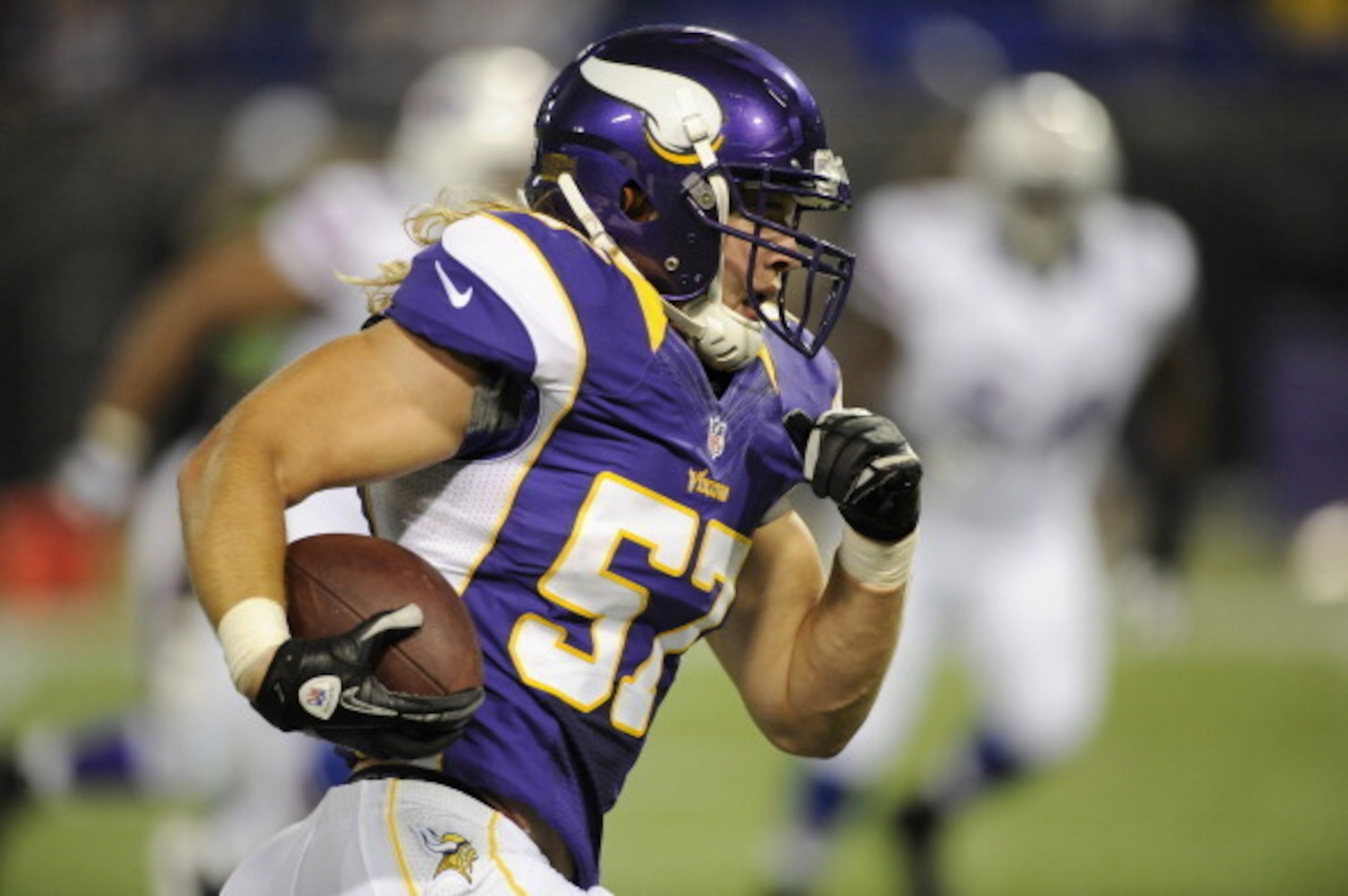
Run Defense
Audie Cole (6'5", 239 lbs, two seasons) is a tall, strong linebacker who reads running plays well. In spite of his size, Cole moves well in space and is fluid enough to slip through gaps to get to the running back. He needs to be more aggressive when taking on blockers to get the most out of his size, while his pad level can be a problem at times.
Pass Rush
Cole doesn’t look like he should be able to rush the passer, but he understands how to use his size, and his quickness can be an advantage at times. But he is a big target for blockers, who can knock him off balance or redirect him away from the quarterback.
Coverage
Because of his size, Cole looks like the perfect linebacker to intimidate receivers running over the middle or match up to the taller tight ends in the league. Cole doesn’t play that way, though. He is a fluid mover who can adjust in space or line up outside the tackles. His technique needs to be improved because he often doesn’t locate the football while concentrating on his assignment.
Tackle
Cole missed too many tackles in 2013. He needs to square off with opposing players in space and use his length to his advantage.
Overall
Cole showed potential during his second season in the league, but he needs to continue to develop his all-around game.
41. Arthur Brown, Baltimore Ravens
12 of 52
Run Defense
Despite his relatively small frame, Arthur Brown (6'0", 235 lbs, one season) is an effective linebacker because of his quickness, awareness and technique. Brown uses his hands to fend off blockers while constantly working his way toward the football with his feet. His range allows him to play as a sideline-to-sideline run defender. Brown’s sample size was small, but he showed his potential during his first season.
Pass Rush
Brown has a decent burst and can close to the quarterback in space, but his frame isn’t built to beat blockers who set in pass-blocking stances.
Coverage
The Ravens primarily used Brown as a nickel linebacker during his rookie season. He showed the all-around athleticism and fluidity to excite fans, but it’s clear he is attempting to get comfortable at this level. Brown needs to show better awareness of receivers around him and be quicker reading plays as they develop.
Tackle
To be a better tackler, Brown needs to improve his upper-body strength and develop a greater comfort level on the field. Both should come as he develops.
Overall
Brown has the potential to be a three-down starter for the Ravens as early as next season. His talent is obvious, but the Ravens have no need to rush him onto the field in an expanded role because of the presence of Daryl Smith and Josh Bynes on their roster.
40. Colin McCarthy, Tennessee Titans
13 of 52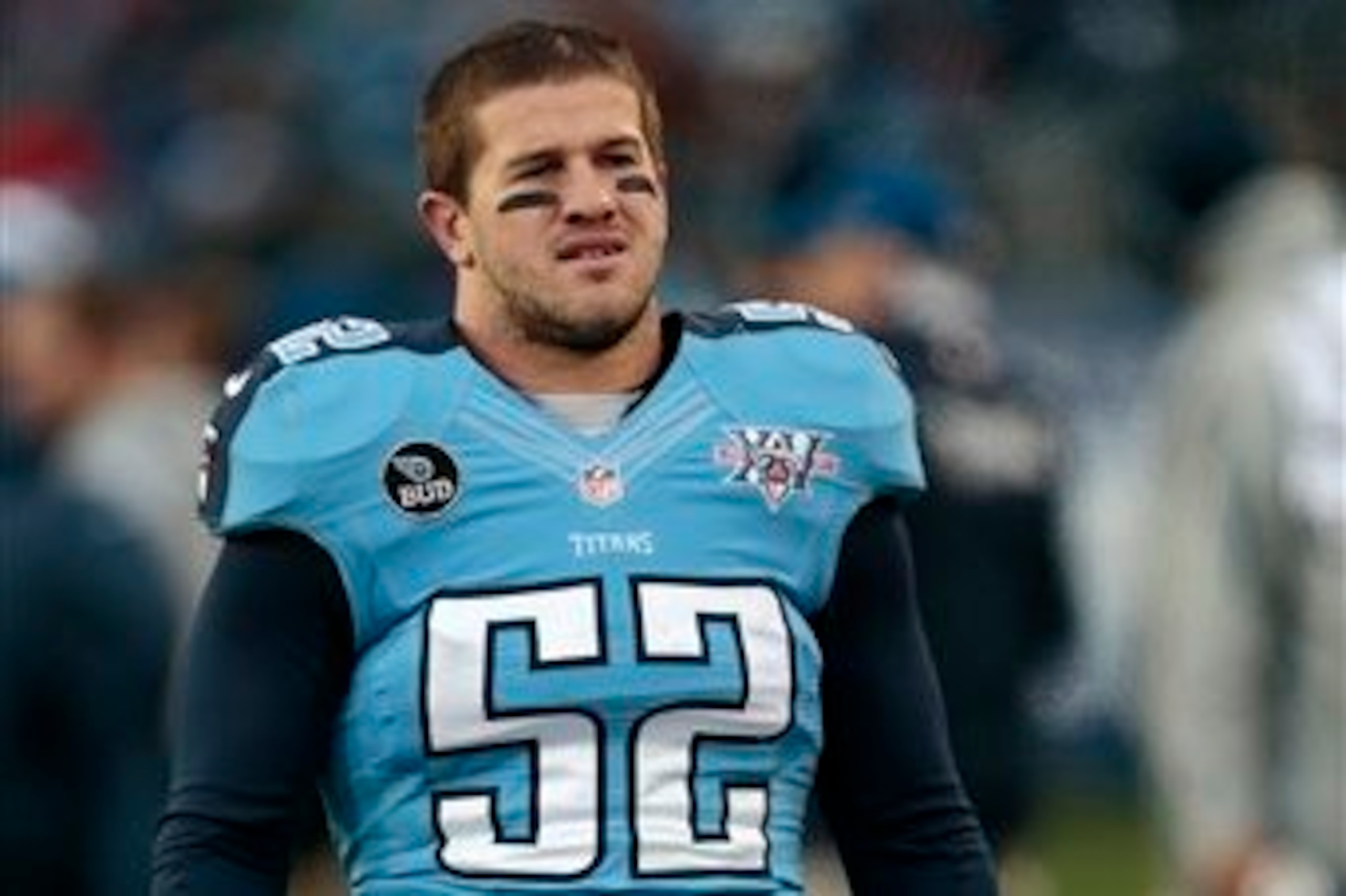
Run Defense
It wasn’t a good season for the Titans’ run defense in 2013, but Colin McCarthy (6'1", 243 lbs, three seasons) had a decent year in a limited role. He is a compact player with the aggressiveness to attack blockers and fight his way to the football. McCarthy isn’t completely consistent at locating the football and using his hands against contact, but he is strong and mobile enough to be effective between the tackles and in space.
Pass Rush
McCarthy wasn’t an effective pass-rusher in 2013. He was too easily stood up by offensive linemen and didn’t show the speed or agility to be effective in space.
Coverage
With his quickness, McCarthy is effective working in space underneath. He isn’t quick enough to move outside of the tackle box and won’t run effectively with tight ends down the field.
Tackle
When he lines up backs or receivers properly, McCarthy can blow up ball-carriers. However, his technique was lacking in 2013. That and his aggressive nature at times caused him to miss too many tackles. McCarthy missed 11 tackles on just 337 snaps.
Overall
McCarthy is obviously a talented player, but he can’t afford to have another season like the one he had in 2013. He is no longer in the developmental stage of his career.
39. Darryl Sharpton, Houston Texans
14 of 52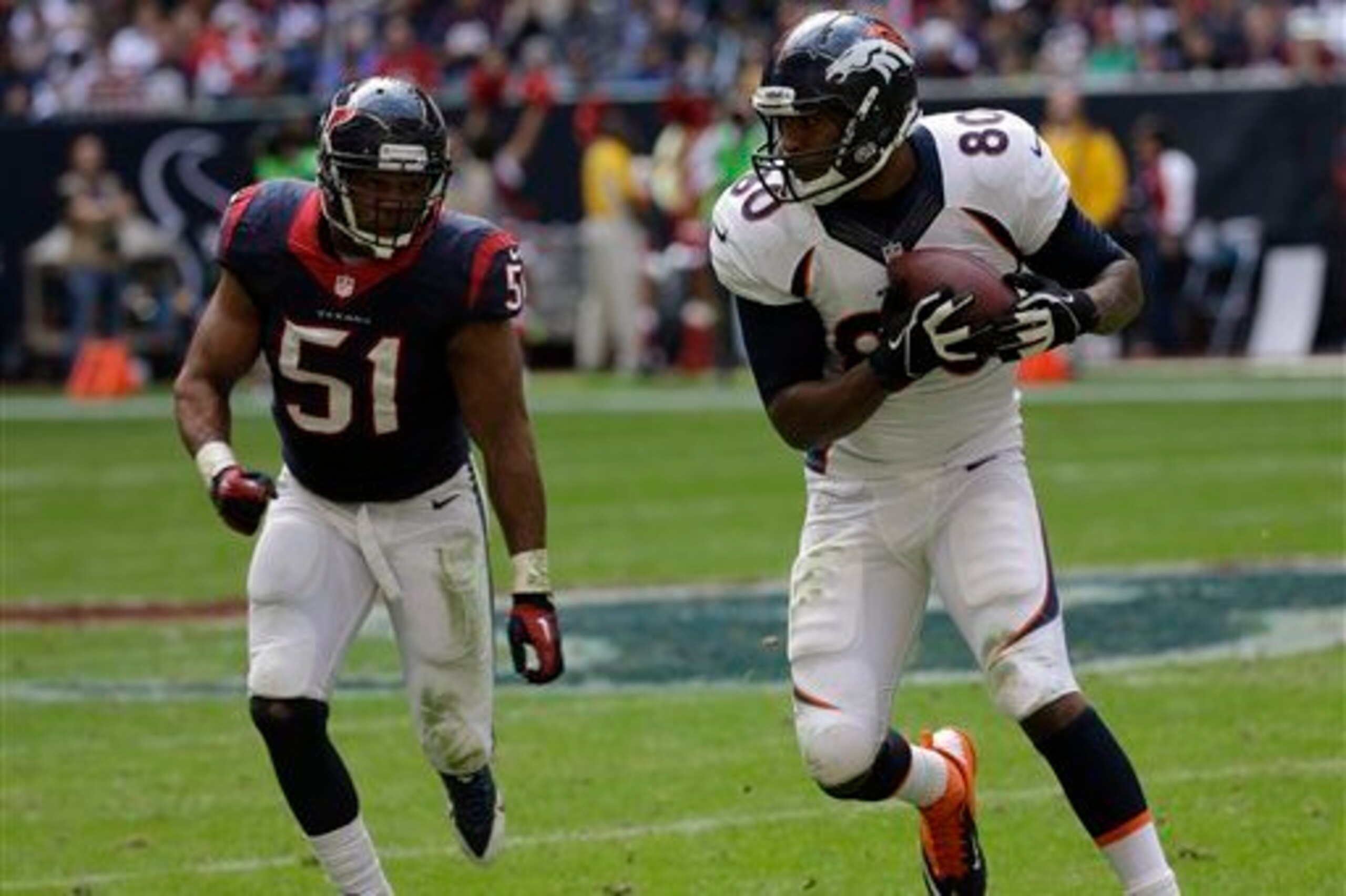
Run Defense
Darryl Sharpton (5'11", 235 lbs, four seasons) has the impressive trait of being able to reset himself to change direction after his initial burst forward at the snap. Sharpton is an aggressive run defender who attacks contact and looks to take on blockers with his arms extended. His fluidity in tight spaces is impressive and makes him difficult to contain. Importantly, Sharpton plays with his head up, so he is able to sidestep and shed blocks while keying in on the runner in the backfield. His range is decent, but he wouldn’t be considered a consistent sideline-to-sideline defender.
Pass Rush
Sharpton is an effort pass-rusher who doesn’t have the explosiveness to be effective in that role.
Coverage
As good as Sharpton is as a run defender, he is unlikely to ever be a quality starter because of his coverage ability. The quickness he shows in tight against the run doesn’t translate when he drops backward. Sharpton doesn’t show any comfort in space and is unable to read passing plays as they develop.
Tackle
Sharpton missed 12 tackles in 2013—a few too many—but he is a strong player who can punish ball-carriers with his power.
Overall
After four seasons, Sharpton hasn’t established himself as a quality starter. Recently signed by Washington, he should have a role in the league if he can continue to be an outstanding run defender.
38. Mason Foster, Tampa Bay Buccaneers
15 of 52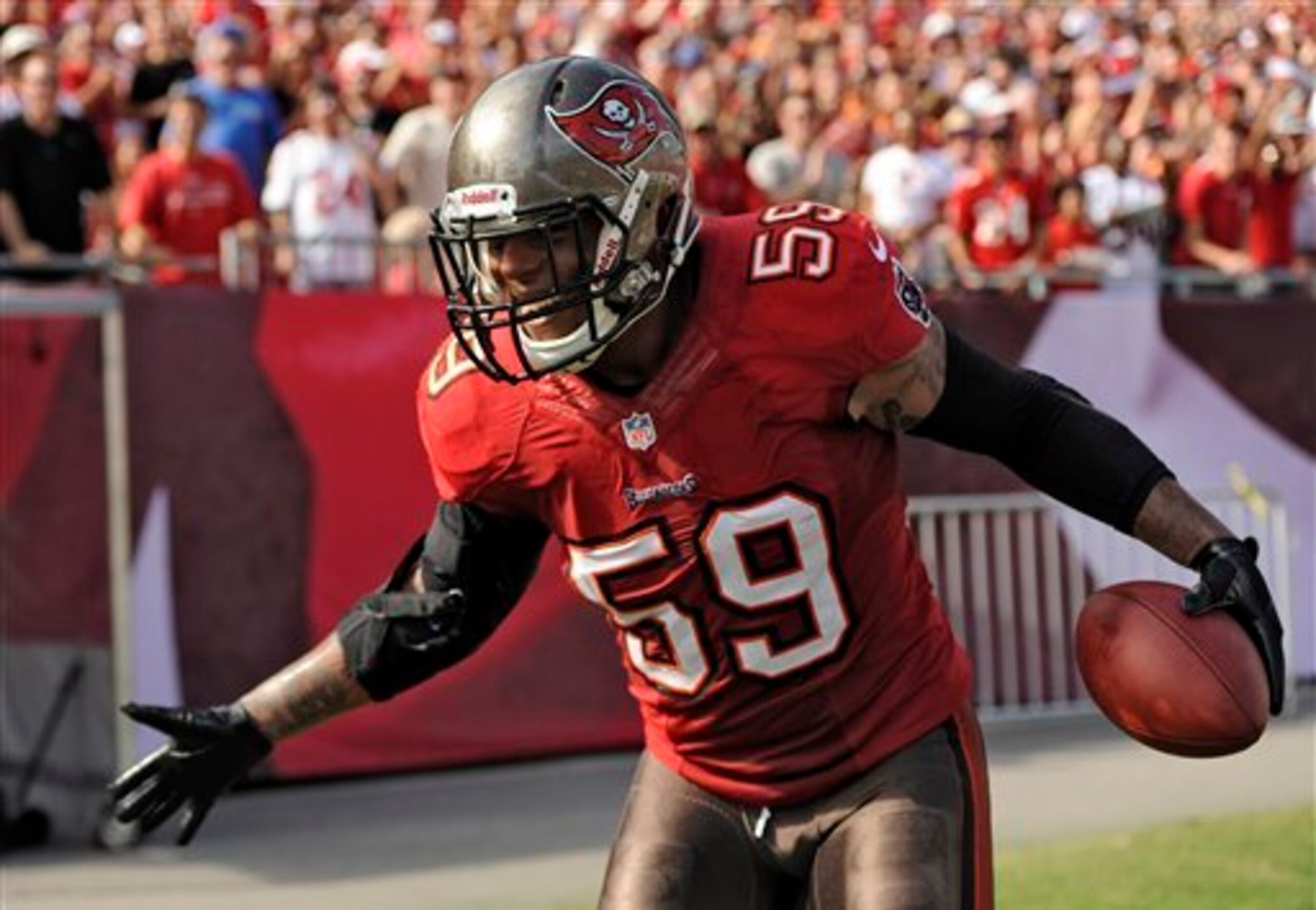
Run Defense
Although the NFL is a league that celebrates aggressive linebackers who can knock running backs to the ground, it rarely highlights the negatives that can come with that aggression. Mason Foster (6'1", 241 lbs, three seasons) is aggressive, but he is also undisciplined. Foster overruns plays and often performs with his head down. He is strong and physically powerful, but he doesn’t maintain his balance to get the most out of that strength. Foster needs to find an equilibrium between aggression and discipline while also improving his technique.
Pass Rush
Foster’s relentlessness and physicality make him a formidable pass-rusher. He doesn’t bring any great creativity to his pass-rush attempts, but he has the burst to get through the line and the power to crash through blockers at times.
Coverage
There are times when Foster looks impressive in pass coverage. He shows awareness of receivers around him and anticipates how plays are going to develop. He needs to be more consistent, however, as he is primarily limited to playing zone coverage, something the Buccaneers did a lot of in 2013. Foster’s violent approach to the game must also play on the minds of receivers running across him.
Tackle
Even though his ability to knock people out will always endear him to fans, Foster missed an incredible 21 tackles in 2013. He needs to be more disciplined and controlled and tackle with better technique.
Overall
Foster has physical talent, so new Tampa Bay coach Lovie Smith will try to develop him quickly ahead of the coming season. However, Foster’s whole game is built on aggression, so it’s tough to see him altering his approach.
37. Paul Posluszny, Jacksonville Jaguars
16 of 52
Run Defense
Over the past few seasons, Paul Posluszny (6'2", 242 lbs, seven seasons) has been a high-volume tackler. In 2013, he only played 15 games and still set a career high for tackles with 162. In spite of his huge number of tackles, Posluszny is still a middle-of-the-pack run defender. He doesn’t have the strength to run through blockers or the quickness to skip past them consistently. Too often his tackles against the run came after the running back had already gained yardage. Posluszny deserves credit for his ability to play from sideline to sideline and chase down players in space, but his tackle numbers give him a bloated reputation.
Pass Rush
Considering Posluszny’s success is built on his long arms and speed, it’s no surprise that he is only effective as a pass-rusher when he is given a clean route to the quarterback.
Coverage
Posluszny has long arms, good quickness and a decent burst when coming forward. However, he appears to lose his awareness and comfort when he drops deeper than 10 yards off the line of scrimmage.
Tackle
Posluszny missed a number of tackles in 2013, but that’s to be expected, considering the number of successful tackles he had. There are a number of areas where Posluszny can improve, but tackling is clearly his greatest strength.
Overall
Posluszny is a decent all-around linebacker. He won’t ever be an explosive game-changer, but behind a big, offensive-line-consuming defensive line, his value would increase.
36. D.J. Williams, Chicago Bears
17 of 52
Run Defense
It takes D.J. Williams (6'1", 242 lbs, 10 seasons) a huge amount of effort to get away from blocks from offensive linemen. He doesn’t have the strength to fight through blocks; instead, he must move his feet and work from shoulder to shoulder of the blocker to find the running back. This means he concedes more ground than he should in tighter situations. Williams is quick and can change direction quickly. He is much more effective at shedding blocks when he works outside the tackle box in space.
Pass Rush
Williams was used sparingly as a pass-rusher. He did have two sacks against the Steelers, but both were the result of blown assignments that gave him a clean route to the quarterback.
Coverage
Although he shows good agility when moving forward, Williams struggles to plant and turn after dropping into zone coverage. He has a tendency to overplay the first receiver he sees, and he lacks the ideal skill set to cover tight ends in man coverage.
Tackle
A lack of control at the point of contact caused Williams to miss five tackles in 2013. That number seems small, but he only had 27 tackles because he played in just six games.
Overall
Williams has enough talent to be effective in a limited role. He is a good run defender with enough ability in pass coverage to not be considered a liability.
35. Dannell Ellerbe, Miami Dolphins
18 of 52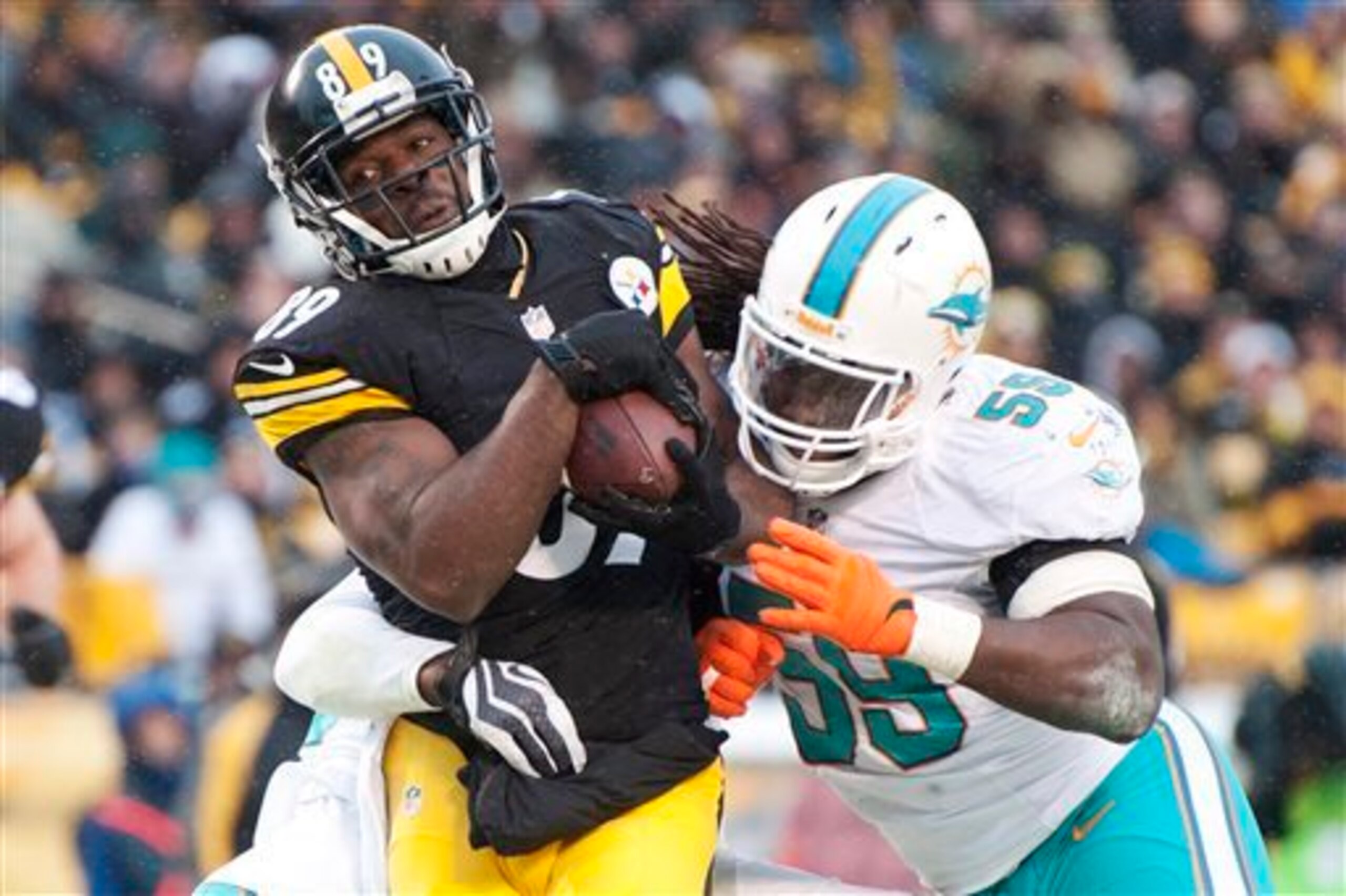
Run Defense
Dannell Ellerbe (6’1”, 245 pounds, five seasons) was slow to react to the run and oftentimes allowed himself to get blocked before he was able to shed and get in on the tackle. His first step was indecisive, and he did a poor job of meeting the runner at the point of attack. However, he was good at chasing down plays.
Pass Rush
Ellerbe didn't see much action as a blitzing linebacker, perhaps because of his ability to be consistent in coverage. He was adept at flowing to the ball and has the athleticism and speed to be a surprise blitz option up the middle.
Coverage
Ellerbe was a consistent coverage man for Miami. He was adept at roaming the middle and was especially effective at getting to the sidelines to make plays on offensive players in the flats after the catch.
Tackle
He made a significant number of tackles for Miami (101) but was never a force player. But he was able to make some nice hits when he timed the play right.
Overall
Ellerbe is a solid middle linebacker who will make more positive plays than negative, but he needs to be more aggressive against the run.
34. Vince Williams, Pittsburgh Steelers
19 of 52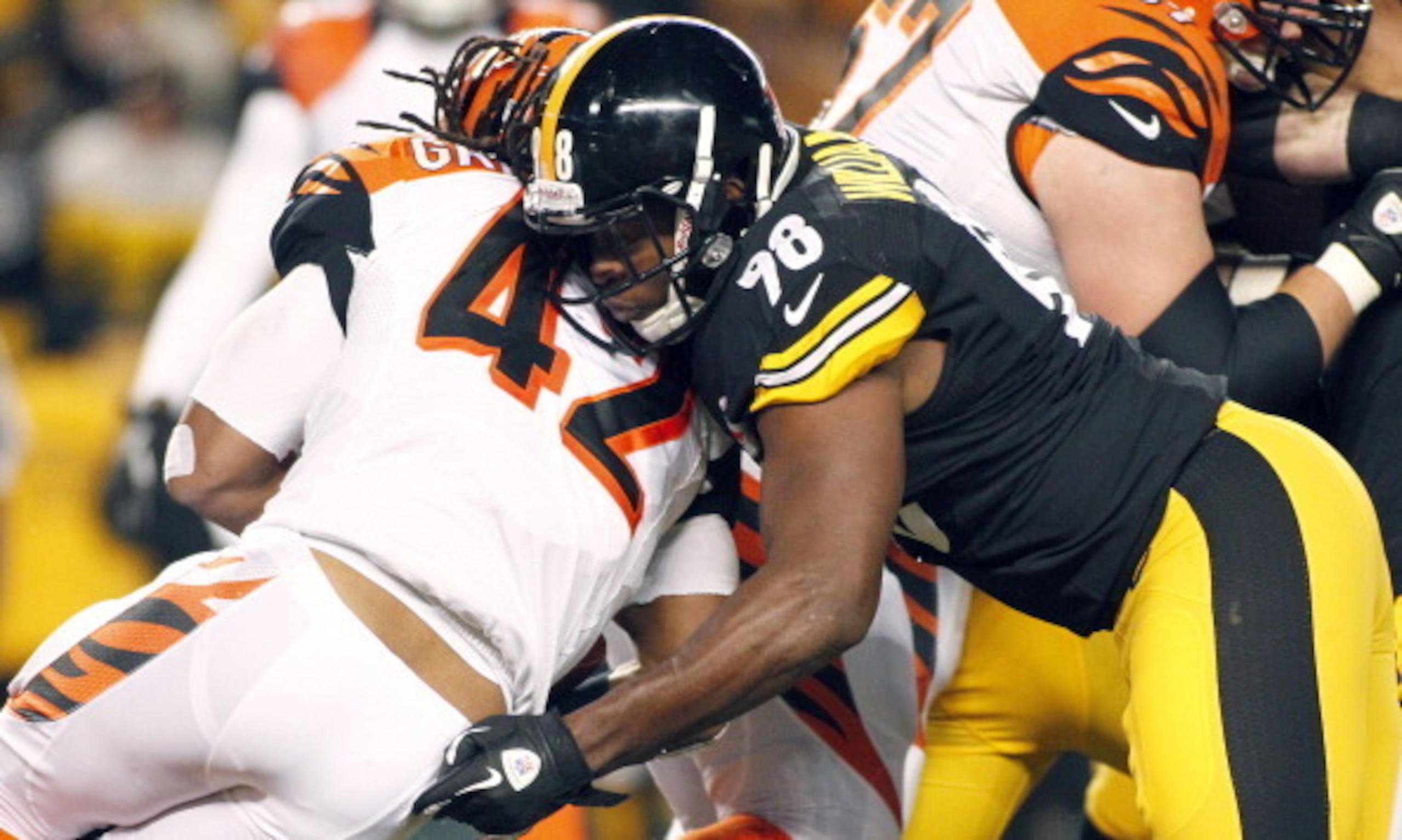
Run Defense
Vince Williams (6’1”, 250 pounds, one season) showed signs of being a good run defender in his first season. He used his hands well to create separation and leverage, and when he got to the ball, he was usually able to stop the ball-carrier in his tracks.
Pass Rush
Williams doesn't look like he's all that quick, but his looks can be deceiving. He has good length and fast feet. Still, he's much better suited in the middle of a scrum than he is on the edges chasing down a quarterback.
Coverage
For being a bigger, burlier linebacker, Williams displays nice footwork and agility in open space. He can flip his hips and get deep in the zone, though one would think Pittsburgh prefers to keep him closer to the line of scrimmage.
Tackle
Williams is a big linebacker who can bring the hammer. He'll need to work on getting his feet behind the tackle and following through on his hits, but he has a ton of promise.
Overall
In only his first season in the NFL, Williams impressed and showed signs of being a starting-caliber NFL linebacker. It helps that he's in a great system in Pittsburgh.
33. Nick Roach, Oakland Raiders
20 of 52
Run Defense
Although hesitant off the snap, Nick Roach (6’1”, 234 pounds, seven seasons) makes good contact once he gets to the ball-carrier. However, he doesn't show enough decisiveness getting to the point of contact. He lacks a crisp downhill first step and showed some timidness getting to the hole.
Pass Rush
Roach excels as a pass-rusher. He has the quickness and speed to quickly close the gap on the quarterback, and his athleticism allows him get a nice jump at the snap.
Coverage
Roach has the speed and agility to make plays in open space. He can open his hips and go downfield with a route, and he's quick and instinctive enough to get to the flats to defend a running back.
Tackle
He made a good number of tackles for Oakland (112), and he excelled when he was able to get his hands free and square up a runner. Too often, though, he was chasing a tackle down from the weak side after a nice gain.
Overall
Roach is an athletic linebacker who used his skills to his advantage in 2013.
32. Pat Angerer, Indianapolis Colts
21 of 52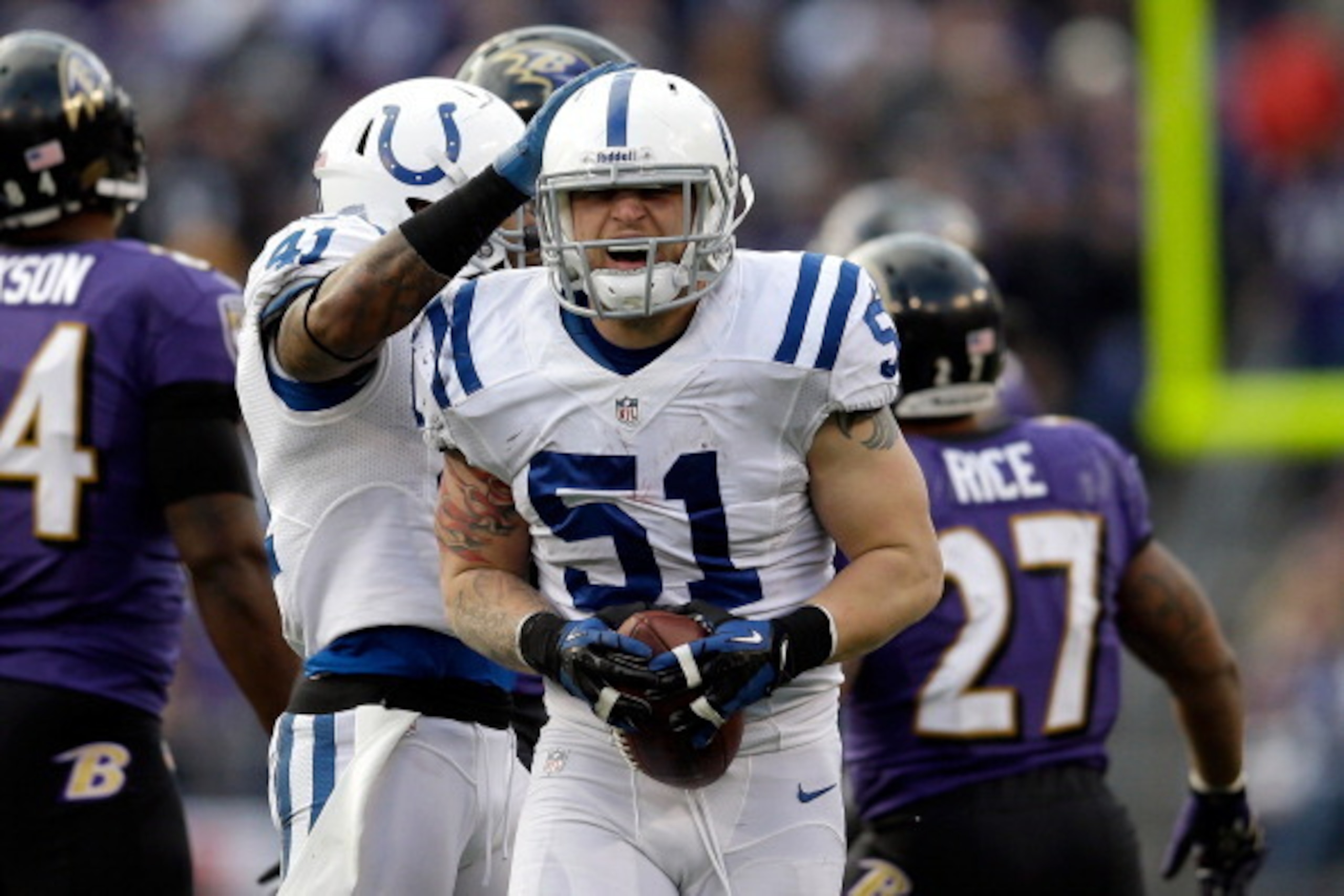
Run Defense
Pat Angerer (6’0”, 236 pounds, four seasons) wasn't particularly effective against the run in 2013, as he only notched double-digit tackles twice. He did a good job of flowing to the ball and scraping over blocks, and he uses his hands well to fight off blockers and keep his chest open.
Pass Rush
Angerer is not the player Indianapolis looks to send on the blitz. He doesn’t offer much as a pass-rusher and doesn’t possess the athletic fluidity to beat anyone to get to the quarterback.
Coverage
He has the speed and quickness to get out into the flats against a running back and is physical enough to jam a receiver or tight end going vertical through his zone. Angerer does a good job of keeping the ball in front of him.
Tackle
When Pat Angerer hits you, you know it. He's a vicious hitter with good form. He makes solid contact more often than not.
Overall
Angerer is a solid linebacker who can make plays with his speed and hard-hitting mentality.
31. A.J. Hawk, Green Bay Packers
22 of 52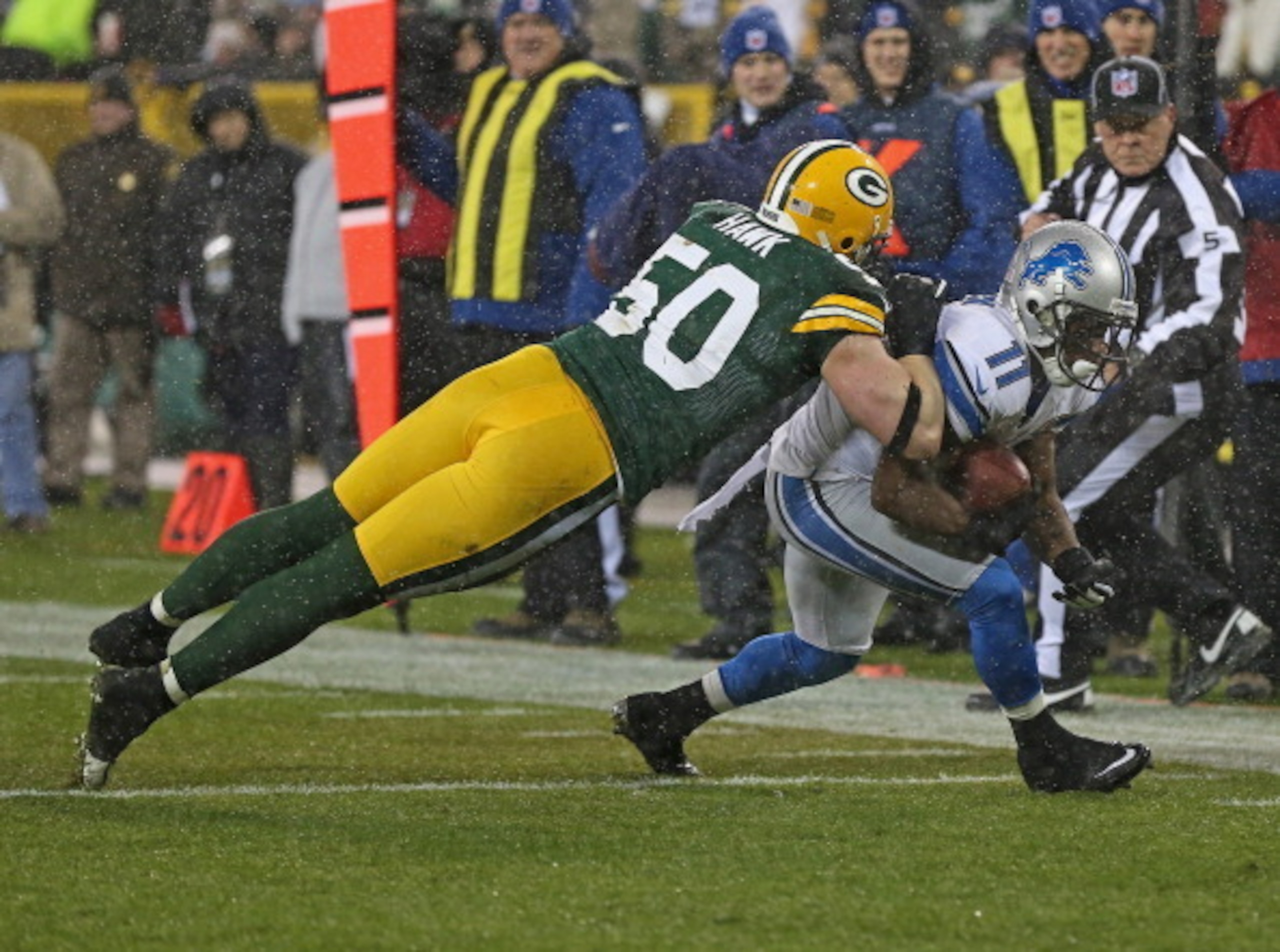
Run Defense
Much like we’ve come to see from him in the past, A.J. Hawk (6’1”, 247 pounds, eight seasons) was inconsistent against the run again in 2013. He's a veteran player who still plays the game at a high level, but he struggled to get off blocks at times. He doesn’t move well and struggles to make plays out on the edge.
Pass Rush
Hawk had the best sack year of his career, notching five, including three in one game. He's a great downhill linebacker with above-average closing speed and the patience to pick his gaps. When confined to a small area where he’s allowed to attack downhill, Hawk can make his presence felt.
Coverage
Hawk struggles at times to flip his hips and stay with vertical routes, and he shouldn't be trusted much in man coverage. That said, he has good instincts in coverage and can still make athletic plays on the football.
Tackle
Hawk has always been a good tackler, and that trend continued in 2013 with 118 combined tackles. He's a tough linebacker who isn't afraid to stick his nose into the chest plate of a defender, wrap him up and drive him back. He plays strong at the point of contact.
Overall
Hawk may not be the star he once was, and he can be frustratingly inconsistent. But he still finds ways to get the job done. If we were ranking leadership, he would receive high marks.
30. Brad Jones, Green Bay Packers
23 of 52
Run Defense
A converted outside linebacker, Brad Jones (6’3”, 242 pounds, five seasons) did a great job of putting himself in the right place in 2013. He's adept at moving laterally in pursuit. He struggled at getting his pads in front of him on tackles, though, and oftentimes had to rely on help.
Pass Rush
Jones has good speed and is able to close at the point of attack. He's a relentless pass-rusher who has a quick first step and is fast enough to shoot the gap.
Coverage
Jones is a solid veteran linebacker who knows what to look for and can generally keep plays in front of him. He's not the type of linebacker who can flip and run at a high level with tight ends or receivers, but he does his job and plays his zone relatively well. His lateral-movement ability allows him to cover the middle of the field well.
Tackle
Credit Jones for doing a good job of wrapping up and driving his feet. Even when he was unable to meet the ball-carrier at the point of attack, he was often able to get himself in on the tackle.
Overall
Jones was a solid linebacker for Green Bay last season. He wasn't a star, but he was usually effective and efficient.
29. Jamari Lattimore, Green Bay Packers
24 of 52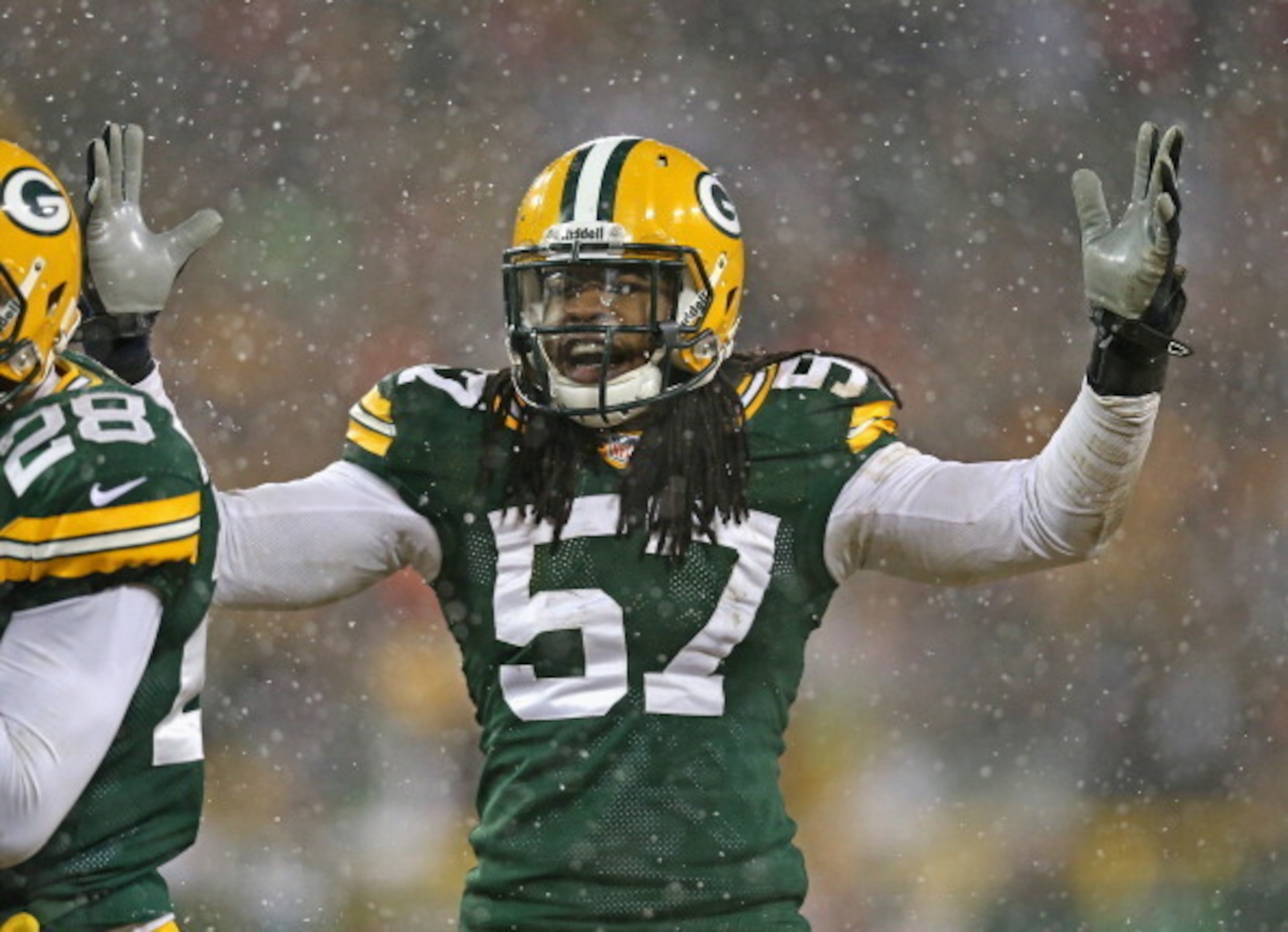
Run Defense
Jamari Lattimore (6’2”, 230 pounds, three seasons) shined for Green Bay when the Packers needed him to fill in due to injuries. He's not overly fundamental against the run, and he plays a bit too high when engaging with blockers, but he did a good job of running the lane as a weak-side defender and making strong tackles.
Pass Rush
Lattimore displayed good length and athleticism as a pass-rusher, and his speed helped him out a good deal as well. He picked up two sacks in 2013. One was when the pocket collapsed, and the other was because of his length and speed off the edge.
Coverage
His speed and length made him effective in coverage. Even when the ball wasn't thrown Lattimore's way, he was able to clog passing lanes and get out into the flats. The Packers utilized him as a pass-rusher more than anything else in obvious pass-rush situations, though.
Tackle
Lattimore had the speed and athleticism to get to the football, and he did make plays on the ball-carrier. He needs to work on not just running to tackles in pursuit but exploding downhill, using low leverage and driving backward through his tackles.
Overall
Lattimore was more than effective in spot duty for the Packers. In the best-case scenario, he's a great rotational player.
28. Jasper Brinkley, Arizona Cardinals
25 of 52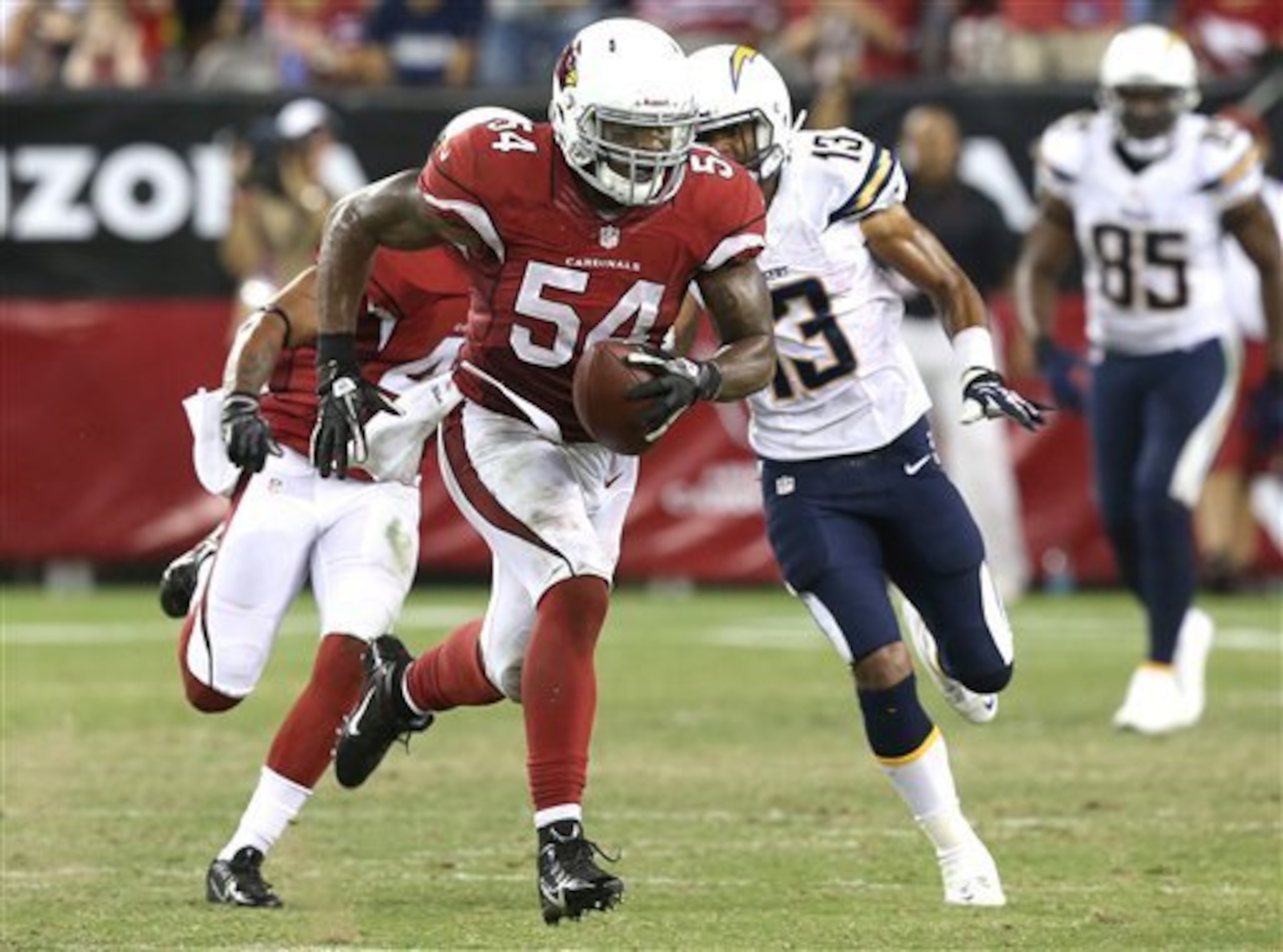
Run Defense
Jasper Brinkley (6'1", 252 lbs, five seasons) was never the aggressor against the run in 2013, though he did do a nice job of fighting blocks and stretching plays to the sideline. He'll need to work on not just engaging those blockers, but shedding them.
Pass Rush
Brinkley didn't get many opportunities to blitz, though he does have the raw ability to be a good option as a blitz linebacker. He seems to have the physical ability to beat blockers with his speed.
Coverage
He has agility and quickness, as well as speed in open space. That wasn't put to good use, though, as he seemed a bit overwhelmed in pass coverage. He doesn’t seem to read or react well to routes in his area.
Tackle
Brinkley did a nice job of getting low in his tackle and driving through, oftentimes wrapping up and trying to pick up the runner.
Overall
Brinkley will return to Minnesota next season. He played three games as a starter for Arizona while Daryl Washington was suspended. He did some nice things but may not be an every-down player in the future.
27. Jerrell Freeman, Indianapolis Colts
26 of 52
Run Defense
Jerrell Freeman (6’0”, 232 pounds, two seasons) was pushed around easily as a run defender. He displayed great quickness and ability to scrape over the top of blocks, but he was pushed back too often by stronger blockers and didn't show enough downhill aggressiveness.
Pass Rush
Freeman is a good pass-rusher who excels at causing trouble for quarterbacks. His speed and quickness come into play here, as he displays a quick first step and explosion across the line. He can shoot the gap or dip his shoulder off the edge. Once he gets near the quarterback, he has disruptive hands and good closing speed.
Coverage
Freeman has the speed to stick in the hip pocket of the receiver and also does a good job of getting his hands on the offensive player to alter the route. He seems to struggle more in zone situations when he has to find the player moving into his area.
Tackle
When Freeman makes contact, he's a powerful tackler who can stop a runner in his tracks.
Overall
Jerrell Freeman is a young player with plenty of upside. If he works on getting stronger against the run, he'll be a versatile and complete linebacker in the NFL.
26. Curtis Lofton, New Orleans Saints
27 of 52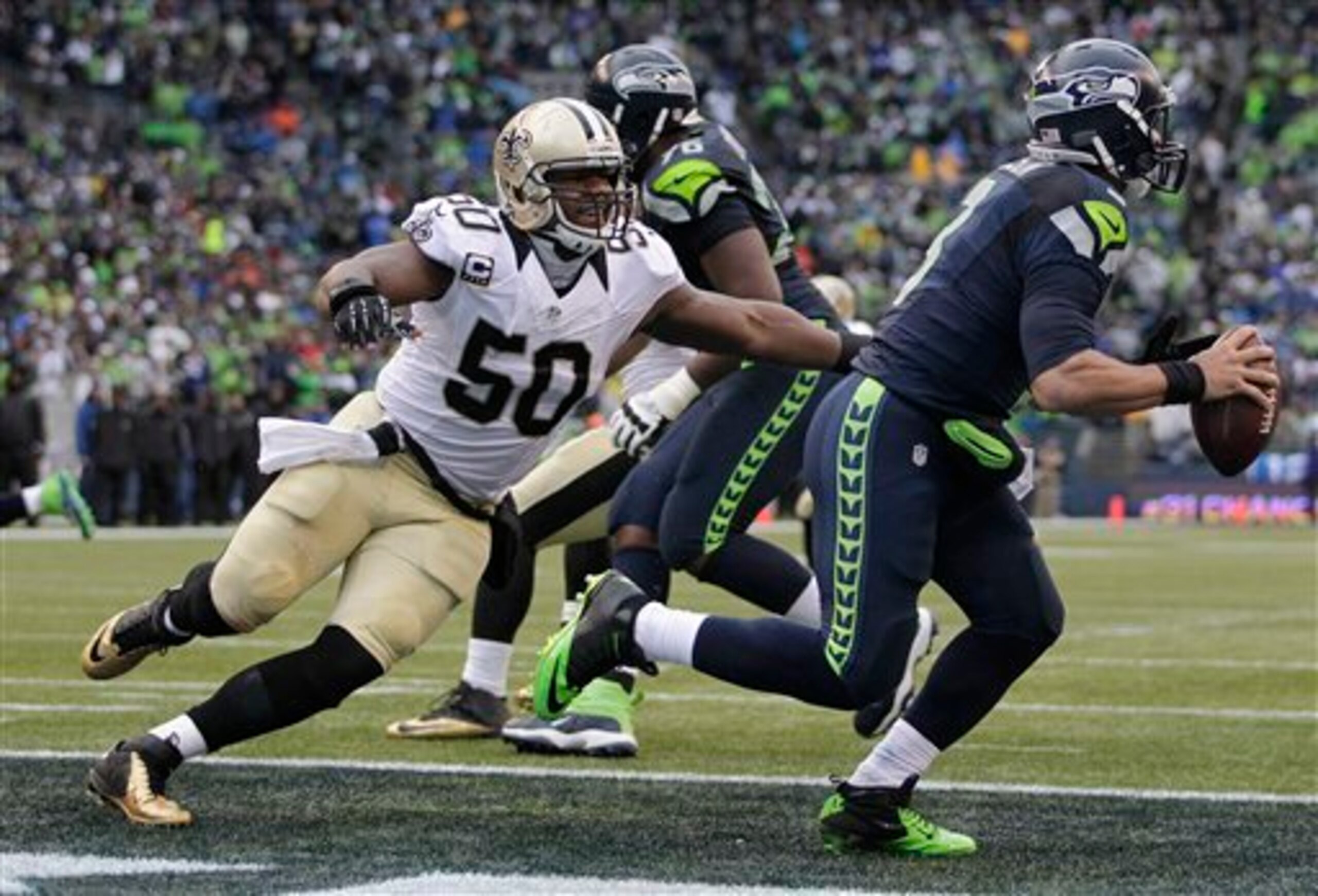
Run Defense
An instinctive run defender, Curtis Lofton (6’0”, 241 pounds, six seasons) has a quick first step and thinks downhill with his feet like all good linebackers should. He does a good job of extending his hands to keep blockers off his pads, but he could improve when it comes to ripping and getting off blocks. Lofton is good at scraping over blocks and getting into the running lane, but he needs to meet the runner with more force and forward momentum.
Pass Rush
New Orleans used Lofton in coverage a lot more than as a pass-rusher, though he was able to notch two sacks in 2013. He is a smart blitzer who displays patience and veteran awareness when going after the quarterback. He's able to find gaps in the line and make an offense pay.
Coverage
Lofton does a nice job of opening up his hips and walling off receivers going through his zone. He may not have the speed to play true man coverage on a tight end, but he plays zone at a high level. He has the agility to flip his hips and run to get to his assignments, and he also does a nice job of keeping things in front of him.
Tackle
Lofton will make solid contact with a ball-carrier and is especially proficient at rallying to a tackle in open space. He breaks his feet down and tackles with a solid base while also bringing his hips up and through. A few tackles in which he failed to use the proper force and momentum prevent him from a better ranking.
Overall
Lofton had a solid but not overwhelmingly 2013 season. He did a little bit of everything for New Orleans and played his role.
25. Jameel McClain, Baltimore Ravens
28 of 52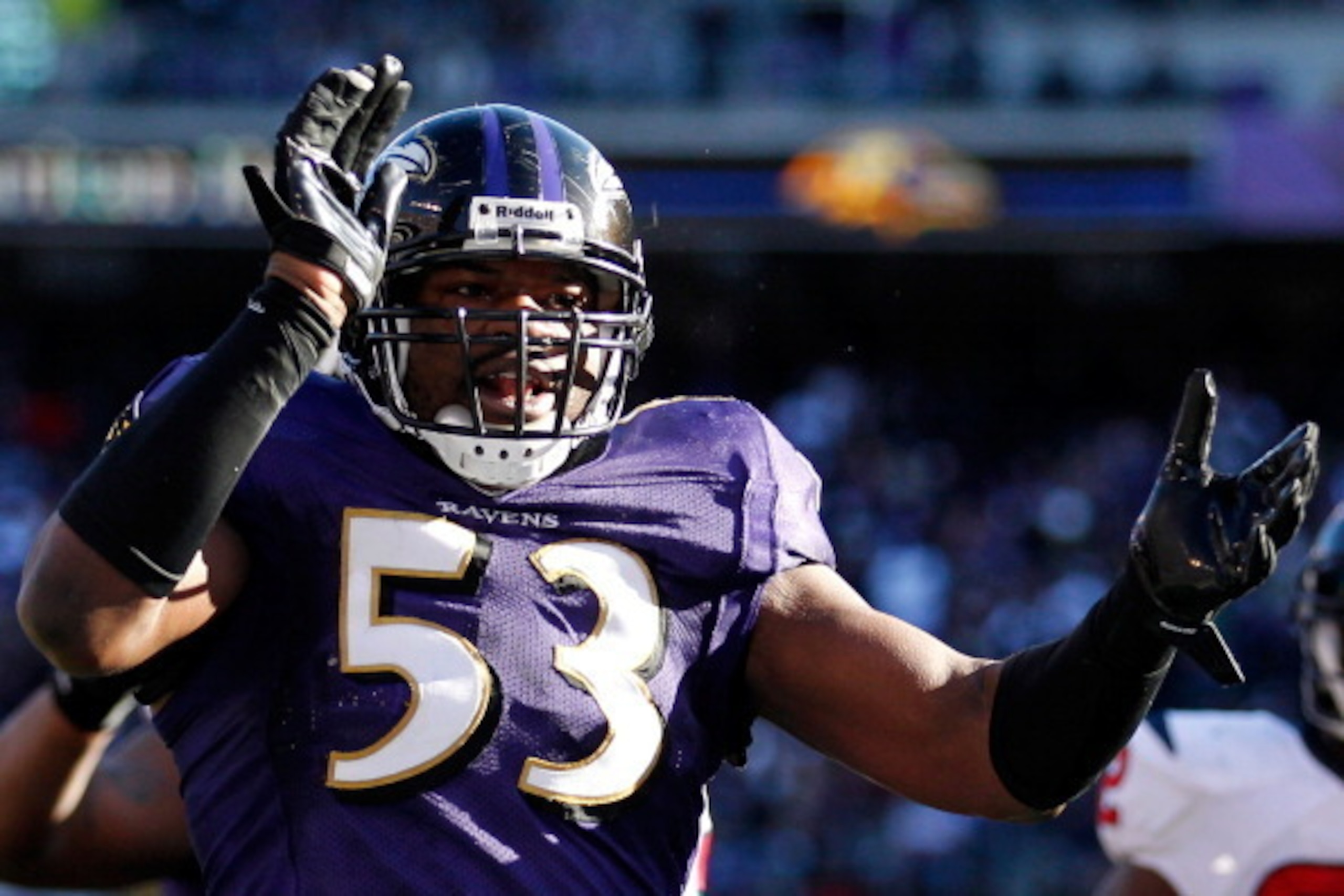
Run Defense
In just 376 snaps in 2013, Jameel McClain (6’1”, 245 pounds, six seasons) showed us a lot of what we’ve seen from him over the past couple of seasons—which would be that he’s not an effective run-stuffing inside linebacker. That’s not his role, and that’s not going to be his role. He struggles to locate ball-carriers inside the box, and he looks apprehensive to “sort through the trash” to find the ball-carrier and finish the play. He looks much more willing to close downhill on backs trying to stretch plays to the outside.
Pass Rush
McClain is better suited when he’s told he has to run downhill to make a play, such as when he’s asked to blitz. But he’s a better fit dropping in space and setting the back end of the defense in coverage.
Coverage
McClain drops well in zone coverage and displays a good ability to break on out routes and shallow crossers in his area. He doesn’t have the most fluid lateral agility but recognizes routes and breaks well coming forward.
Tackle
McClain breaks down nicely in space when approaching a ball-carrier at the second level of a defense. He struggles inside the box to shed blocks and sort through traffic to make plays in run defense. But in general, McClain is a solid tackler who can be trusted to bring down ball-carriers in big situations when put on the spot.
Overall
McClain was seen as the heir apparent to Ray Lewis, and that’s just not in his game right now. He moves well in space but doesn’t provide that thump in the run game that sets the tone for the once-vaunted Ravens defense. Having left Baltimore for the New York Giants, he’s an athletic linebacker who needs substantial work on his ability to recognize the run and shoot through gaps to make plays near the line of scrimmage.
24. Reggie Walker, San Diego Chargers
29 of 52
Run Defense
Your prototypical athletic coverage linebacker, Reggie Walker (6’0”, 244 pounds, five seasons) doesn’t offer much in the way of run defense. He’s not built to shed blocks or make plays in traffic against the run. However, he possesses the speed to get out on the edge and get to running backs stretching plays outside the numbers. But inside the box, Walker is a liability against a good, old-fashioned dive or isolation play coming right at him.
Pass Rush
Walker isn’t asked to get after the quarterback and is best suited when he’s out in space in the middle of the field. He does possess the necessary athletic ability, but there are other players on the Chargers roster who are better suited to bring pressure for their defense.
Coverage
Walker displays good hips and the ability to turn and change direction with ease while out in space in zone coverage. He can line up in man coverage and breaks well on out routes, while also getting the edge when responsible for the flat.
Tackle
Walker is a solid tackler who targets ball-carriers well in space. He’s trustworthy to make a play in space when put in a one-on-one situation, having missed just three tackles in more than 500 snaps in 2013.
Overall
At this point, Walker is simply a coverage linebacker for the Chargers defense. When asked to do more than that, especially inside the box, the results have not been good.
23. David Harris, New York Jets
30 of 52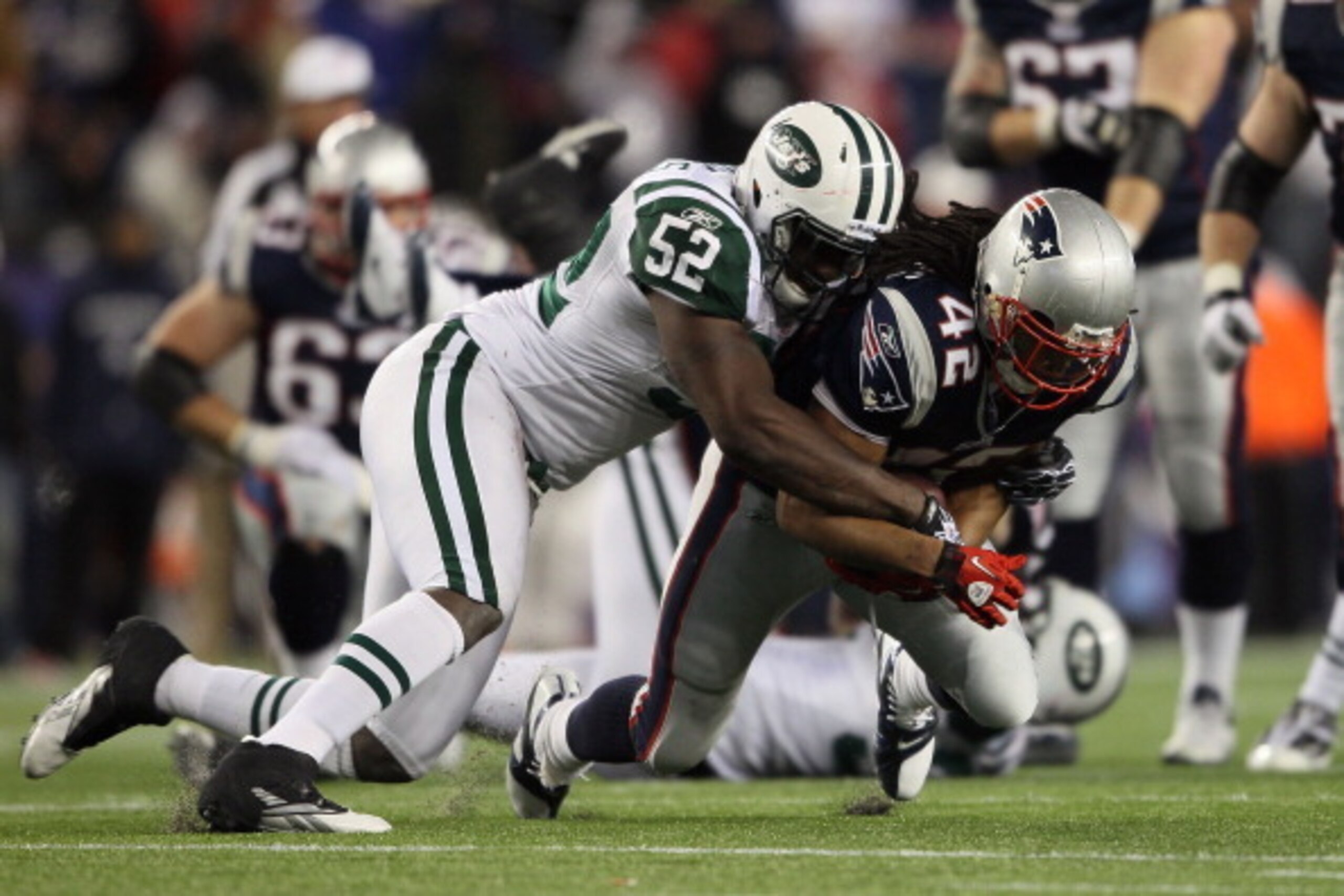
Run Defense
Moving up from No. 29 last year, David Harris (6’2”, 250 pounds, seven seasons) doesn’t have the same burst he once did when flying downhill in the run game. However, he provides enough to warrant snaps each week. He’ll never be considered a thumper at inside linebacker but still has enough athleticism to make plays inside the box. He’ll struggle to disengage blockers consistently and struggles to make plays outside the numbers, but there’s enough ability inside the box that he’s still bringing something to the table.
Pass Rush
Harris doesn’t have enough burst to be considered a threat to rush the passer. It’s not something he’s often asked to do.
Coverage
Harris doesn’t move as well laterally as he once did while out in space, and although he breaks well on underneath routes and passes to the flat, the fading athleticism is affecting his effectiveness against the pass.
Tackle
Harris missed 13 tackles in 2013, which ties a career high. He struggles to locate ball-carriers in space and at times is too late to recognize the opportunity to make a play.
Overall
Harris is one of those guys who will seem to always be around. He still provides the Jets just enough of everything that he’ll find his snaps, although his reputation still continues to exceed his play.
22. Spencer Paysinger, New York Giants
31 of 52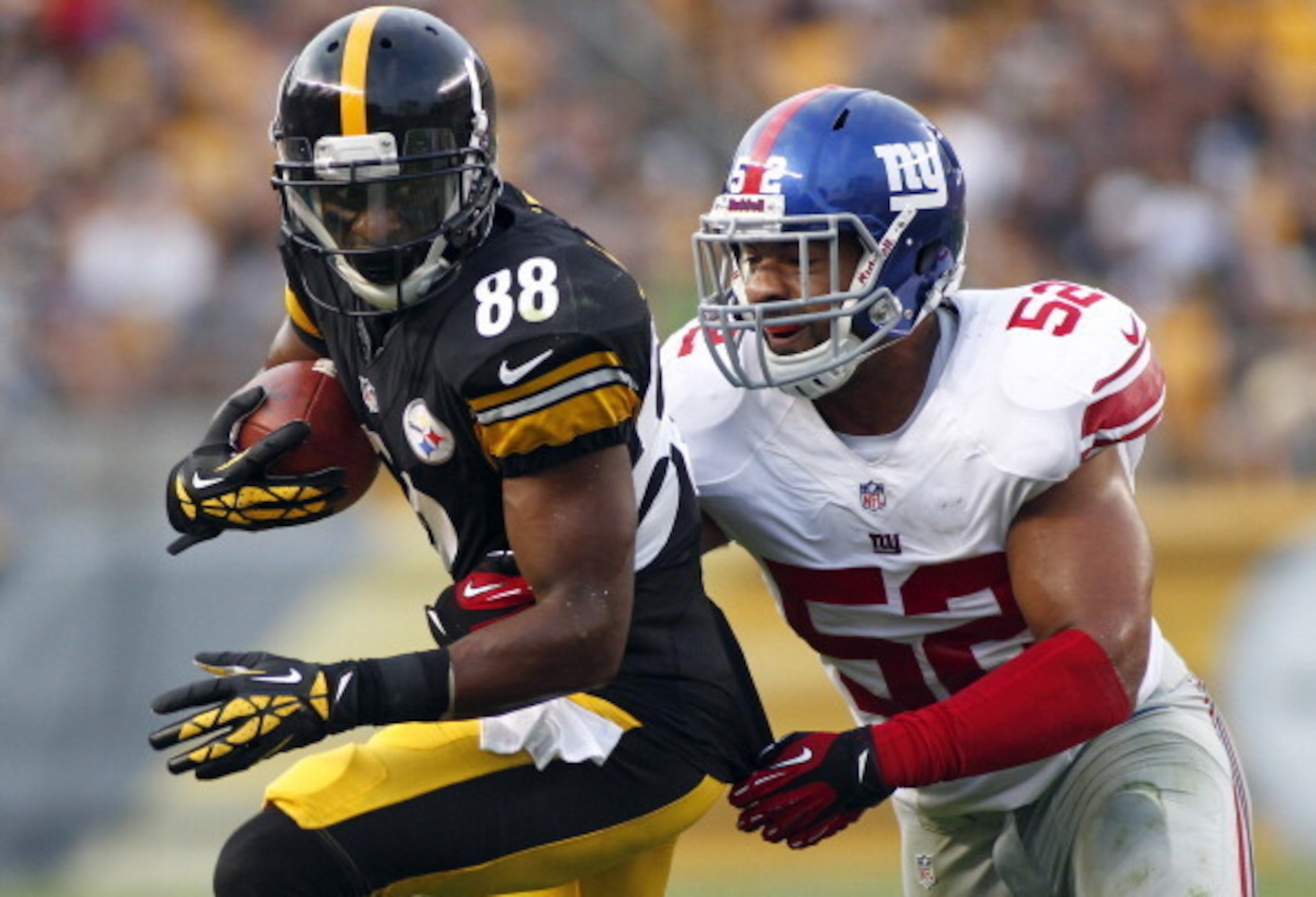
Run Defense
After not playing much in 2012 because of injury, Spencer Paysinger (6’2”, 236 pounds, three seasons) found a nice role on the Giants defense last season. Paysinger moves well but doesn’t have the physicality to be considered a strong run defender. It’s not what he’s built for and not where he’s going to make an impact. He’ll run around blocks more often than fighting through them, and he doesn’t display the ability with his hands to shed blocks to make plays at the second level.
Pass Rush
Despite solid athleticism in space, Paysinger offers little as a pass-rusher. It’s not a big part of what the Giants need him to provide, but he does have athleticism in case it’s ever an option for them.
Coverage
Paysinger can match up with running backs out of the backfield and shows a good awareness in zone coverage. He shouldn’t be counted on to stop tight ends down the seam one-on-one, but he provides enough athleticism to not worry about getting picked apart down the middle of the field.
Tackle
Paysinger missed just three tackles in more than 700 snaps in 2013. When pursuing the run, he runs through contact, keeps his head up and displays good angles when shooting through the lanes.
Overall
Paysinger is a nice option for the Giants defense. As teams try to spread them out more and more, having players like Paysinger allows defensive coordinators a little freedom when scheming against three- and four-receiver looks.
21. Jon Beason, New York Giants
32 of 52
Run Defense
Moving up from No. 28 last year, Jon Beason (6’0”, 235 pounds, seven seasons) finally stayed healthy for the majority of a season. Playing more than 300 snaps for the first time since 2010 (804), Beason once again showed that he’s best suited inside the box playing versus the run. He’s physical inside the box and does a good job of keeping his pads square upon contact.
Pass Rush
Beason is a player who provides nothing more than an occasional delayed blitz, and it’s more effective due to design than skill.
Coverage
Beason is stiff in coverage and doesn’t turn and move well when dropping in zone coverage. He is slow to react and is easily manipulated by quarterbacks. He will allow players in his area to catch the ball before he’ll react.
Tackle
Beason is still a solid tackler after seven seasons in the NFL. He’s a force upon initial contact and uses his frame well when initiating contact with a ball-carrier. Beason is the kind of player whom you’ll remember after he hits you.
Overall
Beason is another veteran player who is at the point in his career where he’s not going to offer you much in space but will provide adequate run-stopping ability in the middle of your defense.
20. D'Qwell Jackson, Cleveland Browns
33 of 52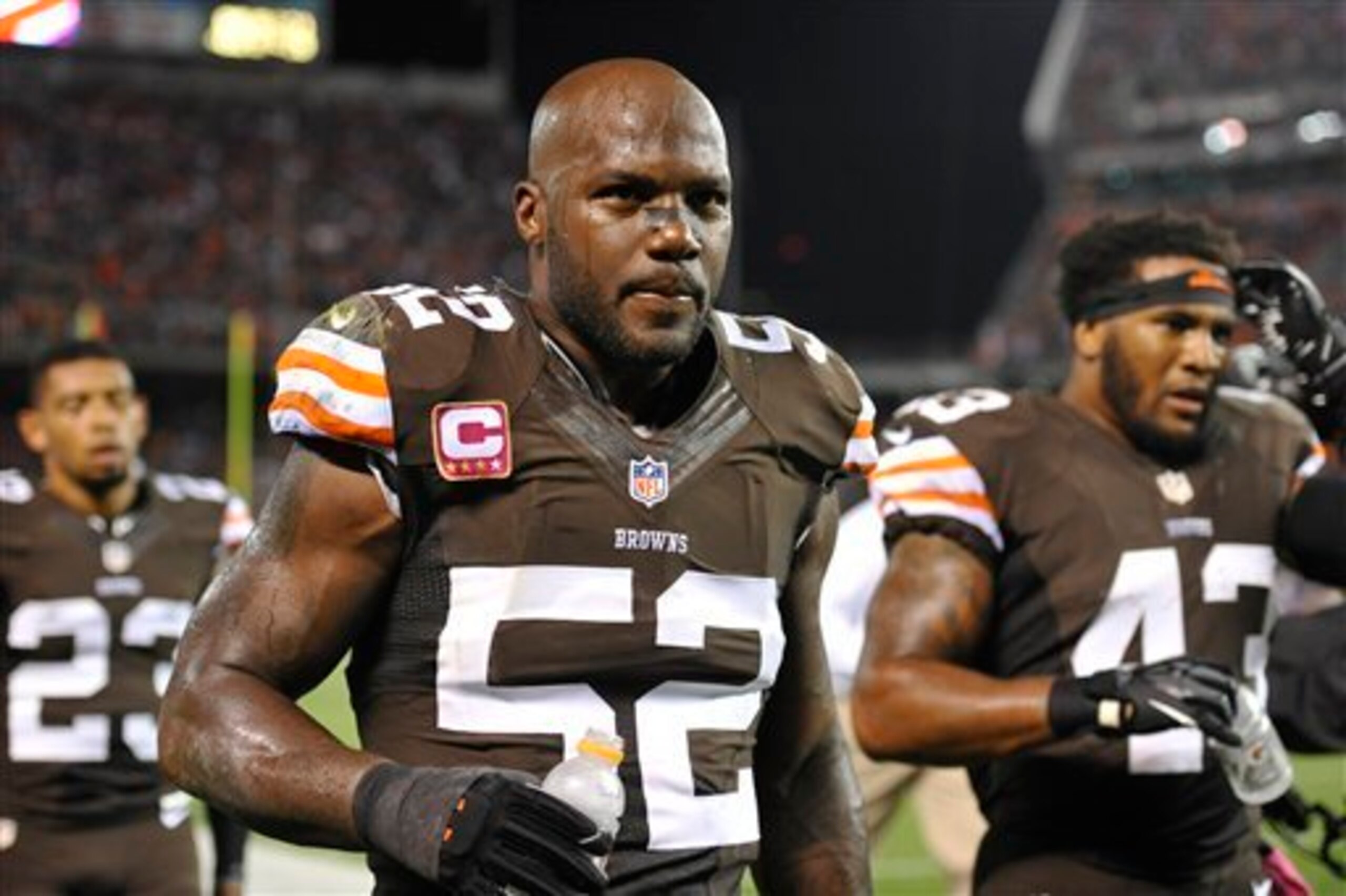
Run Defense
A veteran inside linebacker, D’Qwell Jackson (6’0”, 240 pounds, eight seasons) continues to be a liability against the run. Jackson doesn’t display the physicality to make plays when he has anything but a free lane to the ball-carrier. He struggles to “sort through the trash” when inside the box and diagnosing plays in the run game. He’s usually a step behind reading the run and will allow blockers to get on him at the second level.
Pass Rush
Jackson had 12 quarterback hurries for the Browns defense in 2013. Although he’s not asked to get after the quarterback often, Jackson has the athleticism to get downhill and disrupt a quarterback in the pocket.
Coverage
What Jackson lacks in run defense he makes up for in pass coverage. He sinks in zone coverage well and opens his hips and gets deep in his drops with relative ease. He can track a receiver coming through his area while dropping at the same time and breaking on a route, which is an underrated skill for inside linebackers in coverage.
Tackle
Jackson is still one of the surest tacklers in the NFL at linebacker. He wraps and drives through a ball-carrier and can be trusted one-on-one to make the play.
Overall
Jackson, who signed this offseason with the Indianapolis Colts, is what he is at this point in his career. While he’s not going to be mistaken for a run-stuffing inside linebacker, his athleticism in space and ability to be counted on to make tackles will continue to serve him well for the Colts next season.
19. Vincent Rey, Cincinnati Bengals
34 of 52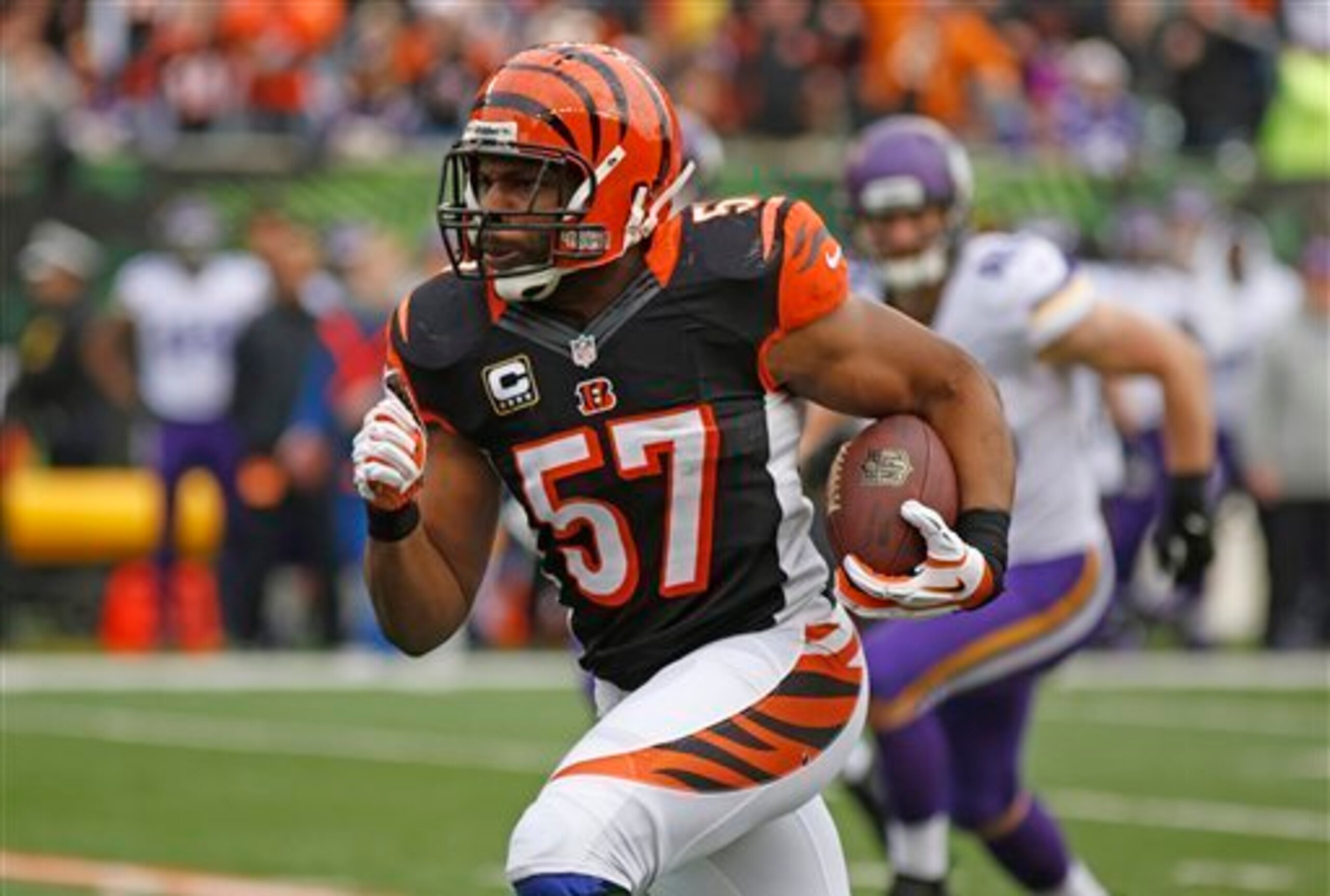
Run Defense
Despite playing just 353 snaps last season for the Bengals defense, Vincent Rey (6’2”, 250 pounds, four seasons) picked up 36 solo tackles, which is more than his previous three years combined (24). Rey moves well when headed downhill and filling gaps in the run game. He also displays an ability to shed blocks at the second level and make tackles. He displays good quickness when getting to the edge, and for a larger inside linebacker, he moves better than you’d expect.
Pass Rush
Rey displays an ability to get after the quarterback when asked, often on delayed blitzes from his inside linebacking position. He displays good burst when coming downhill and closes well on quarterbacks and ball-carriers.
Coverage
Rey shows good athleticism when in space, especially considering his size at 250 pounds. He opens and runs well but is better suited coming downhill to make a play in the flat or on shallow crossers coming across his face.
Tackle
Rey packs a pretty good punch upon contact with a ball-carrier or blocker. He can forget to wrap up and lead with his shoulder only to bounce off a ball-carrier, but he displays enough athleticism that with more snaps and experience, he should continue to develop and provide quality snaps for any defense.
Overall
Rey is a good coverage linebacker who breaks well coming downhill in the run game. He will continue to lean on his athleticism in space moving forward.
18. Erin Henderson, Minnesota Vikings
35 of 52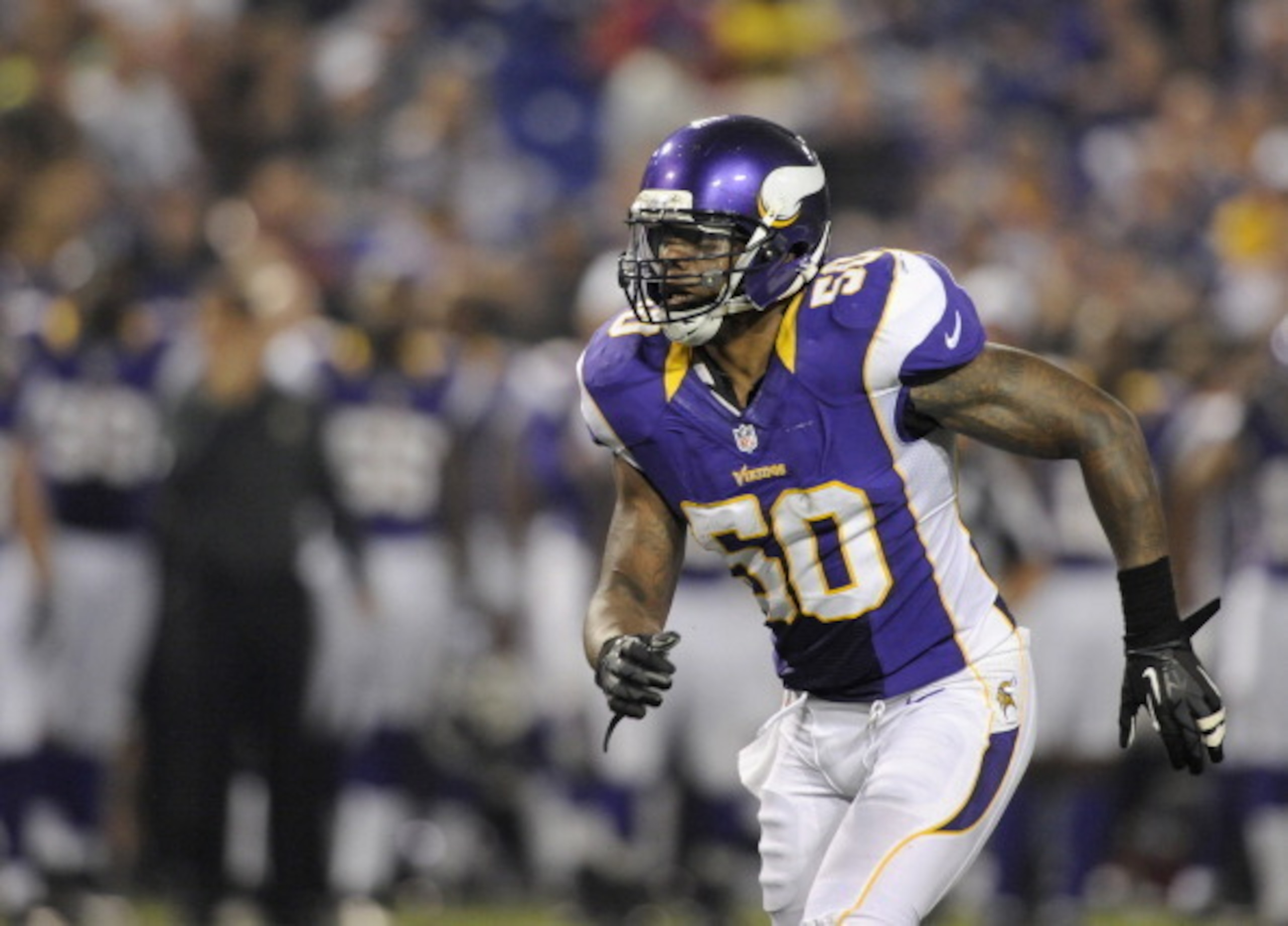
Run Defense
A solid but not spectacular player across the board, Erin Henderson (6’3”, 244 pounds, six seasons) provides plenty of size for a middle linebacker. He is physical upon contact but is often late to read a run and takes too many false steps before committing to a lane and angle.
Pass Rush
Henderson is a savvy blitzer who times his opportunities well when asked to get after the quarterback. He delay-blitzes most often when pass-rushing and has the frame and leverage to blow through any attempted block by a running back.
Coverage
Henderson is a little stiff in the hips and doesn’t turn and run well in space. He is adequate when breaking on routes underneath him, but he is a borderline liability when asked to turn and move laterally in space while in coverage.
Tackle
Henderson squares his shoulders well upon contact and understands leverage at the point of attack. He uses his size and frame well to stop defenders and finished in the top one-third in the NFL in stops for inside linebackers last season (112 combined tackles).
Overall
Henderson is a solid player. He’s not elite or special in any one category, but he’s strong across the board.
17. Josh Bynes, Baltimore Ravens
36 of 52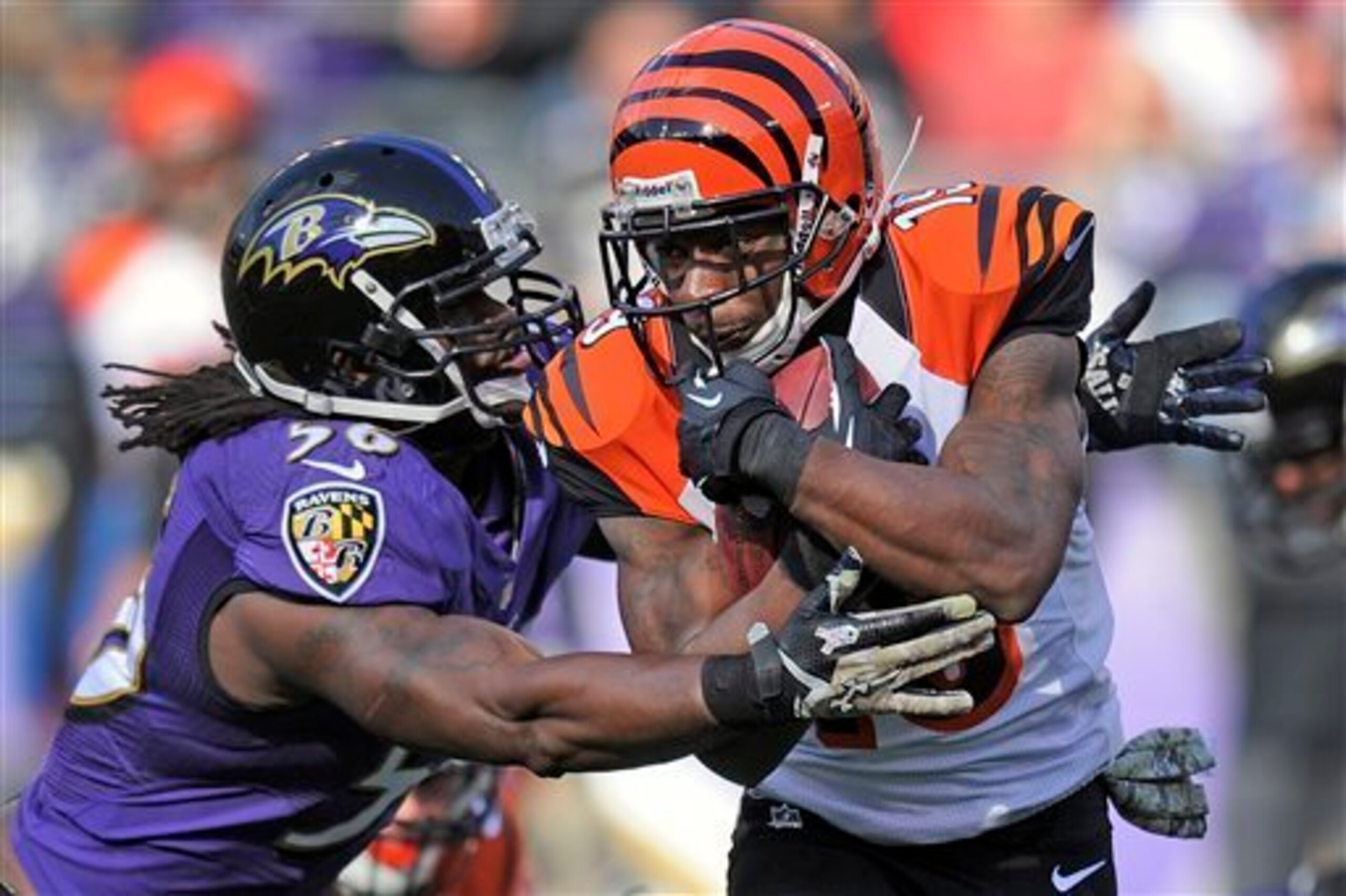
Run Defense
Despite notching just 465 snaps last season, Josh Bynes (6’1”, 240 pounds, three seasons) displayed the same athletic ability we’ve come to know from him. He closes well through gaps and has the speed to meet ball-carriers outside the numbers who are trying to get the edge.
Pass Rush
Possessing natural athletic ability in space for a linebacker, Bynes shows fluidity in his movements and provides a nice blitzing option either up the middle or off the edge.
Coverage
Bynes possesses great initial quickness when breaking on routes. He anticipates routes well and has the athleticism to make plays on those recognitions.
Tackle
Bynes is a solid tackler who drives through ball-carriers and uses his speed well upon initial contact, not slowing down with his above-average speed before driving through an offensive player.
Overall
All linebackers who have the ability to play in space are going to have roles on any NFL team. Bynes may be a part-time player on paper, but his value with these pass-happy offenses taking over is known by those who have to scheme ways to defend them.
16. Wesley Woodyard, Denver Broncos
37 of 52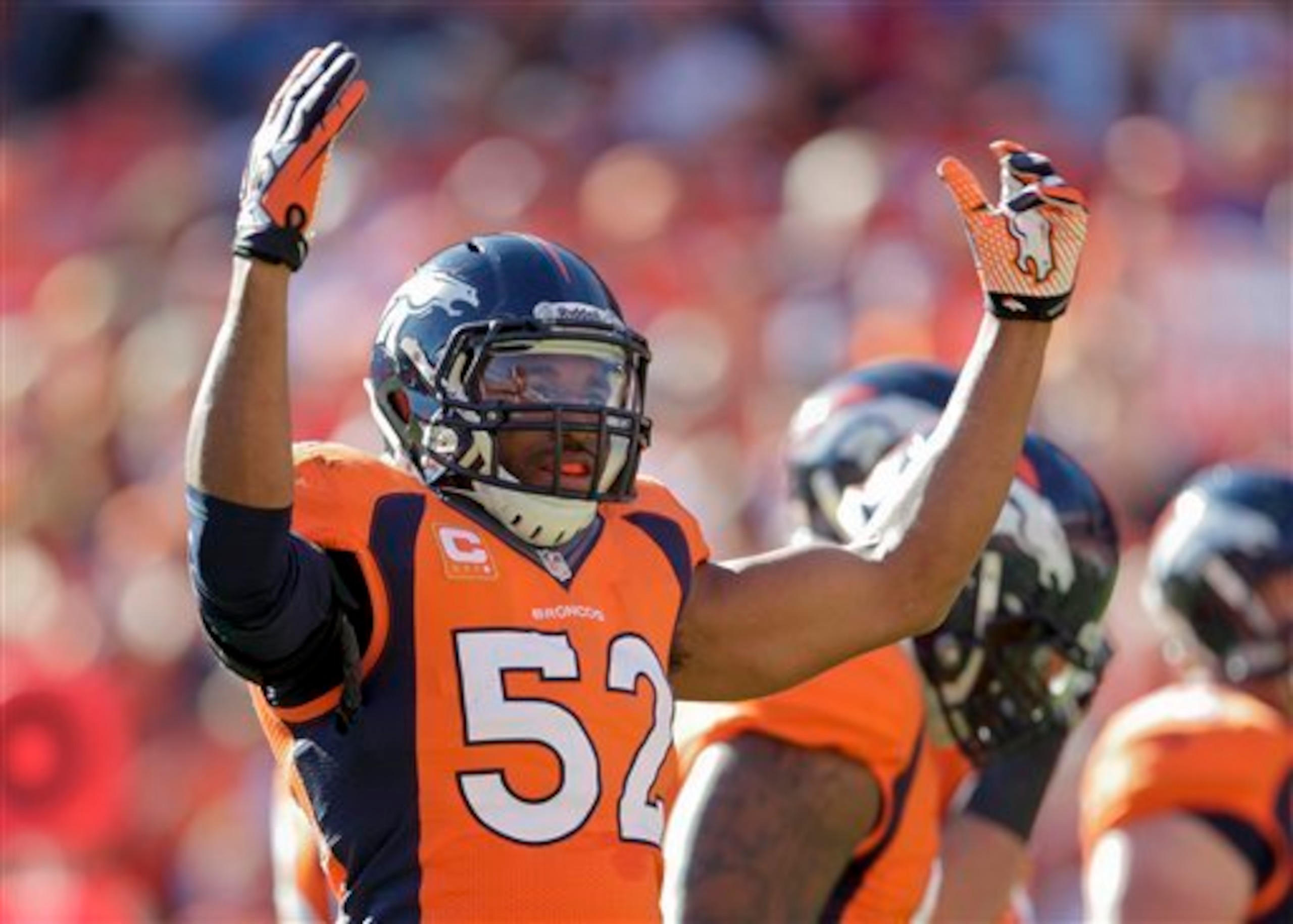
Run Defense
Wesley Woodyard (6'0", 233 lbs, six seasons) isn’t a big, powerful linebacker who runs through blockers. Instead, he uses his speed to shoot through gaps and attack ball-carriers. Woodyard is quick to react to running plays and has the athleticism to play from sideline to sideline.
Pass Rush
Woodyard has the speed to run through gaps, but he plays too tall and doesn’t have the explosiveness to beat blockers as a pass-rusher.
Coverage
Although he is a talented coverage linebacker, Woodyard didn’t have the best of seasons in 2013. He was regularly given tough assignments in man coverage that resulted in him being beaten too often.
Tackle
He isn’t a big hitter, but he has long arms and plays with good technique. Woodyard’s closing speed allows him to be effective in space.
Overall
Woodyard, who signed this offseason with the Tennessee Titans, was relegated to a contributing role in Denver during the second half of the season. He showed off a lot of talent when playing in a full-time role, but his inconsistency was a major issue.
15. Daryl Washington, Arizona Cardinals
38 of 52
Run Defense
After coming in as our No. 3 inside linebacker two seasons ago, Daryl Washington (6’2”, 238 pounds, four seasons) drops all the way to No. 15 this time around. Washington’s down year had much to do with his struggles against the run. Struggling with angles and pursuit, Washington didn’t display the same ability to maneuver through traffic to make plays against the run.
Pass Rush
Washington also didn’t make the same impact in rushing the passer as he had in the past. He struggled to disengage blockers and still doesn’t possess the skill set to beat them once engaged—either against the run or when rushing the passer.
Coverage
One thing Washington didn’t lose this past season was his ability make plays in space while in coverage. He reads passes in front of him extremely well and is reliable when put in space against an offensive player with the ball in his hands. He breaks well on the ball and recognizes routes coming across the middle.
Tackle
While he has the speed and athleticism to be near the ball on every play, Washington can put himself in bad positions to make tackles by overpursuing the play and not playing inside-out when attacking a running back to the outside.
Overall
Washington will need a bounce-back year in 2014, especially after the Cardinals just gave him a $10 million option bonus as part of the deal he signed in 2012. The Cardinals obviously believe in him, and it’ll be up to him to prove them right.
14. Daryl Smith, Baltimore Ravens
39 of 52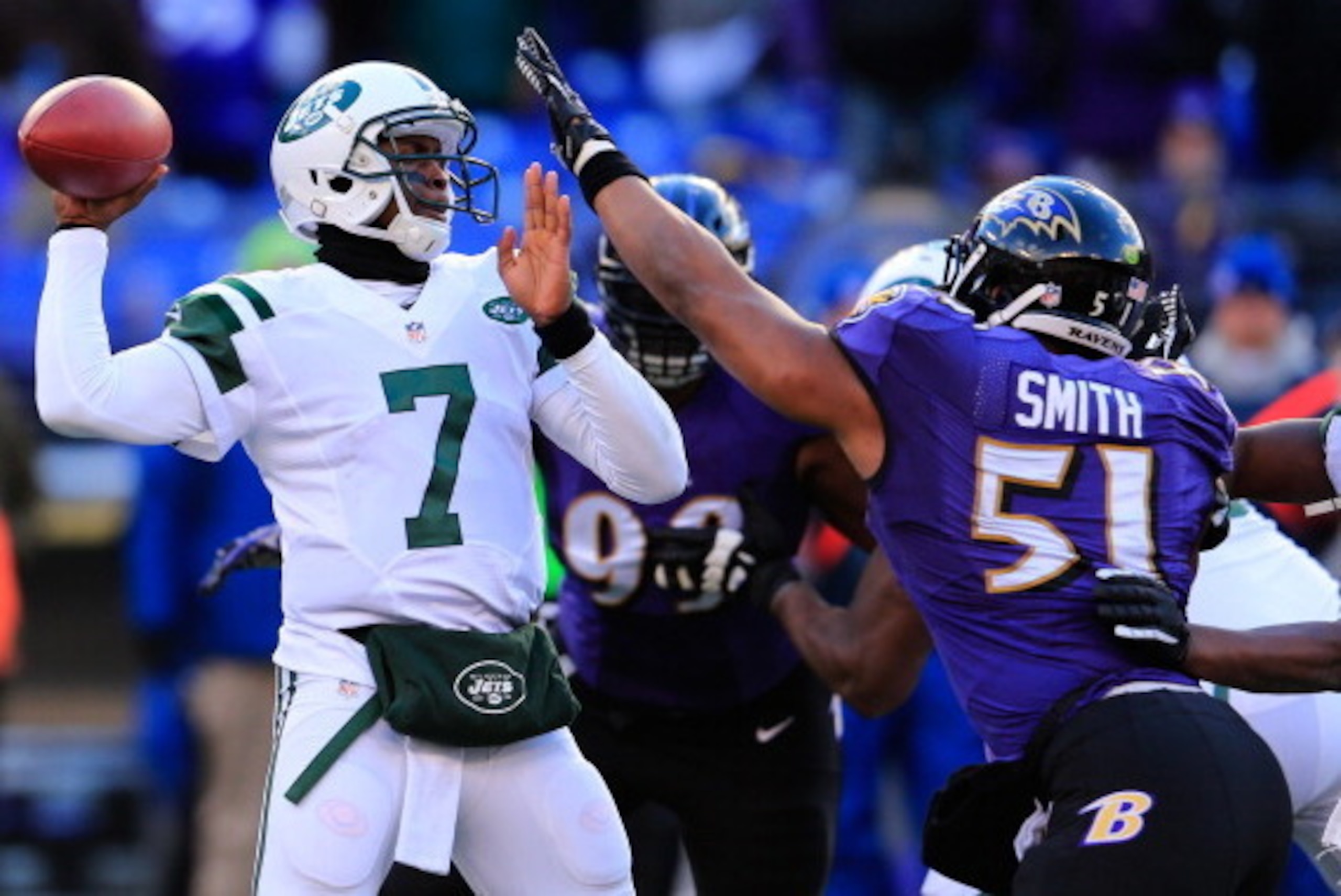
Run Defense
Only two players were given lower scores against the run this season than Daryl Smith (6'2", 248 pounds, 10 seasons), and yet he still finds himself in the top 14. There are a lot of words one could use to describe Smith as a linebacker, but physical wouldn’t be among the first few. He’s often late to recognize the run and doesn’t show the physicality to shed blocks well enough to be a factor when he’s late to read a run.
Pass Rush
Smith moves well and has the athletic ability to disrupt plays anywhere on the field. Any impact he makes is a direct result of speed and quickness, not beating a block with physicality. He’s often late to read plays, so sending him downhill in getting after the passer is a good way to take advantage of his closing abilities.
Coverage
Smith has great hips and can turn and run the seam with a tight end or get out to the flat in coverage as quickly as any linebacker in the NFL. It’s hard to find inside linebackers who can do both.
Tackle
Smith may be a bit on the finesse side of the position, but he’s still a sure tackler. He uses that speed well and consistently runs through and wraps up ball-carriers on initial contact. Smith missed just seven tackles in more than 1,000 snaps for the Ravens defense in 2013.
Overall
Just this offseason, Smith signed a new four-year deal with the Ravens for more than $13 million, including $3.5 million guaranteed. It’s a solid deal for both the player and team. He provides an athletic player to cover ground and help combat these spread-happy offenses in the AFC.
13. Akeem Jordan, Kansas City Chiefs
40 of 52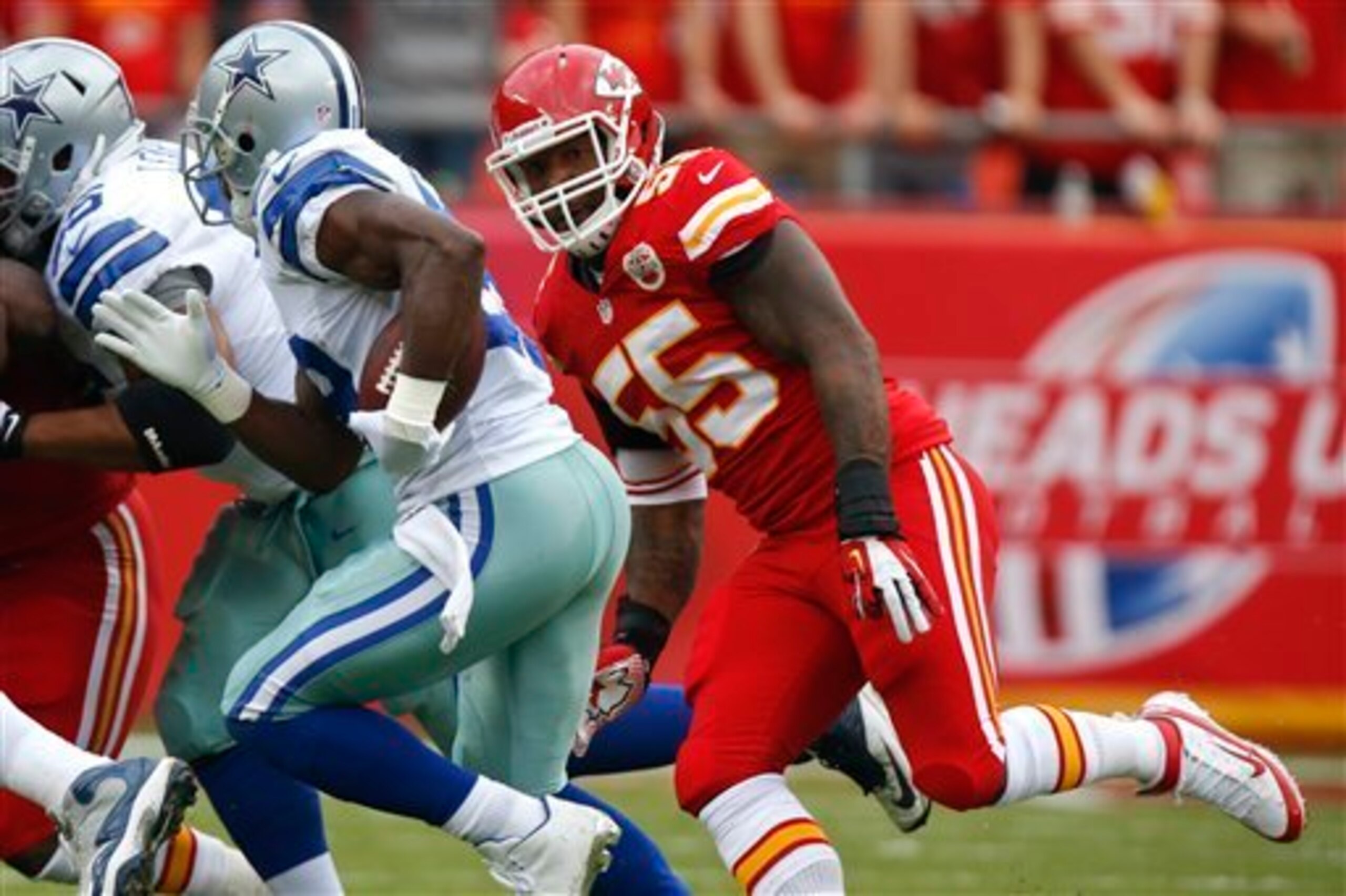
Run Defense
After playing for the Kansas City Chiefs in 2013, Akeem Jordan (6’1”, 230 pounds, seven seasons) took his talents to Washington. Your prototypical downhill inside linebacker, Jordan excelled on plays running forward but struggled when asked to move laterally. Having the luxury of playing behind space-eater Dontari Poe, Jordan was able to shoot gaps and lanes without having to maneuver around defensive linemen at the second level.
Pass Rush
Jordan wasn’t often asked to get after the quarterback in defensive coordinator Bob Sutton’s scheme for the Chiefs, but it wasn’t a task that fit his skill set either. His athletic strength fits more with taking on blockers and making plays inside the box in the run game.
Coverage
Not asked to play much in space, Jordan did read the middle of the field well. He’s limited by his range on plays to the flat, but he displayed the awareness to make the easy plays and not be a complete liability on the field as a run-first defender.
Tackle
Jordan is a physical downhill player who takes on contact and runs through ball-carriers. He’s not afraid to lower his shoulder and take the path of most resistance if that’s the way to make a play.
Overall
As a part-time player for the Chiefs defense, Jordan was put in the best possible situation to succeed given his skill set. With teams spreading defenses out more and more, Jordan was often the linebacker coming out in dime situations. Still, he will find his way onto the field for several more years, even in just a limited role.
12. Nigel Bradham, Buffalo Bills
41 of 52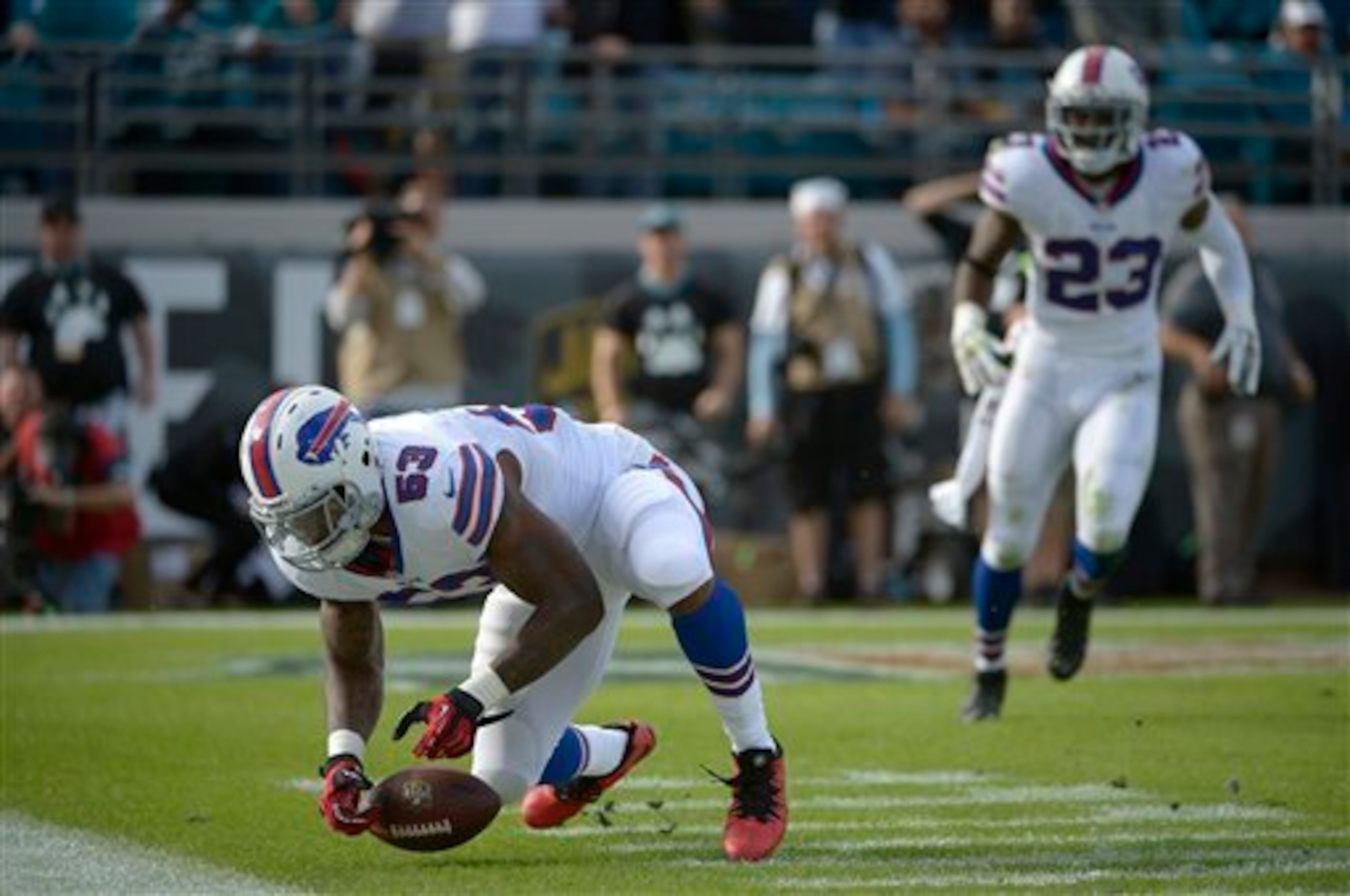
Run Defense
Coming on late in the season for the Bills defense, Nigel Bradham (6’2”, 241 pounds, two seasons) showed some ability as a weak-side linebacker when given the opportunity. Despite playing just 288 snaps in 2013, Bradham is a savvy run defender who maneuvers well through traffic.
Pass Rush
Bradham doesn’t offer much in the pass-rushing department. He doesn’t have above-average closing speed and doesn’t have the athletic fluidity to attack the backfield to get around blockers.
Coverage
Despite not having superior athleticism, Bradham actually displays good coverage ability. He reacts well in zone coverage and is quick to close on running backs coming out of the backfield. He doesn’t open and run well, but he's effective within a confined area.
Tackle
Bradham is a solid tackler who tends to attack ball-carriers a bit too high but runs through contact well enough to bring the player down consistently. He’s reliable when put in one-on-one situations, either in the hole or when securing the edge.
Overall
The Bills brought in Brandon Spikes this offseason via free agency, and combining him with second-year standout Kiko Alonso could prove costly to Bradham’s stock. But Spikes is more of your thumping middle linebacker, and Bradham could still find valuable snaps with what he showed late in the season.
11. Bobby Wagner, Seattle Seahawks
42 of 52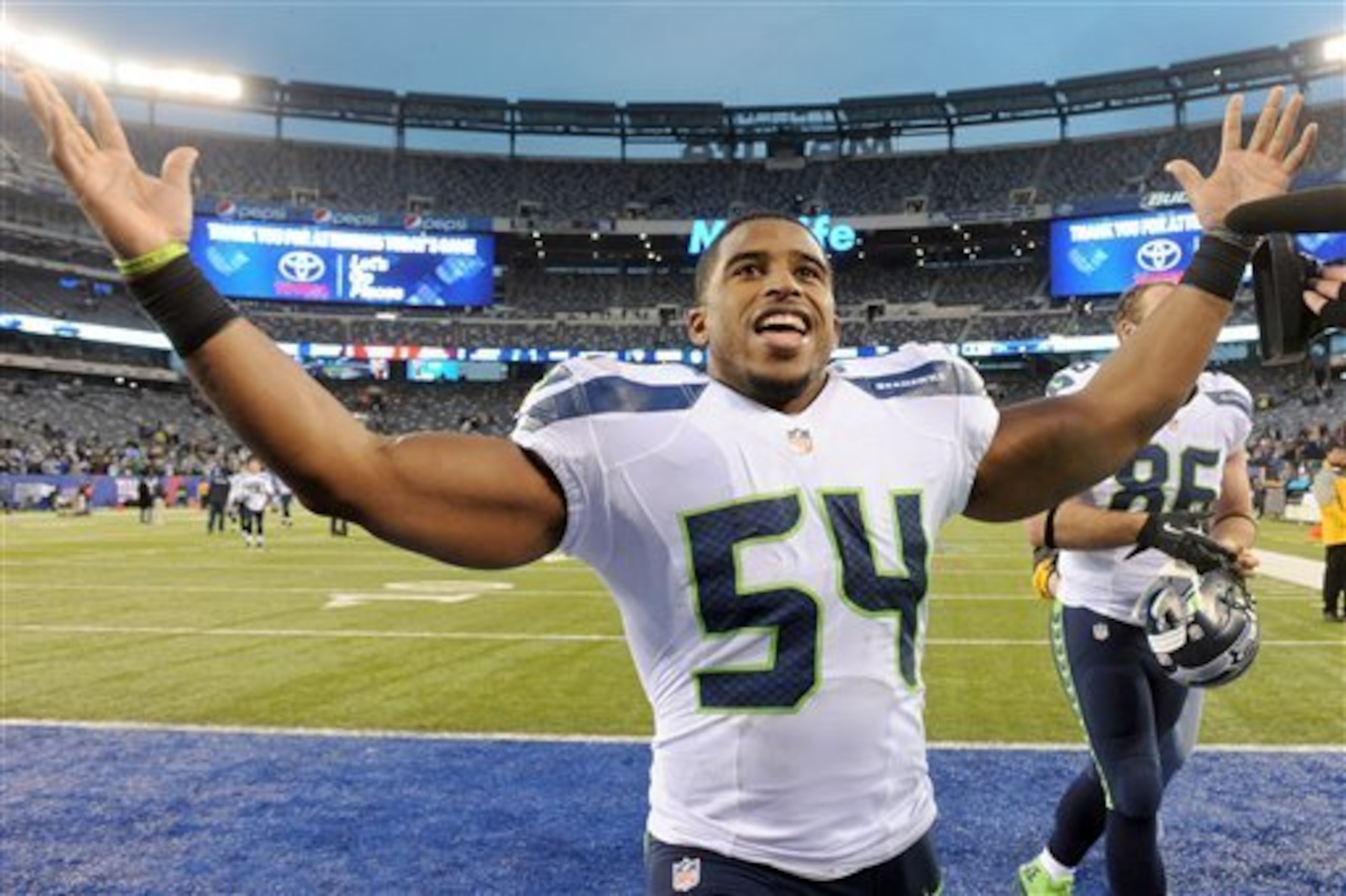
Run Defense
Not lacking any athletic ability, Bobby Wagner (6’0”, 241 pounds, two seasons) is the rangy middle linebacker who covered ground for the Super Bowl champion Seahawks defense. Displaying elite closing ability, Wagner accelerates downhill faster than most other middle linebackers, although he’s not the most physical linebacker upon contact.
Pass Rush
Wagner brings a pass-rushing dimension to the Seahawks defense from his inside linebacking position. His change-of-direction agility and ability to “sort through the trash” allow him to make plays up and down the line of scrimmage, including getting behind it and after the quarterback.
Coverage
Wagner has the ability to make plays outside the numbers and can disrupt quick-hitters to receivers with that speed. He drops and runs well in coverage and has fluid enough hips to change direction in space. His recognition skills aren’t great. Oftentimes he has to use his quickness to overcome being tardy to plays across the middle.
Tackle
Wagner is a solid tackler who missed just six tackles in the regular season in 2013. He runs well through traffic and can close off the back side of a run with proper angles and pursuit. He can get washed out of plays inside the box, but he makes up for that with his ability to stop cutbacks and stretch plays with his quickness to the lane.
Overall
Wagner is going down as one of the smarter pickups by Seahawks general manager John Schneider, which is saying something, considering his track record. Wagner was the No. 47 pick in 2012. He’s stepped in and performed from Day 1 and helps anchor one of the best defenses in recent memory.
10. Brian Cushing, Houston Texans
43 of 52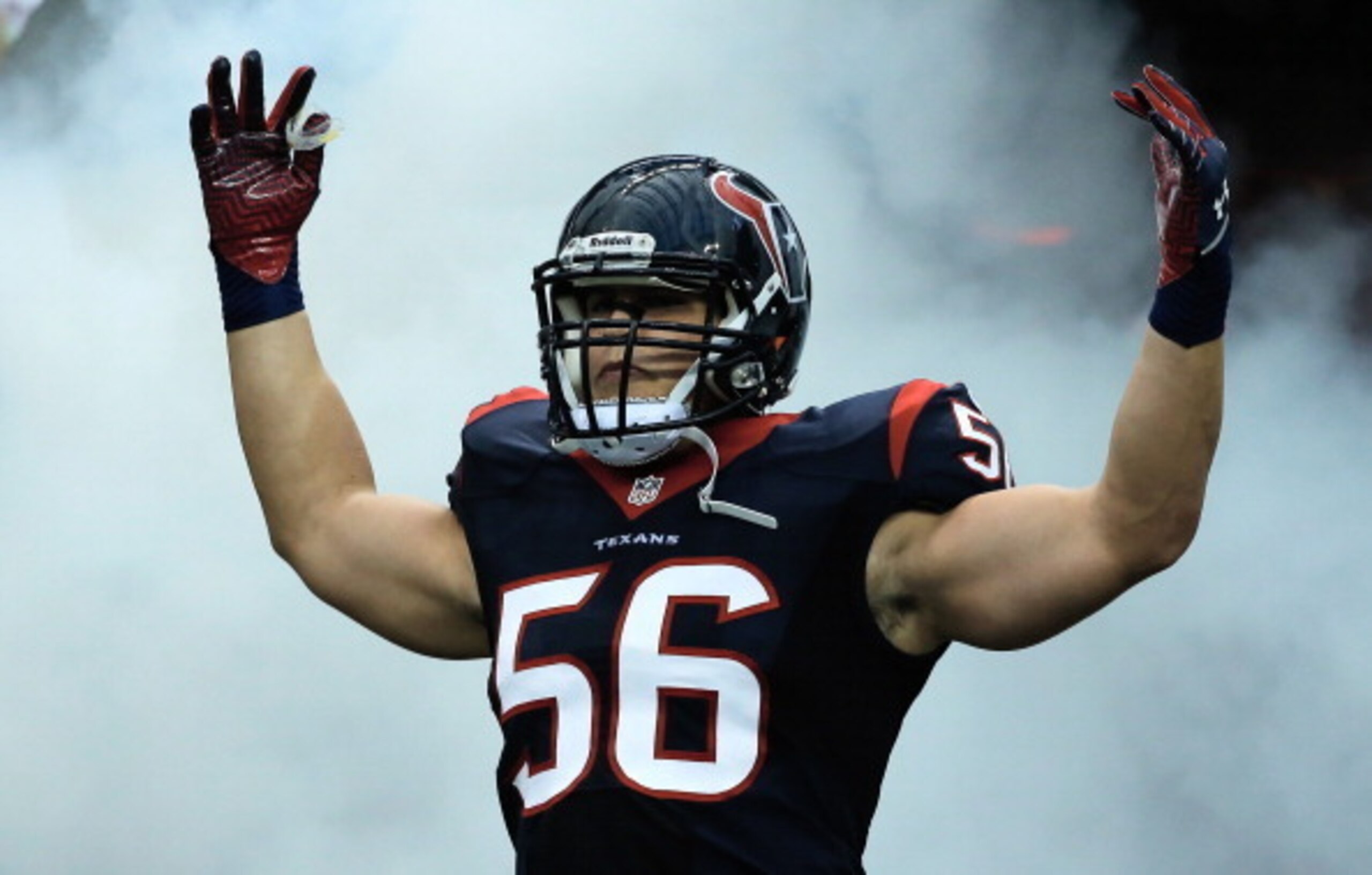
Run Defense
This was another injury-shortened season from Brian Cushing (6’3”, 249 lbs, five seasons), but once again he showed that when healthy he has the talent to be one of the best. Cushing scrapes well, but he does need a big body protecting him up front. If a guard comes free, he can struggle to disengage and make the play. In the open field he’s top-tier and can run down backs with clean, smart angles.
Pass Rush
Cushing has the athletic skill set to be a good pass-rusher but isn’t as effective as you might expect. The talent is there, but the production isn’t always top-notch. If unleashed as more of a blitzer up the center-guard gap, he could produce big numbers.
Coverage
Because of his many injuries, Cushing doesn’t show great flexibility and can struggle in man coverage. He’s good in a zone and reacts well to the ball, but he will give up easy catches underneath. He does have good hands and overall athleticism, but he gives up a high number of catches.
Tackle
As a naturally strong athlete, Cushing is able to lower the boom on ball-carriers. He will go for the big hit too often and can struggle to make simple form tackles. Being better in traffic would go a long way in raising his tackle score.
Overall
Cushing struggled to stay healthy for a second straight season and was only active for seven games. Given a larger sample size, he could have easily moved up or down the rankings. The Texans need him ready to go for 17 weeks in 2014.
9. Karlos Dansby, Arizona Cardinals
44 of 52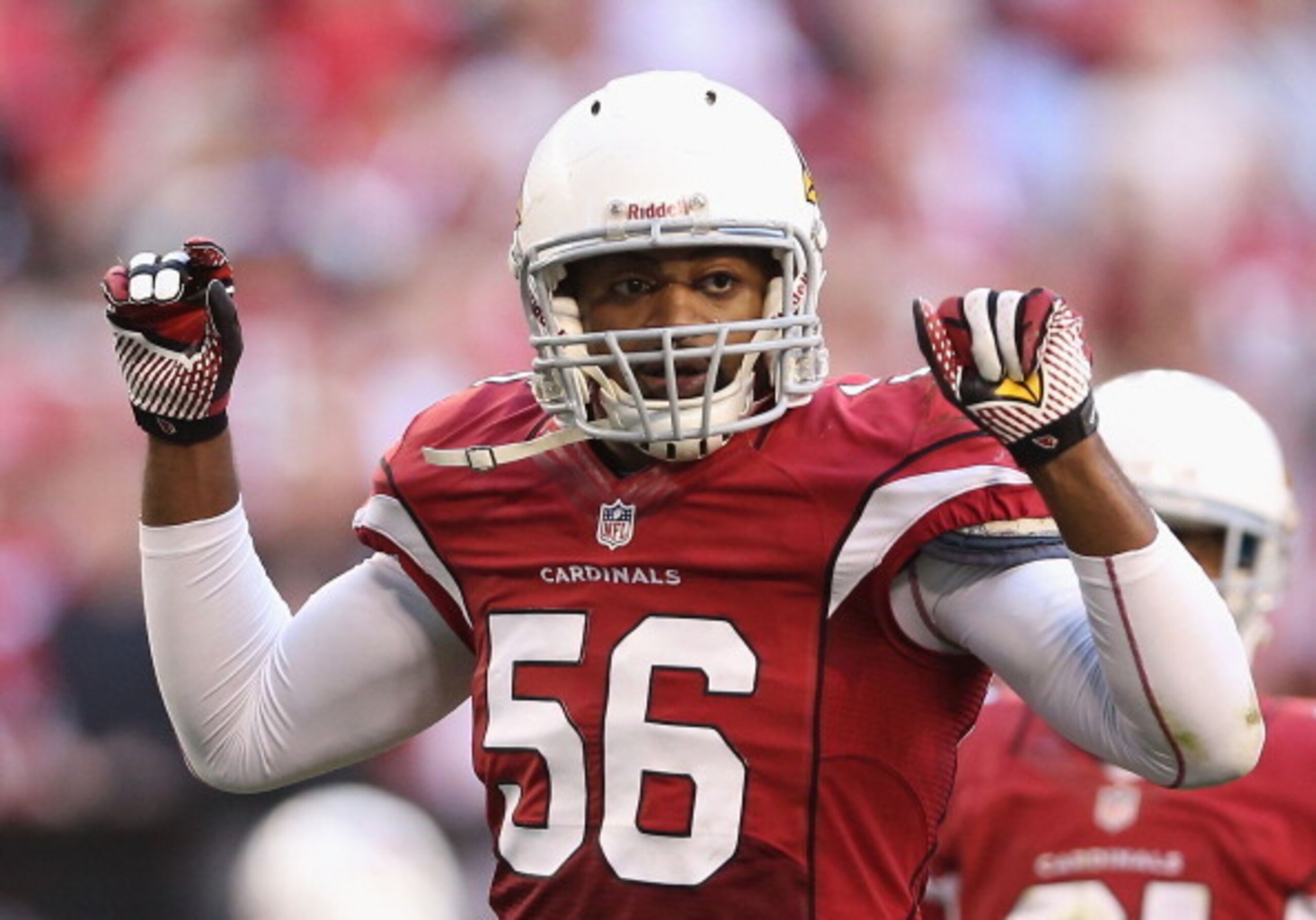
Run Defense
A top-notch all-around inside linebacker, Karlos Dansby (6’4”, 250 lbs, 10 seasons) had one of his best pro seasons in 2013. The Cardinals defense was a great fit for him, and he flourished while showing the speed to take away outside runs and the vision and power to stop inside plays. Dansby did struggle with getting off inside blocks if left exposed, but he’s quick enough to loop around and make plays in pursuit.
Pass Rush
Turn on the film and you see Dansby shooting A-gaps and flushing the pocket. He’s not as powerful at the point of attack as he used to be, but he still shows good length and hand use to get past blockers. That’s what allowed him to rack up 6.5 sacks.
Coverage
Dansby is quick and smart enough to be an impact player in coverage. He gets good depth and shows the awareness to stand out in zone coverage. That resulted in four interceptions and 19 passes defensed. His hip movement is close to ideal too, as he’s able to quickly flip and run to chase the ball.
Tackle
Dansby may have missed 12 tackles in 2013, but he was the man for the Cardinals defense by locking down 114 solo tackles. He shows incredible range and an athletic, powerful tackle.
Overall
Now a Cleveland Brown, Dansby will be counted on to be as impactful as D’Qwell Jackson was and anchor the team defense.
8. Sean Lee, Dallas Cowboys
45 of 52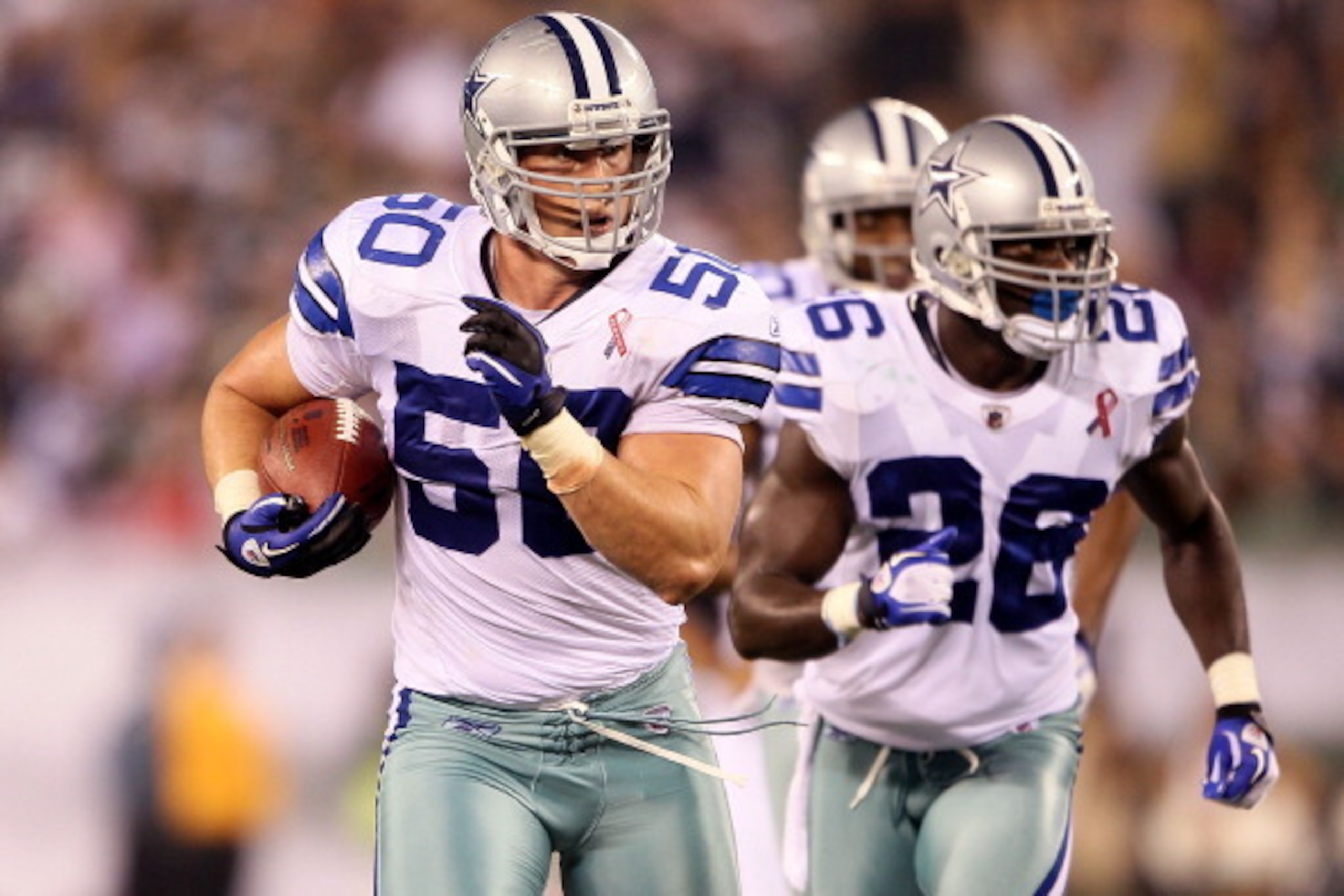
Run Defense
Sean Lee (6’2”, 234 lbs, four seasons) was expected to have a huge season in 2013, but once again injuries limited him. Grading Lee on the games in which he did perform, we were still impressed. Against the run he’s fluid, fast and smooth in attacking the ball. Lee is able to close on outside runs with top-level speed and doesn’t run himself out of plays. He can stand to get stronger at the point of attack, but he can win on most plays with raw speed.
Pass Rush
Lee isn’t asked to rush the passer much, as he’s valuable in coverage. When he did pull the trigger and attack, he struggled to get home and create sacks. He did a good job flushing the pocket and opening up secondary rush lanes for teammates.
Coverage
As one of the better coverage inside linebackers in the game, Lee once again stood out on film. There were some down games in his shortened season, but he turned in four interceptions in just 10.5 games. Lee has good awareness, great hands and the speed to attack the ball. If anything, he has to learn to be more disciplined and not take himself out of the play trying to get a pick.
Tackle
With 68 solo tackles in his shortened season, Lee stood out for making tackles by the bunches. He’s quick and strong, and he attacks. The only gripe we had was his penchant for going low and missing leg tackles.
Overall
Lee has upper-echelon talent, but he has struggled to stay healthy in his career. In fact, he’s never played a full 16-game season. For Lee to enter the elite conversation, he has to stay on the field.
7. Stephen Tulloch, Detroit Lions
46 of 52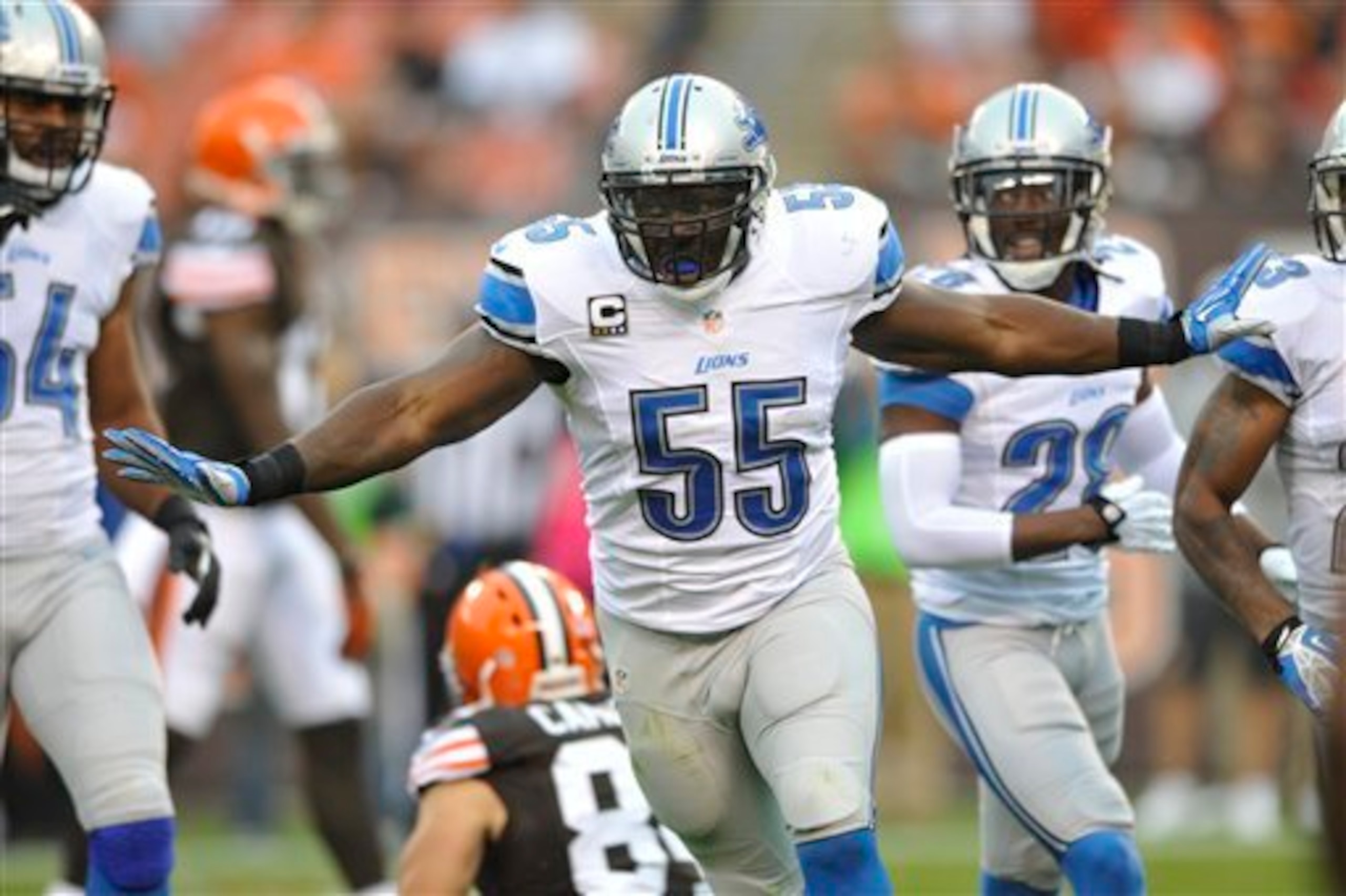
Run Defense
A bruising interior run-stuffer, Stephen Tulloch (5’11”, 240 lbs, eight seasons) locks down plays between the tackles. When asked to track outside the tackle box, he can struggle, as you don’t see the elite quickness, agility or speed of an attacking player on the edge. He does a good job working with his hands and keeping blockers off his frame. Tulloch is strong enough to scrape off blocks and still get to the ball, but he’s limited to inside runs.
Pass Rush
Tulloch added 3.5 sacks in 2013 but didn’t excel on the whole as a pass-rusher. He lacks the burst to explode through gaps on delayed blitzes. You’ll see him flush the pocket, but he’s not a great pass-rusher.
Coverage
Tulloch played well in coverage, showing good awareness and the ability to limit targets. If matched up against a tight end or running back, he can handle man-coverage duties and be an impact player. You don’t want him matched up against wide receivers, though, due to a lack of speed.
Tackle
A thumper at middle linebacker, Tulloch is able to square up and put a hurt on ball-carriers. He’s strong enough in his lower body to power through tackles and does a good job wrapping up to secure runners.
Overall
Tulloch may not be great as a blitzer, but he’s a rock-solid middle linebacker for the Lions’ scheme. How well he works under new head coach Jim Caldwell will be interesting to see. But with Ndamukong Suh and Nick Fairley in front of him, Tulloch is more protected than most middle linebackers.
6. Kiko Alonso, Buffalo Bills
47 of 52
Run Defense
Kiko Alonso (6’3”, 238 lbs, one season) walked into the NFL and made an enormous impact from the first game. Against the run, he didn’t have quite as big of an impact on every down. Alonso is a bit undersized for the middle linebacker position and did struggle to get off blocks. His speed and violent style of play make him a solid run defender on outside plays, but on runs between the center and guard or guard and tackle he could get walked back off the ball too often. When Alonso can attack at an angle, he’s great.
Pass Rush
Alonso was able to put pressure on the quarterback and flush the pocket but didn’t get home much to actually complete a sack. That could change when he’s playing weak-side linebacker in 2014, but his existing game film didn’t show impact plays as a pass-rusher.
Coverage
Coverage and reading the quarterback are where Alonso was at his best. He was fluid and instinctive, showing the hands and playmaking skills to be a legitimate threat if the ball was thrown his way. He’s athletic enough to line up in man or zone coverage and still has room to improve his route awareness and hand technique.
Tackle
Alonso is a violent hitter when closing in on the ball. He’s ruthless, but that can lead to him loading up for a highlight-reel hit and bouncing off the ball-carrier. Still, his production for a rookie was incredible.
Overall
Alonso will make the move to weak-side linebacker in 2014, but his instant impact and big-play ability were a major boost to the Buffalo defense in his first season.
5. Brandon Spikes, New England Patriots
48 of 52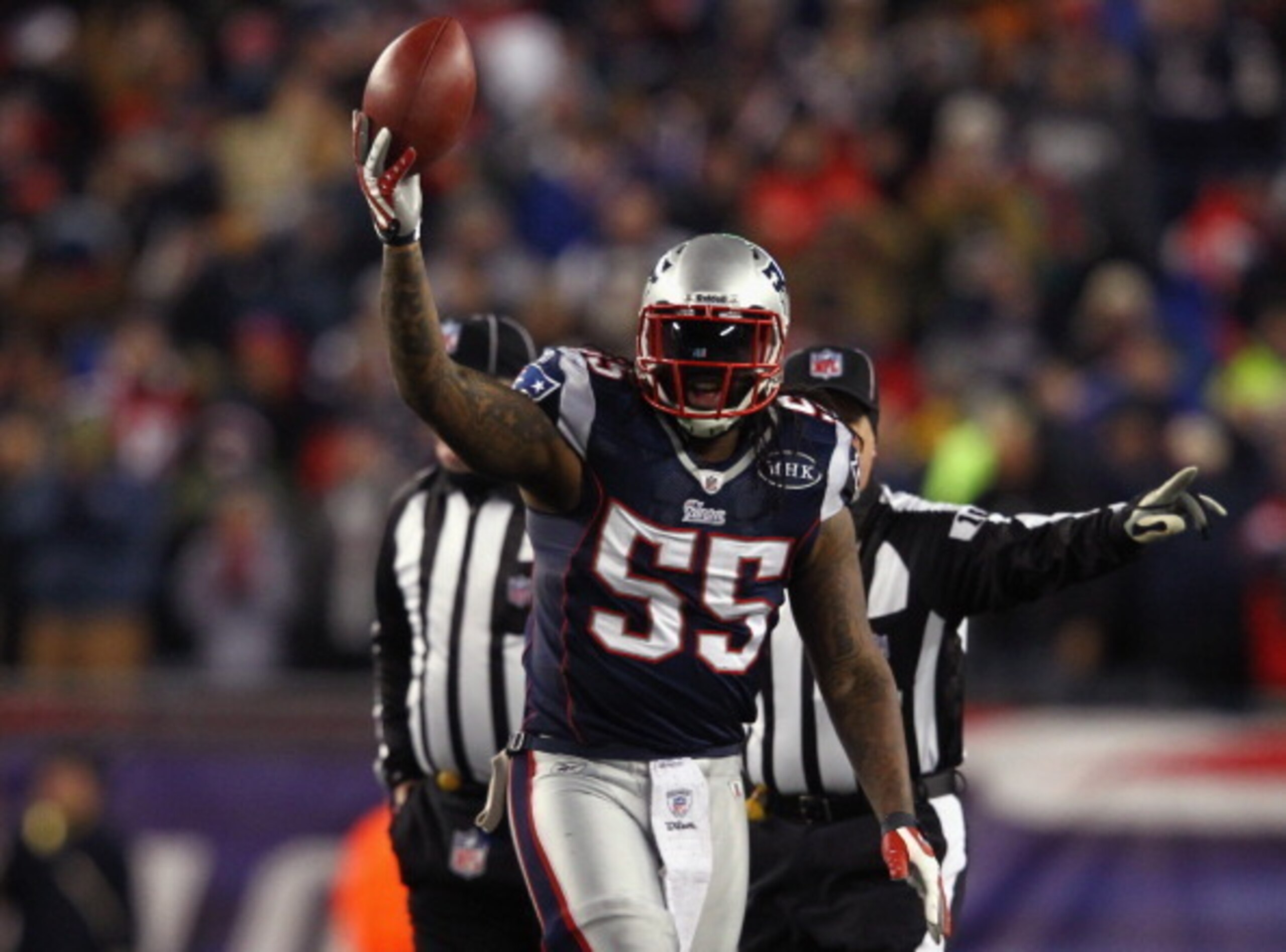
Run Defense
Brandon Spikes (6’2”, 255 lbs, four seasons) is one of the best tacklers in the game. He’s a massive linebacker and a bit of a throwback in his ability to stack-and-shed blockers, then attack the ball. Where Spikes can get in trouble is on outside runs. He doesn’t have great lateral quickness or top-end speed to run alleys and get outside the tackle box. If the run comes inside, his instincts and reaction time are incredible.
Pass Rush
Spikes has the power to beat blockers in the interior of the offensive line but doesn’t have the closing speed to offer production as a blitzer.
Coverage
Spikes doesn’t offer much in coverage and is often replaced in third-down situations. He’s a big man without great speed and shouldn’t be placed in man-coverage matchups against receivers or speedy tight ends.
Tackle
With just four missed tackles during the regular season and playoffs, Spikes ranks as one of the most adept tacklers in the league. On film you see a big, stout hitter with the power to put down ball-carriers in traffic or in space.
Overall
One of the game’s best against the run, Spikes is a limited player due to his lack of agility and quickness in coverage. Graded on all the traits of an inside linebacker, he still stands out due to that lockdown ability on first and second down. The Buffalo Bills are betting on that ability with Spikes now their middle linebacker.
4. Derrick Johnson, Kansas City Chiefs
49 of 52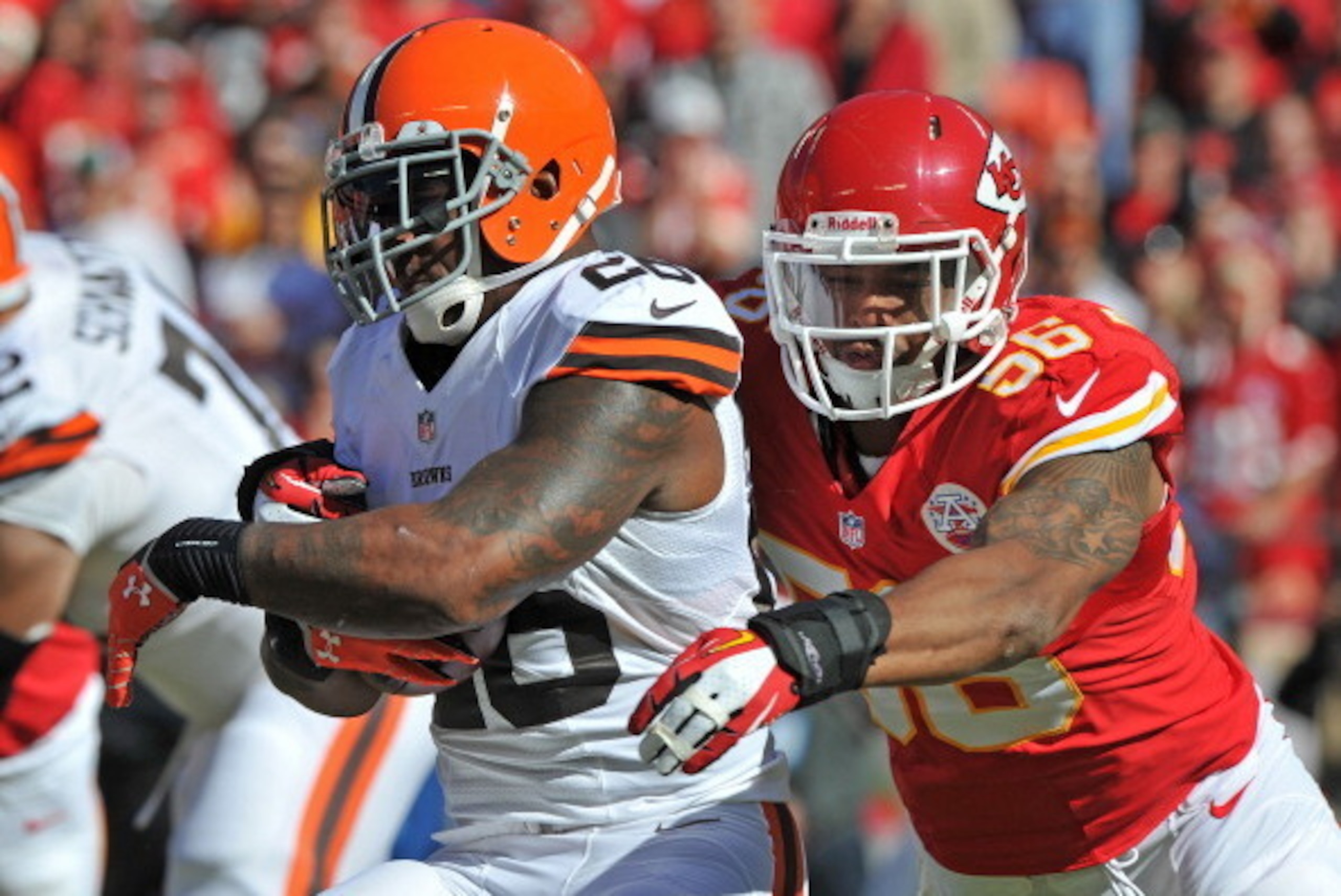
Run Defense
Derrick Johnson (6’3”, 242 lbs, nine seasons) is always around the ball and is among the more athletic inside linebackers. His speed and instincts are top-notch, as Johnson is quick enough to get outside the tackle box to make plays on tosses and sweeps. He can get walked back by blockers in the Chiefs’ 3-4 scheme, and that can be a problem on inside runs. Johnson is at his best when he’s ripping through a single blocker and taking on the off-tackle or outside run.
Pass Rush
Johnson is one of the league’s best when asked to shoot the gap between the center and guard and pressure the quarterback. He’s smart about timing and positioning, and he has the burst to stun blockers and get into the pocket quickly. Johnson is great at flushing the quarterback and creating opportunities for outside rushers.
Coverage
Still one of the best in the game at zone coverage over the middle, Johnson does a good job reading and reacting on the fly. He diagnoses quickly and shows the fluid hips and elite closing speed to get in and make a play on the ball. His two interceptions in 2013 point to that.
Tackle
Johnson is on the lean side for an inside linebacker, and that shows up when he’s asked to make solo tackles. He missed 22 tackles—including seven in the Week 16 game against Indianapolis. Johnson is a better tackler than that one game shows, but we had to downgrade his tackling with the high number of misses this year.
Overall
Johnson’s impact on the Chiefs defense has been huge since the team moved to a 3-4 scheme. Now he’s the smart veteran with the young pups growing around him, and that’s a role he’s playing as well as any linebacker in the AFC.
3. Luke Kuechly, Carolina Panthers
50 of 52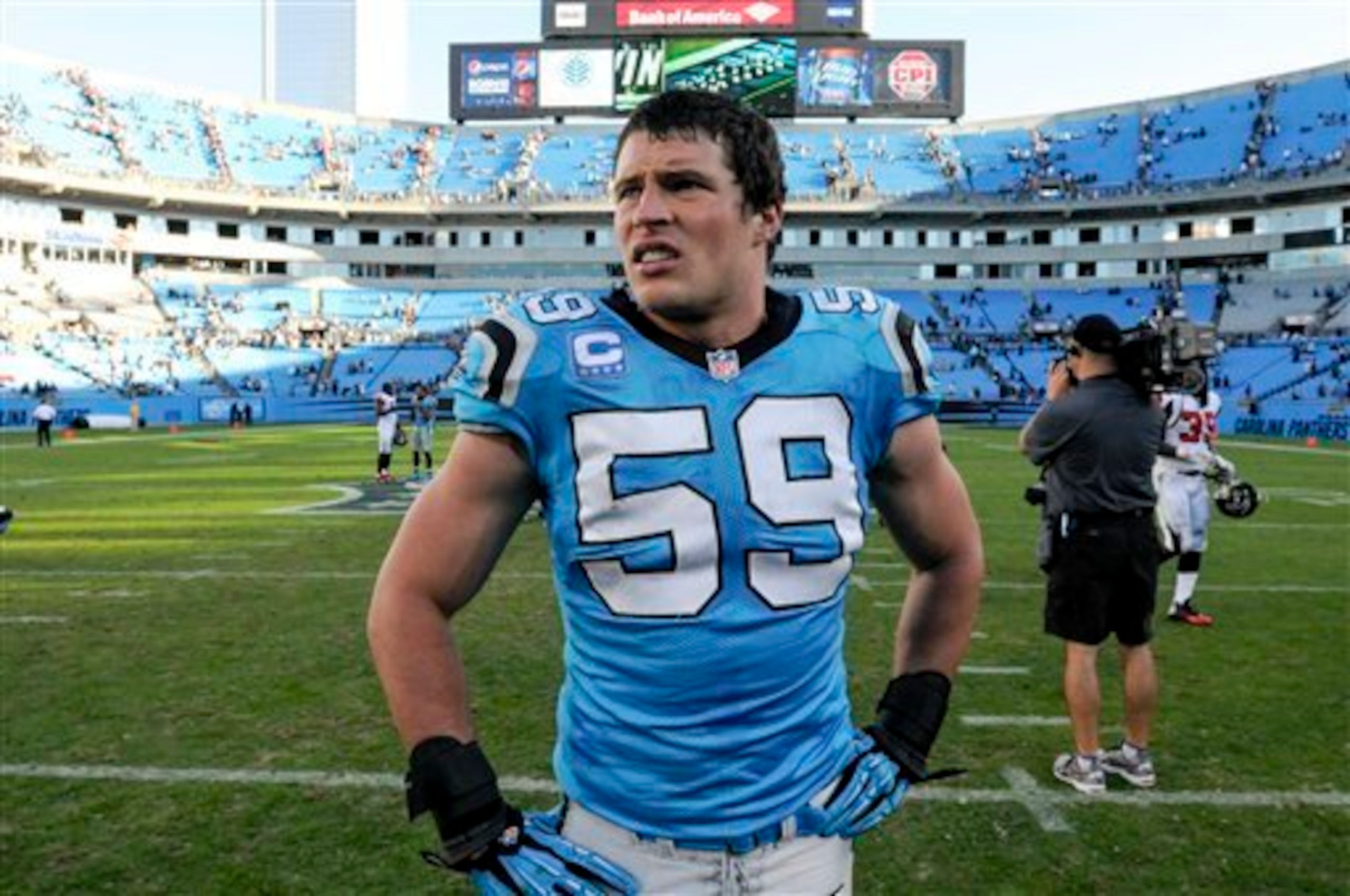
Run Defense
Luke Kuechly (6’3”, 235 lbs, two seasons) has quickly emerged as one of the best middle linebackers in the league. Against the run he’s elite, showing the speed and vision to attack outside runs while packing a big punch if locking down interior gaps. Kuechly has the benefit of playing behind two defensive tackles (as opposed to 3-4 inside linebackers having just one), but his production on rushing downs is remarkable. The former Boston College ‘backer improved a great deal in making tackles closer to the line of scrimmage and not being taken for a ride by ball-carriers before bringing them down.
Pass Rush
Kuechly plays the large majority of his passing downs in coverage, as he’s not a top-tier pass-rusher. The agility and strength are there, but when asked to shoot gaps he tends to get caught up by blockers and doesn’t have the raw speed to run by linemen.
Coverage
One of the best linebackers in terms of coverage skills, Kuechly gets depth and shows high awareness playing the pass. He uses those skills to produce too, as he grabbed four interceptions.
Tackle
It’s difficult at times to separate high tackle numbers from being a good tackler. That’s the case with Kuechly. He did notch an impressive 156 tackles, according to the NFL, but Pro Football Focus tracks that number at a much lower 123 solo tackles. Take into consideration his 15 missed tackles, and you see why the super-productive Kuechly doesn’t have the best tackle grade.
Overall
Kuechly took home Defensive Player of the Year honors after the 2013 season, but in our system his missed tackles and lack of impact as a pass-rusher keep him ranked lower than those voting for postseason awards might like.
2. Patrick Willis, San Francisco 49ers
51 of 52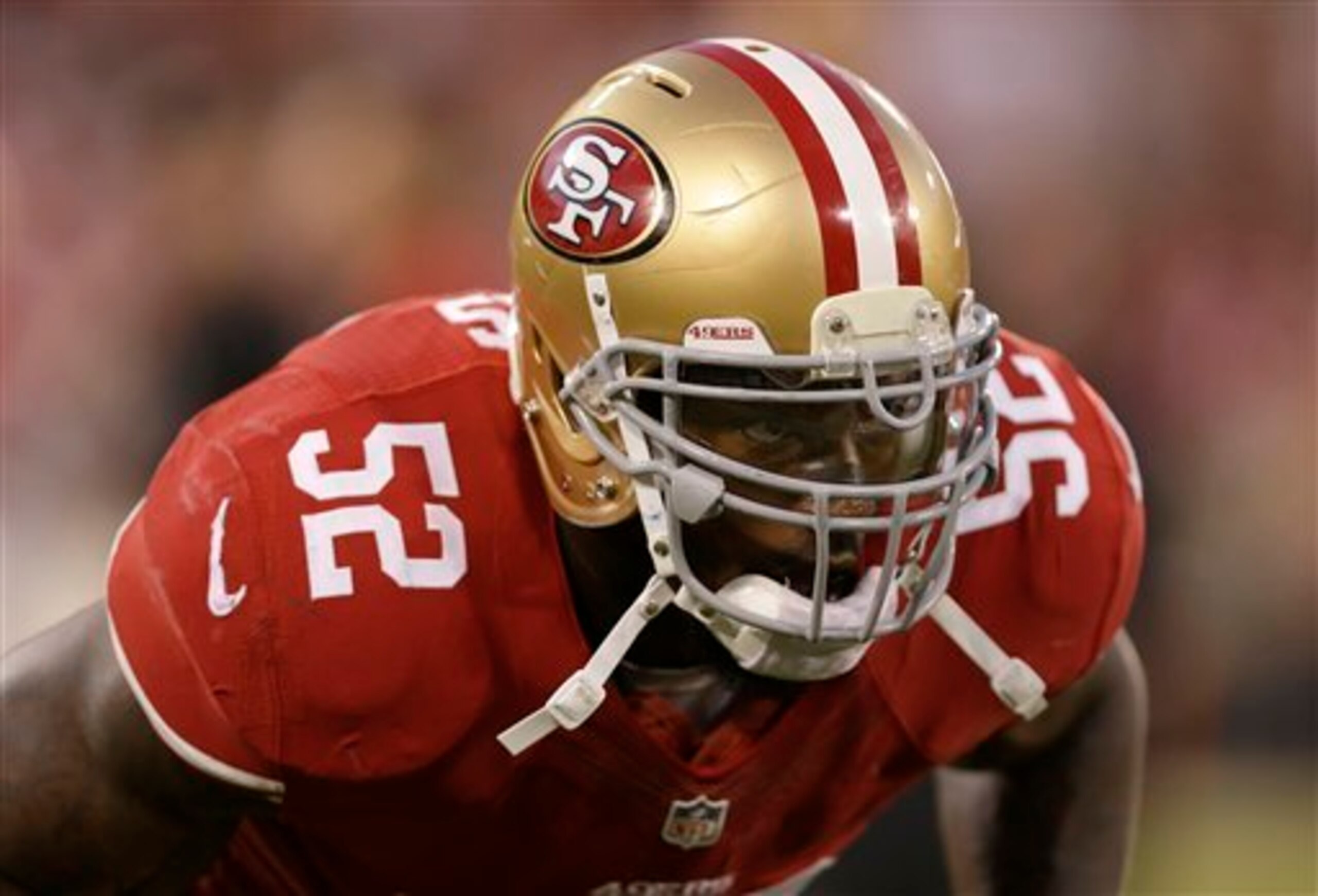
Run Defense
The template from which all inside linebackers are now graded, Patrick Willis (6’1”, 240 lbs, seven seasons) is one of the best all-around athletes at the linebacker position. Against the run he’s strong and able to shed blockers and get to the football. Willis is great at dipping his shoulder and driving to the ball but is also fast enough to simply tuck and run to the ball. Whether it’s an inside lead or an outside toss, Willis has the tools to be a wrecking crew.
Pass Rush
Willis is able to bring heat on the backfield rushing between the center and guard, and he shows high-level flexibility and agility in his hips to dip and drive around blockers. He isn’t used as much anymore as a blitzer, but he can still get the job done when called to attack.
Coverage
One of the game’s best in coverage, Willis is able to move well throughout transitions and has upper-level instincts and awareness in the passing game. Take away the Week 16 Falcons game—when Matt Ryan was throwing underneath on almost every route—and Willis was extremely effective in eliminating targets.
Tackle
A wrap-up tackler with big range, Willis is a super-productive tackler. He’s great when asked to make solo tackles in space or when gang-tackling in the pile. Our only gripe was his 11 missed tackles, which keeps Willis from a perfect score.
Overall
Tied for the top overall spot, Willis has the strength, vision and reaction skills to take away whatever the offense throws at him. He’s ranked No. 2 only because of the missed games due to injury.
1. NaVorro Bowman, San Francisco 49ers
52 of 52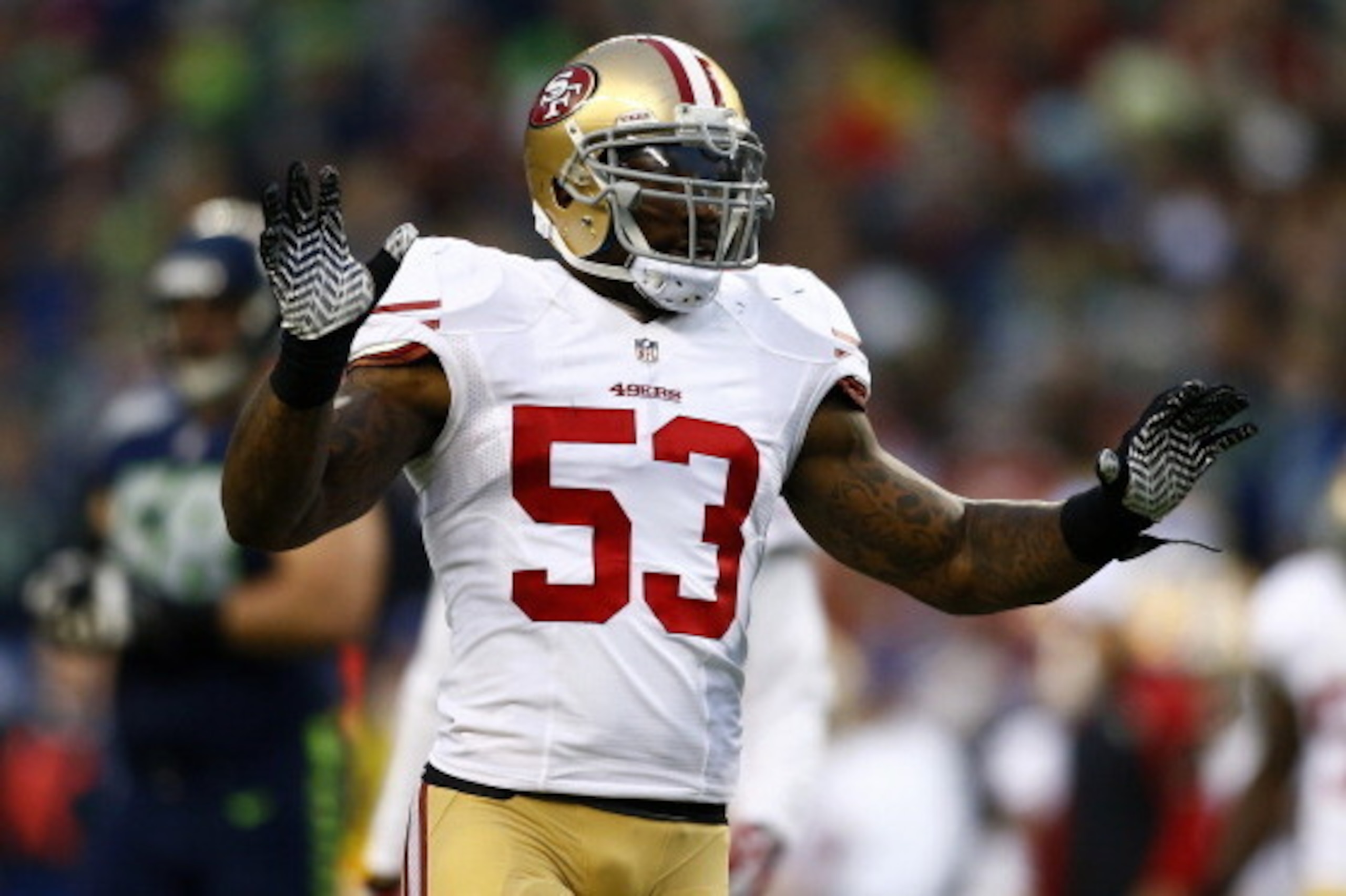
Run Defense
NaVorro Bowman (6’0”, 242 lbs, four seasons) made a strong case for being named the Defensive Player of the Year. Against the run, his speed—especially coming downhill—is impressive. Bowman attacks the ball with speed and power, but more importantly he takes smart angles. Bowman is effective enough against the run that the 49ers can clear out their defensive line, keeping just one down lineman and letting the inside linebackers lock down the gaps between the center and guard plus guard and tackle.
Pass Rush
Bowman posted a career-best five sacks in 2013 and showed that pressure between the center and guard is the key to frustrating a mobile quarterback. He’s a terrorizing pass-rusher thanks to his blend of speed and strength.
Coverage
Bowman is so smooth and quick in space that he’s able to take away tight ends or third wide receivers in coverage. He’s able to turn and run upfield or quickly change direction to attack underneath routes. And he has the hands to pull the ball down and create interceptions.
Tackle
Bowman is a hard hitter, as evidenced by his four forced fumbles in 2013. He’s a sure tackler in space, but he did struggle with running backs coming at him head-on. That led to 12 missed tackles.
Overall
Bowman’s season unfortunately ended with a gruesome leg injury in the NFC Championship Game, but not before he made yet another huge play. His all-around game and athleticism put him over teammate Patrick Willis in our tie for No. 1 overall.
.jpg?w=2560 "WWE Raw Live Grades 🔠")
.png?w=2560 "Davante's MONSTER MNF 🤯")

.png?w=2560 "McVay's Funny Travel Quote 🤣")