

3 Reasons the Mets Should Not Make Last-Minute Stephen Drew Splash
Spring training is here, and Stephen Drew is still a main topic of discussion for the New York Mets. The team does like Drew, as do many Mets fans, but there are a few conditions that are preventing them from signing him. So, the Mets shouldn't try to make a last-ditch effort to reel him in.
At least, they shouldn't make that decision right now.
Giving up draft picks, spending big money and not knowing what you’re going to get in return makes it tough to sign a free agent like Drew.
TOP NEWS
Yankees Sloppy in Game 2 Loss 😬

Realistic Offseason Trade Ideas 💡

Players Who Were Worse Than You Think in 2026 ⚾
Signing Drew Means Giving up a Draft Pick
Under the free-agent compensation rule, a team must submit a qualifying offer to their (likely) free agent in order to receive compensation once the free agent leaves.
Dayn Perry of CBS Sports explains that a qualifying offer is a "one-year proposal worth at least the annual average salary of the top 125 free agents from the previous winter."
If the free agent turns down the deal and leaves, his former team will receive a draft pick between the first and second rounds (unless the pick is a top-10 pick).
So what does that mean for Drew?
Well, signing Drew means giving up a draft pick to the Red Sox. And we all know how much the Mets love to acquire young, new talent. Fresh talent would have the potential of being homegrown stars or trade bait.
Why choose Drew over a potential draft player who could be similar to David Wright or Matt Harvey? Or why take Drew when you could draft a decent player who you could later use as a trading chip for a better player? That's what the Blue Jays did and the Mets luckily ended up with Noah Syndergaard (unfortunately it didn't work out too well for Toronto).
They would much rather have new talent over a shortstop who batted in .253 in 2013. In fact, excluding 2013, Drew's batting average has been on a steady decline from 2010. He's suffered injuries such as a broken right ankle and a concussion over the last few years. The Mets should want to keep their option of having fresh, injury-free talent.
Drew knows that, too. He spoke to Jon Heyman of CBS Sports about what he sees as the unfair free-agent compensation rule:
"You hate to say it, but it really messes up free agency for guys who worked hard. A lot of people don’t want to give up that first-round pick, and that’s what it boils down to. It’s unusual. I understand draft picks, but at the same time, you have a guy who’s proven as very good on defense and a top five shortstop if you look at it.
"
A tried-and-true player can be considered safer than the prospects of a professionally inexperienced player.
But the Mets shouldn't have to give up a pick and settle for someone whom they aren't too sure about. Especially considering how much money Drew is seeking.
He Just Costs too Much
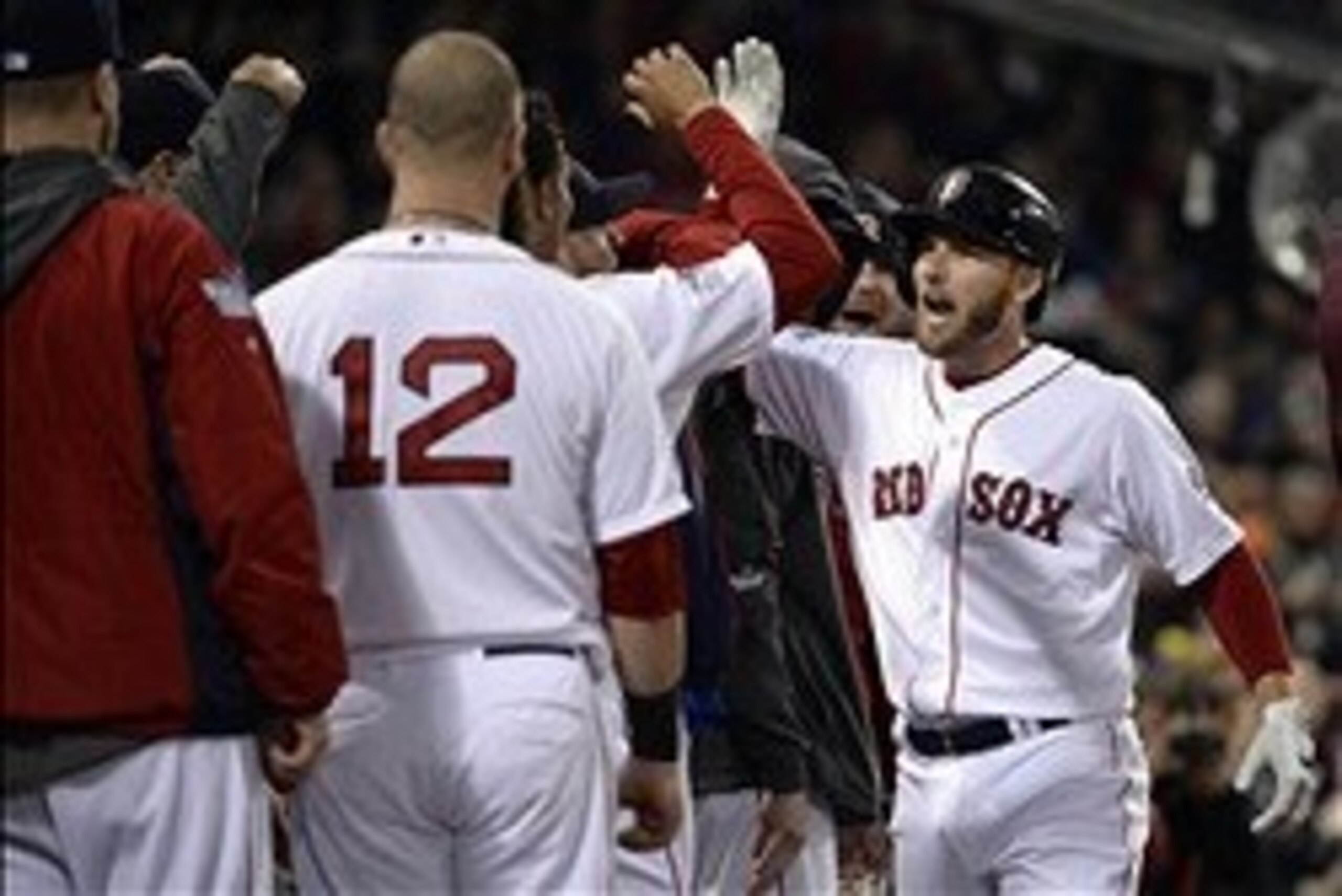
At the end of the 2013 season, Red Sox general manager Ben Cherington offered Drew a one-year, $14.1 million qualifying offer. And he turned it down.
Now, it’s not all about the money. Drew’s agent, Scott Boras, has made it clear that Drew is seeking a multiple-year contract. But, come on. A big chunk of the issue is the money.
According to Kristie Ackert of New York Daily News, a team source said that the Mets would be open to signing Drew if his price dropped from the $14.1 million he turned down from the Red Sox.
The Mets are right. They don’t know what they will get from Drew if they sign him. Would it be worth the roughly $14.1 million (and loss of a draft pick)?
Their best bet is to hold off on Drew and keep Ruben Tejada around. If Tejada doesn't pan out by June, the Mets can explore the idea of Drew again. But this time around, they wouldn't have to lose a draft pick. And Drew’s price could drop by then.
Tejada Deserves the Chance
While Drew only batted .253 last season, Tejada had a batting average of .202. Nothing went right for him in 2013. But Tejada trained for an additional eight weeks in Michigan this winter, which places him in a better position than he was last spring.
At the Barwis Methods facility, Tejada received nutritional and fitness training. He's shown signs of maturing over the offseason by making the decision to go up to Michigan and put in the extra effort.
Tejada thinks he has taken a step in the right direction, telling Kevin Kernan of the New York Post that: "The [Michigan] camp was good preparation for me for spring training. ... This year I really think I've come here prepared to work hard every day. ... I think the best decision I could make was to go there and prepare myself for the rest of my career."
But Kernan is also reporting that the Mets aren't extremely thrilled with Tejada and his new, “more athletic” body just yet. In fact, according to Kernan, one source said “He looks pretty much the same.”
Yet, Tejada has the potential to return back to his 2012 days when he had a .289 batting average, .333 OBP and .684 OPS. He’s young enough to return to fighting form. Tejada is only 24 years old, he still has plenty of time to develop. On the other hand, Drew is turning 31 years old in about three weeks.
Would you rather have a young player that can be coached for the long run or an older player who has a limited time of playing time left?
Tejada knew he didn't do well last season. He was told what he did wrong, and now he is working to fix it during the offseason and spring training.
Even if Tejada doesn't work out, the Mets can still look into different players besides Drew. For instance, there is some speculation about their interest in Nick Franklin of the Seattle Mariners, according to Marc Carig of Newsday.
Franklin hit 12 home runs last season and had 45 RBI. A .225 batting average and a .303 OBP isn't the greatest. But it’s still an improvement over Tejada’s .202 average and .259 OBP if the Mets wanted to go in that direction. It’s just a matter of whom the Mets would give up in exchange for Franklin.
But that’s a whole other topic.

.jpg?w=2560 "Grading WWE Raw 🔠")


.jpg?w=2560 "Viral Rams Coach Vid 🖕")

.jpg?w=2560 "Injury-stricken Seahawks signing veteran RB")
