
Has the Premier League Damaged the English National Team?
There are undoubtedly changes that need to be made in order to provide a successful England team in the future, but the current issues cannot be blamed on the success of the Premier League, nor the influx of foreign owners, foreign managers or foreign players.
Yes, there may have been a lot more English players playing in the top flight before the formation of the Premier League in the early 90's, but let's not forget the English national team back then was no less of a shambles then it is now.
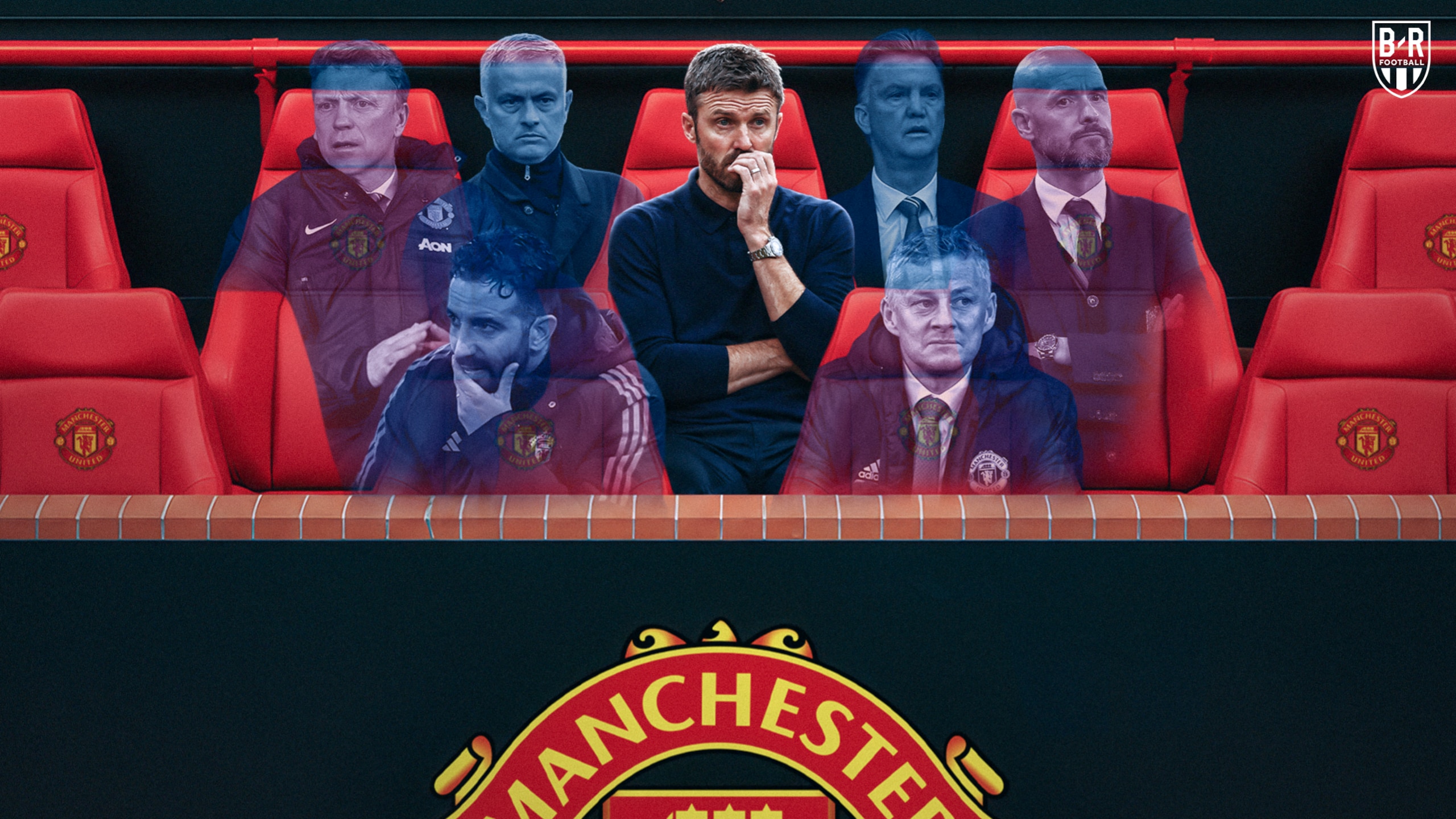
In 1992, England crashed out of the group stages of Euro '92 without a win, then infamously failed to even qualify for the 1994 World Cup. At one point Graham Taylor's side even conceded a goal to San Marino.


Those were the dire times.
In the 1970's, when every player in the top flight was English (or Scottish), England failed to make it to the finals of four consecutive major finals from 1972 European Championships to the 1978 World Cup.
Blaming the Premier League has just been a veil to hide behind for England in recent years, much in the same way it was blaming tiredness and the lack of a winter break between 2006 and 2010, or blaming referees between 1998 and 2004.
The problems with the England national football team are manifold, and blaming too much foreign money and talent in the Premier League is not the answer.
Problems with youth
There are certainly problems with youth development and younger players not getting their chances. The bigger clubs do like to snap all these young English players up early then not give them enough game time.
But the youngsters do not exactly help themselves. Players such as Ryan Bertrand and Kyle Naughton seem far too comfy and happy to sit on the bench and play in the reserves until they are about 23 or 24 years of age.
I am not saying that Bertrand or Naughton are necessarily good enough to be playing for the top clubs, but they should be willing to move to a smaller club first, get games, and work their way back up to the top.
Thomas Ince is a prime example. He probably could have moved to a bigger club by now and be wasting away on the bench, but he would rather be playing first-team football. And he will be all the better for it in the coming years.
Then there is the unwillingness for our young talent to move abroad in search of first-team football. Both Cesc Fabregas and Gerard Pique came to England at a young age in search of first-team football, gained experience, then moved back to Barcelona when they were good enough to do so.
Bigger clubs in England do not have the same luxury as the likes of Real Madrid, Barcelona and Bayern Munich who have reserve teams playing week-in week-out in lower tiers of their national leagues.
Calls for reserve teams in lower leagues have been rejected time and time again by the football league, as they should be. Unlike in most foreign leagues, the lower leagues here are actually genuinely popular and relevant. The Championship has one of the highest average attendances of any league in Europe.
Youngsters at Barcelona and Bayern are always tested in the youth team or sent out on loan before being asked to make the grade for the first team. Only the very, very best are thrown straight in at the highest level.
Problems on the pitch
But it is not just youth development that is the problem. Many of England's failures in recent years have boiled down to shortcomings at the highest level as well.
For 10 years, Sven-Goran Eriksson, Steve McClaren and Fabio Capello sacrificed the balance of the team in order to try and squeeze all of their best players into their starting eleven. For 10 years it didn't quite work, but for 10 years they kept trying. Needless to say at times it was painful viewing.
Paul Scholes, arguably the most technically gifted central midfielder England have ever produced, retired from international duty after being left fed up with being played out of position on the left. England's answer? Shove Steven Gerrard out there instead.
Time and time again in big games England have started well then wilted away badly in the second half as the manager sat idly by unwilling to change anything.
As recently as England's last genuinely competitive game against Montenegro, they started very well in the first half before being overrun in the second. Hodgson, bafflingly, didn't change anything until the opposition had gone on to find their inevitable equalizer.
The same thing has happened time and time again, in 2004 and 2006 when Eriksson had one of the best starting elevens in the competition at his disposal he was completely out-maneuvered by Portugal's Scolari as England looked completely lost.
The future
New FA Chairman Greg Dyke seems to have set about with the right idea as per the BBC. Clubs need to be convinced that you can be successful whilst giving your young players an opportunity.
They only need to look across to the continent to see that the two best teams of recent times, Barcelona and Bayern Munich, have built their teams around domestic players mostly from their own setups. It is possible.
But do not blame the Premier League and its foreign stars as Tony Adams and so many others have. It is just the easy way out.

.jpg?w=2560 "AD Trolls Bears WR on IG 😂")
.jpg?w=2560 "Viral Dan Campbell Presser 💙")
.jpg?w=2560 "Buzz: MHJ Hired Agents for Trade")
.jpg?w=2560 "Report: Steelers WR to Miss 'Weeks'")

.jpg?w=2560 "Cam Ward Says He's Not A Loser")



.jpg?w=2560 "Chargers Fall to 0-5 🤢")