
What Can Training Camps, Preseason Really Tell Us About Regular-Season Success?
Michael Strahan was fined over a half-million dollars when he took the entirety of training camp to decide that he was not going to retire (although the total was later reduced to about $200,000 by the team).
As he said in an NFL Films documentary, Strahan doesn’t regret wasting a cent to sit at home.
"It was the best $200,000 I ever spent. If they told me 10 years ago I could have paid $200,000 to miss camp I would have paid over $2 million in fines right now."
.png?w=2560)
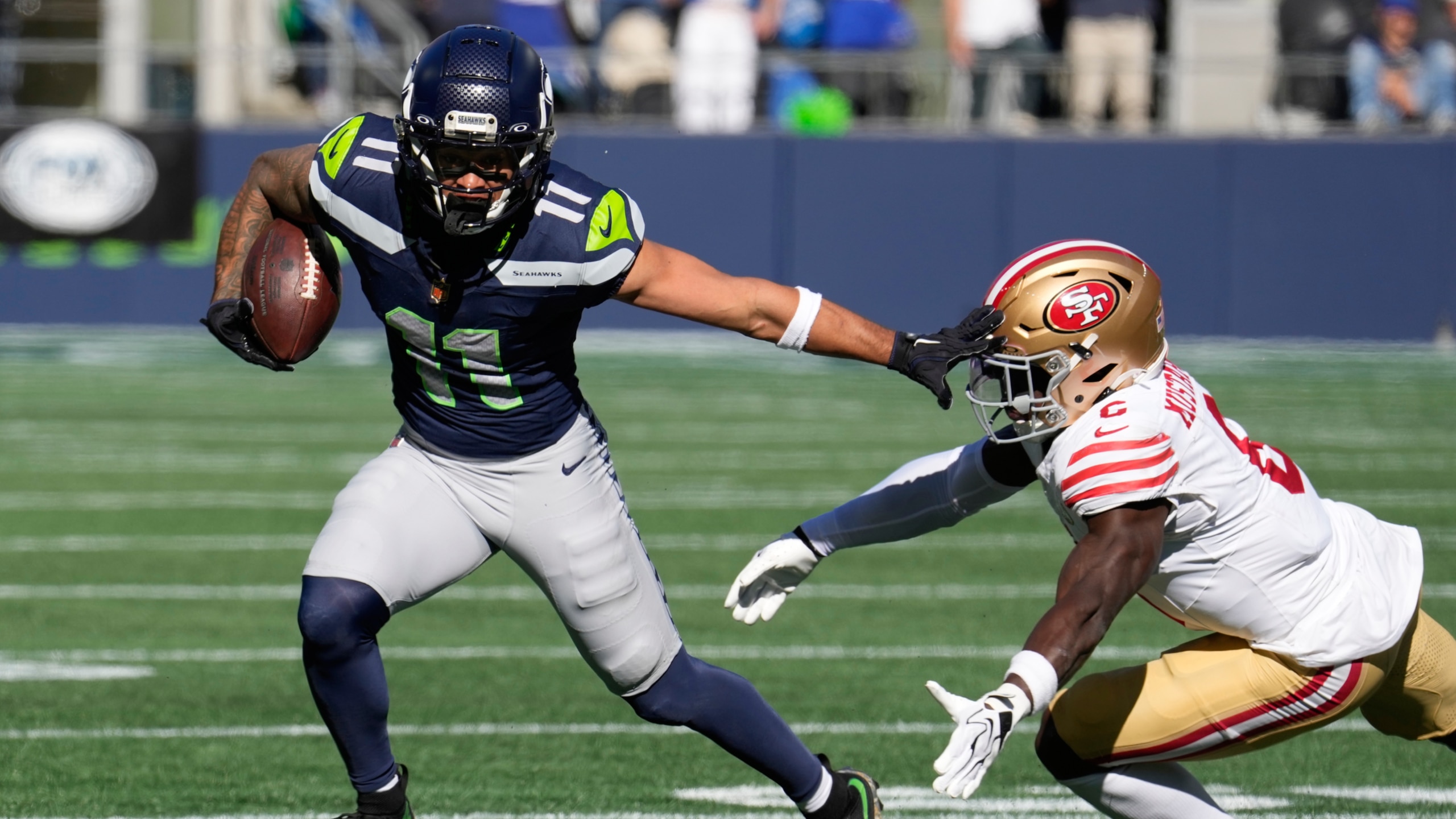
If there is one thing you should never underestimate about NFL players, it is how they loathe training camp like a dog dreads taking a bath.
The idea of having to spend a month doing menial football drills hours per day in the sweltering summer heat while living out of a college dorm room is no player’s idea of fun, no matter how much they say they love the game.
Because of each player’s unique situation and level of experience, there is no specific right or wrong way to approach training camp. For younger players, training camp is their gateway to a career in the NFL. On the other hand, 10-year veterans tend to view camp is more of a nuisance that may actually take years off their precious career.
No matter what each individual player is trying to accomplish in August, does any of it give us an accurate depiction of what the following four months hold in store?
When you look at the records and final scores of the regular season, success or failure in the preseason translates less accurately than Madden simulations.
In 2009, the Indianapolis Colts lost every preseason game. During the regular season, they won 14 straight before benching their starters late in the season and came within an onside kick of winning a Super Bowl.
A year prior, the Detroit Lions went an entire regular season without earning a win—but they were unbeatable in August.
While basic stats and records are meaningless because of the simplified playbooks and heavy use of second- and third-string players, the action that goes on between the lines can reveal plenty about individual players.
In particular, the preseason can be a strong indicator of success for younger players who are seeing NFL competition for the first time or developing in their second or third year.
Last summer, Russell Wilson was considered to be a late throw-in to a quarterback battle that was supposed to go to Matt Flynn. Few thought Pete Carroll would even entertain the idea of starting a third-round rookie after giving Flynn a large contract.
However, after slicing up defenses with ease in the preseason, Carroll had no qualms about starting the unproven rookie instead of a player who was making, literally, over 10 times as much as Wilson. And the rest is history.
Russell Wilson is a rare exception. There are few, if any, players at his position to ever produce at such a high level so soon as a former third-round pick.
In either case, the fact that Carroll was willing to put his team’s season at risk based on the outcome of a few preseason games and a month of training camp shows just how much coaches value what happens in these seemingly meaningless games.
Russell Wilson is an extreme example of how a player can rise from the bottom of the depth chart to NFL relevancy. But finding young players who can step in and contribute right off the bat is an essential part of any training camp.
As teams look for the diamonds in the rough to fill their remaining needs, preseason football takes on an entirely new meaning as a platform for future stars to shine.
Cut Day Treasures
Besides fine-tuning some timing issues and adding some extra layers to the playbook, training camp and preseason is just a tune-up for established stars like Peyton Manning and Tom Brady.
While they dominate the media coverage, a very small percentage of the NFL (especially with 90-man rosters at the start of camp) have the luxury and security to be able to walk into camp knowing that their spot will be waiting for them in early September.
For the vast majority of the NFL, training camp is a period of constant evaluation.
Each bubble player fights not only against their teammates for reps and playing time, but also against players on other rosters who the team could bring in to replace them.
With 90-man rosters and only 53 roster spots, simple math suggests that an undrafted rookie faces incredibly difficult odds to even be in consideration for a roster spot—especially if their position is already occupied by a handful of established veterans.
As daunting as the odds are for the individual undrafted rookie, these lesser-known players are a substantial part of an NFL team’s success. According to the St. Louis Post-Dispatch, 20 percent of the current players in the NFL went undrafted.
With so many undrafted players and so few roster spots to go around, it is vital for NFL teams to not only properly self-scout their roster, but to know how players are coming along in other camps as well—which is where training camp and preseason games come in.
Typically, teams with depleted rosters that are much further away from contention spend more time and energy scavenging the NFL landscape for gold, scouting their own practices and watching preseason games of rival teams to see whom they can pick up on the final cut day.
Looking at preseason stats to see if a team will succeed in the fall is useless—but you can tell exactly how a team feels about their roster by the number of transactions that occur right after final cuts are made.
Why? Simply put, better teams tend to have much better depth, making their fringe players better than fringe players on bottom-feeder teams.
Meanwhile, bottom-feeders are looking for special talents that are buried underneath big names or were simply overlooked in camp. Their thinner roster has much more flexibility to make room for new faces.
Plus, a non-contending team will have more freedom to develop a younger player if they have no business winning anyway. On the other hand, a team like the Broncos has far less inclination to trust an unproven player to not mess up their championship hopes.
Camp Battles
Every (good) coach in the NFL knows where his team is weak at certain positions, even if they will never admit it publicly. How do coaches deal with the remaining holes on their roster?
One word: competition.
Thanks to Pete Carroll, who wrote a book titled Always Compete, competition is becoming a growing philosophy of roster-building in the NFL. But coaches know deep down which competitions are for show and motivation, and which players are truly fighting for a roster spot or starting job.
The more roster holes a team has, the more camp battles there are. Therefore, the number of camp battles a team has directly correlates with how complete a roster is.
Sometimes, preseason performances can initiate roster changes that were never supposed to be made.
Last year, the New York Jets were hell-bent on having veteran Wayne Hunter as their starting right tackle, citing his success in the 2010 playoffs while ignoring his ineffectiveness throughout 2011, when Pro Football Focus ranked Hunter as the sixth-worst tackle in football.
It was not until the Jets’ second preseason game against the neighborhood rival Giants that Rex Ryan finally realized a change had to be made. Hunter gave up 2.5 sacks in a half of football, ending his tenure as the starting right tackle for the Jets.
While it was “just” the preseason, there was nothing to debate about how Jason Pierre-Paul abused Hunter. Getting beat around the edge on a near snap-by-snap basis is unacceptable for an offensive lineman, no matter how little the final score matters.
Preseason games tell coaches a lot more about younger players than established veterans, but that was not the case with Hunter. At age 32, the preseason environment was able to expose Hunter for his declining skills in front of a crowded stadium.
Beware of the Practice Reports
While preseason games are accessible by anyone with a television or internet access, finding out what happens in training camp is a much more difficult venture.
Fans are heavily reliant on sound bites from coaches to get a feel as to who is standing out. However, even the most levelheaded coach can fall victim to getting overly excited about a player before he proves anything in a game situation.
Last offseason, Jaguars second-round pick Andre Branch was off to a hot start. Defensive line coach Joe Cullen commented on how impressive Branch was, per the team’s official website: "He’s better than I thought...he’s working harder and getting better every day. Just a little bit, but he is better than I thought."
Branch managed just one sack in 13 games that season.
There are many reasons why coaches feel the need to constantly pump up their players before they take a single snap in an NFL game. They may want to instill confidence in a player or simply convince themselves that they made the right move when acquiring them.
Either way, looking through press clippings for training camp standouts will only lead to disappointment for fans.
The preseason may be a bore for season-ticket holders, and the win-loss records have no correlation to regular-season success, but there is a lot to be learned from what happens in training camp and preseason games.
Whether it is finding out how ready a draft prospect is or seeing if an aging veteran has one more year in the tank, August is a month of revelations in the NFL. This is the time for the Russell Wilsons to emerge and the Wayne Hunters to be exposed as the players they truly are, even if it throws a wrench in a team’s offseason plan.
There is no algorithm to derive a team’s record from any preseason stat or record, but there is much to be learned about individual players.
Preseason games may be a value pit for season-ticket holders, and NFL players would rather spend the day at the DMV than in camp, but they are a vital tool that gives fans, coaches and front office personnel a sneak peek at what is in store for the upcoming season.
Advanced stats provided by ProFootballFocus.com (subscription required).
.jpg?w=2560 "Bills Rams Football")

.jpg?w=2560 "Grading WWE Raw 🔠")
.jpg?w=2560 "Monday Night Raw Blog 🔴")