The Biggest Villains in College Basketball History
A college basketball villain has one of two qualities.
1. A significant portion of the college basketball viewing public roots for that person or group to fail.
2. That person or group does or represents something that creates considerable ill will toward that person or group.
Often, but not always, both qualities are present. In most cases, the villain is highly successful, and the success often is the root of outsiders' contempt.
Villainy can be created by accomplishments, behavior or attitude. Or it can be created in retrospect, becoming a symbol of something distasteful.
One person's villain is often another person's hero. A person perceived as a basketball villain is, in many cases, a nice person.
Obviously our list of the 20 biggest villains is a subjective list, and we may omit someone who should be included.
20. Marshall Henderson
1 of 20Mississippi guard Marshall Henderson has not been in the public eye long enough to be placed higher on the list. However, he has rubbed enough people the wrong way with his cocky attitude to be the only current player mentioned.
His confrontation with the Auburn crowd after hitting the game-winning free throws will make him a villain on the Tigers' campus for some time to come.
Having been at four schools (Utah, Texas Tech, South Plains College, Mississippi) may not endear him to some people.
19. Art Heyman
2 of 20Art Heyman was an outstanding player for Duke in the early 1960s, and was named Associated Press national player of the year in 1963.
He was also one of the first villains of the Duke-North Carolina rivalry.
A New Yorker, Heyman initially committed to North Carolina, but at the last moment enrolled at Duke, immediately making him a polarizing figure.
One of the most famous brawls in ACC history took place in 1961 and involved Heyman and North Carolina’s Larry Brown. Police had to stop the fighting, which lasted about 10 minutes and included fans.
Brash and physical, Heyman admitted in a Raleigh News & Observer article that he was disliked by opponents, especially within the state of North Carolina. He also took pride in that fact.
18. Joakim Noah
3 of 20Several things made Joakim Noah a villain when he was at Florida.
1. He was an outstanding college player who helped the Gators to consecutive national championships in 2006 and 2007. He was named Final Four MVP in the former.
2. He was outspoken and brash off the court.
3. He was emotional and animated on the court, doing more than his share of chest-pounding and yelling.
The media loved the showmanship. Opponents usually did not.
As Dennis Dodd noted, Noah makes you pick a side.
Blogs were established to profess hate for Noah. He provided fodder for those blogs with antics such as mounting the media table and performing the Gator chomp after winning the 2006 title.
.jpg?w=2560 "Kriisa Fraud Conviction")
17. Georgetown 1984, 1985
4 of 20The Georgetown team that won the national title in 1984 and was runner-up in 1985 was known for its success, physical style and what became known as Hoya Paranoia.
Hoya Paranoia described the team’s intimidation, aggressiveness and seclusion from the media, according to Zack J. Tupper's "Hoya Paranoia: How Georgetown Found Its Swagger During the Reagan Years."
Tupper and others reported the Hoyas, who had a 6'10" African American coach (John Thompson), a 7'0" African American star player (Patrick Ewing) and a roster full of African American players, experienced racism and clashed with the mostly white media during their period of domination.
It combined to make the Hoyas villains in some people's minds.
My only personal experience with those Hoyas came while covering the 1985 championship game won by Villanova. Despite having been the victim of perhaps the biggest NCAA title-game upset minutes earlier, every Georgetown player and coach was polite, accommodating and forthcoming. That is not always the case in a loser's locker room.
16. Tyler Hansbrough
5 of 20Tyler Hansbrough's aggressive, physical style along with his considerable talent made him a favorite of North Carolina fans and an enemy to others.
Rick Reilly of ESPN The Magazine wrote an essay titled "Everyone Hates Tyler Hansbrough. It's Pretty Obvious Why."
Eamonn Brennan suggested the hatred stemmed from his ugly style of play and the fact that the media tended to laud him.
The fact that Hansbrough was named Associated Press National Player of the Year and won an NCAA championship in 2009 made it easier to adore or hate him.
15. Gary Payton
6 of 20Gary Payton carried Oregon State to a share of the Pac-10 title in 1990, when Sports Illustrated named him national player of the year.
He was also one of the great trash-talkers the game has ever known. He routinely annoyed opposing players and fans with his animated swagger and provocative words.
Nobody was better at getting inside opponents' heads than Payton. That's an effective trait but not an endearing one.
"Get somebody out here who can guard me!" Payton yelled at the Stanford bench during an 84-70 victory in 1990, according to the Sports Illustrated article titled "Gary Talks It, Gary Walks it."
14. Kareem Abdul-Jabbar/Bill Walton/Wilt Chamberlain
7 of 20Kareem Abdul-Jabbar (UCLA), Bill Walton (UCLA) and Wilt Chamberlain (Kansas) became villains by the mere fact that they were dominating giants no one could defend.
It was the Goliath syndrome, and nobody roots for Goliath.
There was nothing about their style or personality that invoked hatred (although Walton's liberal views sometimes sparked controversy).
The 7'2" Abdul Jabbar, who was Lew Alcindor at the time, and Walton led the Bruins to five of their seven consecutive national championships. They were the Yankees of their era.
The 7'1" Chamberlain was practically the sole reason the Jayhawks got to the 1957 title game before losing to North Carolina in triple-overtime.
The no-dunking rule was instituted while Abdul-Jabbar was in college. It was removed two years after Walton left.
Coincidence?
13. Adam Morrison
8 of 20In its assessment of the most despised players, USA Today said of Adam Morrison of Gonzaga: "Who hates him? Whoever the Bulldogs faced when he was playing."
Morrison won several national player of the year awards in 2006. He was also a trash-talker with no conscience when it came to shooting.
He always showed his emotions, and he started crying while still on the court in the final seconds of an NCAA tournament loss to UCLA. That endeared him to some, and alienated him to others.
He was also a free spirit willing to try or say almost anything. An ESPN The Magazine story about Morrison reported that, during a shooting slump, he got in the face of Bulldogs assistant Tommy Lloyd and yelled, "What's wrong with my shot? Come on, coach me up!"
12. Allen Iverson
9 of 20Allen Iverson was labeled as a villain before he arrived at Georgetown. He had spent four months in jail for his alleged involvement in a fight, although the conviction was later overturned for lack of evidence.
He got a second chance at Georgetown and became a star. Never a reluctant shooter, Iverson earned All-American status in 1996 despite being just 5'10" and skinny.
He was disrespected and taunted frequently during games because of his past, according to a USA Today report.
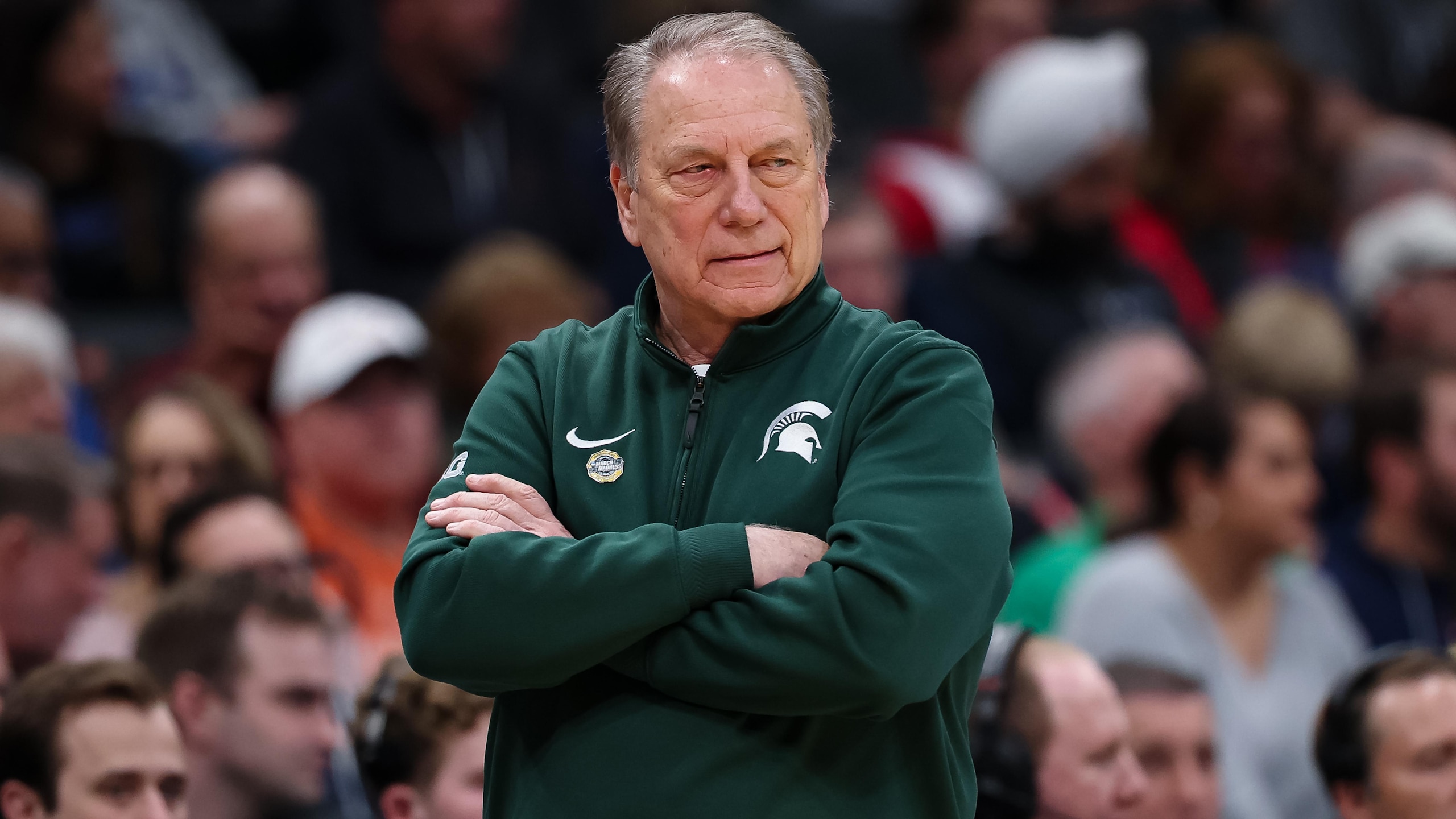
11. Mike Krzyzewski
10 of 20It's hard to put a finger on why Duke coach Mike Krzyzewski is a villain in so many people's eyes.
He is almost universally regarded as one of the best college coaches in history. He's won four national championships.
A lot of it may be jealousy. People hate Duke, and by association Krzyzewski, much like they hate the New York Yankees, Notre Dame football and Dallas Cowboys.
However, columnist Terrence Moore suggested on CNN Opinion that Duke basketball is perceived to have a certain haughtiness people dislike.
10. John Calipari
11 of 20Kentucky coach John Calipari has had feuds with several Division I coaches, including Temple's John Chaney, Connecticut's Jim Calhoun and Louisville's Rick Pitino.
More aggravating to some is that two of his past teams that reached the Final Four, Massachusetts and Memphis, had their results erased from the record books because of NCAA violations committed while he was the basketball coach. Yet he has escaped any sanctions.
An air of suspicion surrounds Calipari, none of which would make him a villain if his teams did not win as much as they do.
He won his first national title last year with a starting five consisting of three freshmen and two sophomores. Recruiting so-called one-and-done players does not endear him to the public either.
Calipari has baggage, as noted in the New York Times story, "The John Calipari Express, Baggage Included."
9. Fab Five
12 of 20The Fab Five was a talented, cocky, controversial, innovative Michigan starting five that got to the NCAA title game in 1992 as freshmen and again in 1993 as sophomores.
The best description of the Fab Five was anti-establishment. That made them a polarizing group.
Young people, especially inner city kids, loved them. LeBron James talked about the respect he had for the Fab Five in a CBSSports.com story.
Older folks or basketball traditionalists had the opposite opinion of Chris Webber, Jalen Rose, Juwan Howard, Ray Jackson and Jimmy King. To them they were thumbing their nose at the game with their baggy pants, brash attitude and flamboyant style.
8. Corky Taylor/Ron Behagen
13 of 20Minnesota's Corky Taylor and Ron Behagen were suspended for the rest of the 1972 season for their actions in a game against Ohio State that instigated a brawl.
Ohio State's Luke Witte apparently elbowed Minnesota's Bobby Nix as they headed to the locker room for halftime.
Later, with 36 seconds left in the game and the Buckeyes leading by six, Witte was helped up from the floor by Taylor, who then kneed Witte in the groin and hit him in the head. Behagen then stomped on the head of the fallen Witte, who was unconscious.
Witte was carried from the court and spent several days in the hospital.
Taylor later redeemed himself.
Ten years after the incident, Witte and Taylor reconciled and became friends.
When Taylor died last summer, current Minnesota coach Tubby Smith released a statement in which he said Taylor "was as nice of a man that I have met since coming to the University of Minnesota."
7. J.J. Redick
14 of 20Duke's J.J. Redick was once called "the most hated current athlete in America," by Clay Travis of CBS Sports.
Being arrogant as a freshman contributed to his image, and being one of the nation's best players (he won several national player of the year awards in 2006) focused attention on him.
Playing for Duke also played a major role in becoming a villain. As Redick noted in an NBC Sports story titled "Duke's Redick Embraces the Villain Role," people often portray Duke's players as choir boys. That's not an image of endearment in college hoops.
Mike Bianchi suggested in an Orlando Sentinel article that jealousy of Duke's success and having Duke on ESPN so often caused people to resent Redick.
6. UNLV 1990, 1991
15 of 20The presence of coach Jerry Tarkanian and the surrounding suspicions that he did not always abide by the rules alienated many.
However, it was not until 1990 and 1991, when UNLV produced one of the best teams in college basketball history, that they rose to the level of villains.
They won the 1990 NCAA title game by 30 points over Duke. In 1991 they became the last team to enter the NCAA tournament with an unbeaten record. They ran their unbeaten streak to 45 games before being upset by Duke in the semifinals.
Their fast-paced style and smugness rubbed many purists the wrong way.
Being based in Las Vegas didn't help the image either. A photo that showed several of those UNLV players relaxing in a hot tub with Richie "The Fixer" Perry, a convicted sports event fixer, merely cemented the image.
5. Bob Knight
16 of 20Former Indiana coach Bob Knight may be the ultimate polarizing figure.
He was admired by those who appreciated his no-nonsense, disciplined approach that brought him three national titles while graduating his players and running a clean program.
He was vilified by those who couldn't tolerate his extremely combative approach to officials, his players, other coaches, the media and many others. His controversial statements also got him in trouble.
Knight was eventually fired at Indiana in 2000 by university president Myles Brand, according to an Indianapolis Star report that chronicles the key occurrences in Knight's Indiana career. He had been given a no-tolerance edict by Brand after a former player, Neil Reid, claimed he had been choked by Knight in 1997. Brand dismissed him after citing further transgressions.
4. Christian Laettner
17 of 20Former Duke star Christian Laettner seemed to enjoy the role of villain.
He embraced his role as coach of the Kentucky Villains, according to a Yahoo.com report, when it played a team of current Kentucky pros, saying he was hoping to get the loudest boos.
He carried a certain arrogance and chippiness that heightened the dislike many already had for Duke and its players. Being recognized as the best player in the country in 1992 on a team that won two national championships provided the necessary jealousy.
Laettner's iconic moment was the last-second shot he made to beat Kentucky in the 1992 NCAA semifinals.
Earlier in that same game, Laettner had intentionally stepped on the chest of fallen Kentucky player Aminu Timberlake under the basket.
3. Adolph Rupp
18 of 20Although Kentucky's Adolph Rupp was one of the greatest college coaches of all time, his image today is tied closely to his association with one particular game.
In 1966, Texas Western became the first team to win an NCAA championship game starting five African American players.
Rupp's Kentucky team became the counterbalance to the historic moment because Rupp fielded an all-white team that day and had never had a black player.
Whether Rupp was actually a racist or not, he was cast as the villain in that story, which took place during the Civil Rights movement.
Rupp's Wildcats won four NCAA titles, but when his name comes up, his association with that 1966 game is one of the first things people remember today.
2. Dave Bliss
19 of 20Dave Bliss resigned as Baylor head coach in 2003 and received a 10-year "show-cause" ban for his part in an ugly scandal.
According to a Sports Illustrated report, Bliss had paid Baylor players, then attempted to cover up those NCAA violations by trying to frame murdered Baylor player Patrick Dennehy posthumously as a drug dealer. Dennehy had been murdered by another Baylor player the same year.
Bliss' attempt to orchestrate the cover-up was caught on tape by an assistant coach, Abar Rouse, who said he feared he would be fired if he didn't go along with the plan.
Two years ago, the Texas Association of Private and Parochial Schools ruled that two players recruited by Bliss to Allen Academy, where Bliss was the coach and athletic director, had received improper inducements, according to an Associated Press report.
1. Point Shavers
20 of 20Several cases of point-shaving by players have placed an indelible black mark on the game.
The most famous point-shaving scandal became public in 1951, and the scandal was outlined in an ESPN.com report. Members of the CCNY team that had won both the NIT and NCAA tournament in 1950 were implicated and arrested.
That investigation expanded, and ultimately 33 players from a number of schools were accused of point-shaving by prosecutors. A few members of the powerhouse Kentucky team of the late 1940s were convicted of receiving money from gamblers to shave points.
Point-shaving scandals involving Boston College (1978), Arizona State (1994), Northwestern (1995) and Tulane (1985) followed, as reported by ESPN.com.
Former San Diego star Brandon Johnson was recently sentenced to six months in jail for attempting to get another Toreros player to shave points in a 2010-2011 game, according to a CBSSports.com report.