49ers vs. Falcons: 7 Keys to Victory in NFC Championship
When the San Francisco 49ers square off against the Atlanta Falcons in the NFC Championship Game, old NFC West rivals will be dueling once again.
Given how much the Bay Area dominated that division prior to 2002, Atlanta has to fight against history, as well. Fortunately for the Dirty Birds, an extensive amount of success has been underway since Matt Ryan got under center in the NFC South.
Getting the Falcons to the second Super Bowl in franchise history is simply the next step.
At the same time, however, San Francisco's future looks bright with Colin Kaepernick. And the 49ers aren't a cakewalk opponent by any means.
Expecting a close matchup, the following seven keys will determine 2012-13's NFC title victor.
The Running Game
1 of 7This isn't so much about who establishes the running game first as it is about which ground game remains effective throughout.
San Francisco will obviously slam early, play defense and try to control the clock.
Atlanta, on the contrary, must push the pace and get the 49ers out of their game plan.
This distinction, though, resides in San Francisco's favor on both sides. The 'Niners averaged 5.1 yards per carry during the regular season and 7.5 per rush in their divisional-round win over the Green Bay Packers.
Flip to defense, and San Francisco gave up only 3.7 yards per attempt and limited Green Bay's offense to just 17 points through the first 59 minutes. The Falcons don't present nearly the same rushing attack—3.7 per carry—and gave up 4.8 during the regular season.
Factor in Colin Kaepernick's mobility, and Atlanta will struggle at controlling the line of scrimmage.
For certain does this aspect favor the 'Niners, but Atlanta can generate efficiency, should the passing game put San Francisco on its heels.
Secondaries' Man Coverage
2 of 7Matt Ryan and Colin Kaepernick can pick apart zone coverage quite well.
And with each defense needing to stifle the opposing ground game, the secondaries must blanket more in man coverage.
San Francisco faces the more difficult task in Roddy White and Julio Jones. With one of the best receiving tandems in pro football, Atlanta can score quickly and virtually at will. A byproduct of defenses failing in man coverage forces the safeties and linebackers to wall off White and Jones from the middle.
In turn, tight end Tony Gonzalez is given favorable coverage matchups.
So unless Carlos Rogers proves able to take away half the field, Ryan will be capable of exploiting the rest of San Francisco's defense. The Falcons also present opportunistic defenders in Asante Samuel and Thomas DeCoud.
Each is a ball hawk, and Colin Kaepernick must consistently make strong decisions from the pocket. Failing in this regard lets Atlanta play more press coverage and lock down better on third down.
That results in more punts, which gives Ryan additional possessions to up the tempo.
3rd-Down Efficiency
3 of 7Moving the chains and winning the possession battle can be traced back to third-down production.
This forces a defense to stay on the field for potentially another full series of downs and prevents the opposition from regaining momentum.
At the very least, getting some first downs on third down will change the field position.
Atlanta entered the postseason ranked No. 2 in third-down efficiency, converting 45.1 percent of the time. San Francisco was way back at No. 25 (35.1 percent).
Defensively is where third down switches back to the 49ers' favor.
Ranked No. 3 in allowing only a 33-percent conversion rate, the 'Niners outplayed Atlanta by 7.5 percent: The Falcons also ranked No. 25 in third-down defense. In short, the key here will be when the Falcons offense faces third down against the 49ers defense.
That's strength vs. strength, although each side is basically a wash in terms of efficiency.
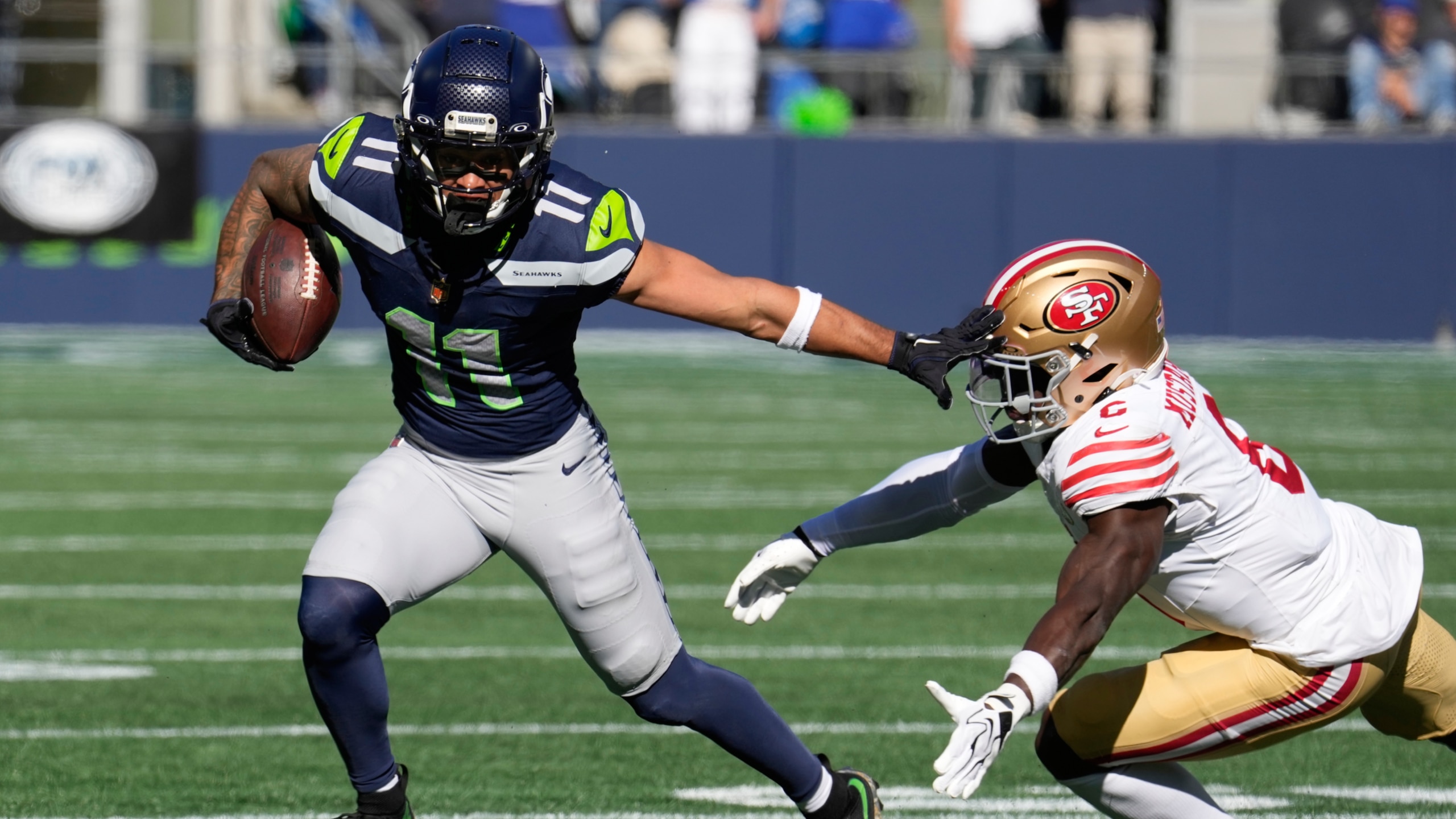
Which brings us to Roddy White, who caught 92 passes on the year, 73 of which went for first downs. Unless San Francisco can isolate him all game long, look for Ryan to target White and move the chains in high-pressure situations.
.png?w=2560)
The Red-Zone Disparity
4 of 7When in scoring position, touchdowns must happen. Period.
This is what makes the Falcons so explosive, because they take advantage when inside the red zone. Even Atlanta's defense locks it down with its back against the goal line.
On the year Atlanta ranked No. 9 in red-zone-touchdown percentage (59.09), while San Francisco ranked No. 18, at just 52.54 percent. These situations are also one area in which the Falcons are more effective than the 'Niners defensively.
Allowing a red-zone-touchdown percentage of just 46.8 percent, Atlanta ranks No. 5, while San Francisco is No. 27, allowing touchdowns 61.5 percent of the time. The impact of the red zone, though, will be affected by each offense's number of trips.
In other words: How well does each offense move the ball?
Consistency is the key, and without question are big plays going to factor in. Each team possesses the offensive personnel to stretch the defense and maintain balance throughout.
But Atlanta's stronger red-zone play is quite the advantage. The challenge is first getting inside the red zone against San Francisco's defense.
Quarterback Pressure
5 of 7This is unsurprisingly significant for the NFC title game, because Colin Kaepernick and Matt Ryan are capable of taking over.
San Francisco fields the stronger run defense and pass rush, as linebacker Aldon Smith can impact the line of scrimmage on any down.
Other sound sources of backfield turbulence are Ahmad Brooks and Justin Smith.
And since Ryan isn't nearly as mobile as Kaepernick, anticipate the 'Niners to blitz early and often.
This will assist the coverage players and keep San Francisco's physical philosophy intact. With press coverage containing Roddy White and Julio Jones and the front seven blitzing, Ryan will be forced to make quicker decisions.
As for Atlanta, its pass rush pales in comparison to that of San Francisco. Kaepernick's mobility is also an extreme advantage for the 49ers, so the Falcons must simply play disciplined. The Dirty Birds can't afford to be overly aggressive, as San Francisco's balance will then move the ball and limit Ryan's possessions.
Against a stellar defense such as the 'Niners, fewer opportunities for Ryan only enhance San Francisco's pass rush.
Punt Returning
6 of 7The field-position contest is a game within the game.
Every part of special teams will play a role, but returning punts can have the biggest impact.
Here, the 49ers saw Ted Ginn Jr. and Kyle Williams combine to average 10.5 yards per punt return this season. Atlanta only got 7.9 between Harry Douglas and Dominique Franks.
Include the potential efficiency from each offense, and shortening the field for each subsequent possession by at least 10 yards for the 49ers is enormous. That is one fewer first down for the offense to record and immediately flips the field position.
And when a defense gets a key stop on third down, the upcoming punt return will change the game's complexion. Whether it's a big return, a fumble or an attempted return that goes nowhere can affect confidence and momentum.
San Francisco clearly holds the advantage here with speedsters in Ginn and Williams, and its collective experience is also valuable.
Turnovers
7 of 7Ball control and turnovers are the yin and yang of football.
Every team needs to maintain possession but at the same time get takeaways from the opposition.
It's quite fascinating.
This season San Francisco only gave up the rock 16 times and just once last week. Atlanta, on the other hand, turned it over 18 times and twice to the Seattle Seahawks.
Defensively, Atlanta has been more opportunistic, with 20 interceptions to just 14 for San Francis—each recovered 11 fumbles. Because of Thomas DeCoud and Asante Samuel in the secondary, the Falcons are capable of generating more interceptions.
San Francisco can force more fumbles, courtesy of a stronger run defense and pass rush.
Last year also epitomized the impact of turnovers on special teams, to the misfortune of Kyle Williams.
Turnovers for a trip to Super Bowl XLVII are intriguing, though, since the offenses have polarizing approaches. In addition, the defenses turnover strengths do not mirror their oppositions' philosophies.
Therefore, don't expect multiple turnovers to occur. The victor will be the team that creates more turnover opportunities—e.g. forced fumbles, defended passes and sacks—but not necessarily actual turnovers.
Creating opportunities just minimizes an opposing offense's production and holds scoring to a minimum.
Follow John Rozum on Twitter.
.jpg?w=2560 "Grading WWE Raw 🔠")