6 Stud College Basketball Players No One Is Talking About
As hundreds of thousands of students pour into colleges and universities across the country, the excitement for the upcoming college basketball season is growing faster than the beer bellies on all the froshies.
The 2012-13 season looks to be as deep as any in recent history. We have seen over the last many years that grabbing top high school talent is no longer a privilege reserved for the college basketball super programs.
The results?
- Talent is getting spread all over the country
- It’s a fool’s errand to keep up with it all
- We need articles like this one to help the fools who do, in fact, try
Danuel House, Houston
1 of 5The No. 19 player in the 2012 ESPN Top 100, House received offers from big-time programs like Kansas, Ohio State and Texas, but instead chose to settle on hometown Houston.
Aside from the obvious mental ease this provides, one could certainly see the appeal of this decision. Conference USA will still likely go to Memphis, but Houston is bringing back their four leading scorers from last year and could very well become a sexy Sweet 16 choice come March. Additionally, House is headed to a conference where he will be the top freshman rather than just one of many new kids looking to stand out.
He will likely play a combination of small forward and shooting guard due to his decent size (6’6”) and ability to drive to the hoop. Houston is very deep at the forward position—including three of the four top returners mentioned above.
Whether House starts the year behind any of them remains to be seen, but he could fall within the nation’s top 100 scorers by season’s end.
Mike Moser, UNLV
2 of 5UNLV must be overjoyed that Moser decided to stick around for another year rather than take his talents to the Association.
The 6’8” forward averaged less than five minutes per game at UCLA in 2009, transferred to Las Vegas in 2010 and broke out a casual 14.0 PPG, 10.5 RPG last season—both of which were tops on the team.
The 2011-12 season came to a disappointing end when UNLV was upset in their opening NCAA Tournament game by Colorado. They should improve upon that finish given the increased development of Moser, as well as the acquisition of Anthony Bennett, the top power forward in the class of 2012.
The second-best rebounder on the team last season, Anthony Marshall, averaged only 5.1 rebounds. Those are guard numbers—oh wait.
Bennett, though, is a big boy (6’8”, 230 lbs) and should provide Moser with some assistance under the boards. He’ll also let Moser have opportunities to score from mid-range. With more of a well-rounded game, Moser could work his way into a lottery selection next year. A lack of “versatility,” as noted by Neal Leitereg of the Examiner, may have turned away some NBA scouts the last time around.
Chasson Randle and Aaron Bright, Stanford
3 of 5The Pac-12 was a sad excuse for a basketball conference in 2012. If there was ever a conference in which the door was open for a few select individual players to post impressive offensive numbers, this is it.
Last year, Stanford was the lucky team that got to do the awkward “Yay we just won the NIT!” thing. Will they be able to take the next step and lose in the first round of the NCAA Tournament? That remains to be seen. However, if they once again must settle for French kissing their second cousin, the sour achievement will not be because of their backcourt.
Randle and Bright are a pair of undersized guards who hope to see mutual improvement now in their second year together. Randle, who averaged 13.8 PPG and 2.1 APG, was a Pac-12 Freshman of the Year candidate.
Bright, a rising junior, was good for 11.7 points and 3.7 assists per game, but really shined in the aforementioned NIT. He won tournament MVP. Both are excellent three-point shooters (44 percent apiece) and good defenders.
But maybe the two will benefit if they can establish more distinctive roles. If Randle can have a sophomore season breakthrough, should Bright sit back as a facilitator? On paper, it makes sense; Randle has two inches and 2 PPG on him.
Then again, I have pretty supreme confidence that head coach Johnny Dawkins will make the right decisions for his team. Dawkins was a two-time All American guard at Duke before returning to coach under Krzyzewski for a decade. He has all the experience needed to resolve every coach’s favorite dilemma: having too many talented players.

B.J. Young, Arkansas
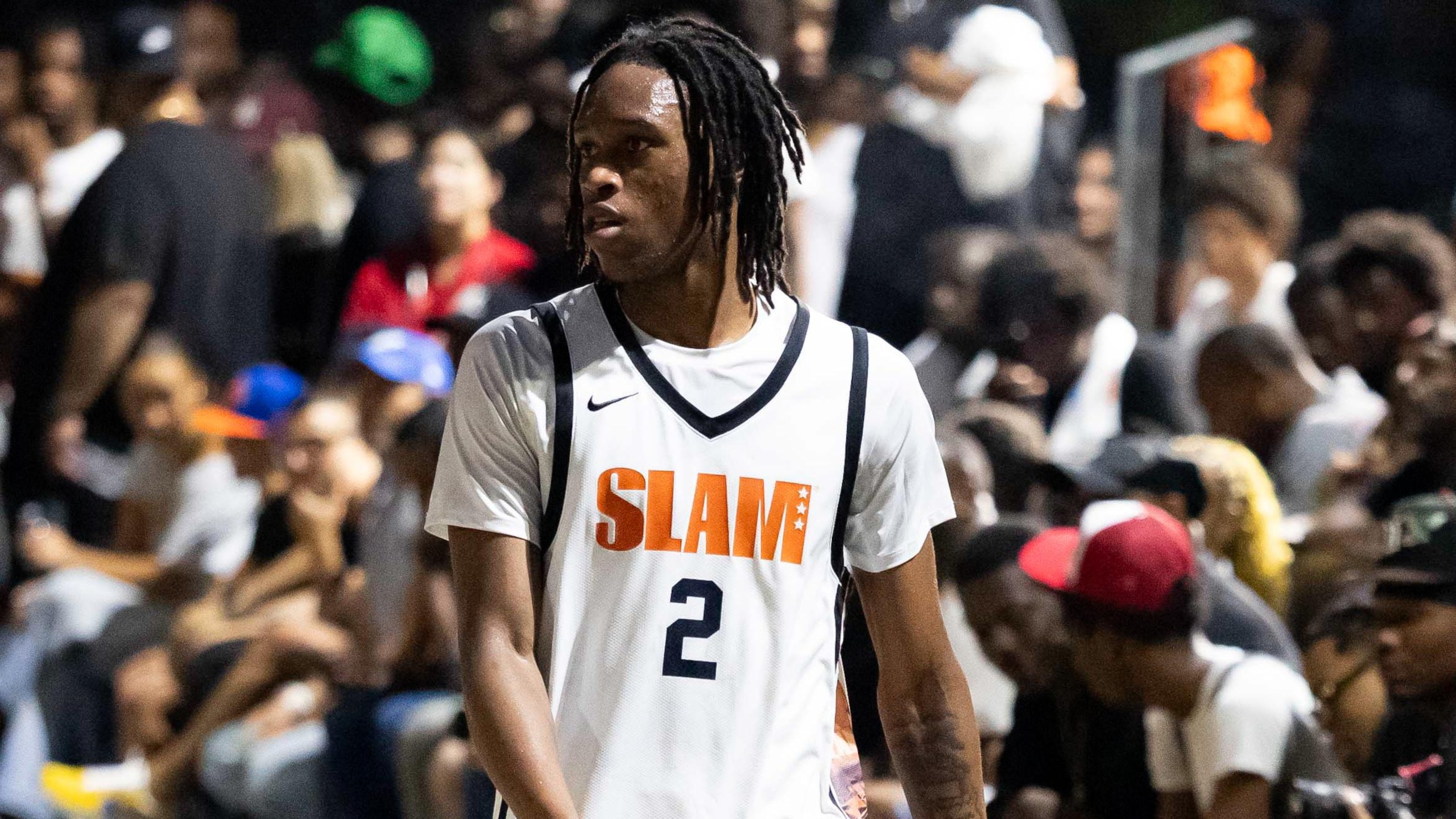
4 of 5Young is another guard coming off a solid freshman campaign (15.3 PPG, 3.1 RPG, 2.3 APG, .504 FG%, .413 3P%).
Even over the brief 32 games he played with the team, Young made noticeable improvements. At least, head coach Mike Anderson clearly felt so. He gave Young an average of three more minutes per game over the final 16. In response, Young went from 14.75 to 15.75 PPG. Young also showed a knack for performing well in meaningful affairs; he averaged 21.6 points in Arkansas’ five games against nationally ranked opponents.
Anderson is well known for his D’Antoni-like fast-paced offense and as the team’s best guard, Young will be the one most responsible for making the team play as such.
Young’s talent, experience and confidence, both personally and from the team, should put him in a great position to become an exciting, much-discussed player. In doing so, he can very well carry Arkansas to a March Madness appearance.
Drew Crawford, Northwestern
5 of 5With last year’s team points leader, John Shurna, now playing in the Summer League, it all falls on rising senior, Drew Crawford, to get Northwestern a much-deserved tournament birth.
Unfortunately for Crawford, he will need his best season to date in what is sure to be one of the nation’s best—if not the best conference. ESPN’s John Gasaway currently has Northwestern ranked 10th in the Big Ten (which is, naturally, comprised of 12 teams).
Then again, Crawford is used to the challenge by now—or at least that’s what the numbers show. He has steadily raised his PPG from 10.0 to 12.1 to 16.1. The 2011-12 season also showed an improved jumper and three-point ability as both shooting percentages were at career highs.
So where does Crawford go from last season?
At 6’5”, 205 lbs, Crawford plays the guard/forward flex position. In terms of an overall stat line, it probably means he won’t be pumping out eight rebounds or assists.
Still, it would be nice to see Crawford raise his numbers in either of those two departments, as they have remained essentially stagnant over the course of his time at Northwestern. This is especially true since he will now be the team’s undisputed leader.
Crawford probably won’t be playing much competitive basketball come March, but that is no reason to believe the same will be the case come August.
.jpg?w=2560 "Cardinals Giants Football")
.jpg?w=2560 "Report: Chiefs Contact Hill's Agent")
.jpg?w=2560 "OBJ Calls Out Giants 😳")
.jpg?w=2560 "Tyreek makes another cryptic post amid Chiefs rumors")