
Rafael Nadal: Why the Spaniard Will Struggle to Win Gold at 2012 Olympics
Rafael Nadal's victory over Novak Djokovic in the 2012 French Open marked his first Grand Slam victory in a year. It ended his three slam-final losing streak against the world's No. 1 ranked player.
When these two players met in the 2011 Wimbledon final, Djokovic was 0-5 against Nadal in Grand Slam events. By the end of this year's Australian Open, Djokovic had a 3-0 record.
However, Rafa's showing at Roland Garros this year was very impressive, not dropping a single set until the final. He is playing with extreme confidence and poise and is looking stronger than ever.
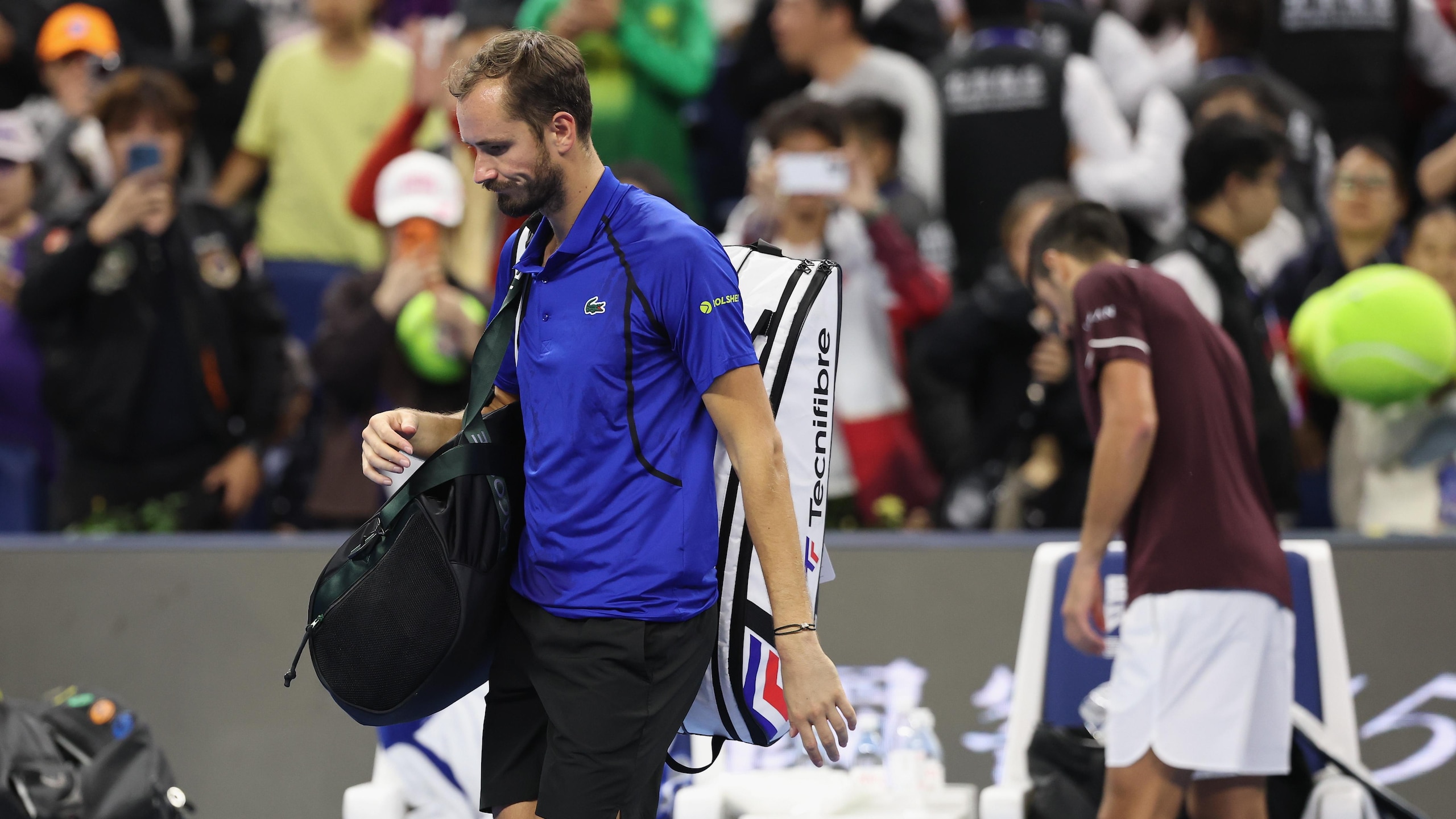

Despite his recent run, Nadal does not always have the best of luck on surfaces other than clay. With the 2012 Olympics being held at the All England Club, the men's No. 2 player will need to make some adjustments to his game, or he will struggle to make it to the top of the podium.
First, mentality will be a huge factor.
After the 2011 Wimbledon Final, Djokovic held a 48-1 record and passed Nadal to become No. 1. Nadal realized that he had yet another rival besides Roger Federer that he had to compete against for titles, but this one had gained the upper hand.
In this year's French Open final, Nadal unleashed his emotion and became unfocused with the continuous rain delays. This allowed Djoker to take a set and push the match longer. Even though Rafa is known for his composure, if something sparks an inkling of frustration, his whole match could crash and burn rather quickly, and he will not have a second rain delay to bail him out.
Additionally, the Spaniard has been known for suffering from severe knee pain. Grass courts do not provide as much forgiveness for pain as clay courts do. With new talent rising, he must remain healthy if he wants to keep up with the young guns. His knees have been known to act up on hard surfaces, which could potentially slow him down.
Nadal also struggles getting out to fast starts on harder surfaces.
In last year's Wimbledon, he lost the first two sets and never looked like he was in a rhythm. This allowed Djokovic to dictate play. If he struggles to gain the control of points, Nadal can be pushed back, run around, and eventually worn down.
Nadal's forehand is clearly his most dominant stroke. If he is able to run around his backhand and place his forehand shots, he is virtually unstoppable.
This will be difficult on a grass surface because the ball does not sit up as slowly and easily as on a clay court. Nadal will be forced to rely more on his backhand, which is his weaker stroke and will lead to more unforced errors.
Opponents must also take advantage of Rafa's inability to convert break points. Against Djokovic in 2011, Nadal only converted 50 percent of his chances, compared to Djoker's 83. The more a player can hang around and hold his own serve in the match, the better chance they have to outsmart the Spaniard.
Despite his recent Grand Slam title, Nadal will definitely be in contention for Olympic Gold, but he will most likely fall short of the first prize.


.jpg?w=2560 "Love's Body Already 'Tired'")



.jpg?w=2560 "Tyreek Deal May Come Soon")
.jpg?w=2560 "Mahomes' Wife Trolls Kubiak 💀")