
Blake Griffin and 10 Young NBA Players We Expected Too Much From
In a day and age in which college basketball players take just one year to develop their skill sets before entering the NBA ranks, expectations are often misplaced.
We expect all-around brilliance from the fundamentally inept, stardom from the role players and championships from individuals.
It's time to temper those expectations.
For a look at which players we've expected too much from, take a gander at the following slides. You'll see that Blake Griffin is far from alone.
Darren Collison, Indiana Pacers
1 of 10Darren Collison has gone from one of the most dynamic rookies in 2010 to an afterthought in 2012.
While some may attribute this to the quality of his play, it is more a product of the elevated expectations that do not fit Collison's play.
Collison is far more of a game-changer than a franchise point guard. For one reason or another, the Indiana Pacers' decision to trade for the open-court burner led to expectations of stardom.
The end result has been George Hill overtaking Collison for the starter's job.
Upon witnessing Collison's ability to carve up the Miami Heat's defense with his dribbling and quickness, Collison proved that he could be a starter on a contender. Let's just give the 24-year-old some time.
Season Averages: 13.62 PER, 10.4 PPG, 4.8 APG, 3.1 RPG, 0.8 SPG
Glen Davis, Orlando Magic
2 of 10Entering the NBA, Glen Davis was considered to be one of the biggest enigmas of all. He lacked adequate height and wasn't necessarily the strongest player in the post.
The confusion surrounding his upside continued, as Davis stepped up as an effort player who offered very little in terms of fundamental contributions.
And then he was acquired by the Orlando Magic and was expected to play a major role for his new team.
Davis failed to live up to the hype during the regular season, which was likely a result of receiving the most significant playing time of his career. As the minutes began to die down, the quality of his play maintained the same disappointing level.
And then the postseason came around, proving that the hype was well-warranted. Averages of 19.0 points and 9.2 rebounds will do that for a player.
Postseason Averages: 19.00 PER, 19.0 PPG, 9.2 RPG, 1.2 BPG
DeMar DeRozan, Toronto Raptors
3 of 10DeMar DeRozan is a 22-year-old shooting guard who is averaging 16.7 points per game. He's also gone from having a horrendous mid-range game to being a half-way decent jump shooter in a matter of three years.
Yet, writers and analysts league-wide are predicting the Toronto Raptors to select a shooting guard come this month's NBA draft.
It's time to think logically, folks. Do you shut the door on a player with solid scoring ability at just 22 years of age? Or do you take a chance on a player of the same age or younger who likely lacks in the area DeRozan excels?
In the words of NFL Live: C'mon, man.
Season Averages: 12.87 PER, 16.7 PPG, 3.3 RPG, 2.0 APG, 0.8 SPG


Tyreke Evans, Sacramento Kings
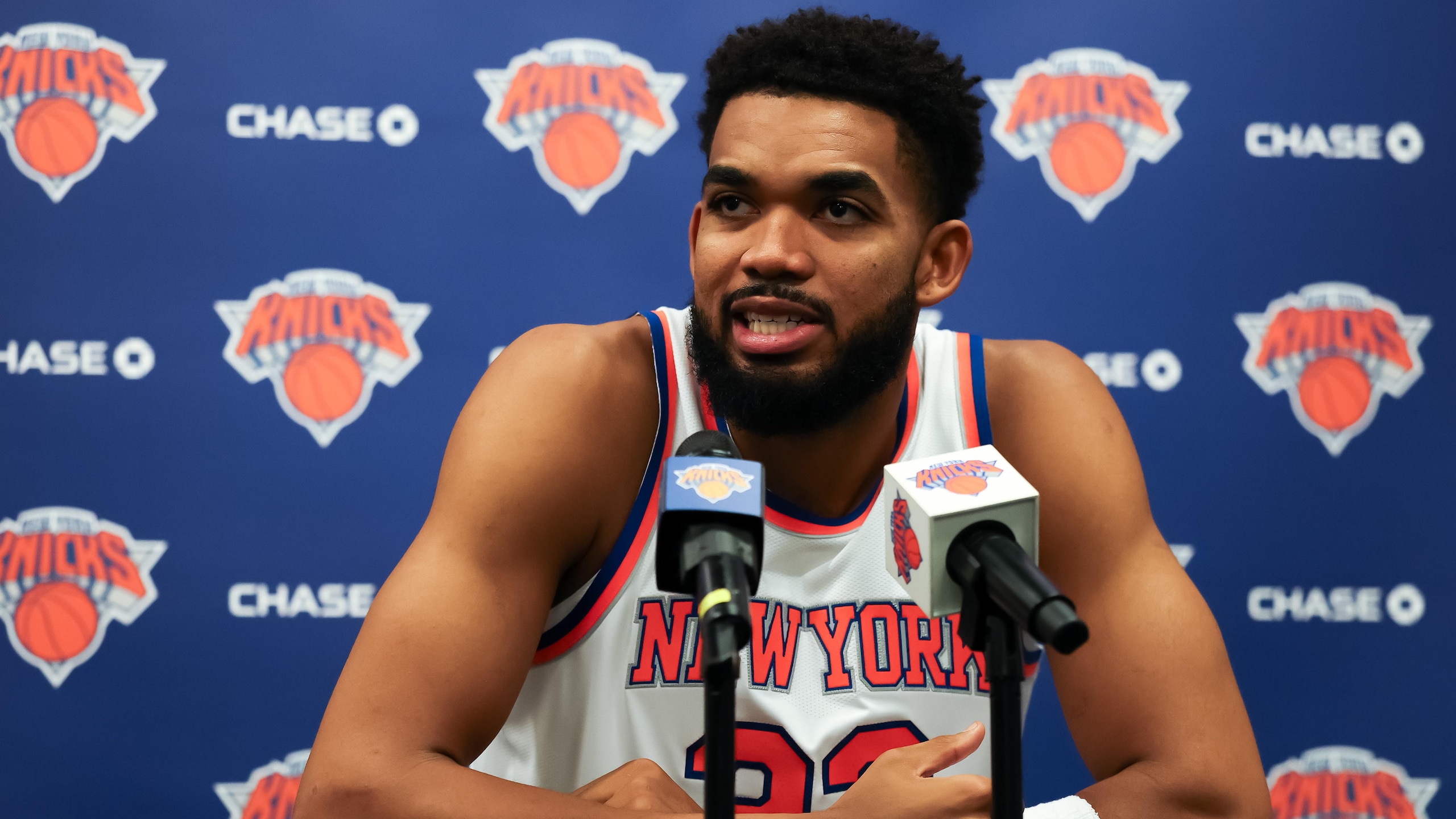
4 of 10The 2010 Rookie of the Year just hasn't lived up to his lofty expectations since he took the league by storm in year one.
Tyreke Evans has seen a steady decline in terms of his point, assist, rebound and steal per game averages. He's also failed to emerge as a true team leader, as the Kings have been among the least-disciplined teams in the NBA since he first entered the league.
The issue is not what he has done, however, it's what we've expected of him.
Evans is as flashy a player as any. He's also an incredible finisher around the rim, but he is not a franchise player.
To place the burden of such a role on a player that is so unprepared is wrong of us, not wrong of Evans for not being able to live up to the status.
Season Averages: 16.48 PER, 16.5 PPG, 4.6 RPG, 4.5 APG, 1.3 SPG
Blake Griffin, Los Angeles Clippers
5 of 10Blake Griffin has become one of the most polarizing figures in all of professional sports. From his highlight-reel dunks to his head-scratching flops, it's not hard to love Griffin on one play and hate him on another.
Which is what most fans do.
As a result, Griffin's game has fallen under a very tight scope. People have begun to point out missing aspects of his game that a second-year player is unlikely to possess, such as a polished low-post game or a mid-range jump shot.
It even causes people to ignore when he's successful in those very areas.
Rather than criticize the second-year power forward, it's better to appreciate what he has to offer and realize how much upside the kid truly has.
Season Averages: 23.50 PER, 20.7 PPG, 10.9 RPG, 0.8 SPG, 0.7 BPG, 54.9 FG%
JaVale McGee, Denver Nuggets
6 of 10When JaVale McGee hit the NBA, his athletic ability had people expecting something special from the former Washington Wizard.
The fact remained, however, that McGee was fundamentally raw from the get-go and considered by many analysts to be a project pick.
Fans saw flashy dunks and big shot-blocking numbers and, in turn, expected stardom. That was not to be, which made sense due to what was already known about McGee's game.
Just don't take your eye off of him, as he's set to blow up very soon.
Season Averages: 19.90 PER, 11.3 PPG, 7.8 RPG, 2.2 BPG, 55.6 FG%
Anthony Randolph, Minnesota Timberwolves
7 of 10Anthony Randolph had a rookie season consisting of eight double-doubles that were scattered throughout the regular season.
Four of them were in the month of April, including a 20-point and 15-rebound performance against the New Orleans Hornets and a 24-point, 16-rebound, four-assist, four-steal and one-block performance against the San Antonio Spurs.
Unfortunately, Randolph never found consistent playing time. And still hasn't.
The great one day, below-average the following day trend has continued over the past five years. Nevertheless, Randolph is just 22 years old and has yet to reach his true potential.
So why must we write him off as an overrated star when his upside is so high?
Expectations.
Ramon Sessions, Los Angeles Lakers
8 of 10When Los Angeles confirmed speculation and made the move to acquire Ramon Sessions, the 26-year-old point guard was expected to save the Lakers' season.
As we saw in the Lakers' postseason series against the Denver Nuggets and Oklahoma City Thunder, however, Sessions just couldn't hold his own.
This is not to say that Sessions will not reach the level expected of him, just to acknowledge that we, as analysts, have been naive in believing that a player could go from reserve to elite starter in a matter of months.
Sessions' open-court speed and quickness, as well as superior ball-handling skills, could change this in the future.
Just temper your expectations.
Season Averages: 16.79 PER, 11.3 PPG, 5.5 APG, 3.3 RPG, 0.7 SPG
Evan Turner, Philadelphia 76ers
9 of 10When Evan Turner was selected with the second overall draft choice in the 2010 NBA draft, many expected the former National Player of the Year to be a star from the opening tip.
In a system that focuses on team basketball rather than the accommodation of individual ability, Turner failed to live up to such lofty expectations.
2012 brought similar results, although flashes of brilliance were certainly visible.
To truly understand Turner's value, we must give him time. He is capable of contributing in nearly every facet of the game, from scoring to defending to dominating the glass.
Just let him grow before you label him as an underachiever.
Season Averages: 26.4 MPG, 12.60 PER, 9.4 PPG, 5.8 RPG, 2.8 APG
John Wall, Washington Wizards
10 of 10The 2010 first overall draft choice was given the burden of a franchise in ruins. In turn, John Wall was expected to take the Washington Wizards from pretenders to contenders in no time at all.
That is a likely reason that we overlooked a season that was matched by just two other players: Chris Paul and Deron Williams.
Wall joined Paul and Williams as the only players in the NBA to put up at least 16.0 points and 8.0 assists per game. His averages of 16.3 points and 8.0 assists also ranked in the top 10 among all point guards in both individual categories.
To put this success into perspective, Paul averaged just 1.0 points and 0.9 assists more than Wall in his second season in the league. Paul, however, didn't have to deal with this.
Season Averages: 17.77 PER, 16.3 PPG, 8.0 APG, 4.5 RPG, 1.4 SPG, 0.9 BPG




.jpg?w=2560 "Love's Body Already 'Tired'")
.jpg?w=2560 "Tyreek Deal May Come Soon")

.jpg?w=2560 "Mahomes' Wife Trolls Kubiak 💀")