Deconstructing WWE: What We Talk About When We Talk About John Cena
*With apologies to Chuck Klosterman, who I’m sure reads Bleacher Report*
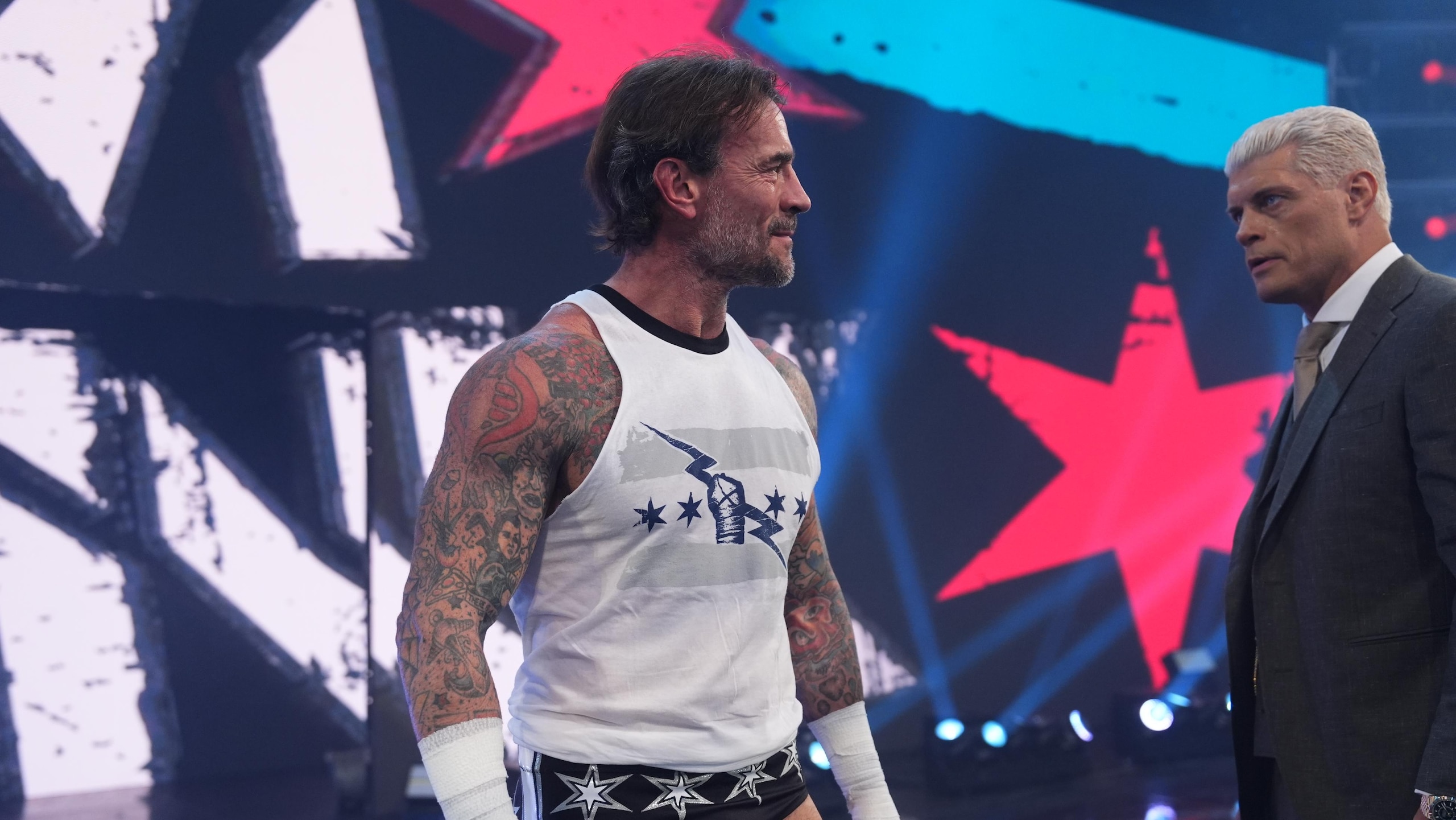
“I don’t hate you, John. I don’t even dislike you. I do like you. I like you a hell of a lot more than I like most people in the back. I hate…this idea that you’re the best.” – CM Punk (RAW, 6/27/11)
Fact #1: John Cena is a main event performer in WWE, possibly the face of WWE, despite being repetitive in his promos and somewhat limited in the ring.
.jpg?w=2560)
Fact #2: Many people hate and rebel against John Cena.
Analysis: Fact #1 is not the direct cause for Fact #2.
Allow me to explain.
One of the most popular trends in the WWE in the recent years has been to continuously nurture the gap between the “Let’s go Cena!” demographic and the “Cena sucks!” demographic. It’s no secret to anyone who’s watched WWE since 2006 that John Cena is “controversial” in the sense that, despite him being pushed as the conquering hero, a large majority of the audience has decided to reject him.
There are reasons for this. One might argue that people boo Cena because it has become the trendy and clever thing to do, but that kind of self-aware, hipster meta-reasoning does not usually rear its head in professional wrestling, so it can’t be that. Also, people don’t entirely boo Cena because of the five moves of doom, the “you can’t see me” taunts, or the highly energetic and rather repetitive promo work he does.
No, the true reasons for people booing Cena go a bit deeper than that. I will explain those reasons in a minute, but first, a point of semantics: before we go any further, I must make it especially clear that when we talk about Cena, there is a difference between John Cena and “John Cena.”
This point is not unique to Cena—professional wrestling is littered with this phenomenon and it always has been. In wrestling, it is tricky to delineate between the man and the Man on the Titantron, but sometimes the performers make this dichotomy easy for us through the creation of an alternate identity that they put on display. Dwayne Johnson is different from The Rock. Terry Bollea is not the same as Hulk Hogan (though in recent years, the line has started to blur a bit). Mark Calaway almost undoubtedly does not take Michelle McCool out to a nice dinner at Outback Steakhouse and sign his check “The Undertaker.”
Cena is a bit different. A significant part of Cena’s act has always been built upon the foundation of authenticity. John Cena is supposed to be “authentic.” John Cena—especially recently—loves to make the point that he is loyal, he is a man of the people, he is a soldier, he will “fight” no matter what, his life is this business, and guys like Dwayne Johnson and Brock Lesnar are posers and villains because they packed away their trunks and went elsewhere while Cena stayed true to WWE. Unlike Johnson and Lesnar, Cena is “authentic.”
But yet, almost since the moment he won his first world title from JBL at Wrestlemania 21, John Cena has been the victim of hugely mixed reactions from fans. The people who he claims to love and live and die for tend to let him know—in deafening manner—that “Cena sucks.” Why? Because John Cena, despite what he may think, is not authentic.
And therein lies the rub.
As I mentioned earlier, there is a difference between John Cena and “John Cena.” John Cena is a man, “John Cena” is an idea. John Cena is by all accounts a good guy, but a large number of people seem to hate “John Cena.” John Cena is from West Newbury, Massachusetts, but “John Cena” only exists inside of the First Mariner Arena or Madison Square Garden or—God have mercy on him—the Allstate Arena.
Additionally, “John Cena” claims to be a man loyal only to the fans and to the WWE, but John Cena makes movies and does publicity appearances. “John Cena” is the leader of Cenation and is the All-American good guy, but John Cena has gone through a number of gimmick changes. John Cena used to be authentic—he was, legitimately, a guy from an upper-middle class suburb of Boston who happened to really like rap music. As such, John Cena created a white rapper gimmick that was edgy, interesting, and highly entertaining.
John Cena the man, then, began creating “John Cena” the character. This character, the suburban rapper, was truly authentic because it was who he was. There was nothing contrived about it. He may not have been the best rapper in the world, but he was doing his thing and doing it well. So well, in fact, that people began to cheer him for it.
And then, suddenly, John Cena stopped being John Cena, and started being “John Cena” the cardboard cutout good guy that sells T-Shirts and caters to kids.
People do not hate John Cena. People hate “John Cena.” People hate “John Cena” because he is not the guy that people took to after he created a character that people liked. “John Cena” gained popularity, turned face, rose to the main event, and then completely lost sight of what made him popular and beloved.
In the music industry in particular, this is a very common theme. It is called selling out. “John Cena” would have you believe that he has never sold out, that he is still the same guy that you’ve been cheering all this time, but the fact is that he is not. “John Cena” still claims to be a man of the people, but it has become very clear that John Cena has sold out and become the glad-handing, politicking, ever-smiling face of The Company.
And this is a problem.
People do not like being told that they were wrong. This is, in a nutshell, what John Cena has done to the fans. He has told them, “Sorry, but that guy you once loved? That was just an act. Now that I’m rich and successful, I’m going back to the vanilla babyface who doesn’t offend anyone and can go on TV and promote the business.” All of this is going on while “John Cena” rails against two-timers like Dwayne Johnson who went off to Hollywood.
Now, be honest—would you cheer a guy like that?
As a quick tangent (but a pertinent one): growing up in Maryland, I always loved the Orioles when I was a kid. At one point, Mike Mussina pitched for the Orioles. People loved Mike Mussina because he was homegrown, he was “one of us” to some degree (despite being inordinately gifted at throwing baseballs really fast), and most importantly, he promised that he’d never leave us. Especially not for a team like the New York Yankees, the big bullies and the long-established symbol of dynastic greatness and arrogance. So what did he do when his contract was up? He left to pitch for the Yankees.
Mussina became resented—you might even say despised—in Baltimore because he always claimed to be “one of us” and then betrayed our trust. So why shouldn’t people resent Cena for the same reason? Is there really a difference between Mussina bolting for the Bronx and Cena giving up what made us love him once he achieved his dream?
I say no.
One of the most interesting ways that this Cena/“Cena” issue plays out comes when we look at Cena’s greatest rivals who we cheered more than him: Kurt Angle (who really was authentic), Edge (whose entire gimmick was predicated on him pushing the envelope and always using whatever techniques best suited him, even when he was a legitimate champion), The Rock (who once was a victim of “sellout heat” but was and is simply more entertaining than Cena), and finally, and perhaps most importantly, CM Punk.
Punk’s rivalry with Cena deserves special mention, because 1) Punk is the first major heel I can ever remember cutting a scathing promo cutting down the company’s supposed top babyface and actually turning into the company’s top babyface as a result, and 2) Punk is the first person to ever really say what bothered us about Cena—that is, he said plainly in front of everyone that Cena is completely, utterly inauthentic.
What he actually said, if you don’t remember, is that while Cena thought he was the pre-2004 Boston Red Sox (the underdog, the people’s champ, the feel-good, root-for-me story), he was actually the New York Yankees. For this, Cena smacked him. Not just because the Yankees are the archival of his hometown Red Sox, but because what Punk said was true: Cena is not the underdog, overcoming-the-odds guy anymore. He is the guy that needs to be overcome. He is the guy that people have to prove themselves against to cross over into the main event. While he once was the little guy, he is now the establishment.
And for that, many fans will tell you that “John Cena” sucks.
Whether that other John Cena really does or not.



.jpg?w=2560 "Mahomes Asked OT to Leave Meeting")

.jpg?w=2560 "5 Teams Eyeing Jonathan Taylor")
.jpg?w=2560 "Jonathan Taylor Landing Spots 📍")


