

Happy "The 2024-25 NBA regular season has passed the halfway mark" to all who celebrate! Let's commemorate the occasion with an updated batch of report cards.
These letter grades portray the state of teams entering games on Wednesday, Jan. 22. They can—and will—change. Heck, they have changed. We last ran through this exercise more than a month ago, around the schedule's quarter-mark. Those results will be included for reference.
Each squad continues to be evaluated against individual expectations. Supposed-to-be contenders flailing in the win-loss basement will receive harsher marks than rebuilding squads de-emphasizing the here and now. Pleasant surprises will have an easier time racking up top-tier grades than known juggernauts. So on and so forth.
Injuries will not be held against teams. But critiquing flawed processes in the wake of—as well as prior to—rampant absences is fair game. Though these grades reflect the entire season, our commentary will often devote meaningful time to any important developments, good or bad, that have come to light since we last convened.
Finally, please remember that "C" represents an average grade. Anything higher means teams are outperforming expectations. Anything lower means they're underachieving.
Atlanta Hawks: B+
1 of 30
Quarter-Season Grade: B
Pretty much nobody had the Atlanta Hawks penciled in as a top-six Eastern Conference team before the season. And while only four squads are outperforming their point differential by a larger margin, this group deserves some flowers.
Holding serve in the middle is an accomplishment relative to Atlanta's dependence on youngsters—namely Zaccharie Risacher (when healthy)—and spotty availability in the middle of their rotation. A handful of their most used lineups are notching standout net ratings, and contending for league-average defense with this personnel continues to impress.
This team must get more consistent on offense to make real noise. Trae Young is knocking down more of his threes, and the Hawks are getting some quality minutes from Garrison Mathews and Vit Krejčí. Barring a significant trade, though, Atlanta needs better output (and availability) from Bogdan Bogdanović.
Brooklyn Nets: B+
2 of 30
Quarter-Season Grade: B+
After obliterating expectations to start the season, the Brooklyn Nets made it clear they understand the point of this year and flipped Dennis Schröder followed by Dorian Finney-Smith. Since that first deal, they have the league's worst net rating.
Adjusting their grade is almost impossible as a result. Crediting a team for necessary demolition is objectively weird, but self-awareness is worth applause. The Nets also have the first part of the season, in which rookie head coach Jordi Fernandez helped them cobble together a truly competent offense, as a buoying reference.
Settling on the same mark feels right. Brooklyn warrants praise for packing more punch than expected out of the gate, for acting early as a seller, for keeping Cam Johnson's trade value intact, if not increasing it, and for plumbing the depths of guys like Noah Clowney, Jalen Wilson, Ziaire Williams and Tyrese Martin.
Boston Celtics: B
3 of 30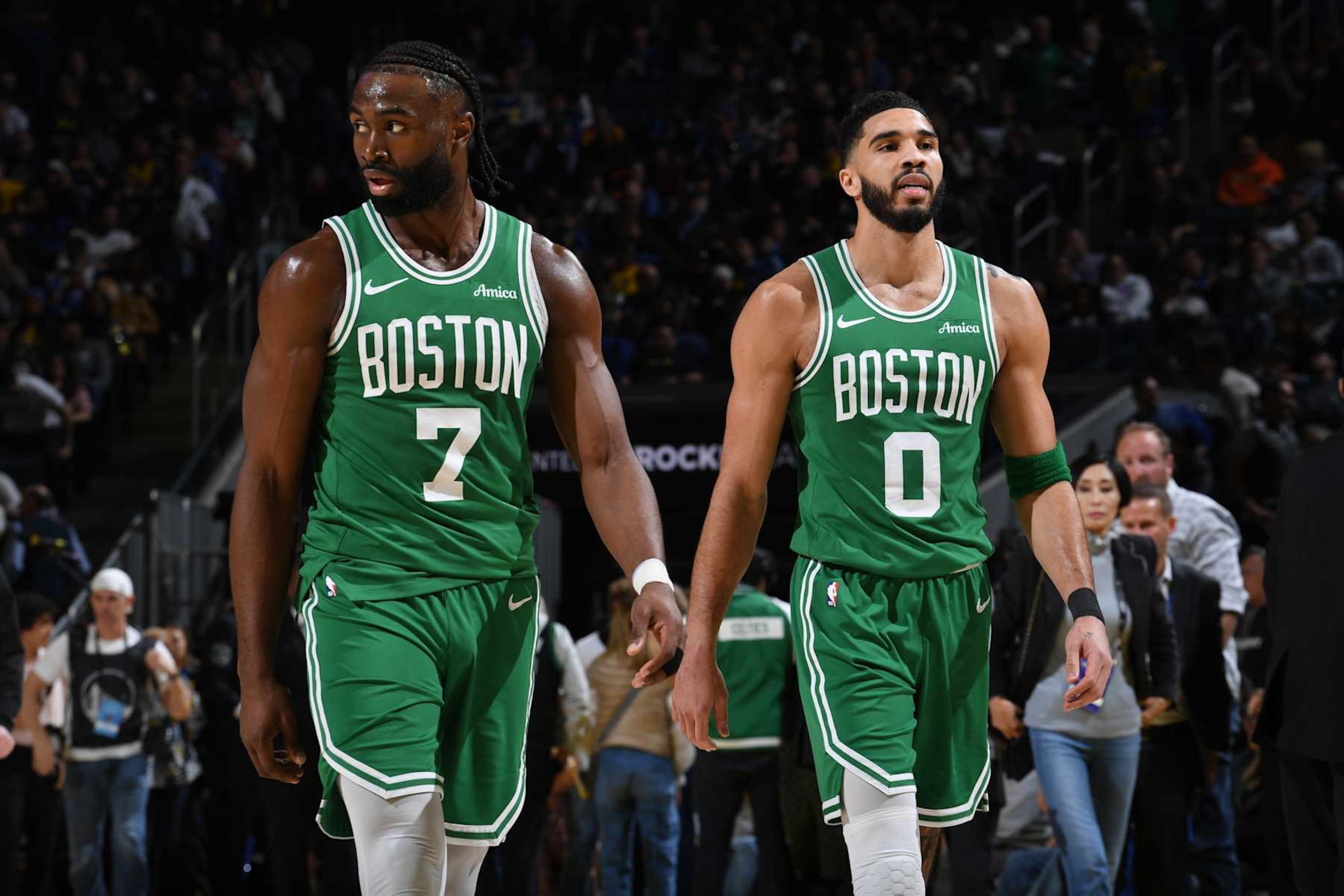
Quarter-Season Grade: A
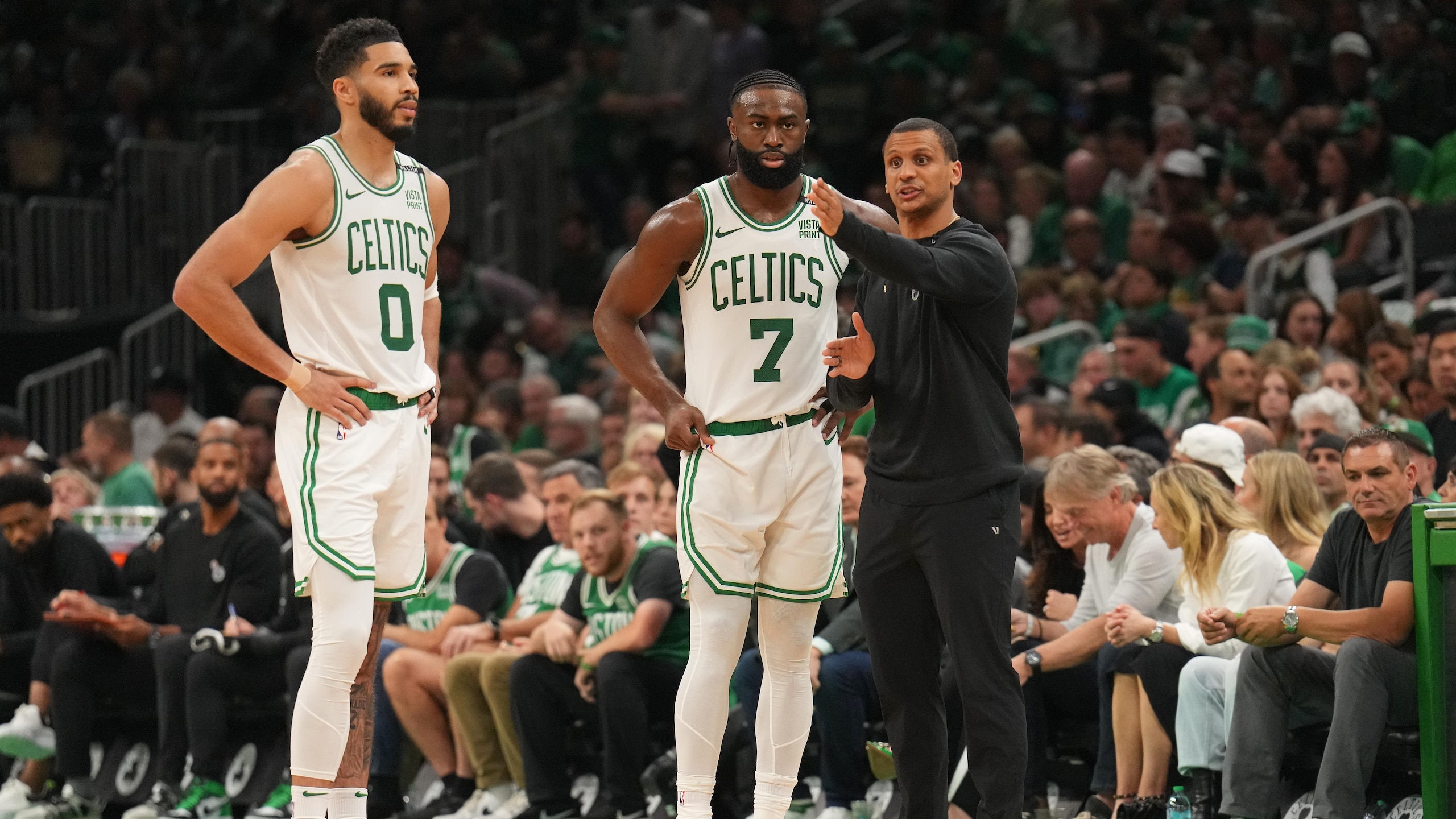
Alarm bells are being sounded by fans and pundits who apparently wanted the Boston Celtics to defend their title by...winning more games and flashing zero imperfections. [Command + sarcasm font key.] Totally reasonable.
If you're substantially down on this team, that's a you thing. No, the Celtics aren't torching opponents from three, even as efficiency ticks up for Jrue Holiday and Kristaps Porziņģis. And sure, they seem more fragile on defense, in the middle of their rotation and during certain staggered units. Their grade deserves to be lowered from an "A."
Big whoop.
Boston remains on pace for 57-plus wins. And while an 11-8 record since the last report card isn't awe-inspiring, the C's own a top-three net rating during this, ahem, slump. Oh, and for measure: The Oklahoma City Thunder are the lone team with a better point differential for the entire season against top-10 teams.

Charlotte Hornets: C-
4 of 30
Quarter-Season Grade: C
Congratulations to the Charlotte Hornets for their three-game winning streak, even though Brandon Miller wasn't available for two of those victories due to a right wrist injury. They were quickly tracking toward "low D" territory.
Charlotte has shown juuust enough to avoid that fate. LaMelo Ball shooting under 30 percent from deep since the quarter-season report card isn't ideal. And the nondescript, bordering on useless, utility from Miles Bridges needs further discussion. But we're being treated to some real development (and availability) from Mark Williams, and the defense is beginning to prove pesky.
Fluky opponent three-point shooting is part of that rise. It's far from the entire driving force. The Hornets, specifically, are getting back in transition and have a bunch of dudes holding their own in one-on-one situations.
Sending Nick Richards to Phoenix also indicates self-awareness—a valuable organizational trait ahead of the trade deadline.
Chicago Bulls: C-
5 of 30
Quarter-Season Grade: C
Getting career performances from Zach LaVine and Nikola Vučević (cooling off) remains a pleasant surprise. And the Chicago Bulls get up and down the floor while stretching defenses in the half-court. But they continue to billow, aimlessly, around the bottom of the middle.
At this rate, they may convey their top-10-protected pick to San Antonio. Or they may not. We do not know, because they are the mayor of Nowheresville.
Step outside the directional bubble, and the rosiness has dulled. The offense is dipping in efficiency, and Chicago remains bad on defense.
So what do you do with a team winning more than expected on the backs of players who mostly don't factor into the long-term plan when it's more beneficial to lose? You shrug, downgrade to a "C-" and move on.
Cleveland Cavaliers: A++++
6 of 30
Quarter-Season Grade: A+
Habitual party poopers will ding the Cleveland Cavaliers for "failing" to sweep the regular-season series against the Oklahoma City Thunder. We don't do that here.
Cleveland continues to have a historically significant net rating while remaining on track for 70 or more victories. Its rotation is among the deepest and most well-balanced in the league, right down to its staggered-star units. Evan Mobley is tracking toward back-of-the-MVP ballot consideration. And yes, he's taking and making more threes.
Better rebounding would be cool, particularly during dual-big minutes. Caris LeVert, Ty Jerome and Isaac Okoro have also started to regress on offense. It took a while for Max Strus to get going after his season debut, too. (He's now #going.)
And you know what? Cleveland is winning, in droves, anyway.
Dallas Mavericks: B
7 of 30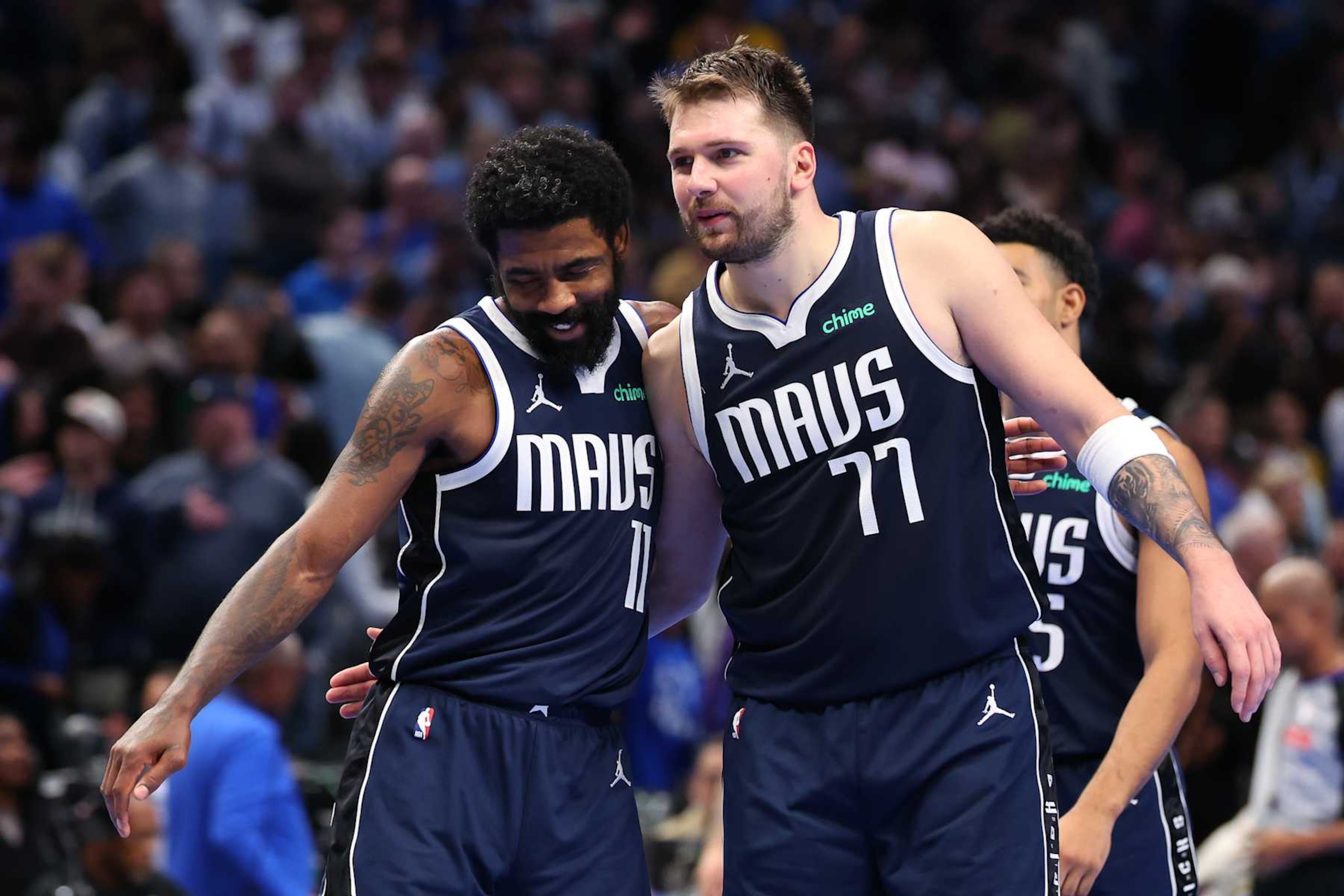
Quarter-Season Grade: B+
Fueled by Luka Dončić (calf), Kyrie Irving (back) and Dereck Lively II (ankle) missing time, the Dallas Mavericks are 7-11, with lackluster offensive and defensive ratings, since their last report card.
Dallas can breathe easy knowing its overall season vitals are pretty good. It has a top-10 offense and defense and has seen upticks from Quentin Grimes and Klay Thompson over the medium term.
Still, the Mavs' depth is supposed to be—and often has been—a strength. They won the non-Luka minutes through Christmas. But they are minus-3.7 points per 100 possessions since his injury.
Efficiency downturns from Spencer Dinwiddie and Kyrie (who, again, missed time during this stretch) loom large. And Luka should be back no later than post-All-Star break. The extent to which they are struggling on defense over this span (20th), though, leaves room to wonder if they need another wing or reserve big ahead of the deadline.
Denver Nuggets: B
8 of 30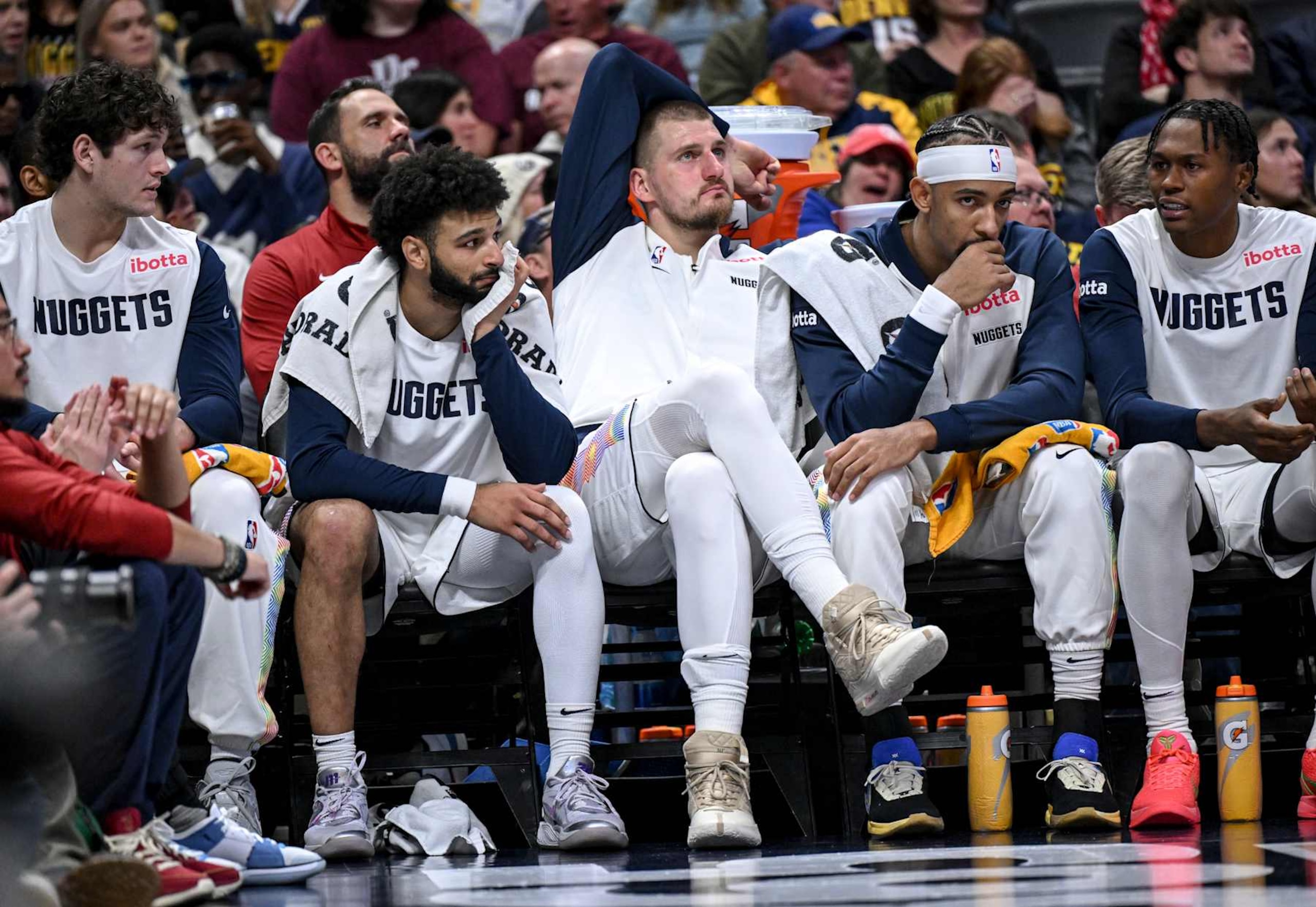
Quarter-Season Grade: D
Optimistic vibes are now eclipsing the bad juju that plagued the Denver Nuggets to start the year. Nikola Jokić remains in pursuit of his fourth MVP award, and the talent around him is starting to coalesce into something less dependent on him.
Jamal Murray looks more like Jamal Murray (on offense). The kids—Christian Braun, Julian Strawther, Peyton Watson—are having moments and making meaningful contributions. Michael Porter Jr. is proving to be a scalable cheat code. Russell Westbrook is leaving his mark.
Aaron Gordon's role off the bench since returning from injury is a continuation of the lineup exploration and self-discovery head coach Michael Malone began during his absence. The non-Jokić minutes have more optionality. Denver is a mere heartbeat away from No. 2 in the West.
Early-season struggles and enduring defensive questions must be taken into account. But the Nuggets may have turned a critical corner.
Detroit Pistons: A-
9 of 30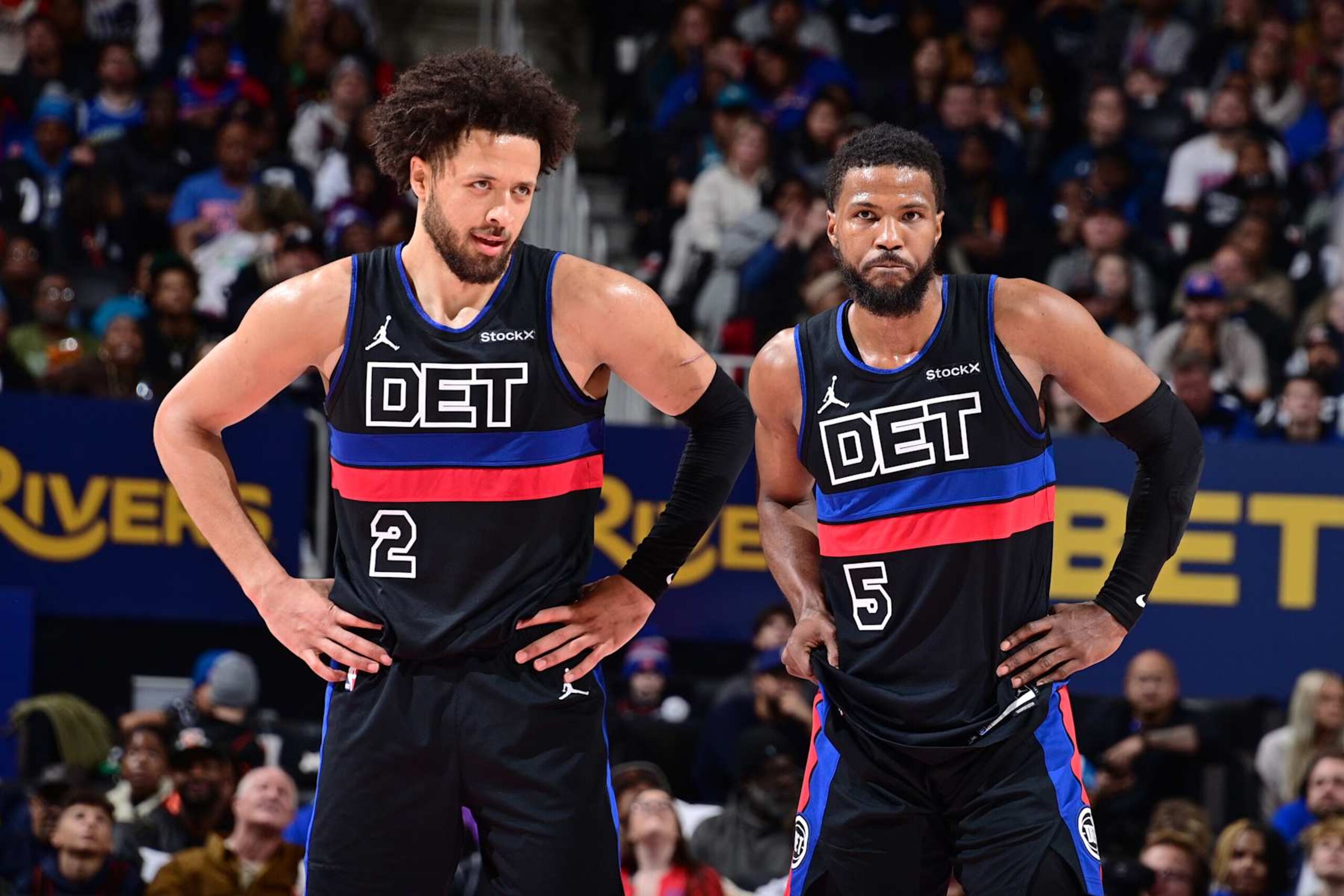
Quarter-Season Grade: B
Cade Cunningham is about to bag his first All-Star appearance and has a real crack at All-NBA. Equally important: The Detroit Pistons' supporting cast around him is waaay better.
Last year, his teammates rated in the 35th percentile of off-ball gravity and 24th percentile in off-ball shot-making, according to BBall Index. This season, they land in the 78th and 87th percentiles, respectively.
Best of all: Detroit's improvement isn't coming at the expense of development. Ron Holland II and Ausar Thompson are getting plenty of reps, as was Jaden Ivey before his leg injury.
Detroit has questions to answer moving forward. Can its stingy defensive stretches hold for longer pockets? Do the Pistons need another creator to field an elite offense? Is Isaiah Stewart being underutilized?
Select fans will have a less peachy-keen view of the Pistons if they believe the team should prioritize retention of its first-rounder, which heads to Minnesota if it lands outside the top 13. But there is value in conveying that pick this season. And also, what's happening right now is way cooler.
Golden State Warriors: D+
10 of 30
Quarter-Season Grade: B
No team suffers a bigger slide between its initial grade and halfway mark than the Golden State Warriors. They've earned it.
Jonathan Kuminga's ankle injury was ill-timed, and Brandin Podziemski put together a few reasonable performances before his abdominal issue. But players like Buddy Hield and Andrew Wiggins have cooled off, Draymond Green wasn't faring so well prior to this calf issue, and the Dennis Schröder acquisition looks like a miss.
All the while, and arguably worst of all, the Warriors continue to relay mixed messages about their intentions. Stephen Curry (and Green) pooh-poohed the idea that Golden State would make trades that short-circuit its future and then (sort of) walked it back.
This is fine on its face. The right player isn't readily available. But who is the right player? The Warriors sat out the Pascal Siakam and OG Anunoby sweepstakes last year, because they weren't good enough. Then they had half-assed pursuits of Lauri Markkanen and Paul George. And now, it can't be Jimmy Butler.
Rumblings infer a long-game pursuit of Giannis Antetokounmpo. Golden State will never have the best package for someone like him. The franchise seems content to tread water in the sub-middle until it stumbles into a bridge to the future—a risky approach it should at least cop to so we can recalibrate our expectations for a team with a still-great Stephen Curry accordingly.
Houston Rockets: A
11 of 30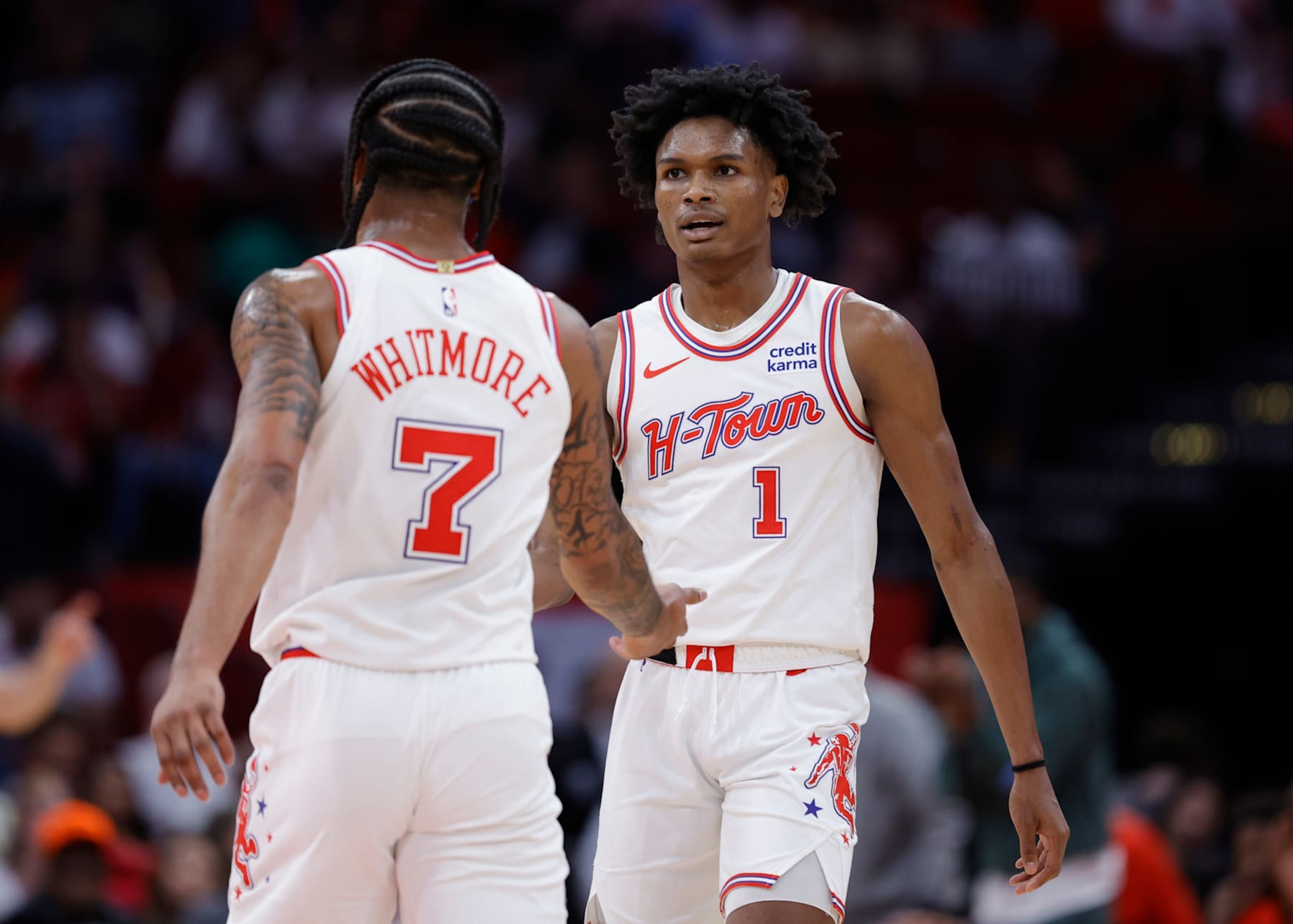
Quarter-Season Grade: A
Sole ownership of second place in the West more than halfway through the schedule is a ridiculous feat for a Houston Rockets squad most profiled as a fringe-playoff squad. The defense remains an overwhelming blend of know-how and aggression, and their transition offense is relentless.
Houston's concerns are the same: half-court spacing and creation. It is seventh in points scored per possession since the first report card. It's also 26th in three-point-attempt rate and 19th in accuracy, as well as 19th in half-court efficiency.
This falls well short of damning. Cam Whitmore is playing more and serving as a nice safety valve. The return of Jabari Smith Jr. will help.
Perhaps the Rockets should give more tick to rookie Reed Sheppard. At the very least, they should go after a shooter who cracks the regular rotation ahead of the deadline. Regardless, their season is largely a dream.
Indiana Pacers: B
12 of 30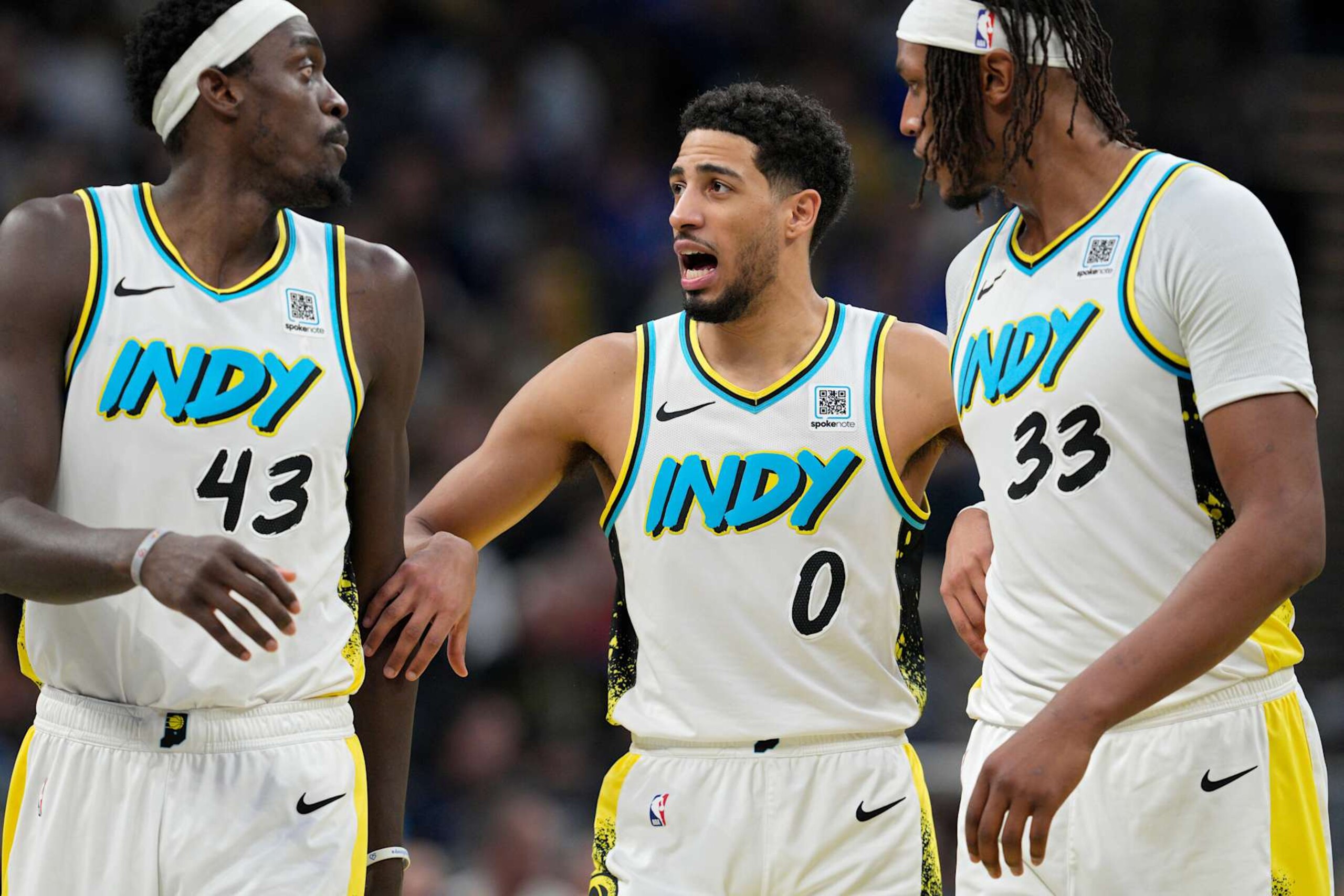
Quarter-Season Grade: D-
It turns out all the Indiana Pacers needed was time.
Tyrese Haliburton's return to consistent stardom is naturally a boon. But the Pacers are reaping the benefits of healthy Andrew Nembhard, the continued exploits of Pascal Siakam, Myles Turner's dalliance with peak form, useful backup 5 minutes from Thomas Bryant and write-home-about-it stretches from Jarace Walker and Ben Sheppard.
Add it all up, and Indiana has a top-four net rating to go along with a top-five defense since our quarter-season grades. The tenability of this performance is debatable. Especially on defense.
Still, the Pacers have another card up their sleeve: Aaron Nesmith's eventual return (hopefully). Their grade must remain modest when factoring in initial struggles. But it says a lot that even with their onset oopsies, they have the third-best record in the East against winning opponents.
Los Angeles Clippers: A+
13 of 30
Quarter-Season Grade: A
No other team has annihilated expectations by a greater degree than these Los Angeles Clippers. The Cleveland Cavaliers or Oklahoma City Thunder come closest, and they've needed to be historically good to do so.
These Clippers were written off, emphatically and unapologetically, the stereotypical franchise trapped in immediate and long-term purgatory. They have responded to left-for-dead expectations—for which Kawhi Leonard's health and Paul George's departure were the catalysts—by planting themselves inside the top six of the Western Conference.
There is no downplaying the Clippers' survival. Their defense is built to deliver hell-on-Earth—and is somehow outperforming that aim. The front office should've done more to add shooting and reserve ball-handling. And yet, Kawhi's return offsets both. It also takes on new meaning, not just because the roster bought him time, but because it forged an identity independent of him.
Los Angeles Lakers: C+
14 of 30
Quarter-Season Grade: C-
Certain indicators suggest the Los Angeles Lakers deserve higher marks.
Anthony Davis and Austin Reaves are exceeding expectations. Max Christie is coming on. Dorian Finney-Smith's shooting is translating from Brooklyn. Gabe Vincent is starting to hit threes. Oh, yeah, LeBron James is still pretty freaking valuable, too.
Los Angeles also has ownership of a top-six spot. That's no small feat in the West. Despite ups and downs at both ends of the floor, it has won many of the games it should, excelling at home and losing just once to an opponent below .500.
The Lakers' outlook gets murkier when looking at the entire picture. They have the worst record among West playoff squads against teams .500 or better, are 24th in net rating on the road and place 20th in Basketball-Reference's Simple Rating System, which ranks teams by factoring in point differential and strength of schedule.
Memphis Grizzlies: A
15 of 30
Quarter-Season Grade: A
It was true the first time around, and it's true now: The Memphis Grizzlies are the only team that ranks in the top five of points scored and allowed per possession.
Please take a moment to appreciate the absurdity. Memphis continues to navigate key absences galore—GG Jackson II is back!—while relying on rookies (Zach Edey, Jaylen Wells) and scores of role players with sparse track records.
It's not as if the Grizzlies are getting the best version of Ja Morant, either. He's still really good, but he wouldn't be an All-NBA shoo-in even if games played weren't a factor.
Going to an "A+" is reasonable under the circumstances. Desmond Bane is trending upward, and the Jaren Jackson Jr. functional expansion remains divine even amid shakier efficiency. But there remains a house-of-cards feeling to the offense, which is both innovative and still lacking.
Miami Heat: C
16 of 30
Quarter-Season Grade: C
Making sense of the Miami Heat is a categorical impossibility.
On the one hand, getting this version of Tyler Herro as well as recent bumps from Haywood Highsmith, Jaime Jaquez Jr. and Nikola Jović amid the Jimmy Butler saga verges on miraculous. On the other hand, Butler's future is a distinct distraction, a functional and emotional drain for a team that's supposed to be better than the average playoff hopeful.
Maybe Butler's first couple of games back from suspension up his trade value or portend a more maniacally competitive Jimmy moving forward. If so, it just might eclipse what is a truly damaging version of Terry Rozier.
But the Heat are toeing a fine line even if you credit them for avoiding total implosion or entirely dismiss the Butler drama. The ebbs and flows on offense, in particular, depict a team without a convincing identity—full strength or otherwise.
Milwaukee Bucks: B
17 of 30
Quarter-Season Grade: C-
It feels like a lifetime ago that the Milwaukee Bucks began the season 2-8. This rickety start, which persisted beyond that nadir, is part of their overall grade.
It is also a pit from which they've officially escaped.
Milwaukee owns a top-eight net rating with, most notably, a top-four defense since its first report card. That may not be its default. The defense has fractures and fissures. It is 26th in points allowed per possession versus top-10 offenses.
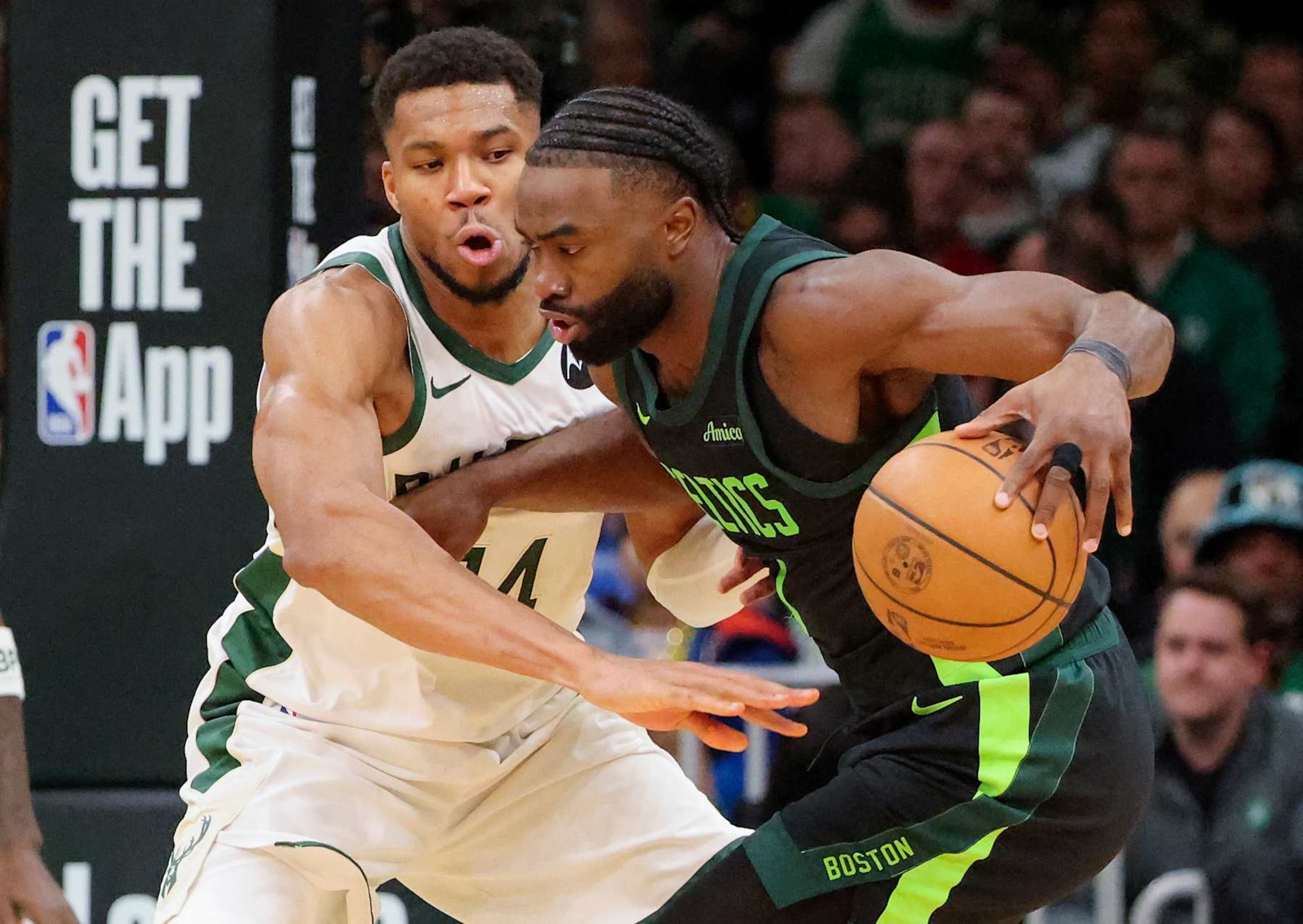
Yet it says a lot about these Bucks that an upgrade from Bobby Portis Jr. and/or the addition of another not-necessarily-elite perimeter pest would blast through remaining barriers of skepticism. And overall, it is much easier to accept this team as a formidable threat than before—in part because Giannis Antetokounmpo and Damian Lillard are hooping, but also because the rotation, right down to Khris Middleton coming off the bench, seems deeper and more well-balanced.
Minnesota Timberwolves: D+
18 of 30
Quarter-Season Grade: D+
Traction remains hard to come by for the Minnesota Timberwolves.
Winning streaks prove miniature, fleeting, invariably followed by comparably long stretches of losing. Harbingers of progress, like changes to the rotation, are undermined by iffy results or derailed by injury.
Life in Minnesota nonetheless seems more tolerable than before. Lineup experimentation builds goodwill. Julius Randle-without-Rudy Gobert combinations are heavier staples. Donte DiVincenzo turned a corner before his toe injury. Mike Conley and Jaden McDaniels have regained some offensive touch.
Rob Dillingham looks like a human firecracker since returning from an ankle injury. The defense is inconsistent yet maintains a high peak with Gobert. Anthony Edwards is once again an All-NBA certainty.
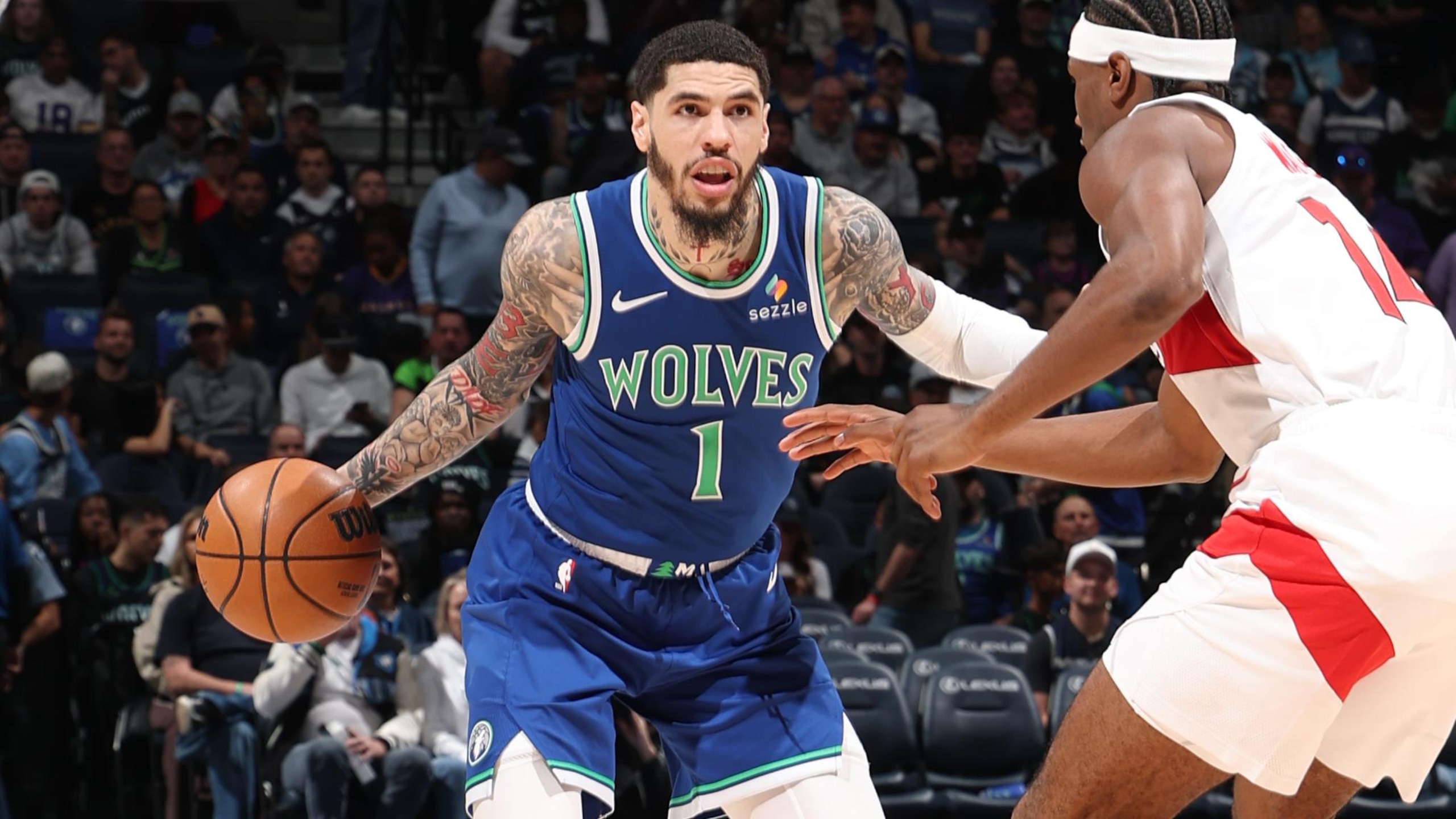
Bright spots and positive developments mean only so much when you're closer to outside the play-in than inside the top six. There is hope for these Wolves, but the struggle to deploy two-way lineups—and a better than 29th-ranked crunch-time offense—is real and ongoing.
New Orleans Pelicans: C-
19 of 30
Quarter-Season Grade: D-
Better, albeit still not great, availability is giving way to better basketball for the New Orleans Pelicans.
Picking up five wins over their past six games—including a ridiculous, tanking-the-tank come-from-behind victory versus Utah on Monday night—is a huge part of the momentum. But the offense in general is more coherent.
New Orleans is taking 72.5 percent of its shots (outside garbage time) at the rim or from three since Jan. 1, a noticeable improvement over their profile before the turn of the calendar. Trey Murphy III is increasing his number of "Future All-Star???" flashes. Dejounte Murray and CJ McCollum are playing better. Zion Williamson has actually played. The Yves Missi and Javonte Green experiences remain valuable.
Injuries have torpedoed this season, are beyond the Pelicans' control and force us to recalibrate the lens through which we view them. But a glaring lack of long-term clarity still casts a pall over the present. And rightfully so.
New York Knicks: B
20 of 30
Quarter-Season Grade: B
Jekyll-and-Hyde acts have become a regularity for the New York Knicks. Whether they're good enough, or deep enough to withstand and eventually leave behind the inconsistency remains to be seen.
That New York retains a hold on the East's No. 3 seed in the face of vacillation is encouraging. The offense in the Karl-Anthony Towns era borders on no-notes divinity. Should the Knicks be shooting more threes? Absolutely. But their ability to navigate minutes without Jalen Brunson or stretches in which he's slumping is not a feature they previously enjoyed.
This team's ceiling will be defined by its defense. Hovering around the league average counts as a success, but steadier stands from Mikal Bridges (and even Towns) are not proving to be panaceas. New York ranks in the bottom 10 of points allowed per possession against top-20 offenses even when filtering out its opening-night loss to Boston.
Oklahoma City Thunder: A
21 of 30
Quarter-Season Grade: A-
Playing at a 68-win pace and notching one of the five best net ratings of all time is ridiculous in a vacuum. It leapfrogs unfathomable when you consider the Oklahoma City Thunder have never once had their full center rotation at their disposal.
If you're going to lower their grade from a flat-out "A," as happened last time, you need to harp on their offensive fragility beyond Shai Gilgeous-Alexander. That is not unfair. Availability issues at center don't necessarily remedy that issue.
Then again, Oklahoma City's bigs are supposed to play a major hand in navigating those stints. Chet Holmgren stretches defenses around drives and has a floor game of his own, and Isaiah Hartenstein can jump-start possessions and play-make from a variety of spots.
Not surprisingly, the Thunder offense without Shai has looked much better when Hartenstein and Jalen Williams are together. The bones of a deeper armory are in place.
Orlando Magic: B+
22 of 30
Quarter-Season Grade: A
Defaulting to an "A" for the Orlando Magic isn't as easy this time. Injuries galore have threatened to submarine their season. Paolo Banchero's return doesn't change that.
Between losing him, Franz Wagner, Mo Wagner, Jalen Suggs, Wendell Carter Jr. et al. for various lengths of time, Orlando could've forfeited top-six status in the East much sooner. Figuring it out on the fly is hard, oft-impossible. The Magic make it look doable.
Still, the offense cannot shake levels of concern. Orlando is 29th in points scored per possession and dead last in three-point accuracy since its first report card. It deserves credit for upping long-range volume overall, compared to last season, and it has prioritized pushing the pace after forcing turnovers.
In lieu of full-strength creation, though, the Magic have to play faster. They are 29th in average offensive possession time for the season, per Inpredictable, and not running nearly enough after grabbing rebounds.
Philadelphia 76ers: D+
23 of 30
Quarter-Season Grade: D+
If you're in the market for more answers than questions, the Philadelphia 76ers' report card will make you vomit.
How harshly can we grade them relative to Joel Embiid's scant availability? Or are they actually leaning into it now in pursuit of retaining their first-round pick (top-six protection)?
Should we commend them for decidedly winning the two-star minutes with Paul George and Tyrese Maxey? Impugn them because it took so long for both to get going? What does it say that Guerschon Yabusele has been their most consistent big? Or that what few Big Three minutes we've seen have been an offensive disaster?
Does head coach Nick Nurse's rotation, admittedly in the face of injuries, amount to essential experimentation? Or is it unnecessarily incoherent?
Caleb Martin has turned a corner. Kelly Oubre Jr. is confusing. Justin Edwards matters.
What the actual hell is going on here, I have no idea. Philly has built-in excuses, but much of its offseason "success" was rooted in the ability to successfully traverse the regular season amid Embiid's forever checkered availability. And there, caveats and all, it has clearly failed.
Phoenix Suns: F+
24 of 30
Quarter-Season Grade: D+
Clinging to the bottom of play-in territory is a failure of epic proportions by the Phoenix Suns. And embracing the #TryStuff mantra doesn't shield them from macro hopelessness festering inside the depth chart.
Bringing Bradley Beal off the bench and forgetting Jusuf Nurkić exists took guts. So did forking over most of their remaining tradeable seconds for Nick Richards. Ditto for turning their 2031 first into three more imminent (less favorable) firsts. But change and risk-taking are not always tantamount to improvement.
Phoenix has lost its Big Three minutes. There is no coming back from that. And there's certainly no coming back from it when you've slashed your long-range volume, going from sixth in the three-point-attempt rate at the quarter mark to 25th since.
Rookies Oso Ighodaro and Ryan Dunn remain bright spots, and the Suns are getting a smattering of better individual arcs. Devin Booker has emerged from a weeks-long malaise. Kevin Durant's shot-making (inside the arc) is still stupid. Nothing and no one, though, has translated to enough winning.
Portland Trail Blazers: C
25 of 30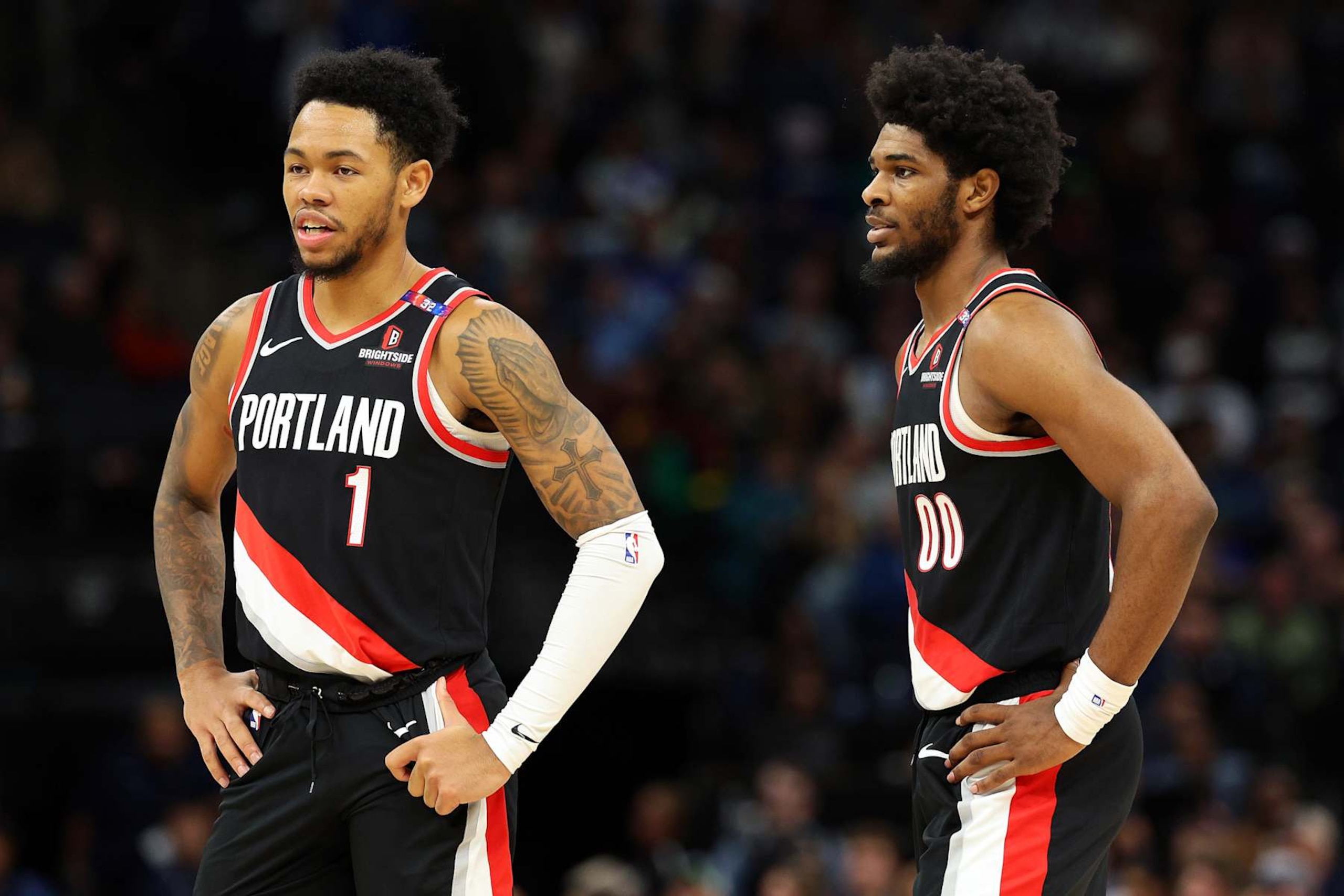
Quarter-Season Grade: C-
The Portland Trail Blazers have spent gobs of time in "So many of the parts intrigue, but the sum doesn't quite live up to them" waters. They may be swimming their way out of them, albeit not as swiftly as we'd prefer.
Scoot Henderson is looking more like the player Portland thought it drafted. Putting him inside lineups with better spacing has helped. Who knew? Shadeon Sharpe's outside efficiency has yet to rebound, but he's making stuff happen inside the arc while ferrying a heavier self-creation lift.
Donovan Clingan is going to make an All-Rookie team if he stays healthy. Deni Avdija and Anfernee Simons are doing more. Toumani's Camara's shooting has dipped—and he's still fun as hell to watch.
Portland is at its most tantalizing when rolling out those who actually factor into the bigger vision. Its willingness to steer further in this direction—roomier lineup combinations included—will determine where its grade goes from here.
Sacramento Kings: B-
26 of 30
Quarter-Season Grade: C-
Dismissing head coach Mike Brown—and actually playing Keon Ellis—has breathed new life into the Sacramento Kings. They are 9-2 under interim head coach Doug Christie, with a top-10 offense and defense.
Writing this off as temporary galvanization would usually be fair game. But they showed signs of having a much higher ceiling even as they tumbled down the standings.
If anything, Sacramento has more room to grow. Its latest stretch has not featured the best version of De'Aaron Fox (who missed some time), Malik Monk or Keegan Murray, and Kevin Huerter remains ice cold.
Figuring out Murray's place inside a crowded offense must take precedence. Ellis' usage can still tilt toward inconsistent. The Kings' backcourt needed a consolidation trade before, and that's truer now that rookie Devin Carter has entered the chat.
Overall, though, Sacramento is riding All-NBA-worthy contributions from Domantas Sabonis to better, seemingly sustainable vibes.
San Antonio Spurs: C+
27 of 30
Quarter-Season Grade: B
We might need to pump the brakes on the "Imagine what the San Antonio Spurs can do this season, right the hell now!" talks. They have dropped six of seven games, and although this isn't everything, it makes you question how much of the heavy lifting Victor Wembanyama's transcendence is doing.
San Antonio is comfortably winning the minutes with its sophomore. But it is toeing the line of bottom-10 rankings on both sides of the floor overall.
More bankable performances from Devin Vassell and Keldon Johnson would go a long way. And the Spurs are getting valuable developmental reps from Jeremy Sochan and Stephon Castle (holy strength, Batman). But they are far from a finished product—or even optimized for the Wemby era. Their latest stretch serves to remind us of as much.
Toronto Raptors: C
28 of 30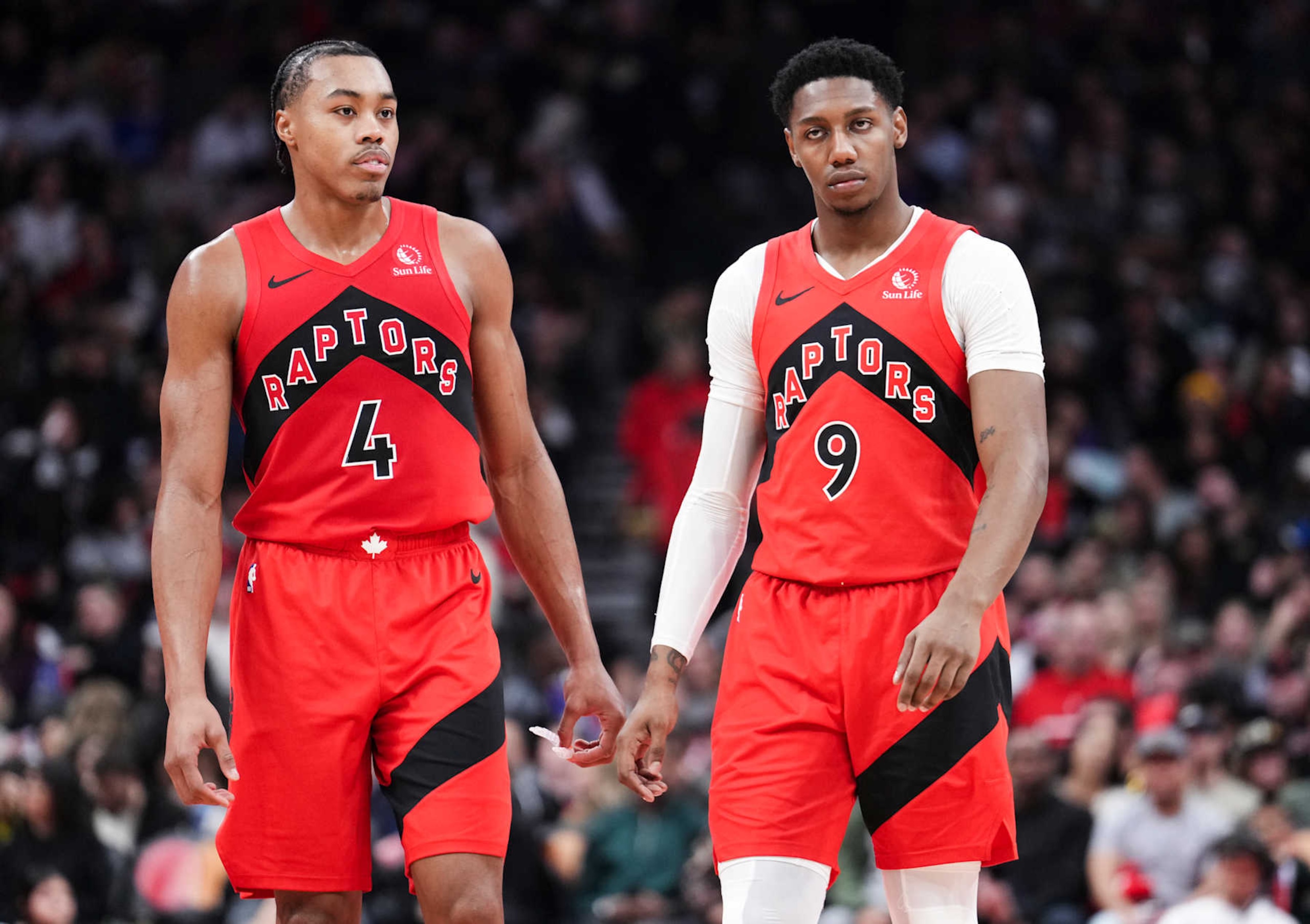
Quarter-Season Grade: B+
If you expected the Toronto Raptors to challenge for a play-in slot, you're turned off by their bottom-five net rating. If you considered them a fluidly rebuilding squad, you're a little disappointed yet acknowledge the role injuries have played and appreciate the information gleaned as a result.
Glomming onto the latter slant is the correct decision.
This is not meant to absolve the Raptors from outside concern. Immanuel Quickley hasn't looked great in limited action, Gradey Dick has fallen off since his surface-of-the-sun start, and there are real questions about the potential pinnacle of an offense headlined by two players, RJ Barrett and Scottie Barnes, with finite off-the-dribble jump-shooting chops.
Even so, Toronto has learned a lot about itself. Those lessons have not yielded a concrete No. 2 for the long haul, but they've illuminated the extent of this team's long-term depth.
Playmaking and finishing from Barrett, the offensive diversification of Gradey, the capability of Ochai Agbaji, flickers and flashes from Ja'Kobe Walter and Jonathan Mogbo, a shooting uptick from Jamal Shead—it all matters in the grand scheme.
Utah Jazz: C
29 of 30
Quarter-Season Grade: C-
These past few weeks have seen the Utah Jazz more successfully actualize who they're supposed to be: not very good, without being totally terrible.
Watchable offense has become more common. Lauri Markkanen isn't nearly as efficient as the previous two years but maintains his overall gravity. Collin Sexton and John Collins (pre-hip injury) have likely increased their trade appeal without compromising lottery odds.
Keyonte George is providing glimpses into a more efficient three-point shooter and passer. Walker Kessler has expanded his touch, already making more twos outside the restricted area than he did all of last season—with career-high efficiency.
Troubling arcs from rookies Isaiah Collier and Cody Williams remain unideal, preventing Utah from defying expectations while also contributing to the dearth of #ThatDude options when peering in the future. Beyond that, Taylor Hendricks' absence notwithstanding, the Jazz's season is unfolding as expected and (mostly) as needed.
Washington Wizards: C-
30 of 30
Quarter-Season Grade: D+
Flagrant futility is a lot easier to stomach when accompanied by high-volume development and occasional respites from the designed descent. The Washington Wizards have mostly nailed the first part, though they could still stand to transfer usage from veterans to kids. And in recent weeks, they've offered breaks from the inevitability of their situation, even as the losses continue to roll in.
Rookie Alex Sarr, specifically, is beginning to pop. His defensive activity always stood out. Now, the offense is coming along. Since the quarter-season grades, he's downing 38.8 percent of his 5.0 three-point attempts per game while shooting 75 percent inside the restricted area and getting off the ball faster as a passer.
Washington still holds the 30th-ranked offense and defense despite not being the league's worst team in the interim. And it could certainly stand to push the pace more after snaring rebounds.
For the most part, though, this team's situation is unfolding as intended.
Dan Favale covers the NBA for Bleacher Report. Follow him on Twitter (@danfavale), and subscribe to the Hardwood Knocks podcast, co-hosted by Bleacher Report's Grant Hughes.
Unless otherwise cited, stats courtesy of NBA.com, Basketball Reference, Stathead or Cleaning the Glass.




.jpg?w=2560 "Chiefs, Steelers Eye WR Trades")


.jpg?w=2560 "Latest Peyton-Colts Rumors")
