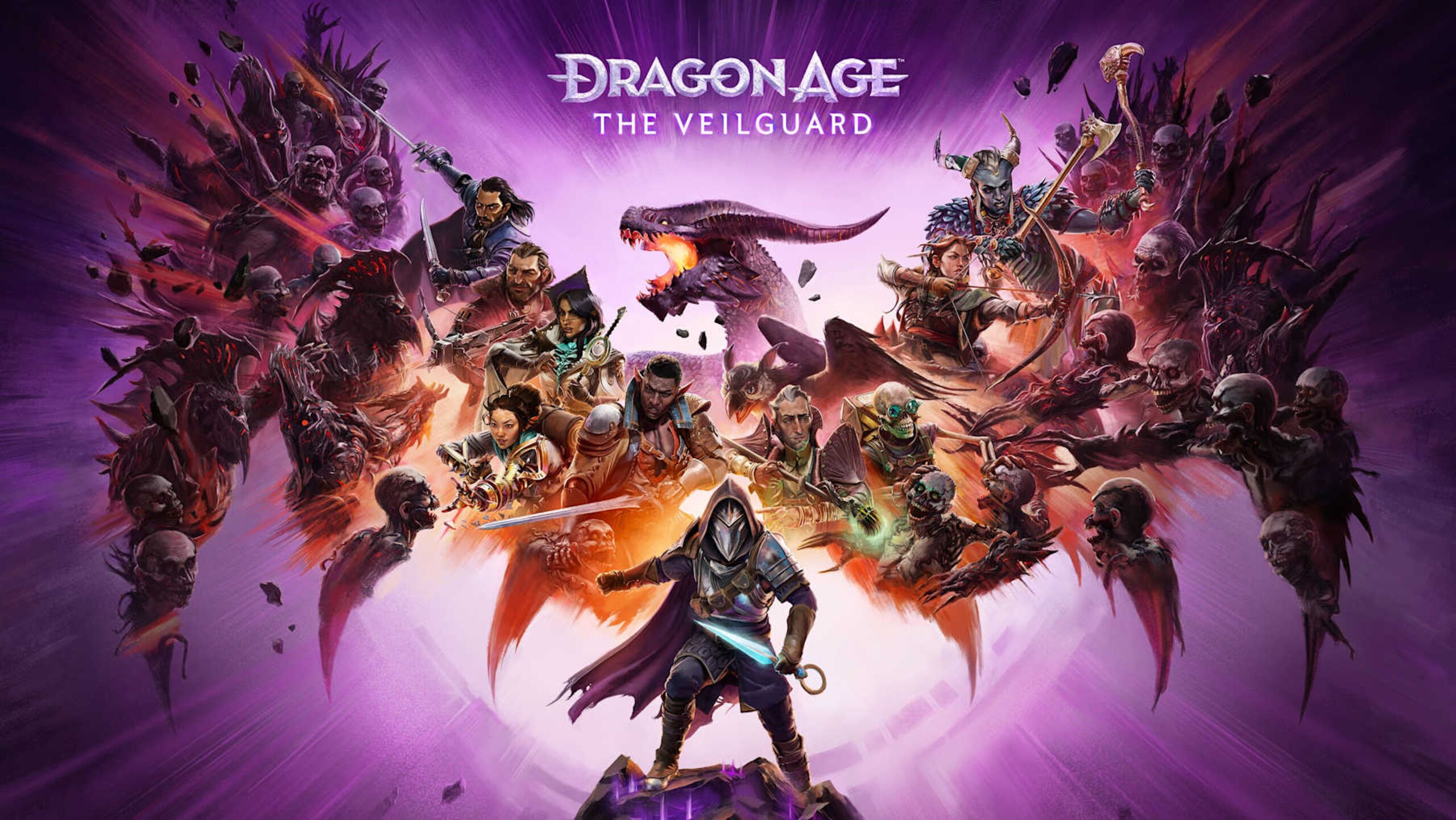

Dragon Age The Veilguard Review: Gameplay Impressions, Videos and Top Features

Dragon Age: The Veilguard from developer BioWare is one of the more interesting releases in the video space over the last few years.
Technically a direct sequel to 2014's Dragon Age: Inquisition, Veilguard has gone through a very public, very rocky path to launch after Bioware's struggles with Mass Effect: Andromeda and Anthem. That has resulted in several revamps, restarts, and naming conventions since development started all the way back in 2015.
The path trodden to release, at least, puts Veilguard in a position to surprise, it seems. While the response of longtime series fans along the way has been polarizing, the standard Bioware RPG goodness mixed with some innovations for Dragon Age combat systems clearly boasted major potential.
TOP NEWS

Malachi Toney Sets ANOTHER Record
.jpg?w=2560 "NBA Gambling Charges")
Malik Beasley Negotiating Plea Deal (AP)

🚨 NC State Fires Head Coach
Now that it's finally here, Veilguard must enter the fray during a golden era for RPGs thanks to efforts in the JRPG space, Baulder's Gate 3 and a host of others.
Impressively, it's up to the task, too.
Graphics and Gameplay
Veilguard is one of the more visually impressive games of the year, even if it isn't pushing for a super-realistic look that pushes the best hardware to its absolute limits.
What Veilguard does super well is diversity and atmosphere. The game offers a stunningly robust set of globetrotting opportunities even within its early hours, letting players go to cities, forests, swamps, and more, including a highlight of an underwater world.
It's worth stressing that at least one of the city areas is dense too. These aren't just window-dressing locales with cool skyboxes. There is much to do, plenty to see and loads of detail packed into the colorful areas.
Interestingly, Veilguard technically shuns open-world concepts and instead has players jump from hub to hub. This is handled in a lore-specific manner via The Crossroads and just feels right for the experience.
There are no facial animations of old that plagued a game like Andromeda, either. Each character is lifelike and expressive in a way that adds to the weight of all interactions. The overall art direction has an almost sheen to it and is almost stylized, but in a way that makes sense for a high-fantasy setting.
Sound design is top-notch, too, whether it's the great voice acting or a fittingly epic soundtrack that hits the right notes when it matters.
Unlike prior entries in the series, Veilguard goes with real-time combat and loops in Warrior, Mage and Rogue classes. At its most basic, combat includes light and heavy attacks, a ranged option for each class, dodges and blocks. It all flows together nicely in action, with time slowing a bit during ability cast, execution on enemies and other expected action game tropes that fit well here.
Of course, it's not that simple. Every class has an expansive skill tree and items, with things like runes slottable onto weapons playing into a greater weakness-effective elemental system, among others.
Players can take along two companions and while they can't directly control the other party members anymore, a new ability wheel gives players general strategic control over how those friends approach battle.
Team synergy is a big deal, as is ability usage. In a basic sense, setting up one companion to focus on healing the team while the player goes on the offensive is very much viable. Team combos are a thing to consider, too, with certain combinations yielding strong results.
Companions boast individual skill trees and gear. The contents of those for players and companions alike won't blow a player's mind (perfect block equals instant attack, etc.), but when slotted into the overall gameplay loop, offer a nice progression.
Some of the strong sound design comes into play here, too, as companions are useful in many ways—such as dishing out hints in the middle of combat about what might be effective against enemies.
Some will compare Veilguard's gameplay to say, God of War. While it seems that way from afar, it's much more strategy-based than it seems, in a good way. It feels more like a measured RPG, despite how it might look in footage. And while some will want to control companions like in past games, the fast pace is already constantly engaging and fun without complicating matters by switching between three characters.
And if we're combining combat and presentation here, kudos go to the UI (user interface), which always presents information in a digestible way. That includes explicitly telling players which attacks might prime enemies for combos (dialogue results are more detailed than in past games, too).
Story and More
Ten years after the events of Dragon Age: Inquisition, players take control of the protagonist Rook and craft them to their liking before barging into a story that reacts to those decisions made during the creation process.
The tale, at its absolute most basic, features Elven gods wanting to remove the barrier between the world of Thedas and a realm of demons, only for that to predictably go wrong and cause even more problems.
Every decision players make in the creation process (and that character creator is stunning) is reflected in the story and chatter. It can change even the most mundane of conversations in interesting ways.
While the game doesn't do much to let players dictate what happened to their character in Inquisition, they do get to pick from a handful of different lineages and backstories that influence things. Companions build into the overarching established lore, too, with necromancers and even a private detective emerging from well-known factions.
Players will spend a large chunk of time at the Lighthouse, what is effectively a clubhouse and social space for the player and companions. There is plenty to do there and it isn't long before players will look forward to spending time with companions, forging relationships in dynamic ways. There's a camaraderie that develops quickly as the team grows in size, and they all join together in a shared space to chat about happenings and plans. It's impressively done and feels like a nice evolution of the standard Bioware formula.
The beloved Bioware dialogue trees and approval/disapproval systems return too. Conversations are downright engrossing and can have very real, immediate and long-lasting results.
It's worth pointing out that the last game in the series spawned an endless conversation about miserable-feeling open-world game design because of the overboard "checklist" nature of sidequests.
Veilguard smartly steers clear of the issue with a tighter, focused narrative and world. Less can be more and in this case, it is. Skeptics might throw out the word "linear" and such, but recent major hit after hit has shown that the daunting, open-ended formula has been stretched pretty thin by the industry.
Along the way, progression is fluid and rewarding. The game also respects a player's time—while they can't change the initial class, players can respec skill trees. There's a gradual uptick in player ability as the game unrolls new challenges that really helps it feel stronger alongside the narrative.
Veilguard launches with a robust suite of difficulty and accessibility options and, as a whole, runs well.
Conclusion
Veilguard is a sign of relief, if nothing else. It's not enough to proclaim that Bioware is Back! when the studio has changed so much over the years and it's hard to say what comes next.
But Veilguard? It's fun. And it benefits from not being, say, a trend-chaster emulating the industry's top looter shooter or half-baked sequel to a trilogy. It's just Dragon Age goodness.
And thankfully, that Dragon Age goodness fits well in the current industry. It shuns checklist-heavy open-world concepts and delivers a diverse, meaningful bit of character and narrative storytelling around player choice while hybridizing the combat around what has worked for the series and others.
The result is an accessible RPG with memorable characters, player choices that matter and an engaging combat loop. That's all players have really asked for from the formula over the years and thankfully, Bioware delivers it.

.jpg?w=2560 "Commanders 49ers Football")

.jpg?w=2560 "Jonathan Taylor Landing Spots")