MLB's Not-So-Secret Crisis Has Been Exposed by White Sox Historically Bad Season
What if I told you Major League Baseball is relatively healthy right now?
After all, you can directly link the quicker, more action-packed gameplay ushered in by the new rules to the league's rising attendance. It also helps that the sport is awash in generational stars like Shohei Ohtani and Aaron Judge and that competitive balance is trending back in the right direction after a lull in the 2010s.
TOP NEWS
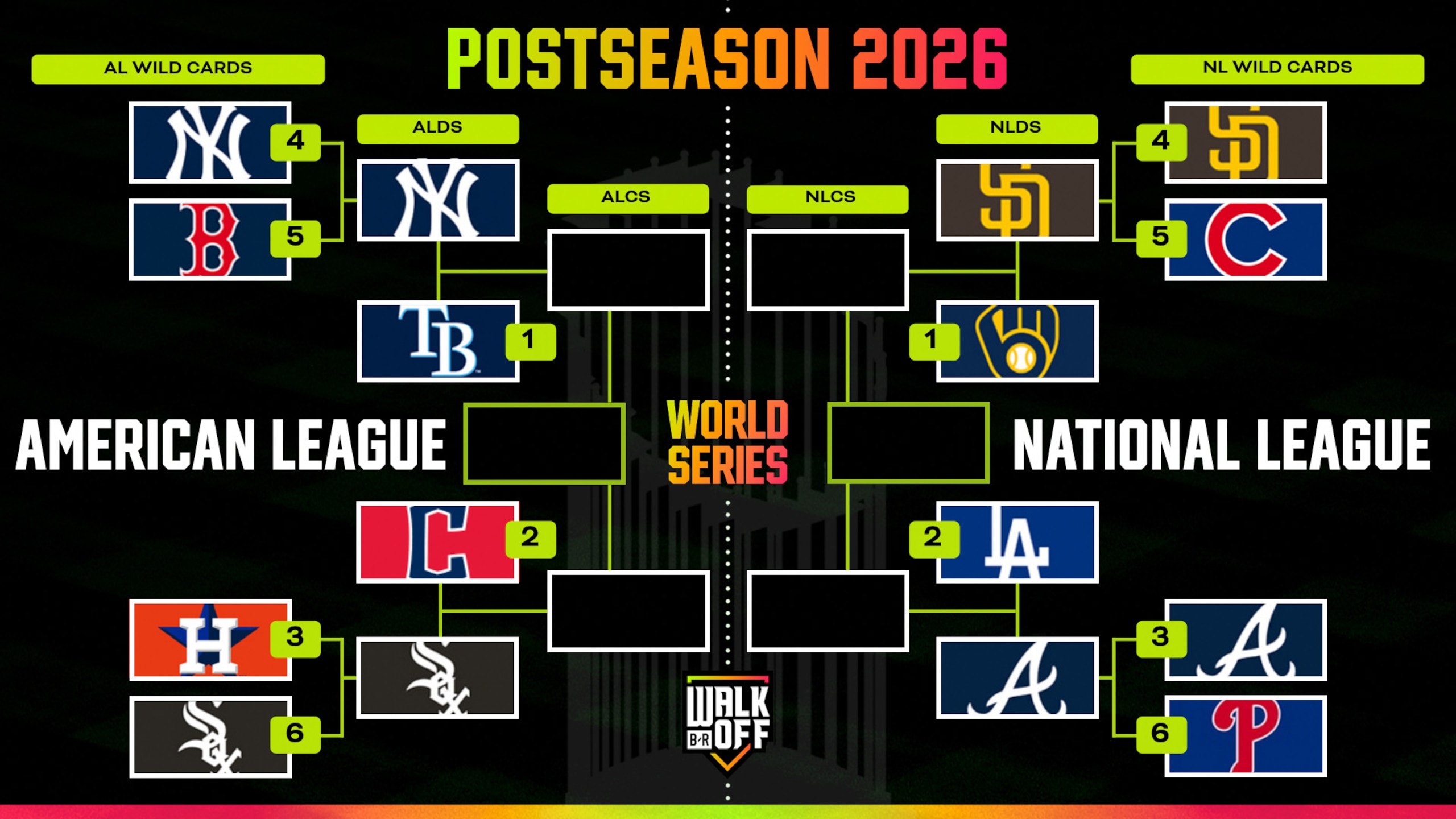
Brewers Stun Padres in Game 2 😧
Braves' Opener Shines vs. LA 💪
Aaron Boone Calls Out Yankees Catcher 🗣️
Then there's the Chicago White Sox, along with the other franchises suffering from bad ownership.
Of course, Jerry Reinsdorf's White Sox aren't merely a bad team. With 120 losses, they are momentarily tied with the 1962 New York Mets as the worst in MLB's modern era. They must win all five remaining games to avoid claiming the record for themselves.
According to Baseball Reference, their entire 2024 roster is worth 4.7 WAR. It's thus less valuable than 20 individual hitters, and even doubling that figure still wouldn't get it to Bobby Witt Jr. (9.4) or Aaron Judge (10.4) territory.
Paradoxically, though, even these White Sox aren't much of an outlier in more recent history.
They're the only 100-loss team in MLB right now, but the Miami Marlins (99) and Colorado Rockies (97) are candidates to join the club before the regular season ends on Sunday. That would make this the sixth full season in a row with at least three 100-loss teams. Such a phenomenon happened twice between 1966 and 2017.
This mostly indicates a nefarious strain of indifference worming its way through MLB's menagerie of fantastically wealthy owners. But for the White Sox, the operative word is incompetence.
Reinsdorf's Unremarkable Reign on the South Side
It's fair to say Jerry Reinsdorf has done well for himself.
After originally making a fortune in real estate in the 1970s, the 88-year-old bought both the White Sox and the NBA's Chicago Bulls in the 1980s. The two franchises have since yielded seven championships and are now estimated by Forbes to be worth $2.1 billion and $4.6 billion, respectively.
Yet it is also fair to say that as a baseball owner, Reinsdorf is Very Bad At This.
It was a monumental occasion when the White Sox won the World Series for the first time since 1917 back in 2005, but overall they have a lower winning percentage under Reinsdorf (.495) than they did before his takeover (.502) in 1981.
And as good as it sounds in a vacuum, the franchise's valuation comes with an asterisk. The cross-town Cubs sold for just $2 million more than what Reinsdorf bought the White Sox for in 1981, yet the former is now worth twice as much as the latter.
Just as he owns the White Sox, Reinsdorf also owns the short-sighted design and implementation of Guaranteed Rate Field, which is about as nondescript as the team. And now more than ever, he also owns the listlessness that has led the team to ruin.
He's been lacking in imagination for the entirety of the 21st century, keeping the same front office in place for two decades and then hiring an underling (Chris Getz) to take over when he finally fired the old guard (Kenny Williams and Rick Hahn).
The team could reportedly follow the same playbook with interim manager Grady Sizemore. He has a worse winning percentage (.225) than Pedro Grifol (.239) prior to his firing, so that scans according to the White Sox's special brand of galaxy-brain logic.
Speaking of skippers, remember when Reinsdorf intervened to hire Tony La Russa to manage the team in 2021, thus denying the front office its preferred hire in A.J. Hinch? Bringing back La Russa, who had previously managed the White Sox between 1979 and 1986, was emblematic of not just Reinsdorf's to-a-fault loyalty, but also his disdain for modern analytical sensibilities embodied by Hinch.
"You got a baseball fan owner who thinks he knows everything, and maybe he did in 1992," a former White Sox employee told Brittany Ghiroli and Ken Rosenthal of The Athletic, "but the amount of info has skyrocketed in the last 30 years and he's put his middle finger up at that."
That Reinsdorf genuinely loves baseball—"it's in my blood," he said in 2023—is his most admirable quality as an owner. But given the results, it's also frankly his most useless quality as an owner.
Whether he sells the team or follows through on leaving that to his sons, the franchise will be worse for having known him.
Reinsdorf Is Not Alone on Bad Owner Island
As depressing as the White Sox are, it's a mercy that their story is also inherently comedic. Heck, even their social media department is finding lulz in the Ls.
By contrast, there's nothing funny about the other ownership-authored tale of woe in baseball this year.
What John Fisher hath wrought on the Oakland Athletics is a long story, but suffice it to say that it's basically the plot of Major League sans the triumphant ending. For all his "Rooted in Oakland" rhetoric, he began looking for a way out of Oakland as soon he first acquired a stake in the A's in 2005. His tactics pissed off basically everyone, even including a fellow nepo-billionaire owner of a once-great Oakland sports franchise in Mark Davis.
Fisher will, at last, get his wish when the A's relocate to Las Vegas in 2028. But he can only hope a loving fanbase will be waiting there with open arms, lest he come to be haunted by all the crud. People don't forget fire sales followed by raised ticket prices at a crumbling stadium.
In short, Fisher isn't fooling anyone with that eyeroll-worthy letter he sent out on Monday.
Yet even if Fisher is king of the hill among MLB owners who see fans as easy marks for patronization or outright punishment, he's not alone in the bracket. Consider:
- Castellini Family, Cincinnati Reds: That one guy actually thought "Where are you going to go?" sounded good.
- John Henry, Boston Red Sox: Blames Red Sox fans for having high expectations that he himself set.
- Christopher Ilitch, Detroit Tigers: Doesn't want to spend like his dad.
- Greg Johnson, San Francisco Giants: Of "our goal is to somewhat break even" fame.
- Dick Monfort, Colorado Rockies: Once expressed enthusiasm for a .500 record.
- Arte Moreno, Los Angeles Angels: Generally has no idea what he's doing.
- Bob Nutting, Pittsburgh Pirates: Allegedly (and evidently) comfortable being mediocre.
- Tom Ricketts, Chicago Cubs: A big-market owner who sees big payrolls and stars as optional.
- Bruce Sherman, Miami Marlins: Bought the team from Jeffrey Loria only to keep running it like Jeffrey Loria.
- John Stanton, Seattle Mariners: Apparently comfortable aiming for 85 wins annually.
- Hal Steinbrenner, New York Yankees: Owns MLB's most valuable franchise, cries poor anyway.
Major League Baseball is in a good place despite these goons, which is simultaneously good news and something that feels precariously precious.
It is ultimately the fans who decide how healthy the sport is. The more of them there are and the more invested they are, the better. And the notion that they will always be there is not one to take for granted.
Right now, too many owners are doing exactly that.
Must Bad Ownership Be Inevitable?
That competitive balance is trending in the right direction may not be an accident.
The collective bargaining agreement that went into effect in 2022 includes measures meant to prevent teams from deliberately racing to the bottom. The draft lottery is the big one. There are also incentives meant to discourage service time manipulation. And for all its faults, the expanded 12-team playoff field does incentivize more teams to compete.
Nonetheless, that MLB still has an epidemic of 100-loss teams and a broader culture of not-quite-all-in owners suggests more could still be done.
A salary floor will inevitably come up in such discussions. Other possibilities include giving the draft a fantasy-style snake order and shortening how much time young players must serve before qualifying for free agency. Such things would discourage the tired rebuilding tactic of stockpiling cheap, young talent and thus potentially restore creativity to front offices, where groupthink is the name of the game.
But even then, would cases of bad ownership dissipate entirely? Can MLB really hope to legislate away owners like Reinsdorf, who are bad at caring about wins and losses, and Fisher, who only cares about dollars and cents?
Probably not unless MLB commissioner Rob Manfred and the league's 30 owners willfully agreed to protocols designed to hold them all directly accountable. One's pie-in-the-sky brain imagines the commissioner being given discretionary powers to oust any owner who racks up too many losses or frequently spends too little on payroll.
But this will never happen.
Major League Baseball last forced out an owner in 2011, when Bud Selig muscled Frank McCourt into selling the Los Angeles Dodgers. It wasn't so much a choice as a necessity, as McCourt lacked the money to maintain the Dodgers.
Precedent? Technically, yes. But not applicable to any of the bad owners of today. Their revenue keeps going up, and labor costs (i.e., players) have only just begun to go up again after many years of stagnation. In this environment, it would take a dire case of dimwittery for an owner to lose enough money to force the commissioner's hand.
Instead of buying into impractical notions, it's easier to accept the reality that once someone accrues enough money and influence to acquire a baseball team, their money and influence are only likely to grow no matter how recklessly they act.
And so, fans faced with bad ownership will continue to have the only two options they've ever had: Stop watching, or keep watching and hope not to see 120 losses.
Stats courtesy of Baseball Reference, FanGraphs and Baseball Savant.


.jpg?w=2560 "NFL investigating 2 referees for separate viral exchanges")

.jpg?w=2560 "Report: Chiefs Contact Hill's Agent")
.jpg?w=2560 "OBJ Calls Out Giants 😳")
.jpg?w=2560 "Tyreek makes another cryptic post amid Chiefs rumors")