Anything's possible before the NBA trade deadline.
Rumors and speculation lend themselves to hopeful reform and/or improvement. Sputtering teams can carve out a direction with the right move. Fringe contenders can try pushing themselves over the top. Organically bad squads can move more freely and openly into structured losing, exchanging players who don't fit their timeline for picks and prospects that potentially move the longer-term needle as subsequent trade assets or eventual participants.
Franchises on the brink, meanwhile, are forced into action. Or at least, they should be. There's no more waiting out turned corners and resurrections. If your core is wilting in the face of immediately lofty aspirations, it's on the front office to end the suffering and choose between doubling down on now or expediting the closing of a competitive window in favor of a more discernible bigger picture.
And yet, just because anything feels possible amid the unknown doesn't mean every squad will do nearly enough to explore those possibilities.
Inaction isn't the end of the world for many, even if it would be disappointing. In the case of plucky upstarts (Orlando, Houston), new contenders on the block (Oklahoma City, Minnesota), second-tier playoff squads that need a very specific infusion to reach the next level (Sacramento, Philadelphia), a decision to stand pat or indulge the minor is far from unforgivable.
Passive deadlines from those at an organizational crossroads are far less explicable. And even worse are the franchises who so clearly need to do one thing—or series of things—and elect to do something else entirely, often at steep and irreversible opportunity costs.
Teams embroiled in this existential tug-of-war will populate our trade deadline disaster scenarios.
Atlanta and Chicago Fail to Read the Room
1 of 5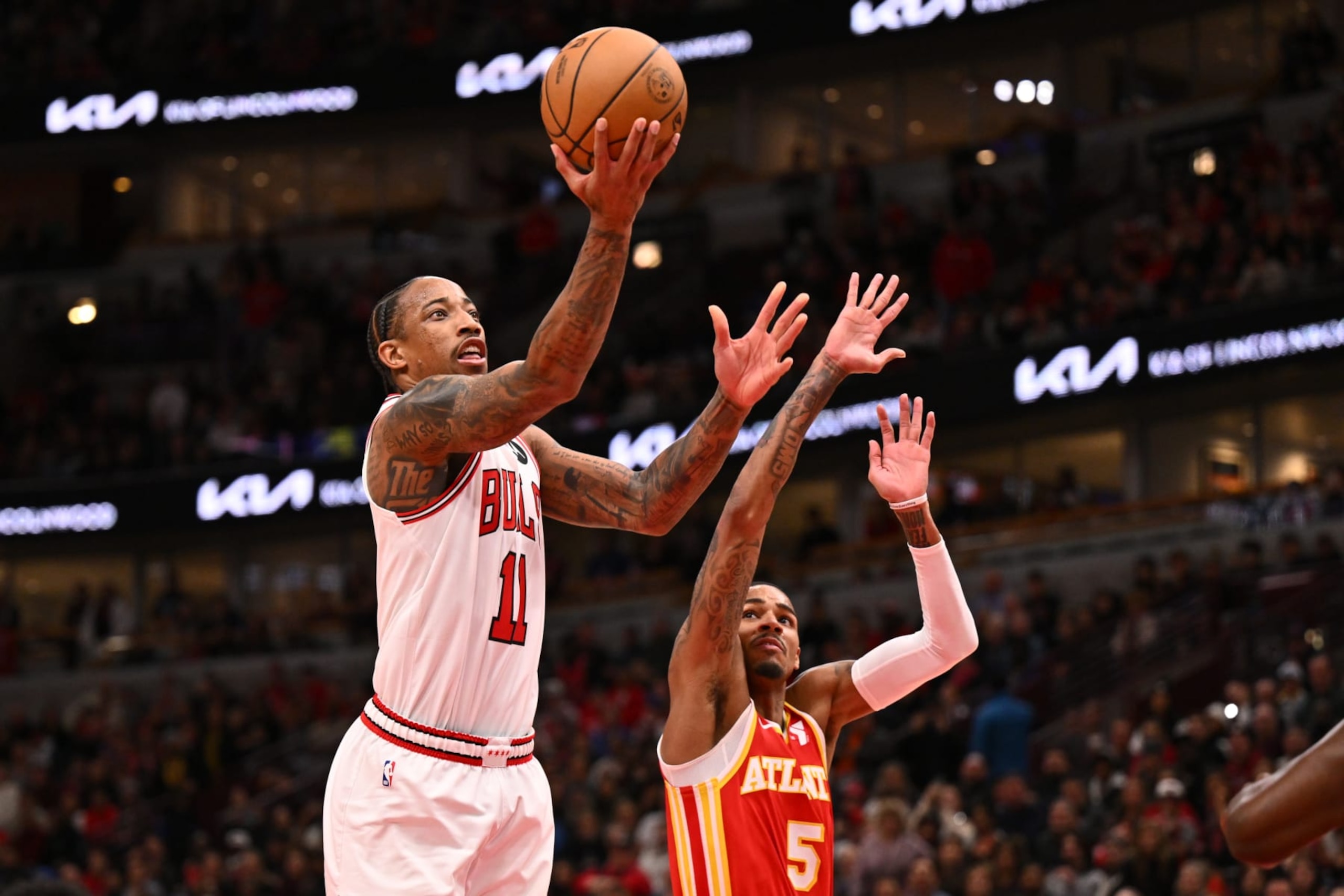
Both the Atlanta Hawks and Chicago Bulls appear to be at least semi-acknowledging reality.
Many of Chi-Town's most prominent assets—DeMar DeRozan, Zach LaVine, Alex Caruso—have spent ample time in the rumor and speculation mills. LaVine, in particular, feels like he's being hocked to everyone and anyone. Wishful thinkers will hold out hope for Coby White and soon-to-be-restricted free agent Patrick Williams to become available. Teams with limited assets will no doubt be monitoring Jevon Carter, Ayo Dosunmu and Andre Drummond.
Meanwhile, everyone in Atlanta aside from Trae Young and Jalen Johnson appears available—with Dejounte Murray registering as the club leader to get shipped out before the Feb. 8 cutoff.
Exploring all selling opportunities, meaningfully and aggressively, makes sense for two franchises tethered to the sub-middle, competing for little more than ceremonial play-in cameos. But what if one or both of them fail to accept their fates?
Chicago is comfortably above .500 since the end of November, with a top-six defense. Executive vice president of basketball operations Artūras Karnišovas has clung to these stretches before. And having steered the Bulls into no man's land, could approach the deadline attempting to preserve job security and look to do nothing or, worse, surrender assets for immediate upgrades.
Atlanta's front office likely has more latitude since its primary figureheads have been in charge for less time. But what if the Hawks still don't have the gall to cut the cord with Murray because of how much they gave up to get him in the first place or De'Andre Hunter because of what they paid him and believed him to be? What if they don't even have the courage and open-mindedness to consider a fuller-scale rebuild and at least listen to offers for Young? What if they rejoin the Pascal Siakam sweepstakes in earnest, forfeiting more future equity in the process?
For both Chicago and Atlanta, doing nothing and recalibrating over the offseason is much better than traveling down the wrong path. Neither, to be clear, should be an option. But if the Bulls or Hawks don't have the stones to initiate at least soft resets, fans should hold out hope that they won't do something to hamstring their immediate and future places in the league's hierarchy even further.
Detroit Pistons Opt for Dramatics
2 of 5
Fans of other teams are waiting for the Detroit Pistons to jettison veterans like Bojan Bogdanović and Alec Burks who could be finishing touches to a contender's rotation. The Pistons themselves, however, may have other ideas.
At first, the team reportedly registered interest in OG Anunoby (pre-trade to New York) and Tobias Harris. In the weeks since, the Pistons have also been linked to Dejounte Murray and Pascal Siakam. And to close out 2023, they reportedly remained resistant, at minimum, to moving the 34-year-old Bogdanović.
Some of the players above will be free agents this summer. The Pistons could have upward of $60-plus million in spending power. If signing good veterans before next season is the extent of their interest, then there's no harm, no foul.
But if the Pistons are actively considering trade pursuits for bigger veteran names, it shows a fundamental misunderstanding of where they sit. Most of the names they've been linked to would come at the expense of young players and, since they have zero extra first-rounders, the Pistons' own draft equity.
That's...not OK. It is brazen and foolish and completely out of touch with reality.
Refusing to move Bogdanovic for a low-end first (or less) is one thing. Ditto for the acquisition of someone like Monte Morris (who has yet to play this season) over last summer. Non-star veterans can help streamline the development of core assets without damaging draft-lottery odds.
Consolidating into established names who infringe upon developmental reps, drain assets and then don't, on their own, chart a different course for the Pistons is a different, illogical matter altogether. Fans should cross their fingers that general manager Troy Weaver doesn't short-circuit the future for a chance to strengthen his job security and standing with team governor Tom Gores.
The Lakers Do Not Significantly Upgrade the Offense
3 of 5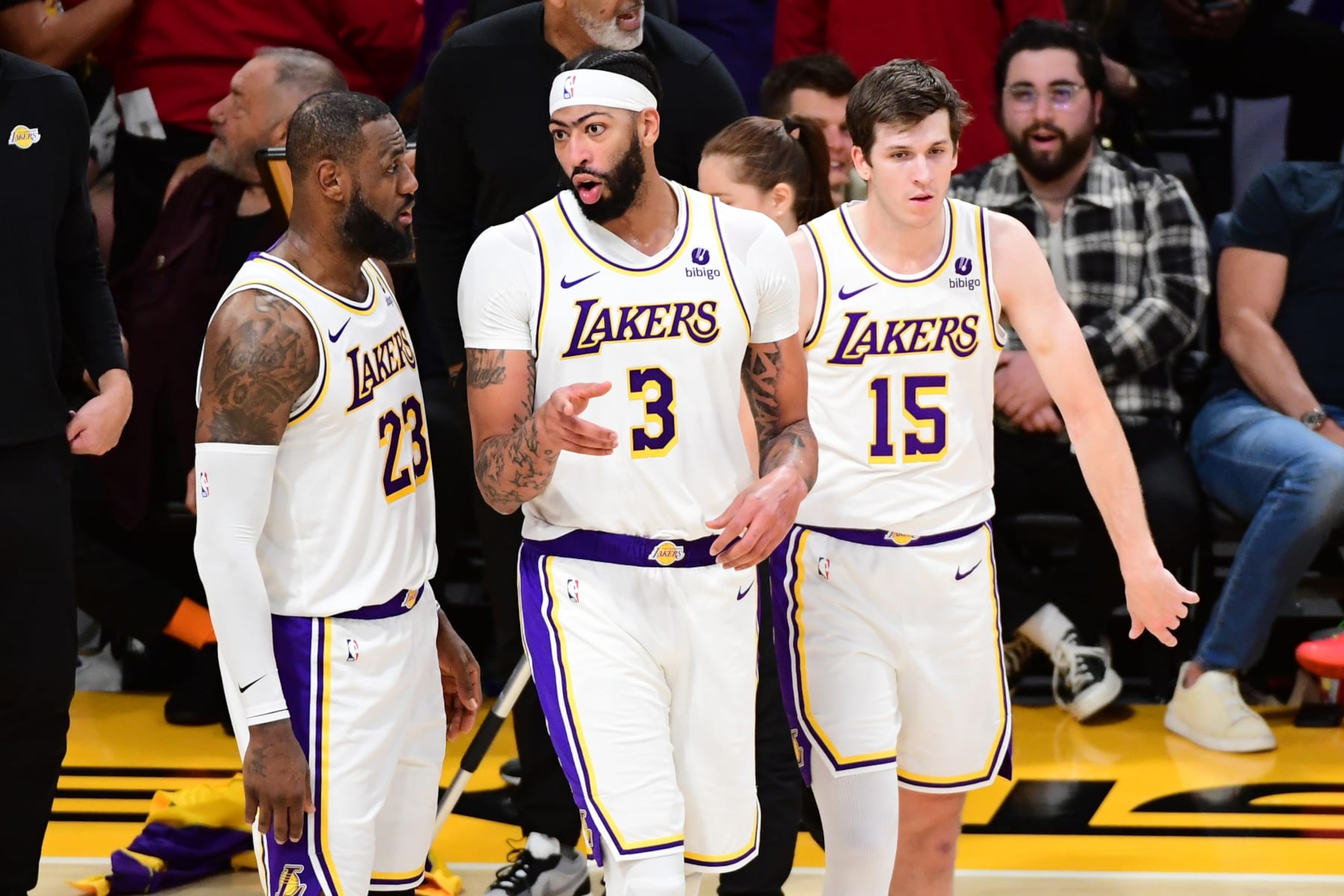
The Los Angeles Lakers need an infusion of offensive dynamism if they're going to meaningfully contend in the Western Conference. And they better be prepared to pony up to get it.
Los Angeles is 22nd in points scored per possession on the year. It has managed to crack the top 12 in half-court efficiency, but that standing has dipped since its midseason tournament romp, and the team has shown cracks in transition during that same span.
Counting on better health or different lineups to solve the primary issues—which include a 28th-ranked three-point-attempt rate and bottom-10ish efficiency—rings hollow. The Lakers don't have the in-house personnel to immediately buoy their spacing. And somewhat amazingly, they continue to rate as below-average even when their four best offensive players—LeBron James, Anthony Davis, Austin Reaves and D'Angelo Russell—share the floor.
Taking the wait-and-see approach past the trade deadline is a non-option. LeBron is 39. You can't get caught up keeping the lone outright first-rounder you can move or rendering Reaves untouchable because of what might happen after James leaves or retires.
Urgency within reason is the mandate. Drawing a line on the Zach LaVine price tag is fine. The same goes for Dejounte Murray. Heck, the Lakers don't even need to acquire one of those specific players. They just need to be aggressive in the pursuit of floor-spacing and, if possible, shot-creation upgrades.
Doing something just for the sake of doing something is, as ever, the wrong call. But doing nothing or something that's more marginal than notable is just as bad when this core—which owns an 12-18 record against opponents above .500—hasn't shown enough signs that it can hang with the very best.



Golden State Remains in Painful, Hopeless Lurch
4 of 5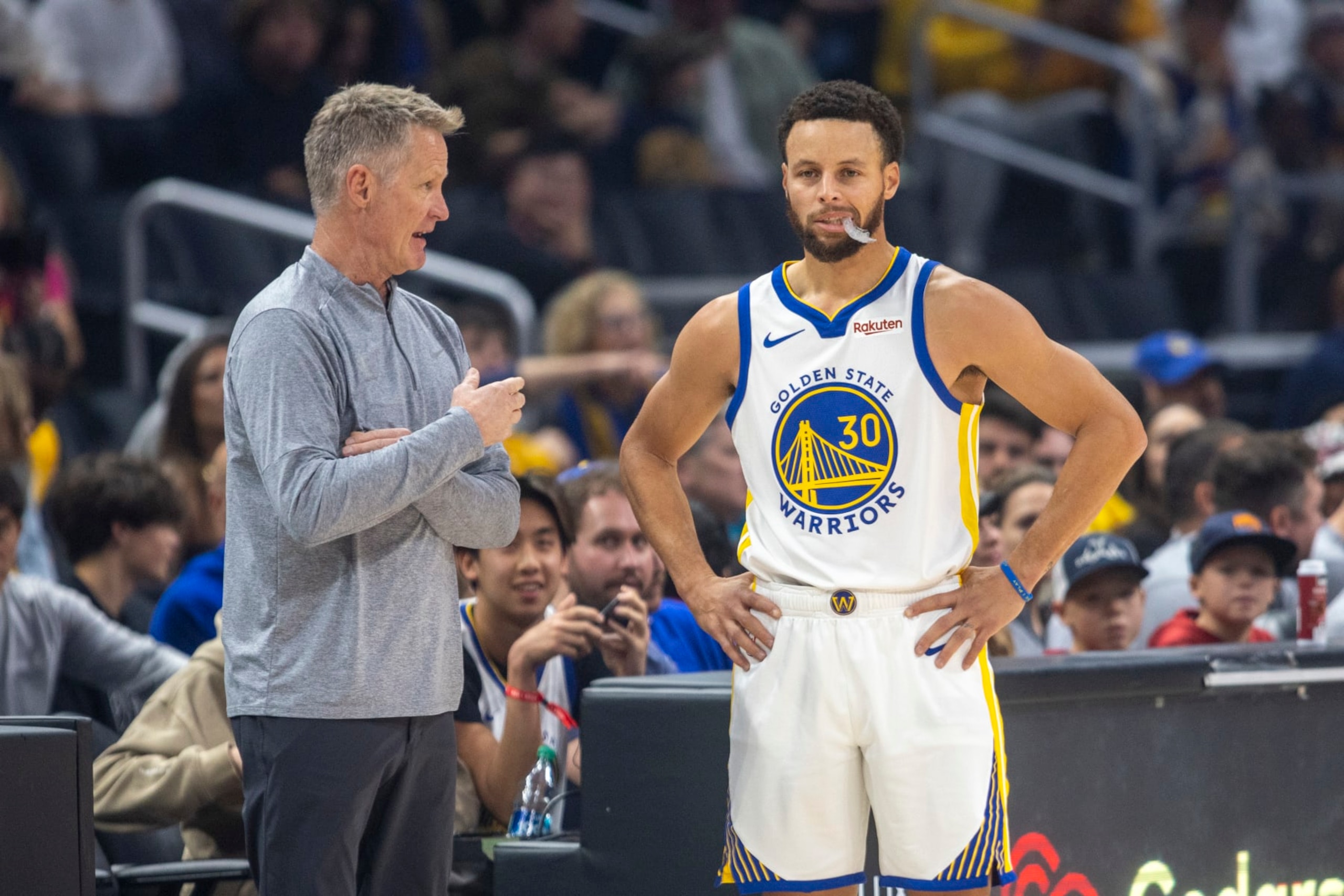
This:
Is:
Not:
Fine:
I won't pretend that I know how to fix the Golden State Warriors. They seem more than one Pascal Siakam or Dejounte Murray trade away from righting the ship. They are, in essence, that broken.
Something—or rather, some things—have to be done. There is real depth to this team, but it's jumbled, an odd mix of warring windows, players who don't fit well together, stars on the decline and the real, and therefore problematic, version of Andrew Wiggins.
Status quo is unacceptable. The Warriors must decide what they want this season to be. If they prefer it to be another gap year, then prioritize the youth and rest up the vets. If they feel obligated to compete for a slumping and overstretched 35-year-old Stephen Curry, then everyone other than him needs to be available as they scour the market for a genuine second-best player. That includes Draymond Green. And Klay Thompson. And Jonathan Kuminga. And Brandin Podziemski. And all the first-round picks (up to three) they can dangle.
And if, against all odds, Golden State is ready for #TheOtherTimeline, well, commit to mapping out what that looks like. Then, from there, orchestrate the tough-yet-necessary moves to fit that organizational reset.
Toronto Keeps Pascal Siakam and Then Doesn't Extend Him
5 of 5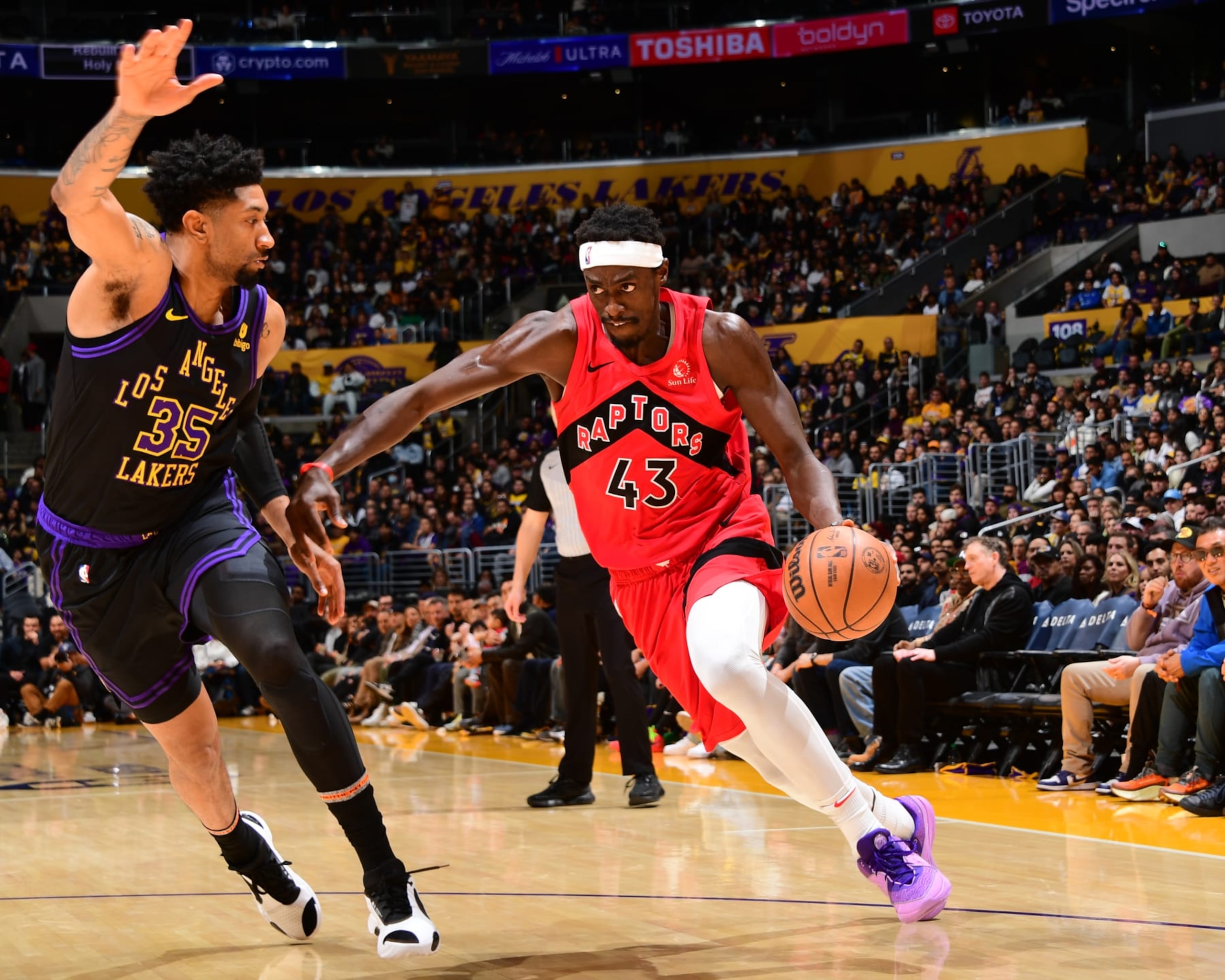
Pascal Siakam's name remains rooted in the rumor mill. Most probably assume he'll get dealt. But what if he didn't?
It's not that farfetched. It's actually the most fruitful outcome. Siakam's redundancies with Scottie Barnes are not a death knell for coexistence. They can amplify one another. And the Raptors can put more dynamic offensive pieces around them to augment floor balance.
We're already seeing Toronto reap dividends with the additions of Immanuel Quickley's ball-handling and shot-making and this version of RJ Barrett. Keeping Siakam is a totally reasonable decision for the long term. Barnes' leap has armed the Raptors with another guiding force who's ready now, and team president Masai Ujiri telegraphed in the OG Anunoby trade that he cared more about bringing on players than draft equity.
What Toronto can't do, though, is not trade Siakam and then not extend him. He can sign a four-year, $190.8 million deal with the Raptors—and only the Raptors—right now. Toronto better offer it. There's no point retaining him if you don't. The open market won't repress his value. The Raptors would only risk losing Siakam for nothing, just as they did with Fred VanVleet last summer.
If the Raptors aren't prepared to pay the four-year max, at minimum, they better move him. Now, should Siakam decline, the calculus changes. Is he not accepting an extension because he wants a fifth year? That's a conversation. And if the Raptors aren't willing to have it, then they better move him.
Basically, the Raptors need to avoid repeating last offseason at all costs. Because losing Siakam over the summer, for nothing, would be franchise malpractice.
Dan Favale covers the NBA for Bleacher Report. Follow him on Twitter (@danfavale), and subscribe to the Hardwood Knocks podcast, co-hosted by Bleacher Report's Grant Hughes.
Unless otherwise noted, stats courtesy of NBA.com, Basketball Reference, Stathead or Cleaning the Glass. Salary information via Spotrac. Draft-pick obligations via RealGM.

.jpg?w=2560 "Raiders Could Start Mendoza")

.jpg?w=2560 "Rodgers Iced Out on Plane 💎")
.jpg?w=2560 "Packers Safety Slams Refs 🤬")
.jpg?w=2560 "🚨 Week 8 AP Top 25 Poll")