

It's literally a whole new ball game in 2023, and Major League Baseball is better for it.
Mostly.
This week brought the quarter mark of the season, which is basically an occasion to say "fare thee well" to small-sample-size territory and pivot to seriously taking stock of big-picture developments around the league.


Like, for example, the effects of the new rules.
This is where there's good news and bad news on what the pitch timer, bigger bases and the shift ban hath wrought. Or, more accurately, two wins and what appears to be a big loss.
Win No. 1: The Changes Are Working
"It's really not about changing the game. It's about making sure that we put the very best form of baseball on the field."
That was how MLB Commissioner Rob Manfred rationalized the new rules in February, and it was only kinda-sorta disingenuous. The idea obviously was to change the game, but in a way that brought old trends back instead of introducing new ones. Namely, more balls in play, more hits, more stolen bases and, above all, less lollygagging.
Cut to now, and there is one area where the concept is not bearing fruit. We were promised more balls in play, yet balls in play are down from 2022. Treachery. Treachery and betrayal.
Apart from that, though, it's all good:
- Pitch Timer: The average time of game is down 27 minutes from 2022, by far the biggest year-to-year change in MLB history.
- Shift Ban: Pulled ground balls from left-handed batters are going for hits way more often than they did in 2022, helping to drive a five-point improvement in the leaguewide batting average.
- Bigger Bases: The leaguewide mark of 0.7 stolen bases per team game is the highest since 1999.
So, there you have it. There you have numbers that confirm, drop in balls in play aside, Major League Baseball is getting what it wanted out of its new rules.
And the fans? They dig it.
Win No. 2: Baseball Really Is More Watchable
As to how to prove this objectively, let's put it this way: Fans probably wouldn't be watching in increased numbers if they didn't dig the new rules.
Though attendance is technically down from 2022, Maury Brown of Forbes clarified that it's up relative to the time of year and that television viewership is also trending positively.
Polls also come in handy in matters of objectivity, so we'll point to a YouGov poll that found support for the new rules coming into the year and a more recent B/R poll on the pitch timer in which only 13.8 percent of respondents wanted to get rid of it.
But watchability is, of course, ultimately subjective. And as such, I'm going to drop the "we" and tell you the reason I'm loving this "everything old is new again" brand of baseball.
I used to get a creeping sense of dread when I sat down to watch games, and now I don't.
A few years ago, I was feeling frisky in a Huge Nerd sort of way and sought to drill down to what exactly it is about baseball that I find not just enjoyable, but addictive. I wrote at Medium about how it's all in that moment between when the ball leaves the pitcher's hand and when it crosses the plate, during which both time and the heart stop and give way to pure, uncut anticipation of what will happen next.
(Side note: It was only later that I realized that I had inadvertently ripped off Captain Sisko from Star Trek: Deep Space Nine.)
But while that half-second never failed to keep me coming back, the ballooning pace between pitches and length of games turned the daily intake into a chore that could have detrimental effects on my mental and physical health and personal relationships. Heck, even the half-second itself lost some of its magic. Every pitch has dozens of potential outcomes, yet the only ones that ever seemed to happen were walks, strikeouts and home runs.
Watching this year's quicker, more action-packed brand of ball thus feels like waking up from a bad dream. The sun is shining. Birds are chirping. There's fresh coffee and donuts. And the dread is gone.
Ah, but at what cost?
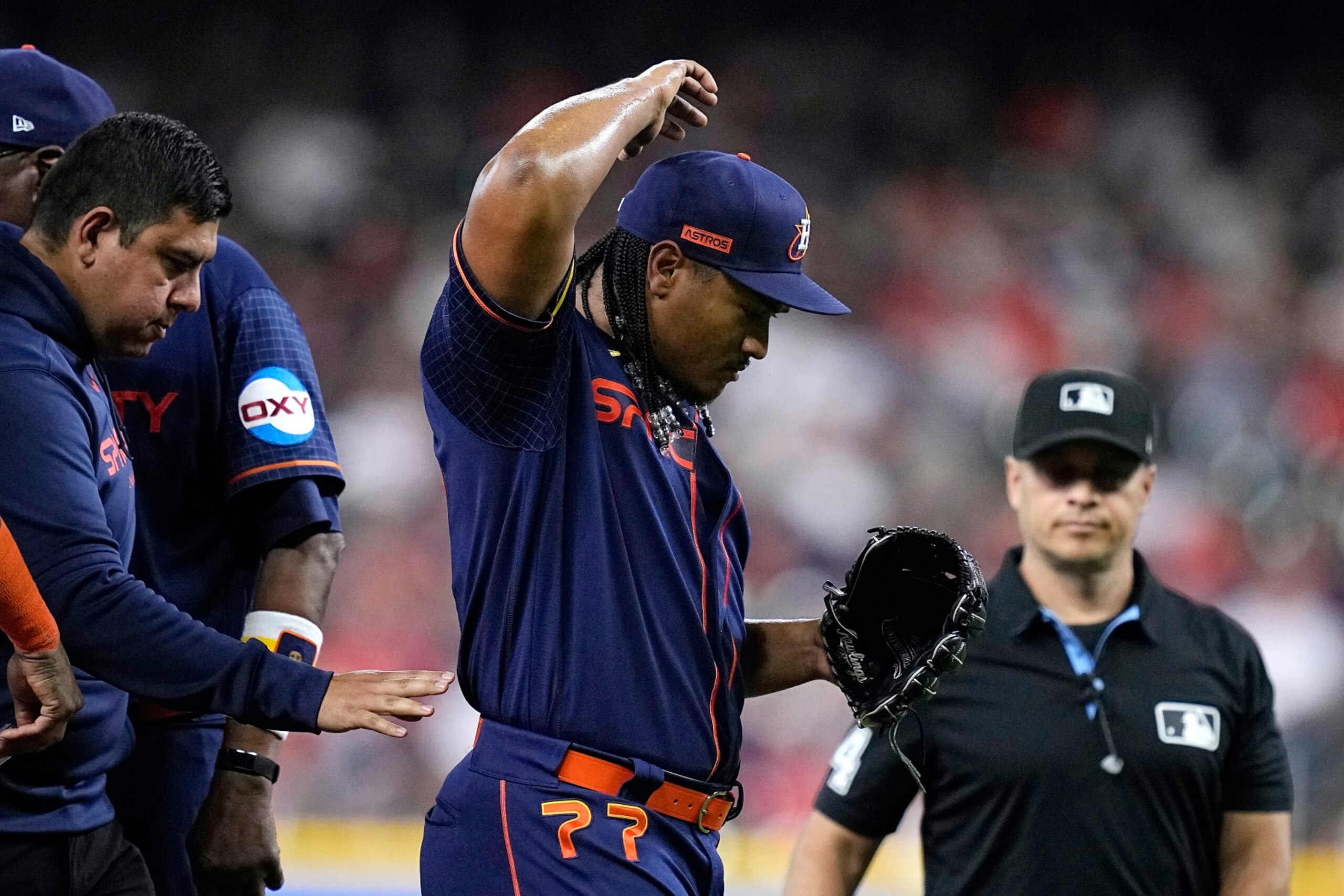
The Big Loss: Pitchers Are Dropping Like Flies
Though there was talk prior to the season that the new rules could be beneficial for players' health, that hasn't proved to be the case, particularly for pitchers.
Plenty of ink has been dedicated to this subject, including by Will Sammon, Brittany Ghiroli and Eno Sarris of The Athletic and Daniel R. Epstein of Baseball Prospectus. The latter cited BP's IL Ledger to clear up any doubt: Elbow and shoulder injuries are way up in 2023.
Eons ago, the first statistician crawled out of the ocean onto dry land and proclaimed that correlation does not equal causation. Out of respect for that ambitious amphibian, nobody should be assuming that the rise in pitching injuries is owed entirely to the pitch timer.
But, well, does anyone see a more likely culprit?
The popular theory coming into this season was that the time restrictions on pitchers—15 seconds with the bases empty, 20 seconds with men on—would force them to preserve energy by cutting back on effort. Less velocity, in other words.
This is not happening. The average velocity of four-seam fastballs is exactly the same as in 2022 with both the bases empty (93.8 mph) and with the bases occupied (94.0 mph).
This is not to suggest that injuries to, say, Jeffrey Springs, Jacob deGrom, Luis Garcia, Drew Rasmussen and Dustin May are their own faults. It's understandable if they or any other pitcher in baseball feels like he has no choice but to keep throwing hard. All of MLB's new rules are competitive disadvantages for pitchers, so who can blame them if they're willing to die on the hill of what had become a steadfast advantage?
Like the proverbial genie and bottle, it's hard to imagine the pitch timer being put back on the shelf. But the early injuries are certainly ammunition for pitchers who want additional time added to the clock, and B/R's poll even found that 40 percent of fans are on board with that.
This is not a change anyone should hold their breath for. If MLB is going to alter the pitch clock, it'll probably be only after all other possible explanations for the injuries—including ones covered by ESPN's Jeff Passan—have been ruled out, leaving just the pitch timer.
In the meantime, let's all just be aware that baseball is in an awkward spot on the quality spectrum: just far enough on the side of good to possibly be too good to be true.
Stats courtesy of Baseball Reference, FanGraphs and Baseball Savant.
.jpg?w=2560 "Mahomes Told Teammate to Leave Meeting")
.jpg?w=2560 "5 Teams Eyeing Jonathan Taylor")
.jpg?w=2560 "Baker Gets Glove From Rays 🧤")

.jpg?w=2560 "🚨 Week 8 AP Top 25 Poll")
.jpg?w=2560 "NFL investigating Eagles")
.jpg?w=2560 "Steelers Roll Saints in Paris")
