NBA players employ agents whose jobs are, basically, to make contract negotiations difficult for the teams on the other side of the table. Their aim is to get their client the most favorable deal possible, which almost always means something different than what's best for the team.
That framing means every contract decision is adversarial and contentious by design. The whole process is destined to be difficult.
The contract decisions we'll cover here start with those competing interests and inherent conflicts and then layer more complicating factors on top. Sentiment, emotion, preexisting relationships and the powerful leverage of a player knowing his team's management will be screwed/reviled by fans/possibly fired if he leaves make the following contract situations the trickiest of all.
Maybe these offseason negotiations won't all be knock-down, drag-out all-nighters that go down to the last pre-deadline second. But none of them figure to be easy.
Kyrie Irving, Dallas Mavericks
1 of 6
Talent is paramount in the NBA, and Kyrie Irving has loads of it. But as the Dallas Mavericks navigate a thorny roster-building bramble this offseason that includes Irving's free agency, they'll have to wonder whether Irving is the right kind of talent to put alongside Luka Dončić. That evaluation will require acknowledging the team's 5-11 record in games the two played together and the related slide from fourth to 11th in the West.
Dallas has few routes to improve its roster outside of retaining Irving. It could renounce its rights to several free agents (including Irving) to clear $20-30 million in cap space. From there, the Mavs would have to hope Khris Middleton (player option), Draymond Green (player option) or some other veteran worthy of a pricey deal becomes available.
They could also sign-and-trade Irving elsewhere, but that would require cooperation from him and another team. That's a tricky two-step considering how few organizations would want to give up significant assets for the mercurial point guard. The only teams that seem like semi-realistic options for this route are the Los Angeles Lakers and Phoenix Suns. They were linked to Irving when he initially made his trade request, but both of them made other acquisitions at this year's deadline that they should probably prefer over Irving.
Ultimately, Dallas seems stuck. It gave up Dorian Finney-Smith, Spencer Dinwiddie and a future first-rounder for Irving and may have no choice but to meet his contract demands. Letting him walk for nothing a year after Jalen Brunson did the same would be too much to handle.
With a potential new deal topping out at five years and $272 million, a win for the Mavericks might be shaving off a few years or dollars from that contract. Irving has averaged 56 games per season for his career and has topped that number only once since 2018-19.
Add to that a track record of unreliability and controversy so long there'll be books written about it one day, including his refusal to get the COVID-19 vaccine and his initial failure to apologize and denounce antisemitism after promoting an antisemitic film on social media last fall, and the "safe" play of simply re-signing Irving feels remarkably dangerous.
James Harden, Philadelphia 76ers
2 of 6
It feels like we were just here with James Harden, but the Philadelphia 76ers guard and league leader in assists can get right back on the free-agent market this summer by declining his $35.6 million player option in the contract he signed last offseason.
That contract, which required Harden to decline a whopping $47.4 million player option, triggered a tampering investigation by the NBA. Somehow, what happens with Harden this time around might be even more intriguing.
According to ESPN's Adrian Wojnarowski, Harden is considering a return to the Houston Rockets. The Athletic's Sam Amick and Kelly Iko confirmed that not only is Harden open to a second go-round with Houston, but that the team is also expected to pursue him.
Even if he's more of a facilitator now, and even if his defensive shortcomings and mileage (2023-24 will be his age-34 season) suggest the downside risk is substantial, Harden is going to command a sizable free-agent contract. He just turned in his third career season with averages of at least 21 points and 10 assists while posting a true shooting percentage north of 60. Only two others in NBA history have even one such campaign on their resumes: Magic Johnson and Kevin Johnson.
Production like that is worth paying for.
Much will depend on the length of the Sixers' 2023 playoff run and how much Harden has to do with whatever success they enjoy. Another playoff flameout in a career full of them could lead to a chillier market than expected. Still, assuming Harden opts out, the Sixers will have to weigh many factors when deciding what to do about his free agency.
If Joel Embiid vouches for Harden, Philadelphia may have no choice but to pay whatever it costs to keep him. If the Rockets drive up the price, the Sixers may be similarly stuck spending more or offering a deal that spans longer than they'd prefer. And that's to say nothing of the possibility that Harden simply wants to go back to Houston, regardless of what other offers are available.
Fred VanVleet, Toronto Raptors
3 of 6
Fred VanVleet has quite the track record. He's been a key piece of a title-winner, made the All-Star team in 2022 and perhaps holds the distinction of being the person responsible for the Toronto Raptors' half-court offense grading out as "bad" instead of "abjectly horrible." So you can understand why the Raps would have an interest in retaining the 29-year-old if/when he declines his $22.8 million player option for 2023-24.
Toronto won't find it easy to replace FVV if he opts out and departs. It can only clear significant cap space by renouncing free-agent rights on several key players, and it isn't like the market is brimming with quality replacements at point guard. Other than VanVleet, Kyrie Irving and D'Angelo Russell, there are no quality starters available.
The Raptors have struggled to score in non-transition situations across each of the last two seasons. While VanVleet bumped up their half-court scoring rate by 6.7 points per 100 possessions while on the floor this season, he isn't elevating it to great heights. FVV isn't a pick-and-roll maestro, struggles to finish against size inside and is shooting only 40.2 percent from the field for his career. One could imagine Toronto asking itself whether it has better options via trade, if not free agency.
VanVleet is objectively valuable, but he's also a small guard who may be at risk for the steep decline we tend to see from that player type, and he hasn't showed the ability to solve his team's biggest problem: half-court scoring. Toronto should have strong interest in keeping him around, but settling on a price will be tricky. VanVleet presumably will expect at least as much in annual salary as he would have gotten by opting in, only with several more years added to the agreement.
Negotiations could get tense as FVV and his camp emphasize the Raptors' lack of alternatives and his own considerable history with the franchise. However, Toronto has to decide whether bringing back its point guard at great cost will consign it to another handful of disappointing years just like the last few.
Kristaps Porziņģis, Washington Wizards
4 of 6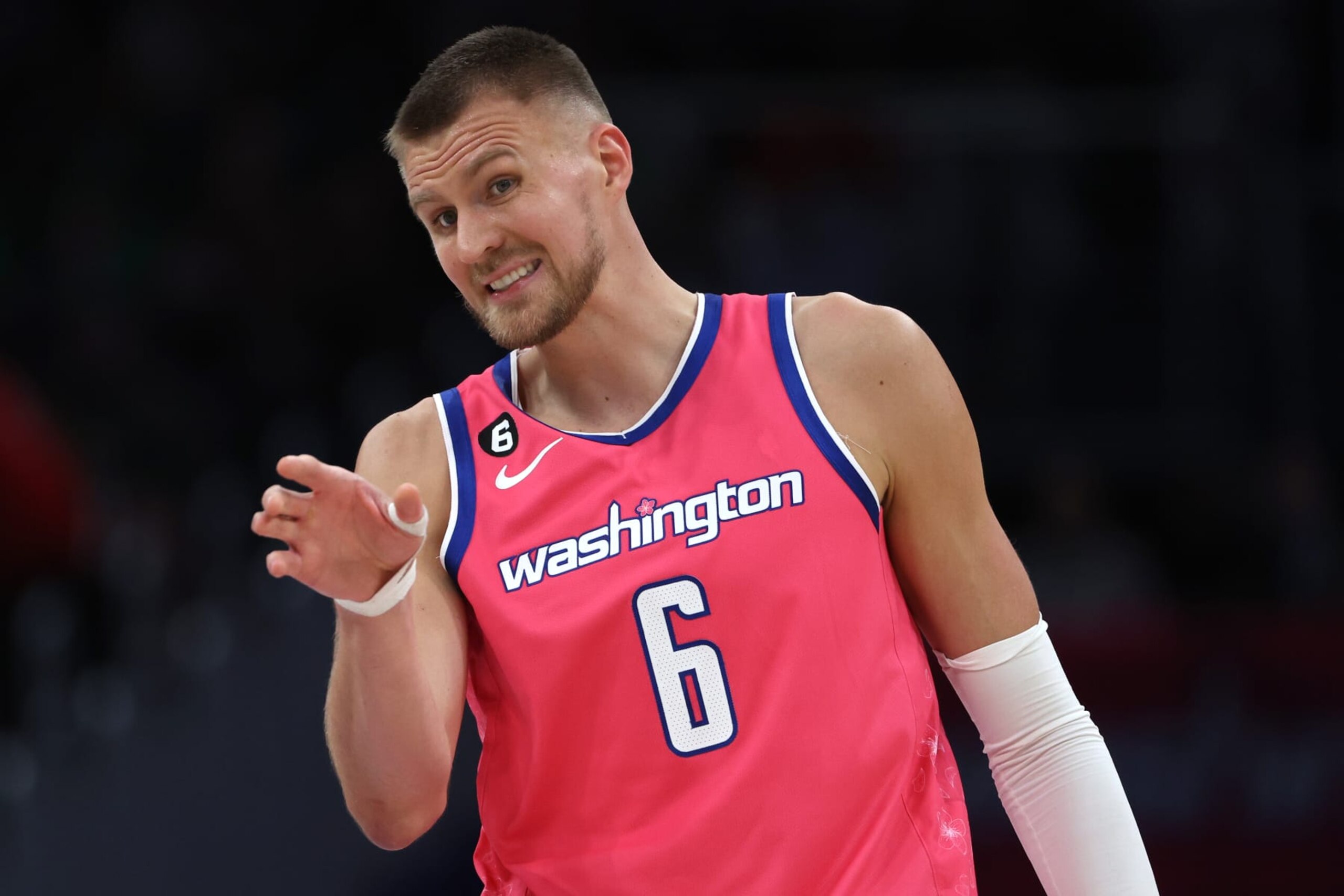
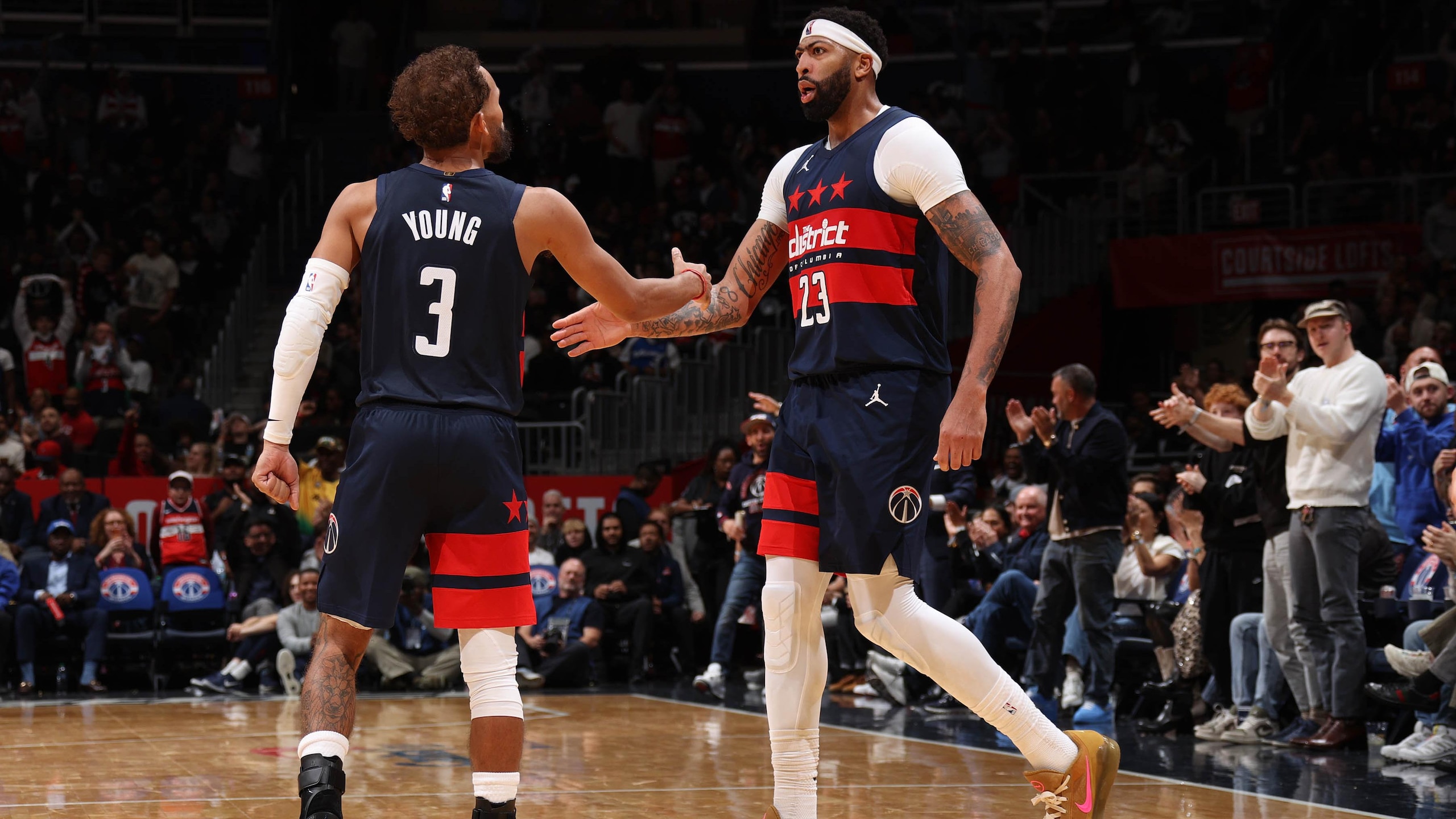
If the Washington Wizards could get a guarantee that Kristaps Porziņģis would play the next several seasons at the level he showed in 2022-23, they'd be justified in handing him something close to the four year, $180 million contract they reportedly discussed with him this season.
Of course no such assurances are available, as Porziņģis' stellar season—65 games played, 23.2 points per contest and a 49.8/38.5/85.1 shooting split—was an outlier in both production and availability when measured against his career trends. Paying for career years is always dicey, particularly so for a 7'3" center who has an ACL tear in his past and an average of 50.3 games played from 2019-20 to 2021-22.
The Wizards have previously bent over backwards to keep their own free agents; Bradley Beal got a quarter-billion dollars and the only no-trade clause in the sport last summer. Porzingis could be the next in-house talent to get an alarmingly rich deal from Washington as it continues to doggedly pursue a low-end playoff spot.
With that said, the nearly universal panning of the Beal contract should give the Wizards pause. Unlike last offseason, they should look around the league at the dearth of cap space (especially among non-rebuilding teams) and avoid caving on every imaginable point of negotiation. Might that irk Porziņģis after a borderline All-NBA effort? Perhaps, but if his response to that annoyance involves threatening to sign with the bottom-feeding Houston Rockets or San Antonio Spurs, the Wizards might consider calling his bluff.
Washington should want to keep Porziņģis, particularly if it believes he's kicked the injury bug and didn't gut through 65 games to showcase his durability in a contract year. His effectiveness suggests he was healthy and whole, particularly down the stretch. It's just that the Wizards have a habit of overpaying in situations like this, and the only thing worse than having one cap-crippling contract on the books (Beal) is having two.
Draymond Green, Golden State Warriors
5 of 6
The timing might be right for Draymond Green to decline his $27.6 million player option for 2023-24 and enter unrestricted free agency. Coming off a season marked by his highest field-goal percentage ever, best three-point hit rate and scoring average since 2017-18 and most games played since 2016-17, Green should be motivated to lock in what'll probably be the last sizable contract of his career.
While $27.6 million is a lot of money to turn down for a 33-year-old whose fit on other rosters has long been a point of uncertainty, it's hard to imagine his odds of a hefty three- or four-year pact will be any better a year from now. Then again, Kyle Lowry got a three-year, $85 million deal from the Miami Heat in a sign-and-trade when he was 35 in the 2021 offseason, so it isn't a given that Green would forego a bigger payday by opting in and waiting to hit free agency in 2024.
Green's statue will one day share outdoor space at Chase Center alongside Stephen Curry's and Klay Thompson's, and his indispensability to the Golden State Warriors' dynastic run will make it impossible to keep sentiment out of negotiations. If he comes to the table with demands in the range of the aforementioned Lowry deal, it'll be hard for the Warriors to talk that number down. With that said, Spotrac's Keith Smith projects Green's deal to be more in the three-year, $60 million range. The Warriors would throw a (non-championship) parade if that's all it took to retain the best defensive player of his generation.
Further complicating matters, Curry and Thompson would surely have an issue with Golden State allowing Green to get away. They know better than anyone how valuable he's been to the team and their careers. That makes these hypothetical negotiations of the most fraught in the league, with layers of unknowns spanning from whether Green will even opt out in the first place to the clash of emotion and cold, financial calculus that'll follow if he does.
Jerami Grant, Portland Trail Blazers
6 of 6
The only thing we know about Jerami Grant's next contract is that it'll likely be for at least four years and $112 million. That offer—the most that the Portland Trail Blazers can give him in an extension—has been on the table for the last few months, per Jason Quick of The Athletic.
If Grant doesn't agree to those terms and hits free agency on July 1, he can sign with another team for up to four years and $174 million or come back to the Blazers for a max of five years and $233 million. With those pocket-swelling numbers sitting out there, it's pretty easy to understand why Grant was in no rush to sign the Blazers' extension offer.
Portland is purportedly operating in service of Damian Lillard's title chase, even if the results have fallen far short of giving him the championship-caliber supporting cast he deserves. That would make losing Grant over a few (or several) million bucks a bad look, which could lead to the Blazers nudging up into the $30-million-per-year range. That may be Grant's market rate, but can Portland justify spending so much on someone who just proved he isn't more than the second- or third-best player on a lottery team?
Maybe that's unfair to Grant, and it's true that his 40.1 percent three-point shooting and versatile defense are exactly what the Blazers would target in outside free agents if he walks. But the truth is, neither we nor the Blazers have ever seen Grant contribute to winning at a level that'd justify a legitimate star's salary.
Portland can add talent by using or trading this year's lottery pick and by shopping Anfernee Simons and/or Shaedon Sharpe. Losing Grant wouldn't be fatal; the team missed the play-in round with him, so how much worse could things get without him? Still, Grant has to know how damaging the optics would be for the Blazers if he were to depart, and he should wield that leverage in ways that make Portland sweat this summer.
Stats courtesy of NBA.com, Basketball Reference and Cleaning the Glass. Salary info via Spotrac.
Grant Hughes covers the NBA for Bleacher Report. Follow him on Twitter (@gt_hughes), and subscribe to the Hardwood Knocks podcast, where he appears with Bleacher Report's Dan Favale.

.jpg?w=2560 "Report reveals list of next NFL international locations")
.jpg?w=2560 "Breaking News")
.jpg?w=2560 "McCarthy 'Not Surprised' to Be QB1")