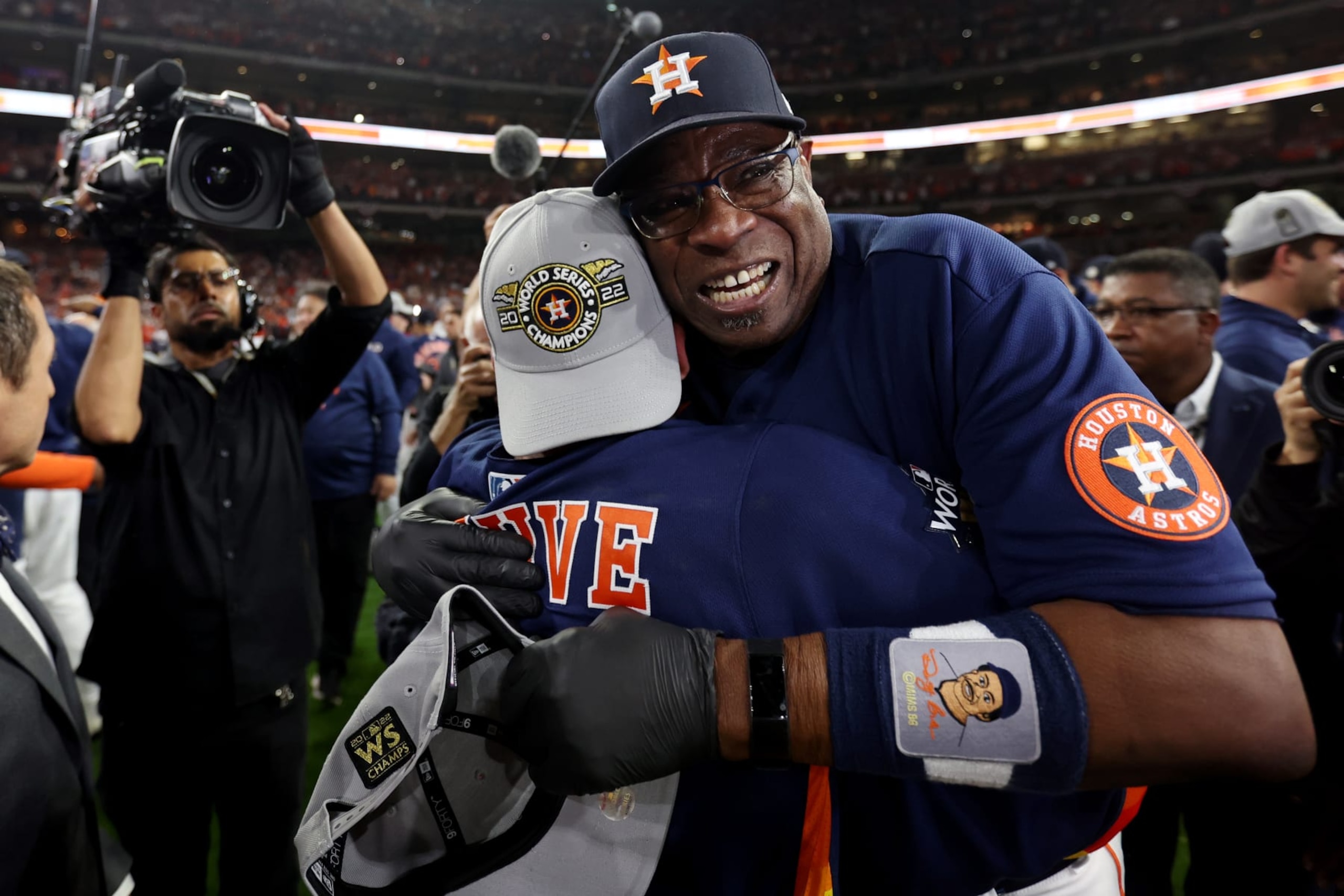


From the Pittsburgh Pirates and Oakland Athletics of the early 1970s to the Houston Astros and Los Angeles Dodgers of today, we've pinpointed the best five-year stretch of every Major League Baseball team in modern history.
We're defining "modern history" as everything that has happened since the pitching mound was lowered after the 1968 season. (In one case, we overlap with pre-1968 seasons, but we'll get there shortly.) That's far enough back to cover a whole bunch of seasons but also recent enough that some fans of every franchise will vividly remember the peak.
Regular-season success is our primary focus. Pennants and World Series titles receive bonus consideration, but if forced to choose between a five-year stretch in which a team barely posted a .500 record but had an out-of-nowhere run to win it all or a half-decade in which it was consistently a contender but never finished the fight in October, we'll go with the latter.
For each team, we'll also select an MVP of that five-year stretch. Again, prolonged success is better than one great season. It's not necessarily the player who led the team in wins above replacement for the five years in question, but it'll almost always be a player who was there for at least four of the five seasons and ended up top-three in WAR. Basically, we're looking for the player without whom that great run never happens.
Teams are presented in alphabetical order by location.
Arizona Diamondbacks
1 of 30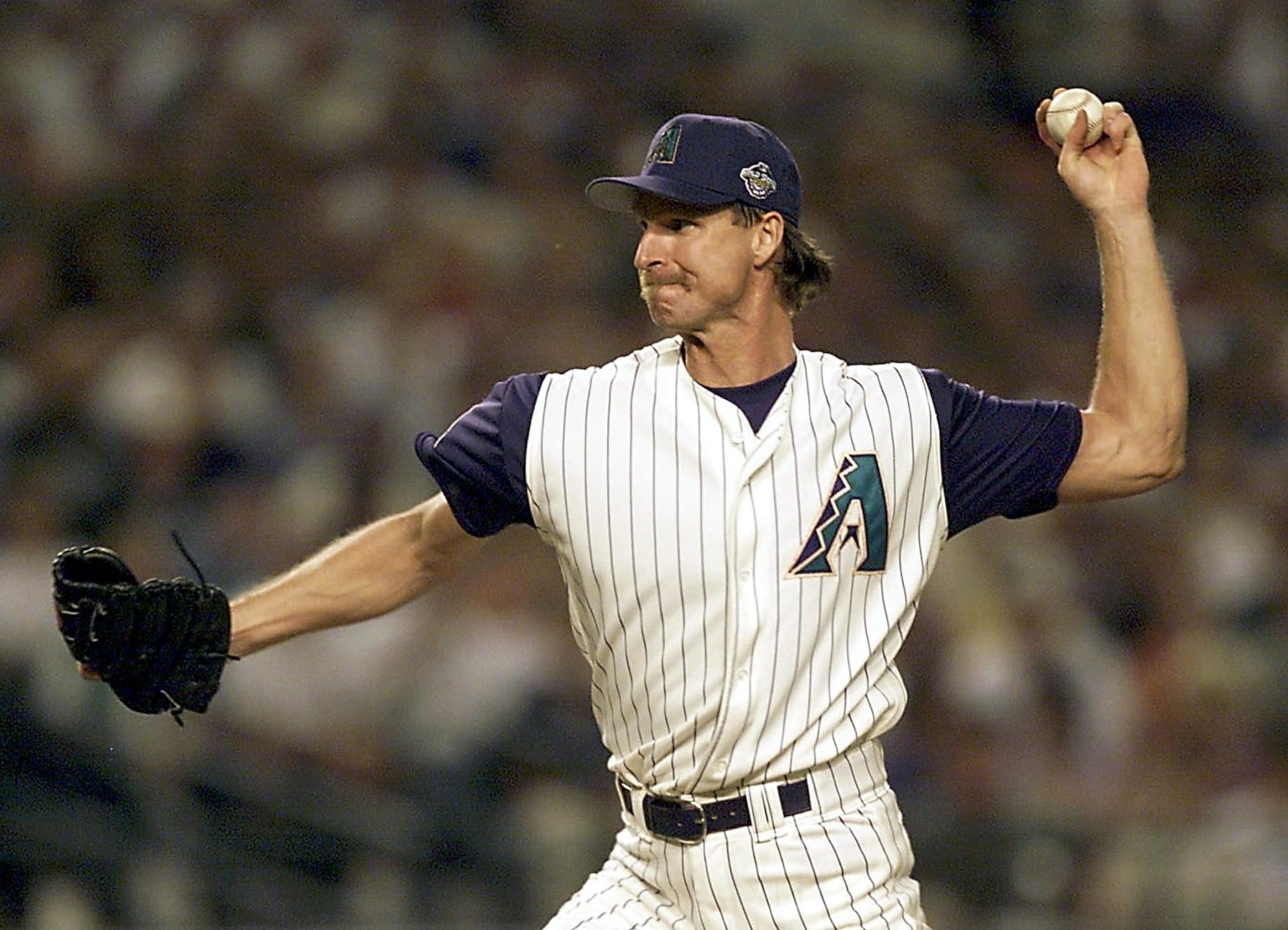
Best Five-Year Stretch: 1999-2003
Record: 459-351 (.567 win percentage)
Postseason: 2001 World Series champions, lost in 1999 and 2002 NLDS
MVP: Randy Johnson
Synopsis
While the Tampa Bay (Devil) Rays took a few years to hit their stride, the other 1998 expansion team wasted little time in taking Major League Baseball by storm.
By year No. 2, Arizona won 100 games and the NL West.
By year No. 4, the Diamondbacks had won a World Series—one of the most memorable Fall Classics of all time, we might add, as Luis Gonzalez got the game-winning, walk-off hit against Mariano Rivera in Game 7.
Gonzalez was their most valuable hitter during that half-decade, batting .314/.405/.564 with 168 home runs. He hit 57 of those dingers during the World Series campaign, falling short of NL MVP only because Barry Bonds and Sammy Sosa hit 73 and 64, respectively.
But the real star power was the one-two punch of Randy Johnson and Curt Schilling.
Schilling didn't join the rotation until the 2000 trade deadline, but he gave the D-backs three-and-a-half great seasons, finishing second in the Cy Young vote in both 2001 and 2002.
He finished second in the vote because Johnson was busy racking up four consecutive NL Cy Youngs from 1999 to 2002. The Big Unit was simply unbelievable, averaging 354 strikeouts per season during that four-year stretch of dominance.
Arizona has been chasing that high ever since, though. It has as many playoff appearances in the past 20 seasons as it did in the first five.
Atlanta Braves
2 of 30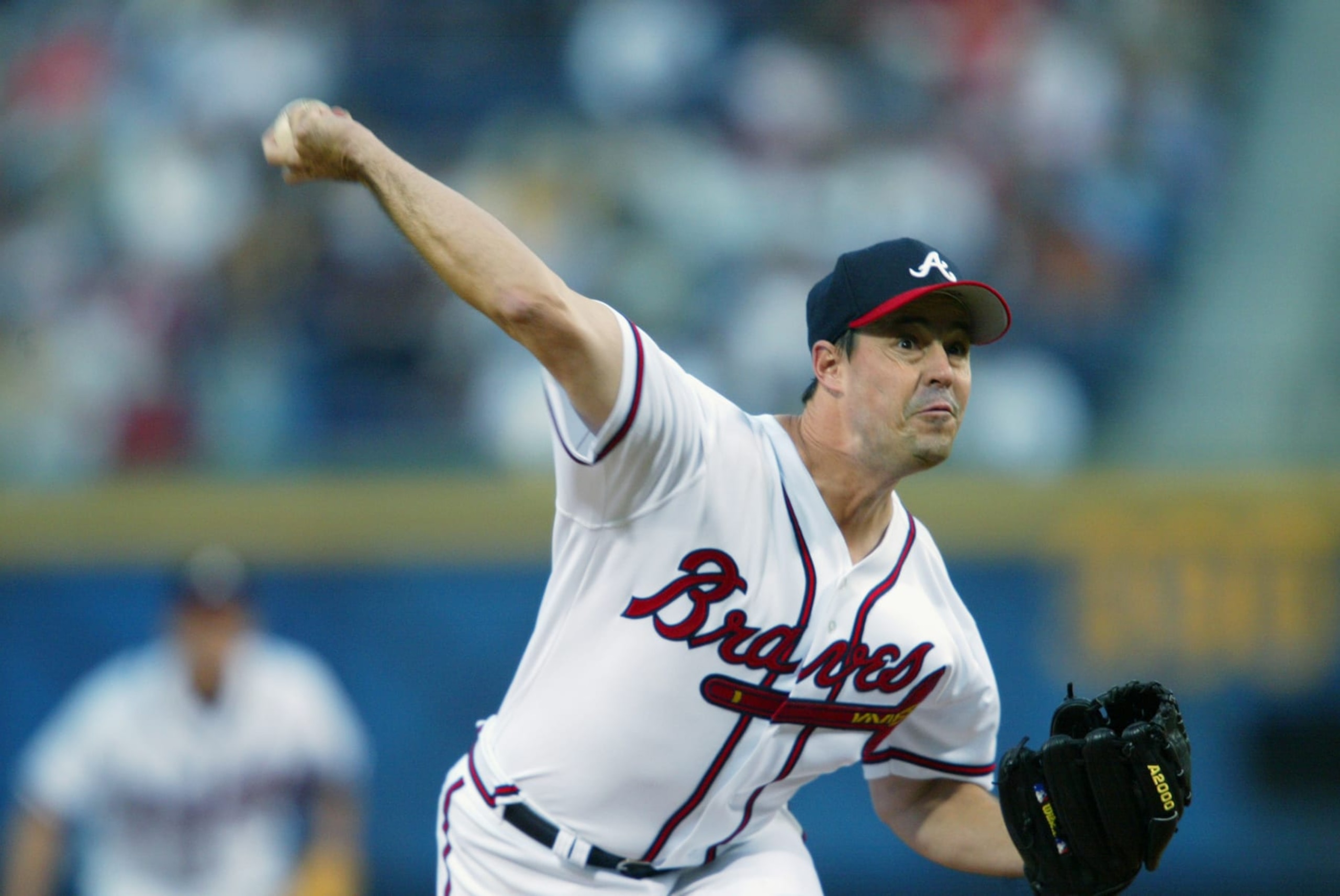
Best Five-Year Stretch: 1995-99
Record: 496-296 (.626 win percentage)
Postseason: 1995 World Series champions, NL champs in 1996 and 1999, lost in 1997 and 1998 NLCS
MVP: Greg Maddux
Synopsis
Heading into this exercise, we knew it would just be a question of which five-year chunk of the 14 consecutive division titles to go with.
Really, there wasn't any debate.
Atlanta's only World Series title (during that era) came in 1995, and it won at least 101 regular-season games each year from 1997 to 1999. Throw in the NL pennants in 1996 and 1999, and the final five years before Y2K were the no-brainer choice.
A bunch of solid hitters passed through during that half-decade, guys like Fred McGriff, Andruw Jones, Ryan Klesko, David Justice and Andrés Galarraga.
The staple, however, was Larry "Chipper" Jones at the hot corner.
Jones narrowly finished behind Hideo Nomo for NL Rookie of the Year in 1995, then proceeded to place top-10 in the NL MVP vote each year from 1996 to 1999, culminating in winning the trophy in 1999 with 45 home runs, 25 stolen bases and a .319 batting average.
As with Arizona, though, the aces led the way.
In Atlanta's case, it was the three-headed juggernaut of Greg Maddux, Tom Glavine and John Smoltz.
Maddux won the NL Cy Young in 1995, Smoltz's turn came in 1996 and Glavine got one in 1998. Maddux was king, though, posting a 2.47 ERA in 163 starts.
Baltimore Orioles
3 of 30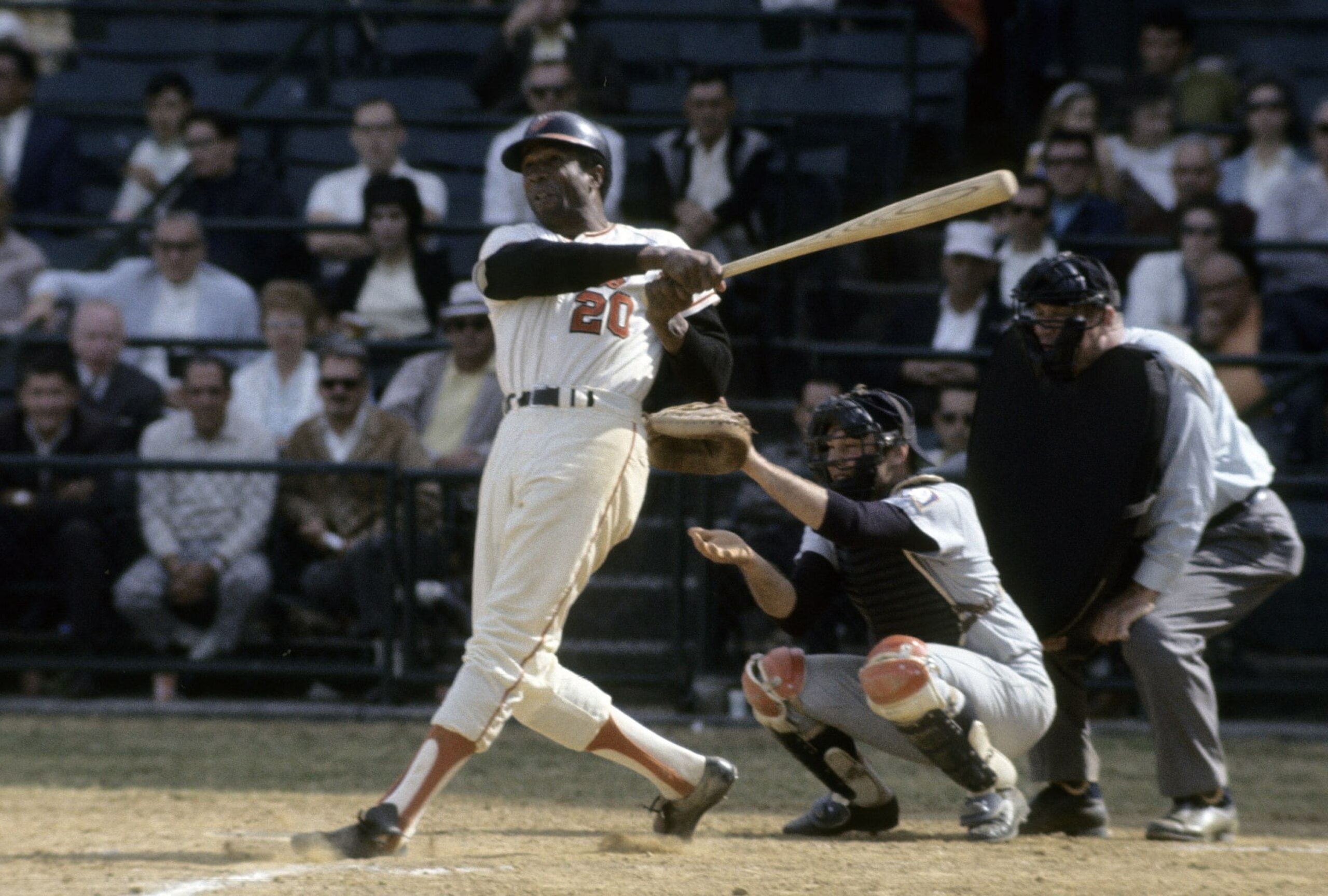
Best Five-Year Stretch: 1966-70
Record: 481-326 (.596 win percentage)
Postseason: 1966 and 1970 World Series champs, 1969 AL champs
MVP: Frank Robinson
Synopsis
If we weren't allowed to count the 1966-70 Orioles because their run overlapped with the lowering of the mound after the 1968 season, we would've gone with the 1979-83 Orioles, who won one World Series, lost another and barely missed the playoffs in the three years in between.
But we're making the rules, so the pre-disco era O's can fly.
Of the five seasons, Baltimore's pitching was worst in 1966—until it mattered the most. In that World Series against the Dodgers, the O's allowed two runs early in Game 1 and then pitched 33 consecutive shutout innings to win the first World Series in franchise history.
1969 and 1970 were when Baltimore got really good, though, winning 109 games in the former and 108 in the latter. They lost the 1969 World Series to the New York Mets, but the offense was insatiable the following October against the Cincinnati Reds.
Hall of Fame outfielder Frank Robinson earned the 1966 AL MVP, winning the Triple Crown with 49 home runs, 122 RBI and a .316 batting average. He was outstanding throughout that half decade in Baltimore, as was Brooks Robinson, who won all the Gold Gloves at third base (16, to be exact) and finished runner-up to Frank for the 1966 AL MVP.
Frank Robinson was named MVP of the 1966 World Series; Brooks Robinson got the honor in 1970.



Boston Red Sox
4 of 30
Best Five-Year Stretch: 2004-08
Record: 470-340 (.580 win percentage)
Postseason: 2004 and 2007 World Series champs, lost in 2008 ALCS, lost in 2005 ALDS
MVP: David Ortiz
Synopsis
It took 86 long years to break the Curse of the Bambino, but the floodgates opened up once the Red Sox got over that hump.
Dave Roberts will forever be a legend in Boston for that stolen base in the bottom of the ninth inning in Game 4 of the 2004 ALCS. That sparked the comeback from a 3-0 series deficit against the Yankees en route to eight consecutive wins.
Roberts was a minor role player in the grand scheme of the 2004-08 Red Sox, though. The big stars were Manny Ramírez, Dustin Pedroia, Kevin Youkilis, Jason Varitek and, of course, Big Papi.
Primarily serving as the designated hitter, David Ortiz batted .298 and averaged 40 home runs per season during this half-decade. He never won MVP, but he placed top five in the AL vote in each season from 2003 to 2007.
On the pitching front, we have our second Curt Schilling sighting of the list. He won 21 games in 2004 and had the famous "bloody sock" performance in Game 6 of that year's ALCS. And in the final appearance of his career, the then-40-year-old dug deep for 5.1 innings and a win in Game 2 of the 2007 World Series.
Also, Jonathan Papelbon rose to prominence during this time, saving 113 games with a 1.70 ERA from 2006 to 2008.
Chicago Cubs
5 of 30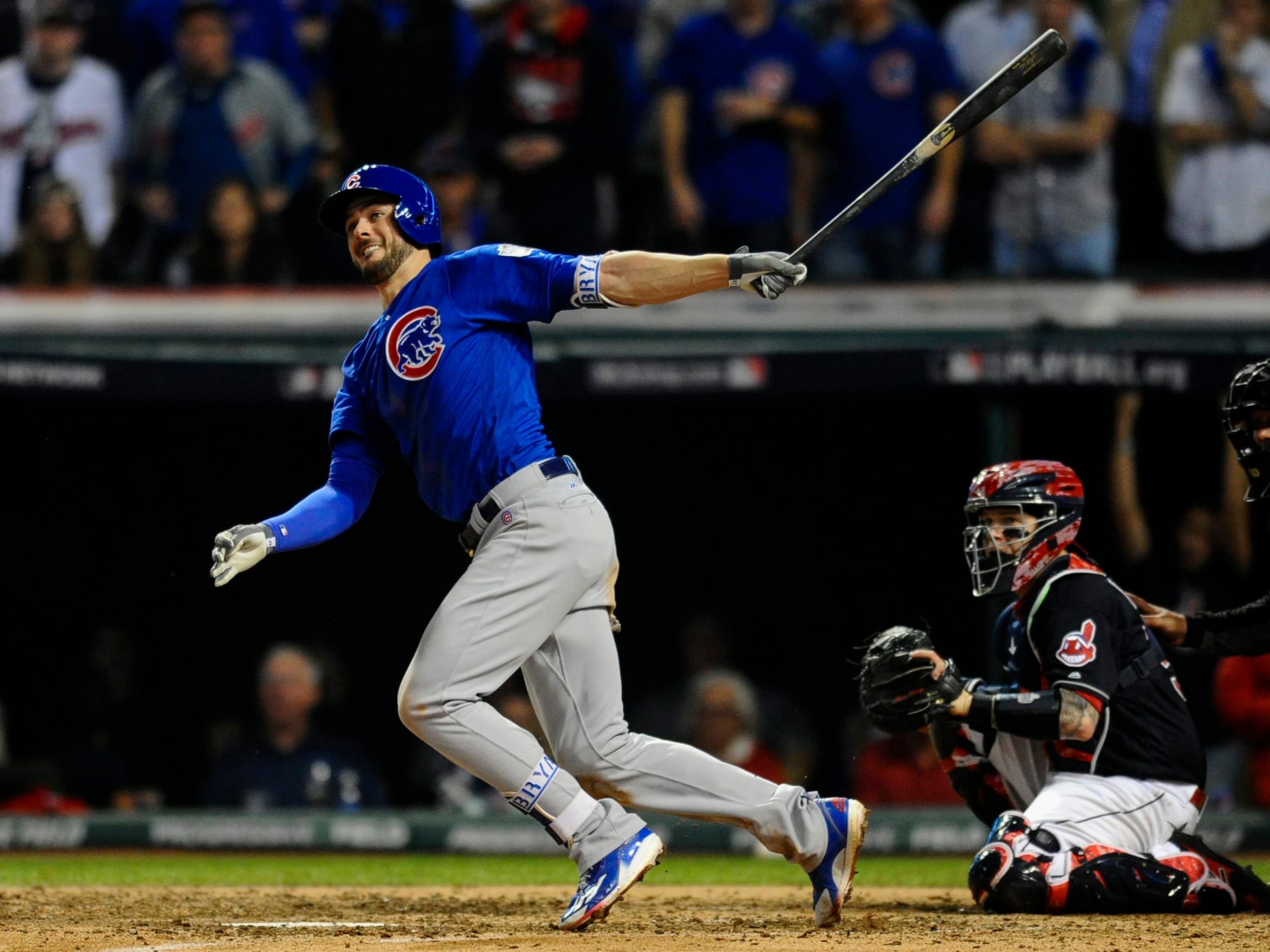
Best Five-Year Stretch: 2015-19
Record: 471-339 (.581 win percentage)
Postseason: 2016 World Series champs, lost in 2015 and 2017 NLCS, lost in 2018 NLWC
MVP: Kris Bryant
Synopsis
Chicago's all-time peak was 1906-10. The Cubs went to four World Series, winning two of them, and averaged 106 wins per season.
In history that people alive today could have witnessed, however, we move from one curse-breaker to the other, as the Cubs mercifully snapped their 108-year World Series drought in 2016. In winning 103 games during that campaign, they also ended a century-old streak of seasons with 100 wins or fewer.
The star of the show was Kris Bryant.
He won NL Rookie of the Year in 2015 before earning NL MVP the following year. In his first three seasons in the majors, Bryant batted .288/.388/.527 with 94 home runs and 274 RBI.
He was an instant sensation and the face of the lovable-losers-turned-champions.
He was hardly a one-man show, though.
The nucleus of Bryant, Anthony Rizzo, Javier Báez and Addison Russell was a staple in the lineup, while Kyle Hendricks, Jon Lester and (for three of the five years) Jake Arrieta anchored the starting rotation.
Chicago only won it all in 2016, but it easily could have done so in any season from 2015 to 2018.
Chicago White Sox
6 of 30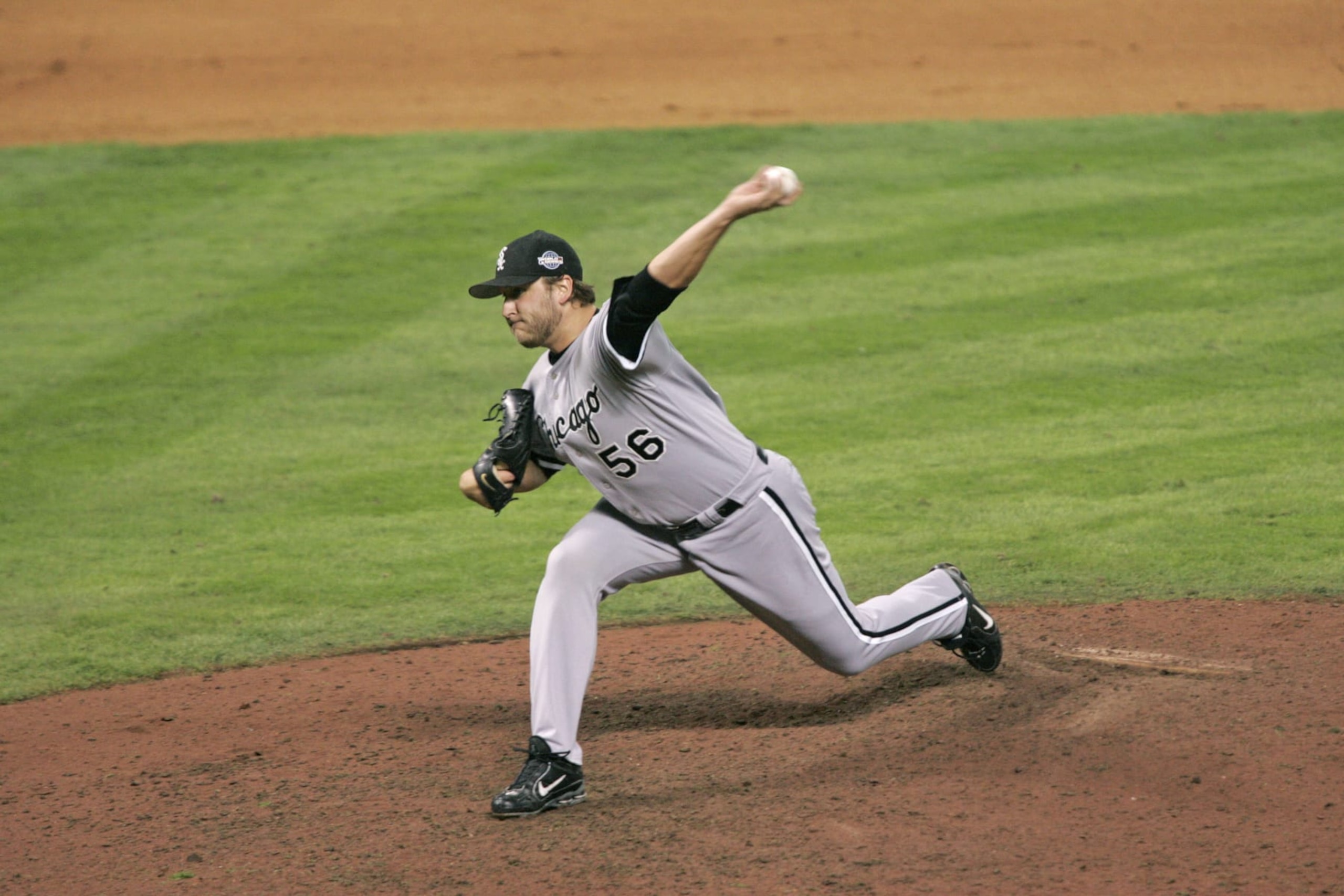
Best Five-Year Stretch: 2002-06
Record: 439-371 (.542 win percentage)
Postseason: 2005 World Series champs
MVP: Mark Buehrle
Synopsis
Not many peaks or valleys for the Chicago White Sox. They've only once produced a winning percentage of .635 or better, and that was over a century ago in 1917. Conversely, just four seasons at .365 or lower, most recently in 1970. They hover in the range of 68 to 94 wins, culminating in a perfectly mediocre 81-81 campaign in 2022.
They did have a 17-year streak of winning seasons (1951-67) but only one postseason appearance to show for it.
The better-than-usual run in the early 2000s stands out, though, including winning the 2005 World Series at the end of one of the best regular seasons in franchise history.
Left-handed, rubber-armed Mark Buehrle was the sine qua non of those White Sox. In 15 consecutive seasons (2001-15) before retiring, Buehrle made at least 30 starts and logged at least 198.2 IP. He never posted a sub-3.00 ERA, but he was their constant—not to mention a folk hero for taking it upon himself to fix MLB's pace-of-play problem.
The other constant for that half-decade was first baseman Paul Konerko. The six-time All-Star spent 16 of his 18 seasons with the South Siders, and he was especially potent from 2004 to 2006, batting .291/.372/.540 with 116 home runs and 330 RBI.
Other memorable position players—Frank Thomas, Jim Thome, Carlos Lee, Magglio Ordóñez, A.J. Pierzynski, Aaron Rowand, Joe Crede and Scott Podsednik, to name a few—came and went from 2002 to 2006, but Konerko, like Buehrle, always seemed to be a major factor during this franchise's high point.
Cincinnati Reds
7 of 30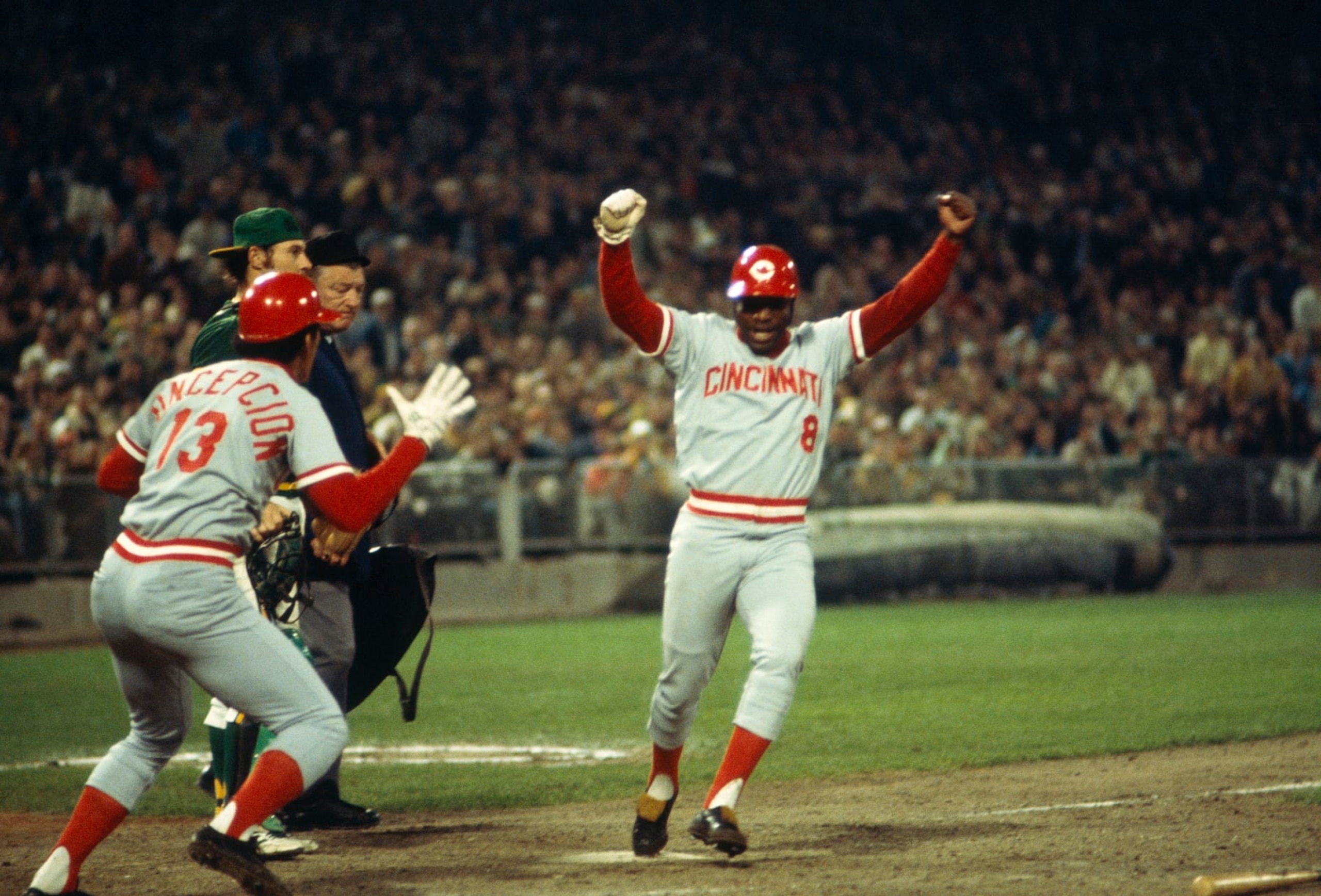
Best Five-Year Stretch: 1972-76
Record: 502-300-1 (.626 win percentage)
Postseason: 1975 and 1976 World Series champs, 1972 NL champs, lost in 1973 NLCS
MVP: Joe Morgan
Synopsis
"The Big Red Machine" had a remarkable run through the 1970s, winning at least 90 games in eight of 10 seasons.
But the middle of that decade is where they hit their stride with a pair of World Series titles at the end of a five-season streak of winning percentages north of .600.
The pitching on those Reds squads was forgettable. Jack Billingham and Don Gullett each had a pair of solid seasons, but we're not waiting on their Ring of Honor ceremonies.
The hitting, though.
Oh, the hitting.
When Cincinnati had Pete Rose playing third base in 1975 and 1976, the combination of Rose, Johnny Bench at catcher, Tony Pérez at first, Joe Morgan at second and Dave Concepción at shortstop was arguably the greatest infield of all time.
Each of the five made at least three All-Star Games from 1972 to 1976 and had a combined 57 career All-Star Game nods between them.
Bench was NL MVP in 1972 (and in 1970). Rose won it in 1973. And Morgan took home that hardware in both 1975 and 1976 during an outrageous five-year stretch in which he batted .303 with 108 home runs and 310 stolen bases and won four Gold Gloves for 47.3 fWAR. (Even advanced metrics superhero Mike Trout never had a five-year stretch of 47 fWAR.)
Cleveland Guardians
8 of 30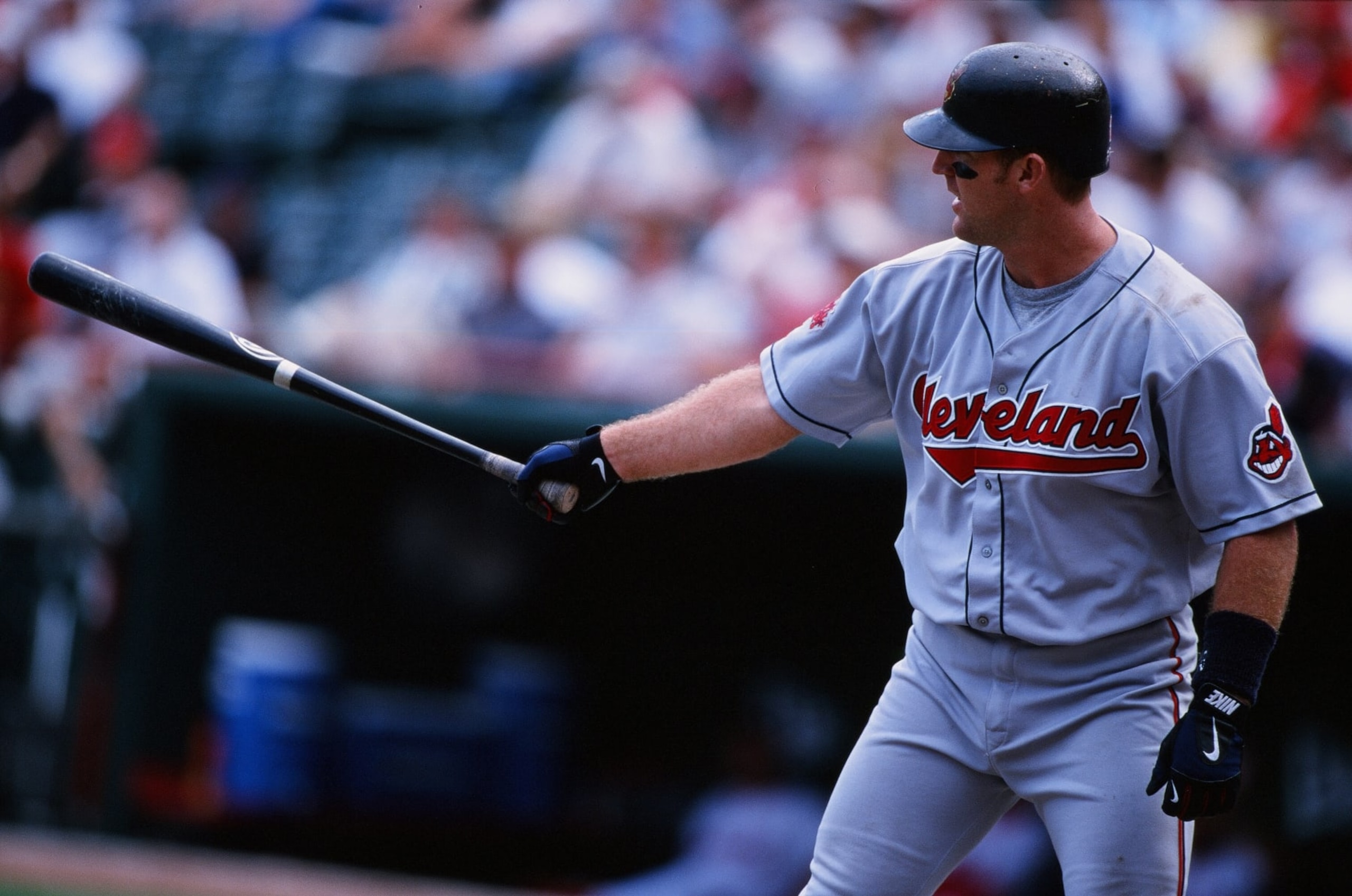
Best Five-Year Stretch: 1995-99
Record: 471-319 (.596 win percentage)
Postseason: 1995 and 1997 AL champs, lost in 1998 ALCS, lost in 1996 and 1999 ALDS
MVP: Jim Thome
Synopsis
From 1995 to 1999, the AL Central belonged to Cleveland, which won the division five consecutive times by a combined margin of 81 games.
That 1995 team was one of the best ever assembled, going 100-44 during the strike-shortened season. Not only did Cleveland win the division by a staggering 30 games that year, but it also had the best record in the majors by a 10-game margin. (It simply could not overcome that aforementioned stacked Atlanta starting rotation in the World Series.)
Though not as dominant as the Big Red Machine's quintet, the bats carried Cleveland through that reign of excellence.
The big three of Jim Thome, Manny Ramírez and Omar Vizquel was great throughout the run. Albert Belle was a phenom in 1995 and 1996 before relocating to Chicago. Cleveland replaced Belle with David Justice and got a great three seasons out of him. Kenny Lofton went to Atlanta for one year in the middle of a six-year stretch of All-Star nods. And Roberto Alomar swooped in in 1999—when Cleveland scored a franchise-record 1,009 runs—for a ridiculous .323/.422/.533 campaign with 24 home runs, 120 RBI, 37 stolen bases and a Gold Glove.
Just a who's who of the non-McGwire/Sosa tier of late 1990s MLB.
It's a shame the pitching let Cleveland down, though, most notably blowing a 2-0 series lead in the 1999 ALDS by allowing 44 runs over the next three games against the Red Sox. In the 28 games played in the five postseason series they lost from 1995 to 1999, the Guardians allowed 5.7 runs per game, failing to win the big one.
Colorado Rockies
9 of 30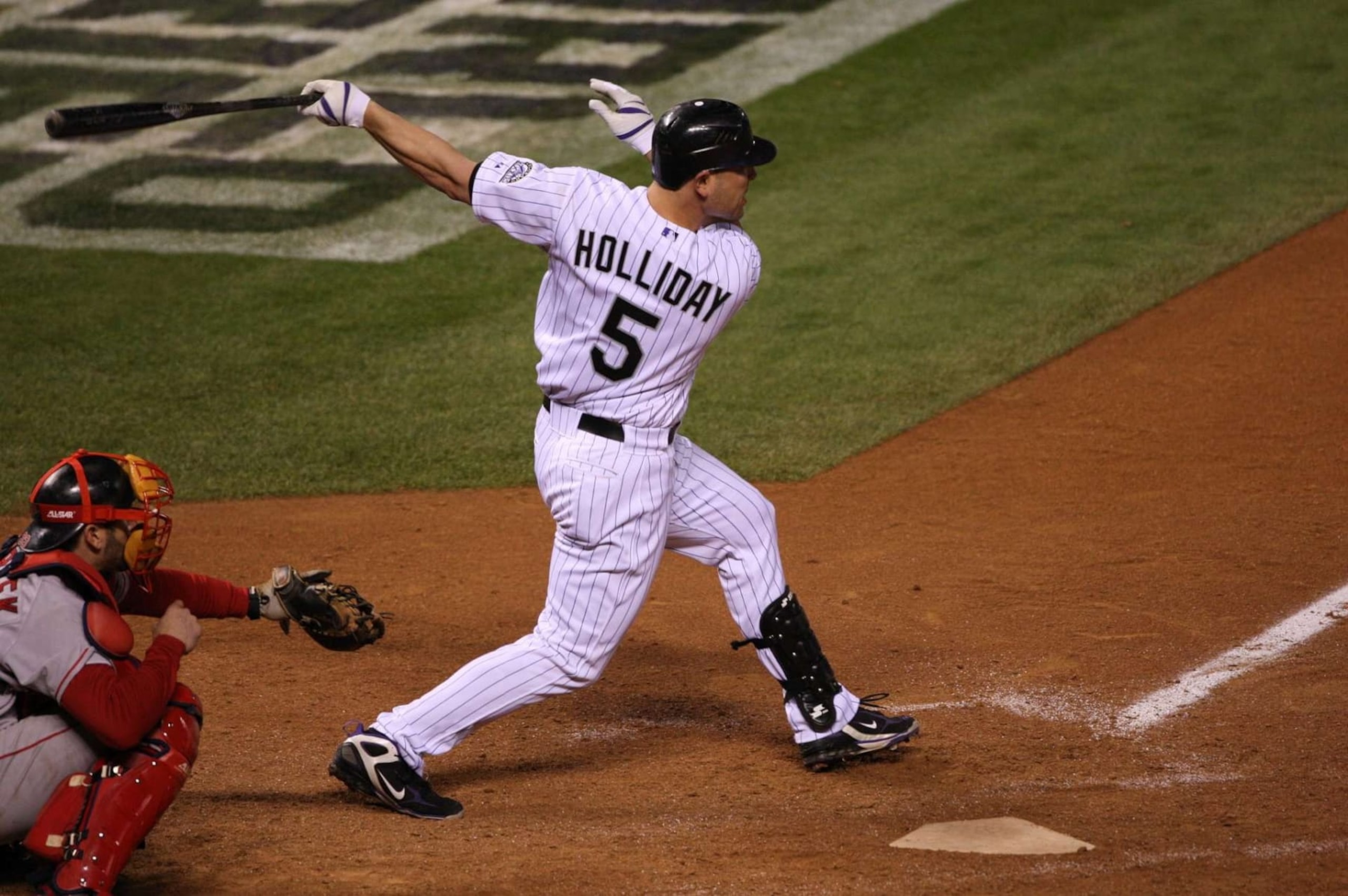
Best Five-Year Stretch: 2006-10
Record: 415-396 (.512 win percentage)
Postseason: 2007 NL champs, lost in 2009 NLDS
MVP: Matt Holliday
Synopsis
Welcome to the "Hug a Rockies fan" portion of the program.
In 30 years as a franchise, Colorado has produced just nine winning seasons, maxing out at 92 wins in 2009.
The end of the 2000s was a solid run, though, including an unexpected trip to the 2007 World Series as a wild-card team.
That squad was led by left fielder Matt Holliday and rookie shortstop Troy Tulowitzki. The former just missed out on an NL MVP in 2007, finishing a few votes behind Philadelphia's Jimmy Rollins despite leading the league in batting average (.340), hits (216) and RBI (137).
But in what has become typical Colorado fashion, the Rockies couldn't hold on to their biggest star, trading Holliday to Oakland after the 2008 season, one year before he was scheduled to become a free agent. (They did get Carlos González in the deal, and he played at Coors Field for a decade.)
Also in typical Colorado fashion, the pitching was never good.
Ubaldo Jiménez had one fantastic season in 2010. But even in the best pitching season in franchise history, the Rockies allowed 4.4 runs per game in 2009. (For context, the MLB average in 2022 was 4.3, and both the Los Angeles Dodgers and Houston Astros checked in at 3.2.)
At least they used to contend on occasion. Nowadays, they put together above-average payrolls for drastically below-average production.
Detroit Tigers
10 of 30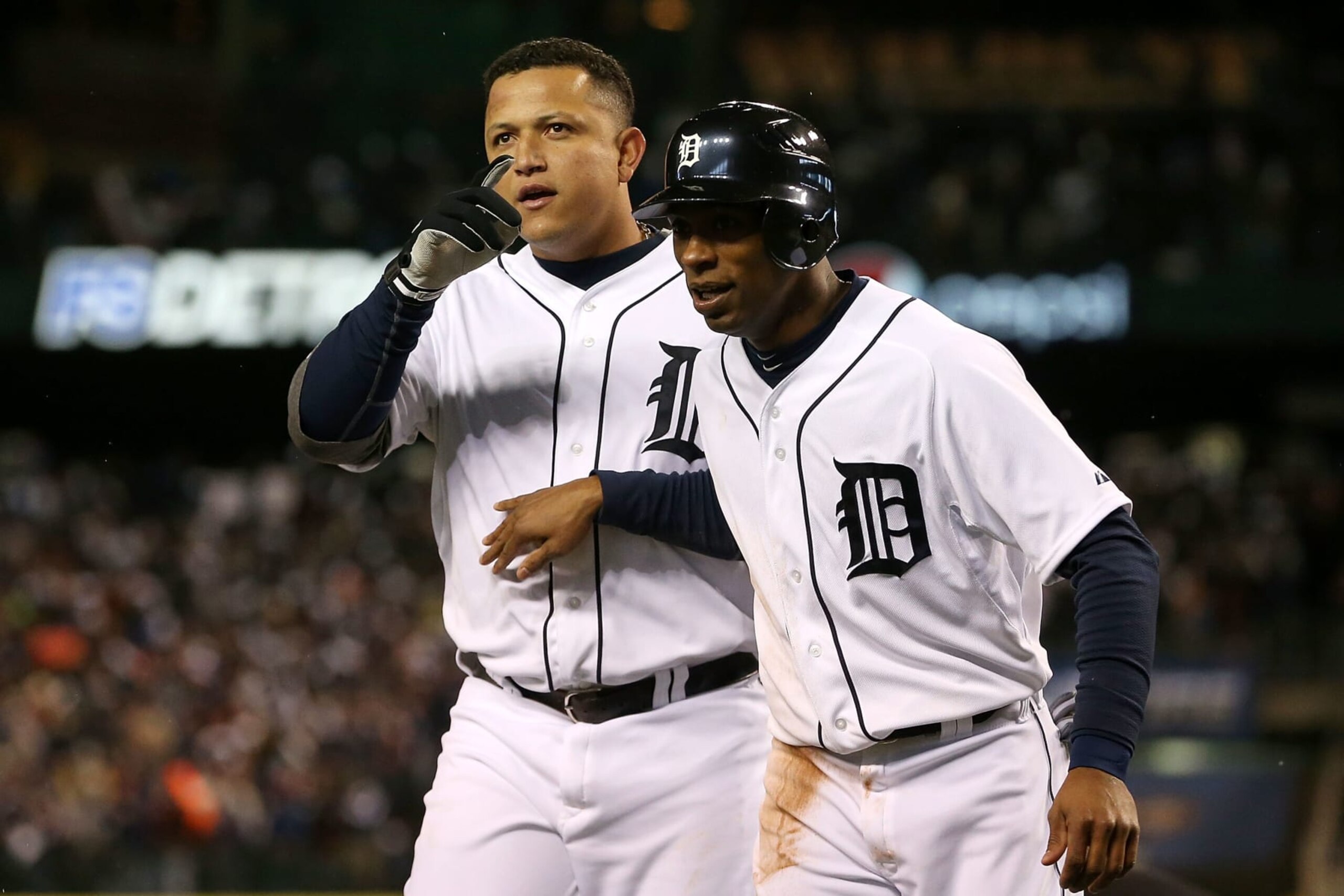
Best Five-Year Stretch: 2010-14
Record: 447-363 (.552 win percentage)
Postseason: 2012 AL champs, lost in 2011 and 2013 ALCS, lost in 2014 ALDS
MVP: Miguel Cabrera
Synopsis
If you want to know how potent the top Tigers were in the early 2010s, take a look at who's making the most money in 2023.
Former Tiger aces Max Scherzer and Justin Verlander are tied atop the salary leaderboard, each making $43.3 million from the New York Mets this season. That pair made a combined 327 starts for Detroit, each winning more than 80 games, from 2010 to 2014.
Scherzer won the AL Cy Young in 2013.
Verlander had the rare Cy Young/MVP double dip in 2011 with a 2.40 ERA.
The biggest star, though, was Miguel Cabrera.
He's making $32 million this season as a shell of what he once was, but he hit .332/.414/.594 with 181 home runs in these five years, named AL MVP in both 2012 and 2013. Cabrera won the Triple Crown in 2012 by hitting .330 with 44 home runs and 139 RBI, and he was even better the following year with a .348 batting average.
With that trio leading the charge, Detroit won four straight AL Central titles from 2011 to 2014, albeit without winning more than 95 games in any of those seasons. (Pitchers not named Verlander or Scherzer did have to toe the rubber from time to time.)
The 2013 team was probably the best of the bunch as Doug Fister, Aníbal Sánchez and Rick Porcello filled out a loaded starting rotation. But they got clipped in the 2013 ALCS, largely by a Red Sox bullpen that allowed one run in 21.0 innings.
Houston Astros
11 of 30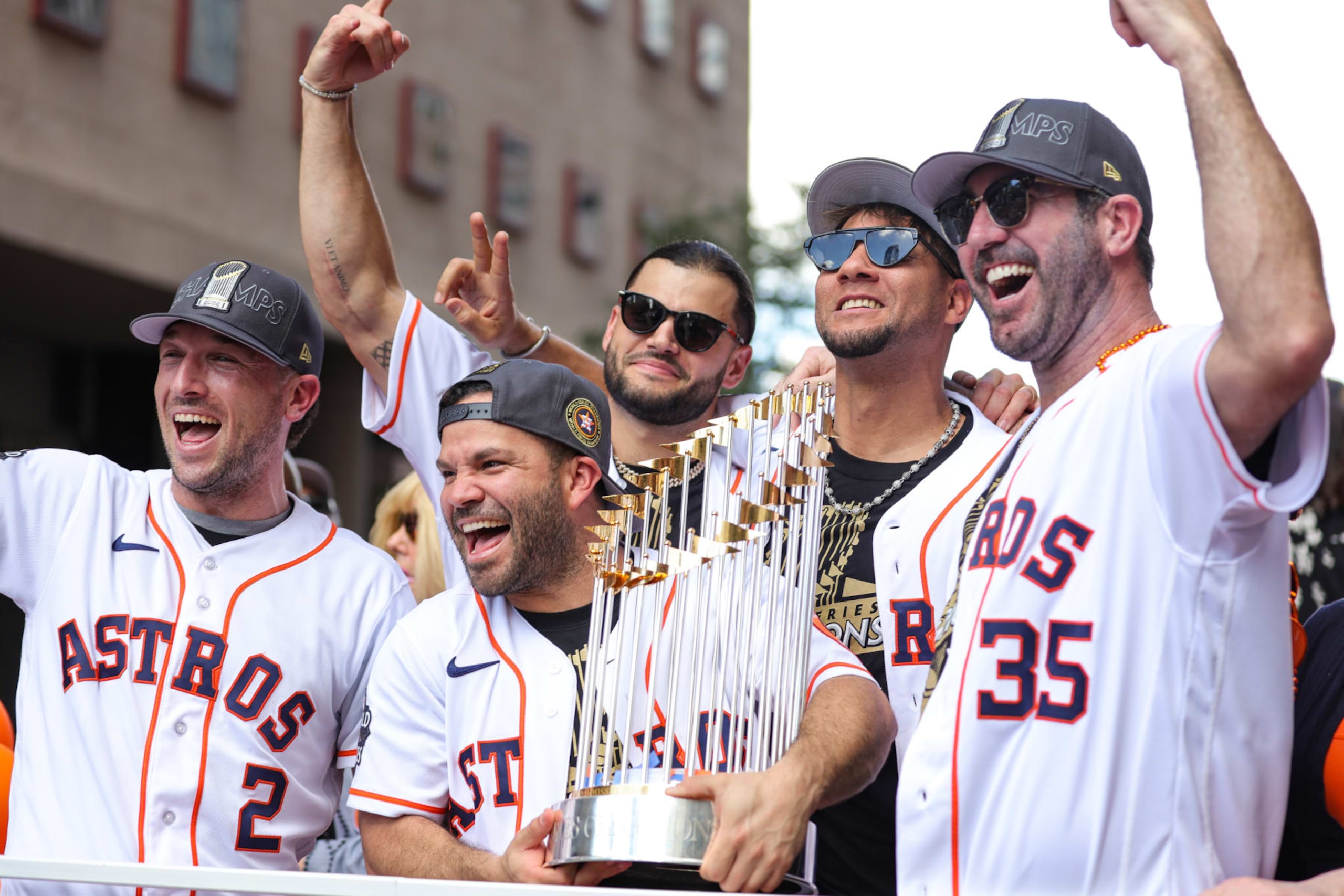
Best Five-Year Stretch: 2017-22
Record: 541-329 (.622 win percentage)
Postseason: 2017 and 2022 World Series champs, 2019 and 2021 AL champs, lost in 2018 and 2020 ALCS
MVP: Jose Altuve
Synopsis
This is technically a six-year stretch, not five years. But college athletes received a blanket free year of eligibility during the pandemic, and we're extending the Astros the same courtesy by not counting the 2020 season against their "clock"—even though they reached the ALCS that season.
At this point, though, reaching the ALCS is par for the course for Houston, doing so in each of the past six years.
No other franchise has played in six consecutive ALCS/NLCS. Not even the Yankees—although they would have played in 10 straight from 1949 to 1958 had League Championship Series existed.
What's wild about Houston's reign is that the Astros keep cycling through pitchers and it never seems to matter who's on the mound. Justin Verlander was the creme de la creme, making 102 starts with a 2.26 ERA, but even he missed basically two full seasons (2020-21) and didn't arrive until late in the 2017 campaign.
But his 102 starts are the most on a list where 13 pitchers made at least 33 starts, all with an ERA of 4.04 or better.
That extends somewhat to the hitting too. Jose Altuve, Alex Bregman and Yuli Gurriel have been the staples. But when Carlos Correa left for Minnesota? Surprise surprise, Jeremy Peña is incredible. Lost George Springer to Toronto? Oh well, Kyle Tucker is awesome now. Yordan Alvarez also arrived in the middle of this six-year run and started mashing everything in sight.
Kansas City Royals
12 of 30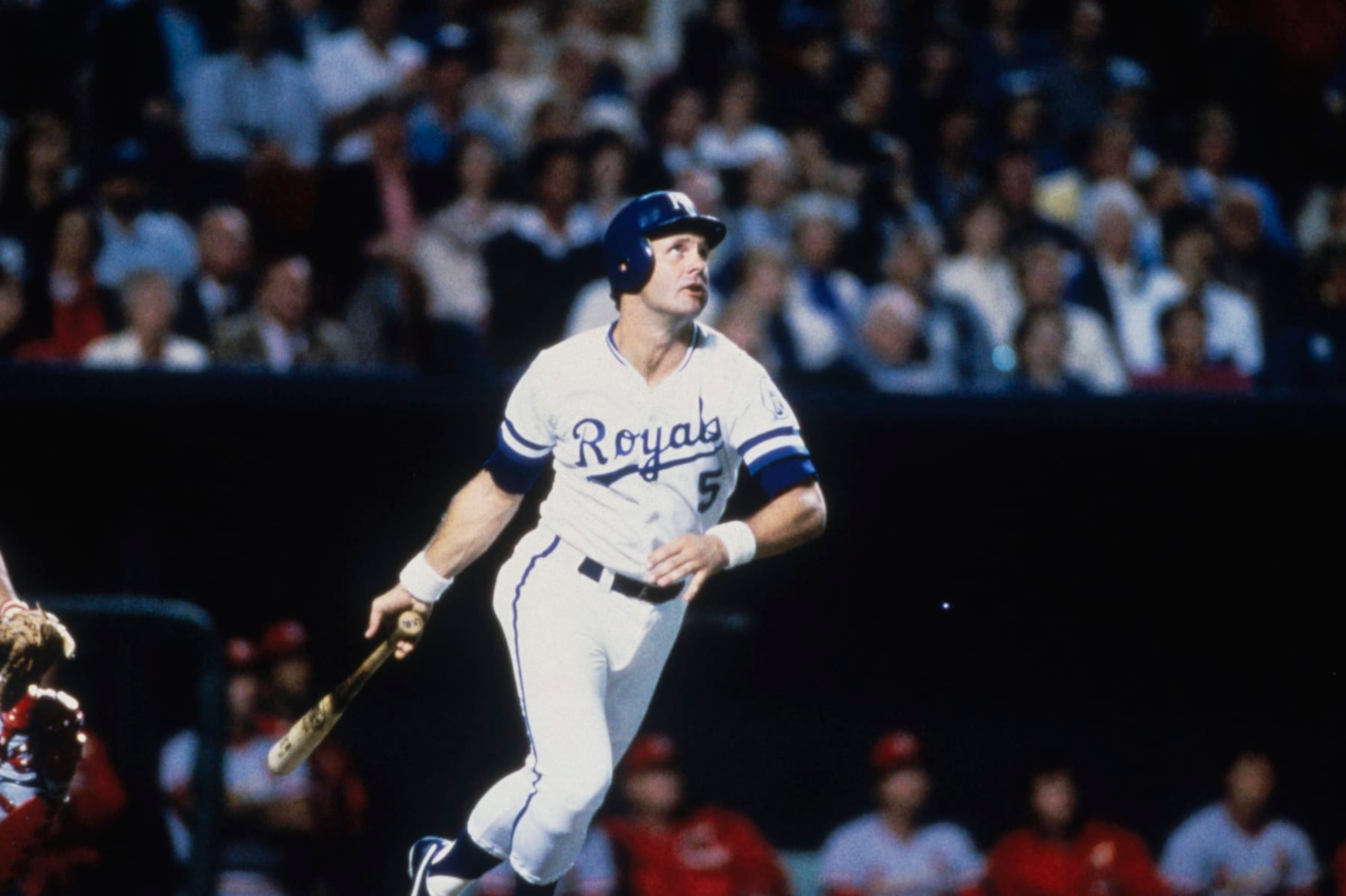
Best Five-Year Stretch: 1976-80
Record: 466-344 (.575 win percentage)
Postseason: 1980 AL champs, lost in 1976, 1977 and 1978 ALCS
MVP: George Brett
Synopsis
Avoiding the World Series titles in 1985 and 2015 is, admittedly, a bold and possibly controversial choice.
However, in both the year after and the season two years before each of those titles, the Royals came nowhere close to making the playoffs. They were bottle-rocket runs, not five-year stretches of dominance.
That 1976-80 group was more of a diesel engine, winning the AL West four times and falling just three games shy of going five-for-five.
The long-haul truck driver steering that big rig was George Brett.
Brett was a Hall of Fame third baseman who was an All-Star in each of these five seasons, though he really caught fire in 1980. Despite playing in just 117 games, he won AL MVP, batting .390 with a 1.118 OPS.
Beyond Brett, Amos Otis, Hal McRae, Darrell Porter and Willie Wilson were the star positional players, with Dennis Leonard the lone pitcher worth mentioning.
Even without much of a rotation, those Royals were darn good. They had the misfortune of repeatedly running into an even better Yankees team in the ALCS, though, only defeating the Bronx Bombers in one of those four series.
Los Angeles Angels
13 of 30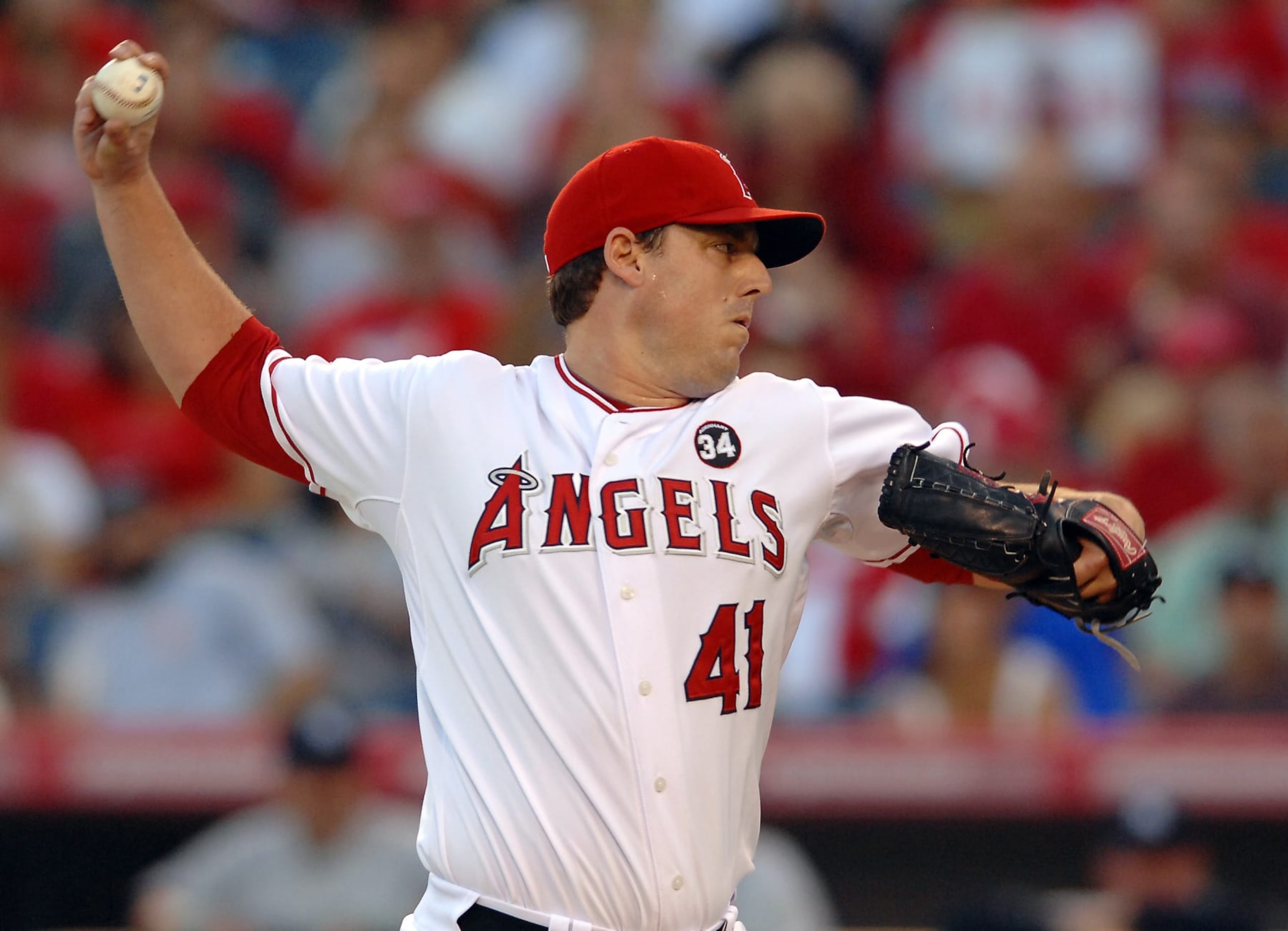
Best Five-Year Stretch: 2005-09
Record: 475-335 (.586 win percentage)
Postseason: Lost in 2005 and 2009 ALCS, lost in 2007 and 2008 ALDS
MVP: John Lackey
Synopsis
It feels apropos that the Angels have had Mike Trout, Shohei Ohtani and Anthony Rendon together for multiple seasons, but the best five-year run in franchise history was a John Lackey-fueled half-decade in which they never made the World Series.
The "Rally Monkey" Angels of 2002 did win it all, but they didn't even win the division that year, plus they were a sub-.500 mess both the year before and the year after.
From 2005 to 2009, though, they won four AL West titles, including the only 100-win campaign in franchise history in 2008. That was a classic "whole is greater than the sum of its parts" roster in which closer Francisco "K-Rod" Rodríguez was clearly the MVP with 62 saves. Rodríguez, Joe Saunders and Ervin Santana were the only Angels to make the All-Star Game that year.
On average during these five seasons, the Angels finished 28 games above .500.
Lackey only won 69 of his 150 starts, but he earned an ERA title in 2007, nearly winning a Cy Young. Overall, he had a solid 3.49 ERA.
In the lineup, free-swinging Vladimir Guerrero and speedster Chone Figgins were the primary assets, and frankly the only mainstays who appeared in at least two-thirds of Angels games during those five years. Guerrero won AL MVP in 2004 and finished top-10 in each of the subsequent three seasons.
Los Angeles Dodgers
14 of 30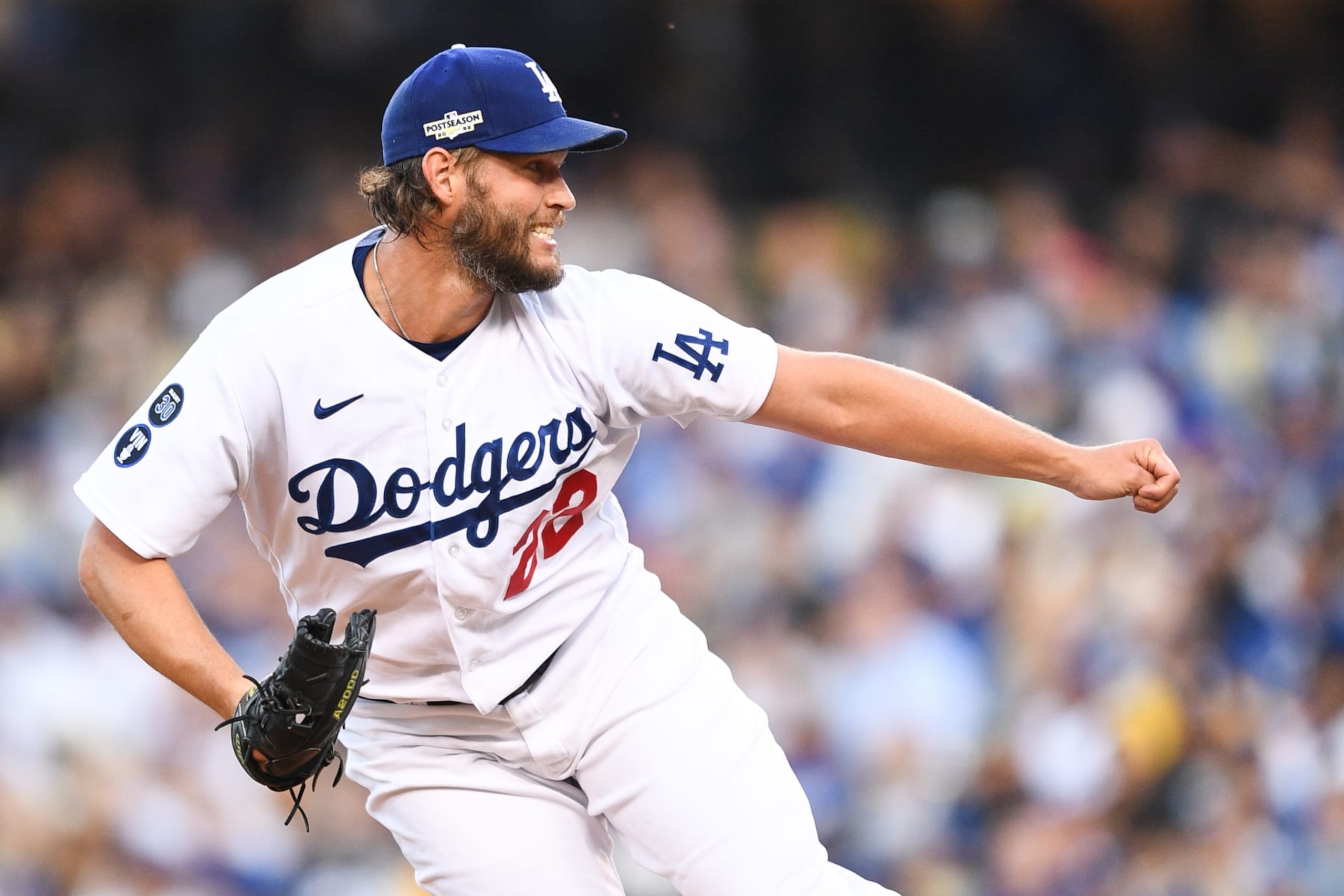
Best Five-Year Stretch: 2017-22
Record: 562-309 (.645 win percentage)
Postseason: 2020 World Series champs, 2017 and 2018 NL champs, lost in 2021 NLCS, lost in 2019 and 2022 NLDS
MVP: Clayton Kershaw
Synopsis
The Dodgers' all-time peak was 1962-66 as Sandy Koufax, Don Drysdale and Maury Wills led the way to three trips to the World Series, plus a 102-win campaign in which they just missed the postseason.
In modern history, though, the peak is right now.
As we did with the Astros, we're not counting 2020 against the Dodgers' clock, so they get 2017-22, which has been one heck of a six-year run.
They won at least 104 games in each of 2017, 2019, 2021 and 2022, maxing out at 111 last season. Their .717 winning percentage during the abridged 2020 campaign extrapolates to 116 wins in a 162-game season—though the Yankees proved last season that it's hard to play that well for a full six months.
As far as star Dodgers go, take your pick.
Cody Bellinger was awesome for three years, winning NL MVP in 2019. Justin Turner, Chris Taylor and Max Muncy have also put up solid numbers. Corey Seager, Mookie Betts, Will Smith and others were great while playing just part of the past six years in L.A.
Hard to argue with Clayton Kershaw, though, even if he has been less dominant (and less healthy) as of late than he was at his peak in the early 2010s. The lefty has a 2.72 ERA since 2017 and has made almost a full season's worth of starts more than his closest teammate, Walker Buehler (135 vs. 106).
Only one World Series title to show for all that regular-season dominance, though.
Miami Marlins
15 of 30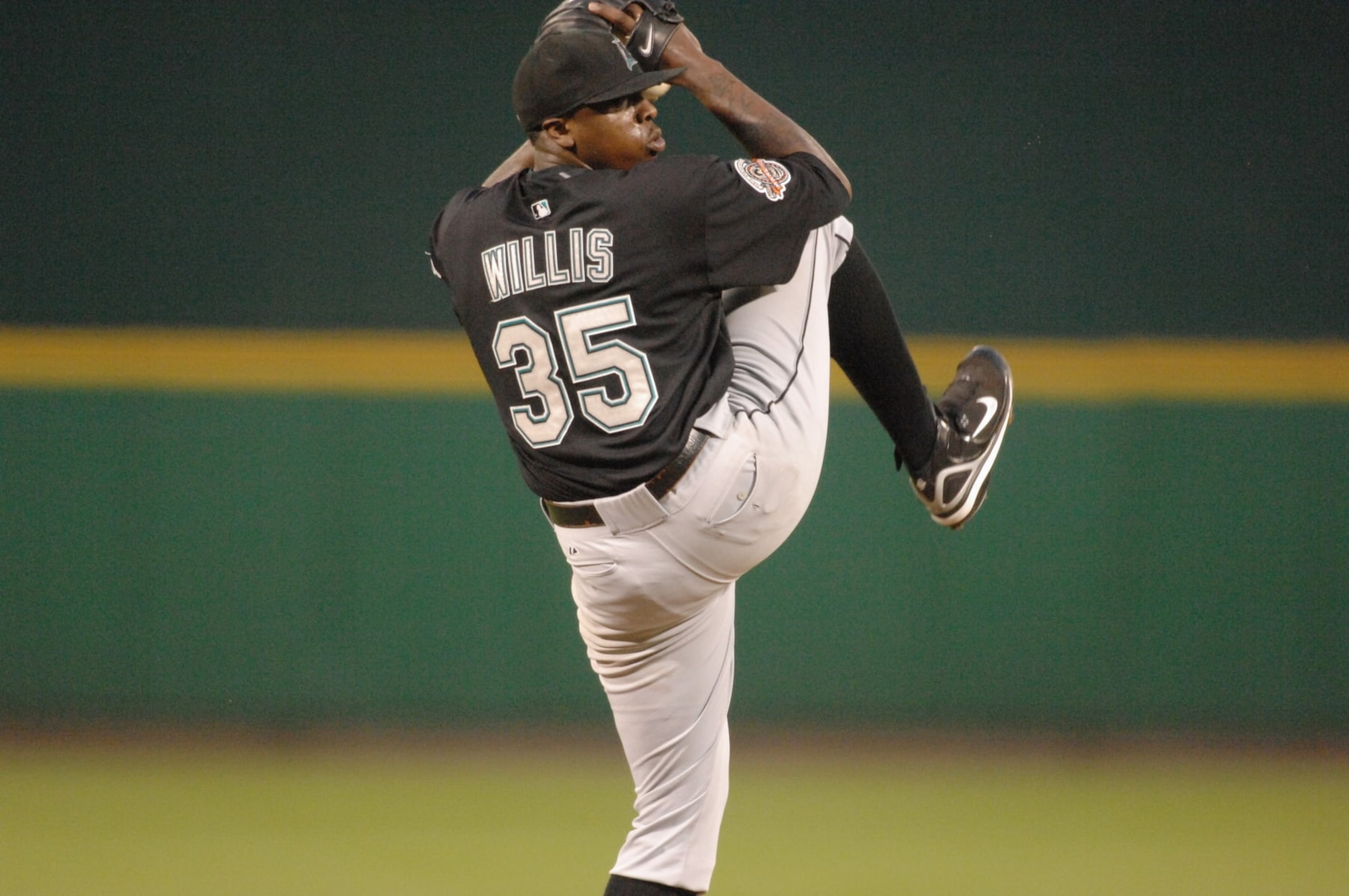
Best Five-Year Stretch: 2002-06
Record: 414-396 (.511 win percentage)
Postseason: 2003 World Series champs
MVP: Dontrelle Willis
Synopsis
You've got to love the Marlins, right?
We previously noted the Rockies have only had nine .500 or better seasons since joining MLB as an expansion team in 1993, but the Marlins arrived at the same time and only have seven winning seasons. In fact, they've only had two seasons in franchise history with a winning percentage of .540 or better, didn't reach .570 in either of those seasons...yet still won a pair of World Series titles.
It's because they cycle through players (or at least used to) like there's no tomorrow.
No player who appeared in a game for the Marlins in 2002 also appeared in a game for them in 2006. As was the case when they won it all in 1997, they won that World Series in 2003 and blew up the team within a couple of seasons.
Juan Pierre, Mike Lowell, Luis Castillo, Iván Rodríguez and Derrek Lee all played a big role for that 2003 team, each earning NL MVP votes.
Lee and "Pudge" each left that offseason.
Pierre, Lowell and Castillo all left after 2005.
They did hang on to both Miguel Cabrera and Dontrelle Willis—who battled each other for NL ROY in '03—through 2007. Cabrera gave them a pair of top-five finishes in the NL MVP vote in '05 and '06, while Willis fell just shy of winning the Cy Young in '05.
Milwaukee Brewers
16 of 30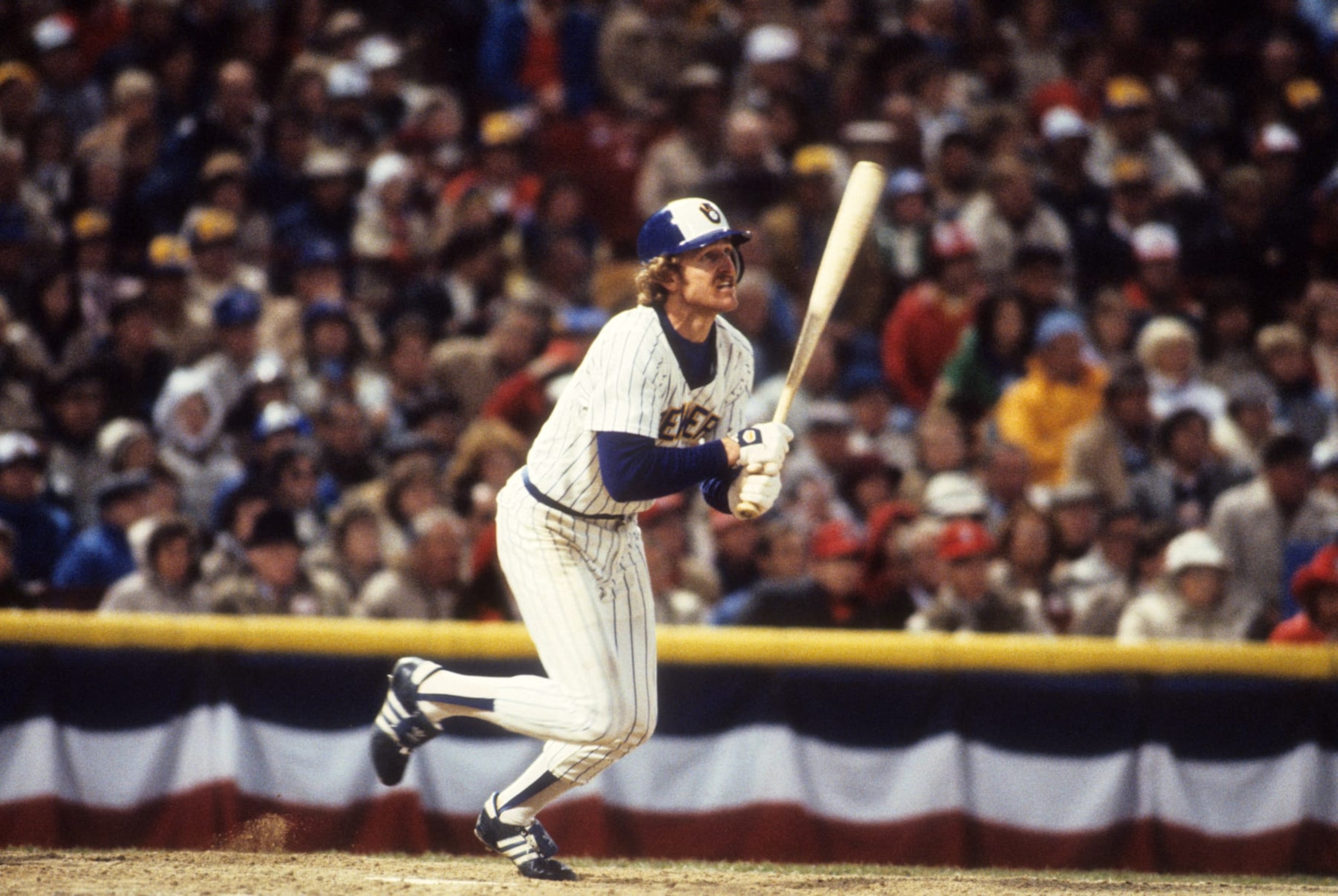
Best Five-Year Stretch: 1978-82
Record: 431-325 (.570 win percentage)
Postseason: 1982 AL champs, lost in 1981 ALDS
MVP: Robin Yount
Synopsis
For the younger crowd, I didn't accidentally type ALDS when I meant NLDS. The Brewers were in the American League from 1969 to 1997 until MLB added Tampa Bay and Arizona and needed to have 16 teams in one league and 14 in the other since interleague play wasn't a full-blown thing yet.
During the nearly three decades with a designated hitter on the roster, the Brew Crew only made the postseason twice, in 1981 and 1982.
They finished six consecutive seasons at least 10 games above .500, though, which is more than can be said for their past quarter-century in the National League.
For that team, Robin Yount led the way.
Gorman Thomas was the top slugger with 175 home runs from 1978 to 1982. Cecil Cooper was the best overall hitter, batting .322 with 106 dingers. But Yount was the 1982 AL MVP when he set a bunch of career highs, including batting .331, hitting 29 homers, driving in 114 runs and earning the only Gold Glove of his career.
Yount also had a fantastic 1982 postseason, batting .414/.452/.621 in the seven-game World Series against the Cardinals. But it wasn't enough, and Milwaukee remains one of six franchises that has never won it all.
Minnesota Twins
17 of 30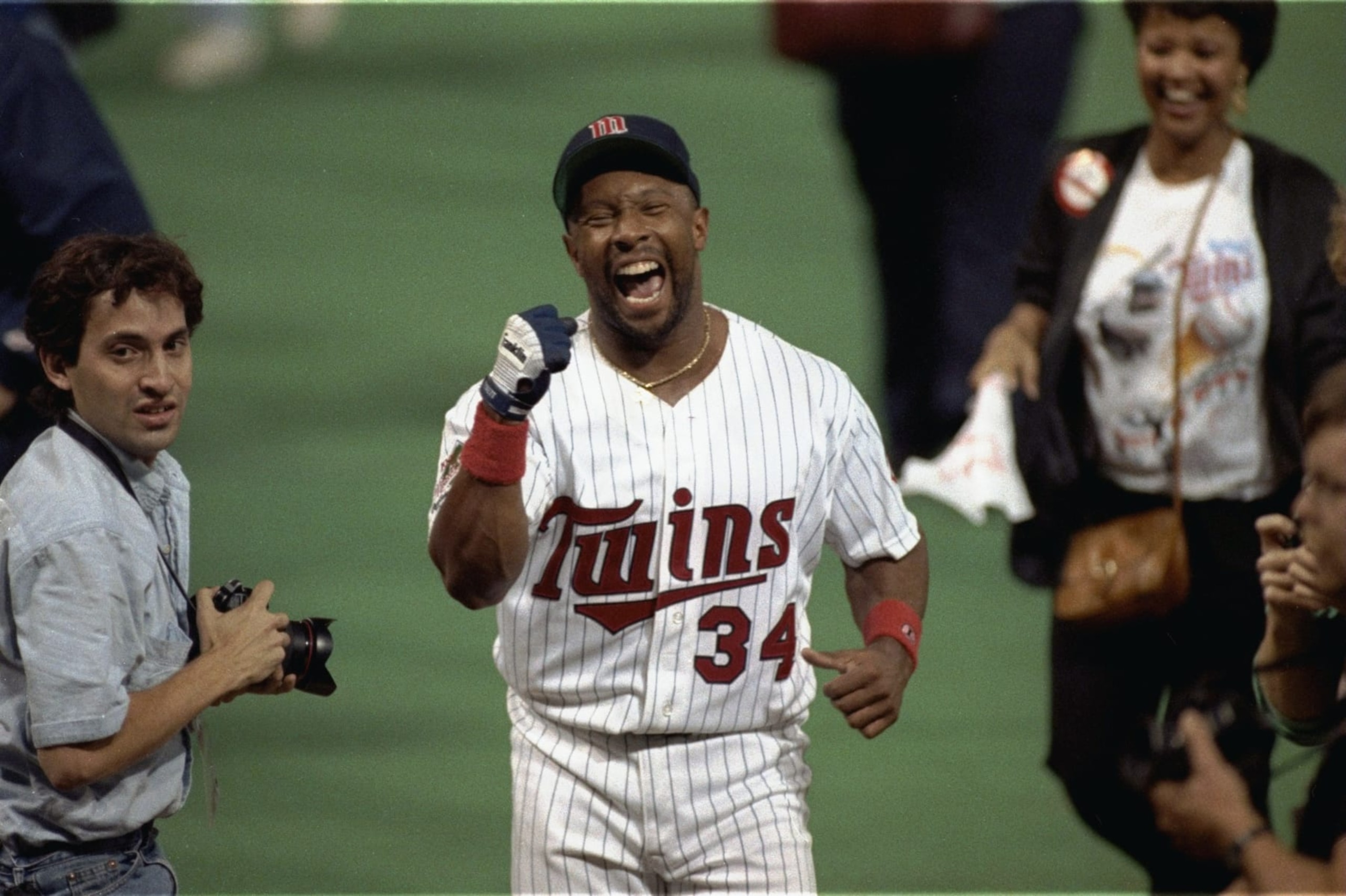
Best Five-Year Stretch: 1987-91
Record: 425-385 (.525 win percentage)
Postseason: 1987 and 1991 World Series champs
MVP: Kirby Puckett
Synopsis
In a couple of cases, we've opted for a strong five-year run with several division crowns over a World Series title that came out of nowhere. But while the Twins had a considerably better winning percentage (.562) with twice as many division crowns (four) from 2002 to 2006, we can't say "no thanks" to a pair of World Series titles to choose a smorgasbord of ALDS flameouts.
In 1987, the Twins bested the Cardinals in a seven-game World Series, and Frank Viola—making his third start of the series—went eight strong innings in the winner-take-all finale.
Four years later in 1991, the Twins took down the Atlanta Braves in another seven-game series. Viola's strong eight-inning performance looked like child's play compared to Jack Morris (also in his third start of the series) as he hurled the all-time-great, 10-inning complete-game shutout.
Between those two series, Minnesota went 8-0 at home and 0-6 on the road. Good thing the Twins got there in '87 and '91, since the old way of determining home-field advantage was the AL team in odd-numbered years and the NL team in even-numbered years. (Absurd, but still better than letting the All-Star Game decide it.)
Pitching got the Twins across the finish line, but Kirby Puckett played a massive role in getting them into the race in the first place. The 10-time All-Star and Hall of Famer batted .330 during that five-year stretch and hit .309/.361/.536 with five home runs in those two postseasons.
New York Mets
18 of 30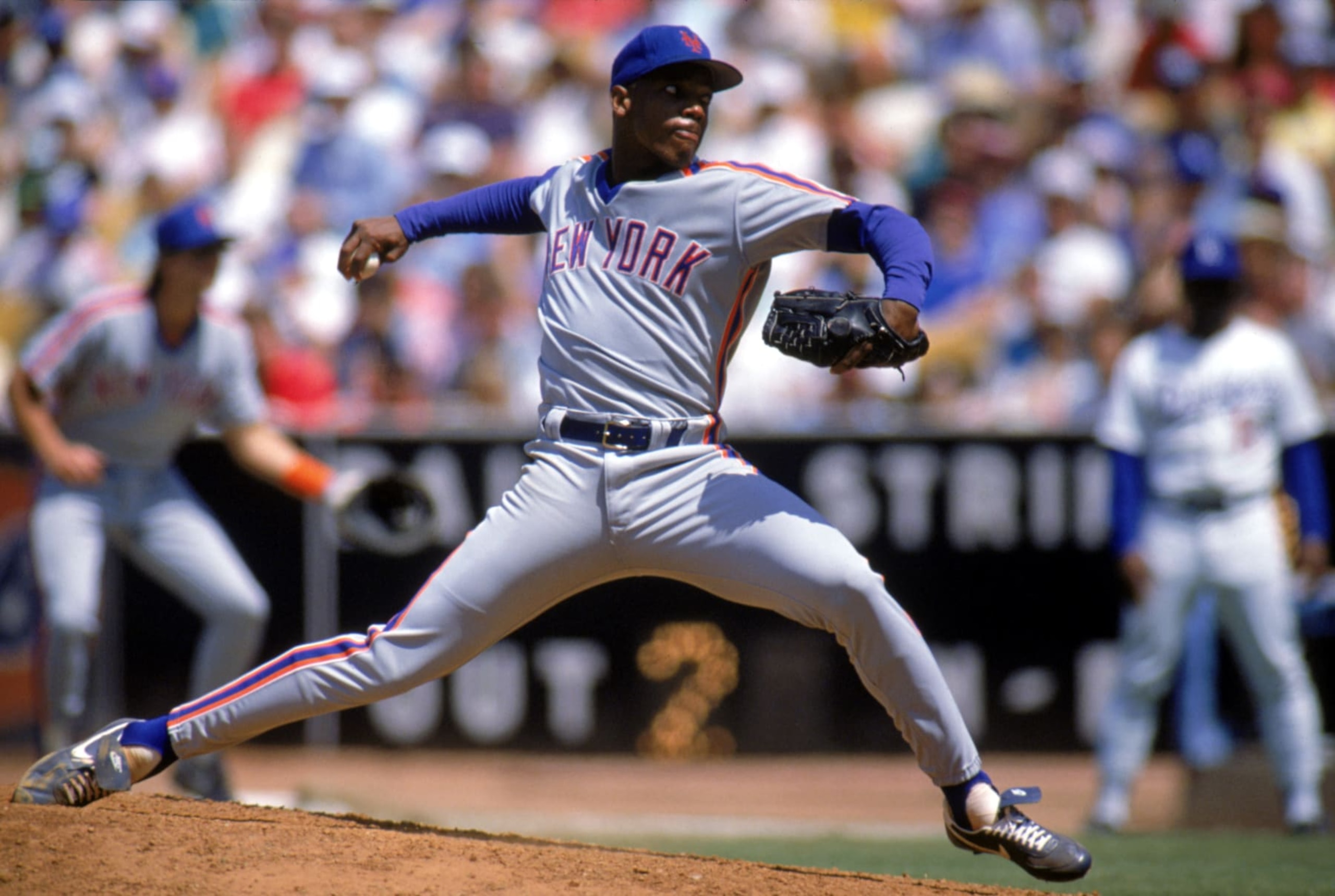
Best Five-Year Stretch: 1984-88
Record: 488-320 (.604 win percentage)
Postseason: 1986 World Series champs, lost in 1988 NLCS
MVP: Dwight "Doc" Gooden
Synopsis
Fresh off a 101-win season with Steve Cohen spending like a man who owns a printing press, you've got to think the Mets' five-year peak will soon be 2022-26.
For now, though, it's the mid-1980s, when Dwight "Doc" Gooden was a prodigy on the mound, when Darryl Strawberry nearly averaged 30 HR/30 SB per season and when the Mets last won a World Series.
On the Gooden front, his 1985 campaign was one of the greatest of all time. The 20-year-old flamethrower led the majors in wins (24), ERA (1.53) and strikeouts (268) en route to a unanimous NL Cy Young award. He was also NL Rookie of the Year in 1984 and produced 32.5 fWAR during his first five seasons in the big leagues.
Meanwhile, Strawberry had five consecutive seasons with at least 26 home runs and at least 26 stolen bases, was NL ROY the year before Gooden and made the All-Star Game in each of the next eight seasons. He was on a Hall of Fame trajectory until substance use derailed his career.
In the 1986 World Series, though, that dynamic duo crashed and burned. Gooden made two starts with an 8.00 ERA. Strawberry batted .208 with just one RBI.
Fortunately, Ray Knight, Lenny Dykstra and Gary Carter shouldered the load on offense while Ron Darling and Bob Ojeda picked up the slack on the mound as the 108-win Mets outlasted the 95-win Red Sox—with a whole lot of help from Bill Buckner's infamous, series-altering error in Game 6.
New York Yankees
19 of 30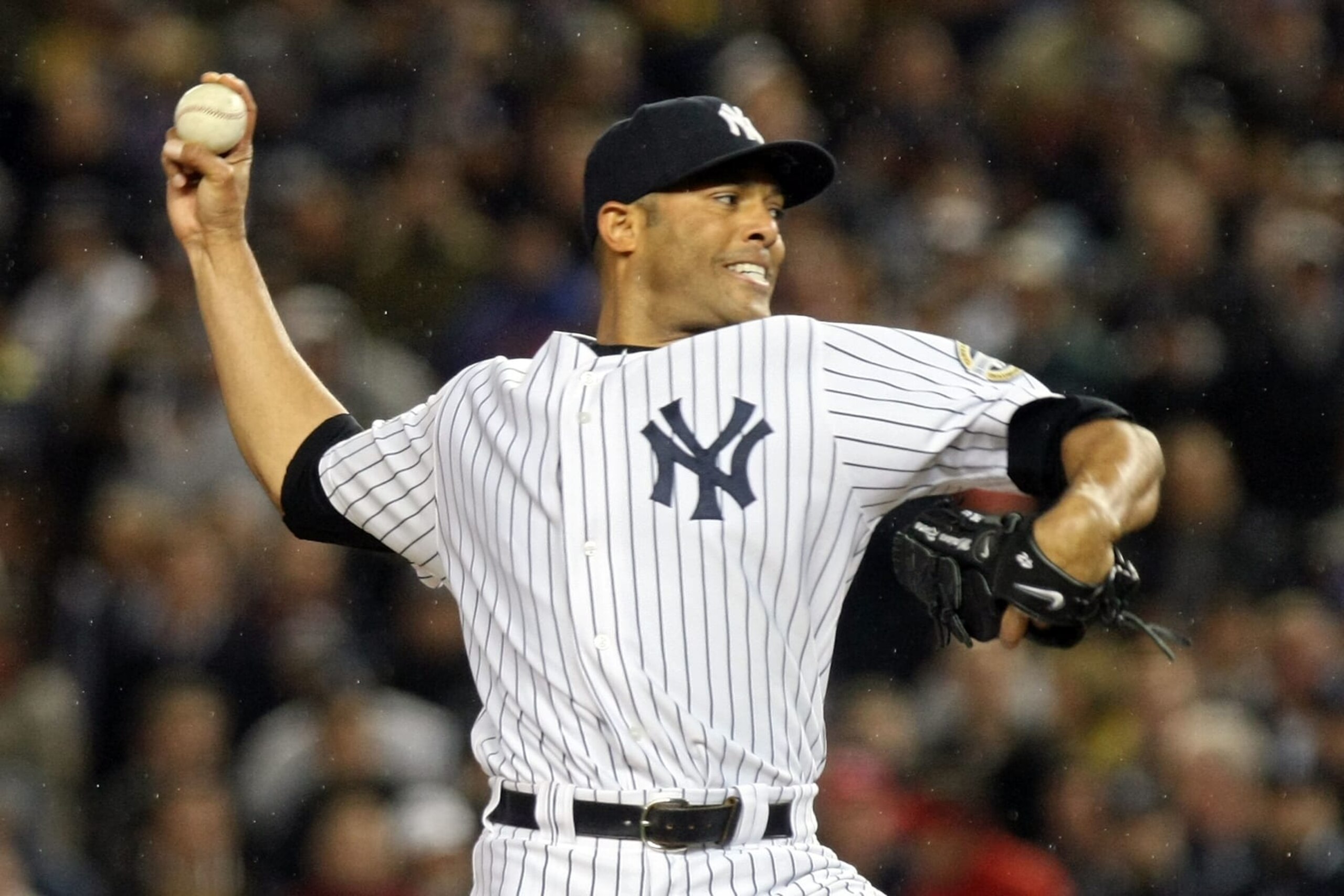
Best Five-Year Stretch: 1996-2000
Record: 487-322 (.602 win percentage)
Postseason: 1996, 1998, 1999 and 2000 World Series champs, lost in 1997 ALDS
MVP: Mariano Rivera
Synopsis
Had we not used a "modern history" qualifier, there would have been an interesting debate on whether winning five straight World Series from 1949 to 1953 was more impressive than winning four out of five in the divisional era.
As is, this was a no-brainer and the best five-year stretch any team has had in the past half-century.
With limitless George Steinbrenner money, the Yankees were perpetually loaded.
Among hitters, they had Derek Jeter, Bernie Williams, Paul O'Neill and Tino Martinez throughout the 1996-2000 dynastic reign. They also brought in Scott Brosius and Chuck Knoblauch for the 1998-2000 portion of the run and had Jorge Posada burst onto the scene toward the end.
The pitching was just as stacked. Andy Pettitte and David Cone were the constants, but they also had several seasons of Roger Clemens, Dwight Gooden, David Wells, Orlando "El Duque" Hernández, Hideki Irabu and more.
Through it all, the unbreakable force was closer Mariano Rivera.
John Wetteland was the closer in 1996, but Rivera saved 160 games from 1997 to 2000. Over those five postseasons, Rivera logged 57.2 innings with a 0.78 ERA and a WHIP of 0.80.
When he blew the save in Game 7 of the 2001 World Series, it felt like Rocky Balboa defeating Ivan Drago. That's how untouchable Rivera was in the ninth inning.
By the way, the 1998 Yankees were a cheat code. They won 114 regular-season games before going 11-2 through the postseason. That combined total of 125 wins is the most in MLB history.
Oakland Athletics
20 of 30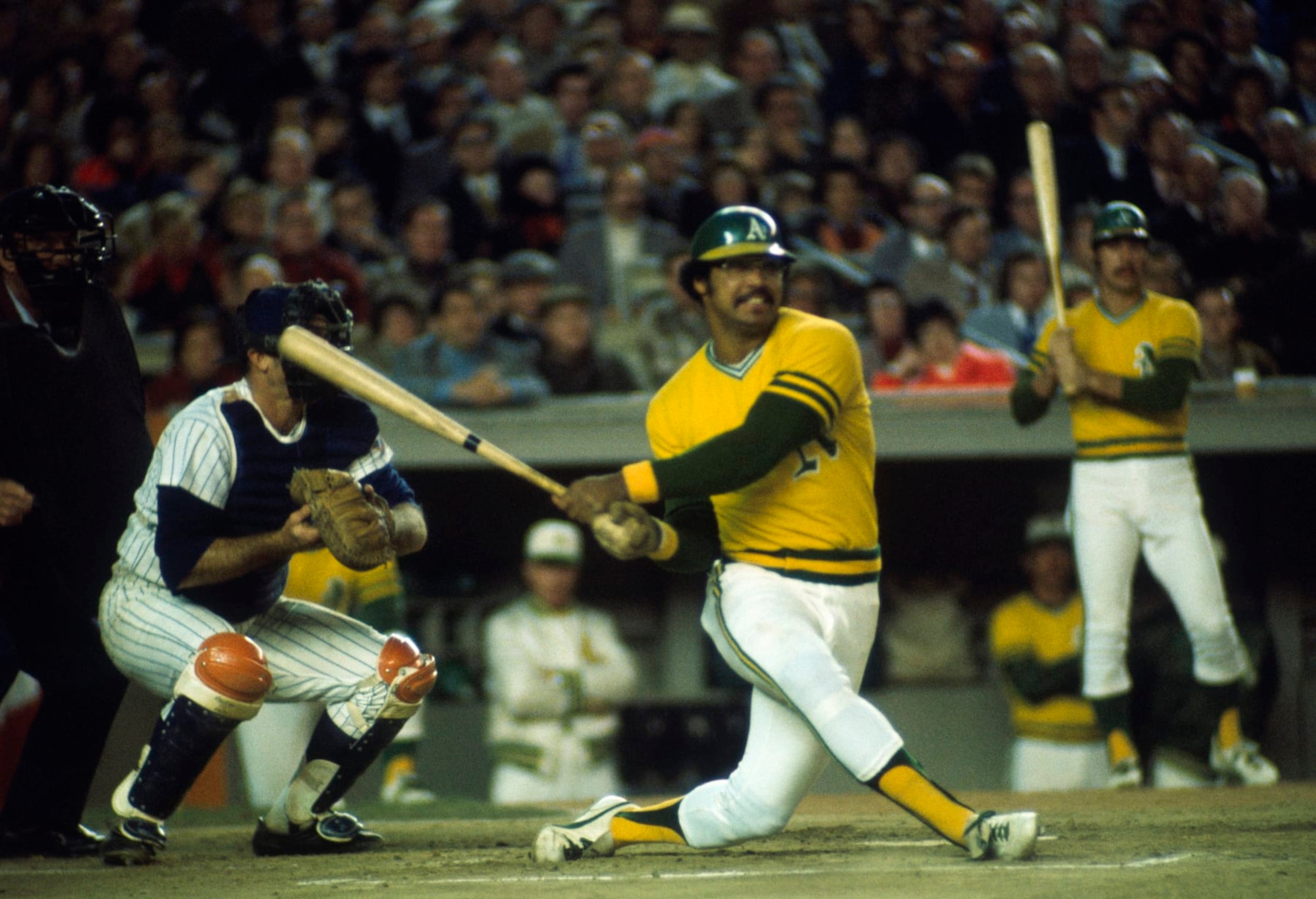
Best Five-Year Stretch: 1971-75
Record: 476-326 (.594 win percentage)
Postseason: 1972, 1973 and 1974 World Series champs, lost in 1971 and 1975 ALCS
MVP: Reggie Jackson
Synopsis
Oakland is down bad these days and probably won't be competitive again for another couple of years. But fans can always pop in videos of those early 1970s teams and look back on a time when this franchise was on top of the world.
The A's won the AL West in five consecutive seasons from 1971 to 1975, largely on the strength of great pitching.
The trio of Vida Blue, Catfish Hunter and Ken Holtzman thrived in the starting rotation. Blue was voted AL Cy Young and MVP in 1971, going 24-8 with a 1.82 ERA and 301 strikeouts. Hunter placed top-four in the AL Cy Young vote each year from 1972 to 1975—the final year with the Yankees—and won it in 1974. And Holtzman was an All-Star in both 1972 and 1973, winning 77 games with a 2.92 ERA from 1972 to 1975.
And then there was the sweet, sweet mustache of Rollie Fingers in the closer role, routinely working three or four innings in a night to earn his saves. During the back-to-back-to-back World Series run, Fingers made 24 postseason appearances spanning 46.1 innings with a 1.55 ERA.
Reggie Jackson was the biggest star, though. An All-Star who earned AL MVP votes in all five seasons, "Mr. October" won that vote in 1973 with a league-leading 32 home runs, 99 runs and 117 RBI.
Philadelphia Phillies
21 of 30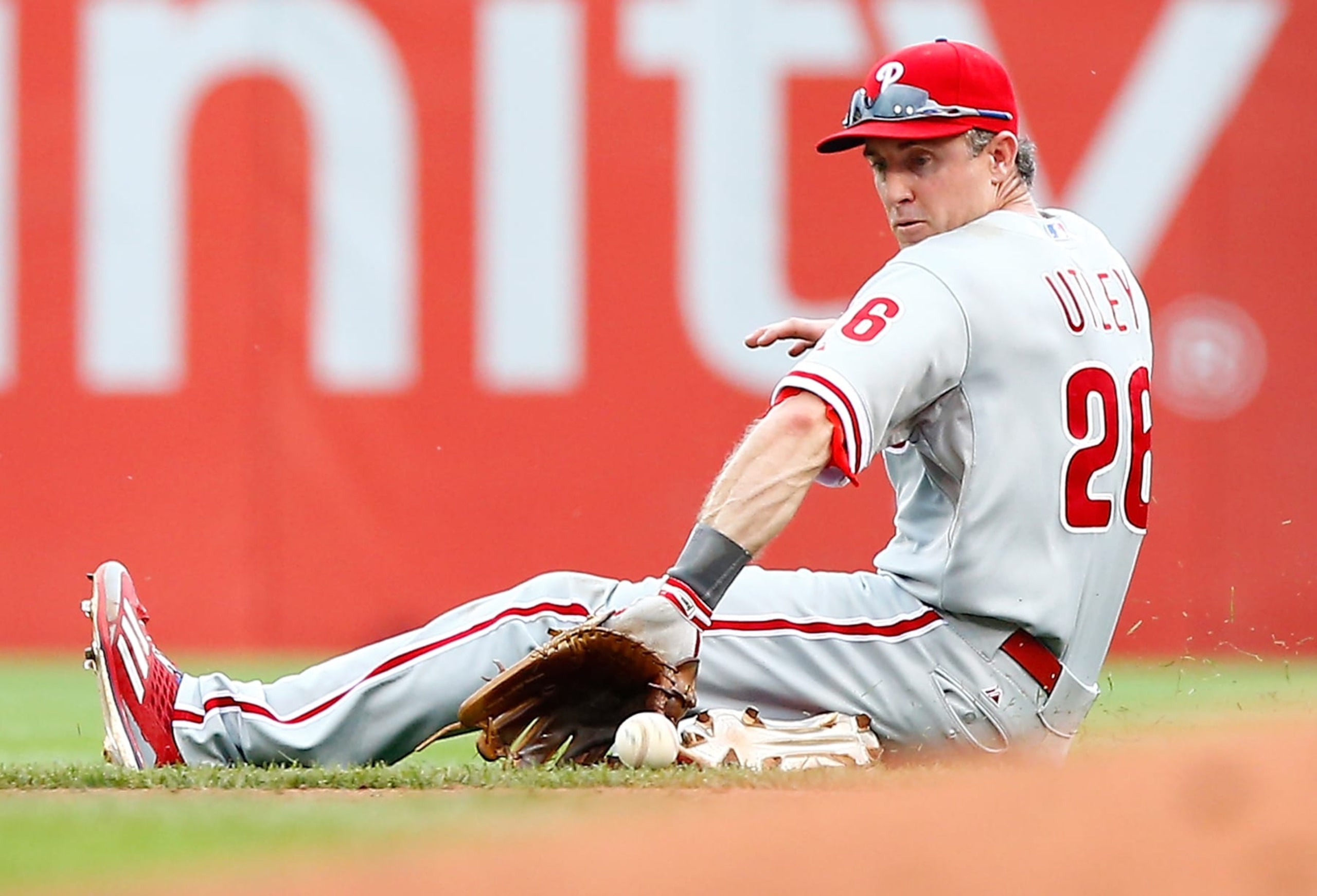
Best Five-Year Stretch: 2007-11
Record: 473-337 (.584 win percentage)
Postseason: 2008 World Series champs, 2009 NL champs, lost in 2010 NLCS, lost in 2007 and 2011 NLDS
MVP: Chase Utley
Synopsis
For five years, the NL East ran through the City of Brotherly Love.
In four of those five years, the final margin was six or fewer games, but Philadelphia won the division each year from 2007 to 2011.
Jimmy Rollins was the NL MVP in 2007, and Ryan Howard almost won it in both 2008 and 2009. But the most consistent star (and the fan favorite) was Chase Utley. The second baseman batted .290/.386/.503 and was the patron saint of getting hit by pitches.
The Phillies had quite the collection of aces too, culminating in a 2011 season with a 1-2-3-4 punch of Roy Halladay, Cliff Lee, Cole Hamels and Roy Oswalt, plus Vance Worley, who darn near won NL ROY as the fifth starter.
What got them over the hump in 2008 was a reliable closer. That was Brad Lidge's best season in Philadelphia, and he was lights-out that postseason, allowing one run while recording seven saves. Give them a good closer for the entirety of that half-decade, and maybe they win three titles.
Things were so good for the Phillies from 2007 to 2011 that they tried to hold on to the nucleus of that team for a year or two too long, and they needed a decade to rebuild and make it back to the postseason in 2022.
Pittsburgh Pirates
22 of 30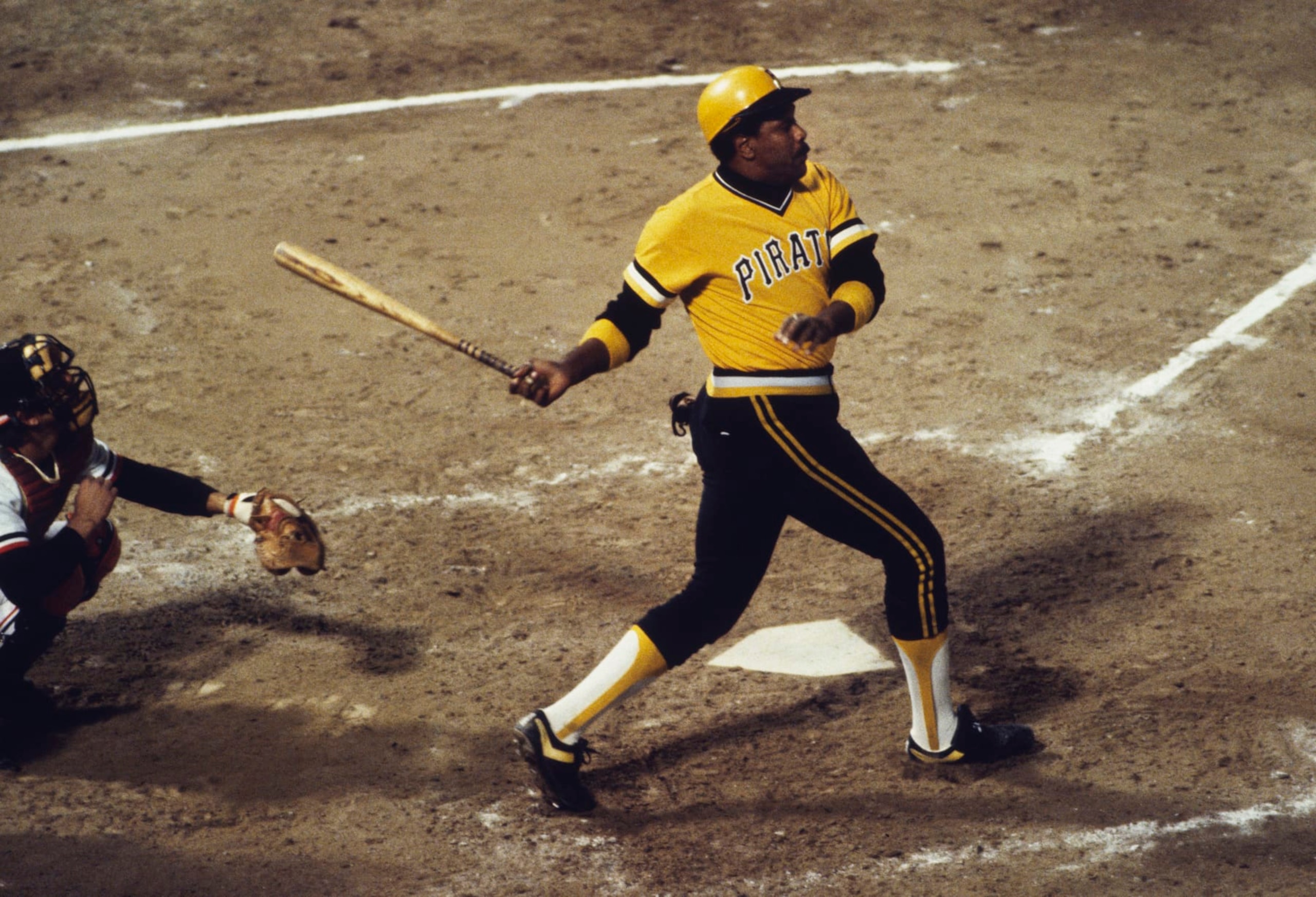
Best Five-Year Stretch: 1971-75
Record: 453-349 (.565 win percentage)
Postseason: 1971 World Series champs, lost in 1972, 1974 and 1975 NLCS
MVP: Willie Stargell
Synopsis
Much like Oakland, things are bleak these days in Pittsburgh, but fans can always look back on the heyday of the early 1970s.
When the Pirates won it all in 1971, they were anchored by the combined force of Hall of Famer Willie Stargell, Hall of Famer Roberto Clemente and three-time All-Star Manny Sanguillén. Clemente batted .341, Sanguillén hit .319 and Stargell clubbed 48 home runs for a team that led the majors in scoring by 46 runs.
Clemente homered in both Games 6 and 7 against Baltimore en route to being named World Series MVP. Though he tragically died in 1972, Pittsburgh continued to excel, winning five out of six NL East titles from 1970 to 1975.
Third baseman Richie Hebner upped his play in a big way in 1972. In 1974, southpaw Jim Rooker tossed 15 complete games in his second of three consecutive years with a sub-3.00 ERA. And in 1975, outfielder Dave Parker started to make his mark in what would be a stellar career.
Through it all, Stargell was their rock. He finished top-10 in the NL MVP vote each year from 1971 to 1975, batting .297 with 172 home runs. It wasn't until 1979 that he finally won an MVP and had a sensational postseason (he hit five of his seven career postseason home runs for the championship team in 1979), but without him, they wouldn't have been a contender for the first half of the decade.
San Diego Padres
23 of 30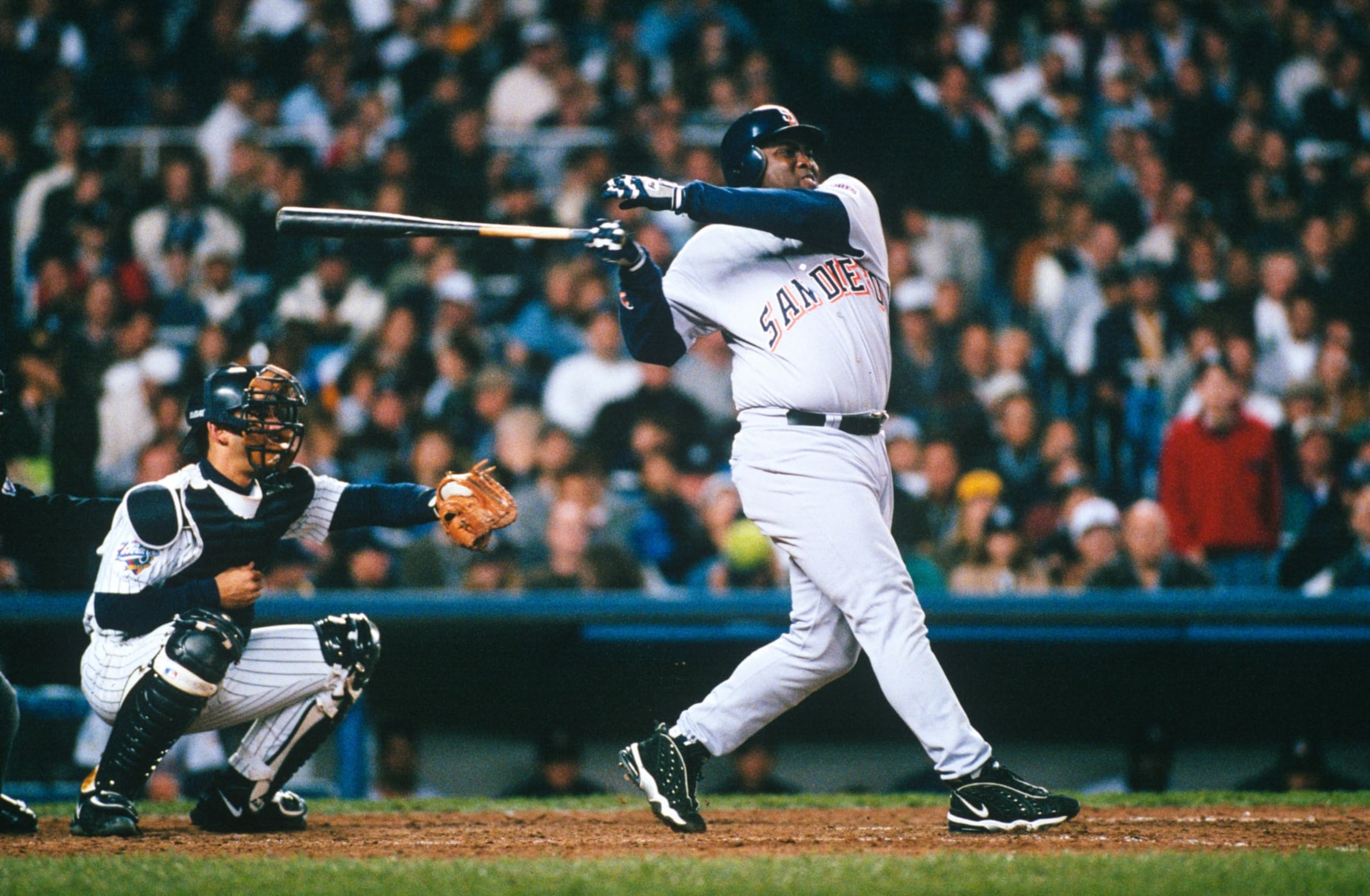
Best Five-Year Stretch: 1995-99
Record: 409-383 (.516 win percentage)
Postseason: 1998 NL champs, lost in 1996 NLDS
MVP: Tony Gwynn
Synopsis
Without question, 1998 was San Diego's pinnacle.
That was the Padres' only year with Kevin Brown, and he made 35 starts with a 2.38 ERA. It was also the year Greg Vaughn set career highs in both batting average (.272) and home runs (50).
Combine that with Trevor Hoffman having the best season of his career (1.48 ERA, 53 saves) while veterans like Tony Gwynn, Ken Caminiti, Wally Joyner and Steve Finley made solid contributions, and those Padres set a franchise record with 98 wins, making it to the World Series before running into a juggernaut of a Yankees squad.
1996 was also a strong year for San Diego, and Caminiti in particular.
He never had another season with 30 home runs or 100 RBI, but he exploded for 40 homers, 130 runs batted in and a .326 batting average while unanimously winning NL MVP. He was the biggest reason the Padres won 91 games, but his three home runs in the NLDS weren't enough to keep the Friars from getting swept by the Cardinals.
Gwynn and Hoffman were the reliable assets, though. The former batted .352 from 1995 to 1999, winning three batting titles in his late 30s. The latter saved 203 games, leading the majors. Andy Ashby was also a staple in the rotation, making 149 starts with a 3.50 ERA. He earned All-Star honors in 1998 and 1999.
San Francisco Giants
24 of 30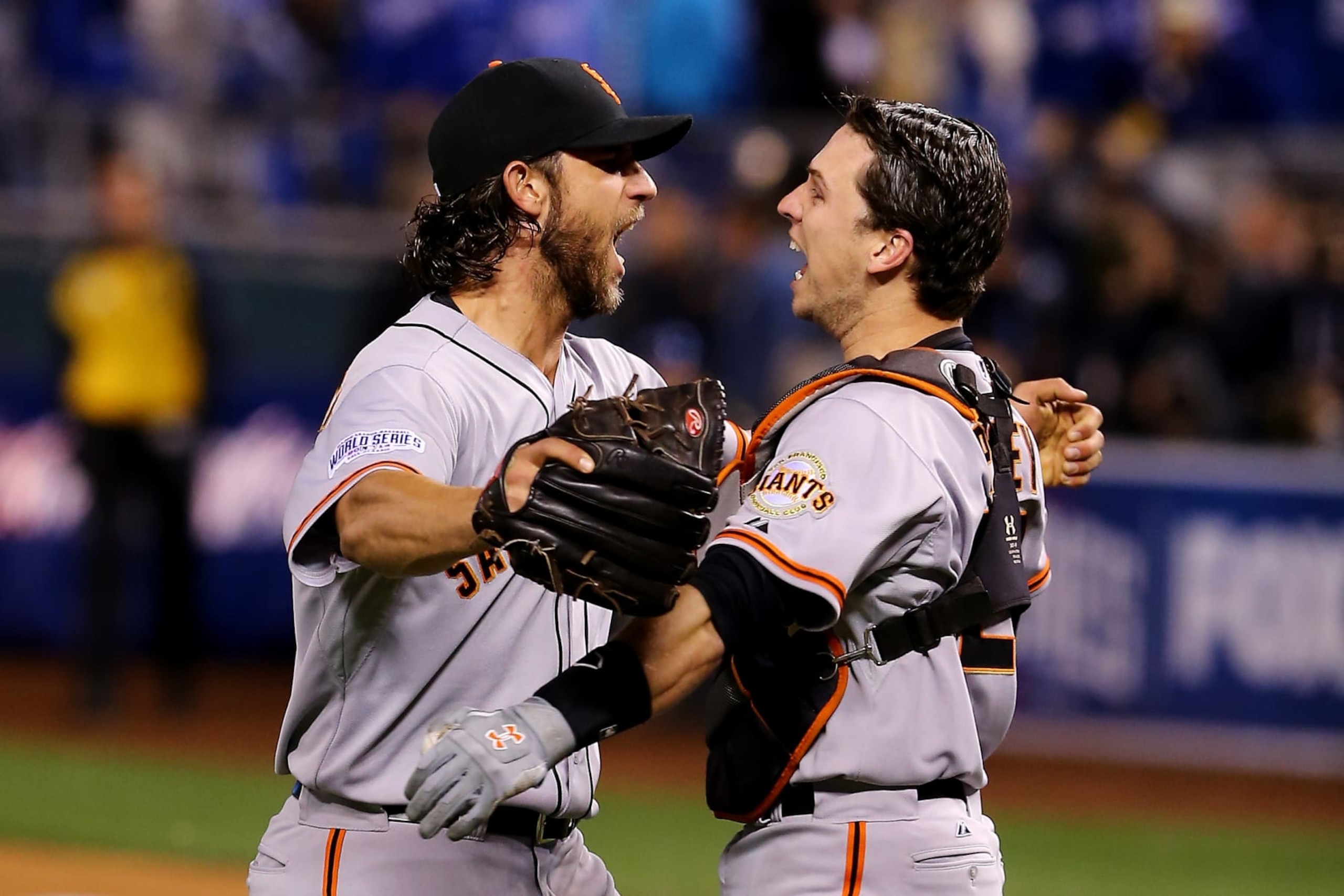
Best Five-Year Stretch: 2010-14
Record: 436-374 (.538 win percentage)
Postseason: 2010, 2012 and 2014 World Series champs
MVP: Buster Posey
Synopsis
The even-year Giants were a phenomenon.
From 2010 to 2014, San Francisco only ranked seventh in the majors in total wins. But in the years when the Giants won enough to make the postseason, they made it count.
Before they finally broke through, the Giants' pitching situation was "(Tim) Lincecum and (Matt) Cain and pray for rain." But 2010 is when Madison Bumgarner hit the ground running. It was also the year when Jonathan Sánchez had an out-of-nowhere fantastic campaign. Ryan Vogelsong later replaced Sánchez as one of the core four starters from 2011 to 2014.
Bumgarner had the postseason heroics. In two career starts in a do-or-die wild-card game, he tossed a pair of complete-game shutouts. He also has a ludicrous 0.25 ERA in five career World Series appearances.
But the backstop to that pitching rotation set the tone for success.
In 2010, 2012 and 2014 combined, Buster Posey batted .318 and hit 64 home runs. He won NL Rookie of the Year in 2010 and NL MVP in 2012, winning a batting title in the latter season.
Shoutout to Edgar Rentería and Pablo Sandoval too, who earned World Series MVP honors in 2010 and 2012, respectively. Sandoval was a key component throughout that half decade, but Rentería surprised everyone with two World Series homers after swatting just three during the regular season.
Seattle Mariners
25 of 30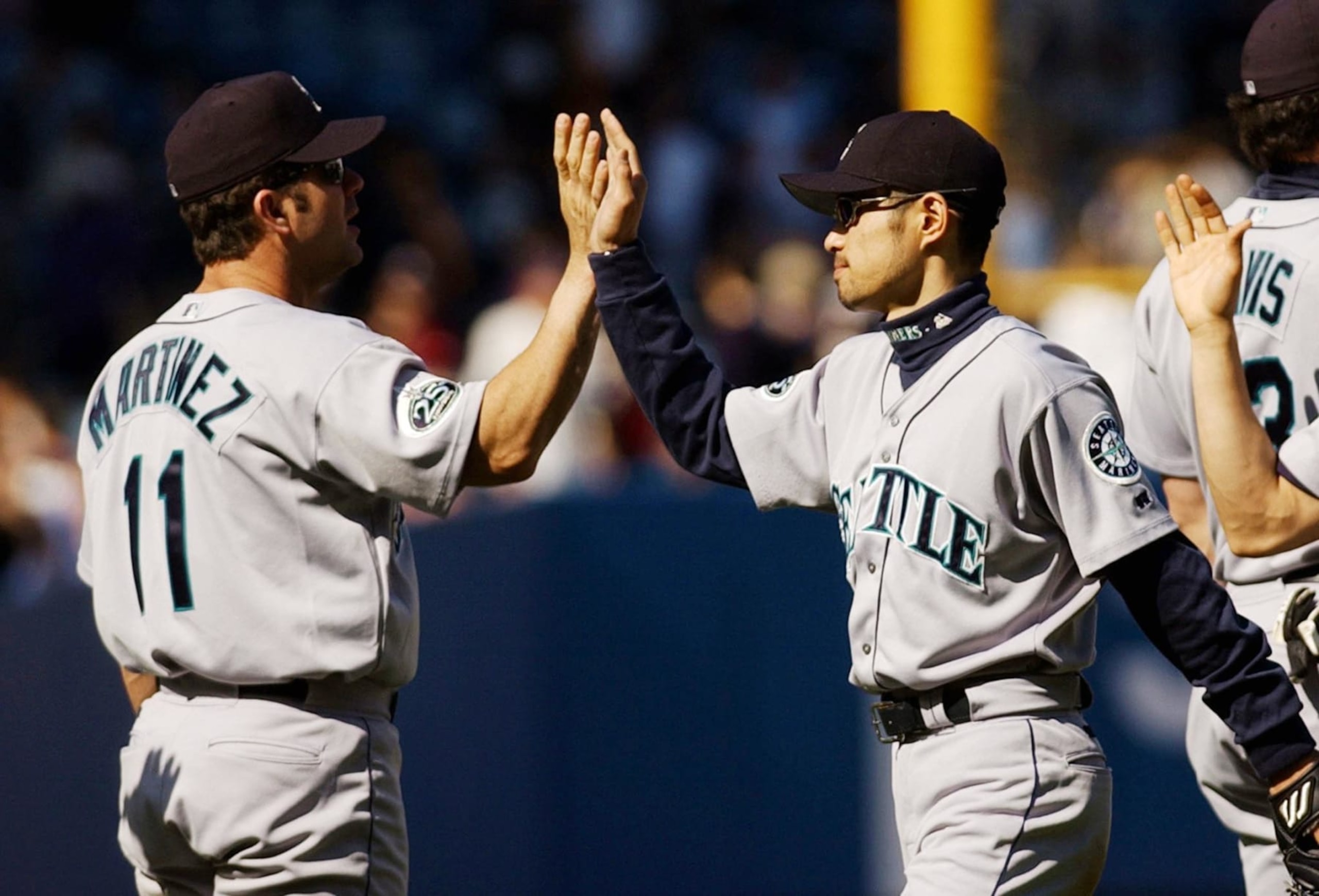
Best Five-Year Stretch: 1999-2003
Record: 472-338 (.583 win percentage)
Postseason: Lost in 2000 and 2001 ALCS
MVP: Edgar Martinez
Synopsis
Seattle's peak in 2001 will always be ridiculous.
The 1998 Mariners had Ken Griffey Jr., Álex Rodríguez and Randy Johnson...and went 76-85.
Three years later, that trio of greats was gone, but they won 116 games, led by Bret Boone, Mike Cameron, John Olerud and a Rookie of the Year/MVP named Ichiro Suzuki.
Ichiro hit .328 and stole 121 bases from 2001 to 2003, but that's only three seasons of this five-year stretch.
As such, we'll give Edgar Martinez the nod for MVP.
Seattle's Hall of Fame designated hitter batted .310/.422/.534 with 123 home runs from 1999 to 2003, spanning his age-36 through age-40 seasons. He was one of seven Mariners who received either MVP or Cy Young votes in 2001, but he was even better the year prior, driving in a career-high and league-best 145 runs in 2000.
Speaking of older guys who played a key role, 1999-2003 was the most impressive stretch of Jamie Moyer's career that spanned more than a quarter century. (He, too, aged from 36 to 40 during Seattle's peak.) Moyer earned some AL Cy Young votes in 1999, 2001 and 2003, named an All-Star for the only time of his career in '03. He and Freddy García anchored the rotation for those five seasons.
St. Louis Cardinals
26 of 30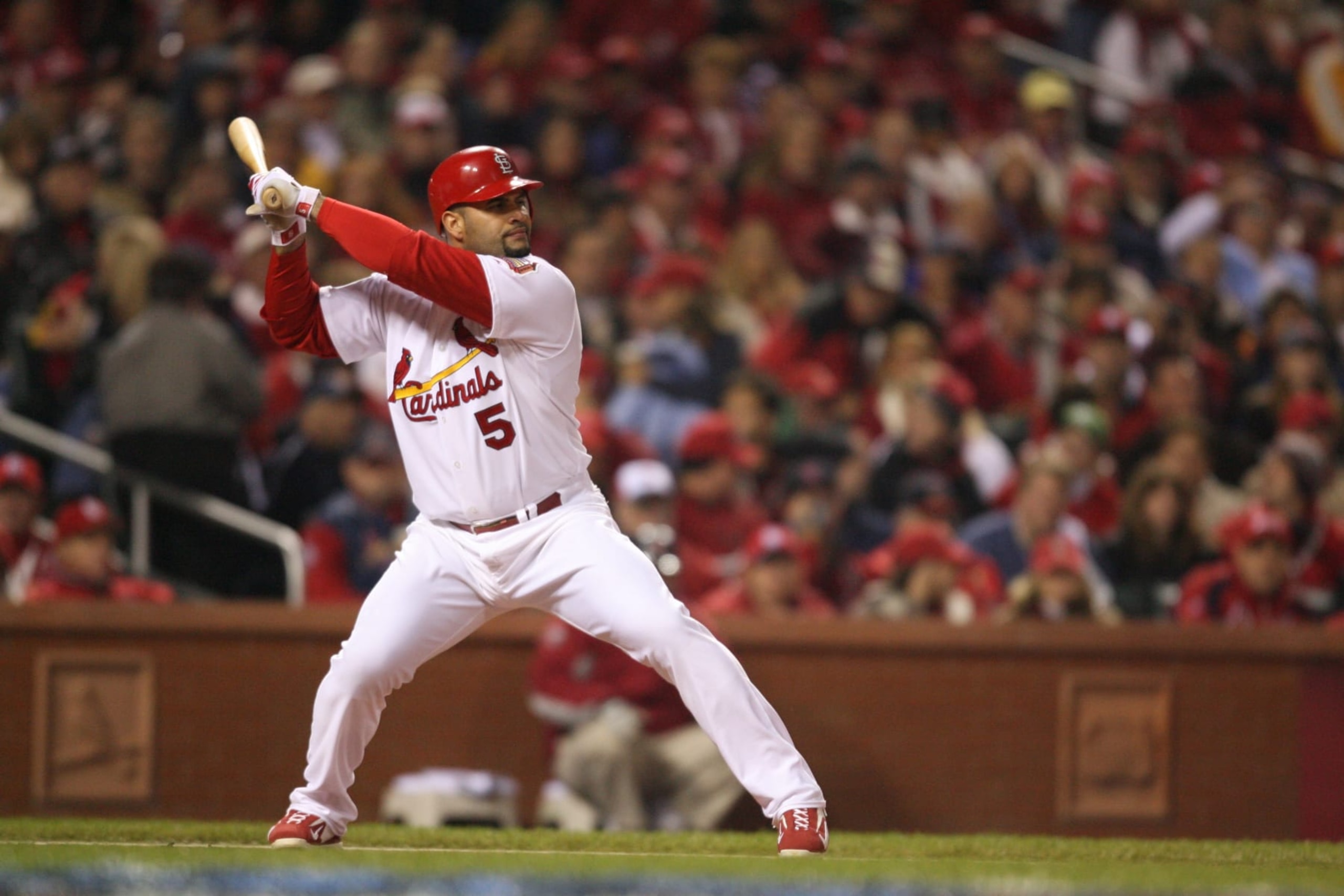
Best Five-Year Stretch: 2002-06
Record: 470-339 (.581 win percentage)
Postseason: 2006 World Series champs, 2004 NL champs, lost in 2002 and 2005 NLCS
MVP: Albert Pujols
Synopsis
The Cardinals' all-time peak is unquestionably 1942-46. Led by a young Stan Musial, they won three World Series and played in a fourth.
1964-68 was also a solid peak with two World Series crowns and Bob Gibson pitching so dominantly that Major League Baseball lowered the mound to make it fairer on hitters.
But since neither of those spans counts as "modern history," let's go with the 2002-06 time frame in which St. Louis won four NL Central titles and made it as far as the NLCS four times.
The Cards had solid pitching in the early 2000s. Jason Isringhausen did a great job as closer, while Chris Carpenter, Matt Morris, Woody Williams and Jeff Suppan each made at least 80 starts.
The offense made St. Louis so darn good, though.
Albert Pujols won NL MVP in 2005 and finished top-three in each of the other four seasons. He batted .333 and hit 213 home runs, and he wasn't alone. Jim Edmonds hit 157 home runs, won four Gold Gloves in center field and earned MVP votes each year from 2002 to 2005. Scott Rolen came over from Philadelphia at the 2002 trade deadline, and he was an All-Star in all five of those seasons, peaking in 2004 with 34 dingers and a .314 average.
Can't forget David Eckstein either. He was only on the team in 2005 and 2006, but that was enough for two All-Star Games and a 2006 World Series MVP trophy.
Tampa Bay Rays
27 of 30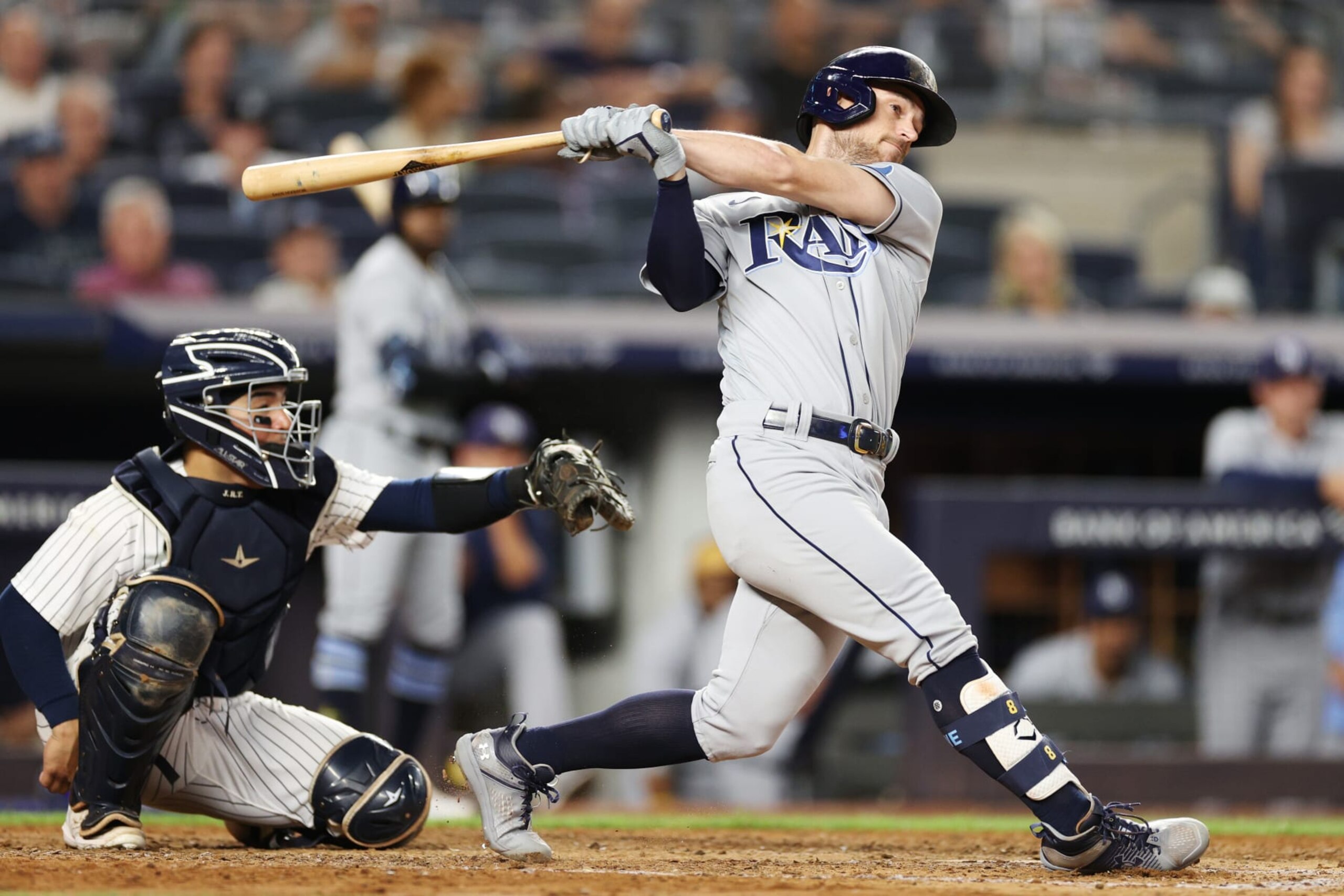
Best Five-Year Stretch: 2018-22*
Record: 412-296 (.582 win percentage)
Postseason: 2020 AL champs, lost in 2019 and 2021 ALDS, lost in 2022 ALWC
MVP: Brandon Lowe
Synopsis
In its quarter-century of existence, Tampa Bay has had legitimate stars. We're talking about Evan Longoria, Carl Crawford, David Price, "Big Game" James Shields and more.
Over the past five years, however, the whole has been greater than the sum of its parts.
No position player has appeared in more than 64 percent of team games played over the past half-decade, and Brandon Lowe leads the charge with a modest fWAR of 11.3.
Similar story in the pitching rotation, where Blake Snell—who has spent the past two seasons in San Diego—is the only pitcher to have made at least 60 starts for the Rays since 2018. (Snell had one hell of a 2018 campaign, though, winning 21 games with a 1.89 ERA and earning AL Cy Young.)
Nevertheless, Tampa Bay has strung together five consecutive seasons with a winning percentage north of .530—in the best division in baseball over the past half-decade—and almost won it all in 2020 when Randy Arozarena had an October for the ages.
For tradition's sake, the Rays will probably be projected for around 86 wins in 2023, only to finish the year with more than 90.
*While we didn't count 2020 against the Astros or Dodgers, it's better for the Rays if we count 2020 and don't expand this five-year stretch to 2017 since they went 80-82 that season.
Texas Rangers
28 of 30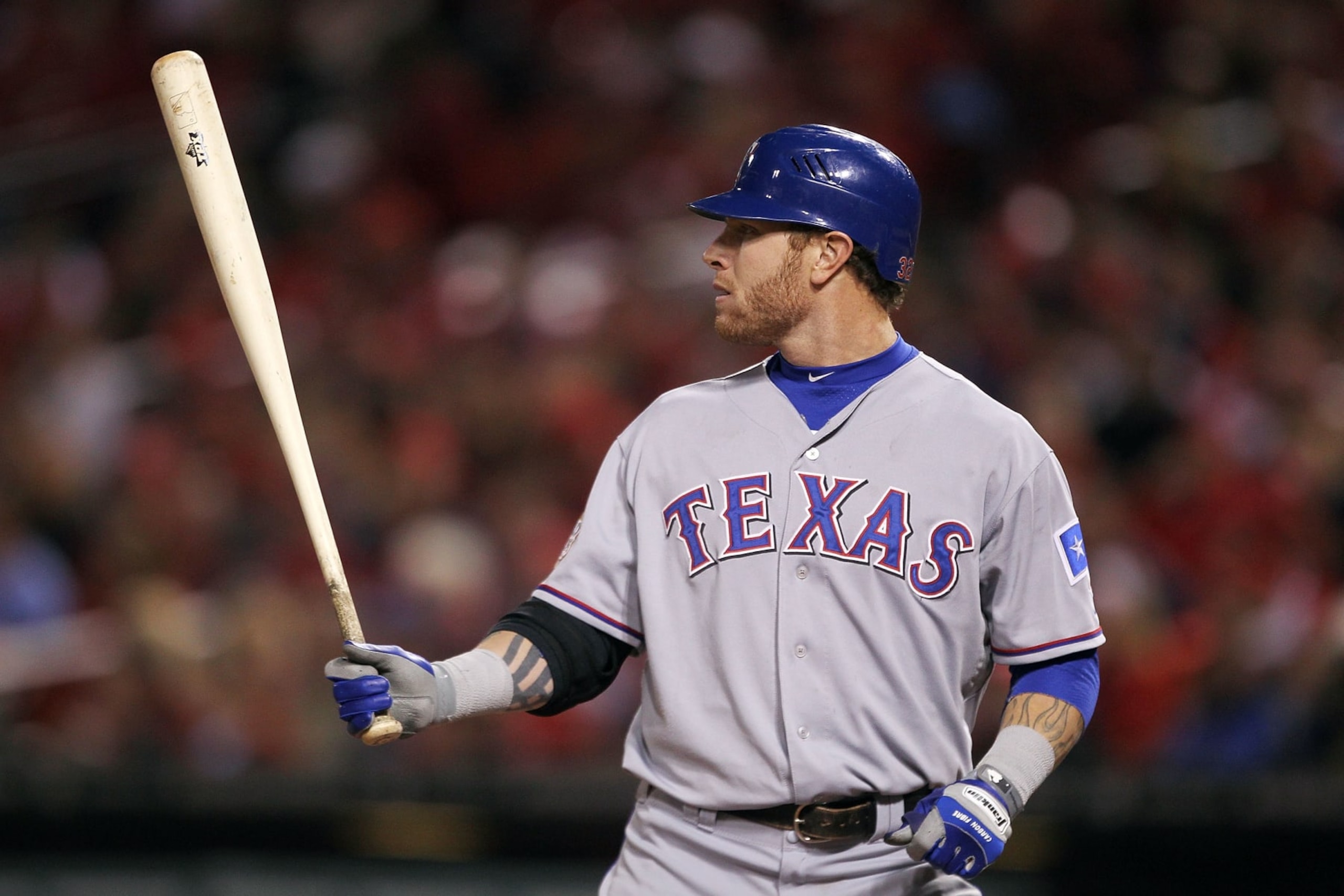
Best Five-Year Stretch: 2009-13
Record: 457-354 (.564 win percentage)
Postseason: 2010 and 2011 AL champs, lost in 2012 ALWC
MVP: Josh Hamilton
Synopsis
Similar to the 2002-06 St. Louis Cardinals, the turn-of-the-decade Texas Rangers steered into the "Who needs pitching when you can outscore the opposition?" philosophy.
Fine, that's not totally fair. C.J. Wilson provided a lot of value for three years while transitioning from a closer to a starter. When Wilson left for the Angels, the Rangers replaced him with Yu Darvish. They had a solid ace from 2010 to 2013, and they pitched nowhere near as poorly as they did in the 2000-08 time frame.
But the offense made Texas shine en route to runner-up in both 2010 and 2011.
The Rangers had Josh Hamilton (2010 AL MVP), Nelson Cruz, Ian Kinsler, Michael Young, David Murphy, Mitch Moreland and Elvis Andrus for both of those seasons. They also had Vladimir Guerrero in 2010 and both Adrián Beltré and Mike Napoli in 2011.
Maybe once a month they would get shut out, but scoring in double figures was far more common.
They came painfully close to winning it all in 2011, leading 3-2 in the series before blowing two-run leads in both the bottom of the ninth and bottom of the 10th innings in Game 6 in St. Louis.
Toronto Blue Jays
29 of 30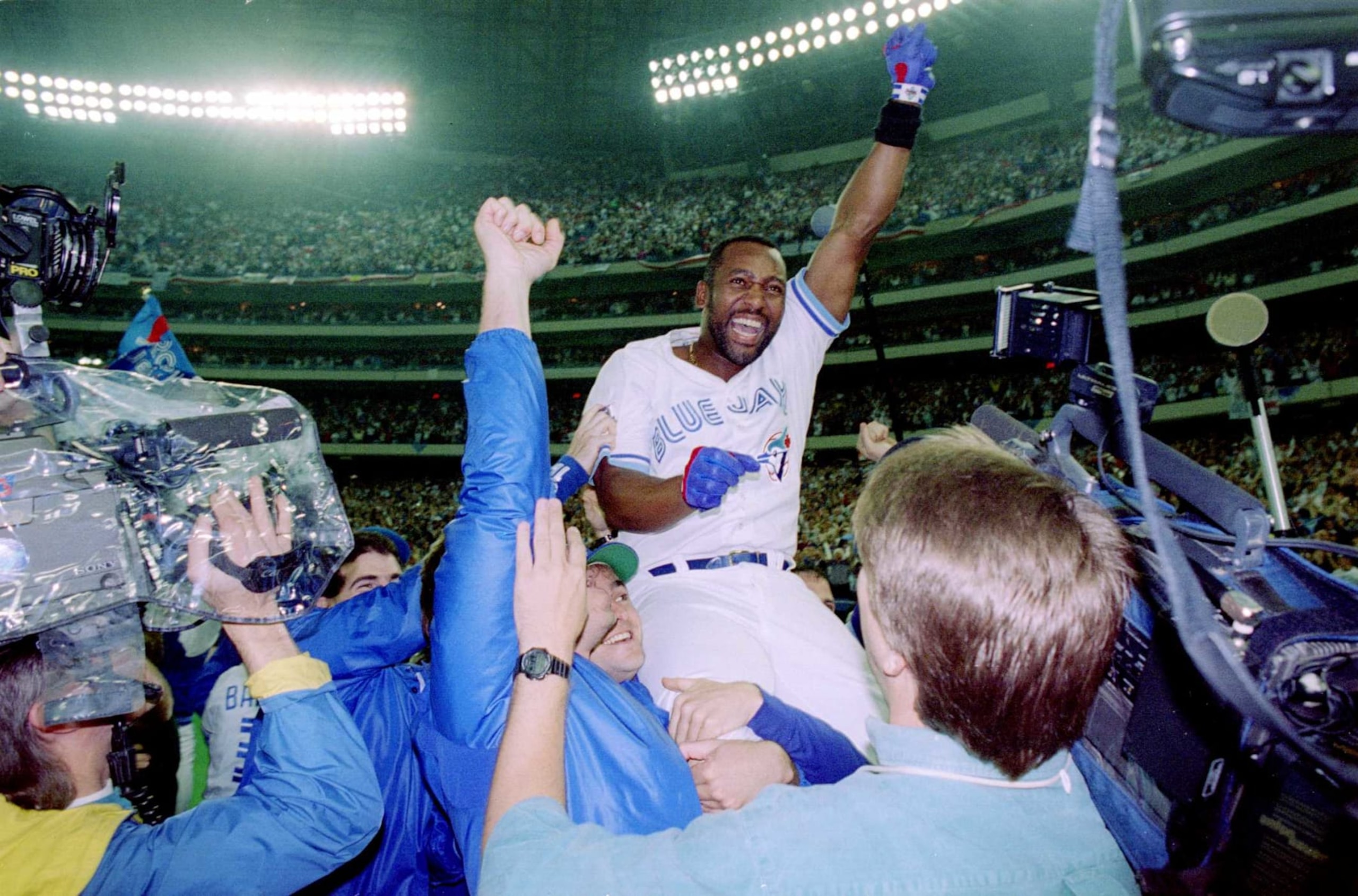
Best Five-Year Stretch: 1989-1993
Record: 457-353 (.564 win percentage)
Postseason: 1992 and 1993 World Series champs, lost in 1989 and 1991 ALCS
MVP: Joe Carter
Synopsis
Perhaps most impressive about Toronto's five-year run of AL East supremacy was that it turned over the roster from 1989 to 1993.
On the 1989 team, George Bell was the MVP candidate. Fred McGriff and Kelly Gruber starred alongside Bell in the lineup. Jimmy Key, John Cerutti, Dave Stieb and Mike Flanagan were the primary starters.
By 1993, all of those guys were gone, replaced by the likes of Roberto Alomar, Joe Carter, Devon White, Paul Molitor, John Olerud, Juan Guzman and Pat Hentgen.
The staple throughout the five seasons was Duane Ward, who saved 106 games and received Cy Young consideration in both 1991 and 1993.
Five hitters and four pitchers produced at least 10 fWAR for Toronto from 1989 to 1993; none of them got to 18 fWAR.
But we've got to call Carter the MVP, right?
Carter didn't join the Jays until 1991, but he was an All-Star and a top-12 MVP finisher in each of his first four seasons north of the border. He hit 100 home runs in those first three seasons, and that's only counting the regular-season blasts. He also had six in the postseason, most memorably the walk-off, series-ending homer off Mitch Williams in Game 6 of the 1993 World Series.
Washington Nationals
30 of 30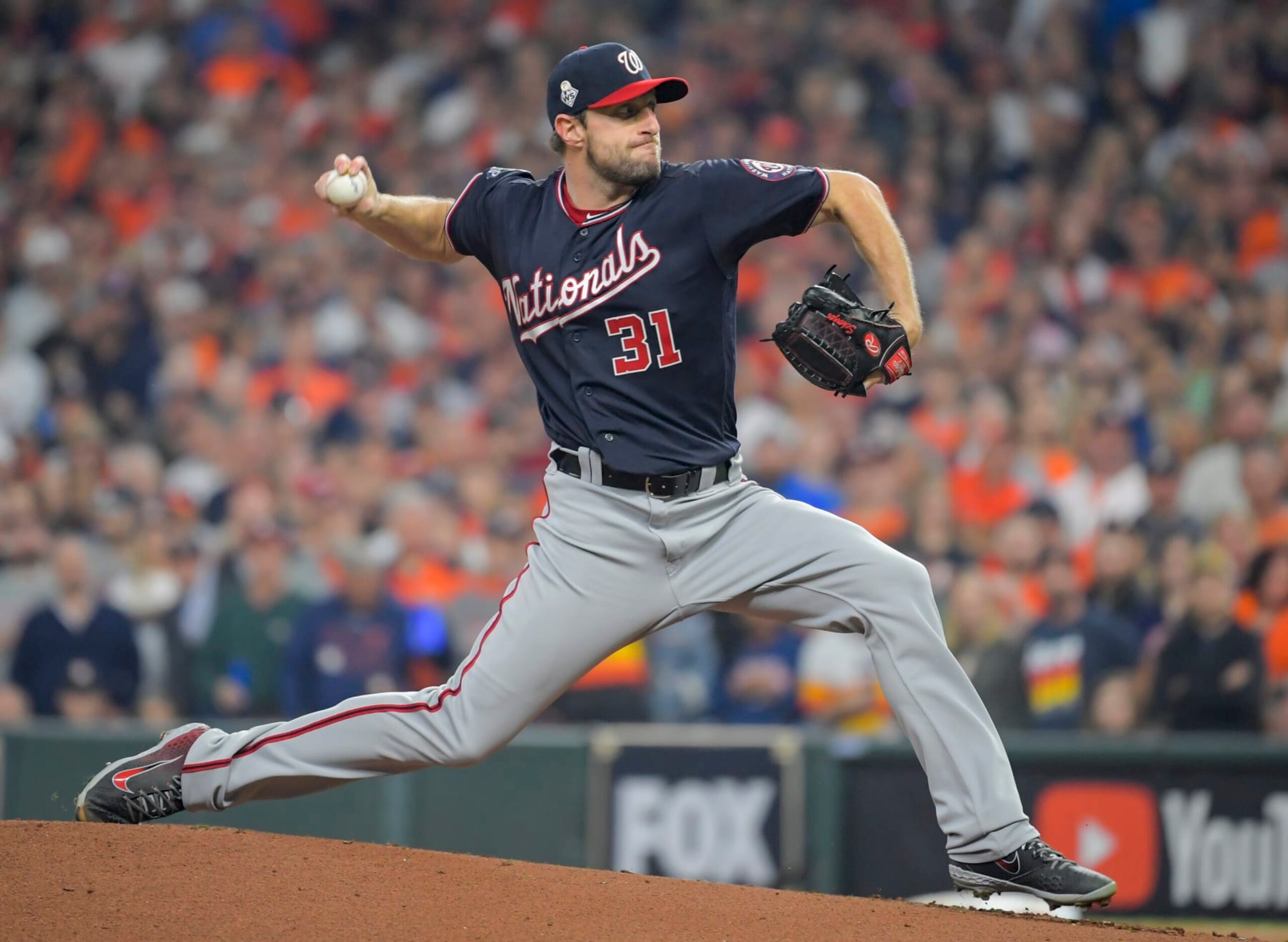
Best Five-Year Stretch: 2015-19
Record: 450-360 (.556 win percentage)
Postseason: 2019 World Series champs, lost in 2016 and 2017 NLDS
MVP: Max Scherzer
Synopsis
The best season in Washington/Montreal history was the 1994 campaign cut short by the players' strike, when the Expos had the best record in the majors and were on pace for 105 wins.
But the best five-year run was the recent one—for which the Nationals are still shelling out many millions in deferred payments.
They had some great hitters during that time. Bryce Harper won NL MVP in 2015 and hit 129 home runs from 2015 to 2018 before relocating to Philadelphia. Anthony Rendon was a doubles machine and a regular for NL MVP votes over the final three years. Trea Turner provided a ton of value at shortstop. A young Juan Soto made a huge impact in 2018 and 2019. And who can forget the impact of Gerardo "Baby Shark" Parra during the championship season?
Pitching made those Nats great, though.
From 2015 to 2019, Max Scherzer was the most valuable pitcher in baseball, and it wasn't close. He won the 2016 and 2017 NL Cy Youngs and finished top-five in each of the other years. The ace even received NL MVP votes in four of those seasons, averaging 274.2 strikeouts per year.
Stephen Strasburg was one heck of a second fiddle, posting strong numbers in both 2017 and 2019.
Adding Patrick Corbin in 2019 helped push the Nationals over the top for the first World Series title in franchise history.




.jpg?w=2560 "Mahomes Asked OT to Leave Meeting")
.jpg?w=2560 "Jonathan Taylor Landing Spots 📍")

.jpg?w=2560 "5 Teams Eyeing Jonathan Taylor")

