

The list of contenders for the 2022 Heisman Trophy is officially down to four: Quarterbacks Caleb Williams (USC), Max Duggan (TCU), C.J. Stroud (Ohio State) and Stetson Bennett (Georgia) have been announced as the finalists.
Oddly enough, three of the four leading candidates lost their final game ahead of the postseason. USC and TCU fell in their respective conference championships, and Ohio State lost to Michigan in its last regular-season game.
However, the body of work for Williams, Duggan and Stroud is nonetheless impressive. They're all deserving finalists, along with Bennett from SEC-winning Georgia.
Williams remains the favorite to hoist the Heisman, but we're running through the candidates and breaking down why each one has a chance to win college football's most prestigious individual honor.
The winner will be announced Saturday, Dec. 10, at 8 p.m. ET.
Stetson Bennett, QB, Georgia
1 of 4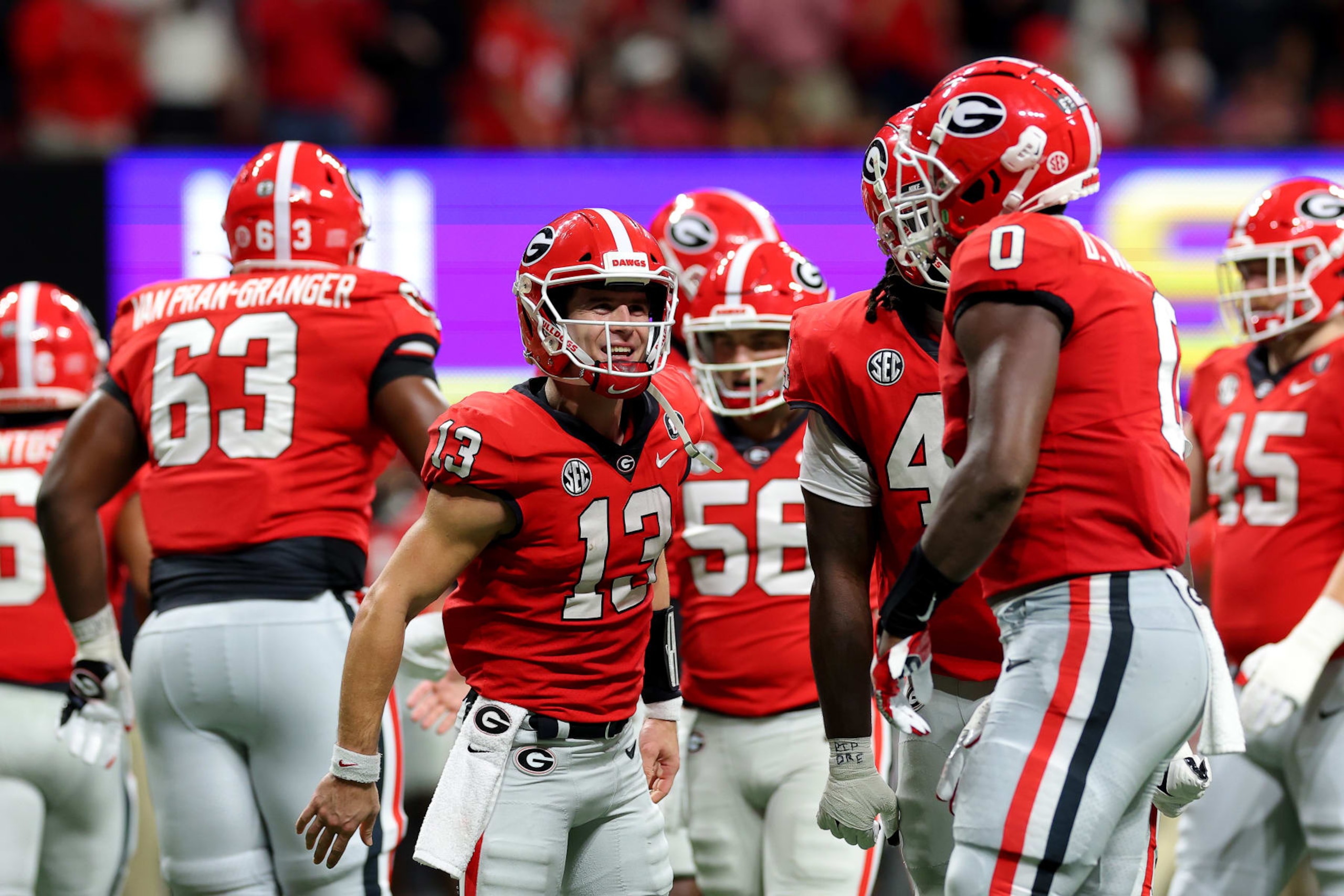
Two things can harmoniously exist with regard to Stetson Bennett's resume for the Heisman.
He's a much-improved passer whose greatest strength is efficiency and the only finalist who won a conference title. Bennett has made impactful, evident progress since last season.
As with Stroud, Bennett's stats are lower because of Georgia's dominance. Bennett, who posted a finalist-high 68.1 completion rate, has thrown 35 passes in the fourth quarter all year, whereas Williams has 80 attempts.
That, more than anything, would be the reason to vote for Bennett over the other candidates.
Simultaneously, it's not a powerful case historically.
Bennett accounted for fewer touchdowns (27) than any other finalist by nine-plus scores. The context of a run-focused UGA offense is valuable, but voters have regularly been drawn to gaudy stats.
C.J. Stroud, QB, Ohio State
2 of 4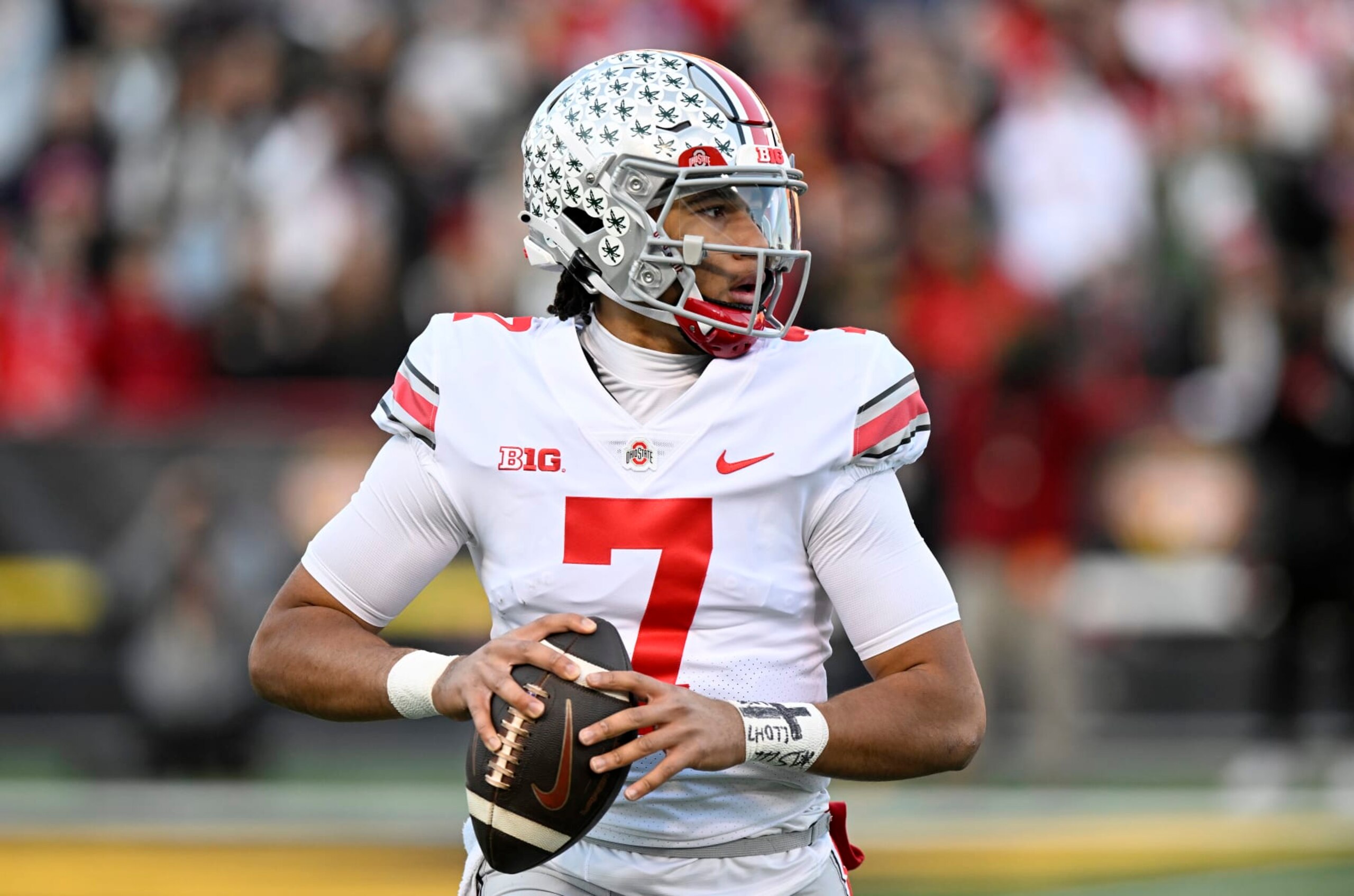
For the second straight year, C.J. Stroud entered the final week of November with a tremendous shot at the Heisman. Unfortunately for him and Ohio State, Michigan handed the Buckeyes a devastating loss.
That letdown probably cost him the award, though it shouldn't have, but it didn't prevent him from landing another finalist nod.
Among the quartet, Stroud is best in yards per attempt (9.4) and threw as many touchdowns as Williams (37) in one fewer appearance.
Plus, it's worth nothing that Ohio State continually put together blowout wins. Similar to Bennett, Stroud's numbers are a lower because of the Buckeyes' late-game control most weekends. Raw totals are meaningful, but Stroud has volume and efficiency.
Stroud ultimately is unlikely to win the honor; his resume isn't quite as convincing as the other finalists. Still, we're talking about one of the absolute best college football players in the nation.
Max Duggan, QB, TCU
3 of 4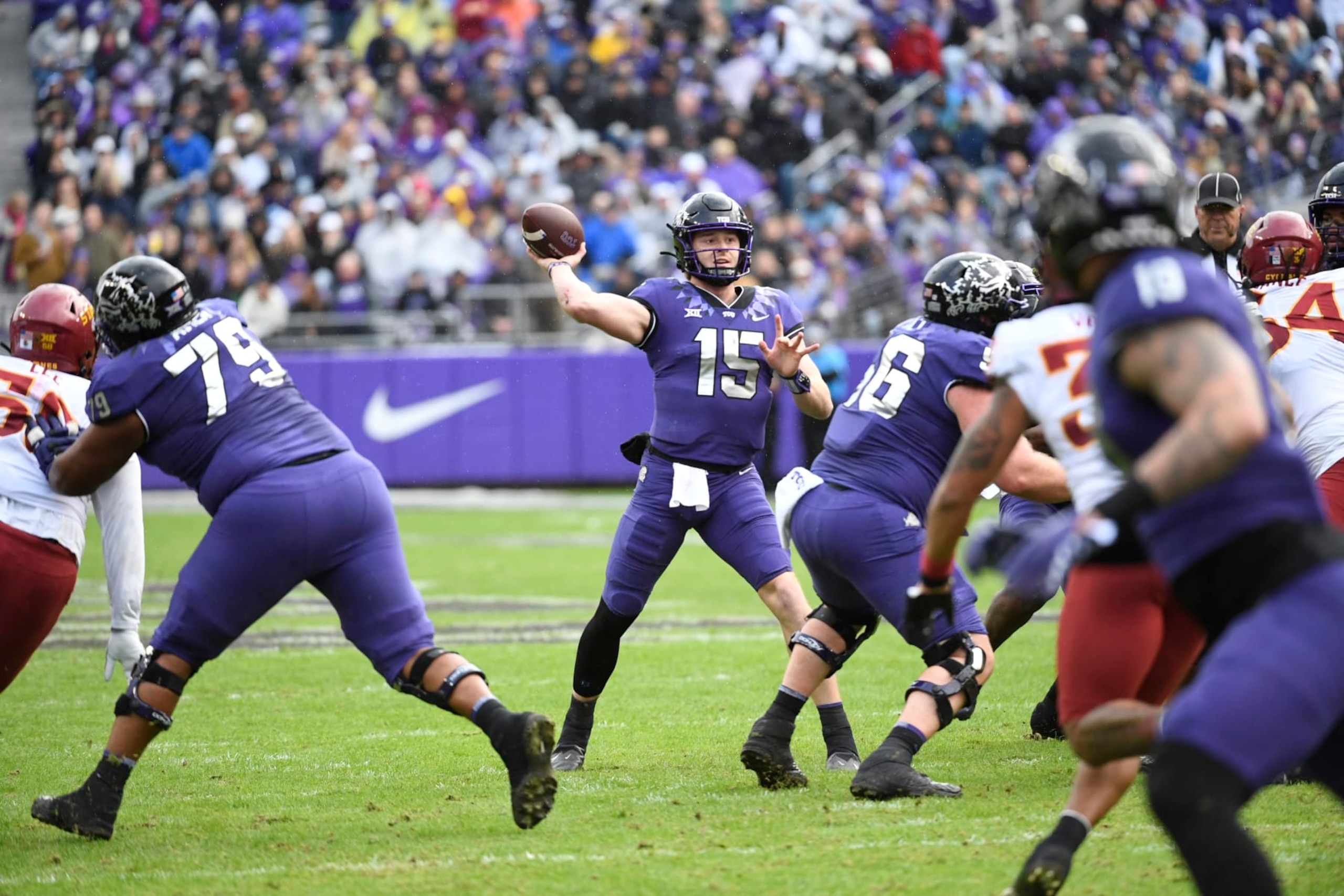
Act I: Max Duggan loses the quarterback competition to Chandler Morris, who starts TCU's opener against Colorado. Duggan relinquishes the QB1 label despite his 29 previous starts.
Act II: Morris exits the Colorado win because of a knee injury, shifting Duggan back into the lineup.
Act III: Duggan propels TCU to a 12-0 record and a shocking trip to the College Football Playoff, only losing in the Big 12 Championship Game. He throws for 3,321 yards and 30 touchdowns with four interceptions, rushing for a finalist-high 404 yards and six scores.
From a narrative perspective, Duggan is the clear choice.
Nobody—literally not even TCU, given he lost the preseason competition—expected him to lead the Horned Frogs to these heights. On the other hand, the college football world both knew about Stroud and Williams and had considerable expectations for them in 2022.
Duggan's numbers are comparable to Stroud's. Team success, which is historically a factor for voters, favors Duggan over Williams.
The greatest what-if surrounding the Heisman will be whether Duggan would've become the favorite if TCU had clipped Kansas State after Williams and USC lost to Utah.



Caleb Williams, QB, USC
4 of 4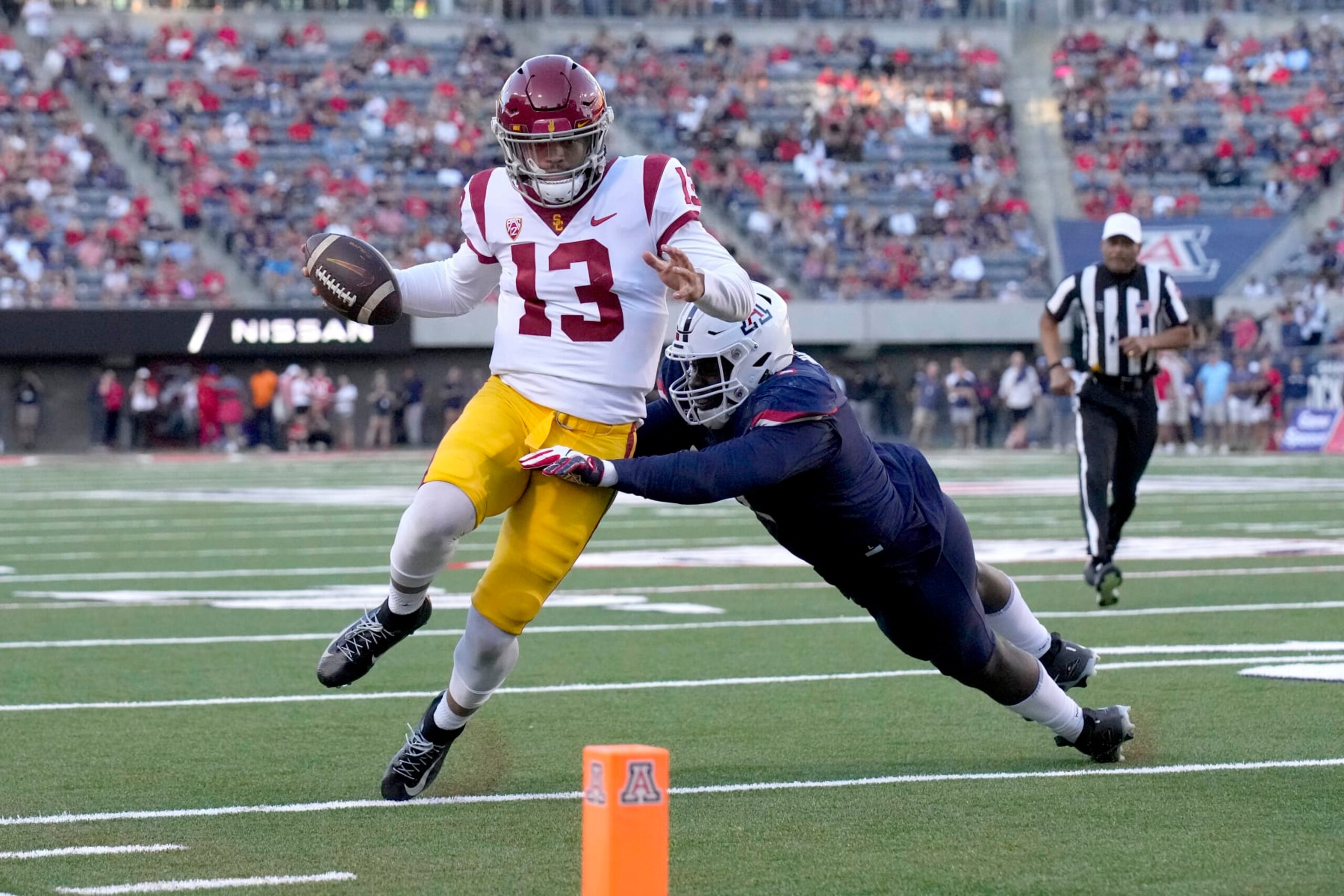
The main reason Williams has become the Heisman favorite is USC kept on winning despite a truly mediocre defense.
Ohio State ranked 18th nationally in yards allowed per play and 13th in scoring defense. TCU checked in 56th and 57th, respectively, but also had a habit of excelling in the second half of games. The unit elevated TCU throughout the season.
But the same cannot be said for USC.
In those categories, the Trojans ranked 120th and 81st. Save for early nonconference games and a trip to Oregon State, the defense routinely placed all of the pressure to win on the offense's shoulders.
Williams responded in a tremendous way. He ranked fourth in the country with 4,075 passing yards—best among finalists—while matching Stroud and Houston's Clayton Tune with an FBS-high 37 scores through the air.
Additionally, the Oklahoma transfer scampered for 372 yards and a finalist-leading 10 scores. Williams took USC to the brink of a CFP appearance after the program flailed to 4-8 last year. His performance is the single greatest factor in the Trojans' rapid return to relevance.
If USC hadn't lost in the Pac-12 Championship Game, Williams would already be taking a victory lap. But the letdown has, at the very least, opened the door for Duggan.



.jpg?w=2560 "Jonathan Taylor Landing Spots 📍")


