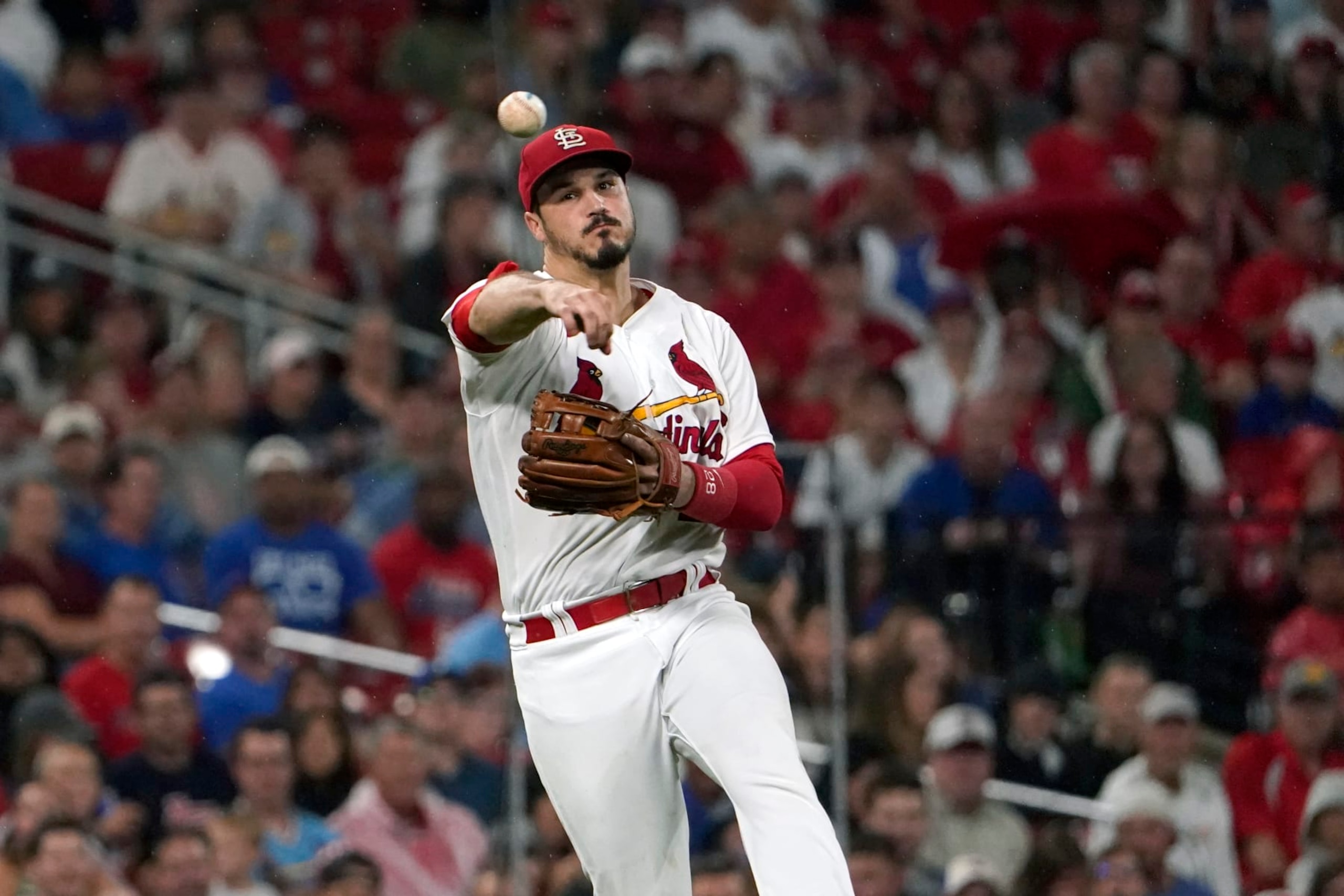

Predicting Every 2022 MLB Gold Glove Award Winner
It's that time of year again in Major League Baseball, and we're not just referring to the timing of the World Series. It's also Gold Glove Awards season, as the winners are set to be announced Tuesday.
So, let's predict which of the finalists will walk away with hardware.
This involved making so many best guesses, as it's not as if the Gold Glove selection process is 100 percent objective. Though the SABR Defensive Index accounts for 25 percent of said process, the other 75 percent is comprised of votes from all 30 managers and up to six coaches per team. What they see and what the metrics say don't necessarily have to line up.
For our part, we mostly relied on the metrics in picking the likely winners at all 10 positions—the usual nine plus a new slot for utility players—in the American League and National League. We focused on defensive runs saved (DRS), ultimate zone rating (UZR) and outs above average (OAA), plus framing runs (FRM) for catchers.
There were some cases, however, where we found it wise to defer to any reputational advantages players might have. Because even if the numbers suggest there should be a changing of the guard at a certain position, some Gold Gloves just seem to be for life.
With all metrics courtesy of FanGraphs and Baseball Savant, let's take it away.
American League Catcher
1 of 20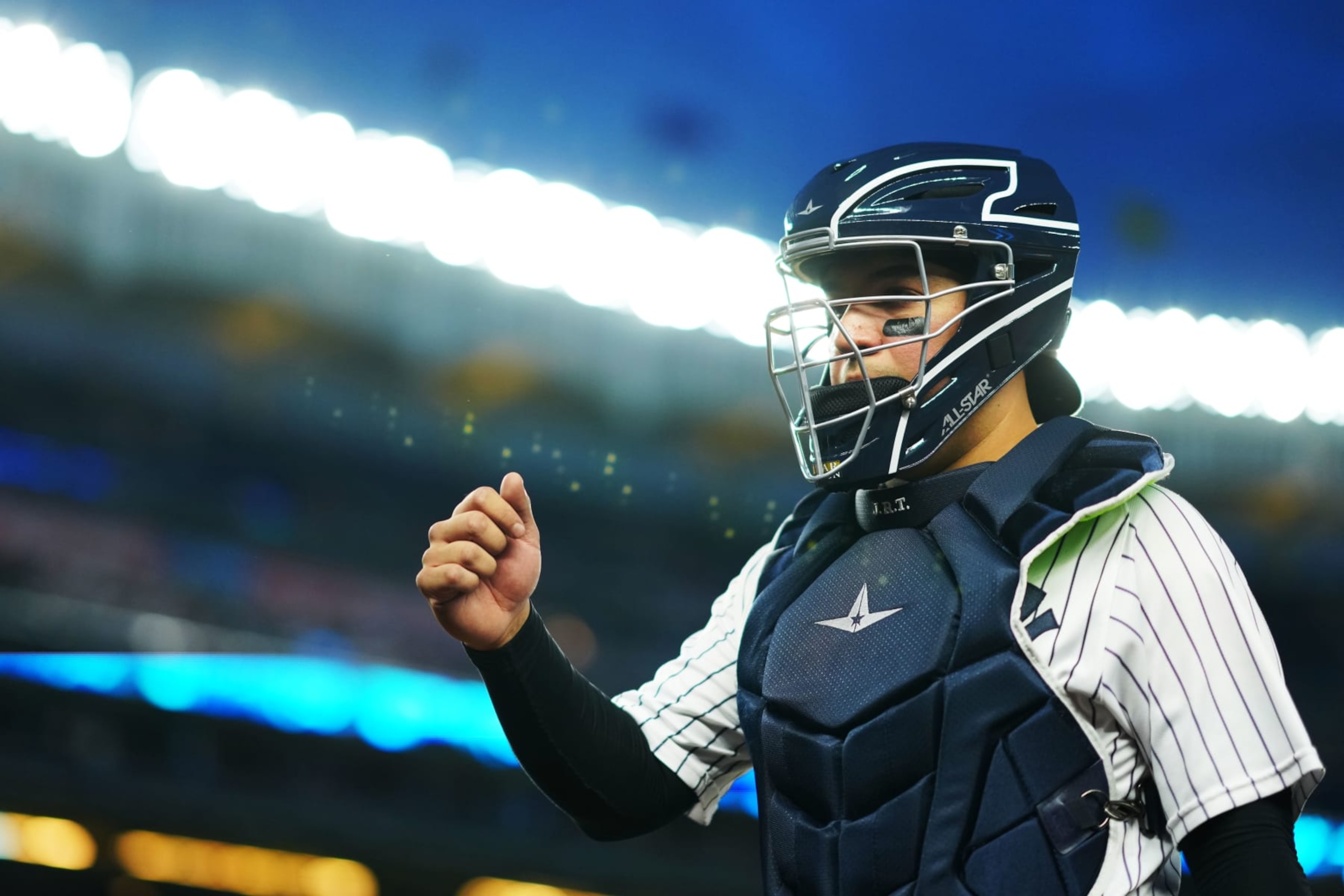
The Finalists
Cal Raleigh, Seattle Mariners: 14 DRS, 9 FRM, 32.1 CS%
Jose Trevino, New York Yankees: 21 DRS, 17 FRM, 33.3 CS%
Murphy's metrics might undersell the defensive season he just had. Only J.T. Realmuto topped him in innings caught, which only makes it more impressive that Murphy, who won a Gold Glove last year, allowed just two passed balls all season.
All the same, it's hard to ignore that Raleigh and especially Trevino outpaced Murphy in framing runs and caught-stealing percentage.
It's eye-catching in and of itself that Trevino racked up five more framing runs than any other catcher, much less that he did so while also nabbing a third of would-be base stealers and allowing only two passed balls in his own right. That's about as well-rounded as catcher defense gets, so he should be the guy to prevent Murphy from consecutive Gold Gloves.
Winner: Jose Trevino, New York Yankees
National League Catcher
2 of 20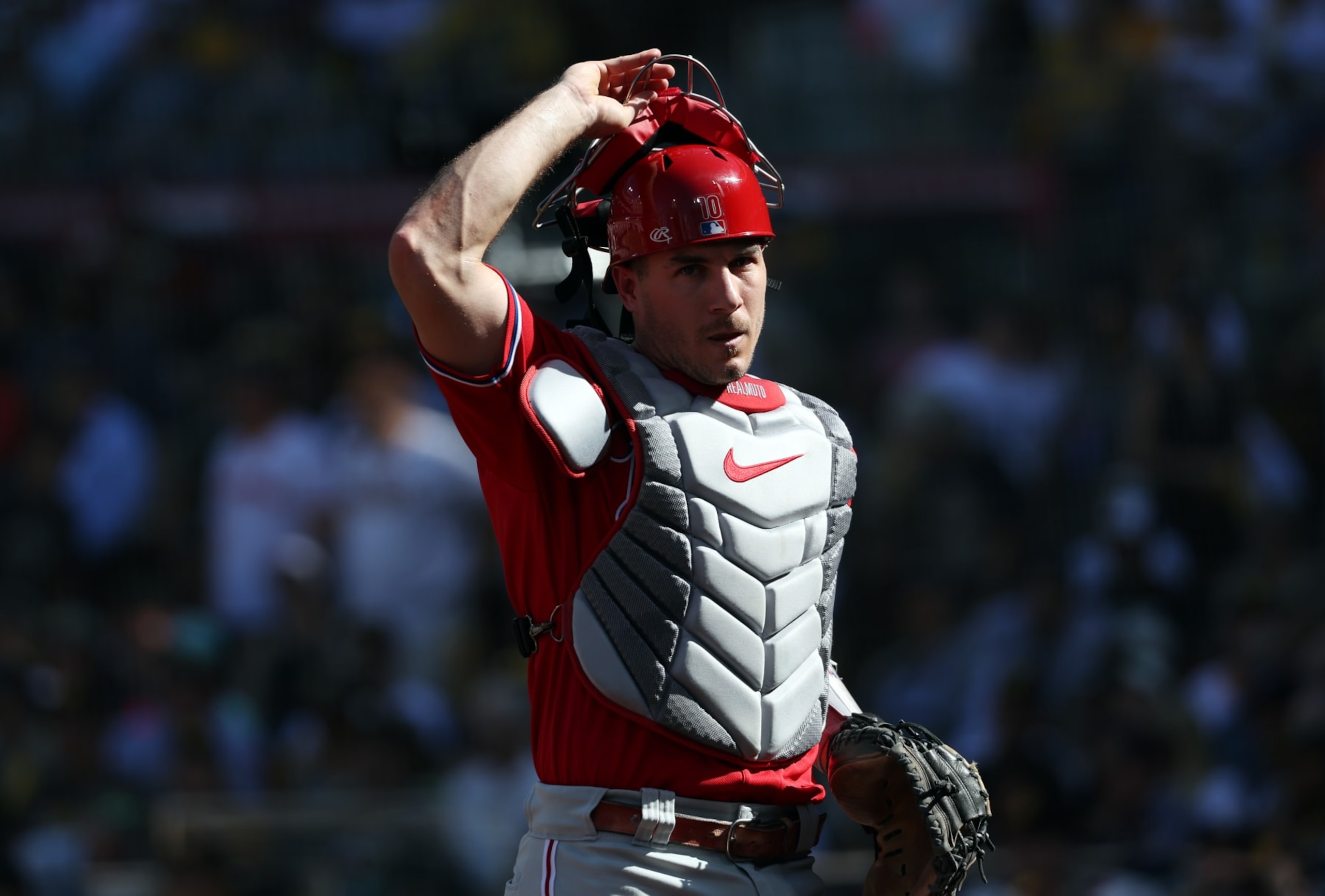
The Finalists
Tomás Nido, New York Mets: 8 DRS, 5 FRM, 20.63 CS%
J.T. Realmuto, Philadelphia Phillies: 11 DRS, -1 FRM, 44.12 CS%
If the Gold Gloves for catchers were strictly based on framing, then d'Arnaud and Nido would have a shot at capturing this year's award for the National League. They ranked third and eighth, respectively, in framing runs.
It's about more than framing, though, and that bodes well for Realmuto. Even if his framing has tailed off in recent years, it's not so bad that it's a problem for the Phillies. Plus, his ability to control the running game through the best catch-and-throw talent in the game goes a long way toward making up for his framing issues.
Realmuto led all catchers with 1,131.2 innings caught while committing only two passed balls for two more feathers in his cap. He should win a second Gold Glove to go with the one that he captured back in 2019.
Winner: J.T. Realmuto, Philadelphia Phillies
American League First Baseman
3 of 20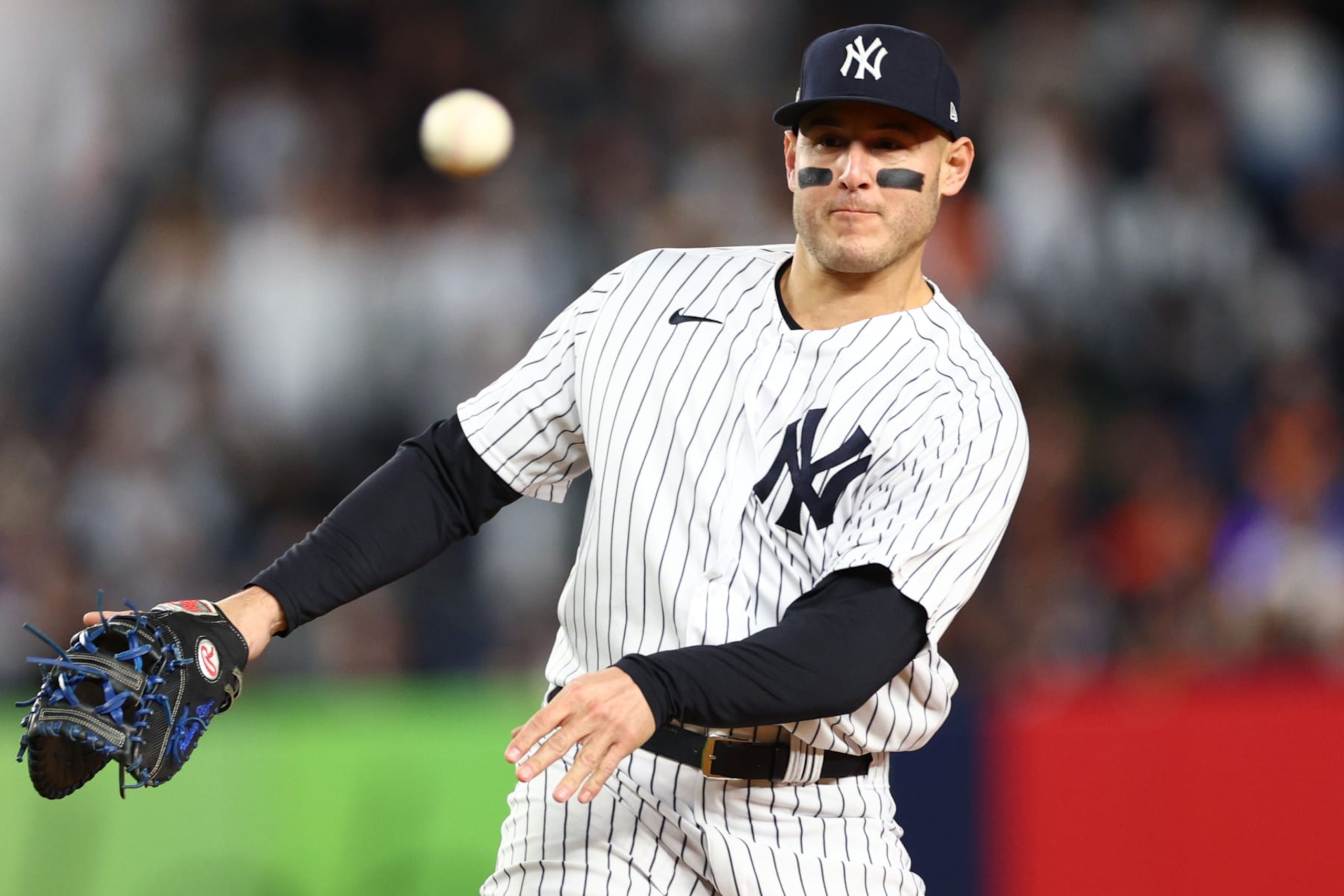
The Finalists
Vladimir Guerrero Jr., Toronto Blue Jays: 3 DRS, minus-3.7 UZR, minus-4 OAA
Anthony Rizzo, New York Yankees: minus-3 DRS, 0.4 UZR, minus-3 OAA
The best metrics here belong to Arraez, but there's a catch where he's concerned: He logged only 529 innings at first base, while Rizzo and Guerrero each topped 1,000.
It's to Guerrero's credit that he's even in this discussion after beginning his major league career with all sorts of questions on the defensive side of the game. And yet, it's hard to fathom him denying Rizzo what would be his fifth Gold Glove.
Indeed, Rizzo's metrics arguably don't capture how reliable he was at the cold corner. He finished in the top 10 among first basemen for fielding percentage, and his work around the first base bag is one reason (among many others, to be sure) why the Yankees were charged with only 20 throwing errors from second base, third base and shortstop.
Winner: Anthony Rizzo, New York Yankees


National League First Baseman
4 of 20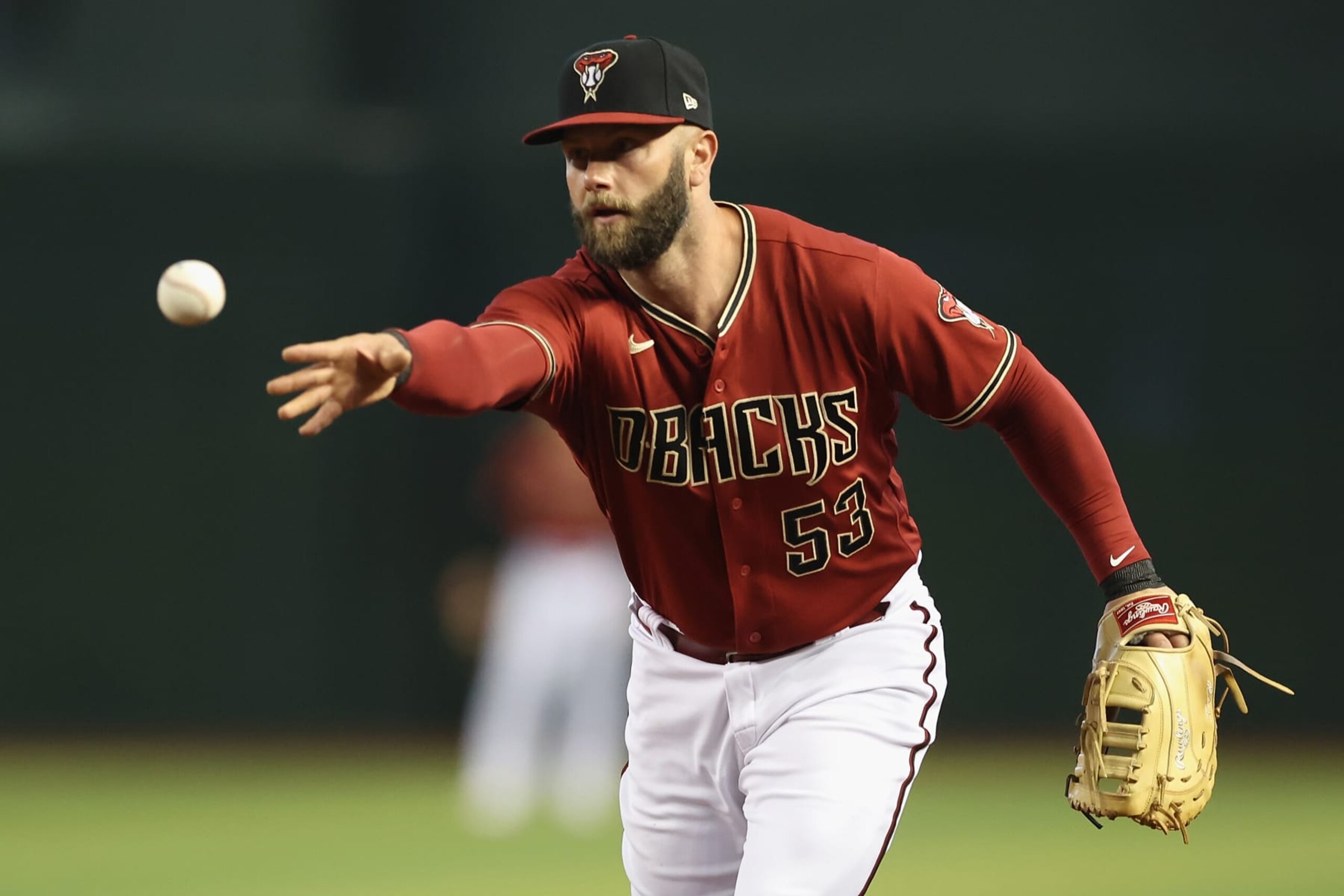
The Finalists
Paul Goldschmidt, St. Louis Cardinals: 2 DRS, 5.1 UZR, minus-5 OAA
Matt Olson, Atlanta: 5 DRS, 0.4 UZR, 3 OAA
Christian Walker, Arizona Diamondbacks: 17 DRS, 5.5 UZR, 14 OAA
Goldschmidt's inclusion in this race tracks with his reputation as a four-time Gold Glove winner, as well as with his league-best .999 fielding percentage. Olson, meanwhile, is a two-time Gold Glover in his own right who posted characteristically solid metrics.
And yet, suffice it to say that those eye-popping numbers next to Walker's name are the real deal.
Walker's 14 outs above average, in particular, put him 10 up on the next-closest first baseman. That traces to how much better he was at making plays to his right. That he also made only five errors despite exhibiting so much range only bolsters his case for his first Gold Glove.
Winner: Christian Walker, Arizona Diamondbacks
American League Second Baseman
5 of 20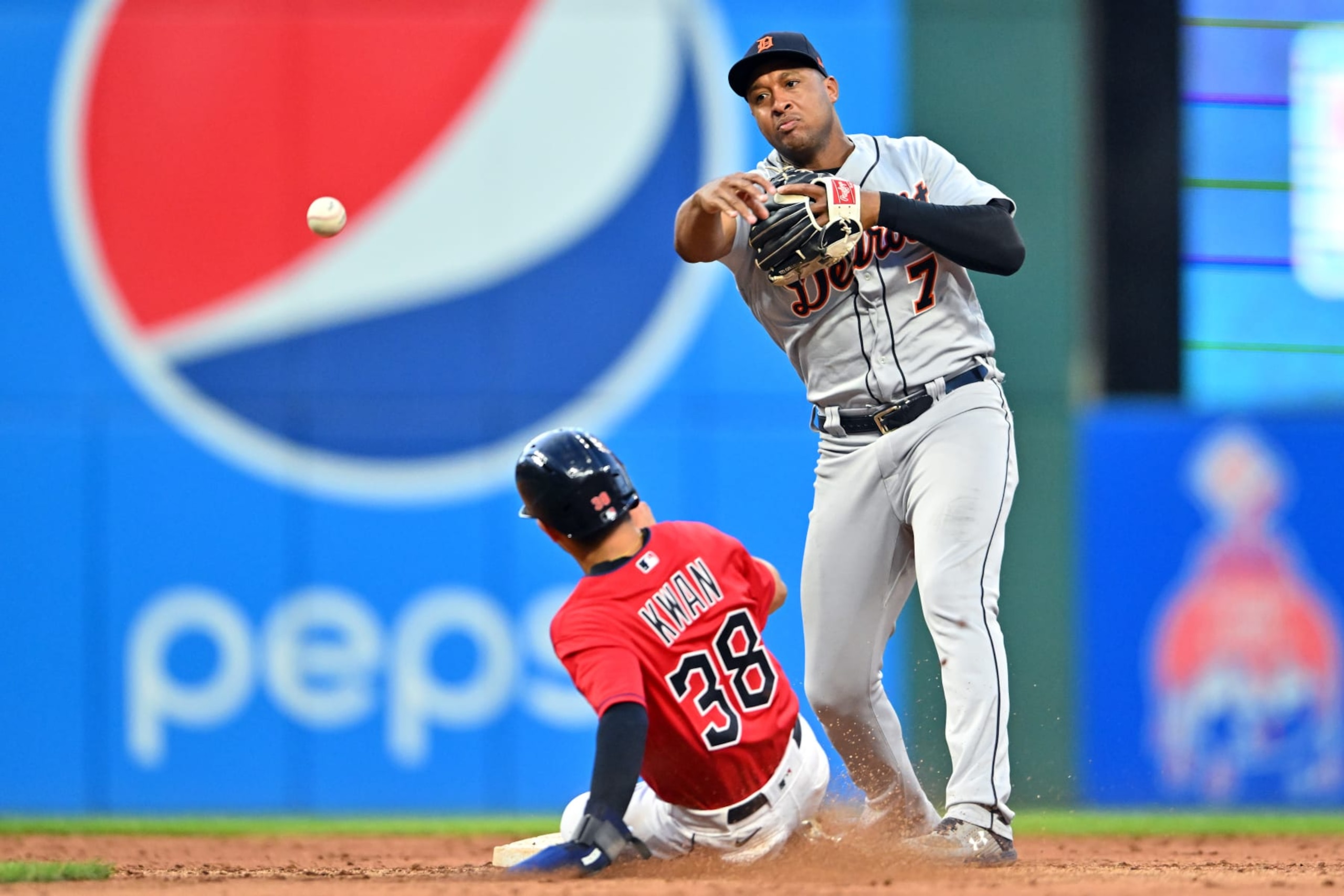
The Finalists
Jonathan Schoop, Detroit Tigers: 8 DRS, 2.7 UZR, 27 OAA
Marcus Semien, Texas Rangers: 13 DRS, 4.4 UZR, 8 OAA
Semien is the AL's reigning Gold Glove winner at second base, while Giménez finished as the American League leader for defensive runs saved and ultimate zone rating at the position for 2022.
Yet the number that really leaps out here is the 27 that Schoop posted in outs above average. That was the most of any player at any position. As OAA is a range-based metric, this confirms that even 6'1", 247-pound second basemen can get around.
In addition to range-y plays, Schoop also excelled at turning double plays and simply not making mistakes as he also led all second basemen in fielding percentage. Really, what more can you ask for?
Winner: Jonathan Schoop, Detroit Tigers
National League Second Baseman
6 of 20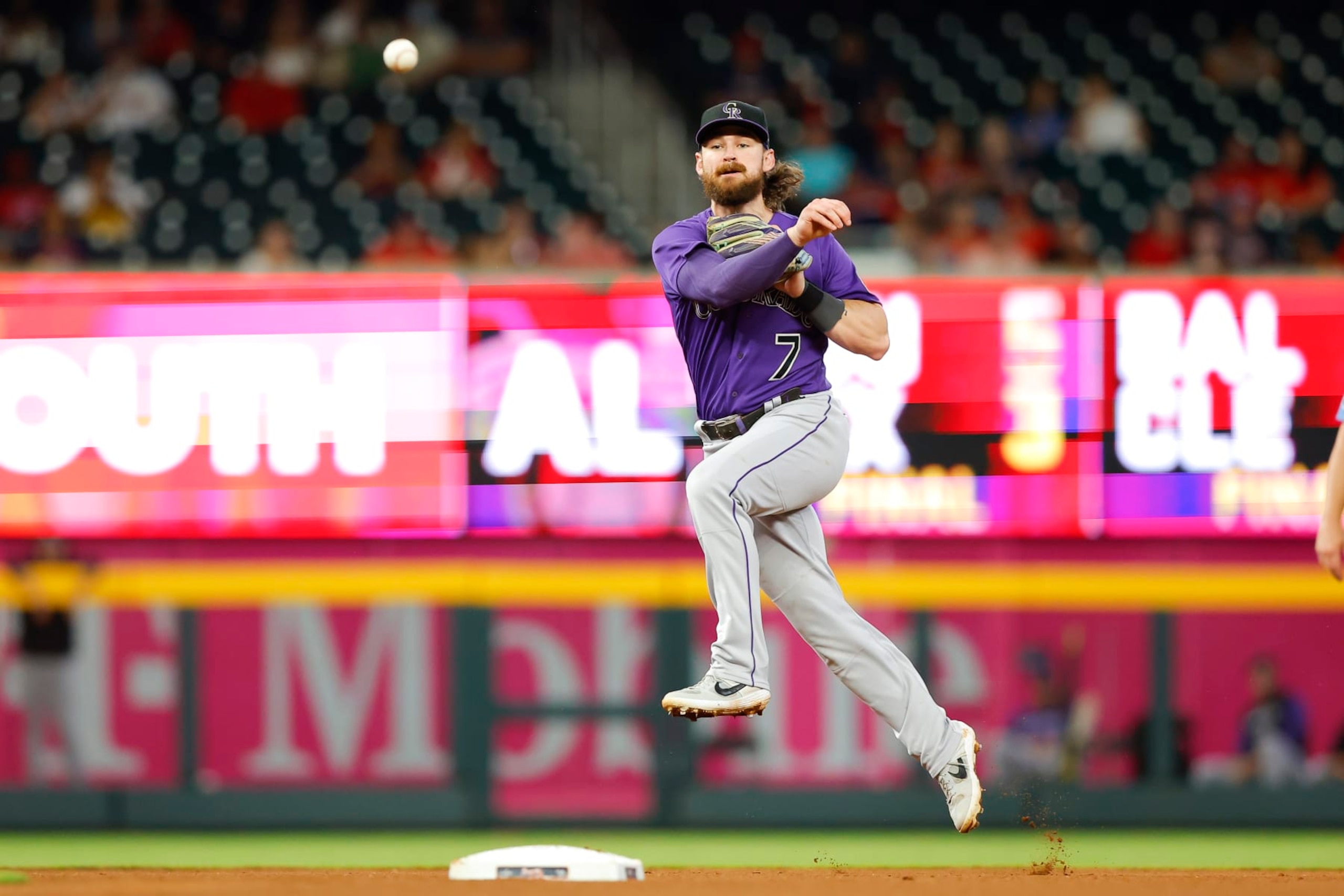
The Finalists
Tommy Edman, St. Louis Cardinals: 12 DRS, 3.2 UZR, 7 OAA
Brendan Rodgers, Colorado Rockies: 22 DRS, 8.0 UZR, 3 OAA
Despite his edge in outs above average, Edman has at least one disadvantage relative to Cronenworth and Rodgers: He played only 614.2 innings at second base, compared to 1,239.2 for Cronenworth and 1,168.1 for Rodgers.
Probably the best thing Cronenworth has going for him is his .992 fielding percentage, which led all second basemen in the National League. As for Rodgers, well, all he did was lead all second basemen in both DRS and UZR.
Rodgers played reasonably mistake-free defense in committing only 10 errors, and the former shortstop indeed also showcased shortstop range at the position. There just wasn't a whole lot that he couldn't get to, even if he had to get dirty to finish off the play.
Winner: Brendan Rodgers, Colorado Rockies
American League Third Baseman
7 of 20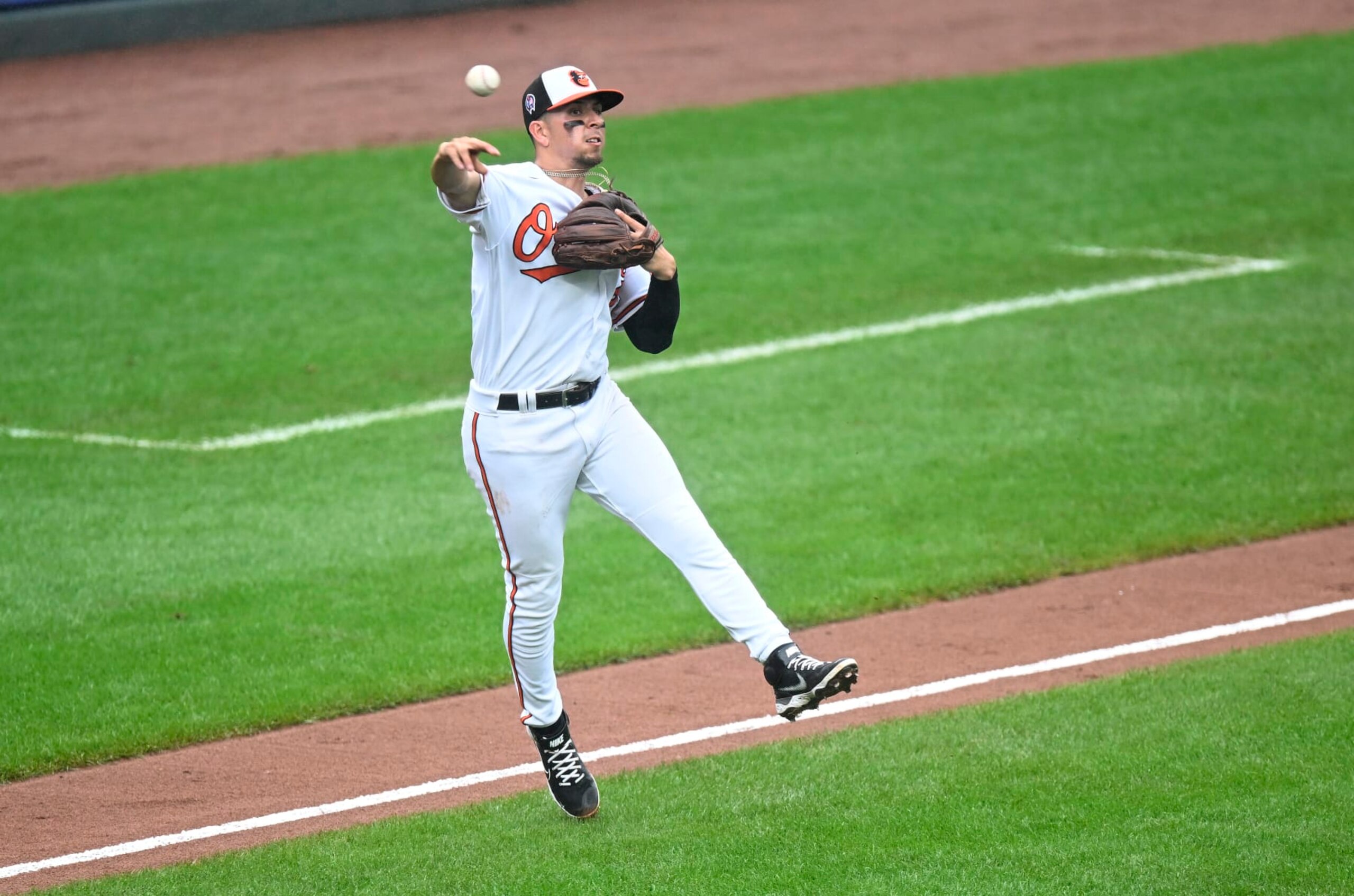
The Finalists
José Ramírez, Cleveland Guardians: 2 DRS, 10.0 UZR, 3 OAA
Ramón Urías, Baltimore Orioles: 14 DRS, 10.9 UZR, 7 OAA
Chapman is up for his fourth Gold Glove, but it would be something of an injustice if he actually got it. Though he did have the highest fielding percentage of any third baseman in 2022, the metrics generally agree that his defense hasn't been the same since he battled a hip injury in 2020.
Ramírez fares better by the metrics, but obviously not as well as Urías even though the former played 340.1 more innings at third base.
About the only thing Urías struggled with was making plays to his right, which makes sense in context of his disadvantage for arm strength relative to other third basemen. He otherwise did everything the Orioles could have asked for and will ideally be rewarded accordingly.
Winner: Ramón Urías, Baltimore Orioles
National League Third Baseman
8 of 20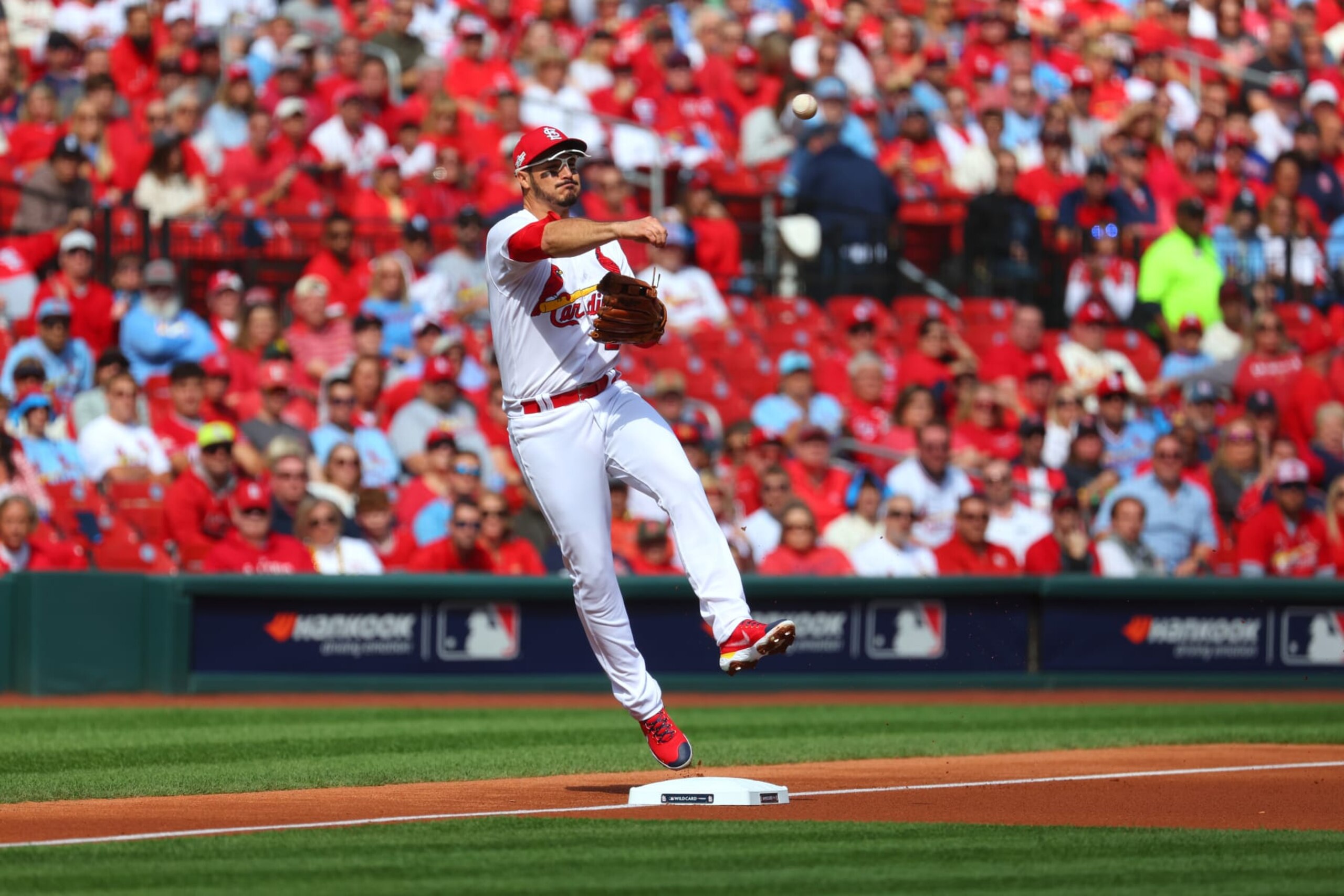
The Finalists
Ke'Bryan Hayes, Pittsburgh Pirates: 24 DRS, 6.3 UZR, 18 OAA
Ryan McMahon, Colorado Rockies: 11 DRS, 3.4 UZR, 10 OAA
Poor McMahon. This is the second season in a row that he's left little doubt that he's a terrific defender at the hot corner, but he's up against the toughest possible competition for the NL's Gold Glove at third base.
On merit, the award probably should go to Hayes. He not only led all third basemen in outs above average, but also all players in defensive runs saved. The former holds that he's especially good at coming in on the ball, which definitely tracks.
However, it's hard to imagine that so many managers and coaches would deny Arenado a 10th straight Gold Glove. This is not to suggest it would be ill-begotten, mind you, as it's saying a lot that he posted a higher UZR than Hayes while giving him a run for his money in DRS and OAA. It's almost as if he's really good at what he does at the hot corner.
Winner: Nolan Arenado, St. Louis Cardinals
American League Shortstop
9 of 20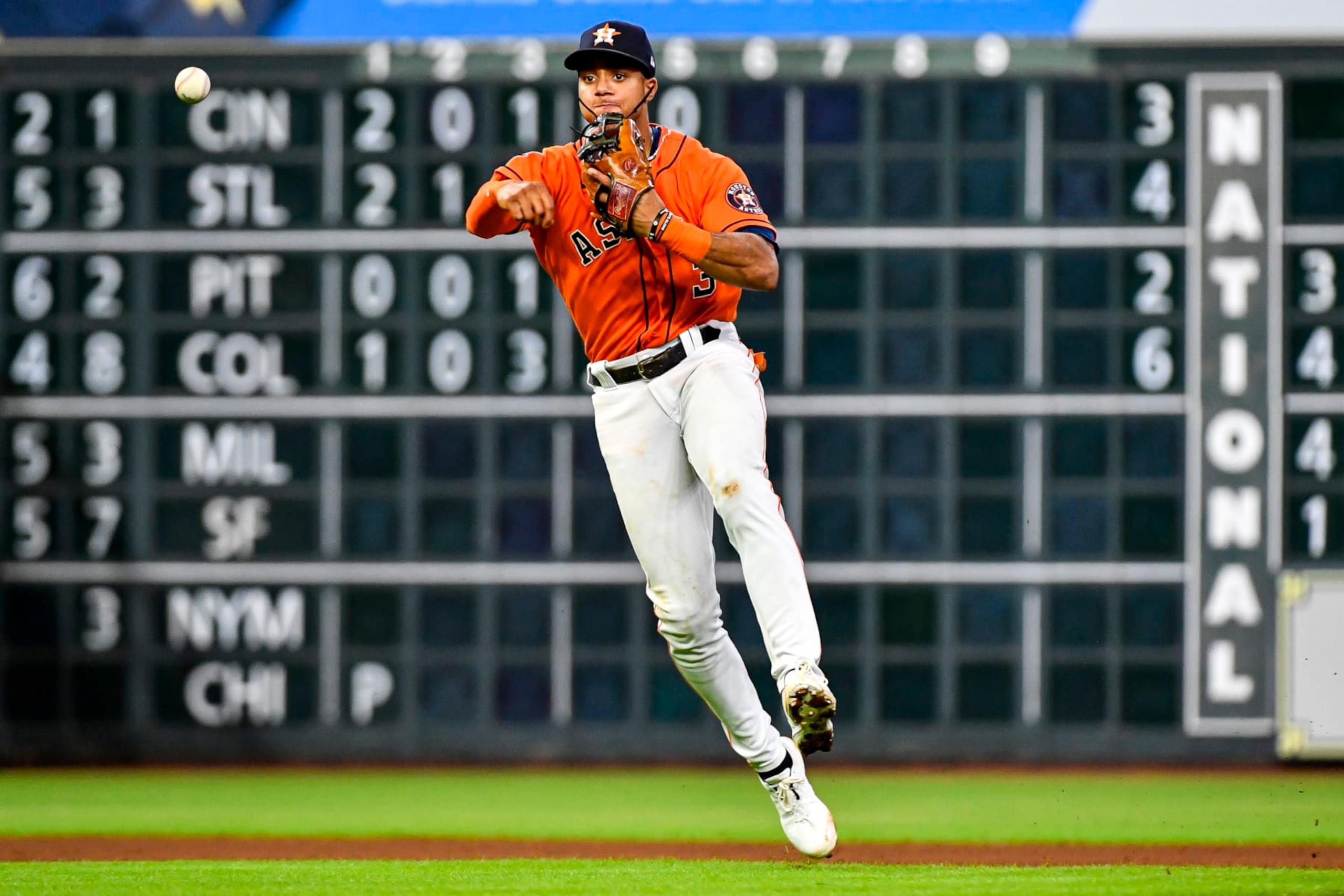
The Finalists
Carlos Correa, Minnesota Twins: 3 DRS, 1.0 UZR, minus-3 OAA
Jeremy Peña , Houston Astros: 15 DRS, minus-6.3 UZR, 7 OAA
It's an outrage that Baltimore Orioles shortstop Jorge Mateo didn't end up as a finalist for the AL's Gold Glove at the position. All he did was rack up 14 defensive runs saved and 11 outs above average.
Bogaerts and Correa, meanwhile, are on opposite sides of the reputational spectrum when it comes to their defense. But while the former outplayed his reputation in 2022, the latter didn't really live up to last year's Gold and Platinum Glove-winning performances
There's thus a window for Houston's current shortstop to take the Gold Glove from its former shortstop, and there isn't much question that Peña deserves it. The main reason he finished in the red for UZR is because he was a tad too mistake-prone in making 19 errors. Otherwise, he had a fine defensive season that's indeed still ongoing in the playoffs.
Winner: Jeremy Peña, Houston Astros
National League Shortstop
10 of 20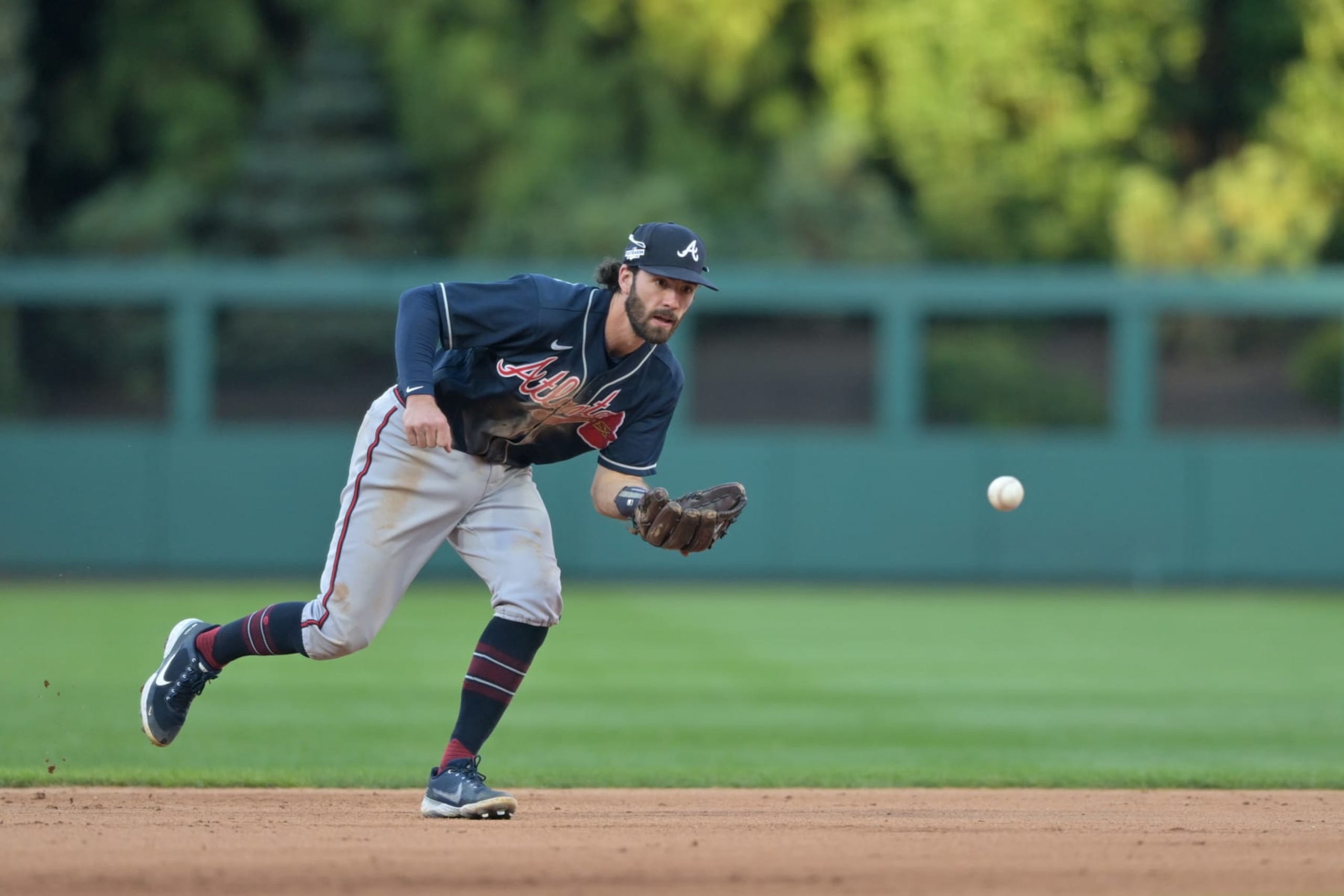
The Finalists
Miguel Rojas, Miami Marlins: 15 DRS, 4.9 UZR, 10 OAA
Dansby Swanson, Atlanta: 9 DRS, 1.1 UZR, 21 OAA
With Brandon Crawford not among this year's finalists after winning his fourth Gold Glove in 2021, somebody from this group is about to win his first.
Kim's and especially Rojas' numbers present compelling cases, but the figure that really stands out here is Swanson's 21 outs above average. That was far and away the best among shortstops, with a primary factor being how many plays Swanson made to his right.
That Swanson offered that much range and still finish with the second-best fielding percentage among shortstops speaks to just how on point he was in the field this season. And because he had a reputation as an outstanding shortstop even before 2022, we can also imagine that some managers and coaches figured he was overdue for the award.
Winner: Dansby Swanson, Atlanta
American League Left Fielder
11 of 20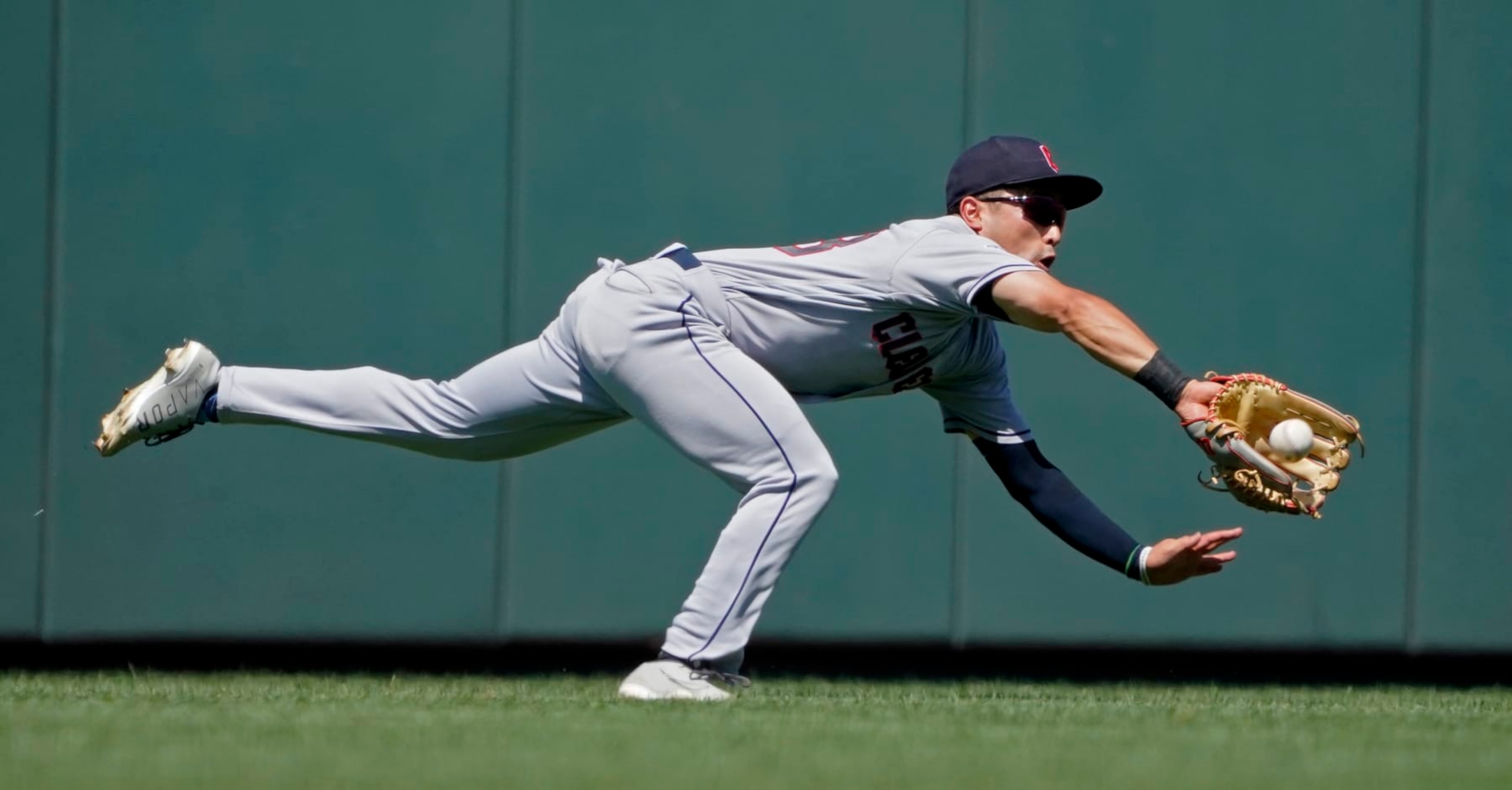
The Finalists
Steven Kwan, Cleveland Guardians: 21 DRS, 6.4 UZR, 12 OAA
Brandon Marsh, Los Angeles Angels/Philadelphia Phillies: 6 DRS, 3.3 UZR, 8 OAA
Benintendi didn't quite live up to last year's Gold Glove-winning effort and Marsh ended his season in the National League, so this list has a distinct "look, there just aren't that many good left fielders" vibe to it.
But Kwan, at least, proved in 2022 that he's a truly great left fielder. There are any number of great catches we could point to as evidence, but we'll go with this one:
Excellent. Just excellent. And also surely illustrative of how the Guardians rookie ended up so close to the top of the leaderboard for Baseball Savant's "outfielder jump" metric. Combine relentless effort with legit closing speed, and you get Kwan's defense.
Winner: Steven Kwan, Cleveland Guardians
National League Left Fielder
12 of 20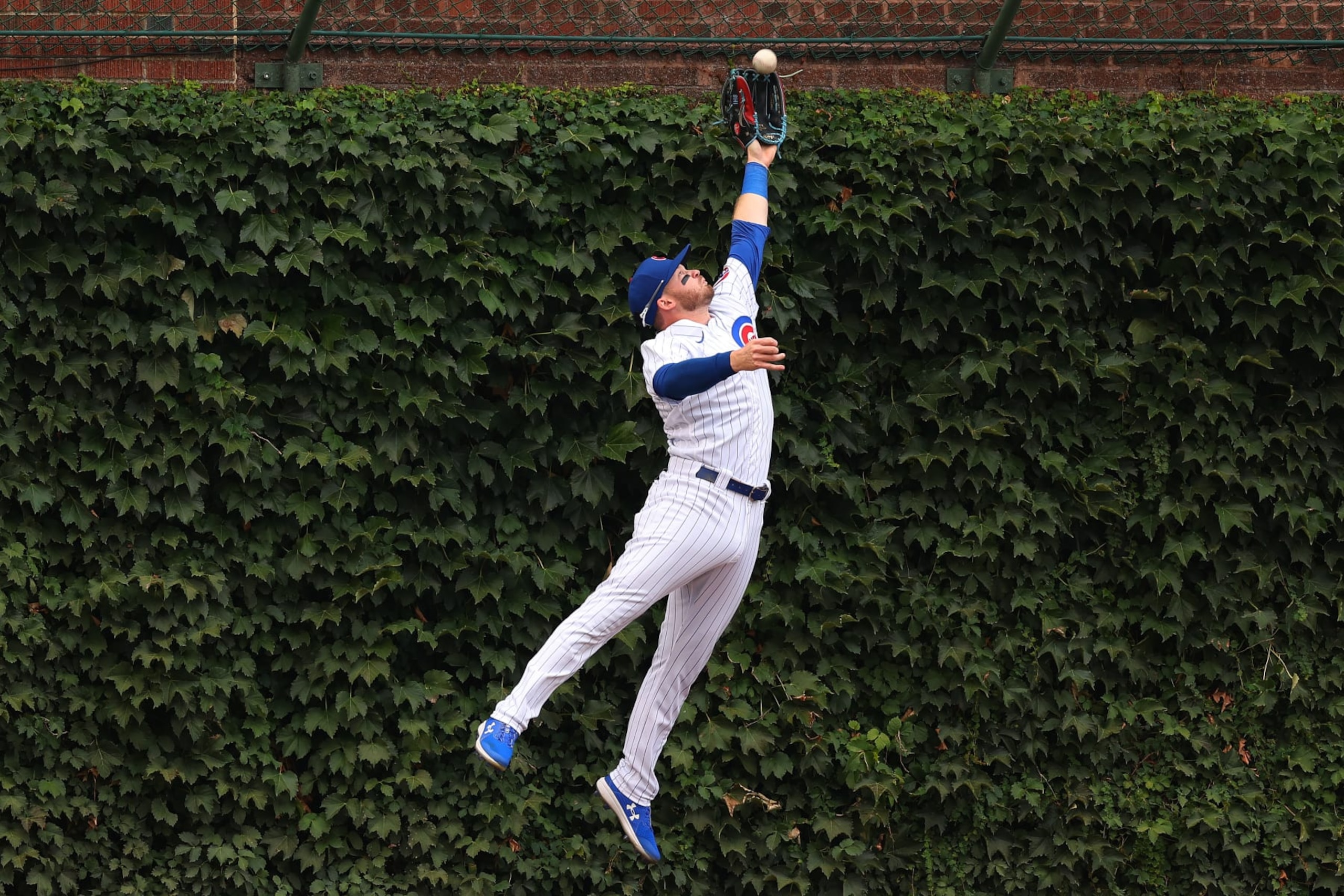
The Finalists
David Peralta, Arizona Diamondbacks/Tampa Bay Rays: minus-5 DRS, minus-2.8 UZR, 5 OAA
Christian Yelich, Milwaukee Brewers: minus-2 DRS, 4.1 UZR, minus-4 OAA
This, also, is a "look, there just aren't many good left fielders" kind of list. Not to pick on Yelich, specifically, but his slow-motion defense surely has no business being rewarded with a Gold Glove.
In spite of his DRS and UZR, Peralta was so good at coming in on the ball that his case can't be dismissed out of hand. But it's nonetheless Happ who stands out here, as not one of the big three metrics came away with a negative impression of his defense.
Happ doesn't actually get the best jumps, but he benefits from not giving up on plays and making some nifty catches as a result. He also made some noise with his arm this year, finishing with a career-high eight assists.
Winner: Ian Happ, Chicago Cubs
American League Center Fielder
13 of 20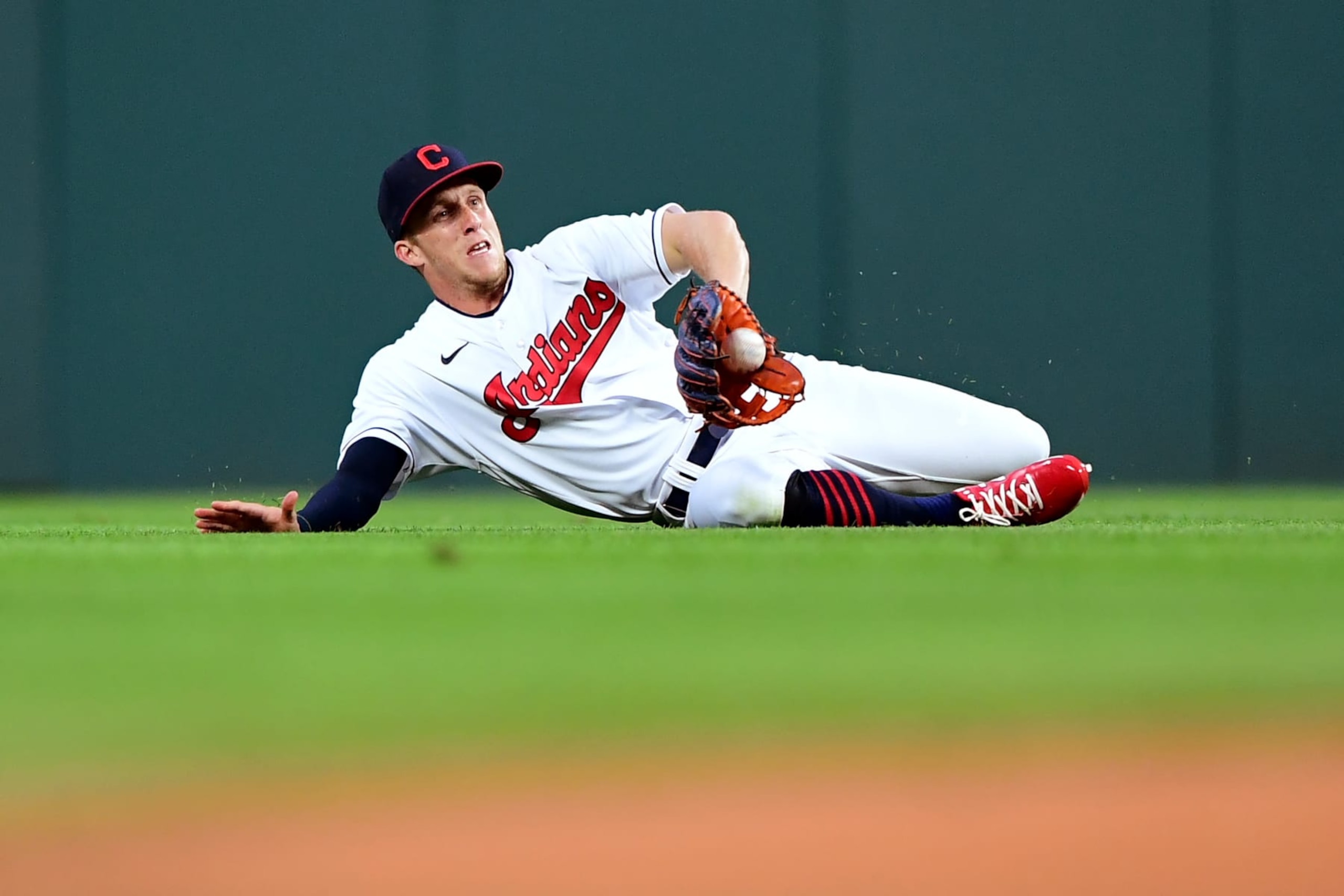
The Finalists
Myles Straw, Cleveland Guardians: 17 DRS, 13.2 UZR, 13 OAA
Michael A. Taylor, Kansas City Royals: 19 DRS, 10.3 UZR, 5 OAA
Good on Mullins for coming this close to winning the first Gold Glove of his career, but this race feels like it's between Taylor and Straw.
Taylor is looking to make it two Gold Gloves in a row, and the fact that he led all center fielders in defensive runs saved works in favor of the idea. But so much so that Straw's 17 DRS and substantial advantage in outs above average are ultimately rendered moot?
It could happen, but we're guessing not. If not on Straw's metrics, we'll take it on faith that the voters for the Gold Gloves were swayed by his MLB-high 1,309 innings in center field and likewise MLB-high 12 assists that he tallied to go with all the fly balls he caught.
Winner: Myles Straw, Cleveland Guardians
National League Center Fielder
14 of 20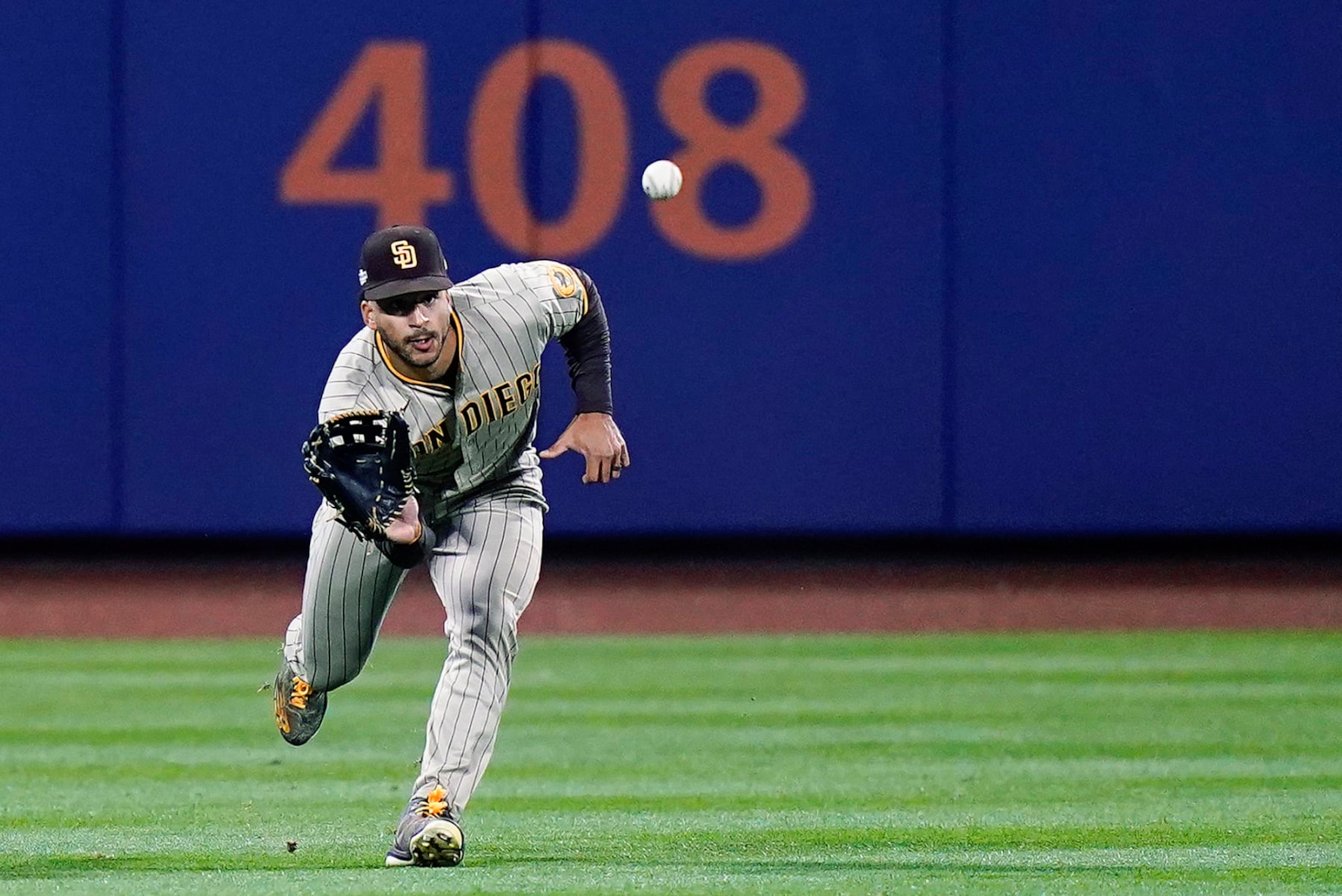
The Finalists
Victor Robles, Washington Nationals: 12 DRS, 4.8 UZR, 5 OAA
Alek Thomas, Arizona Diamondbacks: 6 DRS, 4.2 UZR, 6 OAA
This year was a coming-out party for the rookie Thomas and something of a revival for Robles, as he led National League center fielders in defensive runs saved in a return to form reminiscent of his excellent defensive season in 2019.
But as anyone who watched him go to work during the playoffs will know, Grisham's metrics don't lie about how much of a difference-maker he is in center field.
Grisham gets after the ball well, and he generally specializes in making spectacular catches, specifically recording four of the five-star variety and 12 of the four-star variety in 2022. Hence why the Padres had to keep playing him in the regular season even as he hit just .184.
Winner: Trent Grisham, San Diego Padres
American League Right Fielder
15 of 20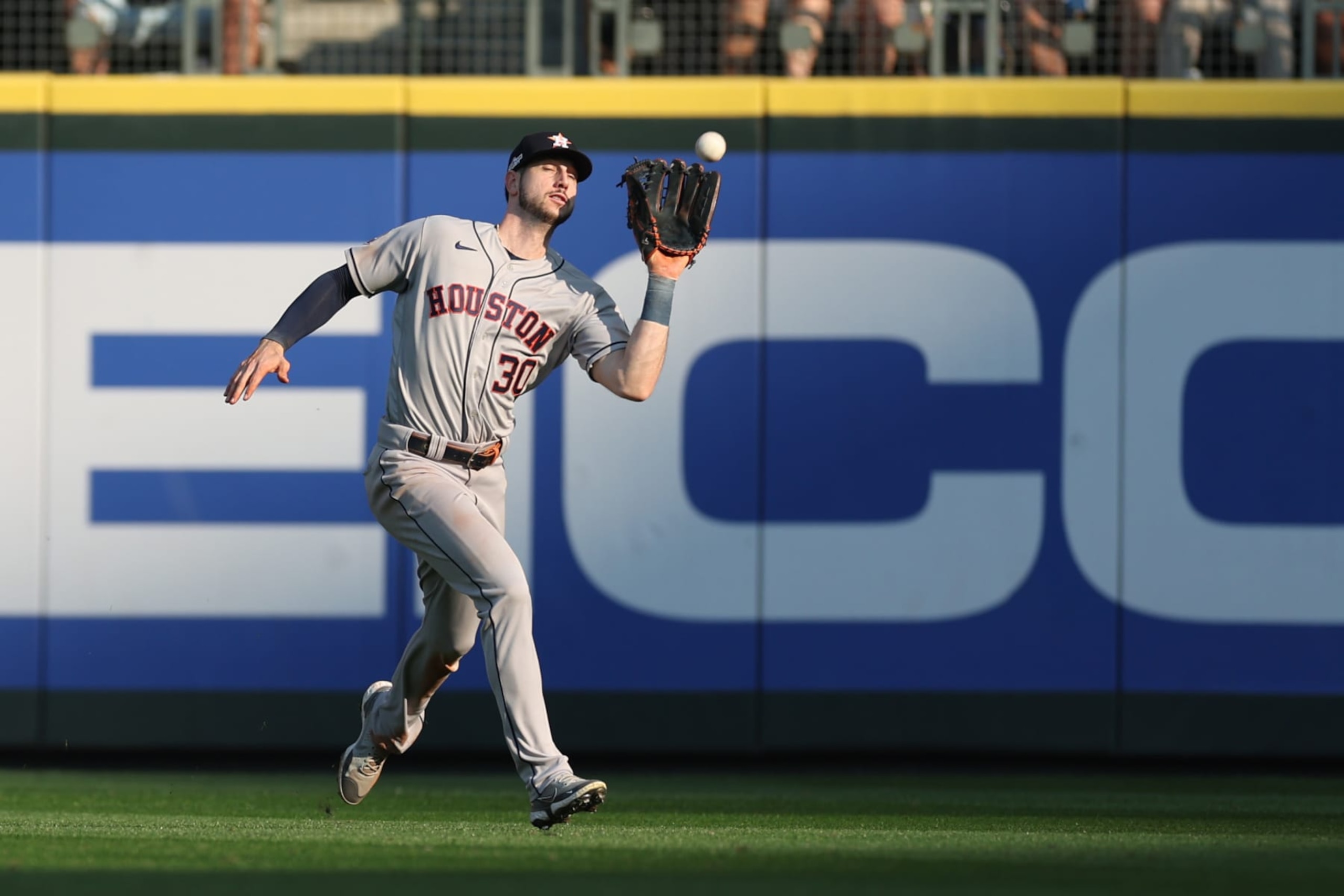
The Finalists
Max Kepler, Minnesota Twins: 9 DRS, minus-1.1 UZR, 12 OAA
Kyle Tucker, Houston Astros: 13 DRS, 2.8 UZR, 4 OAA
It shouldn't be overlooked that Kepler led all right fielders in outs above average, much less that he did so while making more plays toward the big part of the yard in center field.
But in this race, Tucker is the young hot shot and Bradley is the veteran with a reputation as a defensive wizard. Neither is a bad choice for the award, though Tucker does have at least one advantage in that he played the second-most innings in right field of any player.
There's also, of course, the consensus among the metrics that the Astros were lucky to have Tucker in right field this year. He may not be much of a jump specialist, but that doesn't keep him from going to his left and back on the ball with the best of 'em in right field.
Winner: Kyle Tucker, Houston Astros
National League Right Fielder
16 of 20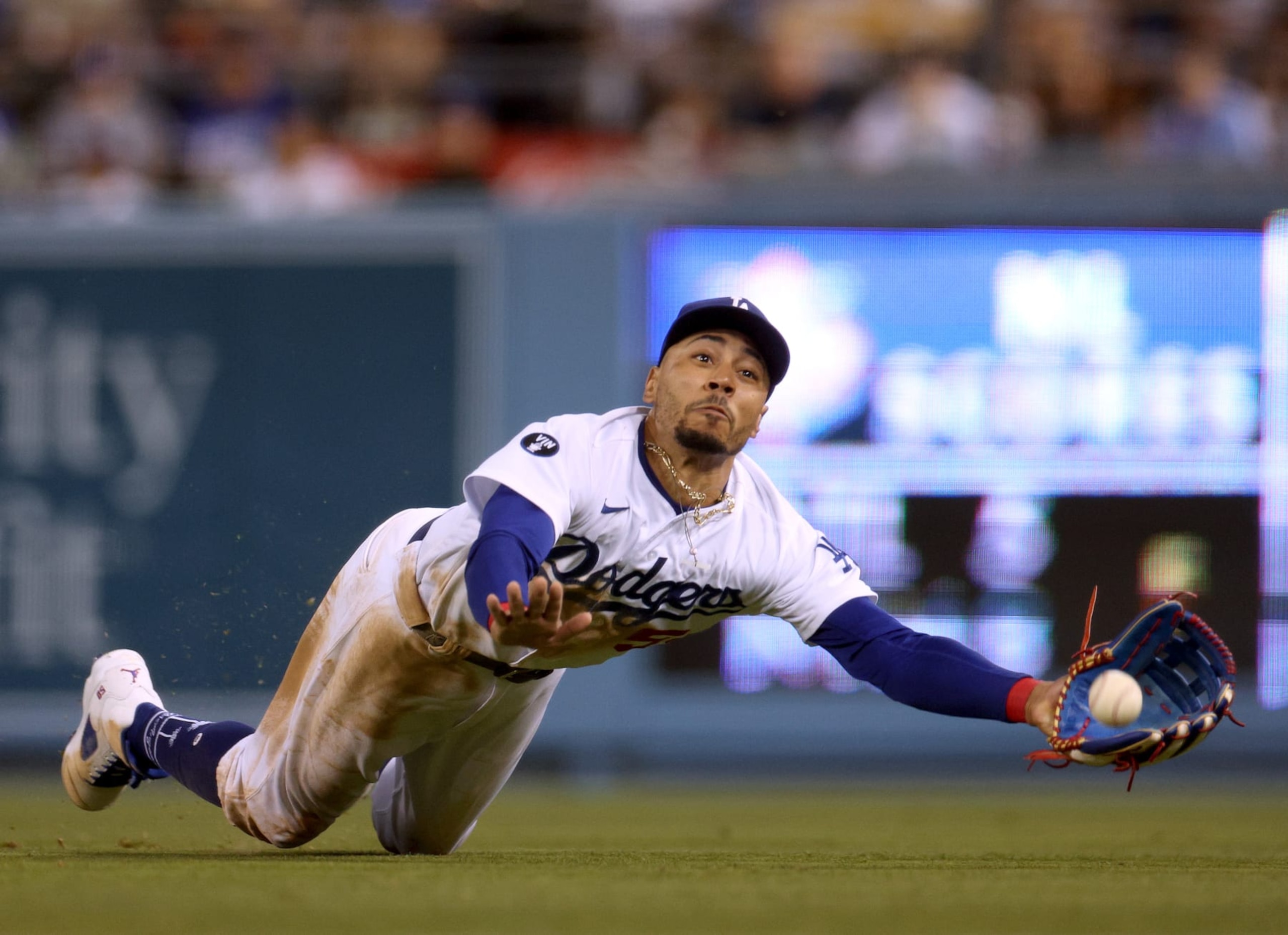
The Finalists
Juan Soto, Washington Nationals/San Diego Padres: minus-2 DRS, minus-2.6 UZR, minus-15 OAA
Daulton Varsho, Arizona Diamondbacks: 14 DRS, 14.8 UZR, 10 OAA
Why is Soto a Gold Glove finalist? Maybe because he played the most innings of any right fielder, but...yeah, that's about the only way we can make it make sense.
Otherwise, Varsho winning here wouldn't actually be much of an upset even though Betts is a five-time Gold Glover in right field. Formerly a catcher, Varsho played the outfield like he was afraid that falling balls would hurt it. To wit, he led the league in five-star catches.
In addition to his reputation, though, it could be to Betts' advantage that he played more than twice as many innings in right field as Varsho. He was also just characteristically good in showcasing his usual blend of range (i.e., 27 three-star catches) and arm strength (i.e., eight assists).
Winner: Mookie Betts, Los Angeles Dodgers
American League Utility
17 of 20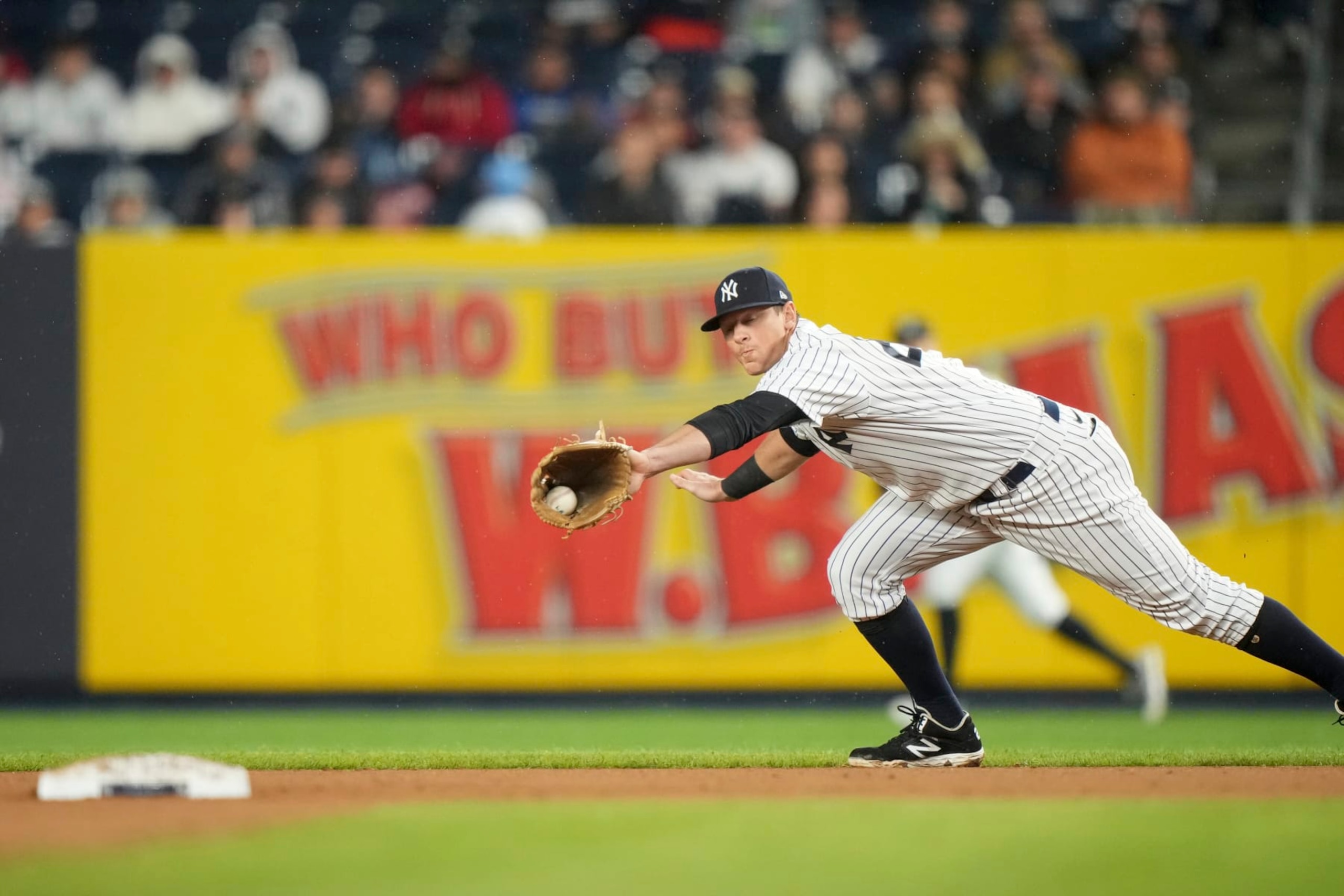
The Finalists
DJ LeMahieu, New York Yankees: 2 DRS, 0.6 UZR, 2 OAA at 1B; minus-1 DRS, 0.1 UZR, 2 OAA at 2B; 8 DRS, 5.3 UZR, 4 OAA at 3B
Whit Merrifield, Kansas City Royals/Toronto Blue Jays: minus-4 DRS, 0.2 UZR, 3 OAA at 2B; minus-2 DRS, minus-0.6 UZR, 1 OAA at CF; minus-1 DRS, minus-0.6 UZR, 1 OAA at RF
Luis Rengifo, Los Angeles Angels: minus-1 DRS, minus-0.3 UZR, minus-3 OAA at 2B; 3 DRS, minus-0.8 UZR, minus-3 OAA at 3B; minus-2 DRS, minus-0.9 UZR, minus-2 OAA at SS
When Rawlings announced that the Gold Gloves would honor utility players for the first time in 2022, chief marketing officer Mike Thompson said it was about recognizing "superior defensive ability to play multiple positions."
We're taking this to mean that the ideal Gold Glove utility player is not just capable of playing multiple positions, but playing them well. With respect to Merrifield and Rengifo, it's LeMahieu who really makes the grade in this regard.
He was generally a positive presence wherever the Yankees put him, but especially at first base and third base. Which is impressive, considering that he first cut his teeth as a Gold Glove-caliber defender at second base.
Winner: DJ LeMahieu, New York Yankees
National League Utility
18 of 20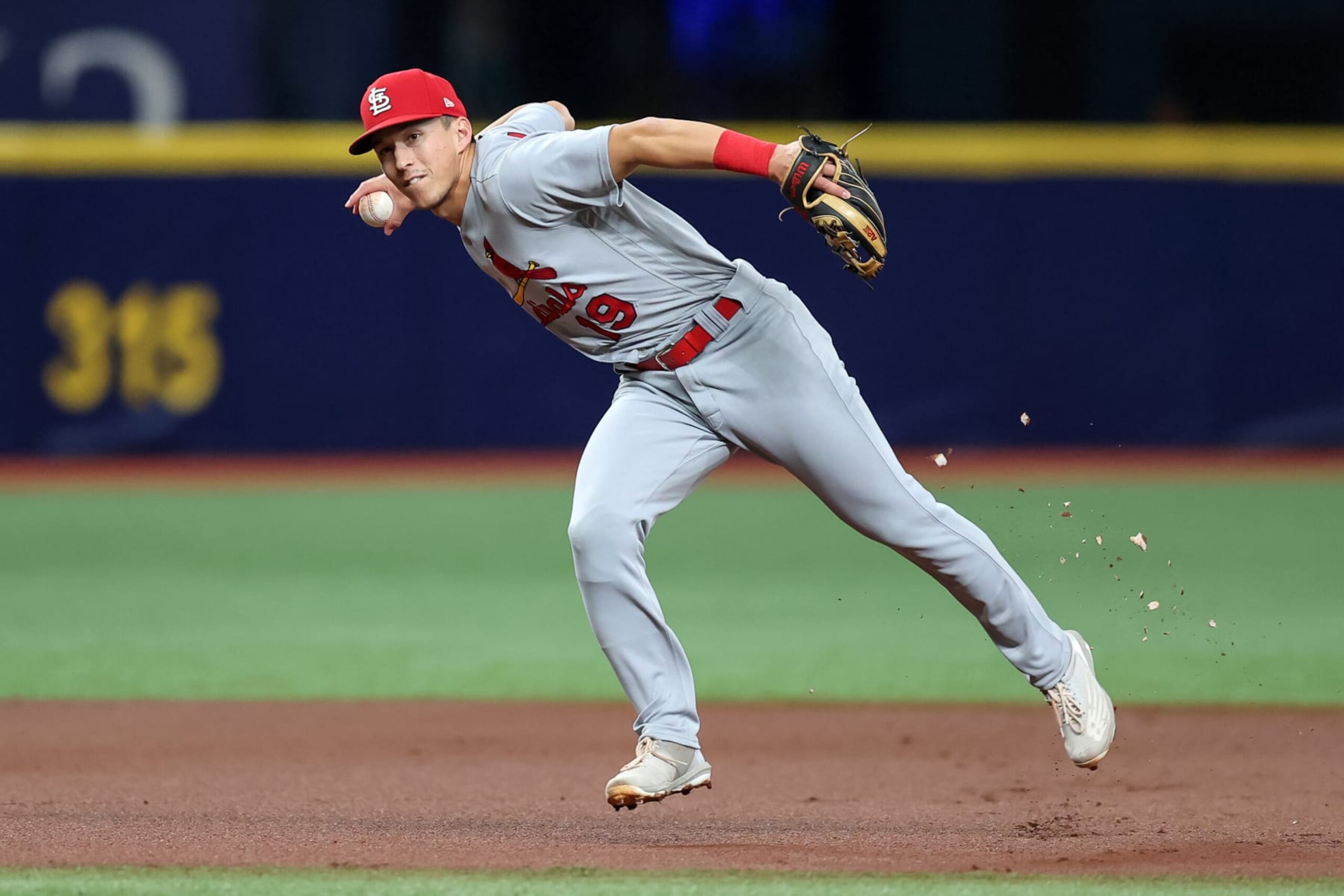
The Finalists
Brendan Donovan, St. Louis Cardinals: minus-1 DRS, 1.2 UZR, minus-1 OAA at 2B; 8 DRS, 3.8 UZR, 3 OAA at 3B; 2 DRS, minus-0.1 UZR, 0 OAA at LF; 1 DRS, 0.5 UZR, minus-4 OAA at RF
Tommy Edman, St. Louis Cardinals: 12 DRS, 3.2 UZR, 7 OAA at 2B; 7 DRS, 5.8 UZR, 11 OAA at SS
Daulton Varsho, Arizona Diamondbacks: 14 DRS, 14.8 UZR, 10 OAA at RF; 5 DRS, 4.0 UZR, 8 OAA at CF
If it's a question of which of these three utility men was the most versatile in 2022, then Donovan would be the best choice for the Gold Glove. Though he mostly played second base, third base, left field and right field, he also moonlighted at first base and shortstop.
But since we're assuming that this is a matter of quality over quantity, the choice is really between Edman and Varsho. This is a "no wrong choice" scenario based on their metrics, though we're inclined to side with Edman's 19-to-17 advantage for outs above average.
To split time at second base (614.2 innings) and shortstop (622 innings) yet play both positions like a Gold Glover is no easy feat, yet that's precisely what Edman did in 2022. Heck, the guy might be the best pure infielder in baseball today.
Winner: Tommy Edman, St. Louis Cardinals
American League Pitcher
19 of 20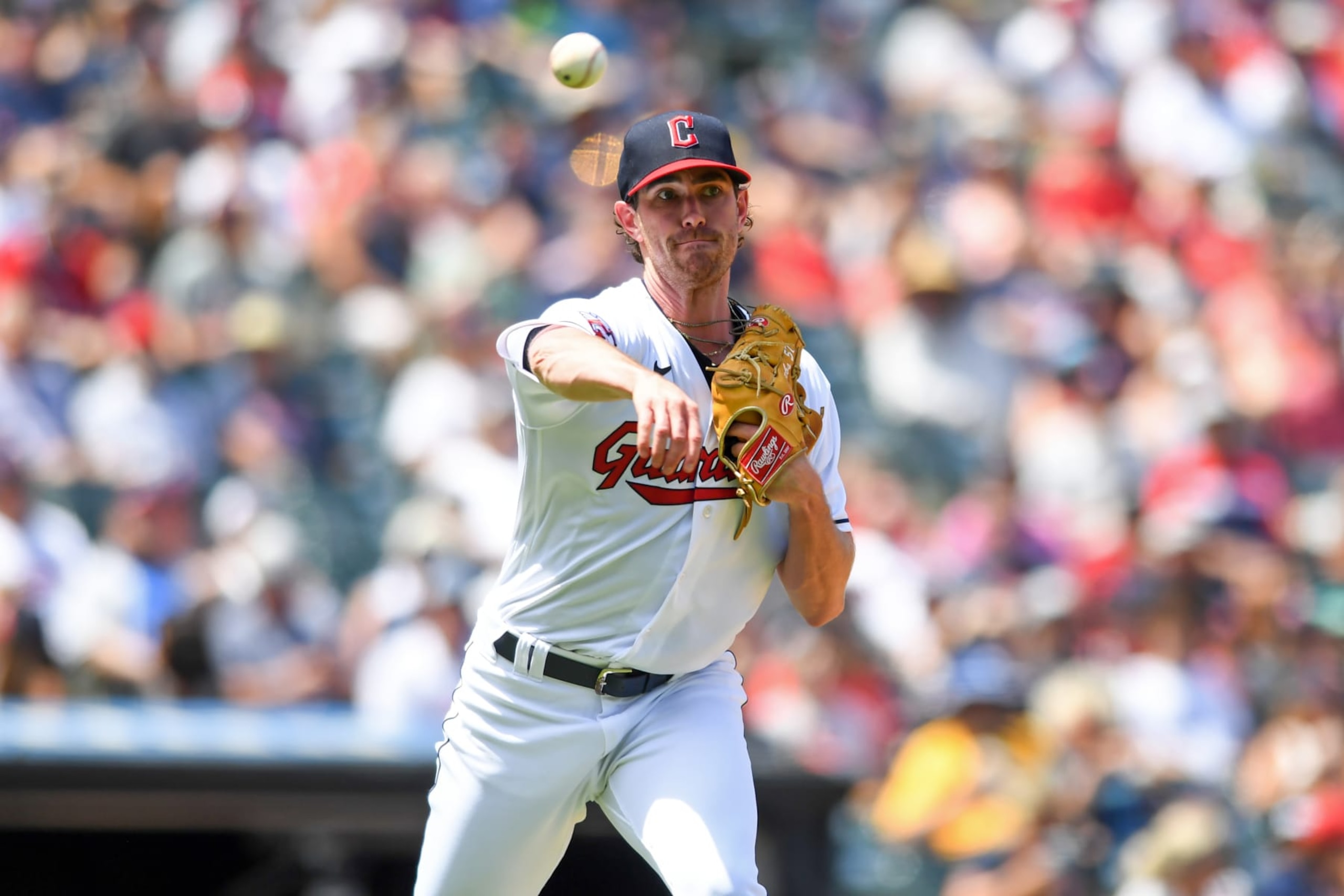
The Finalists
José Berríos, Toronto Blue Jays: 1 DRS
Shane Bieber, Cleveland Guardians: 3 DRS
Jameson Taillon, New York Yankees: 2 DRS
Pitchers don't get to have an ultimate zone rating or an outs above average, so defensive runs saved is indeed it as far as metrics with which to judge their defense.
To this end, the gold standard of recent years was established by Dallas Keuchel. He's responsible for the only three instances of a pitcher racking up double-digit DRS in the last decade, including as recently as 2021.
None of this year's finalists for the award in the American League came close to meeting this standard, but it looks good on Bieber that he bested Berríos and Taillon not just in DRS, but also with 31 outs made on defense by way of his 15 putouts and 16 assists.
Winner: Shane Bieber, Cleveland Guardians
National League Pitcher
20 of 20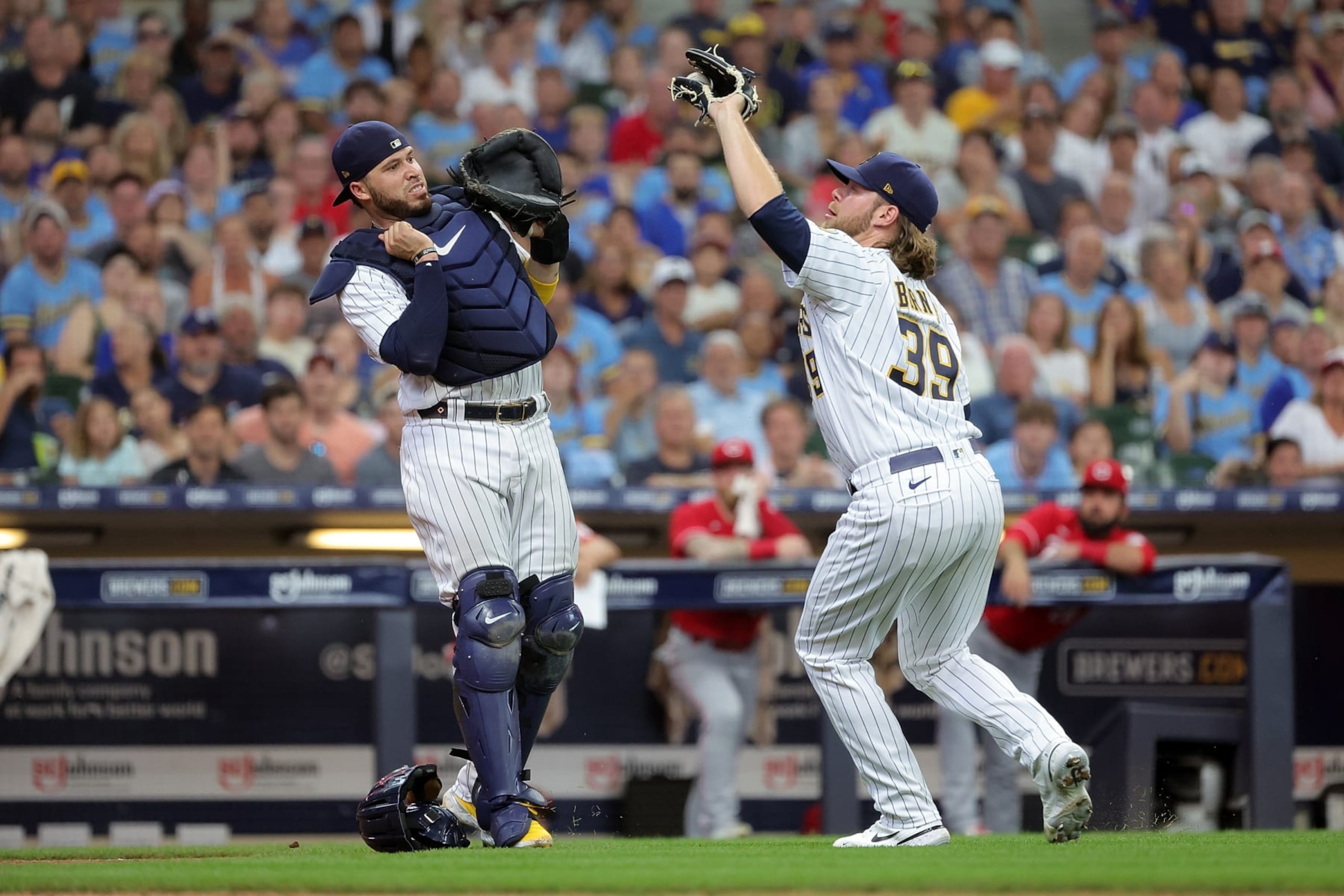
The Finalists
Tyler Anderson, Los Angeles Dodgers: 5 DRS
Corbin Burnes, Milwaukee Brewers: 4 DRS
Max Fried, Atlanta: 3 DRS
It's a shame that Philadelphia Phillies left-hander Ranger Suárez didn't make the cut as a Gold Glove finalist. Despite handling only 155.1 innings in the regular season, he still comfortably led his fellow hurlers with nine DRS.
Among the three pitchers who did make the cut, Fried may have an edge by way of his reputation as a two-time Gold Glover. He also made a ton of assists, racking up 26th to finish fifth in the league.
Yet between his 32 putouts and 17 assists, Burnes was directly responsible for 49 total outs in the field. That was the most of any hurler, so nobody should be thinking that the 2021 NL Cy Young Award winner's latest dominance was strictly related to his 243 strikeouts.
Winner: Corbin Burnes, Milwaukee Brewers
Stats courtesy of FanGraphs and Baseball Savant.

.jpg?w=2560 "Injury-stricken Seahawks signing veteran RB")
.jpg?w=2560 "2 NFL Officials Suspended")


.jpg?w=2560 "Mahomes' Wife Trolls Kubiak 💀")

.jpg?w=2560 "Viral Rams Coach Vid 🖕")