
Wimbledon 2011: The Top 25 Matches of the Last 25 Years
Since Boris Becker bounded onto Centre Court in 1985 and Venus Williams raised the "Rosewater Dish" for the first time in 2000, it goes without saying that the past 25 years have produced some outstanding matches on the grounds of the All England Club.
Of course, not all of the best matches are finals. Some intense wars are waged on court prior to the last match of the tournament. In fact, many finals pale in comparison to the action that preceded them.
Getting to the final is often the culminating triumph for many players.
For the true champion, man or woman, however, winning the Wimbledon championship is the highest achievement of the season.
Wimbledon is the oldest and most prestigious of the Grand Slams. The first tournament was held in 1877 in the London suburb of Wimbledon. Unlike any of the other major tournaments, the All England Club has retained its traditional grass courts.
It takes special skills to be successful on grass. First and foremost it takes a big serve, as well as quick hands and deft touch at the net. Low and erratic bounces are the norm.
Serve and volley was once the most successful style of play for players like Boris Becker, Stefan Edberg, Martina Navratilova and Pete Sampras. But aided by technological advancements, baseline tennis now rules the day.
Regardless of the playing style, the customs, the attire or the weather, Wimbledon gets underway this week with more unforgettable matches yet to be played.
Tomorrow's masterpieces will soon be added to these 25 matches that thrilled us in the past.
25. Martina Hingis Defeated Jana Novotna (1997)
1 of 25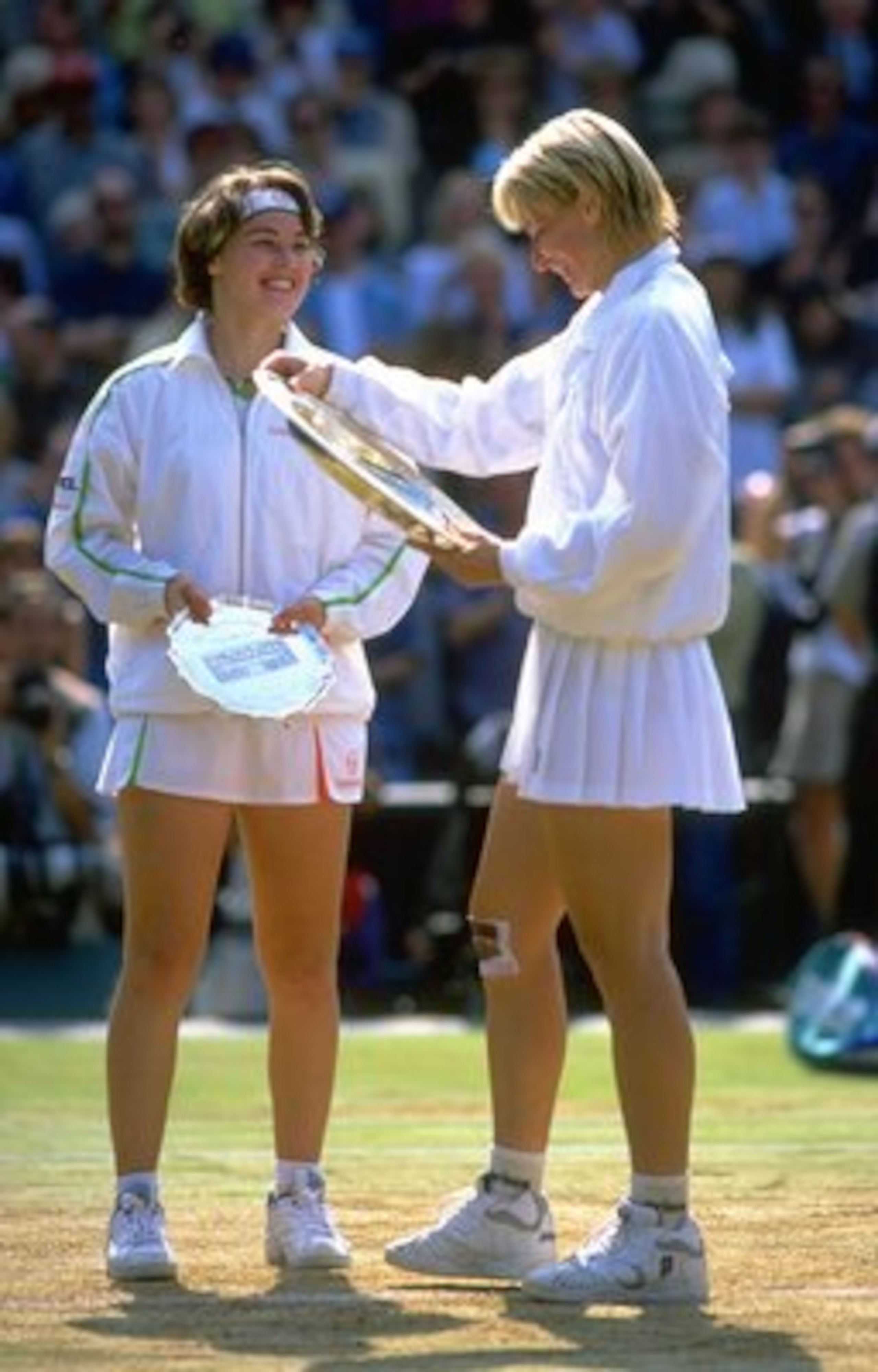
1997 Wimbledon Women's Final: Hingis, 2-6, 6-3, 6-3
The fact is that you either loved Martina Hingis and her often arrogant dominance as a teenaged one-woman wrecking crew on the women’s tour, or you regretted her lack of grace, feeling or appreciation for the game she seemed to win so easily.
In 1997 the 16-year-old won the Wimbledon trophy, becoming the youngest champion ever. Hingis managed the win without the seven-time champion Steffi Graf in the field.
The woman Hingis faced in the final was almost twice her age. Jana Novotna's resume included that awful defeat in 1993 when the Czech suffered a meltdown on the verge of winning the championship as she faced German Steffi Graf in the final.
The image captured of Novotna's collapse on the shoulder of the Duchess of Kent remains forever implanted in the collective memory of unforgettable Wimbledon moments.
In 1997, although the Czech won the first set, the Swiss Miss came back to win the match in three sets, once again denying Novotna her chance to win the Wimbledon trophy. This time, however, there were no tears shed by anyone as Hingis smiled, celebrating her victory.
Novotna played all-out risky tennis in an attempt to win the match. Her strategy worked for the first set; but then Hingis clamped down. By moving more freely and with greater finesse Hingis began the slow task of taking the Czech’s game apart.
It would be Hingis’ only win at Wimbledon.
24. Stefan Edberg Defeated Miloslav Mecir (1988)
2 of 25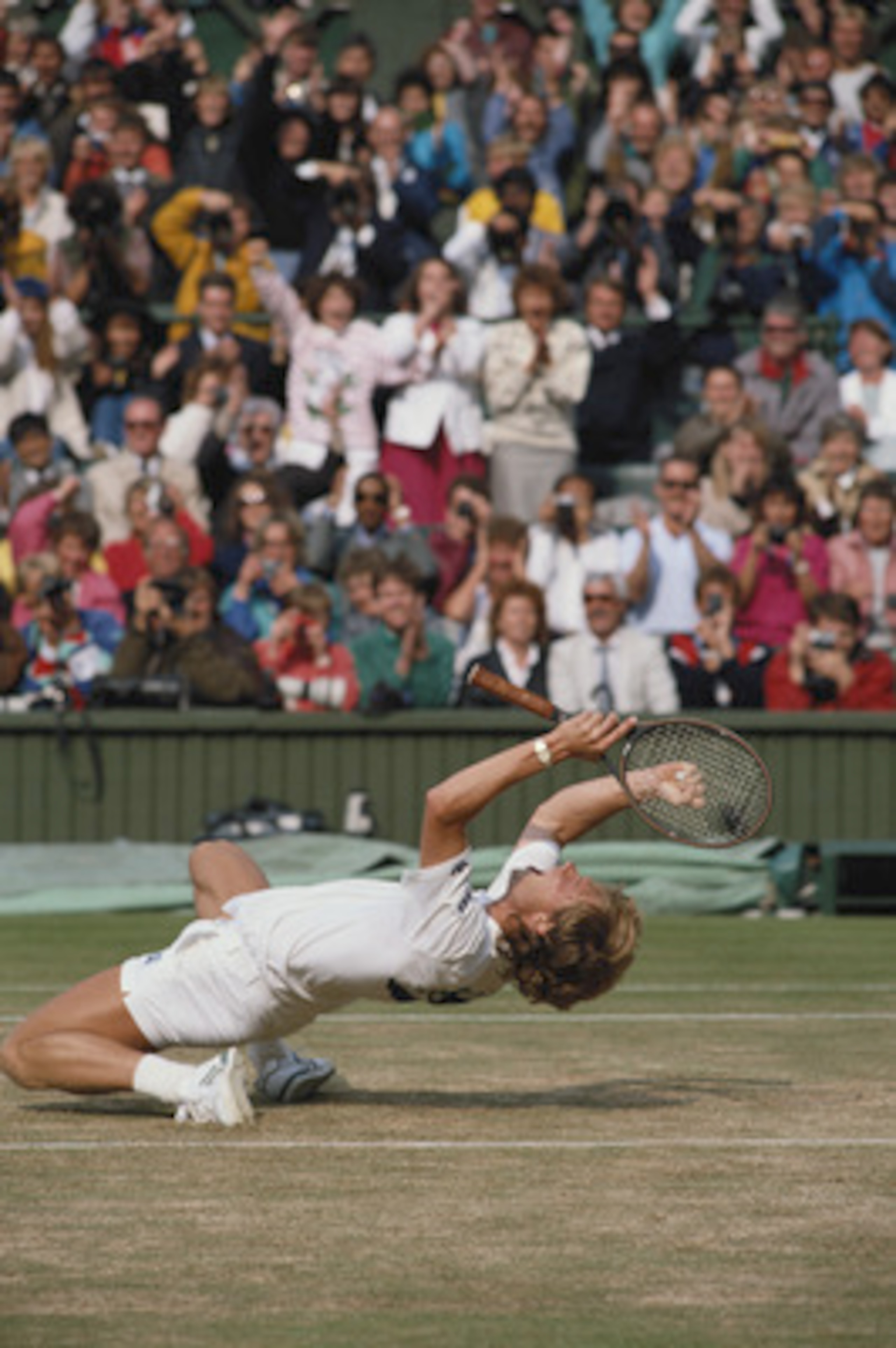
1988 Wimbledon Men's Semifinal: Edberg, 4-6, 2-6, 6-4, 6-3, 6-4
It was an epic Wimbledon semifinal match performed on tennis’ grandest stage in 1988.
Down two sets to love, Stefan Edberg came back against the man nicknamed the “Swede Killer” by many of the players hailing from Sweden.
Miloslav Mecir from Czechoslovakia made a habit of defeating Sweden's finest during big moments.
In fact, no tennis professional wanted to see the “Big Cat” on the opposite side of the net. The one knock against Mecir, however, was his tendency to "disappear" in the late stages of major tournaments.
Winning that semifinal match put a man from Sweden back in the men’s final for the first time in seven years. It took considerable fortitude from Edberg to come back from a deficit so deep.
Mecir, who had not played for two months because of a bad back, was in rare form for the first two sets. It looked like Edberg, who had been defeated during three previous trips to Grand Slam semifinals was going to succumb in his fourth.
During the match, Mecir blasted back the Edberg serve for 31 outright winners.
In fact the Czech won more points in the match than Edberg; but, the Swede managed to win the big points, as Mecir failed to capitalize on numerous break-point opportunities in the final three sets.
By letting Edberg off the hook, the Swede came back to win the match.
Edberg would go on to defeat Boris Becker in the final, winning his first championship in 1988.
23. Amelie Mauresmo Defeated Justine Henin-Hardenne (2006)
3 of 25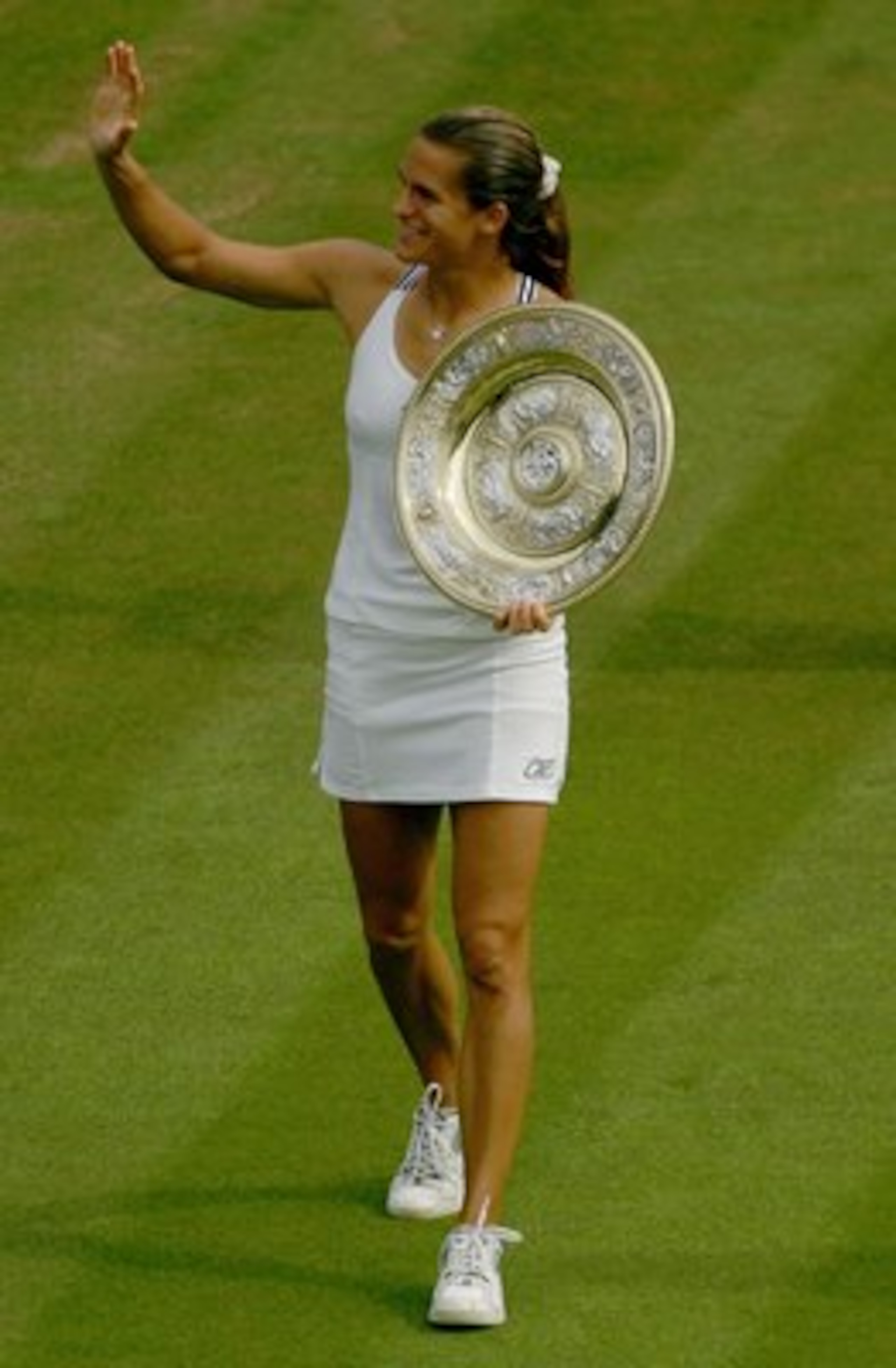
2006 Wimbledon Women's Final: Mauresmo, 2-6, 6-3, 6-4
There was definitely some history in this matchup between Frenchwoman Amelie Mauresmo and Belgian Justine Henin-Hardenne as they took the court to do battle in the women's final at the All England Club in 2006.
The two had met in the finals of the Australian Open earlier in 2006. Henin-Hardenne retired abruptly in the second set complaining of a stomach ailment brought on by taking too many anti-inflammatory drugs to combat the pain of a shoulder injury.
The Mauresmo camp, as well as the thousands of fans assembled, felt cheated by the retirement. Although the Frenchwoman won the Australian Open, it remained a tainted win in the minds of many because of the incomplete match, allowing no chance to celebrate a true victory.
Therefore, when they met in the Wimbledon finals in 2006, Mauresmo had plenty to prove.
Throughout her career, the talented lady from France had the reputation of choking in the big moments, afraid to win the big matches.
After winning the Wimbledon championship in 2006 over a top-ranked opponent, Mauresmo would no longer accept that label.
The Frenchwoman compensated for her supposed shortcomings in the women's final by winning a critical point using her serve-and-volley prowess. When Henin-Hardenne dumped an easy forehand into the net, Mauresmo won a well-earned 2-6, 6-3, 6-4 victory.
Henin-Hardenne would never win a Wimbledon title.

22. Michael Stich Wins the Tournament (1991)
4 of 25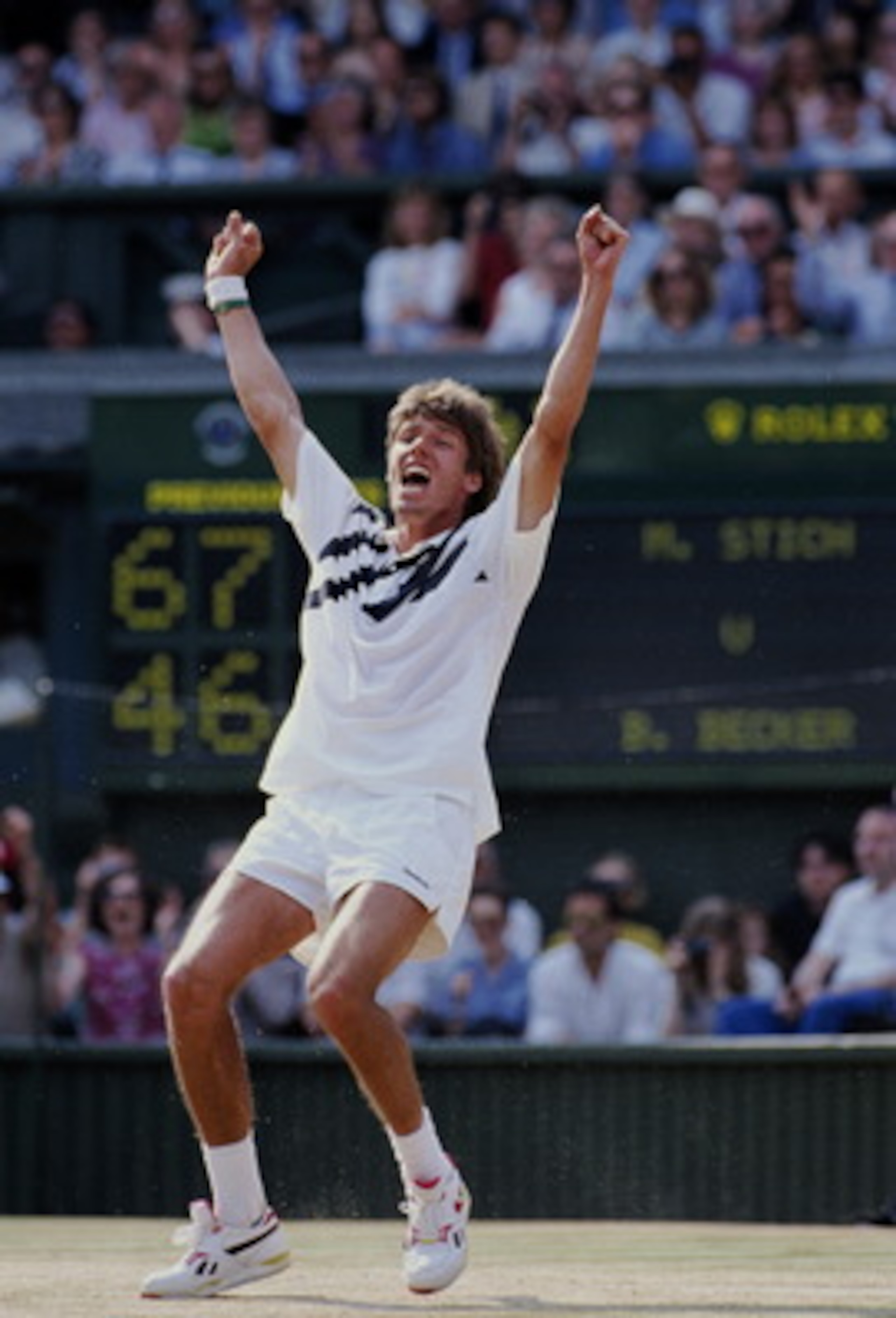
1991 Wimbledon Men's Semifinal and Final, Stich
In 1991, in a gigantic upset, Michael Stich defeated Stefan Edberg, the reigning World No. 1, in the semifinals to reach the finals of Wimbledon where he dispatched his more famous countryman Boris Becker 6-4, 7-6, 6-4 to win the trophy for himself.
It was the only time Stich won a slam final, although he also reached the finals of the U.S. Open in 1994 and the French Open in 1996.
In 1996, having advanced from World No. 42 to World No. 6, with an ever-improving game, Stich found himself in the semifinals facing the No. 1 ranked player in the world, Stefan Edberg.
Even though Stich never broke the Swede’s serve, the German defeated Edberg in the semifinals in three straight tiebreaks after dropping the opening set 4-6, 7-6, 7-6, 7-6.
It was a claustrophobic match with little room for error. Neither player had much maneuvering room. Stich remarkably held his nerve and concentrated on staying in each point. With both players employing serve and volley, it became difficult at times to distinguish between the two, watching from the stands.
Edberg not only lost the match, he lost his No. 1 ranking which bounced back to Becker.
Instead of taking the opportunity and running with it, Becker floundered in his match with Stich, losing in straight sets. The new World No. 1 could do nothing to stop his younger countryman from winning the Wimbledon trophy in the finals.
Stich never flew so high again, but at least he got to experience it once.
21. Maria Sharapova Defeated Serena Williams (2004)
5 of 25
2004 Wimbledon Women's Final, Sharapova, 6-1, 6-4
It was a revelation on Centre Court as the Russian Maria Sharapova won her first title over the more experienced American Serena Williams.
Teenager Sharapova played the entire match without hesitation and without fear, her aggression in full force. Not only that, the Russian did not cave in to anxiety even when she fell behind in the second set.
For a short time, it appeared that Williams might make a comeback. That possibility, however, did not last long. Sharapova had her game plan well in mind and she did not deviate from the task at hand. She was determined to win the trophy.
In doing so, Sharapova handed Serena Williams one of her worst defeats ever in a slam final.
No one expected such a match from the 17-year old. The crowds watched in fascination as Sharapova took Williams' game apart, leaving the American defending champion talking to herself.
This win marked the first time that neither Williams sister was not the defending champion since 1999.
It was a huge upset that unfolded on Centre Court during the women's final in 2004.
20. Pete Sampras Defeated Patrick Rafter (2000)
6 of 25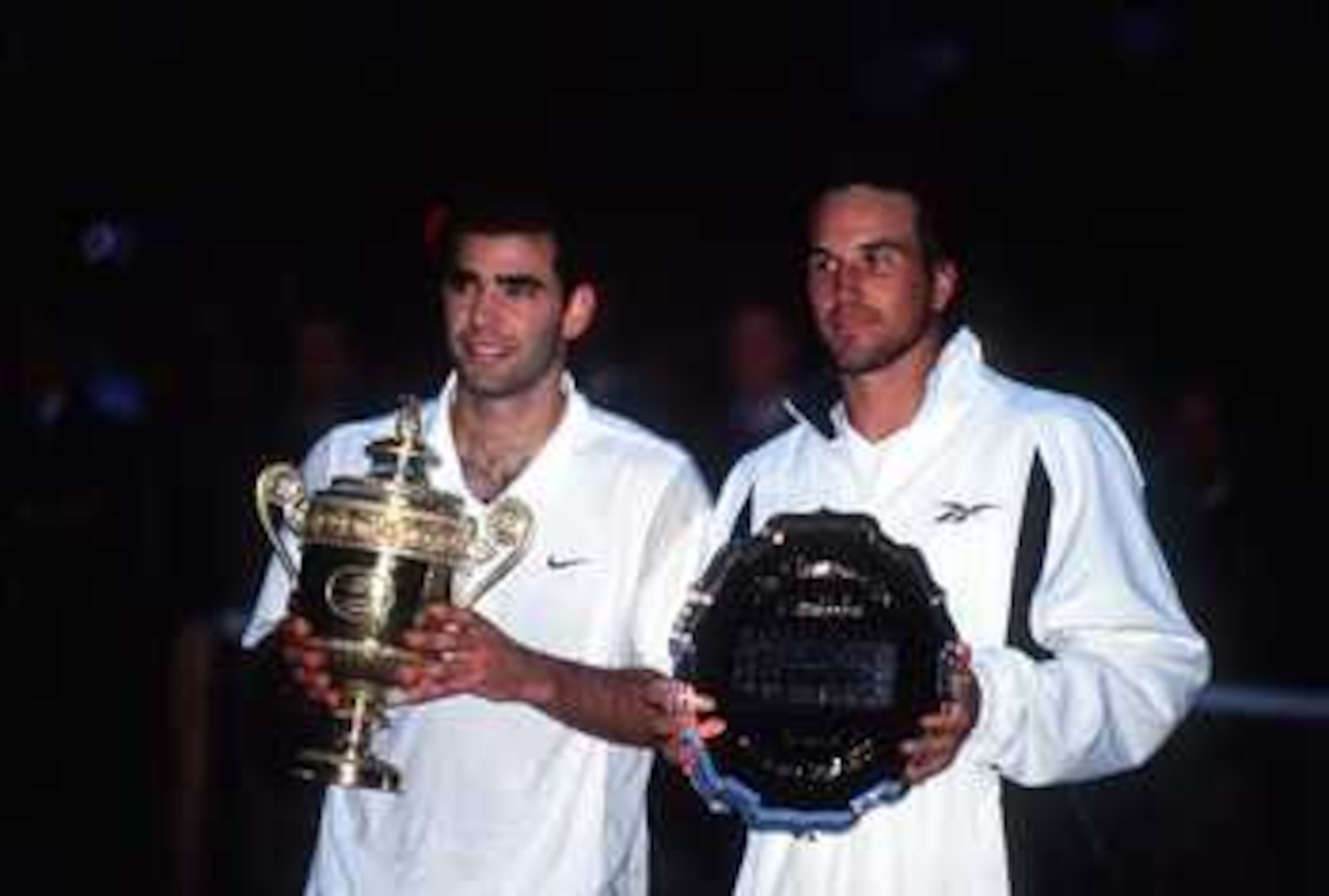
2000 Wimbledon Men's Final: Sampras, 6-7, 7-6, 6-4, 6-2
There was something close to desperation in Sampras’ win at Wimbledon in 2000.
As Sampras captured his 13th Grand Slam, winning his seventh Wimbledon title over Aussie Patrick Rafter, he seemed more anxious than ever.
The normally serene-looking American served 27 aces and rifled 13 passing shots by Rafter as the Aussie hugged the net. Sampras took the championship in four sets 6-7, 7-6, 6-4, 6-2 after rain delayed the start of the match.
With his parents in attendance for the first time, Sampras climbed up to give them a hug. It would be the last time Sampras made the finals—the last Wimbledon trophy he would kiss on the last Sunday of the tournament.
Sampras equaled the record of William Renshaw by winning his seventh Wimbledon title, and by winning Slam No. 13 the American finally passed Australian Roy Emerson, whose 12-Slam total was the record that stood for many years.
The win gave Sampras 28 straight matches won at the All England Club and a career record at The Championships, Wimbledon of 53-1 beginning in 1993.
The American would never win another title at Wimbledon.
19. Venus Williams Defeated Serena Williams (2008)
7 of 25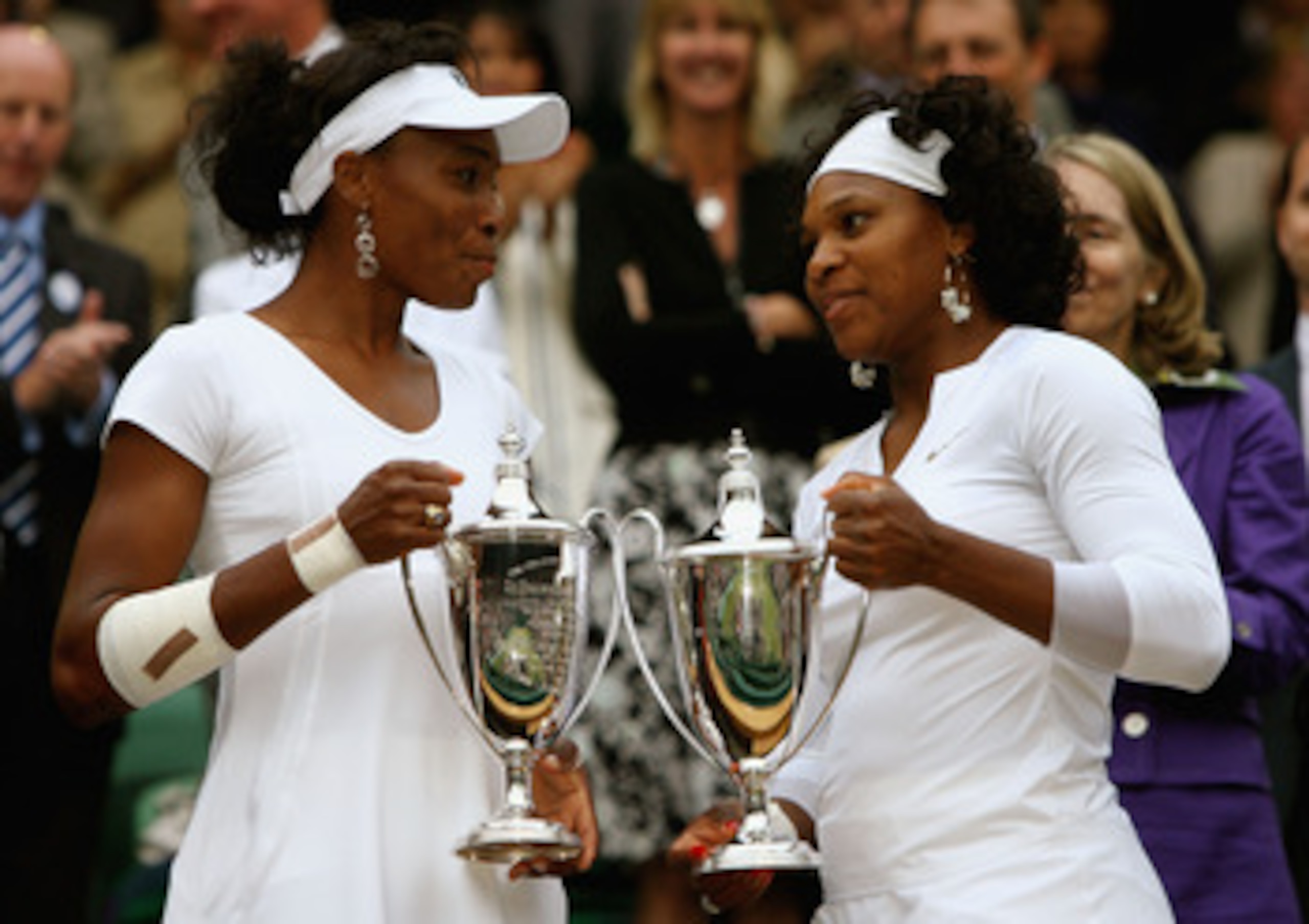
2008 Wimbledon Women's Final: Venus Williams, 7-5, 6-4
On the surface there was nothing special about this matchup between the Williams sisters in the 2008 Wimbledon final, because they certainly had been there may times before in their careers.
Venus Williams defeated her younger sister Serena in straight sets to retain her Wimbledon tennis title, winning her seventh Grand Slam championship as well as her fifth Wimbledon crown.
Venus, then 28, overcame Serena 7-5, 6-4, making her the first woman to repeat as champion at the All England Club since Serena accomplished it in 2003.
In winning her fifth trophy, Venus now had one more Wimbledon championship than her sister.
What is more, the 2008 final marked the first Grand Slam final between the sisters in five years, the seventh overall. Serena Williams had won their past five finals since losing the first at the U.S. Open in 2001.
The 2008 match was the third Wimbledon final between the two, with Serena having won in 2002 and 2003. Venus evened her career record against her sister at 8-8.
For all the world it seemed that Venus never really stood up for herself against her more aggressive sister Serena.
In this match, fighting the wind and her sister's steady assault, the elder Williams sister held on to win.
The win could be, perhaps, Venus William's final trophy at the All England Club.
18. Roger Federer Defeated Mark Philippoussis (2003)
8 of 25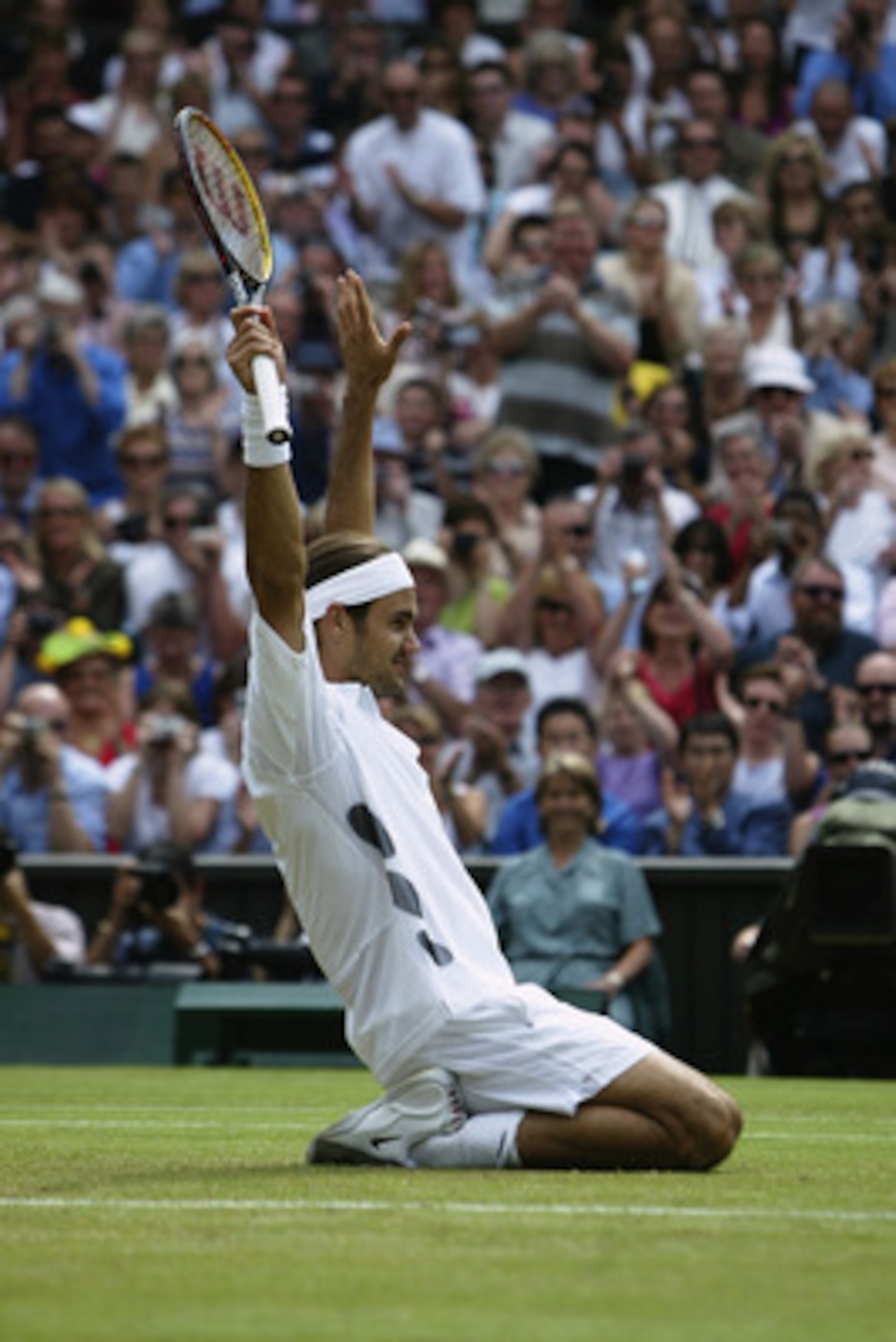
2003 Wimbledon Men's Final: Federer, 7-6, 6-2, 7-6
Roger Federer has played in 12 Wimbledon championships so far, winning six of the seven finals in which he has appeared.
Federer won his first Grand Slam trophy on the grounds of the All England Club, July 6, 2003.
It brought an end to the constant barrage from the press wondering when the talented Swiss would finally win a major.
His opponent on that day was Aussie Mark Philippoussis whom Federer dispatched 7-6, 6-2, 7-6. The monkey was finally off Federer’s back and there would be no stopping the Swiss from this point forward.
Throughout the match, Federer's face remained expressionless, with no show of emotion. The Swiss concentrated, playing one point at a time, never, seemingly, giving into emotion or displaying nervous energy.
What is more, Federer miraculously managed to return the Philippoussis serve, handling the pace and keeping the ball in play. The big-serving Aussie was powerless to break the Federer serve. The Swiss never faced a break point.
What is more, Federer served up more aces than Philippoussis––21 to 14.
It was all over in less than two hours. When the dust settled, Federer had arrived, securing his place on Centre Court for years to come.
17. Steffi Graf Defeated Gabriella Sabatini (1991)
9 of 25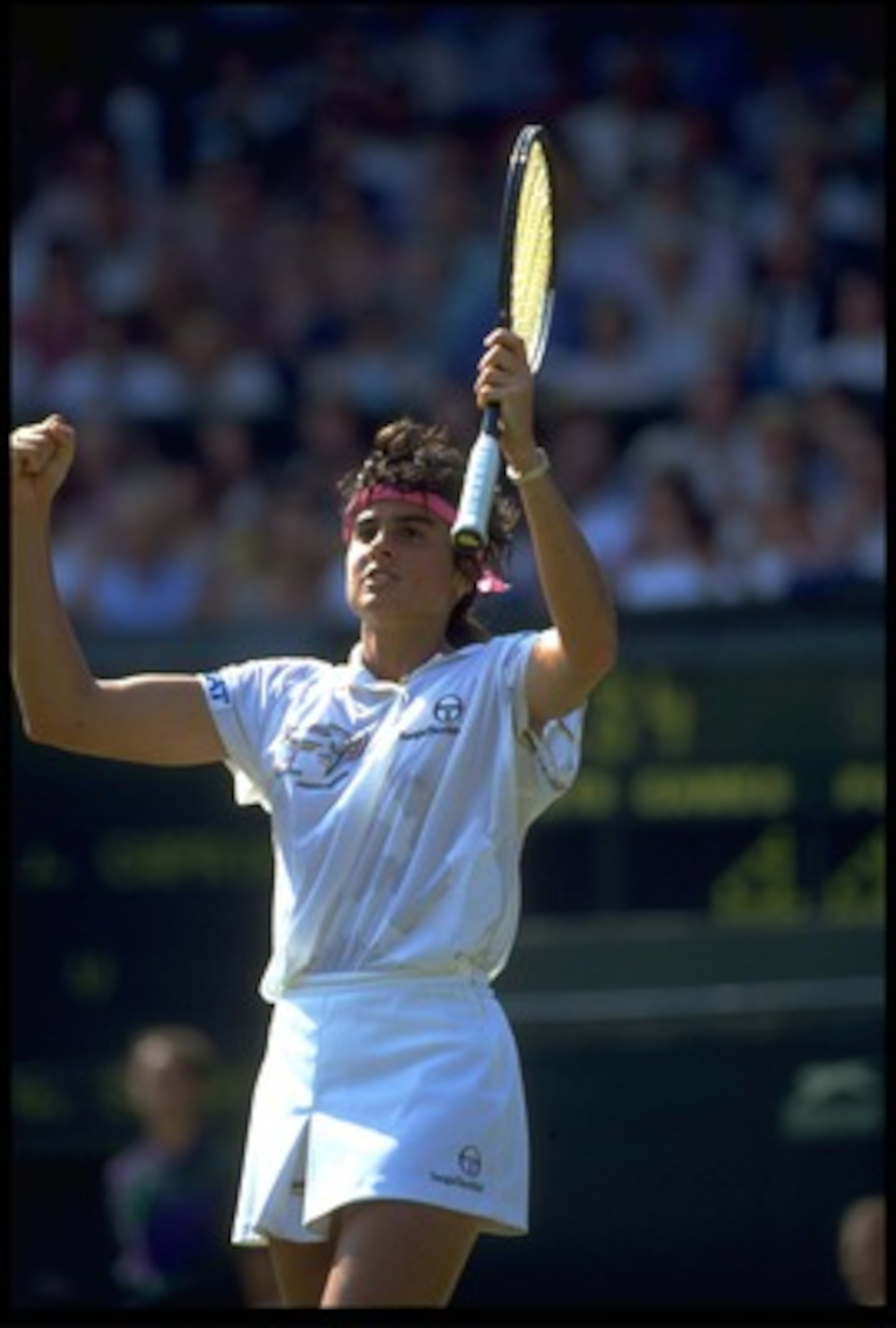
1991 Wimbledon Women's Final: Graf, 6-4, 3-6, 8-6
Rumors rattled inside the tour that Steffi Graf was losing her edge, that she was more vulnerable now than ever before.
The German's superlative game seemed to ebb and flow in 1991, as the 22-year-old scrambled to deal with issues on and off the court.
Graf was the No. 1 seed at Wimbledon, although she was not the No. 1 player in the world. That spot belonged to Monica Seles who had withdrawn from Wimbledon in 1991 due to injuries.
Gabriella Sabatini, in case you never saw her, was one of most beautiful women ever to play the game. She also was a first-rate tennis player and she had made her way into the Wimbledon finals to face Graf.
Sabatini had never won at Wimbledon. She never would; but she came very close on this afternoon on Centre Court at the All England Club.
Graf bolted out of the blocks, taking the first set 6-4. She was feeling good about her game; but then doubts set in and the German's groundstrokes seemed to desert her.
Consequently, Sabatini won the second set 6-3.
Sabatini had her chances to win the match, but she let Graf off the hook too many times. You just cannot do that against a player whose caliber of play is as great as the German’s.
When Graf doubled-faulted on her serve to give Sabatini a break and a chance to serve out the set in the 10th game, Sabatini fell victim to the Graf forehand on her own serve, allowing Graf to even the set.
They seesawed back and forth, but as Graf grew more confident and her game grew stronger, Sabatini could not keep pace. Graf won the final set 8-6.
Sabatini would never win Wimbledon. Sometimes you only get one shot.
16. Andre Agassi Defeated Goran Ivanisevic (1992)
10 of 25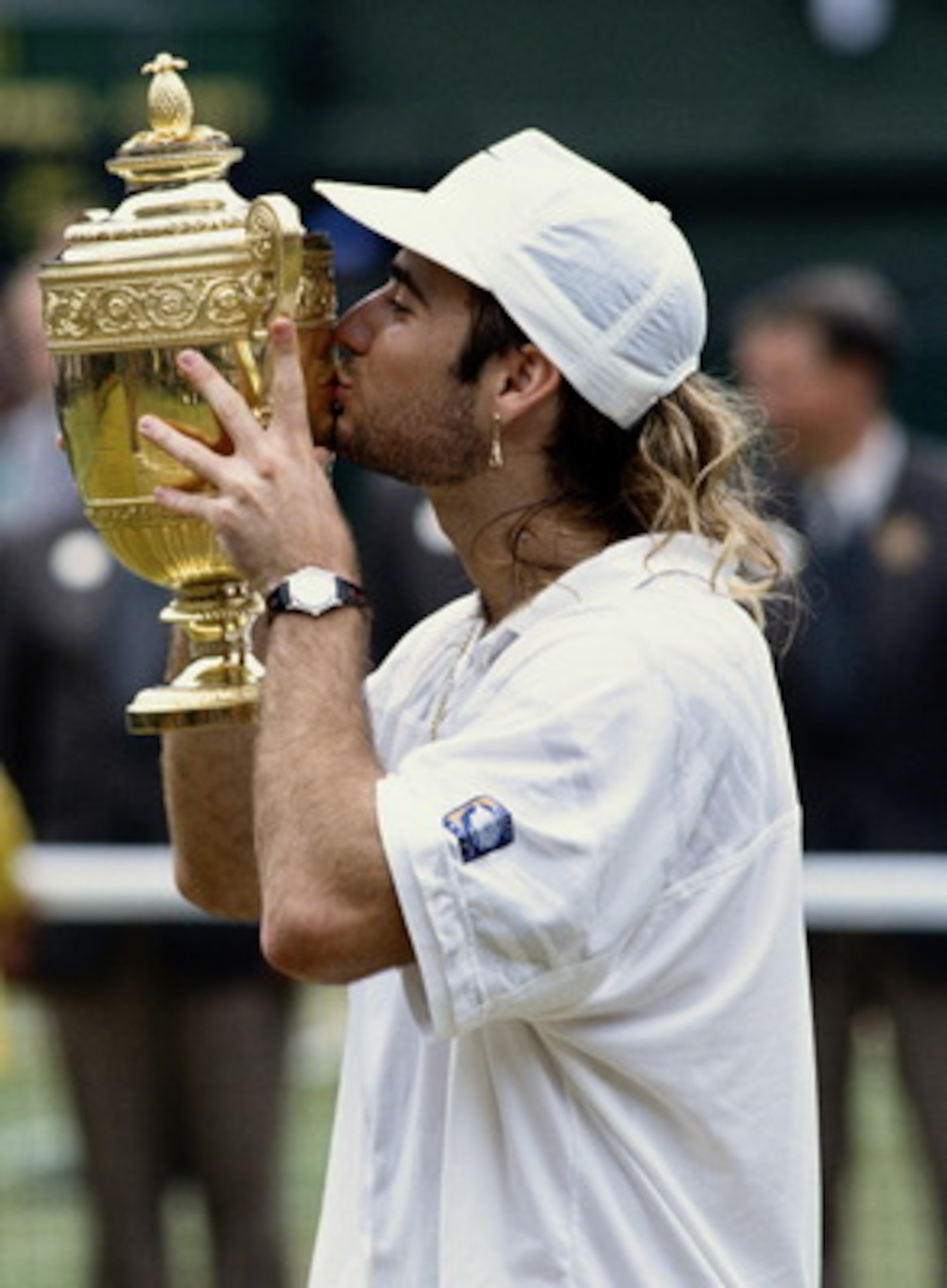
1992 Wimbledon Men's Final: Agassi, 6-7, 6-4, 6-4, 1-6, 6-4
In 1992 Andre Agassi won his first Grand Slam championship at the All England Club.
Unable to contain his emotions, the American accepted the win with tears of joy spilling down his face.
Then, Agassi collapsed face down onto Centre Court at Wimbledon.
The American had just won Wimbledon, his first Grand Slam title after withstanding a five-set onslaught of power serving from the eighth-seeded Goran Ivanisevic in the final.
After appearing in three Grand Slam finals prior to this one in 1992, Agassi finally found victory when it appeared he never would.
Ironically it came on grass––a surface Agassi had avoided since 1988. The flamboyant American said that he did not like the "dress code" restrictions in place at the All England Club.
After spurning the Wimbledon grass until 1992, Agassi showed the tennis playing world that you could win on grass playing primarily from the baseline.
The man from Las Vegas did just that in dispatching Ivanisevic 6-7, 6-4, 6-4, 1-6, 6-4.
On his way to the final, Agassi had defeated Boris Becker and John McEnroe. Ivanisevic had to get by Pete Sampras to earn his spot in the Wimbledon final in 1992.
It was an epic final. During the Wimbledon tournament the 6'4" Croat served 206 aces, setting a Grand Slam record. In his match against Agassi, Ivanisevic managed 37 winners off his serve.
For Agassi, the name of the game was patience. The American knew that Ivanisevic could blast the ball past him if the serve landed in.
Agassi had to wait, taking advantage when his opportunities arose. While the Croat was the best server on court that day, Agassi was the best returner. The American used that ability to win the second and third sets.
With 16 break points in the match, Agassi was able to break the Ivanisevic serve in the first game of sets No. 2 and 3, hanging on to win both.
Ivanisevic played brilliant serve-and-volley tennis to take the fourth set 6-1.
The match came down to the fifth set where the American's patience paid off. When Agassi looked up, he had earned a championship point on the Croat's serve, up 5-4. Ivanisevic was serving to level the match at 5-5.
When the Croat's shot fell into the net, Agassi had won the championship, dismissing his demons.
The Wimbledon title was the first of eight the man from Las Vegas would win in his career, and it was indeed the sweetest.
15. Serena Williams Defeated Venus Williams (2003)
11 of 25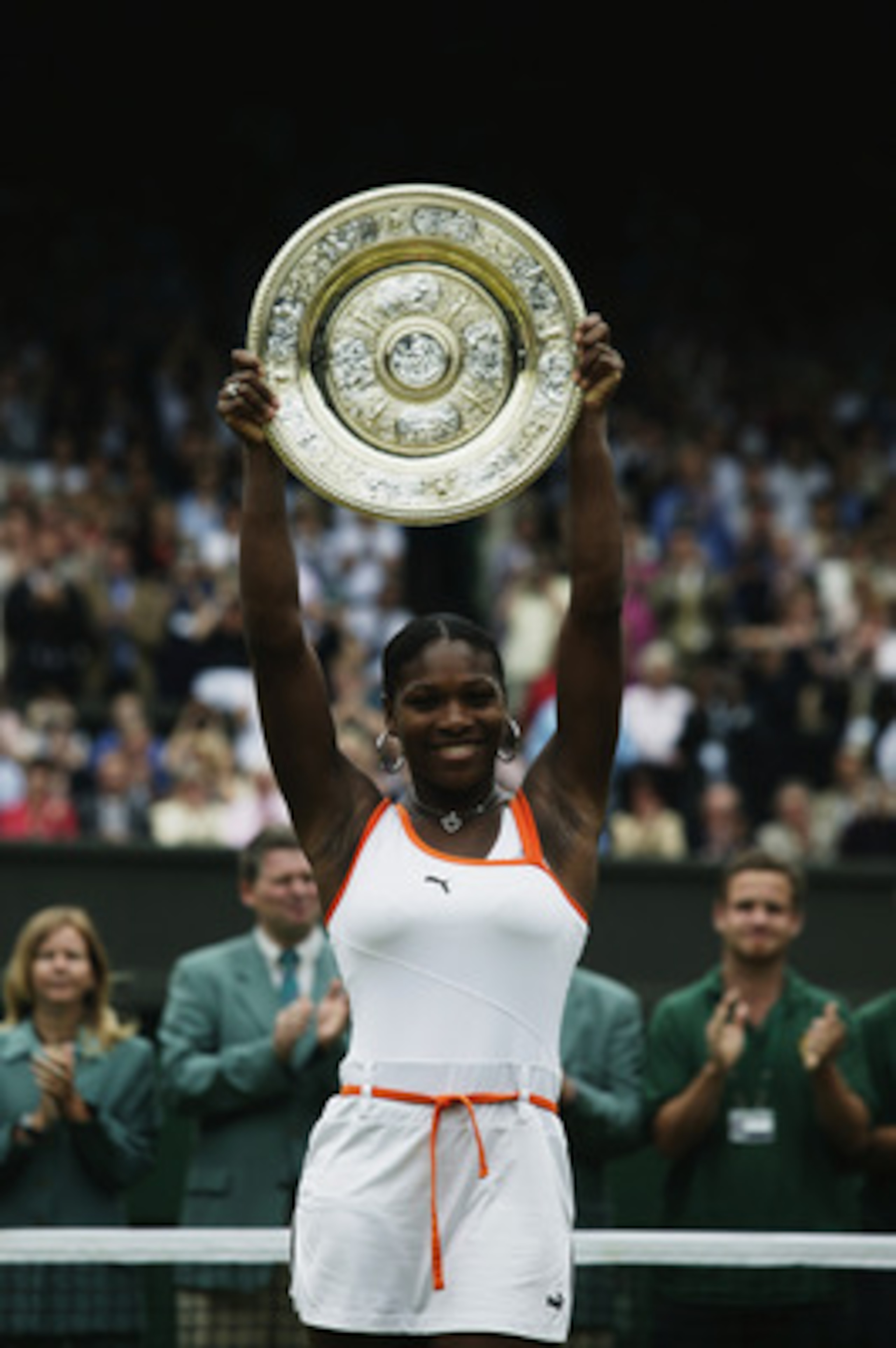
2003 Wimbledon Women's Final: Serena Williams, 4-6, 6-4, 6-2
Serena Williams was the defending champion at the All England Club when she met her sister Venus in the finals, hoping to repeat her victory of a year ago.
What made this final particularly tough was the fact that Venus was playing injured. For the normally single-minded Serena, it was hard to steel her determination to beat down her older sister when she was wounded.
Despite the distraction, Serena managed to focus, outlasting Venus 4-6, 6-4, 6-2 to capture her second straight Wimbledon title.
The drive to succeed at all costs is what gave Serena her edge over the preceding 14 months. The younger Williams sister amassed a 40-1 record at majors as she established herself as the No. 1 player in the world.
Nonetheless, at the end of the match, Venus and Serena met at the net and became sisters again.
Venus had started her fourth straight Wimbledon final with her midsection and upper left leg taped.
Once the third set started with a break of Venus' serve, the elder sister received more wrapping during a timeout. Venus had double-faulted twice and put a forehand in the net to lose her serve, looking simply miserable.
She could not run or stretch out and her reach was severely compromised.
Worst of all, Venus' serve speeds were coming in at around 85 mph, 20 to 30 mph slower than usual. Plus, the pain worsened as she hit each serve, causing Venus to wince visibly.
She was, however, determined to finish the match. After being jeered by fans for withdrawing in a semifinal match against Serena at Indian Wells, Venus decided retiring was not an option.
Venus did finish the match, losing to her sister in this awkward final between the two on Centre Court at Wimbledon in 2003.
14. Pete Sampras Defeated Goran Ivanisevic (1998)
12 of 25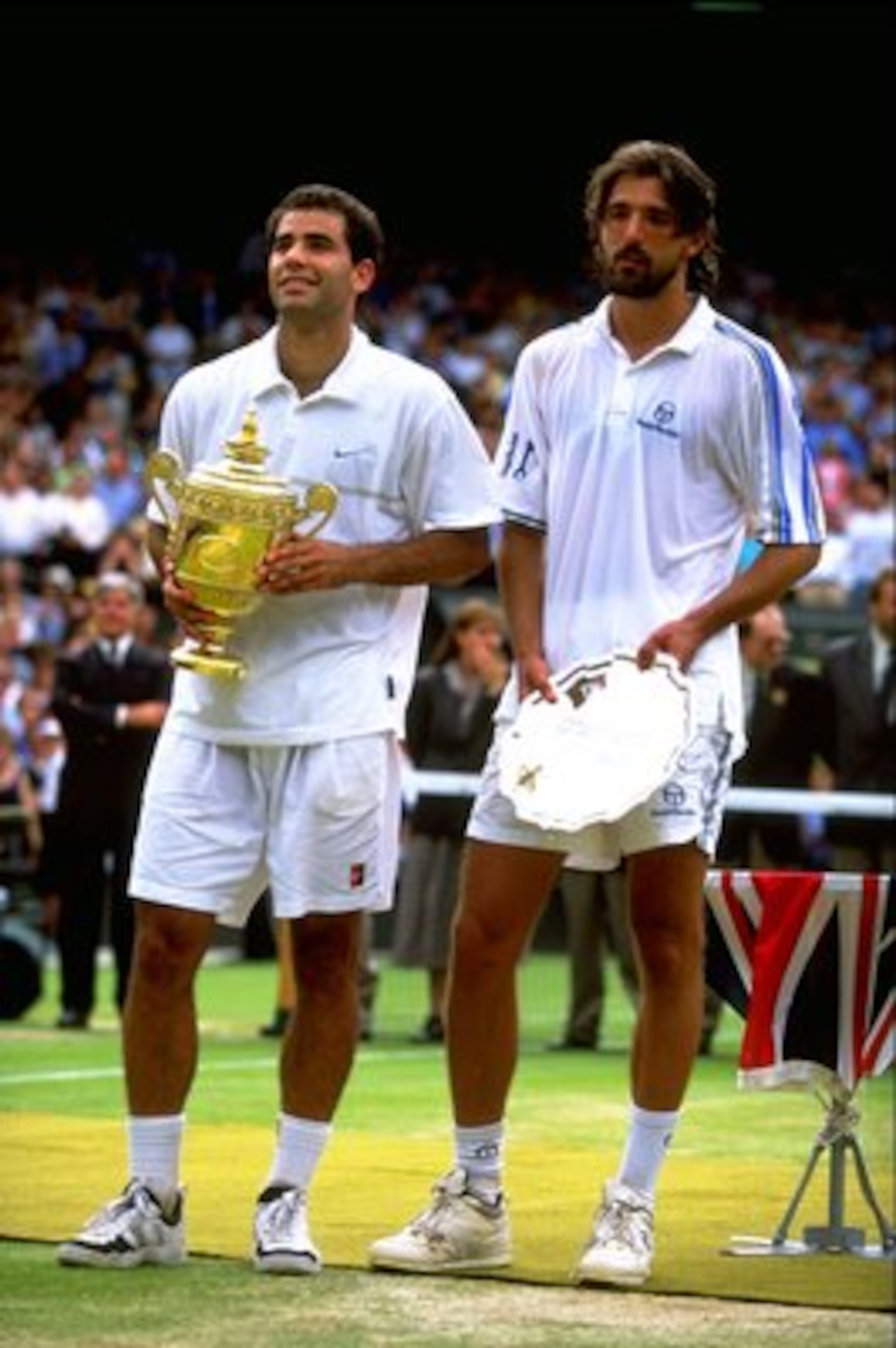
1998 Wimbledon Men's Final: Sampras, 6-7, 7-6, 6-4, 3-6, 6-2
You just had to feel for Goran Ivanisevic battling against Pete Sampras in 1998, as the American won his fifth title in six years on the storied grounds of Centre Court at the All England Club.
The Croat made a real contest out of the match but Sampras won 6-7, 7-6, 6-4, 3-6, 6-2. It was Ivanisevic’s third try to win the title.
Sampras tied Bjorn Borg with five Wimbledon titles while at the same time collecting career Slam No. 11, leaving the American one short of equaling Roy Emerson’s record-setting 12 Slam titles.
The Wimbledon championship once again seemed to revive Sampras in enthusiasm and spirit. By winning this title in 1998, Sampras won his first Slam title since his win at the All England Club a year ago.
Since that victory, Sampras had not advanced beyond the quarterfinals of any other Slam.
Ivanisevic had his chances to win but was hampered by an extended semifinal against the 1996 Wimbledon champion Richard Krajicek, finally winning 15-13 in the fifth set. By the time Ivanisevic arrived in the fifth set against Sampras, however, his legs were gone. He could not muster enough game to hang on.
Sampras did what he had to do to win, which is the mark of any champion.
13. Conchita Martinez Defeated Martina Navratilova (1994)
13 of 25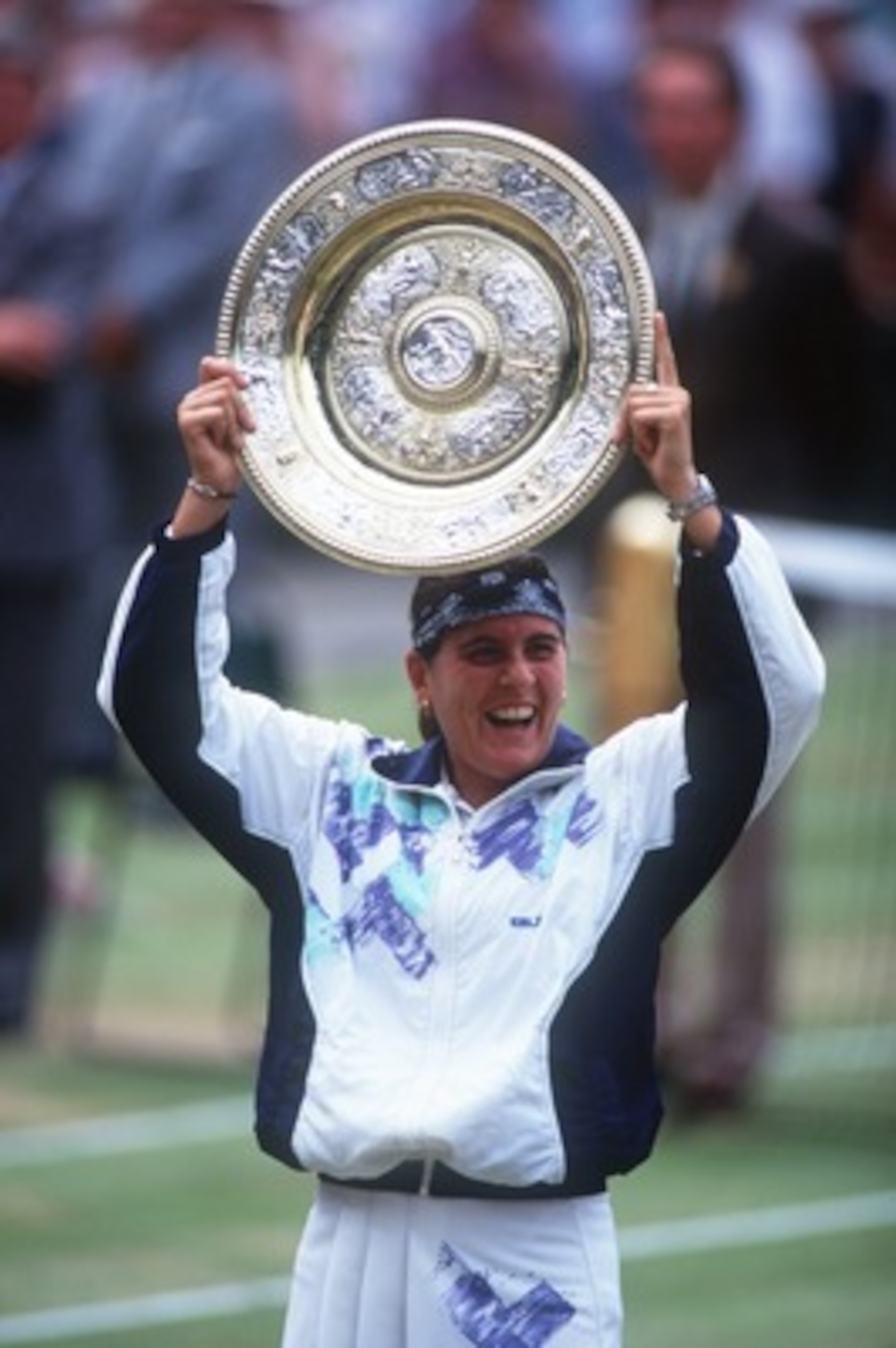
1994 Wimbledon Women's Final: Martinez, 6-4, 3-6, 6-3
At age 37, Martina Navratilova felt right at home on the grounds at Wimbledon.
Probably no player in the history of the tournament was more entitled to own a piece of Centre Court real estate than the legendary Navratilova.
In 1993, Navratilova entered the final against Conchita Martinez hoping to win her 10th Wimbledon title in singles.
But the much younger Martinez outgunned Navratilova, winning in three sets 6-4, 3-6, 6-3. Typically, the Czech-American charged the net winning 22 of 34 points there. But Navratilova's serve seemed to desert her on the day and she was plagued with double-faults.
Then too, Navratilova could not seem to quell the effect of Martinez’s powerful backhand passing shots. On a day when most felt Martinez would cave in under the pressure, she did not.
The Spaniard held her nerve and it was Navratilova who folded, watching her young rival win her first Wimbledon crown.
In a gesture of regret and memory, Martina grabbed a few pieces of grass on her way out. Navratilova announced her retirement from singles play shortly thereafter.
A legend passed out of the spotlight that day.
12. Roger Federer Defeated Rafael Nadal (2007)
14 of 25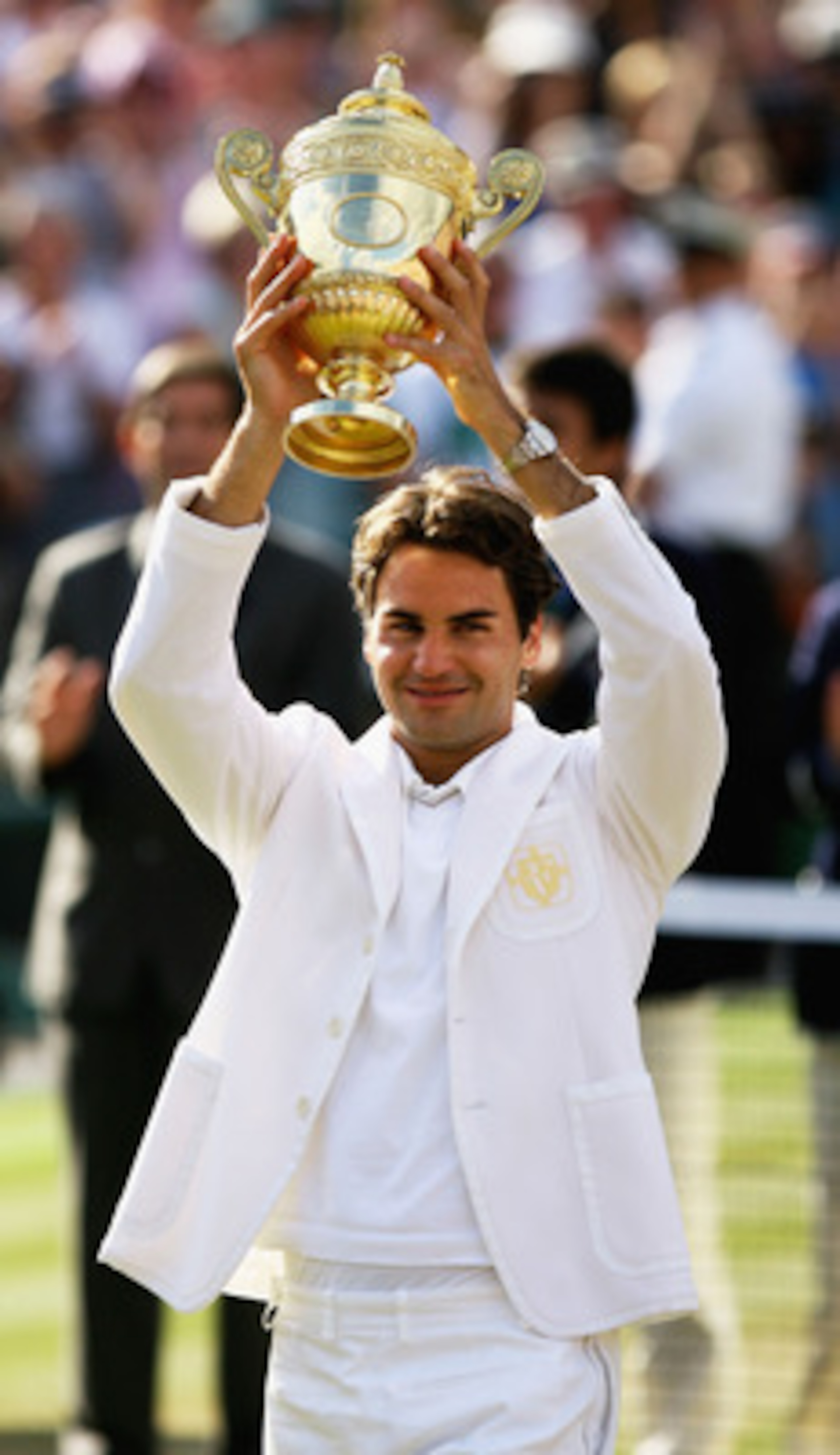
2007 Wimbledon Men's Final: Federer, 7-6, 4-6, 7-6, 2-6, 6-2
The tennis world was amazed when Rafael Nadal made it to the Wimbledon final in 2006 and even more astounded when the clay-court king took a set from Federer.
Now, here he was back again in 2007, trying to win a major on a surface other than clay. Nadal had made his second grass-court championship final at the All England Club. This time he was playing to win, with a vengeance.
It was a five-set match that pained the world No. 2 to lose. He was coming close on grass, but he still could not overcome Federer on the Swiss' favorite surface.
Once Federer went up two sets to one, everyone relaxed, realizing that the Swiss had everything under control at last. But Nadal came back strong, breaking the Federer serve and his lock on the match.
By winning the fourth, Nadal forced a fifth and deciding set.
It took five sets, with Federer salvaging two tiebreaks before he closed it out in the final set 6-2.
It meant everything to Federer to tie Bjorn Borg in winning his fifth consecutive Wimbledon championship against his chief rival, Rafael Nadal.
The match took three hours and 45 minutes. Federer won 7-6, 4-6, 7-6, 2-6, 6-2.
Borg was on hand to congratulate Federer as he won, tying the Swede’s 1980 accomplishment on Centre Court.
11. Zina Garrison Made a Remarkable Run to the Final (1990)
15 of 25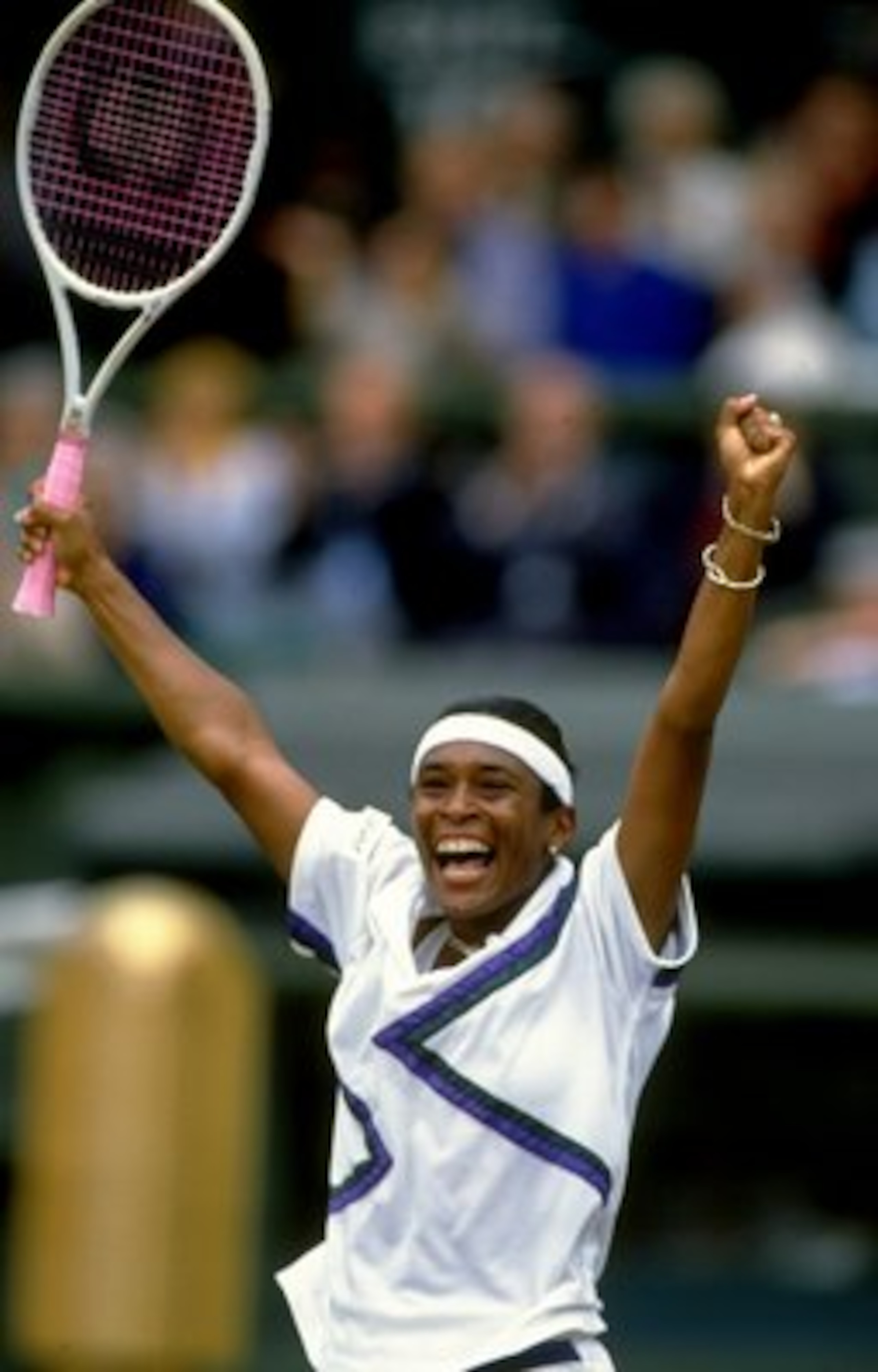
1990 Wimbledon Women's Semifinal and Final: Garrison
It was one of those stories you wished could end the way that it should have ended. It needed that fairy-tale touch to truly warm the cockles of your heart. But in sports, as in life, things do not always turn out the way we hope.
Even so, in 1990 American Zina Garrison did something most women playing tennis at that point in time could not accomplish. The American defeated the great Monica Seles 3-6, 6-3, 9-7 in the quarterfinals of Wimbledon. Then Garrison followed that feat by upsetting the fabulous German Steffi Graf 6-3, 3-6, 6-4 to advance to the finals at the All England Club.
She was given zero chance to do either. Garrison’s high-gamble serve-and-volley style of play stilled the grunting Seles and waylaid the gazelle-like Graf. Garrison was not only brazen in her in-your-face approaches to the net, she was deadly accurate.
All that was left was for Garrison to defeat 33-year-old Martina Navratilova, whose style of play was on a par with Garrison’s. Navratilova was trying to win her ninth Wimbledon title, allowing her to hold the most singles titles at the All England Club.
Garrison became the first African American woman since Althea Gibson in 1958 to advance to a Grand Slam final. But in the end, she could not overcome Navratilova to claim the title. Garrison lost 6-4, 6-1 to end a brilliant run at Wimbledon in 1990.
10. John Isner Defeated Nicolas Mahut (2010)
16 of 25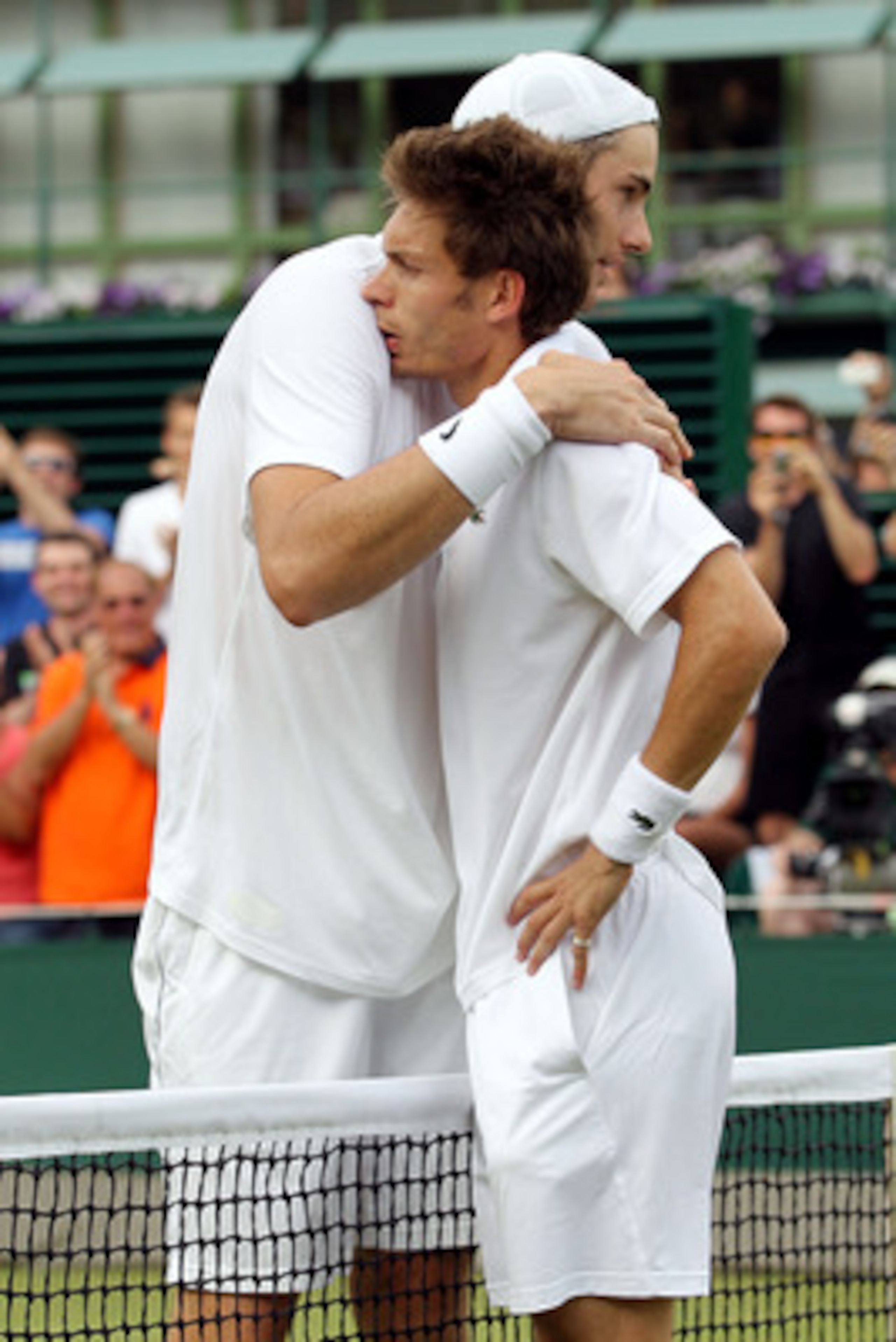
2010 Wimbledon Men's First Round: Isner, 6-4, 3-6, 6-7, 7-6, 70-68
At one time, tennis historians talked about the longest match in men's tennis. It happened in 1969 when the great Pancho Gonzalez battled Charlie Pasarell for five hours and 12 minutes over two days. It was a first-round contest.
But then in 2010, American John Isner and France's Nicolas Mahut engineered an epic three-day battle at Wimbledon in a first-round contest scheduled on Court 18.
Finally, Isner prevailed 6-4, 3-6, 6-7 (7-9), 7-6 (7-3), 70-68, ending the match that would not die.
The first-round contest, which was twice suspended because of darkness, lasted 11 hours, five minutes—with the fifth set alone taking eight hours and 11 minutes.
Needless to say, this unending match obliterated a number of records. Isner finished with 112 aces, and Mahut had 103—both totals eclipsing the previous high of 78 aces.
As a result of the daily phenomena unfolding on Court 18, the world took note, tuning in to see who would finally win this match.
While the publicity was great for the All England Club, it did nothing for the two men who were simply trying to win a first-round match.
Isner and Mahut were both effectively losers in this match because recovering from the rigors of the three-day roller-coaster ride was impossible.
Both men were set back physically after the conclusion of their eternal match, but it is a match no one who witnessed will ever forget. Hopefully, it will never be topped!
Ironically, the two are scheduled to meet in the first round again in 2011! Some cosmic soul has a very weird sense of humor!
9. Venus Williams Defeated Lindsay Davenport (2005)
17 of 25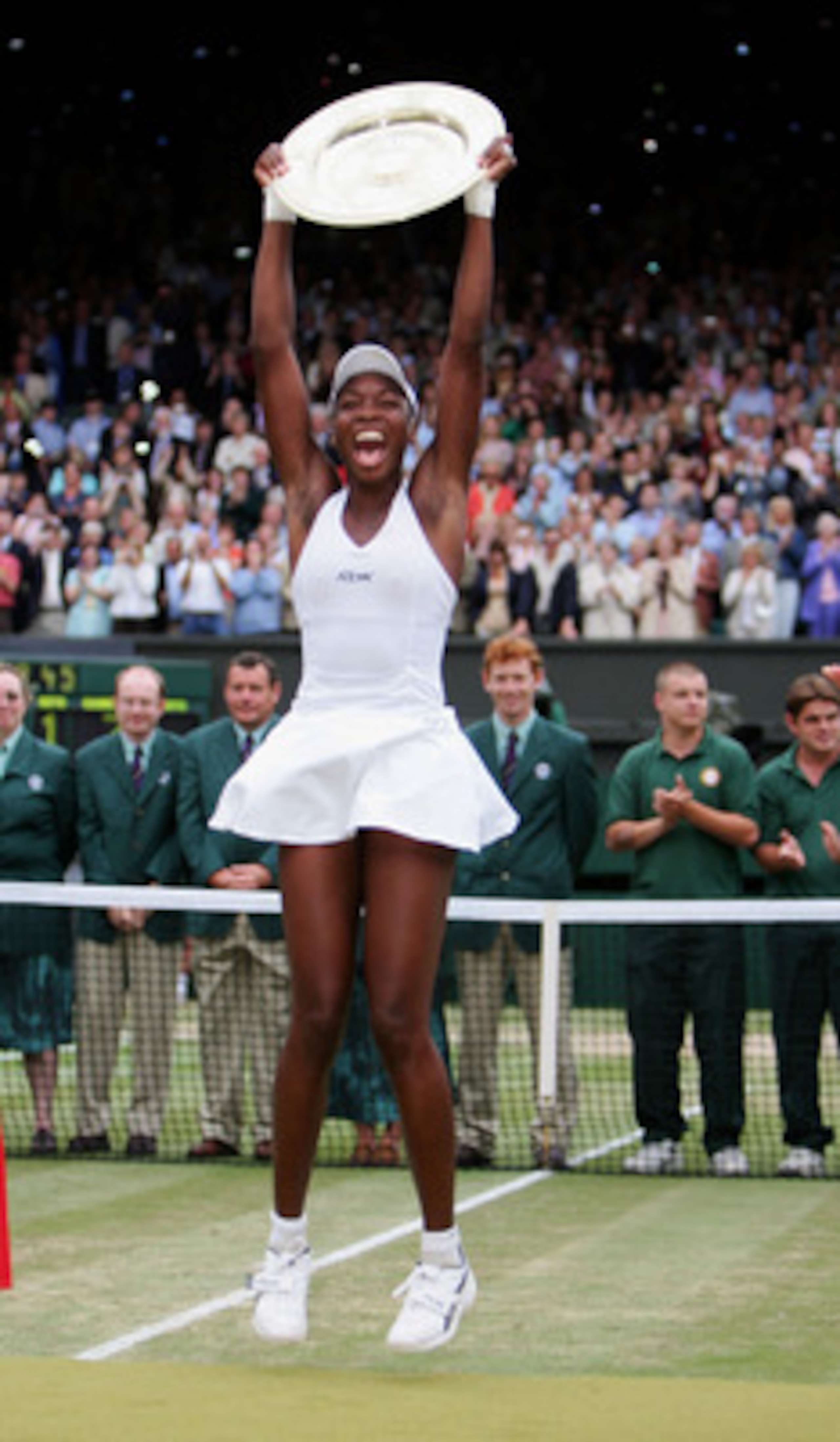
2005 Wimbledon Women's Final: Williams, 4-6, 7-6, 9-7
In perhaps the best final match Venus Williams ever played, she defeated Lindsay Davenport 4-6, 7-6, 9-7.
Williams rallied from a set down and saved a match point to beat fellow American Lindsay Davenport for her third Wimbledon tennis title and first Grand Slam crown in four years.
Seeded at No. 14, Williams upset top seed and world No. 1 Davenport in two hours 45 minutes, to produce the longest women's final at the All England Club.
Williams, then age 25, rebounded in this match to snap a four-match losing streak against Davenport, whose back required treatment in the decisive set.
After losing in her five previous major finals, Williams had dropped just one set during the tournament. This included an upset of defending champion Maria Sharapova in the semifinals.
Davenport, then 29 years old, had not won a Slam since the 2000 Australian Open. She considered quitting in 2004, having lost the Australian Open final in January after holding a one-set lead over Serena Williams.
In a highly tense third set, Williams double-faulted to give Davenport a match point at 4-5. Venus saved it with a backhand down the line. Converting her third break point at 7-7, Williams closed out the match when Davenport netted a forehand.
The final produced high-quality tennis, as Williams earned 49 winners and 29 unforced errors, while Davenport had 30 winners and 27 unforced errors.
Venus Williams had many reasons to celebrate this win.
8. Boris Becker Defeated Kevin Curren (1985)
18 of 25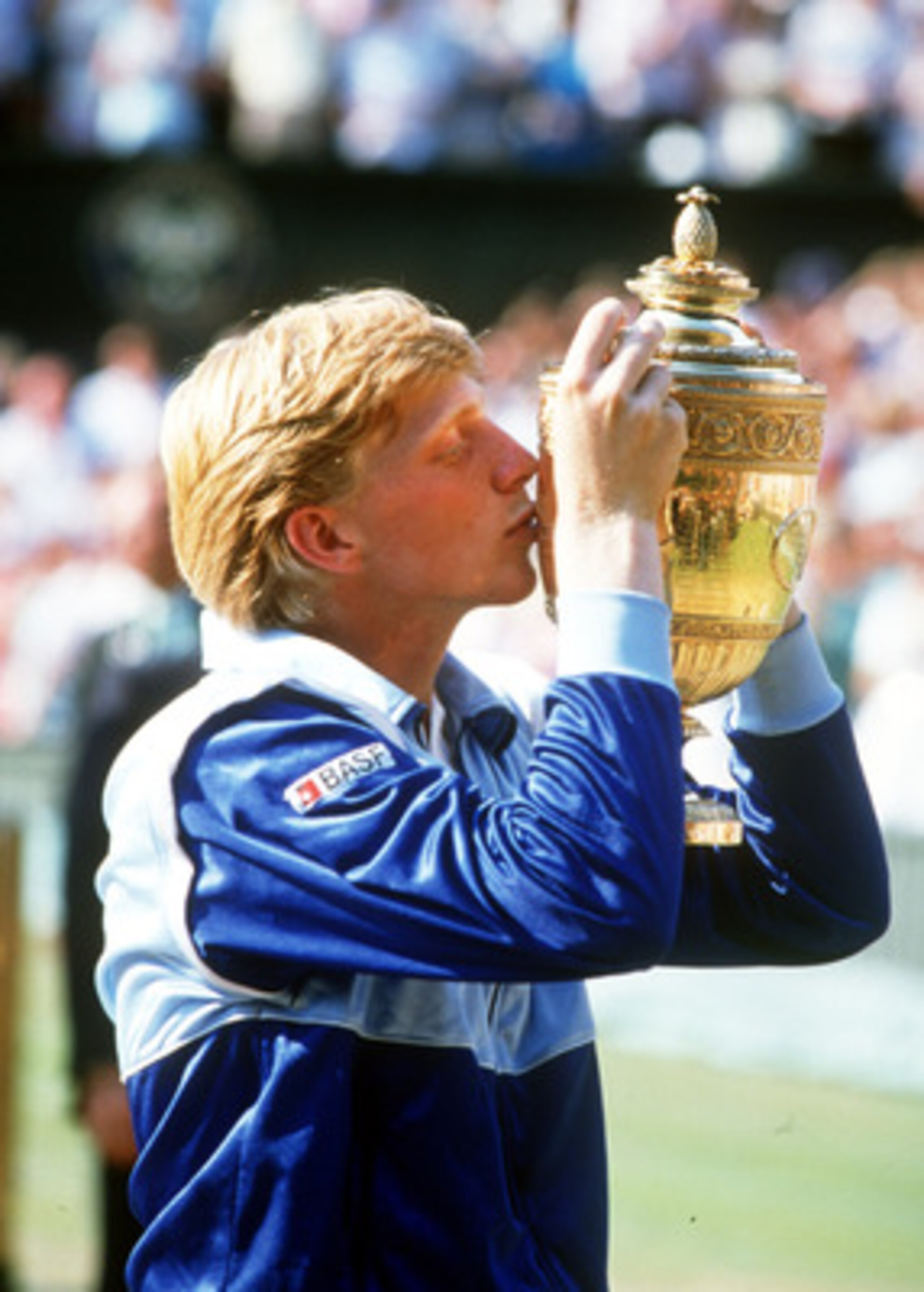
1985 Wimbledon Men's Final: Becker, 6-3, 6-7, 7-6, 6-4
In 1985 Boris Becker stunned the tennis world. The 17-year-old Becker, a virtual unknown, exploded onto the scene at Wimbledon unveiling a powerful serve, endless exuberance and boyish charm.
The wunderkind quickly became a star.
By defeating Kevin Curren in the final, Becker became the youngest male Grand Slam singles champion at age 17 years, seven months.
Becker was also the first unseeded player to win the title, as well as the first German to triumph on Centre Court.
During every round of the tournament, the German was expected to cave in to better players––to finally lose—but Becker never did.
In the final Becker scored 21 aces to Curren's 19. In a match whose highlight reel sparkled with Becker diving for volleys and baseline shots, Becker spent half of the match caked in dirt.
In the end Becker proved to be too much for Curren, who had earned his way into the final defeating some very prominent top seeds like John McEnroe in the quarterfinals and Jimmy Connors in the semifinals.
Becker dominated the final from beginning to end, overpowering the No. 8 seed from South Africa, 6-3, 6-7, 7-6, 6-4 in three hours and 18 minutes.
A new centre-court hero was born that day. Becker would go on to win twice more in 1986 and again in 1989.
But no match again quite equaled the German's first appearance at the All England Club in 1985.
7. Steffi Graf Defeated Martina Navratilova (1988)
19 of 25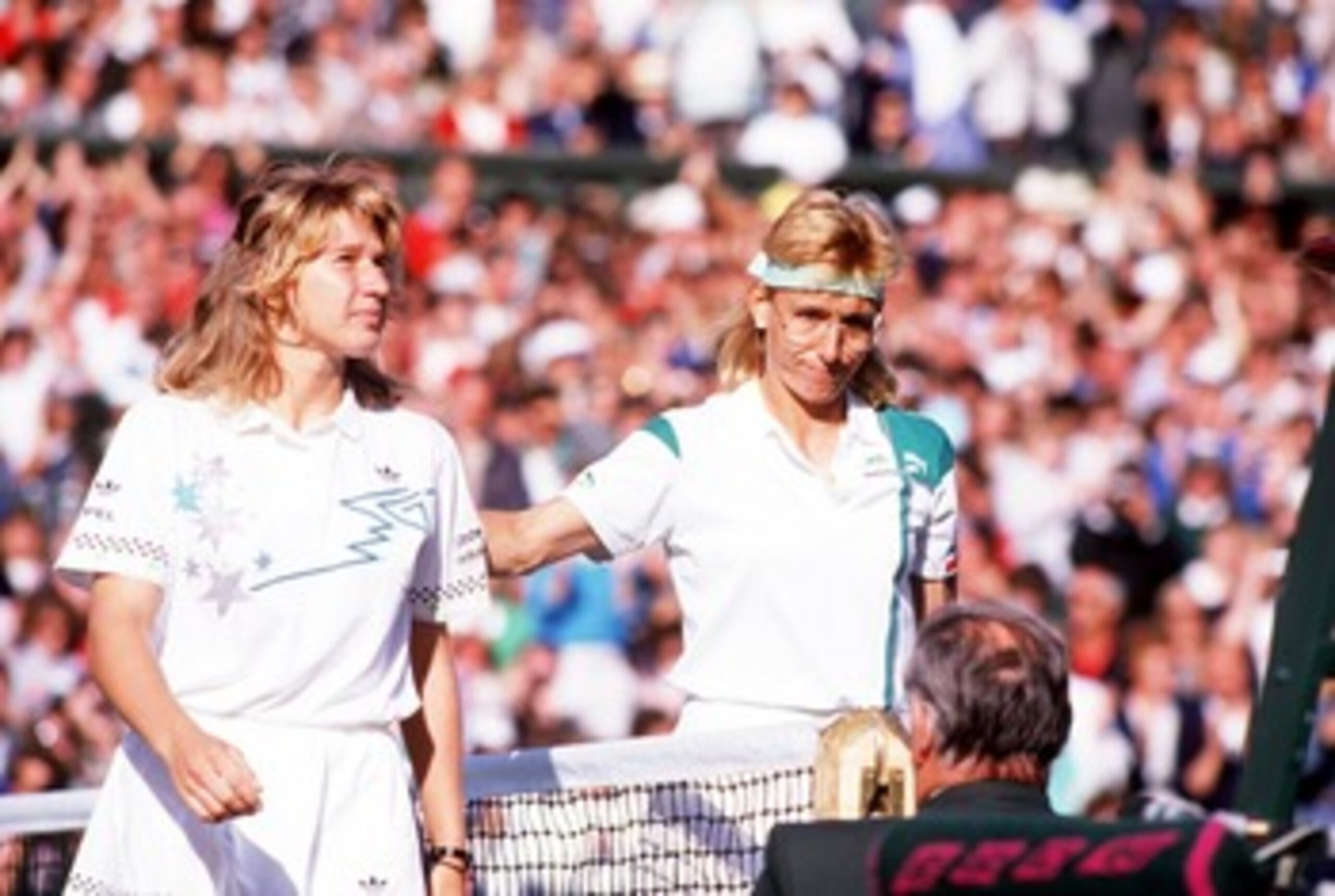
1988 Wimbledon Women's Finals: Graf, 5-7, 6-2, 6-1
After winning the Australian Open in January and the French Open in June of 1988, Steffi Graf captured the title on Centre Court at Wimbledon, ready to do battle at the 1988 Summer Olympics and at the U.S. Open.
Graf was more than halfway home to winning her Golden Slam in 1988.
At Wimbledon, however, the German had to get past Martina Navratilova, the woman who had won this championship eight times and who had never lost on Centre Court during the finals at the All England Club.
The 19-year-old Graf, however, was coming of age. She took the No. 1 ranking as well as the Wimbledon title from Navratilova, now age 31.
After starting slowly and losing the first set, Graf came back strong and overpowered Navratilova in the final two sets, winning 5-7, 6-2, 6-1 as Martina faded gently into that good night.
Navratilova was trying to win her ninth Wimbledon title. Winning it would have allowed her to slip past Helen Mills Moody for the most singles titles at the All England Club.
During her career Navratilova had won six Wimbledon titles in a row, which remains a record no one has yet equaled.
Graf, Navratilova soon realized, was not the typical baseline player. The German attacked her opponents, playing with power and aggression aided by a wicked, whipping forehand. The German could hit a winner from anywhere on court and her speed made it impossible to get shots past her.
As the No. 2 seed looked on standing in the shadows, Graf celebrated her victory, posing for photographers, enjoying her well-earned time in the spotlight.
Navratilova recognized her joy. She had been there. Now it was her turn to be the runner-up.
6. Roger Federer Defeated Pete Sampras (2001)
20 of 25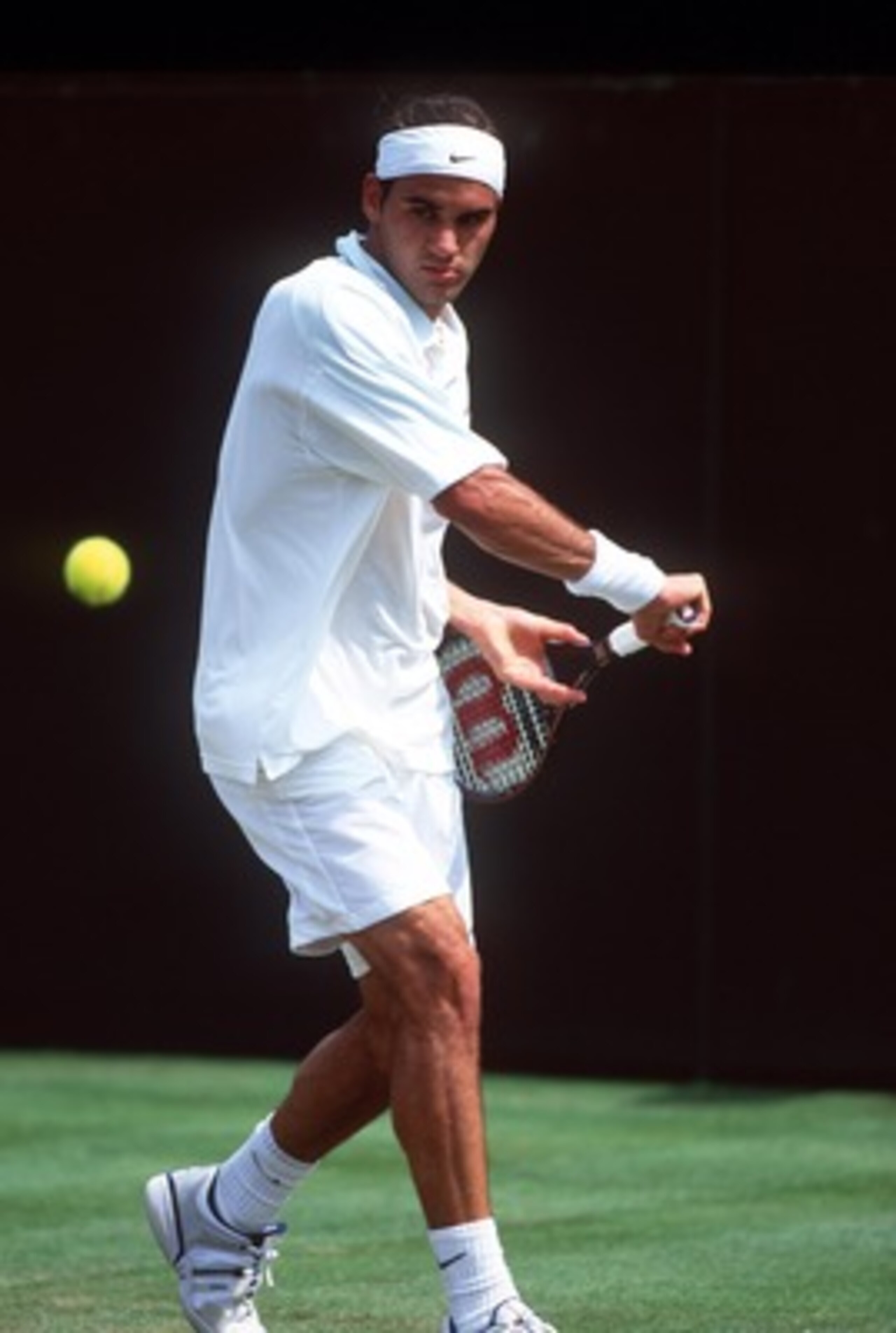
2001 Wimbledon Men's Fourth Round: Federer, 7-6, 5-7, 6-4, 6-7, 7-5
If you were lucky, you were there at the inception, when the first moments of brilliance blossomed. The teenage phenom from Switzerland sporting a bandanna, his long hair swept back in a ponytail, bit at his lower lip, serving, dancing along the baseline on Centre Court.
The young challenger waited, seeing the ball as if in slow motion––coiled, poised on the balls of his feet, ready to move forward if the grizzled champion on the other side of the net returned the ball short.
From time to time the champion’s serve cracked, blasting through the court, ricocheting off service lines, often beyond the teenager’s ability to lay a racket on it.
Roger Federer’s serve surprised Pete Sampras. Not its speed, but its placement and Federer’s ability to disguise its path, using the same service motion regardless of where the Swiss decided to send the ball. His angles, his depth and his movement all worried the defending champion.
Sampras, whose seemingly languid movements around the court belied his quickness, would turn 30 shortly. The seven-time Wimbledon champion met Federer, 19, on Centre Court at Wimbledon––marking the debut of the man from Switzerland on these esteemed grounds during the fourth round in 2001.
Coming into Wimbledon, Sampras had won 31 consecutive matches on the green lawns at the All England Club and he had lost only one match in his last 57. Sampras symbolized Wimbledon––it was his home court, the place where he felt his most invincible and could deliver the best his game had to offer.
The knock on Federer coming into this match was his inability to do well in the big moments––at the four Slams. Coming out of the juniors, Federer was touted to be the next best and greatest. So far, the Swiss failed to live up to his billing and that troubled him, making him try too hard and go for too much.
With Sampras serving at 5-6, for a chance to even the fifth set at 6-6, the American fell behind 15-40. Federer, continuing to see the ball well, rifled back a Sampras serve for a winner, taking the set and the match 7-6 (9-7), 5-7, 6-4, 6-7 (2-7), 7-5.
As Federer fell to his knees, allowing his emotions finally to surface, Sampras sagged at the full impact of his defeat at the place where he’d enjoyed his greatest victories.
The American would never win another championship at Wimbledon.
5. Venus Williams Defeated Lindsay Davenport (2000)
21 of 25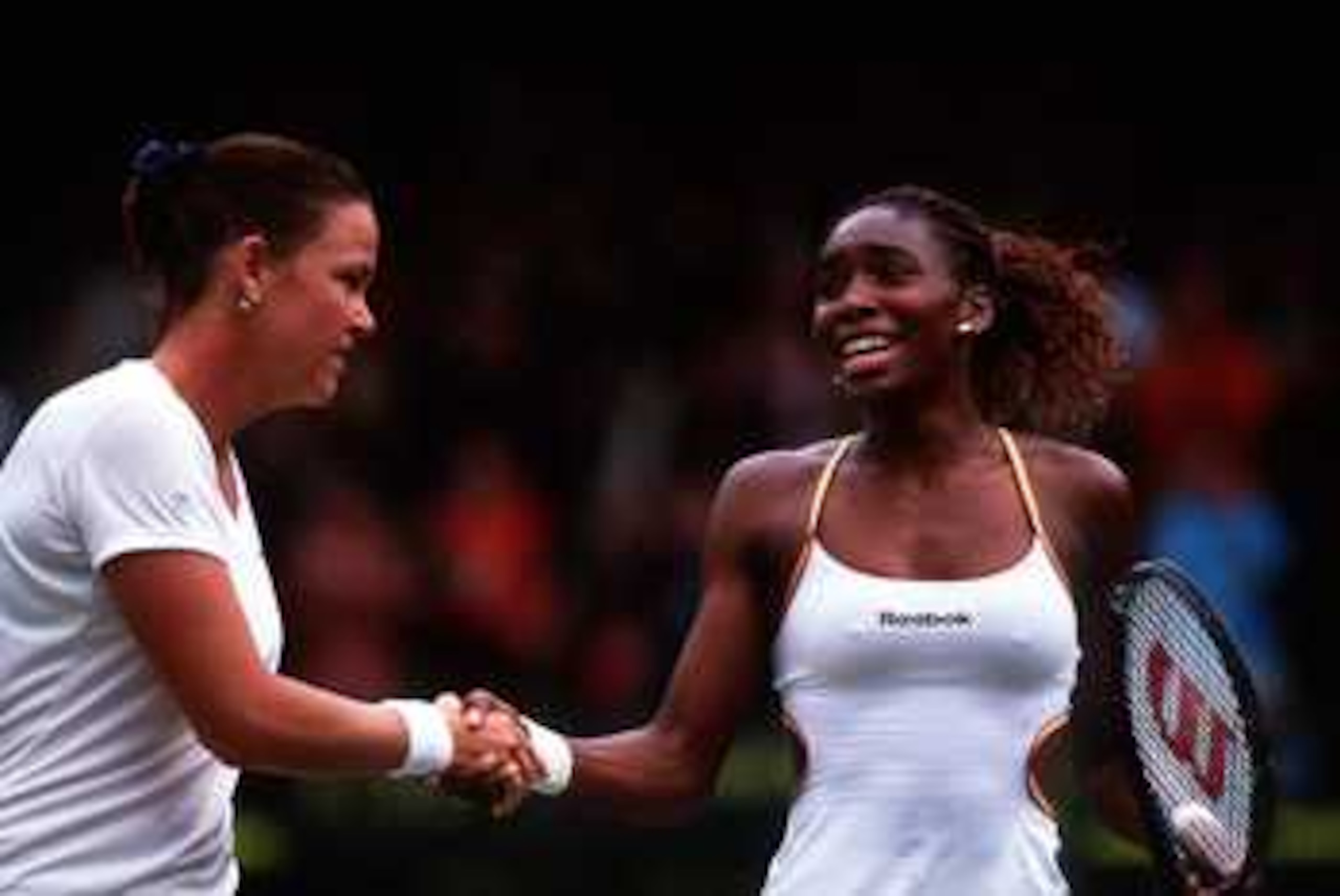
2000 Wimbledon Women's Final: Williams, 6-3, 7-6
In order to make her way into the finals of Wimbledon 2000, Venus Williams, age 20, first had to defeat her younger sister Serena in the semifinals. That was not easy to do for the elder sister.
In 1999, to the astonishment of the tennis world, Serena Williams had defeated her older sister to win the U.S. Open in 1999––making the younger Williams sister, Serena, the first to win a Grand Slam title.
After Venus won her Wimbledon title, it was the first time that two sisters had each won a Grand Slam championship in tennis history.
There was little doubt in anyone’s mind at the beginning of the 21st century that the Williams sisters would become forces to be reckoned with in women’s tennis for a long time to come.
Venus dispatched her younger sister in straight sets in the semifinals, creating the blueprint for a dominating Venus Williams game on grass.
Venus would go on to win five Wimbledon championships, including her triumph in 2000. In the finals, the elder Williams sister won the title, defeating defending champion, Lindsay Davenport 6-3, 7-6.
Venus became the first black woman to win the women’s trophy at the All England Club since Althea Gibson accomplished it in 1958 and 1959.
The promise of a future champ of women’s tennis emerging from the public courts of Compton, California came to fruition in that moment on Centre Court when Venus lifted the winner's plate for all the world to see, smiling, rejoicing in her hard-fought victory.
4. Stefan Edberg Defeated Boris Becker (1990)
22 of 25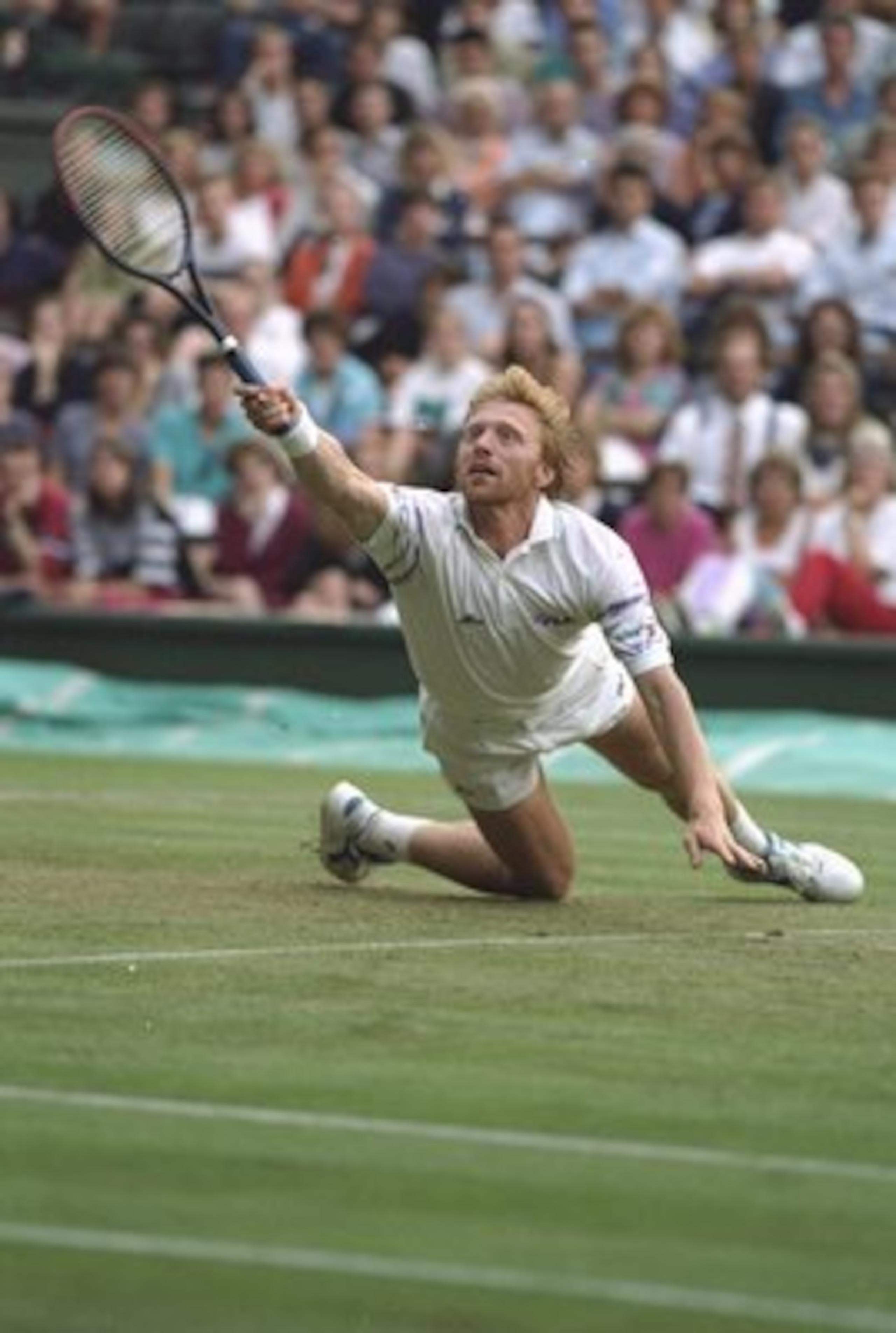
1990 Wimbledon Men's Final: Edberg, 6-2, 6-2, 3-6, 3-6, 6-4
Serve-and-volley artist extraordinaire Stefan Edberg played in 14 Wimbledon championships, appearing in three finals, winning two titles in 1988 and 1990.
His greatest rival for each title was German Boris Becker, himself a fixture on Centre Court. The two men met on the grounds of the All England Club for three consecutive finals in 1988-1990. No one else had ever defeated Becker on Centre Court.
After upsetting Becker in 1988 and then losing to him in 1989, Stefan Edberg came back in 1990 to win the rubber match between the two rivals 6-2, 6-2, 3-6, 3-6, 6-2.
Edberg began the match playing flawless tennis while Becker could not find a rhythm or see the ball well. He felt “late” on his approaches. Edberg took the first set 6-2 and repeated the same performance to take set No. 2 with the identical score. For the Swede, the end was in the crosshairs.
By the end of the second set, finally, Becker began to “see” the ball and return Edberg’s serve better. The return of serve allowed Becker to break Edberg’s serve in the third set and then hang on to win it 6-3.
In the fourth set, both men ratchet up the level of their play; but Becker’s tenacity on his return of the Edberg serve garnered the big German a break at 3-2. Another break of the Swede’s serve gave Becker the fourth set again at 6-3.
It all came down to the fifth and final set. The Swede soon found himself down a break at 3-1. Regrouping, Edberg fought back and leveled the set. While Becker served at 4-4, Edberg put together several sterling points in a row, breaking Becker’s serve. Then the Swede served it out for the match.
Throughout their careers, the two met 25 times, with Becker holding the edge 25-10.
That day, however, Edberg had the answers as he maintained his poise, his mental edge and fought back to win the final set and the match.
3. Goran Ivanisevic Defeated Pat Rafter (2001)
23 of 25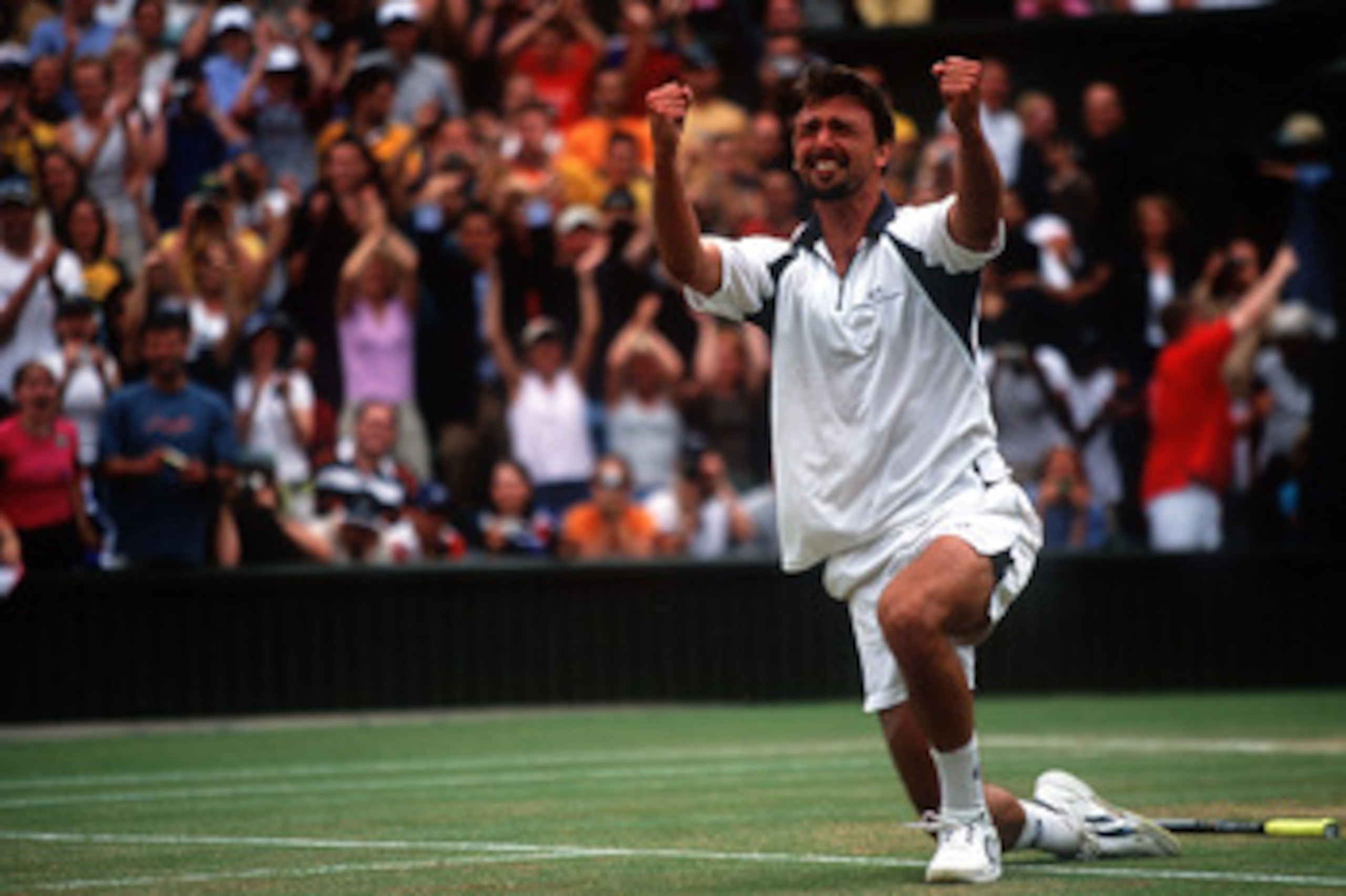
2001 Wimbledon Men's Final: Ivanisevic, 6-3, 3-6, 6-3, 2-6, 9-7
Rain had washed out most of the scheduled matches on Saturday at the All England Club. The men's final was moved to Monday for the first time since 1922. "People's Monday" brought in hordes of younger, noisier folks. For a day, Wimbledon really rocked.
It was the perfect setting as the big-serving Croat finally won the Wimbledon title in 2001 after four tries.
His enormous victory came against Australian Patrick Rafter in a thrilling five-set final 6-3, 3-6, 6-3, 2-6, 9-7.
Ivanisevic had a big serve-and-volley game with the emphasis on serve. The Croat had also reached the Wimbledon finals in 1992 where he lost to underdog Andre Agassi, whose baseline play proved to be superior on the day.
In 1994, Ivanisevic reached a ranking of world No. 2, but he could not overcome defending champion Pete Sampras in the Wimbledon final that year. Instead the Croat lost to the American in straight sets.
Nothing seemed to go the Croat's way at Wimbledon, especially facing Pete Sampras in the final––which he did again in 1998. This time, however, Ivanisevic stretched Sampras to five sets before succumbing.
That made winning the title in 2001 all the sweeter––having tried three previous times and failed.
Lifting that trophy in 2001 made it all worthwhile for Ivanisevic as he celebrated with fans who helped push him over the finish line.
2. Roger Federer Defeated Andy Roddick (2009)
24 of 25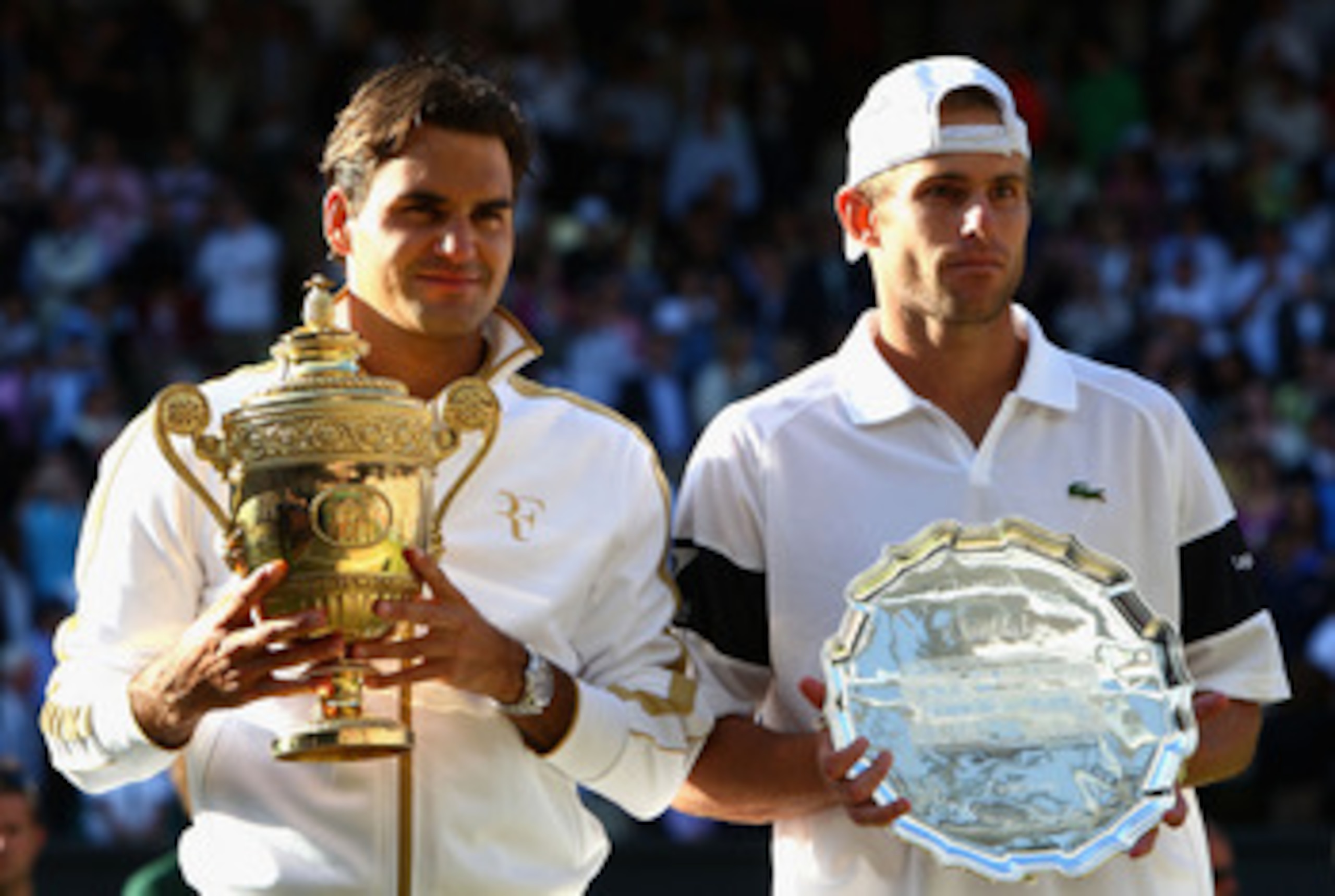
2009 Wimbledon Men's Final: Federer, 5-7, 7-6, 7-6, 3-6, 16-14
Wimbledon 2009 was like two old gunslingers facing off outside the saloon in Dodge City; only this time the bullets were serves coming at each other well in excess of 100 mph. Federer served a career-high 50 aces against Roddick, who is far better known for his big-serve game.
On this day Roddick, who had lost to Federer in two previous finals, was not going to be denied. He never flinched during the entire match until the very last game when the American finally lost his serve. Until that moment, Roddick had held serve without fail. Federer won 5-7, 7-6, 7-6, 3-6, 16-14 in four hours and 16 minutes.
At 77 games, their match was the longest men's Grand Slam final in the history of the game. The final also produced the longest fifth set in Grand Slam history.
With the win Federer claimed Grand Slam No. 15, surpassing Pete Sampras, who had won 14 during his illustrious career. It also returned the No. 1 ranking to the Swiss who lost it to Rafael Nadal in 2008, after losing to him in their epic 2008 Wimbledon final.
Roddick hung on for dear life through each and every point in the fifth set, trying to stay in the match, serving from behind.
In game No. 30 Roddick needed to hold serve to level the fifth set at 15-15, but the American fell behind, just as he had on several occasions during the match. Serving at deuce, Roddick misfired on a forehand, giving Federer a championship point.
After failing to convert on six previous chances, Federer broke Roddick's serve as Andy shanked the ball on a forehand. Federer took the final set 16-14.
In addition to Federer's 50 aces, one short of Ivo Karlovic's record-setting 51, the Swiss had 107 winners with 38 unforced errors. Roddick scored 27 aces, with 74 winners and 33 unforced errors.
It was a high-quality match with eye-popping shots and incredible serving.
As Pete Sampras, Bjorn Borg and Rod Laver watched in the stands, Federer stood holding his sixth Wimbledon trophy along with another fistful of tennis records.
1. Rafael Nadal Defeated Roger Federer (2008)
25 of 25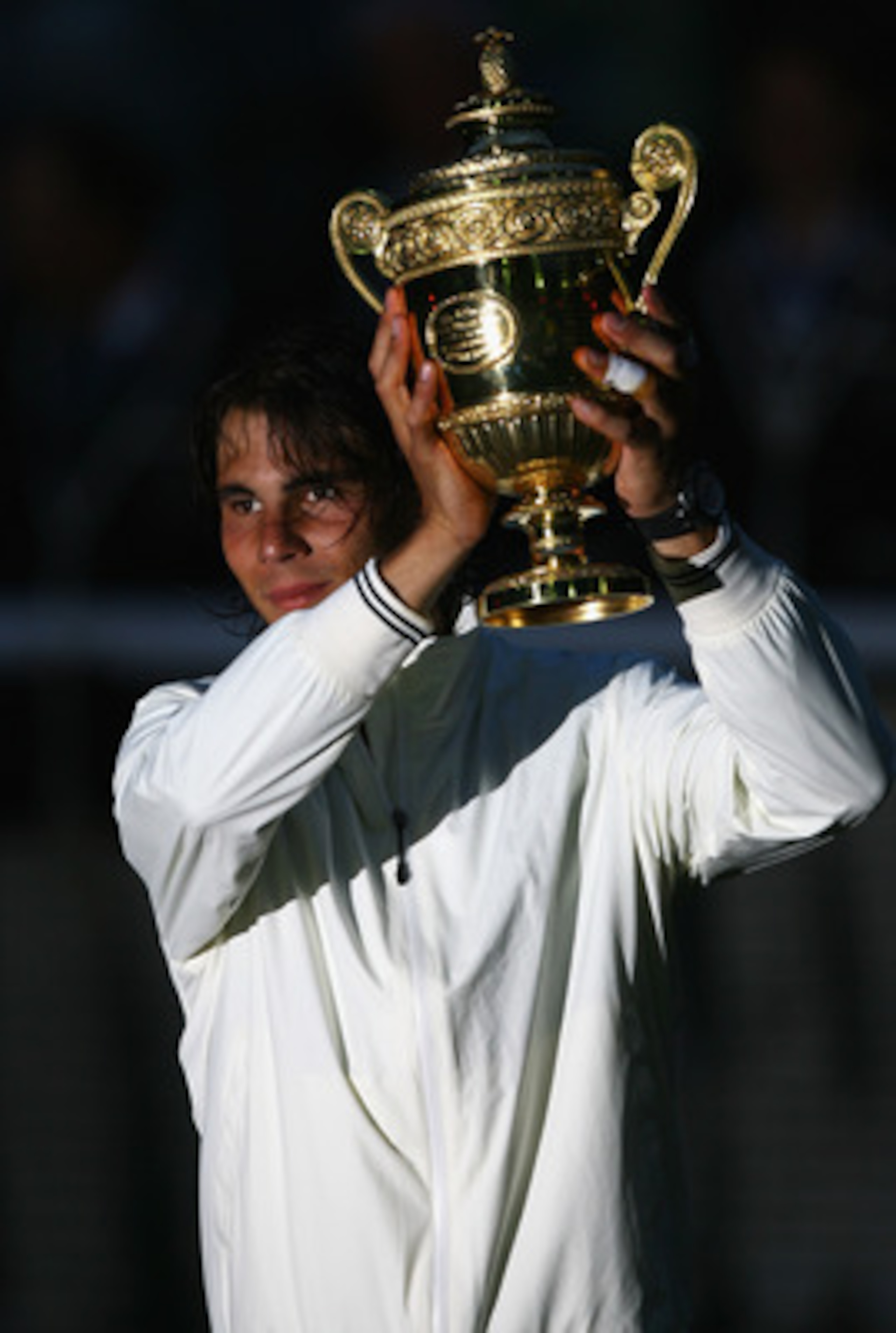
2008 Wimbledon Men's Final: Nadal, 6-4, 6-4, 6-7, 6-7, 9-7
John McEnroe called the 2008 Wimbledon final between Roger Federer and Rafael Nadal the greatest match he had ever seen.
It was the longest men's final in Wimbledon history, lasting four hours and 48 minutes. Rain interrupted the five-set epic twice. In the end, the No. 2 seed, Nadal, won his first Wimbledon championship, 6-4, 6-4, 6-7 (5-7), 6-7 (8-10), 9-7.
Nadal took the first two sets seemingly with ease 6-4, 6-4. Federer, however, after the rain interruption, regrouped, winning the next two sets in tiebreaks. The fifth set saw both men scrambling for every point, utilizing every ounce of ability and skill.
It was a pressure-packed last set. The quality of play, however, increased exponentially as each point brought another level of intensity. Soon it seemed like the two players were in a different world––shadows in the fading light, as each point became a matter of life and death.
When a sport is lucky enough to possess two superior champions competing in the same era, the times they meet and battle each other for that top spot can produce some memorable moments.
In 2008 this was abundantly clear as Nadal defeated Federer in a match that neither player deserved to lose. They not only battled each other, they battled their own inner demons as well as the elements.
The loss prevented top-ranked Federer from winning his record sixth consecutive Wimbledon title.
The rivalry between the two men continues today as well as the sportsmanship the two share. It was a momentous occasion for both men—the Wimbledon final in 2008.
How much it meant to Nadal that day was exemplified by his reaction as he climbed all the way to his box, hugging and celebrating with his family and friends.
The match was a surreal experience for those who witnessed it and surely for those who played it.
It was the first Wimbledon title that Nadal won as well as the first Wimbledon final Federer lost.
.jpg?w=2560 "Report: Giants Releasing Najee")
.jpg?w=2560 "Vet FAs Who Can Help Contenders")