

What's Next for Trey Burke? Can Former Top-10 Pick's Knicks Renaissance Last?
 NEW YORK — The numbers, at points, have leapt off the screen. The 42-point performance against the Hornets. The 18-point, 15-assist showing Saturday against the Pistons. Trey Burke has averaged 22.4 points and 8.0 assists in five games as a starter, and he's put up 15.1 points—on scorching 50.8 percent shooting—and 5.5 assists over his past 15 games.
They're the types of numbers most assumed Burke was capable of when he was picked ninth overall in the 2013 draft. It's just taken time to get there.
TOP NEWS
Ben Simmons Tore Achilles
Final Record Predictions for Every NBA Team 🔮

Trinity Stars in VS Fashion Show
Burke starred for the University of Michigan and as a sophomore was named the Associated Press national player of the year. But even though he earned All-Rookie honors with the Jazz, he never found his footing. Utah traded him after three seasons (for the grand sum of a future second-round pick) to the Wizards, who then let Burke walk after just one year. In October he signed with the Knicks' G League affiliate, for which he played 26 games before he inked a non-guaranteed deal with the Knicks in January.
Burke's journey has not been a typical one. Now 25, he was dumped by two teams before making it to a fifth NBA season. When he was a free agent last summer, only one team came calling—the Thunder—and all it offered was a non-guaranteed deal.
Yet here we are, less than one year later, and Burke appears to be a new player, efficient and dangerous and explosive. The question is whether this resurgence is real or just the latest example of a player who's handed more opportunities during the season's dog days.
We can't answer this question without pinpointing the reasons behind Burke's early-career struggles.
The book on Burke, according to sources around the league, was that he wasn't focused on basketball then. When asked what had changed following back-to-back 26-point games in February, Burke seemed to confirm this was the case. He said when he first got to the league he felt lost, and he attributed his new success to, essentially, growing up: getting married, not partying as much and taking his career and faith more seriously.
League insiders who have known and followed Burke going back to his days in Michigan believe his claim that he's become a different person. And the Knicks, who plan on exercising the team option in his contract to bring him back next season, have had no issues with Burke thus far and don't expect any to arise, according to a team source.
But there were also some on-court reasons behind Burke's initial flameout. For one, his size (he's listed at 6'1" but is likely closer to 5'10") makes him a liability on defense. Also, he was a score-first point guard who at times struggled to read the floor. Case in point: His assist rate with the Jazz regularly ranked among the lowest in the league for guards, according to Cleaning the Glass.
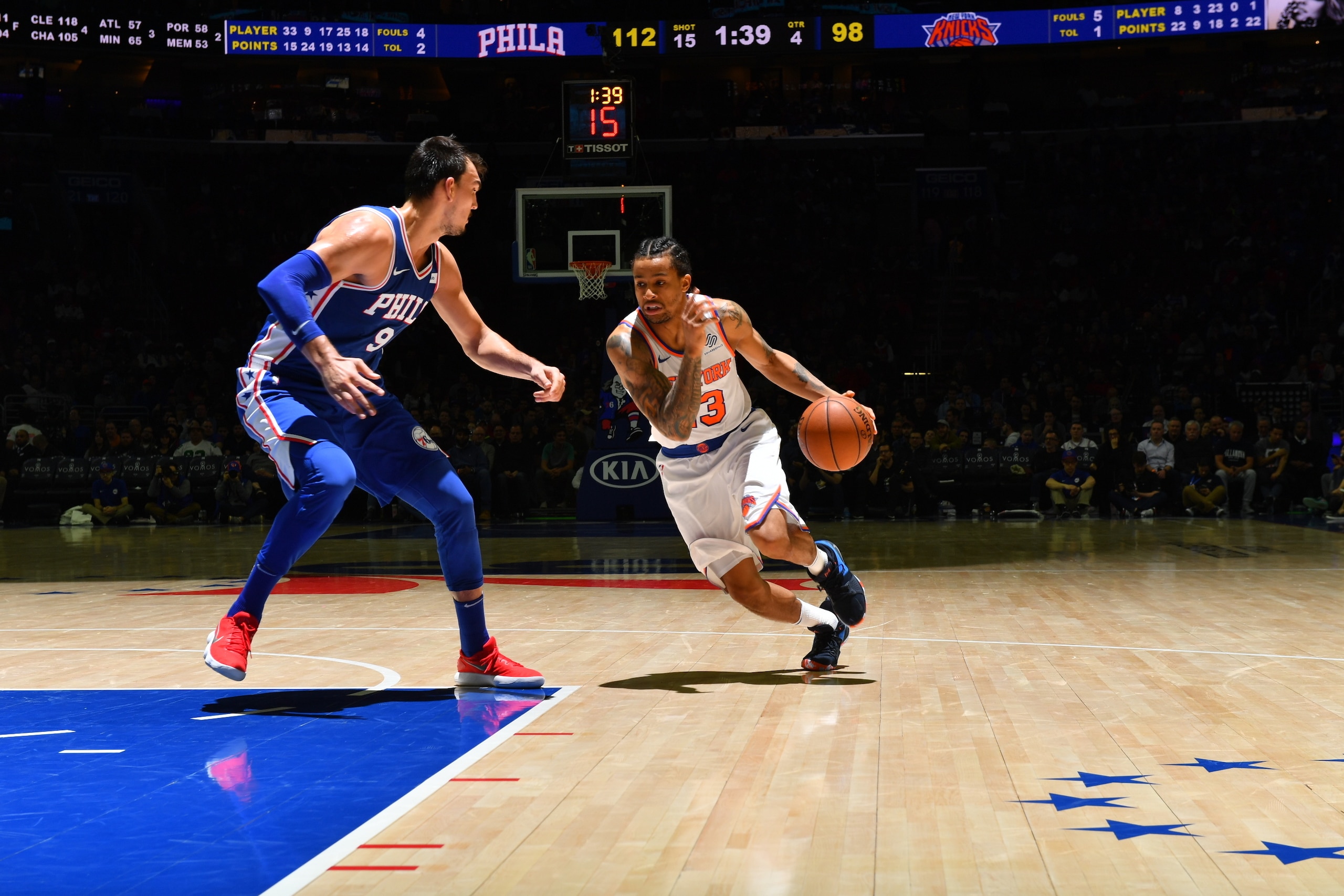
While such limitations aren't ideal, they don't prevent a player from making it, or even thriving, in the NBA. All Burke needed to do was make some adjustments to compensate.
In 32 games with the Knicks, it seems like he has.
"He's different, more focused and aggressive," an Eastern Conference scout told Bleacher Report. "He can flat-out score in the high pick-and-roll."
Burke has been lethal out of those sets. He's lightning-quick with the ball, and his pull-up jumper is a deadly weapon. The 1.03 points he's averaging out of screen-and-rolls rank in the 89th percentile in the league, according to NBA.com.
"The game has slowed down for me tremendously," Burke said recently. "The biggest thing is to not predetermine what I'm going to do off the pick-and-roll, just letting the play [unfold], allowing the defense to make a mistake. Whatever they take away, I know what my options are.
"I think that's just from years and years of watching film and gaining experience … just knowing personnel and trying to exploit the weakness in the defense."
Most of the time, Burke winds up jacking a long two-point jumper. In fact, no guard has launched a higher percentage of his shots from that mid-range area this season, according to Cleaning the Glass. Burke is drilling 55 percent of these looks, one of the top marks in the NBA.
That adds another wrinkle to this discussion: Is it smart to rely on a player who relies so heavily on such an inefficient shot?
This won't be a problem if Burke continues to knock down long jumpers at this rate, but what if his percentage dips, even just a bit, and you're left with an undersized, ball-dominant point guard who flings long two after long two?
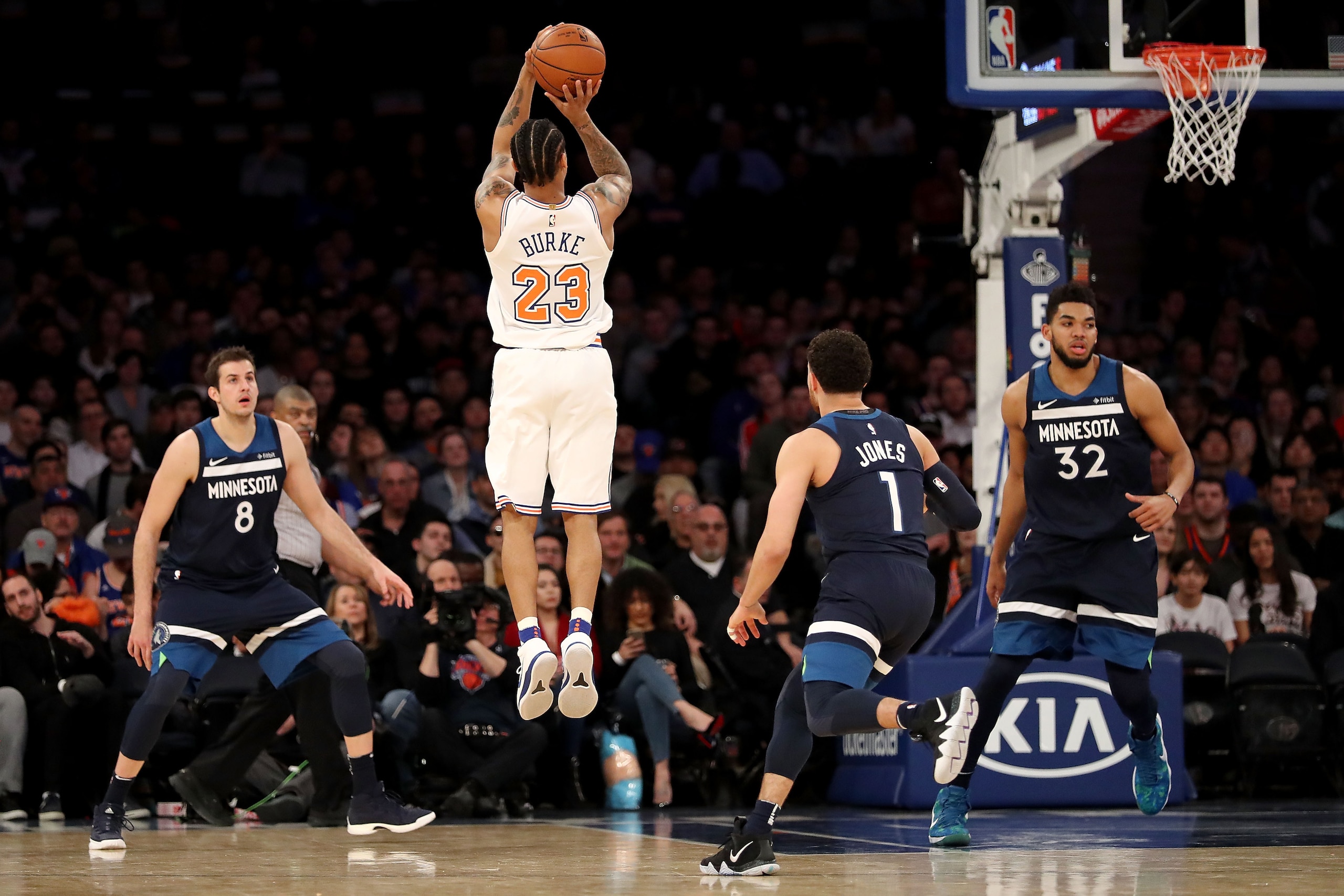
As the Eastern Conference scout put it, "His drawbacks are that he doesn't get to the foul line and is a streaky three-point shooter." In other words: His shot profile isn't efficient. Burke has hit 37.9 percent of his treys this season after connecting on 44.3 last year. But he's only attempted 1.1 three-pointers off the dribble per game, according to NBA.com, a low number considering how often the ball is in his hands. The translation of this: Off screens, he's mostly hunting long two-pointers instead of looking for triples.
It isn't as though basketball should be played on a computer and all mid-range shots should be shunned. But it's a numbers game. If you aren't draining treys or getting to the line, your margin for error becomes razor-thin.
That said, Knicks management has no issues with Burke's shot selection given that he's so effective from that area. Burke said he plans on "working way more" on his off-the-dribble three-point game over the summer and acknowledged that "becoming a dead-eye knockdown shooter" is an area where he can grow. But he also said the mid-range pull-up will always be one of his preferred weapons.
"It's just what they're giving me," he said. "I always felt like I had a mid-range game. It's a sweet spot for me. If it's there, I take it."
There are other problems with Burke's game, though.
Defense will always be one of them. Knicks coaches have been satisfied with his effort on that end, but his stature prevents them from switching and allows opponents to deliver the ball wherever they please. They've hemorrhaged points whenever he steps on the floor—allowing 114.3 per 100 possessions, which would be the worst mark in the league by about four points.
Then again, is it fair to blame Burke for those issues? Dig deeper into the numbers, and you see that the Knicks are an awful team without Burke and only slightly less awful with him.
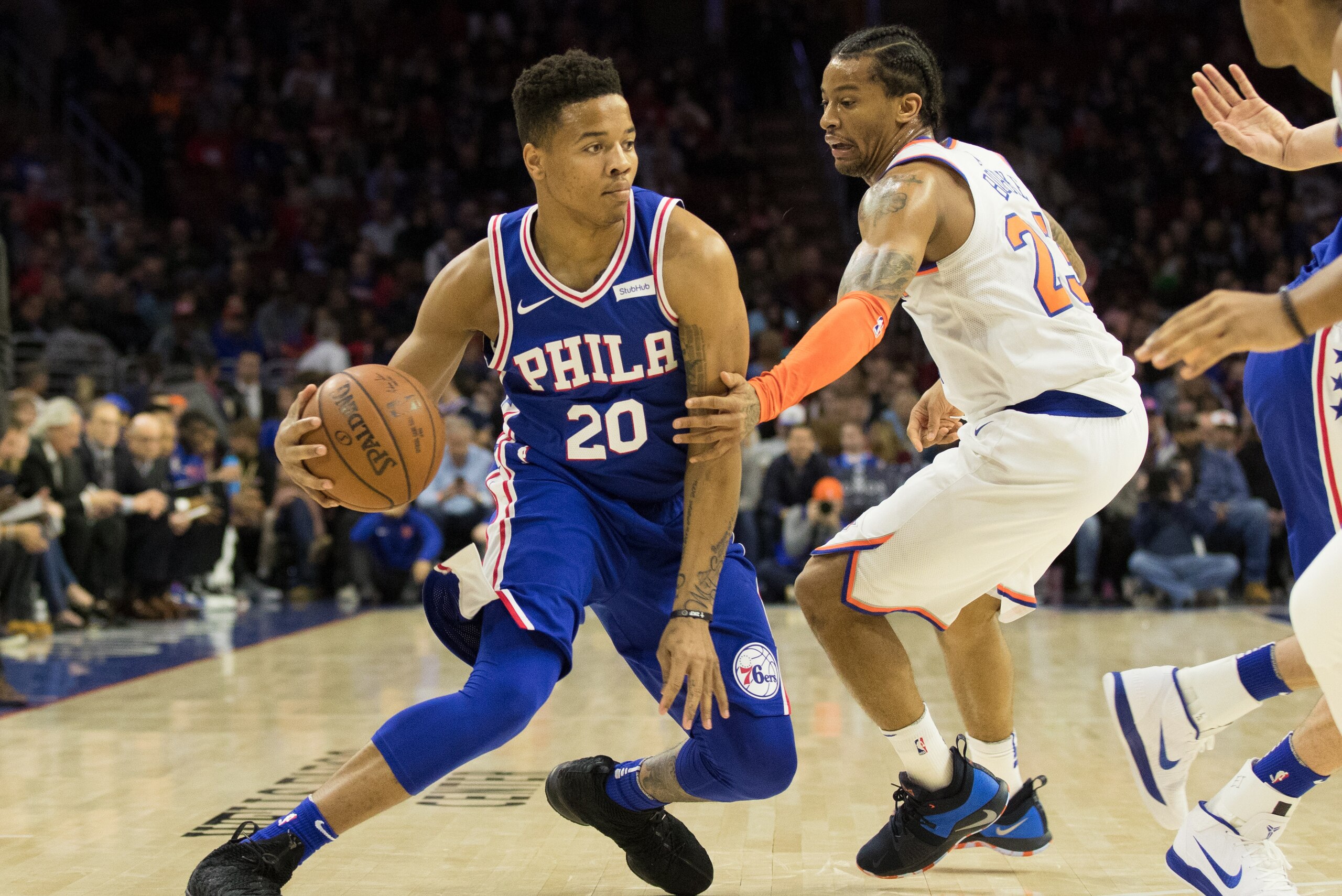
For all the big numbers and fun highlights, Burke's strong performances have, statistically, done little to boost the Knicks' overall prospects. The offense has been stellar with him on the floor, scoring 8.7 more points per 100 possessions, per NBA.com; that 109.4 rating would rank seventh in the league. He's also done a good job of getting some of his teammates open looks—both Tim Hardaway Jr. and Frank Ntilikina have shot significantly better from deep off Burke passes, per NBA.com. But for all that, the Knicks are 4-15 since he started playing significant minutes in late February.
Perhaps the best way to evaluate Burke is to strip away as much of the surrounding noise as possible and look at his game in a vacuum. He's a dynamic scorer. His ability to punish opposing big men in switches could scare teams off that tactic and help Kristaps Porzingis when he returns from injury. He's an average-at-best defender. He's getting more adept at reading pick-and-rolls but remains a shoot-first guard.
Maybe that makes him a super-sub like Lou Williams. Maybe his ceiling is closer to Jordan Clarkson or Fred VanVleet.
"He's a good backup," an NBA executive told Bleacher Report when asked how he viewed Burke.
That much Burke has proved. And for a team like the Knicks that is taking baby steps toward contention, adding even the smallest of pieces, like a capable long-term backup with a higher ceiling, counts as a win.
Yaron Weitzman covers the Knicks and NBA for Bleacher Report. Follow Yaron on Twitter @YaronWeitzman, listen to his Knicks-themed podcast here and sign up for his newsletter here.

.jpg?w=2560 "Hunter's Wife Calls Out Sharpe")

.jpg?w=2560 "Cardinals LB's Quote Resurfaces 😏")
.jpg?w=2560 "Colts Fire GM Chris Ballard")
.jpg?w=2560 "Skattebo Has 0 Touch Game 😬")