

Celtics Insider: Boston Now Has Its Own 'Lineup of Death'
Small ball is officially more norm than gimmick.
In a league that's constantly evolving—10 years from now, new skills and player-types we haven't even imagined will be more valuable on the open market—a majority of front offices are stampeding toward players who unlock smaller, faster, position-free lineups.
The Golden State Warriors, San Antonio Spurs, Cleveland Cavaliers and Oklahoma City Thunder were the four best teams in the league last season. Outside of the fact that they employed an unfair share of the league's brightest stars, an integral reason for their success was lineup flexibility.
TOP NEWS

Pic of LeBron's Helicopter Commute 🚁
Jokić Pops Out at CU Game 🦬

NBA Power Rankings Entering Preseason 🔢
If they wanted to go big, they went big. If they wanted to go small, they went small. They leaned one way more than another, but each team adapted to its surroundings as it saw fit.
With a roster as versatile as any in the league, this year's Boston Celtics will be just as flexible as those first four teams. Not only do the Celtics understand what wins in today's NBA, they finally have the personnel to pull it off.
East Beast

Head coach Brad Stevens summed it up nicely a few weeks ago when asked what separates elite teams from everybody else.
"Beyond the minimum level of talent is the idea that they're very versatile defensively. They can play two different ways. They can play big, they can play small, they can play fast, they can protect the rim, they can do all those types of things defensively.
"And then offensively, speed and skill are huge right now, because ultimately you're playing against smaller lineups a lot. If you have a great low-post scorer, that's something you want to take advantage of, but in a lot of circumstances, out of the 30 teams, a lot of people are really erring on the side of speed and skill."
Boston sprints into 2017 hugging small-ball tighter than most, with several like-sized options on its roster who can defend multiple positions, space the floor, pass, cut and drive.
Jonas Jerebko, Amir Johnson, Terry Rozier, Kelly Olynyk, Jaylen Brown and Gerald Green all allow Stevens to tinker with different combinations that can make most teams uncomfortable. But Boston's bread-and-butter—the unit it should ultimately lean on in tight situations—doubles as one of the smallest groups it can muster: Isaiah Thomas, Avery Bradley, Marcus Smart, Jae Crowder and Al Horford.
With a minimum of four three-point shooters (Smart is a question mark), four above-average defenders who can capably harass multiple positions and five capable passers who are comfortable enough to go off the dribble and create for others, the aforementioned unit is a bulletproof vest soaked in kerosene.
"It can create a lot [of problems]. I mean there are so many different players that do different things on the offensive end, but as well on the defensive end," Thomas told Bleacher Report. "You've got guys that can guard multiple positions like Marcus Smart, he guards 1 through 4, and so does Jae Crowder. And even a guy like Al Horford, he gets out and defends guards as well at a high level, so it can give other teams problems on both ends of the floor."
In many ways, the success of this lineup revolves around Horford: a four-time All-Star whose unique skill set fits splendidly into a league that's trending down. He's 30 years old but with a game that should age beautifully.
The Cog

As a 6'10" slab of muscle who almost approaches the game like a guard, Horford permits the type of lineup flexibility few players around the league can. He's strong enough to guard centers, fast enough to stick with guards and can stretch the floor with an improving three-point shot.
Put a rim-protecting oaf on Horford, and he'll drag the opposition's anchor into unfamiliar territory outside the paint. Stick a mobile forward on him (or anyone who isn't able to shield the paint) to snuff out his outside shot, and Horford can attack inside with a solid post game and the ability to wreak havoc rolling through the lane.

"He made sure he changed as the game changed and ultimately really did a great job at making that transition look really easy," Stevens said.
"Anytime you haven't shot from distance in the past and you've always been a big, especially a big like he was at Florida and then early on in his years, you're used to playing in tighter spaces and you're used to playing through contact, and that is a difference. So you get more used to it as time goes on."
Horford attempted 65 three-pointers during his first eight seasons. Last year, he jacked up a whopping 256—a respectable 34.4 percent went in—making him only the 10th center in NBA history to launch over 250 treys in a season, according to Basketball-Reference.com.
The result? More space for his teammates to attack.
Horford's gravity isn't as dramatic as Dirk Nowitzki's, but his presence on the outside forces big men to think twice about hovering near the basket. Watch the magnetic effect Horford has on Al Jefferson and Karl-Anthony Towns in the two plays below.


And here's Thomas Robinson gluing himself to Horford instead of sinking toward the free-throw line to take away Teague's driving lane.

The space Horford creates for others is useful, but he also knows how to take advantage of extra room when it's provided by others. Particularly dangerous when those slower bigs fall victim to his pump fake, Horford is agile enough to freestyle off the bounce and either suck help defenders into the paint or finish strong himself.

Even though he spent nearly all his time at center over the past two seasons, the Atlanta Hawks weren't built to squeeze all Horford has to offer as a small-ball 5. But the Hawks outscored opponents by 18.8 points per 100 possessions when Horford played beside Dennis Schroder, Thabo Sefolosha, Tim Hardaway Jr. and Mike Scott—the most common small unit Horford played in (177 total minutes), per Basketball-Reference.com.
The Celtics are younger, quicker and more aggressive than the Hawks. They have a deeper supply of two-way players and just about all of them are still developing.
The Wingman
It's hard to think of anyone (non-All-Star division) more ideal than Crowder to plug beside Horford in a small frontcourt that aims to run, shoot and defend at a high level.
Nearly a quarter of the 6'6" forward's minutes were at power forward last season, which doubled as by far the best year of his career. (In 142 minutes with Johnson at the 5 and Crowder at the 4, the Celtics scored 109.2 points per 100 possessions last season, according to NBAWowy. That's equal to a top-three offense.)
"I see a problem," Crowder told Bleacher Report, when asked how opponents would deal with small-ball units that feature him at the 4 and Horford at center. "It's just going to make us more deadly on both ends of the court. We can get up and down offensively, and defensively, we can get into the ball and switch, and we can guard bodies, so it's going to help us out a lot."
The Celtics' rare collection of nasty perimeter defenders allows them to be effective while small at almost every position. Crowder is the biggest of the bunch, often assigned to slow down the opposing team's top wing scorer. But responsibilities shift whenever he plays up a position. Instead of shadowing a high-volume scorer like Kevin Durant or LeBron James—making their life as miserable as possible on the ball—Crowder needs to be more vocal defending screens and calling out coverages to guards in front of him.
"Defensively, it's much different [when we go small]," he said. "I have to get into ice, get into the pick-and-rolls."
Boston's defensive scheme partly hinges on who it's up against, but Crowder will switch high screens more often than not. "I'm a switchable guy, I guard everybody on the court," he said.


It goes both ways. When he starts the possession on a ball-handler, Crowder is more than comfortable switching onto a big.

And here's peak Crowder, wreaking all sorts of havoc while teetering on the verge of falling out of position. It's a maniacal form of discipline.

Offensively, Crowder is more frequently in a position to make plays whenever he's at the 4, and that should only increase in lineups that no longer feature Evan Turner. Crowder isn't Pete Maravich, but he provides competent results attacking a closeout. His real value, though, comes as a credible outside threat.
Crowder shot 33.6 percent behind the three-point line last season, up from 29.3 percent the previous year. That's not particularly impressive, but he did knock down 39.6 percent of his wide-open attempts, per NBA.com.
"When we have a guy like Jae Crowder who can shoot the three, and he's playing the 4, it means that their big, whoever's at their 4, has to be out on the perimeter as well," Thomas said. "So it only allows me to have more space and allows me to attack even more."
The Littles
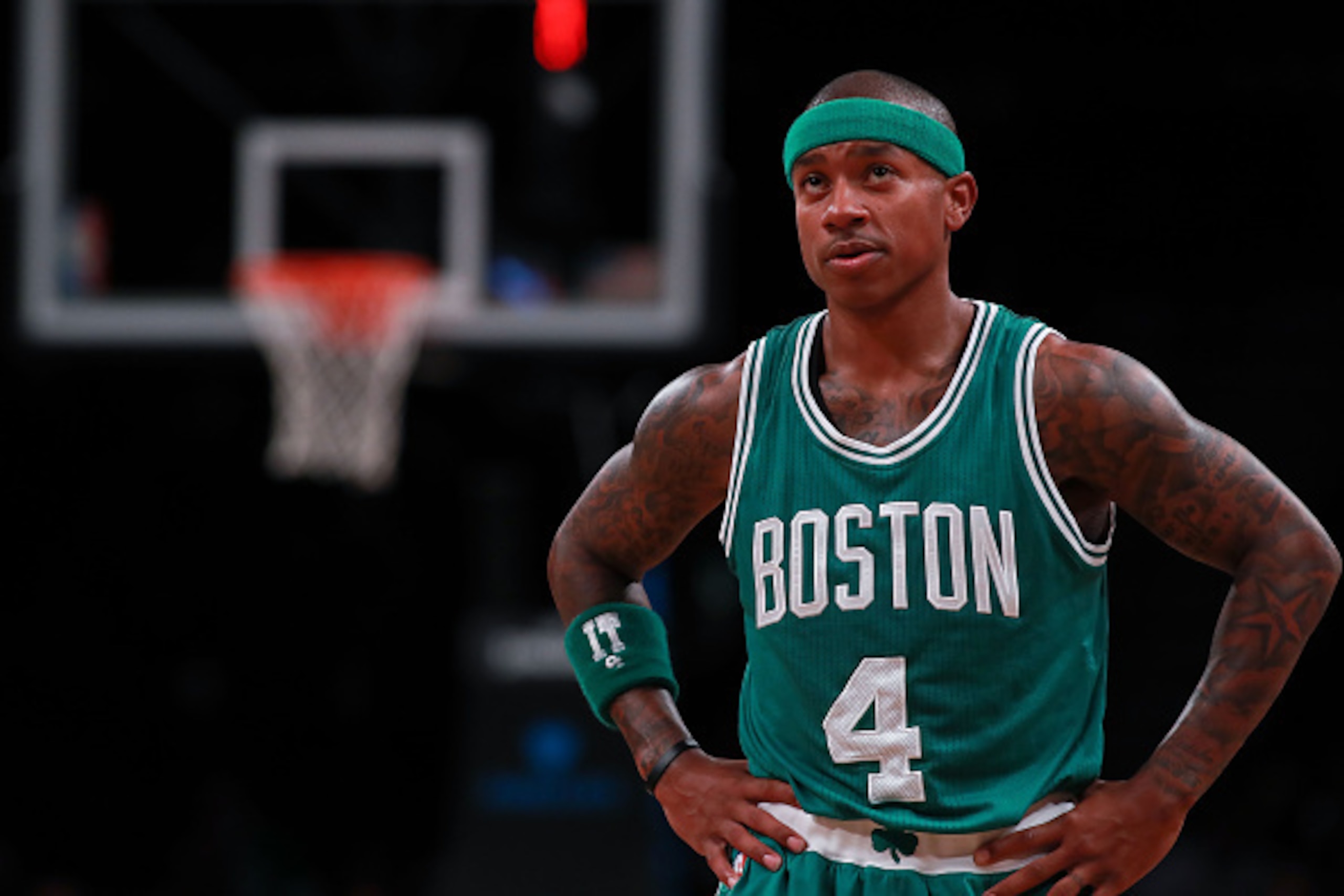
This leads us to Boston's most devastating scorer, a 5'9" trickster dynamo who lived in the paint despite playing for one of the worst three-point shooting teams in the league.
Thomas logged more drives than any player in the league last season: 52 more than runner-up DeMar DeRozan, and 143 more than Russell Westbrook, who played 140 more minutes!
"We didn't have as much space last year, and Coach still put me in position to get to the hole and be successful," Thomas said. "So I think with more space and more shooting, it's gonna allow me to be able to attack the hole even more."
According to NBAWowy, Thomas posted a surreal 64.6 true shooting percentage when the Celtics trotted out Crowder and Johnson in the frontcourt last season. Sprinkling Horford's outside shot into the mix should only make life easier.
Smart and Bradley play defense like a small army of starving Doberman Pinschers. They never stop hounding their man; they contest shots, disrupt pick-and-rolls, switch screens and force turnovers. Both will be even more tenacious (if that's physically possible) with Horford as their safety net.
The 22-year-old Smart could make a big leap with the ball in his hands this year. He has the second highest VORP (value over replacement player) in his draft class, per Basketball-Reference.com, and is destined to crack multiple All-Defense teams over the next few years. (Bradley made the first All-Defensive First Team of his career last season.)
Both are also critical in Stevens' flow offense—restless worker bees who exhaust a television audience—let alone the poor souls who have to deal with them on the floor.
The Achilles' Heel
For all this unit has going for it, there's one weakness that may prevent Stevens from using it as much as he wants: rebounding.
Boston tied Cleveland for the ninth highest offensive rebound rate in the league last season, but only five teams were worse than the Celtics on the defensive glass, according to Basketball-Reference.com. Going small doesn't exactly help in that area, and the loss of Turner and Jared Sullinger (their best rebounder over the last few seasons) makes a bad situation worse.
"We're going to have to replace [Turner's] rebounding from the wing, which was critical for our team," Stevens said. "And that's something that we did not do well as a team last year, and we're gonna have to do better if we want to be a better basketball team."
Let's say Boston is down two with three minutes to go against a Toronto Raptors frontcourt that features Jonas Valanciunas, Sullinger and DeMarre Carroll all crashing the glass every time DeRozan or Kyle Lowry jack up a shot. Or what about the Orlando Magic, with Bismack Biyombo, Serge Ibaka and Aaron Gordon?

That size isn't easy to deal with. Will it force Stevens to sub Johnson or Tyler Zeller in for Smart or Bradley? Or will opponents have to downsize in order to keep up with Boston's quickness on the other end?
"You gotta be able to rebound when you're in a small lineup or it doesn't work," Thomas said. "You've got to hit the boards a lot harder and box out."
"It takes a team effort," Crowder said. "We have to get bodies on bodies and rebound…guards gotta come in and help."
Rebounding is a potential flaw the Celtics will confront over and over again this year, even when they're big. But their ability to force turnovers and reign general chaos on both ends should overwhelm most opponents whenever they go small.
Thomas, Bradley, Smart, Crowder and Horford will be their lineup of death, and Stevens should have several combinations right behind them that are nearly as lethal.
Boston Blurbs
Defensive Recap
The Celtics may have the best defense in the NBA this season, but their primary scorer—the undersized Thomas—is perceived to be a weak link. Naturally, he doesn't agree with his poor reputation on that end.
"It is [unfair], but I understand, with being small. You've never seen them say one small guard is a defensive stopper. That's just how it is when you're small. It's different because, like, say somebody shoots over me and scores. They say he's too small. But they shoot over somebody that's 6'4" and score, it's like, well it's good defense, just better offense. So I understand that. It doesn't bother me anymore. I know if I wasn't a solid defender I wouldn't be in this league."
That last point is fair. Thomas played 2,644 minutes for one of the league's top defenses last year. That's hard to do, but most numbers still aren't on his side.
Boston allowed 5.1 more points per 100 possessions with Thomas on the floor last season; he ranked 54 out of 77 point guards in Defensive Real Plus-Minus (per ESPN.com), and opponents shot 14 percent (!) above their average within six feet of the rim when he was the closest defender, according to NBA.com.
Thomas has quick hands, fast feet and great anticipation. He fights over screens and knows when to duck under them. He exudes maximum effort more often than not, and scoring on somebody who's really trying, even if they're that small, isn't easy over four quarters.

But too often his strengths aren't enough to outweigh a serious size/weight disadvantage. Thomas can get bullied in the post by larger guards, a tricky spot for help defenders who don't want to leave their man while such a dangerous passer has the ball.

Plays like this bring Thomas' flaws to the forefront, and that sore only widens in the playoffs when the league's better teams go out of their way to poke it with a stick. But Stevens knows this, and there are ways to hide him against most teams. Until then, it's fair to say he's not Bradley or Smart, but is also far from a debilitating weakness.
Roster Crunch
The Celtics have 16 names signed to a guaranteed contract right now, which means at least one quality player has to be waived before opening night. With 11 already an absolute lock to make it, James Young, R.J. Hunter, Demetrius Jackson, Jordan Mickey and Gerald Green are five guys battling for four spots.
The main competition is likely between Young and Hunter—two young wings on rookie-scale contracts who can (ostensibly) shoot threes but struggle in so many other areas. Neither has stood out in preseason action, though it's unlikely Boston bases its decision on a handful of exhibition games.
If I had to guess, Hunter holds the edge for two reasons: (1) He's under the Celtics' control at a cheap price one year longer than Young, and (2) he can (eventually) be trusted with the ball in his hands. Hunter reads the floor in addition to spacing it out for others. While defense isn't his calling card, he's long enough to someday cover multiple positions.
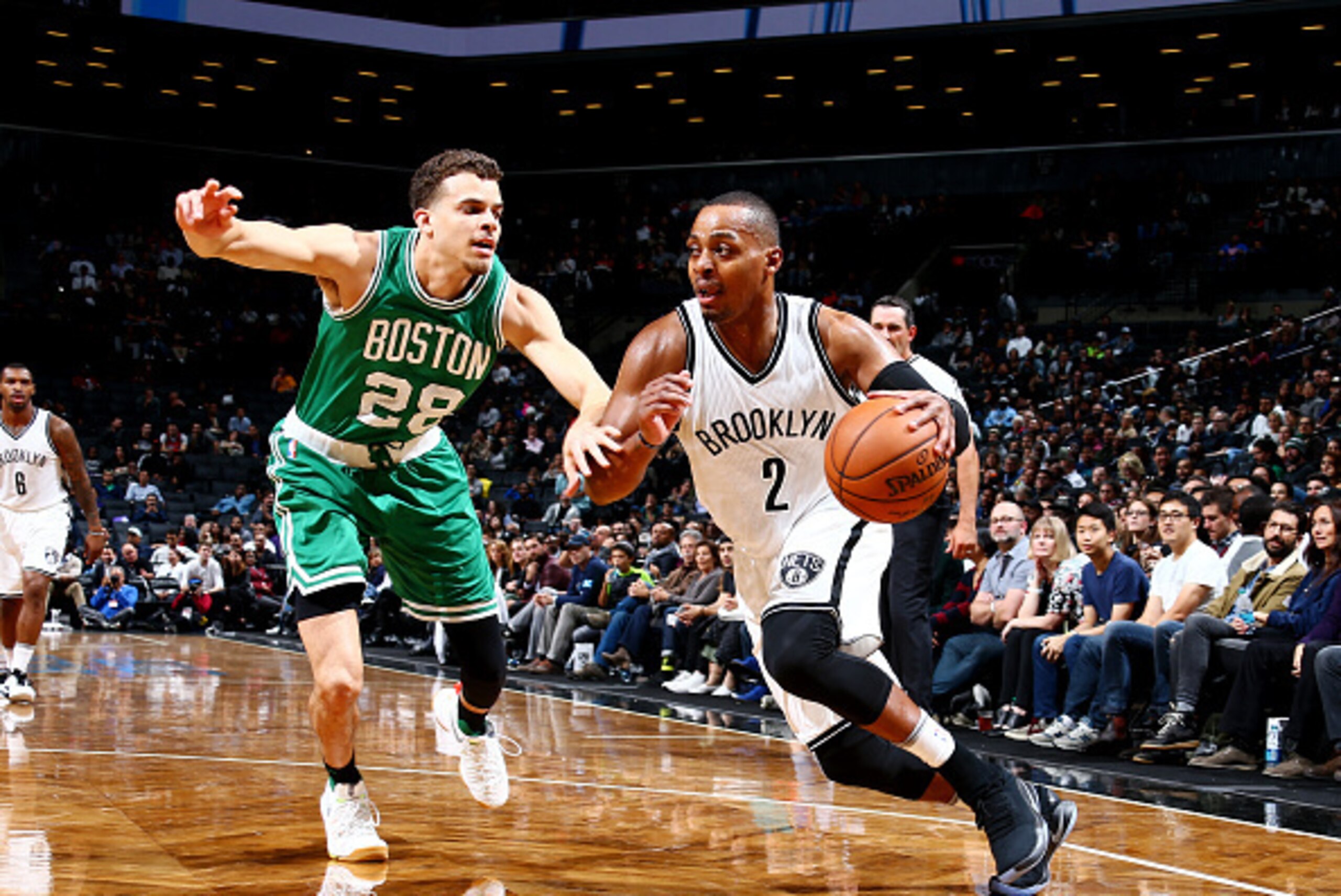
"[Defense] has been my main focus. I think before I was coming in trying to figure out how I can score. Now I'm just trying to figure out how I can help my team on the defensive end," Hunter told Bleacher Report. "I think that makes the offensive end a lot more easy and a lot less pressed."
It's technically possible Jackson, Mickey or Green get waived, but the latter two possess skills (rim protection for Mickey, three-point shooting and individual shot creation for Green) Boston needs. Jackson's four-year, $5.5 million contract (partially non-guaranteed after this year, according to ESPN's Chris Forsberg) signals the Celtics like what he brings to the table, likely as a stabilizing third point guard sooner than later.
They wouldn't offer that contract to a second-round pick if they didn't think he could help.
Thus, Young will be the odd man out. He's flashed scoring chops in the past, but he doesn't do anything to make those around him better. His legacy in Boston feels destined to be a gut punch for a front office that could've used the 17th pick in the 2014 draft on Rodney Hood or Gary Harris instead.
All quotes in this article were obtained firsthand unless otherwise noted.

.jpg?w=2560 "OBJ Calls Out Giants After Release")

.jpg?w=2560 "Rap: Lions, LaPorta End Contract Talks")

.jpg?w=2560 "Report: Baker May Miss Up to 6 Weeks")