

UFC's Era of Money (and Moneyweight) Fights Has Begun, and There's No Going Back
Shortly after Michael Bisping realized his career-long goal of capturing the UFC middleweight championship, the question of who he might fight next followed. It is a simple, obvious query—almost mandatory. Within days, a front-runner emerged: Dan Henderson.
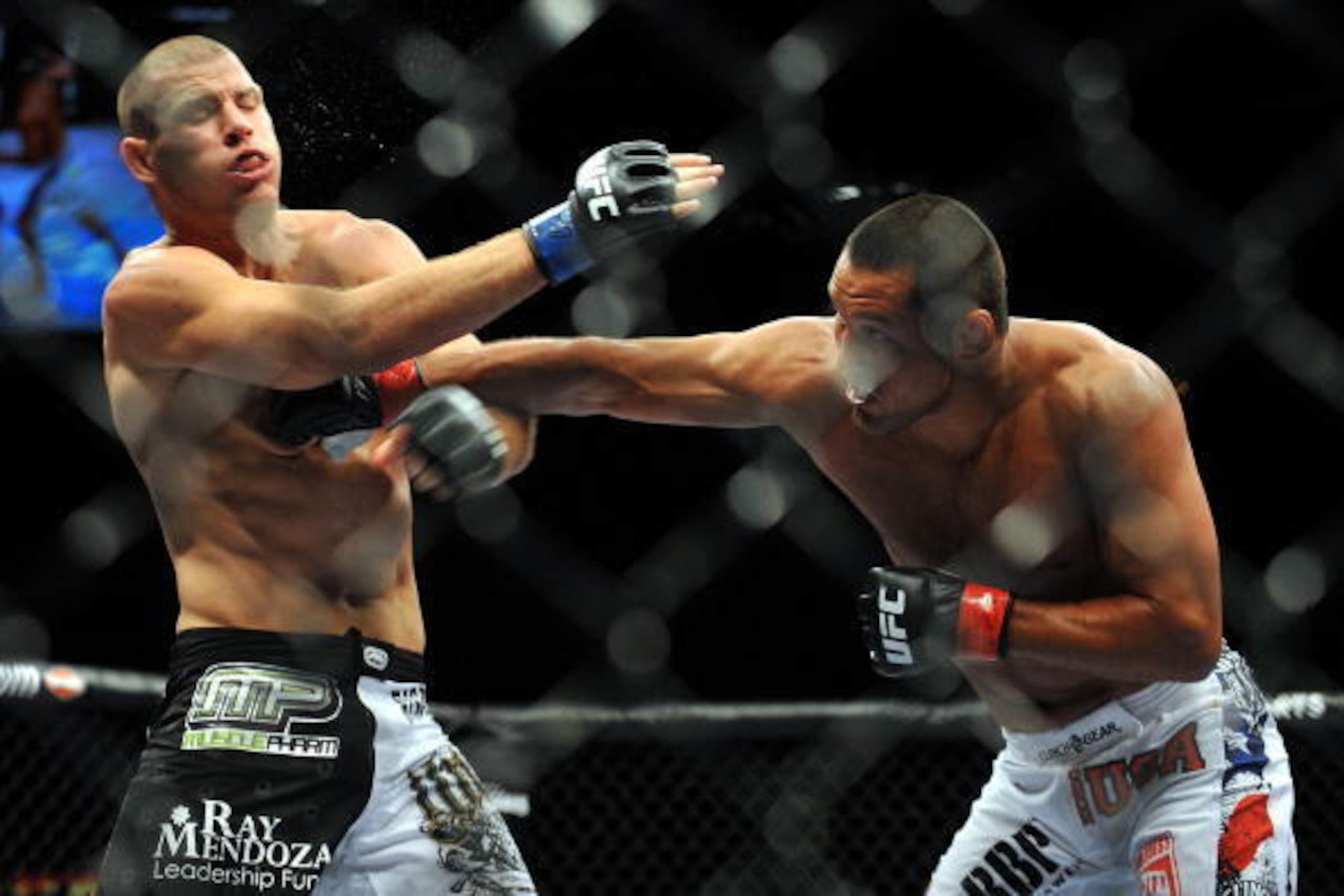
At 45 years old, ranked No. 12 in the division and with just three wins in his last nine bouts, Henderson called out Bisping, per Nick Peralta of MMA Outsiders, for a fight that seems like an odd match on the surface. Yet their shared history—Henderson’s knockout of Bisping at UFC 100 is one of the sport’s all-time epic finishes—lent the potential pairing some buzz.


And then a funny thing happened: Mostly everyone was on board.
Sure, the 11 fighters between Bisping and Henderson could offer a case for why they were more deserving, and a few of them—most notably Luke Rockhold and Ronaldo “Jacare” Souza—did. But in the end, it didn’t matter. The Bisping-Henderson rematch is booked for UFC 204 on Oct. 8 in Manchester, England.
It is just one of many recent cases that prove the era of money fights and moneyweights is in full effect, with fighters more proactively than ever trying to direct their own career paths past obvious pairings and toward those with higher earnings potential.
To wit, in recent months we’ve seen the following power moves:
- Men’s bantamweight champ Dominick Cruz told ESPN's Brett Okamoto he's eyeing a superfight with Jose Aldo or Demetrious Johnson.
- Women’s bantamweight champ Amanda Nunes told UFC Tonight (via Yahoo Sports) she’d wait for Ronda Rousey’s return.
- Newly crowned welterweight champion Tyron Woodley is interested in skipping top contender Stephen Thompson in favor of Georges St-Pierre or Nick Diaz, per Fox Sports' Jonathan Bradley.
- After winning the lightweight belt, Eddie Alvarez immediately targeted Conor McGregor and Diaz, per Okamoto.
Perhaps Alvarez’s take summed things up best, when he told Okamoto: "Fighting the best guys in the world doesn't pay as good as the circus. I want to join the circus. I'm trying to get that circus money.”
With the belt in tow, Alvarez has every right to flex his muscle, but it isn't just champions who are doing it. Just in the last month, Dennis Bermudez called out Frankie Edgar, David Teymur called out Sage Northcutt, Al Iaquinta called out Thiago Alves and Will Brooks called out Edson Barboza.
Everywhere you look, fighters are attempting to plot their own course. It’s a trend that shows no sign of slowdown and may soon become the norm rather than the exception.
While callouts are hardly new, the widespread prevalence of the practice is a recent development. For the longest time, fighters would win a bout and be asked by UFC announcer Joe Rogan or media members who they would like to fight next, only to defer to the UFC’s matchmaking team.
That’s no longer the case. Perhaps, as they’ve become more aware of the UFC’s booking tendencies—and what kind of fights draw bigger numbers—the athletes have adapted.
“I guess fighters are looking at the bottom line,” Bisping told Bleacher Report. “You want big-money fights, and sometimes the No. 1 contender isn’t a big-money fight. If you’re the champion, you want to get the most money possible.”
Perhaps the best recent example of fighters calling their shots came as a dual effort. Though there was no outright collusion between the pair, McGregor and Diaz essentially told the UFC that they were not willing to fight anyone other than each other.
Even when the UFC removed McGregor from UFC 200 for a refusal to meet press obligations, Diaz declined a fight with a replacement opponent, holding out for what would likely be a larger payday with McGregor. In the end, the UFC gave in and rebooked the matchup for UFC 202.
“[McGregor] talks about all these fighters like they’re f--king dumb, and he’s right. They’re all f--king dumb,” Diaz said during a recent media conference call. “I’m not one of those guys that just sat around here taking contracts. I’ve been bitching about my contract for the last six years. I’ve been going through hell, and so I knew I was going to get mine when it was time to get mine. I was going to get what I was going to get regardless, and I had a plan to do it.”
Diaz, along with his brother Nick, has been one of the rare fighters who has publicly aired contract grievances with the UFC, but it may have been opponent McGregor who has been more of an influence on the rest of the roster in the current money-fights trend.
From the time he arrived in the UFC in 2013, McGregor made everyone on the roster a target, weaving his own narrative as he ascended the rankings. The fight world quickly took notice, and pop culture wasn’t far behind. While he is gifted with the uncanny ability to turn a memorable phrase, McGregor made money his focus, openly discussing eight-figure contracts with Fox Sports 1 (via Sherdog) and the possibility of becoming a billion-dollar man, per the Independent's Joe Callaghan.
In a sport where who’s earning what has been something of a secret, hidden behind mysterious locker room bonuses and a secret pay-per-view payout formula, McGregor’s willingness to bring money out of the shadows drew both attention and intrigue.
It’s also possible that the recent UFC sale for a $4 billion price tag keyed some minds to figure out how the athletes could earn a bigger piece of the pie.
“Look, we deserve everything,” McGregor said during the recent UFC 202 media call. “We go in and put it on the line more so than any human being on the planet, so, and that’s for all of your entertainment, so we deserve to be on all of this; we deserve our name in lights. We deserve absolutely everything for what we do here.”
Still, there has been backlash from the recent practice.
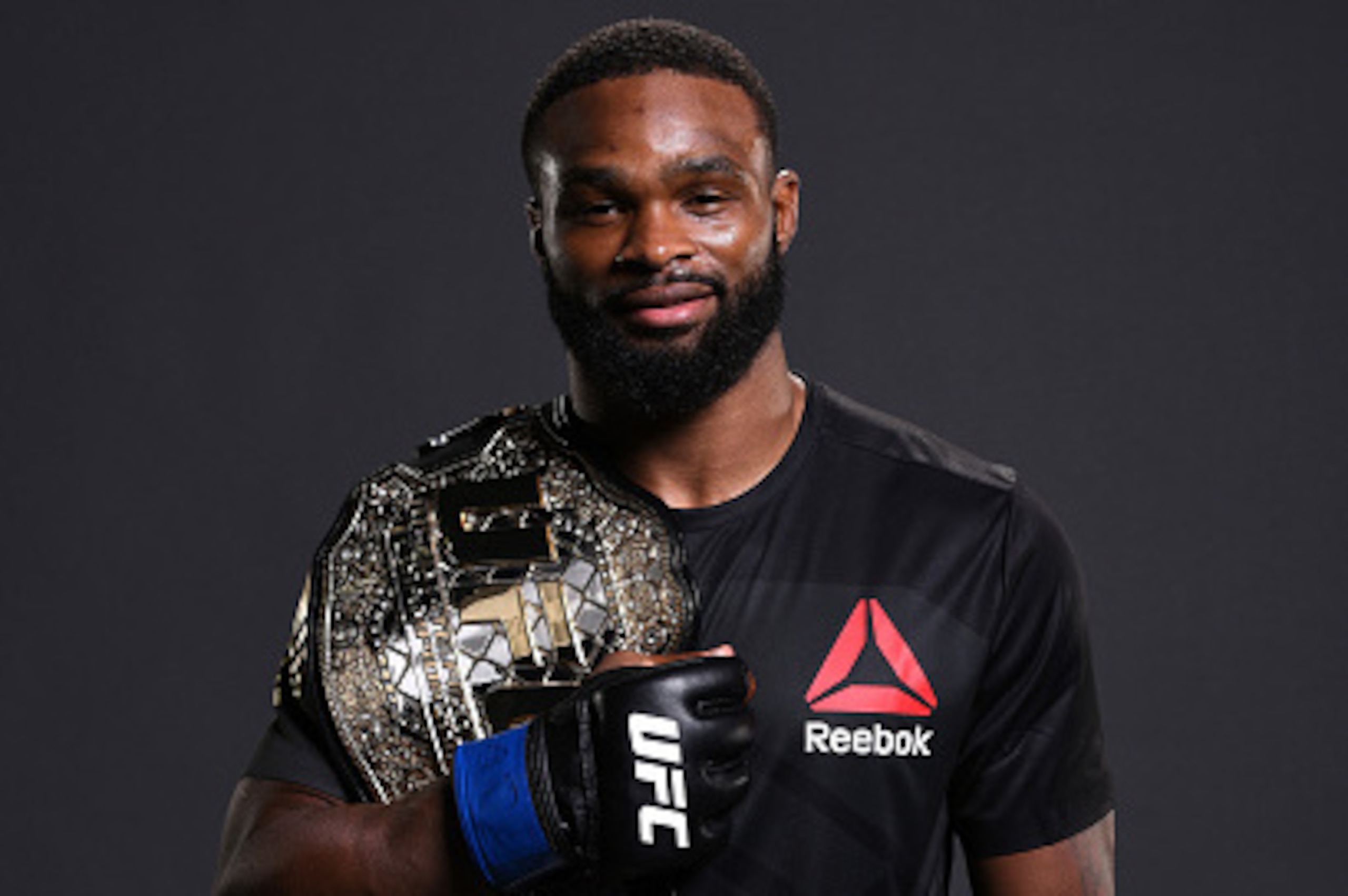
Woodley, for one, received heat after offering his preferred opponents, with accusations that he’s “ducking” Thompson.
For the fighters, it’s understandable. It is their job to maximize their earnings. No one in corporate or blue-collar America would turn down more money to do the same work if all they had to do differently was to say a few words. Verbalizing a preference can make all the difference. Look at McGregor. Look at Diaz. Look at Henderson.
"At the end of the day, I'm the one who's in control of my bank account," Woodley said during a recent interview on The MMA Hour. "I'm the one who's in control of my four kids, my wife, the house that I want to pay off this year. These things are realistic goals that are within reach with the right fight. So, I don't have to explain that to them.”
UFC executives generally like when fighters call out opponents. It puts the idea out there for them to gauge interest. It gets people talking. It creates buzz, which is crucial in generating momentum to draw viewers, who in some cases have to spend up to $60 to watch a bout on television.
Unlike stick and ball sports, which have regular schedules that even passive fans easily follow, MMA requires organizations to build attention for each event from scratch. In calling out potential foes, fighters can jump-start this process, often to the benefit of all parties.
“We’re not slaves,” said Bisping, who when out of the cage moonlights as a UFC on Fox analyst. “We’re not forced to fight anybody. We’re not prisoners. We’re allowed to say we want to fight this guy. In that same token, while we’re allowed to say, ‘We don’t want to fight this guy and want to fight this guy,’ UFC is allowed to say, ‘We don’t want to make that fight.’ It’s business. It’s a give-and-take relationship.
"We can give our opinions and they can give theirs, and we can agree or disagree. It’s about finding a happy medium. It’s about finding a fight all sides—your opponent, yourself and the UFC—want to make and one that is logical.”
In the end, that is a difficult balancing act, one where the merits of a win streak often lose out to cold, hard cash. Someone may have to tell Thompson that while his seven straight victories are a wonder, he’ll have to get back in line. Someone may have to tell Alvarez that his superfight is a long shot. And no one can tell Aldo when McGregor will make it back to the division to have a rematch with him.
It is a messy, inexact science, but it sure keeps things interesting. And that is key to it all, and why it will continue. The days of saying nothing are long gone. Speaking with your fists is no longer enough. Fighters have platforms to voice their demands, and they’re using the system to do just that.
The era of money (and moneyweight) fights has begun, and there's no going back.



.jpg?w=2560 "Grading WWE Raw 🔠")

.jpg?w=2560 "Viral Rams Coach Vid 🖕")