

How Rising Star Alexander Zverev Can Grow from Painful Defeat to Rafael Nadal
It was a delicious fourth-round duel, and 18-year-old wunderkind Alexander Zverev had the great Rafael Nadal on the ropes—match point in motion and one last ball to put away.
The Spaniard desperately floated his backhand retrieval into the center of the court like a wounded bird. Zverev had dutifully followed up his potential winner by covering the area for a match-winning forehand volley. But the ball, like its deliverer, had a stubborn streak as it kept diving, with the Spaniard’s commanding spin buzzing angrily into Zverev’s strings. There it landed, sticking on his racket head just long enough before diving off the reply and sinking into the net with a sickening thud.
TOP NEWS
US Open final delivers record viewership

Week 2 NFL Power Rankings 📊

Top Week 2 Fantasy Football Pickups 🏈
“I missed probably the easiest shot I had the whole match,” Zverev summarized in ATP World Tour.
Suddenly, Zverev was aware of the moment that hovered like a rain cloud in the desert air. He should have finished off "the old toro," and he knew it. Nadal was still alive, pawing and daring Zverev to put him away.
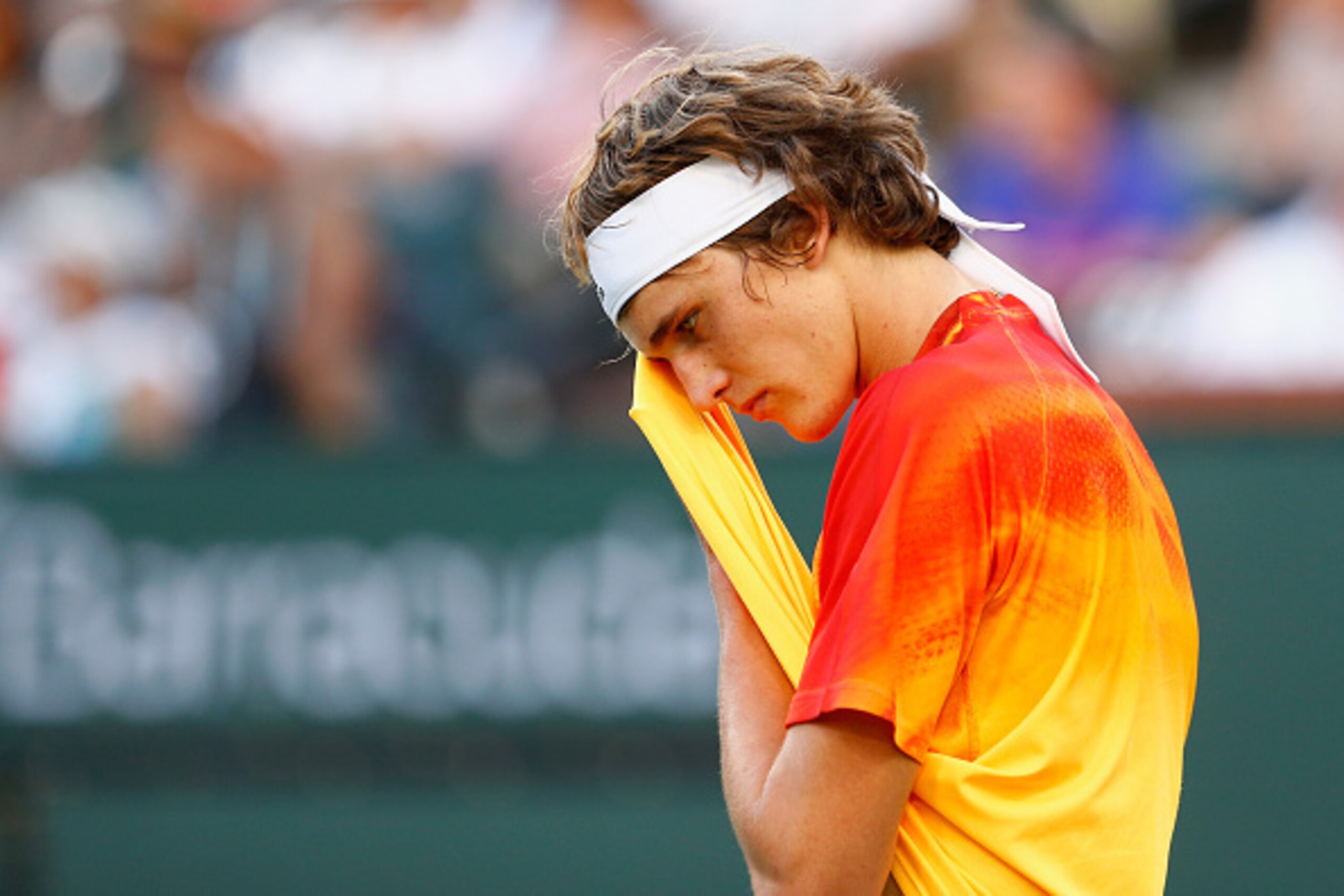
From there, it was all a blur as Zverev staggered in the ring like a boxer who had lost his legs. His mechanics disappeared. He dropped 14 of the next 15 points, and suddenly he was walking over to the net to shake Nadal’s hand in stunned defeat.
No doubt about it, Zverev tightened up, something that has happened to countless players over the years when faced with all-important points. It was heartbreaking, cruel and unsettling. Yet it was there for the taking, and Germany’s future star learned a little more about climbing into the backyard of Tennis Club Elite.
Should he dwell on the moment? In the short term, tennis players would love to forget and move on, and the great ones do, but like sage elephants, they will remember and plot for the next time. Champions are willing to look failure in the eye and beat him back the next time.
This is one lesson that Zverev will face again, and hopefully soon.
The Promise
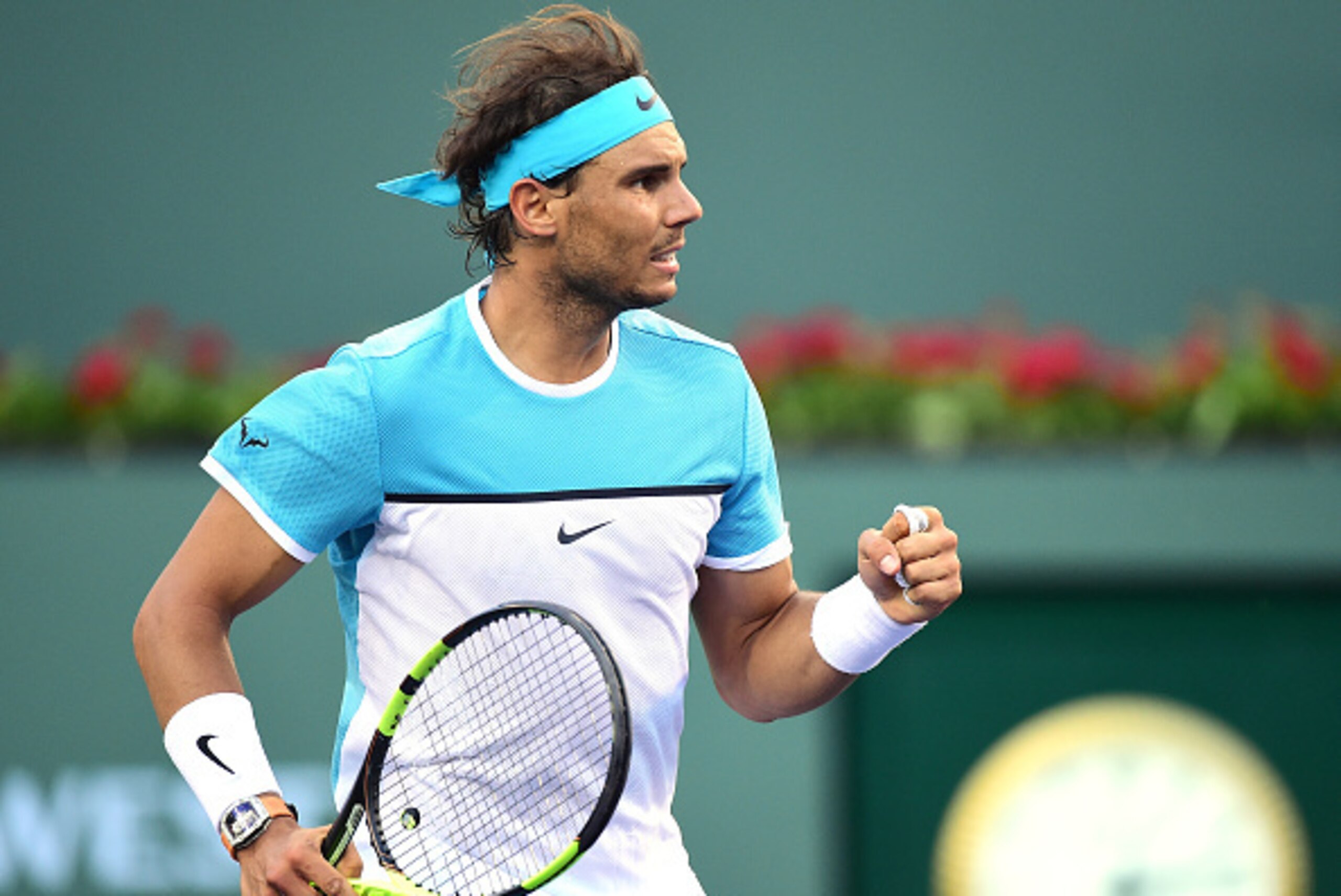
Much has been made about Zverev’s fluid and lively strokes. Lean as a net post at 6’6”, he would need to hold his equipment bag to challenge the scales for 200 pounds. But he can already snap off a groundstroke that bends onto the court surface, springs up with biting spin and disintegrates off the perimeter wall as if it were a water balloon bursting into a wall.
There were times in the Nadal match that he hit over and through the legendary champion as if the future had arrived.
There’s a lot more to being a champion than having talent. For every Nadal, there are hundreds of pros who have world-class skills and not a few who were proclaimed as potential stars. In just the past week, Tomas Berdych and Rafael Nadal both tipped off the press that Zverev could one day be the world No. 1. No pressure, right?
World-class talent and potential? Check.
Now comes the hard part: growth, grind and greatness.
The first part of this formula is tireless consistency and improvement. Will he be satisfied to show up at Miami and play a round or two, or will he have the energy and maturity to blast through a few top-50 players?
It doesn’t stop there either. The most demanding part of the tennis year is coming up with the clay-court swing in Europe, and Zverev will either grow into a top-20 caliber player or he will fade from the draws like a backpedaling pusher.
Red clay’s grinding demands might be the ultimate test of his skills. Does he have the patience to deliver his master strokes like this generation’s version of Gustavo Kuerten, albeit with the booming blasts of a Goran Ivanisevic?
Clay is where stamina and mobility are tested. It’s where the strategic brain is conditioned to play this sport. For all of the recent praise, Zverev is only 27-31 on the ATP tour, including eight wins in 17 clay-court matches. He’s an untested prototype, and it remains to be seen if he can deal with all varieties of troublesome topspin while adding aggressive confidence to put away feeble challengers and strong stars.
The German phenom need look no further than Nadal, Roger Federer and Novak Djokovic for lessons on work ethic and mental toughness. These legends have unmatched desire in their footwork, as if this were the final arbiter of separating the legends from everyone else.
Their eyes always flash with hunger for winning. Their minds refuse to lose, even in defeat. They have that “it” factor that cannot be bought, sold or even foretold. They know how to deal with greatness without shrinking away.
Only time and sensational success will begin the process for Zverev.
On Facing Failure
Writer Ernest Hemingway created novel heroes who chose to face death. The important thing was how they acted, not whether they would survive and live comfortably. Many tennis players want success, but they tank or unravel when placed in the crucible of big points. Failure can bring about the best or the worst in talented players.
Zverev has to care that he lost to Nadal, and he must promise himself that the next time he has a champion behind the eight-ball, he will finish him off. He has to want to deliver the finishing blow, even obsess over it a bit and believe that this will be his trademark.
There was a bit of symbolism in how he lost to Nadal, so close but far from ready. However skilled these young players like Zverev, Nick Kyrgios and Dominic Thiem are proving to be, finishing off an aging Federer, wounded Nadal or scrambling Andy Murray is another task entirely. Defeating them at majors or Masters 1000 tournaments may as well be on another planet.
But Zverev can take the hard lessons of this defeat by emulating something from Nadal’s spirit. This is the next ingredient in his ambitions to be the best. However far he travels, he must arm himself with confidence, attack with purpose and embrace the journey.
Zverev looks like he has all the potential in the world, but potential is another way of promising something that has not happened. It is not fulfillment.
Will he love training?
Will he have a killer’s mentality in big matches?
Will he first win an ATP title?
Indian Wells 2016 is just the beginning for the talented, young Zverev, but we now get a glimpse of failure and look forward to watching his growth.

.jpg?w=2560 "Report: Darnold Could Miss 3-6 Weeks")
.jpg?w=2560 "Breaking News")
.jpg?w=2560 "Week 1 Fantasy Duds 👎")