


The Memphis Grizzlies weren't always masters of the NBA's grit-and-grind game.
They weren't even always Bluff City residents.
Their first home base was Vancouver, British Columbia (one of two Canadian markets the league established 20 years ago, along with the Toronto Raptors), and the Grizzlies' first franchise face was a player better known by his nickname than his legal one.
TOP NEWS
Wemby's Lopsided Statline 🧐
First NBA Power Rankings 📊
Four technicals issued after scuffle in Thunder-Spurs
Bryant "Big Country" Reeves, a two-time Big Eight Player of the Year at Oklahoma State, was the NBA's first player drafted by a Canadian team. The Grizzlies grabbed the burly 7-footer with the sixth overall selection of the 1995 draft.
By 2002, both Reeves and Vancouver had been wiped off the NBA map. Though unfortunately brief, their shared journey produced tales that could live on for decades.
With Vancouver back on basketball's radar as the site of Sunday's Raptors-Los Angeles Clippers preseason tilt, this is a perfect time to relive those stories.
The Birth of Big Country
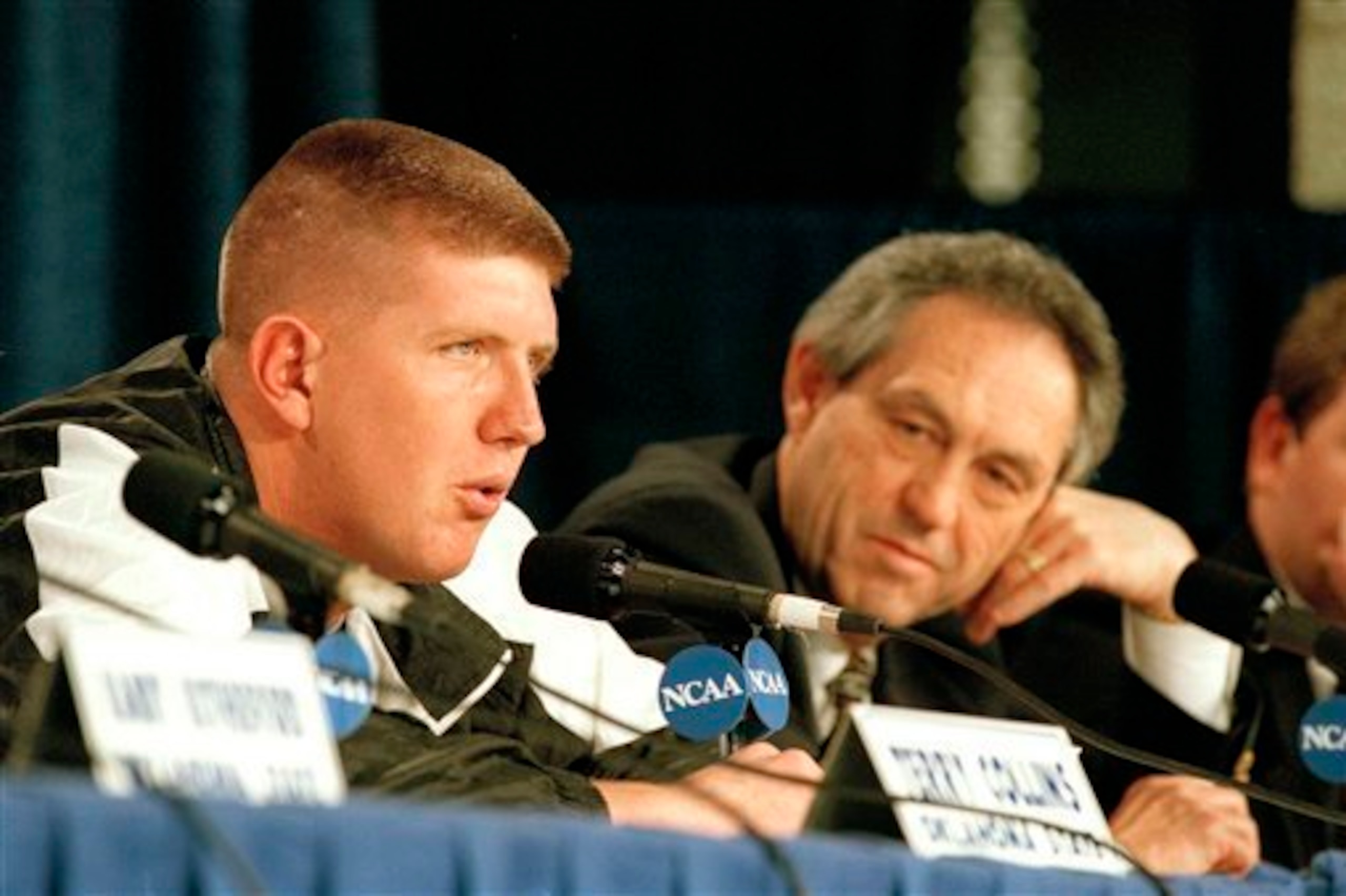
Reeves' rise to basketball prominence could not have had a more improbable starting point.
He grew up in Gans, Oklahoma, the type of anonymous middle-America town that's missed with a single blink.
"The town's got three buildings, a school, the post office, a store—oh, excuse me, it has a volunteer fire department, too," Reeves said in 1995, via Dave Hyde of the Sun Sentinel. "It has one stop sign.
"The reason a stop sign was put up there was so people coming through would have to stop, and then they could get a whole view of Gans before they left."
But hoops prospects can be discovered anywhere—especially when they stand 7'0" tall and tip the scales at 280 pounds, as Reeves did. His combination of size and raw skill lured major college coaches to the middle of nowhere. Oklahoma State's Eddie Sutton made a visit. So did Indiana's Bob Knight.
Reeves went with Sutton to Stillwater. After a quiet freshman campaign, Big Country erupted for 19.5 points on 62.1 percent shooting and 10.0 rebounds per game as a sophomore.
"He just didn't look like a basketball player other than his height, but he was," longtime Oklahoman writer Berry Tramel told Bleacher Report. "He was 7'0" and thick and had unbelievable hands. That's what made him a ballplayer. He could catch just about any kind of pass and had a nice, soft shooting touch."
Reeves' ascension continued through his senior season, when he led the fourth-seeded Cowboys to the 1995 Final Four. Through the first four rounds, he waged war with a quartet of future NBA bigs—and impressed every time out.
| March 16 | 21 points (6-of-12) | Malik Rose (Drexel) | 17 points (6-of-22) |
| March 18 | 26 points (9-of-17) | Antonio McDyess (Alabama) | 22 points (9-of-22) |
| March 24 | 15 points (4-of-15) | Tim Duncan (Wake Forest) | 12 points (6-of-11) |
| March 26 | 24 points (10-of-21) | Marcus Camby (UMass) | 6 points (2-of-10) |
The Cowboys fell to the top-seeded UCLA Bruins in the Final Four but not before Reeves made headlines again. While tuning up for the national semifinal, the bulky big man hammered down a backboard-shattering reverse slam.
The legend of Big Country was growing, and the NBA tracked his progress closely.
Starting from Scratch

The Grizzlies had to hit a home run with their first draft pick.
They started behind the eight ball. As part of their expansion agreement, both the Grizzlies and the Raptors were prevented from landing a top-five pick in the 1995 draft. What's more, other teams could protect their top-eight players from selection in the "expansion draft." Vancouver literally had to build the bulk of its roster from leftovers.
Breaking ground in a new market, it desperately needed an attraction to build local support.
"You had to build a fanbase with fans that, up until that point, were not what you call rabid NBA fans," current NBA TV analyst and then-Grizzlies general manager Stu Jackson said. "Their knowledge of the game was not the same as it would be in a U.S. city."
A star in the college ranks, Reeves had the most notable name of any player left on the draft board. More importantly, he brought the burly frame the Grizzlies craved to anchor their interior.
"Our feeling was that we wanted to start building a frontcourt, getting some size which we were lacking—quality size," Jackson said.
Quality size in the NBA looked dramatically different then from how it does now. The All-Star rosters for Reeves' rookie season featured the likes of Shaquille O'Neal, Alonzo Mourning, Patrick Ewing, Hakeem Olajuwon, David Robinson and Dikembe Mutombo.
Big bodies were an essential element of survival then, and the Grizzlies viewed Reeves as their best option. He mostly looked the part as an NBA rookie, tallying 13.3 points and 7.4 rebounds in 31.9 minutes per game.
But the team was a mess. After winning their first two games, the Grizzlies lost their next 19.
Reeves helped pump the brakes with then-career highs of 25 points and 17 rebounds in a four-point win over the Portland Trail Blazers in mid-December, opening an 8-12 stretch for Vancouver. But the Grizzlies stumbled through a 23-game losing streak later on and finished their inaugural season with a league-worst 15-67 record.
They nabbed Shareef Abdur-Rahim with the No. 3 pick in the ensuing draft and selected Mike Bibby second overall two years later. A young nucleus was slowly taking shape, but the team was woefully short on proven players.
"Our main veteran guys were Shareef Abdur-Rahim, he was one year older than me," Bibby recalls. "Country Reeves was about two or three years older than me. Our go-to guys were still kids."
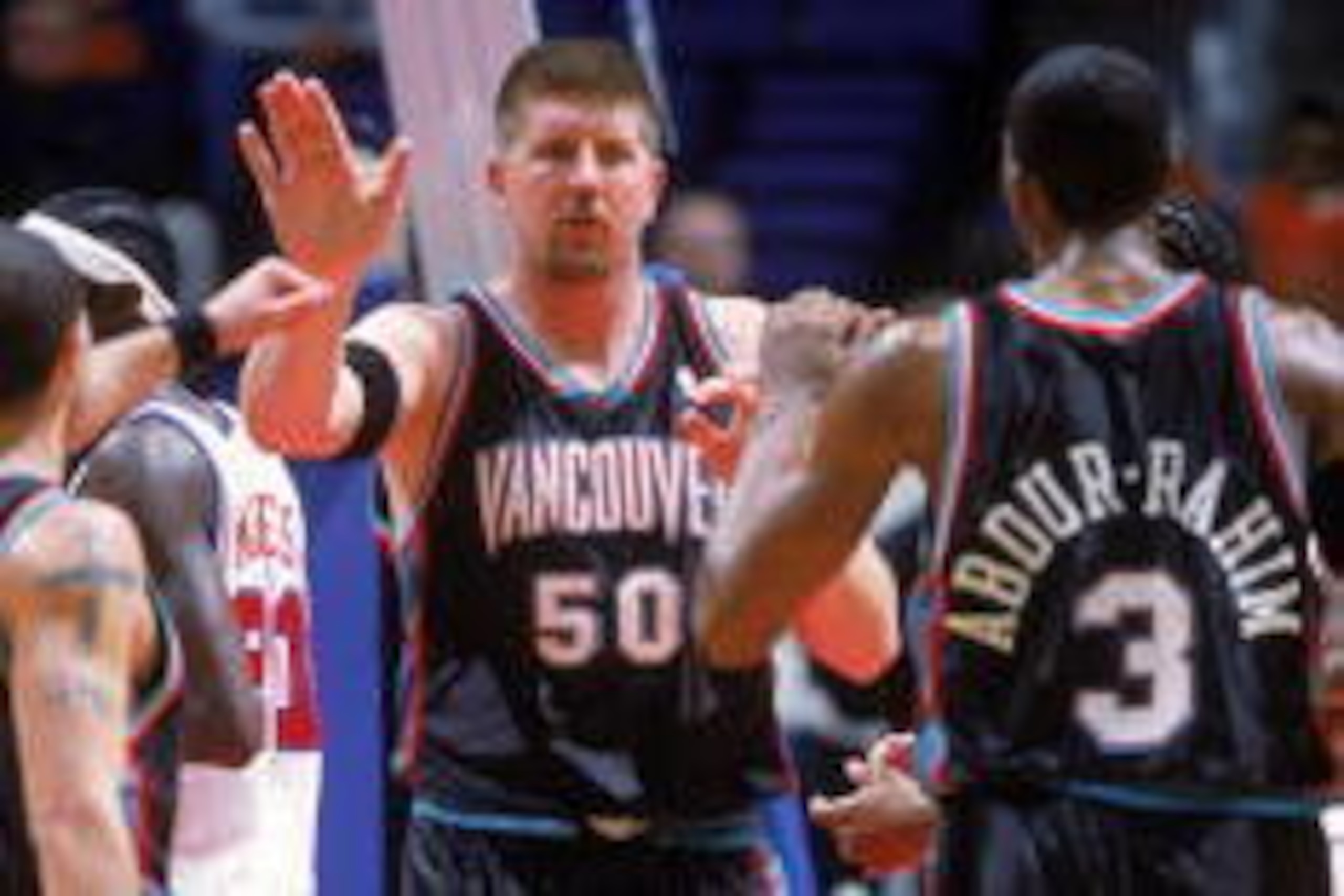
Vancouver's need for more talent was both obvious and glaring, but identifying the problem didn't make it any easier to solve. The Grizzlies had to sell players on the prospect of living in Western Canada, and not everyone was buying.
Steve Francis forced his way out shortly after Vancouver made him the No. 2 pick in 1999. The three-time All-Star was far from the only one with reservations about playing there.
"[The idea] made people uncomfortable," said 14-year NBA veteran Craig Ehlo. "I think it was a failure on our part that none of us had ever been to those cities. ... The lifestyle in those cities was great. But it was just unfamiliar territory and a different government."
Because the Grizzlies couldn't find any quick-fix players, they mostly trod water near the bottom of the standings. Reeves' individual ride was more turbulent.
Quick Rise, Faster Fall

He went from a town of 300-plus to a foreign metropolis with nearly 4 million people. Culture shock was unavoidable.
"He didn't seem like the guy who would like any kind of city," Tramel said. "Stillwater was too big for him."
On the court, Reeves' style appeared better suited for college. He played at a plodding place and lived below the rim. His lack of explosiveness carried fatal-flaw potential in a league littered with world-class athletes.
But he found a way to make it work.
He averaged 16.2 points, 8.1 rebounds and 2.1 assists as a sophomore, then upped the ante with 16.3 points on 52.3 percent shooting, 7.9 boards, 2.1 assists and 1.1 blocks the next year. He had 25 games of at least 20 points and 10 rebounds during that stretch, which tied for the 18th most in the NBA.
"He had some moments where he showed flashes of being what we thought he could be," Jackson said.
Reeves had enough of those moments that the Grizzlies rewarded him with a six-year, $61.8 million contract extension after his second season. The rate looked relatively reasonable through the following campaign, but the 1998-99 lockout proved costly for both the player and the franchise.
When play resumed, Big Country's nickname seemed more apt than ever—he was 40 pounds above his normal playing weight. Several players ballooned during the downtime, with Shawn Kemp and Vin Baker being among the most notable, and the added girth was a burden Reeves didn't need.
"It might be a point of embarrassment," Reeves admitted when asked if the extra weight would harm his career, via Mike Wise, then with the New York Times. "I don't know, I haven't been faced with that yet."
He'd face it shortly thereafter—and the pounds proved more than embarrassing. He began battling chronic back pain. He made just 25 appearances in the truncated 50-game season, and his field-goal percentage flatlined to a dreadful 40.6.
The Grizzlies finished that year with an anemic 8-42 record. Their .160 winning percentage was the seventh worst in NBA history at that time.
By the start of next season, Vancouverites had seen enough. The Grizzlies averaged only 13,899 fans in 1999-00, a dramatic drop from the 17,183 who came during their inaugural year, per ABPR.org.
"I think it would have been different for Vancouver if we were winning and it was exciting, but I don't think it was," Bibby said.
That was the beginning of the end for the Grizzlies.
Plagued by a weak Canadian dollar, the franchise was in financial ruins. The Grizzlies were sold twice in 1999 and 2000, ending up in the hands of the late Chicago businessman Michael Heisley, who relocated them to Memphis.
Reeves limped through the final two seasons in Vancouver, averaging just 8.6 points and 5.8 rebounds. He made two preseason appearances for Memphis, before succumbing to his back pain and retiring in 2002.
He's been nearly invisible on the basketball landscape ever since.
Gone Without a Trace
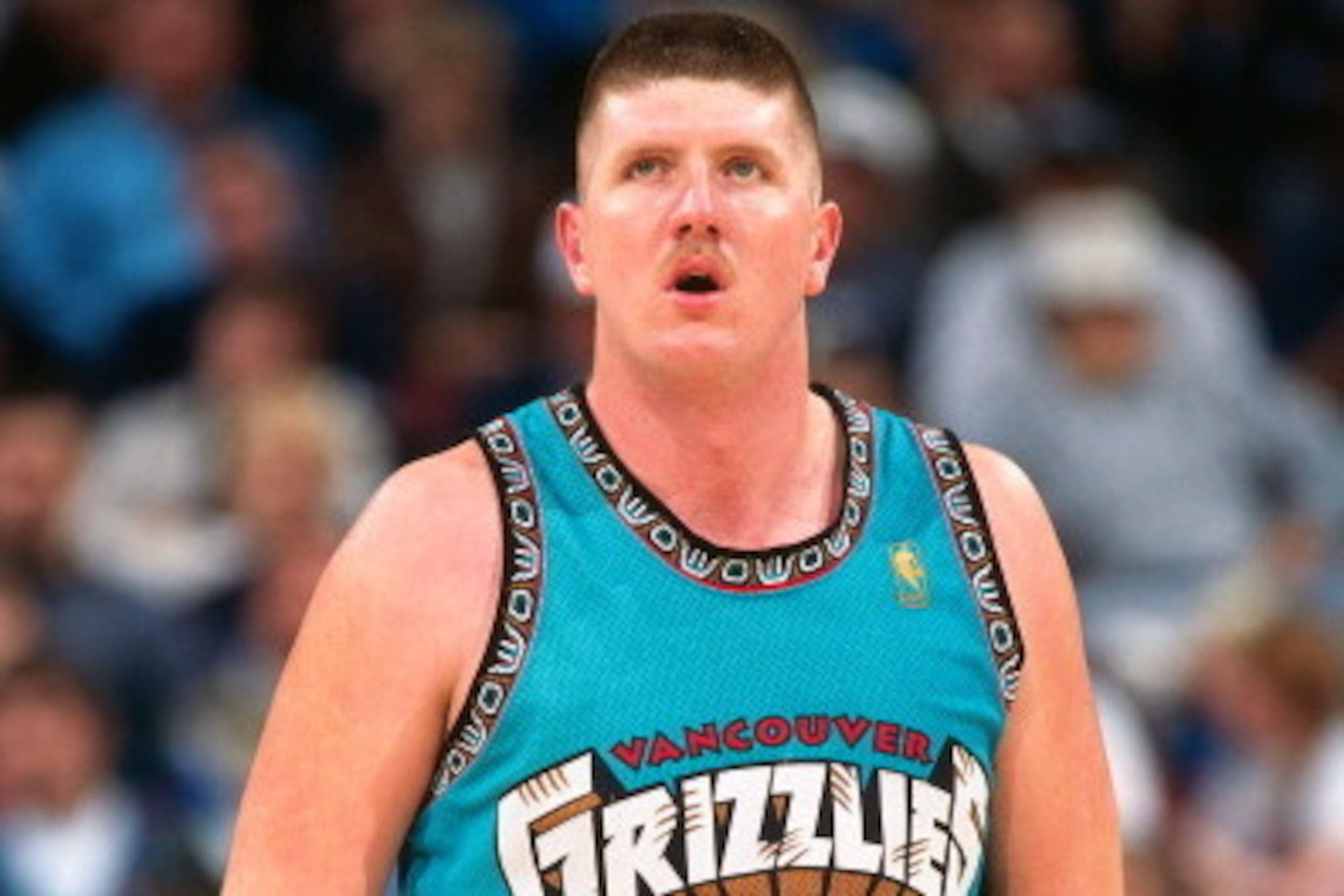
The Grizzlies have never looked back to their old home. Since moving to Memphis, they've had eight winning seasons, eight playoff appearances and four postseason series victories.
Meanwhile, Reeves' current place of solitude is a 300-acre cattle ranch, banked against the Arkansas River and a stone's throw from Gans. In fact, it's his place for almost everything.
"He likes to fish and hunt and stay up there, go into the convenience store if he needs to," Tramel said. "And other than that, he's not too interested in much else. ... I don't want to say he's a hermit, but he's about one step from it."
Even when he played, he rarely strayed too far from it.
"A lot of the time he kept to himself," Bibby said. "You'd see him at practice, [then] he'd go home. We'd go on the road, you wouldn't really see him."
Reeves kept quiet with the media then, and that approach hasn't changed. (Attempts to reach him for comment were unsuccessful.) His interactions were polite, but he kept outsiders at arm's distance.
When he walked away, he left a perplexing legacy behind. He's a bust in the eyes of many—NBC Sports included Reeves on its list of all-time NBA draft busts—and he couldn't maintain the playing level where the Grizzlies needed him to be.
"When you go back and look at 1995, and the players that were available in the top five of that draft, I think it's safe to say that had ourselves and Toronto been able to pick in the top five, it may have changed the direction of both of our franchises," Jackson said.
| 1. Joe Smith | GSW | 10.9 PPG, 6.4 RPG | Played for 12 teams in 16 seasons |
| 2. Antonio McDyess | LAC (traded to DEN) | 12.0 PPG, 7.5 RPG | All-NBA third team in 1998-99, All-Star in 2001 |
| 3. Jerry Stackhouse | PHI | 16.9 PPG, 3.3 APG | All-Rookie first team, Two-time All-Star |
| 4. Rasheed Wallace | WAS | 14.4 PPG, 6.7 RPG | Four-time All-Star, NBA champion (2004) |
| 5. Kevin Garnett | MIN | 18.2 PPG, 10.2 RPG | 15-time All-Star, MVP (2003-04), Defensive Player of the Year (2007-08) |
| 6. Bryant Reeves | VAN | 12.5 PPG, 6.9 RPG | All-Rookie second team, Played six seasons |
| 7. Damon Stoudamire | TOR | 13.4 PPG, 6.1 APG | 1995-96 Rookie of the Year, Played 13 seasons |
But Reeves didn't lack ability.
"He was a terrific post player with unbelievably soft hands and great feet," said Turner Sports analyst Greg Anthony, the Grizzlies' first pick in the expansion draft. "His struggles, like most young talents, were defensively in space. But his talent was undeniable."
Unfortunately, talent isn't always enough. And Reeves ran into some problems with things he couldn't control: injuries (both to his back and his knee) and expectations.
"I thought he got drafted too high," Tramel said. "It was a different game 20 years ago, but it wasn't that different. ... You still had the big plodding center—there was room for those guys, they could help you—but he was drafted sixth? That seemed a little high to me."
Maybe things could have gone differently if Reeves had been selected a few slots lower. Maybe if he hadn't been immediately shipped to a foreign country. Maybe if he had been surrounded by battle-tested veterans who could guide him on and off the floor.
Even if his career didn't change, maybe the public perceptions of it would have.
But he wound up in a role he wasn't built to fill and in a body that couldn't support sustained success. He was the Grizzlies' first franchise face in both status and salary, but his star always fit best in the skies above the Sooner State.
It's fitting, then, that his journey has come full circle. Big Country is back where he wanted to be.
All quotes obtained firsthand, unless otherwise noted. Statistics used courtesy of Basketball-Reference.com.
.jpg?w=2560 "A.J.'s Message to Hurts 🙏")
.jpg?w=2560 "NFLPA Makes Hurts Statement")
.jpg?w=2560 "Rams to Sign New Kicker")