Mardy Fish Attempts to Redefine Career Again with an Inspiring Comeback
He was in the middle of a late-career renaissance, finally maximizing his potential and enjoying his best results on a tennis court.
And then everything came crashing down.
Mardy Fish, 33, had already been through plenty of ups and downs before March 2012. His career started off with a bang in 2003 when he won his first title in Stockholm over Robin Soderling and made three other finals—including a tight loss to Andy Roddick at the Cincinnati Masters. At age 21, Fish looked ready to join Roddick as the next great American male player.
TOP NEWS

Grading Cowboys' Porter Trade 🔠

Ranking Every NBA Team's Starting Lineup Ahead of Preseason 🔢
B/R's Expert Week 4 2026 NFL Picks 🔮
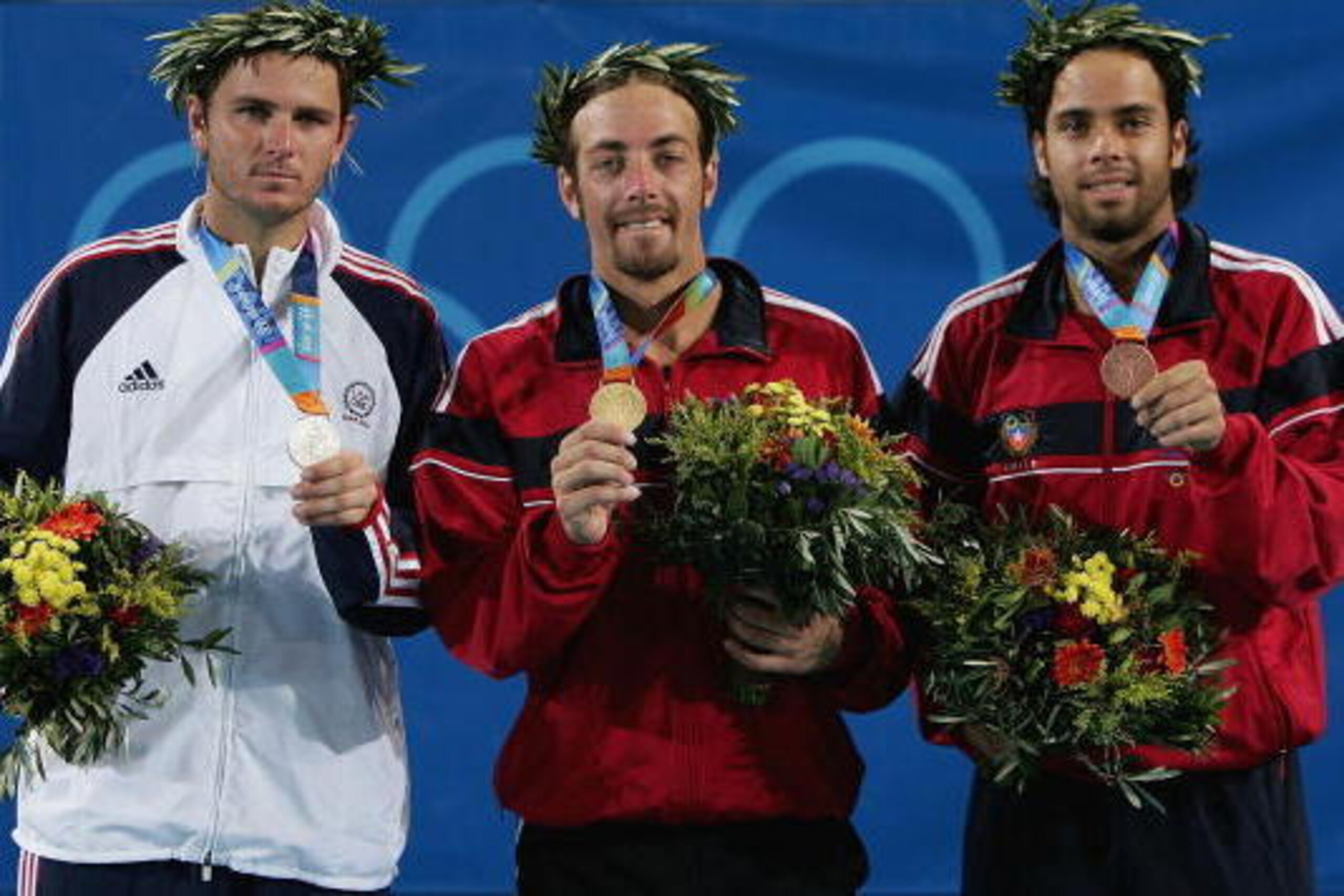
That string of good fortune carried over into 2004, when Fish reached a then career-high No. 17 rank and finished runner-up in San Jose to Roddick and in Halle to Roger Federer. When he took home the silver medal at the Summer Olympics in Athens after dropping a five-set final to Nicolas Massu, Fish seemed destined for future glory.
But in 2005, Fish suffered a wrist injury that kept him off the tour for most of the year. All the momentum he built up had vanished, and his ranking plummeted to 341st in the world in February 2006.
Over the next several years, Fish had varying degrees of success. He'd win the U.S. Men's Clay Court Championship in 2006—his only title between 2003 and 2009—and reach the quarterfinals at the 2007 Australian Open and the 2008 U.S. Open. Fish even made the finals at Indian Wells in 2008, dropping a tight match to Novak Djokovic.
During that span, however, Fish couldn't put together consistent results, and his ranking often fluctuated from the 20s to the 50s. He looked like a guy who had already maxed out his talent and was destined for a journeyman-like career of middling results and occasional flashes of brilliance.
Fish hovered in the Top 30 from September 2008 until August 2009 when a rib injury forced him to withdraw from the U.S. Open and finish the 2009 season on the sidelines. But Fish used that sabbatical to transform himself.
He rededicated himself to fitness and nutrition, dramatically altering his diet and losing 30 pounds in the process.
Not only a slimmer player, he looked like a more athletic and confident one throughout 2010. Fish ended that season with a 40-14 record and titles in Newport and Atlanta. He narrowly missed out on winning Cincinnati that summer, losing a tight final to Federer. His sizzling summer ended with a fourth-round loss to Djokovic at the U.S. Open, but Fish had finally cracked the Top 20.
In 2011, he kept hitting more milestones, peaking at a career-high rank of No. 7 that August and qualifying for his first appearance at the World Tour Finals. Fish racked up a 43-25 record, with another title in Atlanta and finals berths in Montreal and Los Angeles. His most consistent year, Fish also reached his first Wimbledon quarterfinals and made the semifinals of Miami and Cincinnati.
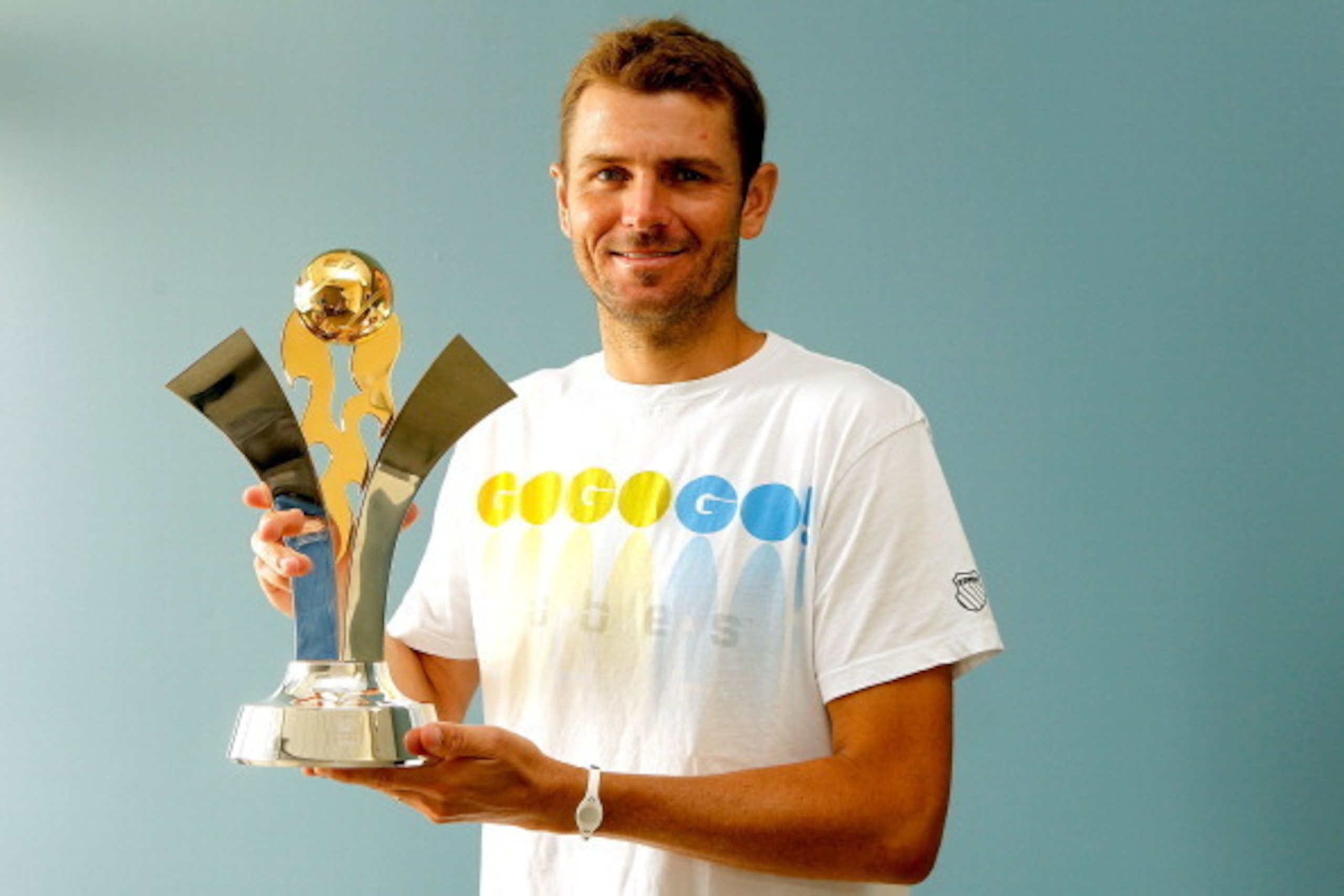
After a rocky middle portion of his career, Fish had finally gained stability on the court and made the most of his abilities. But that positive turnaround was soon washed away by a debilitating illness and its aftermath.
In March 2012, Fish was rushed to the hospital one night after a tournament in Miami. He felt his heart racing abnormally fast and was scared for his life. Fish was then diagnosed with a form of arrhythmia, a condition which affects a person's heart rate and can lead to death. The news shook him to the core. Now, the game he loved so dearly and worked so hard at could lead to possible tragedy.
As Fish tried to closely monitor his health and adjust to new circumstances, the problem wouldn't go away. He eventually underwent surgery and declared the problem behind him. The worst was just beginning.
Fish played only 32 matches in 2012. Though he still reached the quarterfinals in Miami, Toronto and Cincinnati, Fish started to crack under the pressure caused by his condition. He withdrew suddenly from the U.S. Open before his fourth-round match against Federer.
As he was later quoted by the Guardian (h/t Associated Press), Fish acknowledged his struggles were more intricate:
"I struggled mightily during the U.S. Open last year. So those sort of post-traumatic experiences that I've had that I have now are what I need to get over right now. But it's a process. It's not an easy game ... A lot of it's mental, what I went through, and obviously a little bit of it was physical, too.
"
He wouldn't compete again until the following March. Even then he wasn't really back, often wrestling with the notion of retirement. Fish later defaulted during a third-round match in Winston-Salem that August, and he walked away from the game after playing only nine times in 2013.
Anxiety had crippled Fish. With his heart condition still weighing heavily on his mind, he couldn't enjoy life without the thought of another episode waiting to strike at any time. The panic attacks intensified and made the American reclusive.
Eventually, with aid of his wife and the combination of medication and therapy, Fish returned to a sense of normalcy. He even toyed with the notion of a professional golf career at one point. But he couldn't turn his back on tennis yet.
Due to inactivity, Fish's ranking dipped below 1000. He wouldn't compete at all in 2014, though he tried to play doubles at the U.S. Open with Roddick. Because of drug testing rules, the duo wasn't allowed to enter and Fish's comeback stalled. A storybook moment had been denied.
Quietly, Fish continued working hard on the practice courts. Through all the physical and emotional pains he suffered, tennis remained something he couldn't give up.
Though his disorder remains something he'll fight daily, Fish had made enough progress to feel confident about walking on the court again. On New Year's Day, he hinted about a comeback.
"Happy New Year guys! Big things in 2015! 🎾🎾🎾🎾
— Mardy Fish (@MardyFish) January 1, 2015"
On January 29, Fish announced he would play Indian Wells this year, his first ATP-level tournament since August 2013. He later added Miami to his schedule as well. After all that time away, he finally found enough strength to return.
His comeback officially started in Dallas this month, when he partnered with Mark Knowles at a Challenger event. Their doubles team would lose in the second round, but Fish had passed an important hurdle.
Fish's return comes at a desperate time for U.S. tennis. It's been almost 12 years since Roddick captured the 2003 U.S. Open, the last time an American male won a Grand Slam title. It's been a severe drought for the country with few signs of hope.
Expecting Fish to pick up where he left off and climb back into the Top 10 is unrealistic. Just his presence on the court again should inspire his countrymen to work harder and battle through their own struggles.
His success in the coming months shouldn't be measured by tournament results. By finding a way back to the game after all his hardships, Fish is already a winner.
All statistics courtesy of ATPWorldTour.com unless otherwise noted.
Joe Kennard is a Featured Columnist for Bleacher Report.


.jpg?w=2560 "Joey Porter Jr. Traded to Cowboys 🤠")