How to Stop Marshawn Lynch
Marshawn Lynch is coming.
He's aiming straight for the heart of the Patriots defense. He's charging with full force, and New England can't hold a midgame press conference to slow him down. Lynch won't be stopped by interviews, warnings or fines—only brute force.
Lynch is coming, but if the Patriots can stop him, they can stop the Seahawks offense. Everything Seattle does—the Russell Wilson options, the quick screens to receivers, the rollouts, the play-action shots downfield—starts with Lynch.
.jpg?w=2560 "Saints Giants Football")
The Seahawks want 2nd-and-5 and 3rd-and-inches, with the Patriots defense constantly crowding the box and cheating toward the middle of the field. Take Lynch away from Seattle, and New England can take the Lombardi Trophy away, too.
No one said it was easy. But several opponents have had some success limiting Lynch's productivity.
He is not the kind of player you stop by drawing on a whiteboard. Defenders must anchor, shed tackles, pursue with tenacity and discipline, and tackle as well as they have ever tackled. But there are tactics that can slow Lynch down without risking the gouging Wilson keeper or sudden bomb to an overlooked receiver.
Based on stat breakdowns and film study, here's the best way to stop the beast:
Commit to Stopping Him Early
The old cliche about power runners claims they wear you down in the first half, then beat you in the second half. Lynch would appear to fit that mold, based on his big plays in the second half and overtime against the Packers and on the Seahawks' (justified) reputation for playing better at the ends of games.
Break down Lynch's carries per game, though, and you discover a surprising trend:

Lynch does most of his damage in the first 10 carries of the game. After that, at least statistically, he's just another running back.
There is some distortion in that data. A 79-yard run against the Cardinals inflates Lynch's first-10-carry averages. That long run came early in the fourth quarter, revealing a strange tendency in the Seahawks play-calling: Lynch is often more of a decoy than a workhorse early in games.
Carries 16 through 22 often occur during kill-the-clock sessions, damping Lynch's late-game yards per carry. He appears fresh late in games because he often is fresh late in games: The Seahawks limited his first-half load.
Still, one of the best ways to contain Lynch is to stop him early in the game, when Seattle is determined to spread touches around and establish other elements of its offense. The best way to do that is to avoid taking the bait when the Seahawks spread the field and threaten the screen-option game early.
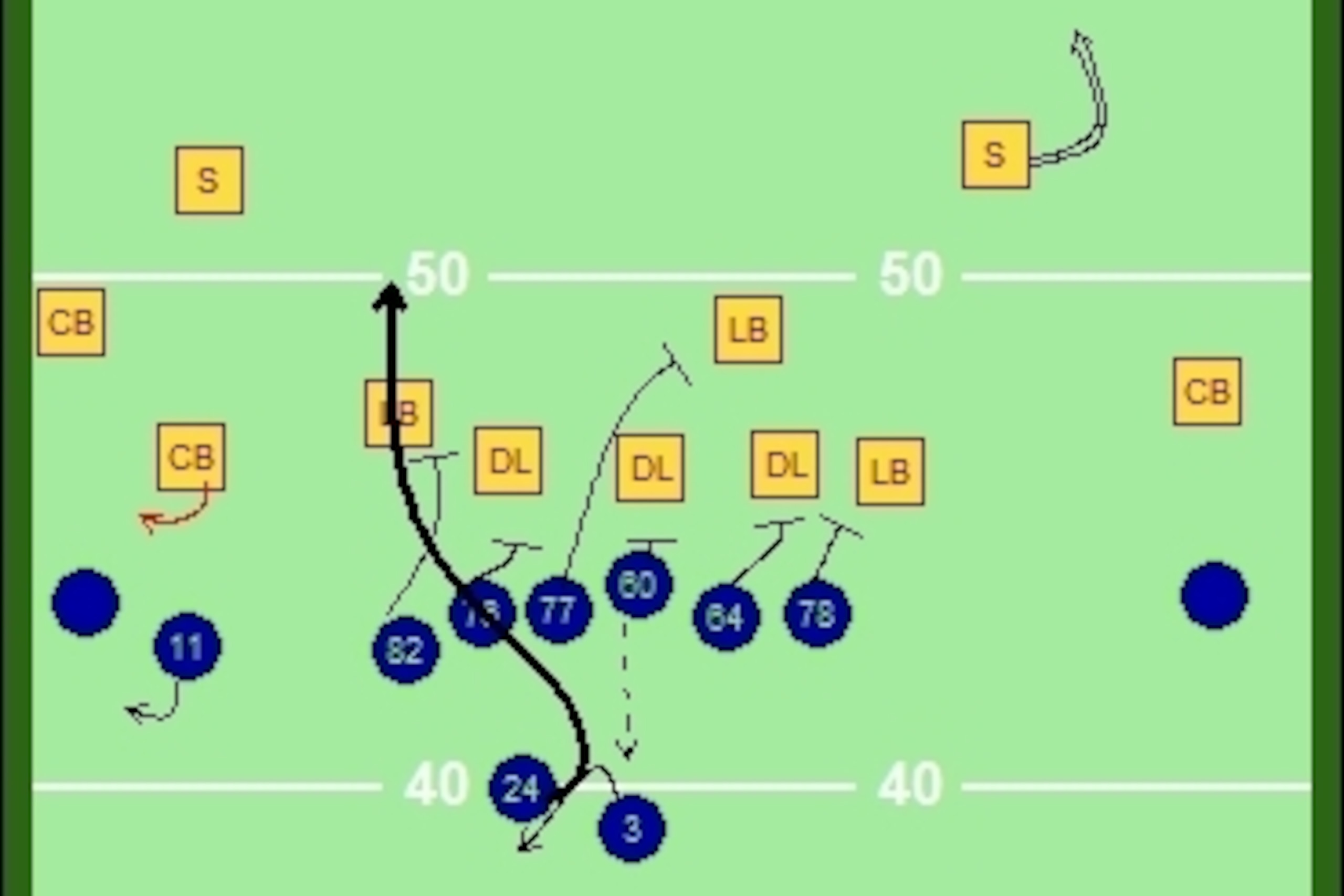
The diagram below shows the Redskins doing things completely wrong in the first quarter in Week 5. They have six defenders in the box, barely: There's really only one linebacker between Lynch and the deep safeties, who are pretty deep.
Washington's defense is focused on Percy Harvin on this play, which was understandable when Harvin was in town. But there is also a safety 17 yards off the ball on the offensive right, where pokey Doug Baldwin is the only threat. The Redskins seem to think they are facing the bomb's away Colts, not the grinding Seahawks.
| Rushes | Yards | Avg | |
| Carries 1-10 | 156 | 800 | 5.1 |
| Carries 11-20 | 108 | 429 | 4.0 |
| Carries 21+ | 16 | 77 | 4.8 |
Lynch gains 17 yards on a basic inside zone run where his blockers cannot even find defenders to double-team. If you give the Seahawks a box like that, they will give the ball to Lynch every time, and he will punish you.
The Redskins, you may recall, could do nothing right in that game. Only nonstop Seattle holding penalties kept that contest close.
Harvin is gone, so the Patriots should take a cue from what the Panthers and Packers did early in the game against Lynch: Scheme to stop him and dare Wilson to run or try to move the ball on screens to Ricardo Lockette. The Packers' early strategy worked; if their late strategy worked as well, this article would not exist.
OK, so just what exactly does "committing to stop the run early" mean when facing one of the league's best running backs and the league's best, cagiest rushing quarterback?
Bring That Safety Down
One strategy teams use over and over again against Seattle is dropping a safety into the box just before the snap. This tactic is especially common when the Seahawks have two tight ends or a tight end and fullback on the field, as opposed to one of their receiver-heavy spread packages (Obviously, it's hard to commit safeties to run defense when two receivers are bunched along each sideline.)
The Seahawks don't have the kind of base personnel to threaten the defense downfield, necessitating two deep safeties. At the same time, waiting until just before the snap to bring a safety closer to the line of scrimmage limits audible or option possibilities.
If Wilson sees an eight-man box when he first walks to the line, he might change the play from a Lynch run to a predetermined keeper or play-action pass. If the Seahawks call an option, sneaking the safety down at the last moment could confound Wilson's decision (though that rarely seems to happen).
That extra safety typically lines up on the edge and defends an outside gap. But that doesn't make him useless when Lynch runs inside. With an extra defender handy, the defense can pinch interior gaps and put pressure on guards James Carpenter and J.R. Sweezy, both of whom can be beaten in one-on-one situations.
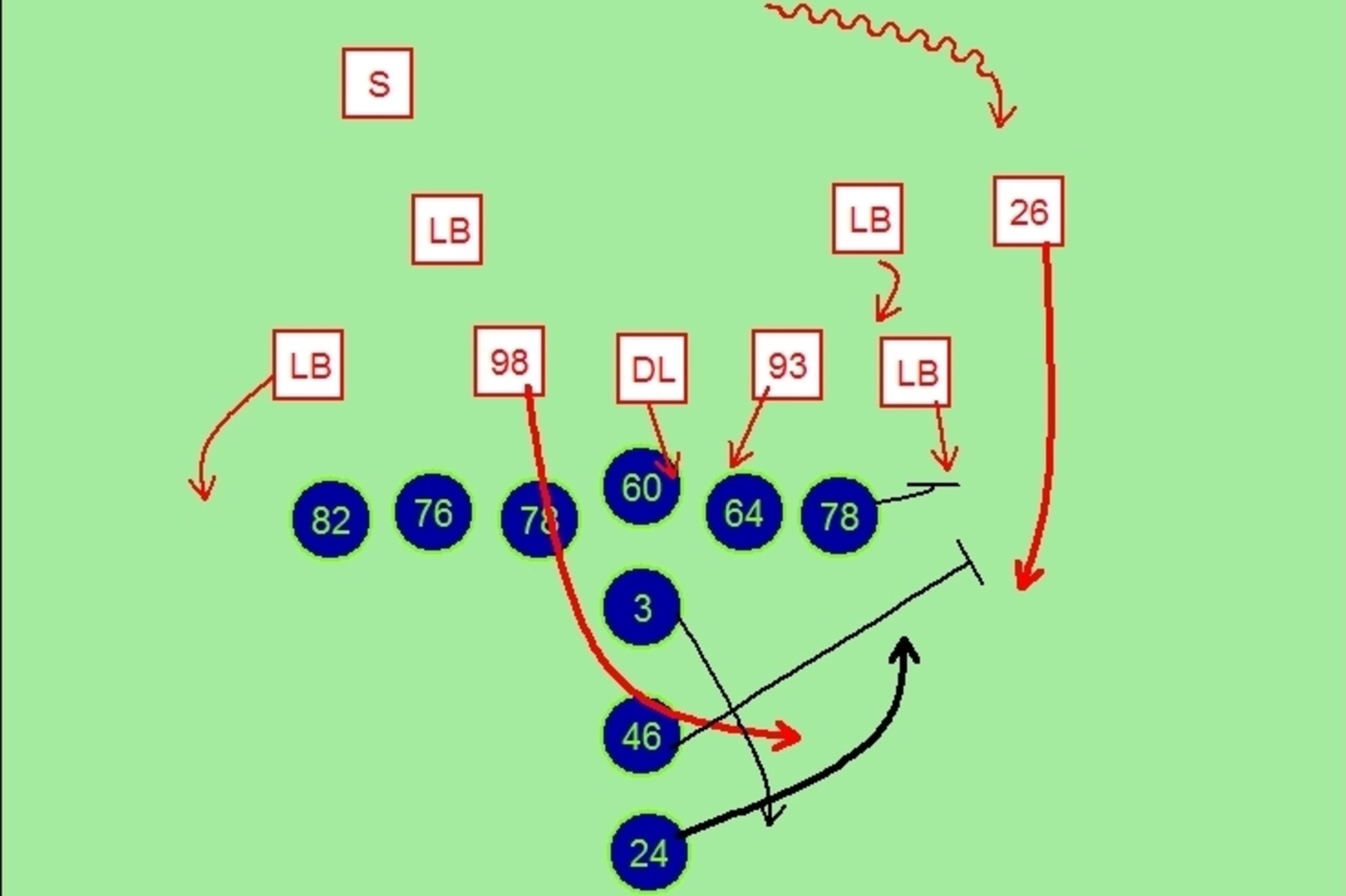
The figure below shows the Cardinals bringing safety Rashad Johnson (26) into the box just before the snap. The extra manpower allows three defensive linemen, including Frostee Rucker (98), to pinch the A-gaps on either side of center Max Unger (60) and blow the Seahawks' interior blocking to smithereens.
Rucker defeats Alvin Bailey (78), who started in place of Carpenter in this game. Johnson and two linebackers gobble up the blocks on the play side. When Lynch tries to cut back, Rucker socks him.

Bringing the safety down when Wilson is in shotgun or pistol provides an extra speedy defender on either side of the line of scrimmage to eliminate the backside option-keeper threat.
The Patriots will have the luxury of often bringing down a safety against the Seahawks. Darrelle Revis and Brandon Browner need little help containing Baldwin and Jermaine Kearse, freeing Patrick Chung or Devin McCourty to aid in run support. That will allow Bill Belichick to vary his defensive fronts to attack and disrupt the interior blocking.
Belichick usually schemes to baffle quarterbacks and take away receivers by varying and disguising coverages and blitzes. For the Super Bowl, he is more likely to use his creativity to cause chaos between the tackles while Revis and Browner keep things simple on the edge.
Fight Power with Power
We usually picture power rushers like Lynch thumping away behind a fullback in an I-formation. But he is more effective when he is a single setback. According to Football Outsiders, he averages 5.2 yards per carry when he is the only running back in the game. He posts 3.7 yards per carry when there is a fullback on the field.
Goal-line and short-yardage carries are not distorting the data; Lynch takes short-yardage handoffs from a variety of formations.
Lynch averages 4.8 yards per carry when Wilson is in shotgun or pistol and 4.4 yards per carry when his quarterback is under center. Unless you have taken the last three years off from watching football, you know what is going on.
Seattle's running game is most dangerous when the option threat is in play. With Wilson in shotgun and extra receivers on the field, both the keeper and the receiver screen are immediate threats. From the I-formation, the Seahawks are much more predictable.
Lynch can be stuffed on I-formation plays; this clip shows the Panthers doing so in the divisional playoff game. Carolina can safely pursue aggressively; you can also see a safety creep down into the box on the play side before the snap.
Also, take note of fullback Will Tukuafu, a converted defender. Tukuafu delivers a blow when he strikes, but whiffs on blocks in open space and sometimes picks the wrong defender to block.
The Seahawks use I-formation runs to break tendencies. Remember, they lack downfield playmakers at wide receiver: Showing a run-heavy formation is a great way to draw the defense in.
Wilson has completed 32-, 47- and 49-yard deep passes from the I-formation since Week 15. Again, Revis, Browner and Kyle Arrington should neutralize the play-action bomb threat for the Patriots. Stuff Lynch on these two-back runs, and they can get the Seahawks off their down-and-distance schedule.
Eventually, Seattle is going to spread the field, limit the number of defenders New England can put in the box and threaten with zone-read and option tactics while hammering away with Lynch. When that happens, the Patriots must win a handful of crucial, but winnable, one-on-one matchups.
Defeat the Zone-Block Double-Teams
The Seahawks like to use zone-stretch blocking concepts to create space for Lynch between the tackles. If your defensive tackles can defeat their double-team blocks, your defense can restrict Lynch's running lanes and give your linebackers the chance to tackle him in a confined space before he reaches full steam.
Because the Seahawks offensive line is not overwhelming, the Patriots' defensive tackles should be able to occupy and neutralize those double-team blocks.
Here's a 99-cent download explanation of zone blocking:
- The offensive line executes double-team blocks (one set of blocks or two, depending on the defensive front) while coaxing the defense to move laterally along the line of scrimmage.
- Once the defenders are engaged, one blocker from each double-team tries to release and go on a linebacker seek-and-destroy mission.
- The defensive line gets taffy-pulled, creating cutback lanes, and linebackers and safeties must cope with blockers peeling off to nail them no matter which angle they take in pursuit.
It's a common, effective rushing strategy that takes about 15 minutes to fully explain and several years to perfect. Here's Matt Bowen taking things to the next level if you want more detail.
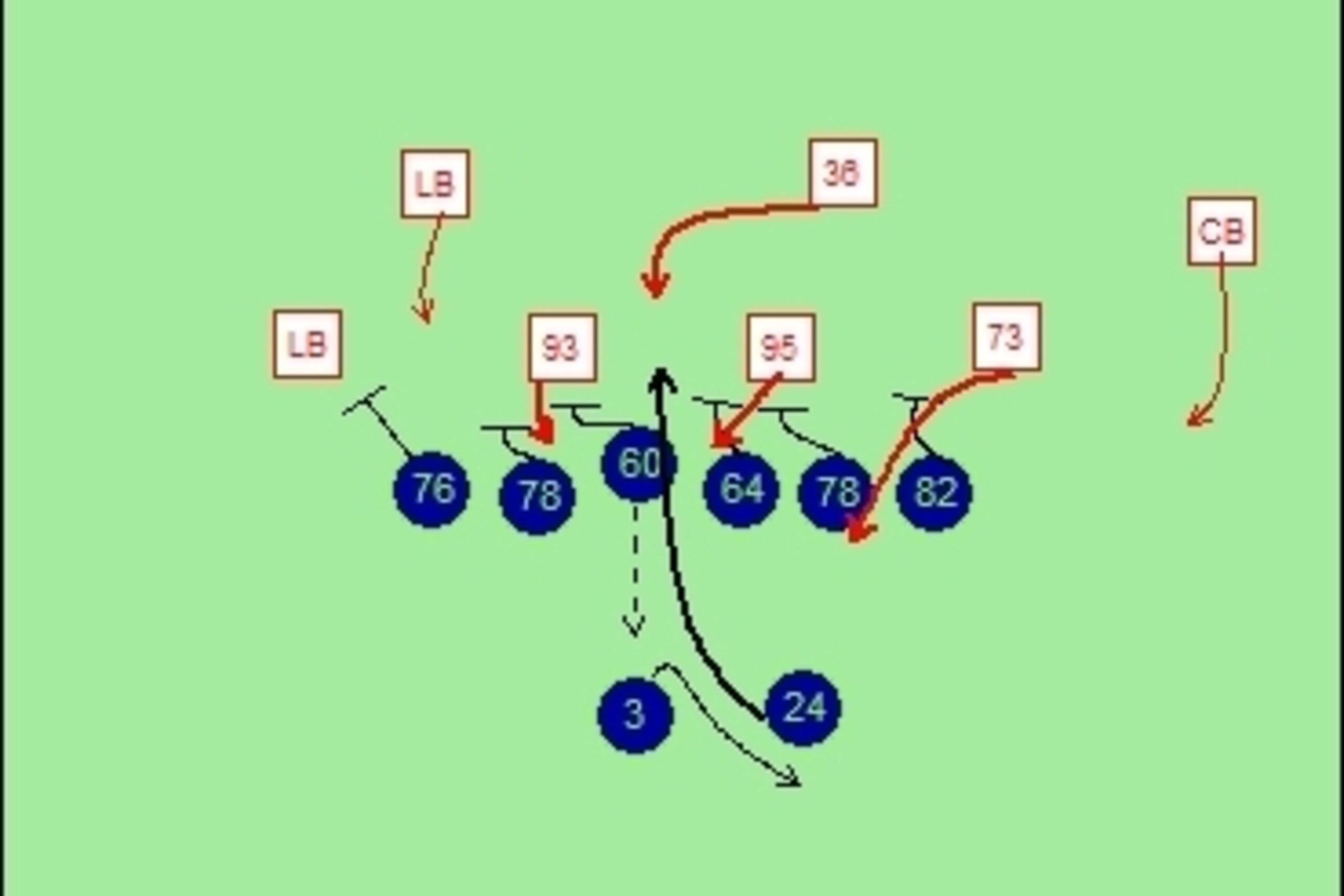
The diagram below is taken from the first Seahawks play of their Week 12 meeting with the Cardinals. The wide receivers are not shown to keep the diagram clear; the receivers are spread to the left, and they execute a fake screen play (two guys block, one bubbles out and waves for the ball) to freeze the defense.
Arizona has just six defenders in the box, and one of them is safety Deone Bucannon (36), playing as a de facto linebacker in the Cardinals' injury-riddled defense. This is exactly the kind of matchup the Seahawks want for an inside zone play; it looks like an easy opportunity for Lynch to run over Bucannon and into the secondary.

The Cardinals do nothing unusual schematically on this play. Defensive linemen Calais Campbell (93) and Dan Williams (95) simply prevent their tandem blockers from ever peeling off, squeezing the rushing lanes and generally proving too dangerous to be left to a single blocker.
Josh Mauro (73) knifes through the backside block by Luke Willson (82), limiting Lynch's cutback opportunities. Bucannon is able to meet Lynch squarely in the hole; with no room to maneuver and not enough momentum to burst into Beast Mode, Lynch gets stopped for one yard.
Had guard J.R. Sweezy (64) or center Max Unger (60) gotten free to give Bucannon a little nudge, this would have been a long run for Lynch. Watch a long inside Lynch run on a highlight reel, and chances are you will see Sweezy, Unger, Carpenter or Alvin Bailey easily slipping past the line of scrimmage and getting a clean shot on a linebacker.
Patriots tackles Vince Wilfork and Sealver Siliga can help here: Wilfork is a veteran space-eater, Siliga a quality role player who usually rotates into the game to spell Chris Jones on rushing downs. When the Seahawks try to double-team a defensive end, Chandler Jones is more than capable of taking care of himself at the point of attack.
Remember: Patriots defenders do not have to knock the Seahawks double-teams five yards into the backfield. In fact, too much penetration in the middle can just create wider cutback lanes. They just need to force Seattle to block two defenders with four as long as possible on each snap. Lynch will then have to fight for yards at the line of scrimmage instead of the first-down marker.
Set the Edge, Force the Cutback
Lynch is a very good cutback runner. He's probably the best straight-ahead, downhill runner in the NFL. If your choice is letting him accelerate upfield or forcing him to make decisions and change direction before he reaches the line of scrimmage, it really isn't much of a choice.
Defenders can force Lynch to cut back by setting the edge on rushing plays. While interior defenders have some lateral leeway when coping with double-teams, the outside defender at the point of attack must stand his blocker up and clog the outside running lane. Ideally, that forces Lynch to cut back into the teeth of a defense that has won other one-on-one matchups.
The Panthers clip from earlier in the article shows Thomas Davis doing an outstanding job setting the edge. Davis gets around the block of the right tackle and forces the fullback to block him, leaving Lynch with nowhere to go.
Tight ends Luke Willson and Cooper Helfet are not exceptional run-blockers, but both are often expected to keep defenders like Davis (or New England's Chandler Jones or Rob Ninkovich) from setting the edge.
The Seahawks sometimes assign the task to a tackle with fullback help, or even to receiver Jermaine Kearse, who is an excellent blocker for his position. These are all exploitable matchups for the Patriots.
If they win on the edge and defeat some double-teams, Lynch will spend a lot of Sunday night breaking three tackles to gain three yards.
Discipline, Execution, Physicality

There's no secret to stopping Lynch. There's no secret to digging a ditch, either. It's just really hard. You have to commit to doing it, persevere, work your butt off, ignore the aches and fatigue, and keep doing it.
The Patriots don't need a magic playbook. They just have to win matchups, mind their assignments, tackle properly and make sure Wilson isn't looping around the corner for 25 yards while they climb over each other to gang-tackle Lynch.
Lynch had just five 100-yard rushing games in the regular season. Five opponents held him below four yards per carry. When he's marginalized, the Seahawks offense grinds to a slow crawl. They can still win with defense, but that's an easier proposition against Drew Stanton, Ryan Lindley or Mark Sanchez than against Tom Brady.
The Patriots love their "do your job" motto. They can take the beast out of Beast Mode just by doing their jobs. They simply have to do them as well as they possibly can.
Mike Tanier covers the NFL for Bleacher Report.