

Time for Liverpool to Rethink How to Manage Steven Gerrard's Later Years
Two of the defining components of England’s bygone Golden Generation experienced contrasting fortunes in the Premier League last weekend: While Frank Lampard scored a dramatic late equalizer after coming off the bench against old club Chelsea, Steven Gerrard was given the runaround by former Liverpool flop Stewart Downing against West Ham United.
After what has transpired over the last few months—Lampard being released from his contract at Stamford Bridge after 13 glorious seasons and becoming Chelsea’s all-time record goalscorer, and Gerrard being nominated for the Football Writers’ Player of the Year award after his pivotal role in Liverpool’s outstanding season—the contrast couldn’t have been bigger.
TOP NEWS
Kane Wins Ballon d'Or
Way-Too-Early Rankings for 2027 Men's Ballon d'Or

Live Ballon d'Or Ceremony Winners 🎉
While England’s dismal display at the Brazil World Cup ultimately led to two of their greatest-ever midfielders announcing their international retirement later in the summer, it seems that two modern legends of the Premier League era have since embarked on drastically different career paths.
With Frank Lampard adopting a role as a key squad player at Manchester City and making an instant impact in the penalty box on Sunday, and Gerrard finding himself targeted week after week as the deepest-lying playmaker in the Liverpool midfield, perhaps it’s time for the Reds to rethink how they are and should be managing the final years of Steven Gerrard’s career.
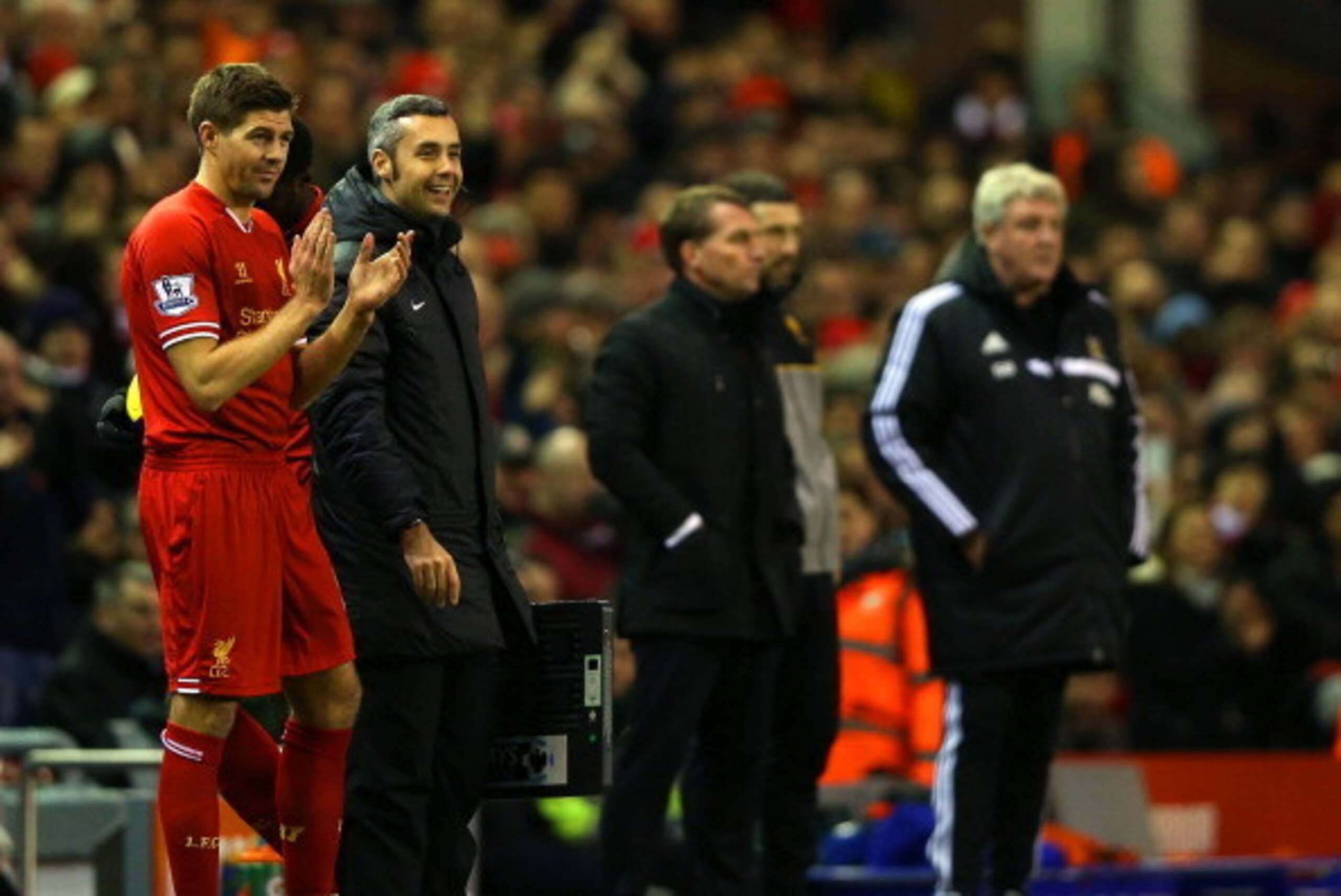
Steven Gerrard, the Impact Sub?
We’ve seen this with Ryan Giggs in the previous few years and, increasingly over the past few seasons, with Frank Lampard at Chelsea and now at Manchester City: As players enter the final years of their careers, their game time needs to be managed so they can stay at peak fitness and still remain productive when they do take to the field.
This is especially true for players relying on explosive pace and power to conjure up split-second moments of game-changing magic. While Gerrard has never been the pacy wing wizard Giggs used to be in his prime, the Liverpool skipper made his name with his lung-bursting runs from midfield, barnstorming drives into the penalty area and blockbuster shots from long range.
There’s nothing wrong with Brendan Rodgers pushing Gerrard deeper in the midfield to take up his current deep-lying playmaker position per se; the problem is that at 34 years of age, Gerrard is still completing 90-minute games week in, week out.
And with the Champions League now back in Liverpool’s schedule, that is simply unsustainable.
After a tough win at home against unfancied Bulgarian champions Ludogorets Razgrad in the Champions League, Gerrard’s 90 minutes at Upton Park was unsavory at best, depressing at worst. Compared to leaving his midfield area glaringly vacant for opponents to storm into time and again, getting overrun by Stewart Downing is already a less concerning headline.
Rodgers’ toughest mandate during his time as Liverpool manager arguably isn’t to have gotten the Reds back into the European big time; it was to phase Gerrard out in the right way and to manage the latter stages of his career.
Recent injuries to Joe Allen and Emre Can have forced his hand, but Liverpool fans should reasonably expect to see Gerrard feature more as an impact substitute as the rest of the season unfolds.
Only as an impact substitute, or at least a lessened status as a squad player, will Gerrard’s career really be prolonged, and not hastened towards becoming the main liability in the middle of the park for Liverpool.

Making Use of Gerrard’s Versatility
One factor that should influence Rodgers’ planning and thinking over the next couple of seasons is the fact that he is one of the most complete midfielders to ever have come out of England. In that regard, the likes of Ryan Giggs and Frank Lampard don’t even come close.
It’s one thing to have a skill set comparable to Andrea Pirlo’s (even if his positional discipline and tactical understanding are inferior); it’s quite another to have won the PFA Player of the Year award playing as an unorthodox right-winger, to have struck up a world-class partnership with Fernando Torres as a second striker and to have influenced the biggest stage of all—the Champions League final—as a makeshift right-wing-back.
Now, there is no need for Gerrard to fill in at right-back—Liverpool are comfortably sorted at the moment with Javi Manquillo proving to be an astute acquisition and a number of players capable of assuming the role—and indeed the Reds' optimal 4-4-2 diamond formation doesn’t allow for a right-winger.
Yet as Rodgers clearly still seems to regard Gerrard as the one “undroppable” player in his team—often substituting his midfield partners when Liverpool are in need of a change in formation or approach, before he takes that drastic step to drop his captain from the starting XI and turn him into an impact substitute—there is another blueprint that he can reference.
There’s no finer example than Roberto Mancini’s favorite tactical switch during his reign at the Etihad Stadium: Sending on a defensive midfielder (often Nigel de Jong), releasing Yaya Toure’s defensive shackles and pushing him forward into a free attacking-midfield role.
That Rodgers doesn’t have a world-class defensive midfielder at his disposal is perhaps down to the fact that he regards Gerrard as his optimal regista sitting at the base of his midfield, with Jordan Henderson and Joe Allen providing protection and help around him. Emre Can’s arrival, however, is interesting and could potentially pose an alternative for the Liverpool manager.
While not a specialist defensive midfielder, Can—who ironically has a skill set most comparable to Yaya Toure’s out of Liverpool’s midfield contingent—has more than enough to offer in terms of steel, physicality, pace and defensive nous. All Rodgers needs to do, when Can returns from injury and if he starts on the bench, is send him on and let Gerrard rekindle his magic with a free-scoring forward.
Only this time it’s Daniel Sturridge.
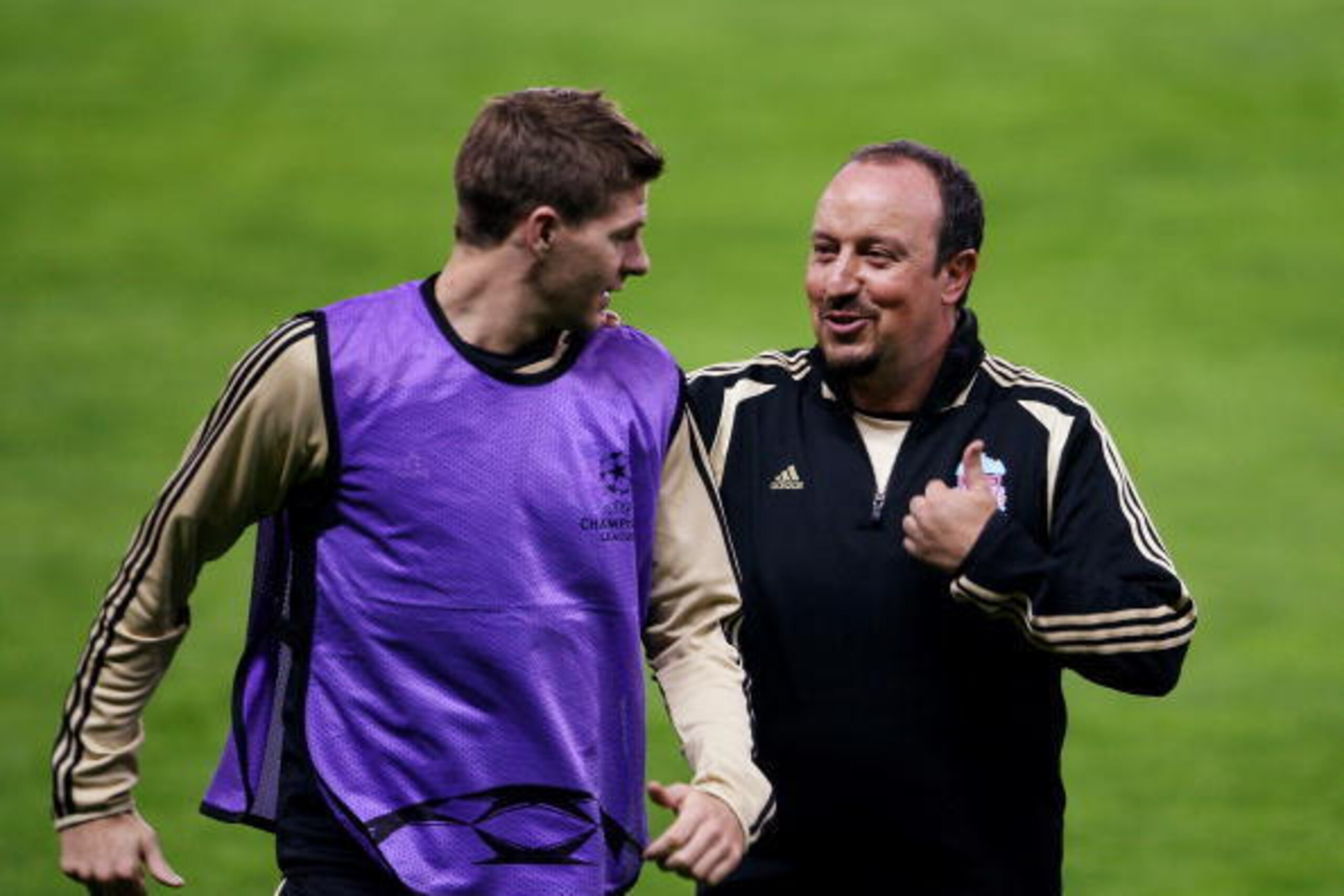
A Case for Gerrard the Forward
It’s interesting that Rafael Benitez, the manager credited with realizing Gerrard’s potential as a devastating attacker rather than a controlled midfielder, stated during Gerrard’s peak years that he saw him becoming a striker later in his career, according to The Sun (via Emily Benammar in the Telegraph). Rodgers, on the other hand, has suggested he could become a right-sided center back, per BBC Sport.
Both suggestions reflect Gerrard’s universality as the complete modern footballer, to the extent that two managers who have reinvented his game can’t even agree on whether it’s his attacking game or defensive abilities that make him stand out.
But while he has always been known as much for his match-winning piledrivers as he is for his last-ditch tackles and thunderous challenges, Gerrard has always been afforded the freedom to do essentially whatever he wanted, wherever he wanted, whenever he wanted. It's for this reason he so frequently drove into the box in his heyday to score important goals.
That Gerrard reserves his best performances when a select duo is played as his midfield colleagues—now usually and preferably Henderson and Allen—means that Rodgers needs to tailor the entirety of Liverpool’s approach play to Gerrard by shaping the midfield, and thus forward line, around his strengths and deficiencies.
Without his famous acceleration, pace and power, Gerrard is required, perhaps more so than ever, to sit in front of his defence, command his midfield, control his area and remain positionally disciplined, which is a huge ask of a player who has always turned up to save the day when his team has needed him to.
That sounds all right until he ventures forward at his own will, leaving his area and the defence exposed—while without having the pace or stamina to track back to atone for a positional error.
Slotting Gerrard into a more advanced position akin to his prime might not see him replicate his majestic runs, but it would allow Rodgers to address a badly imbalanced midfield with more steel and defensive presence at the base, while retaining his captain’s famous vision, passing and game-changing shooting ability closer to the opponent’s goal.
After all, Gerrard is arguably the second most natural finisher currently in the first team—behind Daniel Sturridge—while the timing of his arrivals into the box have seen many a late winner, and his heading has long been an underrated facet to his attacking game.
In short, he is one of Liverpool’s few complete attacking weapons.
Moving him forward, playing him selectively and using him wisely in the wider context of the whole Liverpool team would reverse his rapid decline—and who knows, maybe Liverpool fans will be able to start cheering yet another superhuman winner from Steven Gerrard again. It's been a while since we've seen one of those.


.jpg?w=2560 "Chiefs, Steelers Eye WR Trades")

.jpg?w=2560 "Cowboys Handle Eagles on MNF 🤠")

.jpg?w=2560 "WWE Raw Live Grades 🔠")
.jpg?w=2560 "Jay-Z Headlining Super Bowl")
.jpg?w=2560 "The Eagles Will Be Sellers at the Trade Deadline 🦅")