Cautionary Tale: How the Winnipeg Jets Ended Up with the NHL's Worst Goaltending
That the Winnipeg Jets have, on paper, the worst goaltending in the NHL is pretty much beyond dispute. Ondrej Pavelec has had three bad years since the franchise relocated to Manitoba; his .915 even-strength save percentage in that span ranks 47th of the 55 goalies to play at least 2,000 minutes over that time frame. His presumptive backup, Michael Hutchinson, split time between the ECHL and AHL in 2013-14 (caveat: He was good in both) and has just three NHL games on his resume.

Hypothetically, Pavelec could rebound to his 2010-11 form, when he posted a .914 save percentage. Alternatively, in the space of a little over a year, Hutchinson could go from not getting a qualifying offer from Boston to the ECHL to the AHL to an NHL starting job. Realistically, though, neither scenario is terribly likely.
TOP NEWS
Buy or Sell Latest Rumors 👂
Prospects to Watch in the AHL 👀

Re-Ranking the Messiest Breakups 💔
How did Winnipeg find itself in this mess?
Much of the problem goes back to June 2012, when the Jets awarded Pavelec a five-year contract at $3.9 million per season. The term on that deal sealed a long-term marriage between player and team, while the money made it extremely difficult to relegate him to a No. 2 role if his performance dictated it. But even then, Pavelec was coming off a mediocre season (29-28-9, .906 save percentage), so why was the team willing to make that deal?
Some of it, without question, involved projection. Pavelec was 24 years old when he signed the contract; goalies may not generally improve a lot after age 24, but consensus wisdom is that they can and often do (in this, as in other instances, consensus wisdom and reality don’t necessarily have a strong correlation). Pavelec’s pedigree made such a projection easy; he was an early draft pick and had excelled in high-profile tournaments both at the U-18 and the senior level.
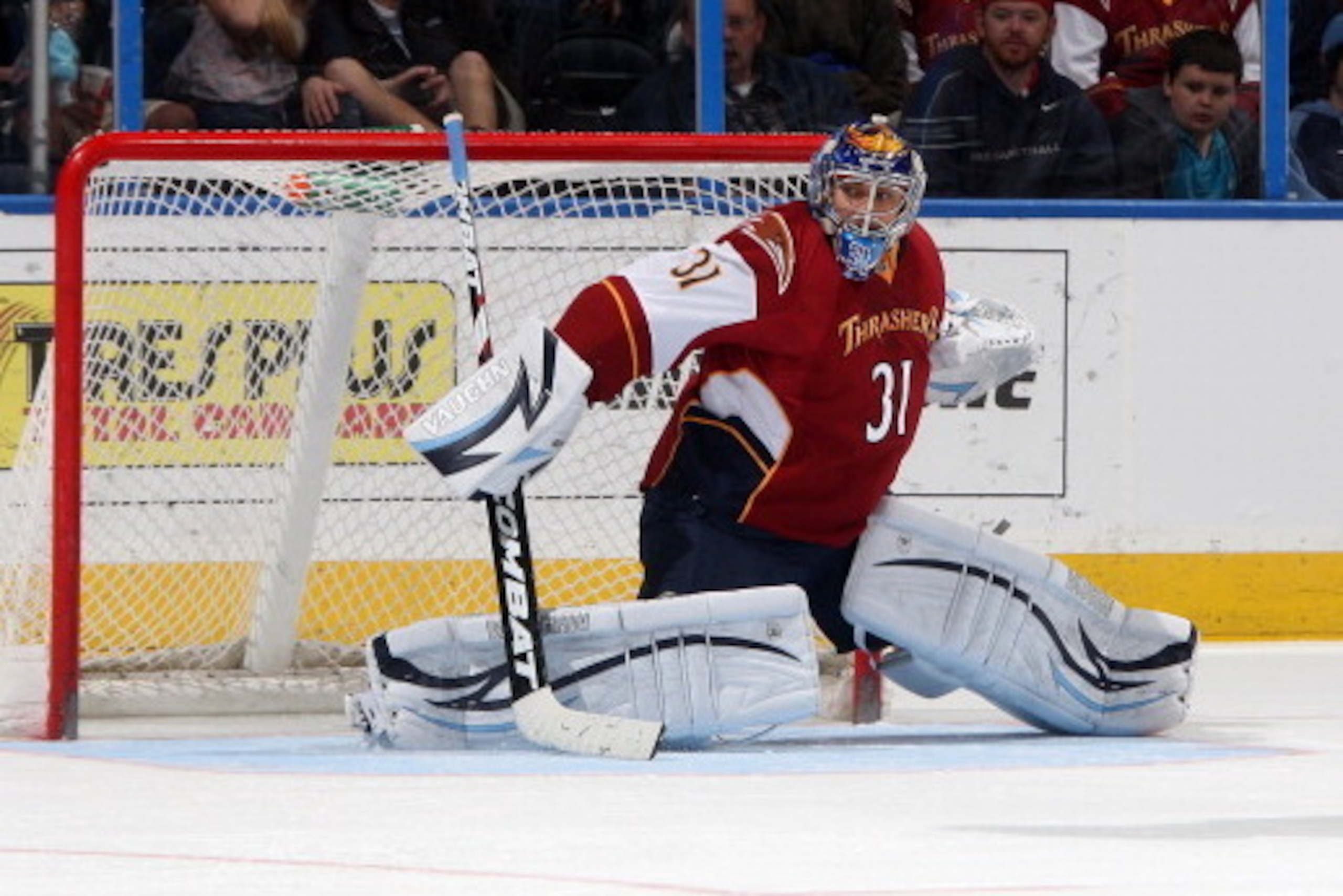
Beyond that, Pavelec’s NHL experience permitted multiple interpretations. An optimist—and as we’ve established, it was easy to be optimistic about Pavelec—would have called 2011-12 a down season. Pavelec had two full NHL campaigns before it and had improved from a .906 save percentage to .914 number; if the latter was his true talent level and 2011-12 an aberration, the Jets had a chance to lock in a solid goalie at a reasonable price. It was easy to look at a positive trend (an improving goalie with one down year) rather than to weigh the evidence on the whole (over his three full seasons, Pavelec ranked 33rd in even-strength save percentage).
The Jets were also under significant pressure. Hockey Night in Canada’s Elliotte Friedman had previously reported that Pavelec received a significant KHL offer, and TSN’s Darren Dreger put a number to that offer on Winnipeg’s Illegal Curve radio show:
"I think that you have to look at the likely scenarios, you cannot exclude playing in the KHL as a likely scenario. He’s been offered a big chunk of change. Speculation puts it as upwards of five, or five and a half million dollars for one season. That’s a boatload of money, particularly when you are looking at an interrupted season because of the CBA.
"
Pavelec had a big-money offer and the guarantee of a full season in his back pocket, which gave him leverage in negotiations with a Jets team facing a potential NHL lockout.
There was also the issue of playing hockey in Winnipeg. The Jets were playing in one of the NHL’s most northern outposts, one featuring cold weather, a tough travel schedule and comparatively few amenities. Jets general manager Kevin Cheveldayoff implicitly acknowledged those realities in his comments to The Canadian Press (via TSN.com) following the signing:
"Certainly the signing shows commitment from the Winnipeg Jets organization, but it also shows commitment from the player that they want to be a part of what's transpiring here in Winnipeg and in their careers. A player only has X amount of years to play. It's short relative to the rest of their life and when a player makes a commitment like this and a team makes a commitment like this, it's very significant.
"
Another complicating factor was the attitude of the media covering the team. In March, the Winnipeg Free Press’ Ed Tait wrote a piece titled “It all starts with Pavelec” that pegged the goalie as the team’s clear MVP despite his thoroughly mediocre numbers. In discussing the KHL rumours, the same writer led his piece with the words “He's a cornerstone to their franchise...” and reemphasized that he was arguably the team’s most valuable player.

These, however, are excuses. It’s the job of a team’s management to be able to put a realistic price tag on the contributions of any player, irrespective of KHL offers and media love. Instead, the team took an optimistic view—Cheveldayoff called him “one of the best young goaltenders in the game right now”—and hitched their wagon to the player despite the clear warning signs.
That stubborn insistence that Pavelec is a legitimate No. 1 has continued, even as the evidence against the goalie becomes more insurmountable. The team had two windows to use a compliance buyout (if they Jets had taken the first one, they would only have needed to pay a third of the dollars left on his deal) and blew through both without any action.
Even more damning, the Jets have routinely refused to bring in legitimate challengers in the backup role. Hutchinson is a great example, as was his predecessor, Al Montoya, who parlayed a .893 save-percentage performance with the Islanders into a one-year deal and then a .899 save-percentage season into another one-year deal. He was actually good on that latter contract, and naturally, the Jets opted not to keep him when his price tag hit seven figures.

The organization’s talk matches its inaction. Head coach Paul Maurice was asked during a press conference Thursday about comments he’d made previously in which he’d stated that Pavelec couldn’t really be judged until he’d played behind a better defensive system; he reiterated that belief and added the following:
"We need to play a game in front of him that he understands. Then we can assess his abilities to stop the puck in front of that game. Two years ago, he was the most valuable player as voted in the room; I remember him in the net, going, ‘We’re not beating that guy tonight.’ The talent is there, we’ve seen it. We put a structure in front of him that gives him the best chance; he needs to do the work to give himself the best chance to be a No. 1, to be a great No. 1. That’s what our goal is for him.
"
It’s possible to make excuses for the Jets, but the reality is that organizational blindness is the root cause of their goaltending problems. The goaltending market is a little like a game of musical chairs in that there are always more bodies than roster spots; the Jets have had alternatives and haven’t taken them. Further, the compliance-buyout windows opened by the new CBA represented an opportunity to correct a mistake, and the team didn’t take it.
Nearly 300 games into his NHL career, Ondrej Pavelec is a known factor. Arguably, his poor play has twice cost the team a playoff spot. Instead of taking action, the Jets talk about the need to improve their defensive play and bring in whomever they can get to take a near league-minimum contract to play backup minutes.

Oddly enough, this isn’t a situation unique to Winnipeg, though no team suffers as acutely as the Jets. Management and media alike easily seem to fall into a convenient narrative about goaltenders in obvious defiance of reality. It’s why Marc-Andre Fleury has been ensconced in Pittsburgh despite being outplayed by his backups, why Martin Brodeur keeps getting projected into the lineup of teams with two or even three superior goalies, why Jonas Gustavsson keeps getting NHL contracts.
The specifics of each situation are different, but the general theme is the same: a willingness to turn a blind eye to performance in favour of some other argument. It’s baffling, but at this point it’s not surprising.
Jonathan Willis covers the NHL for Bleacher Report. Follow him on Twitter for more of his work. Stats courtesy of Stats.HockeyAnalysis.com or EliteProspects.com unless otherwise noted; salary information courtesy of CapGeek.com.
.jpg?w=2560)

.jpg?w=2560 "Cardinals LB's Quote Resurfaces 😏")
.jpg?w=2560 "Packers Beat Cowboys on SNF 🧀")

.jpg?w=2560 "Skattebo Has 0 Touch Game 😬")
.jpg?w=2560 "Bills Safety Ejected for Spitting")
.jpg?w=2560 "Chargers Fall to 0-6 📉")