

Will Rafael Nadal Remain the King of Clay at the 2014 French Open?
The nickname is more than an indication, it is a verification. The King of Clay is what they call Rafael Nadal, and we must walk gently.
The King. So few are bestowed with the label. Elvis, of course. Richard Petty. Arnold Palmer and the Pro Football Hall of Famer, Hugh McElhenny.
And on the surface used for numerous tennis courts in Europe, including the famous ones at Roland Garros, site of the French Open, Rafael Nadal.
TOP NEWS

Rybakina's US Open Winnings💸

🚨 Elena Rybakina Wins US Open

Ben Shelton starstruck at US Open semifinal
Andre Agassi, who along with Nadal is one of seven men to win each of the four Grand Slams—Australia, French, Wimbledon, U.S. Open—isn’t that restrictive.
A few weeks ago in Singapore, Agassi told the Straits Times (via the Washington Post) that Nadal, not Roger Federer, should be considered the greatest tennis player ever.

Yet now a few days from his 28th birthday, the king seems vulnerable. Indeed, he cruised past a 20-year-old Austrian, Dominic Thiem, 6-2, 6-3, 6-3, Thursday in the second round of French, as Nadal should have and is now a remarkable 61-1 in the tournament since he first entered it as a 19-year-old in 2005—and first triumphed.
Eight times in nine attempts heading into the 2014 French—or as the French themselves call it, Roland Garros, the World War I pilot for which the complex in Paris was named—Nadal has been the champion. Only in 2009 when he was defeated in the fourth round by Robin Soderling did Rafa not take a bite of the trophy, as is his style.
Nadal has had back problems, and he was hurting in the final of the Australian in January, which he lost stunningly to Stanislas Wawrinka, an upset of considerable proportion. To Rafa’s credit, he didn’t seek excuses. “That’s not the time to talk about it,” Nadal said in the post-match press conference at Melbourne, when asked about his back. “Stan deserved to win the title.”
Wawrinka’s glory was short-lived. He was eliminated in the first round of the French, the first Australian champ to do so since Petr Korda in 1998. Nadal, the No. 1 seed and No. 1 in the world rankings, has made it through two rounds without losing a set. But now what?
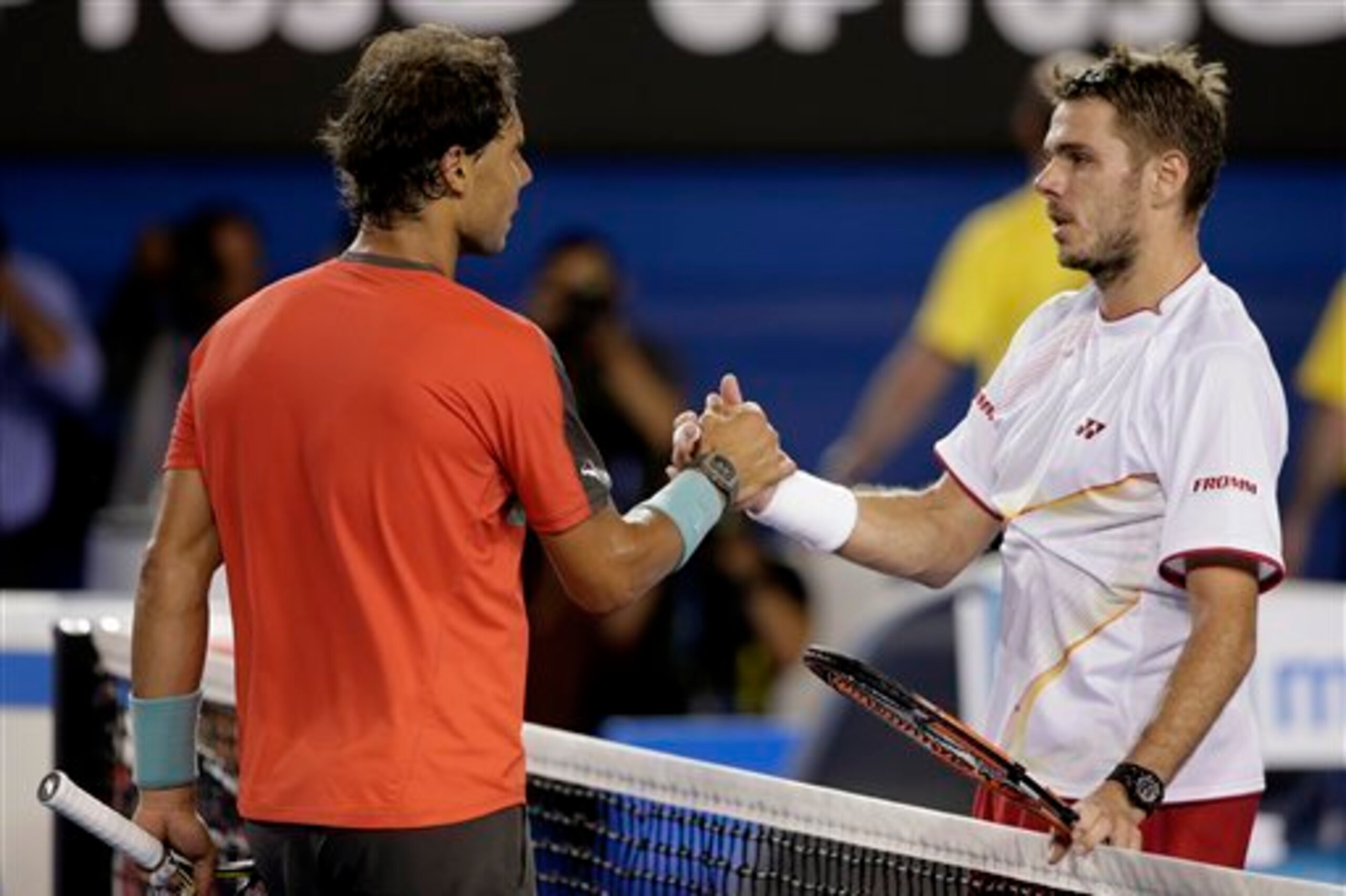
Nadal failed at the Monte Carlo Masters in April, one of the clay-court run-ups to Roland Garros, beaten by fellow Spaniard David Ferrer, 7-6, 6-4, in the quarterfinals, Rafa’s earliest exit in that event since 2003. Last year after eight straight Monte Carlo victories, he at least reached the finals, losing to Novak Djokovic.
“I didn’t play with the right intensity with my forehand,” Nadal said in his post-match comments to the media. “All losses feel bad, but especially on clay. I’m not happy with how I’m playing.”
There comes a time in every great athlete’s career when he or she begins to slip. Sometimes it’s physical, the result of injuries—and Nadal missed more than six months at the end of 2012 and beginning of '13 because of knee tendinitis—or aging. Sometimes it’s mental, a competitor unable to no longer face the grind of practice and competition.
Roger Federer, heading toward his 33rd birthday, isn’t what he used to be—although he’s still better probably than anyone other than Nadal or Djokovic. Serena Williams, a month younger than Federer, was stunned by a no-name in the second round this week. In tennis, change comes rapidly.
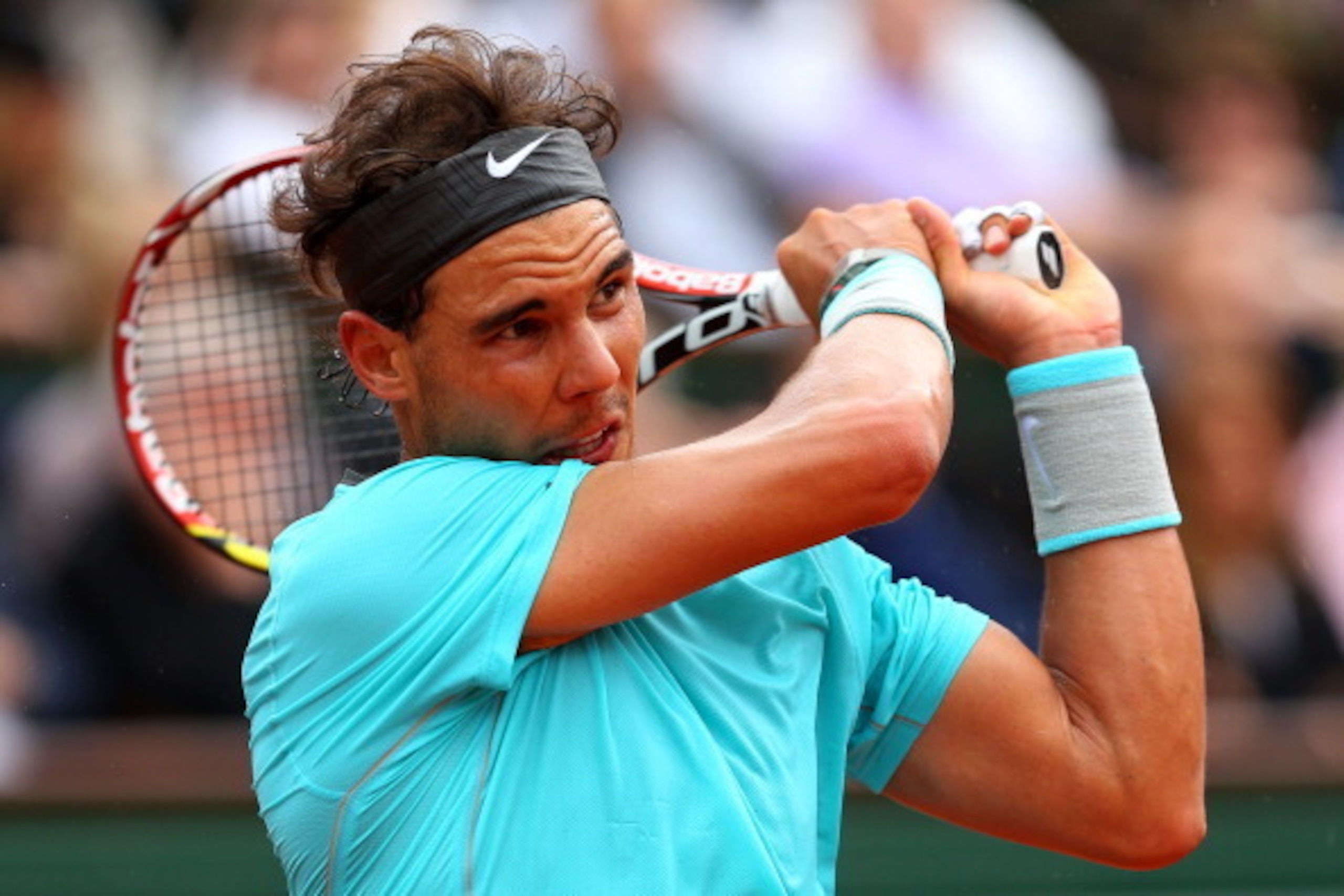
Nadal is the target. He wears the crown. To have lost only once in 62 matches at Roland Garros borders on the unimaginable. But he remains wary. Some day, some May, he will be beaten again, perhaps before the semis or before the final.
“It was a dangerous match today against a dangerous opponent,” Nadal said in a bit of an overstatement to the media after his win over Thiem.
“I am happy the way I resisted. When I had to play long points I did well. When I had to attack and move him, I think I did well.”
Thiem forced Nadal to three deuces in the very first game. Before the match began, writes Greg Garber of ESPN, “There was sentiment among the tennis intelligentsia that Thiem might be able to sneak off with a set.
He didn’t, maybe because of his inexperience and awe of Nadal but more likely because despite erratic play the past several months, Nadal retains his ability to produce when needed—and in the Slams, it always is needed.
There is a tendency for critics, observers, mainly in the media, to wait for the athletes on top to stumble, if not tumble, and then gleefully point out, “We told you.”
What we’re telling you about Rafael Nadal is even the King of Clay will have a difficult time in a tournament that for years seemed all too easy.
Art Spander, an award-winning columnist, has covered more than 50 grand slams in his career. Unless otherwise noted, all quotes were obtained firsthand.


-(1).png?w=2560 "CFB Week 2 Winners & Losers 📊")
.png?w=2560 "Week 2 Top 25 Rankings 📈")

.jpg?w=2560 "Lions Clear $35.6M Cap Space")



.jpg?w=2560 "Report: Lamar, Ravens Don't Reach Deal")
.jpg?w=2560 "A.J.'s Explicit Seahawks Rant 😳")
.jpg?w=2560 "Every Team's Most Important FA")