
MLB Playoff Predictions: Key Reserves For Each Potential Playoff Team
In the 169th game of their season, on a roster peppered with stars like Terry Pendleton, David Justice, Ron Gant, John Smoltz and Tom Glavine, the Atlanta Braves sent journeyman Francisco Cabrera to the plate trailing 2-1 with two outs and the bases load in the deciding game of the 1992 NLCS.
On a 2-1 pitch, Cabrera lashed a two-run single into left-center field, sending the Braves to the World Series and Cy Young award winner Doug Drabek to the most painful loss of his illustrious career.
Such is the power of postseason baseball.
There’s a Francisco Cabrera (or Dave Roberts or Geoff Jenkins) lying in wait this year also. Among those who sit, who will rise?
Philadelphia Phillies: John Mayberry, Jr.
1 of 10If manager Charlie Manuel didn’t trust his veterans so much, John Mayberry, Jr. would play every day.
As is, the rookie is one of the best bench weapons in the National League, able to play all three outfield positions with equal aplomb and packing all sorts of power into his lanky 6’5” frame.
Mayberry has a 2.4 WAR in just 289 plate appearances, boasts a .858 OPS and ranks just behind Ryan Howard for the team lead in at-bats per home run. Mayberry even has enough speed—eight steals—to keep the opposition honest.
All that hasn’t been enough to move him past the aging Raul Ibanez in Manuel’s eyes.
Still, it wouldn’t shock me if Mayberry got the start against a lefty like Jaime Garcia, Randy Wolf or Joe Saunders in a playoff game.
Milwaukee Brewers: Carlos Gomez
2 of 10Now that Nyjer Morgan has a hold on center field, fellow speedster Carlos Gomez looks to make his postseason contributions from the bench.
On a team with plodders like Prince Fielder, Jonathan Lucroy and Casey McGehee, Gomez’s foot speed should come into play in the latter innings of close games.
Gomez isn’t a prolific base-stealer, but he’s wonderfully efficient—34 steals in 37 attempts over the last two seasons—and runs enough to keep opponents on edge.
He can also play anywhere in the outfield should manager Ron Roenicke need to remove Morgan or right fielder Corey Hart from the game.
Arizona Diamondbacks: Lyle Overbay
3 of 10After 1,257 games and 4,881 plate appearances in the big leagues, Lyle Overbay finally gets a crack at postseason baseball.
Though he won’t start, the left-handed Overbay should get a few cuts playing behind right-handed starting first baseman Paul Goldschmidt. With 131 major league home runs to his credit, Overbay gives Arizona a legitimate power threat off the bench.
Almost all of Arizona’s power comes from the right side.
Justin Upton, Chris Young, Ryan Roberts and Goldschmidt all hit from that side of the plate. Catcher Miguel Montero is the only regular left-handed hitter with more than 10 home runs.
Overbay brings the D-Backs lineup much needed balance, particularly late in games against right-handed relievers such as Ryan Madson, John Axford, Francisco Rodriguez, Fernando Salas and Craig Kimbrel.


St. Louis Cardinals: Allen Craig
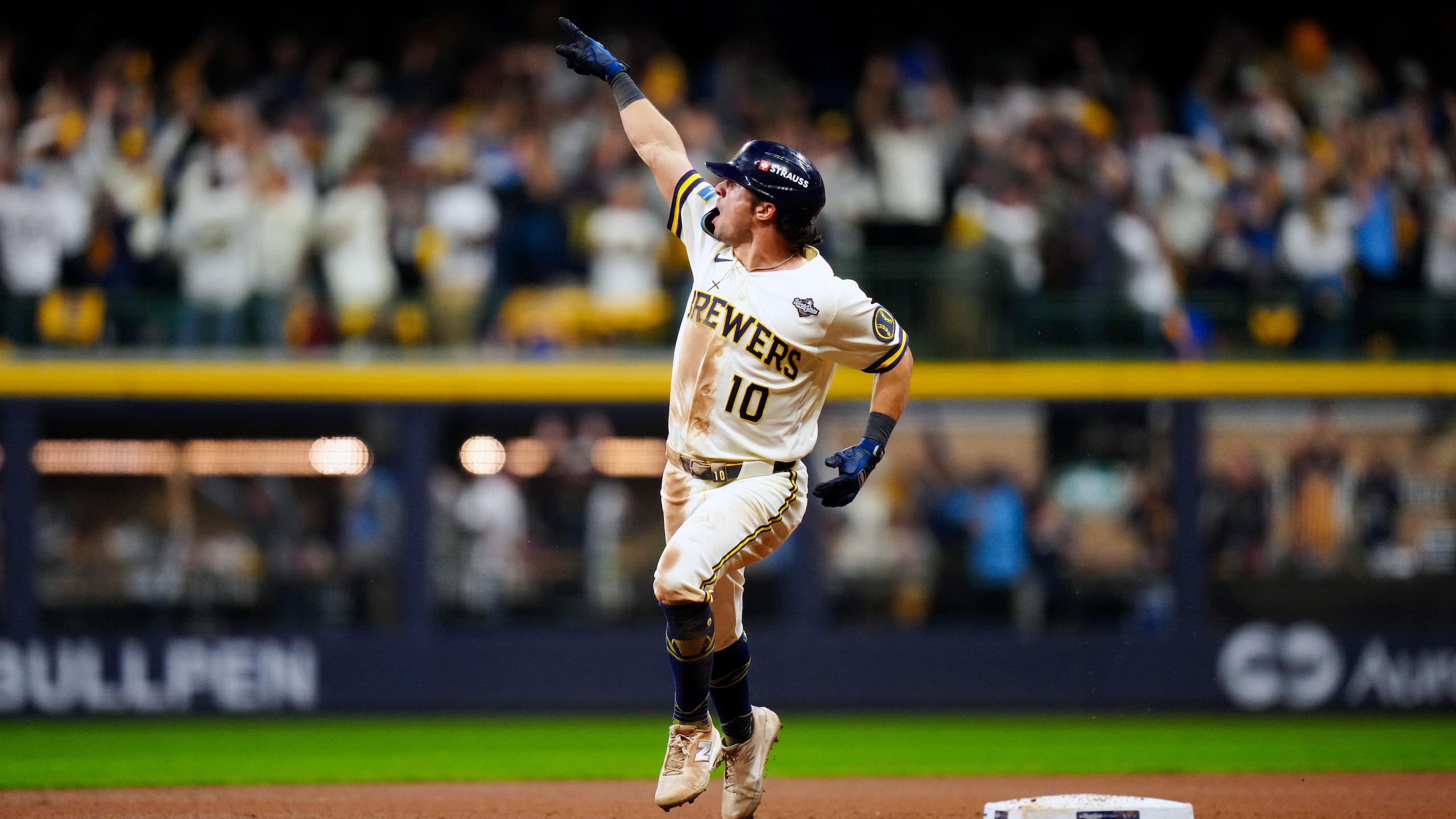
4 of 10If Tuesday’s St. Louis victory over the Astros was any indication, Allen Craig will play a featured role in the Cardinals’ playoff push.
When starting left fielder Matt Holliday left the game in the third inning with a finger injury, Craig stepped in and delivered four RBIs in the crucial 13-6 win. As Holliday’s maladies linger, Craig will continue to get important at-bats.
Over 210 plate appearances this year, Craig has shown enough power (10 HR) and patience (.354 OBP) to earn manager Tony La Russa’s trust.
Known for his frequent late-game substitutions, epic micro-manager LaRussa relies plenty on his bench bats to keep the offense moving forward.
Should the Cardinals make the playoffs, Craig will get plenty of pivotal pinch-hit appearances.
Atlanta Braves: Jason Heyward
5 of 10It’s hard to believe we’re here with Jason Heyward.
The can’t-miss prospect had a completely miss-able year in Atlanta and now finds himself largely relegated to Fredi Gonzalez’s bench behind Jose "George" Constanza.
Still, he’s one of the more talented players riding pine right now, and I think the Braves can find use for a 22-year-old with a career .790 OPS.
I liken Heyward to Pablo Sandoval last year.
Sandoval struggled so mightily during 2010 that Giants manager Bruce Bochy removed him from the starting lineup. Despite the demotion, Sandoval delivered a key go-ahead double in Game 4 of the NLCS against the Phillies to give San Francisco a 3-1 series lead.
Talent matters, even when that talent looks lost or frustrated. Keep an eye on Heyward.
New York Yankees: Jesus Montero
6 of 10Speaking of hitting talent, few have more than Yankees rookie Jesus Montero. Wedged somewhere between Russell Martin, Alex Rodriguez and Jorge Posada on the Bombers’ DH-catcher carousel, Montero may well start many postseason games on the bench.
If so, he’ll be a powerful last bullet for the Yankees in tight games.
In a brief big league audition, Montero’s exceeded his considerable hype, swatting four home runs in 17 games and batting at a ridiculous .351.
Because of age, he may end up the odd man out for a starting role, but he’ll get plenty of opportunities to imprint future onto present in the Yankees' playoff run.
Texas Rangers: David Murphy
7 of 10Right now, there’s no proven non-regular in baseball better than David Murphy.
Bouncing between all three outfield positions and DH, the former Red Sox farmhand has a career slash-line of .280/.339/.402 over six big league seasons.
Though 2011 has been a mild disappointment for the super sub, he’s played better as of late and owns the kind of role-player track record most players can’t match.
Give any contender a bench-filling wish list and they’ll put a defensively versatile, reliable left-handed hitter near the top.
In that sense, and perhaps in others I’m not yet aware of, Murphy is a dream come true.
Detroit Tigers: Ryan Raburn
8 of 10Utility man Ryan Raburn’s season mirrored much of what his team, the Detroit Tigers, experienced over the long 162-game haul.
For both, a frustrating first half mired in inconsistency lead to a second half breakthrough that has observers feeling bullish about future possibilities. Raburn, who can play infield and outfield, followed up a miserable first half with an average north of .300 down the home stretch.
Should he stay hot, Raburn will work his way into a Tigers infield rotation that includes Jhonny Peralta, Ramon Santiago and Wilson Betemit.
With recent news that starter Carlos Guillen will likely miss the ALDS, Raburn’s role grows even larger.
Boston Red Sox: J.D. Drew
9 of 10On the long slide from playoff certainty to sky-is-falling doubt, usual Boston scapegoat J.D. Drew hasn’t made himself much of a target.
The maligned veteran missed most of September, all of August and part of July with various injuries (shoulder, finger, neck, ego) while the Sox frittered away their massive Wild Card lead.
Now he returns at season’s end to try and save what’s left of Boston’s season.
And while there’s plenty of reasons to discount Drew’s potential contributions, I think it’d be wrong to overlook what the right fielder brings to the table.
Last year, Drew hit .255 with 22 home runs. Roll that production into an outfield rotation featuring Darnell McDonald and Josh Reddick and the Red Sox can get serviceable outcomes out of the right field spot.
Off the bench or making the occasional start, Drew can still help this team.
Tampa Bay Rays: Brandon Guyer
10 of 10Filtering the bench players from the regulars on a Joe Maddon roster is never easy. There are usually five guys you can pencil in and seven other semi-regulars rotating through the other four spots.
So instead of wading through all that mess, I’m going to direct your attention to Guyer, a rookie outfielder with potential and a decent shot of making the postseason roster.
While the more talented Desmond Jennings gets the innings and the hype, Guyer’s built a solid minor league resume worthy of Tampa’s consideration should they make the playoffs.
In 2010, Guyer hit .344/.398/.588 at AA and followed that up with a .312/.384/.521 at AAA this year.
On most teams, Guyer’s slow start to his big league career—.175 batting average in 40 at-bats—would exclude him from the postseason roster conversation.
Not in Tampa, where they’re known to hand big roles in late season games to rookies with good minor league track records (see Price, David).
Guyer could be the latest unknown to play hero for the AL East’s perpetual overachievers.
.jpg?w=2560 "Mahomes Told Teammate to Leave Meeting")
.jpg?w=2560 "🚨 Week 8 AP Top 25 Poll")



.jpg?w=2560 "Updates from EVERY NFL Game 🏈")
.jpg?w=2560 "Baker Gets Glove From Rays 🧤")