
Cliff Lee: 4 Reasons Philadelphia Phillies Should Start Him in Game 1
Call it a best-case scenario come true.
When the Philadelphia Phillies signed Cliff Lee last December they had one thing on their mind: a World Series Championship.
Now, nearly nine months later, the time has come to live up to expectations.
The Phillies are closing in on their fifth consecutive NL East title, as expected.
General manager Ruben Amaro, Jr. went out and acquired what was seemingly the missing piece to the team’s lineup, as expected.
The starting rotation (although Vance Worley has greatly exceeded expectations) has dominated hitters all season while helping the team avoid any prolonged losing streaks, as expected.
And now the door is about to be opened to the next set of expectations for the Phillies as they continue their historic season.
If someone had told manager Charlie Manuel in December that one of his toughest decisions this season may be deciding who should start Game 1 in the playoffs, Roy Halladay or Cliff Lee, he would’ve gladly taken on the challenge.
But now the time has almost arrived for Manuel to make this decision.
And his decision should result in handing the ball to the pitcher who has appeared in the past two World Series.
No matter which pitcher takes the mounds, the Phils should have a great chance of winning Game 1.
But their chances may be best with Cliff Lee on that mound.
Call it unfinished business.
Plain and Simple, Lee Has the Hotter Hand
1 of 4Quite simply, Cliff Lee has a hotter hand than Roy Halladay right now.
Of course, comparing Lee and Halladay is like comparing a Lamborghini and a Ferrari.
So if the Phils have a great chance of winning game one either way, why not start Lee?
In Lee’s 10 starts since the All-Star break the Phillies are 9-1.
Lee himself is 7-1 in those games.
But since August, the Phils left-hander has been on a roll that few pitchers ever experience during their careers.
In his last seven starts, Lee has gone 6-0 with a 0.51 ERA and has given up just three earned runs.
This includes his second historic month of the season.
After going 5-0 with a 0.21 ERA in June, Lee responded with a 5-0 record and a 0.45 ERA for the month of August.
Meanwhile, the Phils have gone 6-4 in Halladay’s last ten starts, with the reigning NL Cy Young winner owning a 6-2 record himself.
While Lee was on his way to winning Pitcher of the Month honors in August, Halladay went 3-1 with a 2.62 ERA.
Lee also currently ranks in the top five in the National League in wins, innings pitched, strikeouts, ERA, WHIP and complete games.
Both Lee and Halladay have made 29 starts this season, have a 2.44 ERA and have thrown 210.2 innings. Lee has held opponents to a .227 average while Halladay has held batters to a .243 average. Halladay has pitched seven complete games while Lee has thrown six. Halladay has 17 wins to Lee’s 16. Lee has 211 strikeouts while Halladay has 204.
Basically, the Phillies can’t go wrong no matter which pitcher they choose for Game 1.
So why not give the ball to the pitcher with the hotter hand?
Break Up the Lefties
2 of 4The Phillies would likely have to rearrange their rotation or skip a few of Lee’s starts during the final two weeks of the regular season in order for him to start Game 1 on regular rest.
But with a well-cushioned lead in the NL East, the team can afford to do this in order to split up their left-handed starters for the divisional series.
In a three-game series, the Phils can send a right-hander in Halladay to the mound in Game 1, followed by two left-handers in Lee and Hamels.
Or they could use a left-handed-right-handed-left-handed trio in order to reach their fourth consecutive NLCS.
By starting Lee in Game 1, the Phillies can send out Halladay and Hamels in Games 2 and 3, respectively, and try to take advantage of any weaknesses that the Milwaukee Brewers or Arizona Diamondbacks have in facing left-handed pitching.
Prince Fielder, Casey McGehee, Yuniesky Betancourt, Rickie Weeks and Nyjer Morgan of Milwaukee all have lower batting averages versus left-handed pitchers this season.
The same goes for Justin Upton, Miguel Montero and Gerardo Parra of the Arizona Diamondbacks.
Although it may only give the team a slight advantage, breaking up their two left-handed starters and taking a look at individual matchups could interest the Phils.
Having Lee set the tone for the series, Halladay matchup against either Milwaukee or Arizona’s No. 2 starter and Hamels potentially close out the series may be an intriguing option for the Phillies.
Halladay Struggles in the First Inning
3 of 4It’s just not right to hear Roy Halladay’s name and “ways he can improve” in the same sentence.
But the current 17-game-winner has not been flawless in his most recent starts.
In particular, Halladay has had some rough starts to his games as of late.
Since July 18th, Halladay has had just one start in which he did not give up any runs or hits in the first inning.
In his last 10 starts, Halladay has given up a combined eight runs and 17 hits in the first inning alone.
This includes a current string of seven straight starts in which he has given up at least one hit in the first inning.
Lee, on the other hand, has allowed just two first inning runs in his last 10 starts.
In his last five appearances, Lee has given up only one hit in his first inning of work.
The Phillies will enter the postseason with one of the largest targets on their back of any playoff team.
This means that any opposing team will be looking for even the slightest jump-start in their series against the Phils, making Game 1 all the more important.
A shutdown first inning would be one of the most beneficial ways the Phillies can begin their postseason journey.
And no pitcher gives them a better chance to do this than Cliff Lee.
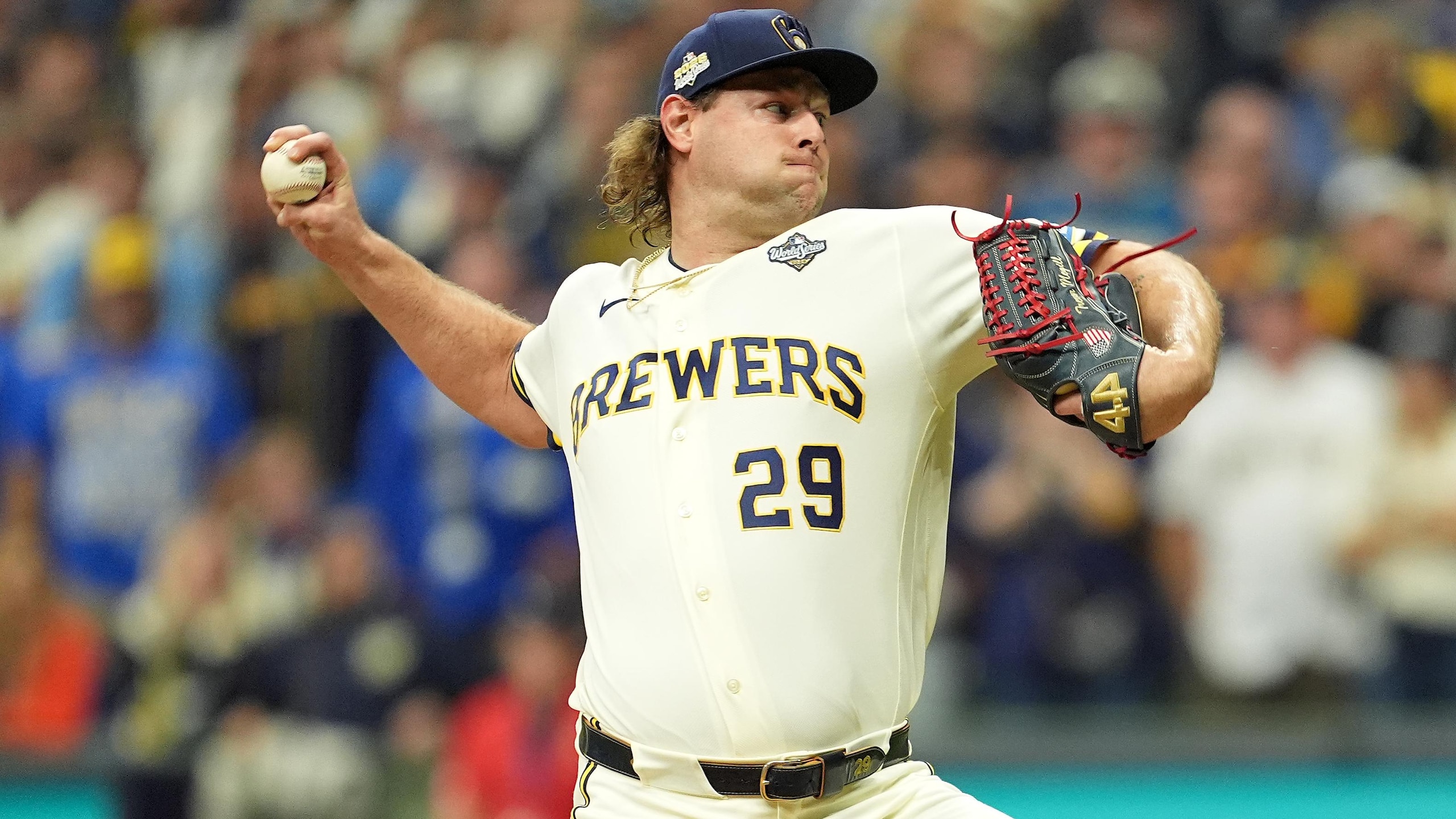


Lee Creates an Atmosphere Like No Other
4 of 4Once the postseason begins, it doesn’t matter what a team did during the regular season. Every team’s record goes to 0-0.
But that doesn’t mean the fans can’t keep their energy level the same.
And few players energize Phillies fans the way Cliff Lee does.
Lee’s mere presence on the mound can send a surge through the stadium that electrifies over 45,000 fans.
Not that Halladay doesn’t excite the crowd in his own way.
Watching Halladay is like watching a master craftsman go to work; you know it’s going to be efficient, well planned and lead to a great deal of confidence in regards to the outcome of the game. No matter what, you don’t want to miss a single pitch.
Watching Lee pitch is a bit more unpredictable.
In a great way.
With Lee on the mound, there is still every reason to feel confident towards the outcome of the game, and you still don’t want to miss a single pitch.
But you also don’t know whether Lee is going to pitch a complete-game shutout, hit a home run, steal a base or make another nonchalant catch while standing on the mound during a World Series game.
Or maybe a combination of all four.
Regardless of who pitches, expectations will be sky-high for the Phillies once the postseason begins.
But sending Lee to the mound in Game 1 may provide the Phillies with the definition of home-field advantage.
And after seeing what Lee can do to a stadium in Game 1 and Halladay and Hamels on the mound in the following games, any opposing team will have more than their work cut out for them.


.jpg?w=2560 "Rodgers Iced Out on Plane 💎")
.jpg?w=2560 "Raiders Could Start Mendoza")
.jpg?w=2560 "Mahomes Told Teammate to Leave Meeting")
.jpg?w=2560 "🚨 Week 8 AP Top 25 Poll")


.jpg?w=2560 "Lamar Being Out Shocked Ravens")
.jpg?w=2560 "Lions Outlast Packers")