Projecting Each MLB Team's Most Likely Future Hall-of-Famer
When it comes to the Hall of Fame, it pays to be a Yankees fan. Not only does New York have more members in Cooperstown than any other squad, but they also have at least four future members suiting up for them this season.
Mariano Rivera, Derek Jeter, Jorge Posada and Alex Rodriguez are practically shoo-ins, and with a couple more seasons like their last few C.C. Sabathia and Mark Teixeira might have decent cases as well.
If you're an Astros fan, you're slightly less enthusiastic about any member of your team's chances to one day have a bust in Cooperstown. Especially now that Hunter Pence is out of town. Now who's the most likely? J.A. Happ? Brett Myers? Or is it the almighty, five-foot-seven, 155 pound Jose Altuve?
Seriously though, every team has to have at least one (or more) Hall of Fame worthy candidate right?
This is my quest: to find one player from each Major League team who is going to wind up in Cooperstown, next to Babe Ruth and Mickey Mantle.
Just one player per team, hence no A-Rod, Rivera AND Jeter from New York. And obviously since not every team has an established player with a solid case, I'm going to have to use some creative math to get him there.
Let it begin!
All statistics courtesy of Baseball Reference.
**Lock It Down**
1 of 36The members of the "lock it down" division are all players who are hands down Hall-of-Famers.
No steroid rumors or betting scandals (looking at you A-Rod) to bring them down, and Cooperstown worthy stats, not to mention other achievements such as World Series rings, multiple MVPs and numerous All-Star Game appearances.
Albert Pujols, 1B, St. Louis Cardinals
2 of 36All you have to do is look at the season averages to be able to tell why Pujols is going to be a sure-fire first-ballot Hall-of-Famer.
Over the course of a 162-game season, Pujols averages:
- 196 hits
- 44 doubles
- 42 home runs
- 127 RBI
- 93 walks, to just 67 strikeouts
- .328 batting average
Feel free to toss in these superlatives too:
- National League Rookie of the Year (2001)
- nine-time All-Star
- three-time National League MVP (2005, 08-09)
- six-time Silver Slugger winner
- two-time Gold Glove winner
- five-time N.L. league leader in runs
- two-time N.L. league leader in home runs
- one single-season batting crown (.359 in 2003)
As seen in a later slide (Adrian Gonzalez), Pujols' averages and career numbers up to this point trump those of Hall-of-Famers Jimmie Foxx and Lou Gehrig.
His career numbers (compiled in just 11 seasons!) look a little something like this:
- 2,005 hits (tied for 260th all-time)
- 445 doubles (tied for 97th all-time)
- 432 home runs (40th all-time)
- 1,295 RBI (107th all-time)
- .328 batting average (tied for 33rd all-time)
And if all that weren't enough, he's a super-nice dude who always has time for his fans and his charity work.
Jim Thome, DH, Minnesota Twins
3 of 36It used to be you say "Jim Thome," I say "socks."
Nowadays, it should be you say "Jim Thome," I say "sure-fire Hall-of-Famer."
That's what happens when you crank out close to 600 home runs (597 and counting) over the course of a 21-year career. Thome currently ranks eighth all-time on the career home run list, ahead of players like Frank Robinson, Harmon Killebrew, Mickey Mantle, Ted Williams and Lou Gehrig.
And for some reason, each and every one of us has that same moment each season where we check out a box-score and think, "Thome is still playing?"
Because he did most of his most devastating damage during the late 1990's and early 2000's, it's easy to forget just how great Thome was. For a nine-year run (1996-2004), he was one of, if not THE, top power hitters in the game.
During that "almost-decade" he put forth average numbers that looked like this:
- 104 runs
- 145 hits
- 28 doubles
- 41 home runs
- 111 RBI
- .285 average
The most impressive part of that line is the number of hits. Unlike Pujols, who cranks out close to 200 hits every season, Thome averaged less than 150 each year, and still managed to bash more than 40 long-balls.
For Thome's career, 26.4% of his hits have come in the form of home runs. Compare that to the percentages for several other great power hitters from baseball history and you'll see how much better Thome is than anyone gives him credit for.
| Thome | Bonds | Ruth | Gehrig | |
| Hits | 2,255 | 2,935 | 2,873 | 2,721 |
| Home Runs | 597 | 762 | 714 | 493 |
| Percentage | 26.4% | 25.9% | 24.8% | 18.1% |
Thome is the Cris Carter of professional baseball. All he does is hit home runs, and for a greater percentage than three all-time greats.
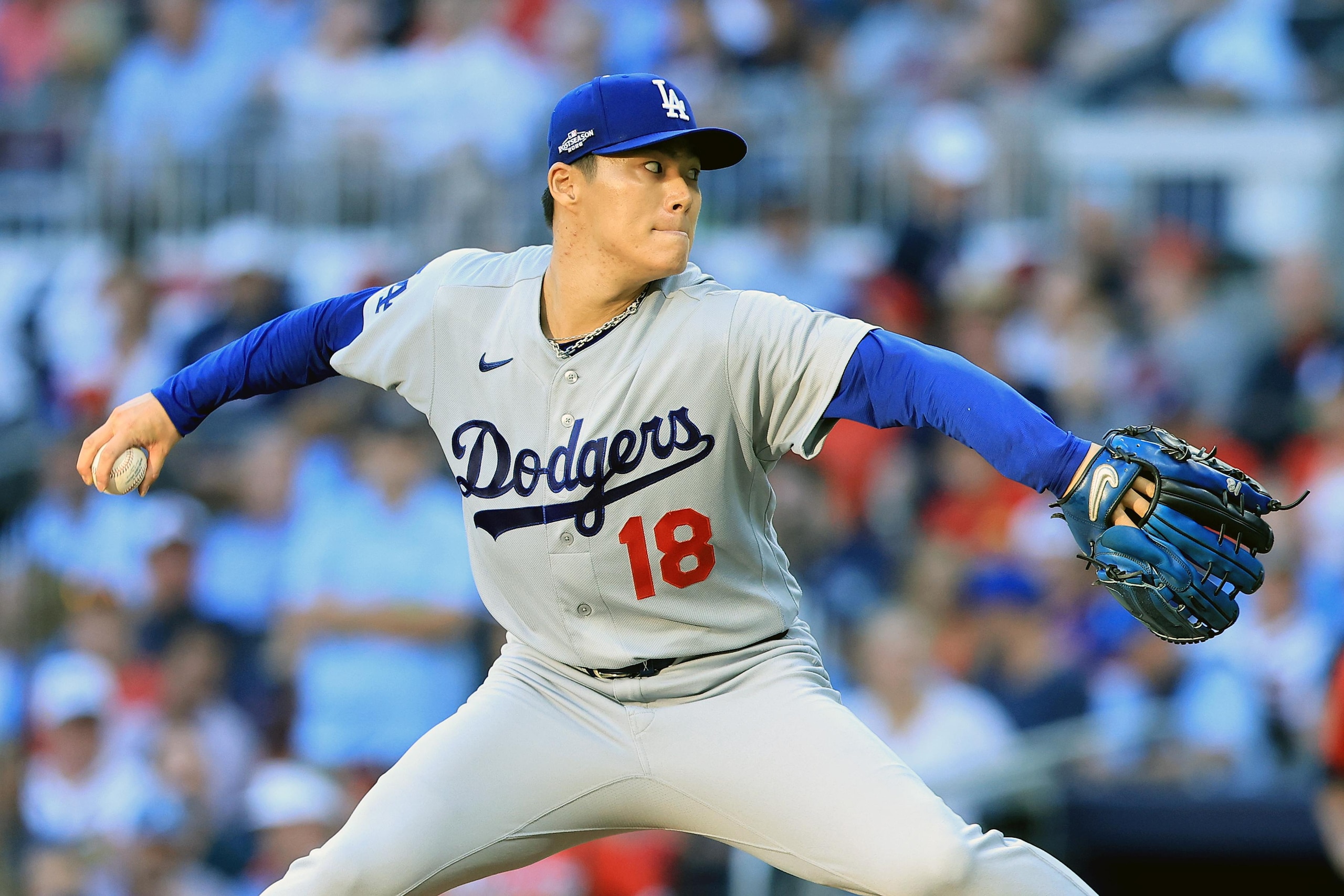


Ichiro Suzuki, OF, Seattle Mariners
4 of 36If you do like most American baseball fans and forget that Suzuki ever played baseball anywhere other than in Seattle, his numbers look like this:
- 2,366 hits
- 1,103 runs
- 273 doubles
- 73 triples
- 411 stolen bases
- .327 batting average
Those numbers alone might be enough to get the now 37-year-old to Cooperstown. Take into account his overseas career and his numbers look like this, with projections for where those totals would rank him all-time:
- 3,800 hits (3rd all-time)
- 1,756 runs (20th all-time)
- 504 doubles (tied for 50th all-time)
- 106 triples (tied for 138th all-time)
- 631 steals (15th all-time)
- .337 batting average (22nd all-time)
Those numbers would be more than good enough to secure his spot as one of the greatest hitters of all-time, and as a Hall-of-Famer. However, the Hall-of-Fame doesn't currently recognize statistics from games played outside of the United States as valid for record-keeping purposes, leaving Suzuki with the first set of numbers alone.
Luckily, he'll be able to further bolster his case for inclusion with the following:
- ten All-Star Game appearances
- 2001 Rookie of the Year and A.L. MVP winner
- ten Gold Gloves
- three Silver Sluggers
He also led the American League in at-bats and base hits seven times, intentional walks three times, batting average twice and stolen bases once.
Derek Jeter, SS, New York Yankees
5 of 36Aside from the Rookie of the Year honor, the 3,027 career hits (and going), the close to 2,000 runs, nearly 350 stolen bases, 12 All-Star Game appearances and five Gold Gloves, Jeter has one number that is going to be the first one mentioned on his Hall-of-Fame plaque.
Five.
That's the number of World Series championships that Mr. November has to his name. That's three more than any current big-leaguer not named Mariano Rivera or Jorge Posada.
Another thing Jeter has going for him (as if he needed any more) is his clutch play in the postseason. There's a reason they call him Mr. November and Captain Clutch, after all.
For starters, no player in Major League history has taken part in as many playoff games as Jeter. With 147 appearances, he has 26 more than his next closest competitor. He's also the career postseason leader with 679 at-bats, 101 runs scored, 185 hits, 283 total bases and 30 doubles. And despite the fact that he doesn't swing the biggest bat (just 238 career HR), Jeter ranks third all-time with 20 home runs and fourth with 57 RBI.
Also, Jeter deserves a spot in Cooperstown just for the sake of having an exhibit dedicated to all the beautiful women that he's reported to have been involved with, including Adriana Lima, Jessica Alba, Mariah Carey, Vida Guerra, Jordana Brewster, Jessica Biel, Lara Dutta and current squeeze Minka Kelly.
Enough said.
And you're welcome!
Vladimir Guerrero, DH, Baltimore Orioles
6 of 36As an Orioles fan, Guerrero isn't exactly who I was thinking of when the idea for this slideshow struck, but of the players on the current Baltimore roster, he's got the best shot to make it to the Hall.
Aside from his bad-ball hitting ability and his all-or-nothing swing, Guerrero has proven to be one of the most dangerous hitters of the past 25 years. I for one can attest to the Cooperstown worthy feat that he performed against the very Baltimore squad he now suits up for. Facing an intentional walk, Vlad chased a ball that wasn't thrown far enough outside the zone and notched an RBI base hit. Made me sick.
In terms of stats, I'd say Vlad is certainly there. He's slugged 445 career home runs (and counting) and has driven in close to 1,500 runs, an average of 114 per season. His career batting average is a robust .318, good for fifth among active players.
He's a nine-time All-Star who has finished in the top ten of the MVP voting six times, including in 2004, when he took home the American League honor. He's also won eight Silver Sluggers and led the League in runs scored, plate appearances, base hits and total bases.
And as a testament to his imposing nature (his nickname is Vlad the Impaler), he led the American League in intentional walks four straight seasons (2005-08).
Vlad also earned his keep in the outfield, long before he was considered too bulky and slow to man a spot there. He led his league in outfield assists in 2002 and 2004.
And he's the owner of back-to-back 30 HR-30 SB campaigns in 2001 and 2002.
It's tough to say that anyone is a lock for baseball's highest honor, especially one who played smack dab in the middle of the "Steroid Era," but with a clean resume in that department, Vlad seems to be as close to a sure thing as there is.
**On the Fence**
7 of 36"On the fence" guys include those who have had terrific careers, but aren't locks for the Hall for one of two reasons.
First, a group that is so far removed from its greatness (a la Ivan Rodriguez) that it's hard to think that sportswriters will make this group of players their first priority on the ballot. These could be guys that take a few votes to get into the Hall.
Second, is the group of guys who have put together amazing careers filled with fantastic highlights (see Roy Halladay's two no-hitters), but have yet to play long enough to be considered sure-fire future members.
Ivan Rodriguez, C, Washington Nationals
8 of 36As you'll learn in a later slide (Brian McCann), there are only six catchers who have more career home runs than Ivan Rodriguez. Four of the six are in the Hall of Fame. Another (Mike Piazza) might be joining them soon.
In addition to his 311 home runs, Rodriguez also has 1,332 career RBI, 572 doubles, 2,842 hits and a .297 batting average. He's 21st on the all-time list for doubles.
Even more impressive than Rodriguez's offensive abilities have been his talents behind the plate. For starters, he's still playing catcher, at age 39! He's spent all but one game of this season at another position besides backstop. Last year he played all 102 games behind the plate.
You'd think that would be an incentive for opposing teams, who would look to take advantage of an aging veteran. Think again.
Last season, "Pudge" posted one of the best caught stealing rates of his career (48%) and led the National League. It marked the tenth time he's led his league in the category.
He's also a 14-time All-Star, a 13-time Gold Glove winner, and a seven-time Silver Slugger. He won the 1999 American League MVP and can safely make the case that he's the top defensive catcher in baseball history.
Roy Halladay, RHP, Philadelphia Phillies
9 of 36Halladay has seemingly gotten better with age, which is yet another aspect that sets him apart. Of all the pitchers currently on active big-league rosters, Halladay has the best chance to lock down a spot in the Hall-of-Fame.
With 183 career victories, a 3.27 ERA, 1,300 more strikeouts than walks, two no-hitters and two Cy Young Awards to his name, his case is very strong. He's also finished in the top five for voting on four other occasions.
He's led the league in victories twice (and he's on his way to a third), complete games six times (working on seven), innings pitched four times (working on five) and shutouts four times.
He's the active MLB leader in WAR for pitchers, complete games and shutouts, and ranks in the top ten in ERA (sixth), wins (second), win-loss percentage (second), innings pitched (sixth) and strikeouts (seventh).
He's a seven-time All-Star who also happens to own the 13th-best career winning percentage (.670) in Major League history.
Just 34 years old, Halladay will probably pitch until he's close to 40 years old, thanks to an incredible preparation technique that has allowed him to thrive as he's gotten older, pitching better in his 30's than ever before.
He hasn't posted an ERA above 2.79 since 2007, his second-to-last year in Toronto.
Todd Helton, 1B, Colorado Rockies
10 of 36Helton is a sentimental favorite, but there's no argument that he has a serious case for the Hall.
In the prime of his career (1998-2004) he was as good as any hitter in baseball, and his production during that period was definitely historic. During that seven-year span, he put up these numbers:
- 819 runs scored (117 per season)
- 1,346 hits (192 per season)
- 326 doubles (47 per season)
- 246 home runs (35 per season)
- 825 RBI (118 per season)
- .340 batting average
- one batting title (.372 in 2000)
- five All-Star games
- four Silver Sluggers
- three Gold Gloves
For his career, Helton has 345 home runs, 548 doubles, 1,296 RBI and a .323 average.
Surprisingly, as good as Helton was at the plate, he was even better in the field, posting a career .996 fielding percentage, good for sixth all-time among first basemen. The fact that he only won three Gold Gloves for his entire career is somewhat mystifying. Especially in 2007, when he made only two errors and posted a fielding percentage of .999, and 2009, when he committed just three and posted a .998 number.
Without a doubt, Helton is one of the top defensive first basemen in baseball history, and taking into account his offensive prowess, I think he's got a solid shot at Cooperstown.
**On the Right Path**
11 of 36This rather large group of players is made up of guys who have all the goods to make it to Cooperstown.
They're already on the right path, so to speak, and just need to continue producing at the same level for another five-to-ten years, something that appears easily possible for each.
Look out for one surprise candidate at the bottom of this grouping.
He's still very young (23 years old), but has one of the best cases of any player his age since Alex Rodriguez, who I think we all agree will find some trouble making it into the Hall, especially if these rumors about an illegal poker game that involved cocaine and Matt Damon are true.
Brian McCann, C, Atlanta Braves
12 of 36In just six full seasons, McCann has clubbed 130 home runs, an average of 21 per year.
He's only 70 long-balls away from cracking 200 and along with it, the top-13 of home runs in a career by a catcher. Once he passes 200, which should happen sometime around the end of 2014, McCann will be in pretty impressive company, joining Mike Piazza, Carlton Fisk, Johnny Bench, Yogi Berra, Lance Parrish, Gary Carter, Ivan Rodriguez, Javy Lopez, Roy Campanella, Jorge Posada, Gabby Hartnett, Benito Santiago and Bill Dickey.
Seven of those 13 players are in the Hall of Fame, with Piazza and Rodriguez likely to join within the next five-to-ten years.
If he can somehow stick behind the plate until his 35th birthday he could eclipse 300 home runs, a feat achieved by only four other catchers: Piazza (396), Fisk (351), Bench (326) and Berra (305).
That would be some pretty rare territory, and would cement his place as one of the top offensive catchers in big-league history.
In addition, McCann has been named to the N.L. All-Star team in each of the six full seasons that he's played, and earned the Silver Slugger at catcher four times.
Tim Lincecum, RHP, San Francisco Giants
13 of 36As impressive as Halladay has been throughout the course of his career, he can't hold a candle to the kind of production that Tim Lincecum put forth in his first five seasons.
Sixty-five victories, an even 3.00 ERA, 1,067 strikeouts in 960.1 innings, four All-Star Games, two Cy Young awards and one World Series ring.
He's led the league in strikeouts three times and is currently on-pace for his third consecutive 200+ strikeout season. As if you don't already know how prolific he was with the strikeout. Here's a chart to better illustrate his dominance, compared to some other current big-leaguers and some of the most prolific K artists in baseball history.
| T.Lincecum | C.Sabathia | R.Halladay | N.Ryan | R.Clemens | R.Johnson | |
| Career Innings | 960.1 | 2,303.2 | 2,466.2 | 5,386 | 4,916.2 | 4,135.1 |
| Career Strikeouts | 1,067 | 1,949 | 1,873 | 5,714 | 4,672 | 4,875 |
| K's per nine IP | 10.0 | 7.6 | 6.8 | 9.5 | 8.6 | 10.6 |
| K's per season | 249 | 192 | 179 | 246 | 224 | 271 |
He's nowhere close to there yet, but if his body can handle that throwing motion for another 10-15 years, he's going to be right on pace to crack into Cooperstown.
Justin Verlander, RHP, Detroit Tigers
14 of 36Lincecum can only hope to model his career path after Justin Verlander, who has a little more than one season's experience than the Giants ace.
Jim Thome just hits home runs and Verlander just wins games. He's putting the finishing touches on his seventh season and is only two victories away from 100 for his career. He's averaged more than 16 victories each season since making his debut back in 2005. He made just two appearances that season and joined the rotation full-time in 2006.
That's more than most current big-leaguers and ahead of many big-name pitchers already in the Hall. Let's take a look at his production, in terms of wins per 162 games, compared to a number of other pitchers.
| Verlander | Sabathia | Clemens | Maddux | Spahn | |
| Seasons | 7 | 11 | 24 | 23 | 21 |
| Wins | 98 | 173 | 354 | 355 | 363 |
| Wins per 162-games | 18 | 17 | 17 | 16 | 17 |
Well how about that. Verlander averages more victories per 162 games than each of those pitchers, including the modern career victory leader, Warren Spahn.
Now all he has to do is go out and pitch 20-plus seasons like the rest of those guys.
Other accolades for Verlander include:
- 2006 A.L. Rookie of the Year
- four-time All-Star selection
- In 2009, he led the A.L. in innings, strikeouts, wins, games started, and strikeouts per nine
There's no such thing as a sure-thing when it comes to the Hall, but considering he's just 28 years old, Verlander is in excellent shape to make a run.
Prince Fielder, 1B, Milwaukee Brewers
15 of 36Fielder has already achieved a long list of things that have never been done before, like becoming the first father-son combination to hit 50 home runs in a single season. Unlike his father, however, Prince has a legitimate chance, if he continues to produce at the epic pace he's working, to one day set foot in the Hall of Fame.
Since Fielder began his career at such a young age (21 years old), he is one of a few players who actually has a shot at Barry Bonds' career home run mark, which sits at 762. He's already up to 216, which is good for 41st among active Major Leaguers.
Using a little projection, and assuming he can make it to 17 years (at which time he'll be 38 years old) in the Majors, his numbers could look a little like this. Keep in mind he's currently averaging 37 home runs per 162-game season.
Thirty-seven homers per 162 games, for 17 seasons, equals 629 career home runs. However, he played just 39 games and hit just two home runs his debut season, so let's eliminate that and give him 37 homers per year for 16 seasons. That comes out to 592 home runs. Now add the two that he hit during his first season and you get an approximation of 594 career home runs.
I'm not exactly sure how the voting process will change, if at all, during the next 20 years, but I'm pretty sure 594 home runs will be good enough to get Prince into Cooperstown.
Another impressive stat about Fielder is that, for all of the concerns about his weight, he's played in at least 157 games each season since coming up to the Majors.
Adrian Gonzalez, 1B, Boston Red Sox
16 of 36It's tempting to go with David Ortiz here, but considering he didn't come into his prime until he was 27, it's going to be a tough go for Big Papi to earn his way into Cooperstown. Luckily, he has some playoff heroics to strengthen his case. That and the fact that he's never been strongly linked to steroids.
Either way, I'm going with reliable Adrian Gonzalez, who is six years younger and apparently having the finest season of his life.
In eight seasons Gonzalez has managed to better the numbers that Ortiz put up in his first nine. Here's the breakdown. And just for the heck of it, we'll compare the numbers from the first eight seasons of a few other famous first basemen.
Ortiz | Gonzalez | Gehrig | Foxx | Pujols | |
| Doubles | 194 | 219 | 248 | 159 | 342 |
| Home Runs | 130 | 186 | 187 | 174 | 319 |
| RBI | 478 | 615 | 811 | 667 | 977 |
| At-Bats | 2,509 | 3,607 | 3,327 | 2,750 | 4,578 |
| Batting Average | .278 | .293 | .342 | .336 | .335 |
| All-Star Games | Two | Four | N/A | N/A | Seven |
| MVPs | None | None | One | One | Two |
Both Gehrig and Foxx played in the day before All-Star games, but with four appearances in his first eight seasons, and taking into account the fact that he now plays in Boston, where Cesar Izturis could probably get elected to the ASG just by playing, Gonzalez should probably finish his career with close to ten, if not more.
Mark Buehrle, LHP, Chicago White Sox
17 of 36There's no denying that Buehrle is one of baseball's most crafty pitchers, and frankly he's had to be, since his fastball velocity hasn't jumped above 90 mph since his amateur days. Still, after further review you can make a case for Buehrle as one of the top pitchers of the 2000s.
Here's how his numbers stack up against a few other talented guys from that decade (2001-2010):
| Buehrle | Sabathia | Halladay | Oswalt | |
| Games Started | 331 | 322 | 300 | 303 |
| Wins | 144 | 157 | 160 | 150 |
| Innings Pitched | 2,219.2 | 2,127.0 | 2,133.1 | 2,015.0 |
| Complete Games | 27 | 30 | 56 | 20 |
| No-Hitters | Two | None | Two | One-combined |
In addition, Buehrle has earned four All-Star nods and two Gold Gloves. He's led the A.L. in innings pitched twice, games started twice and assists as a pitcher five times.
Here's where he ranks among active pitchers in the following categories:
- WAR for pitchers (sixth)
- Wins (tenth)
- BB per 9 IP (fourth)
- Innings (ninth)
- Games Started (eighth)
- Complete Games (seventh)
And despite the fact that he's 32 years old, he could have 5-7 years left, maybe more since he knows he doesn't have to rely on sustaining his velocity. He has a legitimate shot at reaching 200 wins (43 away) and if he could toss in another no-hitter or two he could have a very strong case.
Justin Upton, OF, Arizona Diamondbacks
18 of 36It's easy to forget, because Upton has four and a half Major League seasons under his belt, that the youngster is still just 23 years old.
That makes his 162-game average of 25 home runs and 84 RBI look even more impressive. If you figure that Upton plays until he's 36 years old, or until 2024, and averages just 25 homers per season, that gives him a career total of 450. He'll probably hit a few more per season here and there, so there's a legit possibility that he could reach 500 home runs.
All because he started playing in the big leagues when he was 19. Also, he's very good.
Despite very high strikeout numbers in the early years of his career, Upton has managed to maintain a career .278/.358/.488 line. He's started to show more plate discipline this season and he's on pace to set career-marks in walks and on-base percentage.
He'll have an even greater shot at Cooperstown if he can continue to steal bases at a decent rate. He's averaged 17 per 162 games during his four-plus seasons in Arizona and if he keeps that up he could end his career with close to 300.
You know how many players in Major League history have reached 500 home runs and 300 steals?
Three. Barry Bonds, Alex Rodriguez and Willie Mays.
**Will Probably Fall a Bit Short**
19 of 36This group contains a few players who would have had a much better case had they not lost time over the course of their careers due to injuries.
Each of these three players had immense talent and incredible tools, whether it be Scott Rolen's amazing arm (arguably one of the strongest of any third baseman...ever), Torii Hunter's incredible athleticism in center field, or Adrian Beltre's ability to turn his incredible raw power on or off.
In the end, they'll likely end up three or four seasons worth of production short.
Scott Rolen, 3B, Cincinnati Reds
20 of 36If the Hall of Fame was instead a Hall of Superlatives, Rolen would be a shoo-in for best arm strength.
But it's not as if all of Rolen's notable production was done in the field. At the plate he's owner of 308 career home runs, exactly 500 doubles, 1,248 RBI and a .282 average. He's a seven-time All-Star, an eight-time Gold Glove winner and the 1997 Rookie of the Year recipient.
He's topped 25 home runs seven times and knocked in more than 100 runs on five occasions.
And according to Baseball-Reference, he checks in as the 144th-ranked hitter of all-time, just behind Tony Perez and Edgar Martinez, but ahead of Nellie Fox, Gil Hodges and Steve Garvey.
In regards to his fielding, the most important factor in measuring Rolen's greatness is the fact that only Brooks Robinson and Mike Schmidt have more Gold Gloves as a third baseman. He's also just one of 33 players to receive eight or more Gold Gloves at any position.
Rolen might not have a spot in Cooperstown when all is said and done, but he certainly fought hard to earn his way there.
Torii Hunter, OF, Los Angeles Angels
21 of 36Like Rolen, Hunter is another guy whose Cooperstown case would be a lot stronger if defensive ability factored more into the voting process.
For nine consecutive seasons (2001-09) Hunter took home a Gold Glove for his sterling play in the outfield. The only other outfielders with a streak that long are Roberto Clemente (12 straight), Willie Mays (12), Andruw Jones (10), Ichiro Suzuki (10) and Ken Griffey Jr. (10). Two of those players are already in the Hall, while Suzuki and Griffey are likely to join them.
But it's not like winning Gold Gloves has been all Hunter's done. He's also hit 20 or more home runs in nine seasons, rapped 373 career doubles, scored (almost) and driven in over 1,000 runs and stolen almost 200 bases.
He's been named to four All-Star teams, won one Silver Slugger and racked up 93 outfield assists, good for tenth among active players.
Hunter is on-pace to set career lows in many offensive categories this season, leading many to think that his time is running out, but taking into account he's playing on one of the worst offensive teams in baseball, it's no surprise really.
In the field, he's still golden, making just one error in 102 games and racking up 11 assists, good for second in the A.L.
Carlos Lee, OF, Houston Astros
22 of 36The Astros are so bad that it's hard to project a bright future for any of their current players.
Taking that into account, it's much more likely that one of their aging veterans, namely Carlos Lee, gets his second or third wind and generates enough production to sneak in on the basis of his consistency over an 11-year period.
From 2000, his second full season in the big-leagues, to 2010, Lee was one of the most productive hitters in the game. Here's how his stats from that period measure up against some of the other top bats from that same time-frame:
| C.Lee | Pujols | C.Jones | Thome | A.Rodriguez | |
| At-Bats | 6,356 | 5,733 | 5,252 | 4,905 | 6,254 |
| Hits | 1,823 | 1,900 | 1,619 | 1,333 | 1,881 |
| Runs | 940 | 1,186 | 963 | 925 | 1,264 |
| Doubles | 372 | 422 | 327 | 247 | 314 |
| Home Runs | 315 | 408 | 283 | 393 | 465 |
| RBI | 1,108 | 1,230 | 967 | 1,045 | 1,368 |
| Steals | 114 | 75 | 66 | 3 | 183 |
| Average | .287 | .331 | .308 | .272 | .301 |
The fact that he even comes close to some of these guys in some categories is ridiculous. Somehow, we've all let a six-year, $100 million contract cloud the fact that for the past decade this guy has been one of the most impressive offensive forces in baseball.
And despite the fact that he's 35 years old, there's no way to know for sure that he doesn't have anything left in the tank. He's posting his best batting average since 2009 and is on pace for close to 20 home runs. If he sticks around the Majors for two or three more seasons, he could make a run at 400 career home runs.
**Too Early to Tell**
23 of 36Each of the players in this group has a couple of things in common.
They're all young.
They're all incredibly talented.
And if they each continue to progress and grow in their skills, they're as good a bet as any to reach their Hall of Fame potential.
Whether or not any of these players actually will is anyone's guess, but they certainly have the skill.
Jose Bautista, OF, Toronto Blue Jays
24 of 36It's true that Bautista got a really late start on his homer-happy career, leaving him with a very slight chance to ever make it to Cooperstown, but if he can keep up this incredible pace for a few more seasons (he's just 30), he might have a few legs to stand on.
He'll bolster his case by having no association with performance-enhancing drugs, and could garner some support on the "where did all this come from?" late-bloomer front. It really is ridiculous how he went from Barry Evans in 2009 (.235, 13 HR) to Barry Bonds in 2010 (.260, 54 HR).
This is the same guy who famously played for four different teams (Baltimore, Kansas City, Tampa and Pittsburgh) during the 2004 season.
If Bautista can continue to bash at this pace for another seven years, at which time he'll be 37 years old, he could conceivably reach 400 home runs. Which might not be enough to put him in Cooperstown, but could if he proves to be head and shoulders above every other power-hitter in the American League.
Jose Reyes, SS, New York Mets
25 of 36Because Reyes has been in the Majors for nine years, it's very easy to forget that he's still just 28 years old. It's not really a surprise, then, that the Mets were so coy about dealing him before the deadline. I fully expect the Mets to come to an agreement on an extension after the season.
And why not? Reyes is one of the most exciting players in baseball. His combination of speed, power and defense is not one that is seen of a big-league shortstop anymore.
This year has arguably been the shortstop's Mona Lisa. He's pacing the National League in runs, steals and batting average. He picked up his fourth All-Star nod this year and is on the verge of some pretty serious milestones. He's just one triple away from 100, and just cracked the top 100 all-time in stolen bases.
Assuming Reyes can hang on for another eight seasons while performing at the same level his numbers could look like this:
- 1,428 runs
- 2,526 hits
- 434 doubles
- 198 triples
- 158 home runs
- 832 RBI
- 730 steals
That production would be enough to bump him into the top-ten all-time in steals and triples, and would give him a pretty solid case for the Hall.
Clayton Kershaw, LHP, Los Angeles Dodgers
26 of 36Kershaw arrived in the Majors with as much hype as any Dodgers' prospect in recent memory. At age 20, he quickly went to work establishing himself as one of the best young lefties in the game.
Four seasons later he's, without a doubt, one of the top pitchers in the game, regardless of age or handedness.
He hasn't posted an ERA over 3.00 since his rookie season, finishing each season since 2009 in the top ten in the category. This season he leads the National League in strikeouts (177) and strikeouts per nine IP (9.9). He's also finished in the top five in the latter category each season since '09.
To get a better gauge of his performance through his first four seasons, let's compare him with some other famous Dodger pitching greats:
| Kershaw | Koufax | Drysdale | Hershiser | Valenzuela | |
| Victories | 39 | 20 | 51 | 44 | 49 |
| Innings Pitched | 644.1 | 363.1 | 802.1 | 668.2 | 752.0 |
| Strikeouts | 674 | 313 | 576 | 465 | 584 |
| Walks | 266 | 213 | 257 | 210 | 248 |
| ERA | 3.05 | 4.21 | 3.33 | 2.85 | 3.00 |
In regards to victories, Kershaw can't hold a candle to Drysdale or Valenzuela, but he has a chance to catch Hershiser before the end of the 2011 campaign. Not surprisingly, he has the edge in strikeouts, despite having 158 fewer innings than Drysdale. His ERA is on par with Valenzuela.
That's pretty good company to be in.
Starlin Castro, SS, Chicago Cubs
27 of 36You could tell from Castro's auspicious debut, in which he homered and recorded six RBI, that he was going to be a special player.
A year and a half later, Castro is on his way to his second .300 season, while pacing the National League in at-bats and hits. It's really hard to quantify how amazing Castro's production is. He's just 21 years old after all!
To gain a better perspective on just how special Castro's first two seasons have been, let's compare him to some other all-time greats who played their first two seasons at age 20 and 21.
| Castro | S.Musial | W.Mays | R.Hornsby | |
| Hits | 285 | 167 | 157 | 326 |
| Doubles | 58 | 36 | 24 | 41 |
| Triples | 13 | 10 | 9 | 32 |
| Home Runs | 7 | 11 | 24 | 14 |
| RBI | 88 | 79 | 91 | 131 |
| Runs | 115 | 95 | 76 | 149 |
| Steals | 22 | 7 | 11 | 34 |
| Average | .306 | .325 | .266 | .321 |
He's still got a ways to go to even get a sniff at the achievements reached by any of those other three names, but he's off to an incredible start.
David Price, LHP, Tampa Bay Rays
28 of 36It's hard to imagine having a better start to a big-league career than David Price.
After making only five appearances during the 2008 regular season, the rookie lefty made five more during the playoffs, including a clutch performance in game seven of the ALCS, in which he took on the heart of the Boston lineup with the game on the line, earning the save and securing Tampa Bay's first World Series appearance.
His first full season wasn't as prosperous, as he won just ten games and posted an ERA close to 4.50, as the Rays slid back down to third in the A.L. East. Year three was where it was at for the former top overall pick from the 2007 draft.
He challenged for the A.L. Cy Young all season, posting a 19-6 record, a 2.72 ERA and his first season with more than 200 innings pitched. Thanks to his effort the Rays were able to march back into first and secure a playoff spot.
This season, Price has been solid, but with much less run support he's struggled to pick up wins. He has nine, but also has ten losses, despite a 3.77 ERA. He has shown signs of maturing as a pitcher, posting the best strikeout-rate (8.5 per nine) and the lowest walk-rate (2.0 per nine).
With several young players like Evan Longoria and Matt Joyce, one of the most impressive young rotations in the Majors, and arguably the best farm system in baseball, the Rays should be able to compete in the very tough A.L. East for the next decade, meaning Price could have at least that many seasons as their ace.
If he keeps developing and competing at the same level he has so far, it's not too hard to imagine him securing his long-term place as the best pitcher in team history, and making a run at Cooperstown.
Elvis Andrus, SS, Texas Rangers
29 of 36The National League has Starlin Castro, the American League has Elvis Andrus.
Like Castro, Andrus arrived in the Majors at age 20, but with much less fanfare. He went on to finish runner-up in the Rookie of the Year race in 2009, before earning his first All-Star nod the next season. This season he has had by far his best campaign, and is on-pace to set career marks in doubles, RBI and steals.
Like his N.L. counterpart, Andrus has showed incredible plate discipline for a 22-year-old and great instincts on the basepaths, getting caught only six times in 37 attempts.
For his career, Andrus is averaging 32 steals per season, putting him on-pace for well over 300 assuming he can make it another seven seasons. That would be a great start if he's trying to build a case for the Hall.
Baseball-Reference has compared him with six-time All-Star Alan Trammell as a player whose play was similar through the first three seasons of their careers.
Mike Stanton, OF, Florida Marlins
30 of 36I would like Stanton's chances to reach Cooperstown a lot more if he had stuck with his given name, Giancarlo. He could have been the first of his kind to make it to the Hall, and it would have, no doubt, increased his odds of being mentioned on SportsCenter many times over.
Instead, good old "Mike" will have to rely solely on his home run prowess if he wants to have a chance at one day making it into baseball's elite group. Luckily for him, he couldn't have gotten off to a better start. He slugged 22 home runs in just 100 games last year as a rookie and already has 25 this season in just 106 contests.
That gives him 47 for his career through 206 games, and makes him a serious candidate to reach 100 career home runs faster than any player in history. Fellow N.L. East slugger Ryan Howard currently holds that record, reaching the century mark in just 325 games.
Stanton is on pace to finish with around 37, leaving him with 59 career dingers in approximately 257 games. He would need to hit 41 home runs over the first 68 games of next season to have a shot at surpassing Howard. Seems impossible, but if anyone could do it, it would be Stanton.
All he has to do is improve his contact rate and the mark is certainly within reach.
By the way, if he keeps up his pace of 37 homers per season for the next 13 seasons, he'll end his career with around 550 career long-balls, which I'm pretty sure would put him into Cooperstown.
**WAY Too Early to Tell**
31 of 36There really isn't a whole lot separating the players in the last two brackets, except for the fact that the previous group's members have each proven themselves at some point in the big-leagues.
The players in this group have had flashes of dominance, but also flashes of complete disarray. One of them is currently on the disabled list, while another has just 315 at-bats in the big-leagues. One of these players isn't on his team's active roster.
And last but not least, we have a 33-year old relief pitcher who didn't find his true calling until his sixth professional season.
Andrew McCutchen, OF, Pittsburgh Pirates
32 of 36Just three seasons into what he and his team are hoping will be a very long and very prosperous career, McCutchen has already proven to be one of the most complete outfielders in the game.
He performed well above his head during his rookie campaign, hitting .286 with 26 doubles, nine triples, 12 home runs and 22 steals. He followed that up with a stellar sophomore season, hitting an identical .286 with more doubles (35), more home runs (16) and more steals (33). He also showed much more patience at the plate, improving his BB:K ratio from 54-to-83 in 2009 to 70-to-89 in 2010.
This season, his average has dipped (to .273) but that has in no way affected his overall performance. He's on the verge of topping his career-mark for home runs, and already has set a new high with 64 RBI. He's also added 17 more steals.
Here's what his career totals look like so far:
- 398 hits
- 87 doubles
- 18 triples
- 43 home runs
- 174 RBI
- 228 runs
- 72 steals
- .282 average
Assuming he can uphold the same level of play for another 13 seasons, at which time he'll be 37 (the same age that Roberto Clemente was during his final season), his numbers could look something like this (along with where those numbers would rank all-time in Pittsburgh and a comparison to Clemente's career numbers through 18 seasons and his all-time ranking):
| McCutchen | Clemente | |
| Seasons | 16 | 18 |
| Hits | 2,122 (8th) | 3,000 (1st) |
| Doubles | 464 (3rd) | 440 (3rd) |
| Triples | 96 (N/A) | 166 (3rd) |
| Home Runs | 229 (4th) | 240 (3rd) |
| RBI | 928 (6th) | 1,305 (3rd) |
| Runs | 1,216 (5th) | 1,416 (3rd) |
| Steals | 384 (4th) | 83 (N/A) |
| Average | .282 (N/A) | .317 (N/A) |
- 2,122 hits (eighth all-time)
- 464 doubles (third all-time)
- 96 triples (outside top-ten)
- 229 home runs (fourth all-time and ahead of Barry Bonds)
- 928 RBI (sixth all-time)
- 1,216 runs (fifth all-time)
- 384 steals (fourth all-time)
- .282 average (outside top-ten)
Considering most of Pittsburgh's career leaderboards are topped by guys like Roberto Clemente, Bill Mazeroski, Willie Stargell, Willie McCovey, Honus Wagner and Paul Waner, I'd say that puts young McCutchen in some pretty good company.
Now all he has to do is go out and play at the same level until 2024.
Kurt Suzuki, C, Oakland Athletics
33 of 36There's no denying that Suzuki is one of the better catchers in the American League, no matter how low his batting average currently is (.224). Hitting in a better lineup, he could have numbers comparable to some of the better offensive catchers in baseball. Unfortunately, he's played his entire big-league career in Oakland, which makes the numbers he has put up remarkable.
In 2009, he had arguably the best year of any catcher in baseball other than Joe Mauer. That season, playing for last-place Oakland, Suzuki hit .274 with 37 doubles, 15 homers and 88 RBI. He struck out just 59 times in 570 at-bats and threw out close to 30% of baserunners.
His production dipped a bit last year (.242, 13 HR, 71 RBI), in line with the same drop that the team felt as a whole. This year has been a disaster for the 27-year-old. He's hitting just .224 with nine homers and 29 RBI.
Still, one thing that makes Suzuki such a safe bet for a bounce-back year in 2012 is his ability, or rather his inability, to strikeout. He's averaged just 52 strikeouts per season for his career, a number considerably better than Albert Pujols. Here's how he compares in the strikeout department against some of the top catchers of all-time:
| Suzuki | Bench | Berra | Campanella | Piazza | |
| Seasons | 5 | 17 | 19 | 10 | 16 |
| Strikeouts | 261 | 1,278 | 414 | 501 | 1,113 |
| K's per season | 52 | 75 | 22 | 50 | 69 |
| Season high in K's | 69 | 108 | 38 | 61 | 93 |
If Suzuki can give the A's (or any team for that matter) another ten years of productivity, at his usual level, he could close in on 200 home runs, a number that has been reached by only 13 big-league catchers.
Heath Bell, RHP, San Diego Padres
34 of 36Bell notched just two saves over the first five seasons of his career. Then he exploded for a National League-leading 42 in 2009. He upped that number to 47 in 2010, and currently has 31 so far this year.
That's 120 saves in three seasons. Those three seasons of production were enough to scoot him to 18th among active pitchers, and 100th all-time.
With another three seasons, averaging 40 saves per, he could be at 242 (adding in the two he accumulated from 2004-08), which would place him at 32nd all-time. And with yet another three seasons, he could be hovering around the 360 range, which would put him within sniffing distance of a very elite club of closers that have more than 360.
That group includes Jeff Reardon (367), Dennis Eckersley (390), Billy Wagner (422), John Franco (424), Lee Smith (478), Mariano Rivera (588) and the all-time saves leader Trevor Hoffman (601).
Of course, you have to factor in age with Bell, who is already 33 years old. If he can make it another six years, he'd be pushing 40.
Surprisingly though, the top closers on the all-time list had no problem once they passed the magical number that usually spells career death for most big-leaguers. Hoffman saved 77 games in three seasons after turning 40. Rivera has 62 and counting. And Eckersley saved nearly 100 games (96 actually) in his final four seasons.
It's going to be tough, especially in the trigger-happy times we live in, but Bell has a decent shot.
Of course, even if he reaches 400 saves, he still has to deal with the fact that only one of the closers in the top-ten has reached the Hall, although you can make the case that Rivera and Hoffman will one day join "Eck" in Cooperstown.
Carlos Santana, C, Cleveland Indians
35 of 36At one point in time this future honor would have gone to Grady Sizemore, but injuries have taken their toll on the now 29-year-old outfielder, turning him into a shell of what he once was.
Shin-Soo Choo is also a talented player, but at 29 years old himself, he likely hasn't done enough in his early years.
Santana, on the other hand, has the perfect blend of talent and age. Just 25 years old, he's put together a decent season's worth of play. His average is very ugly (.226 this season), but he's shown solid power numbers (21 homers in 149 career games).
If he can continue to progress with his power stroke, while bringing his average up a bit, he could have a very prosperous career.
Defensively, he's as solid as they come. He has a great catcher's frame and should be able to stay behind the plate for the majority of his career, barring any sort of injury. He also posts great pop times and has had great caught stealing rates throughout his career in the minors and now in Cleveland as well.
Eric Hosmer, 1B, Kansas City Royals
36 of 36Granted, projecting all-time greatness for a guy with just 315 at-bats under his big-league belt is ludicrous, but of all the players on the Royals' current roster, Hosmer has by far the best odds of reaching his maximum potential.
He's already shown dominance in the highest levels of the minor leagues, and flashes of brilliance at the big-league level. He's performed about as well as can be expected so far, hitting ten home runs with 47 RBI in 77 contests.
Hosmer also appears to be the safest bet of any of the Royals super-group of top-notch prospects, which also includes Mike Moustakas, Wil Myers and 2011 first-round pick Bubba Starling, assuming they can agree to a deal.
Hosmer also had arguably the best plate discipline in the minor leagues the past few seasons, and there's little doubt he'll carry over that trait to the big-league level before long, giving him an even greater chance to succeed long-term.


.jpg?w=2560 "Terrell Owens Being Sued for Defamation")

.jpg?w=2560 "CJGJ Shares Cryptic Post 🤔")