MLB All-Star Game Pitchers Duel on July 14, 1987
The Major League Baseball All-Star Game is often remembered for offense. After all, there is a Home Run Derby instead of a strikeout competition.
People remember Babe Ruth’s home run in the first All-Star game in 1933, Reggie Jackson’s home run off the light tower at Tiger Stadium in 1971 and Fred Lynn’s grand slam, an All-Star game first, in 1983.
For one All-Star night in 1987 at the Oakland Alameda County Coliseum, it was pitching that dominated in record-breaking fashion.
TOP NEWS
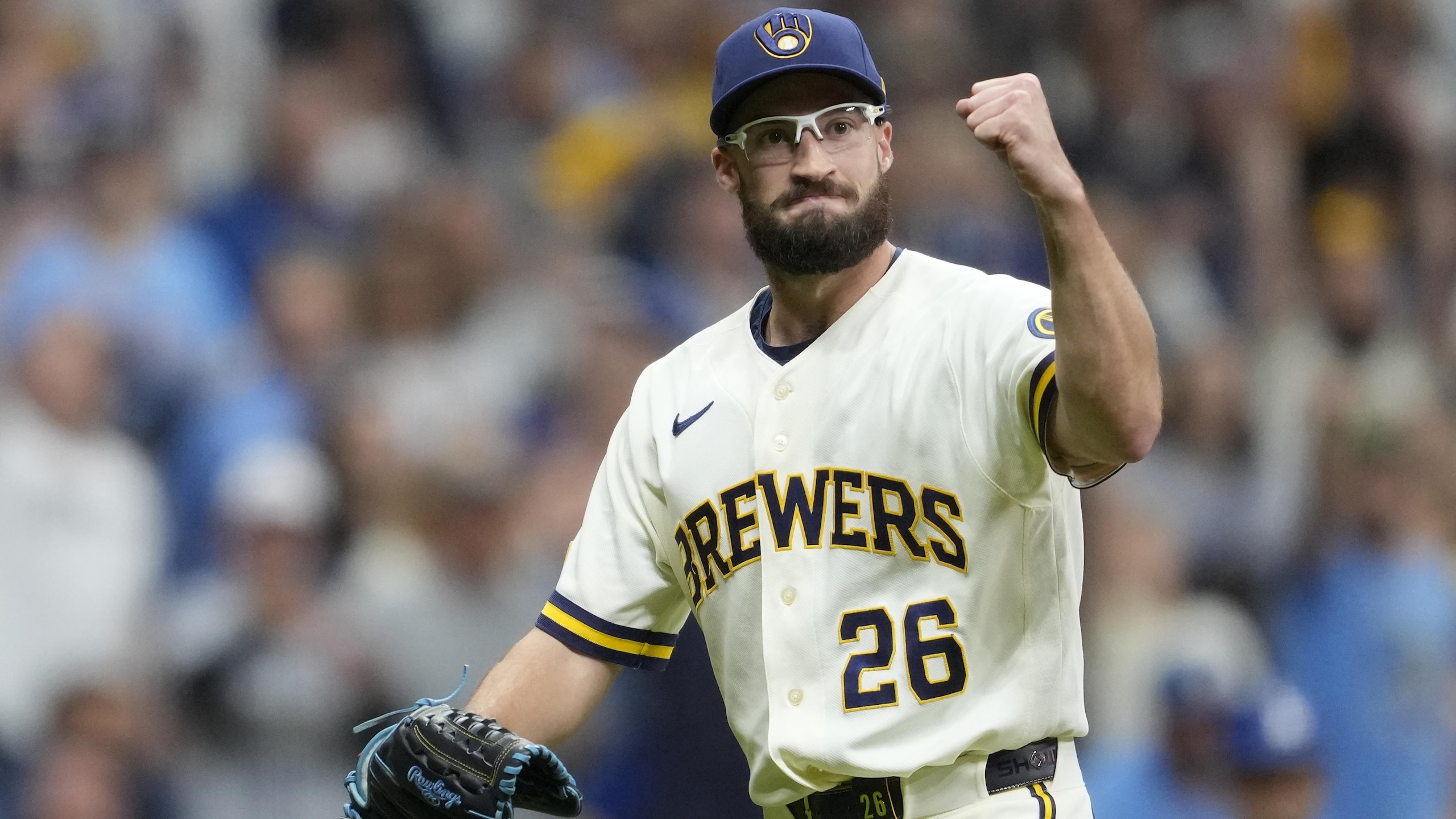
Brewers Beat Dodgers In Game 1

Ranking the Top 25 MLB Trade Chips For 2026-27 Offseason 🔢

2026 MLB Playoffs Winners and Losers ⚾
As the American and National Leagues prepared for the Mid-Summer Classic, pitching had been strong in the previous three All-Star games. National League pitchers combined to allow only two runs in All-Star game victories in 1984 and 1985. The American League rebounded in 1986 by winning another low-scoring All-Star game, 3-2.
The pitching in the 1987 All-Star Game was superb. The first two pitchers for the N.L. were two of the three previous Cy Young Award winners. Starter Mike Scott of Houston, the 1986 N.L. Cy Young honoree, allowed one hit in two innings. The Cubs Rick Sutcliffe, the 1984 N.L. Cy Young Award winner, duplicated Scott’s pitching line over two innings. The only A.L. threat was in the bottom of the second inning when the Yankees Dave Winfield led off with a double. But Winfield was doubled off second in a 3-6 line drive double play off the bat of Baltimore’s Cal Ripken, Jr.
The A.L. put up their share of zeros on the scoreboard. Kansas City’s Bret Saberhagen, the 1985 A.L. Cy Young Award winner, tossed three innings of one-hit ball. Detroit’s Jack Morris followed with two scoreless innings. When Boston’s Wade Boggs grounded out to end the bottom of the fifth, it marked the first scoreless tie after five innings in All-Star Game history.
Following Scott and Sutcliffe, the Dodgers' Orel Hershiser, Pittsburgh’s Rick Reuschel, Cincinnati’s John Franco and Philadelphia’s Steve Bedrosian limited the A.L. to two hits over five innings. Not to be outdone, A.L. pitchers Mark Langston of Seattle, Milwaukee’s Dan Plesac and the Yankees' Dave Righetti were equally as impressive with only one hit allowed in 3.1 innings pitched.
It appeared the N.L. would break the scoreless tie in the top of the ninth. Montreal’s Tim Raines singled with one out, but then appeared to be picked off by Righetti. However, the throw to second by Oakland first baseman Mark McGwire was wild, allowing Raines to advance to third. Toronto’s Tom Henke relieved Righetti and retired the next two batters to end the threat.
After the A.L. failed to score in the bottom of the ninth, the game went into extra innings for the first time since 1970. The Cubs Lee Smith struck out four in three innings to keep the A.L. bats silent, but Henke and Oakland’s Jay Howell also kept the N.L. off the scoreboard through 12 innings.
The N.L. finally broke through in the top of the 13th inning. Atlanta’s Ozzie Virgil singled off of Howell to lead off the inning. Montreal’s Hubie Brooks singled through the right side with one out to put runners at first and second. After St. Louis’s Willie McGee lined out, Raines untied the game with a two-out, two-run triple to give the N.L. a 2-0 lead.
Kansas City’s Kevin Seitzer walked against the Mets Sid Fernandez to lead off the bottom of the 13th. But Fernandez would retire the next three hitters to claim the third N.L. All-Star Game victory in the last four years. Raines’s clutch hit earned him All-Star Game MVP honors.
The low scoring All-Star games would continue. The following season, a two-run home run by Oakland’s Terry Steinbach was enough to lead the A.L. to a 2-1 triumph. In 1990, the A.L. posted a 2-0 win of their own at Wrigley Field. It would not be until 1992 that offensive firepower would return to the All-Star Game in a 12-6 A.L. victory.

.jpg?w=2560)
.jpg?w=2560 "Cam Ward Says He's Not A Loser")
.jpg?w=2560 "Chargers Fall to 0-5 🤢")

.jpg?w=2560 "Grading MHJ Trade 📝")