
Roger Federer: Why Wimbledon 2011 Was the Saddest Loss of All
Watching Roger Federer’s decline from greatness has been more painful than most.
Federer dropped a two-set lead in the quarterfinals of Wimbledon to Jo-Wilfried Tsonga, a likely footnote in the historic career of Fed.
Of all the tournaments for Federer to falter at, Wimbledon might sting the most.

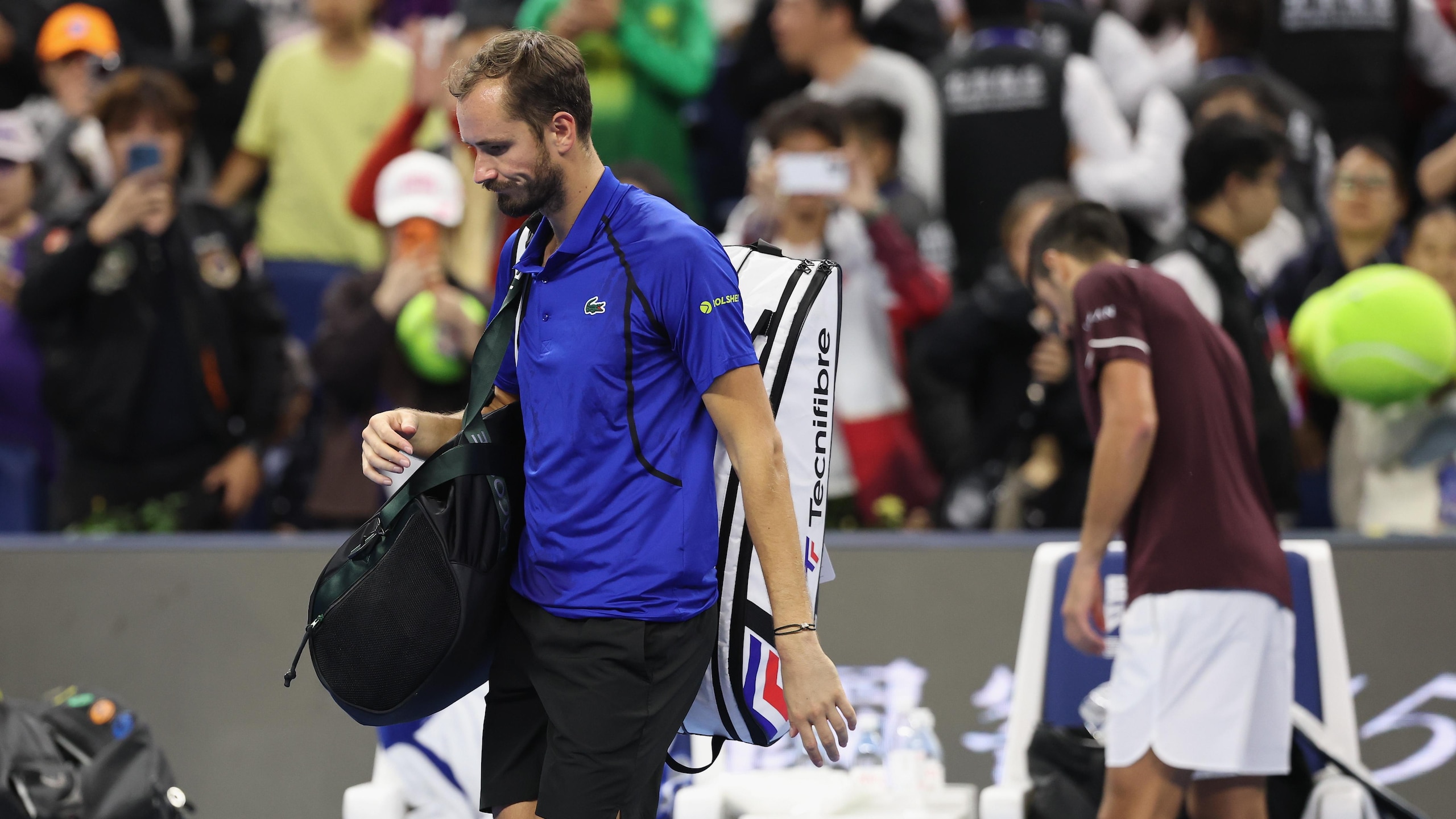

It has been this tournament that he’s owned for the better part of his career, and it’s this tournament that he made his mark, twice—first, for winning his first Grand Slam title, and then again, in 2008, in a loss to Rafael Nadal, which may go down as the greatest tennis match of all-time.
Federer has stumbled as of late—a sign of aging more than anything else—but his inclusion in the semifinals of Wimbledon seemed like a given.
His record for semifinal appearances is akin to Jack Nicklaus’s record for second-place finishes in Majors.
It wasn’t simply that Federer got beat—that is something we have come to accept. It’s that he collapsed—he allowed an unknown to make a great comeback.
While his legacy is cemented—and will never be argued amongst tennis experts—his fall from great to human has been as difficult to watch as any in the history of sports.
Roger Federer has been great as long as I—and most—can remember.
There was a stretch from 2003-2008 during which he was unequivocally the best in the game—and the best the game had ever seen.
Federer didn’t just win Grand Slam titles; he did it with ease.
It was as if he knew where the ball was going before his opponent did—every return, every serve seemed effortless.
That’s why watching him battle Rafael Nadal felt so wrong, so un-Federerlike. He seemed to have to run more, to chase more, to show his own vulnerability more. We should have known then that Federer’s greatness would not last forever.
Greatness comes and goes.
It is a given in sports that age makes you slower. You lose a step, lose lift in your legs, take longer to heal, and have to battle more to achieve the things that were once so easy to do.
We’ve seen it with the best —Muhammed Ali, Michael Jordan, Mickey Mantle, and even Kobe Bryant have shown themselves to have gone from great to good.
It’s a precipitous drop off, but one we embrace. We understand it for what it is, accept it, and move on.
Federer’s demise has been slower than most. Perhaps it’s a testament to his greatness, but there has been no light switch.
Watching Jordan come out of retirement to play for the Wizards, it was obvious that he just wasn’t a force anymore. He could reach back and find that other gear from time to time; he could go on a scoring run or rally from a deficit. But those moments were fleeting, and it was evident just watching him.
Federer has been different.
His transition has been ongoing, his bursts of greatness more frequent and rewarding. Even after he lost the 2008 Wimbledon final —the moment many point to as the end of his historic run —he managed to win three of the next five Grand Slams.
Since that mini-run he has just one Grand Slam to his credit, the 2010 Australian Open.
While it would be easy now to consider Federer over and done with, we are reminded of his 2011 French Open run, during which he defeated Novak Djokovic in a shocking upset then managed to play perhaps his best French Open final against the King of Clay, Rafael Nadal.
It’s doubly difficult to understand his demise when we consider his age.
Federer is just 29 years old.
In any other sport, especially those popular here in the United States, 29 is a prime age for many players.
In tennis, it is the sign of death.
Maybe we are finally seeing the full realization of a Federer who just isn’t great anymore.
Perhaps now we’ll see his greatness in small bursts or flashes —maybe he’ll fall in the rankings and find an easier path to a future Grand Slam title. The Roger Federer who took hostage every tournament for a seven year period has passed.
It’s tough to watch greatness fade, especially when you know it’s gone once and for all. It’s because it is a constant reminder of our own vulnerability.
Many of us get out of bed feeling aches and pains new to us every day. The world around us moves quickly, and much of the life we know today will be gone —out of our reach —tomorrow. We spend so much time trying to hold on to what we know and who we are, then one minute everything is different.
Everything changes —as do our limitations . There is nothing we can do to stop it.
Federer was the greatest of his generation, and likely, of any generation. No one can ever take that away from him.
His coming back to earth was inevitable.
It just took him longer than most to get here.
.jpg?w=2560)

.jpg?w=2560 "Viral Rams Coach Vid 🖕")

.jpg?w=2560 "2 NFL Officials Suspended")
