
NFL: Top 5 Quarterbacks the League Didn't See Coming
Woulda, shoulda, coulda.
In the educated game of dice that is the NFL Draft, teams regularly take chances that pan out and make mistakes that don't.This is particularly true at the quarterback position, where players may fall into one of five roughly drawn categories:
1. Some players float into the NFL from on high, drafted in the first round and paid extraordinary amounts of money only to fall on their faces. These names are well known: JaMarcus Russell. Ryan Leaf. Tim Couch. David Carr. Joey Harrington. Their fall may be quick and messy (Russell, Leaf) or slow and painful (Couch, Carr, Harrington), but fall they do, leaving their teams with massive holes on their rosters while eating up humongous chunks of cap space.
2. Some players come into the NFL with all the pomp and state of the above players and live up to the hype. They are even more well known than the above group: Peyton Manning. Troy Aikman. John Elway. They don't always pop right away, but when they do, Canton stands up and notices.
3. Some players are late-round gambles who pay off in big ways. These rags-to-riches QBs are trumpeted often as examples of the failures of scouting, the combine and rose-colored glasses worn by GMs and owners who eventually become infatuated with their multimillion-dollar mistake. The late-round successes include the Hall of Fame shoo-in Tom Brady, as well as enshrined Hall of Famers Bart Starr, Roger Staubach and Johnny Unitas.
4. Some QBs are drafted late for a reason, and they spend their careers as back-ups and clipboard holders. There are too many to mention.
5. The last group of QBs are completely overlooked, to the point that they must prove themselves elsewhere before the NFL finally catches on. It is the successes in this group I focus on.
5. Doug Flutie
1 of 5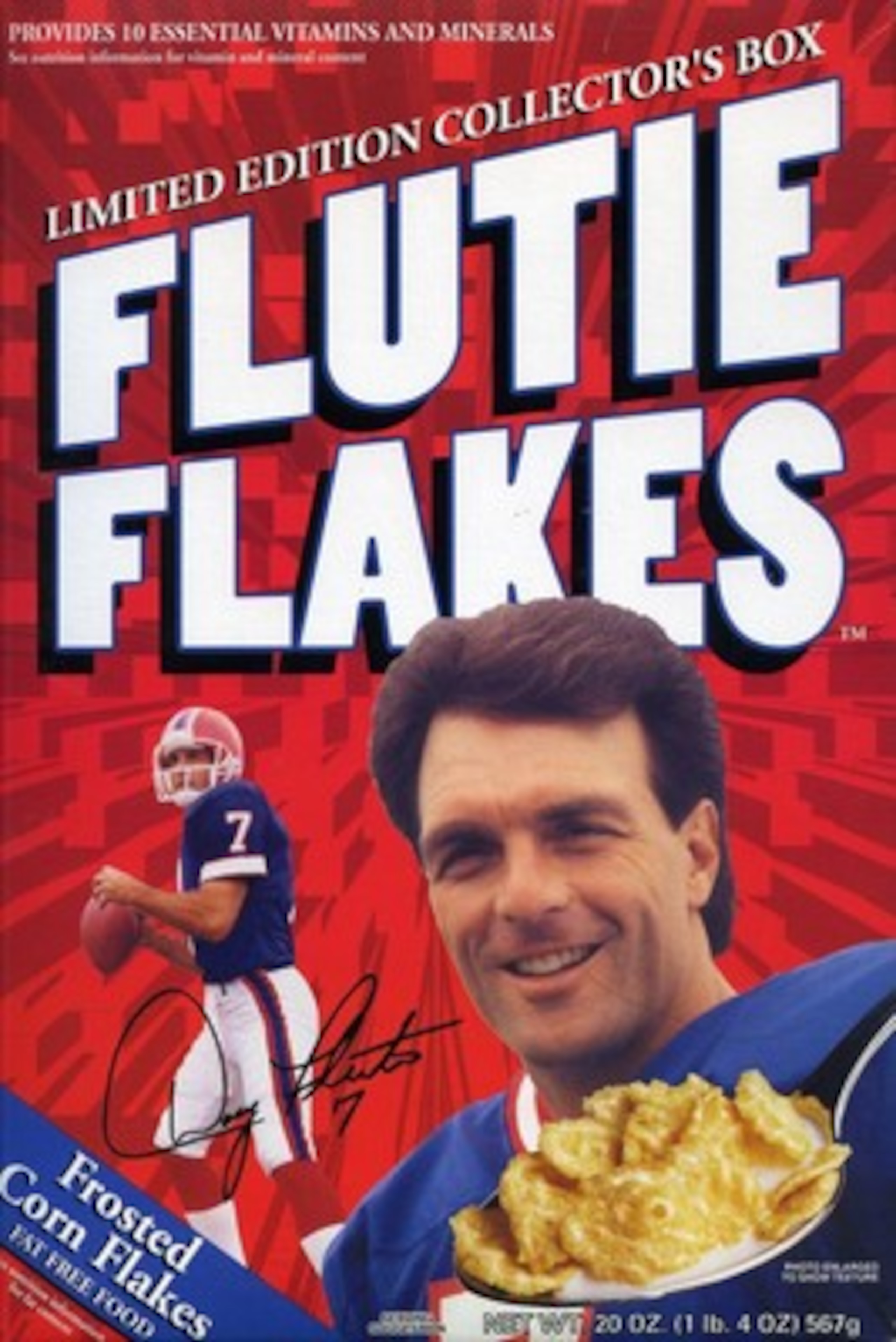
Heisman Trophy winner Doug Flutie gained national fame for Hail Flutie, his 1984 last-second pass to put Boston College up over the University of Miami Hurricanes. So much fame, in fact, that the media's obsession with the play led to a very funny Saturday Night Live sketch (no video, sorry).
Unfortunately, Flutie was 5'9" (or 5'10", depending on who you ask), a fact that gave pause to many NFL teams and helped push his draft stock all the way to the 11th round in 1985, where he was drafted by the Los Angeles Rams despite having already signed with the USFL's New Jersey Generals.
In 1986, the USFL folded, and Flutie wound up in Chicago, where he played in four games before being traded to the New England Patriots in 1987. After limited play from 1987-89, Flutie left the NFL entirely in 1990, signing with the British Columbia Lions of the Canadian Football League.
He spent eight years flourishing in the CFL (his first season was his only losing season). He went on to play for the Calgary Stampeders and the Toronto Argonauts, winning three Grey Cups and being named the MVP of three. He set passing records which stand to this day and was eventually named the CFL's Greatest Player Ever.
In 1998, Flutie returned to the NFL as a backup to the Buffalo Bills' Rob Johnson. Five games later, he went in for the injured Johnson, led the Bills to a comeback victory, went 8-3 as the starter and picked up a Pro Bowl spot back when the Pro Bowl was less of a joke than it is today.
in 1999, Flutie led the Bills to an 11-5 record, good enough for a playoff spot. Unfortunately, he was unceremoniously benched in favor of Rob Johnson in their one-and-done playoff run, a decision that was considered more than a little controversial.
Flutie spent time with the San Diego Chargers before ending his NFL career with the New England Patriots, who gave him an interesting send-off with a successful drop-kick extra point attempt. It was a rather fitting exclamation point on an equally unorthodox career.
Doug Flutie never got to be a great NFL quarterback. His greatness happened during his eight years in the CFL, where he threw for 41,355 yards, 270 TDs and 155 INTs. Combined with his NFL numbers, he finished his career north of the 58,000 yard-mark, a not inconsiderable total.
While many dismiss the CFL and thus Flutie's performance during his stay in Canada, I can't help but think he'd have had a good career as a starter in the NFL. Perhaps he might not have reached the heights he reached up north, but he certainly proved he had "it."
4. Jeff Garcia
2 of 5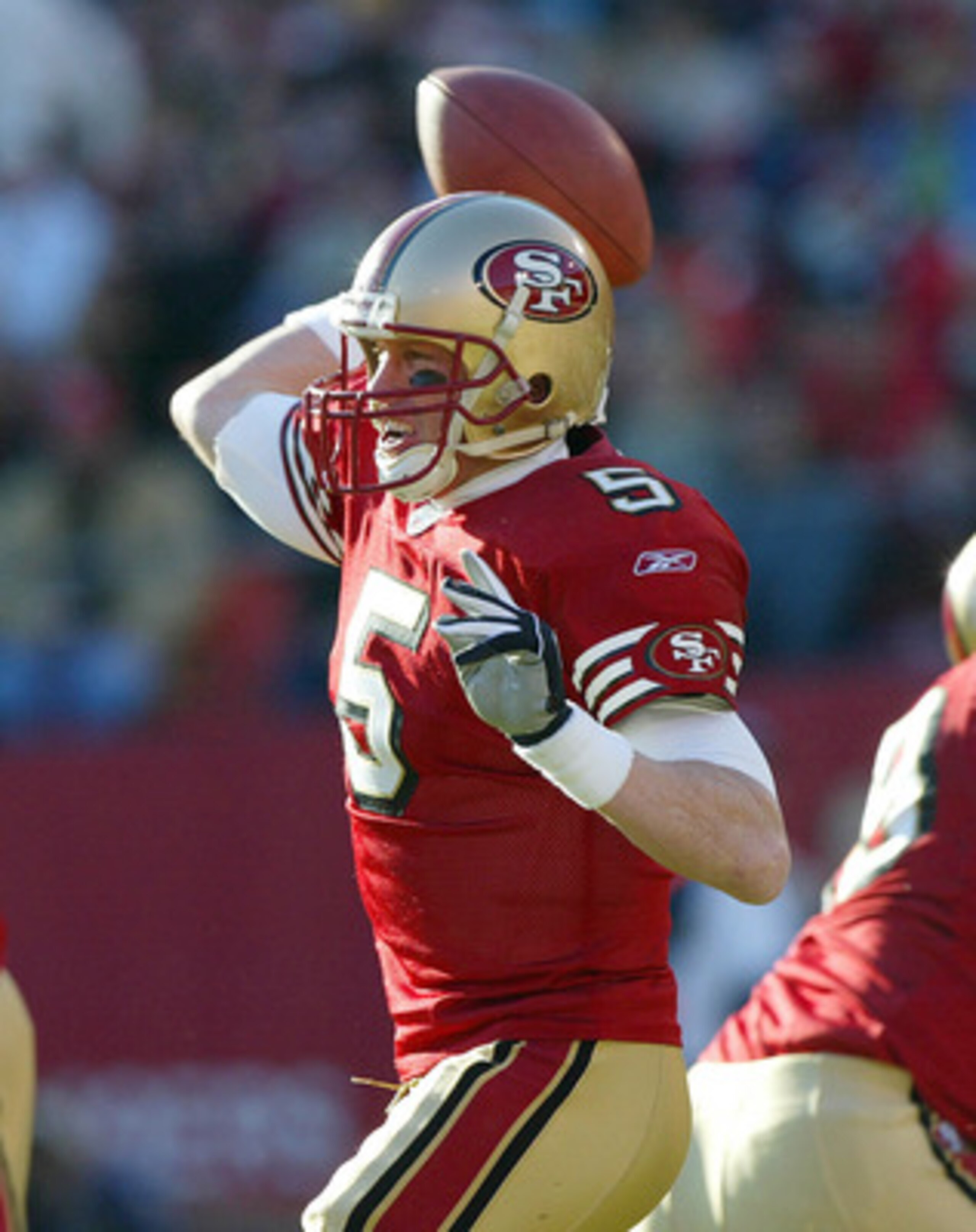
Jeff Garcia wasn't drafted by an NFL team. As an undrafted free agent out of San Jose State, he was signed to be the third-string QB by the Calgary Stampeders of the CFL. Coincidentally, the Stampeders' starter that year was Doug Flutie.
Midway through the 1995 season, Garcia replaced an injured Flutie, and on his second start, he set team records of 546 yards and six touchdowns, torching the Edmonton Eskimos. He performed so well, in fact, that fans considered the team to have a quarterback controversy when Flutie was well enough to return. While he didn't keep Flutie on the bench, he did take over the starting role in 1996, when Flutie signed with the Toronto Argonauts.
In his CFL career, Garcia won four CFL All-Star honors, a Grey Cup and a Grey Cup MVP honor, the last two in 1998.
In 1999, Garcia was signed to the San Fransisco 49ers as a backup to Steve Young. When Young received his career-ending, final concussion in Week 3 against the Arizona Cardinals, Garcia and Steve Stenstrom shared time at the starting role. Struggling at first, Garcia was benched after throwing three TDs and nine INTs. When he returned, he played much better in the final five games of the season, throwing eight TDs and two INTs.
Despite San Francisco's year-2000 drafting of two quarterbacks, Garcia kept the starting job after Steve Young's retirement. Although the 49ers finished 6-10 (up from the previous year's 4-12), Garcia had a Pro Bowl year, throwing for 4,278 yards, 31 TDs and just 10 INTs. Not bad for an undrafted, former CFL backup.
Garcia went on to back-to-back playoff appearances in 2001 and 2002, becoming the first 49ers quarterback ever to throw for 30-plus TDs in consecutive seasons—and when you consider the last two guys who had his job, that's quite an accomplishment.
In 2003, the 49ers finished 7-9 with a new head coach and increasing friction between Garcia and megalomaniac Terrell Owens. Both players were released following the season, and Garcia battled injuries through two disappointing seasons with perennial-bottom-feeders the Cleveland Browns and the Detroit Lions.
Garcia bounced back while backing up another oft-injured QB in 2006, filling in for Donovan McNabb of the Philadelphia Eagles and leading the Eagles to the playoffs, where they beat the New York Giants before falling to the New Orleans Saints. Despite his play and his professed desire to stay in Philadelphia, Garcia was not resigned.
His last season of note came in 2007, wherein he took the Tampa Bay Buccaneers to the playoffs, earning his fourth Pro Bowl spot in place of Brett Favre, who did not attend the game. From there, he fell through the depth chart of the Oakland Raiders and was signed as an emergency backup with the Eagles before playing in the UFL in 2010.
Jeff Garcia made the most of his opportunities, and when given the chance to succeed, succeed he did. His 25,537 NFL yards swell to over 40,000 when combined with his CFL totals, evidence of an overlooked passer who might have done much more if given a shot earlier in his career. As it was, he spent his first six years trying to prove that the NFL had made a mistake in ignoring him back in 1994, and in my humble opinion, he made his case very well.
3. Joe Theismann
3 of 5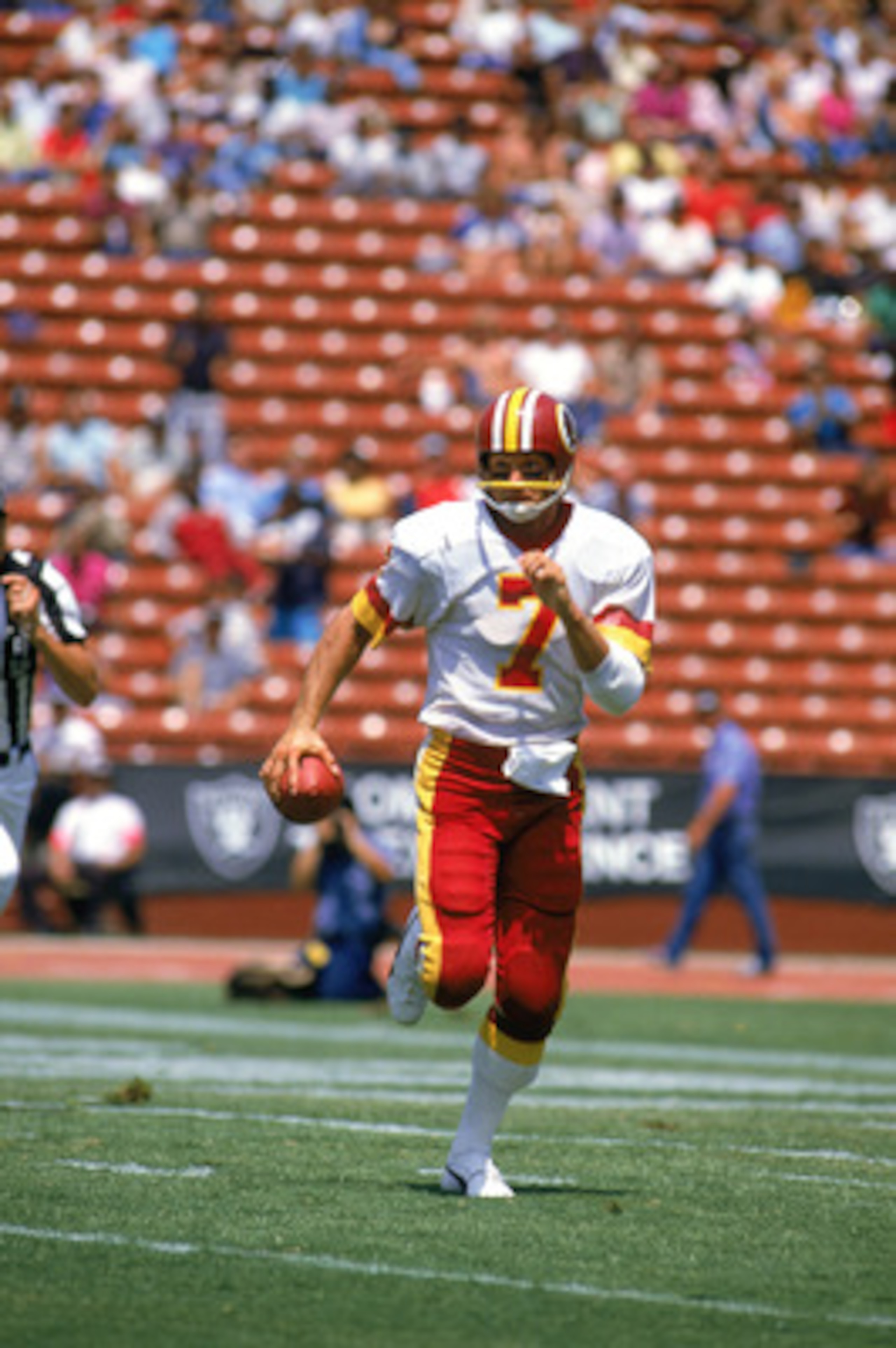
Having spent 12 storied years with the Washington Redskins, won a Super Bowl and been inducted into the NFL Hall of Fame, you wouldn't think Joe Theismann was an overlooked player.
But he was.
A fourth round pick by the Miami Dolphins in 1971, Theismann was offered a $17,000 contract. The Toronto Argonauts had different ideas, offering the Notre Dame product a three-year, $150,000 contract with a $50,000 signing bonus. Theismann signed with the Argonauts.
He played in the CFL from 1971-1973, earning all-star honors his first and last years. However, things weren't all rosy in Canada, where Theismann battled injuries and disappointing performances, which probably explains why Theismann spent his first year (1974) with the Washington Redskins returning punts.
Ouch.
Theismann muddled along until 1978, whereupon he finally won the starting job at quarterback for Washington, a post he did not relinquish until his career-ending injury.
In the meantime, Theismann led the Redskins to two Super Bowls, winning one of the contests. He was selected to two Pro Bowls and was named the NFL MVP in 1983. His statistics were unspectacular by today's standards, with meager NFL career yards of 25,206 and a ho-hum rating of 77.4.
The reason I think he merits this place on this list is the one so many Joe Montana fans use in declaring him the greatest: the ring. Theismann is one of two QB's on this list to win a Super Bowl as a starting quarterback. Whatever his stats on the field (and whatever his controversial opinions on beloved college legends), he went to the biggest game in all of sports and came home a winner.
.jpg?w=2560 "Cardinals Giants Football")
.jpg?w=2560 "Saints Giants Football")
.jpg?w=2560 "Chargers Chiefs Football")
2. Warren Moon
4 of 5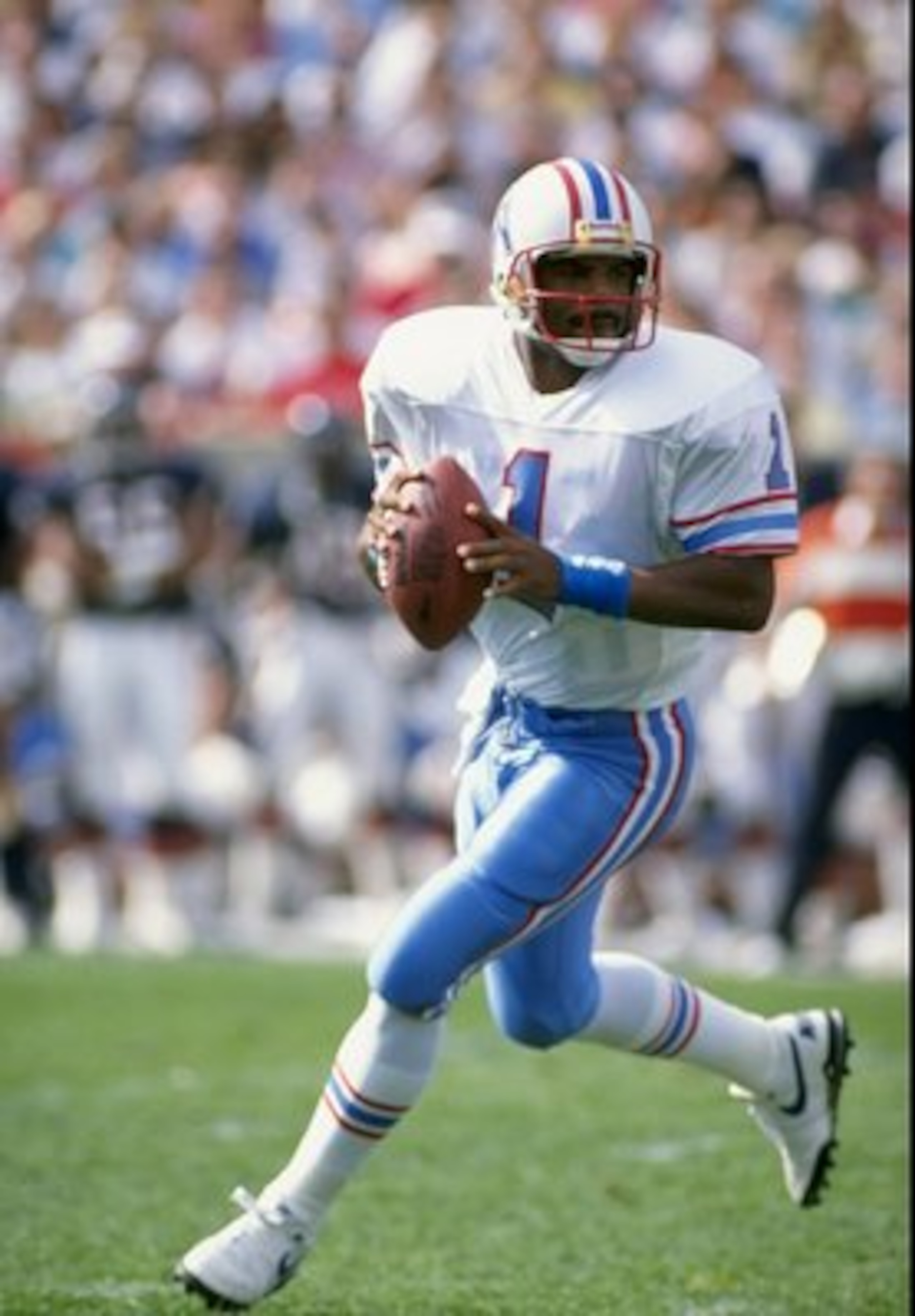
Wow. The guy with the Warren Moon avatar puts Warren Moon on this list. What a shocker.
No, the shocker here is that he isn't No. 1. Oh, man, it was hard not to put him there. I was a huge Oilers fan, and Moon is still my favorite on-field QB of all time.
And it's not like he isn't qualified for the top spot. He is, after all, the only player in history enshrined in both the NFL and CFL Halls of Fame (coach Bud Grant is the only other person so honored). He is still No. 5 in all-time passing yardage in the NFL, with 49,325. Plus, he was smart enough to go by his middle name, Warren, over his first, Harold. That's right: the Hall of Famer could have been known to millions of fans as Harry Moon. How does that grab you?
But I digress.
A black quarterback in the 1970s, Moon faced the prejudices in football during those times, and despite being a hot prospect, no big-name college would secure him as a quarterback, most insisting he move to another position (a common practice with black high school quarterbacks entering into the college system), the rest ignoring him entirely.
Moon had other ideas, spending a year showcasing his abilities at West Los Angeles College before the University of Washington broke ranks and brought him in to command their Huskies.
Despite inconsistent play during his first two years with the Huskies, Moon came on strong during his senior year, leading the University of Washington to a Rose Bowl victory in 1978. The Huskies were a run-first-and-second-and-sometimes-third team, providing relatively little opportunity for Moon to show his stuff.
Perhaps because of this (and times being what they were, a combination of his color and his refusal to switch positions), Moon went undrafted by the NFL. So, when the Edmonton Eskimos offered him a QB spot, he went north to play his position.
From 1978-1983, Moon improved dramatically, leading the Eskimos to an amazing five straight Grey Cup victories, amassing 21,228 yards through the air, 144 TDs and 77 INTs.
Because of this, Moon's 1984 move to join the NFL touched off a frenzy to acquire him before the Houston Oilers came out on top, signing the CFL star to a then-record five-year, $5.5 million contract.
However, Moon's first few years in the NFL were a rocky period of adjustment, inconsistency and a weak supporting cast. Despite this, he threw for 3,338 yards in his first year alone. From 1984-1986, Moon threw more INTs than TDs and was sacked a whopping 133 times.
But in 1987, he took the Oilers to 9-6 in a strike-shortened year, winning his first playoff appearance versus the Seattle Seahawks before being smashed 34-10 by the John Elway-led Denver Broncos. He led them back to the playoffs in a 1988 Pro Bowl campaign, again winning in the Wildcard only to lose in the Divisional game to the Buffalo Bills (the genesis of my undying hatred for the Bills).
From 1989-1993, Moon became part of the Run and Shoot offense, setting records left and right, leading the Oilers to seven straight winning seasons and seven straight playoff appearances. It was a time of highs and lows, as he again became the highest-paid player in the NFL in 1989, yet never managed to advance the Oilers to the Super Bowl.
In 1992, the Oilers fell on their faces in their wild card game versus the Bills, squandering a 32-point lead in what is considered the greatest comeback in NFL history. The Bills were forever on my doo-doo list. Yeah, I know, it was the Oilers' fault. Tough noogies.
Searching for the elusive Super Bowl ring, Moon went to Minnesota, where he produced big numbers in his fruitless quest before a last-ditch effort with the Seattle Seahawks (1997-1998), fading onto the Kansas City Chiefs roster as a backup (1999-2000) and finally retiring.
In his long career, Warren Moon acquired too many honors and set too many records to list here. His combined numbers from his CFL and NFL years are staggering, and even without his CFL stats, he is still a top-five all-time NFL QB. But like fellow stat-monster Dan Marino, he retired without a ring, and that must always be the one, small spot of tarnish on an otherwise brilliant career. His passing records stood for years before the equally ageless Brett Favre began to take them down (and so did his embarrassing fumbling record, overtaken by the very same Favre).
Whatever his latter-day, off-field controversies, Moon was and is one of the best ever to play the game. Had the NFL been a little more forward-thinking, had one team taken a chance on him clear back in '78, he might now be considered the greatest of all time.
1. Kurt Warner
5 of 5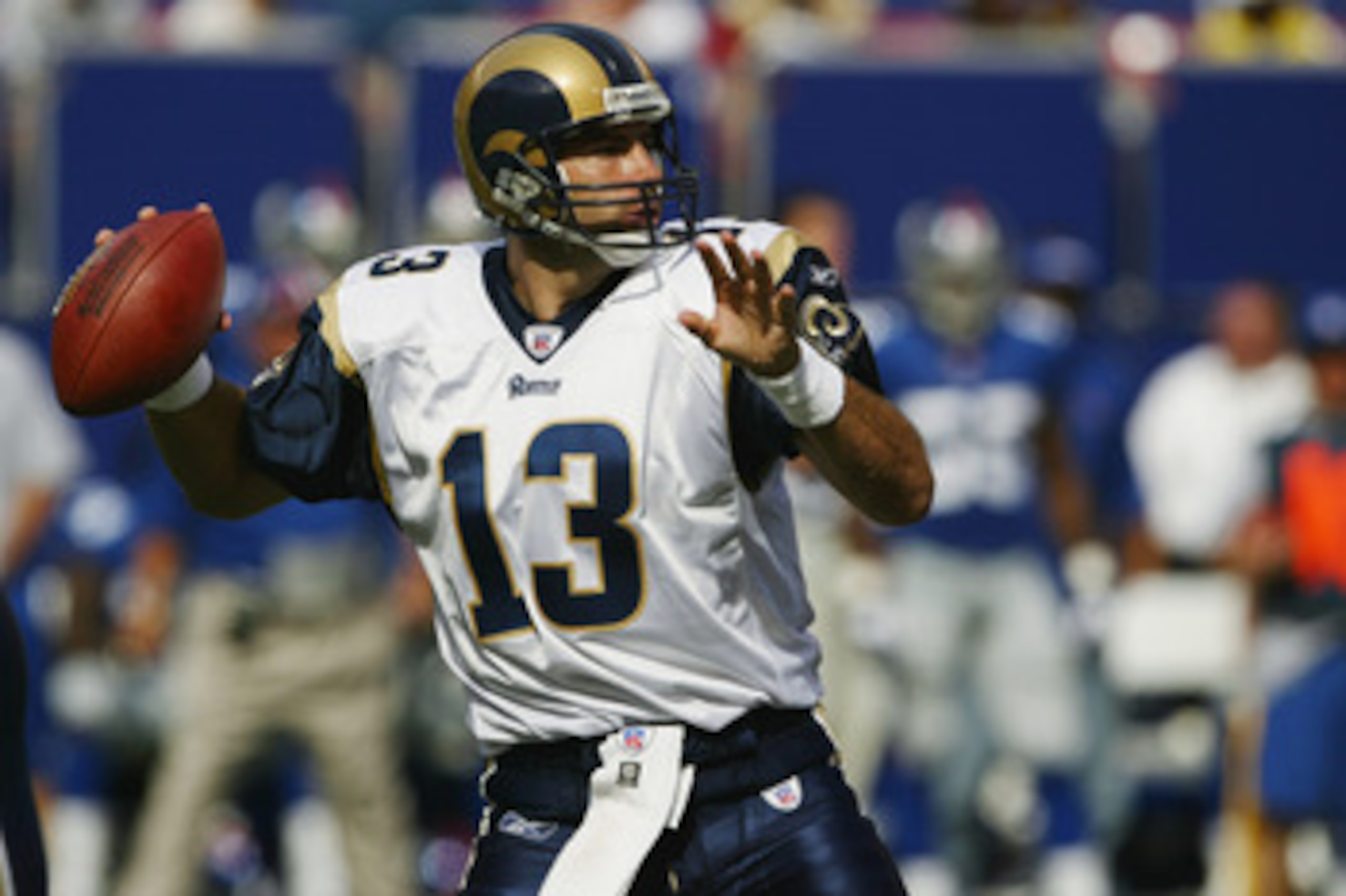
Who else?
And to think, if it wasn't for a spider bite, the accompanying picture might have shown him in a Chicago Bears uniform.
Really.
Kurt Warner went undrafted in 1994 before trying out for the Green Bay Packers. He was cut in favor of Brett Favre (well, yeah), Mark Brunell (okay, I can sort of see it) and Ty Detmer (ouch).
Warner would have to spend 1995 and 1996 with the Arena Football League's Iowa Barnstormers, leading them to consecutive Arena Bowls before a team would take another look at him. Prior to the 1997 season, the Chicago Bears granted a request for a tryout, but this venture was canceled when a spider bite Warner received on his honeymoon injured his throwing arm. It's like a Bizarro-world Spider-Man story.
Warner was finally signed by the St. Louis Rams in 1998 and allocated to NFL Europe's Amsterdam Admirals. He excelled and was placed on the Rams' roster behind Tony Banks and Steve Bono. In 1999, Warner was promoted to second-string, waiting in line behind free-agent pick-up Trent Green after Banks and Bono were released. Then Green went down to a season-ending injury in the preseason.
Then all hell broke loose.
Conductor of The Greatest Show On Turf, Warner passed for 4,353 yards, 41 TDs, 13 INTs and a rating of 109.2 in 1999, leading the Rams to their first winning season since 1989 and their first Super Bowl since 1980, which they won—after The Tackle. The previously woeful Rams went from a 4-12 bottom-feeding joke to the 13-3 Super Bowl Champions.
It was famine to feast.
Warner led the Rams back to the Super Bowl two years later, earning his second NFL MVP honor in 2001 while losing to the New England Patriots and their come-from-nowhere star, Tom Brady.
Unfortunately, things took a turn for the worse in 2002. Warner played poorly in four games before injury sidelined him for all but two more games. In 2003, another injury to his hand caused six fumbles in the first game of the season, and Warner spent the rest of it on the bench, coming in only in relief.
Cue the VH1 Behind The Music sad song.
After being released by a short-attention-span St. Louis Rams in 2004, Warner was snapped up to babysit future starter Eli Manning for the New York Giants. He continued to struggle, and today's impatient NFL struck again, benching the former two-time MVP for the soon-to-be 1-6 Manning.
The writing was on the wall: Go west, old man.
In 2005, the Arizona Cardinals took a chance on the man many now thought of as once-great. His stint with the Cardinals got off to a rocky start, going 5-11 in 2005 and 2006, with several do-overs at the starting job. Another future starter in Matt Leinart threatened to keep Warner on the bench, but poor play, poor progress and injury on the part of Leinart kept Warner afloat. During this time, he eclipsed the 20,000-yard career passing mark one game longer than it took record holder Dan Marino, and despite what was considered sub-par play, if passer rating stayed in the upper 80's.
2007 proved to be Warner's return to form. With Coach Dennis Green gone, Leinart was kept on a shorter leash, and the aging Warner was given rein to throw for 3,417 yards, 27 TDs, 17 INTs and an 89.8 rating that was his best since 2001. The Cardinals improved to 8-8. New Head Coach Ken Whisenhunt flirted with insanity, declaring Matt Leinart the starter going into the offseason, but returned to Earth in 2008, naming Warner the starter.
Happy days were here again.
Warner proved his doubters wrong in 2008, taking the Arizona Cardinals(!!) to the Super Bowl. Racking up 4,583 yards and 30 TDs in the regular season, Warner went into the playoffs with conviction, shredding his opponents for 770 yards and eight TDs and dispatching the Atlanta Falcons, Carolina Panthers and Philadelphia Eagles. Despite the Cardinals' 27-23 loss to the Pittsburgh Steelers in Super Bowl XLIII, Warner's 377 yards cemented his place in history as the Super Bowl's all-time leading passer.
In 2009, Warner continued his campaign of record-breaking, posting the highest single-game completion percentage (92.3) and becoming the first QB ever to throw for 14,000 yards with two different teams, among other records.
The '09 season started even better than the last, as the Cardinals went 10-6 before moving on to the greatest shoot-out in NFL playoff history, versus the Green Bay Packers. Warner threw for five TDs— one more than his number of incompletions—for a rating of 154.1, as the Cardinals took down the Packers 51-45. Unfortunately, Warner was injured in the first half of the very next game, a 45-14 trouncing by the eventual Super Bowl Champion New Orleans Saints, and it proved to be his last game.
In January of 2010, Mister Postseason announced his retirement.
When it comes to overlooked quarterbacks and how they stand up to each other, Warner takes the cake. He has it all: the undrafted status, the lack of respect, the sub-NFL league play, the sudden upsurge... And to add to that, he has three Super Bowl appearances, one ring, one Super Bowl MVP, four Pro Bowls, two NFL MVPs, two honors as a first-team All-Pro, 32,344 passing yards, 208 TDs, 128 INTs and a career passer rating of 93.7.
I dare you to come from humbler origins and reach loftier heights.
.jpg?w=2560 "Cowboys Packers Football")
.jpg?w=2560 "Broncos 49ers Football")
.jpg?w=2560 "Bills Safety Ejected for Spitting")