

San Francisco Giants: Predicting the Ceilings for Top 10 Draft Picks of 2011
Foretelling the potential upside of amateur draft picks is an exceedingly inexact science.
Five teams passed on Barry Bonds before the Pirates selected him 6th in 1985.
Five clubs bypassed Derek Jeter before he was picked in the same spot by the Yankees in 1992.
722 players were drafted before the Giants tabbed Brian Wilson as their 24th pick in 2003.
With that caveat out of the way, there's no harm in scouring the San Francisco Giants first ten 2011 draft picks for clues about their professional upside.
Last year the Giants focused on position players; this year they reverted to form, selecting pitchers with six of their first 10 picks.
For each of the 2011 top 10, here's a peek at their past, what experts are saying about them, and a stab at their odds of reaching the majors.
10. Derek Law, RHP (Dade, FL Community College)
1 of 10
The Texas Rangers drafted Law out of high school with the 28th pick in 2009. The Pittsburgh native opted to enroll at Dade (Fla.) Community College, where he has been for two years. (trivia: Mike Piazza is a Dade alum)
The 6'3", 200-pound Law had impressive numbers as a sophomore (121 strikeouts in 92 innings, 16 walks, 2.35 ERA). Scouts say his fastball averages between 87-90 MPH, topping out at 93. He supposedly has a plus slider.
In such a pitching-rich organization, Law would face long odds of landing in San Francisco. As a college sophomore, he has the option of transferring to a four-year school and re-entering the 2012 pro draft.
If he signs with San Francisco, Law would seem destined for middle to late-inning relief.
Odds that he makes it to the San Francisco staff: 20 percent.
TRIVIA: According to Troy Nelson of 22gigantes.com, Law's father, Joe, spent a few days (literally) with the Oakland A's, never appearing in a game. Law Sr. spent considerable time with the Athletic's Modesto farm team in the 1980's.
9. Jean Delgado, SS (Caguas Military Academy, Puerto Rico)
2 of 10Delgado is considered a raw talent. BR colleague Brett Appley recently characterized him as a Manny Burriss-type player (meaning, he's quick and defensively solid, with limited power).
He's a baby, having turned 18 just this past February.
While it's simply not possible to gauge how far a player this young and raw could go, it's telling that the Giants drafted five shortstops this year, two among their first 10 picks. Even if Brandon Crawford owns the position for a while, depth—especially defensively, in support of stellar pitching—makes sense.
For now, let's peg Delgado as a reasonably promising middle infielder and watch his progress.
Odds of making it to the show: 20 percent.
8. Raymond Black, RHP (University of Pittsburgh)
3 of 10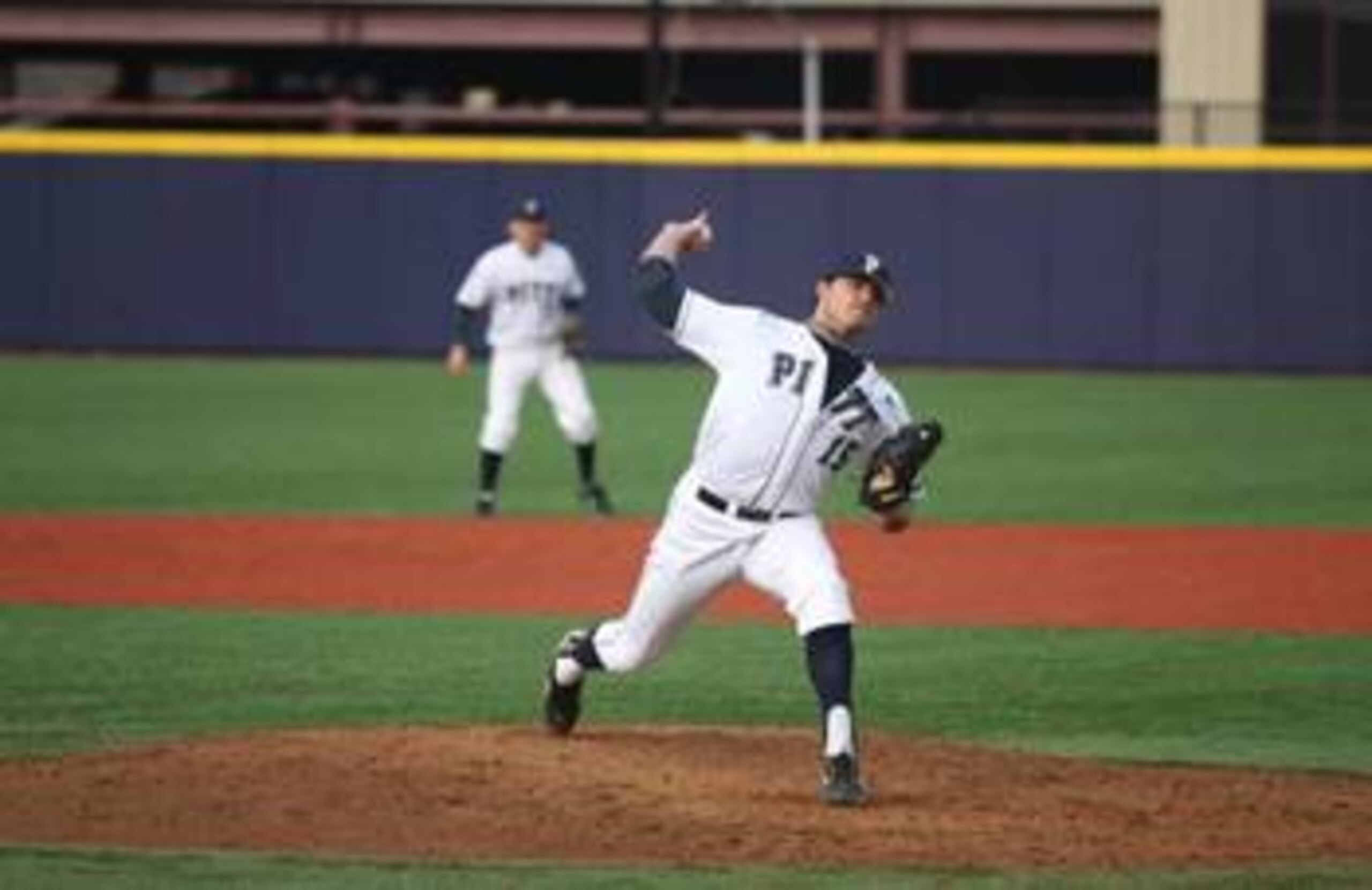
Tidbits on the big lefty from the Pitt website:
"Black set the school season-record for strikeouts per nine innings in 2011 (14.85).
Described as a “flamethrower” by several scouts, Black regularly reached the upper-90’s with his fastball.
This past season, Black—a 6'5" right-hander—made 18 relief appearances. In 20 innings of work, he fanned 33 batters."
Those are closer numbers.
Several scouting services project Black as a short-relief specialist. Dominating in the Big East conference doesn't necessarily portend success as a pro; it'll be interesting to see if Black develops the requisite pitches to complement his fastball.
Injury alert: Black had successful Tommy John surgery as a high school senior.
Other note: Black was quoted after the draft as being excited to have the option of returning to Pitt, then becoming draft-eligible again in 2012. He would need to declare his intent to return to college by August 15.
That could have been a negotiating ploy or true ambivalence about turning pro. Let's see if Black signs before counting on his development as a future closer or set-up man. His stuff, however, is enticing.
Odds he might ultimately succeed Brian Wilson: 40 percent.


7. Joshua Osich, LHP (Oregon St. University)
4 of 10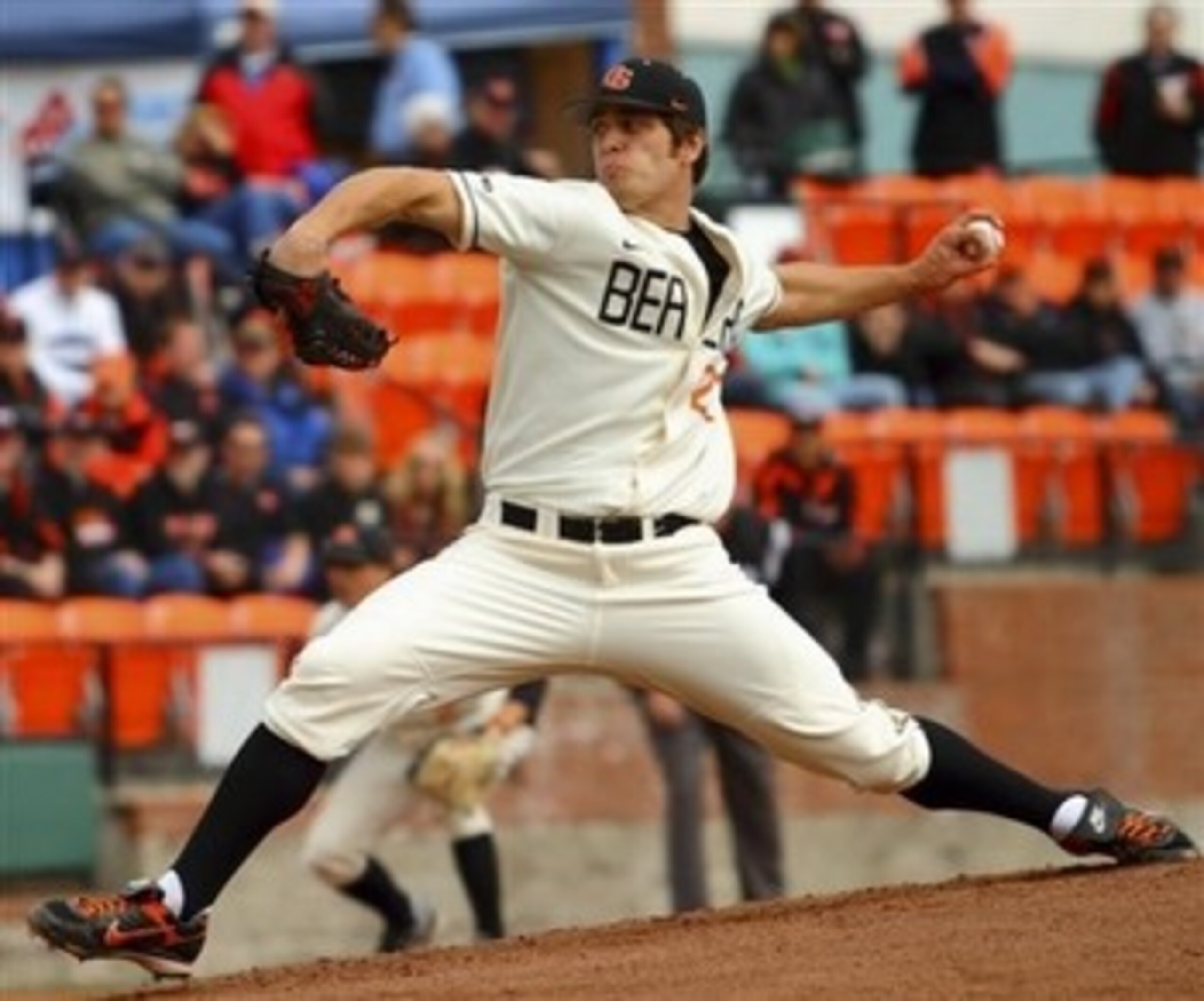
I found a terrific, detailed assessment of the 6'3" Osich from John Klima of BaseballBeginnings.com. Here are excerpts of his analysis:
Since a Tommy John surgery in 2009, his velocity dropped from consistent 97 MPH to 92-93, occasionally hitting 94. His fastball has late cut into right-handed hitters. He has decent command of an 80-82 MPH straight change that he also can sink.
Klima and others slot Osich as a rotation-quality arm who could also be converted into a late-inning reliever. His skills, maturity and size make him an intriguing prospect.
BR's Brett Appley compares Osich to Jonathan Sanchez: both have plus arms with strikeout stuff (Osich had 79 Ks in 64 innings this year), and possible control issues (34 walks and 10 wild pitches).
Assuming the Giants aren't concerned about his injury history and the parties agree on contract terms, Osich could be assigned to San Jose, the higher of the Giants' two class-A farm clubs.
Warning: the Corvallis Gazzette-Times reported last week that Osich was having shoulder "fatigue" and might be scratched from a scheduled start in the NCAA Regionals.
6. Christopher Marlowe, RHP (Oklahoma St. University)
5 of 10
My BR colleague, Brett Appley, compares Marlowe to Matt Cain. The compact 6'0", 175-pound right-hander posted two impressive, Cain-like stats: 71 strikeouts and just 25 hits allowed in 41 innings this season for Oklahoma St.
Marlowe appeared in 24 games, all in relief. Some of his stats better resemble Jonathan Sanchez's than Cain's: 34 walks, eight hit batters, seven wild pitches.
Even more eye-popping: Marlowe's ERA of 5.05 was over a run higher than his team's collective 3.79.
What does all this add up to? Impossible to know. Marlowe might be mere mechanical tweaks away from being a successful pro. My read: the Giants were willing to invest a relatively-high pick believing they can smooth out his rough edges.
Odds that they succeed: 30 percent.
5. Bryce Bandilla, RHP, University of Arizona
6 of 10
One of two Sacramento natives drafted by the Giants in their first 10 picks, Bryce Bandilla (pronounced Ban-DE-ya) is another former high school draftee (by Cincinnati in the 28th round of the 2008 draft) who elected to attend college.
At the University of Arizona, Bandilla toggled back and forth between starting and relief roles. As a junior he was used exclusively out of the Wildcat's bullpen, throwing 46.2 innings in 32 appearances.
His stats ranged from impressive (.213 batting average against) to decent (3.66 ERA, 5-3 record) to troubling (36 walks).
Drafting a situational lefty this high in the draft leads you to believe the Giants see something in Bandilla that's not reflected in his numbers. Time will tell.
Odds of making the big club: 30 percent.
4. Efrin "Ricky" Oropesa, 1B (University of Southern California)
7 of 10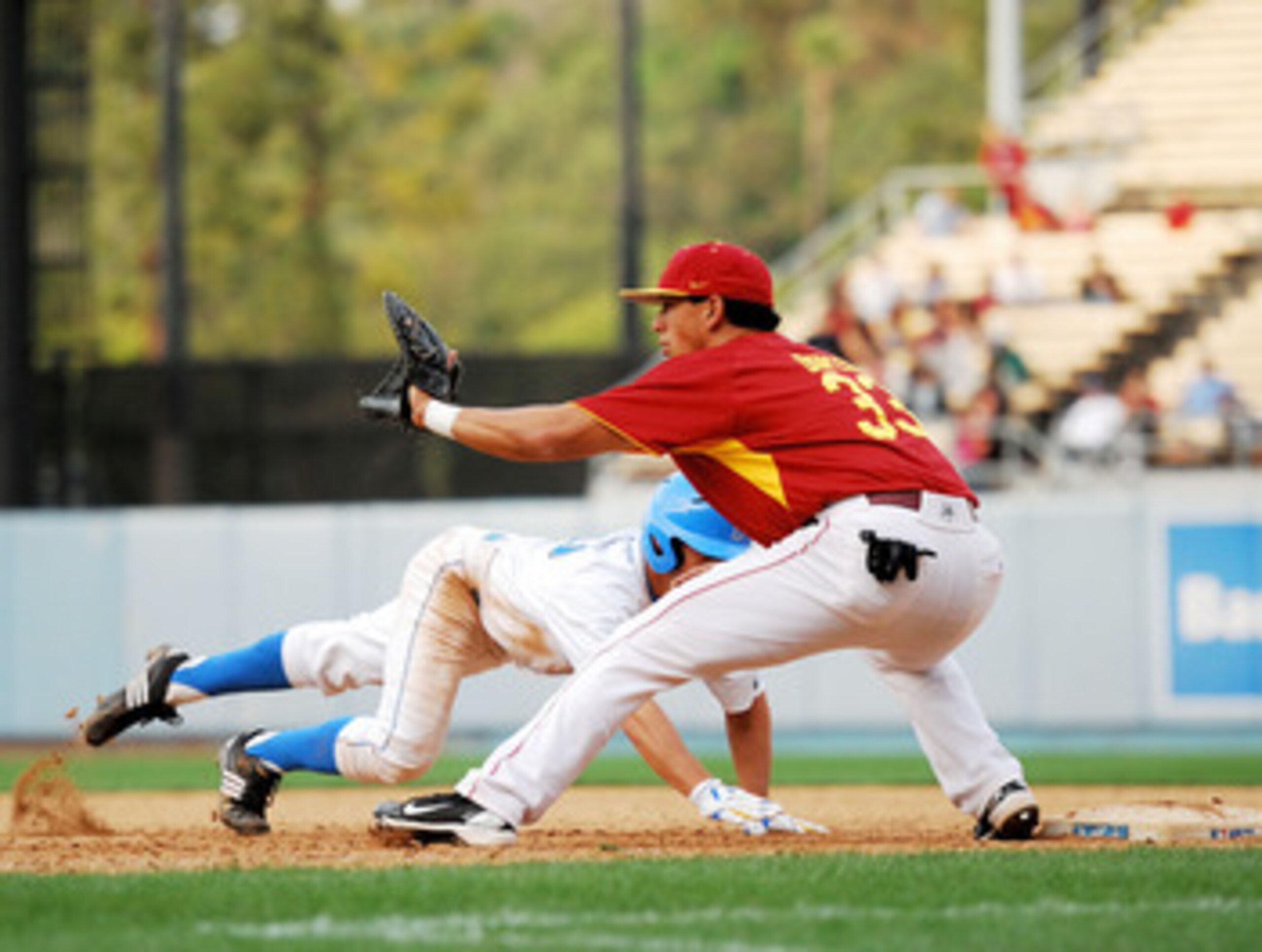
Ricky Oropesa, a Southern California native, is a power bat/corner infielder who spent most of his time as a first baseman.
He was a mid-round draft pick out of high school by Boston but opted to attend USC. Alden Gonzalez of MLB.com has written that Oropesa has "light-tower power."
No wonder the Red Sox liked him.
Some of Oropesa's offensive stats impress: he's batted over .300 in three-straight seasons in the Pac-10. His power numbers, though, have declined; home runs dropped from 20 a year ago to seven this season.
Oropesa's power decline could be a function of teams pitching around him (USC was a tepid 25-31 this year) or finding a hole in his swing.
Scouts also have questioned his defensive quickness; some project him as a DH.
San Francisco may see Oropesa as trade bait for a deal with an American League club.
Odds of playing in AT&T Park in orange and black: 20 percent.
3. Andrew Susac, C (Oregon St. University)
8 of 10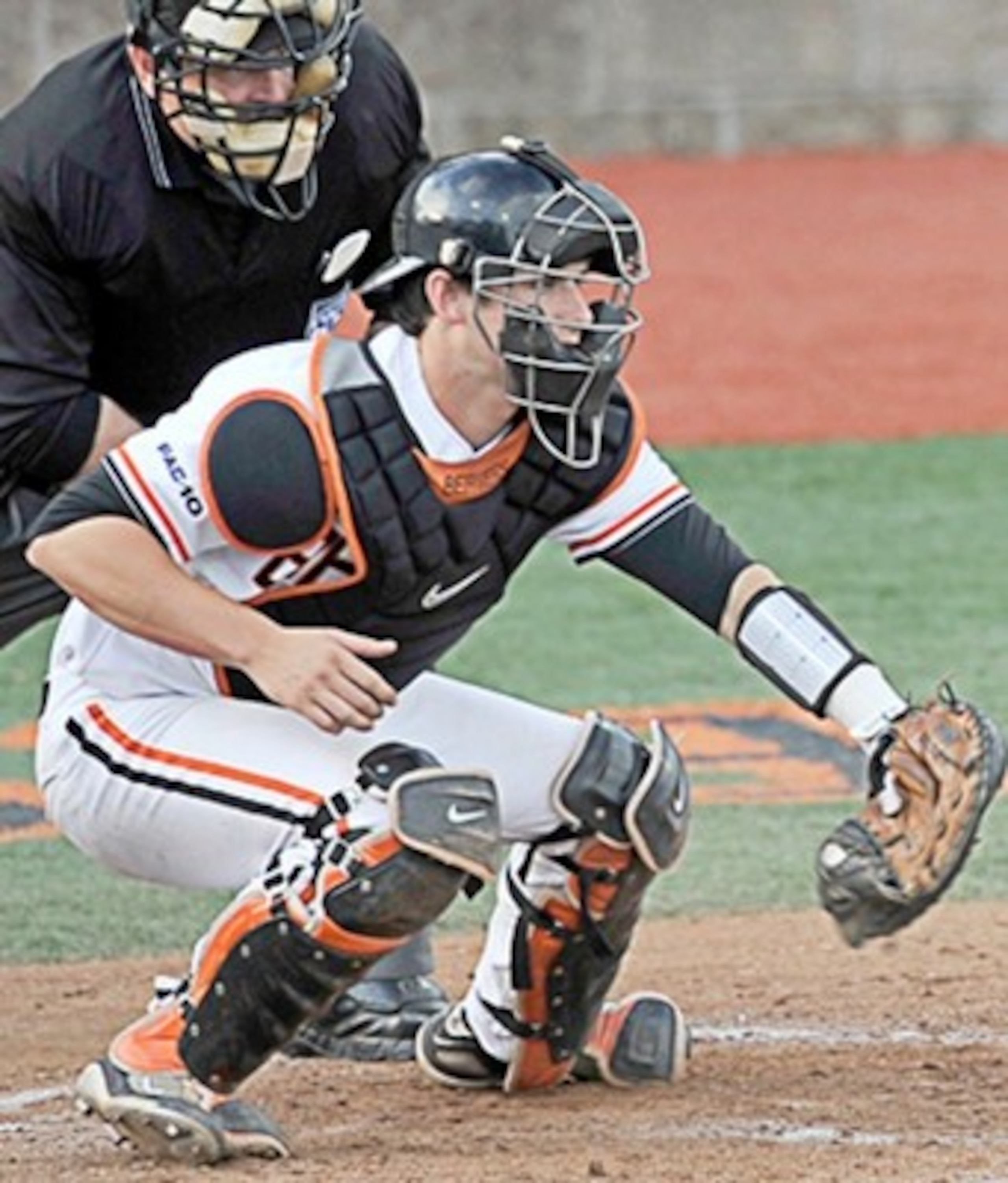
Given Buster Posey's uncertain health, this is a very intriguing pick.
Rob Ozga of The Baseball Draft Report listed Andrew Susac as the top catcher in this year's draft. BR colleague Brett Appley noted in his assessment that the college junior has dealt with the same hand injury (hamate bone) that felled Pablo Sandoval earlier this season.
The Oregon State website offers other essential details: a solid offensive performer and honorable mention all-Pac 10 honoree with 18 extra base hits and 32 RBI in 2011.
Susac's offensive profile matches Posey's: high batting average, gap (but limited raw home run) power.
Matt Grabusky of MLB Draft Guide describes Susac as being "solid behind the plate and has a plus arm."
The Giants like minor-leaguer Hector Sanchez enough to have promoted him recently from class-A San Jose to AAA Fresno; they also have raved publicly about prospect Tommy Joseph, still in San Jose.
You never know what personnel managers really think, but stockpiling catching prospects gives Brian Sabean assets with which to make deals. Susac looks like a true blue chip.
Odds of eventually putting on the gear in San Francisco, or elsewhere: 70 percent.
2. Kyle Crick, RHP (Sherman, TX HS)
9 of 10
Matt Grabusky of MLB Draft Guide assesses Kyle Crick this way: "...Strong, athletic pitcher, fitting the power righty mold well. Now hitting 95. His top secondary pitch is a slider that is plus at times with great potential. He also throws a curve and change that are both still developing."
Hmm. The Giants have a guy like that—name of Matt Cain.
Scouts who have watched Krick pitch in high school say his pitch speed has increased significantly (from the mid-80's to mid-90's, consistently) without lapsing into control issues.
The 6'4", 225-pound Crick is a multi-sport athlete—he played football, and was a first baseman before being converted to a pitcher. Raw athleticism like that appeals to personnel bosses.
If Crick foregoes college—he signed a letter of intent last November to attend TCU—and signs with San Francisco, do you think the organization will be closely monitoring his progression?
Imagine Zach Wheeler and Crick joining Tim Lincecum, Matt Cain and Madison Bumgarner in the next two or so years. Righty-dominant, but a powerful rotation.
(And imagine Jonathan Sanchez being dangled for a bat)
Imagine.
And, in the interim, odds that Crick eventually joins the Giants staff: 60 percent.
1. Joe Panik, SS (St. Johns University)
10 of 10
Trivia quiz: Who is the last shortstop drafted in the first round by San Francisco?
Joe Panik is either a can't-miss prospect in the mold of former St. Johns and Giants shortstop Rich Aurilia, or a middling, weak-armed college infielder who benefited from a relatively weak 2011 draft pool at his position.
That's the beauty of the amateur draft; everyone's got an opinion.
We know this much about the 6'2", 195-pound Panik: his name is pronounced PAN-ic (as in, you know, be really afraid); he had an arm injury earlier in his career that has allegedly diminished his arm strength. Also, he had terrific offensive statistics at St. John's, not exactly a baseball powerhouse.
Giants VP/Player Personnel Bobby Evans has publicly insisted Panik will remain at shortstop. Panik has already signed and soon will report to instructional league; we'll see.
Panik bats lefty, throws righty, hits for average, has little power, and may lack the arm strength to make throws from the 5/6 hole. Reminds you of, Duane Kuiper!
Actually, a Kuiper clone (12 seasons, .271 BA, .983 fielding percentage) would be fabulous.
Odds that fans at AT&T will have the chance to chant PAN-ic...PAN-ic....PAN-ic....: 50 percent.
(trivia answer: Royce Clayton, 1988)

.jpg?w=2560 "Grading WWE Raw 🔠")


.jpg?w=2560 "Viral Rams Coach Vid 🖕")

