
College Football: The Top 25 SEC Quarterbacks of the Past 50 Years
From 1960 to 2010, the SEC has built a reputation based upon impressive coaching, solid defenses and outstanding quarterback play.
There are a number of methods to determine who is a "top player" and in this review we shall concern ourselves with the following criteria:
No. 1: Did the quarterback display his talent in college?
No. 2: Was the player effective in leading his team to winning seasons?
No. 3: Did the intense competition of SEC play provide the field general an opportunity to improve through his career and eventually achieve "legendary" status?
Now that we know the parameters, let us agree on two rules concerning this evaluation:
No. 1: We will use all 12 schools currently in the SEC even if the choice from that institution did not actually play in the SEC. Case in point would be someone from South Carolina or Arkansas.
No. 2: We will not use anyone from schools no longer in the SEC even if they have a viable candidate. Case in point, the late Billy Lothridge of Georgia Tech,1963 first runner-up for the Heisman Trophy.
With so many choices, it is easy to pick out 40 or 50 candidates to meet the criteria.
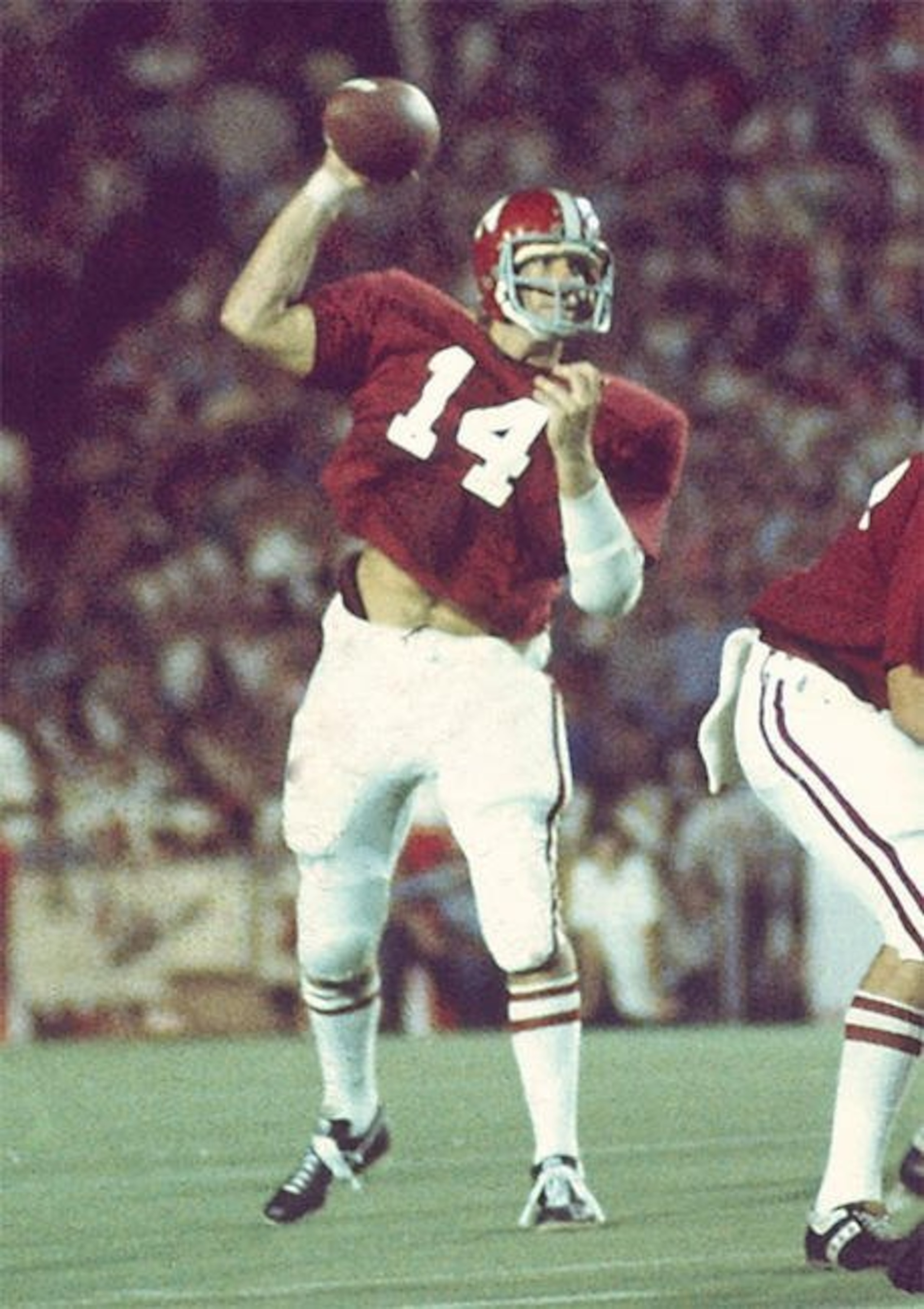
Some, like the great Richard Todd (see picture), have left echoes of their performances so we may evaluate them just as if they were to take the field this coming September.
We now will look at the cream of the crop.
No. 25: Dan Reeves, South Carolina 1962-64
1 of 25
Dan Reeves is close to being the greatest player ever at the University of South Carolina.
In the days of Reeves, freshmen were ineligible to play college football or basketball.
Dan became the starting quarterback during his first season and was named all-conference as a junior and senior. During the time of Reeves, South Carolina was a member of the ACC.
Reeves was a fine passer and outstanding runner.
He set 10 school passing records, highlighted by a 240-yard afternoon against coach Bob Devaney's eventual Big Eight Conference champion Nebraska Cornhuskers in 1964.
Coach Devaney, called more than once the sharpest judge of talent in football history, stated after that contest "Dan Reeves looks at defenses like a coach" and his words would prove prophetic in time.
Dan left Carolina as the leading passer in Gamecock history.
Not bad for a kid who spent his entire professional football career as a running back.
Among more recent SEC signal-callers, quarterback Dan Reeves resembles Matt Jones of Arkansas.
No. 24: Joe Ferguson, Arkansas 1970-72
2 of 25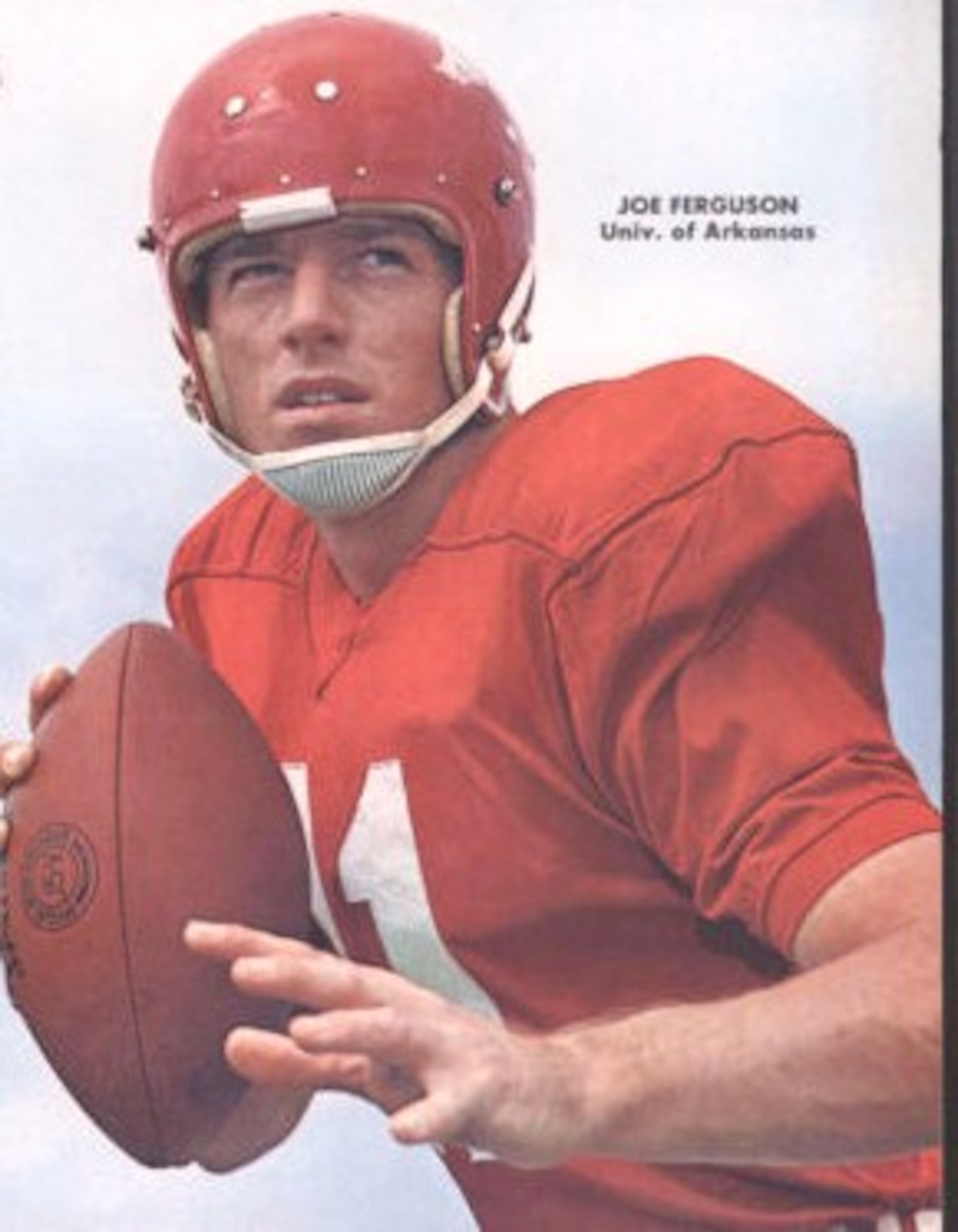
In the halcyon days of the Southwest Conference, Joe Ferguson led the Razorbacks of Arkansas offense and threw the ball as well as anyone in the country.
If the rankings in this article were based upon the quarterbacks from the current SEC schools who had the best professional careers, Ferguson would be near the top. Along with teammate O.J. Simpson, the astounding duo made Buffalo a force to reckon with in the 1970s despite lacking overall talent throughout the roster.
Ferguson set the Arkansas record for most completions in a game with 31 against Texas A&M in 1971 and passed for a total of 4,431 yards in his three years of eligibility.
In 1971 Joe collected the Offensive Player of the Year award for the entire conference.
Of the more current SEC quarterbacks, the one who most resembles the style of play Ferguson demonstrated would be Kentucky's Tim Couch.
No. 23: Dewey "The Swamp Rat" Warren, Tennessee 1965-67
3 of 25
The Swamp Rat came from Savannah, Georgia to save the Tennessee program from mediocrity.
In the three-year career of Dewey Warren, the Volunteers won 25 games and lost six; 19 of those wins had the Swamp Rat starting at quarterback.
In the three seasons prior to Warren taking over, Tennessee had won 13 and lost 16.
Quite a difference this cagey individual made on the scene in Knoxville.
Dewey came from the swampland of Savannah to become the first person to pass for over 1,000 yards in Volunteer history.
Although he may not have a luggage full of impressive statistics, Warren was the man most responsible for turning around a giant football program that was in a deep decline before he arrived.


No. 22: Andre' Woodson, Kentucky 2004-2007
4 of 25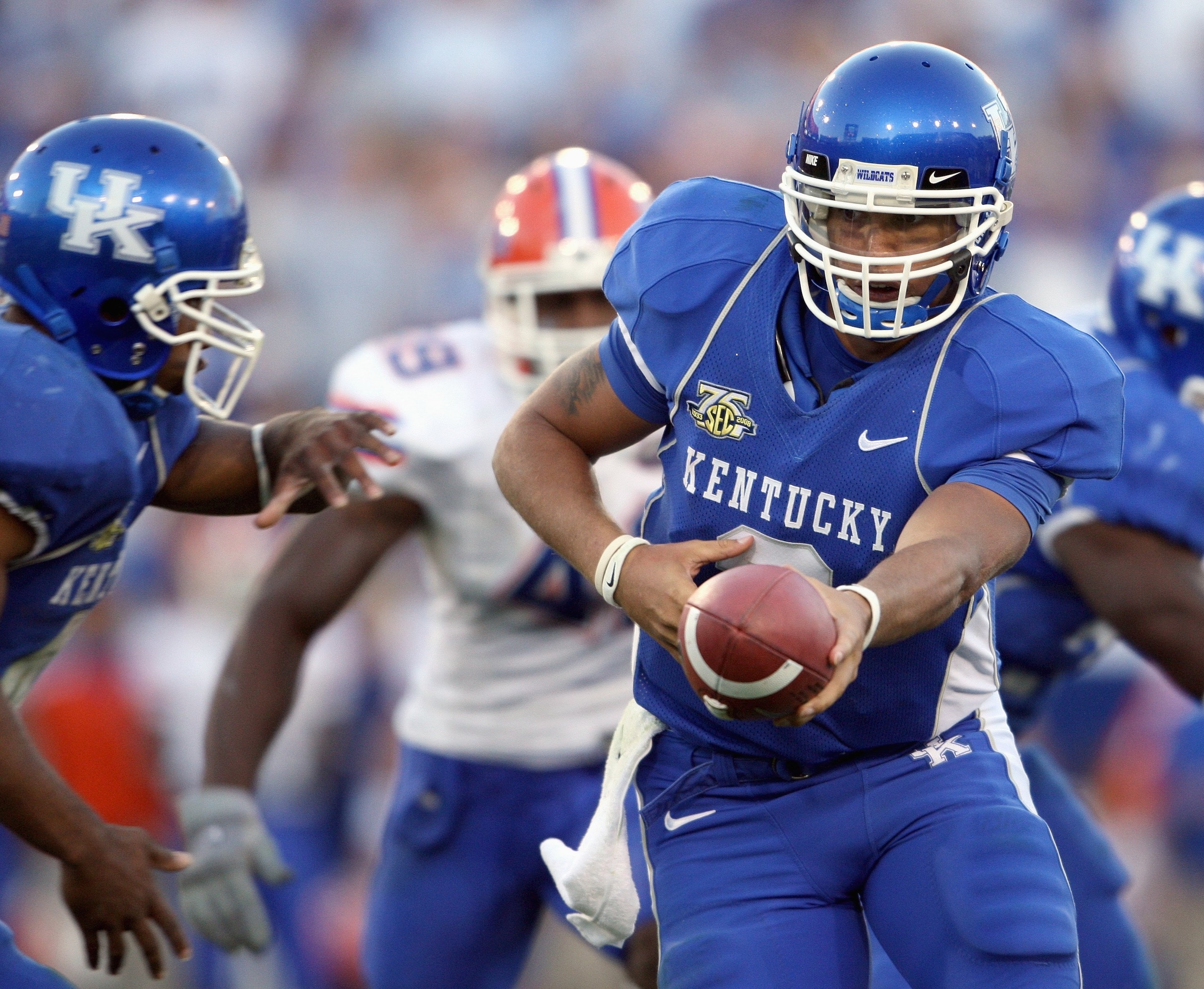
Andre' Woodson possessed more passing talent than many of his contemporaries throughout the rest of the nation.
In the ultra-talented SEC of his era, Woodson stood out as an effective leader who was able to take a team lacking overall ability and still break several passing records.
Woodson set the all-time NCAA record of consecutive pass attempts without an interception with 325.
Andre' set the SEC record for most touchdown passes in a season with 40 in 2007.
Woodson also set the Kentucky record for career touchdown passes with 81 strikes for six points.
Andre' completed his career in Lexington with 822 pass completions in 1,311 attempts for 9,360 yards.
Ultimately, Woodson must be viewed as a player of talent with excellent individual achievements who suffered with a team that won only 21 of their 48 games during his four years at Kentucky.
No. 21: Jason Campbell, Auburn 2001-04
5 of 25
Undefeated in 2004.
SEC Player of the Year in 2004.
MVP of the SEC Championship Game in 2004.
What many quarterbacks would do just to have those three statistics in their playing career.
Jason Campbell graduated with a degree in public administration. If he runs a city or county the way he ran the Auburn football team the residents will have no problems.
Campbell succeeded despite having a different offensive coordinator each season. That is the sign of a very bright student of the game.
In his senior season, Campbell threw 20 touchdown passes with only seven interceptions and completed 70 percent of his 270 passes.
Winner and champion.
No. 20:Tee Martin, Tennessee 1996-99
6 of 25
Tee Martin is the most underrated player in the history of Volunteer football.
Martin accomplished three things his predecessor failed to do at the University of Tennessee.
In the season following Peyton Manning's departure from Knoxville, Martin took over the same team and beat Florida, went undefeated and won the national championship.
So much for falling in love with individual accolades and statistics as the only measure of a man's accomplishments.
Martin will live forever in college football history as the quarterback of the first BCS champion.
No. 19: Jimmy Sidle, Auburn 1962-64
7 of 25
The late Jimmy Sidle was much like another Tiger hero, Cam Newton, in that he was a man among boys.
Standing 6'3" and weighing 220 pounds, Sidle simply ran over the smaller defenders of his era.
In 1963, Sidle became the first quarterback to lead the nation in rushing, averaging over 100 yards a game on the ground.
1963 was a magical year for Sidle as he lead the SEC in total offense and was named All-America for his trouble.
Sidle led Auburn to a 9-1 regular season in 1963 and the Tigers received an invitation to play coach Bob Devaney's powerful Nebraska Cornhuskers in the final daytime Orange Bowl.
Sidle ran for 96 yards and completed 14-of-27 pass attempts for 157 yards in a stirring effort against the champions of the Big Eight Conference.
He scored the Tigers' only touchdown in a 13-7 loss, his 13-yard run to paydirt was the only touchdown given up by Nebraska in the third quarter all year long.
An injury in the 1964 season opener against Houston curtailed Sidle's performance by sidelining him from his quarterback position.
Jimmy refused to become a fifth wheel and continued to provide an offensive spark for the Plainsmen by playing tailback.
The lasting effects of his college injury doomed Jimmy's professional career.
In 1999, Sidle passed away from heart failure at the age of 57.
No. 18: Condredge Holloway, Tennessee 1972-74
8 of 25
The first African-American to start at quarterback in the SEC, Condredge Holloway won acclaim throughout the league for his outstanding play as a runner, passer and leader.
This former great Tennessee quarterback is so respected that he is a member of the Alabama Sports Hall of Fame along with Willie Mays, Joe Louis and Henry Aaron among other notables.
A native of Huntsville, where his Mother was an employ of NASA, Holloway quickly and effectively hushed any whispers about his ability to lead an SEC football team.
Years after his career ended he was acknowledged as the one person who inspired many young men to believe they could succeed as a starting quarterback in the SEC and as such is viewed as a trailblazer.
There is no question his path to stardom was more difficult as "the first" and his road was paved with obstacles to success.
Condredge was a quarterback who made good decisions on the field, tossing only 12 interceptions in his 407 pass attempts while leading the Volunteers to 25 wins and only nine losses in his three years as a starter in Knoxville.
As sensational a player as he was, it is his role as the Jackie Robinson of SEC quarterbacks that raises his significance as one of the top SEC quarterbacks of the past 50 years.
No. 17: Richard Todd, Alabama 1972-75
9 of 25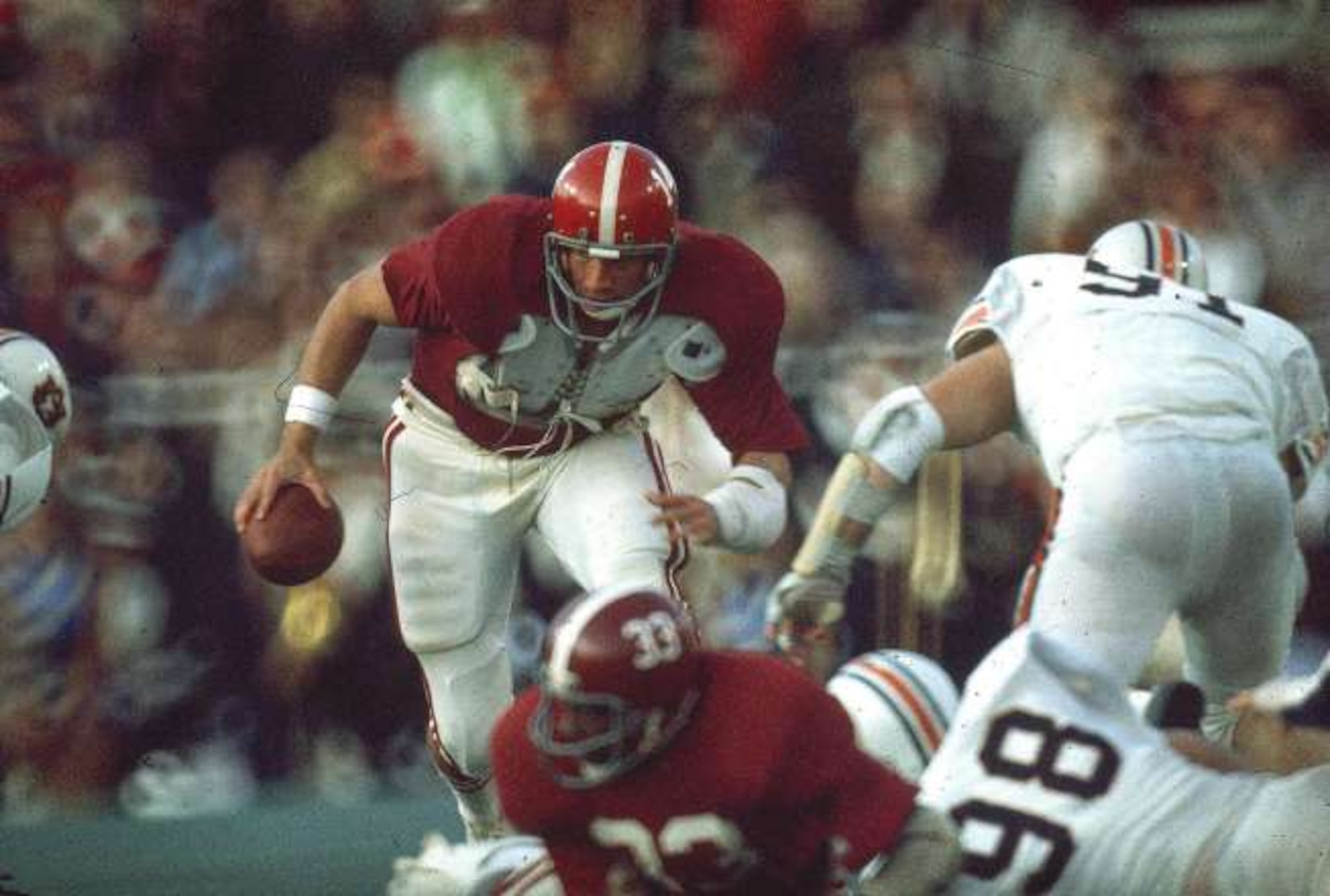
Richard Todd never lost an SEC game in all of his years as the starting quarterback of Alabama.
That in itself solidifies Todd's placement among the top conference quarterbacks of the past half-century.
Todd was a fantastic passer who made a living throwing the ball for money after leaving Alabama.
Incredibly, Alabama operated the multiple-option wishbone offense during the time of Todd so any passing he did was simply to keep the opponent off balance.
During Todd's career at Alabama, the Tide won 42 of 44 regular-season contests.
The handsome Todd, standing nearly 6'3" and weighing a solid 210 pounds, had a far-reaching impact.
He was more than someone with a sack of statistics and a pile of losses to show for it; this is a winner.
Because of his greatness in every aspect of the game, Todd is one of the top SEC quarterbacks of the past 50 years.
No. 16: Bert Jones, LSU 1970-72
10 of 25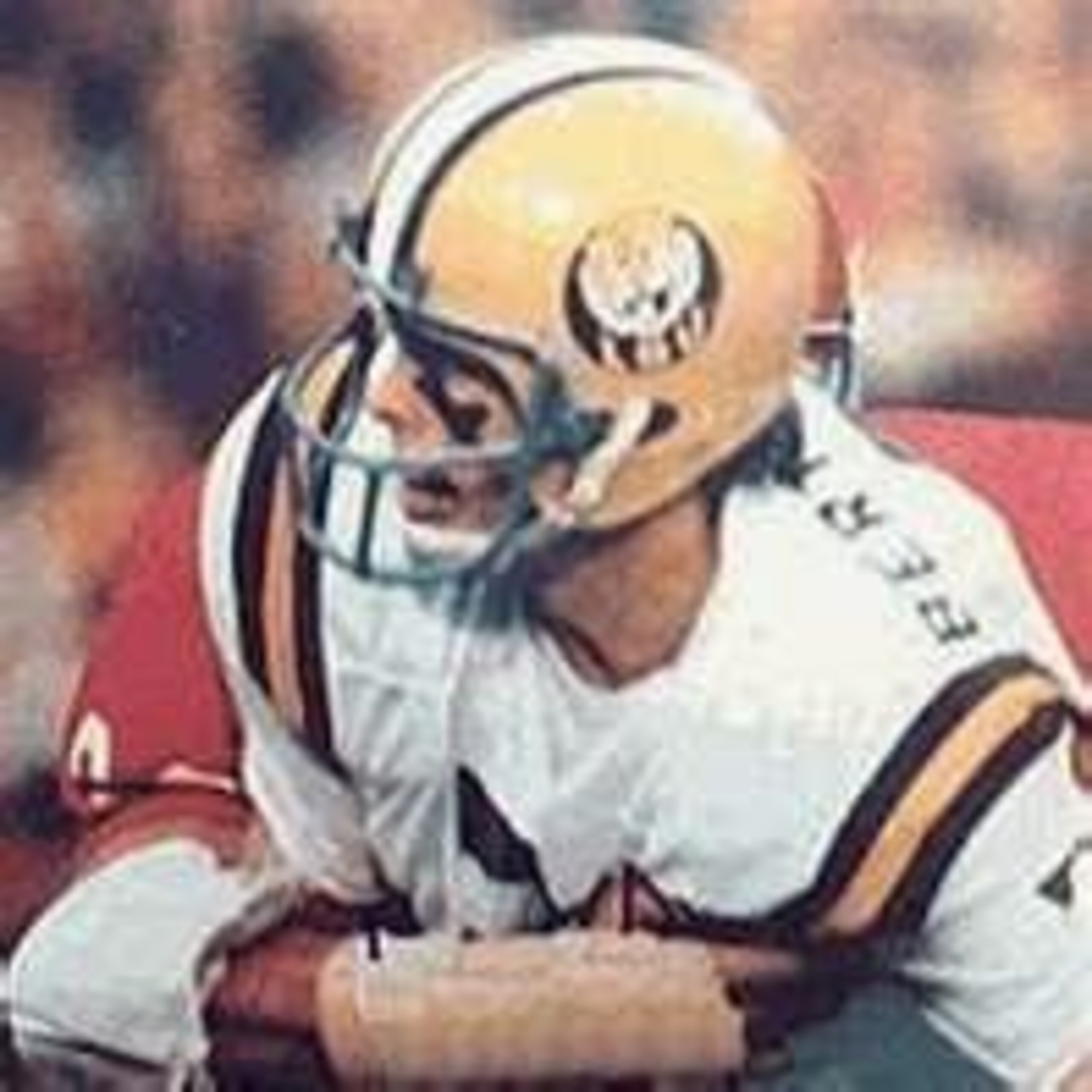
Tremendous talent.
Those two words are consistently used to describe Bert Jones by those who witnessed him grab victory from defeat again and again during a highly successful college career in Baton Rouge.
Standing 6'3" and weighing 210 pounds, the "Ruston Rifle" set the all-time record at LSU for passing yards and touchdowns despite starting only half of the games in his three years as a Bayou Bengal.
Jones backed up big Buddy Lee in a 1970 season that saw the Tigers advance to the Orange Bowl and take on the eventual national champion Nebraska Cornhuskers of coach Bob Devaney.
The following year, Jones began to make his mark on SEC history, becoming known as the quarterback who got his team out of trouble when the pressure was greatest.
During his time at LSU, Jones completed 53 percent of his passes for 3,225 yards and 28 touchdowns, records at that time for any quarterback in LSU history.
Jones finished fourth in the Heisman Trophy voting in 1972.
Many years later, the Pittsburgh Post Gazette newspaper reported an incident that took place on the night before Super Bowl XLII.
When asked about the greatest quarterbacks of all time, coach Bill Belichick of the New England Patriots described Jones as "the best pure passer" he had ever witnessed on a football field.
This coming from the man who coaches Tom Brady and faces Peyton Manning regularly.
Let that be the final comment concerning the great Bert Jones.
No. 15: John Reaves, Florida 1969-71
11 of 25
John Reaves was a phenomenal passer and leader.
A native of Anniston, Alabama, the Reaves family moved to Florida when John was nine years old.
Standing over 6'3" and weighing 215 pounds, John possessed huge hands (see picture) that would swallow the football.
The physical attribute only helped his accuracy in tossing the pigskin.
Producing a 9-1-1 record as a sophomore, John Reaves broke every Florida passing record during his career.
Along the way he set the NCAA career passing record of 7,581 yards and the SEC career touchdown record with 56.
As a senior, he was named first-team All-America and received the Sammy Baugh Trophy as recognition for being the best passer in the nation.
Unfortunately, John's last two seasons in Gainesville produced only a .500 record of 11-11.
Reaves has worked in coaching for many years. He is the father-in-law of Southern California coach Lane Kiffin.
John has suffered from some personal issues later in life that resulted in causing heartache for family members. Let us all hope this amazing athlete can overcome his problems.
No. 14: Tim Couch, Kentucky 1996-98
12 of 25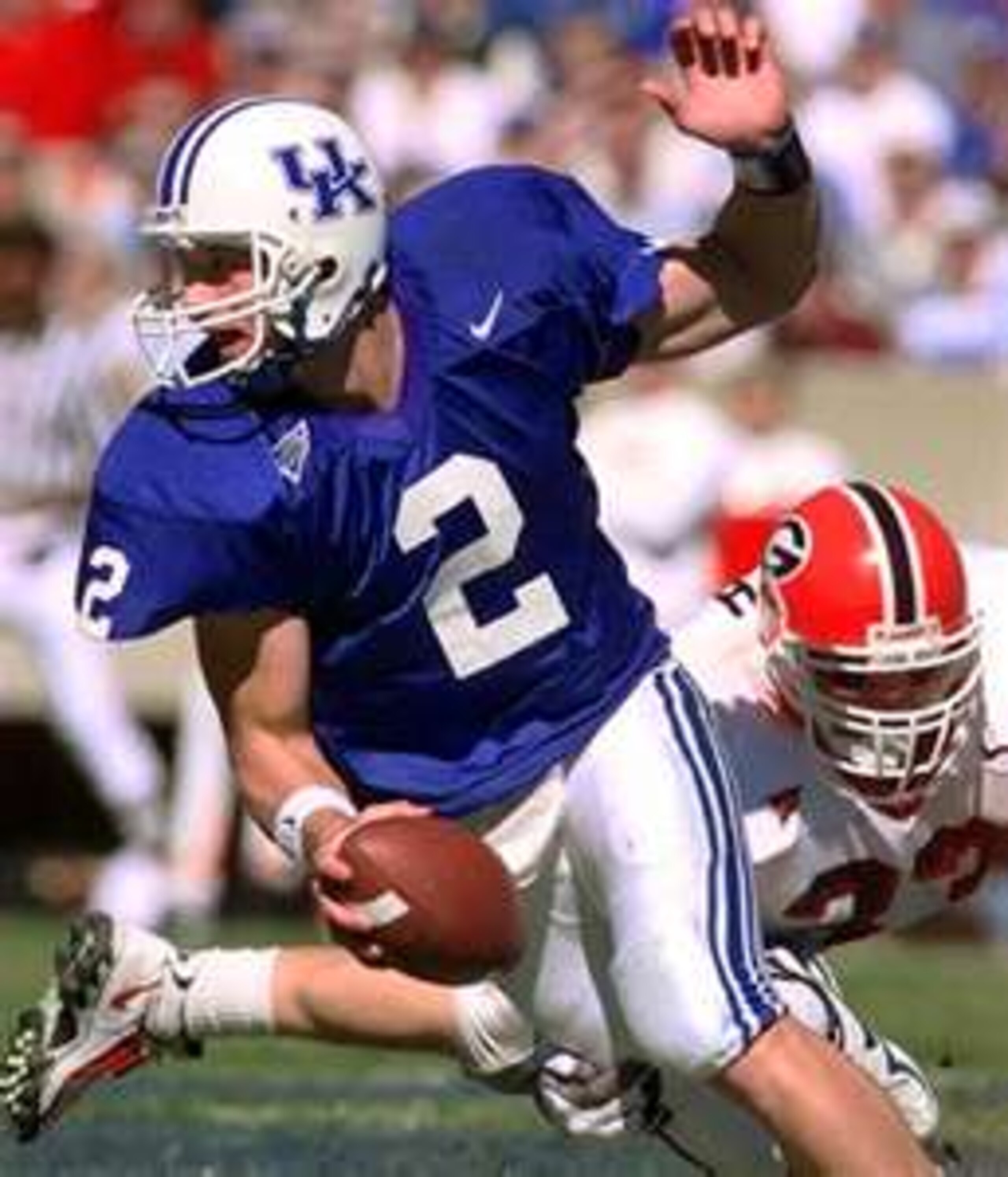
Tim Couch was a passer who reflected the aggressive approach of his offensive coach, Mike Leach.
Standing 6'4" and weighing 220 pounds, Couch was a tremendous high school athlete in the state of Kentucky where he tossed 133 touchdown passes and as a basketball player averaged 36 points a game.
Taking into consideration Couch threw only 84 passes while playing behind Billy Jack Haskins during his freshman season and decided to leave for the National Football League after his junior year, his career totals are astonishing.
Couch's career totals at Kentucky included completing 795-of-1,184 passes for a 67 percent success rate.
This avalanche of passing culminated in 8,435 yards (including 4,275 passing yards during the 1998 season alone) and 74 touchdowns.
Couch holds the NCAA record for completion percentage in a game with a minimum of 40 completions. Tim accomplished this against Vanderbilt in 1998 when he connected 44 times out of of 53 attempts for an 83 percent rate.
He averaged 36 completions a game in 1998 while tossing for 4,275 yards that season.
He left Kentucky holding NCAA records for most completions in a season, most completions in a two-year period and most completions per game in a two-year period.
In 1998, Couch was the Player of the Year in the SEC and a Heisman Trophy award finalist..
During his three seasons at Kentucky, Couch saw his Wildcats win only 16 of 34 games as the overall talent level in Lexington could not keep up with the other schools in the conference.
No. 13: David Greene, Georgia 2001-04
13 of 25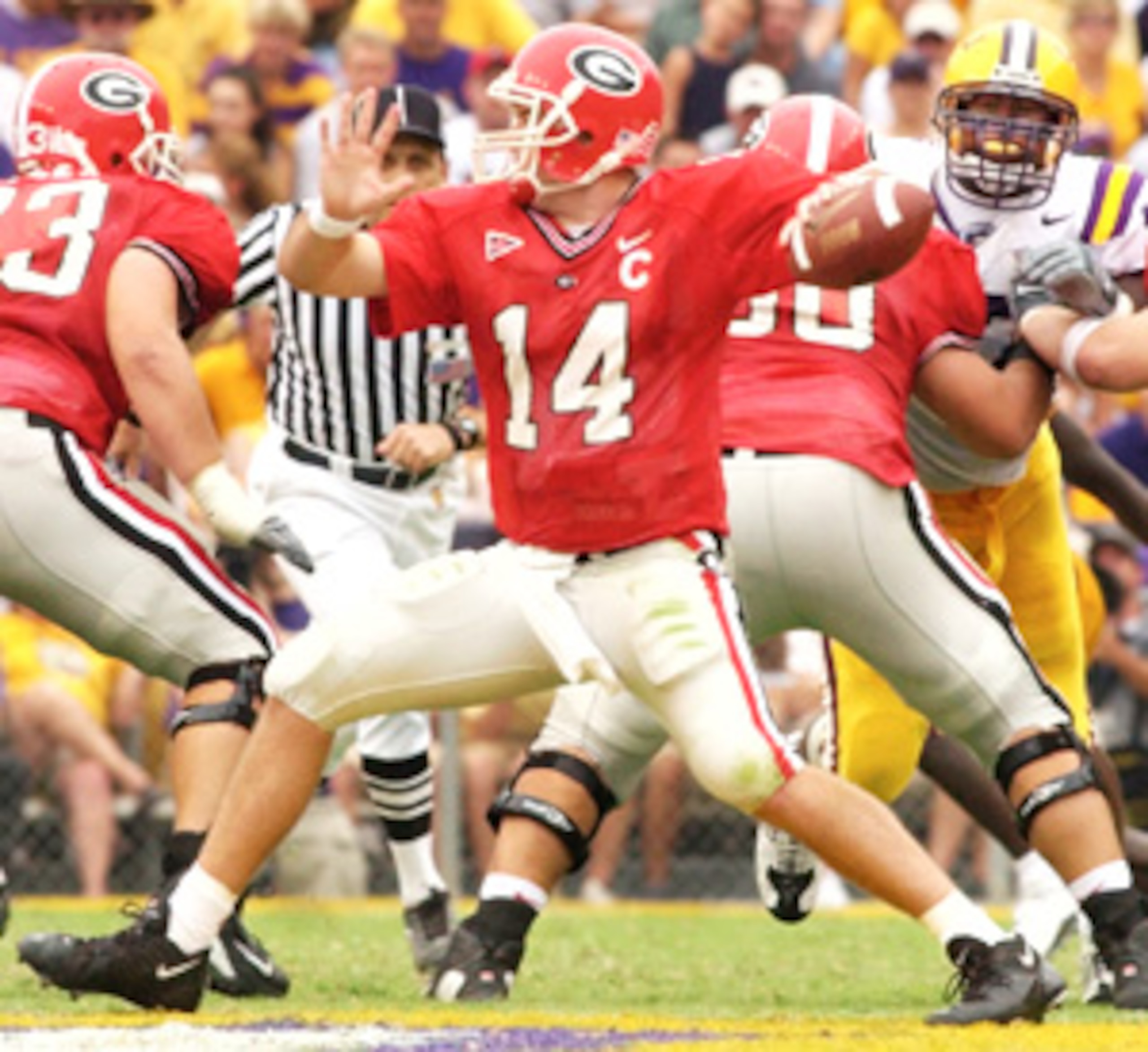
David Greene was the SEC Offensive Player of the Year for in 2002 and led the Bulldogs to the SEC Championship that season.
Greene finished his career with a record of 42 wins and 10 losses, an 81 percent winning rate.
The 42 wins by a quarterback in his college career was a record that stood for five years until broken by Colt McCoy of Texas.
In his final year, Greene set an odd SEC record when he threw 214 consecutive passes without an interception.
The Georgia teams during Greene's four years finished in the national Top 10 rankings three times.
During Greene's first season, he was the SEC Freshman of the Year. As a sophomore he was selected to the all-conference first team.
In Greene's junior and senior seasons, he was named SEC second-team all-conference.
The Bulldogs were not able to recapture the magic of the 2002 championship season during Greene's final two years in Athens.
Georgia did post victories in the Outback and Capital One Bowl games and David completed his career without losing to arch-rival Georgia Tech.
Considering Greene played in more games (52) than virtually any player in college football history, it was not altogether surprising to find him leaving school as the SEC all-time leader in yards gained.
Greene's total of 11,270 yards speaks for itself when considering the top quarterbacks of the past 50 years in the Southeastern Conference...
No. 12: Derrick Ramsey, Kentucky 1974-77
14 of 25
Derrick Ramsey stood 6'5" and weighed 255 pounds.
This is the man who changed college football—only it took the game nearly 30 years to catch up to him.
Derrick Ramsey was Cam Newton before Cam Newton walked the earth.
A native of Florida who went to school in New Jersey, the enormous Ramsey was equally at home at quarterback or tight end, a position he played for nine years in the NFL with the Oakland Raiders and New England Patriots.
Upon Ramsey's arriving in Lexington, Wildcat coach Fran Curci didn't quite know what to make of the huge man who could play quarterback.
Announcing in '76 that Derrick was the best "runner, receiver, passer, and blocker on the team," Curci decided to go with Ramsey as the full-time signal-caller.
Considering Kentucky had won a total of 81 games in the 20 seasons prior to Derrick's arrival on campus, the effect of Ramsey as the Wildcat quarterback was staggering.
Ramsey could run over any defensive lineman, much less a linebacker. Players in the secondary were totally helpless when hoping to make a tackle.
In the open field he could outrun any pursuer.
He could thread a needle with his passes or launch bombs that covered the length of the field.
Sound familiar?
How good was Derrick Ramsey?
Take these two facts under consideration.
The only SEC championship won by Kentucky since Bear Bryant was the coach in 1950 happened when Ramsey was the quarterback.
The only Kentucky team that finished undefeated in conference play during SEC history occurred when Ramsey was the quarterback.
How big an impact did Ramsey have on the Kentucky program?
In Ramsey's senior year, Kentucky won 10 and lost only once, finishing No. 6 in the AP Poll.
Since Ramsey left the playing field in Lexington, the Wildcats have produced exactly one squad that finished in the Top 25 nationally, the No.19-ranked team of 1984.
When it comes to Kentucky football, Derrick Ramsey is the alpha and the omega.
Possessing an outstanding and analytical mind, Ramsey served his alma mater as an athletic administrator before moving on to become the AD at Kentucky State University.
Called to service once again, Ramsey spent four years as the Deputy Secretary of Commerce for the state of Kentucky.
The talented Mr. Ramsey is currently the Athletic Director at Coppin State University in Baltimore.
No. 11: Ken Stabler, Alabama 1965-67
15 of 25
Ken Stabler had a reputation as a gambler.
Don't bet on it.
Stabler taking the field during his junior and senior seasons was a sure thing for coach Paul Bryant's Crimson Tide.
Alabama lost one regular-season game in that time and the man known as "The Snake" was a primary reason for the success.
Stabler is something of an enigma. He is well liked by fans, respected by foes and admired as one of the all-time most popular members of the Oakland Raiders in professional football.
In college football, Stabler was a bit overshadowed by his circumstances.
The wild days of mid-1960s SEC football did not lend itself to a single domineering presence; there were several future legends making names for themselves during the era.
In Stabler's first season, 1965, he was the second-string quarterback behind Steve Sloan.
Stabler's statistics for the year were underwhelming. He attempted 11 passes and completed three for 26 yards.
Sloan led the Crimson Tide to a 39-28 victory over coach Bob Devaney's undefeated Nebraska Cornhuskers in the Orange Bowl and claimed the mythical AP national championship.
Stabler's junior year of 1966 was his best statistically; he completed 74 passes during the year for 956 yards and seven touchdowns with five interceptions.
His Crimson Tide went undefeated, finished No. 3 in the polls and Stabler led Alabama to the Sugar Bowl (see picture), where they defeated coach Bob Devaney's Nebraska Cornhuskers, 34-7.
Steve Spurrier won the 1966 Heisman Trophy; Ken Stabler was not even mentioned.
The world came crashing down on "The Snake" in his final season at Tuscaloosa in 1967.
Coach Bryant kicked Stabler off the team temporarily due to misbehavior.
This personality trait would go a long way in securing "The Snake's" role as King of the Oakland Raiders' terrifying Silver and Black nation in the 1970s under coach John Madden.
It "cut no ice" for a schoolboy playing under the legendary Bear in the 1960s.
Stabler's performance suffered on the field in '67. He completed 58 percent of his 178 passes but became known as a player who "went to the well once too often."
This reputation proved correct as demonstrated by his 13 interceptions and only nine touchdowns.
Alabama was tied by Florida State in their opener, beaten by Tennessee and lost to Texas A&M in the Cotton Bowl during Stabler's senior campaign.
Stabler was a noted runner during his time at Alabama. He rushed for a total of 838 yards and nine touchdowns.
Even that betrayed him during his final year when he averaged only one yard a carry.
Stabler failed to make a dent in the top 10 for the 1967 Heisman Trophy.
He doesn't have the achievements as a passer or runner to qualify him for such notice.
Still, the mystery and excitement of Kenny Stabler remains present.
Obviously, he is considered one of the most liked football players of all time.
It has been said Ken Stabler can walk down the scariest street in the country and all he will be asked for is his autograph.
The legendary Snake—they broke the mold when he was made.
No. 10: Eli Manning, Mississippi 2000-03
16 of 25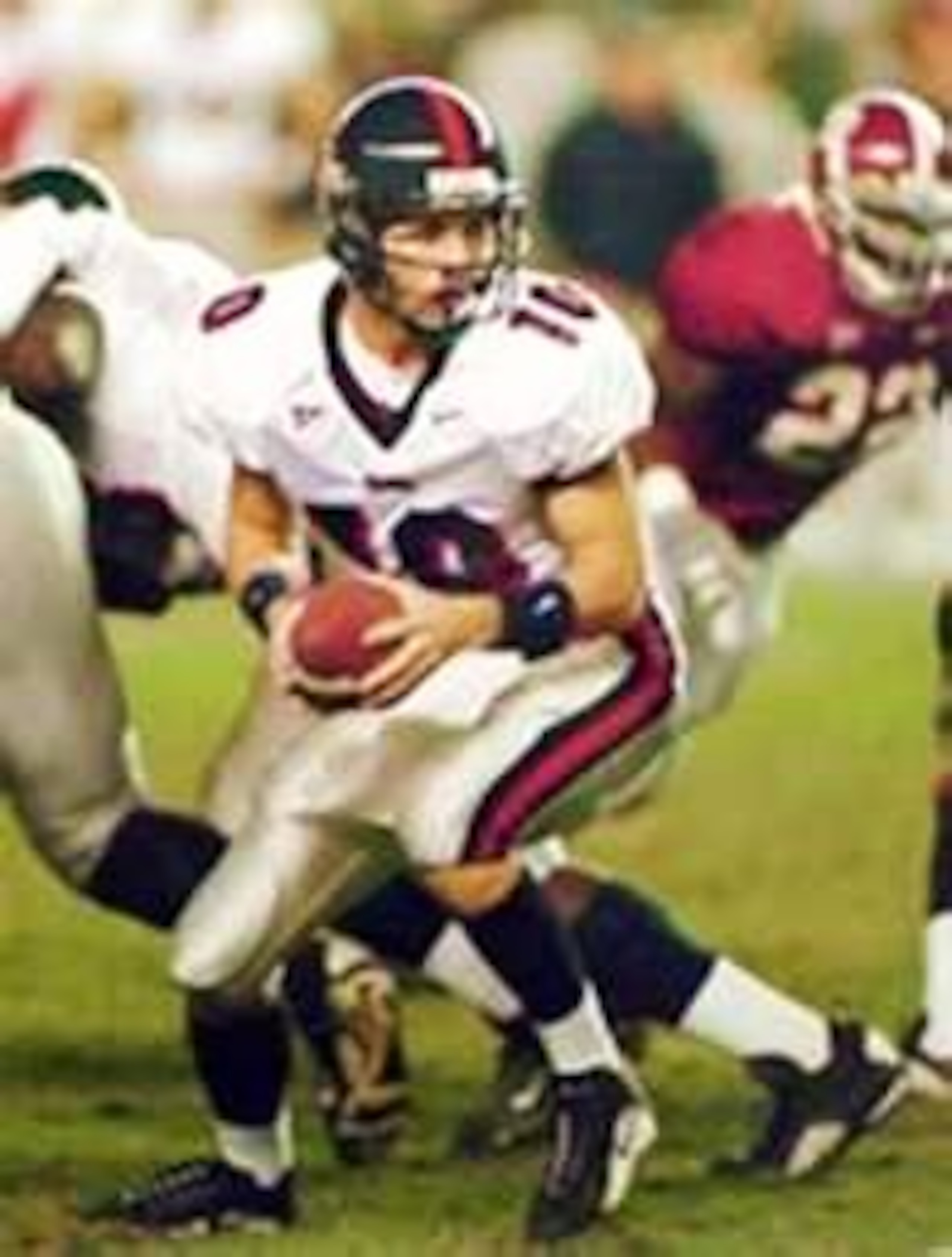
Standing 6'5" and weighing 225 pounds, Eli Manning was built to play football.
He set or tied 45 single-game, season and career records during his career at Ole Miss.
He passed for over 10,000 yards during his time in Oxford, good enough for fifth place on the all-time SEC list.
His 81 touchdown passes are third-best for an SEC career and his passer rating of 137.7 is sixth in SEC history.
In his final season as a Rebel, Eli captured the Maxwell Award as the nation’s best all-around player.
He also won the Johnny Unitas Golden Arm Award, was named SEC Player of the Year, won the Cotton Bowl MVP award and finished third in voting for the Heisman Trophy.
Almost single-handed, Eli rescued the moribund Ole Miss football program and turned it into a competitive opponent for any SEC foe.
No. 9: Peyton Manning, Tennessee 1994-97
17 of 25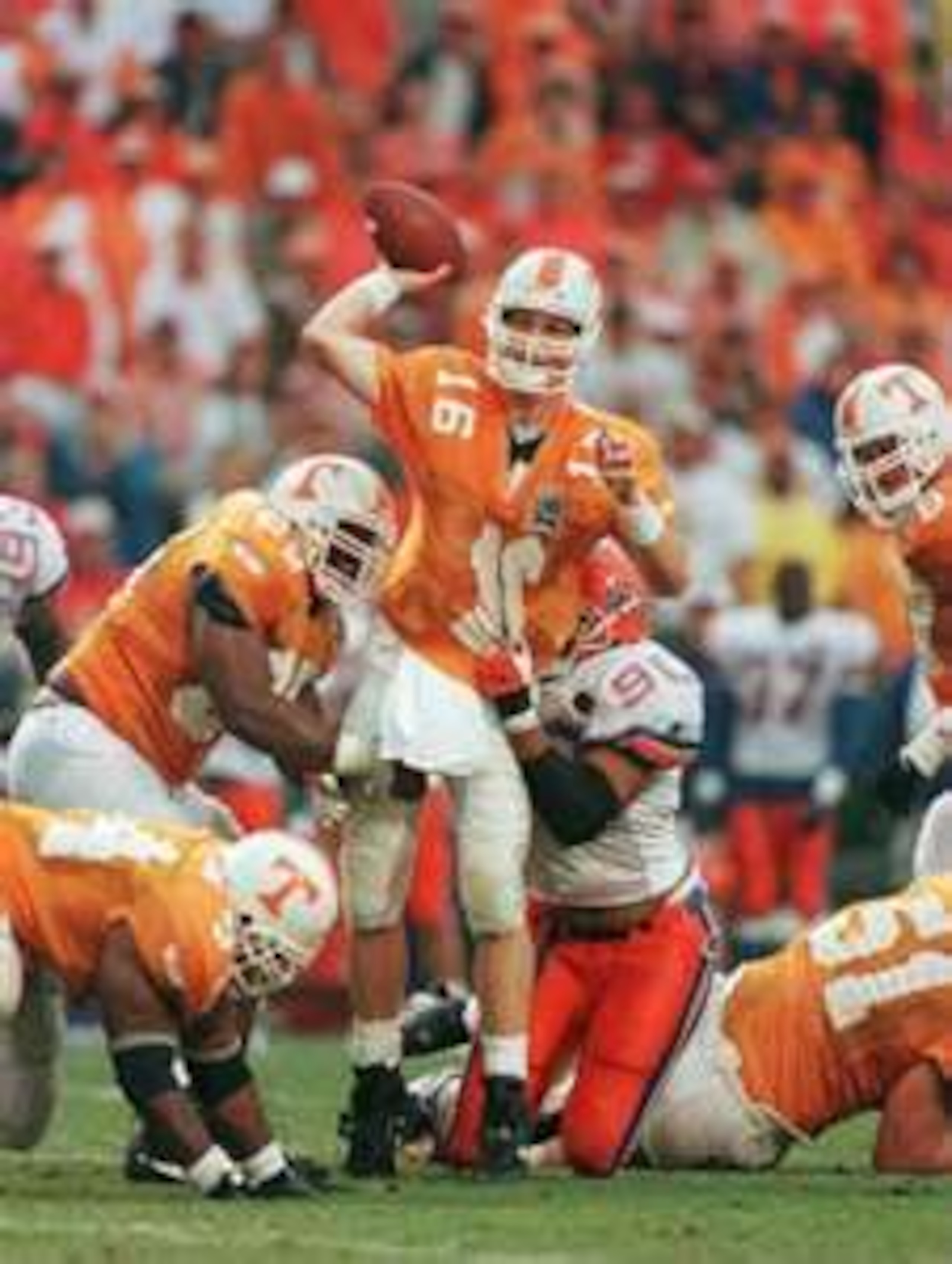
Peyton Manning suffered a hard life in Knoxville.
Pounded by the press on why he did not follow in his father's footsteps to Ole Miss, said to be "a sack waiting to happen," along with a reputation for not being able to win "the big one" against the Florida Gators, young Manning faced a lot of adversity during his four-year career.
Let's take the issues one at a time:
1. Peyton's father, the legendary Archie Manning, had no problem with his son going to Knoxville to matriculate. If he did, he didn't voice his concerns in public. The decision appeared to be all Peyton's idea and was made in a business-like manner.
2. Peyton will never remind anyone of his father as a scrambler, but he did improve over time upon the occasions when he allowed himself to be corralled by on-rushing defenders.
3. The Florida situation is another matter. In Peyton's four meetings with coach Steve Spurrier's Gators, the Vols lost each time and by a stunning cumulative score of 161-86.
Eventually, much of the public outside of the Volunteer state did begin to warm toward Peyton and by the time he left UT, following a 42-17 Orange Bowl blowout loss to Nebraska, he seemed to be more of a man to be respected for what he had to endure in his career than being simply disliked.
Among the SEC records Peyton established while playing for the Volunteers were the lowest interception percentage in a season and for a career, most games (18) with over 300 yards passing and setting the record for the highest completion percentage (62) in a career.
In his senior season, Peyton scooped up a number of impressive individual awards including the Maxwell, Davey O'Brien, Johnny Unitas and the prestigious Sullivan.
Manning never won the national championship, nor was he selected for the Heisman Trophy, but he did experience 40 victories in 49 games during his career.
Manning started 45 of those games at UT, and won 39 of them for a winning percentage of 87 percent. This is a more important statistic than just the number of games won.
Why? Because longer seasons and starting opportunities impact totals without actually being nearly as impressive as the percentage of games won.
Fans of Manning can take comfort in knowing that after entering professional football in 1998, he has gone on to become one of the greatest players ever in the National Football League.
No. 8: Pat Trammell, Alabama 1959-61
18 of 25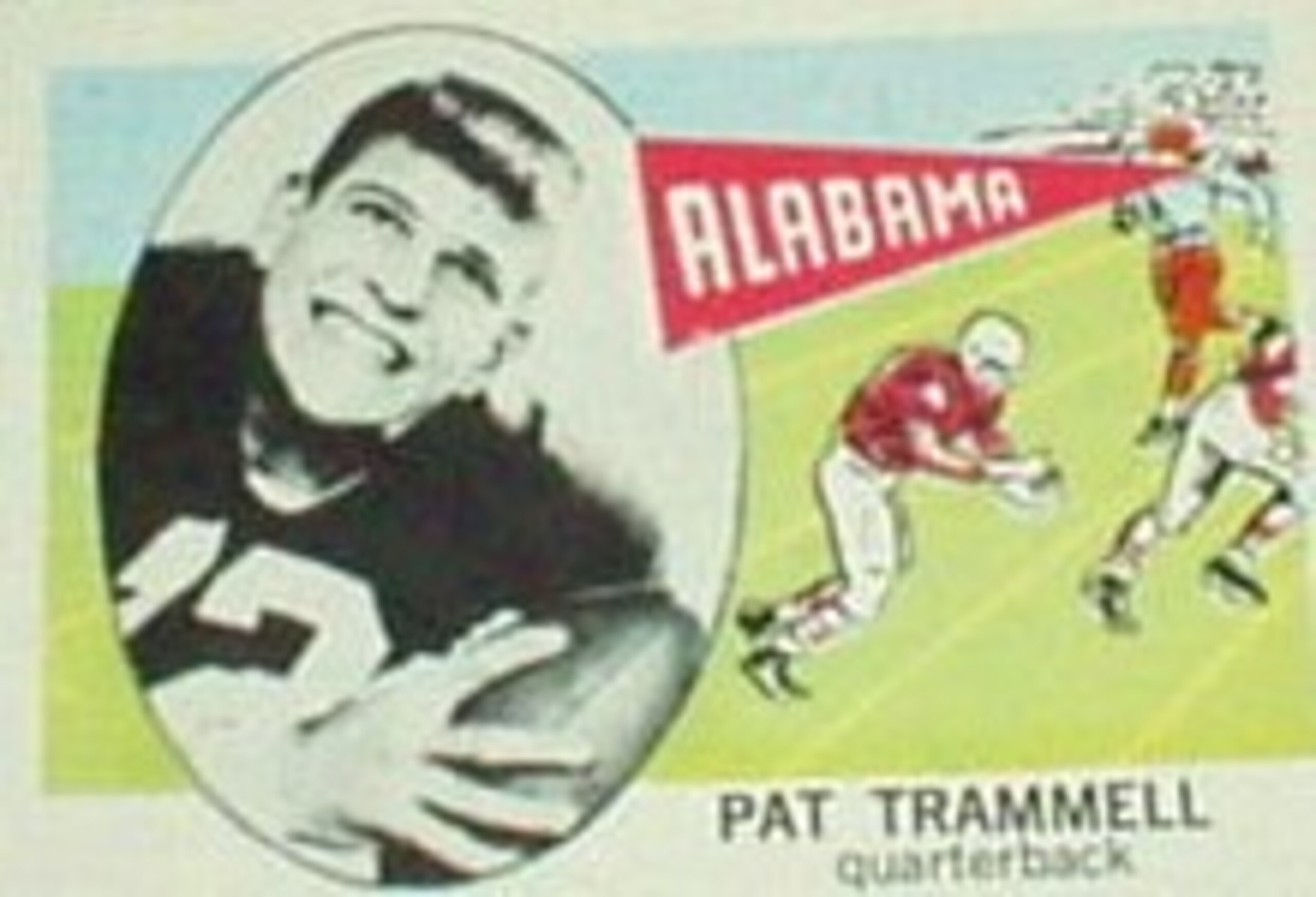
The eldest player on the list is quite possibly the person most responsible for the new age of college football in the SEC.
Meet Mr. Alabama Football.
Time does not diminish the amazing accomplishments of this incredible leader of men who used his iron will to rescue the Alabama program from a sea of ineptitude.
The Crimson Tide had won a total of only 13 games in the five seasons prior to Pat Trammell's first varsity contest.
Trammell was present during the golden age of SEC football, a 10-season period from 1957 to 1966 where the conference produced at least one team each season who claimed all or part of the national championship.
Trammell was the leader of the best of those teams, the invincible 1961 Crimson Tide.
Coach Paul Bryant recruited Pat to anchor his first recruiting class in Tuscaloosa, and what an anchor he was.
Upon arriving on campus, Pat installed himself as the team leader and was Alabama's starting quarterback for all three years of eligibility.
During his time at the helm, Alabama lost only three total games and was the undefeated national champion in Trammell's senior year.
SEC Player of the Year, All-America both athletically and academically, leader of the national champions and honored at a reception in Washington, D.C. by President John F. Kennedy.
Trammell's story and career choice have impacted young men for decades.
Pat was a strong role model who took his responsibility to serve mankind seriously and had earned his M.D. degree by 1966.
He was described as a student who prepared classic research papers used for reference many years after his days in medical school.
Young Dr. Trammell was a specialist in dermatology who diagnosed Auburn head coach Shug Jordan with skin cancer and successfully treated him.
He encouraged others to help our fellow human beings pursue a life of good health and harmony, leading by example.
Talk circulated concerning the need to have Trammell in the political arena as a natural leader with an eye toward better health care for all citizens.
But it was all over before it could really begin.
Almost unbelievably, at the age of 28, Pat Trammell met his own tragic demise at the hands of cancer.
Such irony is of biblical proportions.
If the choices for this article were decided simply on personal preference and admiration of the individual instead of what really happened on the field, Trammell would rank higher—perhaps even No. 2.
A determining factor in correct decision-making is the ability to put aside personal bias and present a grounded review based upon facts.
Adhering to these principles is vital concerning any evaluation, and so the late Pat Trammell goes on to take his place as the eighth-best quarterback of the past 50 years in the SEC.
No. 7: Archie Manning, Mississippi 1968-70
19 of 25
Arguably the greatest player in college football history during his first two seasons in Oxford.
You know you are somebody when there is an award named in your honor.
Archie Manning never won his own Manning Award (it did not exist in the 20th century) nor did he capture the Heisman Trophy.
His failure to do so lay at the feet of voters who turned their back on his junior-season performance in 1969 and opted for a conventional senior-class winner in Steve Owens of Oklahoma.
Somehow the image of Jimi Hendrix opening on stage for the Monkees in 1967 comes to mind.
Archie Manning faced incredible adversity during his time at Ole Miss.
The most terrible personal tragedy was being 19 years old and losing his father to suicide.
To his credit, Archie worked his way back from the tragedy to become a wonderful and loving parent and it is easily seen in the behavior of his famous sons, Eli and Peyton.
The apple doesn't fall far from the tree.
Manning was the starting quarterback at Ole Miss for all three years of eligibility and he led a Rebel team that lacked talent all over the field.
Incredibly, Manning took Ole Miss to the Sugar Bowl in the '69 season and also inflicted the only loss of the year on the LSU Tigers.
In a 1969 clash with Alabama, Manning threw for 436 yards and three scores while rushing for 104 yards. The 540 total yards was an SEC all-time record. Ole Miss lost that game by one point.
There was no denying the Rebel players tried their best to protect him and offered their best effort on defense as well.
In his career, Manning threw for 4,753 yards and 56 touchdowns and ran for 823 yards. He scored 14 touchdowns himself in 1969.
In 1969 he won The Nashville Banner Trophy as the Most Valuable Player in the Southeastern Conference and was fourth in the Heisman Trophy voting.
Regional bias was the culprit against the Mississippian in the '69 Heisman voting. Archie did not even finish in the top five in the East, Midwest and West regions despite winning the South region.
Not only was Manning not listed in the Eastern top five but defensive tackles Mike Reid of Penn State and Mike McCoy of Notre Dame finished third and fifth in that region!
Hopefully, no one is wasting any time toiling to win a "Reid or McCoy" award this autumn.
In early November of 1970, disaster struck the Ole Miss squad when Archie broke his arm while playing against the Houston Cougars. He would miss much of the season.
Having been the favorite to capture the 1970 Heisman Trophy before his injury, Manning accepted his more or less predictable third-place finish as a gentleman and thanked the voters who did support him.
It would not be the final time the Manning family had to swallow a bitter pill of disappointment concerning the most prestigious award.
Manning was inducted to the College Football Hall of Fame in 1989.
Archie is honored on the campus of Ole Miss where the speed limit is 18 miles per hour in honor of his jersey number.
In a New York Times article on November 22, 2003, writer Joe Drape reveals a comment from the late Alabama coach Bear Bryant who stated "Archie Manning is the best college quarterback I have ever seen play."
Let's just leave it at that.
No. 6: Steve Spurrier, Florida 1964-66
20 of 25
1966 Heisman Trophy winner.
Along with the late Paul Bryant, Steve Spurrier is the very face of the SEC during the past 50 years.
Forty-seven years ago, the spectacular "new kid on the block" took his undefeated and No. 9-ranked Florida Gators into Tuscaloosa for a contest with the undefeated and No. 3-ranked Crimson Tide of coach Bear Bryant
The Tide had given up a total of 17 points after five games going into the October 24 showdown.
Spurrier, operating under the guidance of his offensive coach and mentor Pepper Rogers, came close to knocking off the behemoth, but Alabama rallied for 10 points in the fourth quarter to survive, 17-14
It was the only meeting on the field between Spurrier and Bryant in their storied careers.
Like the Bear, Steve had an indomitable drive to compete and win. The Gators went to the Sugar Bowl in the following season and to the Orange Bowl in Spurrier's final game as quarterback of the Gators.
The two men are closely intertwined in football history, with many similarities as coaches.
The low point in the careers of Spurrier and Bryant occurred when they were each in their 50s and were annihilated by Nebraska teams for the national championship, Bryant by 32 and Spurrier by 38.
To each man's credit, they came back to become more successful than ever.
Spurrier finished his three-year career as Florida's starting quarterback with 392 completions in 692 pass attempts for a total of 4,848 passing yards.
As long as fans of college football have Steve Spurrier around, a little of the Bear will always be with us.
No. 5: Pat Sullivan, Auburn 1969-71
21 of 25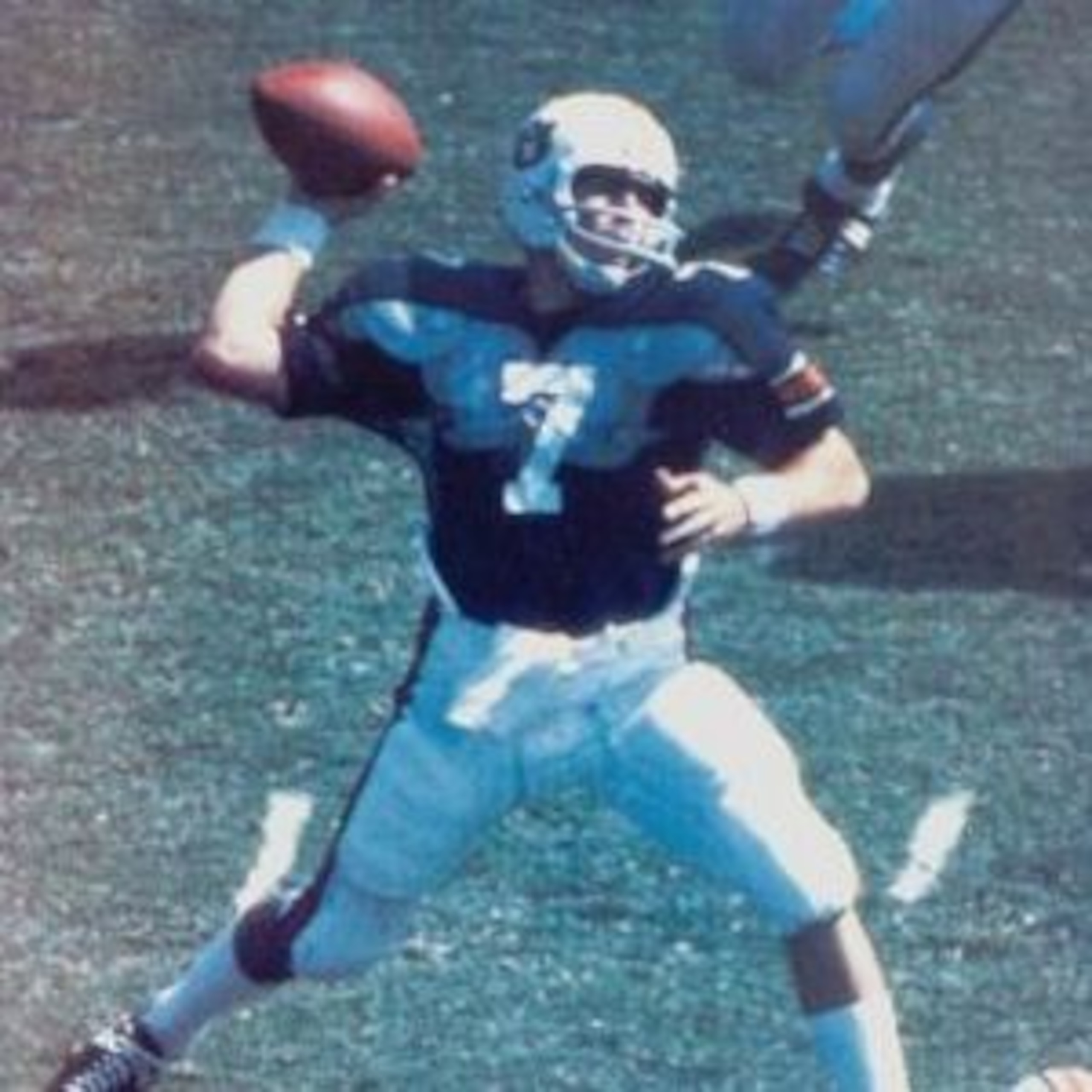
1971 Heisman Trophy winner.
Sullivan was a star player on the plains during a time of gifted signal-callers in the SEC.
Scott Hunter, Mike Cavan, John Reaves, Bert Jones and Archie Manning are some of the more notable opponents of the Tigers during Sullivan's era.
In Pat's three years of eligibility at Auburn, the Tigers had a regular-season record of 25-5 and averaged over 34 points a game on offense.
Small by today's standards for a quarterback, the 6'0" 190-pound Sullivan led the NCAA in total offense during 1970 with 2,856 yards and set an NCAA record for most yards per play with an average of nearly nine yards a snap.
As a result, Sullivan was named the 1970 SEC Player of the Year.
In an overall career of 33 games, Sullivan tossed 53 touchdown passes and ran for another 18 to tie the existing national record.
In 1971, Pat led Auburn to the Sugar Bowl while amassing 2,012 passing yards and 20 touchdowns.
Pat Sullivan was an Academic All-American who finished his college career with 6,284 total passing yards.
No. 4: Danny Wuerffel, Florida 1993-96
22 of 25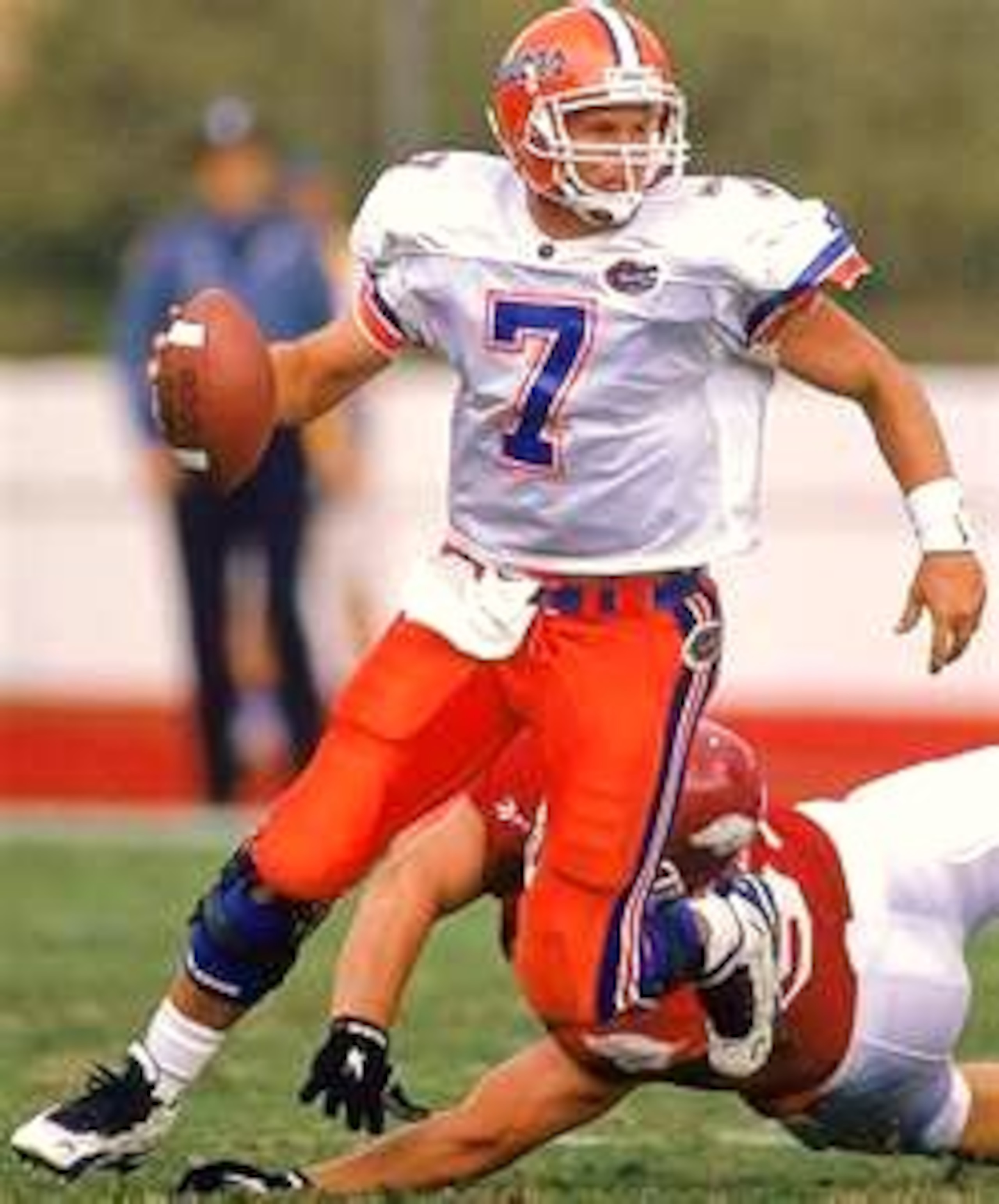
Danny Wuerffel won the Heisman Trophy in his senior season and led coach Steve Spurrier's Florida Gators the 1996 national championship.
Wuerffel won the Sammy Baugh Trophy in 1995, the Johnny Unitas Golden Arm Award in 1996 and the Davey O'Brien Award in 1995 and 1996.
Danny completed 708-of-1,170 passes for 10,875 yards with 114 touchdown passes during his career in Gainesville.
This accomplishment is the best in SEC history, and ranks second in the entire history of college football.
His career pass efficiency rating of 163.56 was the best in major college history and his percentage of passes for touchdowns ranked first in collegiate history.
In 1995, his efficiency rating of 178.4 set a single-season collegiate record.
Have to tip your hat to the actual accomplishments on the field by this son of a Lutheran minister.
No. 3: Cam Newton, Auburn 2010
23 of 25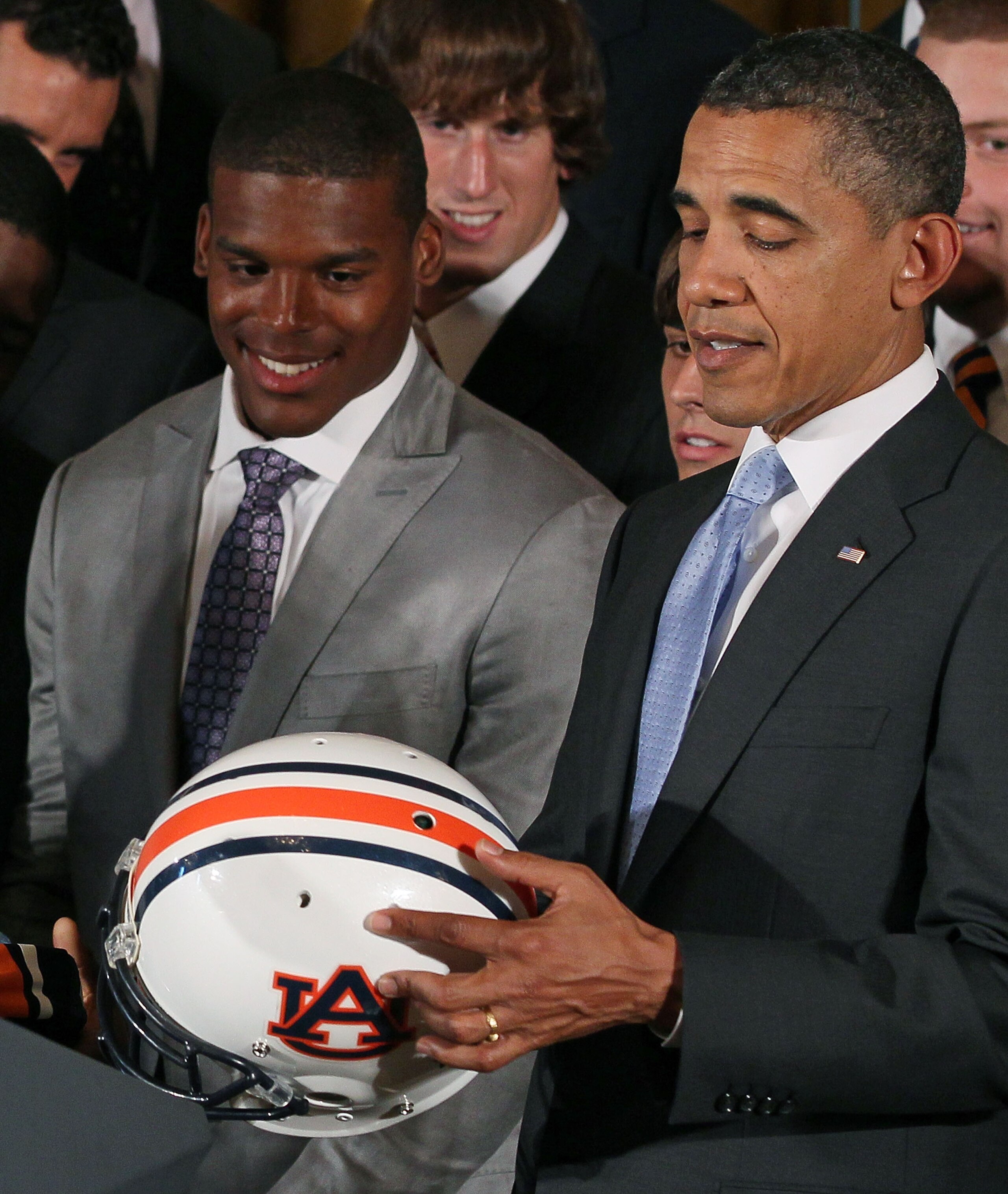
Cam Newton won the Heisman Trophy and led Auburn to the BCS Championship in the 2010 season.
Mr. Newton recently met with the President of the United States (see picture) and discussed the historic journey and meteoric rise of the current BCS champion Auburn Tigers through the highly competitive SEC.
Cam's epic climb to the most talked about non-professional athlete in the nation began inauspiciously enough; he was the backup for Tim Tebow at Florida, under the watchful eye of offensive coach Dan Mullen.
The thought of Tebow and Newton as teammates on the field at the same time has to be the most terrifying image any defensive coordinator has ever had.
Fortunately for everyone but Gator fans, Cam left Gainesville and went on to win the national championship at Blinn Junior College in Texas under coach Brad Franchione.
We can only theorize about Newton's place on this list if he had played more than one season at Auburn.
For what it is worth, Newton collected a sack of full of hardware reflecting his performance in 2010.
Among his various recognitions of accomplishment we find the Heisman Trophy, Maxwell Award, Walter Camp Award, Davey O'Brien Award and Associated Press College Football Player of the Year.
A dazzling achievement for Newton is winning the Manning Award, presented to the nation's best quarterback as judged by the Sugar Bowl Committee and named in honor of Hall of Fame quarterback Archie Manning of Ole Miss and his sons Peyton and Eli.
Quite a journey for a youngster from College Park, Georgia.
No. 2: Tim Tebow, Florida 2006-09
24 of 25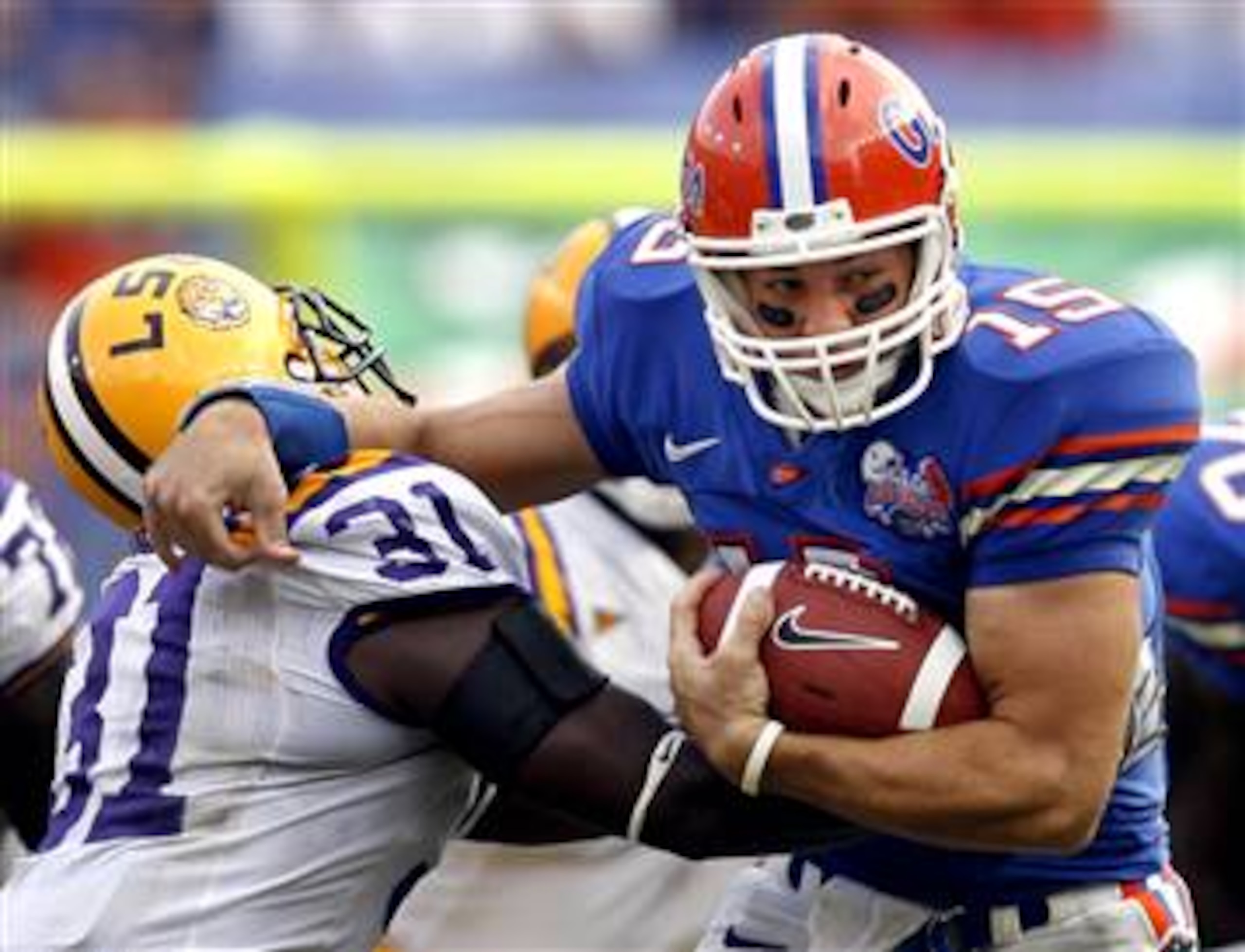
Tim Tebow won the 2009 Heisman Trophy while leading Florida to the BCS championship.
Tebow represents everything good about friendly competition on a Saturday.
The former Florida quarterback has been described as "the greatest college football player who ever lived" by a variety of observers around the nation while also having a reputation of "being a better person than player" by those who know him well.
Tim is the first sophomore to ever win the Heisman Trophy and also played on two BCS championship teams while in Gainesville.
Tebow was the first college football player to both rush and pass for more than 20 touchdowns in a single season.
The incredible legacy left by this 6'3" 245-pound superstar may never be surpassed.
In addition to winning the Heisman Trophy, Tim earned the Maxwell Award twice as the nation's top football player, the Davey O'Brien Award as the nation's best quarterback along with the Sullivan Award as the nation's most outstanding amateur athlete in any sport.
The MVP of the BCS National Championship contest, Tebow is the only three-time winner of the Florida Gators' most valuable player award, honored by his teammates in 2007, 2008 and 2009.
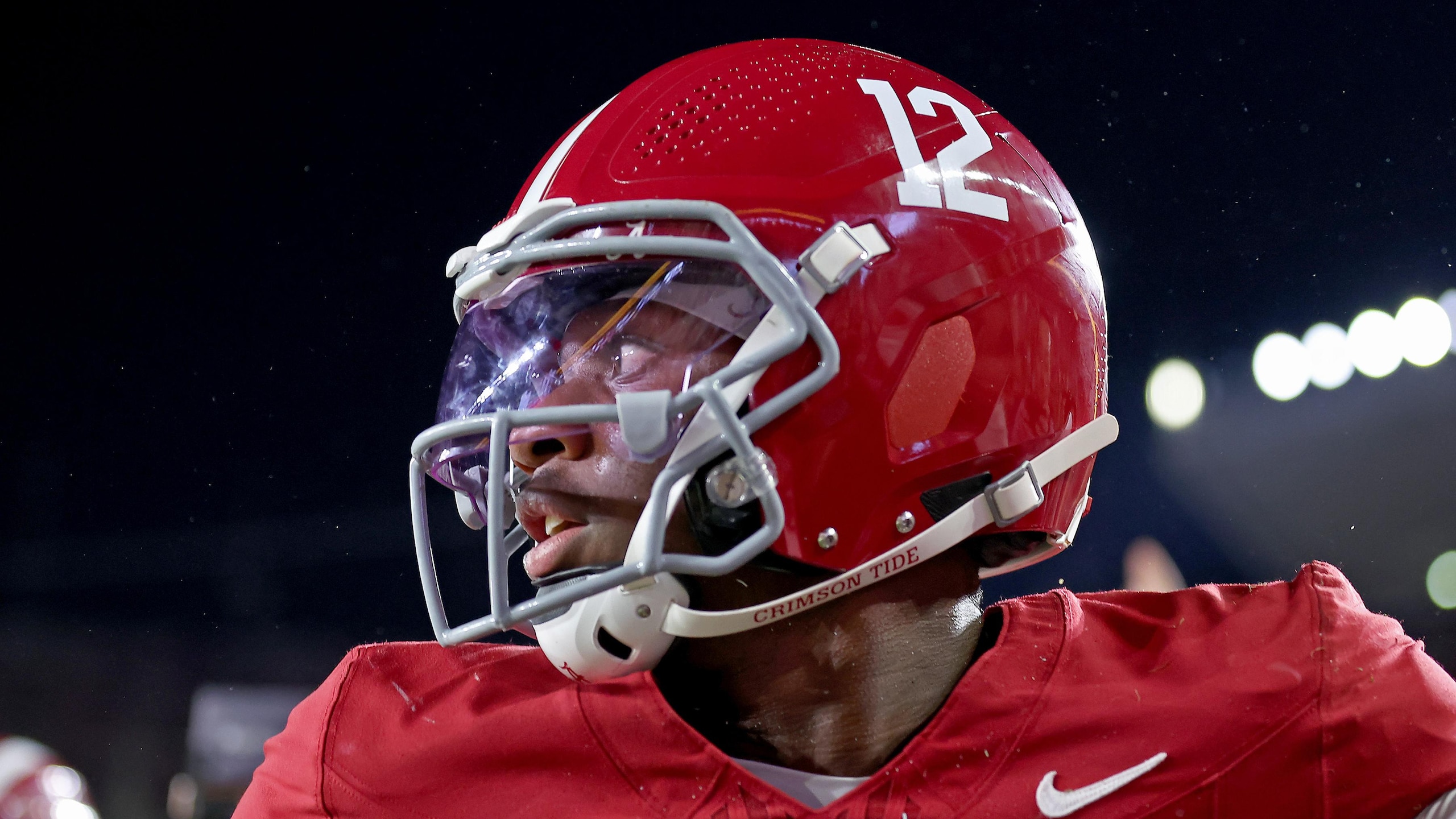
No. 1: Joe Namath, Alabama 1962-64
25 of 25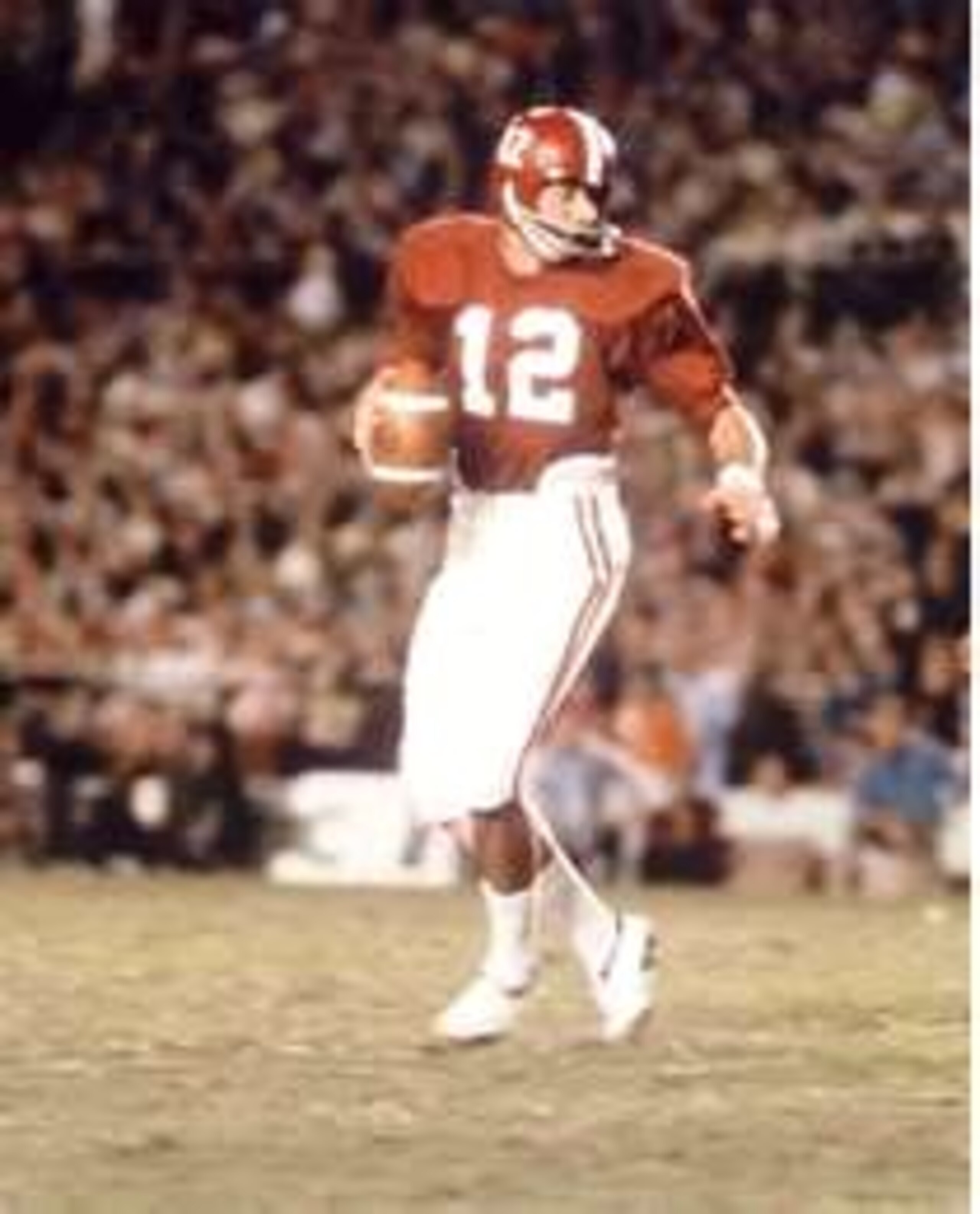
If not for Joe Namath, football would still be playing second fiddle to baseball in the United States.
Namath is bigger than any award, bigger than any championship, and far more than a simple statistic.
No. 12 on the field for Alabama at the peak of his power is the definition of a legend.
He has the performance credentials of a star; he has the national championship, the long winning streak.
In those white shoes walked a giant whose impact is still being felt today each time someone speaks of how college football has become a business and professional football has become a celebrity-driven industry.
This is not a man among boys; this is a man among men.
_0.png?w=2560)


.jpg?w=2560 "Grading WWE Raw 🔠")

.jpg?w=2560 "Viral Rams Coach Vid 🖕")
.jpg?w=2560 "Bijan's INSANE 1st Half 🤩")

.jpg?w=2560 "Injury-stricken Seahawks signing veteran RB")

.jpg?w=2560 "2 NFL Officials Suspended")
