
MLB Draft 2011: The Top Draft Prospect from Each of the 50 States
Last year's MLB draft featured selections from every single state except for two, Alaska and Montana.
This year, in one of the deepest drafts in recent memory, there are potential draftees from both of those states, making it look likely that each of the 50 states will have at least one player drafted by a Major League team.
Toss in Washington D.C, where Nick Howard is assured a selection and teams will be 51-for-51.
Throw in Jorge Lopez, a projected top-three rounds talent from Puerto Rico, a commonwealth of the U.S., and that makes it 52-for-52.
But that still leaves 50 states to cover, from Alabama to Wyoming.
Here are the guys who will get it done.
Alabama- Adam Morgan, LHP, Alabama
1 of 52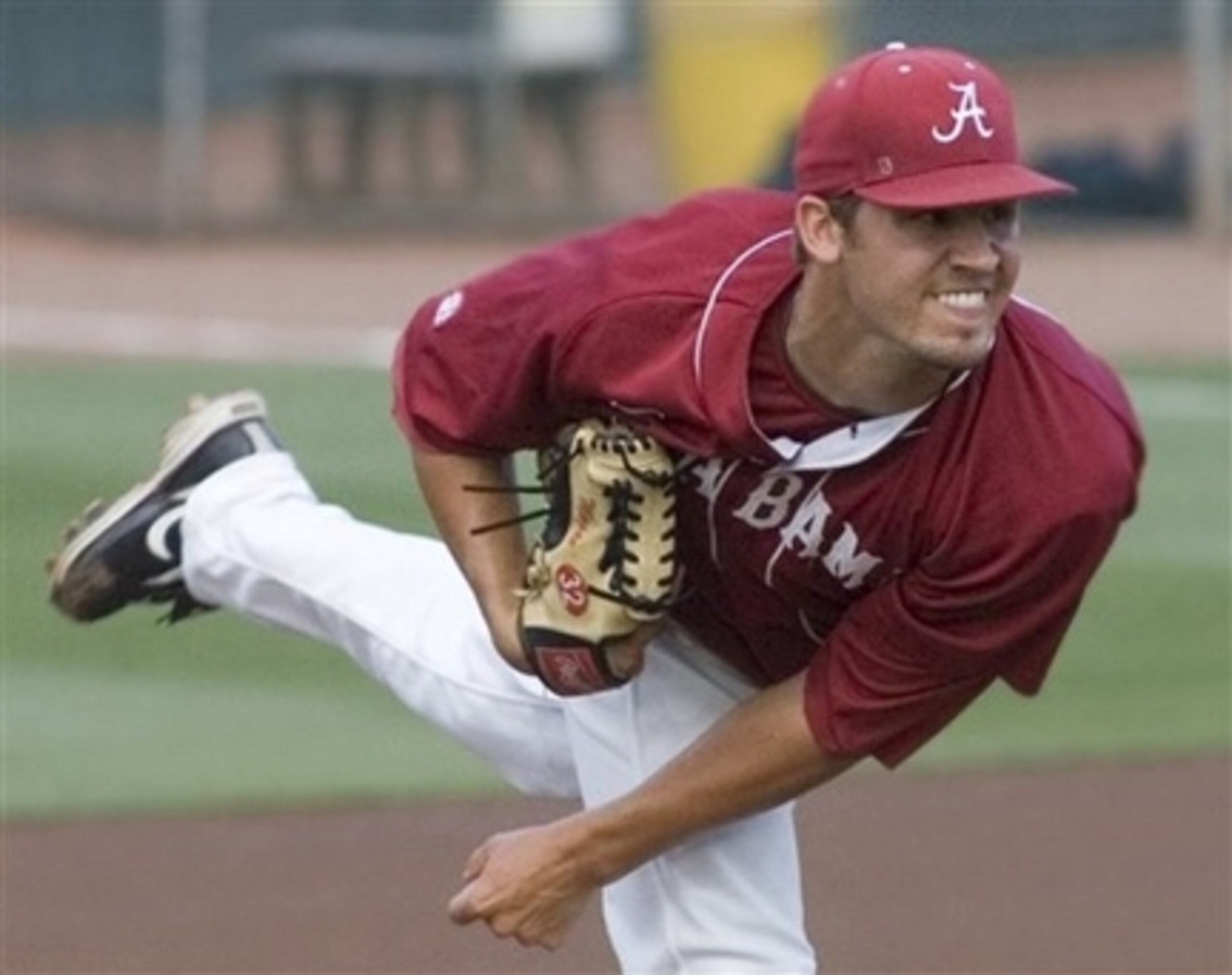
Despite his less-than-ideal size (6'1", 180 pounds), Morgan has quietly put together a very nice season, and at the same time, increased his odds of securing a spot in the first ten rounds of the draft.
Together with Nathan Kilcrease, Morgan has pitched Alabama to a very surprising 32-22 record. Morgan has paved the way with a 5-4 record and a 3.89 ERA.
Morgan isn't a power arm, so he's not going to rack up the strikeouts, so his 67 in 81 innings shouldn't be frowned upon while Trevor Bauer is putting up a strikeout rate near 14.0.
What the left-hander does have is a couple of solid breaking pitches that have aided him greatly this year. The development of his curveball and changeup have allowed him to move past a couple of tough seasons in 2009-2010.
He's also turned a major corner in terms of serving up home runs. After surrendering nine during his freshman season, he gave up a whopping 16 as a sophomore. He's bucked the trend as a junior, giving up only four all season.
Alaska- Brody Coleman, OF/RHP, Wasilla HS
2 of 52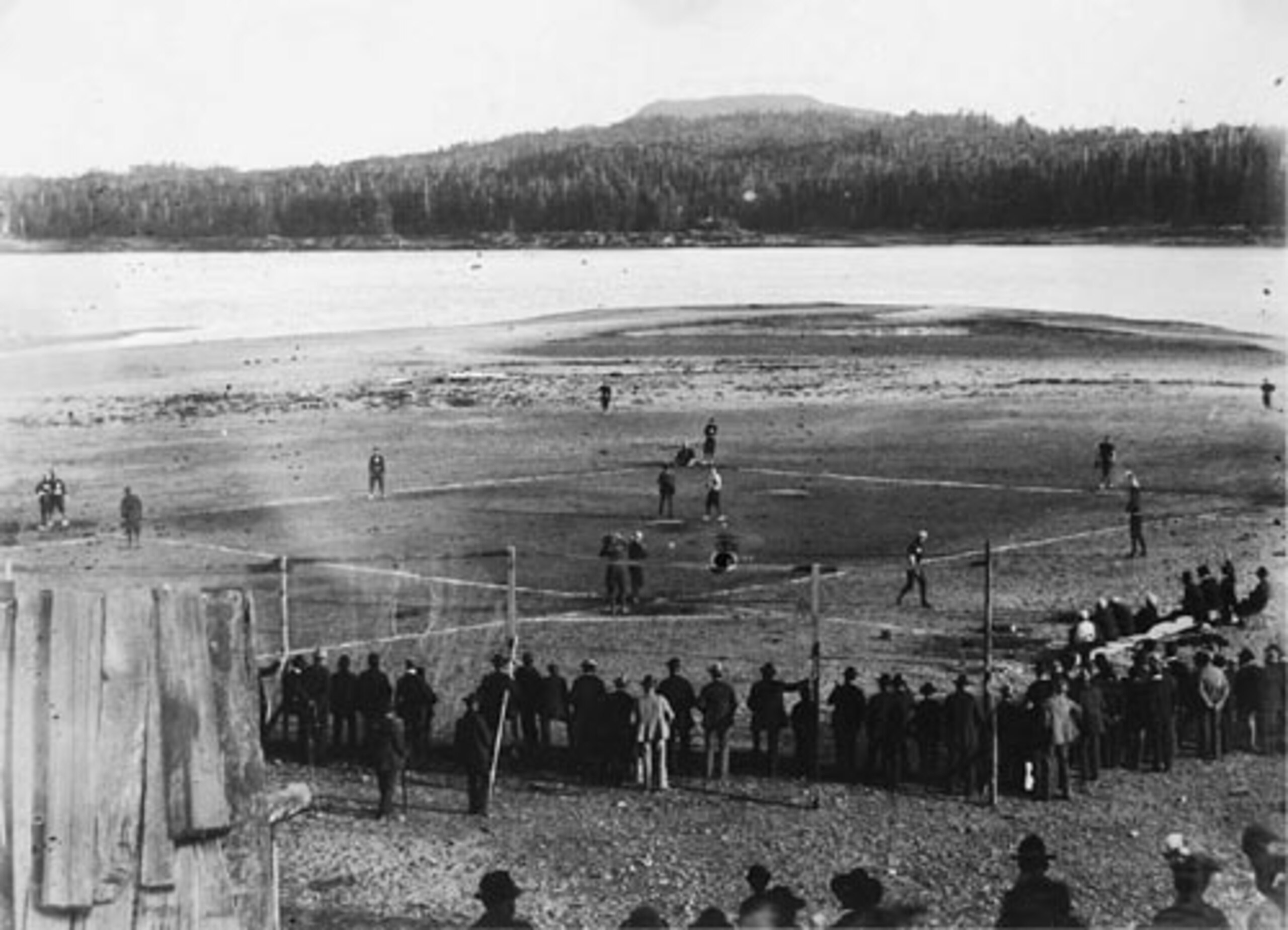
Then again, the streak could continue for the state of Alaska, who, thanks to terrible conditions, understandably finds it hard to field many baseball teams.
One standout so far this season is senior Brody Coleman.
A two-way player for Wasilla High, Coleman has struggled on the mound, pitching to a 5.69 ERA in 16 innings, but he's been pitching in Alaska, so that's arguably more impressive than Dylan Bundy posting the numbers that he has in sunny, dry Oklahoma.
At the plate, he's been even better, hitting .386 with two doubles, two triples and 10 RBI in 44 at-bats. He's shown good speed, swiping nine bases.
It's rather unlikely that any native Alaskan will get scooped up in this draft, but if you're looking for a proven high-school hitter, Coleman is about as good as you're going to get from the Last Frontier.
Arkansas- Dillon Howard, RHP, Searcy HS
3 of 52
Howard emerged as one of the top right-handed pitchers in the high-school class of 2011 after a stellar pitching performance in the 2010.
Howard out-dueled fellow aces and high-school sensations Dylan Bundy, Archie Bradley and Daniel Norris en route to a championship run for his Midland Redskins.
The 6'3", 210 pound Arkansas native has sustained that first-round helium through the fall, winter and into the spring. He's had a strong season for Searcy High, leading the Lions to the Class 6A State Championship game and making a huge impact on both the mound and the plate.
Howard has been scouted as high as 98 mph, throwing both a two- and a four-seamer. His slider is very good, although it gets very slurvy at times. His changeup has above-average potential as well, and one of his coaches calls that pitch, and not his high 90s fastball, his best pitch.
Howard has good command of all of his pitches, and unlike most others, has no injury history to be concerned with. His delivery is easy and his mechanics appear to be pretty sound. Howard has front-of-the-rotation stuff if he can bring along his changeup



Arizona- Riccio Torrez, 3B/1B, Arizona State
4 of 52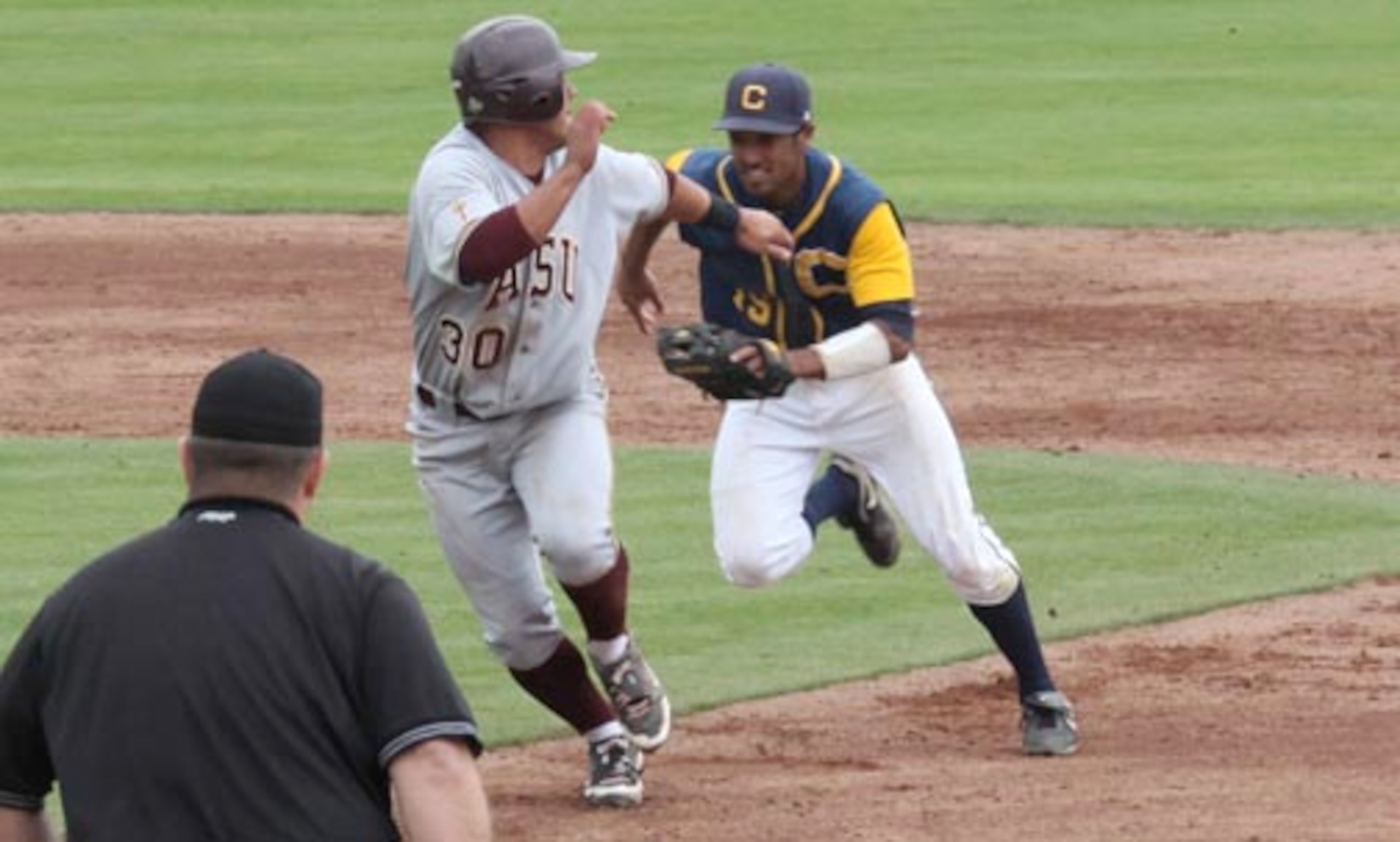
For all of the big names on Arizona State's roster, it's Torrez that has put together the nicest season.
He's hitting .317 on the year, with 16 doubles, three triples, three home runs and a team-leading 41 RBI. He's scored 33 runs and has a solid 13:22 BB:K ratio. He's also shown some good speed running the bases, swiping 13 bags in 17 chances.
Torrez has played all over for the Sun Devils since signing back in 2008. Last year, he made 59 starts at first base, and this season, he's played primarily at third. He's not an overly big guy, so it wouldn't surprise me if a team tried to squeeze him in at second.
If that doesn't work, he's got more than enough arm to handle the hot corner, and his footwork is decent enough that he could be a borderline average defender there. He's made eight errors this season. And if he can't handle third or second long-term, at least whichever team drafts him knows he can handle first base.
At the plate, he's definitely going to be a high-average guy more than a big-power hitter.
Coming out of high-school Torrez was hailed as a five-tool talent, but due to his strong commitment to ASU, he dropped all the way to the 32nd round, where he was selected by his home-state Diamondbacks.
California- Gerrit Cole, RHP, UCLA
5 of 52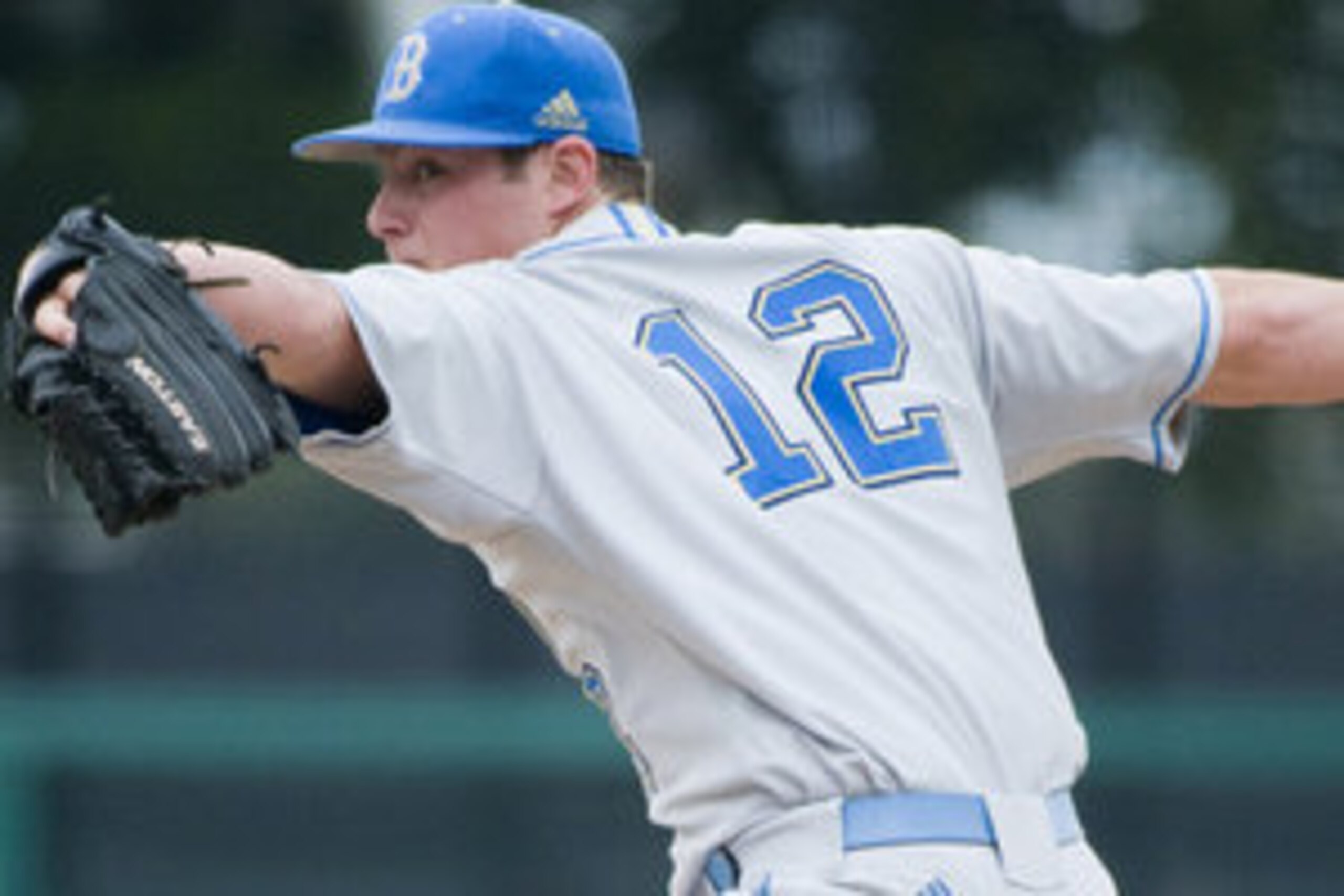
Despite Cole's mediocre stat line (5-6, 3.42 ERA, seven HRA), he's still practically a shoe-in to go in the top two picks of the draft, with a very realistic shot at being selected No. 1 overall by Pittsburgh.
Don't get me wrong; most of Cole's other stats are more impressive than those, like his 93 strikeouts in 92 innings, four complete-games and team-leading three pick-offs.
The most impressive number to consider when talking about Cole is 100, as in the miles per hour rate that Cole achieves with regularity. He pitches more comfortably in the 94-98 mph range, which is still more than enough to challenge big-league hitters consistently.
His secondary pitches are all very good, while still behind Stephen Strasburg's when he was coming out, and his command of them is above-average.
The one thing that hasn't been above-average this season for Cole, and a primary reason for his struggles is his command of his fastball. Pinpoint accuracy was what made Strasburg Strasburg. Cole is severely lacking in that area, especially this year.
The result has been that he's been hit very hard. See his seven home runs allowed and 35 earned runs.
Still, Cole could very well become the first pitcher (that I know of at least) to go No. 1 overall in the MLB draft without posting a winning season.
Connecticut- George Springer, OF, Connecticut
6 of 52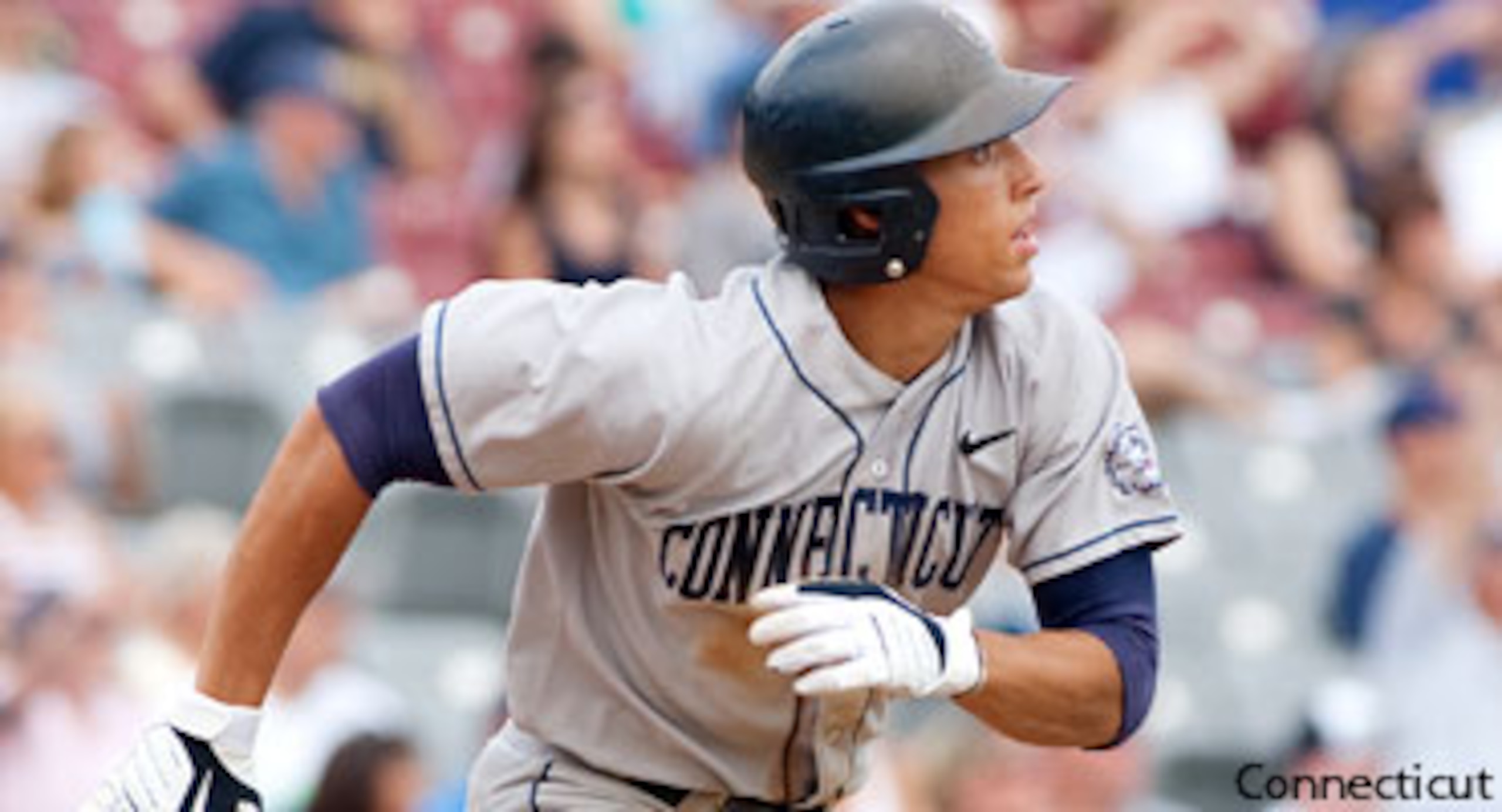
Many expected Springer to put together the kind of season that would be worthy of a top-five pick, and while he struggled out of the gate, he has since put together a nice stretch of about 25 games that have put him right back where everyone expected him to be.
He's currently hitting .373, best on the team with a team-leading 21 doubles, 11 home runs, 71 RBI and 27 steals.
Springer's best tool is his potential above-average power. He set a school-record last season with 18 homers, and he profiles as a 25-35 HR hitter as a pro. He's also blessed with incredible speed, which was on display last season as well when he stole 33 bases, getting caught only twice.
Springer could very well be a 30-30 guy in the majors while offering decent defense in one of the outfield corners. He's been playing a good bit of centerfield in college, but as he fills out and focuses more on his power stroke, he's likely be forced to slide over.
There aren't a lot of players with 30 HR-30 SB capability coming out of college (most of them get snatched up out of high school), so Springer is that much more intriguing.
Colorado- Greg Bird, C/1B, Grandview HS
7 of 52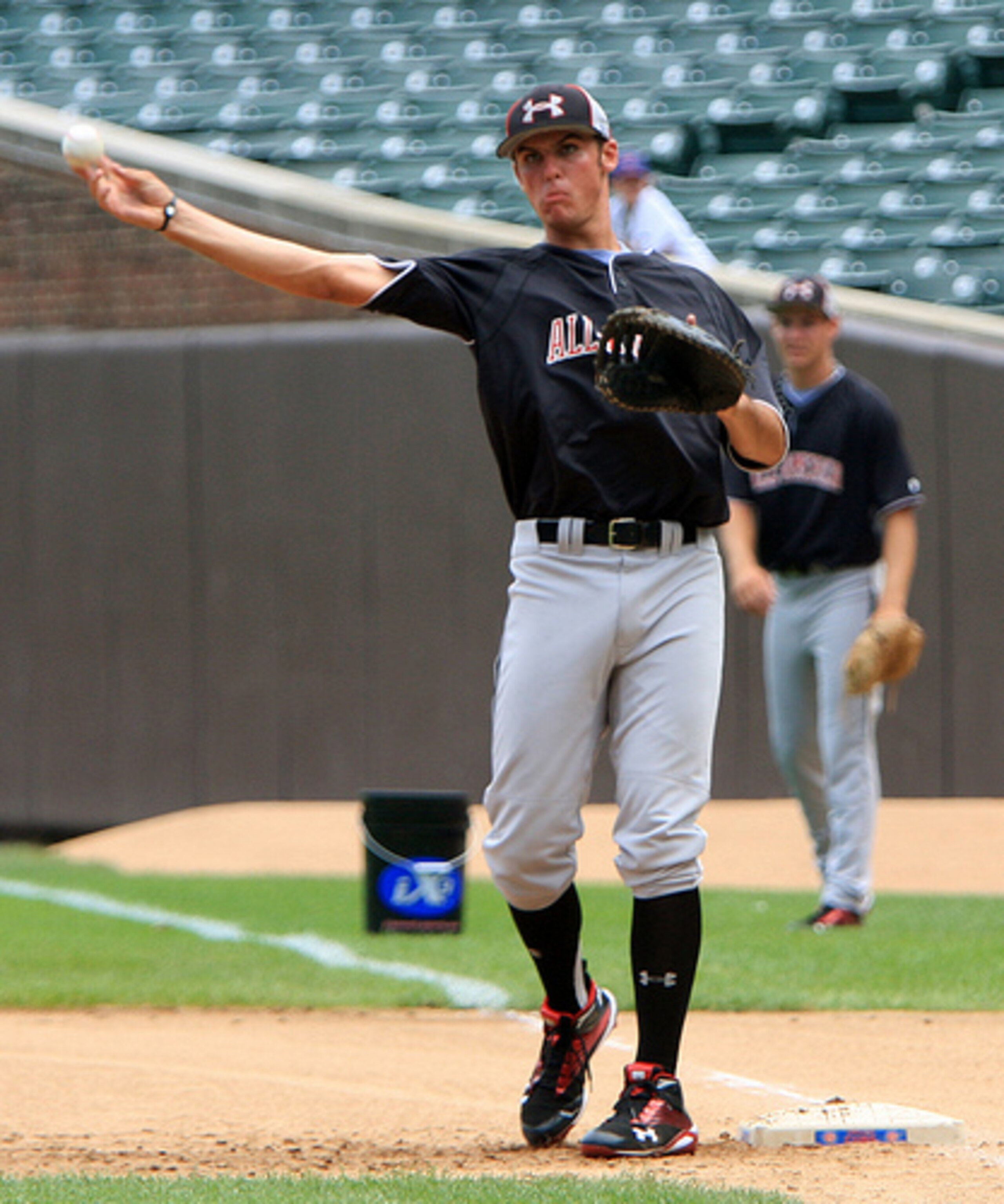
Bird is a former teammate of 2010 sixth round pick Kevin Gausman, who refused the Dodgers offer and headed off to LSU, where he has had a very solid freshman season.
Bird is a talented prospect in his own right, but just might slip through the cracks and end up as a third-, fourth or even fifth-round pick. At 6'4" and 220 pounds, you wouldn't necessarily think that Bird will end up behind the plate in the long-run, but for the time being, playing there has helped enhance his draft stock.
Most scouts seem to agree that he'll likely have to move to a corner infield spot. He has more than enough arm for third, which would seem the most likely landing spot.
Regardless of his position, Bird will be a nice find in the middle-rounds due to his seasoned bat. He's been unstoppable against Colorado high school competition, bashing home runs at such a high rate that he's become a regular intentional walk against most teams. Baseball America reported last August that he was once walked intentionally six times in one game!
Team's don't do that for just anyone.
Bird also has a great eye at the plate. It probably helped spending two seasons catching Gausman, who can fire fastballs in the low-to-mid 90s. Bird does have a commitment to Arkansas in his back pocket.
Delaware- Scott Davis, 2B, Delaware State
8 of 52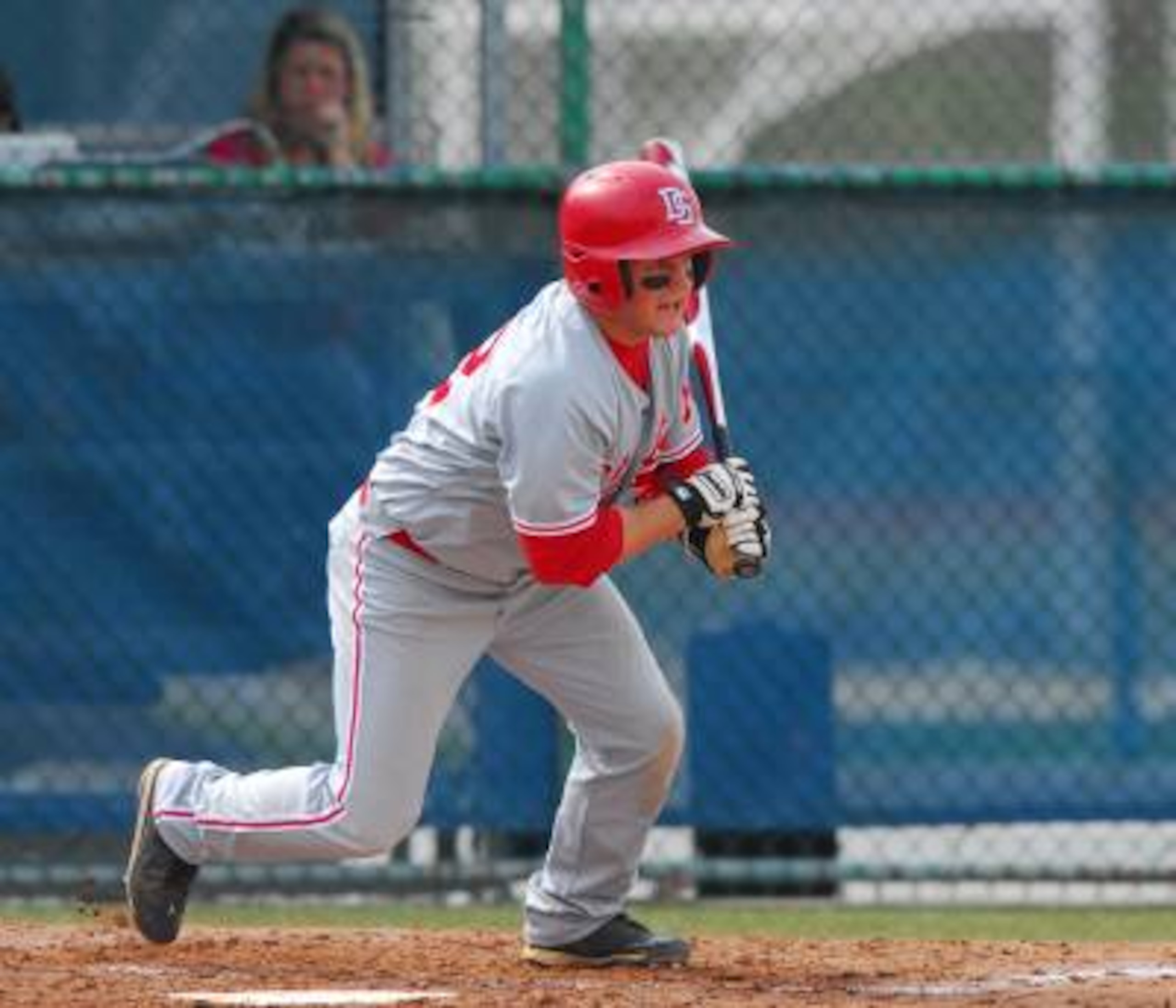
Delaware State's season may be over, but it might not be the end of the line for Scott Bridges, the Hornets utility infielder who is hoping to hear his name called on one of the draft's three days.
Bridges paced the Hornets balanced attack this season, hitting .418, one of the top averages in all of college baseball. He also led the way for DSU with 17 doubles while finishing second on the squad with 48 runs scored and nine steals.
Davis has no tool that stands out as above-average, but he has a proven track record at the plate. He hit .353 with three homers and a 23:17 BB:K ratio last year, establishing himself as one of the finest hitters to come through Delaware.
For his efforts this season, Davis was named the MEAC Player of the Year.
As good as Davis has been handling pitches, he's also used his close-to-the plate stance to his advantage, getting hit by a pitch 39 times over the past two seasons, including a ridiculous 22 times in 2010.
Davis won't be a first-round or even a first-day pick, but he could find a home in the very late rounds of the draft.
District of Columbia- Nick Howard, 3B, St. John's College HS
9 of 52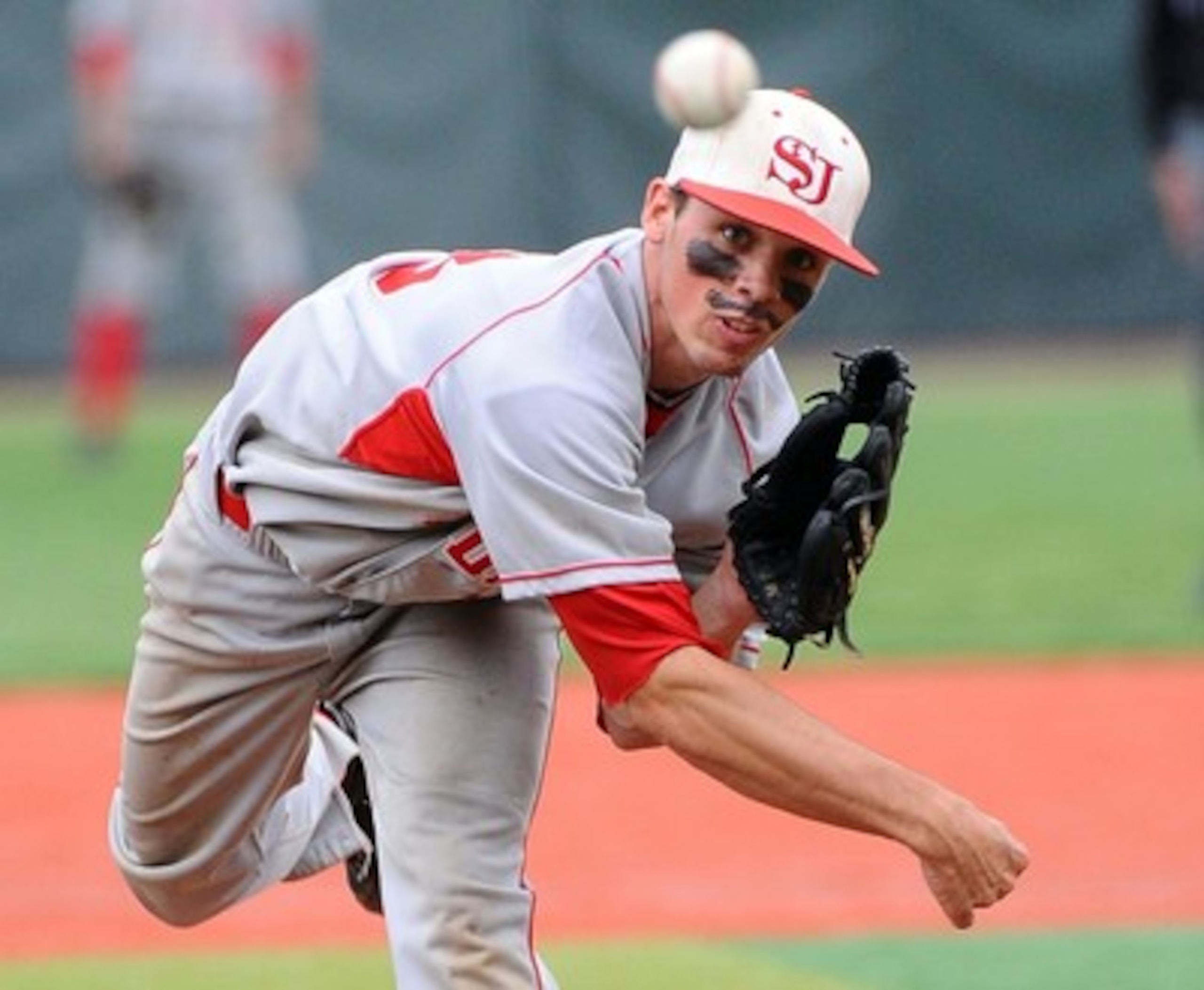
One of the draft's many talented two-way high schoolers, Nick Howard is the top prospect from Washington D.C.
On the mound, he features great velocity in the low 90s, touching 94 mph. He also throws a pretty impressive slider that has some serious potential. On the mound, he could definitely make a career as a reliever.
In the field, however, is where he's likely to be drafted and groomed.
As a corner infielder with more than enough arm for third base, Howard will get the opportunity to hit every day, something that he's very, very good at.
His grand-slam against perennial power DeMatha HS opened the floodgates and helped St. John's clinch the Washington Catholic Athletic Conference championship.
Obviously, Howard has great power potential at the plate, and his easy, smooth swing should allow him to hit for a decent average.
Getting drafted is one thing, but signing is another altogether, as Howard is committed to Virginia, meaning he'll likely require a pretty hefty signing bonus.
Baseball America did a great write-up on Howard in late April that can be found here.
Florida- Francisco Lindor, SS, Montverde Academy
10 of 52
Scouts aren't paying too much attention to Lindor's stats since he plays for such a terrible team, but rather are focusing on his tools and how he parlays them into real-time action.
He features a rocket arm and solid defensive tools, although he sometimes gets too flashy with the leather at shortstop. He's one of the few shortstop prospects who scouts feel can stick at short long-term, so you know he's going to be a high-pick for that reason alone. With the right instruction and a few seasons worth of experience, Lindor could be a Gold Glove caliber shortstop.
Furthermore, Lindor is a switch-hitter with a chance for borderline above-average power. He won a home-run derby contest last summer, and while that was a good snap-shot of the kind of power he could have, it's not likely that he'll hit more than 15 as a pro.
Lindor has gained as much helium as any high-school position prospect over the past five months, rising from a second-to-third round talent to a potential top-five pick.
Some scouts even feel he could go No. 1 overall if the Pirates are looking to save some dough. The questionable seasons from Gerrit Cole and Anthony Rendon certainly would give them pause.
Georgia- Jed Bradley, LHP, Georgia Tech
11 of 52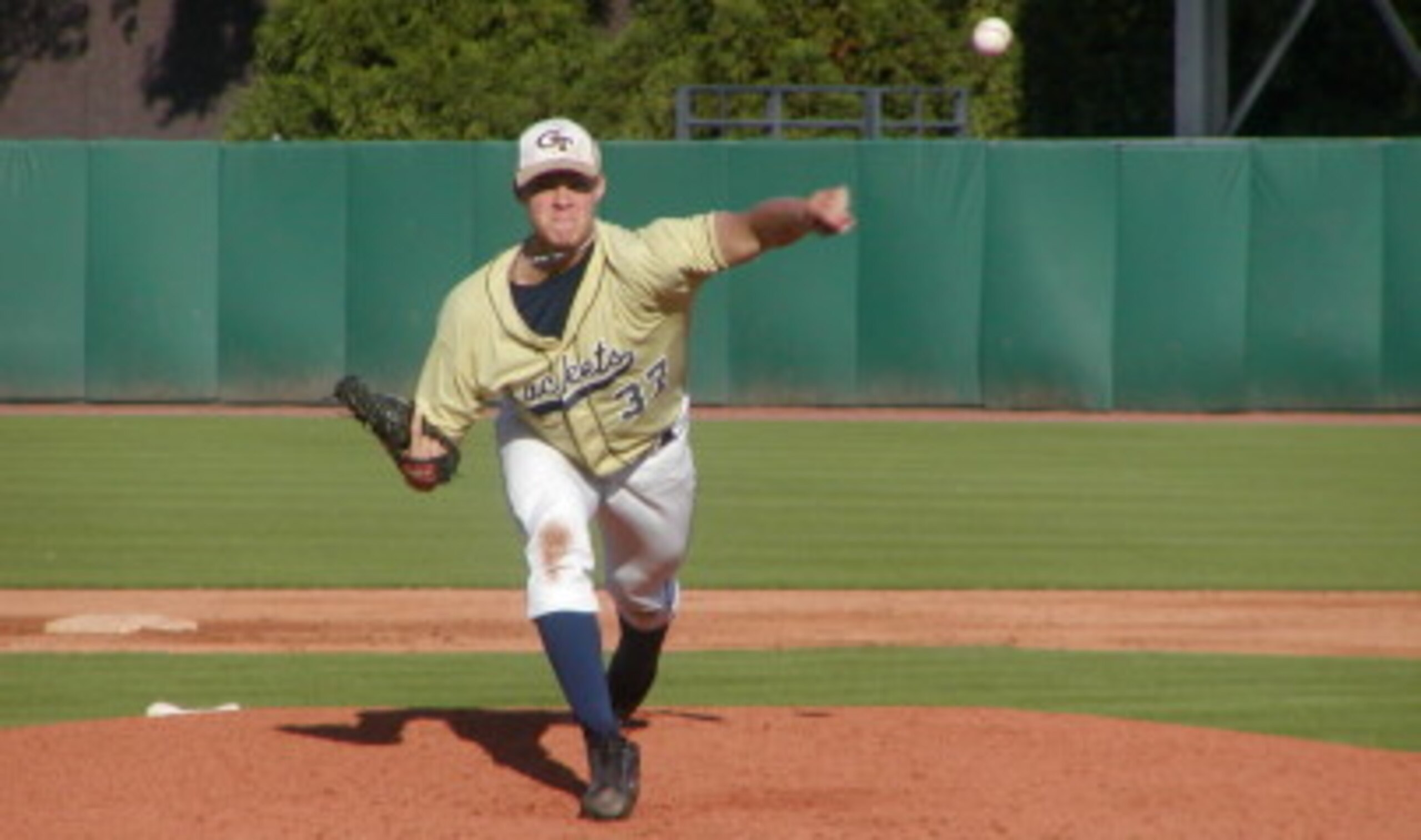
Bradley has been another breakout star of the 2011 college season.
He was already a known name in college baseball circles, but the steps he's taken this year have not only catapulted his name into the top 10, but also made many question whether he just might be the top overall pitcher from the college ranks.
It's easy to think that, with his polished approach and his repertoire that includes a low 90s fastball that can touch 95 mph, he has an above-average changeup and a potential above-average slider. In addition, Bradley's fastball has some natural sink on it, making him a better bet to succeed since he won't be chasing the strikeouts like some of the other top pitchers with better velocity.
So far this season, Bradley has posted a very deceiving 6-2 record, the worst of any of Tech's starting pitchers.
He's been roughed up a few times, and as a result, has only averaged about six-innings per start, which isn't that much in a year where pitchers have been racking up complete-games by the boat-load. On the plus side, batters are only hitting .217 off of him, and he has still yet to serve up a home run.
He's only one of a handful of pitchers who can make that claim. He's also struck out 88 batters in just 81.1 innings.
Needless to say, Bradley has come a long way since going undrafted out of high school.
Hawaii- Kolten Wong, 2B, Hawaii
12 of 52
Hawaii's Kolten Wong is one of just a handful of legitimate second baseman prospects in the 2011 MLB draft class.
He's also one of the more polished hitters available, and as such, he'll likely hear his name called in one of the first two rounds.
Wong exploded onto the scene with a stellar freshman season at Hawaii, during which he hit .341 with 11 homers and 52 RBI. He added in 11 steals and a very impressive BB-to-K ratio (25-to-23) to boot.
He followed up his rookie campaign with an even more impressive 2010 season. Wong hit .357 with four triples, seven homers, 40 RBI and 57 runs. He stole 19 bases and had 16 more walks than strikeouts.
He boosted his stock even further with an impressive performance in the Cape Cod League. Wong hit .341 with three homers and 11 RBI in 38 contests. He also led the league with 22 steals and posted another strong walk ratio (18-to-13). He was rewarded for his efforts with the League MVP trophy.
Wong returned to Hawaii for his junior season, and so far, he's raking at a record pace. His average currently sits at .363, and he has six homers and 41 RBI. All three numbers pace the Warriors squad. He also leads the team in runs scored (37), steals (21) and walks (33).
As usual, Wong has more walks than strikeouts (18).
Idaho- Trent Bridges, 2B, Lewis-Clark State College
13 of 52
Sometimes being part of a family tree that includes another professional baseball player is all it takes to get drafted.
You can see that proven every year from rounds 10-50. "Juniors, II's and III's" litter the draft boards of teams trying to prove their loyalty to their coaching staff, front office and former greats that worn that teams jersey.
While that's not necessarily Bridges' case, the fact that his grandfather played professionally should help draw some extra attention his way as he puts the wraps on his junior season at Lewis-Clark State College in Idaho.
A local product from Coeur d'Alene, Bridges has been incredible this season for the Warriors, hitting .398 in 50 games. He's been a spark-plug at the top of their lineup, rapping 18 doubles and hitting one triple. He's the team-leader by a whopping 14, with 54 runs, and he's proven to be every bit as good as a run-producer, driving in 43, good for second on the squad.
More impressive than his hitting ability is Bridges' ability to make consistent contact. He's only struck out eight times all season in 195 at-bats. He's picked up 17 walks and has proven adept at getting on base any way necessary, including 11 times by a HBP.
In the field, Bridges has spent a little bit of time all over, but looks like a second baseman long-term. He's had some struggles this season, committing 10 errors, but his arm is definitely strong enough to handle second.
He's not a great runner (only two career SB), but he's got decent enough speed.
It's always tough to get drafted out of Idaho, and the track record for the state isn't too pretty. The last notable draftee was Beau Mills, also plucked from LCSC, who has failed to get better as he's progressed through the minors.
Illinois- Charlie Tilson, Of, New Trier HS
14 of 52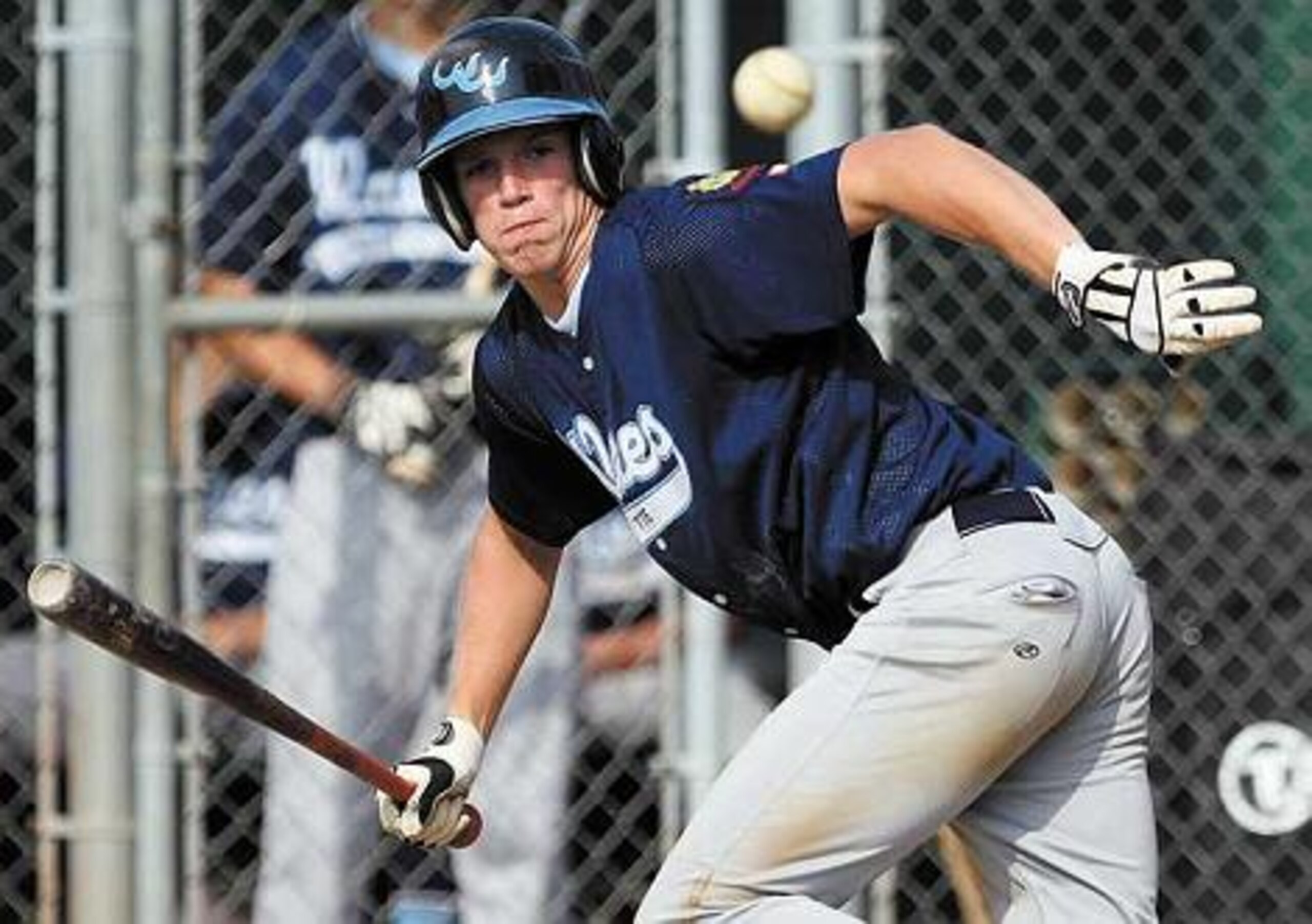
Tilson, all 6'0" and 175 pounds of him, hasn't had as much opportunity to shine at the summer showcase events as the rest of the guys on this list, but in one of his outings, the Area Code Games out in California, he put on one heck of a show, clubbing the only home run of the entire weekend and stealing seven bases in only three games.
He further impressed at the Super 60 showcase this spring and has put together a fantastic campaign for New Trier High School, hitting .500 with 22 runs and 19 steals in the same number of attempts. And he's accomplished all that in only 16 games. All stats are courtesy of the Chicago Tribune and are current as of April 28th.
In terms of tools, Tilson is a gardener's dream.
As good as Bubba Starling's speed is, Tilson might have him beat. And in addition to his freakishly fast wheels, Tilson also offers some surprising pop in his bat. In addition, he's got a great arm, capable of hitting the mid 80s on the mound, and he is graceful and well-skilled in the outfield.
Tilson profiles long-term in center, where he could be a 10-15 HR, 50 SB kind of guy. That alone should make him worthy of a first-round selection.
Indiana- Alex Dickerson, Of, Indiana
15 of 52
Few hitters had as stellar a season as Dickerson did in 2010.
He ran away with the Big 10 triple crown, leading the conference with a .419 average, 24 home runs and 75 RBI. Needless to say, he was unanimously crowned the Big 10 Player of the Year, one year after taking home Freshman of the Year honors.
That season, he hit .370 with 14 homers and 57 runs-batted-in.
A 48th-round pick in the 2008 draft, Dickerson's game is power, power, power.
This season, despite struggling with the new bats, Dickerson has continued to hit, swatting eight homers in 52 games, adding in 47 RBI and a nifty 23:18 BB:K ratio.
Dickerson offers just about as much raw power as anyone in this draft class. Unfortunately, despite having the reputation as a hitter who can drive pitches to all fields, most of Dickerson's dingers head out via right-field, making him a classic pull hitter.
Despite this "flaw," if you even want to call it that, most believe Dickerson will hit for a decent average as a big-leaguer. He also has a great eye at the plate.
The one drawback for Dickerson is his play in the outfield. He isn't the most graceful athlete in the field, but as long as he offers that plus power, he'll end up as a first day pick, no doubt
Iowa- Jarred Hippen, LHP, Iowa
16 of 52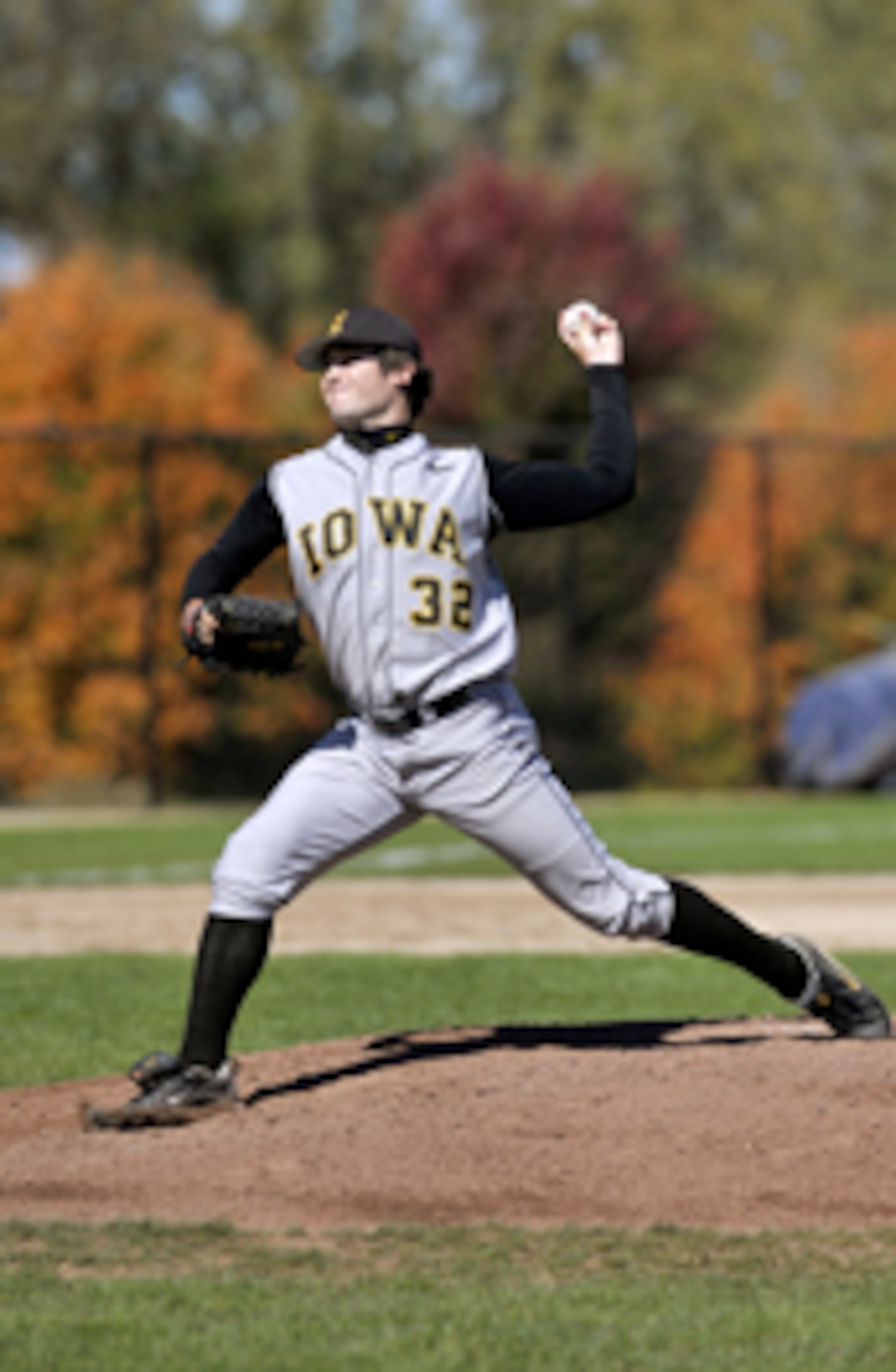
Iowa had a terrible year in 2011, finishing 20-32 and 9-15 in the Big Ten.
One player you can't blame for that is left-hander Jarred Hippen, the Big Ten Pre-Season Pitcher of the Year according to College Baseball Daily.
Hippen paced the staff and had one of the better years of any Big Ten pitcher, finishing with an ugly record (4-6), but great stats. His ERA was a surprising 3.14, and he tossed four complete games, one of which came in the form of a shutout.
He finished second on the team with 61 strikeouts and pitched a team-high 94.2 innings. He also only served up four home runs all season.
Hippen greatly improved his draft status by pitching in the Cape Cod League last summer, performing admirably in limited duty. He made five appearances, including one start, striking out nine batters in 14 innings. He finished with a 4.50 ERA.
Hippen has proven to be a solid, durable arm, tossing 194 innings over the past two college seasons, plus additional outings during the summer.
And while he doesn't feature elite velocity (mid-to-high 80s), he does have excellent control and solid off-speed stuff.
That should earn him a slot somewhere in the late rounds of the draft.
Kansas- Bubba Starling, Of, Gardner Edgerton HS
17 of 52
What can be said about Starling that hasn't already been covered extensively?
He has incredible speed, as good as any in this draft. He has light-tower power with the ability to crank balls out of any part of any park. He's a graceful fielder with an impressive arm that could have made him a top two-rounds talent on the mound.
And he's also the top athlete in this draft. He played basketball, baseball and football during his high-school career, and he excelled in all three.
He's so good at football that he's going to have some tough decisions to make, assuming he ends up as a top-five pick like everyone is expecting him to be. Starling is committed to play QB at Nebraska next season.
Kentucky- Alex Meyer, RHP, Kentucky
18 of 52
"Bubba" has been something of a quandary over his three seasons at Kentucky, alternating between being insanely dominant and a mechanical meltdown. This season, he's been a little bit more of the former, ranking in the top 10 nationally in strikeouts and pitching to a sub-3.00 ERA.
As effective as Meyer has the potential to be, he's so darn big (6'9", 220 pounds) that it's incredibly hard for him to repeat his mechanics, and as a result, he gets out of alignment way too easy. That's why for every complete-game shutout with 10 or more strikeouts, you'll also see a couple of outings where he struggles to get out of the fourth inning without giving up double digit hits and five or six runs.
Meyer will most likely be drafted as a starter, and with a huge body and mid 90s velocity, you can't really blame anyone for going that route.
If he can do that, he could have a very impressive career as a closer, and without a doubt, he'd be one of the most intimidating ones, combining a fastball that can touch 97 mph with an impressive curveball that looks nearly un-hittable when he commands it well.
Louisiana- Mikie Mahtook, OF, Louisiana State
19 of 52
LSU's Mikie Mahtook made headlines as a freshman, when he drove in the game-winning run in Game 1 of the Championship series of the College World Series against Texas, and he has now emerged as one of the top college outfielders in the 2011 draft class.
Mahtook played center-field last season for the Tigers, but is expected to settle into right field as a pro, where his plus power and amazing arm strength should play quite nicely.
Mahtook offers excellent bat speed and really good power potential. And he's also a superb runner who posted a 4.44 40-yard dash time out of high-school, where he was a two-sport athlete with his shot at numerous college scholarships to play QB or WR.
Instead, he chose baseball, and he hasn't disappointed.
Last season, he hit .335 for the Tigers, with 19 doubles, four triples, 14 homers and 50 RBI. He also added 22 steals.
This year, he got off to a ridiculously hot start before cooling recently. Even after a mild "thaw," he's still hitting .381 with 12 doubles, five triples and 14 home runs. He has scored a team-leading 57 runs and driven in 55.
Mahtook should develop into a solid all-around right fielder who offers good power and excellent speed
Maine- Keith Bilodeau, RHP, Maine
20 of 52
Born and raised on the shores of one of baseball's most prestigious independent leagues, Keith Bilodeau (Bourne, MA) has emerged as a great mid-to-late round possibility on the strength of his strong 2011 campaign.
Just a few days ago, Bilodeau took the mound in the opening game of the America East tournament and turned in a gem, tossing a complete game, his fifth of the season. He gave up three runs, two of which were earned and struck out six, improving his record to 10-2 on the season.
Bilodeau lowered his ERA to 2.87, the best on the team by more than a run, and improved his K:BB ratio to 77:34.
Bliodeau has been on the radar for quite some time, earning All-Region honors from Perfect Game as a high-school senior and making a splash in the Cape Cod League in 2009, posting a 1.93 ERA and 19 strikeouts in 18.2 innings as a reliever for Wareham.
He returned to the Cape last summer and once again pitched for Wareham, this time as their closer. He saved four games, posted a 3.12 ERA and struck out 21 batters in 17.1 innings.
Bilodeau has great size (6'4", 190 lbs), but doesn't feature great velocity, which is why he's not going to here his name called that early. He throws in the upper 80s and low 90s and compliments his fastball with a solid changeup and a potential above-average curveball.
Maryland- Austin Neary, C, Archbishop Spalding HS (MD)
21 of 52
Catching is always a priority for teams in the MLB Draft, which makes players like Austin Neary that much more of a target.
Neary has already had one heck of a season, leading Spalding to it's first state championship in 30 years. The 6'3", 205 pound Neary got in on the 7-4 victory with an RBI groundout and a double. Making their run all the more impressive was the fact that Spalding came into the championship series ranked No. 2 in the state, and they had to beat the No. 1 team, Calvert Hall twice in the span of three days.
Despite a commitment to Western Carolina, Neary should hear his name called on draft day, potentially in the later rounds, and the prospect of playing pro ball should convince him to go pro, especially since he excels behind the plate.
At the plate, he offers some legit raw power that could make him a very intriguing prospect. Combined with his acumen at catcher, including his strong arm, he could be a nice sleeper pick.
Massachusetts- Tyler Beede, RHP, Lawrence Academy
22 of 52
Beede was too good for the first high-school he attended, posting a 7-1 record, an 0.88 ERA and racking up 114 strikeouts in just 56.1 innings. He led his school, Auburn HS, to a state championship...as a sophomore.
In order to challenge himself and prepare for college ball, while also keeping open the possibility of signing out of the draft, he transferred to a private school in Massachusetts. And while the step up in play has been more of a challenge, he's still thrived.
The 6'4", 200 pound right-hander went 6-1 with 87 strikeouts in 45.1 innings, posting a 1.08 ERA.
This season has featured more of the same from Beede, who in just 23 innings has struck out a ridiculous 44 batters, issuing only three walks, and allowing only two hits and one earned run as of April 22, according to ESPN Boston.
Beede features four pitches, each of which has at least average potential. His fastball sits in the low 90s, but he can dial it up to 94-96 mph. He also throws a circle-changeup, which looks like it's going to be his best secondary pitch. He also throws a curveball, which, with a little tightening, could be a pretty decent pitch as well.
Beede has a scholarship to Vandy, which means he could be one of the toughest signs of the draft and a more likely pick for the Yankees, Red Sox or Royals, teams more than willing to go over-slot to sign what they perceive to be first-round talent.
Michigan- Trent Howard, LHP, Central Michigan
23 of 52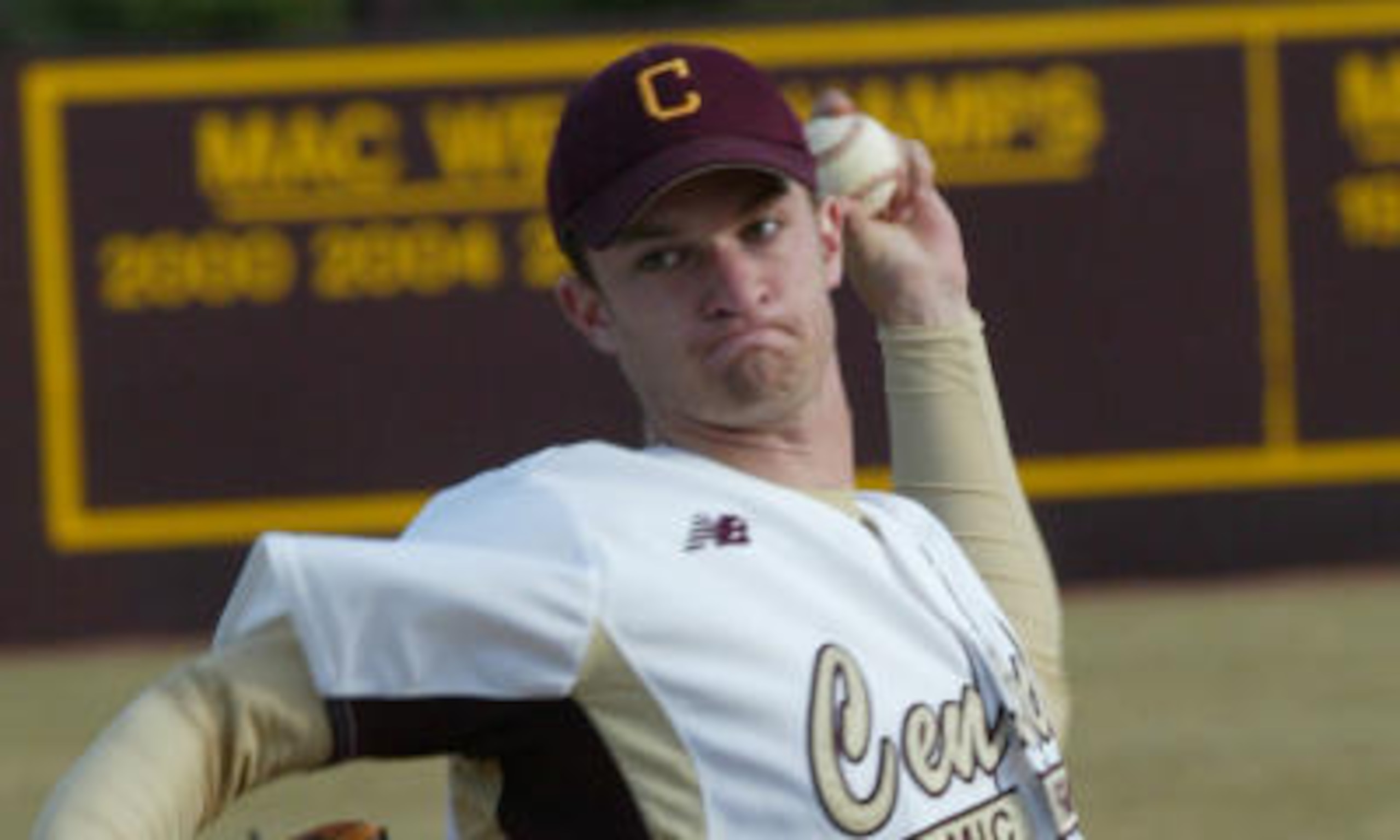
Howard is another seasoned college lefty in a crop that has nowhere near the depth of the right-handers, meaning Howard could go a lot higher in the 2011 draft than many think he should.
The native Hoosier, Howard came to CMU as a reliever, but forced his way into the rotation after only two outings. He finished his freshman season with a winning record (5-2), a decent ERA (4.71) and a solid 52:16 K:BB ratio in 65 innings.
He had another stellar year in 2010, pitching mainly out of the bullpen. He saved five games for the Chippewas and struck out 65 batters in 60.1 innings.
After the season, Howard headed to the Cape Cod League and burnt off a little extra energy, posting a 4.13 ERA in six starts for Hyannis. He posted a fantastic 36:8 K:BB ratio in 32.2 innings.
This year, Howard guided CMU to their second straight winning season as a member of a very talented, very underrated rotation. Howard led the staff with 96 strikeouts in 87.1 innings and finished with the lowest ERA on the squad (2.87), although he also finished with the fewest number of victories.
Howard throws a solid curveball and an impressive changeup, both of which make his upper 80s fastball play a little better than it is.
Mississippi- B.A. Vollmuth, SS, Southern Miss
24 of 52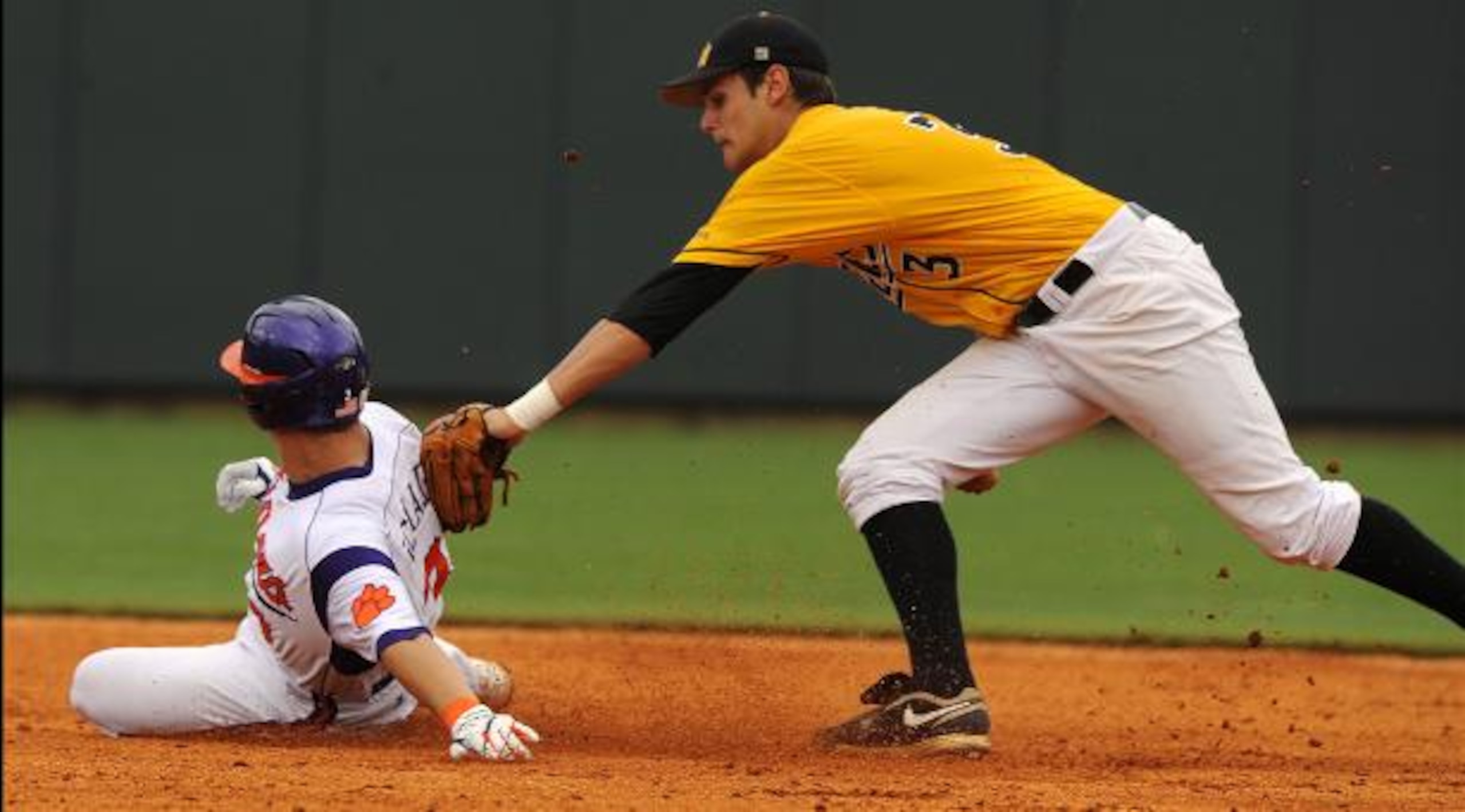
Vollmuth is one of the most talented college shortstops available in 2011, primarily because of his bat.
In fact, his fielding has been so horrible (24 errors last season) that a switch to third-base for the 6'4" Golden Eagle is almost inevitable.
At the plate, Vollmuth might not have a rival in this class at short. After struggling at the start as a freshman, Vollmuth put things together late, earning MVP honors in the Atlanta regional, and earning a nod on the Cape Cod League All-Star team after the college season ended.
This past season, there was little that Vollmuth did wrong. He hit .386 with 20 homers and 76 RBI. He posted a good walk-to-strikeout ratio and showed excellent hitting ability at the plate.
This year, his average has dipped to .305, but he's performed very well with the new bats, swatting 12 home runs and pacing the Golden Eagles with 47 RBI.
Given that he's 6'4", he should have no problem hitting for at least average power, with most scouts predicting an above-average tool in that department.
Vollmuth would definitely have more helium as a shortstop, but as a third baseman, he still profiles as a top three round talent.
His bat is that good.
Minnesota- Ryan Bull, C, Eden Prairie HS
25 of 52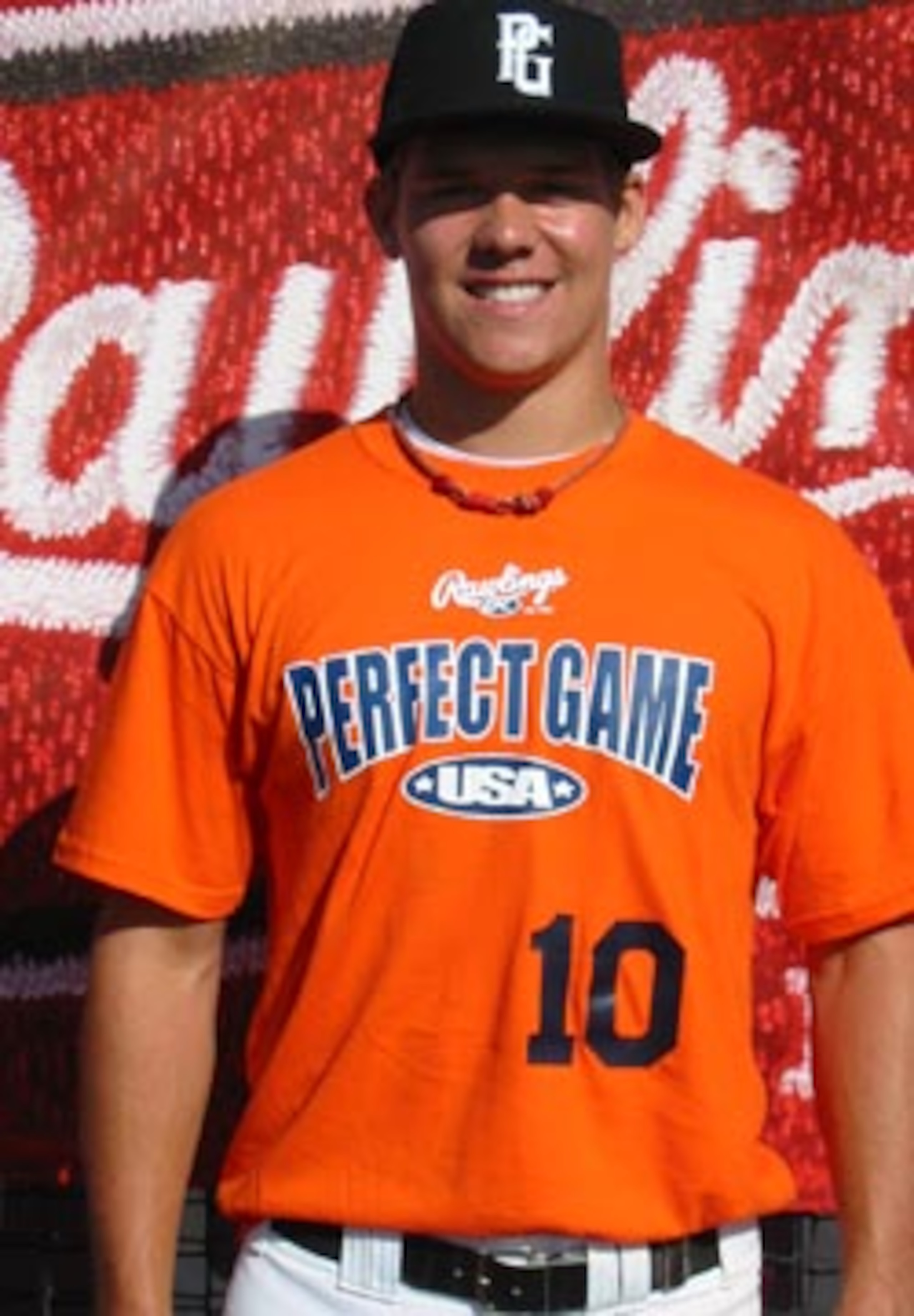
Hailing from the city widely regarded as one of the nicest places to live in the United States, Ryan Bull is arguably the top draft prospect from the state of Minnesota.
Bull is a switch-hitter who has played all over, including at catcher, first base and in the outfield. He seems like an ideal backstop, although like most high-school catchers, he's going to need some major refining. He should get that at Notre Dame, where he's been offered a scholarship.
At 6'1" and 210 pounds, he's got some real raw power that has started to come through a bit in the wood-bat league he's been playing in. He's showed some real ability with the bats, giving him a pretty solid shot to make the jump to the pro ranks.
Behind the plate, he shows a great arm and good footwork. He isn't too big that he'll eventually have to move off catcher, but he could stand to improve his quickness.
Missouri- Johnny Eierman, 2B/OF, Warsaw HS
26 of 52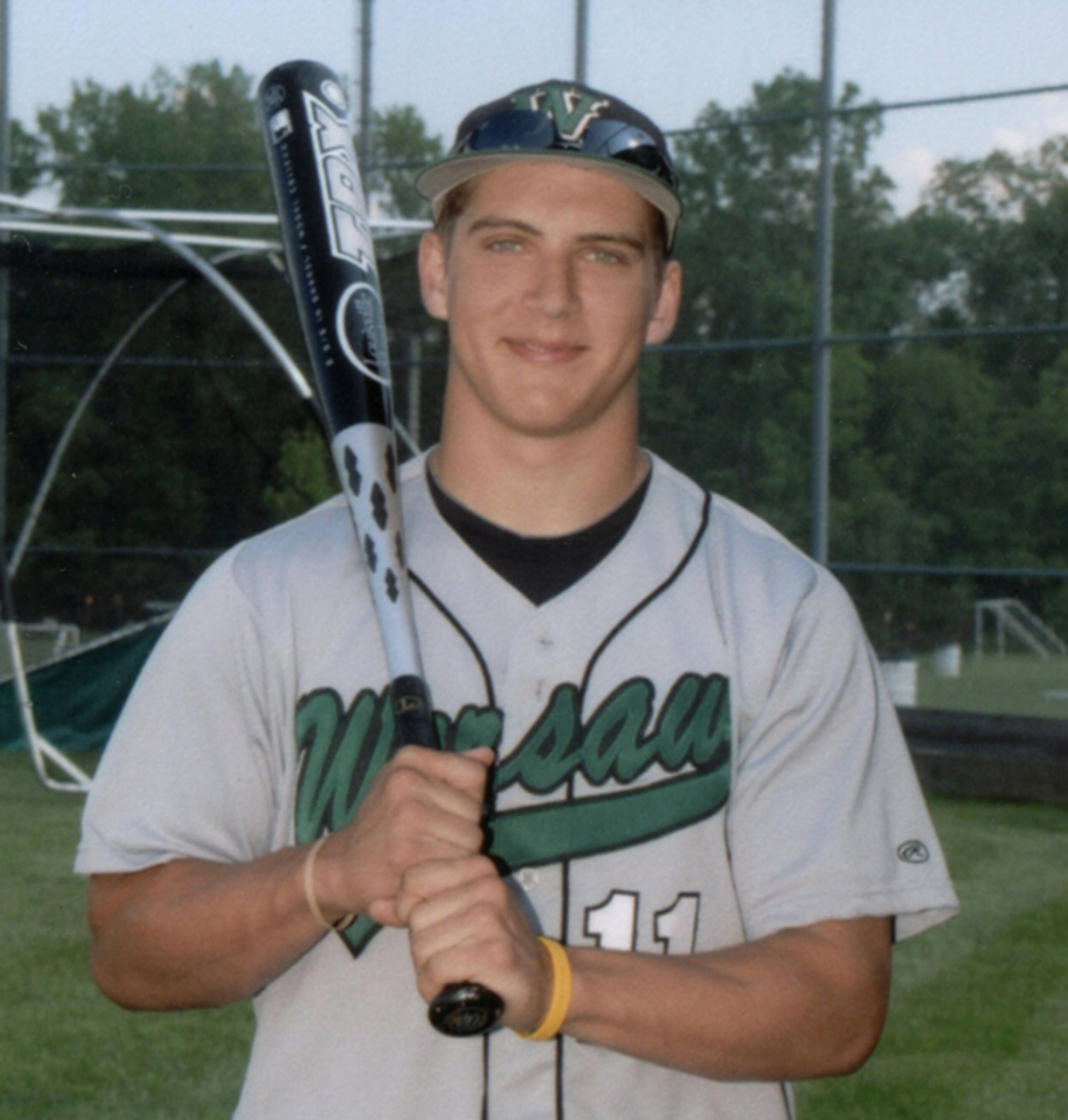
Missouri has produced some pretty great talent over the past few years. Former Missouri Tiger Aaron Crow was just named the Royals closer, while Kyle Gibson has emerged as one of the top pitching prospects in baseball.
While this year is a relatively weak crop from the Show-Me-State, Johnny Eierman is arguably the state's top talent.
Profiling as a solid defensive second baseman with question marks at the plate, Eierman's all-around tools should be enough to warrant a day-two selection.
At the plate, he's a pretty good hitter with decent raw power, but nothing that has translated to game action. He looks to be a contact hitter with an outside chance for power as a pro. He does, however, have a nice smooth swing from the right-side.
In the field, Eierman looks solid, not enough for shortstop, but possibly enough to man second base. He has decent range, but again, better for second than shortstop.
Eierman is what you would call a gamer, a hard-nosed, scrappy guy with a great attitude that over-shadows his tools.
He's also likely to be a tough sign due to a commitment to LSU.
Montana- Jonathan White, RHP, Montana
27 of 52
Like most of its neighboring states, Montana has a tough time producing legitimate big-league talent.
Much of it has to do with the fact that Montana doesn't sanction high school baseball, and the majority of its college squads play in the National Club Baseball Association.
As such, senior pitcher Jonathan White from the University of Montana is just about the closest thing the state has to a draft-worthy prospect.
White was the staff-ace this season, posting a 6-1 record and a 2.45 ERA. In seven starts, he tossed four complete games, finishing the season with a 42:10 K:BB ratio in 44 innings. He only allowed one home run the entire year and showed excellent control.
White was at his best early in the year and twirled a complete-game shutout against nationally ranked Arizona State. Montana took two of three games from the Sun Devils, who were ranked No. 10 in the NCBA at the time.
Nevada- Amir Garrett, LHP, Findlay Prep HS
28 of 52It's a pretty common thing for a top baseball draft prospect to be a two-sport star, but while most make their mark on the gridiron, it's pretty rare for one to star on the hardwood.
That's just one of many ways that Garrett is breaking the mold.
The lanky small-forward is ESPN's 97th-ranked prospect and has a commitment to St. John's, but also has a low 90s fastball with plenty of projection on the mound. He's also a lefty, which sweetens the deal a little.
Garrett recently held some throwing sessions for a handful of teams in Las Vegas and looked good enough for Baseball America to slap a fifth- or sixth-round projection on him in their most recent position rankings.
He also checks in as the site's 200th-ranked prospect for the draft.
Garrett has plenty of projection but is incredibly raw. He gave up pitching for his high-school squad in order to focus on basketball during his senior season, but scheduling some sessions for teams to come and see him pitch means he's at least considering taking the baseball route.
Nebraska- Cody Asche, 3B, Nebraska
29 of 52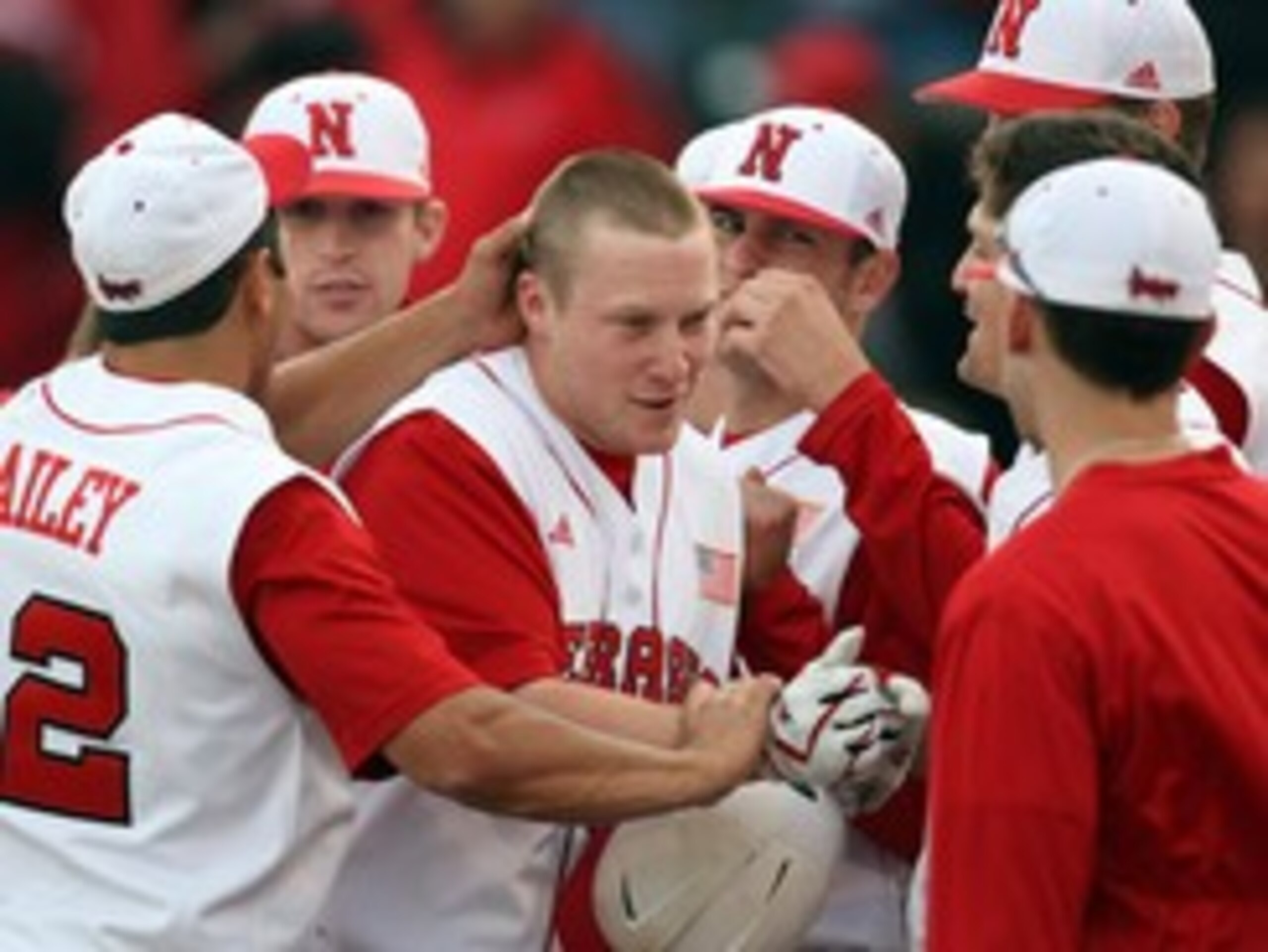
The introduction of the new BBCOR bats to college baseball have had a dramatic affect on some of the NCAA's top power hitters.
Asche, however, is one of a few who didn't feel the impact.
Instead, the junior third baseman plowed right on through, setting a career-high with 12 home runs and falling short of a new mark in RBI by just three. He was Nebraska's top player in 2011, pacing the squad in almost every offensive category, including average (.327), runs (46), hits (68), doubles (27) and walks (34).
You could tell by watching Cornhuskers games that Asche was the top weapon. He was intentionally walked eight times.
Unfortunately, Asche's all-around stellar play couldn't prevent head coach Mike Anderson from losing his job.
Baseball America projects Asche as a third- or fourth-round pick.
New Hampshire- Jordan Cote, RHP, Winnisquam HS
30 of 52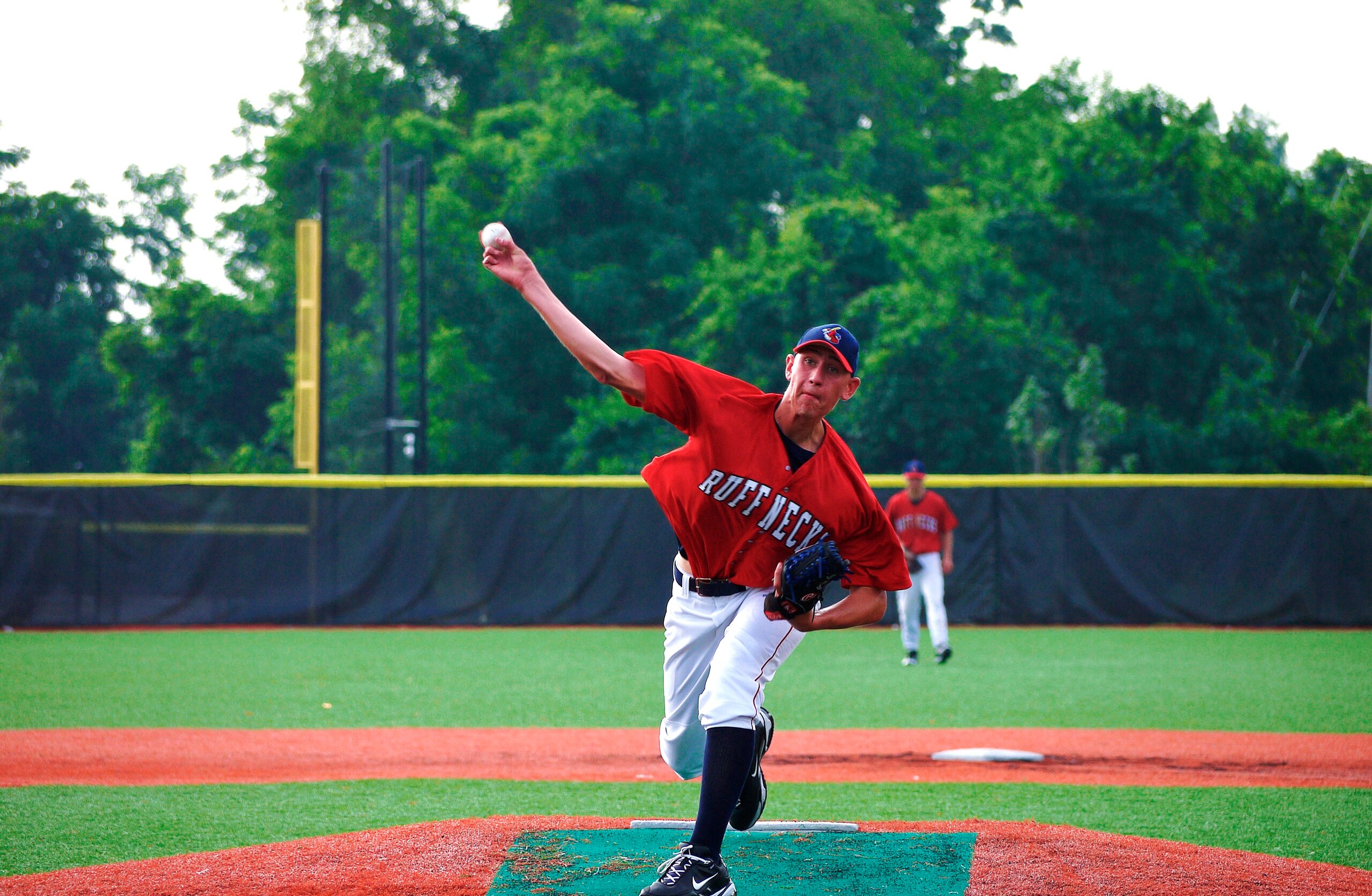
Cote jumped onto the 2011 draft radar late in 2010 after tossing his third career no-hitter, in the state championship game, no less.
At 6'5" and 205 pounds, Cote is very physical for a high-schooler, but he still has a ton of projection left. He currently throws in the low 90s, but has shown the ability to hit 93-94 mph. Scouts seem to feel like he could reach the mid 90s with a little more development.
In addition to Cote's fastball, he also throws a curveball and a slider, but hasn't developed much of a changeup, but when you throw three no-hitters before your senior year of high school, it doesn't really seem like an urgent need.
Baseball America originally pegged Cote as an eighth to 12th round guy, but has heard a lot of buzz about him working his way up as the draft creeps closer.
New Jersey- Kevin Comer, RHP, Seneca HS
31 of 52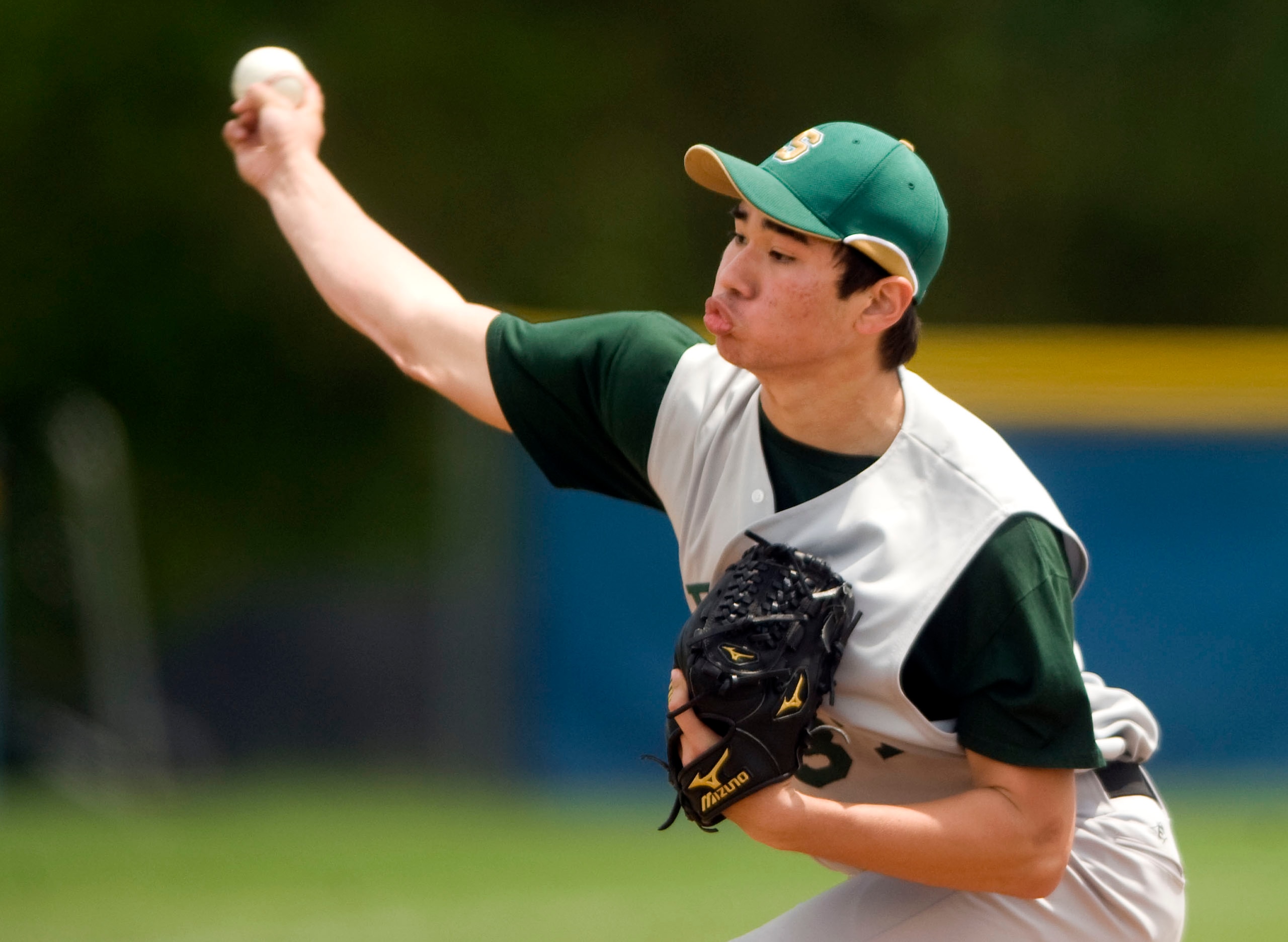
Comer is far and away the top draft prospect from New Jersey for this year's draft.
The solidly built right-hander throws in the low 90s, can reach the mid 90s and features a great curveball and a very promising changeup. He also throws a slider.
He didn't have the most impressive senior season, missing some time and showing lessened velocity, but he should still be a top five rounds pick. Not to mention the fact that he looked brilliant as a sophomore and junior, setting all sorts of school records in the process.
The only thing that should cause him to slide is his commitment to Vanderbilt, which is apparently very strong.
Baseball America thinks highly enough of Comer to label him as a potential first-round talent if he does indeed sign with Vandy, where he would be a part of an amazing class that also includes Tyler Beede (MA), Shawon Dunston Jr., (CA) and Phil Pfeifer (TN).
New Mexico- Blake Swihart, C, Cleveland HS
32 of 52
Swihart is arguably the top high-school catcher available this June. In fact, there's a good chance he good be the top catcher, regardless of class.
His blend of athleticism, ability behind the plate and hitting talent make him a likely first-round pick as well.
Swihart is the most polished catcher in the high school class and has the best chance to remain behind the plate thanks to his wiry frame, strong arm and solid fundamentals. Like most catchers who sign out of high school, he'll need a ton of experience to prove he can handle the job long-term. Right now, though, he looks like the the back-stop with the highest ceiling, both behind and at the plate.
At the plate, he's a switch hitter with some decent power. He projects to have slightly above-average power and could hit 20-25 homers per season as a pro.
Due to the premium placed on offensive-minded catchers who can remain at the position, Swihart shouldn't get out of the first 20 picks without being selected.
New York- Joe Panik, SS, St. John's
33 of 52
Panik has many things going for him.
For starters, he's one of the top defensive shortstops in the college crop.
He has good size (6'2" and 195 pounds) and has excellent athleticism for the position. He has a great arm and can make all the throws.
Defensively, Panik is a stud. It's his offensive potential that has him pegged for a third- or fourth-round selection.
He doesn't offer great power, but he has shown the ability to make the transition to the new bats this year in college. He has six homers and has proven to be a capable run-producer for St. John's. His biggest strength at the plate is his ability to make consistent contact. He has only 16 strikeouts this season in 44 games to go along with his .398 average, which is one of the best in the country.
He has some decent speed, which should be a nice addition for whichever team picks him. He has 17 steals this season in 19 attempts and has three triples.
North Carolina- Levi Michael, SS, North Carolina
34 of 52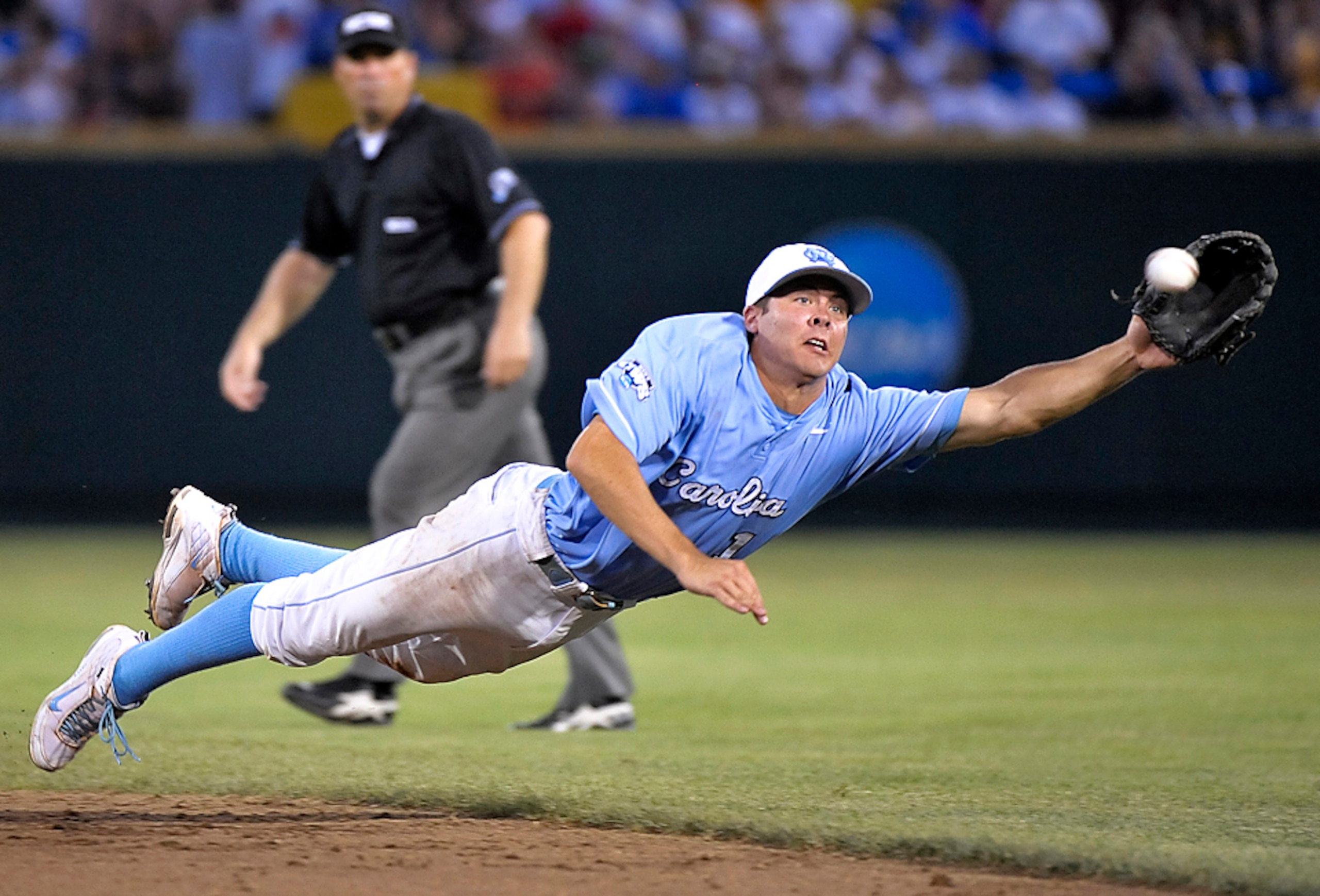
Just like former Tar Heel Dustin Ackley, Levi Michael has done a little bit of everything for UNC, and like Ackley, Michael should end up as a top pick as well.
Michael has always been a Carolina guy, back to the days when he was ranked as the number one prospect in the entire state and the 63rd-ranked prospect by Perfect Game.
He took his talents to UNC and played immediately as a freshman, hitting .290 with 13 homers and 57 RBI. He also played pretty good defense, sharing time between second base, shortstop and third base.
2010 allowed him the opportunity to step out of Ackley's shadow and did amazingly well, hitting .346 with nine home-runs and 54 RBI in five fewer contests than in 2009. He completely reversed his performance at the plate in terms of walks and strikeouts, going from 26 walks and 56 strikeouts to 44 walks and 20 punchouts.
This season, he has built on his stellar 2010 campaign, hitting .314 with 12 doubles, three triples, four homers and 45 RBI. He has once again shown an excellent approach at the plate, walking 44 times while striking out only 30.
Michael doesn't blow you away with any one tool. But, he is a switch-hitter and could have a Brian Roberts-like future ahead of him. He's good with the bat, has decent power and good speed. And this season, he has shown enough athleticism to tackle shortstop, where he has fared incredibly well.
North Dakota- Josh Ray, OF, North Dakota
35 of 52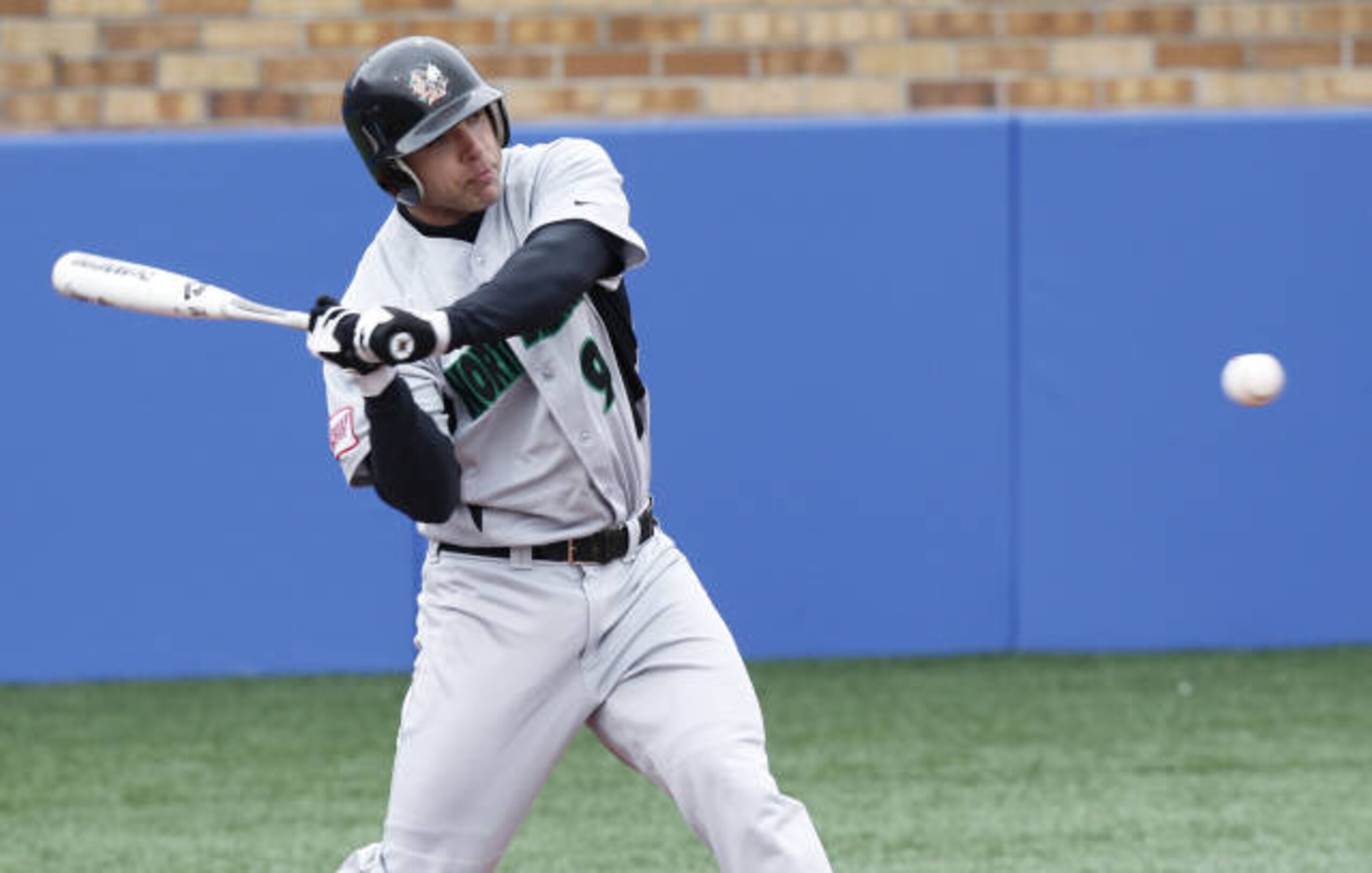
North Dakota is another very tough place to find baseball talent.
Josh Ray, an outfielder from the University of North Dakota, is a decent talent, but even he couldn't prevent UND from posting a terrible 12-35 record.
But it wasn't for lack of trying. Ray hit .354, good for second on the squad and led the Fighting Sioux with seven triples and five steals. He showed terrible plate discipline (6:38 BB:K), but showed enough speed on the basepaths and in the field that somebody might take a look in the late, LATE rounds.
In the outfield, he was very good, showing a strong arm that paced UND with six OF assists.
Oklahoma- Dylan Bundy, RHP, Owasso HS
36 of 52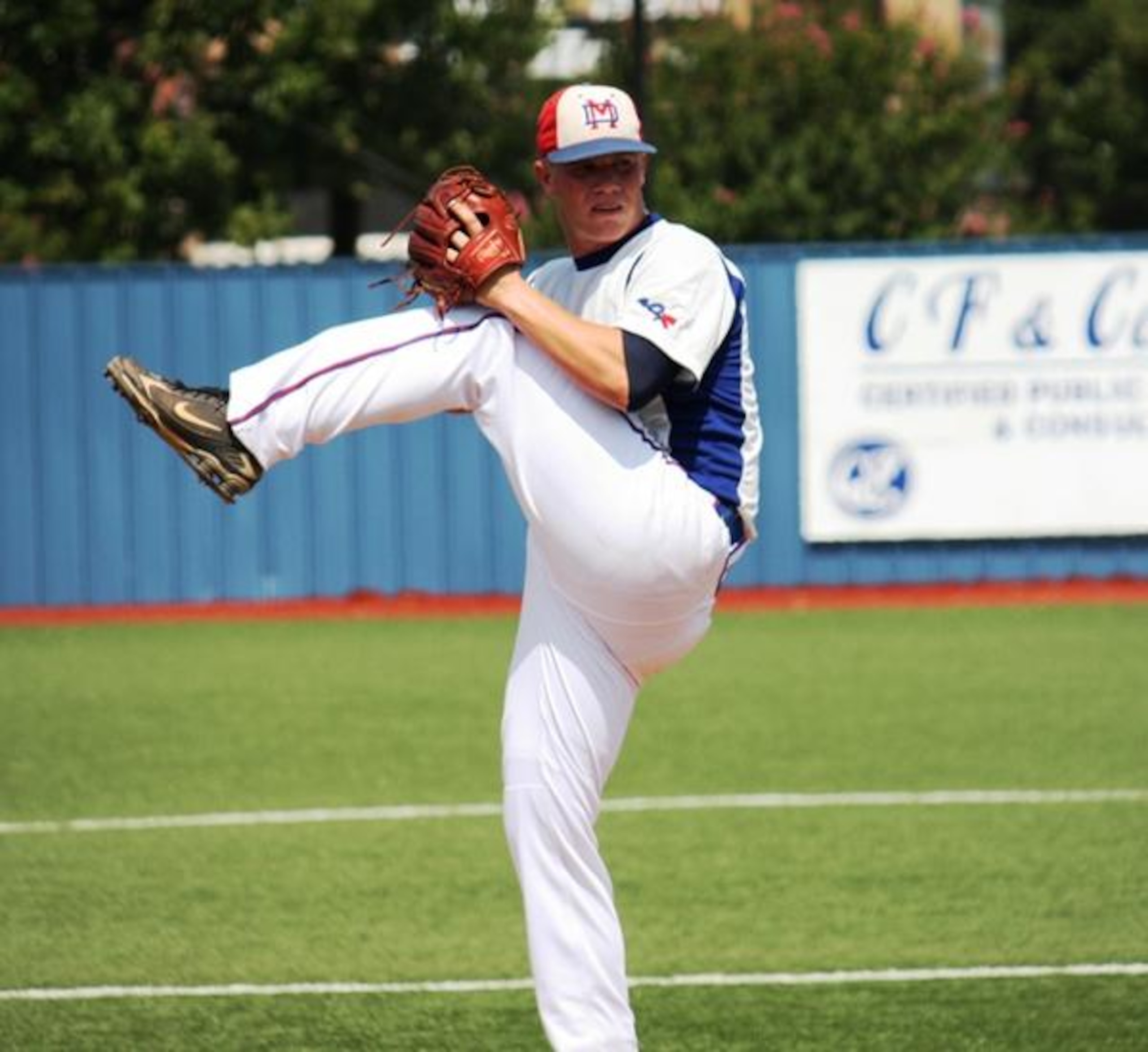
Bundy is going to command a pretty hefty bonus thanks to the impressive spring he's had pitching for one of the top-ranked teams in the country. He made one-hitters a common occurrence and 15-strikeout games an everyday feat.
He also generated some major helium by reportedly touching 100 mph on the radar gun in an April start.
Scouts who have seen him pitch this spring say that he's one of the top high-schoolers to come along in a very long time. His control is excellent, his repertoire filthy. He throws a curveball, changeup and a cutter, all of which he commands like a professional.
He's an incredible athlete who is also one of his team's top hitters, and he profiles as an inning-eater extraordinaire.
Ohio- Andrew Chafin, LHP, Kent State
37 of 52
Despite missing the entire 2010 season due to Tommy John surgery, Chafin has quickly jumped back on the draft radar with a stellar season that helped spur Kent State to an NCAA tournament appearance and a 43-15 record.
Chafin showed great velocity before the injury, but has been even better in his return. He now sits 90-95 mph and touches 94 with regularity. He has a slider that could be one of the best in the college class, and he has used that fastball-slider combo to devastate college hitters this season. He's 7-1 on the year with a 1.90 ERA and 97 strikeouts in 80.1 innings. In 11 starts, he has two complete-game shutouts.
Chafin tired midseason, which was to be expected with him jumping right back into the rotation, and Kent State kept him fresh by having him pitch out of the bullpen for a few outings.
Right now, Chafin looks like a safe bet to be gone by the second round, and according to BA, he has the makings of a No. 2 starter or a dominant closer.
Oregon- Tyler Anderson, LHP, Oregon
38 of 52
Tyler Anderson, a southpaw from Oregon, has had a fantastic 2011 season, vaulting his name into the rare first-round air.
A solidly built lefty (6'4", 215 pounds), Anderson has put together a fine campaign, winning seven of his 13 starts while racking up 103 strikeouts in 95.2 innings.
He's thrown one complete-game shutout and has held batters to a .192 average. He's been incredibly stingy with the long-ball, surrendering only two all season, and has only issued 30 walks.
In terms of stuff, Anderson ranks near the middle of the top college pitchers available. He doesn't have over-powering velocity (88-92 mph), but he has one of the draft's best changeups and is a very polished thrower.
He throws strikes, which is something that is key in making the adjustment to pro ball, and has no qualms about throwing any of his pitches, including a developing slider, in any count.
Pennsylvania- Derek Fisher, Cedar Crest HS
39 of 52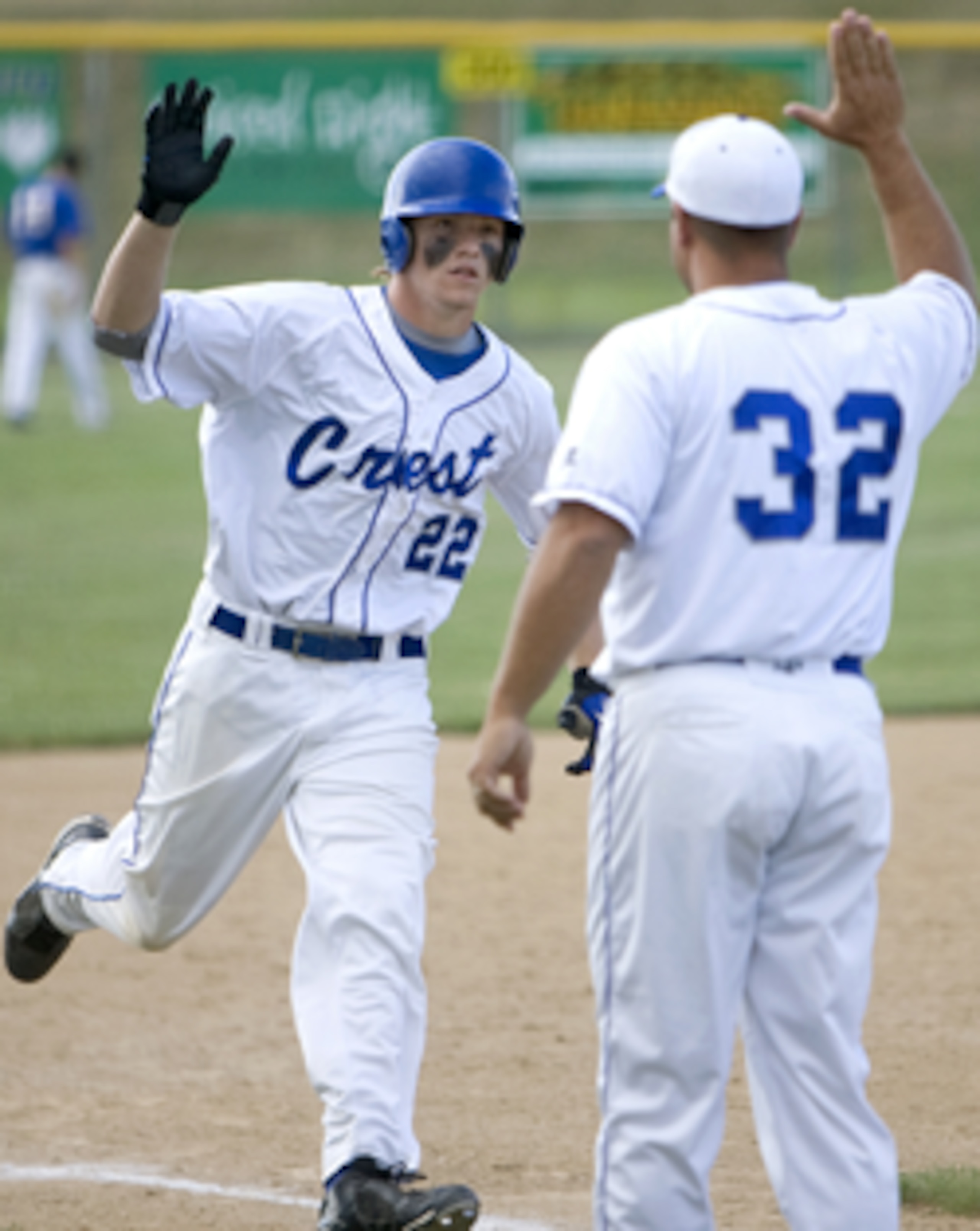
Fisher has been so incredible over the past year and a half that he's hearing his name more and more among the top high school hitters. It's now very likely that he'll end up hearing his name called in the first round, possibly towards the middle of the deepest opening round in recent memory.
Last season, Fisher enhanced his lore, slugging .440 with nine home runs. This season, he's done enough damage to check in at No. 34 on Baseball America's list of the Top 50 draft prospects. He also garnered much first-round support in the site's mock draft that saw him slotting in at No. 26 to the Red Sox.
Let's get down to Fisher's tools, which obviously start with his insane power.
For starters, he has as much power as any high-school hitter. This kid can launch balls out of any park and does it in one of the more violent manners you'll ever see. In a way, that makes you feel sorry for the ball.
In addition, he's got great speed, especially for a guy who currently checks in at 6'3" and 215 pounds. The combination of those two skills alone would be enough to make teams take a long, hard look at him this June, but he's also a solid outfielder who has made an incredible transition from the infield.
South Carolina- Taylor Guerrieri, RHP, Spring Valley HS
40 of 52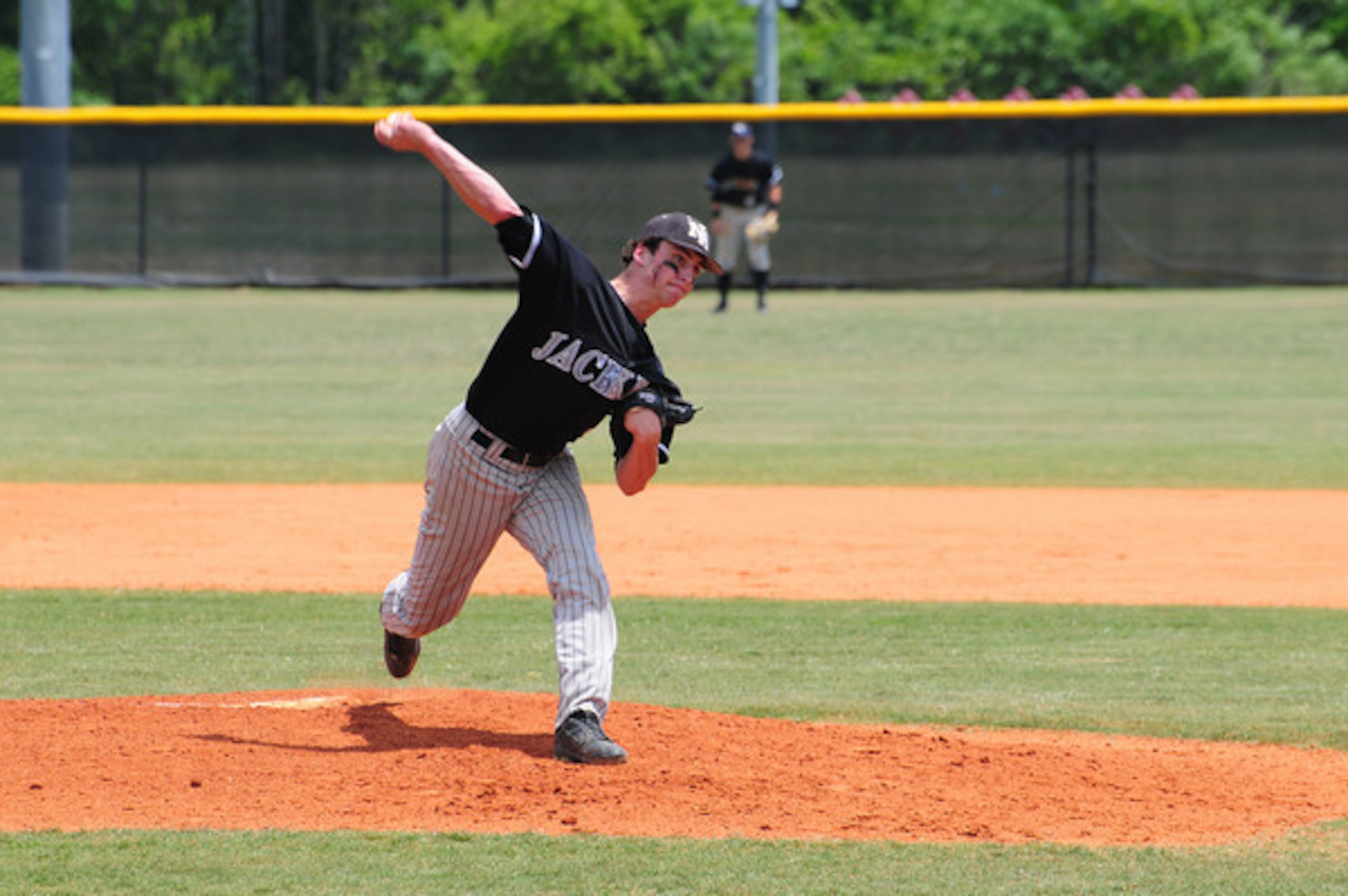
While Guerrieri has jumped to the top of the depth-charts of several teams with picks inside the top 10, there's still a lot of unknowns about him.
He just exploded onto the scene, so there's that.
He's also a talented hitter who took part in several Perfect Game showcases as a third baseman, so there's that as well.
Last but not least, his up-tick in velocity seemingly came from nowhere, and using my home team's own selections of Matt Hobgood and Cameron Coffey in 2009, that can sometimes be the worst indication of long-term talent.
Still, if Guerrieri can remain healthy and continue to develop his changeup, he could be a top-of-the-rotation starter
Rhode Island- Garrett Hayward, LHP, Mount Saint Charles Academy
41 of 52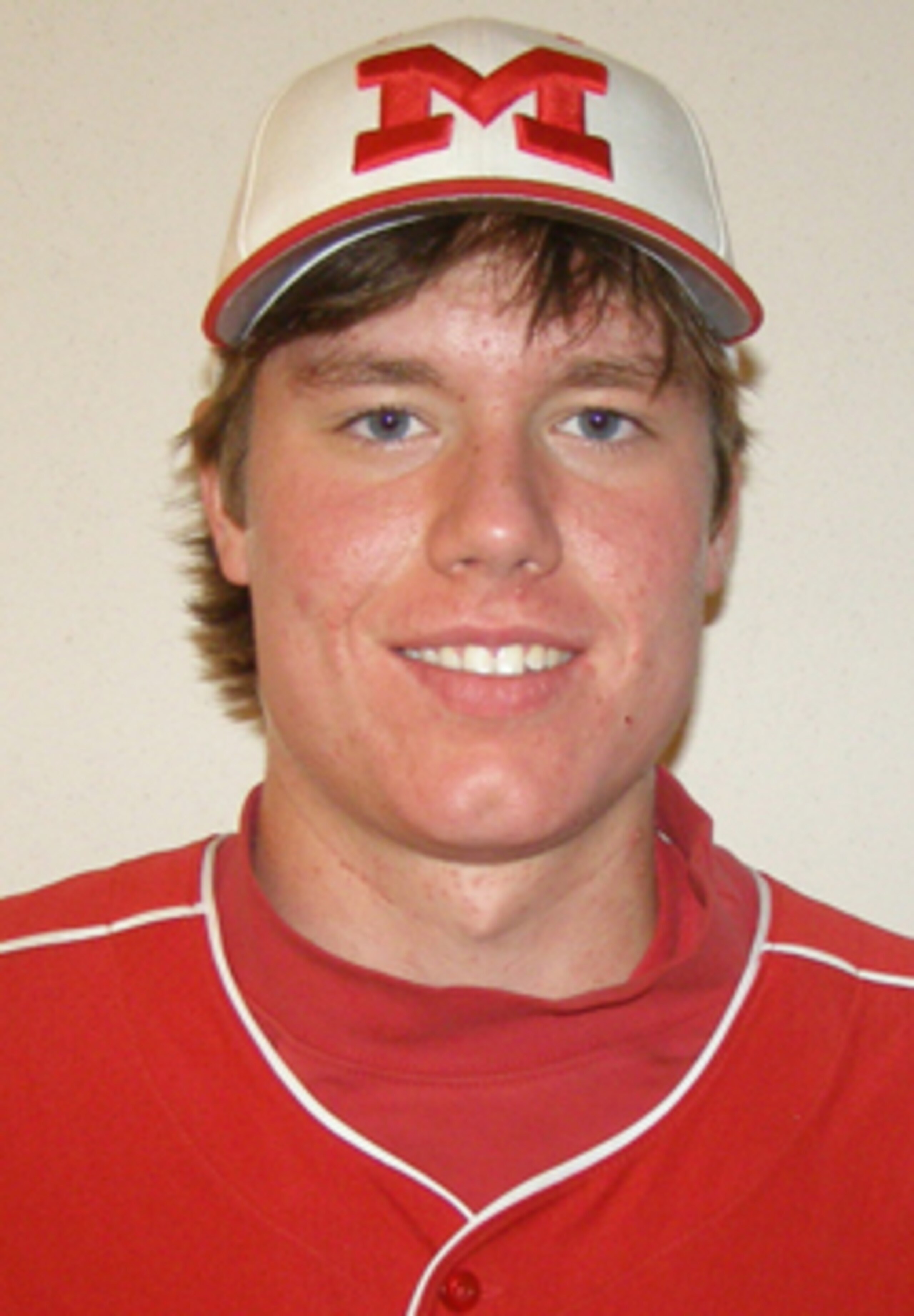
Another immensely talented draft prospect is Garrett Hayward of Delaware.
Hayward has the size that scouts drool over at 6'7" and 212 pounds, leaving plenty of room for projection. He's already very talented, throwing in the high 80s and scraping 90 mph. As with most of his fellow Delawareans, it's taken a while for Hayward to heat up, but now that the cold weather has finally departed, he's heated up, both on the mound and at the plate.
His clutch, two-run, inside the park home run two on May 22 improved Mount Saint Charles' chances to gain admittance to the state tournament.
Hayward has a scholarship offer to Louisiana-Lafayette, but it's likely that some team will take a stab at him in the later rounds of the 2011 draft.
Tennessee- Sonny Gray, RHP, Vanderbilt
42 of 52
Very Tim Lincecum-like in stature (6'0", 185 lbs), Gray is a beast on the mound. He throws a low 90s fastball but is capable of cranking it up into the mid-90s. He complements his fastball with an above-average slider and a decent, improving change-up.
Gray has put up huge numbers at Vandy, especially last season, when he went 10-5 with a 3.48 ERA and 113 strikeouts in 108 innings. Gray pitched poorly in Vandy's first few games of the CWS but improved as the tournament went on.
Gray didn't get much rest in over the summer, either. He went right to work for Team USA, leading the squad with impressive pitching. In three games, he posted a 3-0 record and struck out 37 batters in only 24 innings. Against Sri Lanka, he was particularly hard to hit, allowing only one base knock while striking out 14 batters in five innings. Only one out came via something other than a strikeout.
For his troubles, or lack thereof, Gray was named Baseball America's Summer Player of the Year for 2010, further enhancing his draft stock for 2011.
This season, Gray has quietly gone about his business and put together another very fine season. He's 9-3 with a 2.17 ERA and 105 strikeouts in 95.1 innings. He has three complete games and has held hitters to a team-low .193 average.
South Dakota- Blake Treinen, RHP, South Dakota State
43 of 52
You might think it's crazy for a guy to turn down signing with a professional team as a junior after earning First Team conference honors and posting an undefeated record on the season.
Blake Trienen might be crazy, but it looks like he's going to get another shot at the draft after having an even better year in 2011, almost a full year after being selected by the Marlins in the 23rd round of the 2010 draft.
This season, the 6'4", 220 pound right-hander has posted a 7-3 record for the 37-19 Jackrabbits, tossing two complete games in 13 starts. He posted an impressive 85:24 K:BB ratio in a team-leading 84 innings and gave up only two long-balls all season.
Treinen's college career dates back to his days at Arkansas, where he was a significant recruit. He never saw the field for the Razorbacks and ended up at SDSU, where he has blossomed into a pitcher rather than a thrower.
He throws in the low 90s and has shown great improvements in both his command and control of all of his pitches. As a senior, it's now or never for Treinen.
Texas- Anthony Rendon, 3B, Rice
44 of 52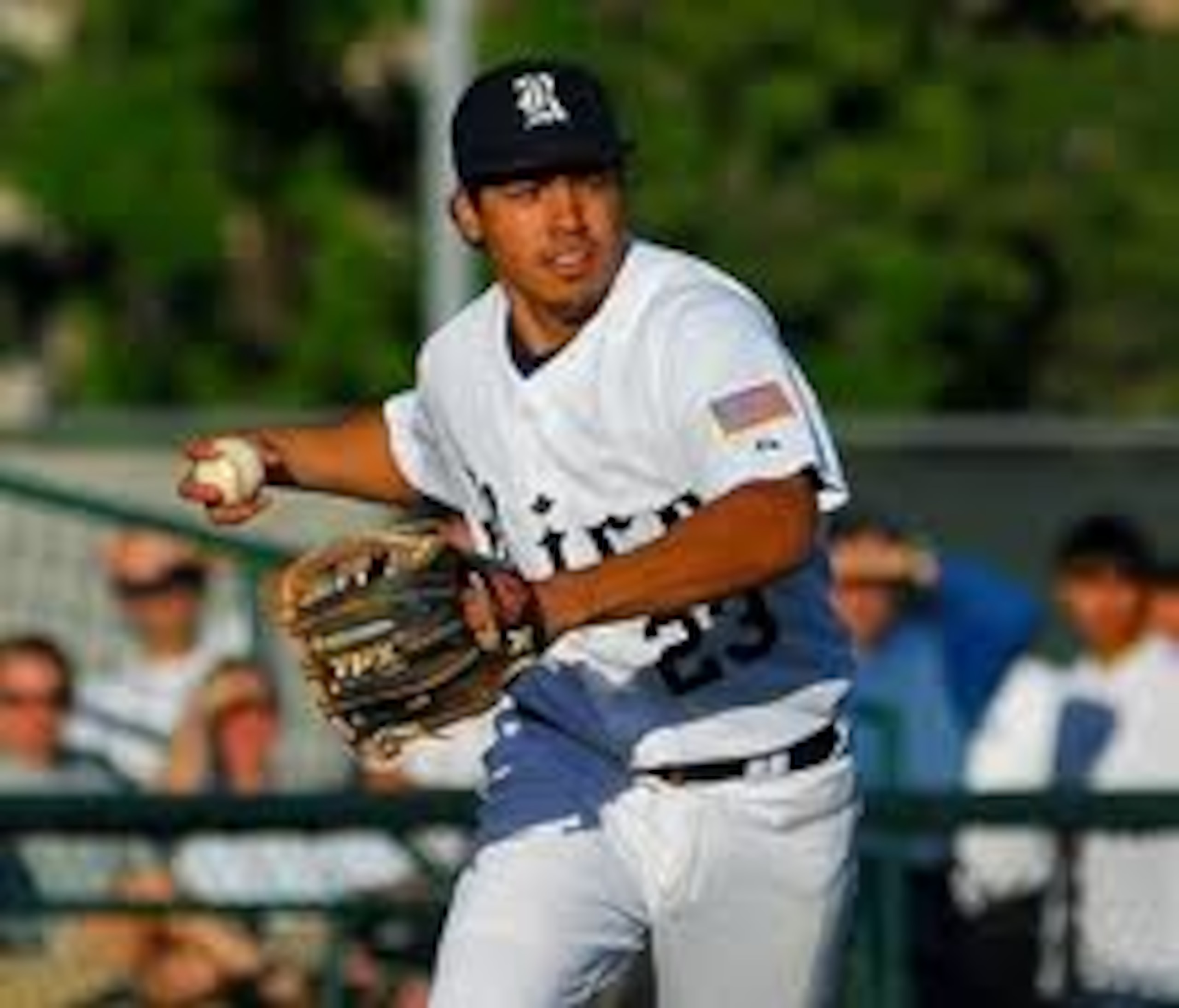
Rendon, simply put, is the best position player available in the 2011 draft.
In almost three full seasons at Rice, he has swatted 51 home runs, driven in 190 runs and notched an average over .370. He's was named the Baseball America Freshman of the Year and B.A. Player of the Year in consecutive seasons, becoming the first player to do that since Robin Ventura.
Rendon is more than just a big bat who can hit for a high average, though.
He also offers borderline Gold Glove caliber defense, although he suffered an ankle injury last summer that required surgery. It was the second time in as many summers that Rendon has required some sort of surgery on his ankle.
The good news is that after his last surgery, he bounced back to hit .394 with 26 homers and 85 RBI as a sophomore for the Owls. So any lasting injury concerns about his foot should be minimal. His shoulder is another matter.
Injured in a stretching exercise before the season, Rendon has yet to full recover, seeing regular time at DH and putting into doubt his No. 1 overall status.
Baseball America projects Rendon as a player similar to Evan Longoria, a franchise cornerstone at the hot corner. The kind of guy who you, as an owner, would want to represent your franchise. Think Longoria, David Wright and Derek Jeter all rolled into one.
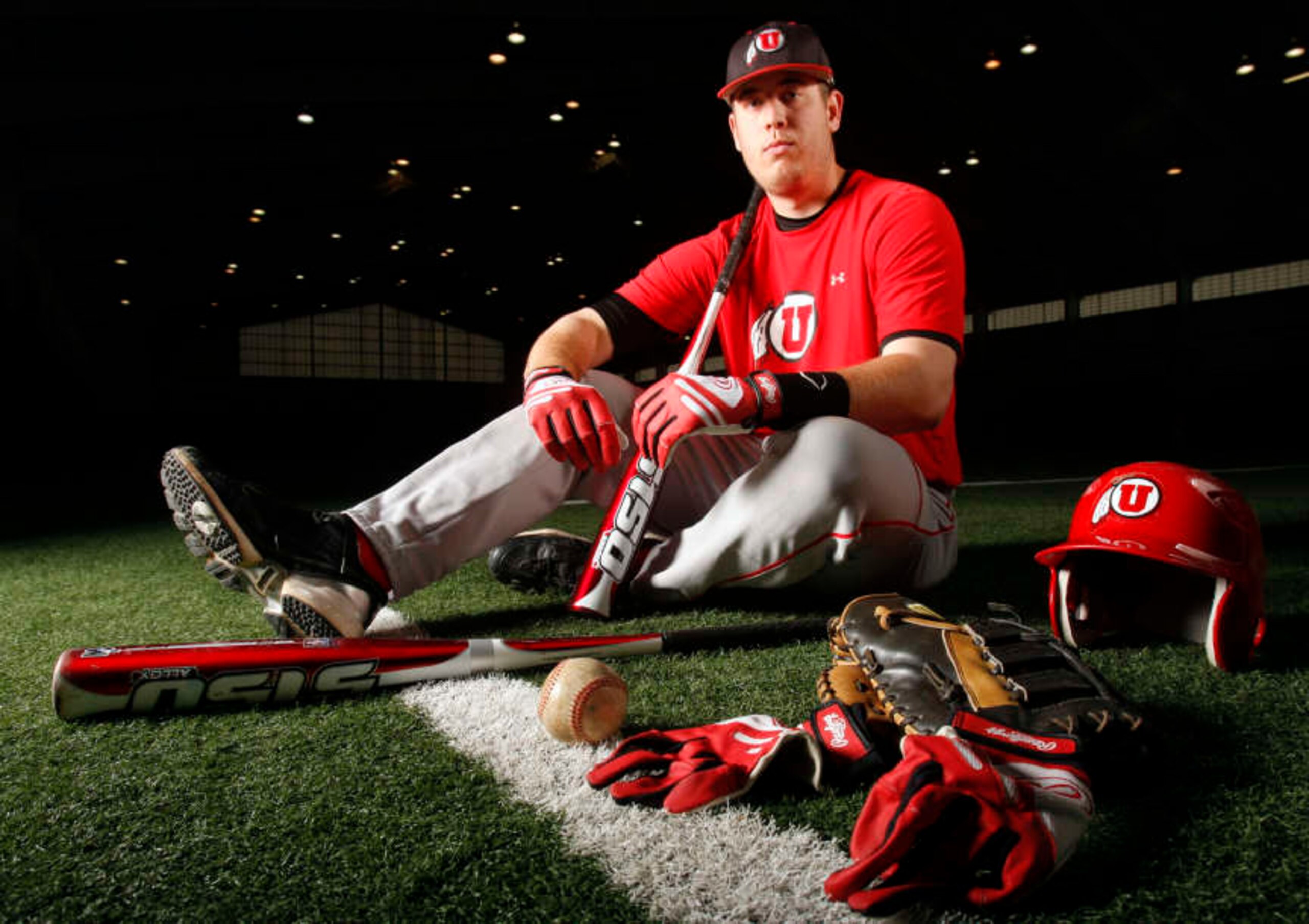
Utah- C.J. Cron, 1B, Utah
45 of 52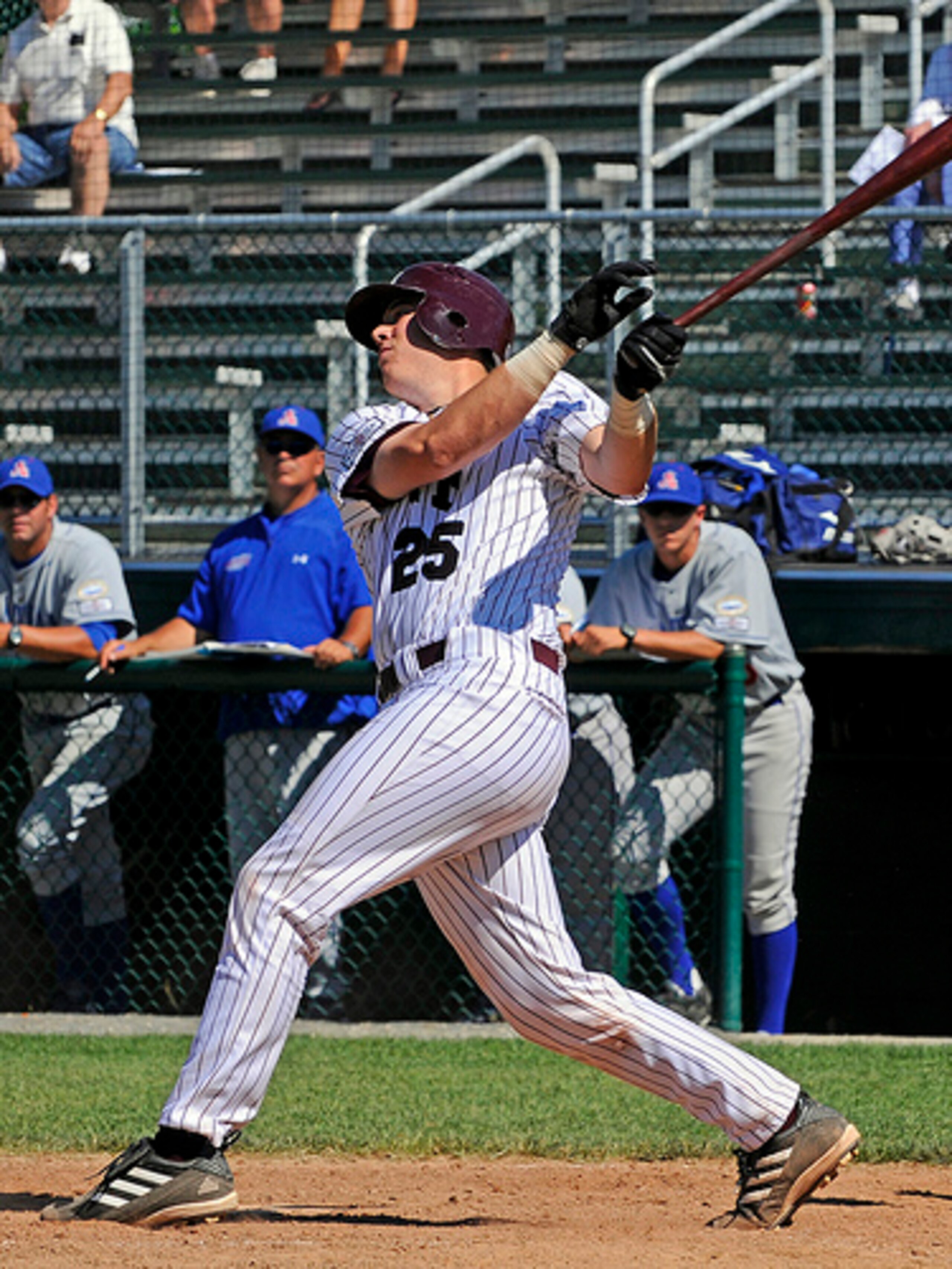
With maybe one or two exceptions, there has been no better hitter with the new bats than Utah's C.J. Cron.
Cron currently ranks second in the country in hitting with a .450 average and has 14 home runs. He's driven in a team-high 56 runs, scored a second-best 47 runs and has rapped a ridiculous 24 doubles.
Cron has always been a strong hitter. See his .431 average and 20 home runs in 2010 and his .337 average and 11 homers as a freshman. Those numbers he accomplished with the old college bats. The damage he's doing this year has come with the new equipment, which was supposed to keep offense down and limit the number of home runs from hitters.
All except for Cron that is, who appears to have actually improved his hitting stroke over the course of this season's 43 games.
Cron began his career as a catcher and has gone back and forth from there to first base, where he filled in last year after an injury to the Utes primary first baseman and where he's played mostly this season, expanding his defensive chops.
If Cron could stick behind the plate, he would be a top-ten pick. As a first baseman, he'll probably fall somewhere in the 11-20 range.
Virginia- Danny Hultzen, LHP, Virginia
46 of 52
Hultzen has dramatically improved his stock this season, proving to be one of the toughest pitchers to hit in all of college baseball while showing an up-tick in his velocity and a sharpening of his other pitches.
For the year, the lefty is ranked second in the nation with 121 strikeouts. He's posted an 9-2 record and currently has a 1.42 ERA pitching for the number one team in the country. Hultzen has been the epitome of the staff ace, setting the tone for Virginia and taking on the challenge of facing each opponents number one starter each Friday. He's risen to the challenge, beaten down his opponents and come out as a top-five pick.
Hultzen does a good job keeping hitters off-balance with his excellent curveball, which has very deceptive motion. And he also mixes in a changeup, and occasionally a splitter.
The biggest question on Hultzen, and one that's been swirling ever since he signed with the Cavaliers, is how signable he's going to be. There were rumors that his parents really wanted him to graduate, which in Hultzen's case, would take another year, although his father recently made public his intentions that his son finish college, but with no specific timetable.
Even if he is willing to forgo his senior season, it's still going to take a pretty big chunk of change for Hultzen to sign a deal.
Vermont- Sam Dyer, RHP/3B, Northfield HS
47 of 52Dyer has been a two-way start for Northfield this year, and if anyone from the state of Vermont is going to get a call on draft day, it's likely to be him, although the odds are still stacked against him.
He's been Northfield's most dangerous weapon at the plate, hitting .537 with eight doubles, two homers and 19 RBI in 16 games and has scored 33 runs. He's also swiped 23 bases, with seven multi-steal contests and including one four-SB outing.
But Dyer has also made significant contributions on the mound as well.
He's pitched to a 2.53 ERA in 19.1 innings and has 21 strikeouts, and his presence on the mound is just one reason that Northfield has yet to be beaten this season.
Washington- Adam Conley, RHP, Washington State
48 of 52
Conley is being tabbed as a potential supplemental first-round pick this June after showing the ability to make the jump to the rotation after serving as Washington State's closer last year.
Conley was exceptional in that role, saving 12 games and striking out 77 batters in 87 innings. This season, as the Cougars No. 1 starter, he struggled at times, but also showed flashes of dominance. For the year, he ended with a losing record (6-7), but a very solid ERA of 3.50 and a great K:BB ratio of 83:27. He also threw a career-high 108 innings, proving his durability.
No doubt after the John Stilson injury, teams will have to go over Conley's medical reports with a fine-tooth comb, looking for any sort of signs that he might be susceptible to the same kind of injury that struck the Texas A&M closer-turned-starter.
Conley gets so much attention because he has some sick velocity, touching 97 mph. As a starter, he sits more comfortably in the 91-93 range and complements his two-seamer with a solid changeup that has some real potential.
Developing a curveball or slider will determine Conley's route as a pro. If he can bring along a breaking ball, he'll likely remain a starter, but if he shows he can't do it, he has the makings of a top-notch reliever.
West Virginia- Mike Mason, LHP, Marshall
49 of 52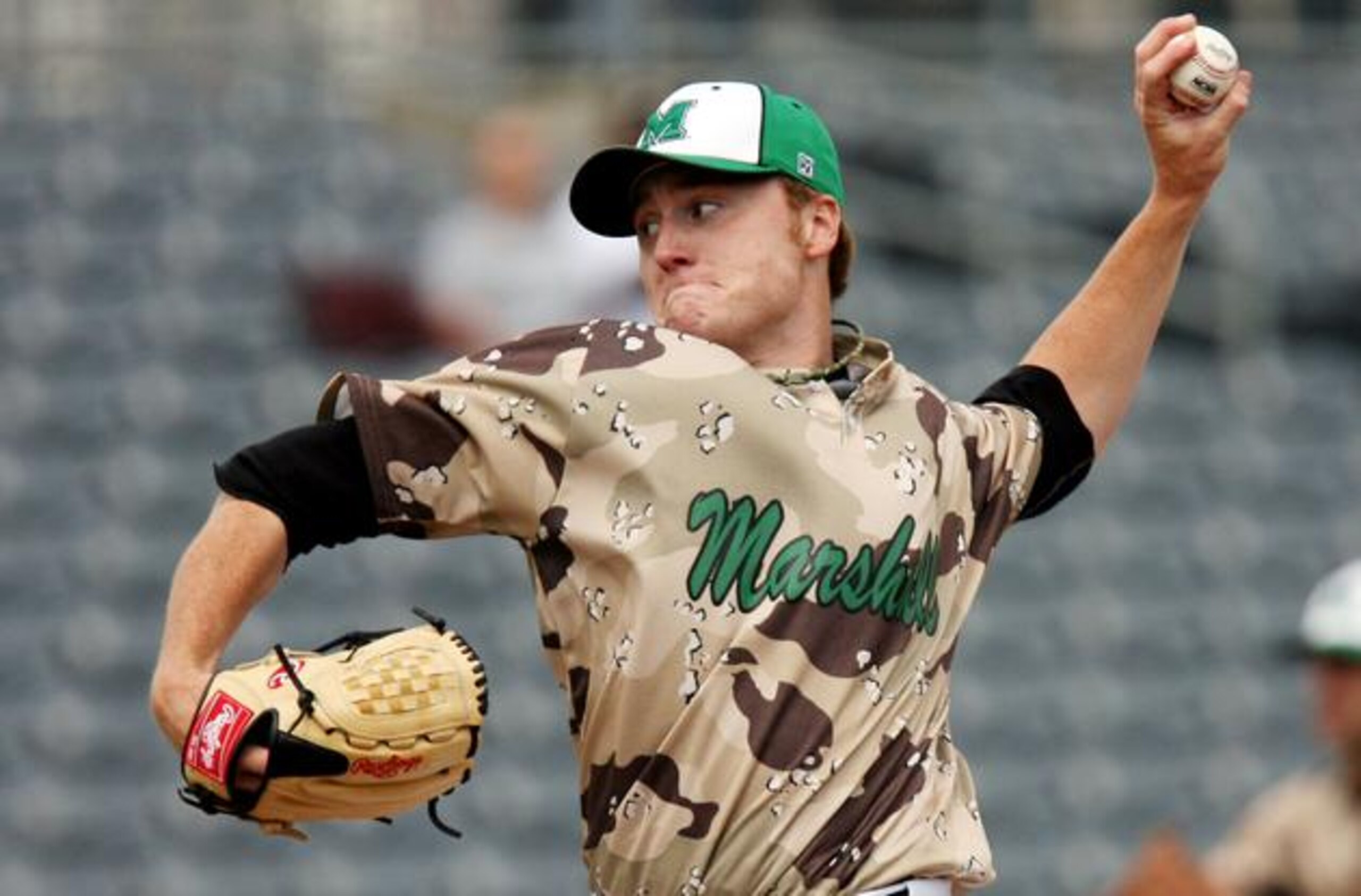
An all-state pitcher in Ohio, Mason took his game to West Virginia, where he has carved out a very nice niche for himself at Marshall.
This season he eclipsed all sort of career marks, setting new highs in innings (78.1) and strikeouts (65). His ERA of 4.83 and his .270 average against wasn't too pretty, but at 20-31, it's not like Marshall was held back by his performances.
Mason has generated some interest due to his high 80s-to-low 90s fastball and could be an intriguing developmental project for some team in the late rounds of the draft.
He has some experience playing in different summer leagues and is no doubt the best bet from the state to end up on a minor league roster next season.
Wisconsin- Gunnar Neale, 1B, St Catherine's HS
50 of 52
Wisconsin is another tough spot to find elite talent, but with the rumors surrounding the possible revival of the University of Wisconsin baseball program, it might be on its way to getting easier.
For now, however, we'll have to settle for scouring the high school crop, where Gunnar Neale is arguably the cream of the crop.
A two-way star, Neale is one of the top hitters in the state. He's already hit seven home runs and driven in 33 runs in just 21 games for St. Catherine's. His average sits at a lofty .589 and he already has two multi-homer games on the season.
At a very solid 6'2", 210 pounds, Neale doesn't have the best speed, as evidenced by his two steal attempts, but he's nifty enough to handle first base, where he plays when he's not on the mound.
On the mound, Neale has also been very solid, posting a great 54:13 K:BB ratio in just 31 innings. He has an ERA of 2.26 and his last two starts have ended in a complete game. He's been clocked in the low-to-mid 80s, so it's not likely that his long-term future will be on the mound, leaving him as a probably position player.
Wyoming- Brandon Nimmo, Of, East HS
51 of 52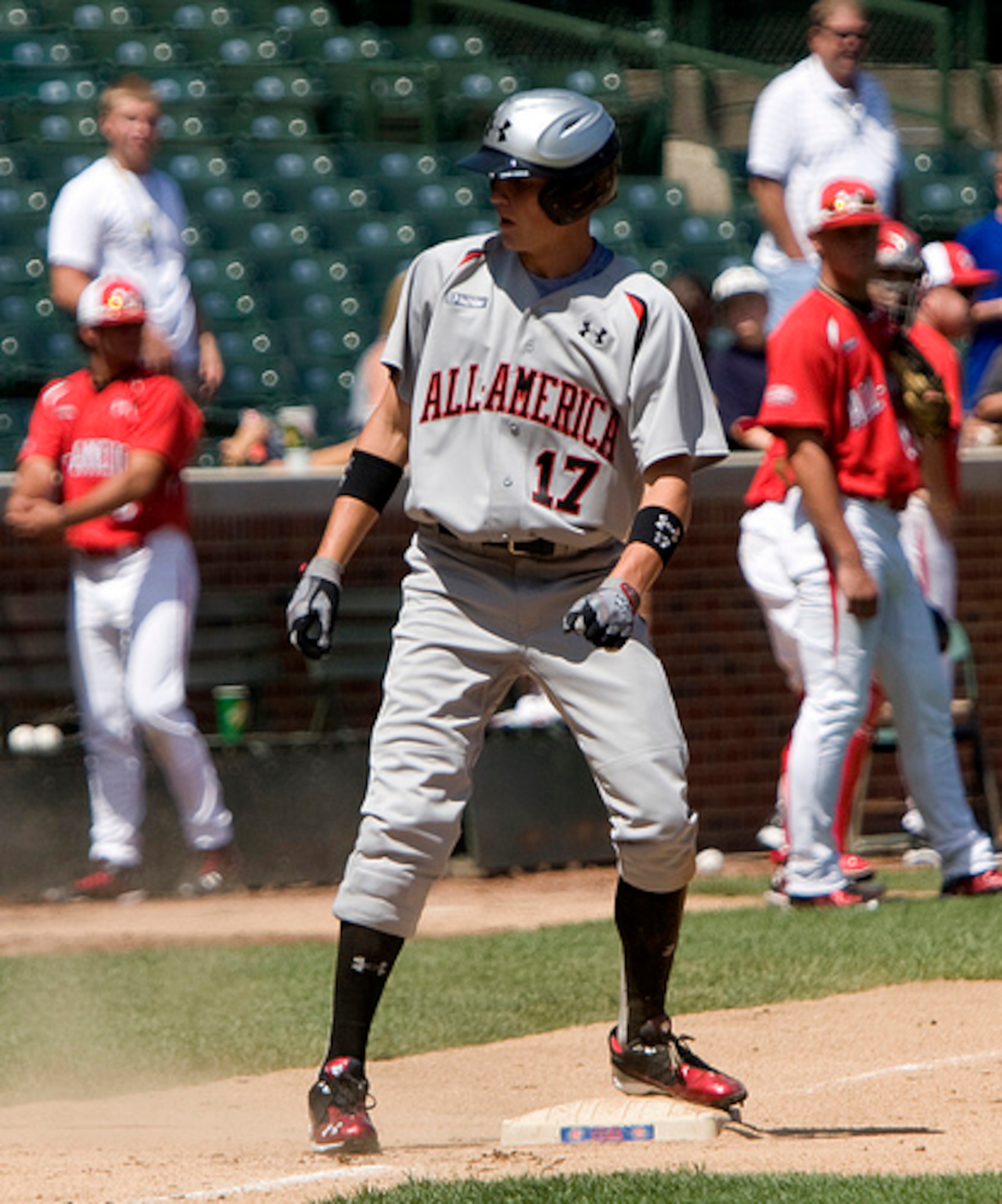
While Nimmo is a talented prospect, there's still a ton of projection on him because he hails from Wyoming, a state that doesn't have high-school baseball due to the terrible spring weather (highs of 48 degrees) and the lack of funding.
Luckily for him, if there's anything that MLB scouts love more than production, it's projection.
But it's not like Nimmo hasn't done any kind of producing during his four years of high school. He's just had to find different routes.
For the most part, he has had to resort to playing with traveling teams, including American Legion ball-clubs and stocking up on showcases.
As his performance at the Under Armour All-American Game at Wrigley Field last year showed, he's already very talented. Nimmo earned MVP honors and finished with two hits, including a triple, two runs and two RBI.
The scouting report on the 6'2", 190 pound Nimmo doesn't look overly impressive (good bat, good runner, chance for above-average power, solid defense), but he's such a hard worker, and he's very advanced for playing far fewer games than any other high-schooler.
He is advanced enough to draw scouts to Wyoming by the truck-load in the middle spring in order to see him play in a few American Legion games.
And don't forget just how raw this kid is.
...and Puerto Rico- Jorge Lopez, RHP, Academia De Milagrosa
52 of 52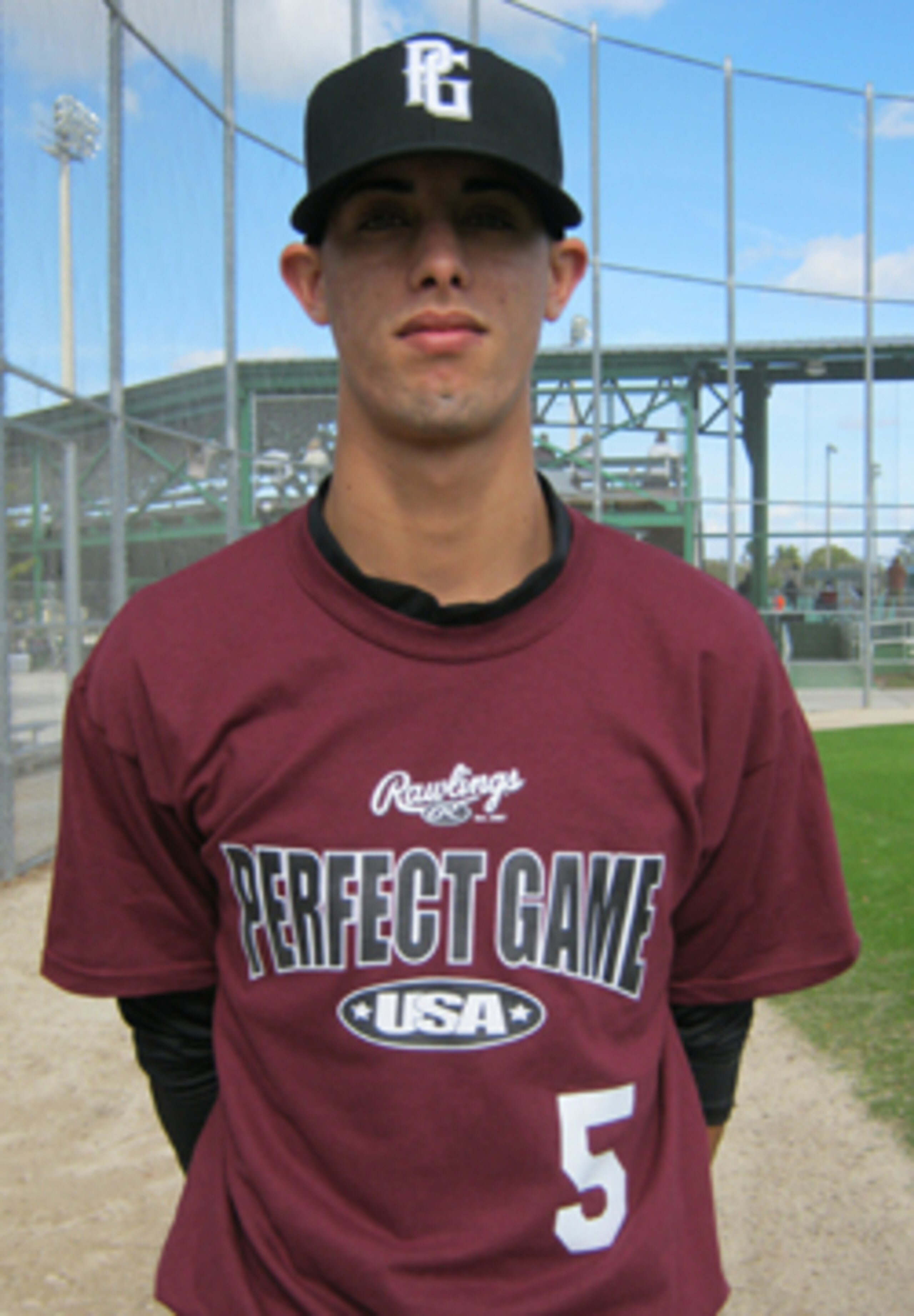
Lopez is the 39th-ranked draft prospect and is the top player from the commonwealth of Puerto Rico, regardless of position.
Armed with an impressive low 90s fastball, Lopez has made his mark with a curveball that is absolutely insane. Only 18-years old, Lopez is amazingly mature and advanced beyond his years when he's on the mound.
In addition to his fastball-curve combo, he's also shown some feel for a changeup.
Lopez is a very scrawny guy (6-foot-4, 180 lbs) so he'll have to add some bulk to his frame to develop as a serious starting option, but if he does, and adds some velocity and sharpens his breaking stuff in the process, he could be a nice find for a team in the second or third-round.





.jpg?w=2560 "Latest Peyton-Colts Rumors")

