
The 1980s featured a wrestling boom rivaled only by the Attitude era of the late '90s. Over the course of a decade, some of the most memorable and beloved stars in the history of the business entered the homes of millions via cable and syndicated television.
Many of those men and women who plied their craft in the '80s became household names and every year, WWE inducts at least one star from that era into their Hall of Fame. Their popularity, in some cases, is as high today as it was through the course of the decade. Fans show their respect for the Superstars they grew up watching, cheering those such as "Rowdy" Roddy Piper, Jimmy "Superfly" Snuka, and Ricky "The Dragon" Steamboat whenever they make an appearance on WWE programming.
Join me for a stroll down memory lane as I rank the greatest Superstars of the 1980s.
Information used throughout this slide, including dates and career highlights, was taken from Online World of Wrestling. You can find more about the Superstars included, as well as other important events and biographies of thousands of professional wrestlers from decades past at www.onlineworldofwrestling.com.
Do You Have What It Takes?
1 of 26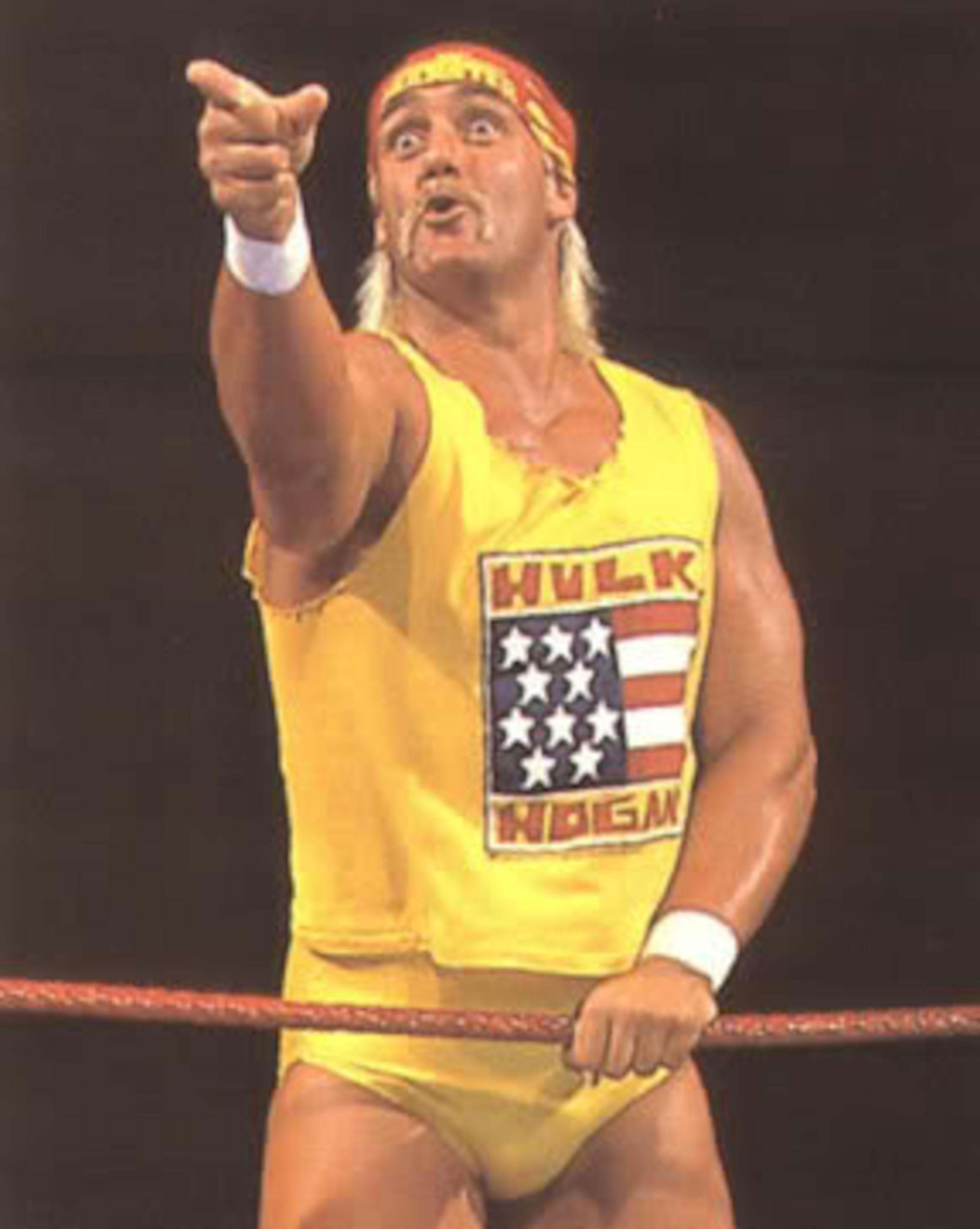
The Superstars on this list, and their place in the rankings, is a combination of a few things. First, their contributions to the sport. Did their work in the 1980s do anything to strengthen the sport? What long-lasting effects did their work have on the business?
Secondly, were they marketable? Could they be relied upon to have people pay their hard-earned money to watch and would they sell a considerable amount of merchandise for the company?
Finally, were they, at the very least, solid in-ring workers? Less important in the '80s because of the sheer number of over-the-top characters and personalities, could they be counted on to have solid matches that would not leave the audience feeling disappointed or scammed at the end of the night?
These three important characteristics allowed me to craft power rankings featuring, what I feel, are the top twenty-five wrestlers of the decade.
For those who will immediately point out the lack of Ric Flair, Dusty Rhodes, Harley Race, Tully Blanchard, and Magnum TA on the list, please carefully read the title of the slide. These rankings feature the top 25 WWE Superstars of the 1980s. If demand warrants, a similar list featuring the Top 25 of the NWA will follow. Feel free to drop a line in the comment section if that is an article you would be interested in seeing.
*UPDATE* Several female talents, such as the Sensational Sherri, Miss Elizabeth, and Wendi Richter were deserving of a place on this list. These rankings were limited to the male Superstars of the period and as a result, the equally deserving female talents were excluded. It should not be forgotten how influential Richter, Sherri, and Elizabeth were during the decade and how much of an impact they had on World Wrestling Federation programming.
As for the lack of Shawn Michaels and the ranking of Bret Hart and Dynamite Kid farther down the list than one would anticipate, it is simply due to focus being put on singles Superstars. Again, if there is demand for an article featuring the Top Tag Teams, let your voice be heard in the comments section. Thank you for reading.
25. Hillbilly Jim
2 of 26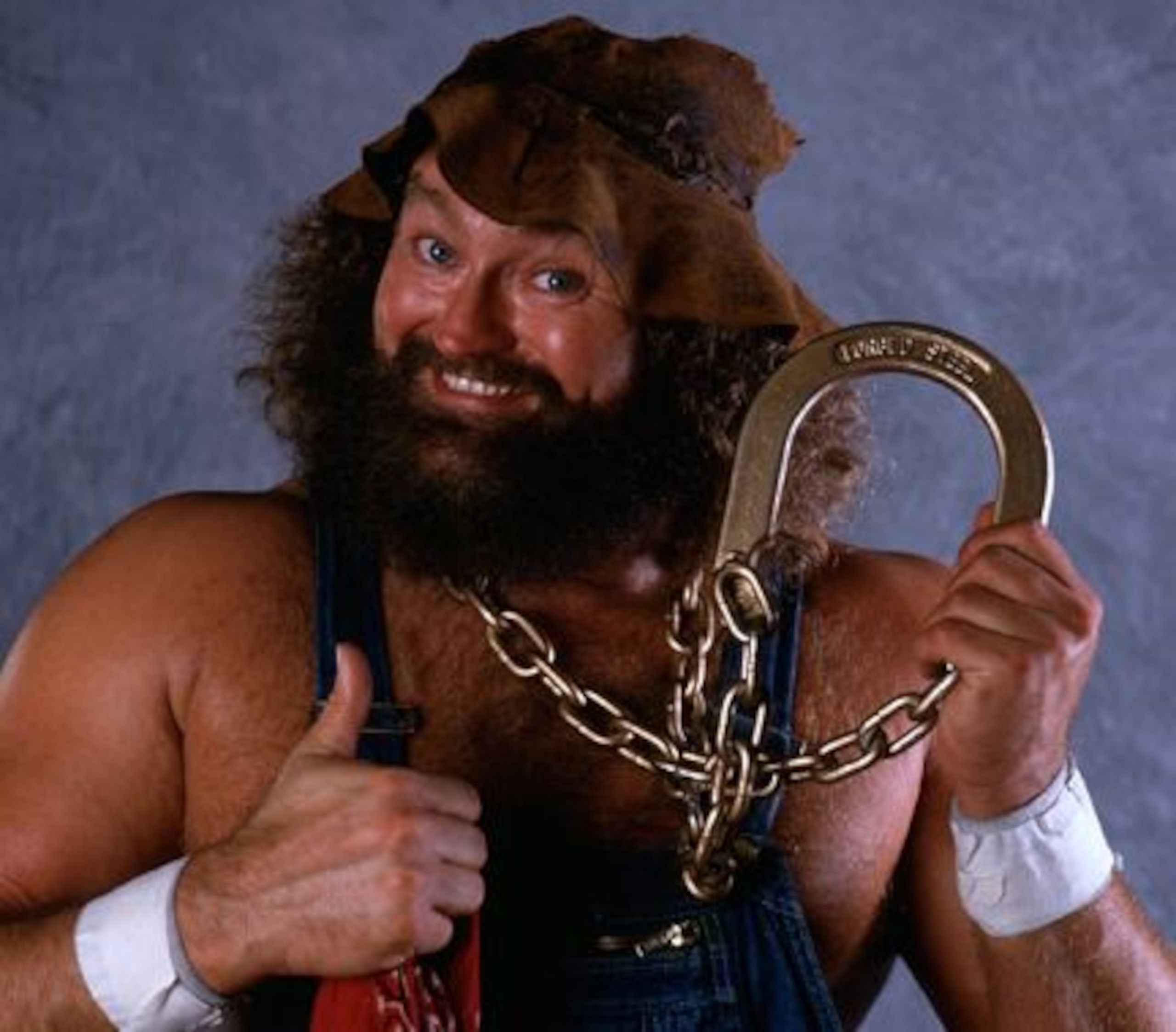
Notable Highlights:
-Made his WWE debut as a "hillbilly fan" sitting in the front row of shows across the country.
-Immediately befriended Hulk Hogan, who "trained" him and gave him his first pair of wrestling boots.
-Jim’s first feud in the company was with Don Muraco and his manager at the time, Mr. Fuji.
-A broken leg would derail Jim’s early momentum.
-Returned in time for Uncle Elmer’s wedding on a memorable edition of Saturday Night’s Main Event.
-His most memorable moment came at WrestleMania III, when he teamed with Little Beaver and the Haiti Kid to defeat King Kong Bundy, Lord Littlebrook, and Little Tokyo by disqualification.
If there is one thing Vince McMahon loves, it’s hillbillies. The mid-1980s saw an influx of the country-bumpkin characters, including Jim, Uncle Elmer, Cousin Luke, and Cousin Junior. For the most part, the four men were terrible in-ring workers but, at the same time, were beloved by fans across the country. Hillbilly Jim outlasted the others and went on to become a fantastic ambassador for Vince McMahon’s company.
Hillbilly Jim may not have the Hall of Fame credentials that others on this list do, but there was no denying the connection fans had with the often happy-go-lucky country boy. His run was short lived but the fans' fondness of him lives on.
24. Hercules
3 of 26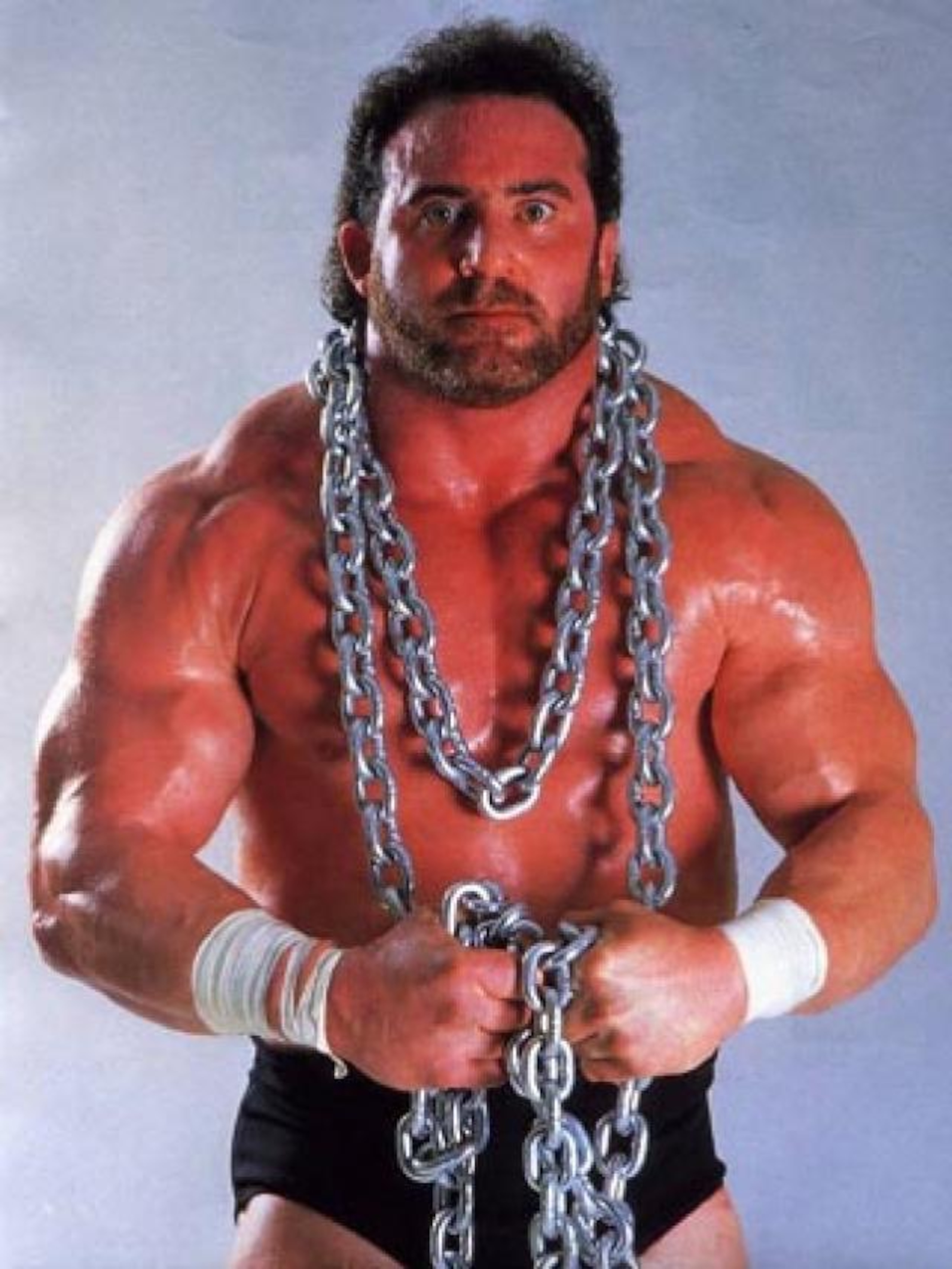
Notable Highlights:
-Joined the World Wrestling Federation in 1986 and was immediately featured on the WrestleMania II pay-per-view, albeit in a losing effort against Ricky "The Dragon" Steamboat.
-March 14, 1987: Won a battle royale on the nationally televised Saturday Night's Main Event.
-March 29, 1987: In front of 93,173 fans inside the Pontiac Silverdome for WrestleMania III, fought to a double count-out with Billy Jack Haynes.
-Was the first true test for the Ultimate Warrior early in the future-WWE Champion's career with the company.
-In 1988, erased years of villainous actions by standing up to Bobby Heenan and Ted DiBiase when Heenan attempted to sell him to DiBiase to serve as a slave.
-April 2, 1989: In the last major victory of his career, Hercules defeated Haku to open WrestleMania V.
Many will question Hercules' placement on this list. After all, he was not the most successful professional wrestler in terms of win-loss record and he never reached past mid-card status. Hercules transcends win-loss records in that, during his WWE career in the 1980s, Hercules always found a way to stay both relevant and visible.
Whether it was as a member of the hated Heenan Family stable or the beloved good guy who proved to the villainous "Million Dollar Man" that not every man had a price, Hercules was always a focal point of the WWE mid-card.
Many will argue that Hercules' physique is what kept him in such good standing with the company and was the main reason he was able to keep his job with the Vince McMahon-owned WWE for so long. However, on many occasions, Hercules proved he could bring it in the ring when paired with the right, equally-or-more talented Superstar. As an in-ring performer, Hercules may very well be one of the more underrated muscle-bound stars of the eighties.
23. King Kong Bundy
4 of 26
Notable Highlights:
-Signed with WWE in 1985, just before the major national expansion of the company.
-Defeated S.D. Jones in nine seconds at the first WrestleMania.
-With Hall of Fame manager Bobby Heenan by his side, immediately became the top nemesis of then-WWE Champion Hulk Hogan.
-December 1985: Brutally attacked Hulk Hogan, severely injuring his ribs and becoming the first real threat to end Hulkamania and Hogan's stronghold on the WWE Championship.
-April 7, 1986: In the main event of WrestleMania 2, inside a steel cage, was defeated by Hogan in a very physical WWE championship match.
-Was involved in one of the most memorable moments of the WrestleMania III event when, to the shock of many fans, he delivered a big splash to midget wrestler Little Beaver.
-Feuded with newcomer Bam Bam Bigelow for the majority of what was left of his WWE career.
Bundy's first run in WWE lasted only two years. During those two years, however, Bundy was a consistent main event attraction—the hated heel paired with the most popular stars in the company. He was the first despicable heel who set out to destroy Hulk Hogan and everything he stood for. Bundy was the first monstrous heel who posed any sort of threat to Hogan and his WWE Championship and, in many ways, was the precursor to Andre the Giant's critically and financially successful run as a "bad guy" against Hogan one year later.
22. The Iron Sheik
5 of 26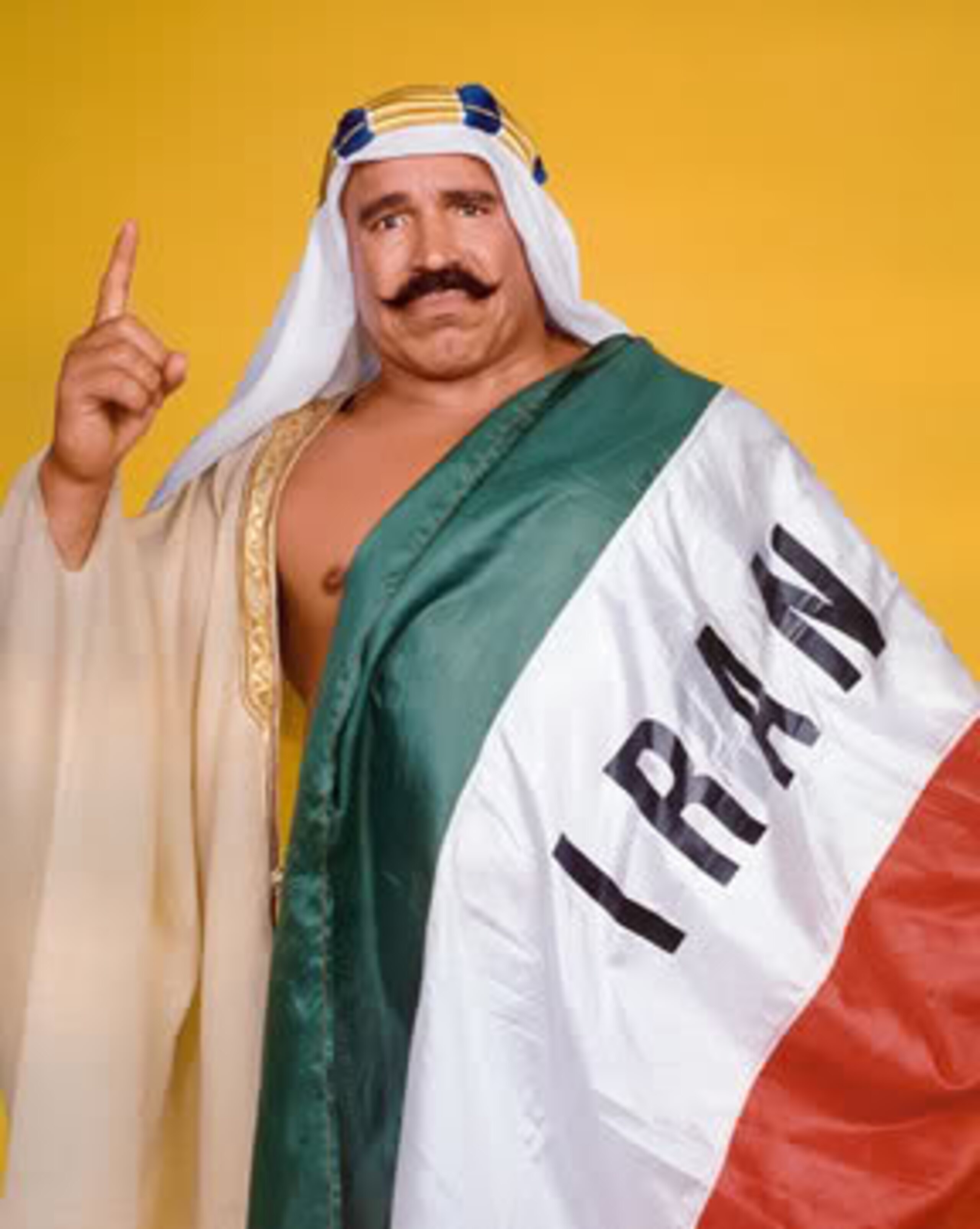
Notable Highlights:
-Signed with the World Wrestling Federation in 1983.
-December 26, 1983: Defeated Bob Backlund to become WWE Champion in the world's most famous arena, Madison Square Garden.
-Throughout 1984, engaged in a memorable, bloody feud with Sgt. Slaughter.
-Forged a very successful tag team with Russian Nikolai Volkoff.
-March 31, 1985: With Volkoff, defeated Mike Rotunda and Barry Windham to win the WWE Tag Team Championships at WrestleMania.
-March 29, 1987: Sheik and Volkoff win their last big tag match, defeating the Killer Bees by disqualification at WrestleMania III after Hacksaw Jim Duggan interfered.
The Iron Sheik is an interesting case in that he is far more visible today then he was in his prime as a sports entertainer. Due to his appearances on Howard Stern's radio show and his often nonsensical video rants on YouTube, Sheik has established a cult following few would have expected for a man once considered the most hated in wrestling.
The Iron Sheik was trained by 2006 Hall of Fame inductee Verne Gagne in Minnesota. He competed for Gagne's AWA company before bolting in favor of the quickly expanding, higher-paying WWE. It was in the McMahon-owned company that Sheik would achieve his greatest success.
Almost immediately following his debut, Sheik was chosen to take the WWE Championship from Bob Backlund in one of the more iconic moments in the business. Sheik would prove to be a transitional champion, losing only a few weeks later to Hulk Hogan in what would prove to be another iconic moment for both WWE and the business as a whole.
Sheik would recover, quickly, from the loss. Teaming with Nikolai Volkoff, Sheik would collect his second championship with the company, this time the tag titles as the foreign villains defeated Barry Windham and Mike Rotunda at the first WrestleMania. The hated team would go on to reign as the titleholders for one year before being dethroned by the extremely popular British Bulldogs tag team at WrestleMania II.
After the loss at WrestleMania II, Sheik floated through the next year with little do, instead serving as a valuable mid-card talent. He and Volkoff would continue to team but failed to achieve the same success they had previously enjoyed. Unfortunately for the former Iranian Olympian, Sheik's run in WWE would come to an end with what should have been a routine traffic stop.
On March 26, 1987, The Iron Sheik and Hacksaw Jim Duggan, on-air rivals, were stopped and arrested by police in New Jersey. While the charges against Duggan were far more serious than Sheik, who was charged with possession of marijuana, it was the latter who would lose his job.
The Iron Sheik's career in WWE is often defined by his WWE Championship win. That win would earn Sheik a reputation of being a far bigger star than he actually was. While there is no denying his role as a highly-entertaining, intensely hated heel, Sheik spent the majority of his career as a mid-card act, only sniffing WWE's heavyweight title because a transitional champion was needed to bridge the gap between Backlund and Hogan.
There is no doubting that Sheik belongs on any list ranking the best Superstars of the 1980s. What is in doubt, however, is just how important and how great he was perceived to be versus how great and important he actually was.
21. Bret Hart
6 of 26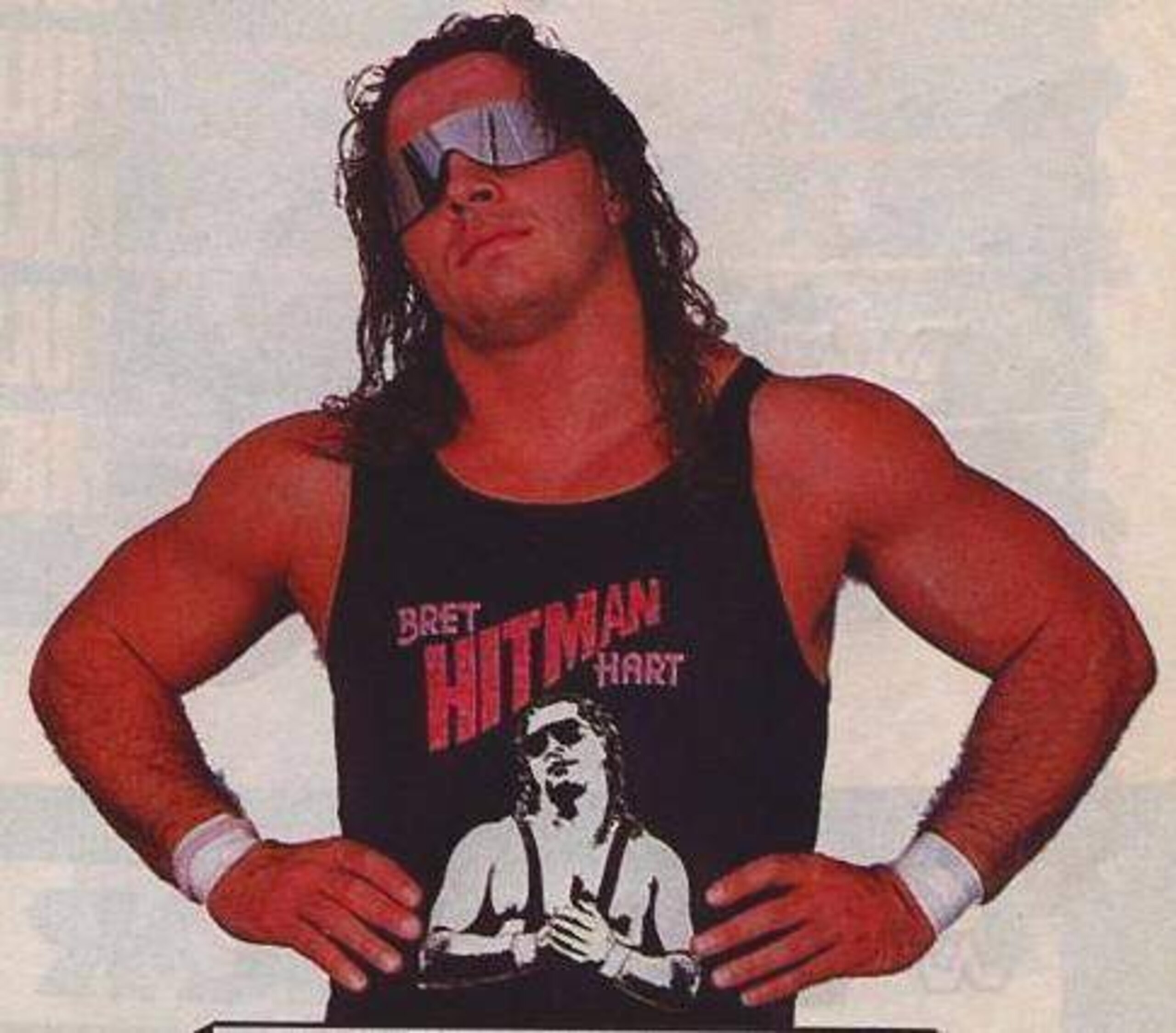
Notable Highlights:
-Signed with WWE as a part of Vince McMahon's deal with Bret's father, Stu, and his Stampede Wrestling company.
-Was the final Superstar eliminated by Andre the Giant in the big 20-Man Battle Royal at WrestleMania 2.
-January 26, 1987: With partner Jim Neidhart, defeated the British Bulldogs to become WWE Tag Team Champions for the very first time.
-March 29, 1987: With Danny Davis and Neidhart, defeated the British Bulldogs and Tito Santana in a marquee Six Man Tag Team Match.
-January 24, 1988: Entered No. 1 in the very first Royal Rumble match
-March 27, 1988: Was the final Superstar eliminated by Bad News Brown in the WrestleMania IV battle royale. Hart would turn babyface after the match, dropkicking Brown from the ring and destroying the victor's trophy.
-January 15, 1989: With Duggan and Neidhart, defeated Dino Bravo and the Rougeau Brothers in a Six Man Tag, Best 2-of-3 Falls Match.
-April 2, 1989: The Hart Foundation defeated "Rhythm & Blues," Honkytonk Man and Greg Valentine, at WrestleMania V.
-As the 1980s came to a close, Hart seemed destined to make a singles run in the company.
It is no secret that Bret Hart eventually became one of the greatest stars the professional wrestling business has ever seen. He would amass five WWE championships and become, perhaps, the most globally beloved star in the sport. But in the 1980s WWE, he was strictly a tag team competitor. It is because of his role in a team that he does not rank higher on this list.
That said, as one-half of the highly-successful Hart Foundation, Hart was a featured talent on WWE television for the majority of the decade. He and Jim Neidhart were able to successfully transition from hated heels to a popular babyface duo that could often be seen trying to wrest the tag team championships from Demolition. It was the work Hart did in the tag team division that would earn him the trust of Vince McMahon and lead to his push to the top of the industry in the early and mid-1990s.
20. Dynamite Kid
7 of 26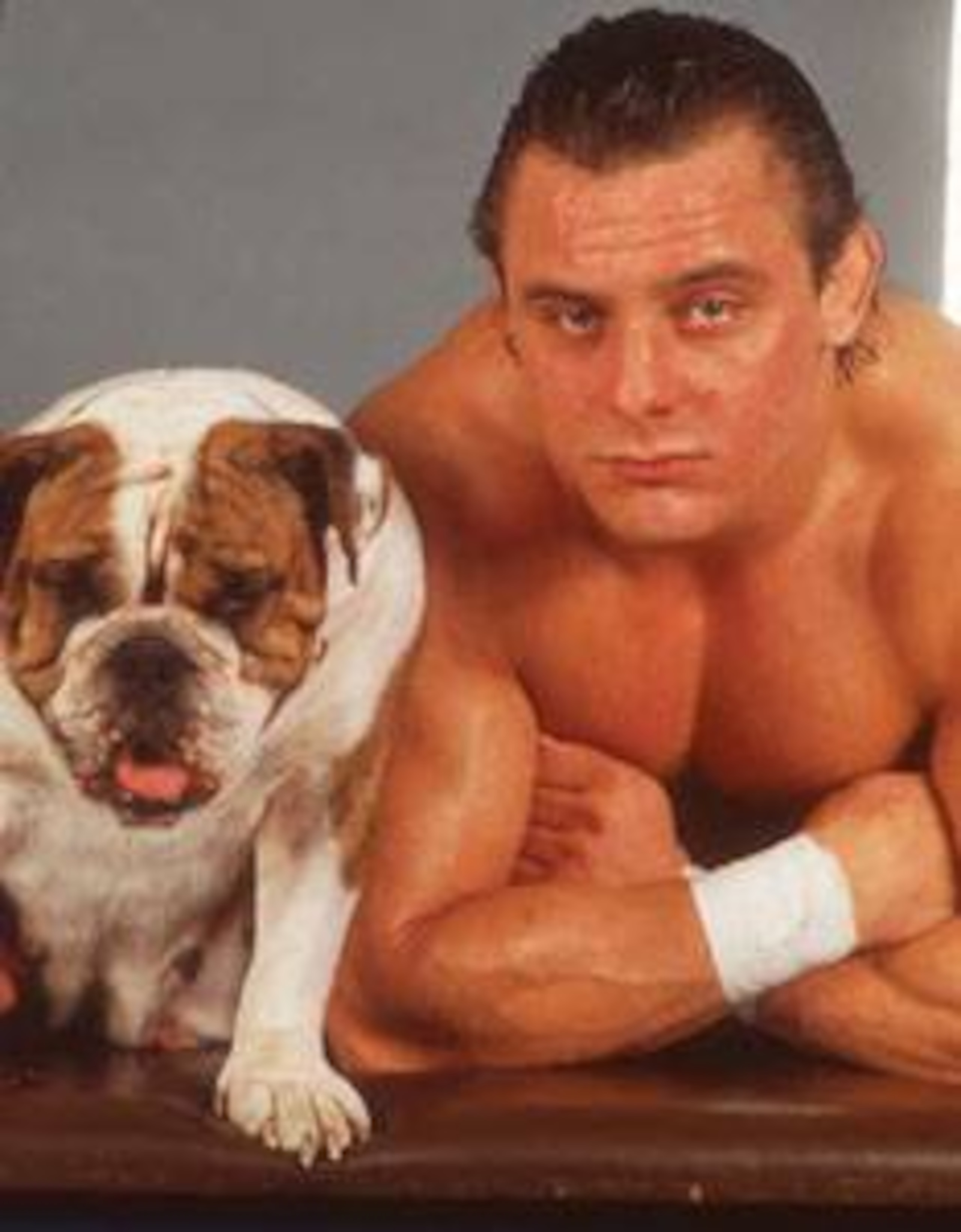
Notable Highlights:
-Signed with WWE as a part of the Stampede Wrestling deal.
-April 7, 1986: Teamed with Davey Boy Smith as a part of the British Bulldogs tag team and defeated Greg Valentine and Brutus Beefcake to become WWE Tag Team Champions at WrestleMania 2.
-January 1987: A severe back injury to Dynamite forces the Bulldogs to drop the tag titles to the Hart Foundation, Bret Hart and Jim "The Anvil" Neidhart.
-March 29, 1987: The Hart Foundation and Danny Davis def. The British Bulldogs and Tito Santana in a Six Man Tag Team Match as a part of the gigantic WrestleMania III card. Dynamite Kid, nearly crippled from a severe back injury, was unable to compete to his fullest ability.
-Throughout early 1988, the Bulldogs feuded with Bobby Heenan's new tag team, The Islanders. In a memorable moment, Heenan, Haku, and Tama kidnapped the team's mascot, an English bulldog named Matilda.
-March 27, 1988: Bobby Heenan and The Islanders def. The British Bulldogs and Koko B. Ware in a Six Man Tag Team Match
-August 28, 1988: The Bulldogs fought to a time-limit draw with the Rougeau Brothers in the first match in WWE SummerSlam history.
While Bret Hart would go on to become one of the greatest wrestlers in the history of the industry, it was Dynamite Kid who was easily the standout of the Stampede Wrestling stars upon their initial entry into the WWE. He plied his craft with a speed and intensity unlike any seen before and similar to only one man after.
Dynamite was the inspiration for Chris Benoit and dozens of other Superstars who came through the business in the past ten years. He was also a notorious bully and pill addict. It was his reliance on steroids to help him maintain a physique, despite his smaller size, that influenced Benoit to use the performance enhancers that may, or may not, have led to the tragedy that ended his life as well as the lives of his wife and son.
Despite the negative reputation that the Dynamite Kid has earned over the last two decades, it is impossible to ignore the quality performer he was, the classic matches he and Davey Boy Smith had with the other tag teams during the mid-to-late 1980s, and the influence he had on the stars and wrestling styles they employed in the decades that followed.
19. Don Muraco
8 of 26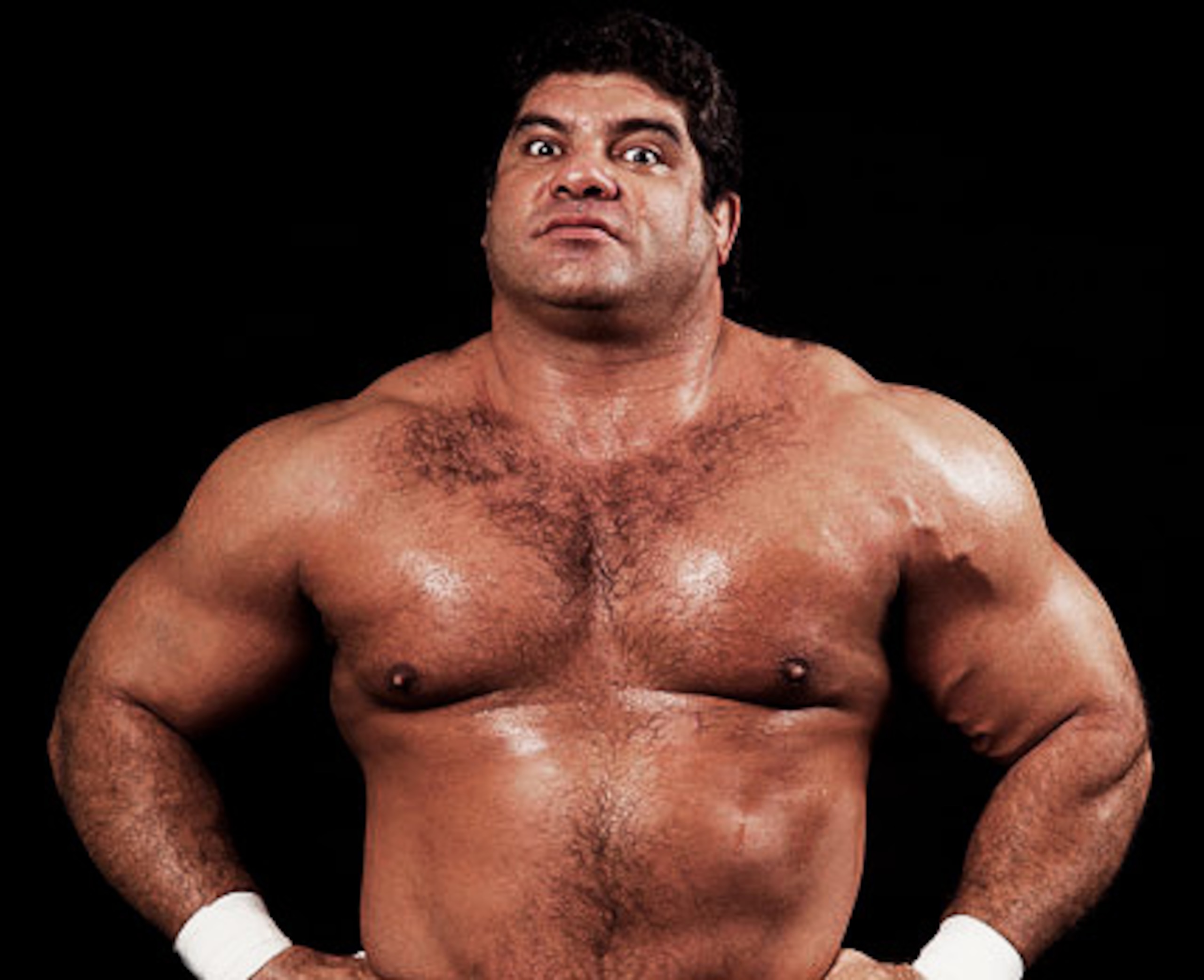
Notable Highlights:
-Signed with WWE in 1980.
-June 20, 1981: Defeated the legendary Pedro Morales to win his first Intercontinental Championship.
-January 22, 1983: After taking a few months off from wrestling, Muraco returned and again defeated Pedro Morales to become a two-time Intercontinental Champion.
-In one of the most memorable matches in wrestling history, Muraco battled Jimmy Snuka inside a steel cage at the world's most famous arena, Madison Square Garden. The match has been credited with inspiring Mick Foley to become a professional wrestler.
-February 1984: Had his one-year title reign ended at the hands of Tito Santana.
-With Mr. Fuji as his manager, feuded with Ricky Steamboat in 1985.
-Remained an upper-mid-card heel and was paired with Hulk Hogan on a memorable edition of Saturday Night's Main Event, just weeks before WrestleMania 2.
-Made a switch to babyface and adopted "Superstar" Billy Graham as his manager in 1987.
-March 27, 1988: Defeated Dino Bravo in the opening round of the WWE Championship tournament at WrestleMania IV. He would lose to Ted DiBiase in round two in what would be his final pay-per-view appearance for WWE.
Don Muraco was the epitome of a professional. A hard-working, albeit heel, competitor who racked up a number of championship wins but also proved himself as a trusted hand in the ring. He could be relied upon for quality matches, at least prior to 1986, and could make the switch from hero to villain at will.
Muraco's runs with Morales and Tito Santana, and the matches that ensued, were the highlights of some otherwise not-so-stellar shows early in the national expansion of the World Wrestling Federation. They were also responsible for creating legitimacy and respect for the Intercontinental Championship.
At a time when Superstars were transitioning into the cartoon-type characters who dominated the late '80s and early nineties, Muraco was a throwback to a time where wrestlers, who wrestled, could still get over and remain an important part of the show. That, more than anything, will be Don's longest lasting legacy.
18. "Mr. Perfect" Curt Hennig
9 of 26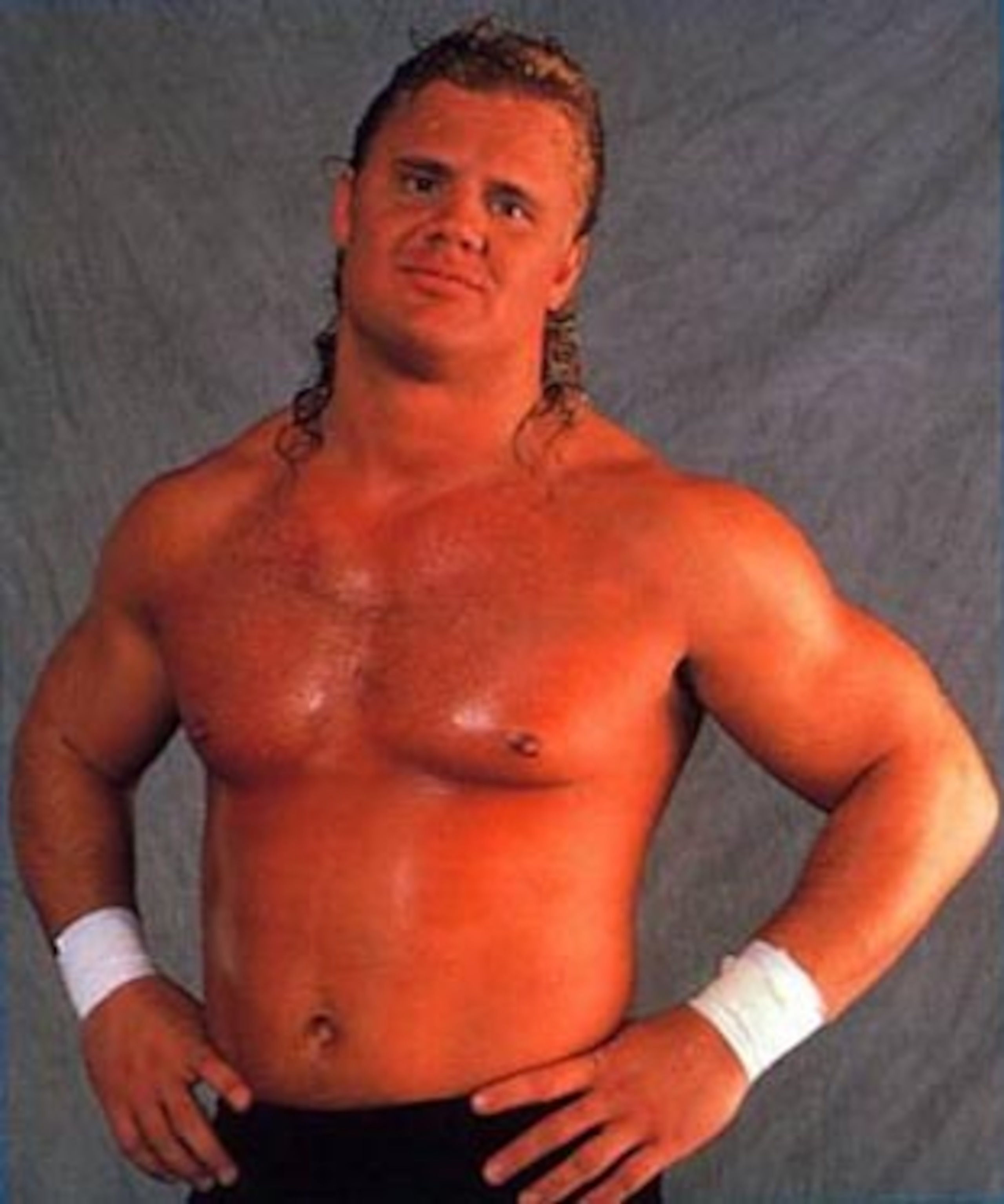
Notable Highlights:
-A series of highly-entertaining vignettes, featuring Hennig excelling at a number of sports, ushered in the debut of "Mr. Perfect."
-November 24, 1988: Along with Dino Bravo, was a survivor on Andre the Giant's Survivor Series team in a win over Hacksaw Jim Duggan's team.
-April 2, 1989: Defeated the Blue Blazer (Owen Hart) at WrestleMania V.
-August 28, 1989: Defeated The Red Rooster (Terry Taylor) at SummerSlam.
-November 23, 1989: Was the sole survivor in his team's victory over Rowdy Roddy Piper's team.
Curt Hennig's run in the WWE during the 1980s is shorter than any other on this list. He lists higher than others, however, due to the immediate impact he made and the role he was on heading into the 1990s. Not unlike Alberto Del Rio currently, less than a year into his run, Hennig was considered heavyweight championship material and rumors had it he would be the one to beat Hogan for the gold.
"Mr. Perfect" was an in-ring master whose abilities from bell-to-bell were unmatched at the time. If he would have had the size and muscle mass of a Hulk Hogan, BROTHER, Hulk would have been in the opening match while Hennig carried main events for a decade.
The late 1980s was a period of introduction for Hennig. He introduced his face, his character, and his abilities to the fans so that, come the 1990s, he could make his push towards the main event.
17. Hacksaw Jim Duggan
10 of 26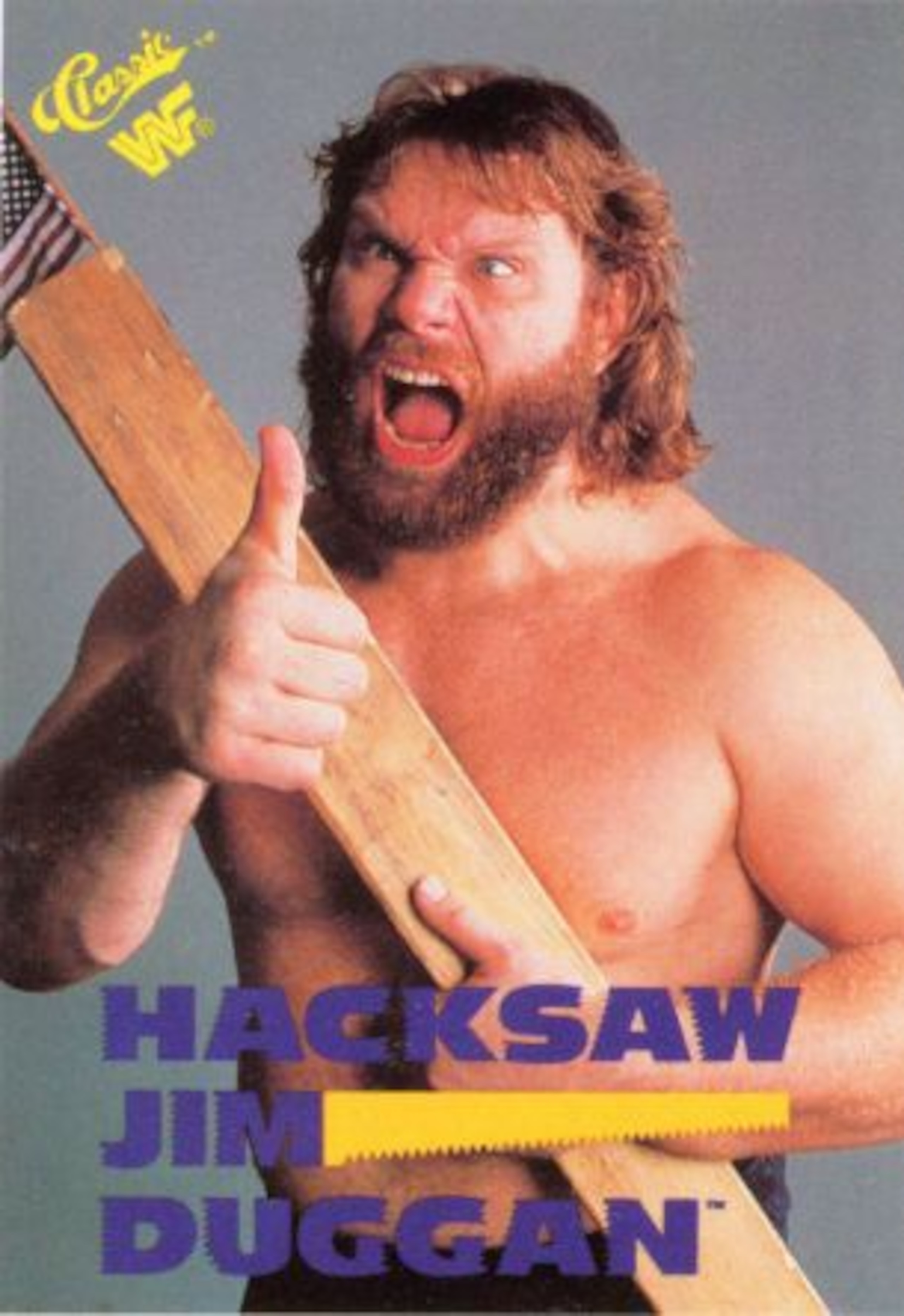
Notable Highlights:
-Signed with WWE in January of 1987.
-Won the first-ever Royal Rumble in 1988, a sign that all had been forgotten in relation to his arrest for marijuana possession and drinking while driving in early 1987.
-At the 1989 Royal Rumble, teamed with the Hart Foundation to defeat the Rougeau Brothers and Dino Bravo in a Best 2-of-3 Falls, Six Man Tag Match.
-At SummerSlam 1989, teamed with Demolition to defeat Andre the Giant, Big Bossman, and Akeem.
Jim Duggan's debut in the World Wrestling Federation in 1987 signaled a change in the career and character of the Glens Falls, New York native. Rather than continuing to portray the taped-fist, more serious tough guy who he had in Bill Watts' mid-South promotion, Vince McMahon envisioned Duggan as the every-man simpleton who stood up for what was right and did not mind punching you in the face if you were bad.
That small shift in character created one of the most beloved stars in the history of McMahon's company. Despite his lack of championships accumulated, Duggan still managed to be inducted into the 2011 WWE Hall of Fame. Duggan was a classic good guy, never wavering and never allowing the temptation of evil to sway him. Unlike other faces of the time, however, Duggan would not shy away from using his trusty 2-by-4 if cornered or confronted with a situation where numbers were not in his favor.
16. Greg "The Hammer" Valentine
11 of 26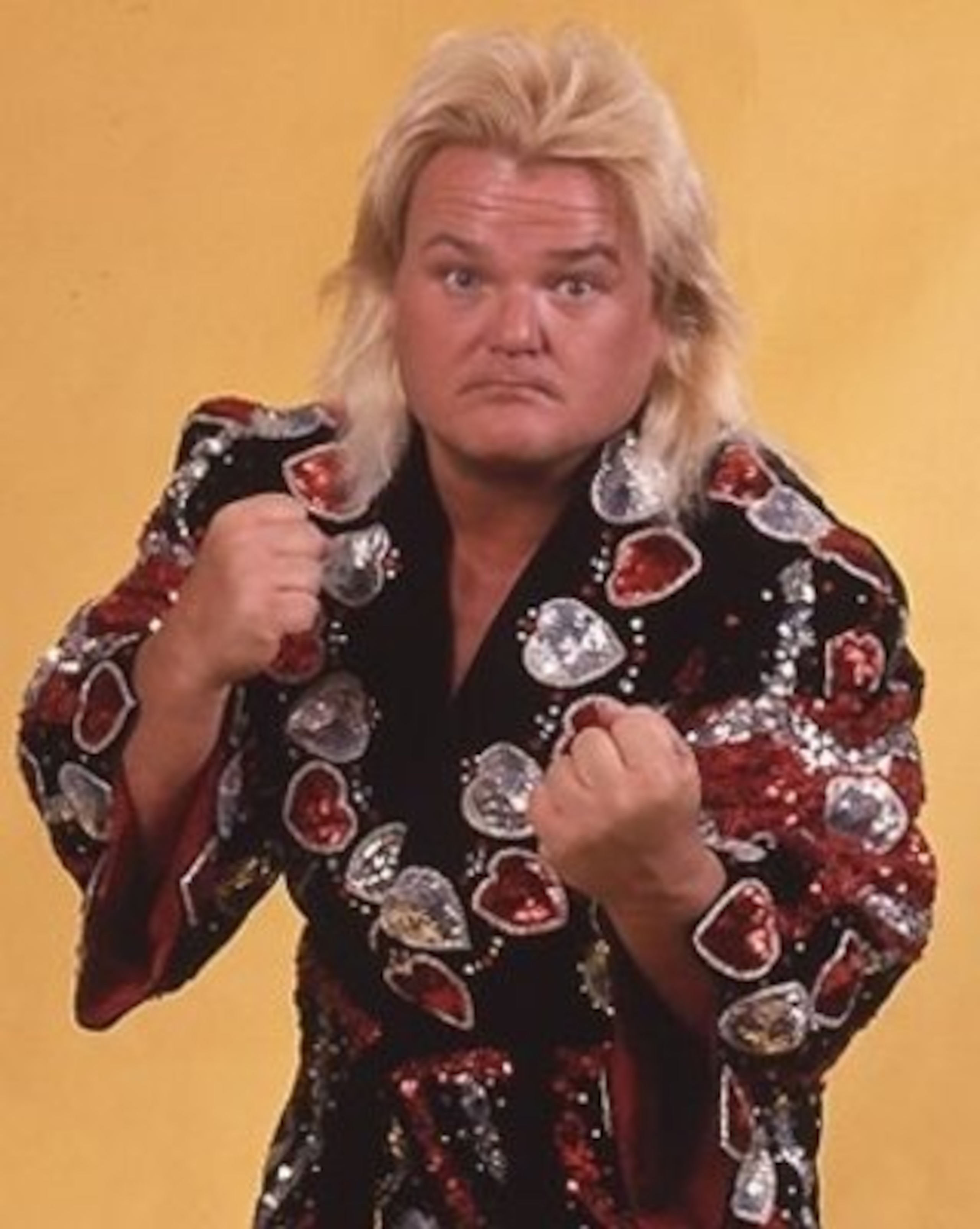
Notable Highlights:
-Valentine made the first of his two runs in Vince McMahon's World Wrestling Federation in 1981, with the Hall of Fame manager the Grand Wizard at his side.
-Challenged Bob Backlund for his WWE Championship and, in one of the most controversial moments in the history of the company, was erroneously declared champion. As a result, the championship would be held up until Backlund defeated Valentine for the title. Sadly, this would be the closest Valentine would get to the big belt in his WWE career.
-Left WWE for two years before returning in 1984, this time with Capt. Lou Albano serving as his manager.
-September 24, 1984: Defeated Tito Santana for the Intercontinental Championship in what would prove to be the first of several classic matches for the coveted secondary title.
-July 6, 1985: Lost the Intercontinental Championship to Tito Santana in a match many consider to be one of the finest cage matches of all-time.
-August 24, 1985: In a tag team with Brutus Beefcake known as the "Dream Team," defeated Barry Windham and Mike Rotunda to become WWE Tag Team Champions.
-Valentine would go on to participate in several tag team combinations, including the "New Dream Team" with Dino Bravo as his partner and "Rhythm & Blues" with Honkytonk Man.
Greg Valentine was a man's wrestler. He was a rough, hard-hitting, no frills, take-no-crap performer whose every match was believable. The son of an old-school veteran, Valentine had no flashy gimmick and a nickname straight out of the seventies. That said, not once did Valentine ever appear to be out of place on shows that were, more often than not, populated by over-the-top, larger-than-life characters.
Much like Chris Benoit, William Regal, and Fit Finlay would be some fifteen years later, Greg Valentine was the straight wrestler who could be called on to deliver a quality WRESTLING match in and amongst a card that may not have much of it. "The Hammer" was the brute heel who was often paired with other capable wrestlers in hopes that they could perform for twenty minutes, not blow up, and leave the fans feeling as though they had seen a legitimate contest.
Late in the 1980s, Valentine was paired with The Honky Tonk Man and adopted a more comical, less realistic persona as one-half of "Rhythym & Blues." He died his hair black and lip-synched to songs along with Honky, Jimmy Hart, and Peggy Sue (Sensational Sherri in 50's attire). It was a disappointing way for such a highly-respected competitor to end the decade.
Valentine's career was one defined by his in-ring talents more so than by entertainment value or character development. Greg Valentine was a professional and, just when it appeared as though the entertainment portion of some shows was taking over, Valentine was always quick to remind Vince McMahon that he was promoting professional wrestling.
15. Brutus "The Barber" Beefcake
12 of 26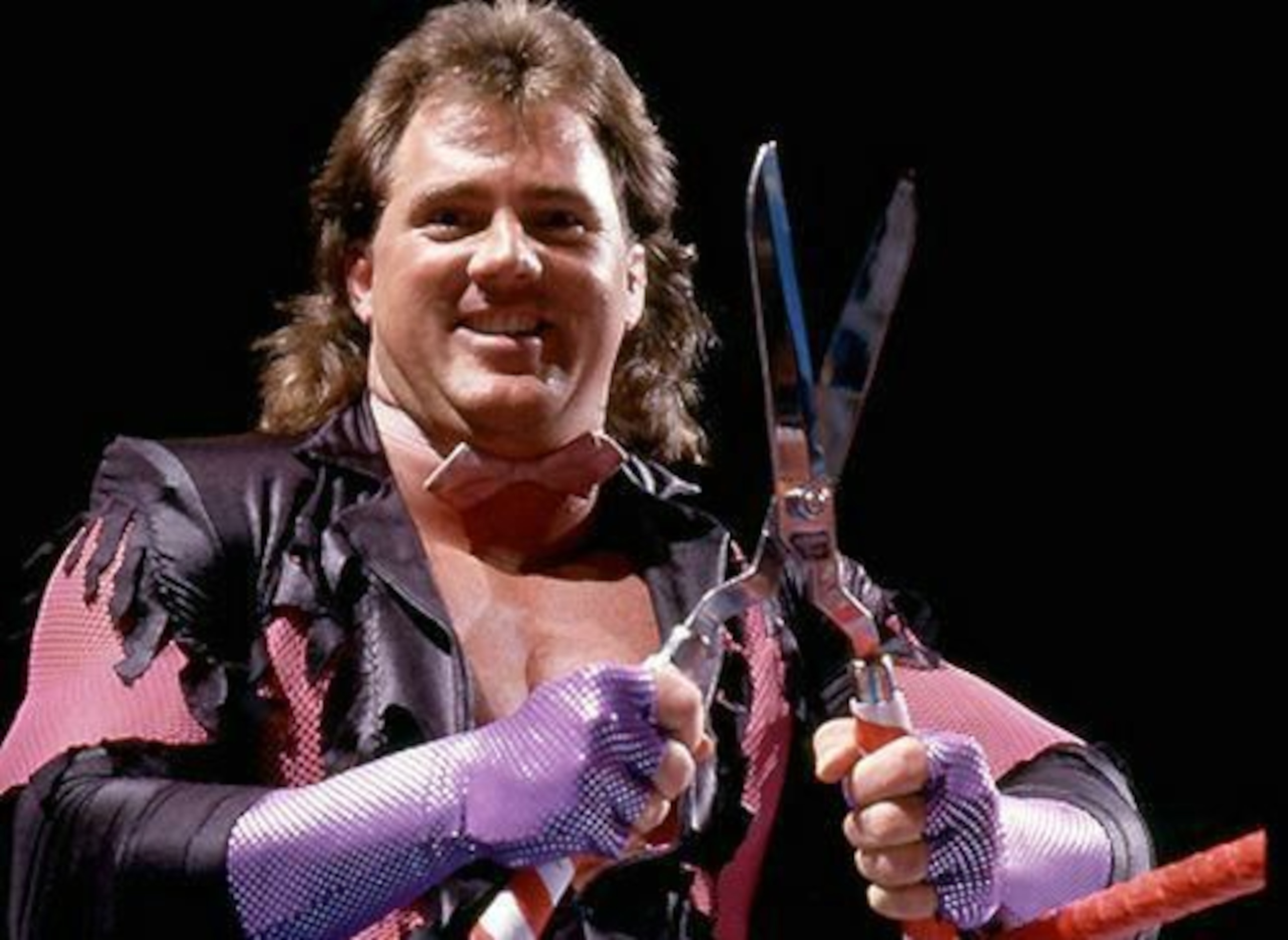
Notable Highlights:
-Signed with WWE in 1984.
-March 31, 1985: Fought to a no contest with David Sammartino at the first WrestleMania.
-August 24, 1985: Teamed with Greg Valentine in the "Dream Team" to defeat Barry Windham and Mike Rotunda for the WWE Tag Team Championships.
-Held the tag team gold for eight months before dropping it to the British Bulldogs at WrestleMania 2.
-March 29, 1987: The Dream Team defeated the Rougeau Brothers at WrestleMania III. Immediately after the match, Beefcake's manager, Johnny V, dispatched him from the team, effectively turning Beefcake babyface. Later, following Roddy Piper's victory over Adrian Adonis in a hair vs. hair match, Beefcake would earn his "Barber" nickname by cutting Adonis' hair.
-March 27, 1988: Defeated Intercontinental Champion The Honky Tonk Man by disqualification.
-Was slated to capture the Intercontinental title from Honky Tonk Man but an attack by "Outlaw" Ron Bass left Beefcake bloodied and unable to compete at August's SummerSlam pay-per-view event. Also, the emergence of the Ultimate Warrior as a force in the company made him the more favorable star to take the title off of HTM.
-April 2, 1989: Fought to no contest with "Million Dollar Man" Ted DiBiase at WrestleMania V.
-August 28, 1989: Teamed with Hulk Hogan to defeat "Macho King" Randy Savage and Zeus (actor Tiny Lister from the Hogan-starring film No Holds Barred).
Brutus Beefcake was employed with the World Wrestling Federation because he was Hulk Hogan's friend from Florida. There is no denying that. During his early run in the company, he was little more than a muscle-bound "body" that looked good but did not know the difference between a wrist lock and a wrist watch. He was paired with Greg Valentine in hopes of disguising his in-ring weaknesses.
A funny thing happened after being booted from the Dream Team by manager Johnny V. Beefcake became a beloved babyface and somewhere along the way, began to take pride in his in-ring work. He gained a better understanding of both the showmanship portion of the job, as well as the actual wrestling part. He became a polished performer and was a very popular mid-card attraction.
Unfortunately for Brutus, a series of freak injuries derailed his momentum on a number of occasions, most notably in the 1990s when a parasailing injury left his face a mangled mess and prevented him from winning the Intercontinental Championship, as planned.
Despite the disappointing lapses in his career, Beefcake is another in a long line of beloved babyface acts from the decade. His friendship with Hulk Hogan undoubtedly helped him get and keep his job early, but Brutus is often overlook for the strides he made as a performer and the stigma of being the "Hulkster's" buddy in order to succeed on his own.
14. "Ravishing" Rick Rude
13 of 26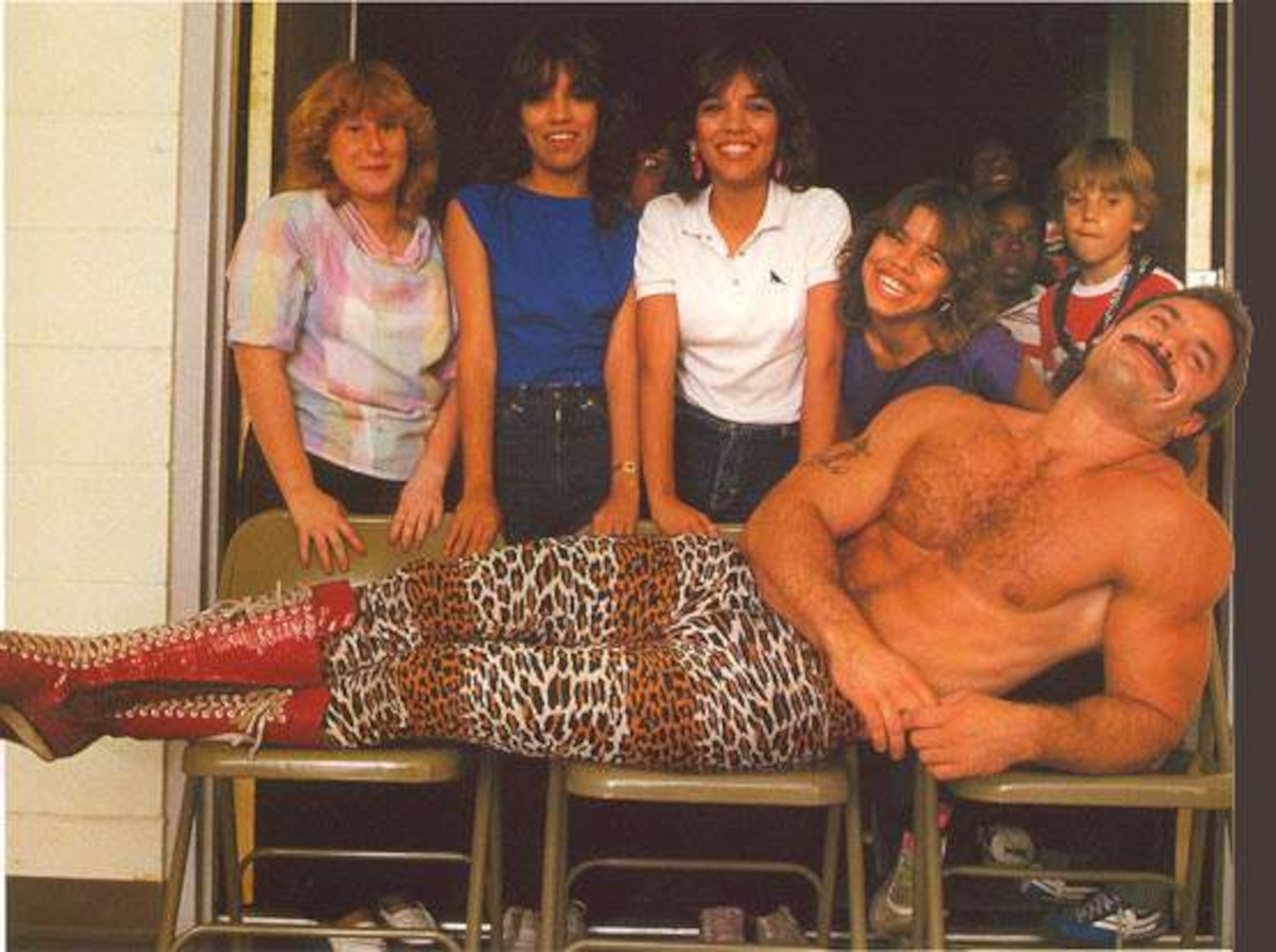
Notable Highlights:
-Debuted with the WWE in July 1987.
-Almost immediately became engaged in a personal rivalry with Jake "The Snake" Roberts. Rude had propositioned Roberts' wife at ringside, prompting Roberts to come to her defense.
-March 27, 1988: Fought to a draw with Jake Roberts in round one of the WWE Championship tournament at WrestleMania IV.
-August 28, 1988: Defeated Junkyard Dog by disqualification when Jake Roberts interfered at Summerslam.
-At the 1989 Royal Rumble, participated in a pose-off with the Ultimate Warrior. When it appeared as though he would lose, Rude attacked Warrior, igniting a feud over the Warrior's Intercontinental Championship.
-April 2, 1989: Defeated the Ultimate Warrior to become the new Intercontinental Champion.
-August 28, 1989: Dropped the Intercontinental Championship back to Warrior at SummerSlam.
-Feuded with Roddy Piper leading into Survivor Series and continued that feud as the decade came to a close.
Rick Rude was the latest evolution of Gorgeous George, Buddy Rogers, and Ric Flair. He was a self-proclaimed ladies man whose physique was absolutely ripped. He was also a solid in-ring worker who could have both very good and very bad matches, depending on his mood on any given day. Rude was also one of the heels who was considered cool and, as a result, had his fair share of supporters.
Rude entered WWE and was immediately plugged into a feature angle in which he tried to seduce the wife of Jake Roberts, was shot down and, as a result, was forced to pay the price at the hands of a very angry Roberts. The feud was different from any other in the company at the time in that it was a very personal rivalry that many in the crowd could connect with. Here was this cocky, arrogant heel of a man lusting after another man's wife, angering that man, and then continuously trying to provoke him just to get inside his head.
As hot as the feud was, the WWE fans never really got to see its conclusion. Rude was moved onto an angle with Ultimate Warrior over the Intercontinental Championship and Jake Roberts was sent off to do battle with Andre the Giant.
Rude would prosper, collecting the Intercontinental Championship but quickly losing it back to Warrior four months later. While the "Ravishing" one would remain a main event-worthy attraction for the duration of his WWE career, he never quite met the expectations set for him until he left the company for WCW in the early 1990s.
13. Ricky "The Dragon" Steamboat
14 of 26
Notable Highlights:
-Steamboat debuted with the McMahon-owned company in 1985.
-March 30, 1985- Ricky Steamboat def. Matt Bourne at WrestleMania.
-At times throughout the year, Steamboat teamed with Jimmy Snuka as the "South Pacific Connection."
-April 7, 1986- Steamboat defeated Hercules Hernandez.
-May 1, 1986- Steamboat wrestled Jake Roberts to a no contest. After the match, Roberts delivered a devastating DDT on the cold, hard concrete arena floor. This would be the emphasis for a program that would last the majority of the summer of 1986.
-At the "Big Event," Ricky Steamboat defeated Jake Roberts in a match billed as a "Snake Pit Match."
-September 13, 1986- On Saturday Night’s Main Event, Steamboat and Roberts end their rivalry in a match that sees Steamboat pick up the victory.
-In the fall of ‘86, a dastardly attack by Randy Savage puts Steamboat out of action indefinitely. Savage jumps from the top rope and uses a ring bell to crush the "Dragon’s" larynx.
-December 14, 1986- Steamboat makes his return, coming to ringside during a Randy Savage match.
-March 29, 1987- Ricky Steamboat def. Randy Savage to win the Intercontinental Championship in a match that not only steals the show but also is immediately considered one of the greatest of all time. The match would prove to be one of the most influential in the history of the art form.
Shortly afterward, it is revealed that Steamboat’s wife is pregnant and Ricky asks Vince McMahon for time off to be home when his child is born. The decision is made to take the Intercontinental title off of Steamboat.
-June 2, 1987- The Honky Tonk Man def. Ricky Steamboat to win the Intercontinental Championship.
-November 26, 1987- Steamboat joins Randy Savage’s Survivor Series team to defeat Honky Tonk Man’s team.
-March 28, 1988-In his final appearance for WWE at a major event, Steamboat loses to Greg Valentine in the first round of the WWE Championship tournament at WrestleMania IV.
-Steamboat would spend the rest of the 1980s in the rival Jim Crockett National Wrestling Alliance promotion.
Ricky Steamboat is one of the most popular stars to ever grace a professional wrestling ring. Even more popular with the internet fans than the casual fans, Steamboat was often able to convey such sympathy with the fans and his in-ring performance was often unmatched. He pulled every move off with such fluidity that he, quite literally, had no flaws inside the squared circle.
Steamboat's trademark rivalry in 1980s WWE was with Randy Savage over the Intercontinental Championship. The crowd had built such a like and respect for Steamboat that, when Savage used the ring bell, from the top rope, to crush Ricky's throat and put him out of action, the "Macho Man" immediately garnered heel heat on par with the newly turned Andre the Giant.
The match between Steamboat and Savage not only stole the show at WrestleMania III but, to this day, is considered one of the five best matches in WrestleMania history, as well as one of the top ten in the history of the sport.
Outside of the Savage storyline, Steamboat also had a highly-entertaining program with Jake Roberts, just before "The Snake" became the babyface many remember him being. The most memorable encounter between the two featured Steamboat debuting a "dragon" (actually an alligator) to counteract the snake of Roberts. The two worked very well together but, unfortunately, the angle came to an end nearly as fast as it got started.
Ricky Steamboat is one of the finest professional wrestlers ever. There are a number of major Superstars who have had the best matches of their careers against Steamboat. Over the course of his career, he remained a babyface, one of the select few never to portray a heel in the industry. Many of today's stars credit Steamboat with inspiring them to become wrestlers or with teaching them what is necessary to become a true star in the business.
Steamboat finished the 1980s in the NWA/WCW, feuding with Ric Flair and performing in a number of great matches that many consider the best of all time. It is for this reason that Steamboat does not rank higher on this list of Top 25 WWE Superstars of the 1980s. It is the ONLY reason.
12. "Mr. Wonderful" Paul Orndorff
15 of 26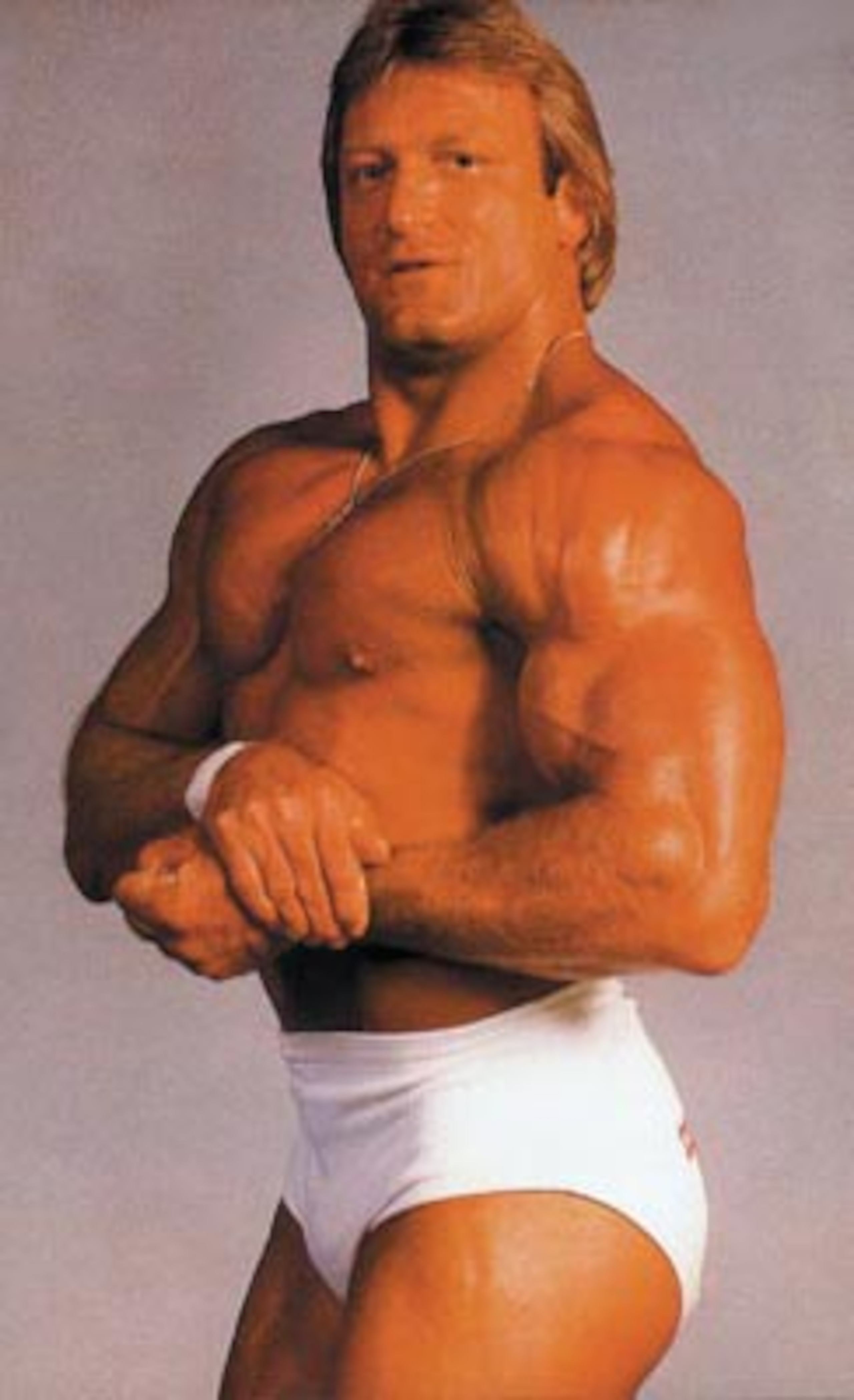
Notable Highlights:
-Orndorff signed with WWE in 1984 and quickly aligned himself with Roddy Piper.
-In February of 1984, Orndorff challenged Hulk Hogan in Hogan’s first New York City title defense.
-In the main event of the "War to Settle the Score," Mr. Wonderful interfered on the behalf of Piper in his match against Hogan. Mr. T would come to the aid of Hogan, setting up the first WrestleMania main event.
-March 30, 1985- Orndorff and Piper lose to Hogan and Mr. T in the main event of WrestleMania.
-Orndorff would go on to forge a friendship with Hogan through the rest of 1985, into 1986. However, Orndorff grew jealous of the major superstardom Hogan had achieved and often tried to overshadow Hulk during tag matches, working entire matches on his own and never tagging Hulk in.
-June 24, 1986- Orndorff turns his back on Hogan during a tag match against King Kong Bundy and Big John Studd. Orndorff delivers a vicious piledriver to the WWE champion and mocks him relentlessly. This sets up one of the hottest programs of the eighties between Hogan and Mr. Wonderful.
-August 28, 1986- Hulk Hogan def. Mr. Wonderful by disqualification at the Big Event, a show that draws 74,000-plus fans to the CNE Stadium in Toronto. This is the height of Paul’s career and the first indicator that Hogan vs. a hated heel could sell out huge venues.
-January 3, 1987- Hogan def. Mr. Wonderful in a critically-acclaimed steel cage match on Saturday Night’s Main Event.
-For the rest of the spring and summer, Orndorff would make sporadic appearances before once again turning face and befriending Hulk Hogan.
-Orndorff feuded with the Heenan Family through the fall.
-At Survivor Series 1987, Orndorff and Team Hogan lost to the Heenan Family in the main event of the first November pay-per-view event.
-Orndorff would leave the wrestling business for a number of years as the 1980s came to a close.
Orndorff had a relatively short run in WWE during the mid-1980s. He ranks as high as he does, however, because of the quality of what he did and what he was a part of during his time in the Vince McMahon-owned company.
Orndorff was a considerably cocky star, proclaiming himself "Mr. Wonderful" and immediately partnering himself with the loud mouth Scot, "Rowdy" Roddy Piper in their attempt to end the "Rock and Wrestling Connection" that had taken the professional wrestling business by storm. Orndorff, Piper, and "Cowboy" Bob Orton constantly tormented Hulk Hogan and beat him down until, during the "War to Settle the Score," Mr. T would come to the aid of the "Hulkster" and chase the evildoers from the ring.
At the inaugural WrestleMania, Orndorff would be pinned in the main event tag team match, in which he partnered with Piper to face Hogan and Mr. T. The relationship between Mr. Wonderful, Piper, and Orton experienced some growing pains and soon, Orndorff turned face and befriended Hogan.
The friendship was doomed from the start as Orndorff exhibited jealousy of Hogan and soon, Orndorff was once again heel. He fought Hogan across the country, attempting to wrest the WWE Championship from him. At the Big Event in Toronto, 70,000-plus bought tickets to see a battle between the two. On Saturday Night's Main Event, the two fought in a classic steel cage match that once again saw Hogan retain, but barely.
After his latest heel turn had run its course, Orndorff once again turned babyface and, once again, aligned himself with Hogan. He would feud with the hated Heenan Family stable and, at Survivor Series, Orndorff was a part of the Hogan-captained team in the main event.
Unfortunately, Orndorff decided to take a break from the wrestling business as the '80s came to a close. He left WWE and would not be seen again on a national stage until his WCW days.
Despite Orndorff's shortened run in WWE, he managed to leave an impression on the business, becoming a 2005 Hall of Fame inductee. For the almost thirty-six months he spent in the company, Orndorff was apart of the main event picture and a key part of extremely hot angles. He was a valuable piece of the puzzle during the wrestling boom that saw its beginnings in 1985. He was also one of the key factors in the success that Hulk Hogan enjoyed that eventually led to his mainstream, cross-over appeal. It is for this reason that Orndorff may very well be the most underrated performer of the entire decade.
11. "Superfly" Jimmy Snuka
16 of 26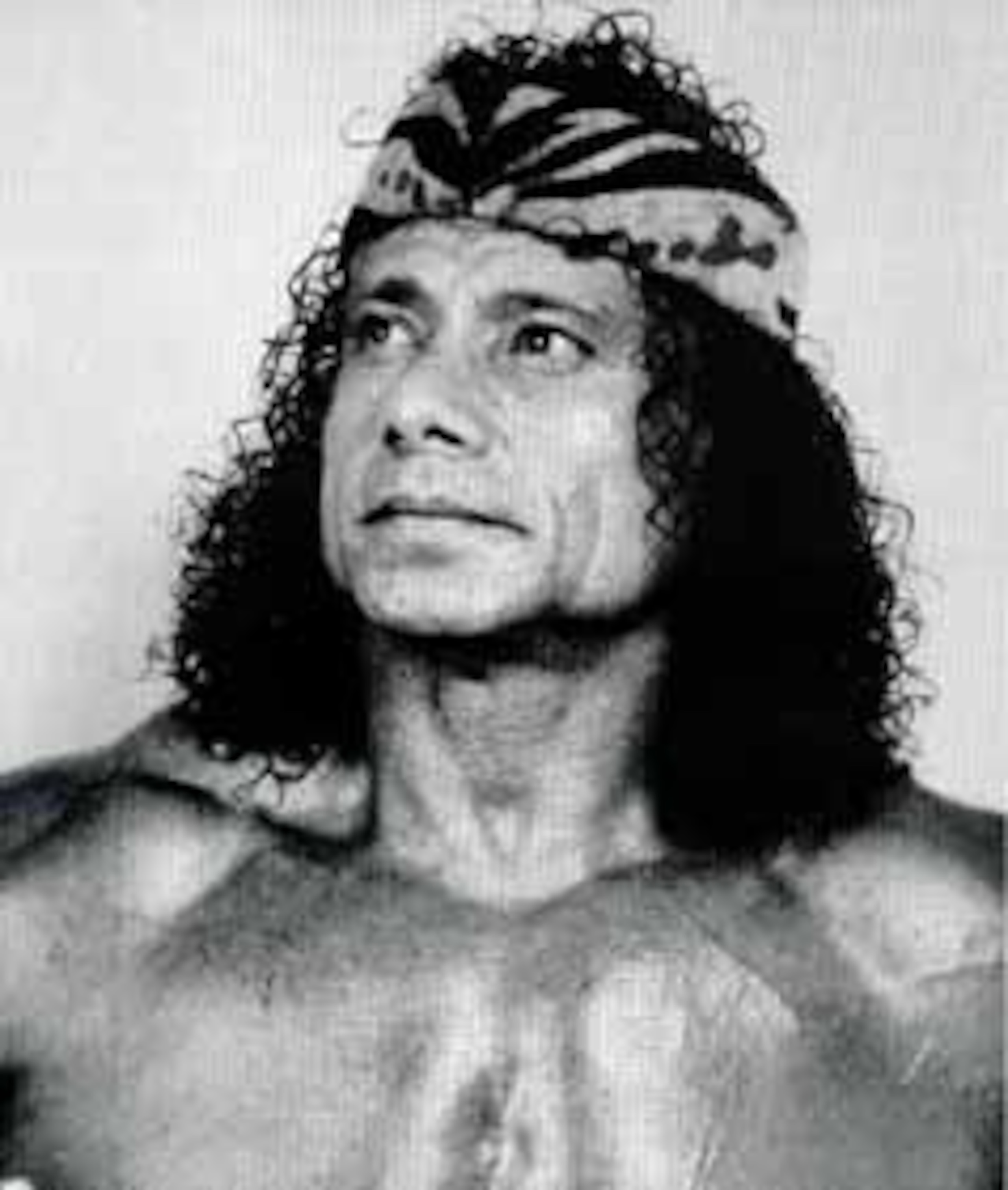
Notable Highlights:
-Joined WWE in 1982 as a savage heel, with Capt. Lou Albano as his manager.
-Had a series of matches with Bob Backlund over the WWE Championship. It was during this time that Backlund broke free from the "good ol' American boy" prototype and showed a bit of aggression that previously had been missing from his persona.
-The final match in the Snuka-Backlund series featured a famous steel cage match that saw Snuka dive from the top of the cage for the very first time. Backlund would retain the WWE title but Snuka would achieve Superstar status.
-Snuka turned face when the original Nature Boy, Buddy Rogers, revealed that Albano was taking money from Snuka.
-Snuka had a series of matches with Albano that, needless to say, did not go the way of the Captain.
-February 18, 1983: With Andre the Giant as his partner, defeated the Wild Samoans. Snuka performed the Superfly Splash off of the shoulders of the Giant.
-Feuded with Don Muraco over the Intercontinental Championship in 1983. The rivalry would culminate in a steel cage match that saw Snuka dive from the top rope onto a prone Muraco. Don would escape with his title in tact. This was the match that inspired Mick Foley to become a professional wrestler.
-Is now infamous for being a guest on Piper's Pit and having a coconut crushed over his skull.
-Feuded with Roddy Piper in 1984. Defeated the "Hot Scot" several times, including once in a Fijian Strap Match.
-Teamed with Hulk Hogan in a series of tag matches across America against Piper and Bob Orton.
-Returned to WWE in 1989 but failed to muster the same magic he did early in his time with the company. He often served as a mid-card talent and lost more matches than he won.
Allow me to start by saying I am not and have never been a fan of Jimmy Snuka. It is not that I do not respect everything he has given to the business, I just never saw what people loved so much about him. He played the crazed Fijian savage well enough during his heel run in the early part of the decade and his Superfly Splash was something innovative. But his in-ring work was unique at best, shoddy at worst, and his verbal skills were nonexistent.
That said, Snuka has remained a favorite of fans across the globe for the better part of thirty-five years. To this day, when fans hear the familiar "Superfly" come over the PA systems, they leap to their feet and show respect for the 1996 Hall of Fame inductee.
There is absolutely no doubt that Snuka made his mark in the '80s. He was a featured star for the growing and expanding WWE. His battles with Muraco and Backlund are some of the most memorable and fondly looked upon by both fans and current Superstars old enough to have seen them. His facial expressions, his ability and serious devotion to his character were qualities not seen in other stars of his time. Jimmy Snuka was a Superstar beloved by the hardcore wrestling fans and one of the few immediately recognizable in the mainstream media.
10. The Ultimate Warrior
17 of 26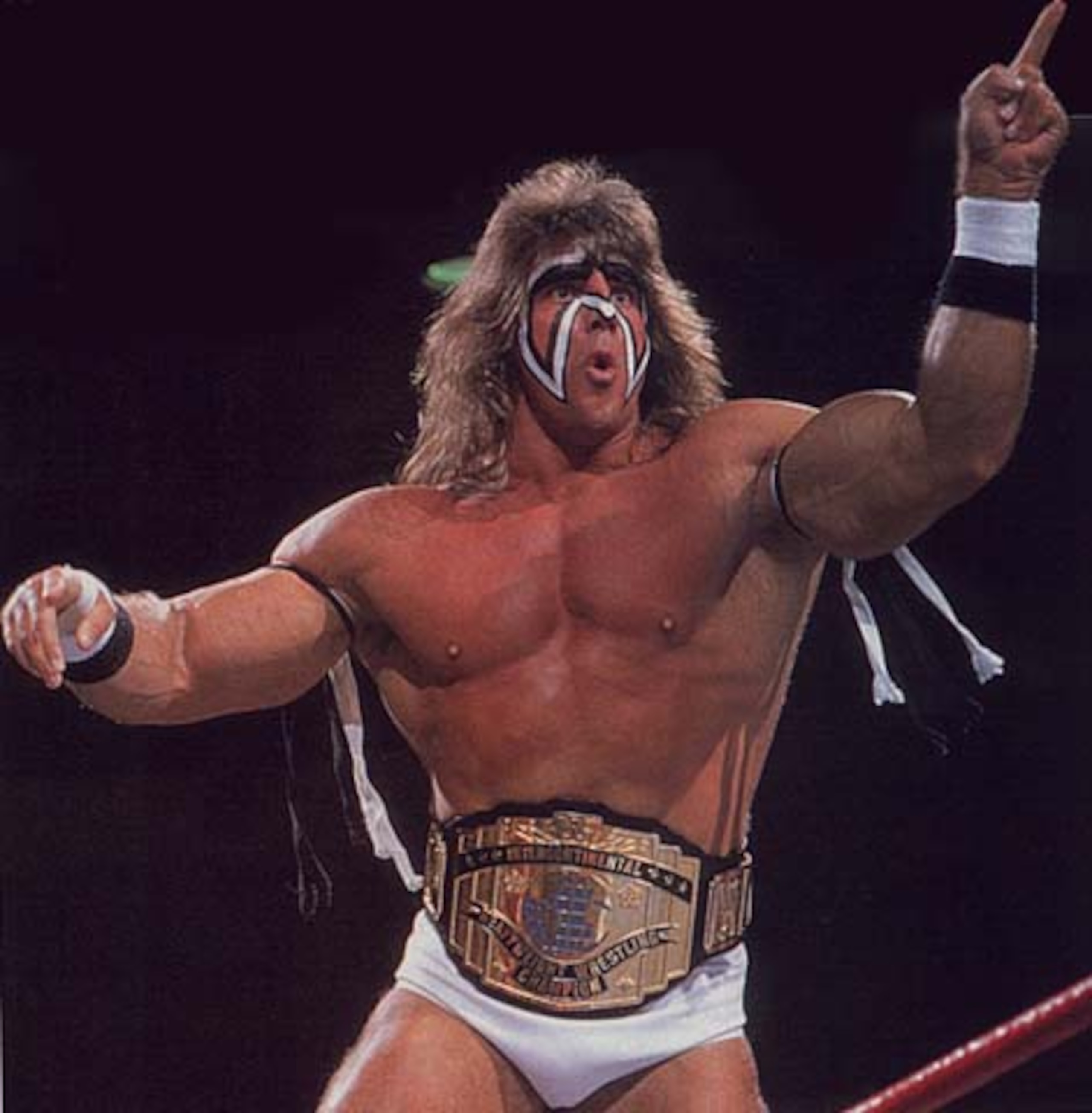
Notable Highlights:
-October 7, 1987- In his television debut, the Ultimate Warrior makes an immediate impact, defeating jobber Terry Gibbs in 1:38
-Through the rest of the year, Warrior was featured in a number of impressive squash matches against established WWE jobbers, such as Steve Lombardi and "Iron" Mike Sharpe.
-Early 1988 saw a rivalry between Warrior and "the Mighty" Hercules.
-March 27, 1988- In his first pay-per-view victory, Ultimate Warrior defeats Hercules at WrestleMania IV.
-For the majority of 1988, Warrior was engaged in an upper-mid-card program with Bobby Heenan and his stable of wrestlers.
-August 29, 1988- At SummerSlam, The Ultimate Warrior (a surprise opponent) defeats The Honky Tonk Man to become the new Intercontinental Champion.
-January 15,1989- Ultimate Warrior and Rick Rude square off in a Super Pose Off at the Royal Rumble pay-per-view in what would be the beginnings of a program over the Intercontinental Championship.
-April 2, 1989- Rick Rude defeats Warrior to win the Intercontinental Championship.
-August 28, 1989- Ultimate Warrior def. Rick Rude to regain the Intercontinental Championship.
-As the 1980s came to a close, Warrior was quickly becoming a top star in the company and many believed a showdown with Hulk Hogan was inevitable.
The Ultimate Warrior exploded onto the scene in 1987 and immediately became one of the most popular stars in the company. His face painted, his physique ripped, and tassels hanging from his bulging biceps, Warrior was something different compared to the other Superstars of the time. He was energetic, sprinting to the squared circle, the merciless pounding of his entrance music electrifying the crowd.
Sure, his promos were on the unique, rambling side and his wrestling skills consisted of shoulder blocks and body slams but the Warrior had a unique charisma about him that allowed him to overcome his deficiencies and prosper as a main event talent.
He worked his way to the Intercontinental Champion, defeating the hated Honky Tonk Man, who had held the gold for over a year, in a matter of seconds. He feuded with "Ravishing" Rick Rude, losing his gold at WrestleMania V, and recapturing it at SummerSlam in 1989. There was no denying that the Warrior was the one man who could supplant Hulk Hogan in the popularity department. A showdown between the two was imminent.
The Ultimate Warrior is one of the most controversial figures in wrestling's long and storied history. Some despised his apparent lack of skills, his "stupid" interviews, and the fact that he was presented as a main event talent, above more talented stars. His co-workers hated him for what they say was his inability to perform without tedious instruction and an elitist attitude that often alienated the other wrestlers.
Much like Mr. Perfect, the late 1980s served as the foundation for what was to come in Warrior's career. 1990 was the most successful, productive year of his career and one that would bring him heavyweight gold. Without the groundwork he laid in the late '80s, and the fan base he garnered, everything that came after would be nonexistent.
9. "Million Dollar Man" Ted DiBiase
18 of 26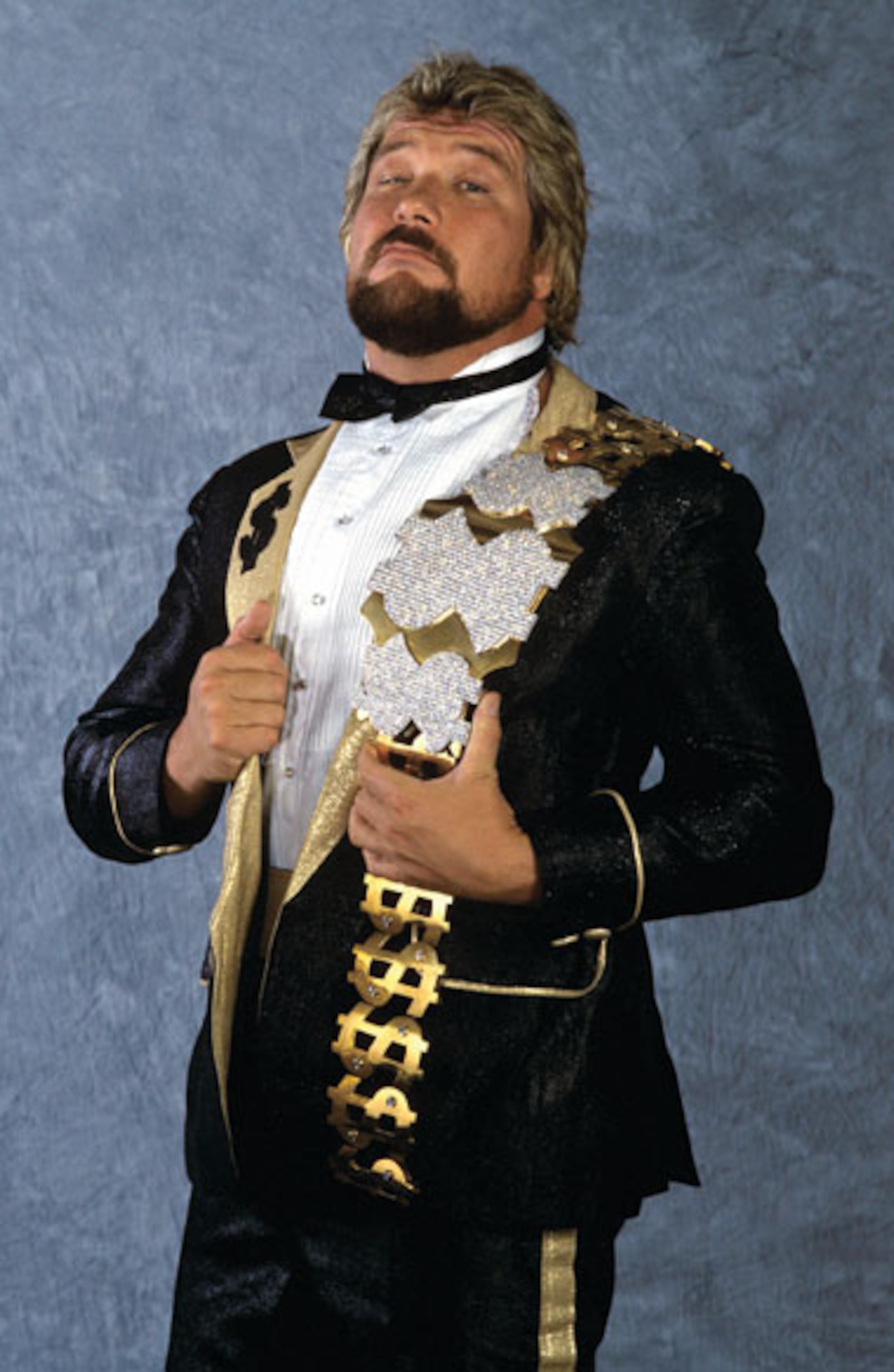
Notable Highlights:
-Rumors have it that the character of the "Million Dollar Man" is what Vince McMahon saw himself as if he had been a professional wrestler.
-The character was also, according to some, a response to the 1980s ways of excessive spending and buying, as well as the apparent need to have more and better than the next guy.
-Video vignettes aired hyping the debut of DiBiase in 1987, just after WrestleMania III. During these videos, DiBiase would be portrayed as someone willing to throw money around to get what he wanted. He claimed that "everybody has a price for the Million Dollar Man."
-In 1988, DiBiase vowed to buy the WWE Championship.
-February 5, 1988- Andre the Giant def. Hulk Hogan to win the WWE title in one of the most controversial endings to a match in WWE history. Afterward, DiBiase bought the title from Andre and dubbed himself the new champion. Later, President Jack Tunney announced such actions were illegal and, as a result, the title was held up and proclaimed vacant.
-March 27, 1988- DiBiase entered the WWE Championship tournament at WrestleMania IV. He would defeat Hacksaw Jim Duggan in Round 1, Don Muraco in Round 2, then he would receive a bye to the finals, thanks to the lack of a winner in the match between Hulk Hogan and Andre the Giant. In the finals, DiBiase would lose to Randy Savage, thanks to interference from Hulk Hogan.
-August 28, 1988- DiBiase teams with Andre the Giant in a losing effort against Randy Savage and Hulk Hogan at the inaugural SummerSlam pay-per-view in New York City.
-October 16, 1988- Ted DiBiase wins the annual King of the Ring Tournament. He would defeat Brutus Beefcake, Ken Patera, Ron Bass, and finally, Randy Savage to win the tournament.
-Lasted until the final two in the 1989 Royal Rumble, eliminated by Big John Studd.
-April 5, 1989- DiBiase and Brutus Beefcake fight to a Double Count-Out at WrestleMania V.
Ted DiBiase had been a very solid worker for most of his career before entering the WWE. But when Vince McMahon called him and pitched him the character of the Million Dollar Man, DiBiase immediately catipulted to main event status.
A millionaire who claimed every man had his price, DiBiase debuted in a series of vignettes that seemed to provide evidence to his claims. He was an elitist villain who had no problem humiliating fans and other Superstars just to prove his point.
Upon his debut, he vowed to buy the WWE Championship from Hulk Hogan. When the moral "Hulkster" refused, he enlisted the services on Andre the Giant. In a controversial moment on the broadcast special The Main Event, it appeared as though his plan worked. In one of the most controversial moments in WWE history, Dave Hebner's "evil" twin Earl entered the match, counted Hogan out and awarded the title to Andre, despite Hogan's shoulders never touching the mat. Andre immediately handed over the WWE title to DiBiase, who celebrated as if he had won it himself.
The title would be vacated but DiBiase would once again get close to the most coveted prize in the company. At WrestleMania IV, he advanced to the finals of the title tournament, losing only after Hulk Hogan appeared at ringside to help Randy Savage capture the gold.
The Million Dollar Man would continue to serve as the company's most hated villain, even when he was not a part of the main event scene. He traveled the country, usually competing in house show main events against Hogan, Savage, or the Ultimate Warrior.
DiBiase's character was a social commentary on the 1980s in general. The decade was one of excess. Everyone wanted bigger, better, and more expensive than their neighbor or their friends. It wasn't uncommon to see a wealthy community with a Ferrari parked in the driveways of every house on the block. Yachts, 24-karat gold living rooms, and trillion dollar sky-rises were the norm.
DiBiase was a millionaire who got what he wanted and if he didn't, he created better. When he failed to capture the WWE title, he created the Million Dollar Belt, a beautiful, diamond-studded gold belt that was the envy of many a WWE Superstar.
Today he is one of the most respected performers of all time. His induction into the 2010 Hall of Fame was a feel-good moment that many believed was far overdue. As popular as he is with today's audience, however, there is no denying the fact that in his prime, there was no man more hated by the fans of the WWE than the Million Dollar Man...except for, perhaps, the next Superstar on the list.
8. The Honky Tonk Man
19 of 26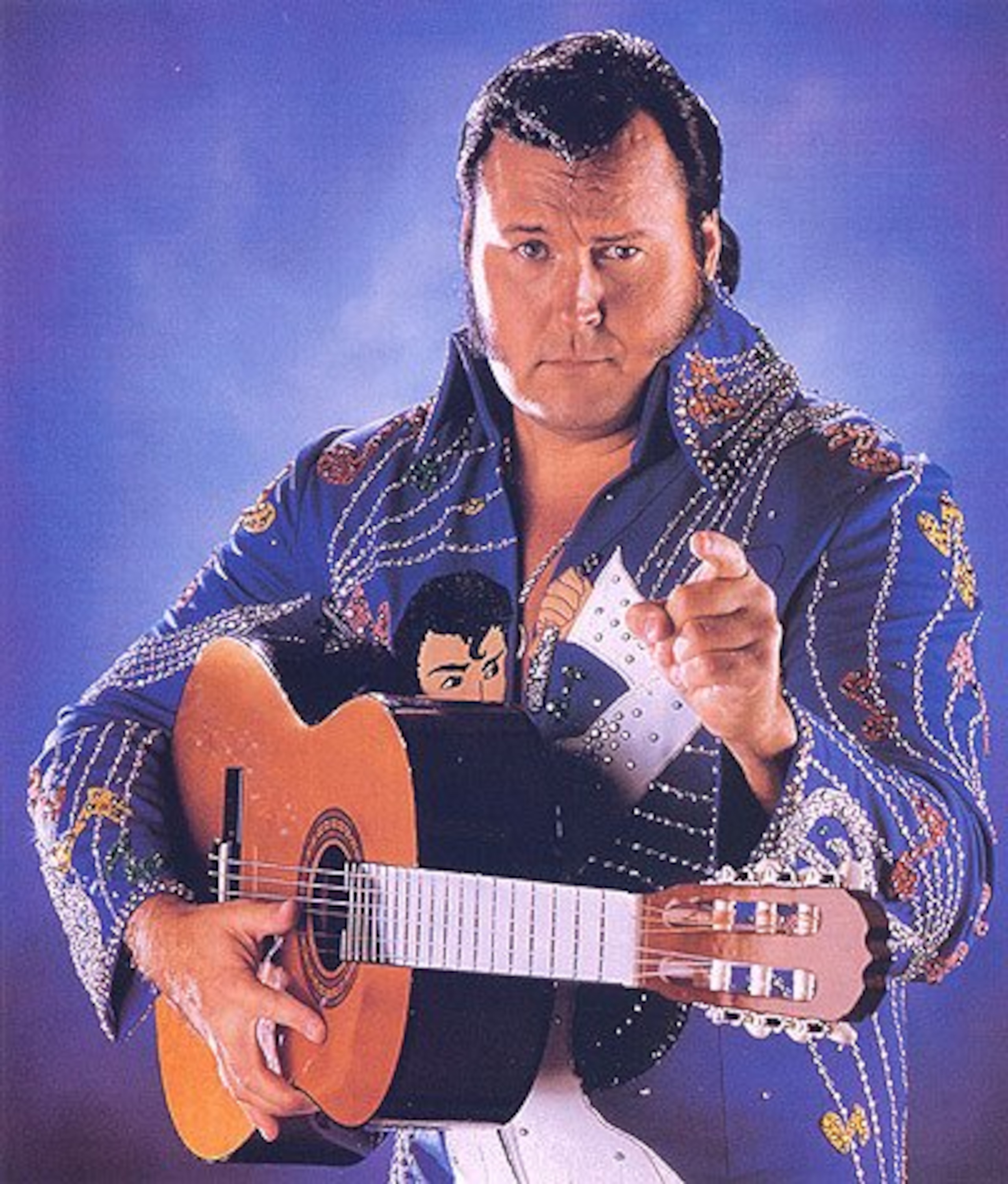
Notable Highlights:
-Honky Tonk Man made his debut in late 1986, early 1987. He did so as a babyface but the reaction to him definitely did not indicate this role as a "good guy." WWE, in a rare and unprecedented move, generated a write-in promotion in which they were, for lack of a better word, asking the fans whether or not Honky Tonk should be a good guy or a bad guy. The reaction would inadvertently create one of the most successful heels in the company history.
-Upon his arrival, HTM adopted Jimmy Hart as his manager and began singing his own entrance music. Now a full-fledged heel, it took little urging from the company to get the fans to boo him.
-March 29, 1987- Honky Tonk Man defeated Jake Roberts at WrestleMania III following a mini-program between the two leading to the event.
-June 2, 1987- Honky Tonk Man def. Ricky Steamboat to become Intercontinental Champion.
-HTM would go on to feud with the freshly-turned Randy Savage, garnering major heel heat by shoving Miss Elizabeth to the ground and threatening to harm her with his guitar.
-At Survivor Series 1987, HTM captained a losing Survivor Series team in a bout against Randy Savage’s team.
-Throughout 1987 and 1988, HTM successfully retained his title in televised and house show events, often by sneaky means such as disqualification and count out. It got to the point that fans would pay their money to see HTM get beat up on by the top mid-card stars in the company. While Hogan was the featured attraction on A-level house show events, HTM would main event B-level shows and would sell out arenas as fans hoped he would finally get his comeuppance.
-August 28, 1988- HTM’s reign of terror as Intercontinental Champion came to an end as Ultimate Warrior, a surprise opponent, defeated him in ten seconds.
-Following his loss of the Intercontinental Championship, HTM was largely relegated to tag team action. He would never again achieve the level of success he did from mid-1987 to late-1988. That one-year run, however, was evidence that a heel could be as successful and as marketable as a baby face performer.
If there was ever a star who was not meant to succeed at the level he did, it was Honky Tonk Man. The cocky Elvis impersonator was originally a babyface character when he arrived to the company in 1986. Fans hated the gimmick and the character so much, however, WWE had no option but to turn him heel. It was a decision that more than paid off.
It would be incomprehensible to speak of Honky Tonk Man without mentioning the Intercontinental Championship. In 1987, Honky scored a victory over Ricky Steamboat, collecting his only singles championship of his WWE career. For the next year, he defended the title across the country, often retaining it in the most tricky, villainous ways.
Honky Tonk Man's act was so over and so hot at one point that he could be trusted to headline the B-level house shows and draw sell-out crowds hoping to see whichever babyface was challenging him that night beat his brains in and win the Intercontinental title. For a year, the fans were fed the same routine and, each and every night, they continued to pay their hard-earned money, hoping for a different outcome.
The pop resulting from Ultimate Warrior's seconds-long victory over HTM at SummerSlam in 1988 is one of the loudest a wrestling fan is likely to experience. Unfortunately, when Warrior took the gold, it became hard for Honky to achieve the same level of success again. The character, and the way in which it was booked, needed a championship to sneakily and underhandedly escape with. When Honky no longer had that belt, he became just another mid-card heel.
Honky Tonk Man's place on this list is proof that a heel can conceivable be just as marketable, just as capable of drawing money as a main event face. From 1987-88, there was no one man on the roster that could rival HTM's ability to garner such a heated, venomous reaction from the WWE fans. Honky's character was one based in cowardice and in 2011, where "cool heels" are more the rage, the Honky Tonk Man character seems incredibly ancient.
7. Tito Santana
20 of 26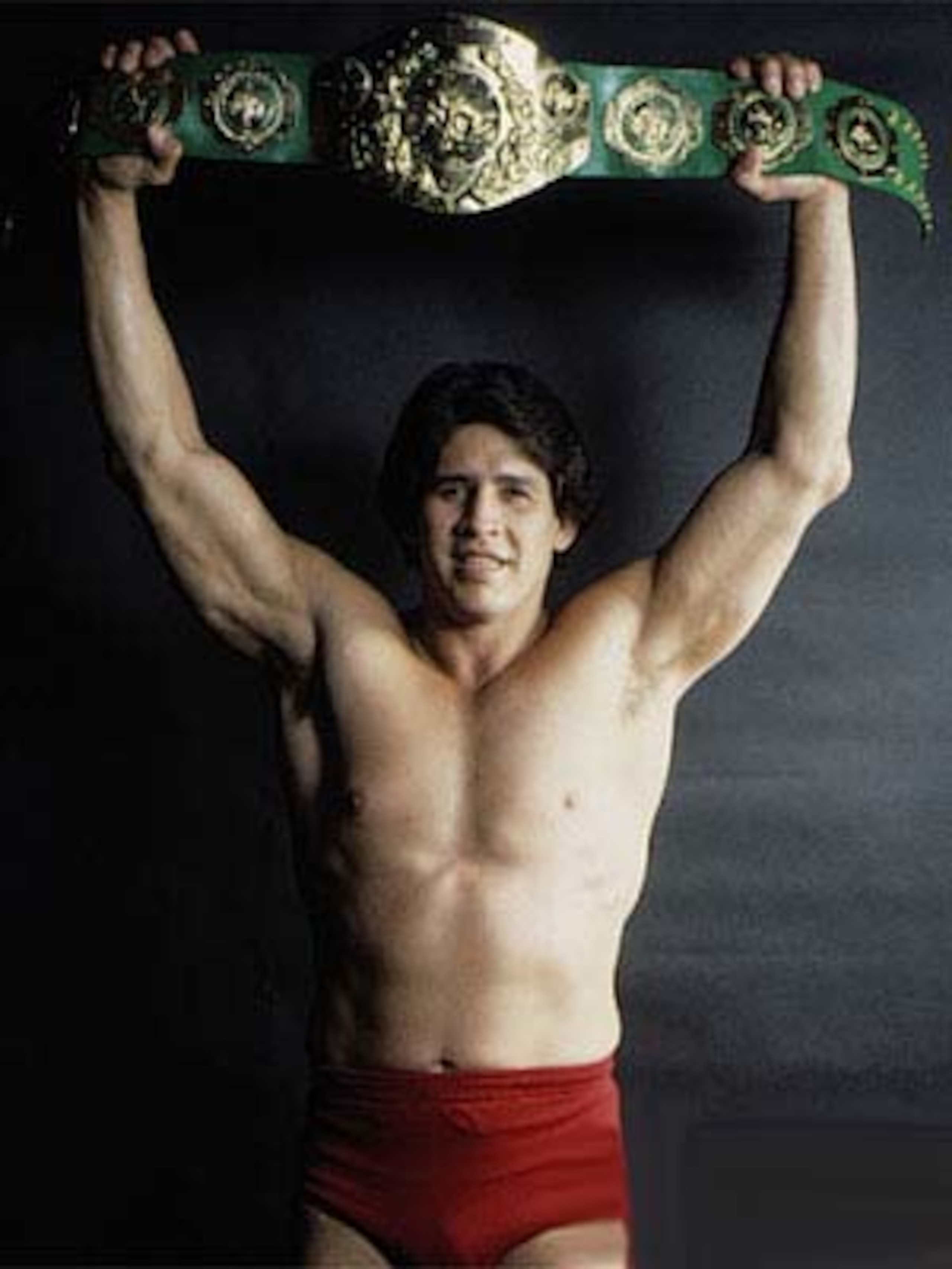
Notable Highlights:
-In late 1983, Santana signed a contract with Vince McMahon, just before he took the company national.
-February 11, 1984- Tito defeats Don Muraco to become Intercontinental Champion and one of the more popular stars in the sport.
-1984- Tito Santana and Greg Valentine engage in a heated rivalry over the Intercontinental Championship, perhaps the best in the history of the once-coveted championship.
-September 24, 1984- Santana loses the title to Valentine.
-March 30, 1985- Tito Santana makes history, becoming the first winner in the history of WrestleMania as he defeats the Executioner.
-July 7, 1985- Santana regains the Intercontinental Championship in a Steel Cage match over Greg Valentine. Many consider the match to be one of the best cage matches in history.
-July 8, 1985- Santana loses in the King of the Ring tournament finals to the Iron Sheik.
-February 8, 1986- Randy Savage uses brass knuckles to defeat Tito Santana and take the Intercontinental Championship.
-At WrestleMania II, Santana teams with Junkyard Dog in a loss to Terry and Hoss Funk.
-March 29, 1987- The Hart Foundation and Danny Davis def. Tito Santana and The British Bulldogs.
-In 1987, Santana would join forces with Rick Martel to form Strike Force, a highly-successful late-'80s tag team.
-October 27, 1987- Santana and Martel def. The Hart Foundation to become tag team champions.
-At WrestleMania IV, in April of 1988, Santana and Martel lost their titles to Demolition.
-When Martel was forced from the ring due to injury, Santana resumed his singles career.
-April 5, 1989- Arn Anderson and Tully Blanchard def. Tito Santana and Rick Martel when Martel walked out on his partner.
-Santana and Martel would feud for the majority of the year.
-October 14, 1989- Santana won the King of the Ring tournament. He would defeat Bad News Brown, the Warlord, Akeem, and in the finals, Rick Martel.
Tito Santana is one of the most decorated Superstars in the history of WWE. A former Intercontinental and Tag Team champion, as well as the 1989 King of the Ring, Santana accomplished everything there was to accomplish, outside of becoming WWE champion. Unfortunately, his size prevented him from collecting that goal.
People forget just how great Santana really was. As an in-ring competitor, at least until Ricky Steamboat and Randy Savage debuted, no one could outperform Tito. He was a ring general whose ability to have strong, quality matches mimicked Hulk Hogan's ability to sell out arenas.
Tito is often forgotten when speaking of great in-ring talents. Because the NWA was populated by the likes of the Four Horsemen, people often forget that WWE had it's own collection of great in-ring technicians and at the forefront of those men was Tito Santana. He and Greg Valentine had phenomenal matches while feuding over the Intercontinental Championship. As a member of Strike Force with Rick Martel, Tito was featured in spectacular tag team bouts against the likes of the Brain Busters, the Hart Foundation, the Rougeau Brothers, and Demolition.
Even when the partnership with Martel disintegrated, Santana remained one of the most popular stars in the company. He would often be paired with a new star in order to put them over and make them look good on their rise up the card. Tito was trusted with this job and, in more cases than not, was enormously successful.
Perhaps most importantly, Tito Santana served as a cultural hero for the Mexican-American fans who did not have many other heroes to turn to. He proudly spoke in the Spanish language and embraced his heritage, allowing others who shared that heritage to do so as well.
6. Jake "The Snake" Roberts
21 of 26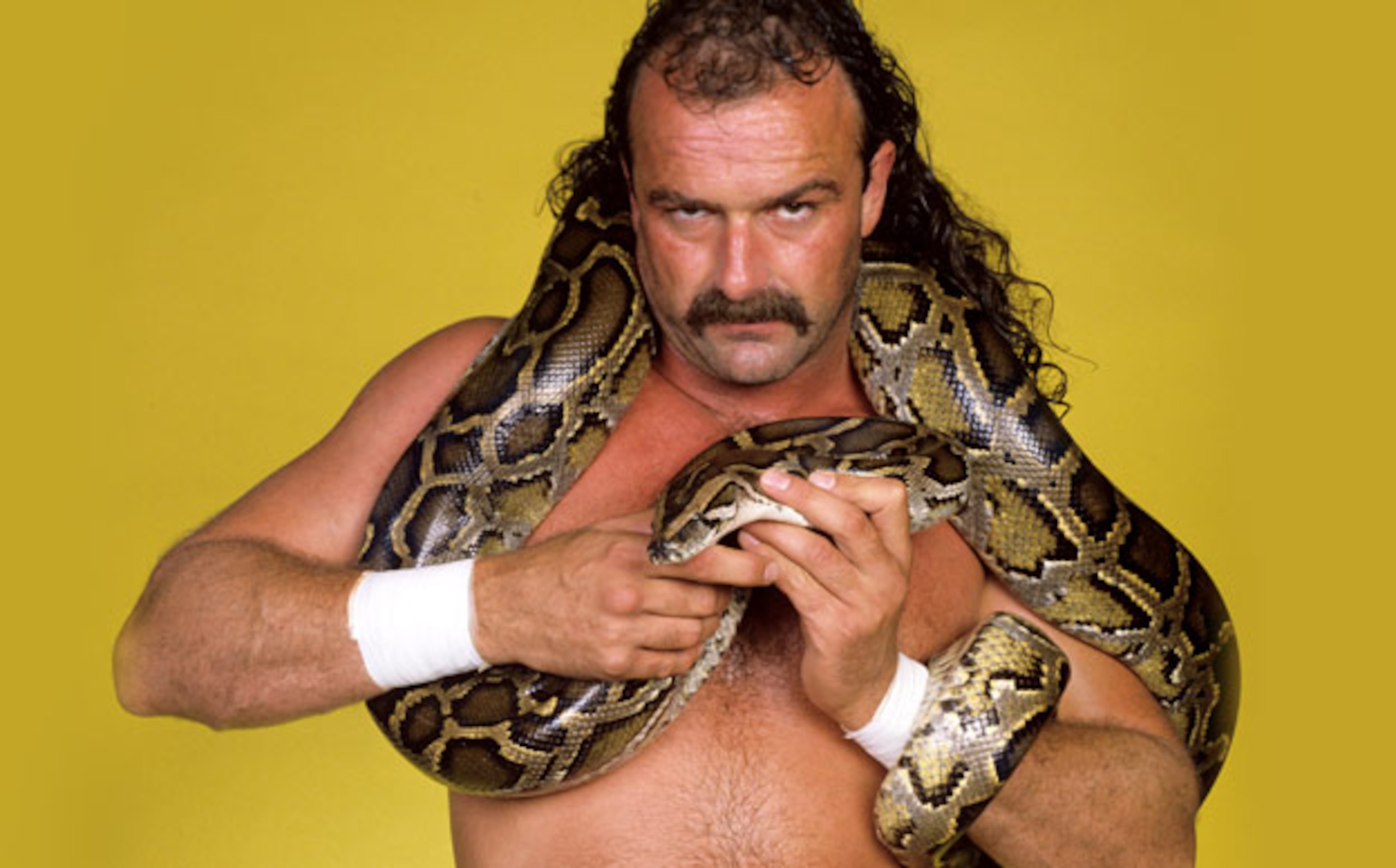
Notable Highlights:
-April 2, 1986: Made his WrestleMania debut with a victory over former NFL player George Wells.
-May 3, 1986: Before a match with Ricky Steamboat on Saturday Night's Main Event, attacked The Dragon and delivered the "deadly" DDT onto the concrete floor. Steamboat was left with a concussion.
-August 28, 1986: Was defeated by Steamboat in a "Snake Pit Match" during the Big Event.
-October 4, 1986: Was once again defeated by Steamboat, this time on Saturday Night's Main Event, nearly five months to the day the feud began.
-A feud with Hulk Hogan was dropped when Roberts received more cheers than the "Hulkster."
-In early 1987, Jake introduced the "Snake Pit" interview segment. His first guest was Honky Tonk Man, who broke a guitar over his head. It was during this rivalry that Roberts became a "good guy."
-Was defeated by Honky Tonk Man at WrestleMania III
-Was a surviving member of the Macho Man's Survivor Series team, defeating Honky Tonk Man's team at inaugural November pay-per-view event.
-Throughout the course of 1988, Roberts feuded with Rick Rude after the "Ravishing One" hit on Jake's wife, Cheryl.
-March 27, 1988: Fought to a draw with Rick Rude in the first round of the WWE Championship Tournament at WrestleMania IV.
-August 28, 1988: Defeated Hercules Hernandez at SummerSlam. He would also interfere in the Rude-Junkyard Dog match earlier in the evening.
-The rivalry between Roberts and Rude quickly came to an end when it came to light that Rude and Cheryl were having a real-life affair.
-Roberts began feuding with Andre the Giant, who showed a fear of snakes.
-April 2, 1989: Defeated Andre the Giant by DQ at WrestleMania V.
Jake Roberts is a master psychologist when it comes to the wrestling business. He has the unique ability to get his point across in promos without raising his voice. He remains calm, speaking in a low volume and using his eyes to communicate with the viewer. In an instance, he can switch from heel to babyface and vice versa.
Roberts was a heel so cold, so relentless, so...cool, that the fans cheered when he committed a heinous act. Like Randy Orton in today's modern day WWE, Vince McMahon had no choice but to fully turn Roberts. He became the anti-hero, a man who was cheered by the fans but who also, at any given time, could perpetrate a vicious attack. On many occasions, he was the lesser of two evils when competing against the hated villains of the World Wrestling Federation.
Like Hulk Hogan, Jake "The Snake" Roberts became a household name. He was a highly marketable star in the 1980s; his use of a real, live snake providing a uniqueness about him that captured the imagination of the fans. For some unknown reason, there was something so cool about a man as chilling as Jake, a man unafraid and unaffected by the giant reptile he carried to the ring with him. Roberts was a once-in-a-lifetime performer who simply "got it" and if it were not for his personal demons that eventually caught up with him, Jake would have dominated the industry for years.
5. Bob Backlund
22 of 26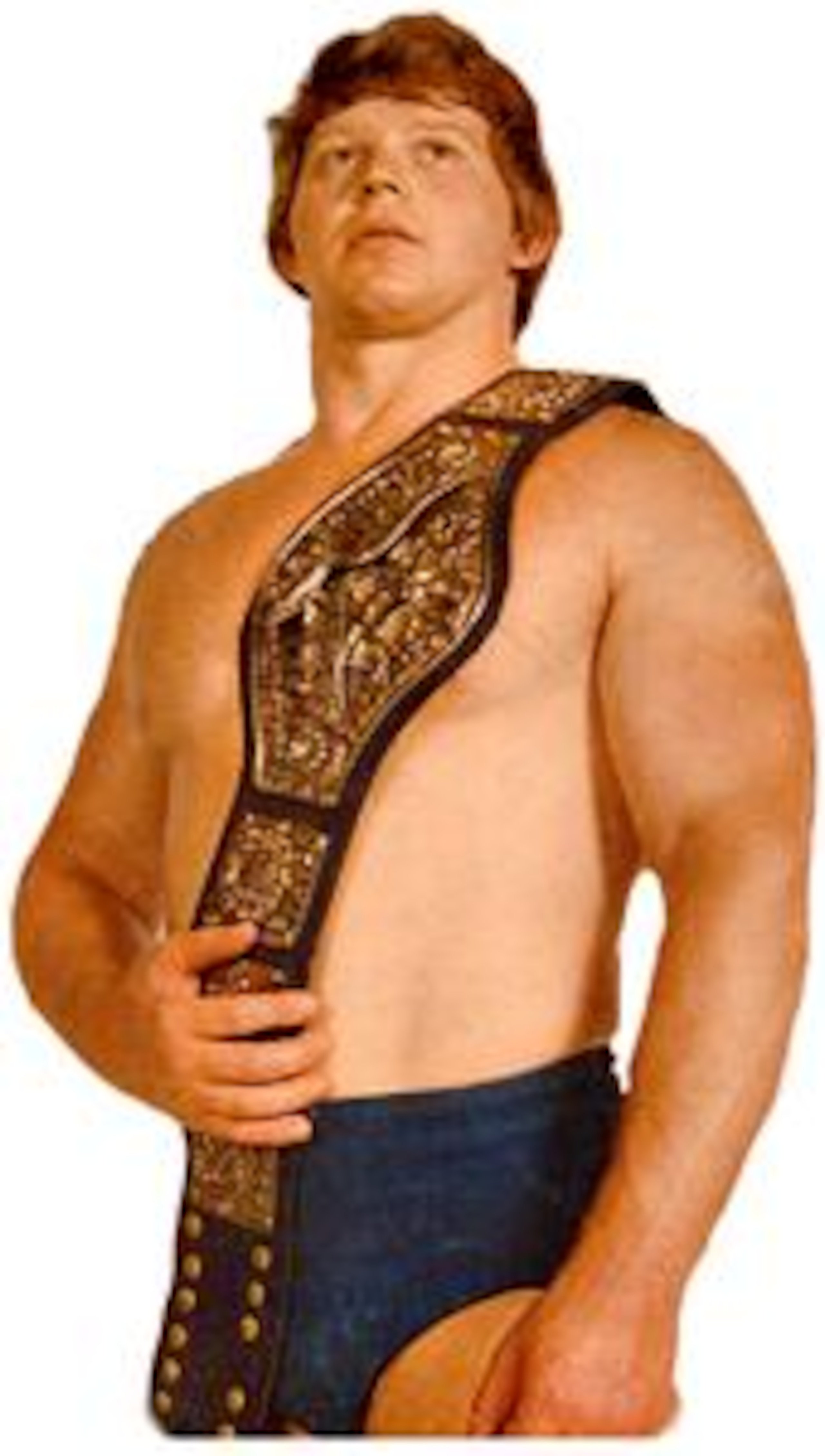
Notable Highlights:
-Teams with Pedro Morales to defeat The Wild Samoans to win the WWF Tag Team Championships.
-In a unification match, defeated NWA World Heavyweight Champion Harley Race by disqualification.
-Defeated NWA World Heavyweight Champion Ric Flair by disqualification in Atlanta, GA.
-Reigned as WWF champion from February 20, 1978 until December 26, 1983.
-Dropped the WWE championship in controversial fashion to the Iron Sheik after manager Arnold Skaaland threw in the white towel, surrendering on the behalf of his wrestler.
The dominance of Hulk Hogan in the 1980s often leads to many forgetting the man who carried the World Wrestling Federation prior to the "Hulkster's" ascension.
Bob Backlund was the all-American athlete. He was wholesome, trustworthy, and a role model for any young wrestling fan. He could be trusted to carry himself with dignity and respect and to serve as an ambassador for the sport to the outside world.
Bob reigned as WWE champion for over five years—a testament to his ability to draw fans to see him compete. He ended the reign of "Superstar" Billy Graham and performed admirably against NWA champions such as Harley Race and Ric Flair.
Backlund's intellect was one of his most celebrated traits, as was hard work, dedication, and commitment to his craft. He may have been incredible for modern fans to watch but it is imperative that both fans and sports-entertainers alike recognize and respect Bob Backlund for the achievements he made both in the ring and out. He was Mr. America before Hulk Hogan made being Mr. America cool.
4. Andre the Giant
23 of 26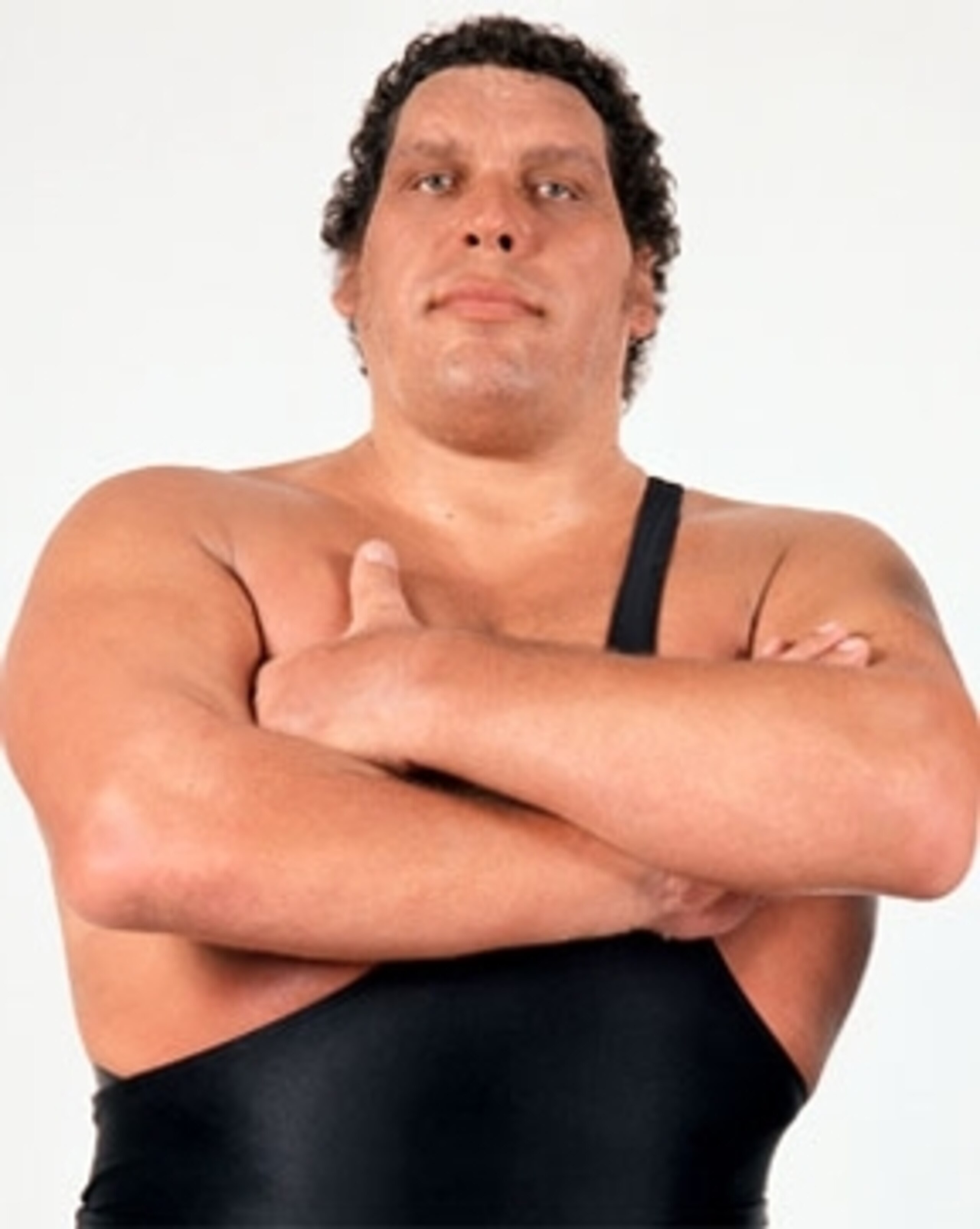
-Landed a starring role in the major motion picture The Princess Bride.
-Became the first professional wrestler to ever grace the cover of Sports Illustrated.
-March 31, 1985- Defeats Big John Studd in a body slam match at the inaugural WrestleMania.
-Back surgery sidelined Andre for several months, for which he was kayfabe "suspended" by President Jack Tunney. He would return under a mask as a part of the Machines, a group of masked Superstars feuding with the Heenan Family.
-March 29, 1987- Along with Hogan, Andre draws 93,173 to witness the biggest WWE Championship match in the history of the sport. Andre loses but his name is etched in the history books.
-February 5, 1988- Andre controversially defeats Hogan to win his only world championship, only to hand it over to Ted DiBiase seconds later. As a result, the title would be vacated.
-In 1989, as his in-ring career came to an end, Andre teamed with Haku in a duo known as the "Colossal Connection" to become the WWE Tag Team Champions, putting an end to Demolition’s tag team dominance.
Professional wrestling has often been compared to the traveling circuses. If that is the case, then there is no more recognizable sideshow than Andre the Giant.
A major star in the 1970s as the unbeaten giant who traveled from territory to territory, Andre settled down and toured, almost exclusively, with Vince McMahon's World Wrestling Federation in the 1980s. During the early portion of the decade, Andre achieved several mainstream honors. First, he landed a starring role in the fairy-tale The Princess Bride. Then, he became the very first professional wrestler to ever land on the cover of Sports Illustrated.
Andre spent the first half of the decade as the beloved babyface fans paid money to gawk at. He was a giant, loveable teddy bear who beat everyone he faced. At WrestleMania, he defeated fellow giant, Big John Studd, in a Body Slam match. Then, one year later, he outlasted nineteen other WWE Superstars and NFL players to win a battle royale. With WrestleMania becoming such a success, and the pressure to outdo the last one mounting, Vince McMahon made a decision that would be directly responsible for an all-time indoor attendance record and an event fondly remembered to this day.
Andre the Giant transformed from loveable teddy bear to hated villain when he sided with manager Bobby Heenan and ripped the crucifix from Hulk Hogan's chest, just after challenging Hogan for his WWE Championship in a match at WrestleMania III.
The fan anticipation for the match was at a fever pitch. Around 93,000-plus sold out the Pontiac Silverdome for the match of the century. Andre had enjoyed a 15-year undefeated streak and many predicted that streak would remain in tact. Those people underestimated Hogan. Hulk body slammed Andre, dropped the leg, and retained his title.
The match was the peak of Andre's career. He would continue to be a major force in WWE's main event scene but his ailing health greatly reduced what he was capable of. Andre would defeat Hogan at the Main Event broadcast special and win the WWE Championship, only to hand it over to Ted DiBiase a few seconds later. He would also collect a WWE Tag Team Championship with his partner, Haku, putting an end to the dominance of Demolition.
By the end of the decade, it was apparent that Andre's days in the ring were numbered and, as a matter of fact, they would come to a close in 1990. While the 1980s saw Andre's health diminish on a daily basis, there was no denying that this giant of a man was still capable of performing his duties and drawing people to see him compete. Andre the Giant, even as a heel, was one of the most cherished stars of his or any generation and his work is still enjoyed greatly to this day.
3. "Rowdy" Roddy Piper
24 of 26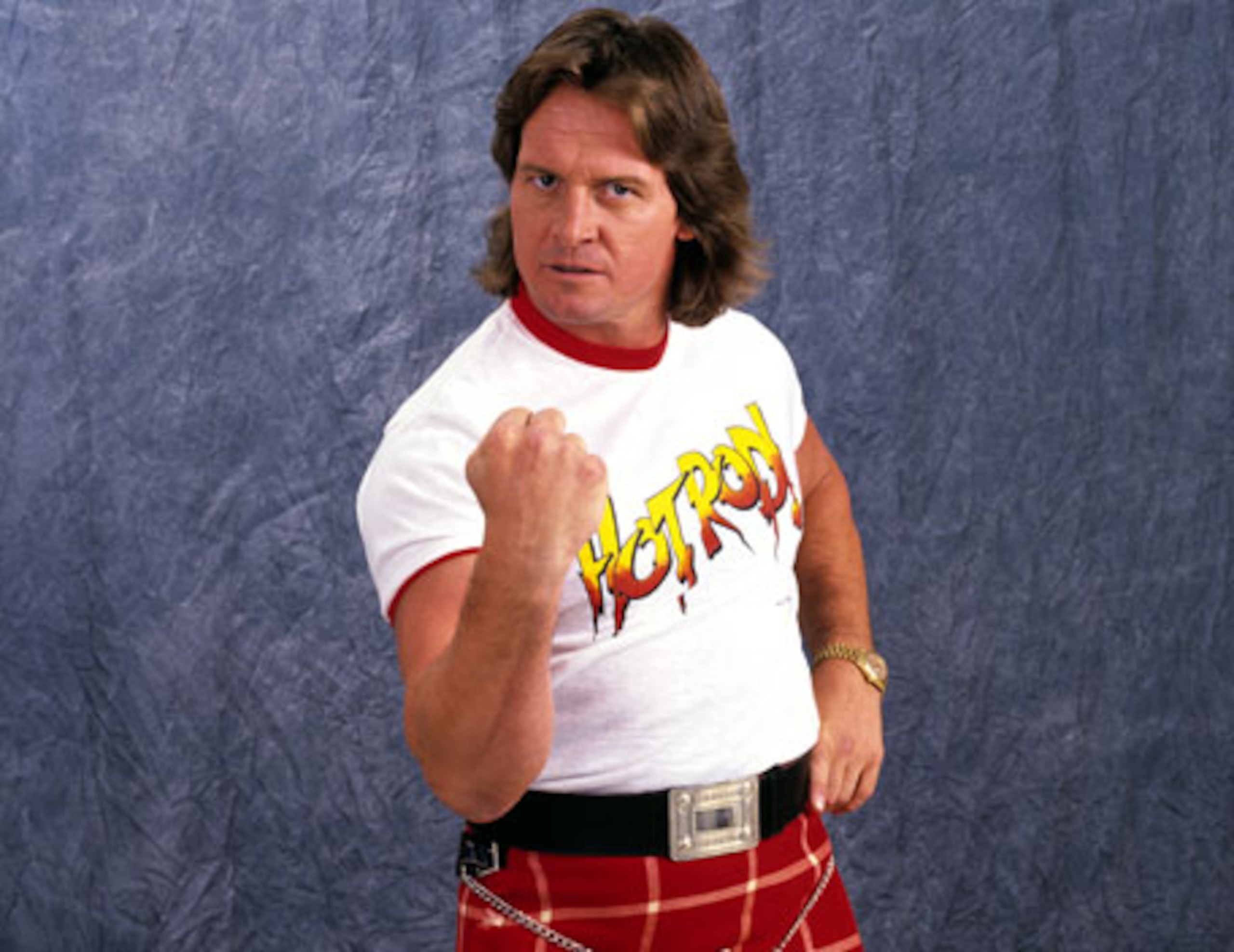
Notable Highlights:
-Debuted in the World Wrestling Federation in 1984 and immediately became the company’s second biggest star, mainly due to his ability to talk and turn the fans against him just through his mere appearance.
-Along with Hulk Hogan, was the albatross for the "Rock and Wrestling Connection" that created national exposure for professional wrestling and created the "boom" period of the sport that lasted from late ‘84-1991.
-Piper’s Pit, an interview show hosted by Piper during WWE broadcasts, would be the inspiration for dozens of on-air talk shows featuring WWE Superstars that would come in the next twenty years.
-February 18, 1985- Piper lost by disqualification to Hulk Hogan on the MTV special "The War to Settle the Score."
-March 30, 1985- With Paul Orndorff, lost to Hogan and Mr. T in the main event of the highly-successful WrestleMania event.
-At WrestleMania II, Piper was disqualified in a boxing match with Mr. T. According to Roddy, the match turned heated and many of the strikes and maneuvers in the contest were, in fact, legit.
-The fans’ support of Piper became noticeable and McMahon turned Piper face. This marked the conclusion of one of the most successful runs by any heel in the history of the business.
-In early 1987, Piper announced that the impending match with Adrian Adonis at WrestleMania III would be his final match.
-March 29, 1987- Piper defeats Adrian Adonis in a hair vs. hair match and leaves the sport for nearly two years.
-Roddy stars in the John Carpenter cult-classic "They Live."
-April 5, 1989- Piper makes his return to WWE, hosting Piper’s Pit with controversial talk show host Morton Downey. The segment ends with Piper turning a fire extinguisher on Downey after repeatedly asking him not to blow the smoke of a cigarette in "Hot Rod’s" face.
-Throughout the '80s, Piper proved to be one of the most successful cross-over stars.
Roddy Piper is the greatest talker in the history of the professional wrestling business. I know, I know. There will likely be great backlash to that statement but I stand by it. More than any other wrestler before or after, Piper relished the opportunity to insult the fans. He had an uncanny ability to hurl insults at the fans, at their heroes and, as a result, those people would pay to watch him do it. He did not care about being the cool heel or the guy who sold the most merchandise. Piper legitimately cared for the wrestling business and did whatever was necessary to see it prosper.
There has always been an argument regarding who really sold more tickets, Roddy Piper or Hulk Hogan. Piper asserts that he sold more tickets because he was the heel people paid to see get beat up. Hogan says he and the celebrities involved with the first WrestleMania are responsible for the event's success. Either way, it is hard to argue that the event would have been a success without the dynamic the two of them brought to it.
After the first WrestleMania, Piper continued his role as the hottest heel act in the business. He feuded with celebrity Mr. T, a man he had as much disdain for in real life as he did on television. He thought Mr. T and all of the celebrity involvement in the business hurt the men and women who wrestled on a nightly basis. He stiffed Mr. T in the ring and sent the message that he would not be sacrificed to make the A-Team star look good. It was at the conclusion of the WrestleMania II Boxing Match with T that the fans let Piper know they appreciated him. Soon, "Hot Rod" became a hero.
WrestleMania III featured what would be Piper's final match, a hair vs. hair match against the no longer closeted Adrian Adonis. Adonis attempted to humiliate Piper on his way out the door but Roddy came out on top, defeating Adrian and watching as the newly-turned face Brutus Beefcake shaved his head. The conquering hero Piper would leave the wrestling business with his head held high.
During his hiatus from wrestling, Piper filmed several movies, including the cult-favorite They Live, directed by horror master John Carpenter. The film was critically acclaimed and went on to have a major presence on video. While the movie business treated Piper well, the itch to return to wrestling was getting strong.
Piper returned at WrestleMania V, conducting a Piper's Pit with guests Brother Love and talk show host Morton Downey Jr. The most memorable and iconic moment of the segment came when Piper sprayed Downey with a fire extinguisher after the loud-mouthed talk show host refused to put out his cigarette.
"Rowdy" Roddy Piper was another in a line of immediately recognizable, mainstream wrestlers who came from the 1980s WWE product. He made a name for himself in the horror and sci-fi film genre. He was the epitome of professional wrestling at a time when the focus was on Hollywood celebrities and major media attention. He never forgot the business that treated him well and for that, the fans have always appreciated and will always appreciate "Hot Rod."
2. Hulk Hogan
25 of 26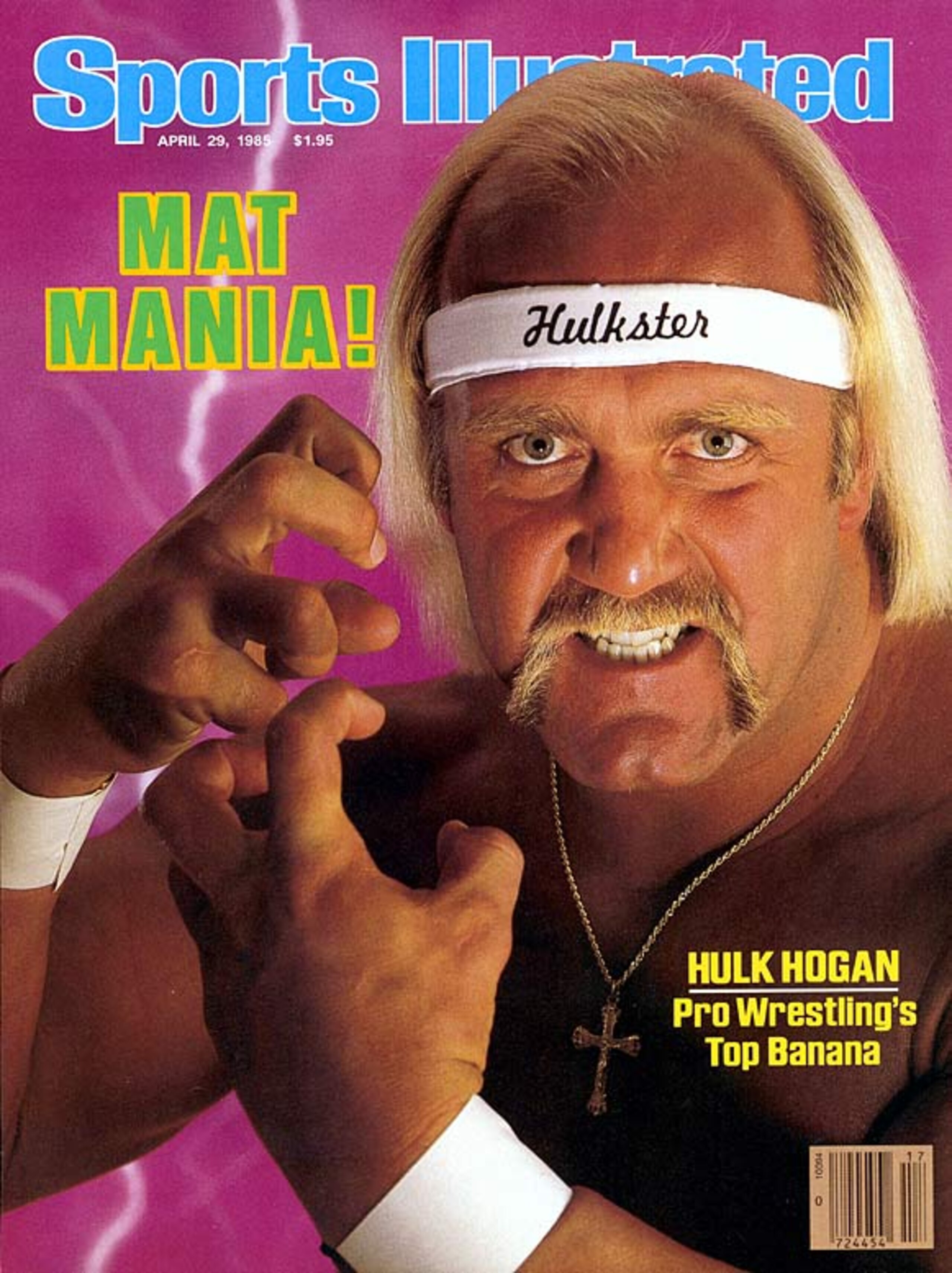
-August 9, 1980- Squares off against Andre the Giant at the huge "Showdown at Shea" show at Shea Stadium in New York.
-Faced Bob Backlund on several different occasions but failed to wrest the WWF Championship from him.
-Re-signed with Vince McMahon’s WWF.
-January 23, 1984- Hulk Hogan defeats The Iron Sheik to become the new WWE Champion.
-Became the biggest wrestling star of all time during his initial run in WWE.
-Defeated "Rowdy" Roddy Piper by disqualification on the MTV special "The War to Settle the Score."
-Teamed with Mr. T for a nation-wide publicity tour hyping the first WrestleMania event.
-With Mr. T, defeated Paul Orndorff and Roddy Piper in the main event on WrestleMania.
-Defeated King Kong Bundy in a Steel Cage Match to retain the WWE Championship at WrestleMania II.
-August 28, 1986- Drew 74,000 fans to the CNE Stadium in Toronto, Ontario for his match against Paul Orndorff, which ended in victory for Hogan via disqualification.
-March 29, 1987- With Andre the Giant, drew 93,173 fans to Detroit’s Pontiac Silverdome to see the main event WWE Championship Match. Hogan defeated Andre, ending what was billed as a 15-year undefeated streak.
-Controversially lost his first title to Andre the Giant during "The Main Event," a television special aired live on NBC.
-April 5, 1989- Defeated "Macho Man" Randy Savage to become WWF Champion for the second time.
-Hogan stars in a Vince McMahon-produced film entitled "No Holds Barred."
Hulk Hogan is a GOD in the professional wrestling business, and rightfully so. Without Hogan, wrestling would not be the acceptable form of entertainment it is today. He took a sport that once was held in smokey arenas, in front of older men looking to ditch their wives for the night, and transformed it into an entertainment medium capable of attracting stars from movies, television, and music and selling out 90,000 seat arenas. He was on magazine covers, talk shows, cereal boxes, immortalized via action figure, and trading cards. There, almost literally, was not a place you could go in America without seeing Hulk Hogan's face or hearing his name.
Hogan was the American hero. He preached to children, told them to say their prayers, take their vitamins, and work out. He was the symbol of hope—whatever bad may happen, you can overcome it. In many ways, Hogan became bigger than the sport of wrestling.
Today's sport, with its flashy stages and light shows, its marketed heroes, its toys, magazines, and video games, is a direct result of the marketing machine that Vince McMahon and Hulk Hogan partnered to create. Love the man or hate the man, there is no denying that his influence on the professional wrestling industry will be felt long after he is dead and buried.
With that said, you may be asking yourself what the greatest star the wrestling business has ever seen is doing ranked at No. 2 on this list. It's a valid question. And whether you may or may not agree, it is because there is another star from the decade that is a more complete performer than Hulk Hogan. That man is a Superstar Hogan knows very well and one who remains somewhat of an enigma to this very day.
1. "Macho Man" Randy Savage
26 of 26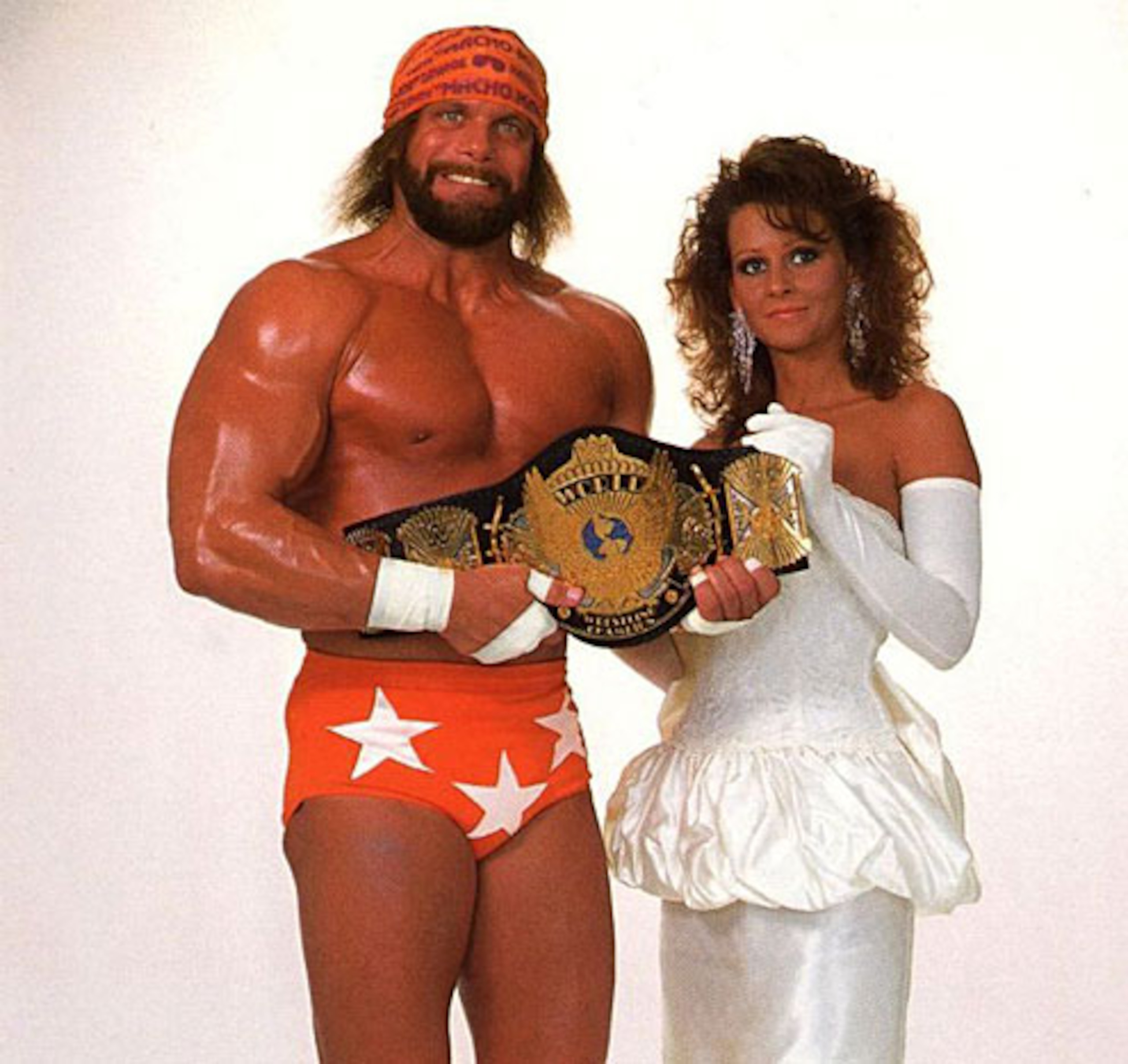
Notable Highlights:
-Made his WWE debut in 1985 and was immediately treated as a major, main event star.
-Introduced Miss Elizabeth, perhaps the most beloved woman in the history of the sport, as his manager after weeks of unsuccessful campaigning from the company’s more established managers.
-Was in the finals of the tournament that ran throughout the first WWE pay-per-view, the Wrestling Classic. He ultimately lost to Junkyard Dog by count-out.
-February 6, 1986- Savage controversially defeats Tito Santana to win the Intercontinental Championship. Randy would hold onto the title for over one year.
-Throughout 1986, Savage challenged WWE Champion Hulk Hogan for the title at house show events across the country.
-At WrestleMania II, Savage successfully retained his Intercontinental Championship against George "The Animal" Steele, who had taken a liking to Elizabeth.
-March 29, 1987- Savage loses his title to Ricky "The Dragon" Steamboat in a match that steals the WrestleMania III event and would go on to be considered one of the great and most influential wrestling matches in the history of the business.
-Realizing the fan’s appreciation of Savage’s work and their love for his over-the-top character, Vince McMahon makes the decision to turn Savage face and pair him with Hulk Hogan in the Mega Powers duo.
-A brief feud with Honky Tonk Man, and behind-the-scenes politics, had an unexpected effect on Randy’s career.
-March 27, 1988- Randy defeats four different WWE Superstars in the course of one night to become the new WWE Champion. Savage won a tournament for the vacant title and scored victories over Butch Reed, Greg Valentine, One Man Gang, and Million Dollar Man Ted DiBiase, a man many thought was the favorite to leave Atlantic City with the gold.
-August 28, 1988- Savage teams with Hogan to defeat DiBiase and Andre the Giant in the main event of the first SummerSlam pay-per-view.
-In the fall of ‘88, tensions began to rise between Hulk Hogan and Randy Savage as the current champion was jealous of Hogan’s continued popularity and his place in the spotlight, despite Savage’s position as champion. The tension would lead to a heel turn for Randy and a match between he and Hogan at WrestleMania.
-April 5, 1989- Savage loses his first of two WWE Championships to Hogan in the main event of WrestleMania V. Many consider the match to be the best of Hogan’s career, to that point.
-Savage dumps Miss Elizabeth as his manager and, instead, chooses the hated Sensational Sherri to become his manager. Savage would continue 1989 as the company’s top heel act, challenging Hogan for the title internationally.
Randy Savage is the greatest Superstar of the 1980s. There will be those who agree and there will be those who disagree. The fact of the matter is that Randy Savage was the most complete performer of any star in the WWE during the decade.
Hulk Hogan, for all of the influence he had on the business, was not a versatile performer. His act worked only in the main event and only as a babyface. He did not possess the in-ring abilities that Savage did and stayed largely in his comfort zone in terms of his performance.
Savage, on the other hand, could talk as well, if not better, than Hogan. He was a better wrestler and storyteller. He also took risks and did things other wrestlers were not and, as a result, became a favorite of the fans. He could play a hated, despised heel or a respected an admired babyface. He was a belivable main event attraction but could also dip down into the mid-card and not suffer a loss of fans or a loss of any momentum.
Savage also believably displayed his emotions, something Hogan often did in a more over-the-top manner. Most importantly, Savage was a largely marketable star who fans would pay to see perform. The paying audience felt an emotional connection with Savage that they may or may not have felt with Hulk. While Hogan was a large, superhero-like athlete, Savage was the smaller, more sympathetic good guy. People enjoyed watching him win. Even as a heel, they respected his performances.
Savage is responsible for some of the most iconic moments in WWE's history. His celebration with Elizabeth just after winning the WWE Championship at Wrestlemania IV is as powerful a moment as any the business has given its fans. The slap to Hogan that ended their friendship, as well as Savage's first run as a good guy, shocked fans from one coast to the other. The injury he dealt Ricky Steamboat, and the subsequent match that followed at WrestleMania III, are two of them most influential in wrestling history. It is for these moments, the matches, the emotional connection, the marketability, and the believability that Randy Savage is the greatest WWE star of the 1980s.



.jpg?w=2560 "Latest Peyton-Colts Rumors")