
2011 NFL Draft: Scouting the Top 8 QBs, RBs and WRs
Our final big board of the top 500 players in the 2011 draft class has been finalized, and now we're ready to share the scouting reports that helped us come to the final rankings for our 2011 big board.
How do the top skill players look in the 2011 draft class?
We love the talent at quarterback, and seven of the eight players scouted here could be first-round draft picks. What separates Cam Newton from Colin Kaepernick?
At running back there is a drop-off after Mikel Leshoure and Mark Ingram, but teams will like Ryan Williams of Virginia Tech.
How closely rated are A.J. Green and Julio Jones?
We have that information and more as we scout the top eight players at every skill position.
Quarterack No. 1: Blaine Gabbert, Missouri
1 of 24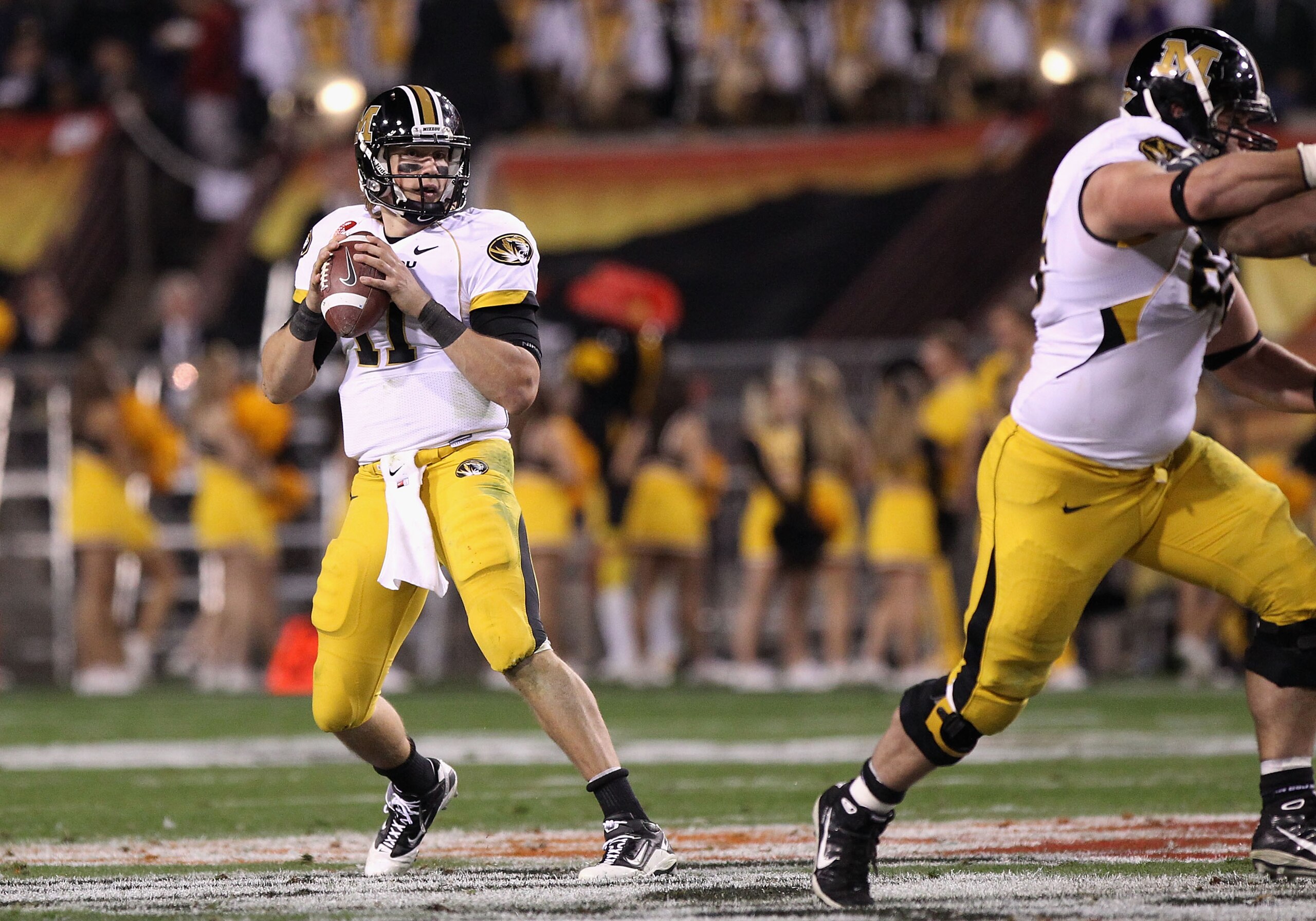
Accuracy: Gabbert possesses good accuracy with a 63.4 percent completion percentage as a junior. It’s not quite the 70 percent number typically seen from many quarterbacks in similar systems, but Gabbert’s accuracy from the pocket is a plus.
It’s especially good on deep throws where he has to place the ball in tight locations. Showed improved deep ball accuracy in 2010. Can place the ball right over the receiver’s shoulder in stride.
Arm strength: Has an exceptionally strong arm that helps him complete passes to all areas of the field. Throws a quick, tight spiral on shorter routes but doesn’t try and laser the ball through his receiver.
Athleticism/mobility: Gabbert has shown plenty that he’s more mobile than his size may indicate. Obviously he’s not Jake Locker, but that’s not a bad thing. Gabbert has the maneuverability to not only get around in the pocket, but pull the ball and run.
Sometimes, though, he is too quick to bail on a play and try to make something happen with his feet. Also runs into trouble trying to throw after he commits to running.
Decision making: Coming out a spread system, Gabbert doesn’t have to make a lot complicated decisions with the football. Particularly, he doesn’t make his own check downs at the line of scrimmage.
While you don’t expect a college junior to be Peyton Manning pre-snap, you have to wonder how well Gabbert will be able to go through his reads. Will he be able to tell when a safety is faking or blitz only to drop back or if a lineman is working in zone blitz coverage underneath?
Field vision: Is typically asked to go through only one read in the Missouri system. Will need a lot of training camp and practice repetitions to improve this flaw. However, when that one read is open, he can hit it.
He has carved defenses up with pro-style nine routes and crosses but will need to do much better trusting his check downs instead of looking for the deep ball. Gabbert’s draft placement may hinge somewhat on how he interviews and breaks down plays for coaches on the dry erase board.
Mechanics: Gabbert’s release is just as quick as any quarterback in this year’s draft class and perhaps his best asset. It’s a compact, fluid motion that doesn’t wind up but will likely need to refine his drop back since he’s taken a majority of his snaps from the shotgun. Got better with his footwork as a junior, but needs more consistently plant his feet when he throws.
Pocket awareness: This is where Gabbert will need to improve. He doesn’t have the best poise when he feels the rush around him and will start moving his feet around him. Needs to trust his linemen more and sit back in the pocket.
At the same time, there were occasions in games this year where Gabbert held the ball too long and got sacked. The bottom line here is that he has to improve mental clock of when exactly he needs to release the ball. With his quick throwing motion, Gabbert could be a star if he rectifies this area of his game. Played in a system with a long line using deep splits.
Final word: As a pocket passer, Gabbert is loaded with potential. The first noticeable thing about Gabbert is his size. He maybe a legit 6'5" and has and NFL frame at 235 pounds. His arm strength is at a top level, he gets great ball placement and his throwing motion is crisp and sound.
Some of the bigger concerns about Gabbert—coming from a spread where he doesn’t have to make many reads—are disconcerting but coachable. Because of that, Gabbert may be the kind of quarterback who is taken in round one but could be better served with a year as a backup.
Finished his career with 6,822 passing yards and 40 touchdowns. Won 18 games over his final two seasons. Was a backup as a freshman behind Chase Daniel. As a junior, ran for 232 yards and five touchdowns.
Compares to: Mark Sanchez, New York Jets
Projected Round: Round 1
Quarterback No. 2: Cam Newton, Auburn
2 of 24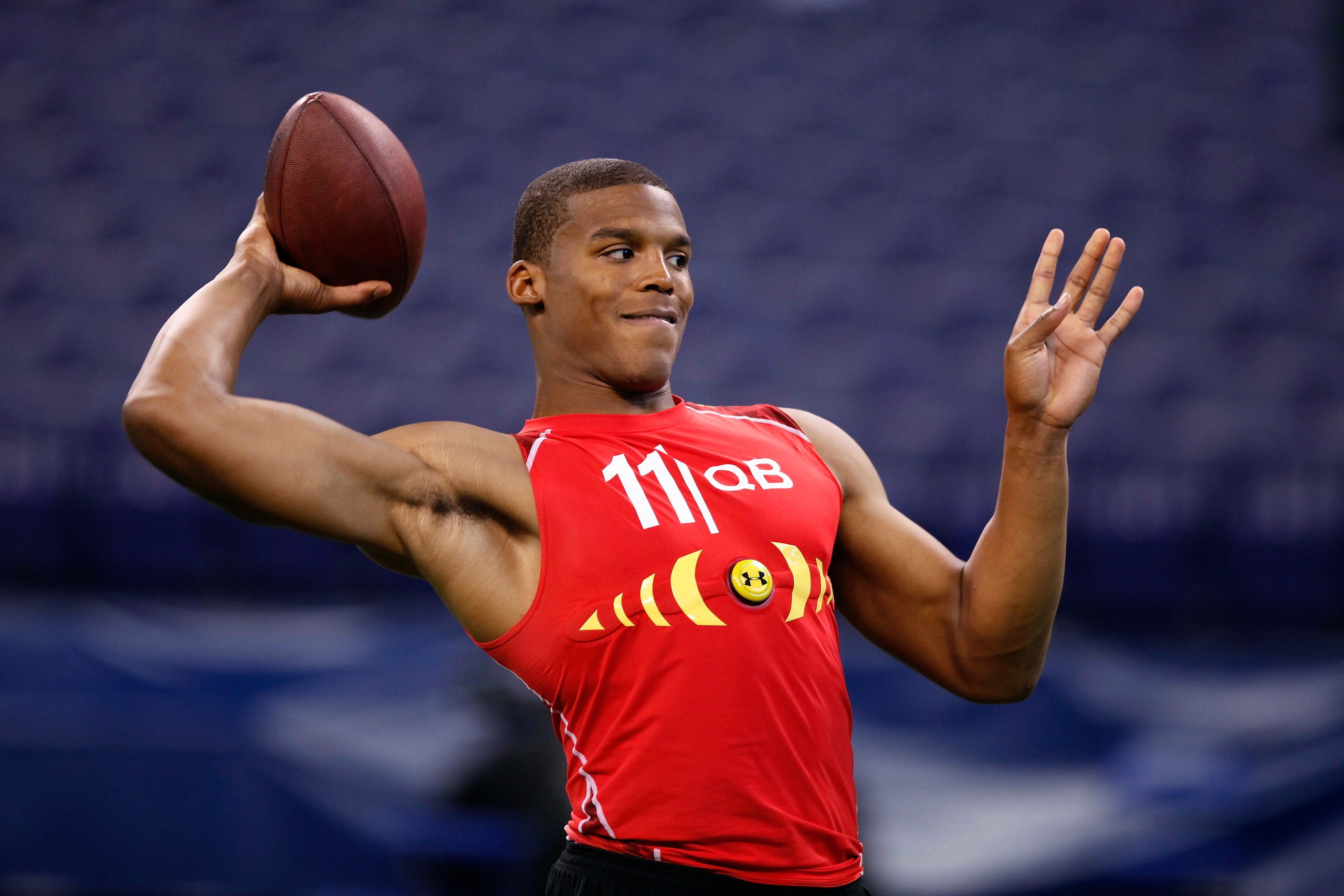
Accuracy: Newton’s accuracy has taken criticism that he does not deserve. During the 2010 season he showed promising accuracy, but his inconsistency is what hurts his stock.
Newton has the ability to hit any target, he just does not do it routinely right now. This points to a mechanics flaw, since he will sometimes miss on a pass that he made before under the same conditions. This is encouraging, as mechanics can be taught and refined.
Newton’s strengths right now are hitting backs out of the backfield on screens and his deep ball accuracy, which is actually among the best in the class. Has shown good touch on both long and short passes. Puts the ball in a catchable position on underneath routes and lets his receiver run in to the ball.
Arm strength: Phenomenal arm strength. Has no trouble putting the ball over 50 yards in the air. Can make every throw you could ask of him. Unlike his accuracy, Newton shows great touch and understanding when throwing the long ball.
Arm strength is top notch. Newton has thrown at least 70 yards in the air that we have seen- and that is during a game.
Athleticism/mobility: Has unquestioned athleticism. Was allowed to tuck and run at any time at Auburn. Can get outside the pocket and hurt a defense. Is not only fast, but has rare size for the quarterback position.
Imagine Ben Roethlisberger with Vince Young’s speed. Does a nice job moving around in the pocket, freeing himself to throw.
Decision making: Has been asked to make at most two reads pre-snap at Auburn. Will need time to learn to read multiple fronts and coverages. He has the ability, but will need time and reps in practice to learn this.
Some have questioned his Football IQ and ability to pick up reads, but Newton has never been taught these things. He’s a blank canvas in terms of IQ.
Field vision: Has enjoyed playing in a shotgun system that lets him stand back and read the field. Newton has little to no experience reading a defense, as he was fed his keys from the sideline. Must show better vision pre-snap.
Keeps his eyes up and down field. It is hard to judge his field vision at this time, as he has only played in wide-open systems that have not asked him to make difficult reads or decisions. This will be determined in the NFL.
Mechanics: Does a nice job stepping up and through his throws. Needs to do a better job setting his feet when throwing short-to-intermediate throws. Has played in a shotgun-only system at Auburn, and also during his time as a back up at Florida.
Has virtually no experience coming from under center. Will need his drop steps taught to him before any other work can begin.
Has a compact delivery and a good over-the-top motion. His delivery and release will not need work. He will fail to step in to passes at times, which results in an incomplete pass.
Pocket awareness/poise: His accuracy seems to drop off when forced to move in the pocket, which is somewhat surprising considering how athletic he is. Has good vision in-pocket while moving. Does not get scared or rattled by defenders flying around him. Great poise in the pocket.
Final word: A one-year starter for the National Champion Auburn Tigers, Newton comes by way of small Blinn College in Texas after leaving Florida instead of playing behind Tim Tebow for another year. At Blinn College Newton led the team to the 2009 NJCAA championship game before signing with Auburn. Newton quickly asserted himself, rising to the position of starter and winning the Heisman Trophy in 2010.
All of this comes with controversy. As is well documented, there are allegations that Newton’s father Cecil offered a play-for-pay deal to Mississippi State, among other schools. Cameron was cleared of any wrongdoing by the NCAA, but the cloud continues to hang over his name.
It is undeniable that Newton is an electric athlete and leader at the position. Much like Michael Vick, Vince Young and Tim Tebow before him, there are questions not about his athleticism, but his ability to succeed long-term in the NFL as a pure passer.
Newton’s production cannot be argued, he was simply fantastic during the 2010 season, but can he fulfill his potential? That is the question NFL teams will be left pondering this April.
Newton is, by all accounts, a likely top ten pick in the 2011 NFL Draft. While he is not ready to start at the NFL level as a rookie, the promise of his potential is too great to pass over.
NFL Comparison: Ben Roethlisberger, Pittsburgh Steelers
Projected Round: Round 1
Quarterback No. 3: Andy Dalton, TCU
3 of 24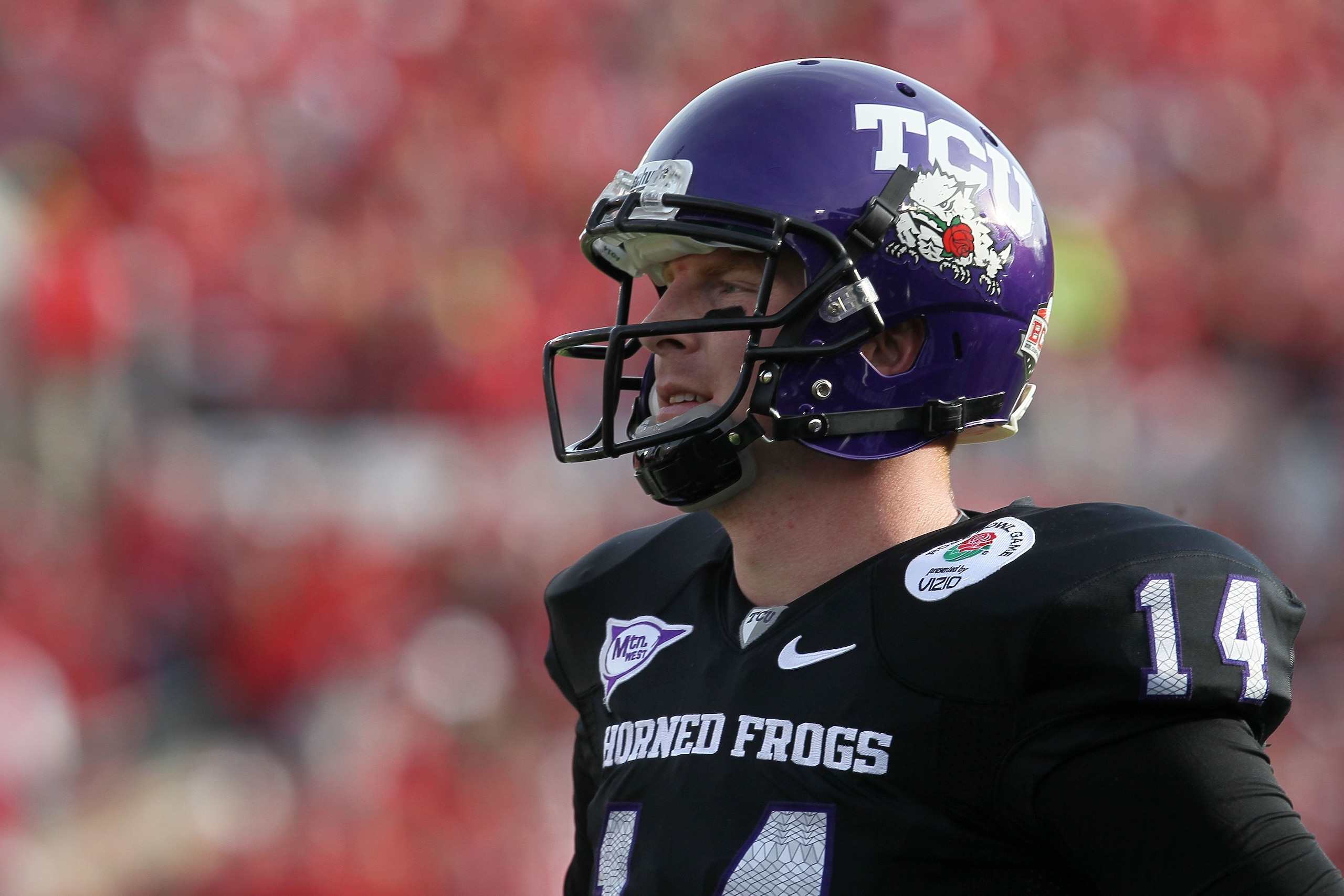
Accuracy: Dalton’s strength as a passer is his accuracy. He consistently places the ball in an area that only his receiver can make the catch. Does a great job leading the receiver and giving him room to run after the catch.
During his Pro Day workout Dalton showed excellent accuracy to every area of the field. There are questions about his deep accuracy, largely related to arm strength. He will get a little high throwing outside but this can be corrected with better timing coming out under center. Dalton has NFL-ready accuracy.
Arm strength: There are questions about his ability to push the ball up-field. Threw passes of 60-yards in the air during Pro Day, but this was in shorts and without wind. Dalton will not be a big-arm quarterback in a vertical system.
He has the arm strength to throw go routes and out patterns but relies more on timing to make his throws. The ball will float down the seam too often. Dalton has the strength to throw with zip and get the ball between defenders. As a West Coast Offense passer he would excel due to his ability to fit the ball in tight spaces on short and intermediate routes. Despite not having the strongest arm he does show nice touch on deep balls.
Athleticism/mobility: Dalton performed very well as a runner during his TCU career. He has experience running a zone option and also as a shotgun passer who was given the green light to run if needed. Against Wisconsin in the Rose Bowl the Horned Frogs featured Dalton’s rushing ability to throw-off the aggressive Badgers defensive line.
Dalton totaled 1,611 rushing yards and 22 scores on the ground in his four years as a starter. Has shown the ability to make throws moving left and right out of the pocket.
Decision making: As a catch-and-throw passer from the shotgun Dalton is not often asked to make post-snap reads. He will struggle at times if his primary is covered but really improved in this area as a senior. Will lock on to a receiver too often. Threw only six interceptions in 2010 compared with 27 touchdowns.
Field vision: Has benefited from a shotgun system. Will need to adjust to playing under center. Has the required height to see over his linemen. Does show the ability to get outside the pocket to improve his vision down field if needed.
Mechanics: Has a strong over-the-top delivery. Good follow through. Has solid footwork on delivery and follow through. Keeps the ball high and does not let it drop, even when moving in the pocket. Throws from his shoulder and doesn’t drop the nose of the ball. Has a quick and compact release.
Pocket awareness/poise: A four-year starter for TCU, Dalton is a poised and tough leader who teammates will follow. Has won three Most Valuable Player awards in four Bowl Game appearances at TCU.
Dalton does not get rattled in the pocket and can use his mobility to escape if the pocket breaks down. Has a calm about himself in the pocket and is not afraid to stand in until the last minute and take a big hit.
Final word: Andy Dalton leaves TCU as one of the most decorated quarterbacks in the team’s long history. At the college level he has done everything you could ask of a quarterback. Entering the NFL there are questions about Dalton’s arm strength and his “up-side.”
Many see Dalton and too quickly write him off as a product of a spread system who will not develop farther in the NFL. When we look at Andy Dalton we see Drew Brees.
Dalton, like Brees, is slightly undersized and leaves a spread college system that hid his lack of a rocket arm. Brees and Dalton were both given 2nd Round grades by most draft experts.
We see a bright future for Andy Dalton if he is drafted in to the right system. Dalton will excel in a spread or West Coast offense. This makes Seattle, San Francisco, Cincinnati and Minnesota possible destinations for him in Round 1 if they are willing to trade up to get him.
NFL Comparison: Drew Brees, New Orleans Saints
Projected Round: Round 1
.jpg?w=2560 "Cardinals Giants Football")
.jpg?w=2560 "Titans Giants Football")
.jpg?w=2560 "Dolphins Bills Football")
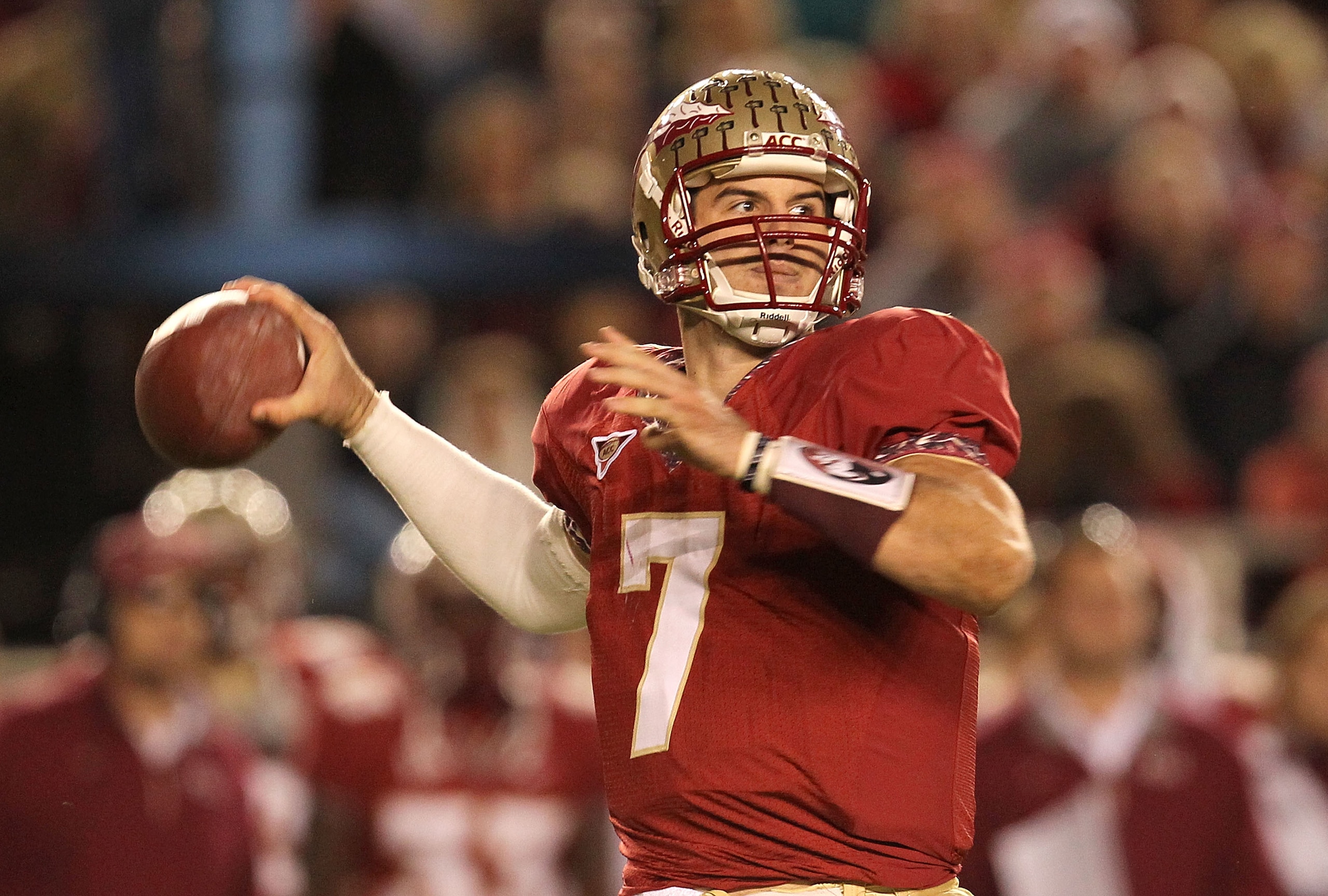
Quarterback No. 4, Christian Ponder, FSU
4 of 24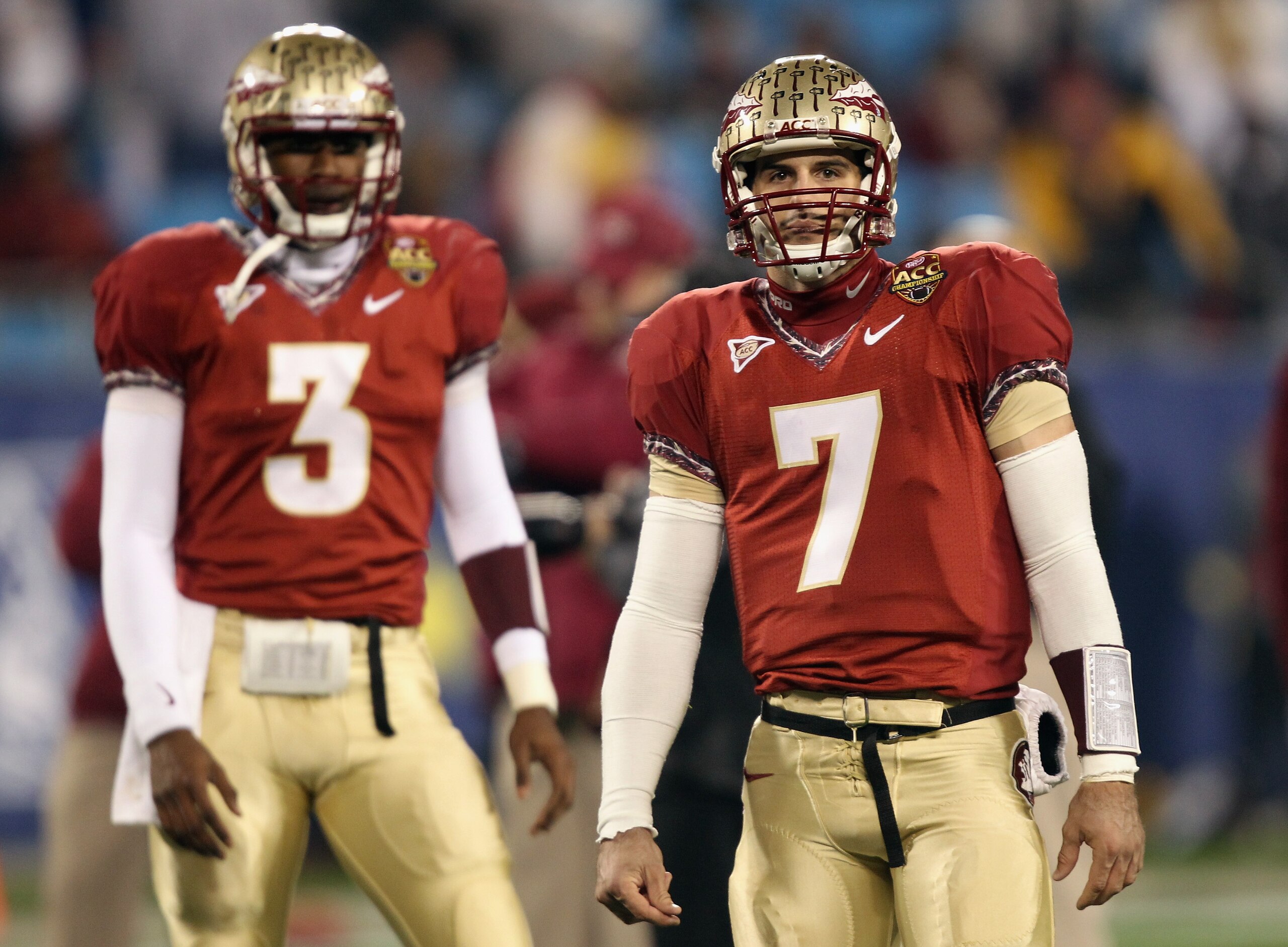
Accuracy: Can put the ball on a line to any spot on the field. Shows very good rotation on underneath passes and hits them consistently with good accuracy. Hits the receiver consistently in the same location on the same routes.
Showed at the Senior Bowl an ability to throw the deep out in a way that the defender cannot get to the ball without going through the receiver (low and outside). Will force the ball at times and can result in a shaky deep ball that might flutter to the inside.
Arm strength: One area that Ponder does not stand above his competitors is in arm strength. While he has enough arm strength to survive in the NFL, he will never blow a defense away with his deep ball.
His arm is sufficient for short and mid-range routes, and he throws those with good zip and rotation. The deep ball can flutter at times and might lose zip in flight.
Athleticism/mobility: Is much more athletic than he is given credit for. Is a mobile passer with the ability to make plays on the move. Displays very good vision when moving.
Has enough speed to make defensive linemen miss and can outrun them to the corner. Can be too eager to run the ball, and will expose himself to big hits. Must learn to slide, or head for the sidelines.
Decision making: Is a very smart quarterback, both in the classroom and on the field. Has been hot-and-cold reading defenses in his career. Can get in a habit of staring down his receivers, especially throwing left.
Field vision: Ponder can improve here with proper NFL coaching and training. Does not do a great job of looking off the safety and can get lost in playaction. Must do a better job settling down late in games and not forcing throws. Tries to be a hero too often, which in 2010 resulted in late-game interceptions.
Mechanics: Has a very quick drop and set-up. Shows a compact delivery with a solid over-the-top delivery that shows no wasted movements.
Keeps the ball up, near his ear when throwing. Has shown good footwork in his drop step, his release and follow through. Squares his shoulders well and adjusts nicely when moving in the pocket or outside of it. His throwing mechanics are near flawless.
Pocket awareness/poise: Is a very confident player, and it shows in his awareness and how he carries himself. Is willing to step up in the pocket to make throws. Does not always feel backside pressure and can get blasted from his blindside.
Final word: You have to worry about the injuries. He suffered a third-degree separation of his throwing shoulder in 2009 and has experienced issues with a bursa sac injury. He also had a concussion in 2010. While Ponder appeared healthy this offseason, the injuries certainly add up.
Ponder is by all appearances a late first-round pick in the 2011 class. He has the tools to be a starter in the NFL, if he can stay healthy. He comes from a pro-style offense where he was asked to make reads, handle play calls and read the entire field. Compared with his experience as a starter at Florida State, this makes Ponder the most NFL-ready of any quarterback in this class.
NFL Comparison: Colt McCoy, Cleveland Browns
Projected Round: Round 1
Quarterback No. 5: Jake Locker, Washington
5 of 24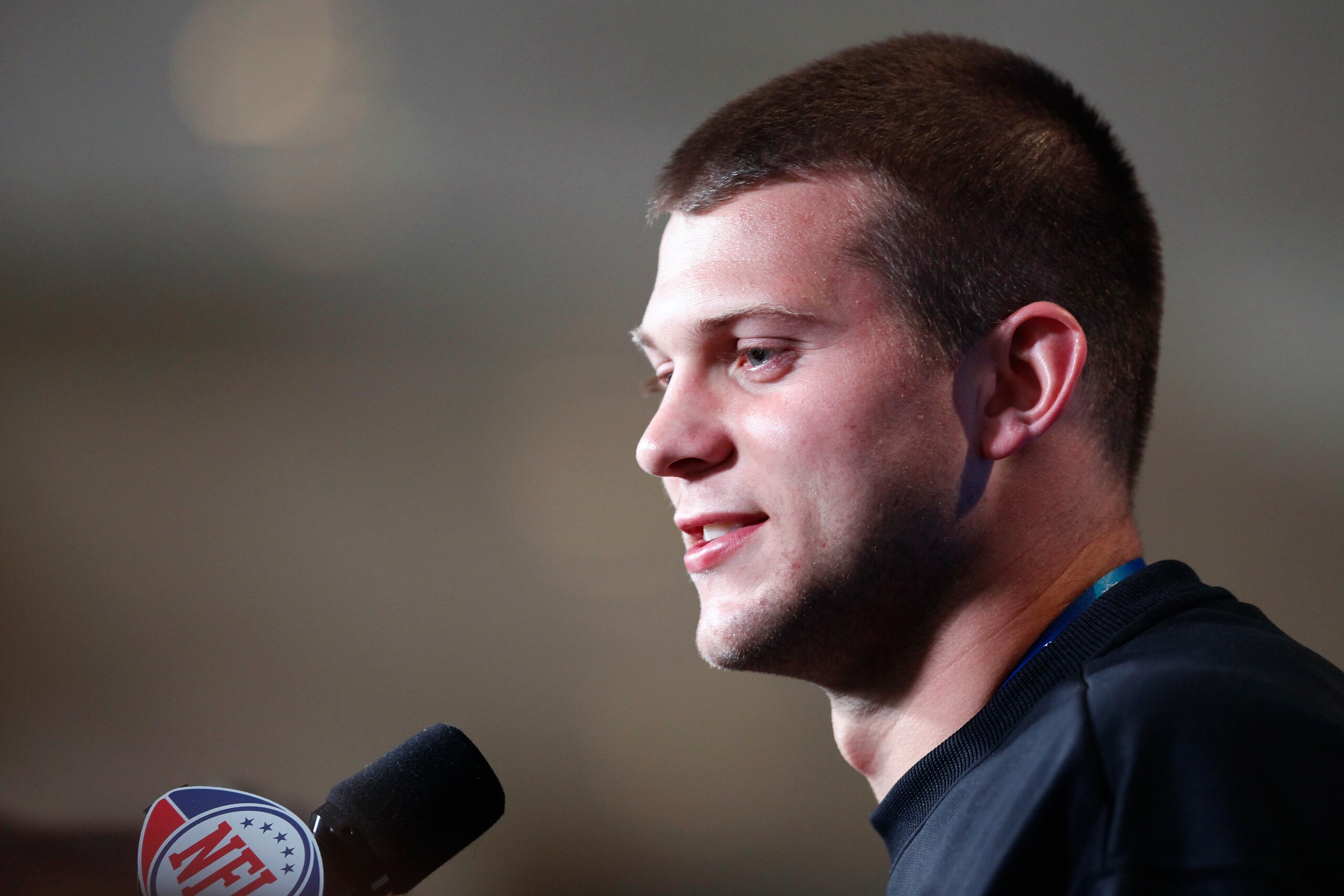
Accuracy: Locker has had issues in the past with his accuracy. He showed improvement in this area last season playing in a pro-style offense but still have some concerns. Locker has the arm to make every deep pass, but his accuracy becomes inconsistent.
Showed marked improvement on underneath routes but still tends to strong-arm the ball on short throws. Accuracy seems to be based more on arm strength than rhythm and touch.
Arm strength: One of Locker’s more intriguing traits is his arm strength. His arm will be one of the strongest in the 2011 draft and compares favorably to the strongest in the NFL. While arm strength isn’t necessarily the most important trait in a quarterback, it’s certainly something nice to have in the arsenal.
Athleticism/mobility: Possesses as much athleticism and mobility as someone could want in a starting quarterback. A high school baseball star, Locker clearly has athletic chops. His feet are quick and he’s agile enough to elude defenders. Reportedly runs a 4.4 40-yard dash, which is probably an exaggeration.
Decision making: In the past, Locker’s athleticism has been a detriment to his decision making. He would too quickly pull the ball down and run instead of reading his progressions. He still tends to carry that issue and gets too antsy in the pocket. This forces the line to hold their blocks longer, which leads to more pressure.
Field vision: This is the other area where Locker needs to show improvement as a senior. He is generally a one-read and throw quarterback. Against teams that can disguise coverage, Locker has issues.
He needs to do a better job of working through his reads. Early in his career, Locker often had to go to his No. 1 option because the skill position at Washington were lacking. That’s the case no more, so if Locker’s field vision doesn’t improve this year, his ranking will suffer.
Mechanics: Locker’s mechanics make him just as good or better than any draft-eligible quarterback in college, especially his release. Locker tends to hold the ball low on his chest as he drops back. You’d like to see him hold it a little higher, but Locker’s next move is lightning quick. He cranks the ball back in an instant and fires it right over his ear.
He doesn’t wind up at any point and doesn’t waste a motion. As is the case with most college quarterback, Locker has spent most of his time in the shotgun. As he plays under center more, he’ll get more comfortable reading defenses as he drops back.
Pocket awareness/poise: As mentioned in the decision making category, Locker has a tendency to move around a lot in the pocket. Needs to show as a senior that he can set his feet, plant and throw. When he shuffles his feet, Locker’s accuracy drops considerably. Appears to feel the blitz fine. Has the strength throughout his frame to handle hits.
Final word: Quarterbacks as athletic and strong-armed as Locker don’t come around often. In his first year in head coach Steve Sarkisian’s pro-style offense, Locker improved as a pocket passer. Add his incredible ability and speed and you have a front-line football player.
He showed better pocket presence in 2009 but still needs to improve in that area. He can be very good in the play action game and can throw effortlessly on the move.
Locker seems to finally be realizing his upside after being slowed by injuries as a sophomore. It’s scary, but we likely haven’t seen the best of Locker yet. If he can improve some on his touch, Locker has the look of a No. 1 overall pick.
Locker was a two-sport star in high school and was drafted by the Los Angeles Angels in the 10th round of the MLB Draft. Locker has had several injuries, including a broken thumb, a neck issue, a hamstring that slowed him as a sophomore and currently has an injured hand.
When you look at Locker as a whole, he smacks of a boom or bust prospect. His deficiencies—accuracy, field vision and pocket presence—are the same as quarterbacks who often bust. But it’s impossible to ignore his athleticism, arm strength, toughness and potential to improve more under Sarkisian.
NFL Comparison: Jay Cutler, Chicago Bears
Projected Round: Late 1st-Early 2nd
Quarterback No. 6: Ryan Mallett, Arkansas
6 of 24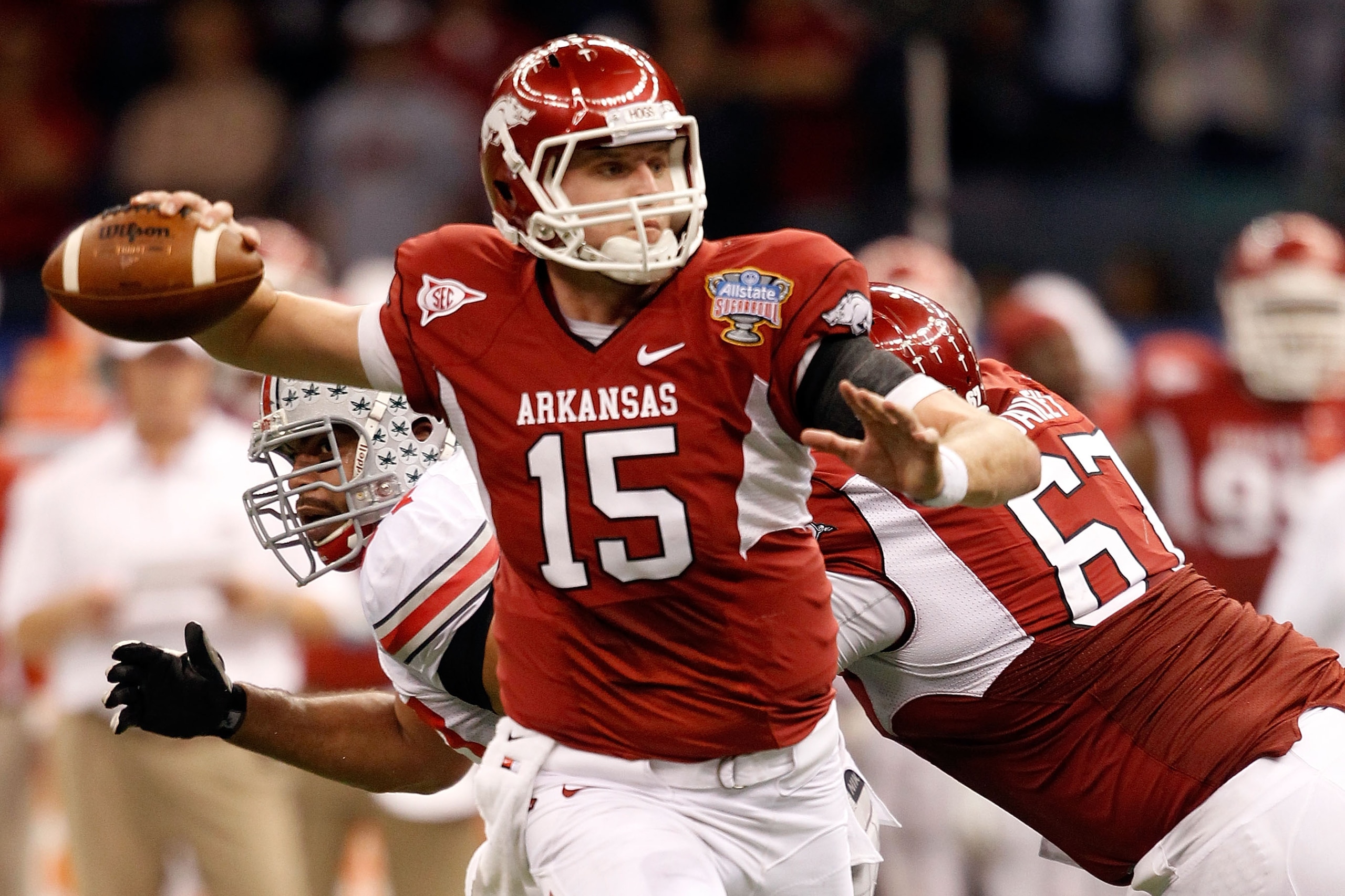
Accuracy: Mallett shows above-average accuracy to compliment his outstanding mechanics. His short accuracy is spot on and can lay the ball into the receiver’s hands on deep routes. Mallett can occasionally miss a receiver across the middle with his tendency to throw some passes too high. Using his exceptional arm strength, he can place the ball into tight windows that even some NFL quarterbacks can’t hit. He does a great job of putting the ball where only the receiver can catch it. He also excels at throwing accurately while on the run after being forced out of the pocket. Accuracy is a strong aspect of his game, but has definite room for improvement.
Arm Strength: Possibly his greatest attribute, Mallett’s arm strength is among the best in college football. Whether it’s a deep ball down the sideline or putting the ball on a rope 20 yards down the field, he has the arm to put the ball anywhere it needs to go. However, too often his passes are overthrown as if he loses control of the amount of strength behind his throws. The main concern is that he can sometimes rely too much on his arm strength when making risky passes.
Athleticism/Mobility: Mallett is a pure pocket passer. He doesn’t have the speed, athleticism or quickness to be a legitimate scrambling threat in the NFL. Shows good movement in the pocket, but defenders shouldn’t be concerned with him picking up first downs with his feet on a consistent basis. Overall, he is subpar in both top-end speed and athleticism, but makes up for it with decision making and poise.
Decision Making: Mallett is a very confident passer with great awareness and football knowledge. However, that confidence can sometimes be detrimental to his play when he decides to force tough throws when nothing is there. When he has time to throw, he reads the defense and does a good job of checking down to his second and third options. Even with pressure in his face, he makes smart, quick decisions to throw the ball away. Despite his lack of speed, he can sometimes try too hard to outrun the defense and put his offense in tough situations by giving up unnecessary sacks. A 10:3 touchdown-to-interception ratio provides support for his strong decision making.
Field Vision: The fact that he’s 6’7’’ allows him to have clear vision of the field and makes his passes much harder to bat down by the defensive line. He does a solid job of reading the defense, reacting after the snap, and taking what the defense can give him. Often checks down to backs and tight ends out of the backfield if he sees nothing available down field.
Mechanics: Coming out of the pro-style offense of Bobby Petrino, Mallett has honed his skills as a prototypical NFL passer. He has a very natural, over-the-top release that, matched with his height, allows him to deliver the ball cleanly and effectively. Stands tall when delivering the ball, and uses a quick, fluid motion to get the ball out of his hands. When he runs play-action, he does an outstanding job of selling the run and hiding the ball from the defense. However, he needs to learn to drop back more effectively considering he spent lots of his time at Arkansas in either the shotgun or pistol formations.
Pocket Awareness/Poise: As mentioned earlier, Mallett has excellent pocket presence and awareness which allows him to evade the pass rush and continue to look down field. He doesn’t typical get flustered by the pressure and can step into hits in order to make a good pass. Even in tough situations, he has held his own and been a composed leader for his teammates to rally around.
Final Word: Any team would be glad to have a player of Mallett’s ability and leadership taking snaps for their offense. Passing stats come easily and in large quantities for Mallett, who is as productive as they come at the quarterback spot. After having an up-and-down season in 2009, he came back in 2010 after considering the NFL and proved that he could be smarter and more consistent with his decisions. He has shown great maturation since joining Arkansas in 2008 as a transfer from Michigan.
Mallett has all of the tools to become a sensational quarterback in the NFL. No matter the situation, he is a proven leader and hard worker, but can sometimes lose focus when things start to fall apart as evidenced by Arkansas’ 2009 loss to Alabama by a score of 7-35 in which he completed just 34% of his passes. Teammates seem to rally around his vocal leadership and feed off his positive energy. However, scouts will need to look into why coaches at Michigan had issues with him that eventually led to him transferring.
During spring practices in 2008, he missed the final two weeks due to an injured finger in his throwing hand. Other than that, there are no standout durability issues for Mallett.
Given the right coaching and the proper system, he could eventually put up big time numbers in the NFL just as he did under Petrino. In order to succeed, he will need to work on controlling his strength on deep balls and making better decisions with defenders bearing down on him. If the right circumstances arise, Mallett could come off the board in the late first/early second round of the 2011 draft.
NFL Comparison: Joe Flacco, Baltimore Ravens
Projected Round: Late 1st- Early 2nd Round
Quarterback No. 7: Colin Kaepernick, Nevada
7 of 24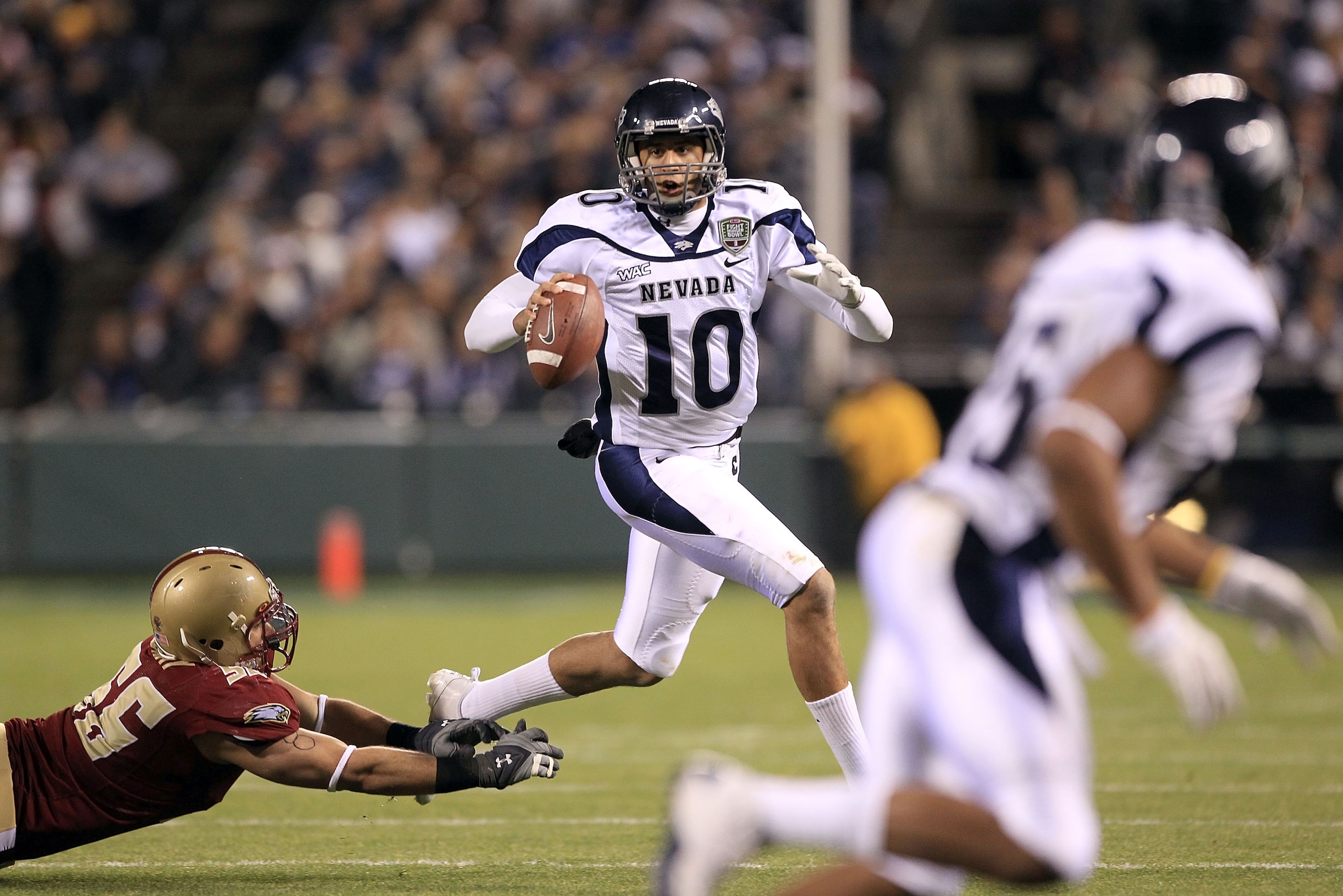
Accuracy: Kaepernick’s accuracy is not good, but it’s workable. His mechanics need a ton of work, which can clean up a lot of the issues he is facing with accuracy. Once he gets his mechanics flowing at an NFL level, his accuracy should be in-line. He does show good touch on underneath passes. You hate to compare him to anyone, but his throwing ability is a lot like Vince Young coming out of Texas.
Arm strength: Is a former-baseball player with a 90-plus mph fastball, so you know the arm strength is there. He has excellent zip on all his passes at every level of the field. As with his accuracy, it will be interesting to see how his velocity changes once he is delivery the ball without any wasted motion.
Athleticism/mobility: Is a tremendous athlete and a very mobile prospect. Has a very tall, thin frame and could be exposed to injury in the NFL if he takes too many hits- which are likely as he is a mobile quarterback. Needs to put on muscle.
Decision making: Does a pretty good job reading the defense, but has the benefit from playing in a shotgun system that let him sit back and evaluate. Can get in trouble in the middle of the field, where he doesn’t always find the safety or look him off.
Field vision: Will have to learn how to read a defense from under center. Has otherwise done a good job seeing the field while in the shotgun or moving. Is an experienced starter and has seen every defense you can throw at him.
Mechanics: There is a lot of work to be done here. He has a lack of experience taking snaps from under center and needs to work on remaining balance while scanning the field. Another key issue is his grip on the ball, which is too loose. He also will drop the ball below his sternum before throwing, wasting time and motion. Has a hitch in his delivery that needs worked out, as a long release slows down delivery and makes interceptions more likely. Has to do a better job setting his feet and squaring his shoulders to deliver the ball. Must also learn to step in to his throws and not just sling the ball from his shoulder.
Pocket awareness/poise: Kaepernick has a great feel for the pocket and the athletic ability to escape the rush. Much like Vince Young or Dennis Dixon before him, his athleticism can be a blessing or a curse. He must learn when to run and when to stand in the pocket and wait for his receiver to break open.
Final word: It is hard to think of any one player having the rise up draft boards this offseason that Kaepernick has enjoyed. He is now considered a late first-round pick and could even hear his name called in the middle of the first round.
The team that drafts Kaepernick will need to completely re-work his motion, which can be done (see Tim Tebow, Vince Young). Some will also point out guys like Philip Rivers who have performed fine with a less than usual motion.
NFL Comparison: Vince Young, Tennessee Titans
Projected Round: Late 1st- Early 2nd Round
Quarterback No. 8: Greg McElroy, Alabama
8 of 24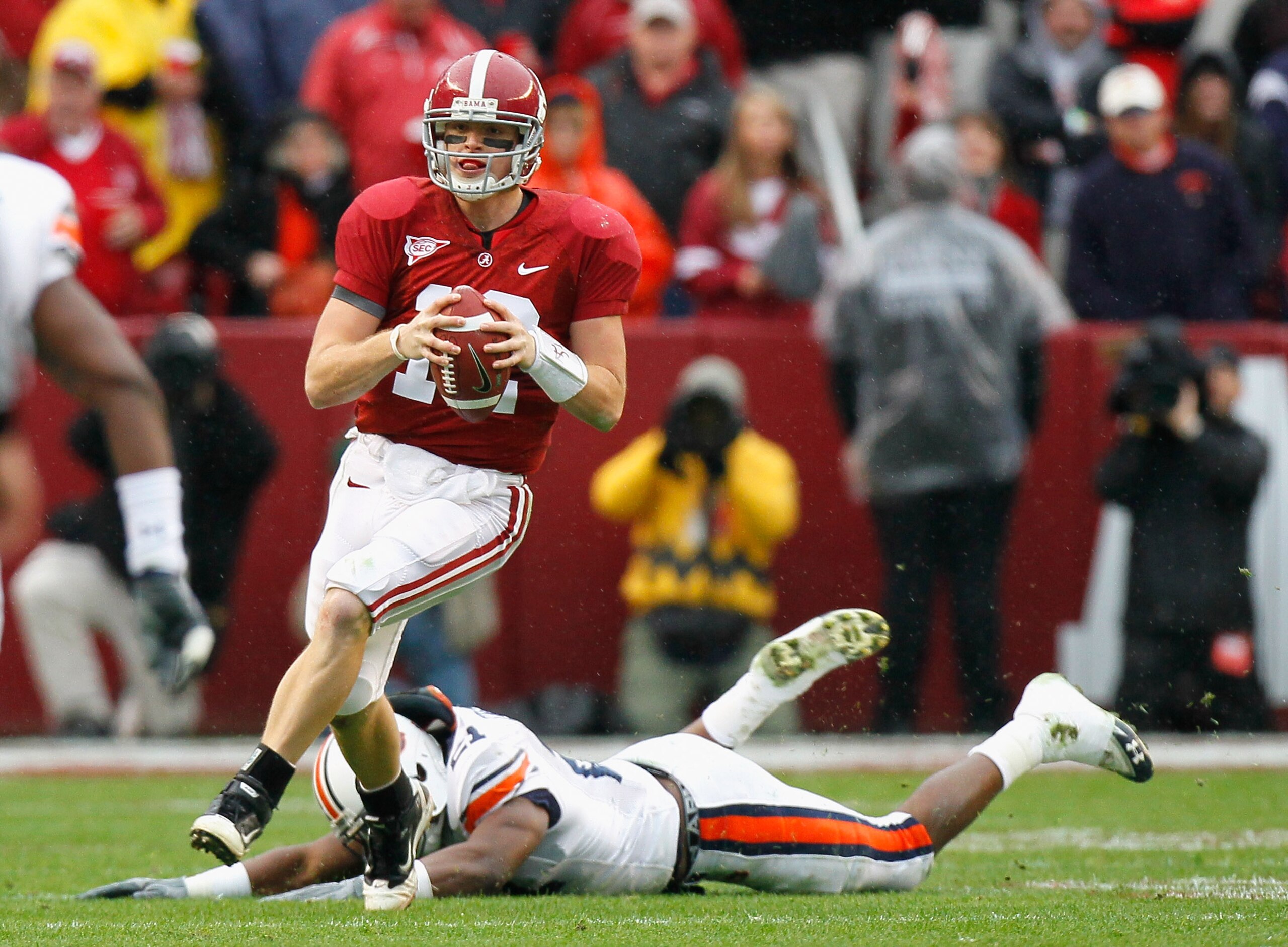
Accuracy: Greg is a very accurate passer on the short and intermediate routes and is able to drop back and hit slants all day. His ball placement is very good. He puts the ball in front of his receivers and gives them a chance to make something happen after the catch. His deep balls tend to get underthrown, forcing his receivers to make adjustments and giving defenders a chance to get their hands on the ball.
Arm Strength: This is one area that really hinders McElroy’s prospects of making it in the NFL. He has good zip on his short passes but his passes to the sidelines and on deeper routes seem to have a little too much air on them. He tends to get in trouble trying to put balls into windows that he just doesn’t have the arm strength to make. With good coaching you might be able to squeeze a little more velocity out of his throws but physically this is about as good as he’ll get.
Athleticism/Mobility: He’s not much of an athlete and isn’t much of a threat to run at all. He is able to get on the edge on bootlegs fine but when he breaks the pocket, don’t expect him to take off running. Inside the pocket he can slide and move in order to manipulate throwing lanes.
Decision Making: He performed well in a pro-style offense both before and after the snap. Before the snap he was able to diagnose where pressure was coming from and adjust accordingly, hitting the open receiver. He rarely threw the ball into bad spots. One thing he needs to learn is to throw the ball away. He seems to hold the ball too much trying to make a play and ends up taking sacks instead of throwing the ball into the 3rd row of the stands. He was sacked 30 times his senior year at Alabama.
Field Vision: Field Vision along with accuracy form McElroy’s top two traits as a prospect. He is very good at making safeties and linebackers move with his eyes and then hitting a receiver away from those defenders. If his primary read is covered he does a decent job of finding his 2nd and 3rd although he seems to panic a bit when this happens. He always keeps his eyes downfield instead of concentrating on pass rushers.
Mechanics: His footwork and throwing motion need a little bit of work. His delivery is a bit slow and he winds up a little bit too much. He’ll need to be coached to tighten up his delivery in order to make it faster especially with his average-at-best arm. McElroy tends to be sloppy from time to time when he steps into his throws so you would like to see him become more consistent there.
Pocket Awareness: McElroy does a very good job at commanding and manipulating the pocket. He feels pressure off the edge well and steps up into the pocket to deliver the ball. He is capable of sliding within the pocket and does it smoothly and quickly. His problem comes when the pressure comes up the middle. He tends to get happy feet and runs around too much trying to make something happen instead of throwing the ball away.
Final Word: Greg McElroy has been a very successful quarterback in the college ranks and has been a winner his whole life. As a starter, he’s only lost three games since he was in 8th grade. At Alabama, he didn’t have to carry the load like you want to see but was able to manage a very good team with a lot of high profile players all the way to the National Championship.
He is a very smart quarterback who finished his time at Alabama with a 3.86 GPA, was a member of the Honor Roll four times, and received the very prestigious Rhodes Scholarship. From the neck up, he has everything teams want and need from a quarterback. He’s not a guy you have to worry about not getting in his playbook or showing up on the police blotter. It’s hard to bet against McElroy but he just doesn’t have the physical tools to be a consistent starter in the NFL although he may surprise some people. His upside is very limited because he’s already a polished player and profiles as a career long back-up quarterback that has the ability to be a spot starter from time to time.
NFL Comparison: Matt Hasselbeck, Seattle Seahawks
Projected Round: Round 3
Running Back No. 1: Mikel Leshoure, Illinois
9 of 24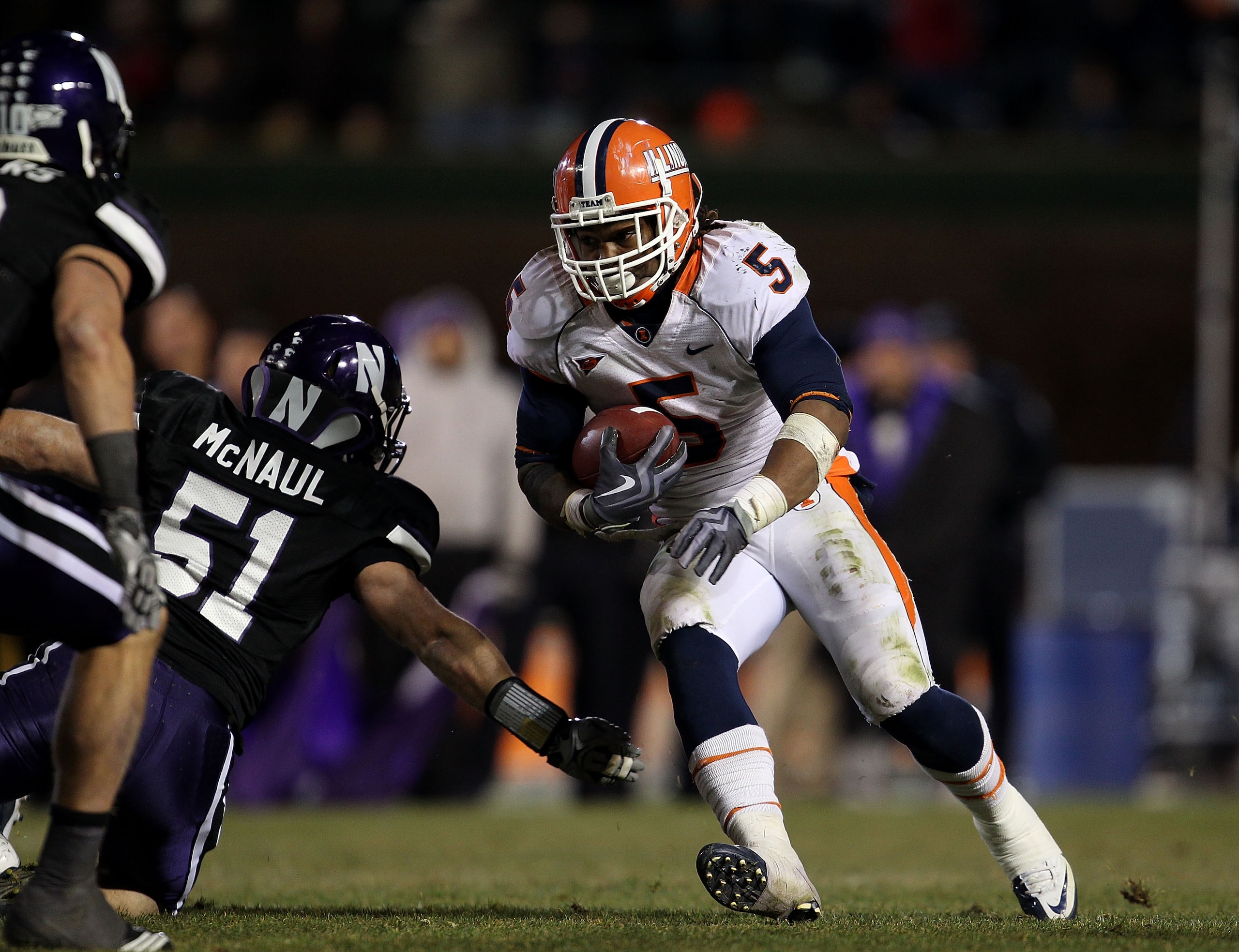
Acceleration/Burst/Quickness: Leshoure has the quickness to explode and run away from defenders, or the agility to simply jump over them. Perhaps better than any other runner in this draft class Leshoure has the second-gear that NFL teams look for. Once he explodes through a hole he is almost impossible to catch.
Ball Protection: Mikel shows excellent ball security, keeping the ball high on his chest and tucked away nicely.
Elusiveness/Feet/Agility: Leshoure runs in a compact way that shields him from taking big hits. He has a smooth ability to cut and change direction without losing speed or slipping. Mikel is no a shifty back who will look to run by or “juke” out a defender. His game is to line up the tackler and run them over.
Pass Catching: Illinois has lined him up as an outside receiver and he has shown reliable hands when asked to catch. He has shown a good job running routes from out of the backfield, in motion and even in the slot. Does not make the best cuts and will round off routes. We have noticed him catching with his body too often. Due to his size and running type many find him to be a surprisingly good pass catcher out of the backfield.
Pass Blocking: The technique to be a great blocker is lacking, but he does show a ton of effort in blocking. Leshoure has the body type to be a good blitz protector once he learns the right technique.
Power: Leshoure is a powerful back who does a great job getting behind his pads on inside runs and also when confronted in the hole. For a power running back it is important to keep your feet moving after contact- Leshoure does an excellent job of churning his feet when hit. Leshoure has the power to run over tacklers, especially defensive backs, with ease. Has a good center of gravity which makes it hard for solo tacklers to get him down on their own if they don’t get leverage. He isn’t a shifty back and won’t make too many defenders miss in the back/open field unless he runs over them.
Size/Length/Hand Size: There are no questions about his size. Leshoure is the perfect build for a power runner with elite burst.
Speed: Leshoure has a great combination of vision, balance and acceleration to power his speed. Mikel isn’t a burner, but he shows explosion when he hits the hole and through contact.
Vision/Balance/Instincts: Leshoure runs with a natural forward-lean and does a good job cutting away from defenders. He shows very good vision in the open field to make changes and elude tacklers. Does a good job of running behind his blockers, but he can and miss cutbacks.
Final Word: There are a few character concerns here. He was suspended for September 2009 matchup against Illinois State for violating unspecified team rules. Leshoure also suffered broken jaw in 2008, losing 17 pounds, reportedly during a fight with teammate Jeff Cumberland.
For all his early troubles Leshoure appears to have matured. His 2010 season was flawless, earning him second team All-American status by the Associated Press and a first-team All-Big Ten selection. He set the Illinois single-season record with 1,697 yards rushing and added on 17 touchdowns.
As a pro Leshoure has the skills to transition very well to the NFL. He is very similar to former Illinois runner Rashard Mendenhall in terms of body type, speed and running ability.
NFL Comparison: Rashard Mendenhall, Pittsburgh Steelers
Projected Round: Round 1
Running Back No. 2: Mark Ingram, Alabama
10 of 24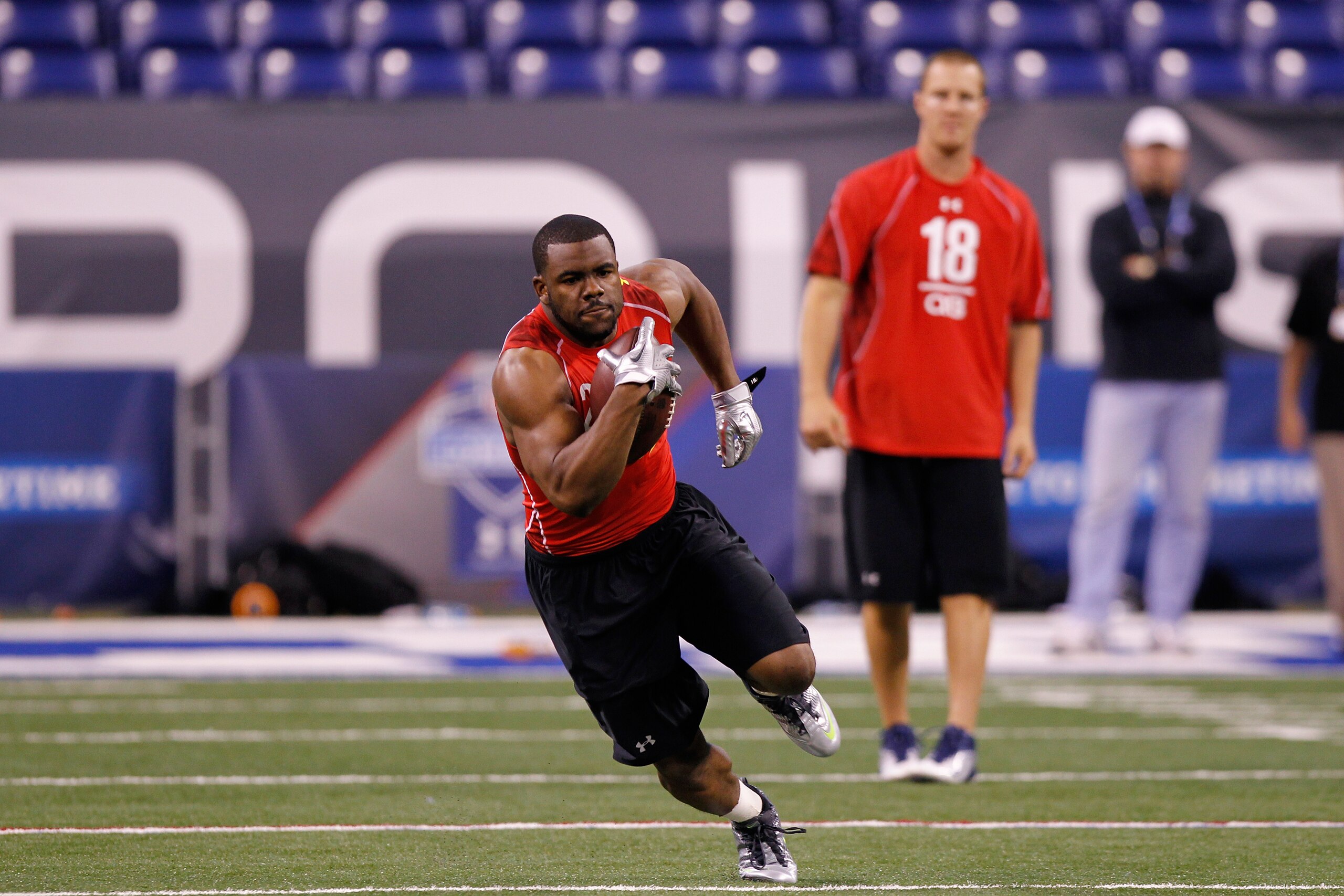
Acceleration/Burst/Quickness: Quick burst to attack the line of scrimmage. Good acceleration in 5 and 10-yard splits. Decent lateral agility, but excels at making one cut and squaring his shoulders to the line of scrimmage. Will not dance. Is a very patient runner who does a great job finding holes.
Ball Protection: Only two fumbles in three seasons at Alabama. Excellent ball security. Fumbles will not be an issue in the NFL. Has a strong grip and excellent placement when securing the ball.
Elusiveness/Feet/Agility: Does a great job of keeping his feet moving. Is not elusive in the open field. Will make one cut and lower his shoulders. Good enough agility, but is a classic power runner who does not try to shake defenders.
Pass Catching: Good hands. Used primarily in screen packages. Does a good job locating the ball and bringing it in to his body. Does not let the ball get inside him.
Pass Blocking: Is a willing blocker who has shown a good ability to protect the quarterback in passing situations. Will not be a weak link in terms of blocking for his NFL team.
Power: Strong and well built to handle tacklers. Is best used as an inside runner. Has thick legs that power his runs. Low center of gravity. Exceptional tackler breaker. Defenders will bounce off him if not hit low. Very good leg drive. Falls forward when hit.
Size/Length/Hand Size: Great size for a three-down running back.
Speed: Ingram is not a phenomenal athlete, nor does he possess exceptional athletic ability. He will run a decent high-4.4 in the 40 yard dash and test in the middle on all agility drills. He does have the speed to do damage in the open field, but he will not be outrunning many people.
Vision/Balance/Instincts: Ingram is not fast enough to simply out run defenders, but he has the vision and instincts to get to the edge. Does a very nice job finding holes and then exploding through them.
Final Word: A knee injury caused Ingram to miss the first two games of the 2010 season, but he looked good down the stretch despite sharing carries with Trent Richardson and the Alabama offense relying on the pass more.
The son of a former NFL running back wide receiver, Ingram has the pedigree and accolades that NFL scouts love. His lack of elite speed and limited upside will prevent Ingram from being a top 15 pick. He will likely land anywhere between 16 and 35 on draft day.
NFL Comparison: Arian Foster, Houston Texans
Projected Round: Round 1
Running Back No. 3: Ryan Williams, Virginia Tech
11 of 24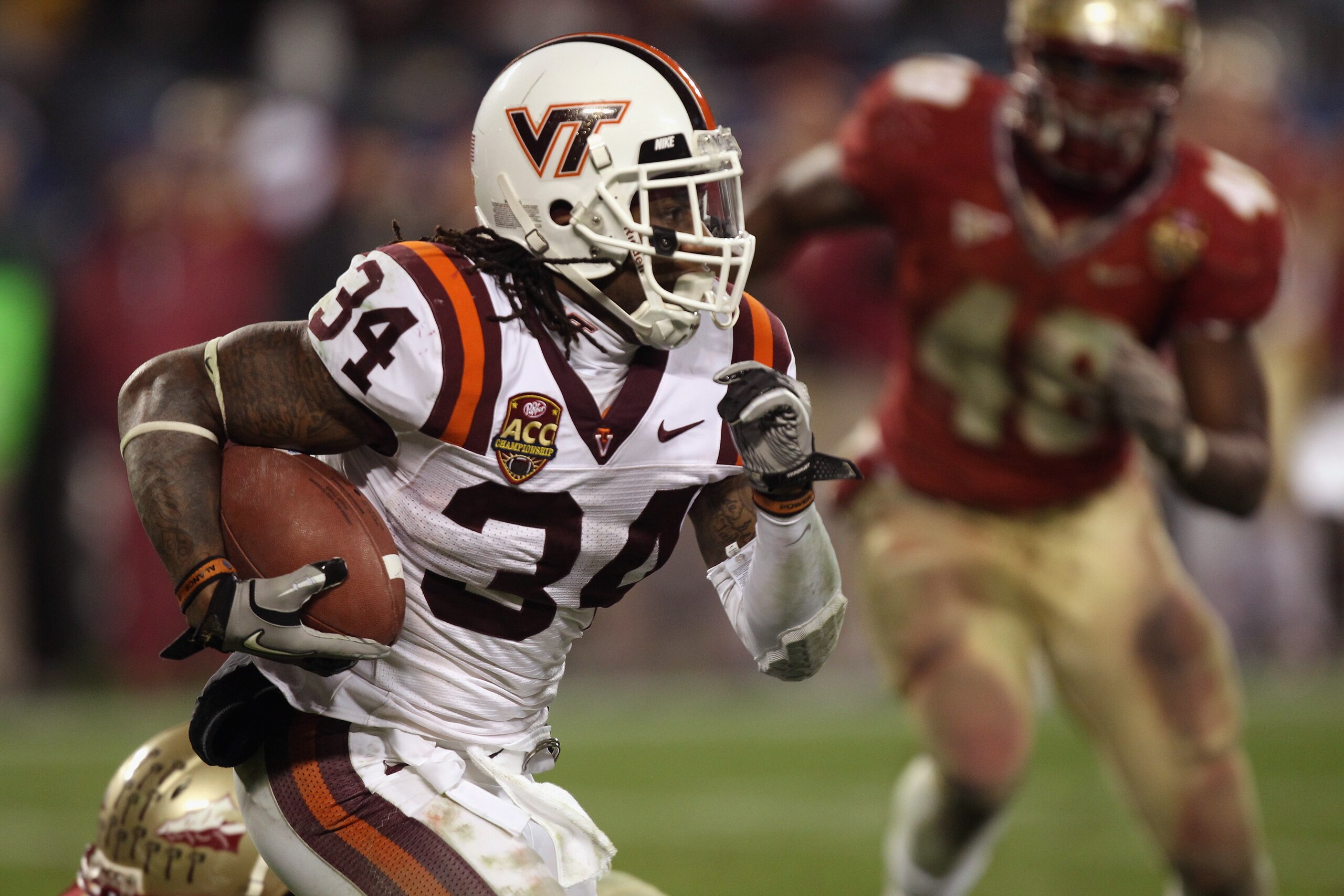
Acceleration/Burst/Quickness: Has incredible acceleration once he finds a crease. One second he is caught behind the line, the next he’s in the secondary.
Ball Protection: Has zero fumbling issues. Ball security is an A+.
Elusiveness/Feet/Agility: Is like an Energizer bunny, always keeping his legs churning and bouncing off would-be tacklers. Is able to bounce and spin his way through tacklers. Very good balance at turning the corner and keeping his body control.
Pass Catching: An able and productive receiver. Has soft hands, good vision and the speed to make plays in space. A valuable player here.
Pass Blocking: Is not the most dominating blocker, but he is willing to lock up with pass rushers. Will dip his head too often, losing sight of the blitzer.
Power: Does not have the bulk to be a powerful inside runner on every down, but is pretty effective here nonetheless. Has very good balance and leg drive to power through tackles. Does a good job finishing his runs and falling forward when tackled. Runs with a low pad level, making him a stronger runner than he should be.
Size/Length/Hand Size: Is a bit small at 5’9″ and 212 lbs. Has enough size to play on every down in the NFL. Does a good job protecting himself from big hits with low pad height.
Speed: Has the patience, vision and burst to showcase his speed on the outside. Williams has the speed to out-run linebackers to the edge and can make defenders miss in the secondary. If a defensive back takes a bad angle, he’ll lose the race.
Vision/Balance/Instincts: Has good vision for finding cutback lanes and creases in the offensive line.
Final Word: The only flaw we can find with Williams is his durability. He has missed time with a hamstring injury that is being checked thoroughly in pre-draft visits. Has only two seasons at Virginia Tech under his belt, so there is little wear and tear on him compared to Mark Ingram or other backs in this class.
If Williams checks out medically he has the look of a middle second round pick. His speed, receiving ability and all-around game are impressive enough to warrant his starting as a rookie.
NFL Comparison: Jamaal Charles, Kansas City Chiefs
Projected Round: Round 2
Running Back No. 4: Kendall Hunter, Oklahoma State
12 of 24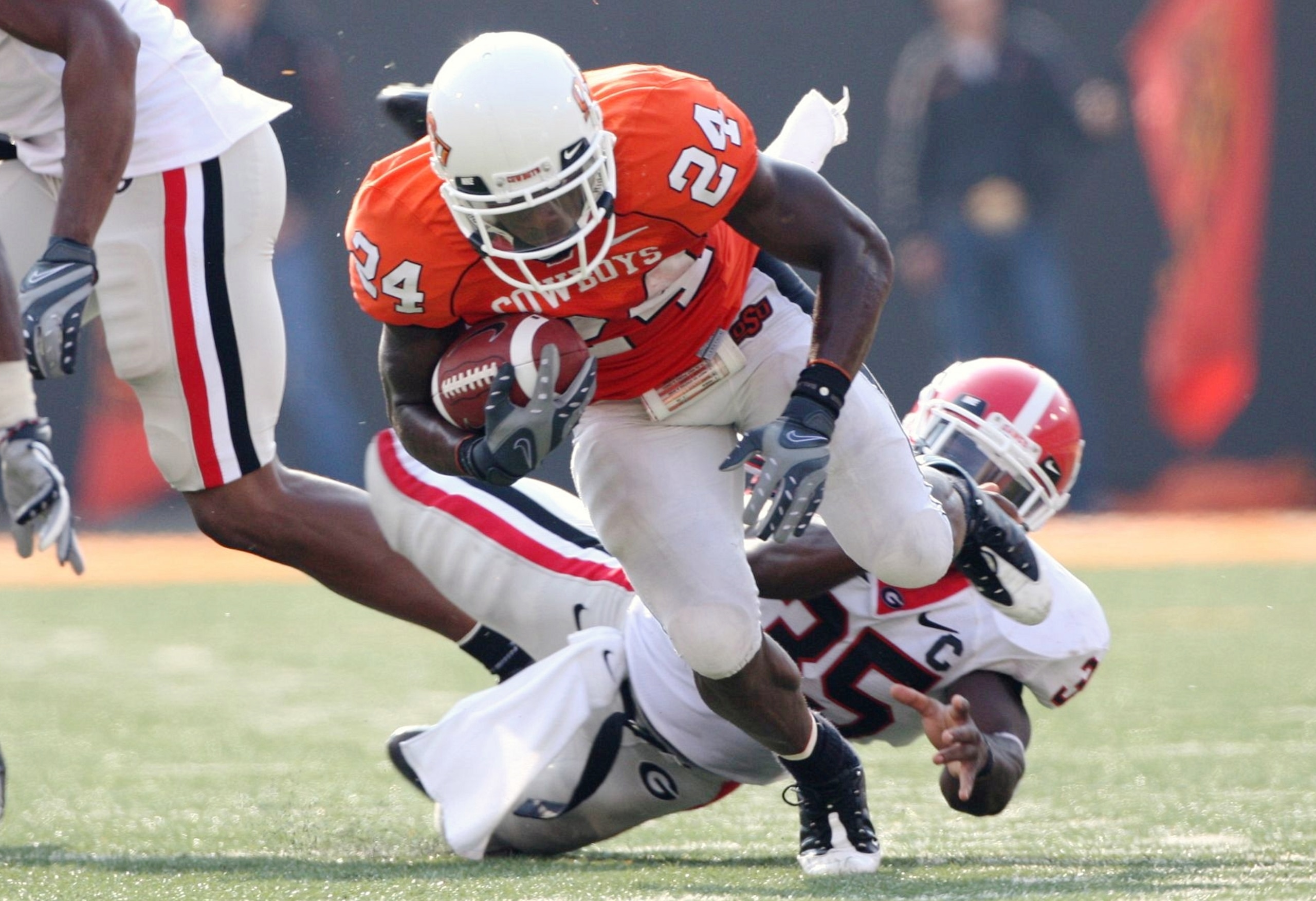
Acceleration/Burst/Quickness: Has the burst and acceleration to make defenses pay if he finds an opening.
Ball Protection: Has not had issues with ball security. Carries the ball high and tucked away tightly to his body. Creates a nice pocket when taking hand-offs.
Elusiveness/Feet/Agility: Is shifty in the open field. Will try too often to dance behind the line of scrimmage. Is very agile and shows the ability to make plays in space.
Pass Catching: Is a solid receiver coming out of the backfield. Has the size to be used in the slot as a match-up problem for nickelbacks and linebackers. Runs solid wheel routes and flat combinations.
Pass Blocking: Hunter is a liability here. He’s simply too small to take on pass rushers. Could be used as a cut-blocker, but must show willingness to attack pass rushers.
Power: Lacks elite power when running the ball, largely due to his size. Needs to do a better job running through tacklers, keeping his pads low and his legs moving. Runs timid at times. If he were to press the line and run with more aggression he could see changes in his yards per carry and yards after contact.
Size/Length/Hand Size: Is very much undersized, which can work for or against him. Many point to nagging injuries in 2009 and say Hunter’s size is a liability. His diminutive stature could relegate him to third-down duties early in his career.
Speed: Has elite speed in the open field. Is not a long-strider, but can get his short legs pumping.
Vision/Balance/Instincts: Sees the field well and can find openings in a pile. With a smaller body-type he can fit through holes that bigger runs get caught up in. Uses his size to his advantage here.
Final Word: Has been injured in his career, notably in 2009. He bounced back in 2010 and displayed the run/catch ability that had some calling him the next “Maurice Jones-Drew”.
Hunter is a natural overachiever, and his production at the college level is undeniable. Many see him as a complimentary back, while others see something more in the small back.
Hunter has all the tools to carve out a nice career in the NFL. If he were two inches taller, we would be talking about him as a top running back instead of as a third-down only guy.
With a deep class at running back Hunter is likely to wait until Round 3 to hear his name called. If injury issues and size concerns creep up, it could be a long day for this Cowboy.
NFL Comparison: Darren Sproles, San Diego Chargers
Projected Round: Round 3
Running Back No. 5: DeMarco Murray, Oklahoma
13 of 24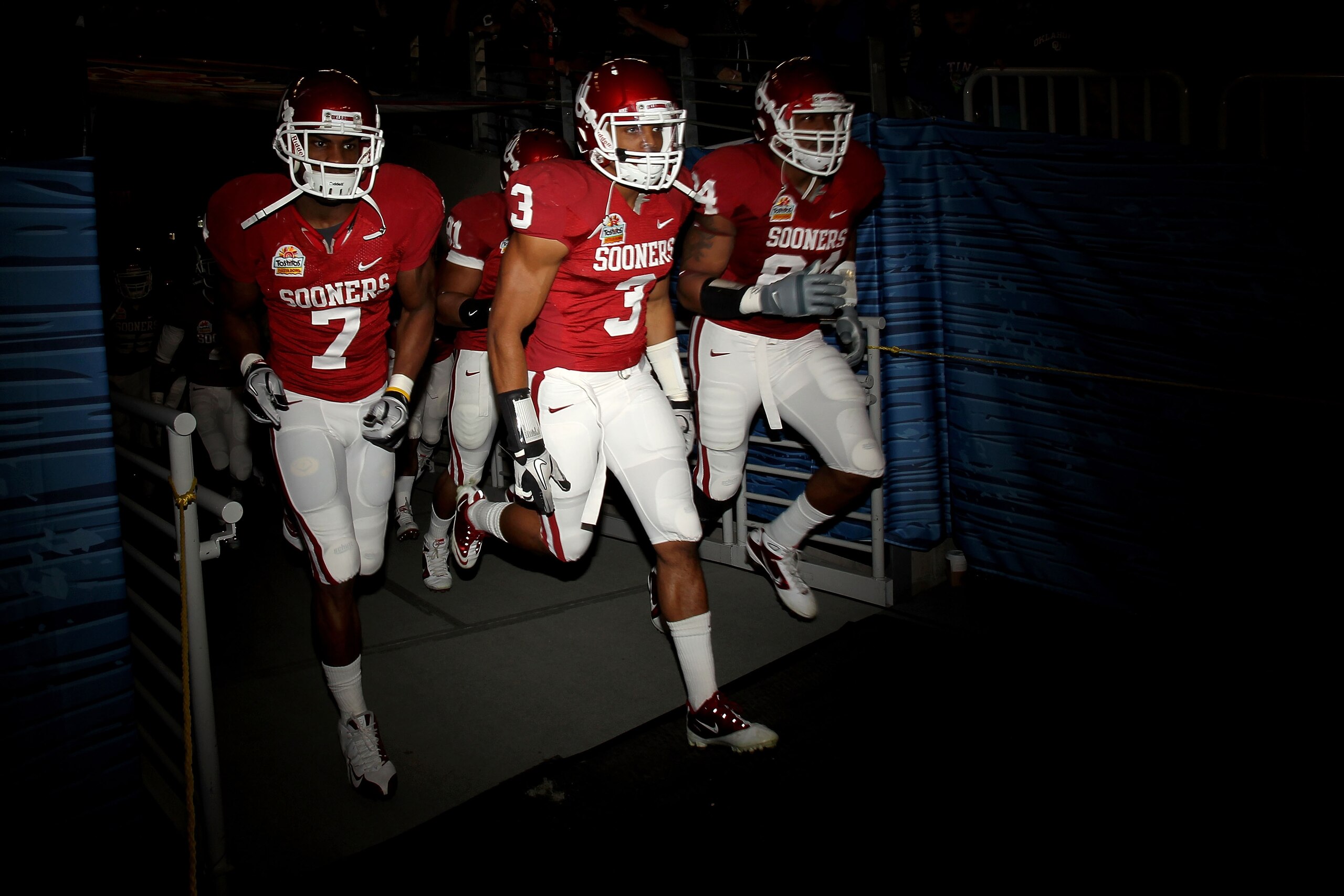
Acceleration/Burst/Quickness: Has the burst to separate from defenders, but does not show the quickness of other top backs in this class. Murray’s game is not about burst and quickness as much as it is hard-nosed, fundamentally sound running. Can plant and accelerate.
Ball Protection: Must learn to run with lower pad height to protect the ball, and himself, from hits. Can carry the ball too low, and too far away from his midsection. Very similar to Adrian Peterson in running style and ball protection. Did improve in 2010 with only one fumble, which he recovered.
Elusiveness/Feet/Agility: Is not an elusive runner, choosing instead to punish would-be tacklers. He does give tacklers too much of an opening to hit him, with his height and tall running style. Does a good job making one cut and then deciding where to go. Has jumped over defenders before, showing top-notch agility and strength.
Pass Catching: A very able and dangerous receiver from the backfield or in the slot. Has worked as a receiver and return man in addition to duties at running back. Has experience running routes and does a very solid job running to the flats, catching and pivoting, without losing speed.
Pass Blocking: Murray is an NFL-ready three-down back due to his ability as a receiver and blocker. Has the size to hold-up against the pass rush and the technique to deliver a solid block that will protect the quarterback. Does more than just get in the way. Will initiate contact. Is a good cut blocker. Not afraid to get dirty and mix it up. One of, if not the very best, blocker in this class.
Power: Is a classic north-south runner. Is tough to bring down between the tackles. Does a good job falling forward for extra yards. Fights for yards and is tough to bring down. Has good set-up moves and will deliver a blow instead of waiting to be tackled. Can look timid at times, while other times looks dominant running with authority. Has a good stiff-arm.
Size/Length/Hand Size: Has ideal size for a three-down back. Is a little taller than the majority of the backs in this class, but has a more classical build similar to Eddie George and Adrian Peterson.
Speed: Has been called a speed back, but is more of an inside runner with the speed to make plays on the outside. Has a solid second-gear and can run away from defenders if he gets out in the open.
Vision/Balance/Instincts: Is a patient runner with the balance to turn the corner. Has good vision and will find cutbacks and seams in the line. Is not afraid to press the line and force his way through an opening. Runs with his head down a lot, limiting his vision.
Final Word: In other years Murray might receive more hype as a top back, but in 2011 he is lost behind a Heisman Trophy winner and other backs with a more complete game.
One concern is that Murray may have been used too much in college. The Sooners rode Murray often, leaving the school No. 4 all-time in rushing attempts (744). Other concerns are his frequent injuries, which may be small in nature- but add up over time.
Murray has also been inconsistent at times, which may be in part to changes at quarterback and on the offensive line. Coaches viewing his 2009 season are apt to walk away unimpressed, while his 2010 film was very impressive at times.
The running back class this season is deep, which could push Murray to the late 2nd Round, or later.
NFL Comparison: Steven Jackson, St. Louis Rams
Projected Round: Round 3
Running Back No. 6: Jordan Todman, UCONN
14 of 24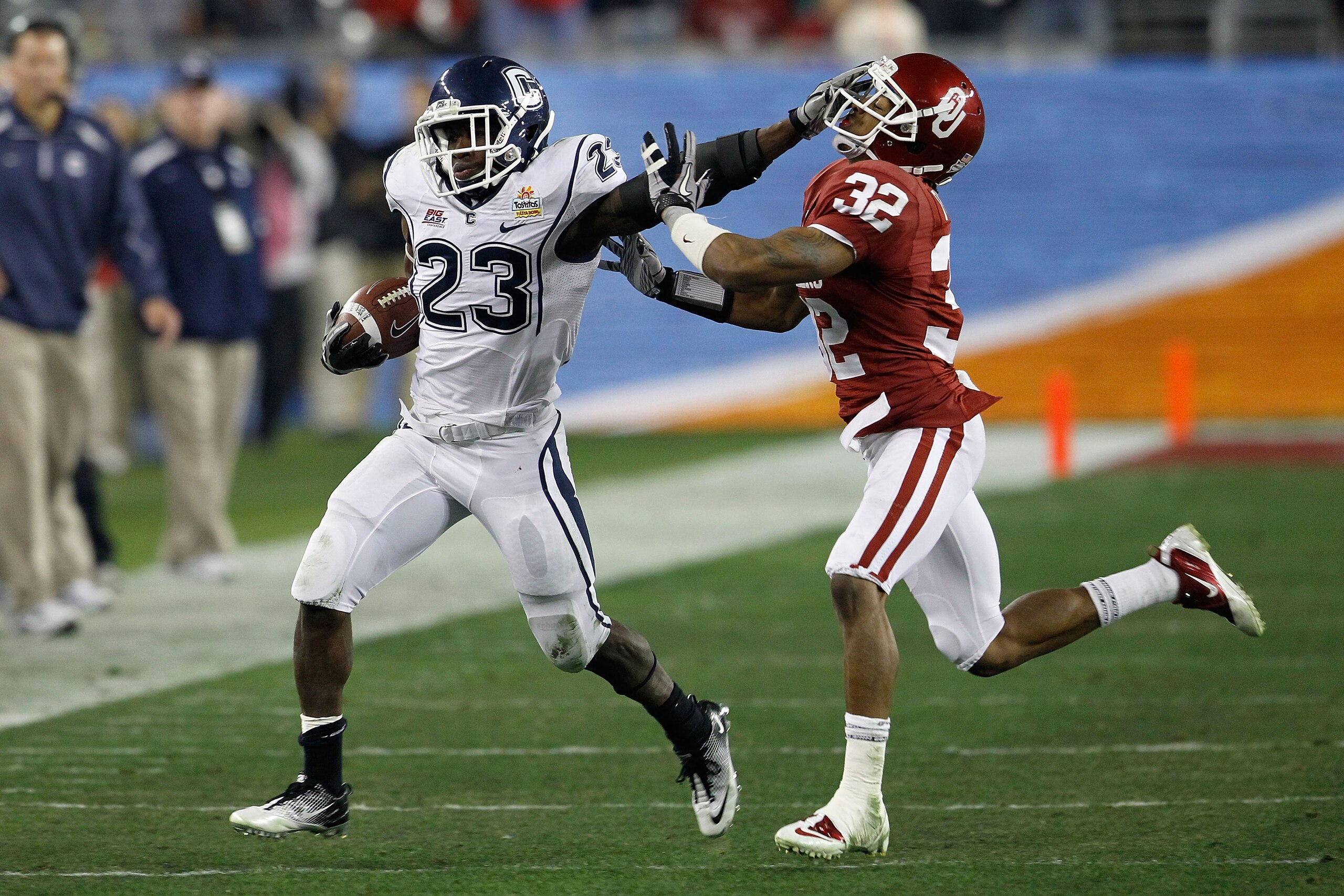
Acceleration/Burst/Quickness: Has top-flight quickness, burst and acceleration. Can make defenders miss when they meet him in the hole. Has the feet to make jump cuts in traffic to get a clear running lane. Will bounce off tacklers and out of closing holes.
Ball Protection: Has not shown any issues with ball security or fumbling. Should not be an issue in the NFL.
Elusiveness/Feet/Agility: Has a very effective jump-cut that he uses to get out of tight spots around the line of scrimmage. Similar to LaDainian Tomlinson’s move to go from inside to the outside in one move. Shows a good ability to move and make people miss.
Pass Catching: Has been used as a receiver out of the backfield only. Reliable on screens and swing passes, but that’s it. He does have the agility to become a better receiver, and could be used in the slot, but he has no experience running routes or catching when it’s not in a straight-line pattern.
Pass Blocking: Is too small to be considered a reliable blocker. Is not strong enough, or aggressive enough, to be a valuable blocker early in his career.
Power: Todman does not have the size or running style of an inside runner. He is technically sound though and makes up for his lack of size with 100 percent effort. Keeps his legs churning through contact. Will initiate contact instead of waiting to receive it. Is never going to run in to a pile and push it up field, but he can break one-on-one tackles.
Size/Length/Hand Size: Is small and lean, but is not a red flag due to size. Is a pro-typical speed back.
Speed: Has enough straight out speed to outrun defenders to the edge or in the open field. Can be very dangerous if he finds an opening and gets to the second-level. Can break a defense. Able to escape once a defense has him boxed in the backfield. Once he’s free, he’s gone.
Vision/Balance/Instincts: Shows good patience when running outside. Will stretch the field and wait for an opening. Doesn’t panic. Does a good job following his blockers. Will see a cut back lane and isn’t afraid to take it.
Final Word: Todman dominated the Big East with two seasons over 1,000 yards for the Huskies- the first UConn runner to ever rush for 1,000 or more in two seasons. After a stellar junior season he decided to forego his senior season and enter the NFL draft.
Todman has the talent to become an every-down back in the NFL once he can learn to become a more consistent and reliable blocker. This much is certain, Todman is a hard-worker who will put in the time needed to get stronger and learn the playbook. There are no attitude problems to worry about, no diva mentality to balance out.
Todman may not be an every down back in year one. He’s likely a first and second-down back to begin with, until he masters blocking. He could also be used as a kick returner early in his career, as he has the speed and open-field running ability to be dangerous in space on returns.
NFL teams looking for the next Jamaal Charles will take a hard look at Jordan Todman. The two players are similar in size, speed, receiving ability, special teams history and running style.
NFL Comparsion: Felix Jones, Dallas Cowboys
Projected Round: Round 3
Running Back No. 7: Shane Vereen, Cal
15 of 24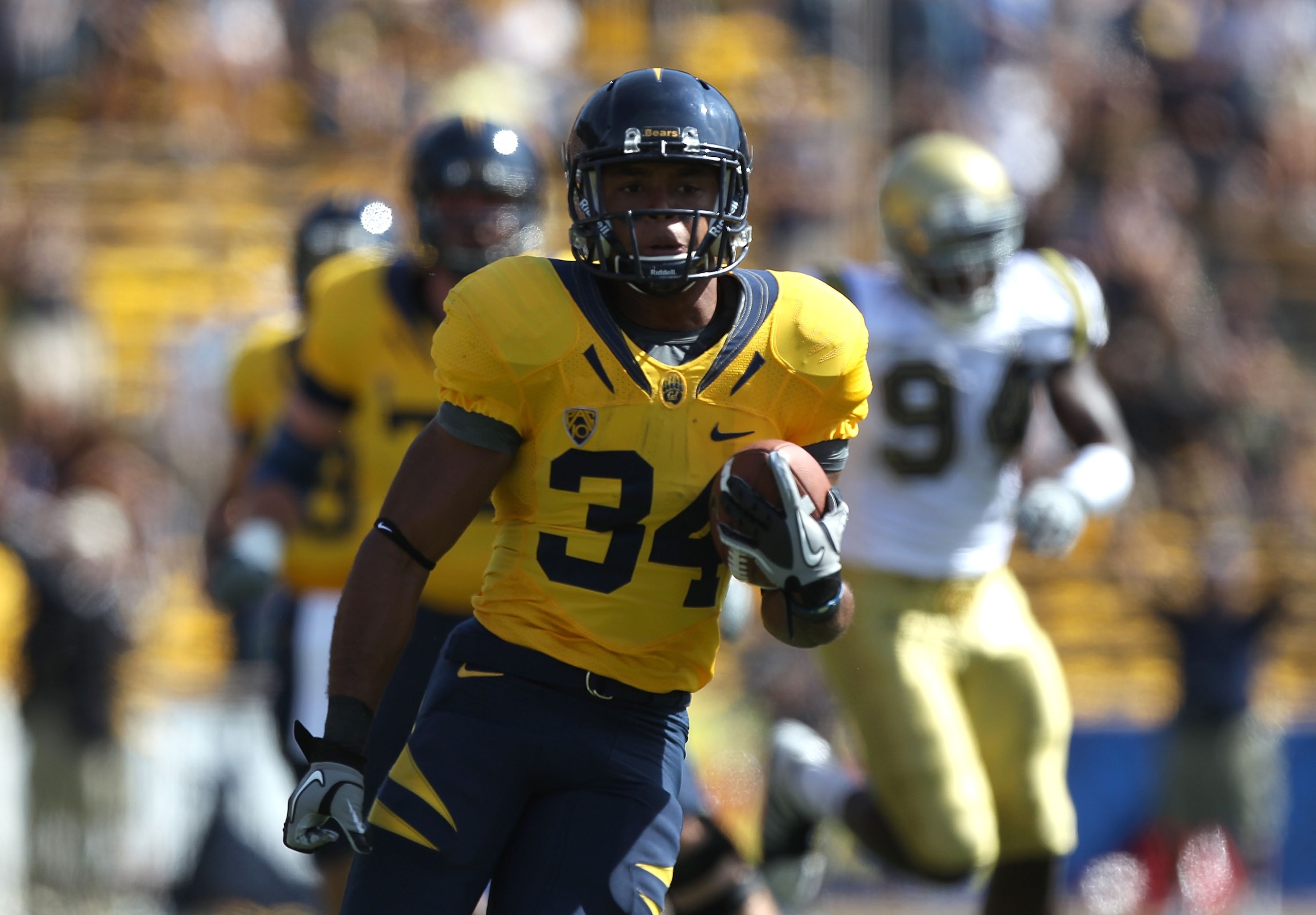
Acceleration/Burst/Quickness: Has excellent burst and speed for the open field. Has the ability to explode to the second level and can go from 0 to 60 in no time at all. Quickly eats up the yardage with a long stride and excellent speed.
Ball Protection: Will let the ball get outside his frame when running in space. Must protect the ball all of the time. Will be suspect to fumbles in the open field and when cutting unless he learns to bring the ball in tighter.
Elusiveness/Feet/Agility: Very good lateral agility and quickness. Able to make cuts and can make defenders miss. Bounces off a lot of weak tacklers. Does a great job to keep his feet moving through traffic.
Pass Catching: An able receiver, thanks in large part to the Jeff Tedford offense at Cal. Has soft hands. Good body control and balance running swing routes out of the backfield. Dangerous in the flats, where his speed is a true match-up nightmare.
Pass Blocking: Is a surprisingly good pass blocker. Is willing to step up and meet the defender. Has been very well coached in this regard.
Power: Despite his frame he’s a surprisingly strong runner. Presses the line of scrimmage, runs with aggression and is not afraid of contact. Runs low in his pads and does not allow himself to take big hits. Will slide through gaps and creases in the line to pick up extra yards. Keeps his pads low, eyes up and churns his legs through contact.
Size/Length/Hand Size: Does not have the bulk that most NFL teams look for in an every-down running back. He has a short, but compact build. Looks smaller than he plays.
Speed: Is blessed with truly elite speed. Will be very tough to catch from behind in the NFL. Can break a defense if he gets to the second level. Vereen’s speed is a threat at all times. He showcases this well as a runner, receiver and return man.
Vision/Balance/Instincts: Has the balance and lateral agility to make defenders miss. Good balance to get to the edge and turn the corner. Very good vision for cut back lanes. Has a good feel for pressure from his backside, whether in the back field or the open field. Has the vision to find holes on stretch plays, and the patience to wait for them to open up.
Final Word: Vereen enters the NFL coming from Jeff Tedford’s spread offense at California, which has him ready for the NFL due to the great coaching received at Cal.
Vereen is a triple threat as a runner, receiver and kick returner. He’ll enter the NFL as a potential No. 1 back, but his ability on special teams may limit is exposure as a first and second-down back in his rookie season.
While other backs are bigger, stronger or were more productive in college Vereen has a skill set to rival the best backs in the class of 2011. If you are looking for a sleeper pick in Round 3 who could make a big name for himself in short-time, remember Shane Vereen.
NFL Comparison: Ray Rice, Baltimore Ravens
Projected Round: Round 3
Running Back No. 8: Daniel Thomas, Kansas State
16 of 24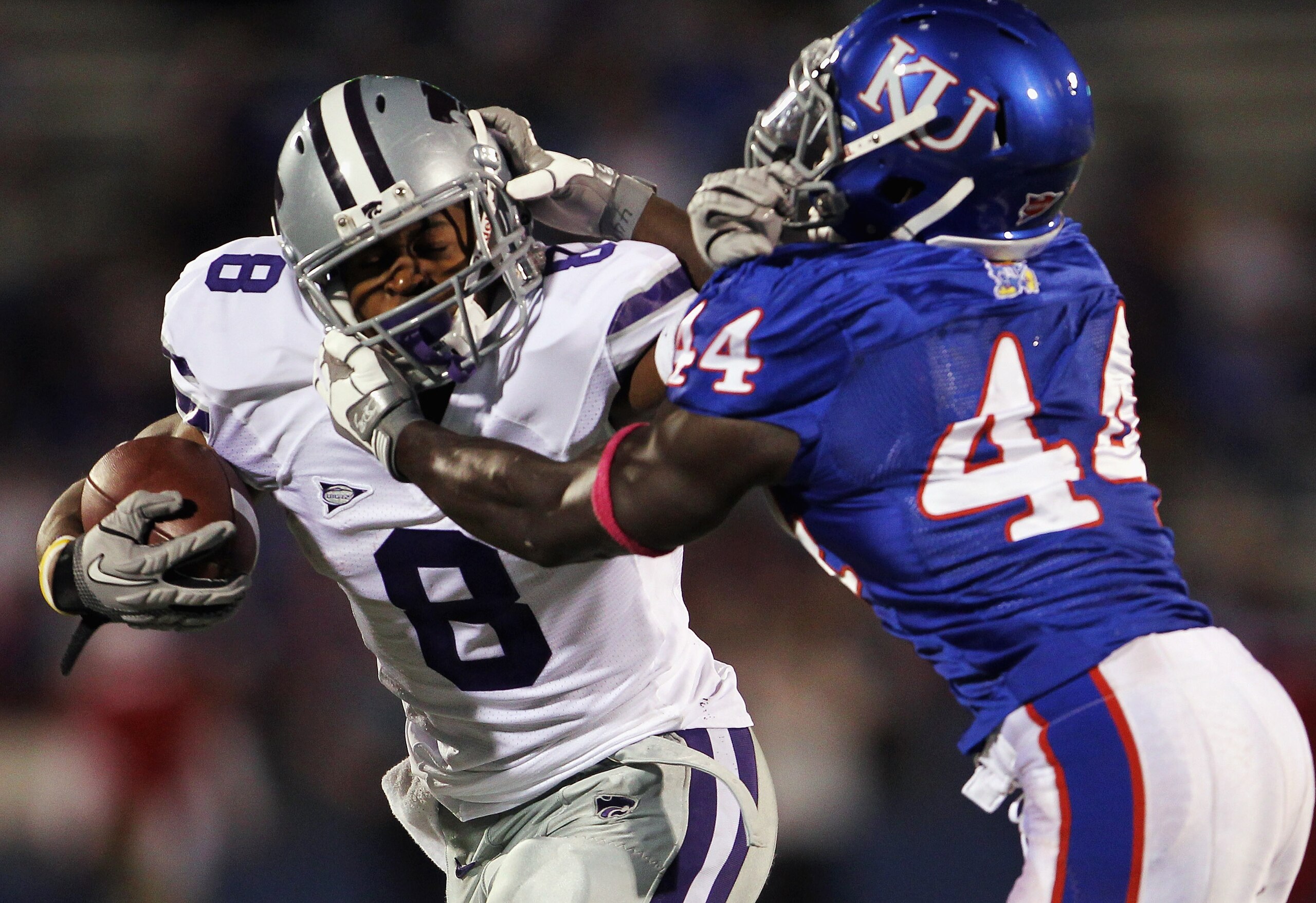
Acceleration/Burst/Quickness: Does a nice job making one cut and turning up field. Can get behind his weight and accelerate through the hole. Has some quick twitch burst. Is more quick than fast.
Ball Protection: Needs to learn to better switch the ball to his outside arm. Is predominantly right handed when carrying the ball. Lost the ball 11 times over the last two seasons. There’s an issue with protection and this has to be addressed early on.
Elusiveness/Feet/Agility: Has used a spin move to break free of tacklers in the past and uses this effectively. Can slip out of the backfield and avoid taking a loss, but won’t leave anyone hugging air. Is a power back first and foremost. Has some wiggle in his hips, but not enough to rely on.
Pass Catching: Has been consistent and reliable catching swing passes and screens. Does a nice job getting to the flats and catching on the move. Sells the play-action and can turn to make a catch in the middle of the field or the flats. Has even lined up at splint end. An underrated receiver.
Pass Blocking: Does not always show maximum effort in pass blocking. Has the size and strength to do well here, but hasn’t put forth the effort. He’s aggressive enough to become a dominant third-down blocker if he wants to be.
Power: A very strong inside runner with good body lean. Falls forward to pick up extra yards. Has a thick build and is hard to wrap up. Can run through arm tackles. A high-effort player who will keep his feet moving through tackles. Has the strength to push the pile. Could be valuable as a goal-line back.
Size/Length/Hand Size: Great size and strength. Has a big, thick body that can handle the punishment of an NFL season.
Speed: Doesn’t show breakaway speed. Will wear down a defense, but is not going to break long runs for 60+ yards.
Vision/Balance/Instincts: Does a good job pressing the line of scrimmage and forcing his way through holes. Has the patience to wait for a block to develop, but is strong enough to push through a clogged hole. Vision is average compared to the better outside runners of the class. Puts his head down and runs through the line more than he looks for holes. Has the balance to turn the corner, but lacks the speed to consistently beat the defense to the edge.
Final Word: Were it not for issues with fumbles and a lack of speed, Thomas might be considered a late first-round prospect. As it stands teams have too many concerns with his ability to hold on to the ball, and worry that he will not be able to run away from NFL defenders.
Thomas is big, strong and a very good athlete. He has a chance to carve out a niche as a goal-line back or even a starter in a power-run offense (like Cleveland has done with Peyton Hillis).
Thomas’ two years at Kansas State were very good, especially coming from a JUCO system before that. He’s a leader and his toughness will endear him to coaches and teammates in the NFL.
NFL Comparison: Peyton Hillis, Cleveland Browns
Projected Round: Round 3
Wide Receiver No. 1: A.J. Green, Georgia
17 of 24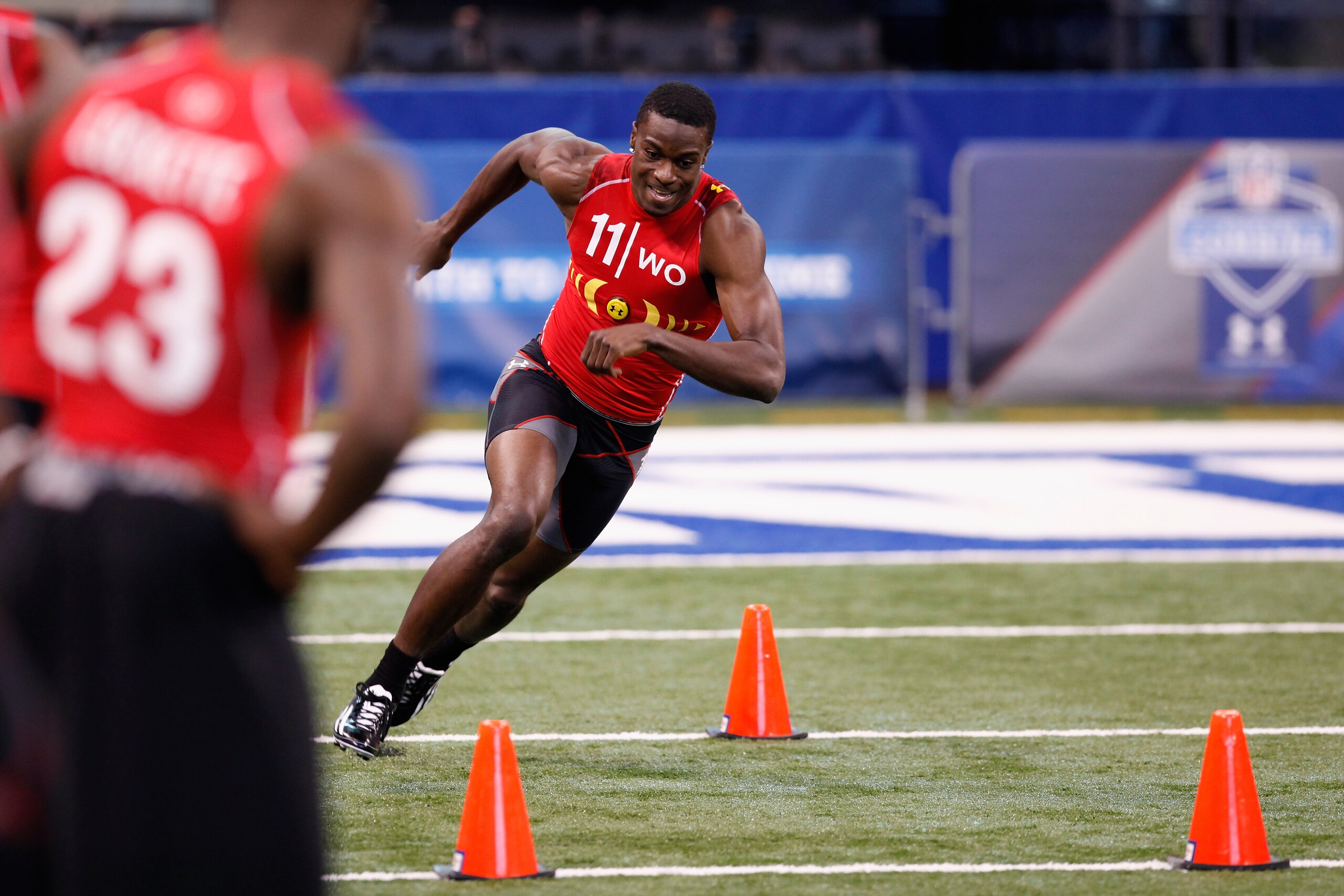
Acceleration: Very good acceleration. Surprisingly has the burst, at his size, to run away from cornerbacks off the line of scrimmage and once he makes a catch.
Agility: Very good agility, as expected. Shows good balance, lateral quickness and an innate ability to understand where and how to manipulate his body to make catches. Green will score very well in short-shuttle and 3-cone drills at the Combine and/or Pro Day.
Blocking: Green lacks the strength to be a dominant, Hines Ward-type blocker. He does have good size and length, though, and can mirror and block out defenders. Can improve in this area.
Hands: The one thing that stands out most about Green are his hands. At 6’4″, Green is blessed with long arms and big hands. Routinely makes one-handed catches in traffic. Great body control to put himself in position to make the impossible catches. Does not let the ball get in to his body. Great arm extension when making a catch. Appears to catch the majority of balls with his fingers and not his palms. Green is among the most sure-handed receivers ever scouted by our team.
Release: Very quick off the line of scrimmage. Great hand speed. Shows a consistent ability to knock away defenders hands when attempting to bump or press. Has a quick side/back step to avoid being jammed. Does a good job mixing up his method for beating press coverage, whether it is a hand slap or lateral move to avoid the defender. Accelerates well once free of the defender. Gets off the line very clean against press covers.
Route running: An underrated route runner by most standards. Has quick feet and does a nice job selling routes. Drops his hips to make sudden changes. Shows a good ability to plant and change direction. Unlike most big receivers, Green does not try to simply box out cornerbacks. Is a disciplined route runner. Very good burst in and out of breaks.
Size: Excellent size for an NFL wide receiver. Has the height, length and hand size every scout loves to see. Good muscle tone. Very lean and long.
Speed: Has the speed to separate from even the fastest cornerbacks. Not only does Green have great timed speed, his quickness on the field is exceptional.
Final word: Green may have missed seven games over the past two seasons, but he has left his mark on the record books at Georgia. Missing time due to injury and then a suspension would leave a negative mark on most scouting reports, but Green is simply too good to overlook or downgrade for minor issues.
Green’s combination of size and strength remind many, us included, of former Miami Hurricane Andre Johnson. Johnson was the No. 3 overall pick in the 2003 NFL Draft. A.J. Green could hear his name called even earlier.
Few rookies will have the opportunity to contribute as quickly as Green, and perhaps no player in this draft is better suited to play in the NFL immediately.
NFL Comparison: Andre Johnson, Houston Texans
Projected Round: Round 1
Wide Receiver No. 2: Julio Jones, Alabama
18 of 24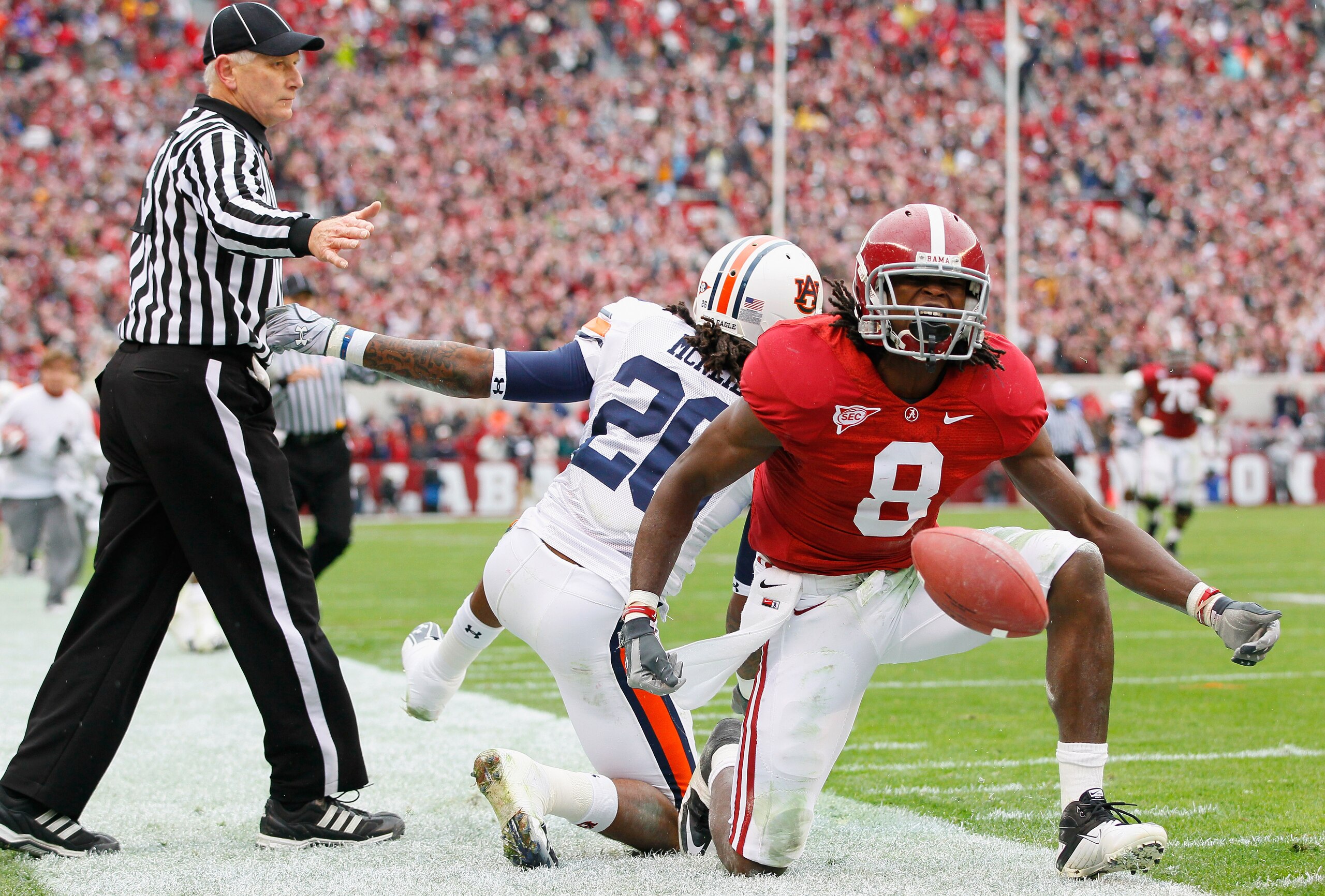
Acceleration: Is a long strider and not a burst type receiver. Jones does have great speed, but it takes him 5-10 yards to build up to his full speed. Does not explode off the line or out of cuts, but has the speed to pressure a defense downfield.
Agility: Good agility. Jones is a natural athlete with good balance and body control. Does not show much quick burst, but has good overall agility.
Blocking: Surprisingly, Jones is one hell of a downfield blocker. In the Alabama offense, where running the ball was a priority, Jones had to become a good blocker. Uses his long frame to lock up defenders, but also runs off corners and sells play-action.
Hands: Jones can be too inconsistent here, which is one of the few attributes separating him from top wide receiver A.J. Green (Georgia). Lacks concentration. Some drops are caused by him tensing up before taking a hit from defenders. Will let the ball get into his body too often. Does make the occasional catch that blows your mind.
Release: Has a very good initial release off the line of scrimmage. Very good size and strength combination to fight off press coverage. Has big hands and long arms to swat away defenders who line up in zero coverage. Is not a quick-twitch athlete with a ton of burst, but he has exceptional speed and lateral mobility to avoid jams at the line of scrimmage. Gets off the line and in to his route fast. When given a cushion by the cornerback, Jones will exploit them every time.
Route running: Jones was very raw as a route runner, but has shown loads of improvement over the last year. Does a great job sinking his hips to make cuts and get in and out of breaks. Does not have the speed to plant and explode, but makes up for this with precise cuts and timing. Can get sloppy at times and will round off cuts. Will get too high at times in his breaks, making the route easy to diagnose by defenders. A very dangerous deep threat.
Size: Jones has ideal height, muscle tone and strength. He has long limbs and big hands. A lean frame, but surprisingly strong.
Speed: Jones does not possess sprinter speed. He is a long strider who takes time to get to full speed. He does have the speed required to run by defenders once he is given room to accelerate. Runs very well after the catch due to good agility and acceleration when he has the ball.
Final word: In any other year, Julio Jones would be the No. 1 receiver on our draft board. In 2011 he has to compete with A.J. Green in a fight he will not win. Jones should be lauded for his exceptional play at Alabama, and for his many talents as a receiver.
A fighter, Jones has played through injuries and will run routes across the middle with no fear. A dominating deep threat and downfield blocker, Jones will bring immediate value to any NFL team.
Jones projects as an early 1st Round pick, and could hear his named called anywhere from pick five to twenty in the first round.
NFL Comparison: Terrell Owens, Cincinnati Bengals
Projected Round: Round 1
Wide Receiver No. 3: Randall Cobb, Kentucky
19 of 24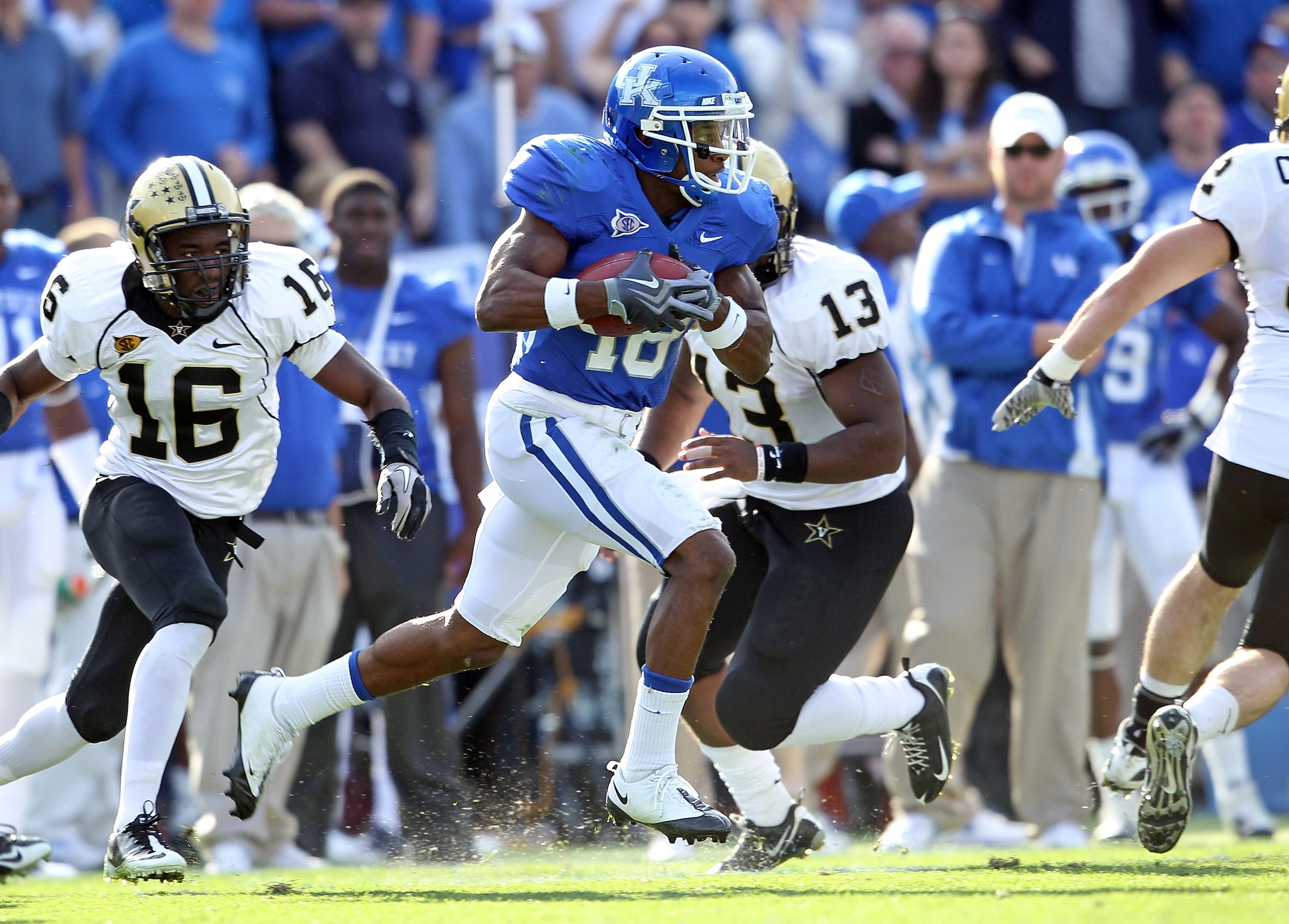
Acceleration: Cobb doesn't show elite speed in straight-line or short areas but has good initial burst and is quick off the line. This ability allows him to get off the ball and into his route quickly. He is able to gain separation due to his short area burst and quickness in and out of his breaks.
Agility: Fluid hips and very good body control. Can play at full speed and cleanly get in and out of his breaks. Has the coordination to disguise his route. His agility allows him to be a threat in the open field with the lateral quickness to make defenders miss while remaining balanced.
Blocking: The willingness and hustle is present for Cobb to be an effective blocker in the NFL. Cobb will work hard down the field to make a block that could potentially spring a long run. He is a great teammate with a lot of determination and hustle.
Hands: Cobb has good hands but has a tendency to let the ball into his body. This could be due to his role in the offense as he is often used in many different positions. With time and repetitions, Cobb will become more of a plucker and let fewer balls into his body.
Release: Plays his best when in the slot and moving around in motion and shifts. Cobb avoids press coverage well. Cobb has enough lateral quickness to keep defenders from disrupting his route. Could have some initial problems getting off the line because of lack of experience and size.
Route running: While at Kentucky, Cobb was not asked to run very sophisticated routes. The majority of his routes consisted of underneath patterns such as drags, outs, and slants. Cobb's role in the offense has impacted his growth as a wide receiver. He often lined up at quarterback and running back as Kentucky found every way possible to get the ball to him in space. As a result, Cobb struggles with rounding his routes but he possess the balance and coordination to improve. The more time Cobb spends focusing on his route tree the more improvement we will see.
Size: At 6'0 1910lbs, Cobb has average size for the wide receiver position. However, the NFL is slowly making a move towards bigger wide outs which could impact Cobb. With his size, Cobb might be limited to a role as a slot receiver.
Speed: Cobb is not going to beat many people in the 100 yard dash but it would be hard to bet against him in the 20. He has a great initial burst that allows him to get off the ball quickly. His quick twitch ability is what makes him a dangerous athlete.
Final word: Cobb is going to need time to develop into a true wide receiver. However, he possesses enough playmaking ability to get involved early in his career. He could be utilize much the same way the Vikings utilize Percy Harvin. Cobb will really benefit if he is selected by a team that can develop a game plan to get him involved. He needs to improve his route running ability and route awareness to be truly effective.
NFL Comparsion: Percy Harvin, Minnesota Vikings
Projected Round: Round 2
Wide Receiver No. 4: Titus Young, Boise State
20 of 24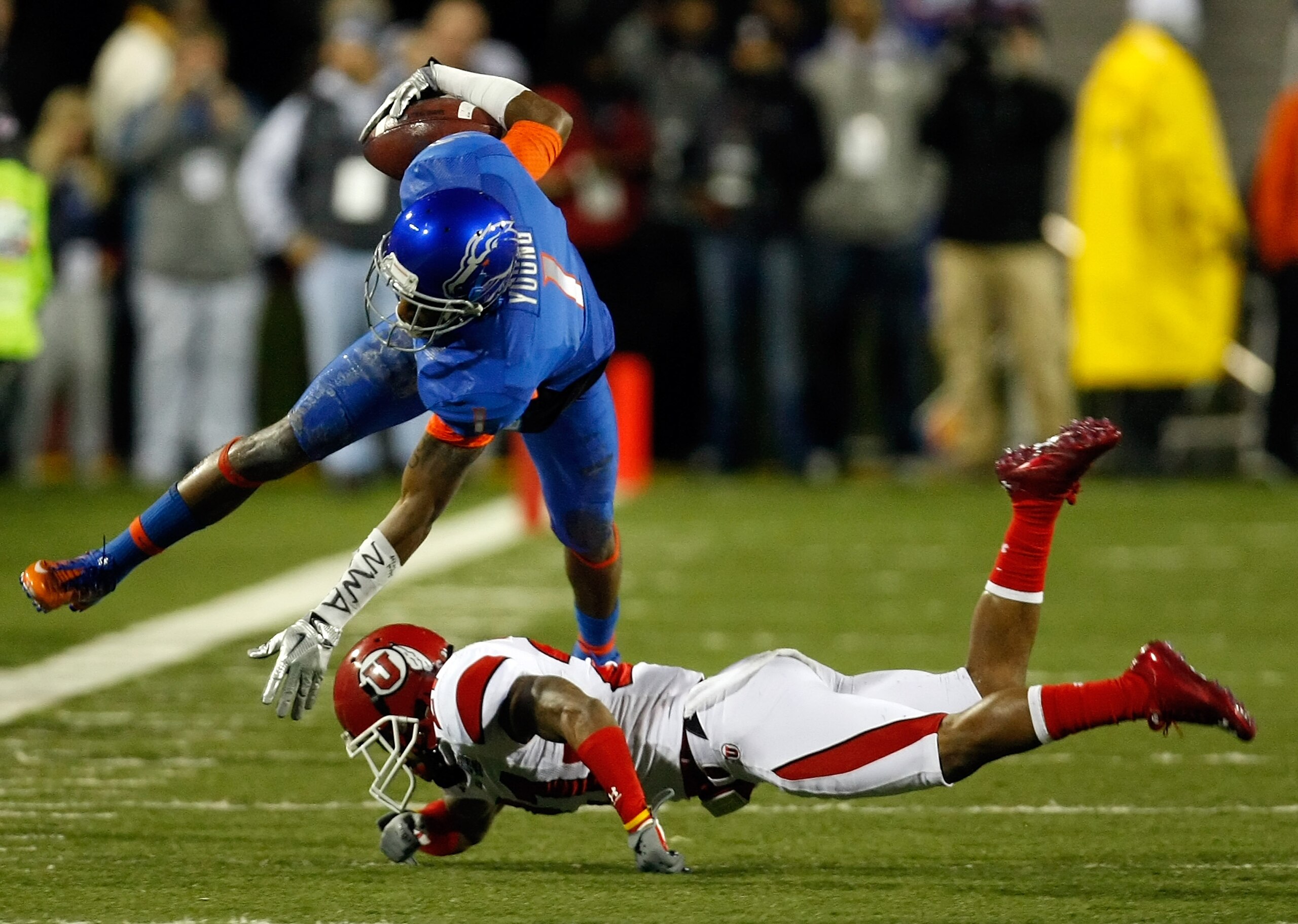
Acceleration: Explodes out of his stance and gets inside the cornerback’s cushion in a hurry. Has elite, high-end NFL acceleration. Very quick. Has a super-fast second gear and can get to top speed in seconds. Can really burn up the turf.
Agility: Arguably the most agile of any receiver in this class. Has excellent quickness, balance and flexibility. Can contort his body to make tough catches and slip past tacklers.
Blocking: Is too small to be a real asset as a down-field blocker. He will give effort and does a nice job annoying defenders, but he’s not an elite blocker.
Hands: Our biggest, and maybe only complaint on Young is how inconsistent he can be in catching the football. Will try to steal looks up-field or beside him before securing the ball. Doesn’t look the ball in and properly tuck it away. In addition to his lack of concentration and inconsistency, Young’s size will enable defenders to hit him and jar the ball loose.
Release: Has been described as sneaky off the line of scrimmage. Can slip past press coverage due to excellent lateral agility and acceleration. Once he gets past the first defender they will never catch him, he’s too fast for a cornerback to turn and catch from behind.
Route running: Has played in a spread system that asked him to run numerous routes. Has seen combination routes, underneath and deep routes during his career. Should enter NFL with a full understanding of the route tree.
Size: Slightly undersized at 5’11″ and 175lbs.
Speed: Has the speed to stretch the field. Can run by defenders and get behind the secondary. Forces cornerbacks to play off of him to allow cushion.
Final word: The obvious comparison for Titus Young is the Eagles Desean Jacskson. Both are slightly undersized, dangerous return men and a match-up nightmare at wide receiver.
Young was suspended during his sophomore season for breaking still unspecified team rules. That cost him nine games. While Young has not shown any issues since, it’s definitely something that needs a second look.
Young is incredibly talented, but red flags for size, character and drops will push him down until at least the 2nd round.
NFL Comparison: Desean Jackson, Philadelphia Eagles
Projected Round: Round 2
Wide Receiver No. 5: Leonard Hankerson, Miami (FL)
21 of 24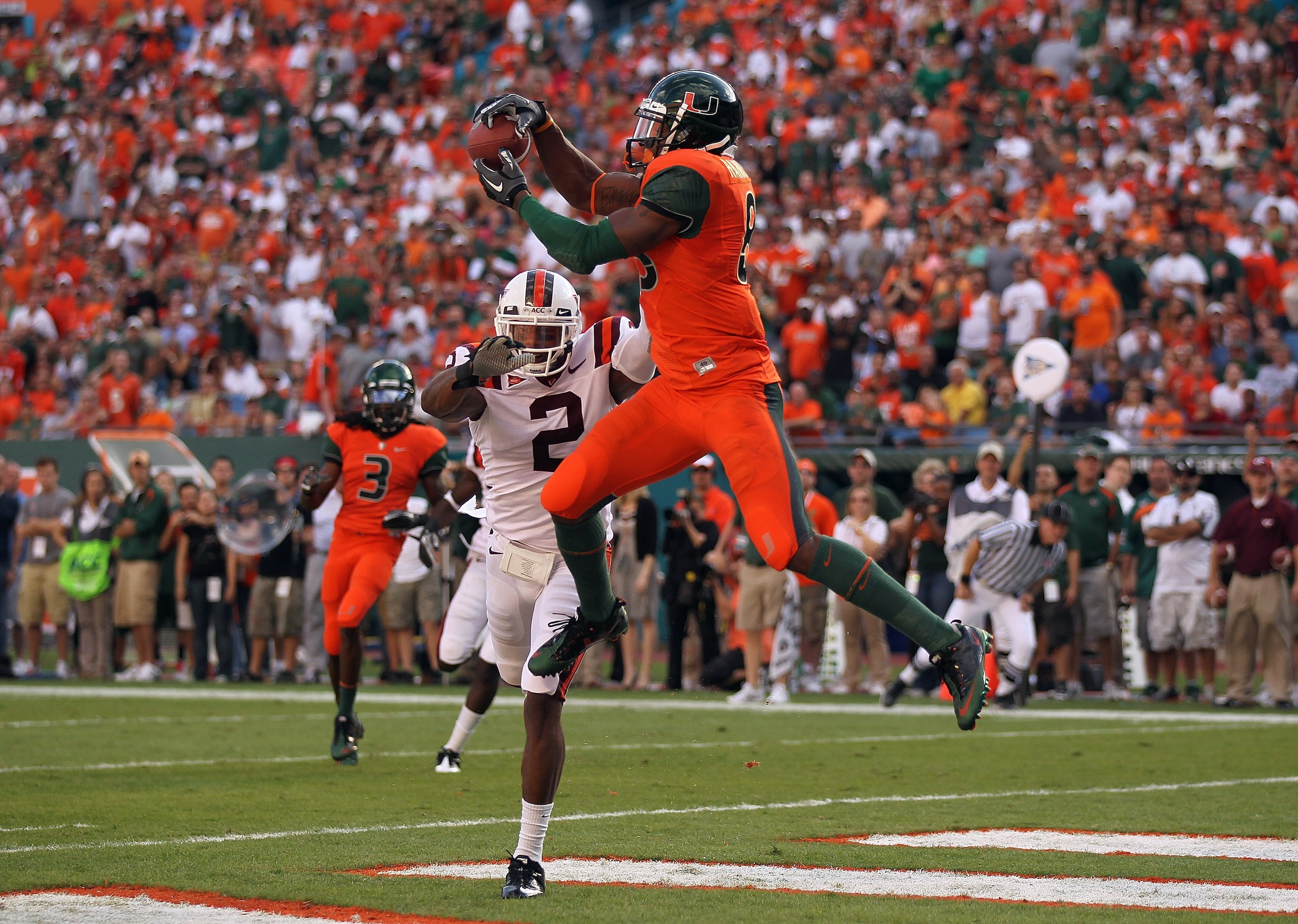
Acceleration: Does not have the foot speed or burst to accelerate at high level. Only average balance and agility. Can hit a second-gear when running with the ball. Is much faster when being chased than he is getting in and out of breaks or starting his routes.
Agility: Pretty good lateral agility in breaking away from contact at the line of scrimmage and running zone routes. Doesn’t have the quick twitch ability you see in smaller receivers. Foot speed is very average. Has excellent leaping ability.
Blocking: Despite his size, which allows him to tower over most defensive backs, is not a dominant downfield blocker. Can give a good initial pop but then struggles to counter.
Hands: Very inconsistent throughout his career and even in Senior Bowl practices. Has struggled with drops throughout. Can let the ball get in to his pads too often. Tries to turn and run before securing the ball. Has the arm length and hand size to break this habit, but will require work to do so. This is the biggest negative mark on Hankerson’s scouting report. He has to be more consistent and reliable catching the football.
Release: Has a big body, making him a big target in press coverage. Can get caught up by pesky cover men. Has a long stride, so it takes him a while to build up to full speed. Decent initial quickness, but does not have the burst to explode out of the gate. Has long arms and will use them to create separation.
Route running: Has the size to get past any initial coverage and beat the jam. Can get into his route fast enough to force the cornerback to bail or turn, and then capitalize. Does not have quickness or burst to make sudden changes in route. Will struggle to sink hips and change direction. Is not a guy who can put his foot in the dirt and change direction. Has experience running a pro passing tree and is familiar with all route combinations.
Size: Has ideal size for No. 1 receiver in NFL offense. Big, long arms and lean. Has excellent wingspan. Can get up and snag the ball from a high-point due to excellent height, wingspan and leaping ability.
Speed: Is not a speed receiver. Has enough straight-line speed to make plays after the catch. Can make plays after the catch and has good vision to see openings in the field and get away from defenders. Makes a lot of plays behind the defense, whether due to blown coverage or speed to get past defenders.
Final word: Hankerson is an interesting prospect. When he’s on his game there are few players better than him. Then he starts dropping passes, loses his confidence and is in the tank for the rest of the game.
When Hankerson is on he’s one of the best wide receivers in this class. He has an excellent blend of size, route running skills and elusive speed to make plays behind the defense. He is an ideal fit for a west coast offense due to his size and ability to box out cornerbacks on inside routes.
For Hankerson to ever see his potential fulfilled he has to become more consistent catching the ball. The rest is naturally there already.
NFL Comparison: Roddy White, Atlanta Falcons
Projected Round: Round 2
Wide Receiver No. 6: Jerrel Jernigan, Troy
22 of 24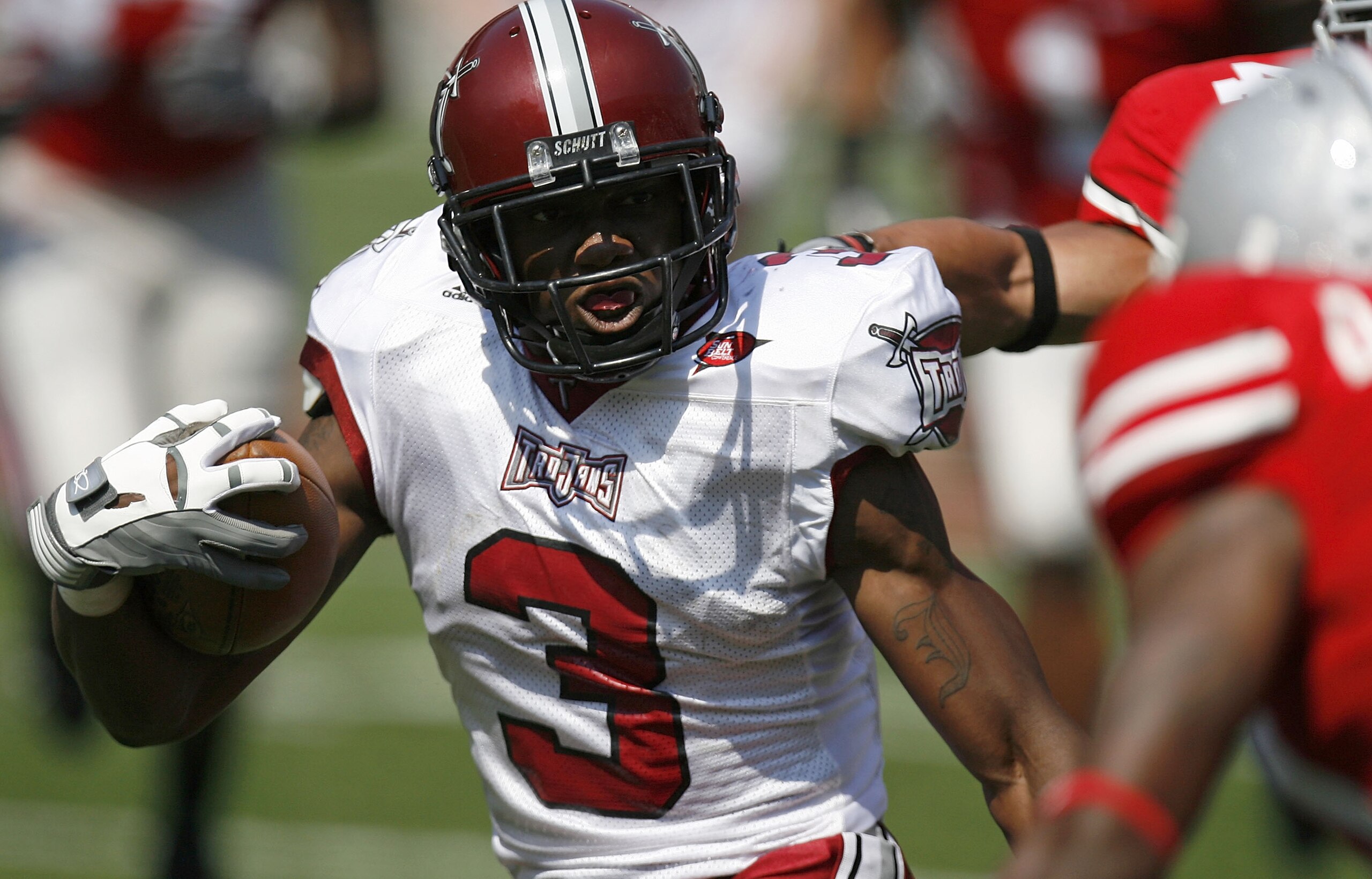
Acceleration: Has elite acceleration ability. Can go from zero to sixty with the ball in his hands. Uses his rare ability to run away from defenders on offense and in special teams play. Makes a ton of plays after the catch.
Agility: Is agile enough to make defenders miss- both at the line and in the open field. Has the flexibility to sink his hips and accelerate or change direction in his routes or with the ball.
Blocking: Is pretty inconsistent here. Sometimes he will be willing to throw a downfield block and other times he looks uninterested. Must get better technically and also become more interested in blocking.
Hands: Does a really good job looking the ball in. Extends his arms and uses his hands to get the ball. Does not let the ball get inside his body. Is strong enough to catch the ball in traffic. Shows good hands in the return game.
Release: Has gotten stronger throughout his career, which has led to a better release from the line. Is stronger than most realize, especially for his size. Can get held up at the line of scrimmage if jammed. Good lateral agility to elude the jam at the snap. Has enough speed and burst to press the defender off the snap.
Route running: Is an average route runner. Has never been forced to get better in this area, as the Troy offense allowed him to freelance a lot. Will round off his routes. Can get lazy as he has not faced to cornerbacks, so he has never been forced to get better. Played in a basic offensive system that did not ask him to learn a full passing tree.
Size: Undersized at just 5’9″ and 190lbs. Could struggle to separate from NFL defenders and may be over-powered at the line of scrimmage and in passing routes. Many receivers of similar size have done well enough for this to be an afterthought.
Speed: Able to create separation from defenders with his raw speed and agility. Is an elite playmaker with the ball in his hands. Has incredible run-after-catch ability.
Final word: For teams who need a wide receiver and/or return man in the second round (that’s you, Atlanta) they must look at Jerrel Jernigan.
No player in this draft has the ability to make plays as a return man and receiver as Jernigan. He’s an underrated talent who is getting noticed more as the draft nears.
Jernigan had some problems qualifying academically at Troy and there are some concerns that he will struggle to learn an NFL playbook.
Bottom line: Jernigan has elite skills. He’s reminiscent of DeSean Jackson.
NFL Comparison: Jeremy Maclin, Philadelphia Eagles
Projected Round: Round 2
Wide Receiver No. 7: Jon Baldwin, Pitt
23 of 24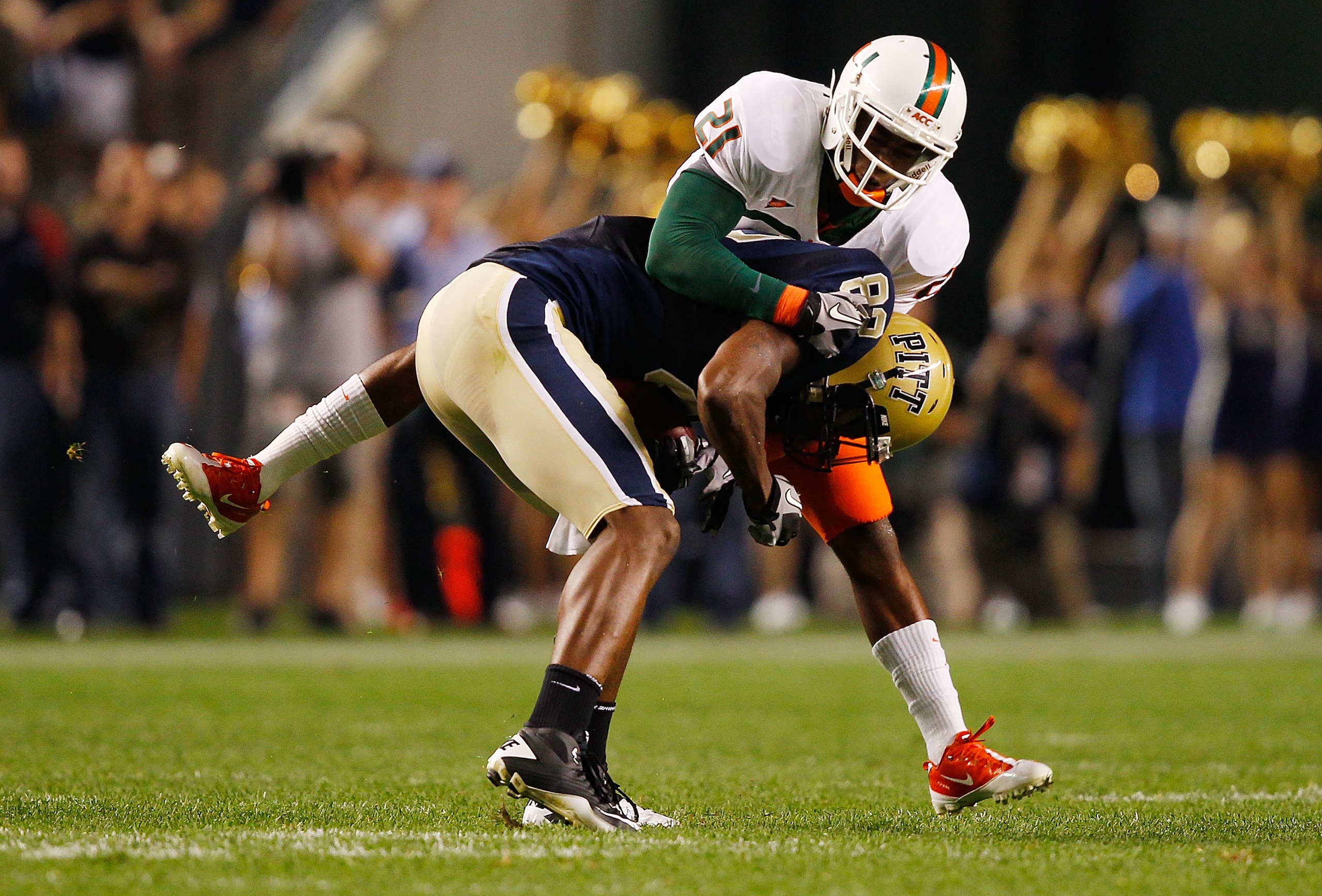
Acceleration: Has to take long strides to build up speed and will need some space to accelerate. Isn’t a quick-twitch mover who will get open immediately. Because of his lack of acceleration, Baldwin can get held up on the line.
Agility: Baldwin has very good jumping ability, but he doesn’t always time his leaps properly. Because of that, he doesn’t always high point the ball.
Body control: Possesses an excellent head fake, which he uses to create separation. Uses his lower body strength to keep his balance when working his way through routes.
Blocking: When Baldwin plays with good effort, he can be solid as a blocker. Has the strength to control defensive backs and open up wide rushing lanes. Of course he’s not perfectly sound in his technique, but he does a nice job extending his arms.
Hands: This is perhaps Baldwin’s top area. He frequently makes big catches outside his frame that most receivers wouldn’t be able to pull in. Consistently squeezes that ball outside his frame to make the catch.
Release: For such a big player, Baldwin has some issues getting off the line of scrimmage. His first step footwork is a little slow. Surprisingly, Baldwin struggles when he’s jammed.
Route running: Has run a variety of routes at Pitt and will not have to be coached complex routes. Needs to learn how to run tighter and more crisp routes. Tends to round them off which allows corners to close distance.
Size: Possesses impressive size for a wide receiver. Has a big frame and long arms. Knows how to use his body to his advantage. Is hard to bring down after the catch.
Speed: Has excellent deep speed for such a big receiver. But it takes Baldwin some time to get up to top speed. Is a long strider who needs some space to build up speed. Is faster than he is quick, so it’s questionable how much his speed will get him open.
Final word: It’s easy to fall in love with Baldwin as a prospect. He has excellent size and good speed once he really gets moving. His hands are good and he catches the ball routinely away from his frame. However, there are a lot of questions out there about Baldwins effort. He’s had some lapses of inconsistency throughout his career, which are concerning.
Still, it can be a little hard to judge Baldwin. He’s never had a great quarterback throwing him the ball. As a junior, the Pittsburgh quarterback play was especially poor. Baldwin still managed to finish the season with 53 receptions for 822 yards and five touchdowns.
In May of 2009, Baldwin was charged with assault, harassment and disorderly conduct. The charges were later dropped.
NFL Comparison: Vincent Jackson, San Diego Chargers
Projected Round: Round 2
Wide Receiver No. 8: Greg Little, North Carolina
24 of 24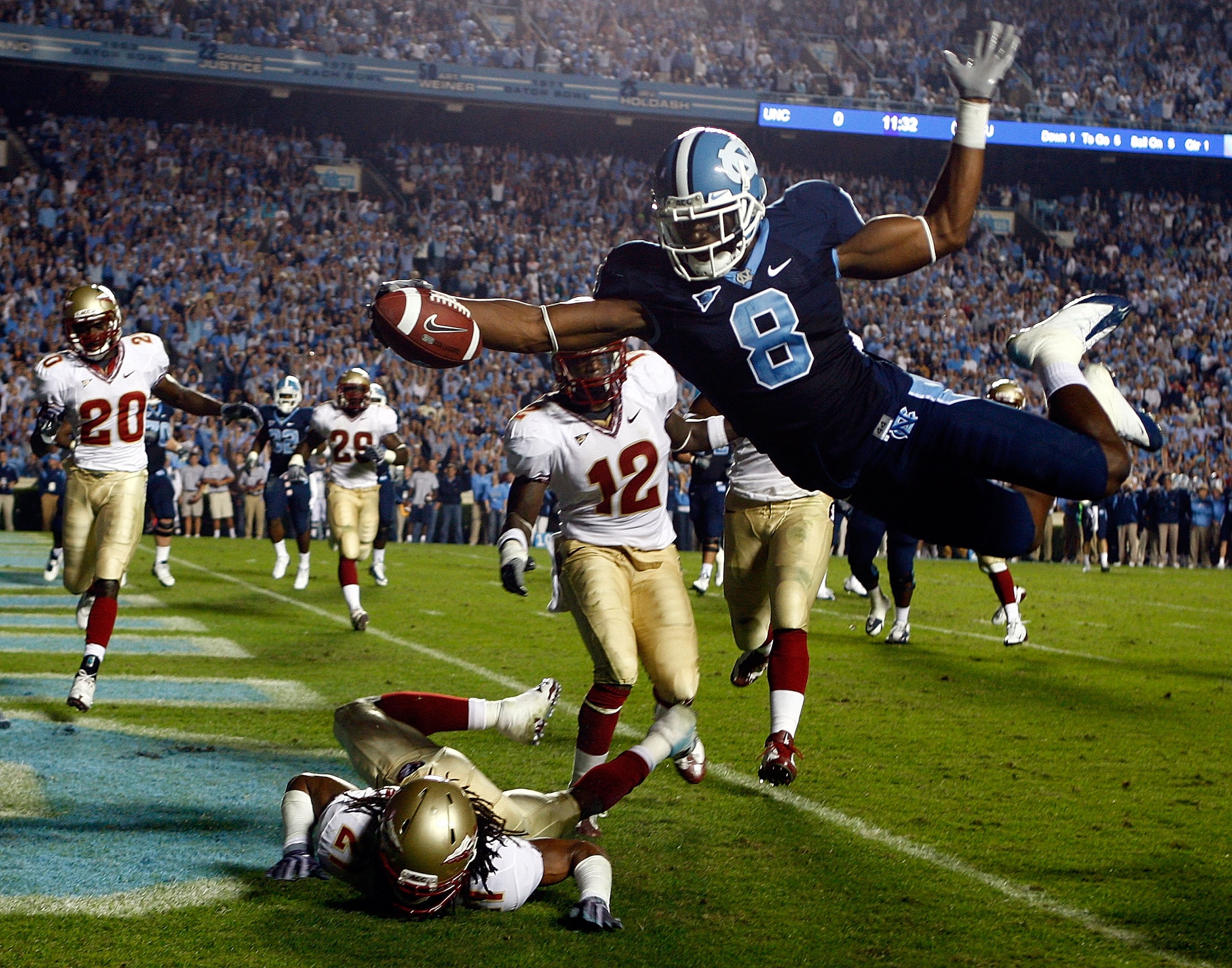
Acceleration: Gets in and out of his breaks will good burst. Has shown he can explode off the line of scrimmage. Has the quickness to really get into the secondary and press the coverage.
Agility: Great body control. Shows he can adjust his body in a way to make the difficult catches look easy. Very good flexibility in hips to make cuts and turn the corner.
Blocking: As a former running back he is physical enough to block and willing to do so. Does more than jump in front of defenders. Has the strength to drive block defenders. Could stand to be more consistent in this area, like others, stemming from his inexperience.
Hands: Does a nice job extending to make catches. For an inexperienced wide receiver he does a good job making veteran plays- like using his hands and looking the ball in. However, Little is inconsistent in this regard. He will make questionable drops and cannot be considered reliable at this point.
Release: Could stand to be more physical coming off the line of scrimmage. Has the size and speed to break free from press coverage, but must do so consistently. With his combination of size and speed no one should be able to stop him.
Route running: This is the area where Little is going to need the most work. Has played just one season of college football at receiver. Is not technical in his route running. Rounds off corners, relies on speed and agility alone and will struggle to learn an NFL passing tree before his rookie season. Pretty inconsistent, but understandably so.
Size: Has an excellent build for an outside or inside wide receiver position. At 220lbs and well built he is stronger than most defensive backs. His size will be an advantage to him in betting press coverage, boxing out cornerbacks and making plays for jump balls.
Speed: Turned in an impressive 4.53s run in the 40-yard dash at the UNC pro day. Is more quick than he is sprinter-fast. Has enough speed to press a defense and run past defensive backs.
Final word: Little was suspended for the entire 2010 season by the NCAA for an inappropriate relationship with an agent, stunting Little’s growth as a wide receiver and a player.
NFL teams are looking for talented football players, and Little fits that bill. He has played wide receiver, running back and even quarterback in the Tar Heels version of the Wildcat.
Little has started just 13 college games, so he’s incredibly raw, but there is a ton of talent to work with.
NFL teams may be leery of his past, but there is no way they can look past his talent and potential.
Little could be drafted as early as the first round or slip to the middle rounds of the draft. It’s all up for debate right now.
NFL Comparison: Dwayne Bowe, Kansas City Chiefs
Projected Round: Round 3
.jpg?w=2560 "Hill Injury Update Football")