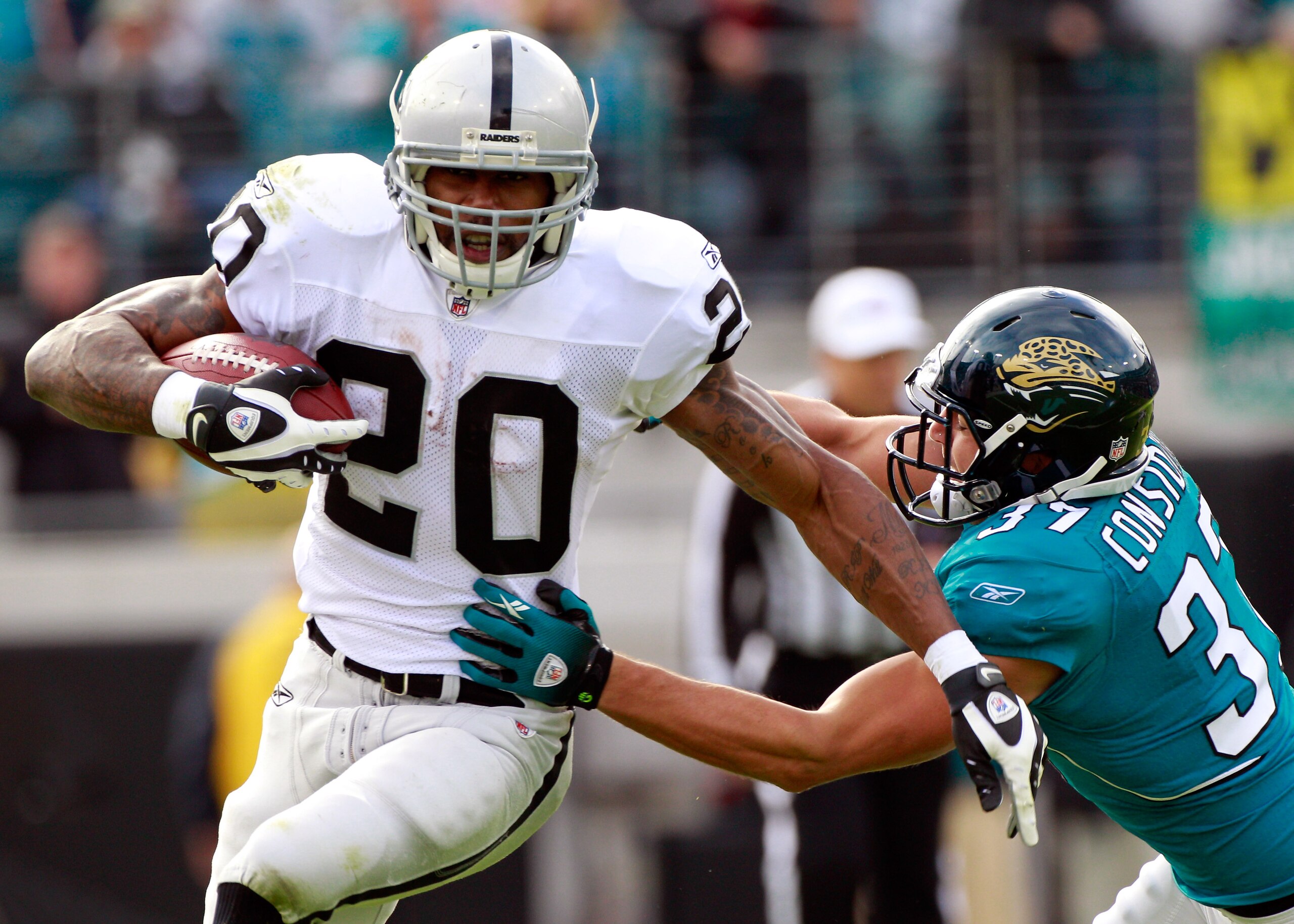

Top 10 NFL Draft Prospects from the SEC West
No matter what year it is, the Southeastern Conference produces its share of high-level NFL talent.
And while most seasons, the East and West provide the draft with about the same number of selected prospects, 2011 could be different because the West is as loaded as a stuffed baked potato.
That's nothing against the East, which will deliver first-round picks in Georgia WR A.J. Green and Florida C Mike Pouncey, and could see Georgia OLB/DE Justin Houston and Kentucky WR Randall Cobb among the first 32 players taken.
But the West is in a league of its own this year.
With a week-and-a-half before the draft kicks off, the possibility exists five SEC West alums (Auburn QB Cam Newton, Alabama DL Marcel Dareus, LSU CB Patrick Peterson, Auburn DL Nick Fairley and Alabama WR Julio Jones) will be among those selected in the first 10 picks.
Beyond that, there is great depth, as former Heisman Trophy-winning tailback Mark Ingram (Alabama) and Mississippi State OL Derek Sherrod carry a first-round grades with many teams. There also is an outside possibility a club will take a shot on former Arkansas QB Ryan Mallett's rocket arm in the first.
Here is a look at the 10 best SEC West draft prospects, listed alphabetically. How deep is this group? Potential second-, third- or fourth-round picks D.J. Williams (Arkansas TE), Jerrell Powe (Mississippi DT) and Pernell McPhee (Mississippi State DT) didn't make the cut.
OL James Carpenter (Alabama)
1 of 10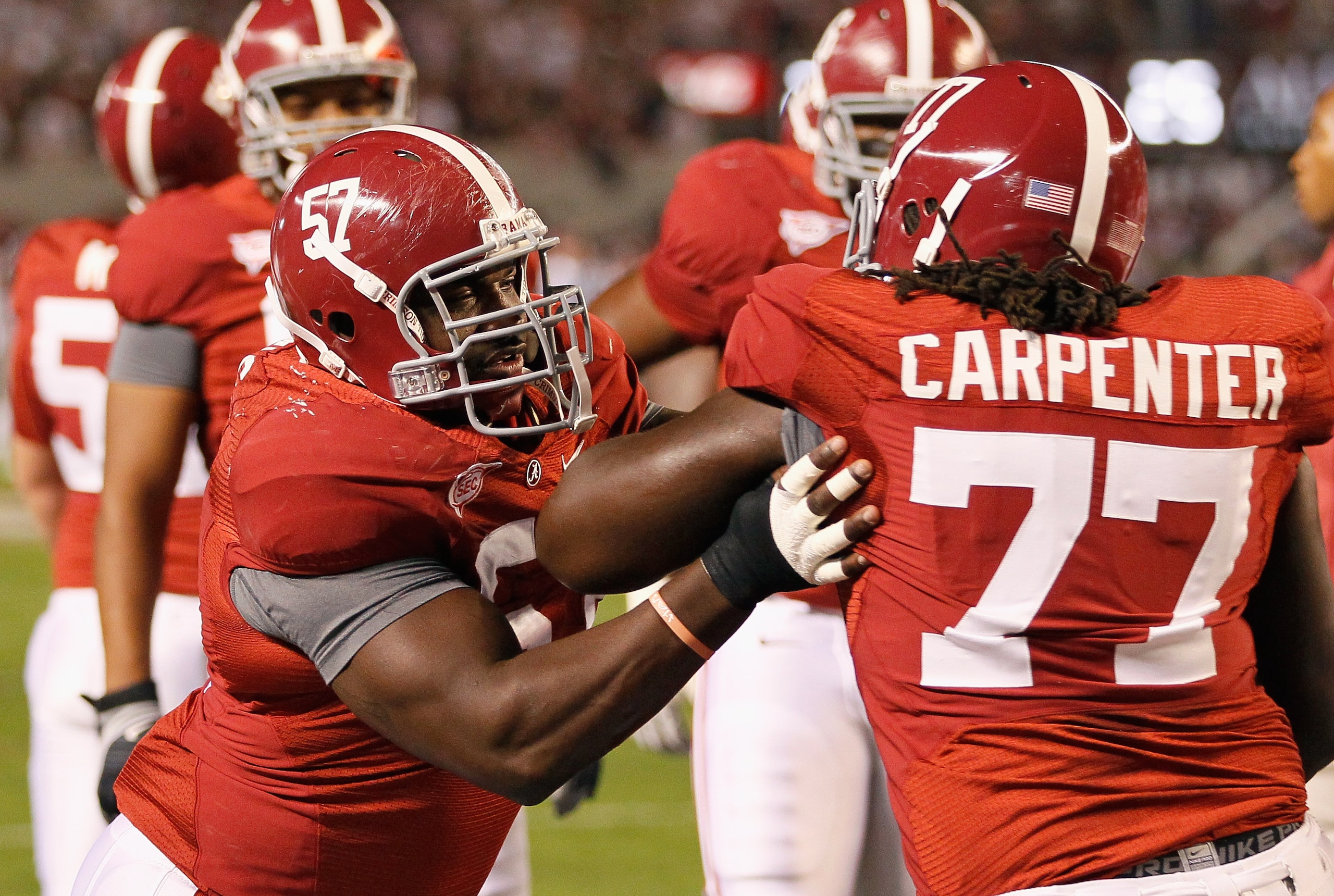
At 6'4", 321 pounds with 34-inch arms, former Alabama left tackle James Carpenter quietly went about his job protecting Greg McElroy and creating openings for the likes of Mark Ingram and Trent Richardson.
Now, he's looking to cash in on his work.
A probable second- or third-round selection, Carpenter enters the NFL a better pass protector than run blocker. There have been some questions about how mean is mean streak actually is, but his size and athleticism fit NFL standards.
Carpenter has a quick first step, and while his 5.28 40-yard dash clocking at the combine was only so-so for his position, how often do offensive linemen run 40 yards? It also would serve well him to get stronger (he bench pressed 225 pounds 23 times at the combine—one fewer than Georgia Tech running back Anthony Allen, who weighed in 93 pounds less than Carpenter).
But he is a winner who has been well-coached and also played in a pro-style offense. And at the combine, Carpenter said he could play guard, as well.
Carpenter originally signed a national letter of intent with Iowa State out of high school, but ended up at Alabama following two seasons at Coffeyville (Kan.) Community College. He may not earn much playing time early as a rookie while he works on his strength and adjusts to the speed of the NFL. However, by midseason he could be a weekly contributor, and Carpenter should stick on an NFL roster for many years to come.
DL Marcell Dareus (Alabama)
2 of 10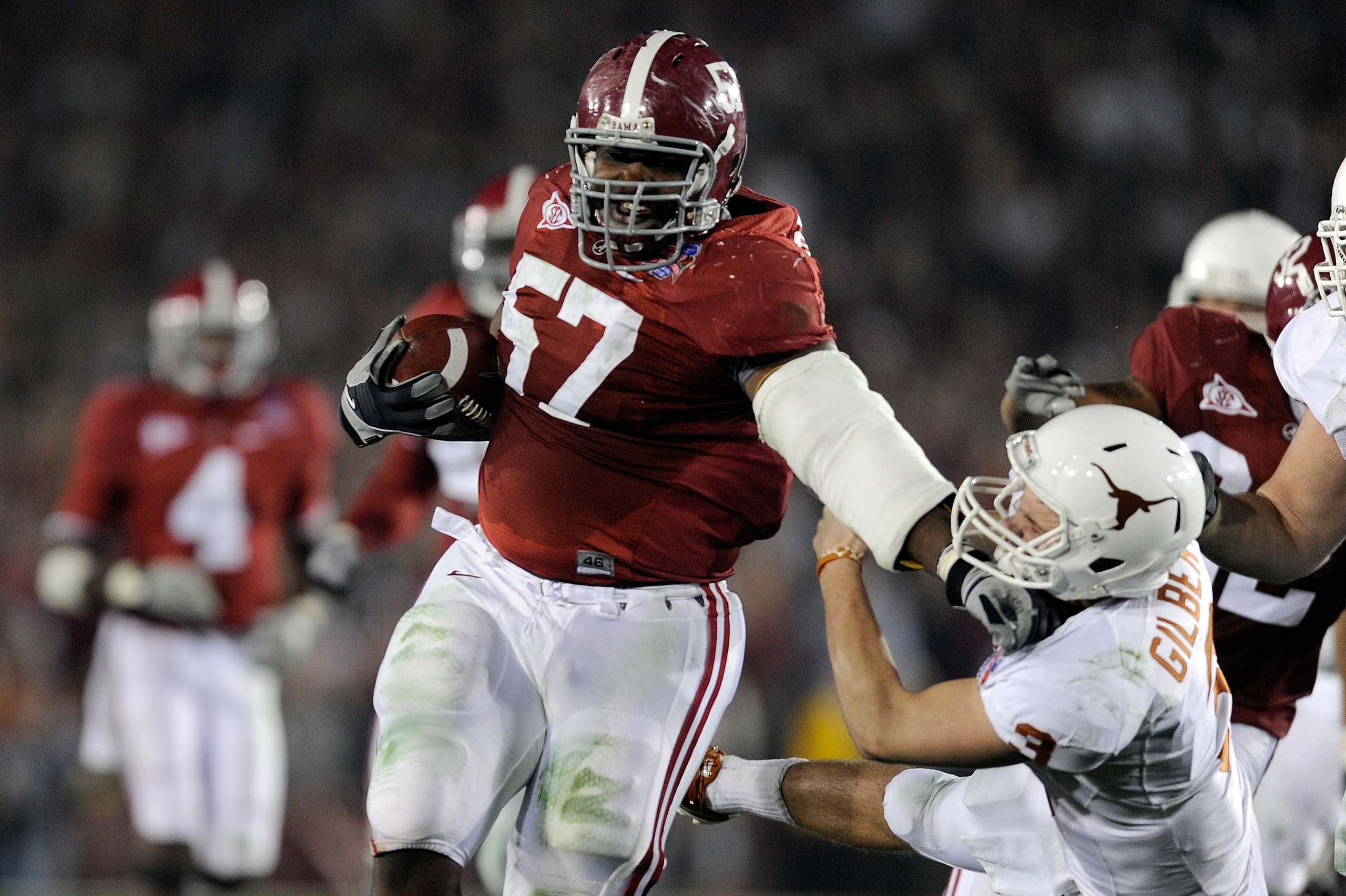
There is little doubt former Alabama defensive lineman Marcell Dareus will be among the first five players chosen in the 2011 NFL Draft.
He's 6'3", 319 pounds with tremendous speed for his size (4.93 40-yard dash clocking at the combine) and outstanding functional strength that belies the fact he only put up a mediocre 24 reps of 225 pounds.
Projected by some teams as a 3-4 end and by others as a 4-3 tackle, Dareus is versatile enough to drop into coverage (he intercepted a pass and returned it 28 yards for a touchdown against Texas in the January 2010 BCS title game).
Dareus has very quick and active hands that allow him to shed blocks quickly, and he gets to the quarterback with bad intentions (ask Cleveland Browns signal-caller Colt McCoy, who Dareus knocked out of the aforementioned BCS championship game). He has a variety of pass-rush moves (including a tremendous swim), and he rarely, if ever, gets pushed backwards.
Weaknesses are difficult to find, though he spent much of his college career in a rotation and did have just 11 sacks in three seasons (something that could be attributed to scheme more than anything).
Dareus very well could be the safest pick in this year's draft.
DL Nick Fairley (Auburn)
3 of 10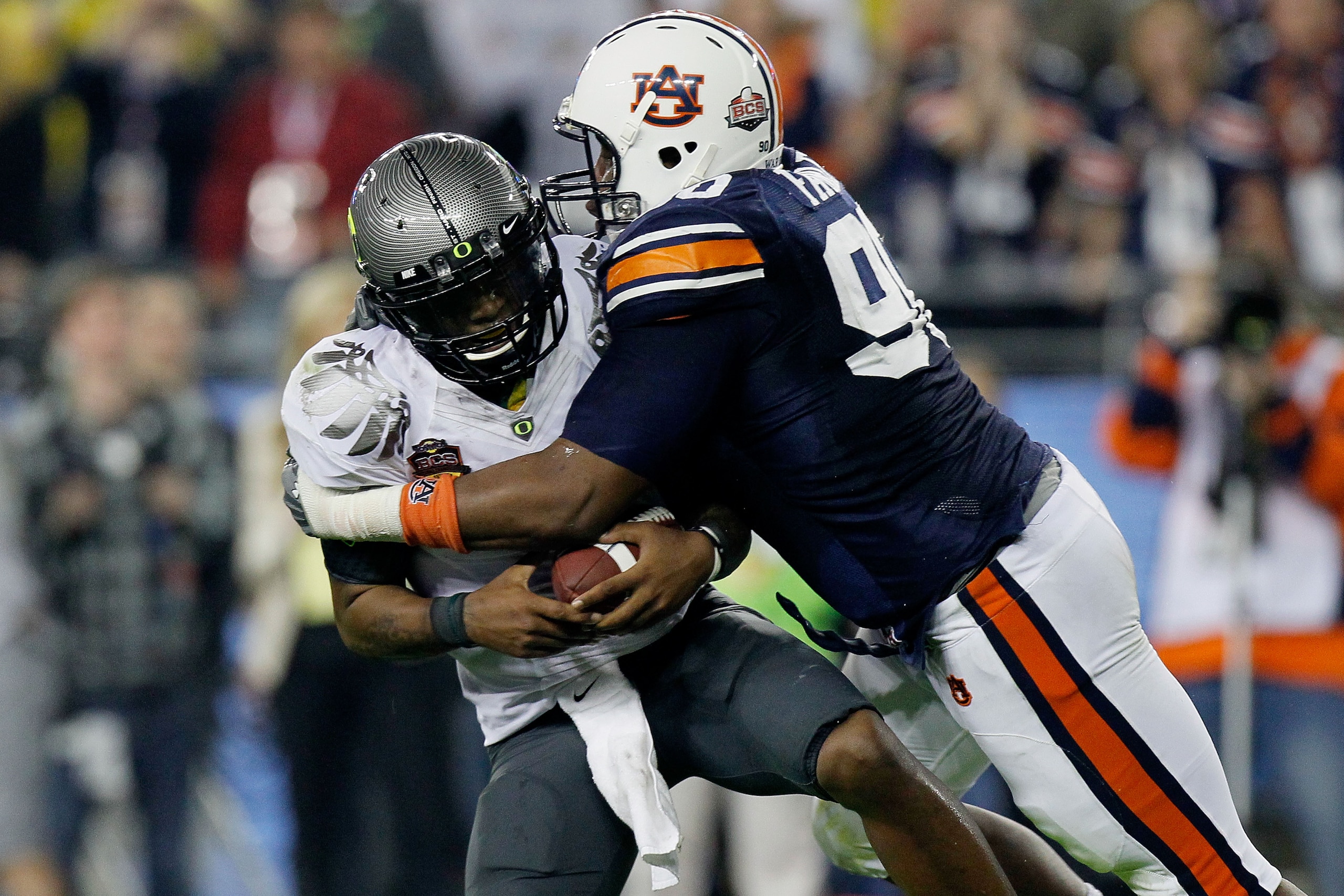
Some have called him a "one-year wonder," but what a wonderful year that one year was.
After spending two seasons at Copiah-Lincoln Community College in Weston, Miss. (one a redshirt), Fairley transferred to Auburn. After recording just 28 tackles as a third-year sophomore, there wasn't a better defensive lineman in the nation last year.
On his way to becoming the first-ever Lombardi Award-winner coached by a Lombardi Award-winner (former Tiger All American Tracy Rocker), Fairley dominated the Southeastern Conference and the rest of the country, as Auburn won the BCS national championship (with him the title game's defensive most outstanding player).
A first-team All American, Fairley finished his junior (and final) campaign on The Plains with 60 tackles (36 solo), and league-bests in tackles-for-loss (24) and sacks (11.5) en route to being named the SEC's defensive player of the year.
At 6'4", 291 pounds, he is a bit lighter than most NFL defensive tackles. However, he offsets a lack of size with athleticism that allows him to run a linebacker-like 4.87 40-yard dash and leap 31 inches.
Once looked as the possible No. 1 overall selection, Fairley has slipped out of that conversation due to what some scouts perceive as potential attitude issues, as well as his lack of production over a long period of time.
Still, Fairley probably won't fall past the eight overall selection and the Titans, who recently hired Rocker as their defensive line coach.
.jpg?w=2560 "Commanders 49ers Football")
.jpg?w=2560 "Colts Football")
.jpg?w=2560)
RB Mark Ingram (Alabama)
4 of 10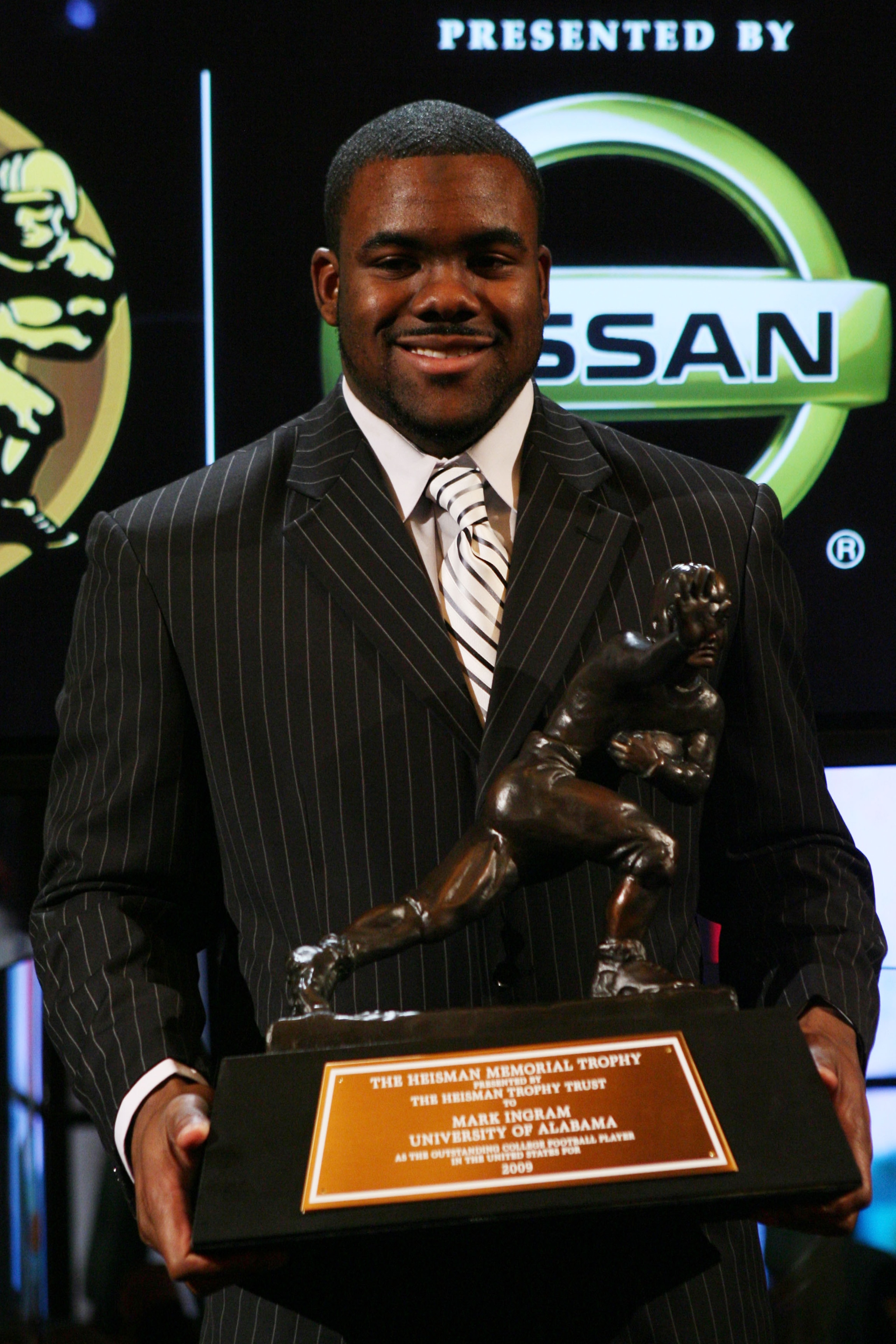
When it comes to comparisons in football, there aren't many better than the one that follows Mark Ingram around.
Emmitt Smith.
No doubt, it's a lot of pressure to be told you offer reminders of the NFL's all-time rushing king. However, the evaluations do have some merit.
Like Smith, the 5'9", 215-pound Ingram doesn't have otherworldly speed (4.62 40-yard dash clocking at the combine) or strength (21 bench press repetitions of 225 pounds). But also like Smith, the 2009 Heisman Trophy winner has uncanny vision, initial quickness, balance, patience and the ability to avoid or run through would-be tacklers. Each also is a threat as a receiver in the passing game, as well as a willing blocker.
Having played in a rotation with Trent Richardson the last two seasons, Ingram enters the league with less wear-and-tear than one might expect from a former SEC back (especially one with a Heisman on his mantle).
Considered the draft's only tailback with a definite first-round grade, look for Ingram's name to start being discussed around the 15th pick where the Miami Dolphins could be in the market for someone to replace Ronnie Brown and/or Ricky Williams.
WR Julio Jones (Alabama)
5 of 10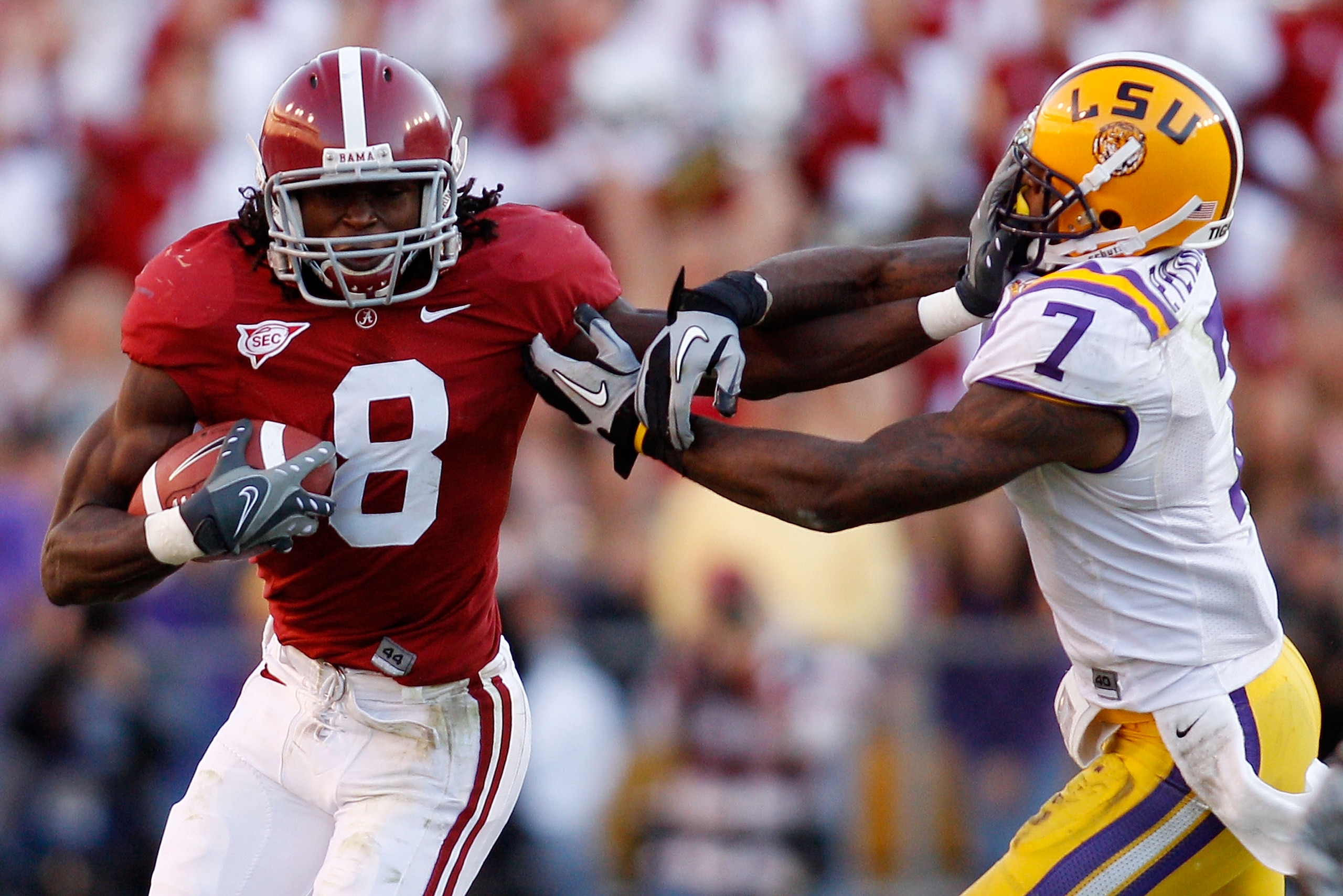
When he worked out at the NFL Scouting Combine in February, former Alabama receiver Julio Jones wowed scouts, coaches and general managers by running a 4.39 40-yard dash, vertical leaping 38.5 inches and delivering the longest broad jump (11'3") of all prospects.
And then Jones really wowed them when word got out he did all of that with a broken foot—the same type of injury that kept former Texas Tech receiver Michael Crabtree on the sidelines for the 2010 Combine. Crabtree ended up being selected 10th overall by the San Francisco 49ers.
Like Crabtree, there is a lot of talk the 6'3", 220-pound Jones could be taken with the 10th pick, although this time it is the Washington Redskins in that slot.
Athletic and physical, Jones has been compared to Dallas Cowboy Hall of Famer Michael Irvin. Both are playmakers, and each has been praised for his blocking skills.
Jones has had his share of dropped passes, a concern NFL teams don't have with Georgia's A.J. Green, the draft's top receiving prospect. However, Jones proved he is as tough as they come, and with a little route-running refinement as well as more consistency catching the ball, he could become a Pro Bowl-type talent with the right team.
QB Ryan Mallett (Arkansas)
6 of 10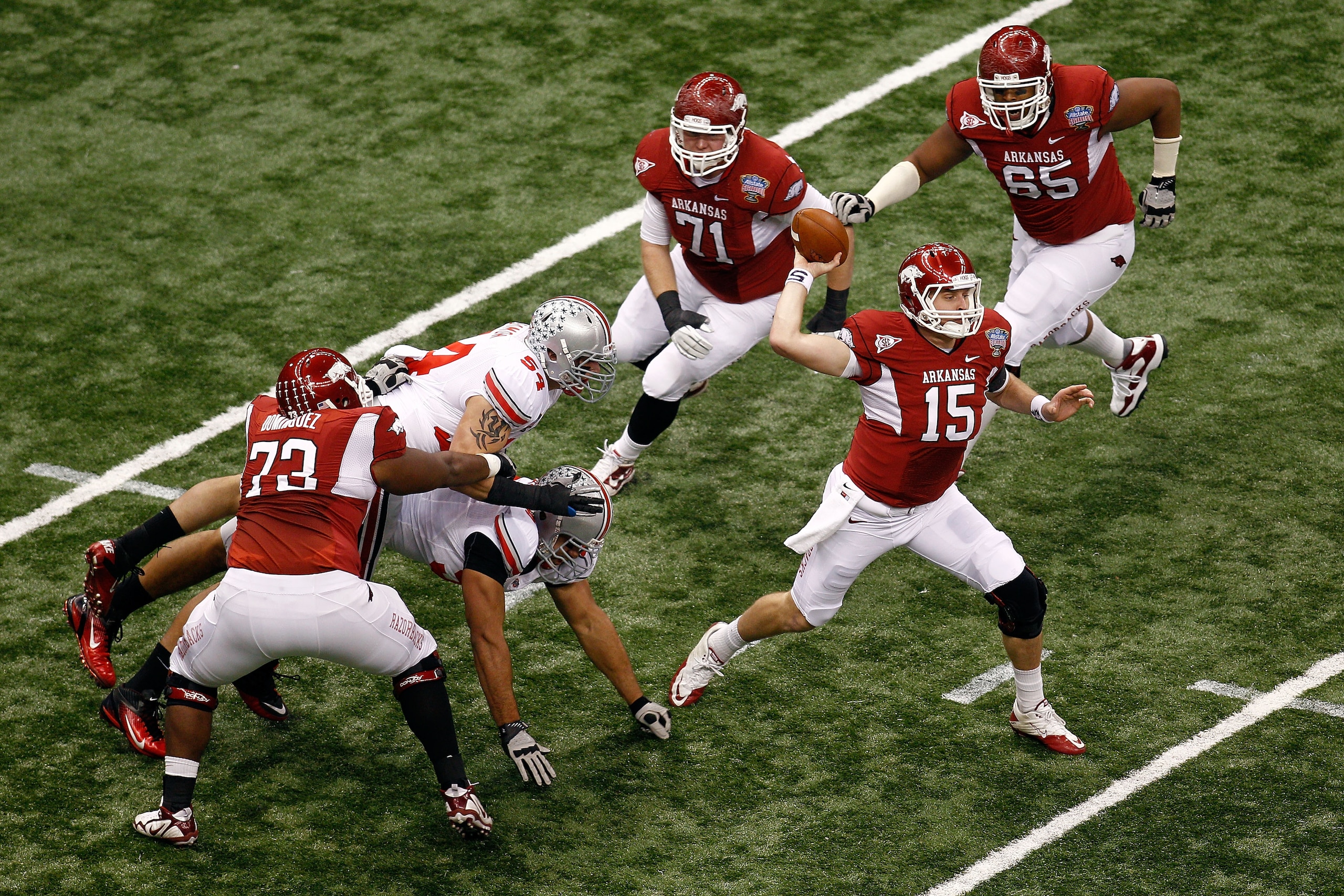
There are no issues with Ryan Mallett's arm. Along with former Nevada quarterback Colin Kaepernick, the Arkansas product might have the best fastball of any player available in the 2011 NFL Draft.
An early-entry junior who played his first season of college football at Michigan, the 6'7", 253-pound Mallett finished seventh in the 2010 Heisman Trophy voting after completing 266 of 411 passes for 3,869 yards with 32 touchdowns and 12 interceptions.
However, Mallett was clocked at 5.37 in the 40-yard dash at his pro day, and according to a recent report by Pro Football Weekly, the Autozone Liberty Bowl offensive MVP has admitted past drug use to NFL teams during interviews at the combine. That said, Mallett did not fail a drug test at Michigan or Arkansas during his college career.
Mallett isn't the type of quarterback that can slide into every offense. He left the Wolverines when spread-option practitioner Rich Rodriguez was hired, and Mallett realized he was a poor fit in that scheme, which requires good footspeed.
The NFL is a dropback league, though, and while Mallett won't be able to do many of the things big and athletic quarterbacks like Cam Newton, Vince Young or Tim Tebow might be able to do, the former Razorback is more accurate than all three of those players and won't be asked to run on designed plays, either.
Look for Mallett to be taken anywhere between the second and fourth rounds, though there are reports he could be selected as high as 10th overall by the Washington Redskins.
DT Drake Nevis (LSU)
7 of 10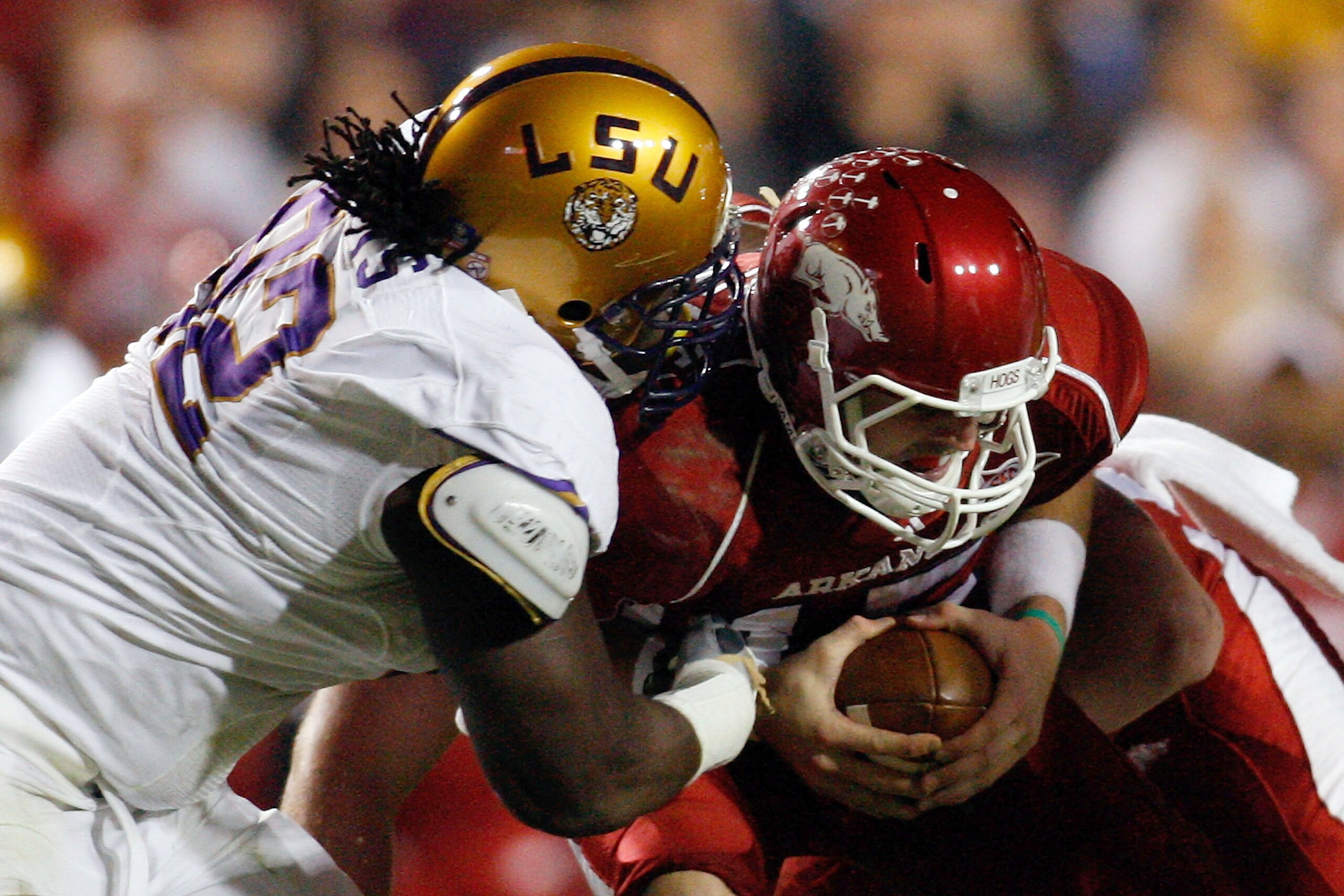
At 6'1", 294 pounds, former Louisiana State defensive tackle Drake Nevis is on the small side for an NFL defensive lineman.
But he is plenty athletic and strong enough to compete at the highest level.
Projected to be chosen anywhere between the second and fourth rounds, Nevis vertical leaped 30.5 inches and bench pressed 225 pounds 31 times at the NFL Scouting Combine in February. His 5.06 40-yard dash time was only slightly above average for his position, but with defensive tackles, teams are more concerned about initial quickness than straightline speed. And Nevis's 10-yard split was the second fastest among defensive tackles to North Carolina's Marvin Austin.
Additionally, Nevis is extremely quick splitting the gap (often before the lineman in front of him is fully out of his stance) and comes from a powerhouse program.
Look for Nevis, a three-technique tackle who will turn 22 a couple of weeks after the draft, to be taken between the second and fourth rounds.
QB Cam Newton (Auburn)
8 of 10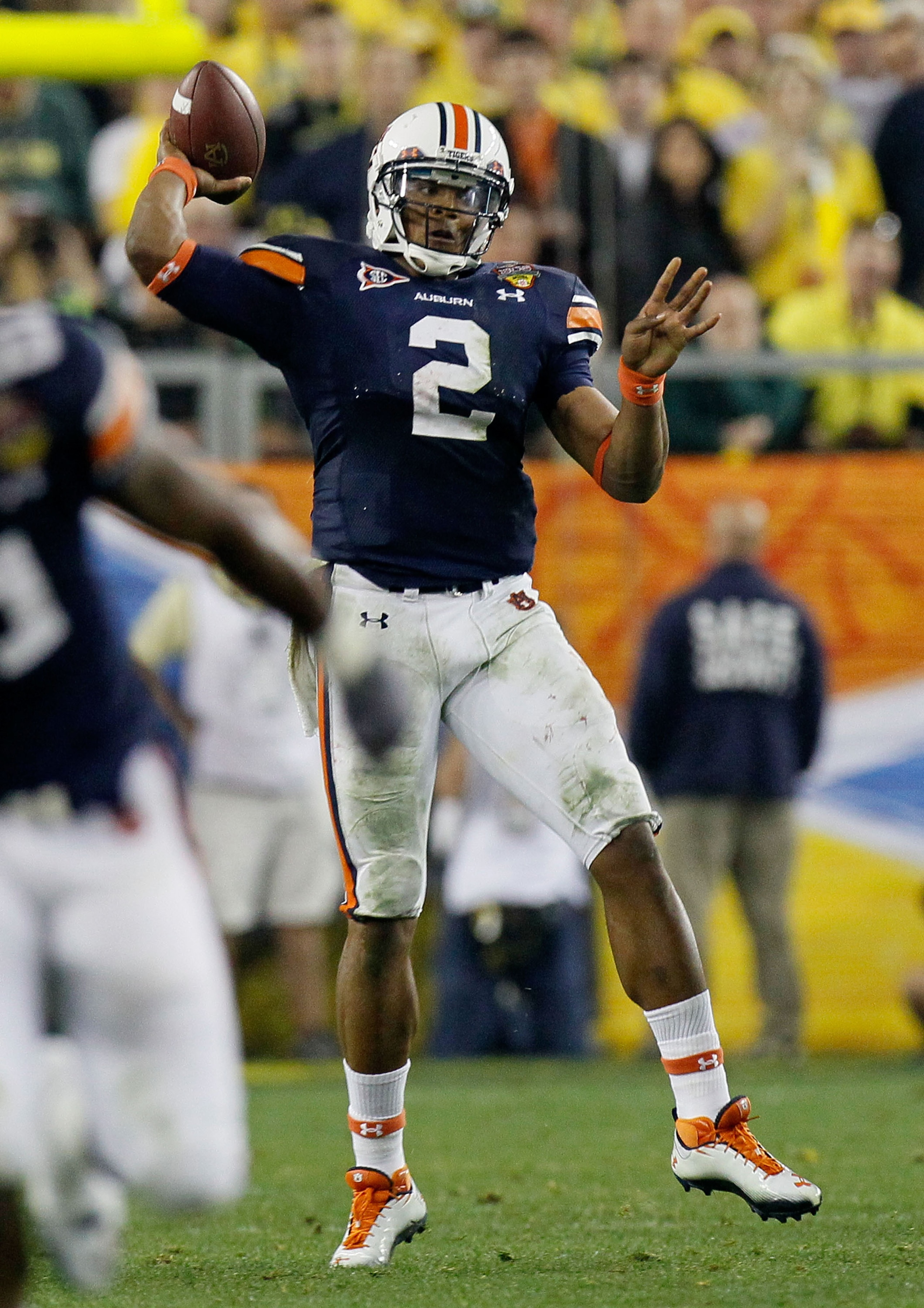
Without question, the most dissected player available in the 2011 NFL Draft is former Auburn quarterback Cam Newton.
At 6'5", 248 pounds with a strong arm, outstanding speed (4.59 in the 40-yard dash at the combine), professional pedigree (father Cecil was a safety for two seasons with the Dallas Cowboys and brother Cecil, Jr. is a center for the Jacksonville Jaguars) and a 14-0 mark as a starting college quarterback, Newton looks the part of an elite professional passer.
He led the Tigers to the BCS National Championship by completing 185 of 280 passes for 2,854 yards with 30 touchdowns and seven interceptions. He also carried 264 times for 1,473 yards and 20 touchdowns. The combination of those numbers and AU's undefeated record made Newton a landslide winner of the 2010 Heisman Trophy.
However, there are questions.
Off the field, Newton was arrested on Nov. 21, 2008 for allegedly stealing a laptop from a fellow University of Florida student, and a foxsports.com report said he faced potential expulsion from UF for cheating on three occasions had he not transferred out of the school after two years in Gainesville.
After that, Newton had a trouble-free season at Blinn College in Texas before winding up at Auburn. While a Tiger, allegations arose that Newton's father shopped his son to Mississippi State and possibly other schools for pay after Cam had finished his year at Blinn. That led to the younger Newton being declared ineligible by the NCAA for a very brief time prior to last seasons' SEC Championship Game against South Carolina before he was re-instated when it was determined there wasn't sufficient evidence suggesting Cam or Auburn knew of Cecil Newton's actions.
Despite it all, Newton looks like a good bet to be the first pick overall in the draft, by the Carolina Panthers. If he isn't chosen there, the likelihood is he will go elsewhere in the top 10.
CB Patrick Peterson (LSU)
9 of 10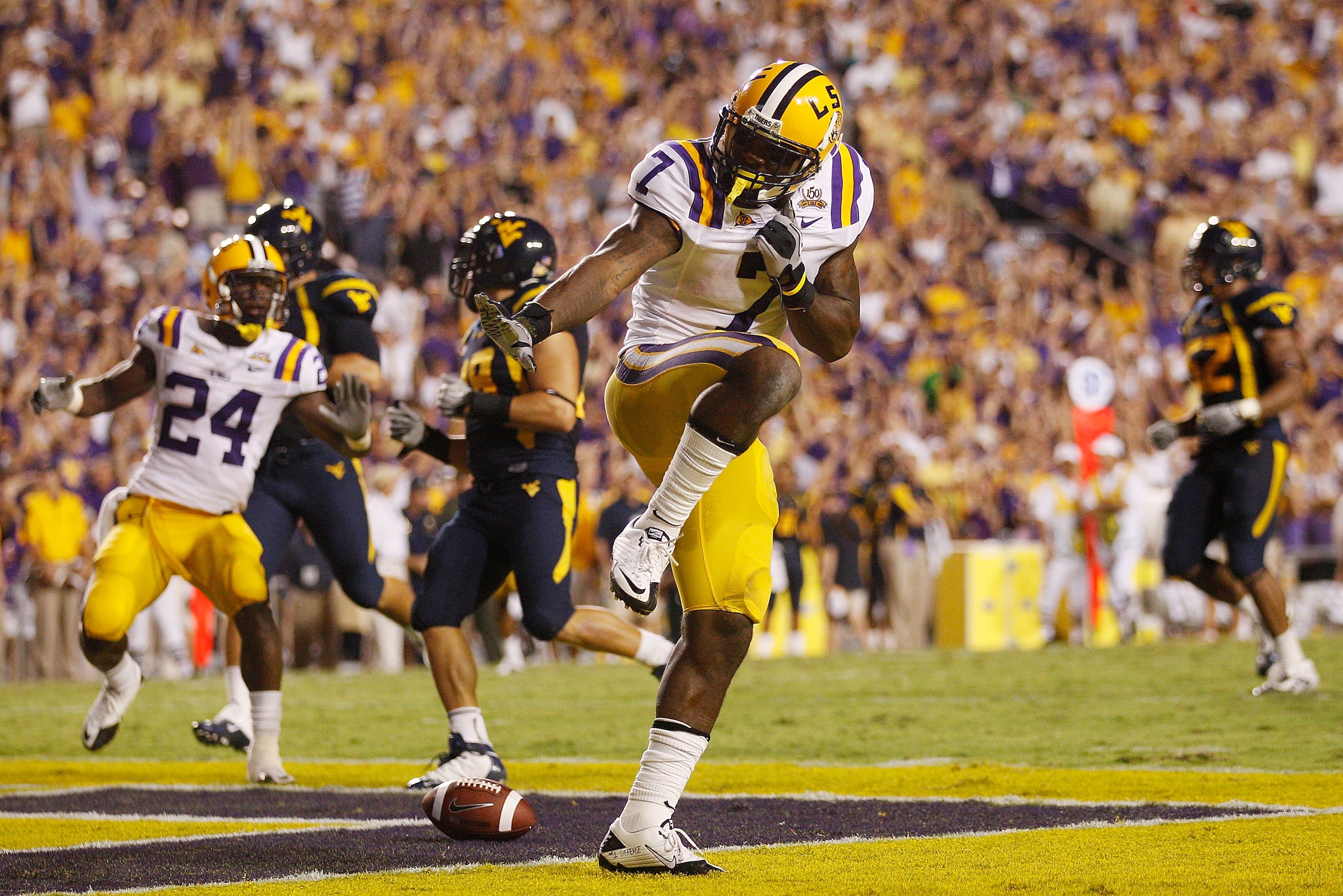
A relative of Pittsburgh Steelers cornerback Bryant McFadden, New York Giants receiver Sinorice Moss and Washington Redskins receiver Santana Moss, Patrick Peterson has been around the NFL a good bit of his young life.
And now, the NFL wants to be around him.
Some analysts have called Peterson, a 6'0", 219-pound cornerback, the best football player available in the draft. With rare size and outstanding athleticism (4.34 40-yard dash and 38-inch vertical leap), Peterson isn't just a workout warrior, he also was the 2010 Jim Thorpe Award-winner (given annually to the nation's top defensive back).
Peterson finished his three-year career at LSU with 135 tackles, 22 passes broken up and seven interceptions (four as a junior). He also averaged 29.1 yards on 32 kickoff returns and averaged 16.1 yards (while scoring a pair of touchdowns) on 26 punt returns.
There have been comparisons made with Peterson and NFL Hall of Famers Ronnie Lott and Rod Woodson, big NFL corners who made transitions late in their careers to safety.
Peterson isn't perfect—he is average at shedding blocks in run support and can be overly aggressive in coverage—but he's pretty darn good. Look for him to be among the top 10 (and probably top-5) picks in this year's draft.
OL Derek Sherrod (Mississippi State)
10 of 10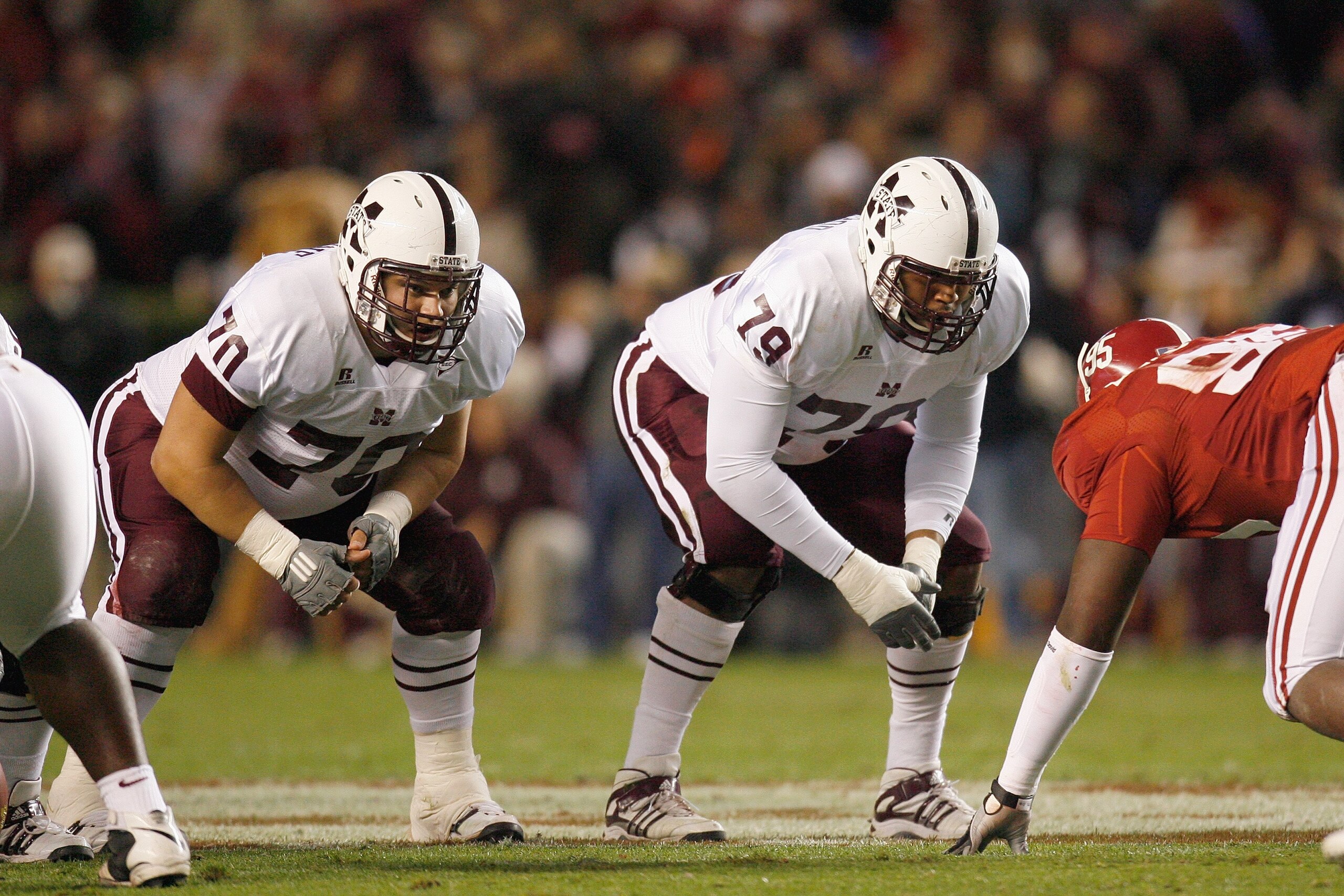
One of the fastest-rising prospects available in the 2011 NFL Draft, former Mississippi State offensive tackle Derek Sherrod could hear his name called near the end of the first round.
At 6'5", 321 pounds, Sherrod's arms measure 35 3/8, and is a better pass blocker than run blocker right now. He has quick feet, even though he isn't overly fast (5.28 40-yard dash time at the Combine). However, Sherrod needs to work a great deal on his strength (he only did 21 bench press repetitions of 225 pounds, six reps fewer than former North Carolina receiver Greg Little) and has struggled in the past with bull rushes.
In an ideal situation, Sherrod wouldn't play much as a rookie so that he can get stronger and adjust to the NFL game. However, he probably isn't one of those three- or four-year projects because in the right system he could be ready to start full-time by his second season.
.jpg?w=2560 "DOLPHINS-AIKMAN")


.jpg?w=2560 "Malik Beasley Negotiating Plea Deal (AP)")

.png?w=2560 "Week 8 Winners & Losers 📊")
