
2011 NFL Draft: Scout's Eye View Checklist for Quarterback Prospects
In “The Year of The Quarterback” as ESPN has dubbed 2011, many quarterbacks are being vaulted into first-round consideration.
Despite my assessment that only one is deserving, and he generally isn’t even among this overrated group—it seems extremely necessary to lay out a checklist of what I—and many of the best evaluators of the position—look for in a quarterback prospect.
I consider myself far from an expert, but have correctly called the success of Matt Ryan, Mark Sanchez, Drew Brees, and a few others, while also predicting the bust that became JaMarcus Russell.
Only with Sanchez did I actually chart/scout the player with game film, but all of them I had the opportunity to watch extensively in college.
Below are the most important factors for me when watching a quarterback—whether I chart them out, or simply watch them on television. After each description, I will eliminate guys who do not possess these qualities.
In my mind, a player must pass all three of the first three traits to be a first-round pick. Everything after is icing on the cake.
1. Intangibles
1 of 9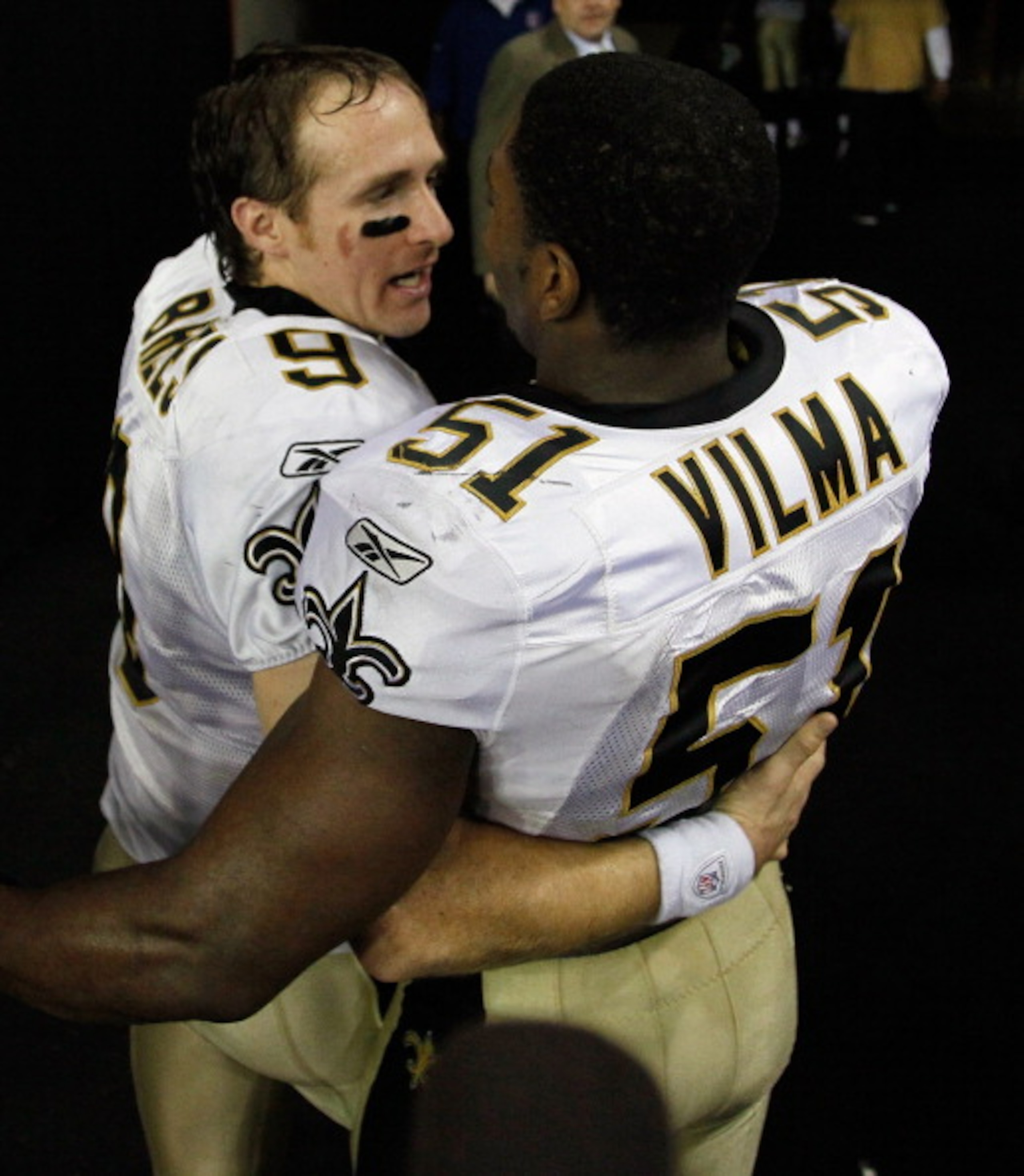
I am probably different from most scouts/talent evaluators, in that I assume if a guy is playing in college he has some pretty good talent.
Therefore, I know I can wait to make an evaluation of his physical traits. What I cannot assume is that he’s a leader, a hard worker, intelligent, and has that It Factor.
The reason I do not assume any of these is because so few guys at the college level actually do possess these traits.
Sure, a guy might be a hard worker by college standards, but is he willing to spend his off day in the film room when the rest of his teammates are doing something fun?
By the same token, though, is he the type of leader who will also take a few hours out of that off day to go out into the community and lead in that avenue, then come back and watch a few extra hours of film?
Does this young man have a natural feel for the position both from a technical perspective, but also from an X's and O's perspective? Finally, is he that guy who can simply inspire his team with one word, or one look, or one play?
Mike Lombardi gave a terrific analogy earlier this year on the B.S. Report: “If you had five quarterbacks all going out to get a burger at In ‘N Out (or whatever the favorite local joint is) with only one car and one set of keys, who is driving?”
The guy that is driving is the guy you want to have the ball at the end of the fourth quarter and your team needing to score to secure overtime or the win.
For my evaluations of a quarterback, if the guy doesn’t pass this first set of standards for intangibles, he cannot be a first round pick. Therefore I must eliminate a few of this year’s quarterbacks.
They are: Cam Newton—mostly for a lack of hard work and intelligence; Blaine Gabbert—who gets flustered easily by the moment; and Ryan Mallett—overall character concerns.
2. Accuracy
2 of 9
Note: All three eliminated QBs above are questionable in this area, so had they not been eliminated above, they likely would have been here.
You hear about accuracy all the time, but it is generally not well-qualified. Most people give you the completion percentage statistic and assume that reflects true accuracy. It does not.
True Accuracy is whether the QB put the ball in the right spot on a particular throw. To determine True Accuracy, you must actually watch film, and not just rely on stats.
True Accuracy gives a QB credit for throws he makes to the back shoulder but his receiver is unable to haul in, as well as times he scrambles and wisely throws the ball away.
But True Accuracy also punishes or hurts a QB for completions that were poor throws, where the receiver had to make an unbelievable catch. It also takes into account if the guy was pressured and/or throwing on the run.
A good accuracy percentage is 75 percent and up. This year’s most accurate QB by my measure is Delaware QB Pat Devlin at 85 percent, though most of Devlin’s throws were within ten yards.
On deep throws, Ryan Mallett is the most accurate, though he is remarkably the least accurate on short throws. The most impressive accuracy rate belonged to the most underrated QB in this class—Colin Kaepernick.
His throws were well-balanced in terms of short, intermediate, and long, and he was pretty consistent across the board, coming in at 76.5 percent overall.
Further eliminated from First Round consideration: Jake Locker, Ricky Stanzi, Andy Dalton, and Christian Ponder. Only Gabbert would have actually held up here—but barely (74.5 percent).
3. Pocket Presence
3 of 9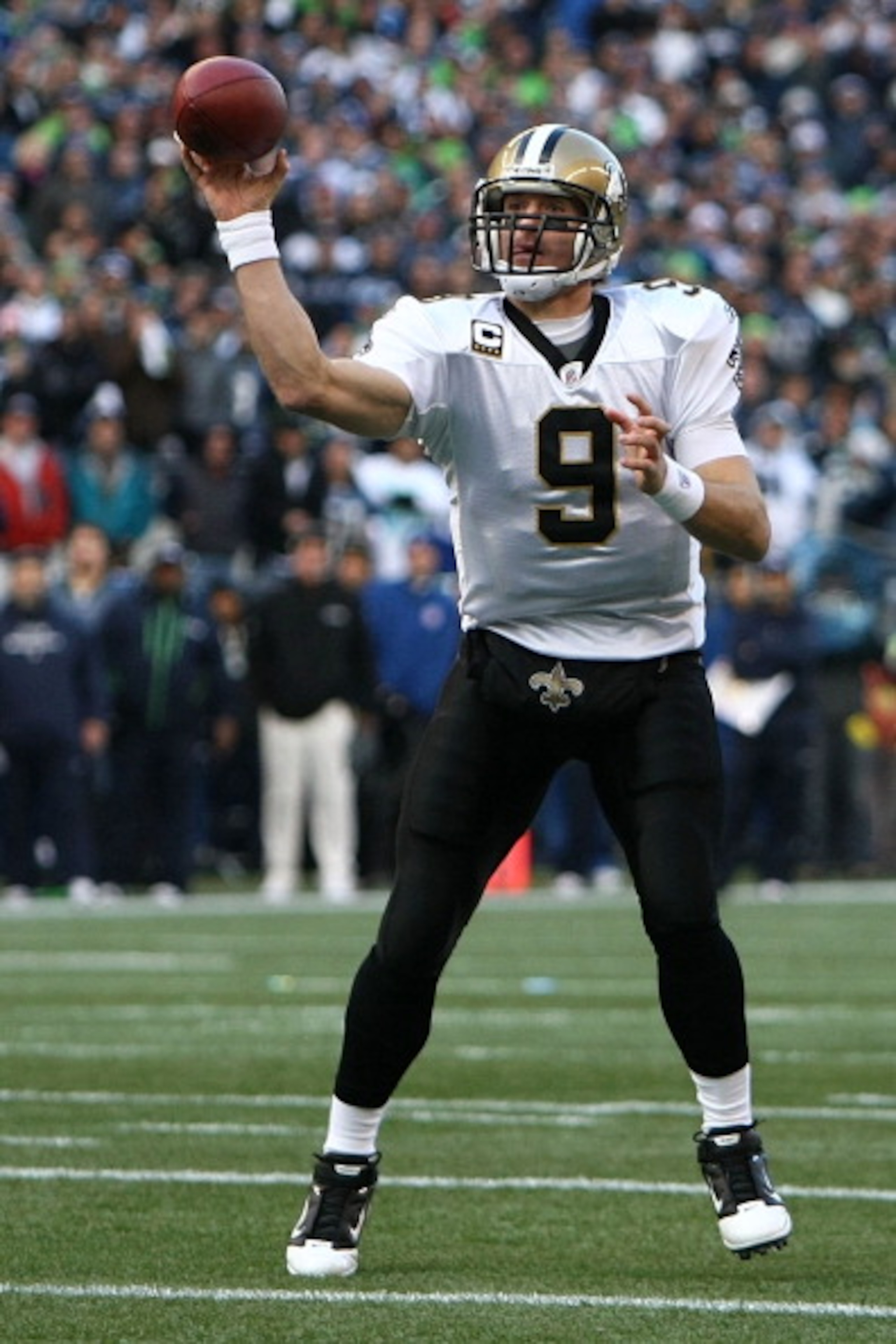
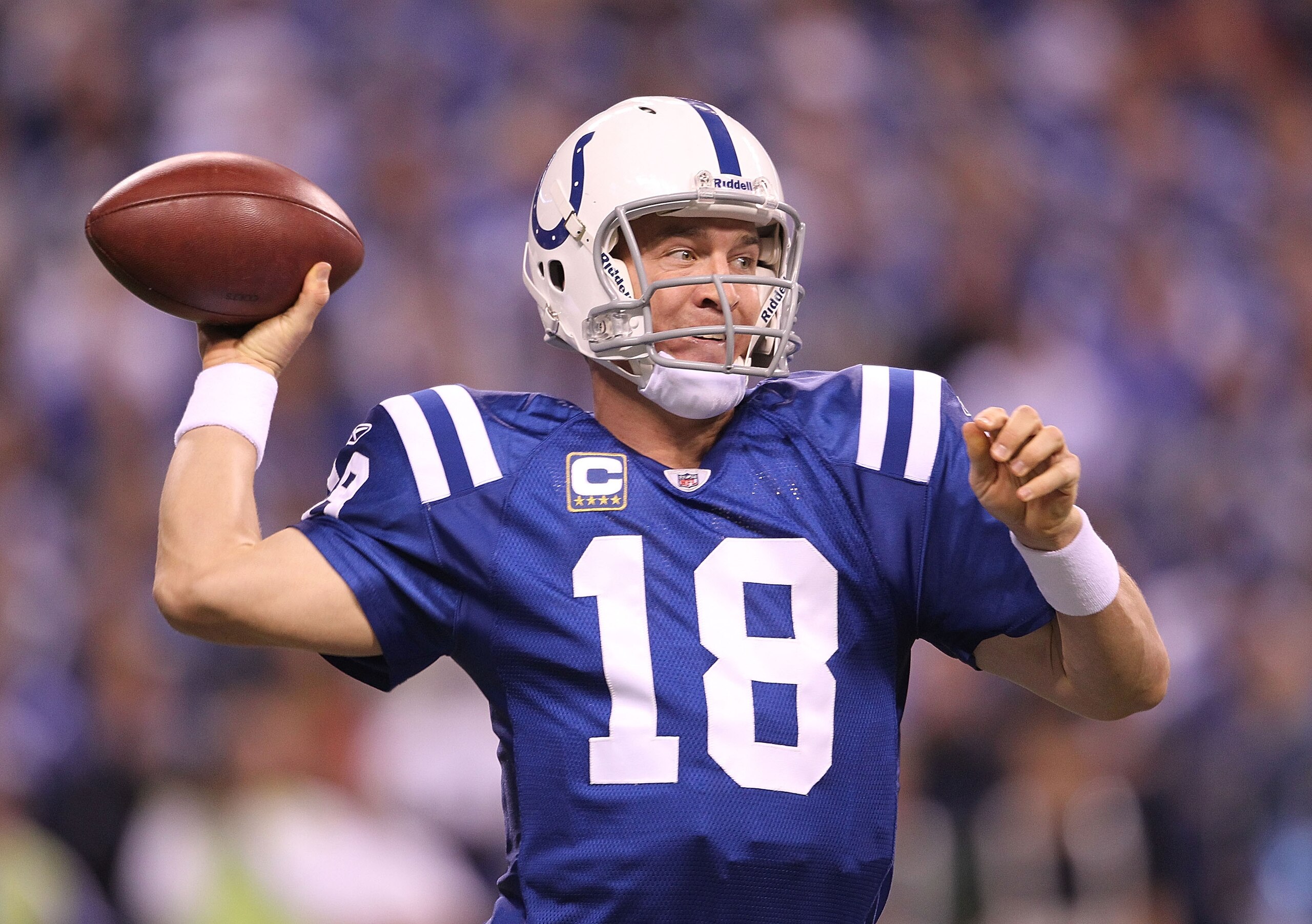
What makes Peyton Manning, Tom Brady, Drew Brees, and Aaron Rodgers the elite QBs in the NFL is that they possess all the attributes mentioned above—as do a few others—and combine it with this last skill to make their offenses amazingly difficult to stop.
In Brees’ and Rodgers’ cases, I would say it is this skill alone that makes them elite.
What does it mean, though? For me, pocket presence is a QB’s ability to take his drop, survey the defense, notice with his peripheral vision the pocket collapsing and step up, side-to-side, back up or some combination of the three to avoid a sack and give his receivers a chance to get open.
For some men like Ben Roethlisberger, it means taking guys on but maintaining his poise long enough to keep the play alive and make a big-time throw on the run.
Finally, it means throwing under pressure straight over the top or sometimes becoming improvisational with a unique-to-that-play arm angle or trajectory (the Brett Favre factor).
This eliminates all but two QBs in the entire draft class—only Colin Kaepernick and Greg McElroy remain. McElroy I gave a second-round grade because I feel his lack of arm strength does mitigate some of these other factors.
.jpg?w=2560 "Cardinals Giants Football")
.jpg?w=2560 "Titans Giants Football")
.jpg?w=2560 "Dolphins Bills Football")
4. Arm Strength
4 of 9
At this point, I look at a guy like Gabbert, who clearly possesses two of the three traits above (he’s basically a clone of Roethlisberger in his ability to avoid pressure) and determine that those factors and this one would allow him to be a second-round pick.
More importantly, though, here is my justification for why I do not feel a QB must possess supreme arm strength to get in the first round, and why many who do possess this skill should not be first rounders.
Look at Aaron Rodgers, Tom Brady, Drew Brees, and Philip Rivers just to name guys that are upper-echelon quarterbacks in the NFL. None of them were thought to have elite arm strength coming out of college. All of them, if re-drafted, would be top-five picks.
Yet certainly in the first three players' cases—and they’re the ones I considered elite QBs—they all improved their arm strength as they grew further into their bodies and perfected their mechanics.
Simply put, none of the first three traits can be taught. A guy either has them or he doesn’t—which has been proven both statistically and qualitatively.
But arm strength has been observed in all these guys as a trait that can easily be improved upon a player’s jump to the NFL.
It is the reason I still believe Jimmy Clausen will be a great NFL QB—he possesses all three attributes above—and his arm strength will continue to improve.
As for this year’s class, the elite arms belong to Ryan Mallett, Colin Kaepernick—which is why he vaults to a top-20 overall guy for me; Jake Locker and Blaine Gabbert.
5. Athleticism
5 of 9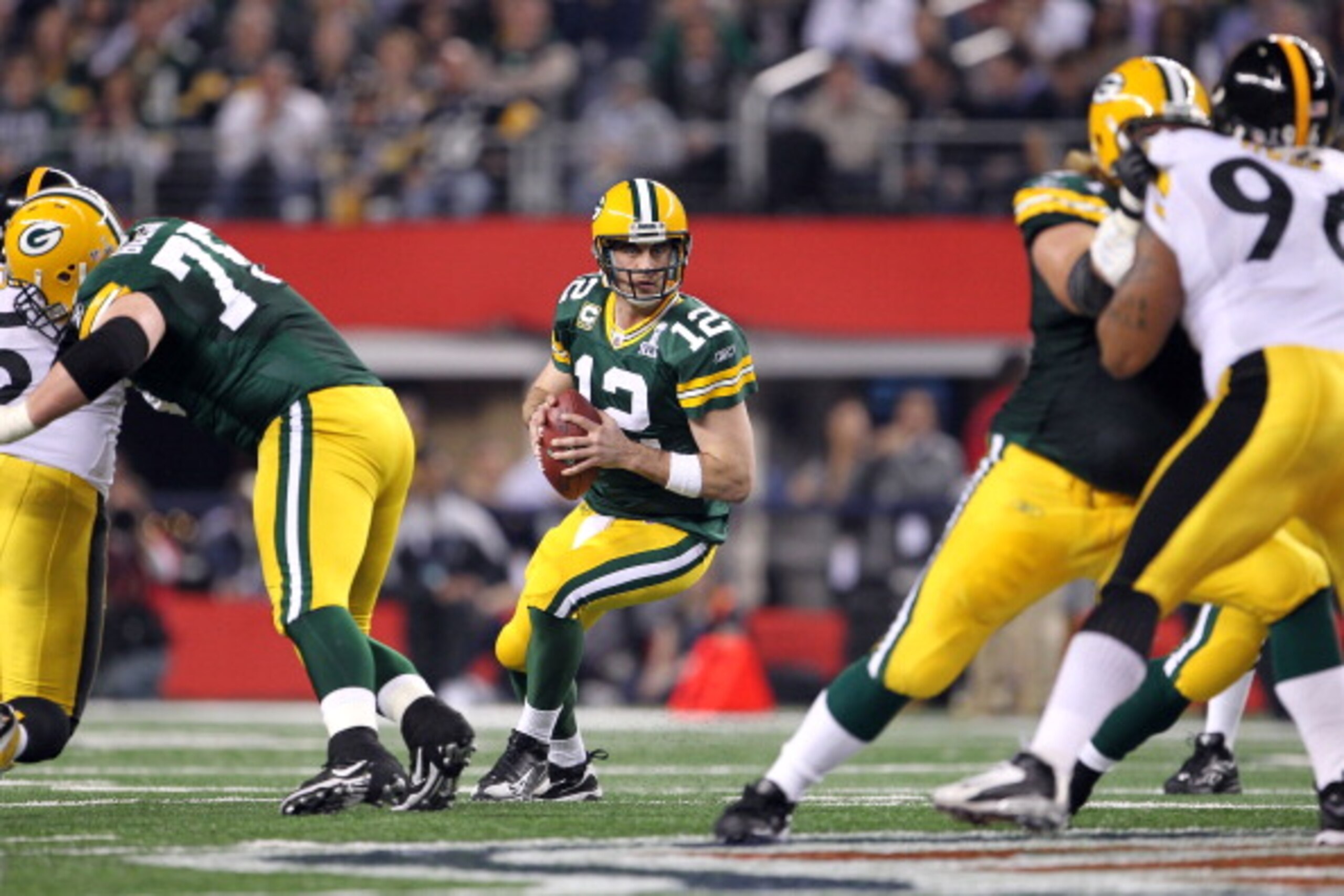
At first glance of a scouting report, when one sees a category for athleticism they’re thinking “how much is this guy like Michael Vick?”.
And the truth is that part of this category wants to measure this, but more to the point it wants to measure a guy’s ability bend his knees and step into throws, his flexibility, is he stiff or loose throwing the ball?
Can he step up in the pocket without losing his balance or velocity on his throw? Can he avoid a rush and keep a play alive? Can he throw on the run with similar velocity and accuracy as he does in the pocket?
Pocket presence measured these abilities from a perspective of if he is mentally capable and poised enough to do it. Athleticism measures if he is actually physically capable of doing what his mind is telling him to do.
This draft possesses a few elite athletes for the position—Jake Locker, Cam Newton, and Blaine Gabbert (for his size at least) and Colin Kaepernick (to me a cross between Vick and Sam Bradford)—but also a number of guys that are more limited in this area.
6. Physical Makeup
6 of 9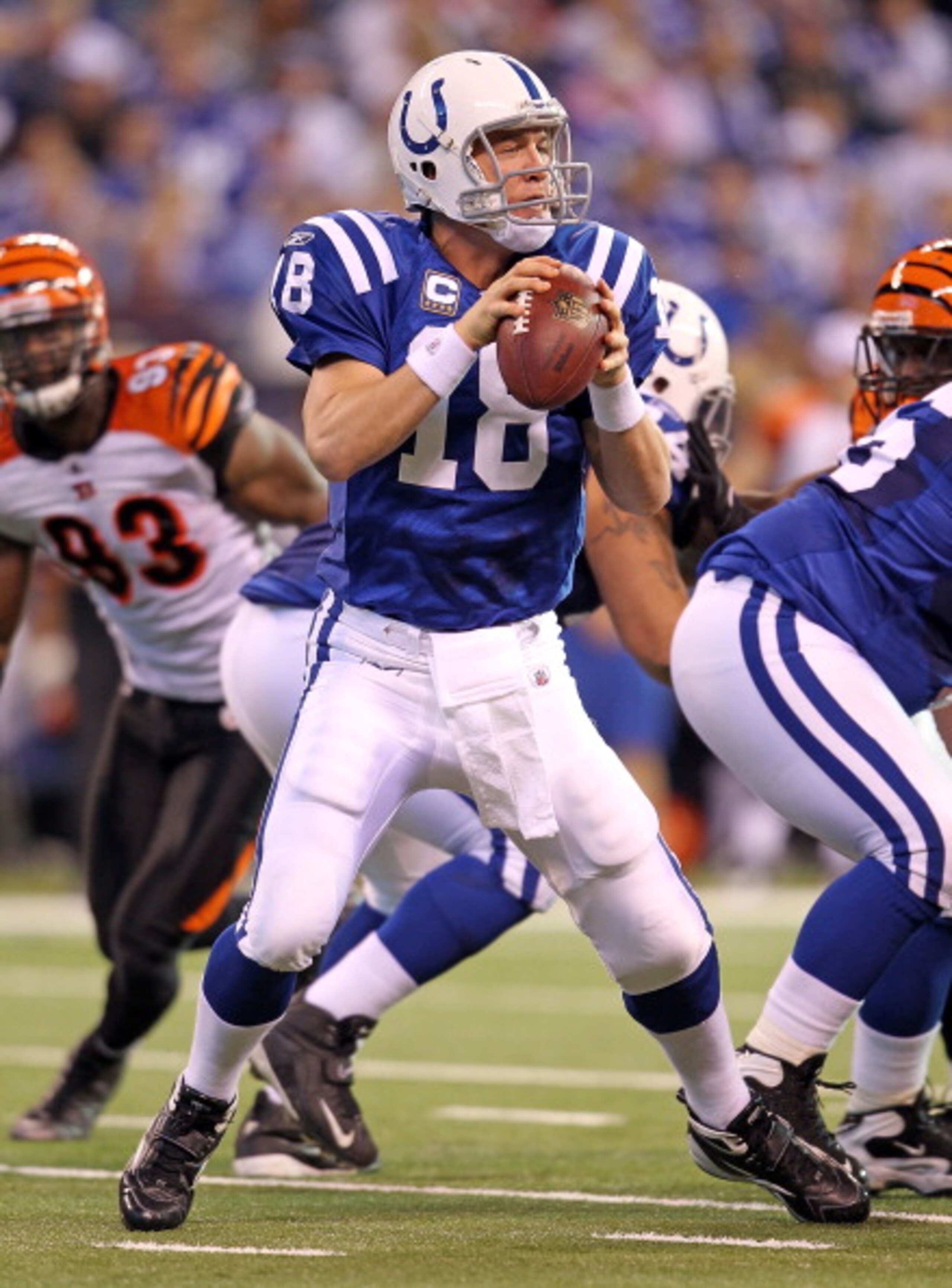
This category really just asks the question, does he look like a quarterback? Only a few guys have had success in the NFL as short punks. The list in my mind is two-deep with Doug Flutie and Drew Brees.
Ideally a QB would stand at least 6020 in scouting terms—six feet, two inches in everyday language—and weigh at least 210 pounds. Then when a guy gets above “six-five” scouts tend to question whether he is too tall to consistently repeat his mechanics.
For myself, I tend to give guys the benefit of the doubt. If he is small but plays bigger than his size, I’ll give him a pass in this category.
Truth be told, one of the main concerns about size is balls being tipped, and that happens to a lot of bigger guys too. There are some smaller guys who are good in the pocket that know how to maneuver throwing lanes with their eyes, arms and feet.
There is not one top-15 QB in this draft where size is a major issue. All of them possess the requisite size to play the position in the NFL.
7. Technique
7 of 9
Technique is tricky. If a guy is accurate with good enough arm strength, I see no reason to try to change his throwing mechanics—see the ugly mechanics of Colin Kaepernick—but if he is inaccurate or not getting enough velocity on the ball this becomes a key issue.
Honestly, despite myself having a bit of a coaching background, I struggle most with mechanics in evaluating a QB. But it is probably due to my view that I mentioned above.
That being said, there are some guys who mechanically concern me in this draft. T.J. Yates of North Carolina I like in the sixth round, but I worry about his inconsistent three-quarters release.
Andy Dalton’s release reminds me a lot Colt McCoy of the Browns, in that it’s too compact and yet herky jerky, while also being a bit three-quarters. He will likely get some balls tipped and struggle with generating enough velocity to fit the ball into tight spaces.
However, there are a number of guys whose technique is beautiful. Ricky Stanzi is straight over the top as he smoothly strides into his throw a la Tom Brady. Similarly, Pat Devlin shares some similarities in his release to Brady as well.
To me Greg McElroy’s release is just like that of a guy I’m very apt to compare him to—Drew Brees. Like Brees he really cocks that ball quickly and looks like he is throwing a baseball with his left elbow and foot pointing to the target.
For guys who are a bit smaller—McElroy is one of the smaller guys in this draft—this set of mechanics allow them to get the most on the ball while maintaining ideal accuracy.
8. Ability to Make a First Down with His Feet
8 of 9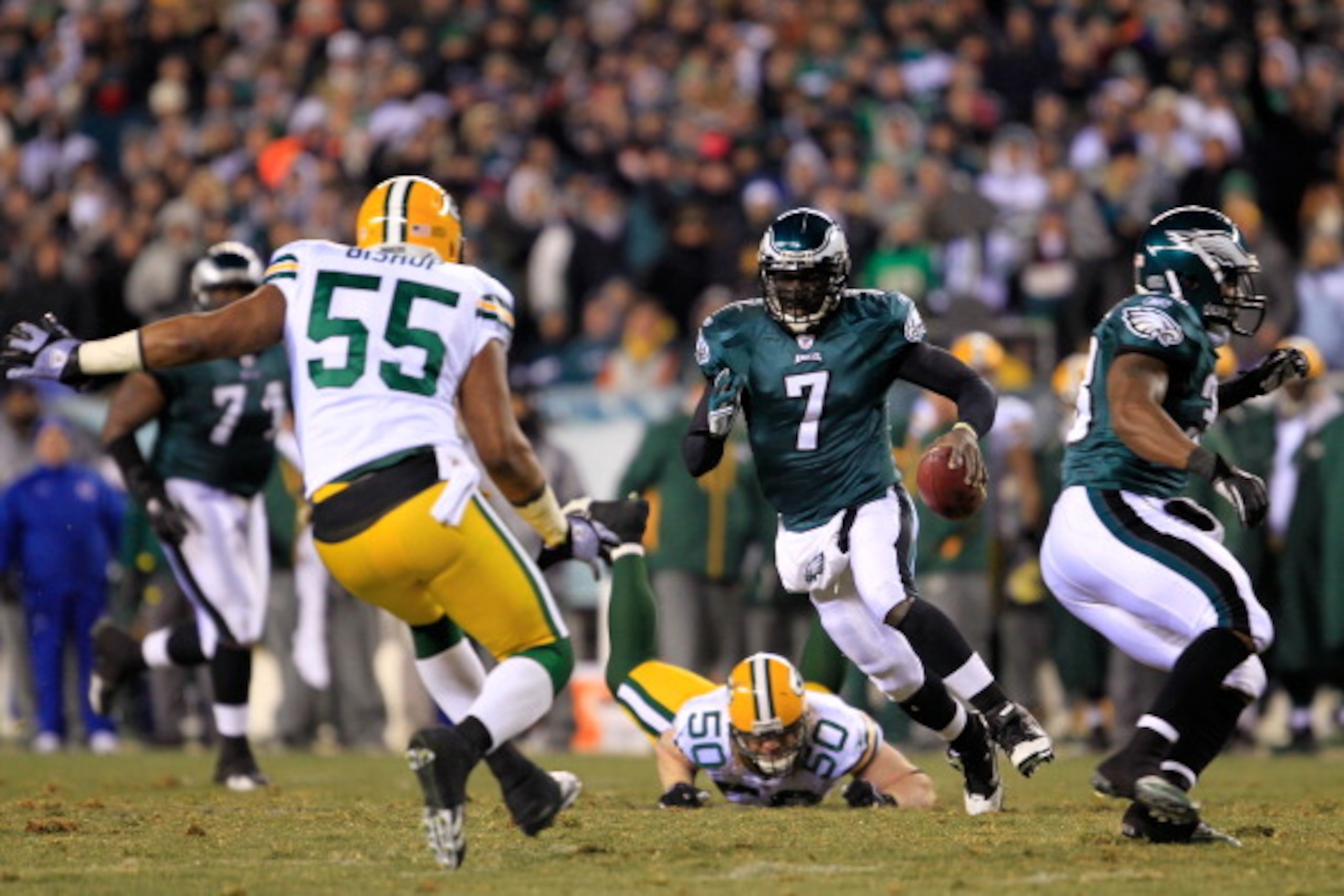
The ability to pick up one or two first downs by scrambling when the pocket collapses and the middle of the zone erodes is increasingly crucial to playing the quarterback position effectively.
We saw the difficulties it caused defenses all season with Michael Vick, Aaron Rodgers and Ben Roethlisberger.
Even the threat of a guy taking off caused defenses to play more cautiously, therefore opening holes in both the running game and the passing game.
Most casual fans know Newton, Locker, Kaepernick and Gabbert possess this ability. Some may be surprised to find that Dalton and Christian Ponder are really good at doing this as well.
On the contrary, Mallett, Scott Tolzien, and T.J. Yates are pretty much sitting ducks back there. The rest of this year’s class consists mostly of guys who can get a first down, but probably won’t cause defenses to fear it the same way they would some of the elite guys in this category.
Ultimately, It's All a Crap-Shoot
9 of 9
It should be noted I included mental awareness in the intangibles section. It is another trait I tend to assume, but certainly not all quarterbacks possess it. Additionally, I include ball-handling, pump fakes, playaction, etc. to be included in that group.
The fun thing about scouting the quarterback position is that a guy could possess all eight of these traits and never start a game in the NFL—or just bomb when he does.
Or he could be missing one or more of them and become a star. Quarterbacks of all shapes and sizes, colors, and makes have succeeded in the NFL. I just know I would tend to bet on the guy who fills all the categories, as Kaepernick does.
.jpg?w=2560 "Hill Injury Update Football")