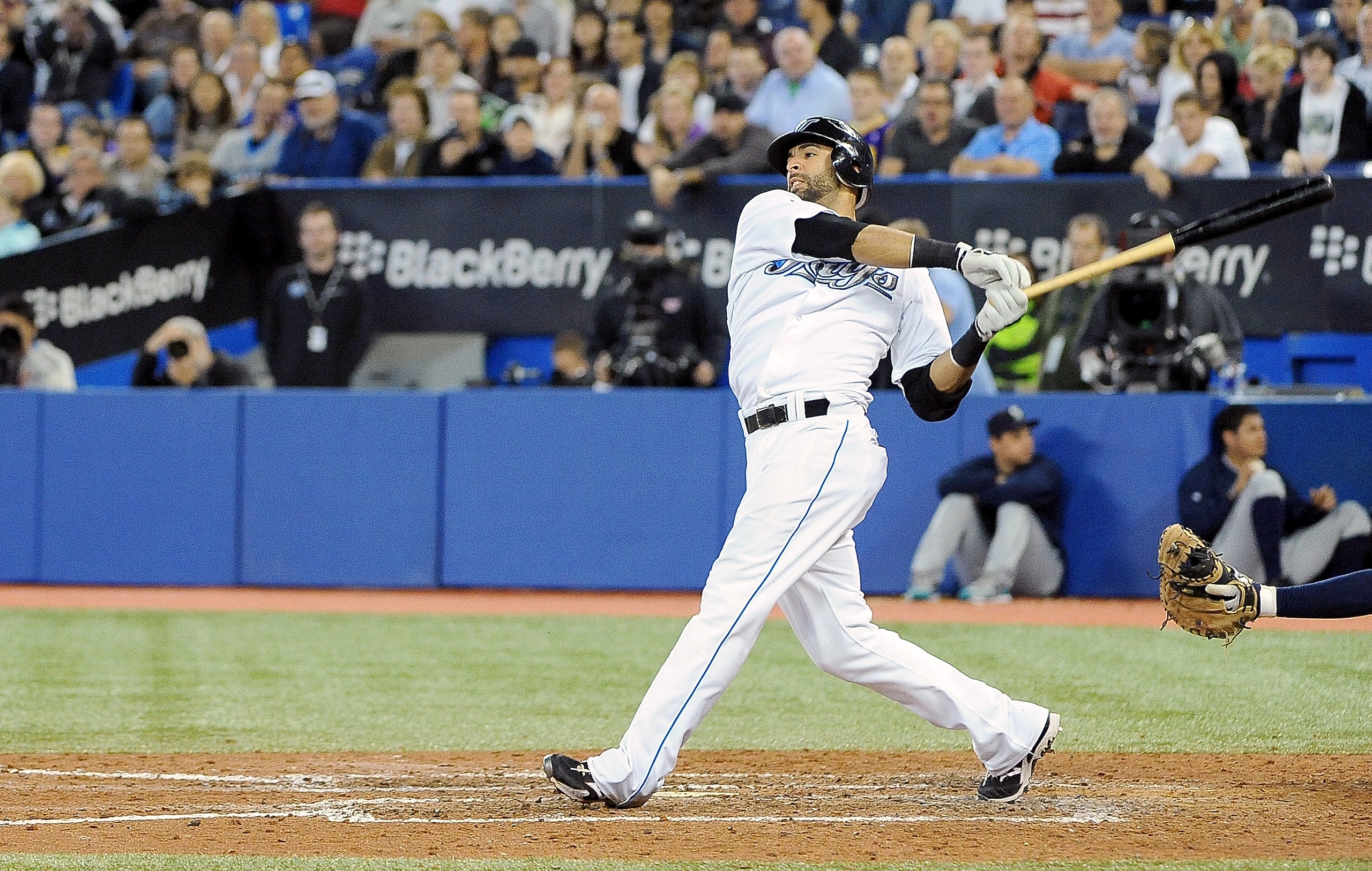


Last season, Jose Bautista shocked the baseball world by coming out of nowhere to launch 54 home runs as a member of the Blue Jays, setting a franchise record, and leading all of baseball in longballs.
In the process, he registered the 42nd season in which a player has hit at least 50 home runs. It is a feat achieved by only 26 different players, and is one of the most revered clubs in all of professional sports.
However, some of these great seasons were inevitably better than the rest. So what follows is a ranking of all 42 50-home run seasons. I took into account not only the home run total, but also the era in which the player played, the legitimacy of the home runs (steroids), as well as the significance of the season itself.
So for example, while Roger Maris hit just .269 during his 1961 season, he is higher on the list that his average may deserve because of what his 61 home runs meant.
Without further explanation, let's get on with the rankings, starting with No. 42....
No. 42: Andruw Jones, 2005
1 of 42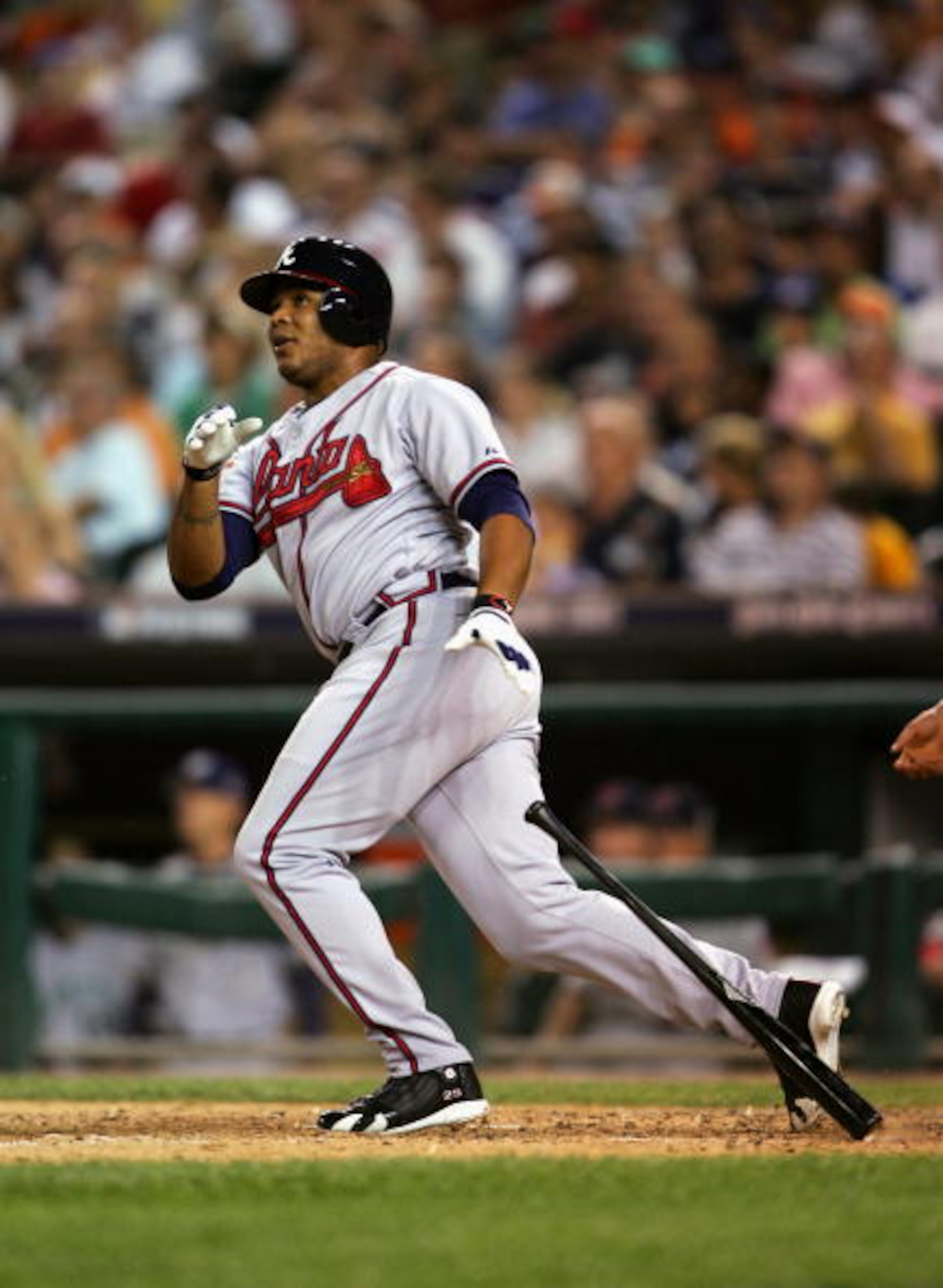
Home Runs: 51
Other Stats
BA: .263
OBP: .347
SLG: .575
RBI: 128 (led NL)
There are certainly worse lists to come in last on, but for the sake of these rankings it is Jones who is bringing up the rear.
As far as his career went, the 51 home runs were certainly were a bit of an aberration for Jones, as his previous career high was 36 heading into the 2005. He followed that up with a 41 home run season, but then his career took a sharp downward spiral and last season at the age of 33 he was little more than a role player.
No. 41: Greg Vaughn, 1998
2 of 42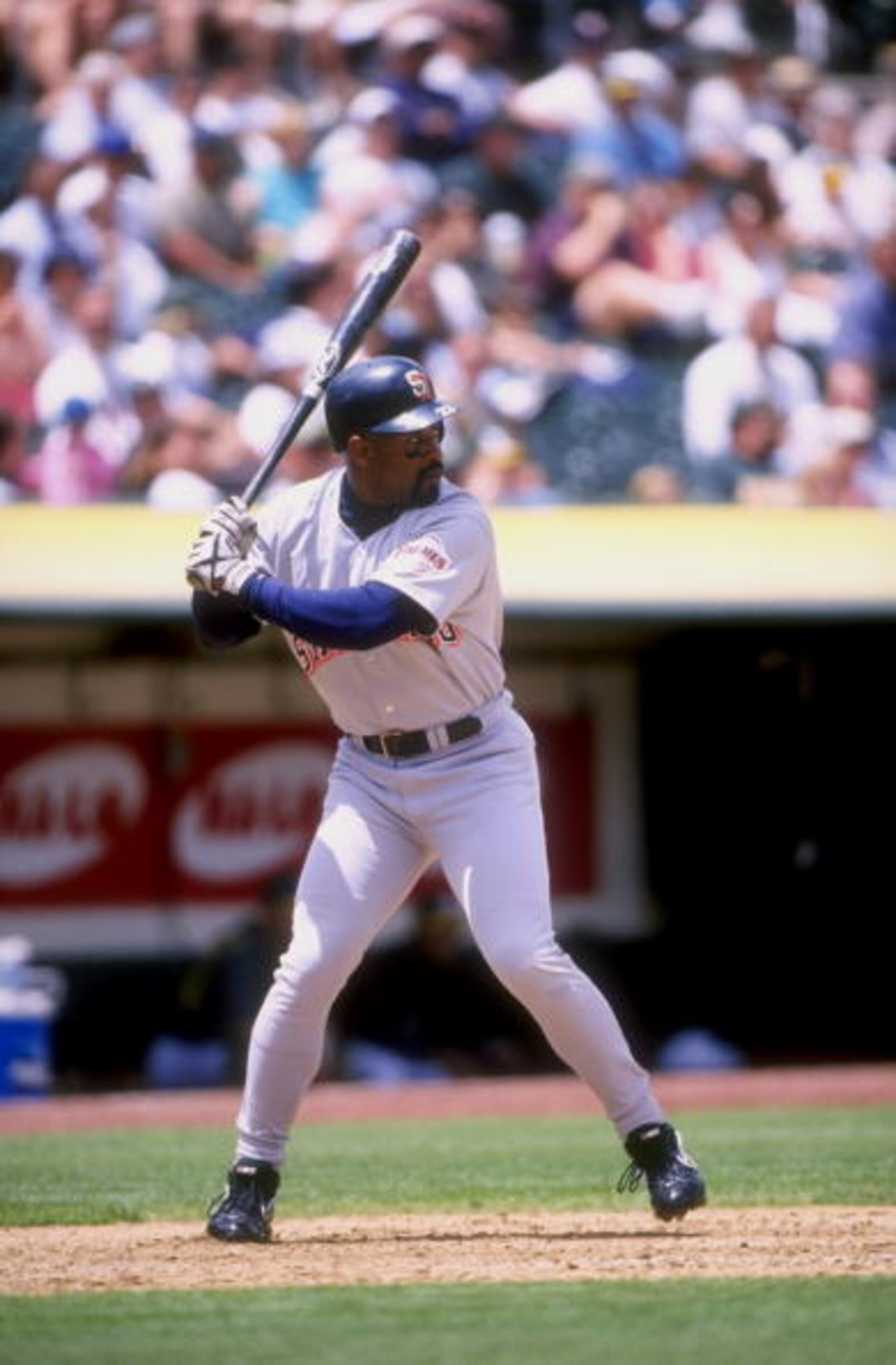
Home Runs: 50
Other Stats
BA: .272
OBP: .363
SLG: .597
RBI: 117
Generally it is hard to over look at 50 home run season, but with Sammy Sosa and Mark McGwire making their run at and eventually breaking Roger Maris' home run record in 1998, Vaughn's season goes largely over looked, as he did not have near the seasons that those two did.
Still, Vaughn gets some credit for bouncing back from a .216 BA, 18 HR, 65 RBI season the year before, and it was not the Cardinals or Cubs that represented the National League in the World Series in 1998, but Vaughn's Padres, although they were swept by the Yankees.
No. 40: Jose Bautista, 2010
3 of 42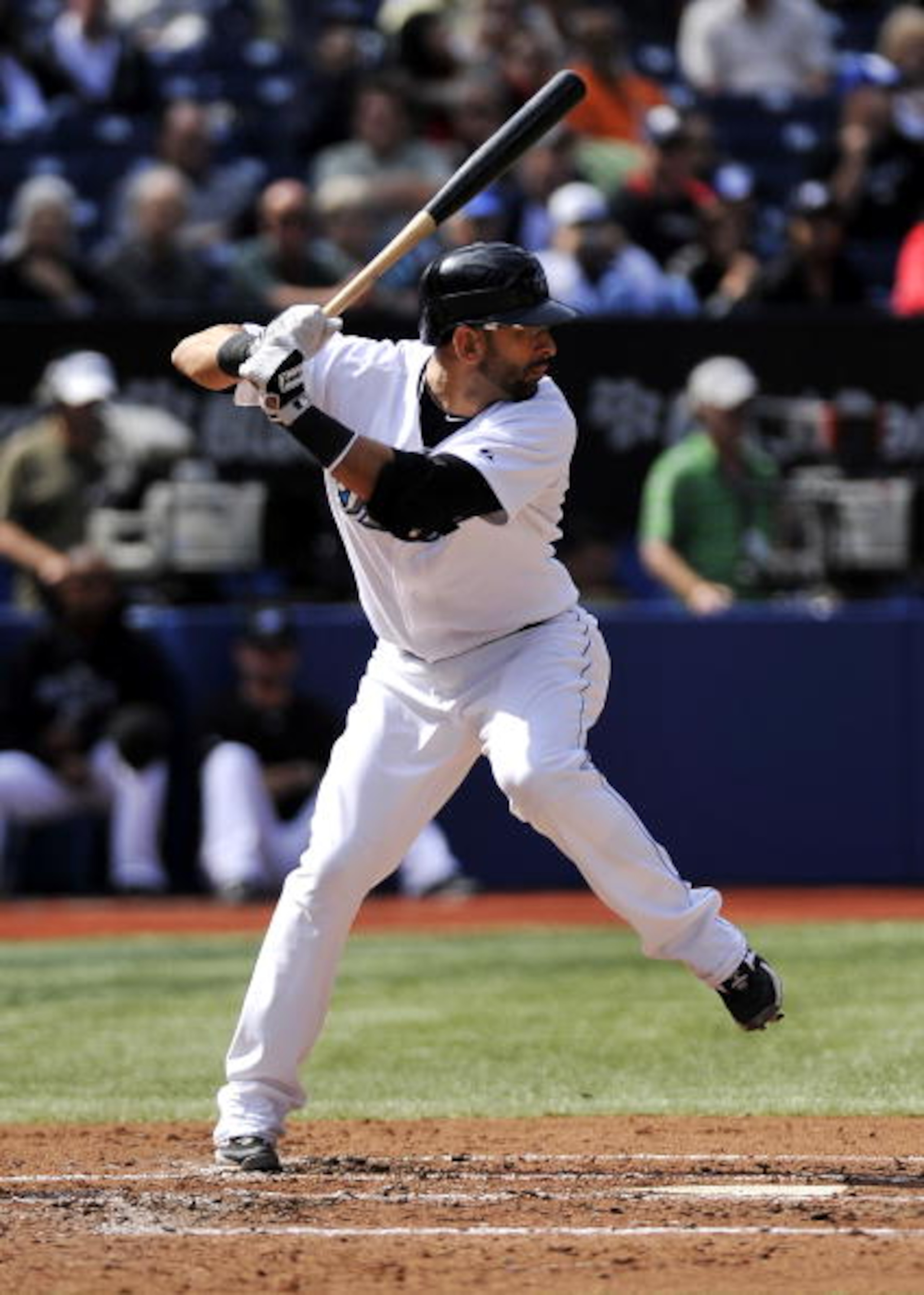
Home Runs: 54
Other Stats
BA: .260
OBP: .378
SLG: .617
RBI: 124
Bautista came into the 2010 season with just 59 career home runs over six big league seasons, with a previous career high of just 16 longballs, as he was primarily used as a utility player during his time in Pittsburgh.
However, finally given a chance to play everyday in Toronto, he responded with a franchise record 54 bombs, while also drawing 100 walks, which off set his relatively low batting average with a solid .378 OBP. He could very well be the next Brady Anderson, but he is off to a hot start already in 2011 with two home runs in his first three games.

No. 39: Prince Fielder, 2007
4 of 42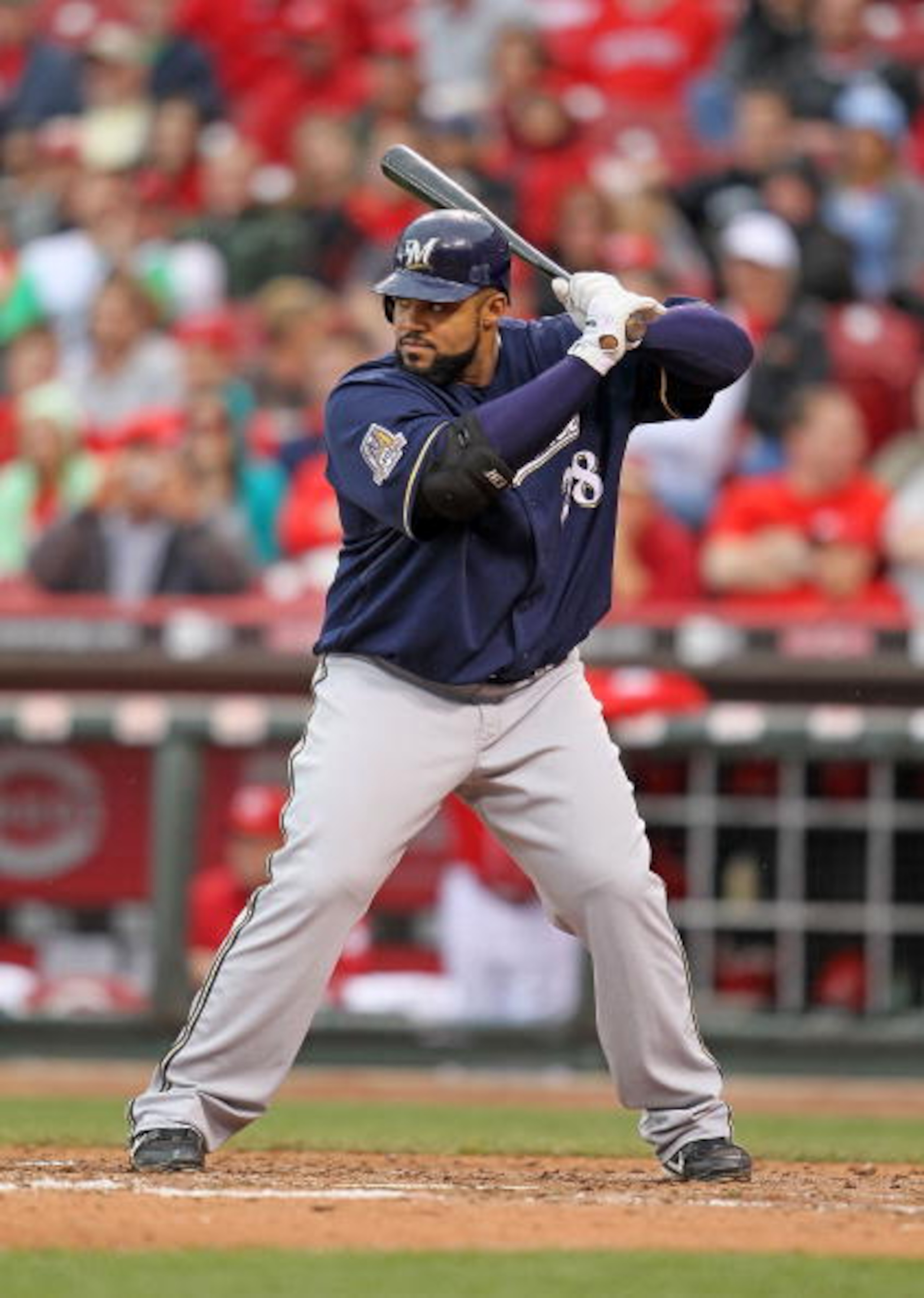
Home Runs: 50
Other Stats
BA: .288
OBP: .395
SLG: .618
RBI: 119
Fielder joined his father as the first father-son combination to reach the 50-home run club, and he did it at just 23 years old in what was just his second full big league season.
The thing with Fielder is that the season he put together two years later is by far the best of his career, when he put together a line of .299 BA, 46 HR, 141 RBI and had he hit four more long balls that season would have finished much higher on this list.
No. 38: Brady Anderson, 1996
5 of 42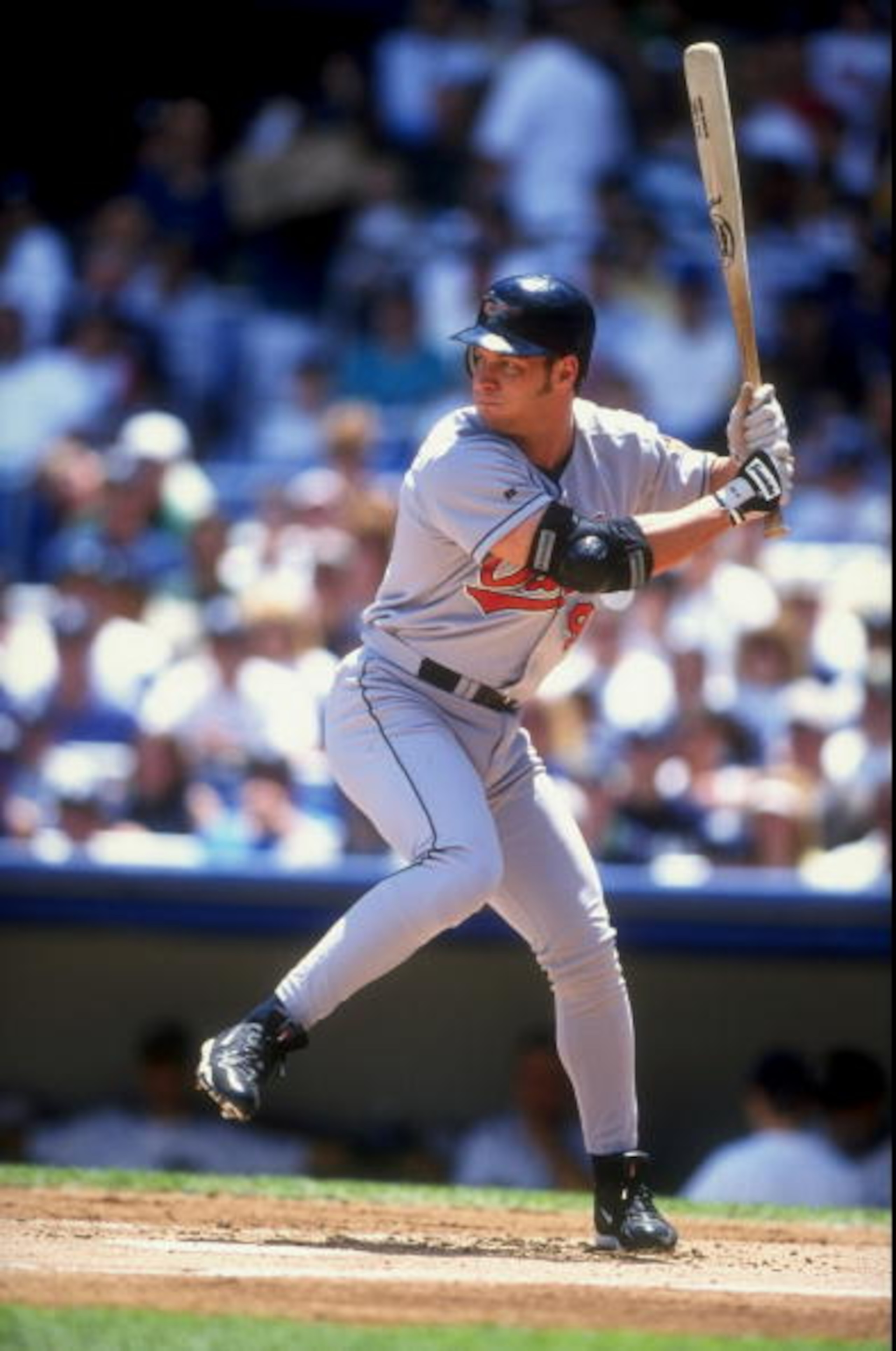
Home Runs: 50
Other Stats
BA: .297
OBP: .396
SLG: .444
RBI: 110
Anderson was a three-time All-Star, who finished his career with a respective line of .256 BA, 210 HR, 761 RBI, 315 SB, and he is arguably the best leadoff hitter in Orioles history. That said, he had no business hitting 50 home runs in a season.
Anderson was one of the better speed-power threats in the game, with a pair of 20-20 season to his credit, and he was a consistent threat of at least double digits in both. However, with a career high of 21 longballs entering 1996, he was more of leadoff hitter who happened to have power than a power hitter. He would follow up his big season with 18 home runs, and never again top 24. Was it steroids, his terrific conditioning, or just a fluke? Regardless it happened and he has a spot in the 50 HR Club.
No. 37: Ken Griffey Jr, 1998
6 of 42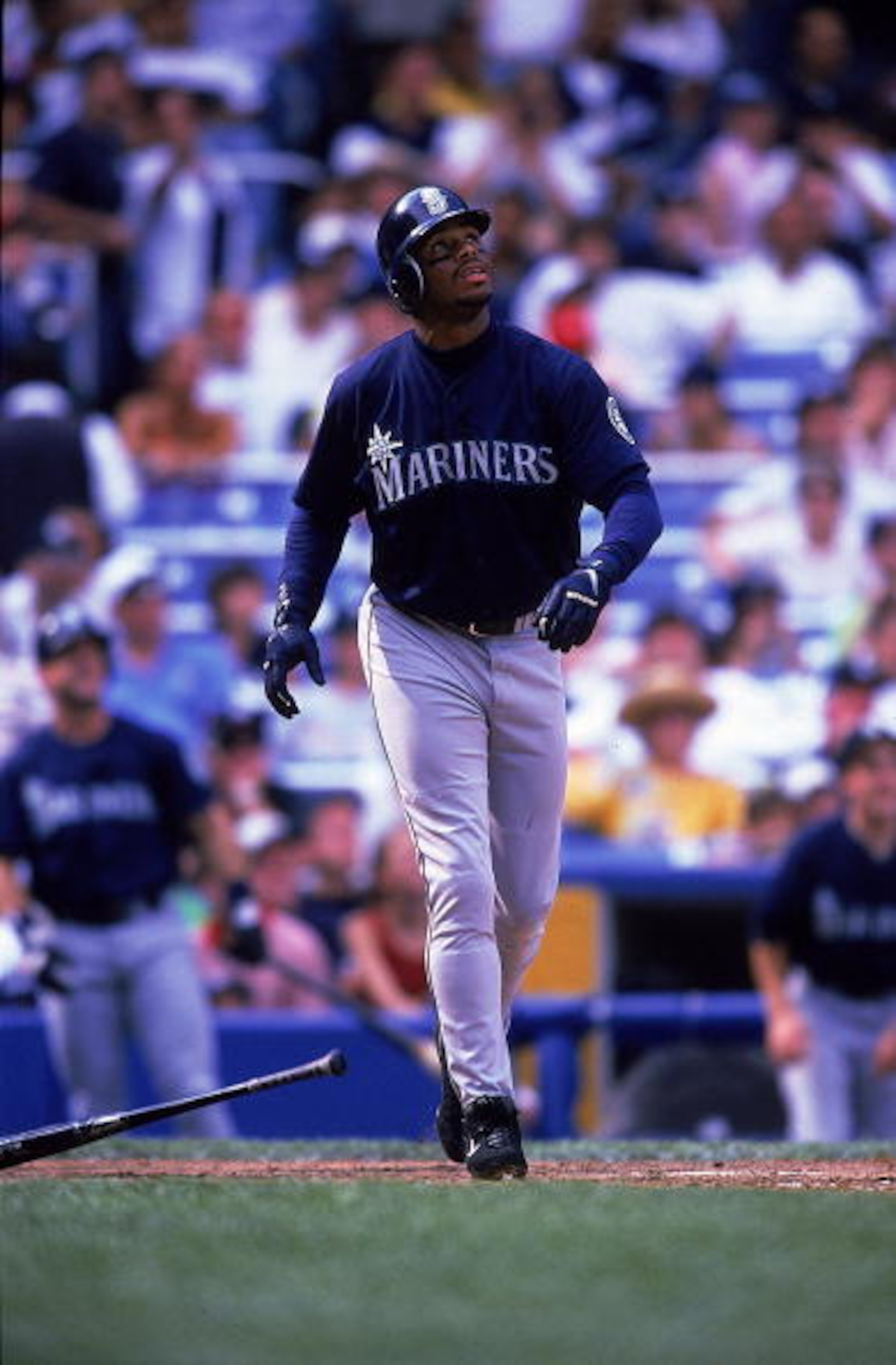
Home Runs: 56
Other Stats
BA: .284
OBP: .365
SLG: .611
RBI: 146
Unlike Greg Vaughn, Griffey was very much a part of the hype that surrounded the 1998 home run chase, as he had an impressive 35 home runs at the All-Star break, and although he fell short of breaking Roger Maris' record, he proved that he was still the top slugger in the American League, and he made it a three horse race for the record for most of the season.
That said, the rest of his numbers that season are actually rather pedestrian for Griffey, and he struck out a career-high 121 times during the '98 season as he may have been pressing a bit to be a part of the chase.
No. 36: Mark McGwire, 1997
7 of 42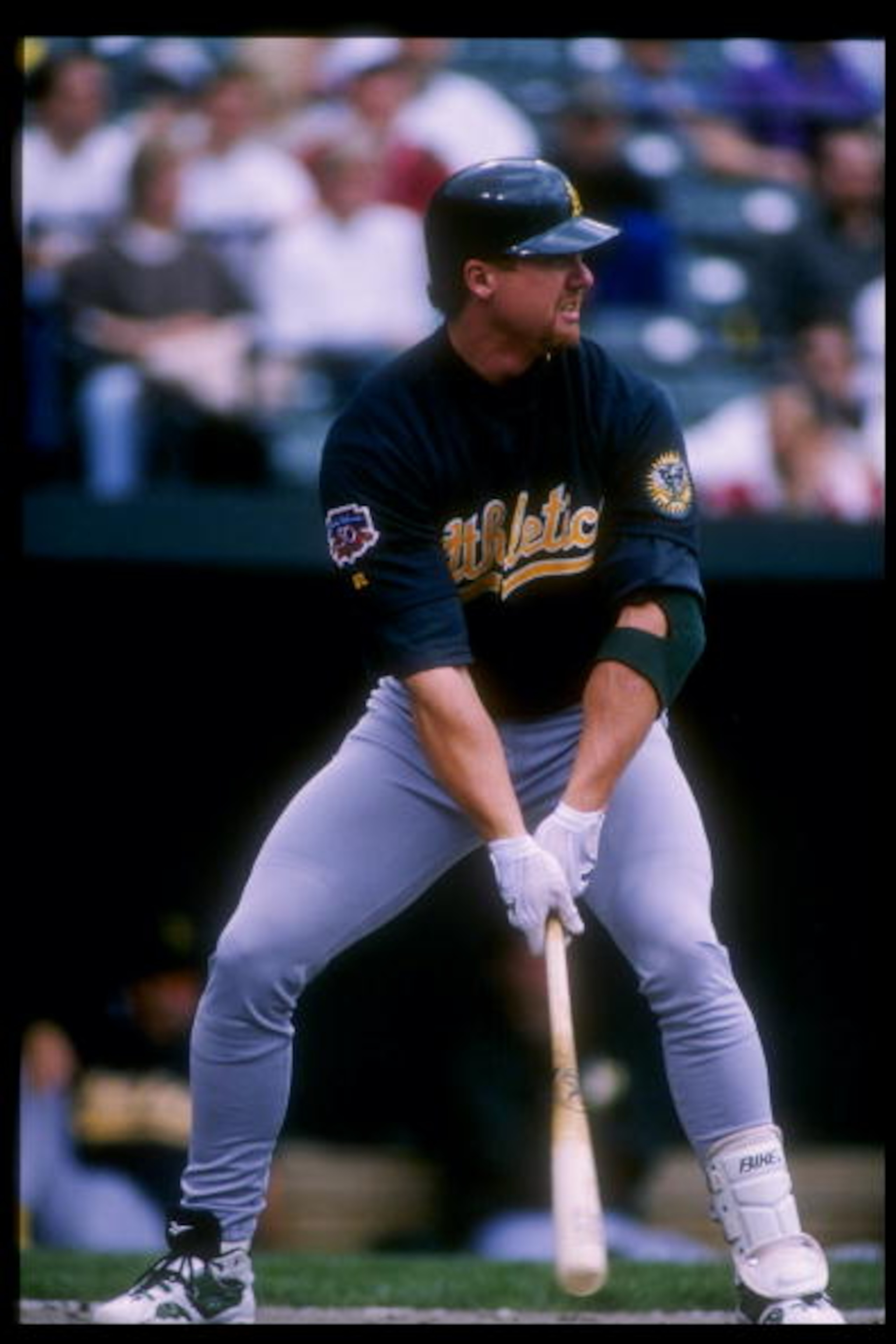
Home Runs: 58
Other Stats
BA: .274
OBP: .393
SLG: .646
RBI: 123
The first of what will be four times that McGwire appears on this list, and it comes in ahead of his 1996 season when he hit six fewer home runs. However, the OBP and SLG were well below his average numbers during his prime, and he struck out a career high 159 times that season.
Much of these "struggles" can be attributed to the fact that he was traded to the Cardinals at mid-season, as he becomes the only member of the 50 HR Club to achieve the feat while splitting the season between two teams. His move to the NL was not the smoothest, as he hit just .253 in 51 games after the deal.
No. 35: Cecil Fielder, 1990
8 of 42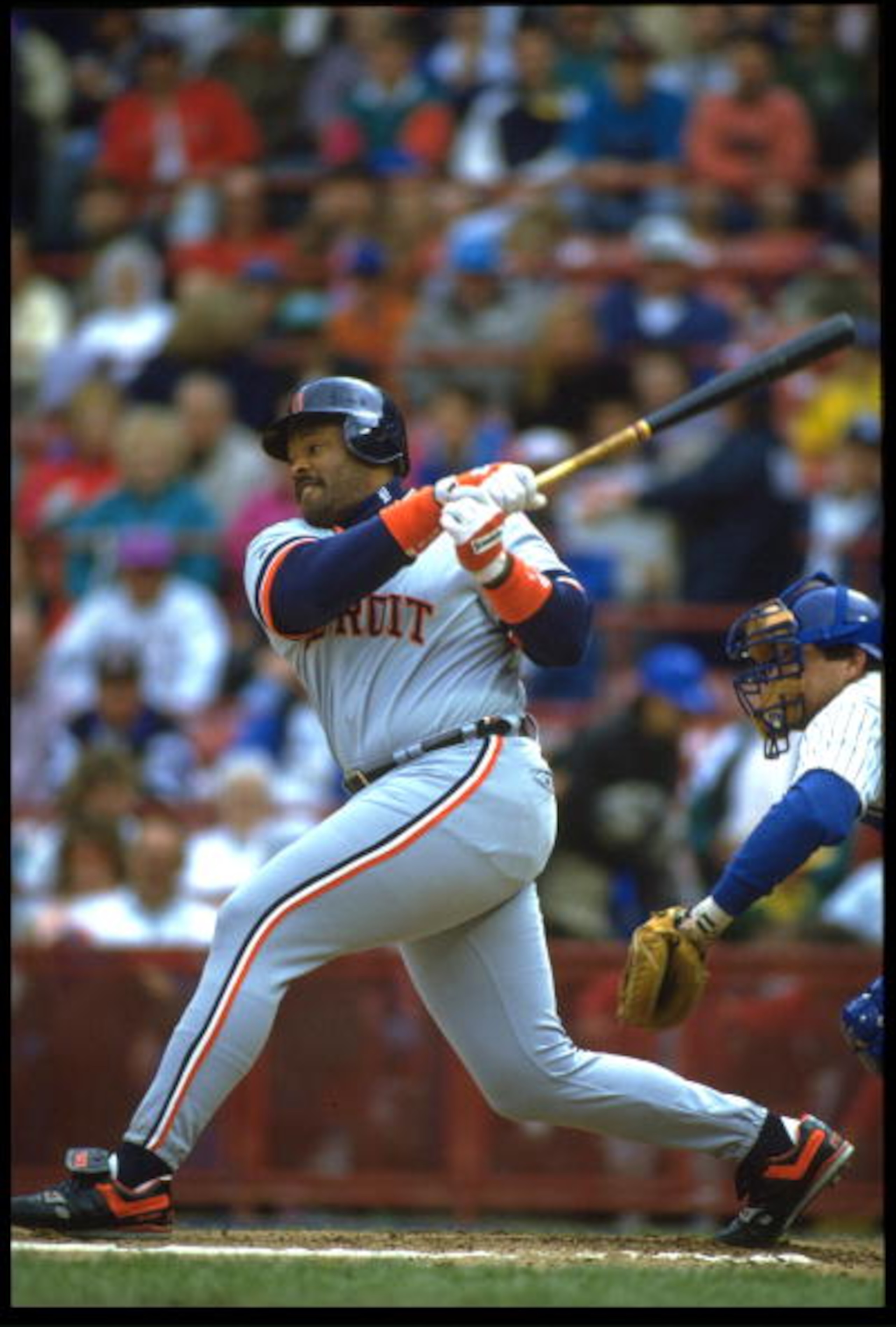
Home Runs: 51
Other Stats
BA: .277
OBP: .377
SLG: .592 (led league)
RBI: 132 (led league)
After spending the 1989 season playing for the Hanshin Tigers of the Japan Central League, signed with the Tigers prior to the 1990 season and he promptly did something that hadn't been done in 13 years, as he became the first player since George Foster in 1977 to hit 50 home runs in a season.
In a way, Fielder ushered in the home run trend that would define the 1990s and much of the 2000s, and even though he led the league with 182 strikeouts in 1990, his all-or-nothing approach made him a star and showed all of baseball that the fans love the longball.
No. 34: David Ortiz, 2006
9 of 42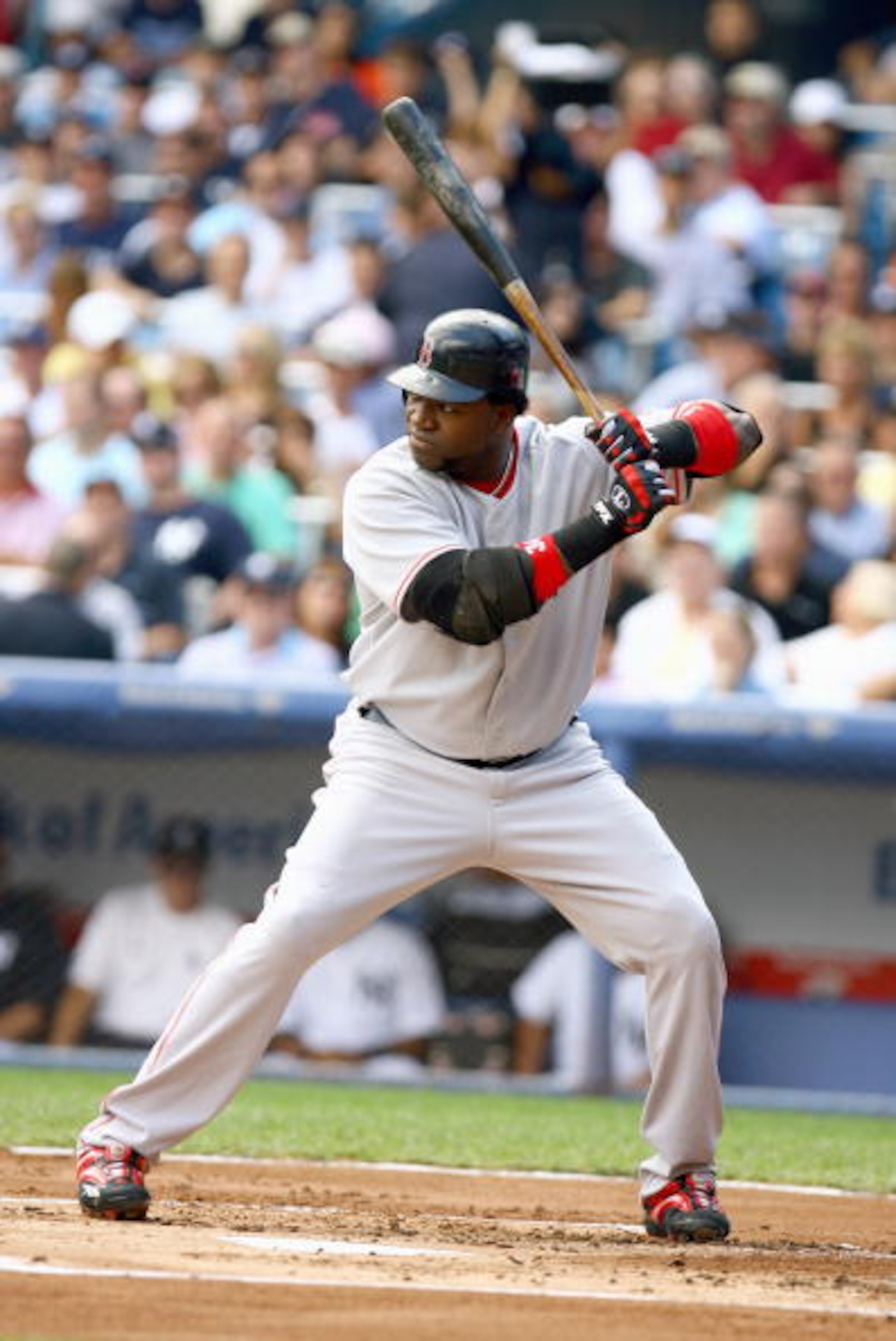
Home Runs: 54
Other Stats
BA: .287
OBP: .413
SLG: .636
RBI: 137 (led league)
Much like with Prince Fielder earlier, Ortiz had a great season in 2006 but it was not even close to being the best season of his career.
During his peak years from 2004-2007, Ortiz averaged a line of .304 BA, 44 RBI, 135 RBI, so while his power numbers were great, he had a better average in all three other seasons, and more RBI in all but one other season. Still with 54 home runs and a league best 137 RBI in 2006, it was a great season.
No. 33: Sammy Sosa, 1999
10 of 42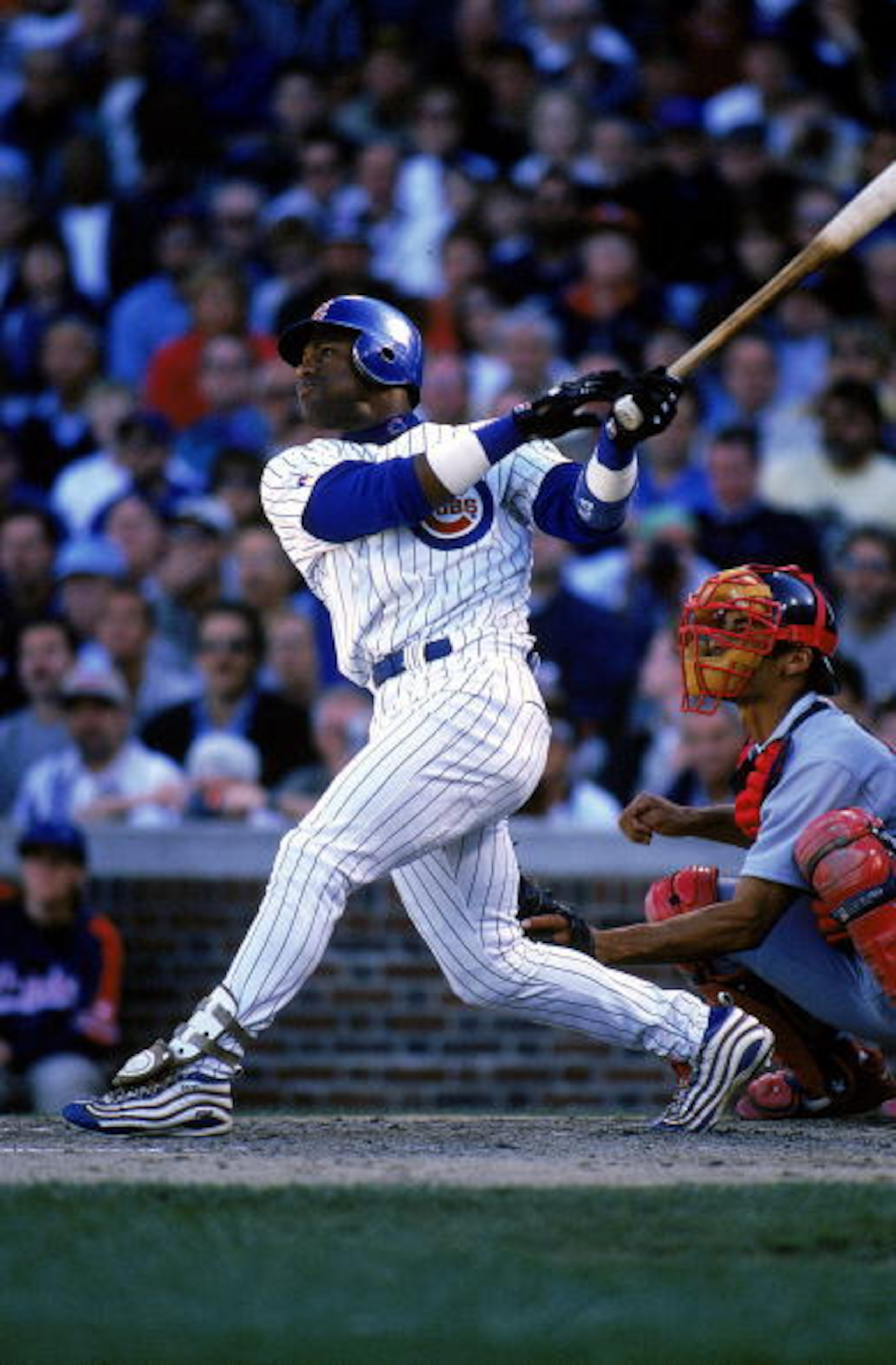
Home Runs: 63
Other Stats
BA: .288
OBP: .367
SLG: .635
RBI: 141
Sosa followed up his MVP season in 1998 with another thrilling season in which he once again finished second to Mark McGwire who hit 65 that season.
Aside from the home runs, however, the rest of Sosa's numbers were well off of what they were in his other three seasons in which he topped the 50 HR plateau, as he struck out a ton to the tune of a league high 171 times, and his average was under .300 for the only time during his four season with at least 50 home runs. Still a monster season, but undoubtedly his "worst" of the four.
No. 32: Alex Rodriguez, 2001
11 of 42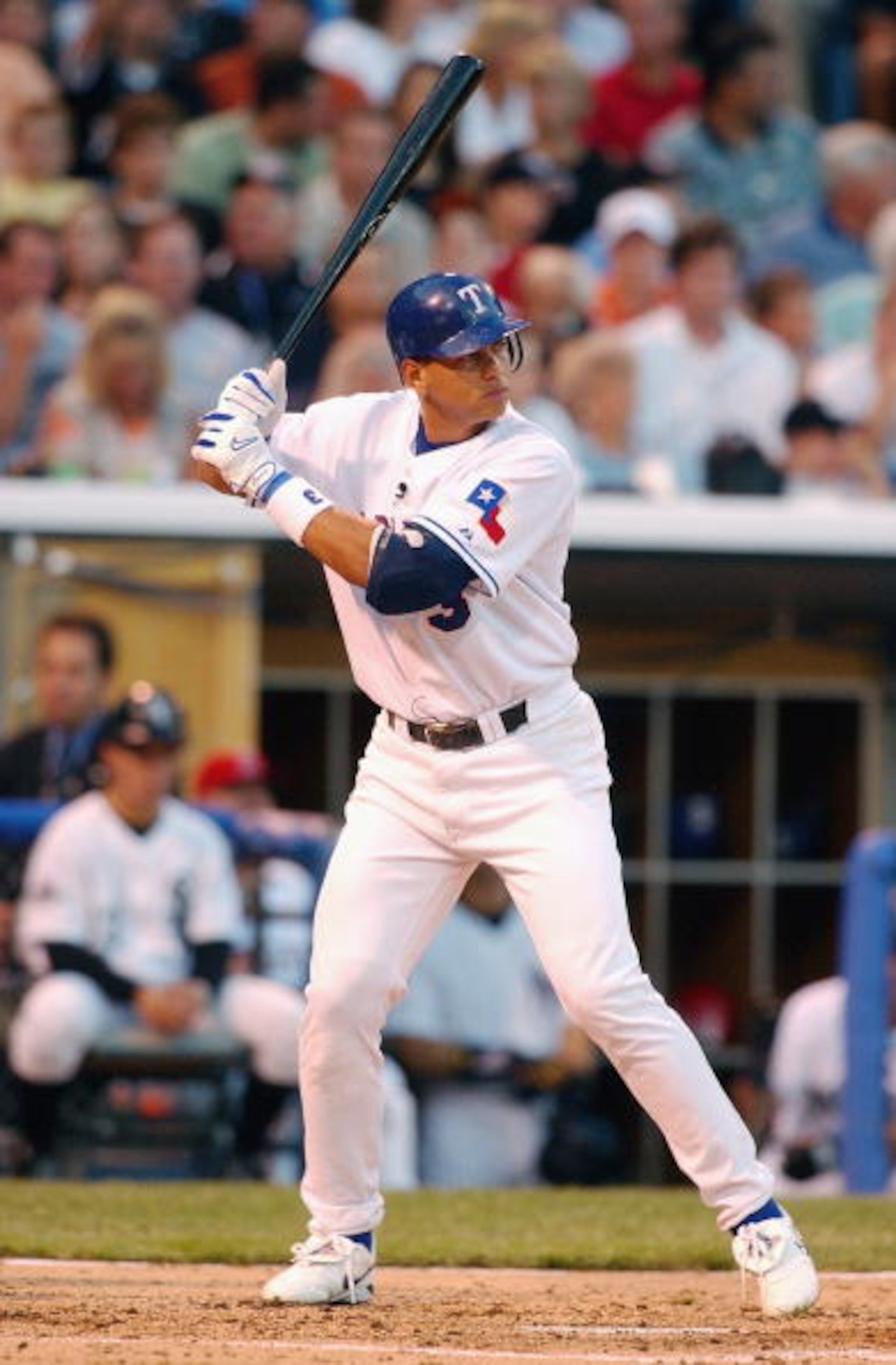
Home Runs: 52
Other Stats
BA: .318
OBP: .399
SLG: .622
RBI: 135
Aside from a few more home runs and RBI, Rodriguez had nearly identical seasons in 2001 and 2002 in terms of his other numbers, and much to the dismay of the Rangers the team also had nearly identical seasons during that two-year span.
The 2001 season was Rodriguez's first as a member of the Rangers after signing his record breaking deal, and while he personally performed, the team struggled to a 73-89 record.
No. 31: Alex Rodriguez, 2002
12 of 42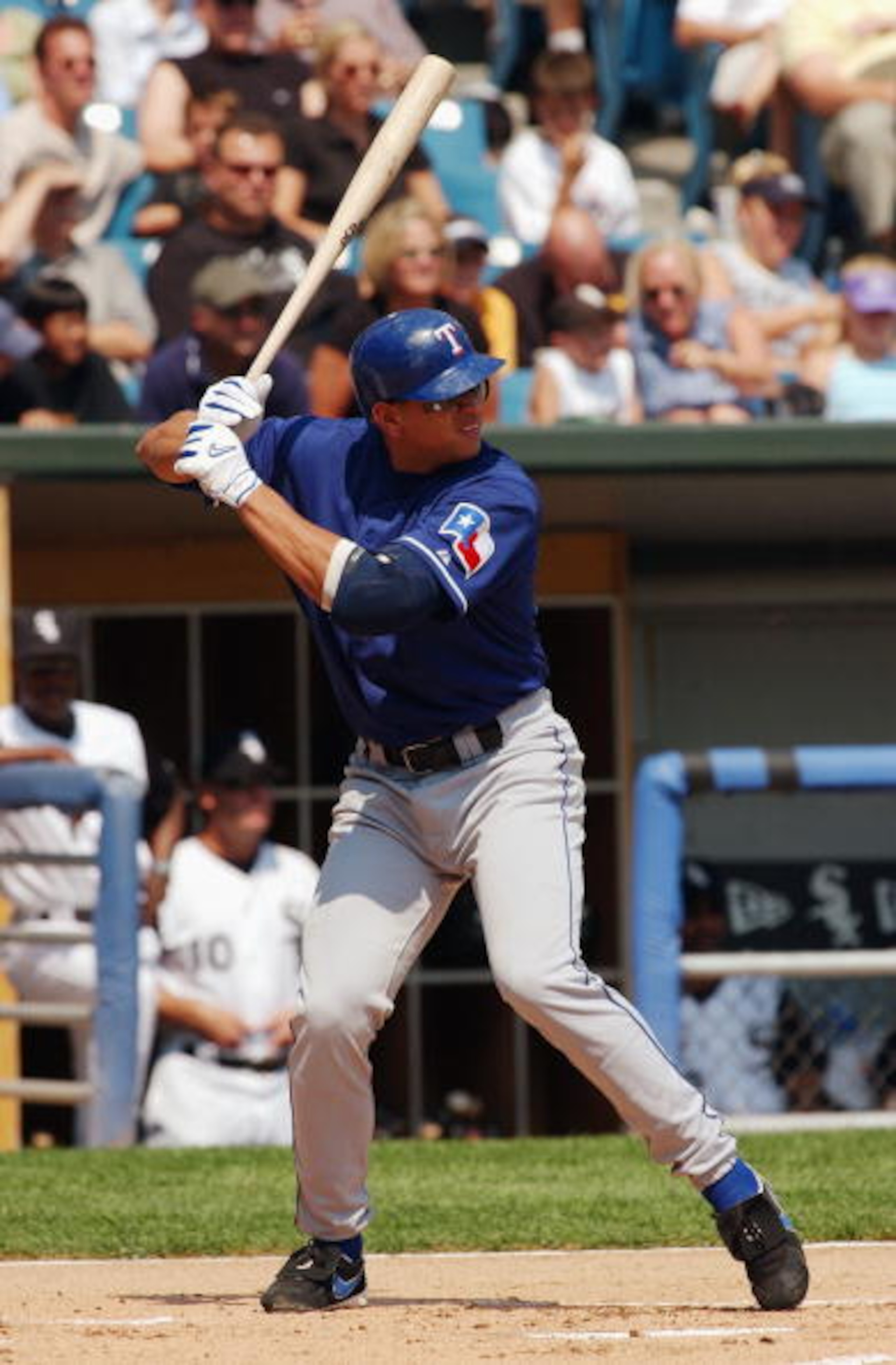
Home Runs: 57
Other Stats
BA: .300
OBP: .392
SLG: .623
RBI: 142 (led league)
As was stated in the previous slide, Rodriguez thrived in his first two seasons with the Rangers but the team did not share the same fate, as they went 72-90 and took home a second consecutive last place finish.
Rodriguez did pair up with Rafael Palmeiro to form one of the more potent tandems in baseball history, as Palmeiro tallied 43 HR and 105 RBI of his own that season.
No. 30: Sammy Sosa, 2000
13 of 42
Home Runs: 50
Other Stats
BA: .320
OBP: .406
SLG: .634
RBI: 138
After consecutive seasons of 66 and 63 home runs, it was not until the 2000 season when Sosa hit just 50 home runs that he led the league in longballs for the first time.
While the HR and RBI numbers were the least impressive of Sosa's four-year stretch on this list, he raised his average a whopping 32 points from 1999-2000, while raising his OBP 39 points, as he became a better all-around hitter in 2000.
No. 29: Jim Thome, 2002
14 of 42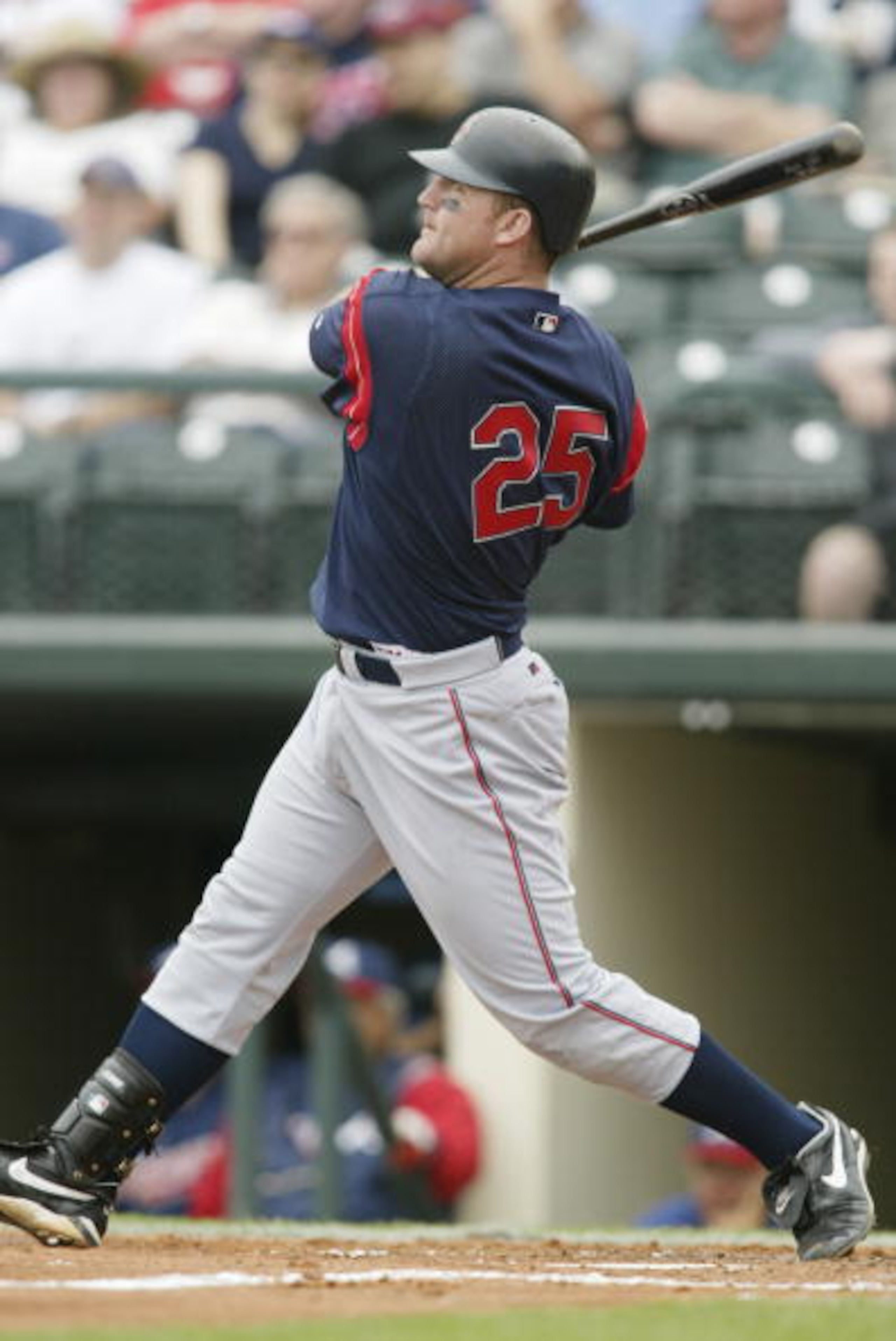
Home Runs: 52
Other Stats
BA: .304
OBP: .445
SLG: .677 (league best)
RBI: 118
In his final season in Cleveland, as he would sign with the Phillies as a free agent at season's end after 12 seasons with the Indians, Thome went out with a bang.
Not only did he set a career high for home runs, but he showed a much better eye at the plate in 2002, posting a league high 122 walks while striking out 139 times. Compare that to 111 walks and a league high 185 whiffs the previous season, and it makes sense that he had a career year.
No. 28: Luis Gonzalez, 2001
15 of 42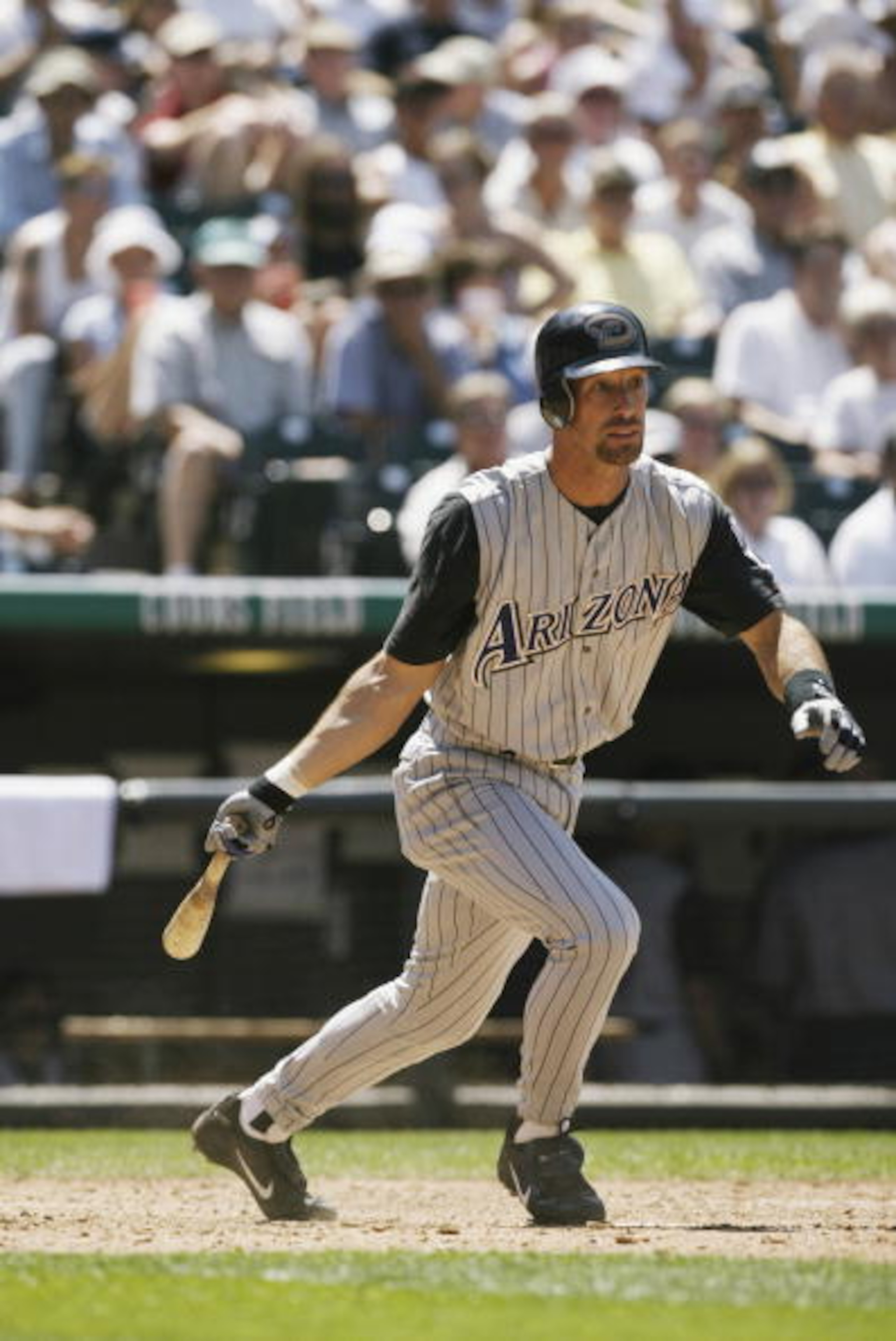
Home Runs: 57
Other Stats
BA: .325
OBP: .429
SLG: .688
RBI: 142
Gonzalez picked the wrong time to have the best season of his career, as his 57 home runs were only good for a third place finish in the National League rankings.
Nonetheless, the season was by far the best of his career, and thanks to 100 walks and a grand total of 100 extra base hits he was able to post a stellar 1.117 OPS. Also, it was his bloop single that led the Diamondbacks to their first World Series title later that year.
No. 27: Mark McGwire, 1999
16 of 42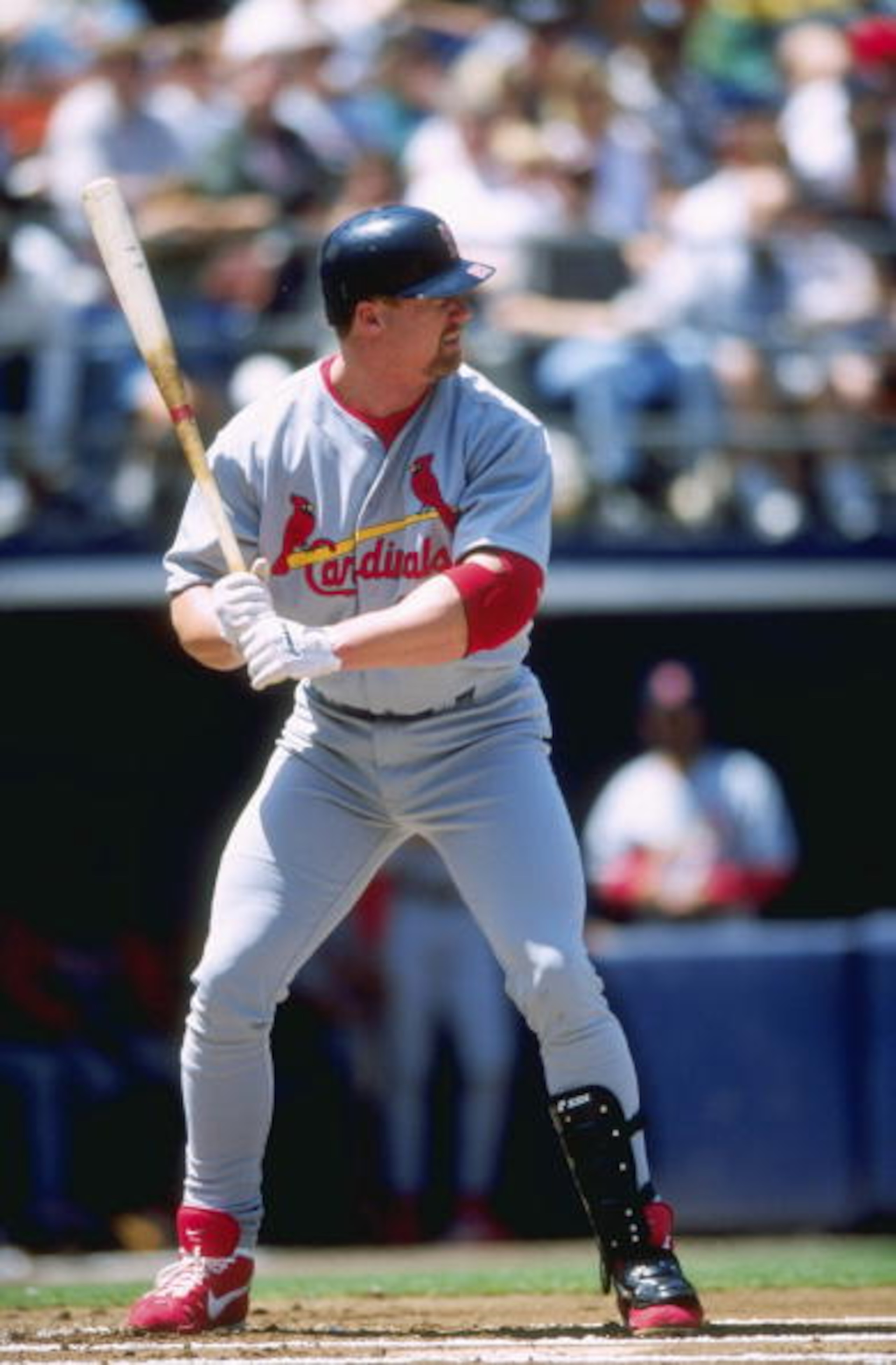
Home Runs: 65
Other Stats
BA: .278
OBP: .424
SLG: .697
RBI: 147 (led league)
McGwire followed up his record breaking 70 home run season in 1998 with another unfathomably powerful season in 1999.
His average came back down to earth a bit after he had hit .293 over the previous three seasons, a far cry from his .263 career average, but was still just as dangerous at the plate in what would turn out to be his last full season in the big leagues, as he played two more injury filled seasons after 1999 before retiring.
No. 26: Albert Belle, 1995
17 of 42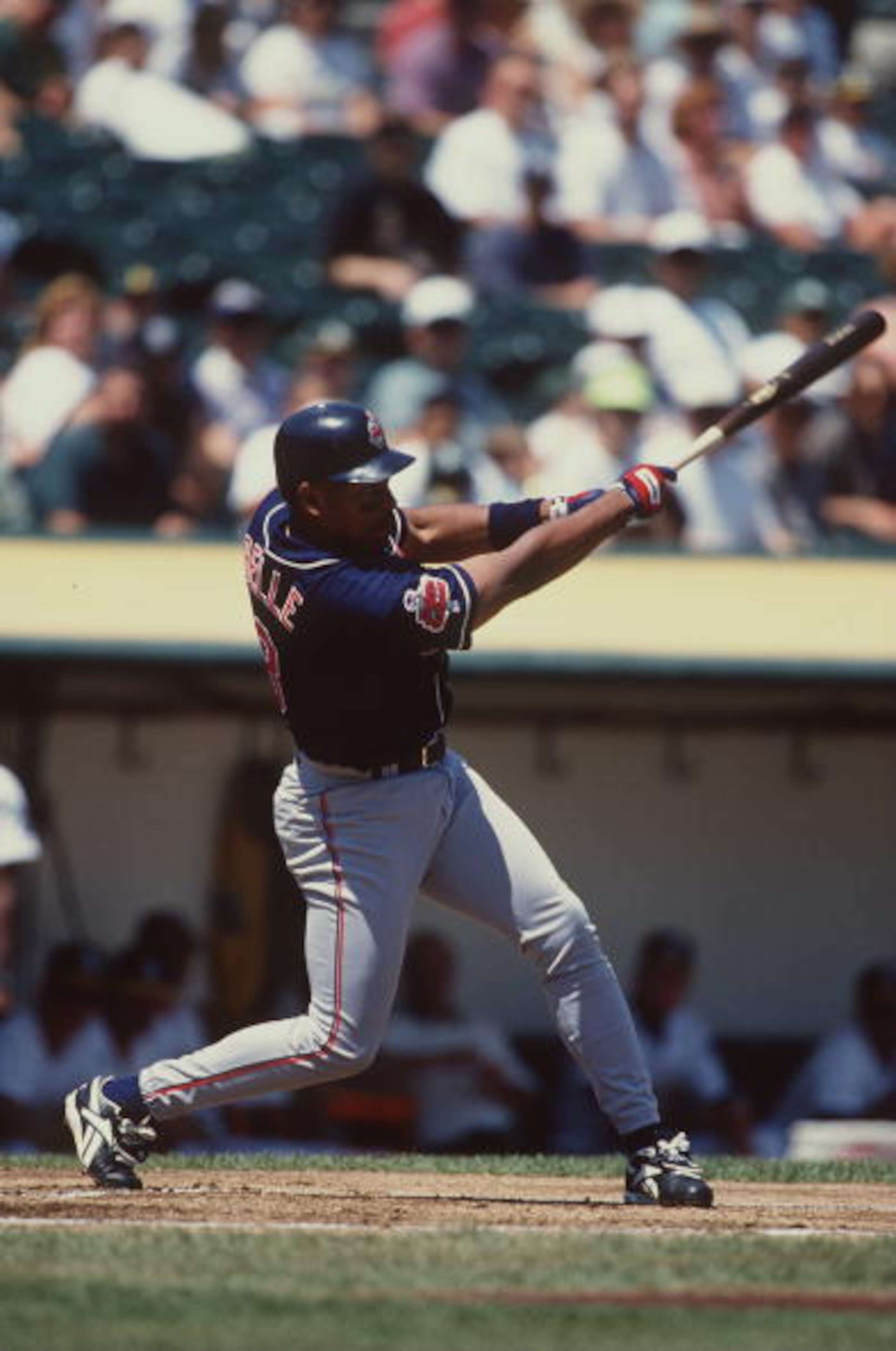
Home Runs: 50
Other Stats
BA: .317
OBP: .401
SLG: .690 (led league)
RBI: 126 (led league)
In 1995, Belle became just the second player since 1977 to reach the 50 home run plateau, but that season would mark the first in what would be eight straight seasons in which at least one player reached that mark, as the 1995 season truly marked the beginning of the home run boom.
For Belle personally, he was coming off of a season in which he hit .357 and posted better numbers across the board aside from his power numbers. He did also lead the league in doubles with 52 and runs with 121 in '95, but it probably was not the best season of his career.
No. 25: Ken Griffey Jr, 1997
18 of 42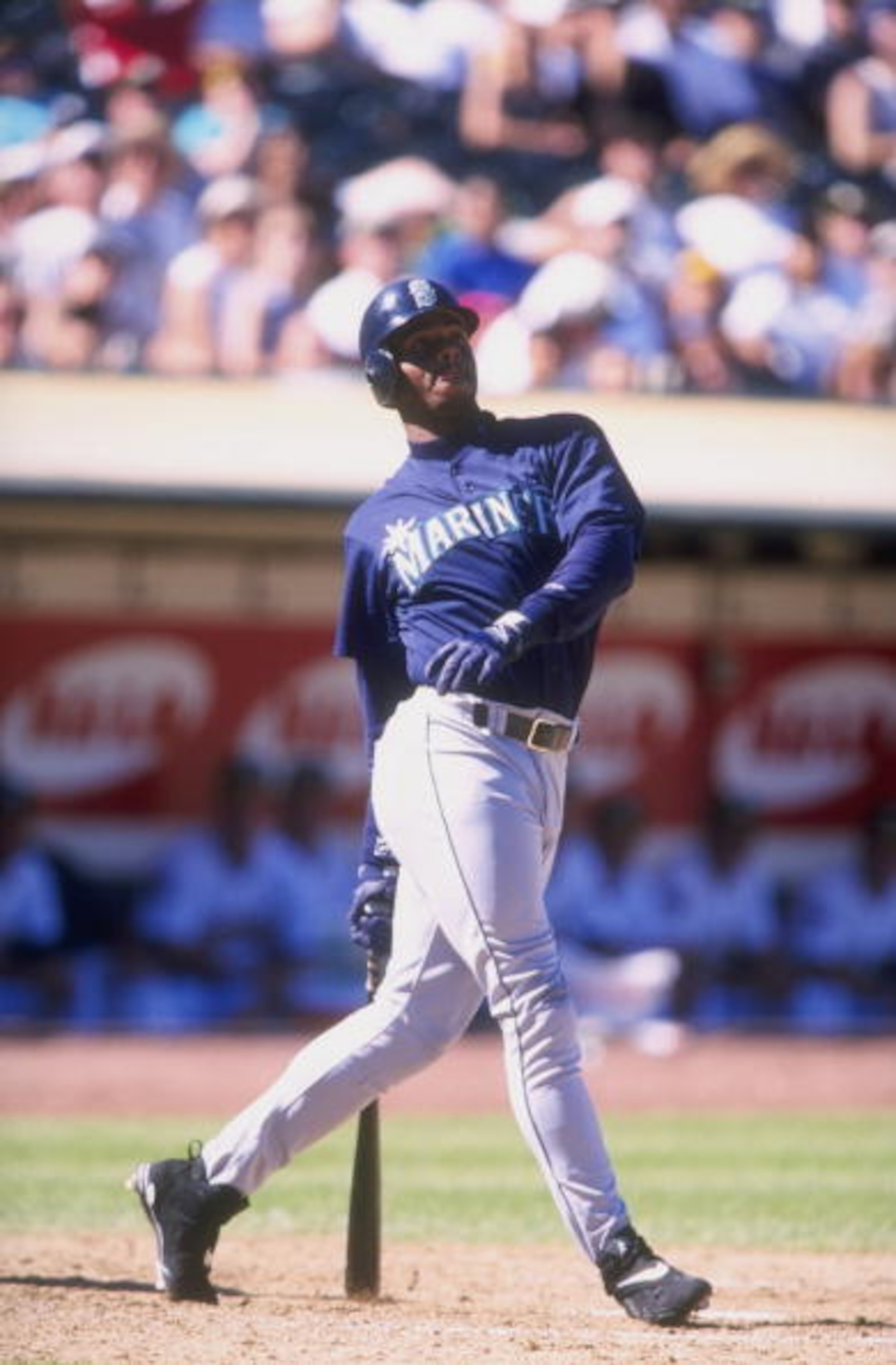
Home Runs: 56
Other Stats
BA: .304
OBP: .382
SLG: .646 (led league)
RBI: 147 (led league)
Griffey matched his home run total that he posted during the 1998 season during the 1997 season, but that was the only stat that was the same for Junior.
His batting average was a full 20 points higher, and he led the American League in RBI and slugging percentage along with home runs, as he took home the first and only MVP Award of his career.
No. 24: Johnny Mize, 1947
19 of 42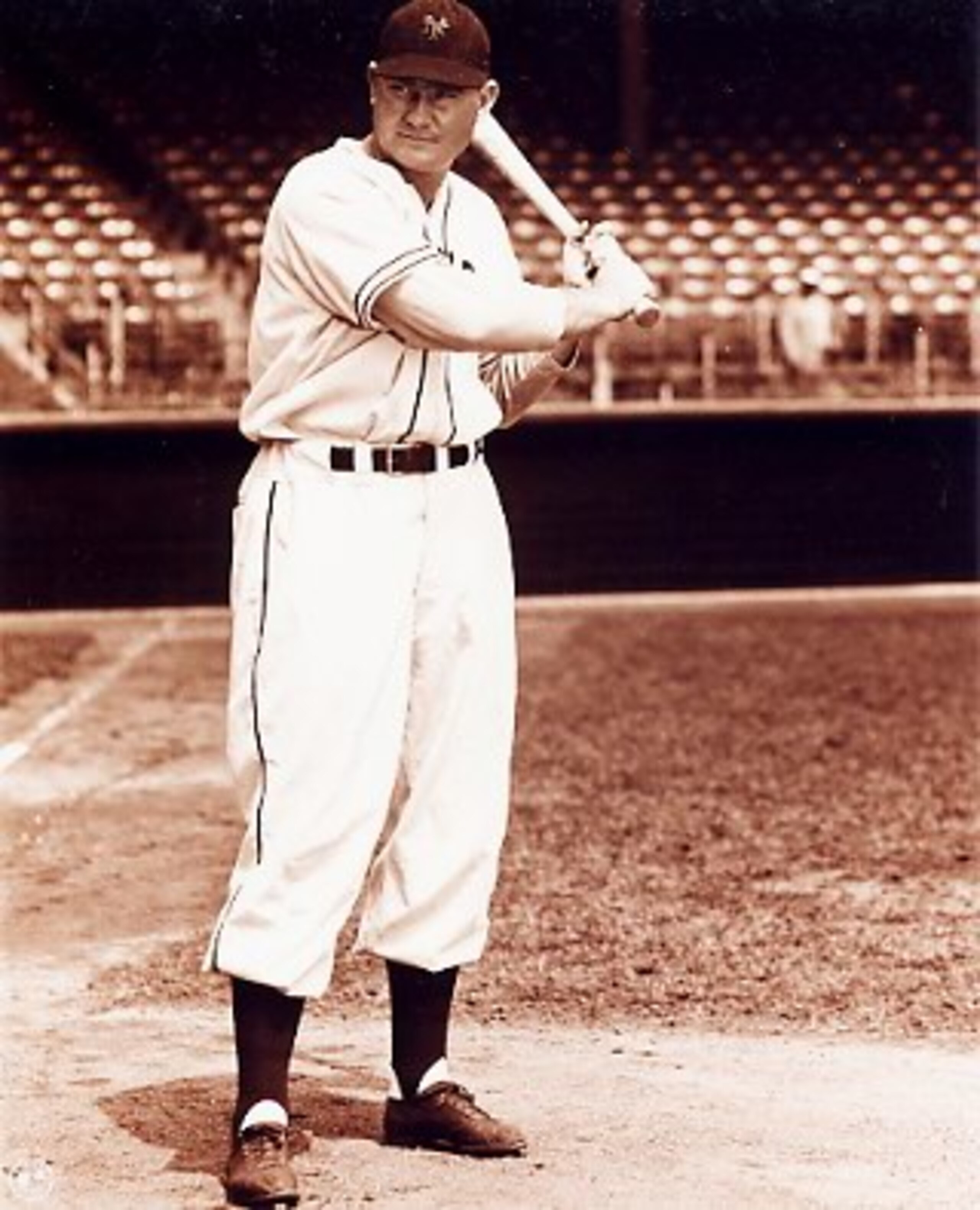
Home Runs: 51
Other Stats
BA:.302
OBP: .384
SLG: .614
RBI: 138 (led league)
The first person to appear on this list who achieved the feat prior to 1990 is Mize, and despite the fact that he was just the ninth person ever to accomplish the feat when he pulled it off as a member of the New York Giants, the home runs actually seemed to hurt Mize's overall stats a bit.
Mize posted the lowest batting average of his career to date that season, and while his home run total is great, he had at least four or five seasons during his career that most would consider better. Still, the difficulty of the era in which Mize accomplished the feat moves him up the list.
No. 23: Ryan Howard, 2006
20 of 42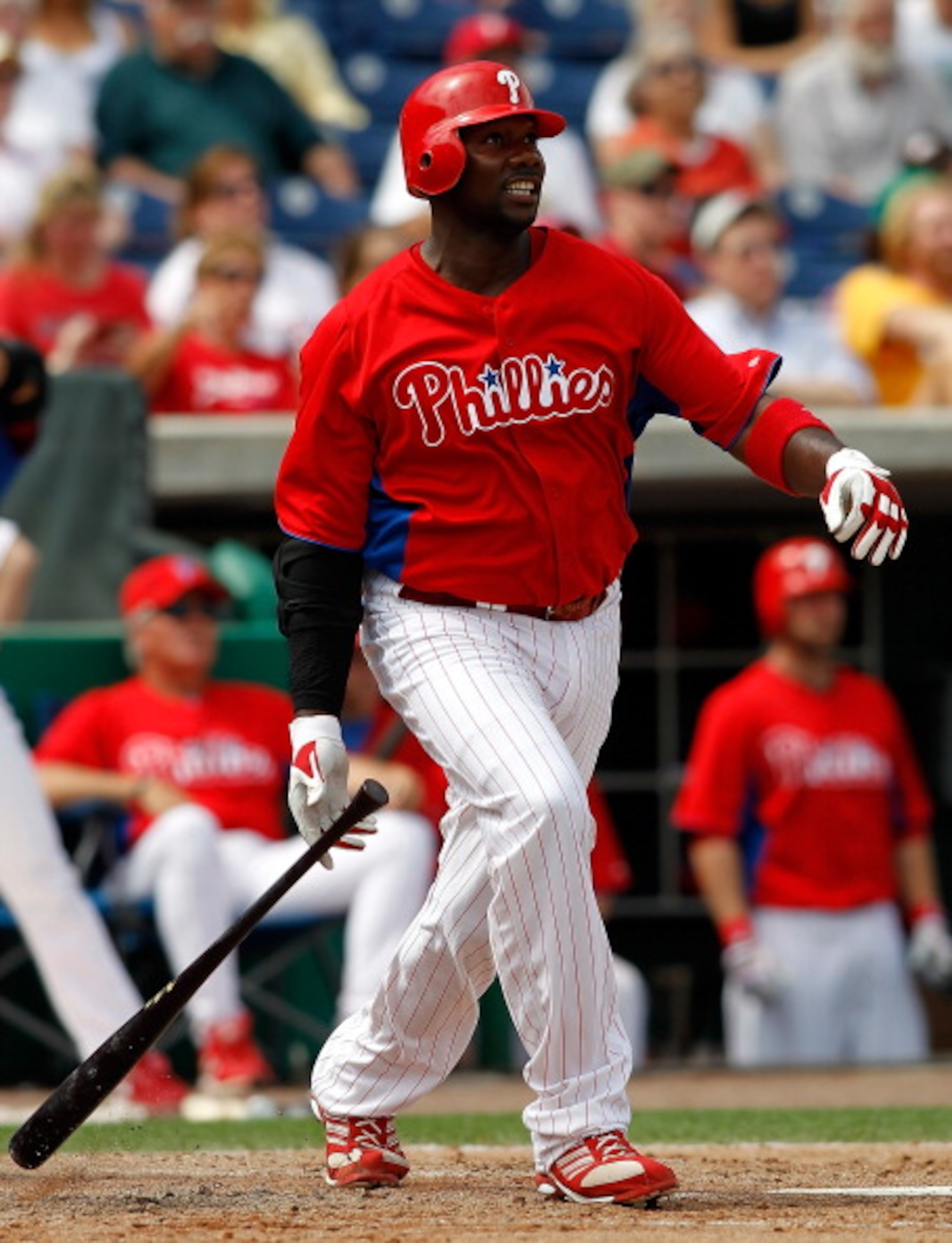
Home Runs: 58
Other Stats
BA: .313
OBP: .425
SLG: .659
RBI: 149 (led league)
After spending some time trapped behind Jim Thome in the Phillies minor league system, Howard finally took on the everyday first base job in 2006, a year after winning the NL Rookie of the Year when he hit 22 HR with 63 RBI despite playing in just 88 games.
That would be a sign of things to come, as Howard immediately became one of the game's top sluggers in his first full season, hitting the most home runs since Bonds in 2001 and the most to date since with 58. He won the NL MVP for his efforts and gave the Phillies the anchor they needed in the middle of their lineup to be perennial contenders.
No. 22: Alex Rodriguez, 2007
21 of 42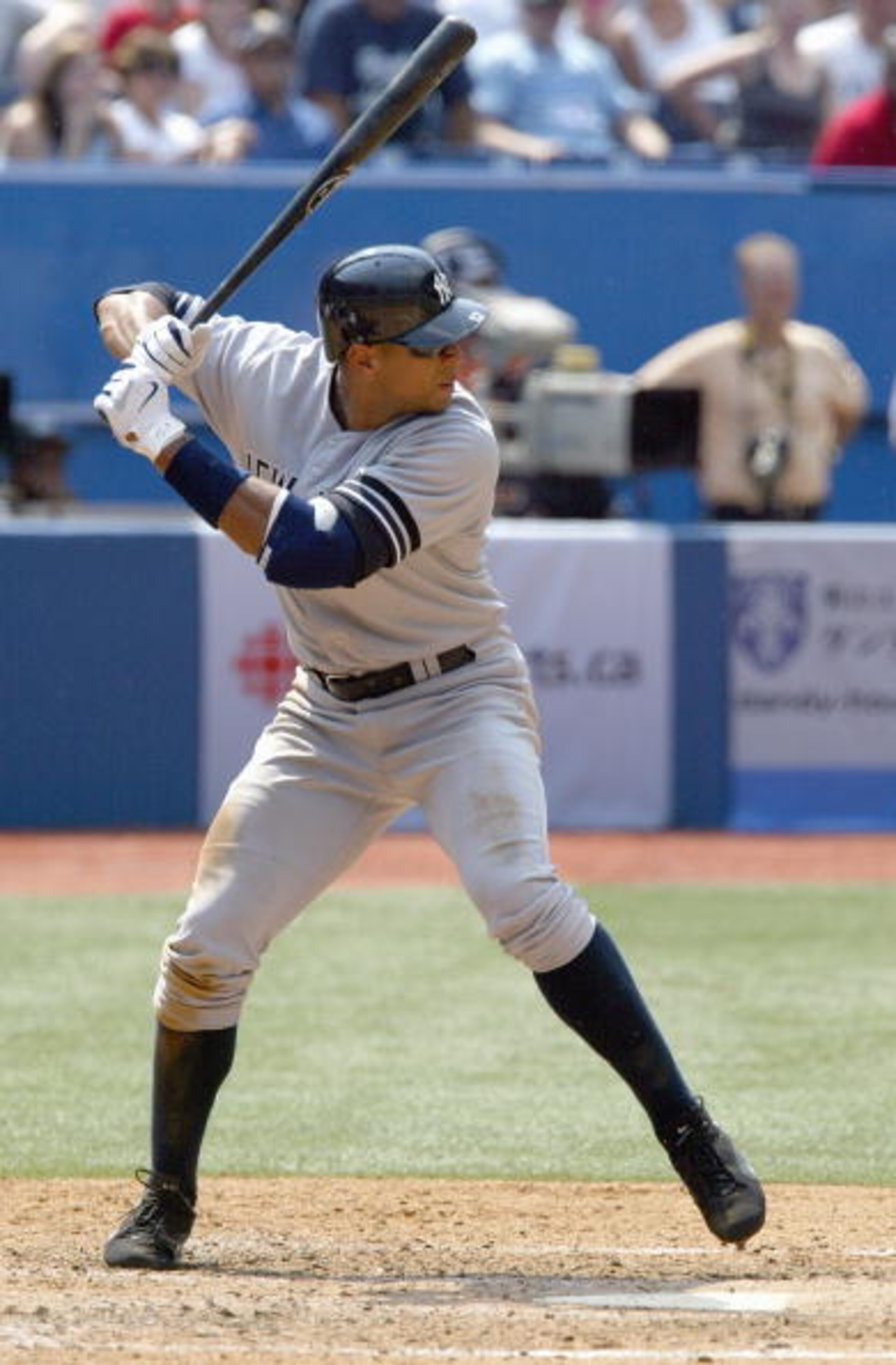
Home Runs: 54
Other Stats
BA: .314
OBP: .422
SLG: .645 (led league)
RBI: 156 (led league)
After struggling a bit in two of his first three seasons with the Yankees, hitting under .300 and finishing out of the top 10 in MVP voting, Rodriguez put it all together in 2007.
He posted career bests in OBP, SLG, runs and RBI while eclipsing the sacred 500 home run mark, as he took home his third AL MVP award in the process. This will no doubt go down as the best season in A-Rod's Yankees career.
No. 21: Mark McGwire, 1996
22 of 42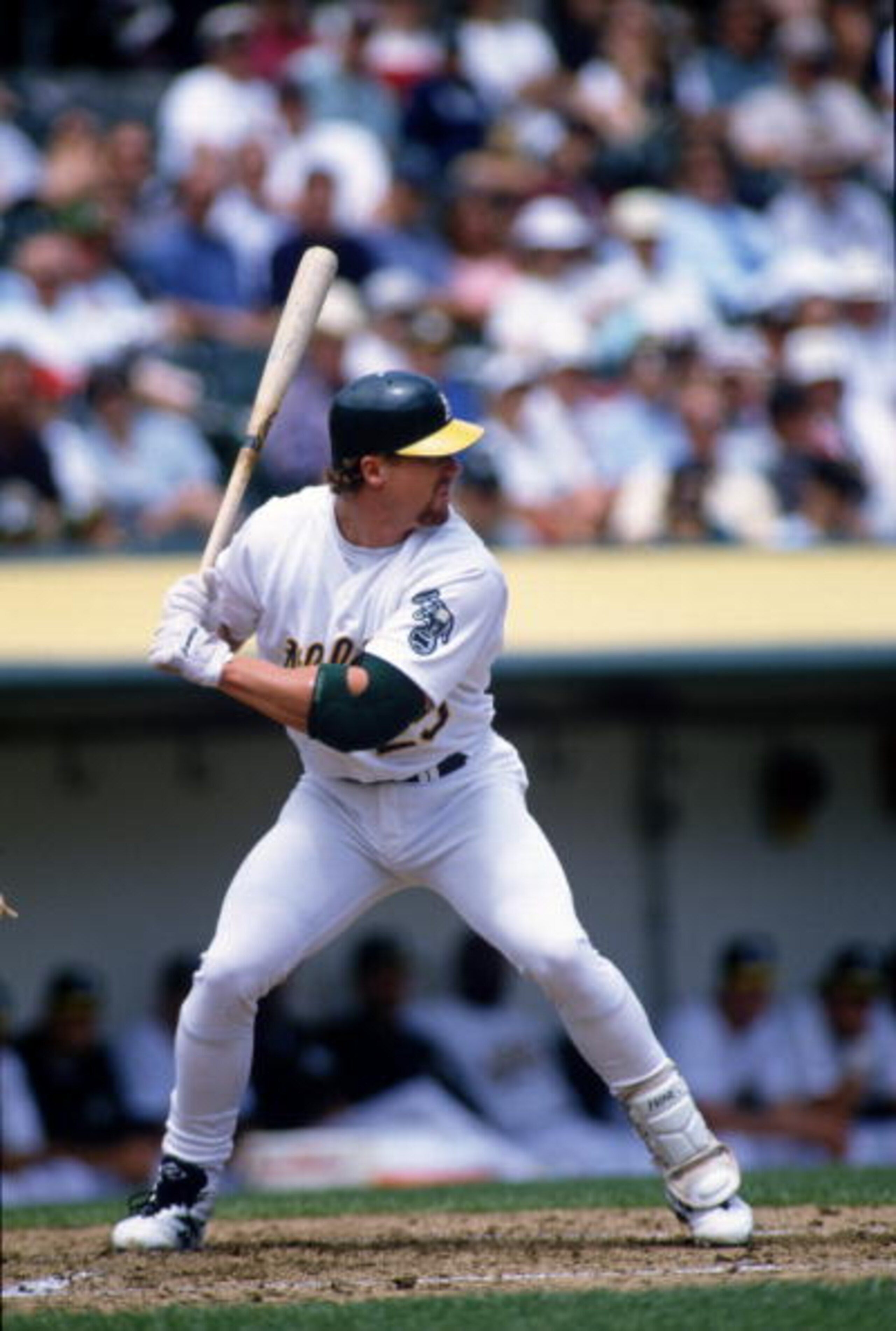
Home Runs: 52
Other Stats
BA: .312
OBP: .467
SLG: .730
RBI: 112
The 1996 season may have marked the lowest home run and RBI totals over Big Mac's four seasons on this list, but it was certainly not the worst of the four, as it was the only full season of his career in which he hit over .300.
Aside from that, he also led the league in OBP and SLG, as his baseline stats very closely resembled those of his monster 1998 season, despite the fact that he hit 18 less home runs.
No. 20: Sammy Sosa, 2001
23 of 42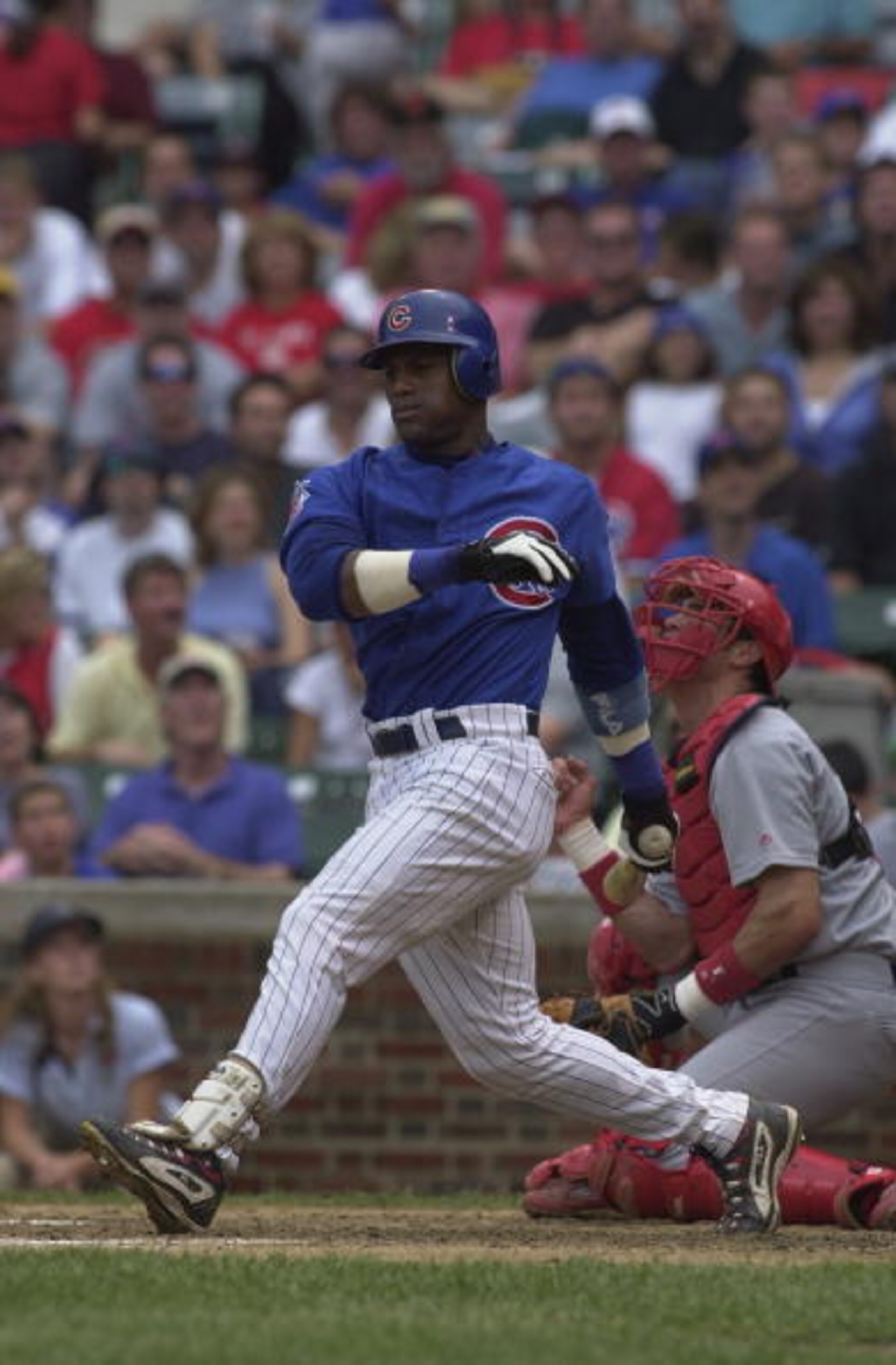
Home Runs: 64
Other Stats
BA: .328
OBP: .437
SLG: .737
RBI: 160
For all intents and purposes, the 2001 season was the best of Sosa's illustrious career, as he set career highs in BA, OBP, SLG, RBI, runs, and total bases.
However, he happened to do all of that at the same time that Barry Bonds was rattling off perhaps the single most dominant season in baseball history. Still, it was not nearly enough for the Cubs to make it to October.
No. 19: Willie Mays, 1965
24 of 42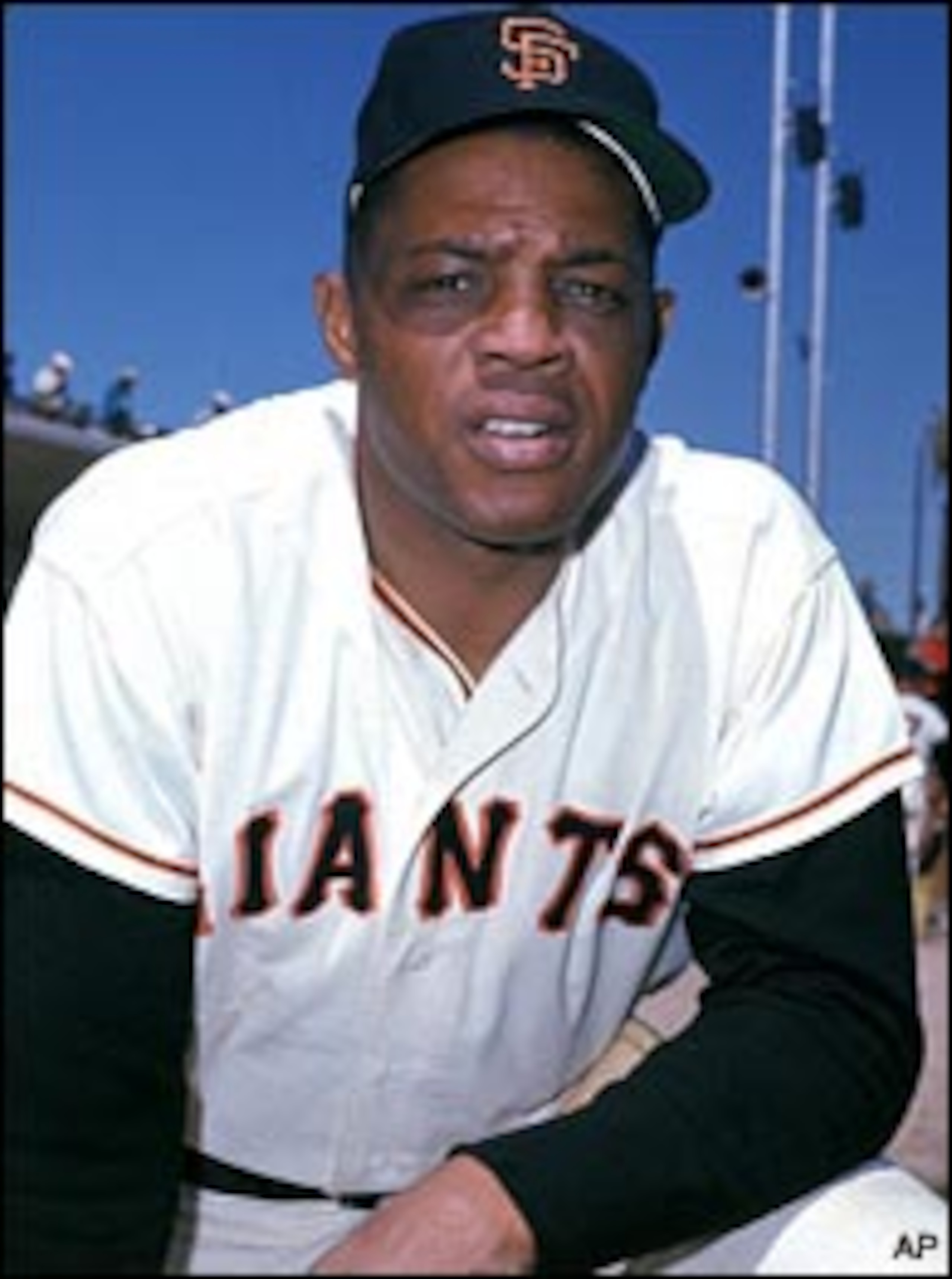
Home Runs: 52
Other Stats
BA: .317
OBP: .398 (led league)
SLG: .645 (led league)
RBI: 112
In an era dominated by great starting pitching, Mays showed why he was one of the greatest hitters of all-time, as he became one of just three players to eclipse the 50 home run mark in the 1960s, with the other two being Mantle and Maris in 1961.
Perhaps most impressive was the fact that there was a 10-year span between Mays first and final 50 home run season's, as he proved that he was not only one of the best, but he was among the best for a long time.
No. 18: Ralph Kiner, 1947
25 of 42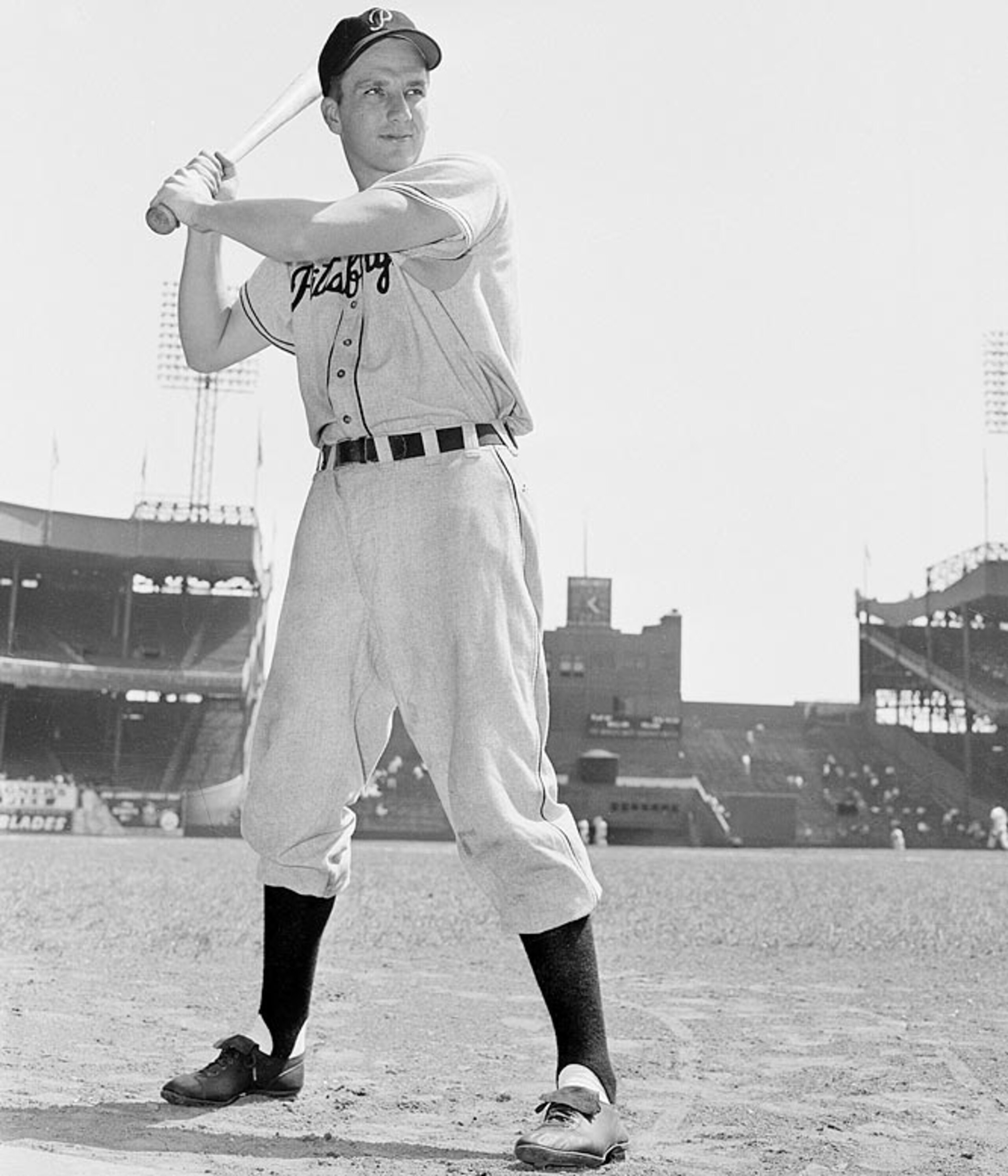
Home Runs: 51
Other Stats
BA: .313
OBP: .417
SLG: .639
RBI: 127
Kiner was just 24 years old and in his second big league season when he joined the 50 HR Club. That was after leading the league as a rookie with 23 home runs in what would be a run of six straight seasons in which Kiner led the National League in home runs.
In fact, through his first eight big league seasons, Kiner launched 329 home runs, in one of the most impressive beginnings to a career in baseball history.
No. 17: Willie Mays, 1955
26 of 42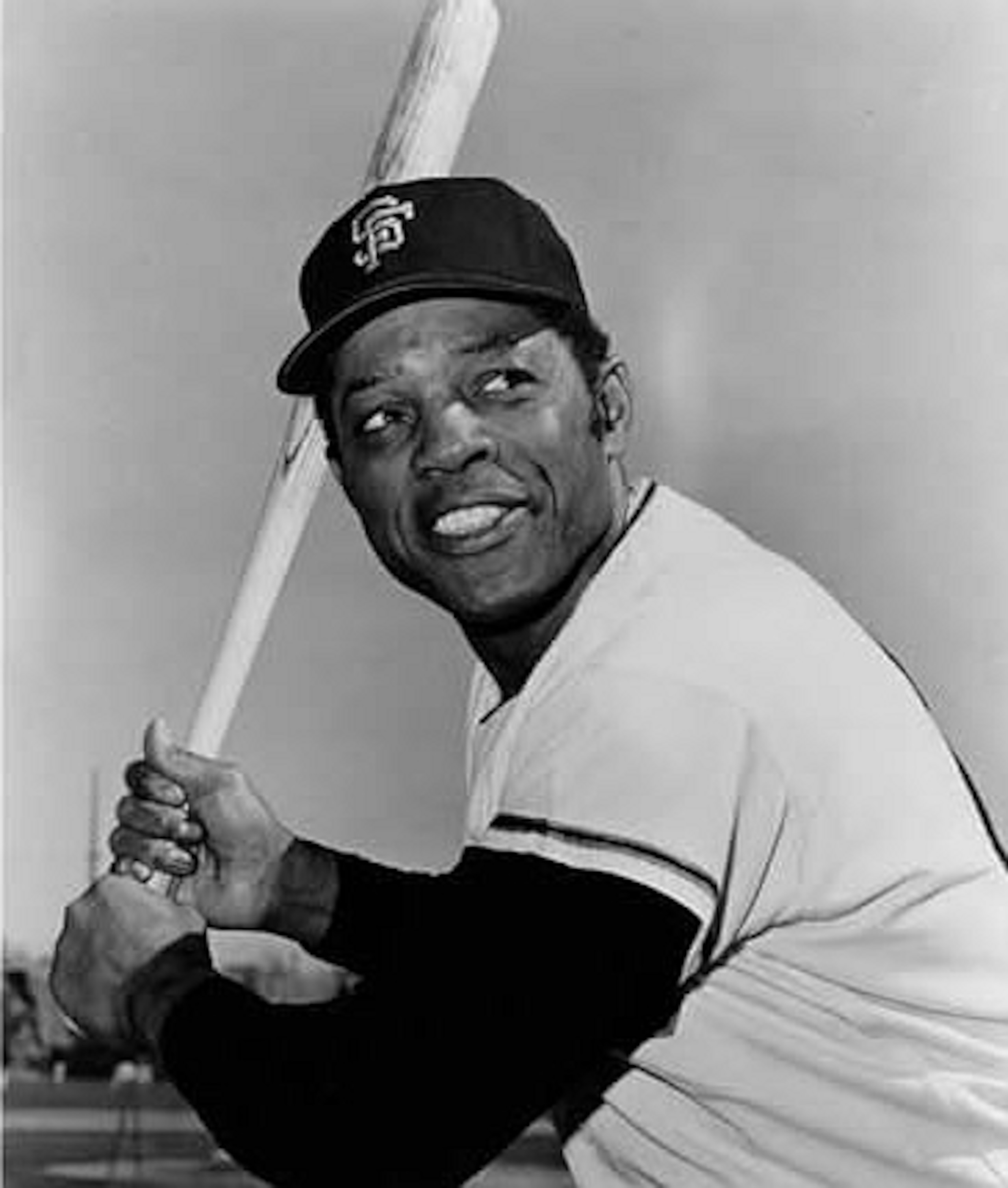
Home Runs: 51
Other Stats
BA: .319
OBP: .400
SLG: .659 (led league)
RBI: 127
After winning Rookie of the Year in 1951, and the batting title as well as NL MVP in 1954, Mays showed that he could do it all in 1955 when he led the NL in home runs and registered his first of two 50-plus HR seasons.
The most impressive thing about his season was the fact that he also led the league with 13 triples while stealing 24 bases, as he flashed speed that few if any other players in this list had.
No. 16: Ralph Kiner, 1949
27 of 42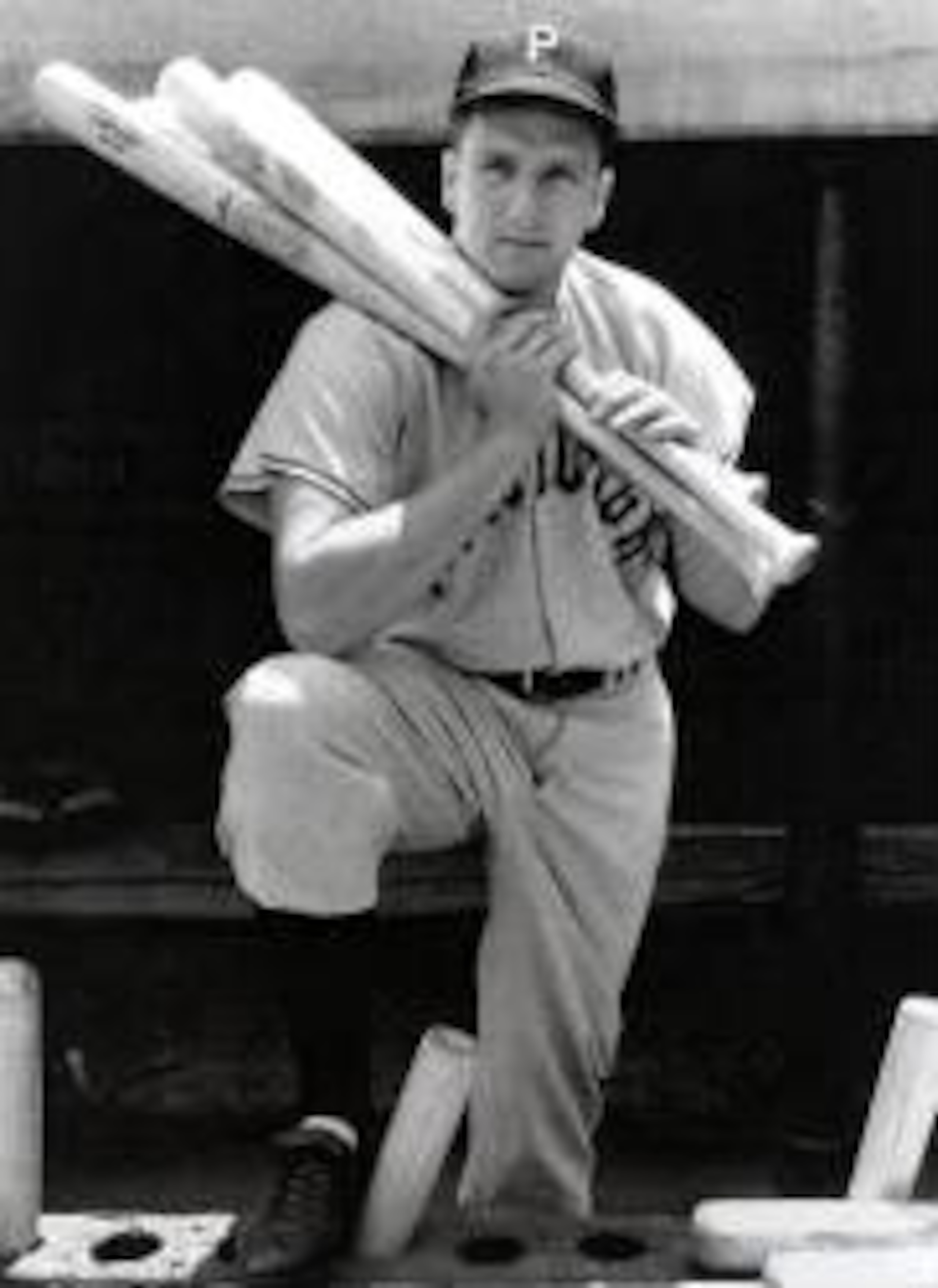
Home Runs: 54
Other Stats
BA: .310
OBP: .432
SLG: .658 (led league)
RBI: 127 (led league)
As mentioned before, Kiner was an absolute beast right out of the box to start his career, and the 1949 season may have been his best overall year, as he posted career bests in OBP, SLG, and RBI
Had a back injury not forced his retirement at the age of 32, Kiner would have almost certainly been a member of the 500 HR Club and could have made a legitimate run at 600. Still, he goes down as one of the best sluggers of all time.
No. 15: George Foster, 1977
28 of 42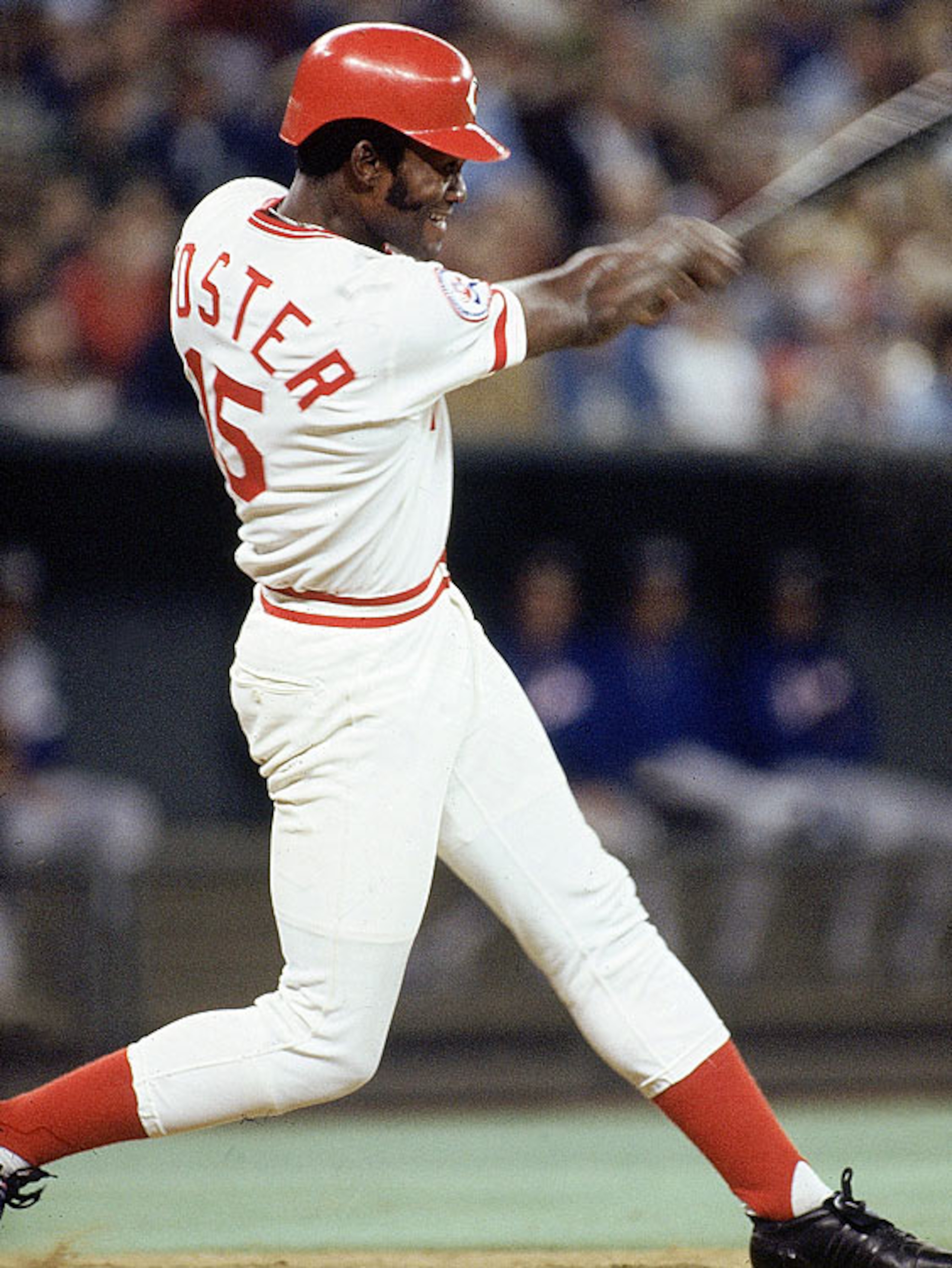
Home Runs: 52
Other Stats
BA: .320
OBP: .382
SLG: .631
RBI: 149 (led league)
Much like Mays in 1965, Foster had a rare monster offensive season in an era that was largely dominated by terrific starting pitching. In fact, he nearly captured the Triple Crown, as his .320 average ranked fourth in the NL, just 18 points away from the winner Dave Parker. Still, it was enough for him to win NL MVP.
His season has added significance, as he was the only player from 1965-1990 to reach the 50 home run mark, and his 149 RBI were the most between1962-1996, and he did all that playing for one of baseball best dynasties in the Big Red Machine.
No. 14: Mickey Mantle, 1961
29 of 42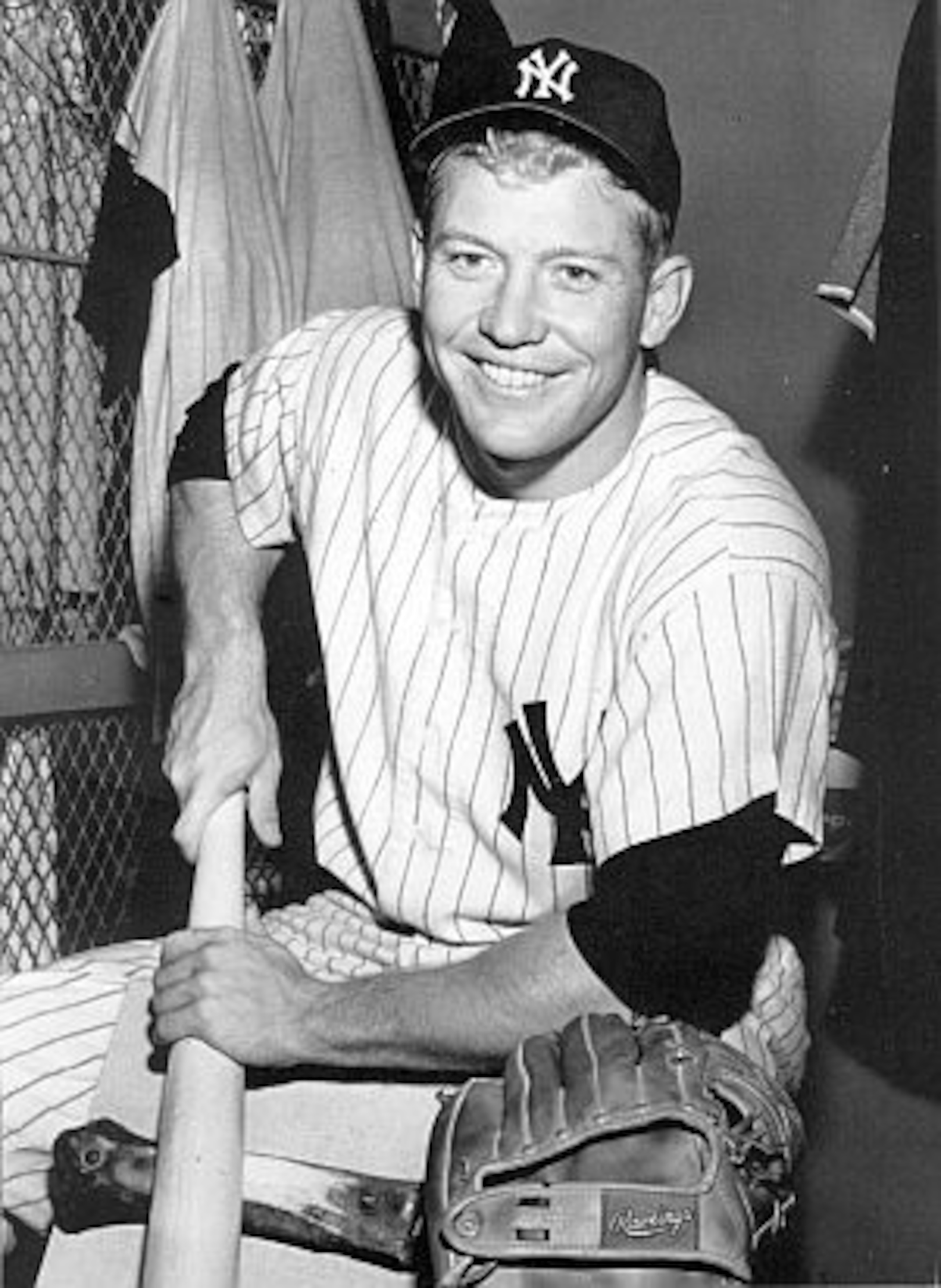
Home Runs: 54
Other Stats
BA: .317
OBP: .372
SLG: .620
RBI: 128
Although it would eventually be Roger Maris that broke Babe Ruth's home run record during the 1961 season, for much of the year the two were neck and neck, and Mantle was the favorite to rewrite history.
However, injuries struck at the end of the season, and Mantle fell short of the record. However, the 1961 home run race had a totally different feeling than the 1998 race, as teammates battled for the record, and one, Mantle, was clearly the fan favorite.
No. 13: Hank Greenberg, 1938
30 of 42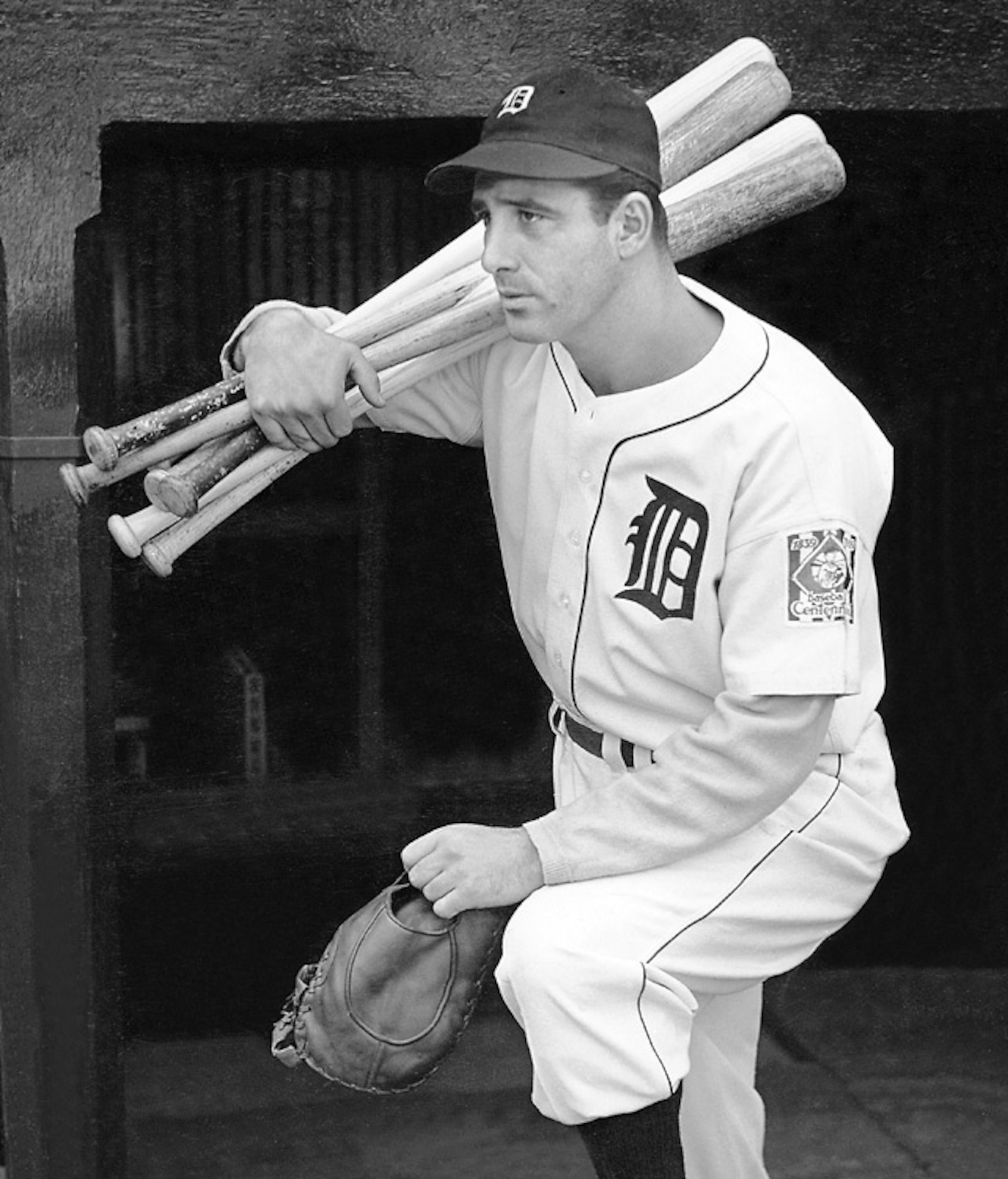
Home Runs: 58
Other Stats
BA: .315
OBP: .438
SLG: .683
RBI: 146
It is hard to pick just one season when it comes to Greenberg's career to point to as his best. He had 183 RBI in 1937, and another 170 in 1935. He won a pair of MVP awards in 1935 and 1940. However, it is his 58 home run season that he is probably most remembered for.
That season he registered the best OBP and SLG of his career, and his 58 home runs stood as the third highest total, tied with Jimmie Foxx, until the 1998 season. Had it not been for his military service, the Hebrew Hammer would have certainly been a 500 home run man, but as it is he posted some of the best single seasons in baseball history.
No. 12: Sammy Sosa, 1998
31 of 42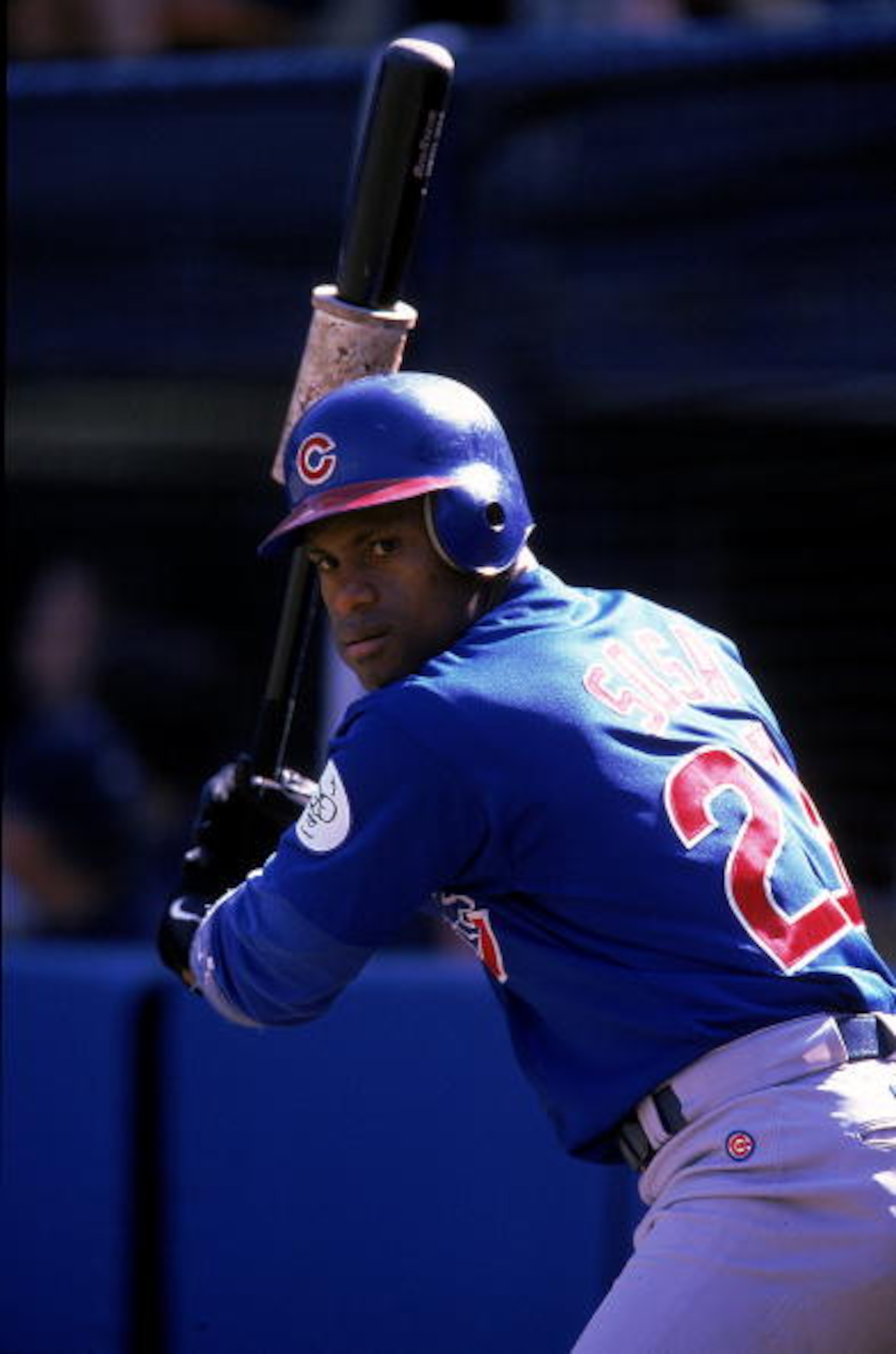
Home Runs: 66
Other Stats
BA: .308
OBP: .377
SLG: .647
RBI: 158 (led league)
As far as Sosa's four 50-plus home run seasons go, the 1998 season is probably the third best in terms of the raw numbers, however, it ranks first here because of the significance of the 1998 home run chase.
Baseball was still struggling to recover from its 1994 strike season, and as Sosa and McGwire gave chase to baseball's most hallowed record, baseball went from struggling to make the front of the sports page to front page of the paper, national news, as seemingly everyone followed the race.
No. 11: Mark McGwire, 1998
32 of 42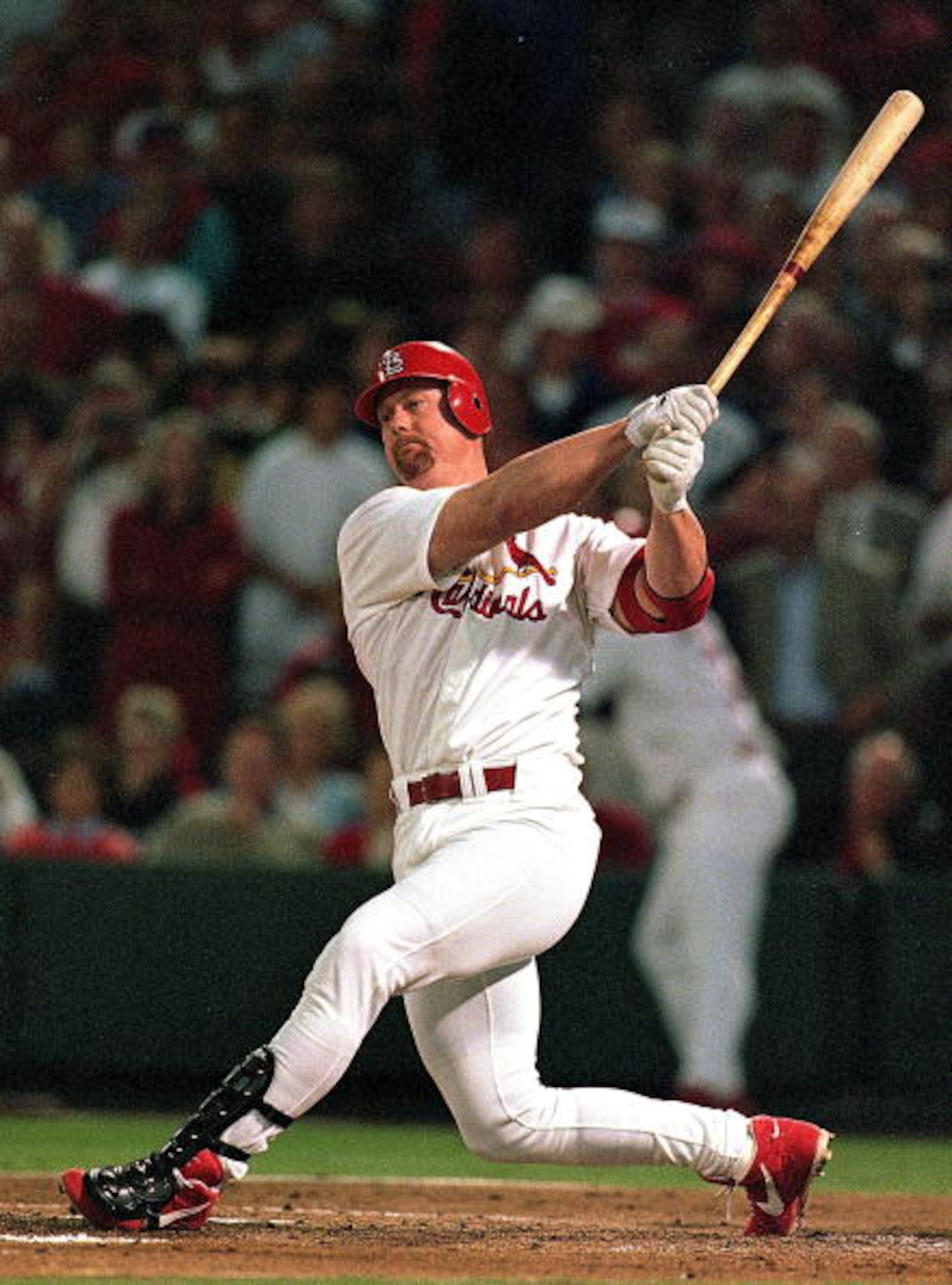
Home Runs: 70
Other Stats
BA: .299
OBP: .470 (led league)
SLG: .752 (led league)
RBI: 147
Say what you will about steroids, and they no doubt played a role in the home run chase of 1998, but chances are you, like every other sports fan in America, tuned in on a daily basis for an update on the chase for Maris' record.
In a sport that was floundering, suddenly fans were pouring into the stadium hours before game time just to watch McGwire take batting practice, and he never failed to put on a show. So is what McGwire and Sosa accomplished tainted? Sure. But was it an awful lot of fun to follow and watch? Absolutely.
No. 10: Roger Maris, 1961
33 of 42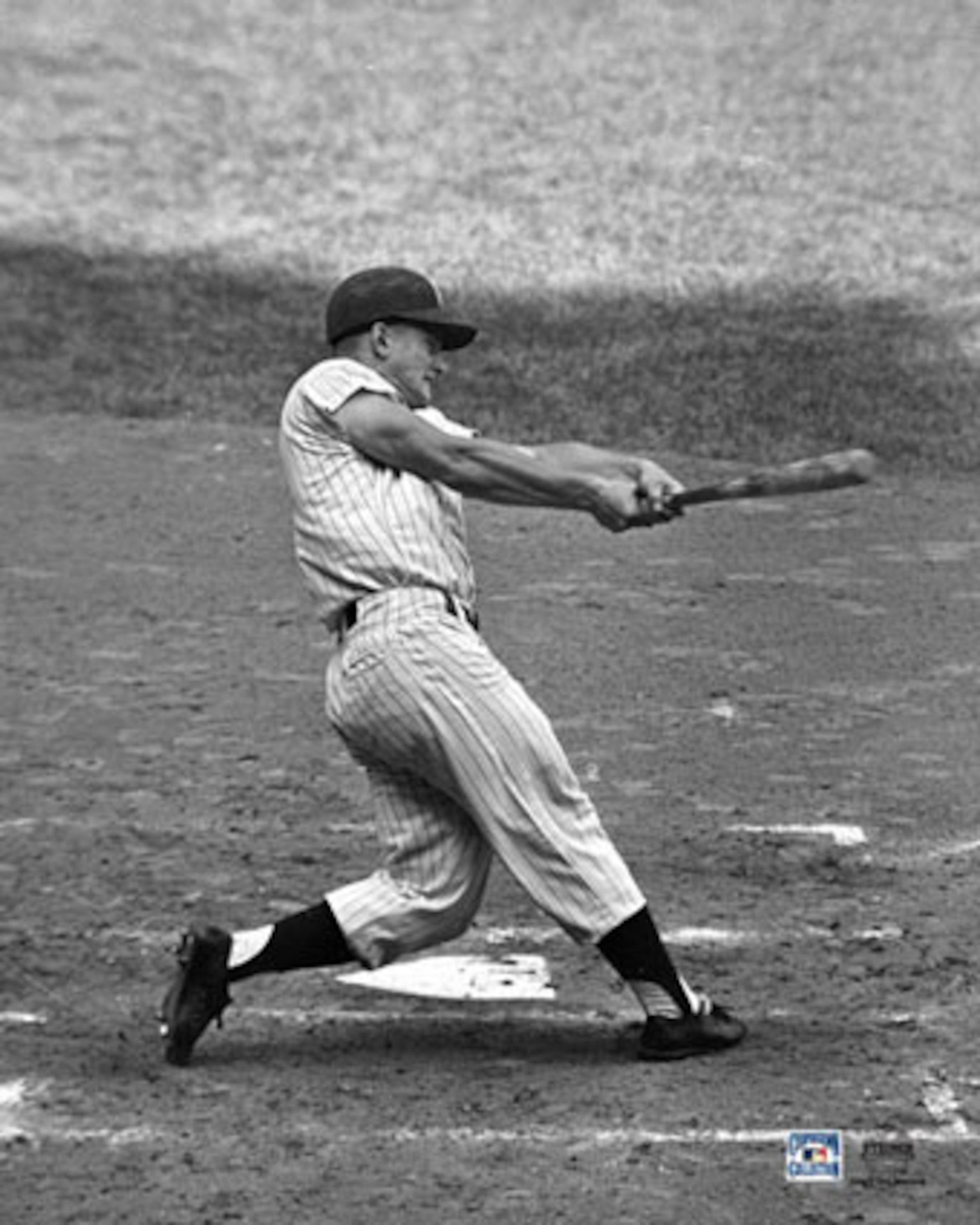
Home Runs: 61
Other Stats
BA: .269
OBP: .372
SLG: .620
RBI: 141 (led league)
Aside from the home runs that Maris hit, the rest of his stats during the season would put him close to the bottom of this list. However, in hitting his 61st home runs, Maris broke a 33-year-old record and one of the most revered records in all of professional sports.
Maris endured a lot that season to reach the milestone, as most of New York and the baseball world wanted Mickey Mantle to break the record or Ruth to retain it. He was sent death threats and the whole works, but he managed to overcome the pressure, and he stood as baseball's home run king for 37 years.
No. 9: Babe Ruth, 1928
34 of 42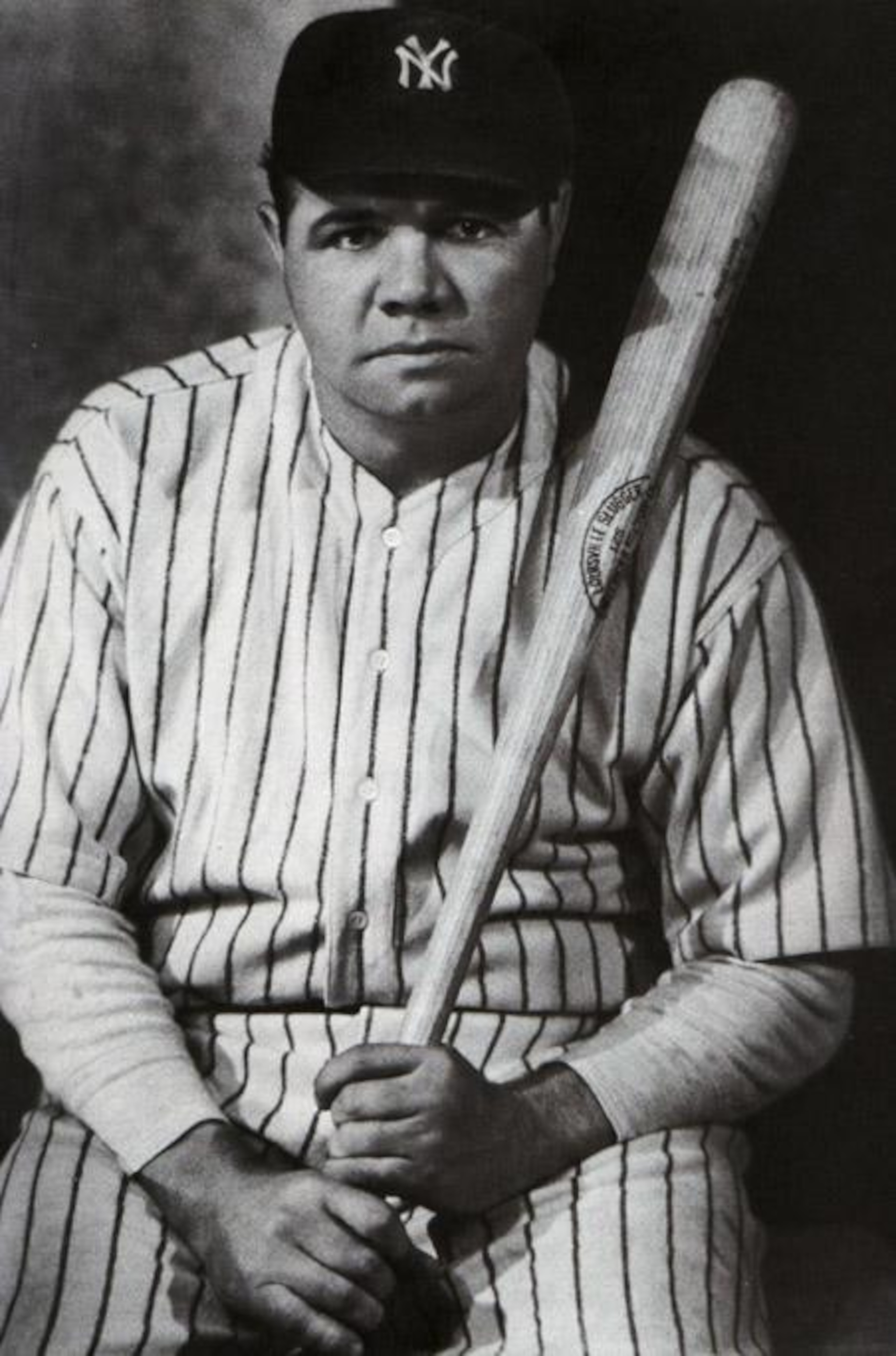
Home Runs: 54
Other Stats
BA: .323
OBP: .463
SLG: .709
RBI: 142 (led league)
As far as Babe Ruth seasons go, the 1928 season was a below average one of the Sultan of Swat, as his average was nearly 20 points below his career average, and his OBP and RBI numbers were below average as well.
Still, he was the best player in the game, and his 54 home runs were a full 23 more than the next highest total in baseball. The season still cracks the top 10 on this list, but it was far from Ruth's best.
No. 8: Hack Wilson, 1930
35 of 42
Home Runs: 56
Other Stats
BA: .356
OBP: .454
SLG: .723 (led league)
RBI: 191 (single season record)
The NL home run champion in three of the previous four seasons entering 1930, Wilson put together one of the single greatest seasons in baseball history that year, when he drove in 191 runs, a record that still stands today.
Interestingly enough, he was one of three Cubs to eclipse the 100 RBI mark that season, as Kiki Cuyler tallied 134 and Gabby Hartnett had 122 for what was a potent Cubs offense. His 56 home runs stood as a Cubs single-season record until Sosa's 66 home runs season in 1998.
No. 7: Jimmie Foxx, 1938
36 of 42
Home Runs: 50
Other Stats
BA: .349 (led league)
OBP: .462 (led league)
SLG: .704 (led league)
RBI: 175 (led league)
Foxx is one of the top three or four run producers of all time, and in 1938 he was the best player in the American League without question.
He won his third MVP that season, and he would have had his second Triple Crown had it not been for Hank Greenberg who bested him with 58 home runs that season.
No. 6: Mickey Mantle, 1956
37 of 42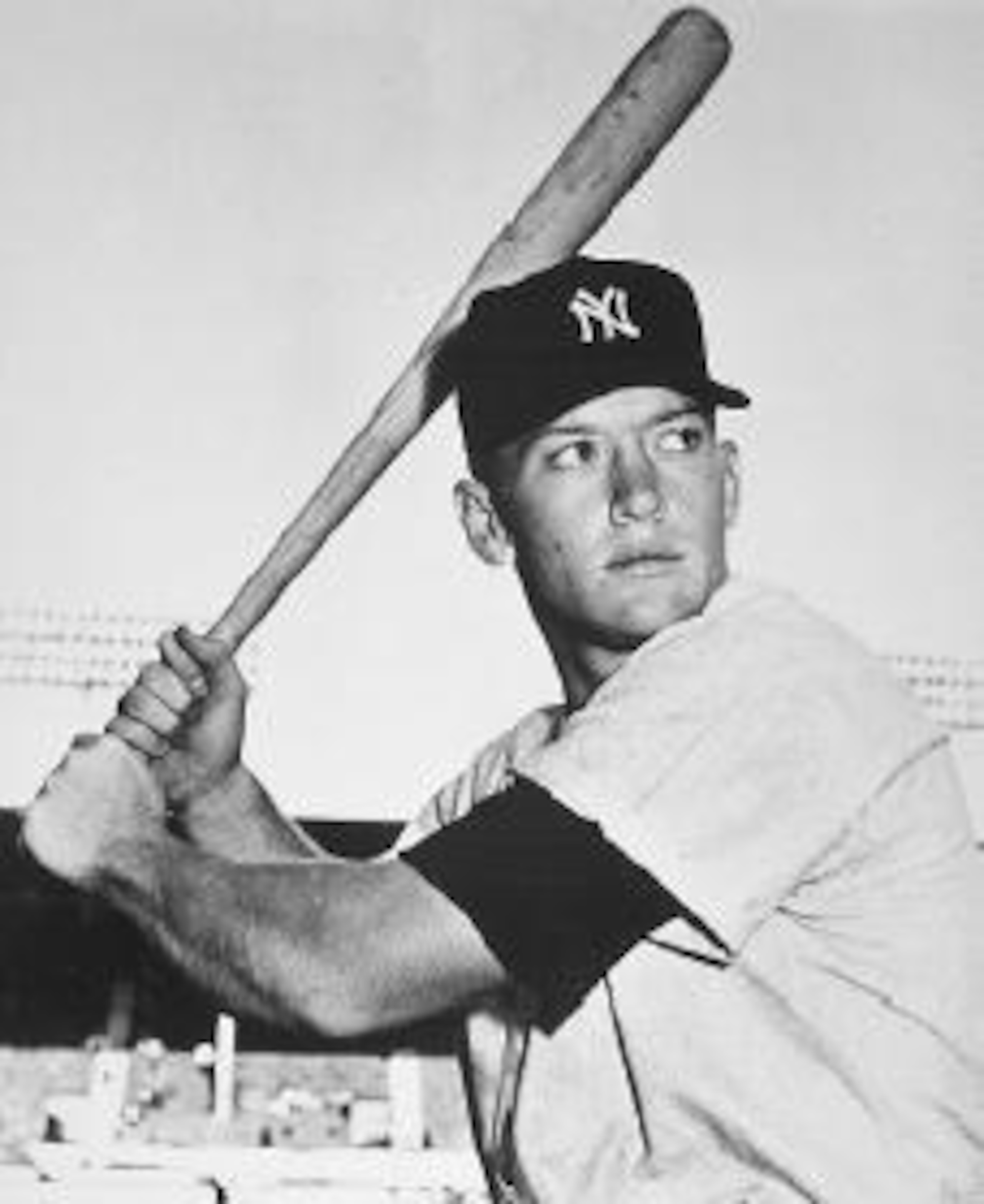
Home Runs: 52
Other Stats
BA: .353 (led league)
OBP: .464
SLG: .705 (led league)
RBI: 130 (led league)
Mantle is one of the best power hitters of all time, and he is one of just two guys to win a batting title during his 50 home run season.
However, unlike Foxx in 1938, he was able to take home the Triple Crown, as he also won the MVP that season the first of three he would take home in his career, and he did it all at just 24 years old.
No. 5: Jimmie Foxx, 1932
38 of 42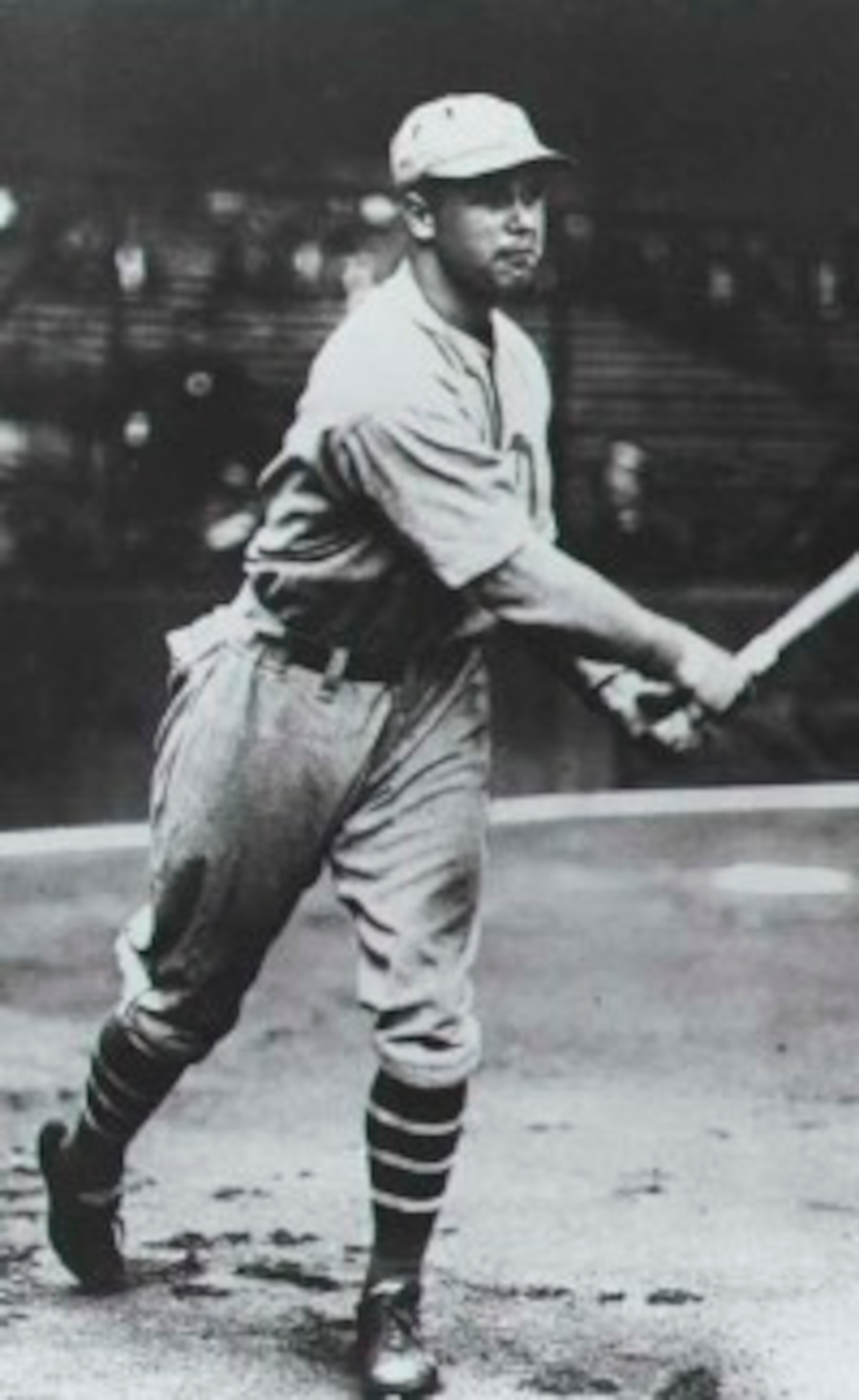
Home Runs: 58
Other Stats
BA: .364
OBP: .469 (led league)
SLG: .749 (led league)
RBI: 169 (led league)
For a player with a career line of .325 BA, 534 HR, 1922 RBI in just 14 full seasons, it is hard to pick one season as his best, but the 1932 season takes that honor for Foxx.
He set career highs in HR, BA, OBP, and SLG and he finished .03 points from winning his second Triple Crown. Overall, his 1932 season goes down as one of the greatest in baseball history by one of greatest sluggers ever.
No. 4: Barry Bonds, 2001
39 of 42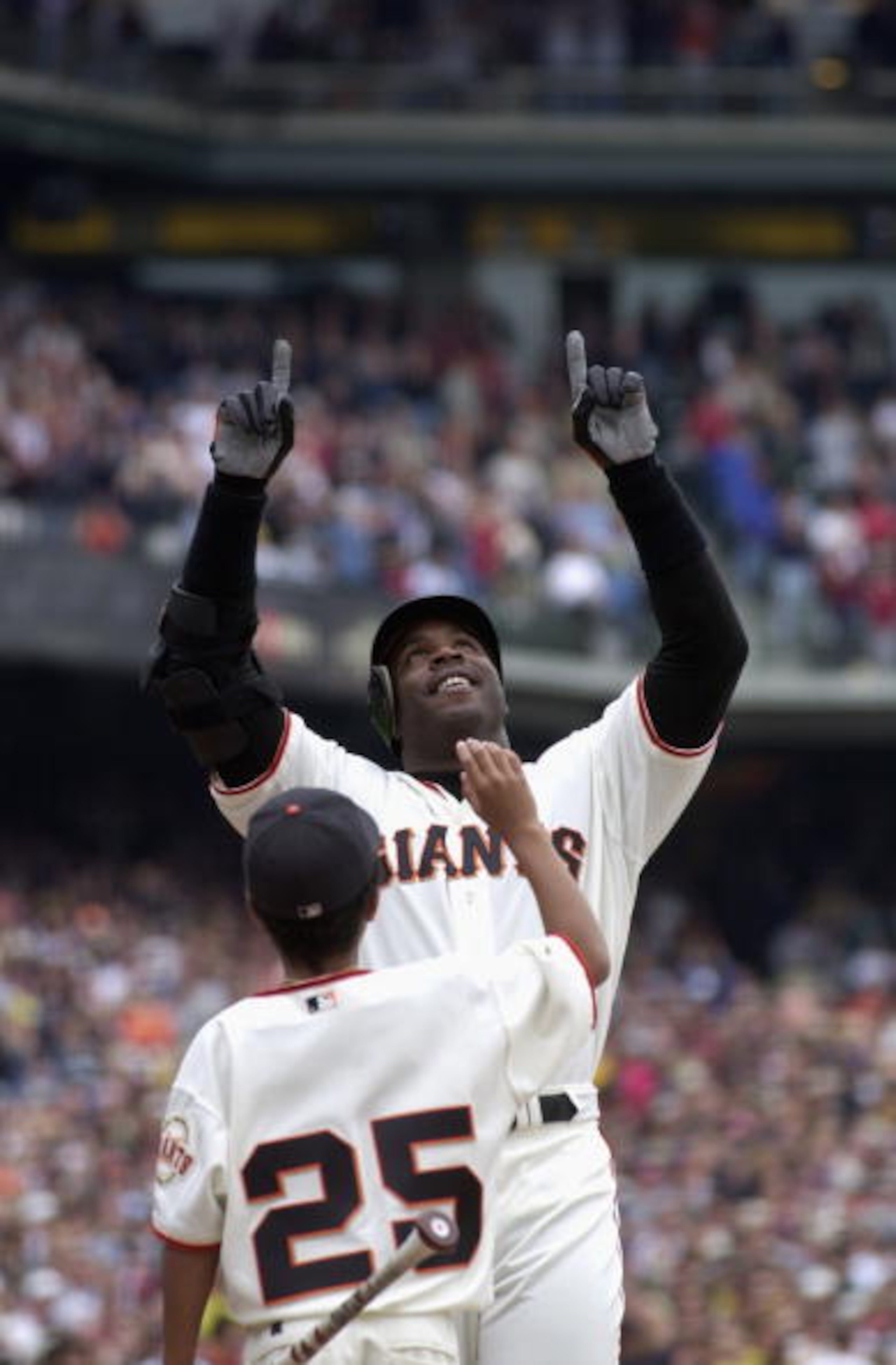
Home Runs: 73
Other Stats
BA: .328
OBP: .515 (led league)
SLG: .863 (single season record)
RBI: 137
He took steroids, there is little doubt about that, and it has tarnished some of the most sacred of all records. But step back from that for a minute and just look at what he accomplished.
He hit a record 73 home runs in just 476 at-bats. That means that even though he didn't have enough at-bats to qualify for the batting title, he had enough to hit 73 bombs. That is a home run every 6.5 at-bats. He was on base over half of the time when he stepped up to the plate, and he slugged a record .863. Sure steroids helped, but those numbers are absolutely ridiculous. He cheated, but his 2001 season is still impressive.
No. 3: Babe Ruth, 1927
40 of 42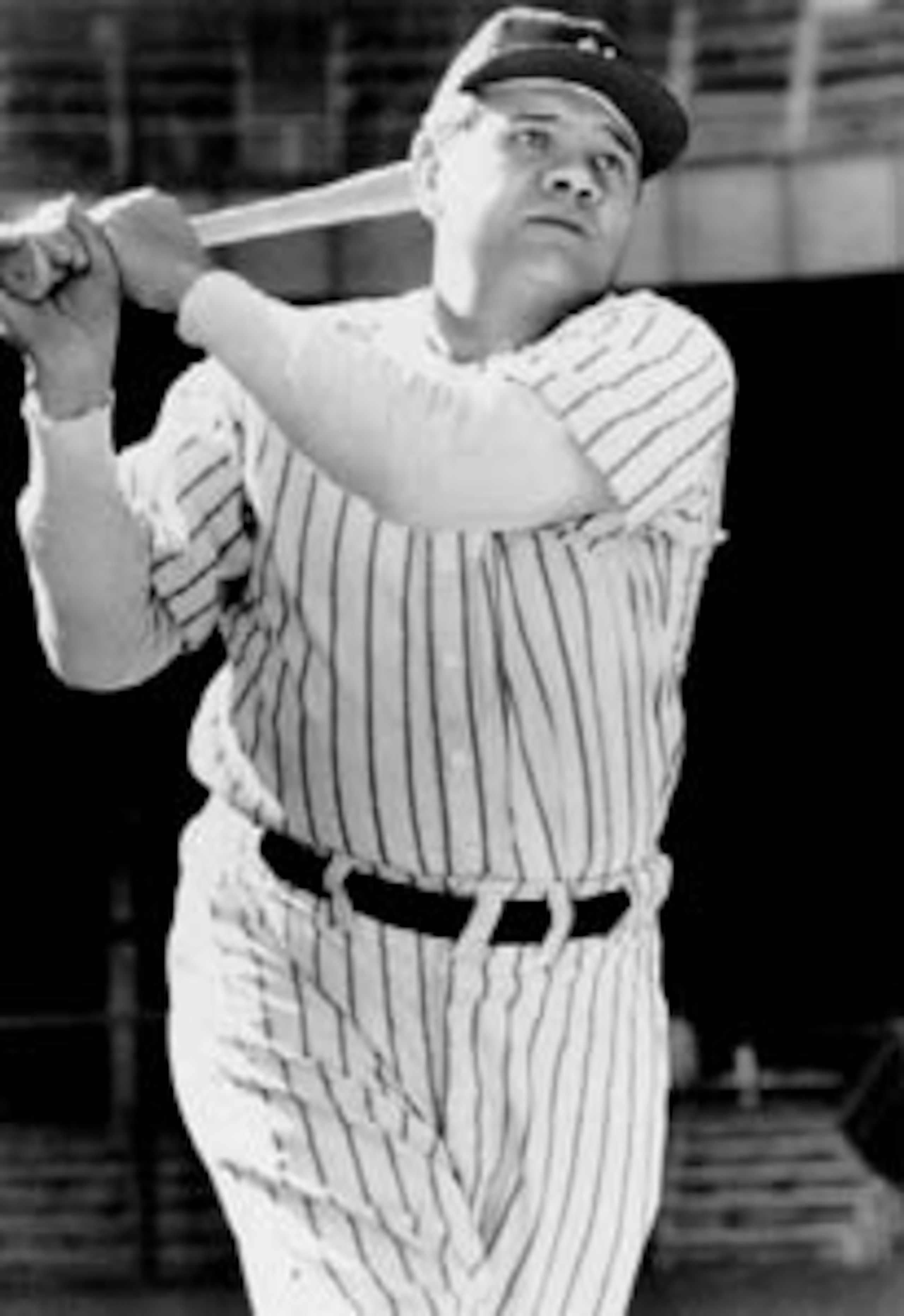
Home Runs: 60
Other Stats
BA: .356
OBP: .486
SLG: .772
RBI: 164
The 1927 Yankees are one of the most celebrated teams in baseball history, and it is in large part because that was the season in which Ruth set what would be his lasting home run record with 60 longballs.
In comparison to Bonds, Ruth hit a home run every 9.0 at bats in 1927, the second best mark of his career after his 1920 mark of 8.5. Still, the season was a dominant one for Ruth and the Yankees as they finished 110-44 and won the World Series.
No. 2: Babe Ruth, 1921
41 of 42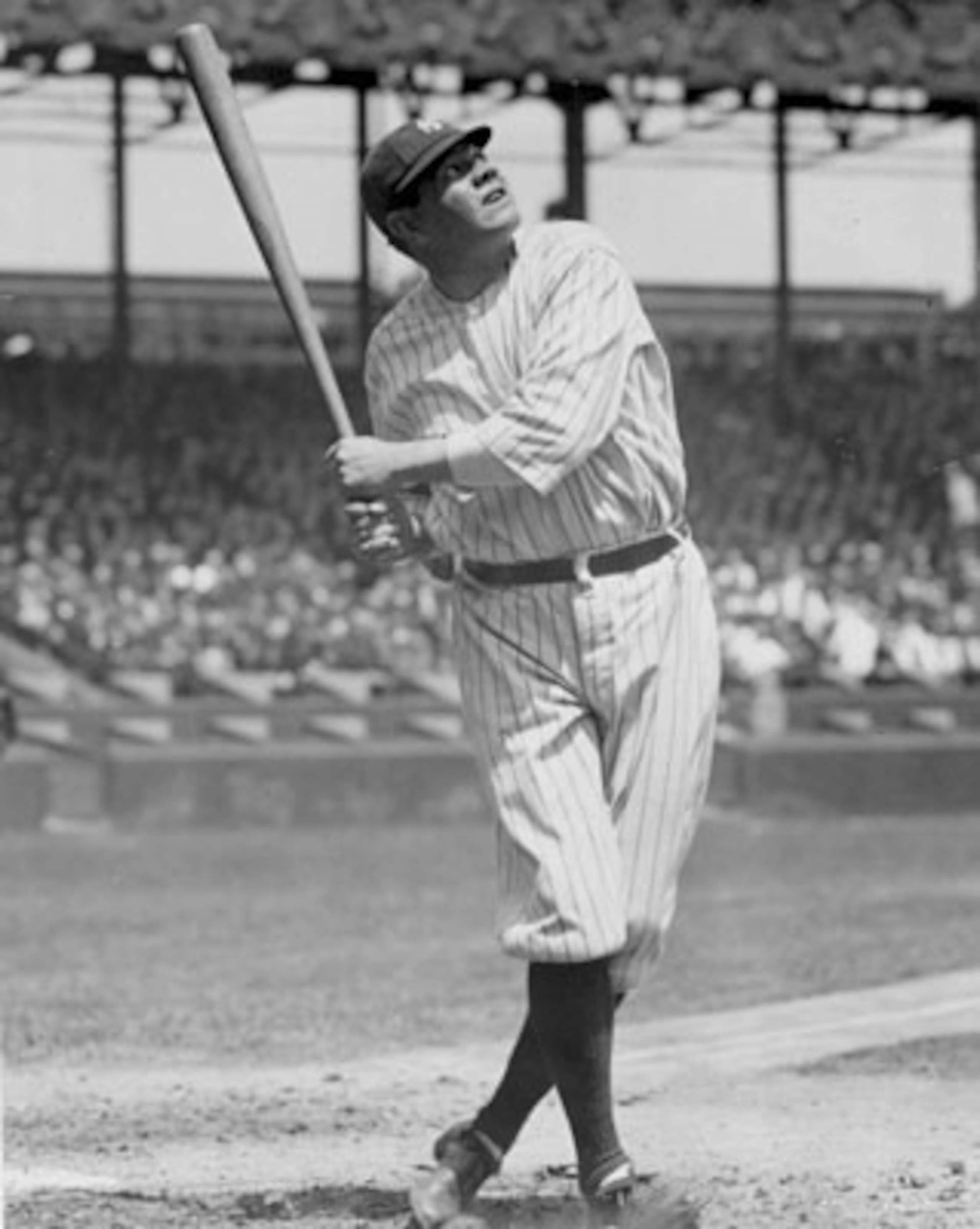
Home Runs: 59
Other Stats
BA: .378
OBP: .512 (led league)
SLG: .846 (led league)
RBI: 171 (led league)
At this point, it is just time to sit back and admire how much better Ruth was than his contemporaries.
He had 35 more home runs and 32 more RBI than anyone else in baseball this season, and his OPS of 1.359 is the fifth best mark of all time. He was just head and shoulders above everyone else.
No. 1: Babe Ruth, 1920
42 of 42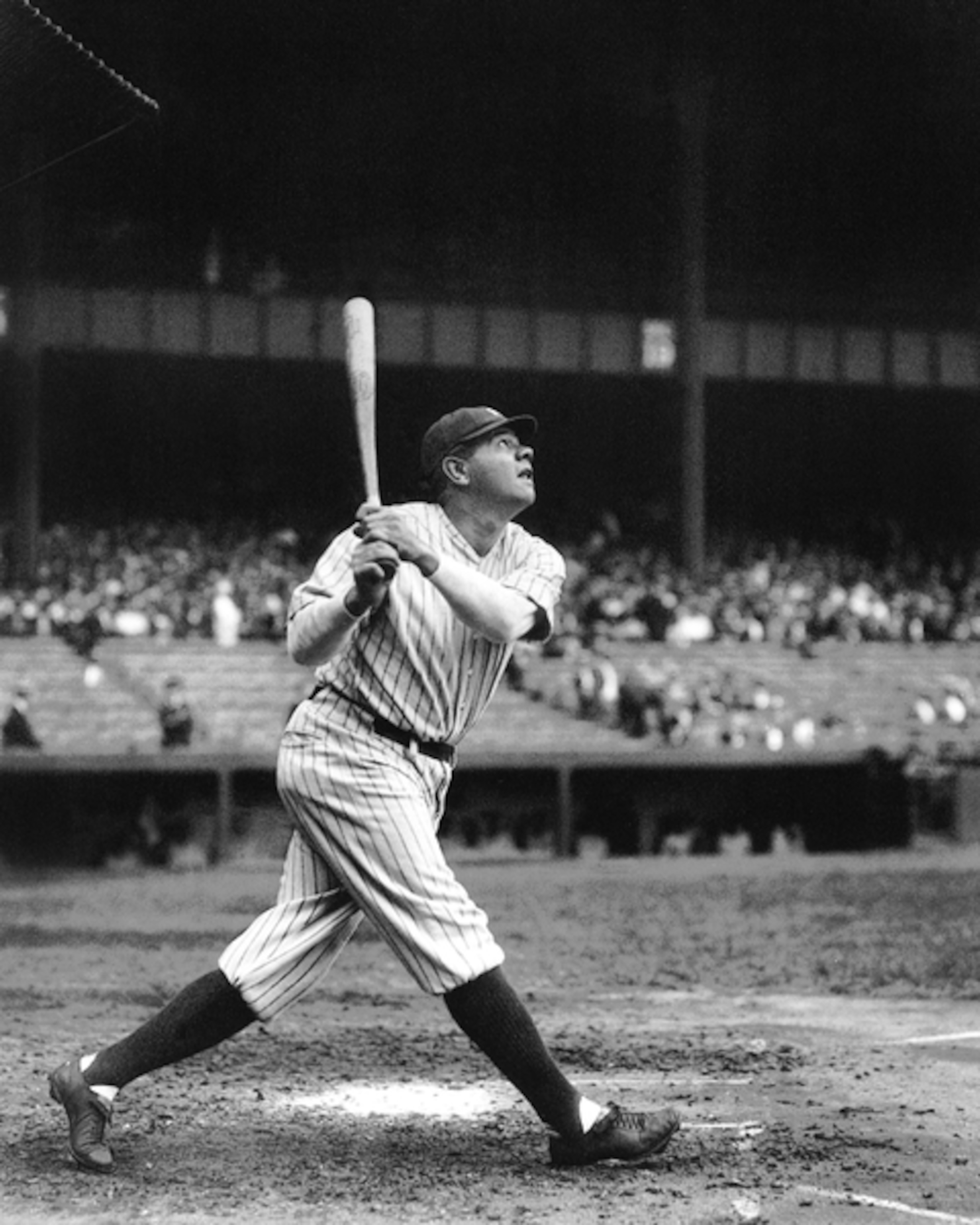
Home Runs: 54
Other Stats
BA: .376
OBP: .532
SLG: .847
RBI: 137 (led league)
This was Ruth's first season with the Yankees and his first as a full-time outfielder.
The league average for home runs in 1920 was 5.54 per player. The second most home runs hit that year was 19 by George Sisler. Ruth hit a home run every 8.5 at bats that season.
There is just no other way to put it, Ruth is the best slugger to ever play the game, and he was a man among boys in the 1920s. Take your pick between his 1920 and 1921 season to lead this list, both are incredible.

.png?w=2560)



.jpg?w=2560 "Malik Beasley Negotiating Plea Deal (AP)")
.png?w=2560 "Week 8 Winners & Losers 📊")

.jpg?w=2560 "Jonathan Taylor Landing Spots")
.jpg?w=2560 "Aikman Blasts Cowboys WR 🫣")